Category: Hip Hop/Rap

  • Wu Tang Wednesday: ODB joins Mariah Carey on “Fantasy”

    They say you never know how good something is until you try it, who knew that peanut butter and jelly would set the world ablaze? Sometimes, pairing opposites makes for a grand result. This was the case when pop star –Mariah Carey — remixed her hit record “Fantasy,” featuring the most erratic member of the Wu Tang Clan, ODB.

    Also known as Ol’ Dirty Bastard — “because there ain’t no father to his style” — is recognized as one of the most raw, unorthodox, unpredictable and authentic personalities to ever grace hip hop. As such, he was an unusual pick to feature on Mariah Carey’s chart-topping single. Known for his free nature and wild behavior, the mixture of his tainted public image alongside Mariah Carey’s pristine image made for a head scratcher to many.
    ODB Mariah Carey Fantasy
    The late Ol’ Dirty Bastard has had his fair share of discrepancies

    The original record was the lead single off her Mariah’s fifth studio album, 1995’s Daydream, written by Carey and Dave Hall and produced by Bad Boy Records.

    Known primarily as a pop star, Mariah Carey wanted to make a splash in the hip-hop scene and personally requested to have ODB on the remix. In an interview with Genius, hip hop journalist, Rob Markman, praised her for making collaborations with hip hop artists popular, as she went on to explain why she was so intent on having Wu Tang’s bad boy on the record. Divulging that since she grew up in New York, she listened to the same music as everybody else, and since hip hop was major in New York, she loved it and wanted to incorporate some of their production in her music. Her fandom of the late rapper was the reason behind her request, despite the disapproval of label executives.  

    ODB Mariah Carey Fantasy
    Sweet, sweet fantasy baby

    In a 2016 Billboard feature, the backstory on how the record came together was revealed. Corey Rooney (A&R for the track), said he reached out to ODB, who wanted $15,000 to rap on the record and since it wouldn’t have put a dent in Mariah Carey’s budget, it was fine with him. 

    On the day of the recording, ODB showed up three hours late, drunk, and on the phone, arguing with his girlfriend. After the commotion, he asked for some Moet and a box of Newports before recording, to which Rooney responded that they were already behind schedule, which resulted in him accusing the assistants of being “white devils who don’t want to let black people have anything.” He ended up throwing a bottle of Heineken in disgust when it was all the crew could find.

    The “Shimmy Shimmy Ya” rapper proved to live up to his reputation of being difficult to work with by only rapping one line at a time and napping in between lyrics. Eventually they were able to complete the verse but, had to pay him another $15,000 to appear in the video. 
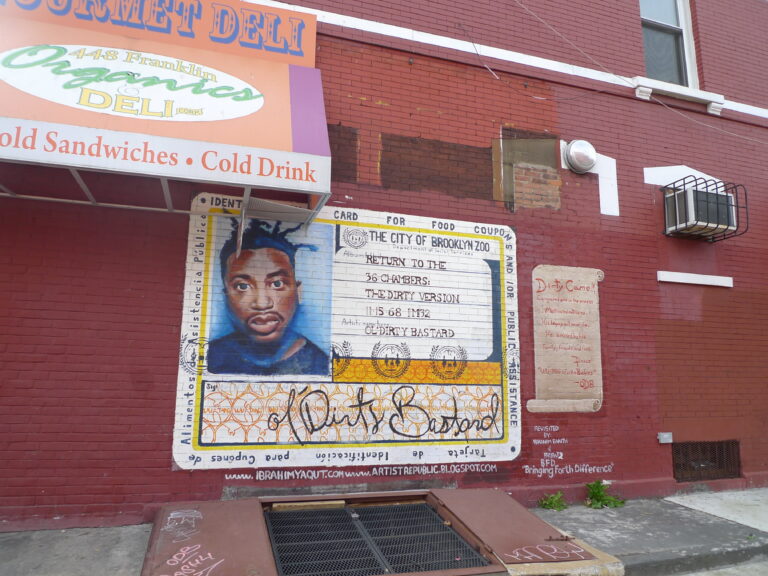
    ODB Mariah Carey Fantasy
    Gone but never forgotten

    The remix differs slightly from the original, as it sampled Tom Tom Club’s 1981 record “Genius of Love” (per Mariah Carey’s request, as it was one of her favorite songs growing up), as well as, Dirty’s “Baby C’mon” and “Goin’ Down.”  

    The record made Mariah Carey he first female artist in history to have a record debut at the top of the Billboard 100, spending eight consecutive weeks at number 1. The cover for the single was done by photographer Steven Meisel and Mariah Carey made her directorial debut as she created the video concept and picked the location.

    Carey and Dave Hall wrote the song about a woman who was in love with a man and every time she saw that man, she started having fantasies about him and a potential relationship that was impossible. ODB’s verse was nothing to write home about, as it was a drunken freestyle.

    Oh, when you walk by every night

    Talkin’ sweet and lookin’ fine

    I get kinda hectic inside

    Mmm, baby, I’m so into you

    Darlin’, if you only knew

    All the things that flow through my mind

    Mariah set the mood with her opening verse singing about how the man walks through her mind and how she perceives him talking sweet to her. ODB’s verse was all over the place but his melodic flow carried him throughout the record.

    Me and Mariah

    Go back like babies with pacifiers (That’s right)

    Old Dirt Dog’s no liar

    Keep your fantasy hot like fire

    Jump, jump, let me see you do the stump

    Girls, let me see you shake your rump

    Brothers, hit it from the back and front

    And let’s do it, do it, do it, uh-huh

    I’m a little bit of Country

    I’m a little bit of Rock and Roll

    And I’m soul to soul

    Big letters, all big and bold

    Old Dirty Bastard across the globe

    While not that long, the verse was still impactful, as his raw and unorthodox rap style gave it the extra credibility it needed to appeal to hard-core hip-hop fans. 

    The influence of “Fantasy” has had a long-lasting effect. It introduced R&B to hip-hop — and with Mariah Carey’s status as a pop superstar — helped grow the genre. Yet, for many, the song will always be remembered for Ol’ Dirty Bastard’s iconic feature. Not because of the quality of his verse, but because his mere presence and his unapologetic way of living was a representation of everything hip hop was about and he didn’t change for anyone. 
  • This Day in Hip Hop: Lauryn Hill’s ‘Miseducation’ inspires a generation

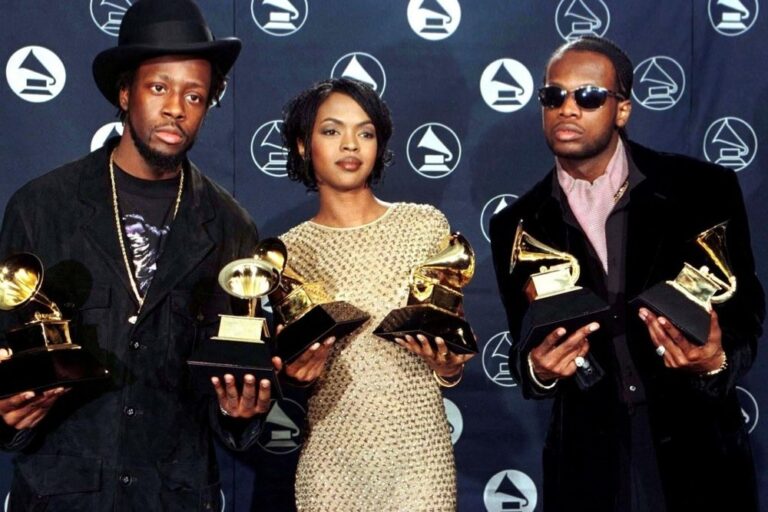
    Lauryn Hill has not released an album in nearly two decades (2002’s live album, MTV Unplugged No. 2.0). Yet, her presence within pop culture remains. Much of it can be accredited to her work as a member of the Fugees — whose sophomore album, The Score, has been certified 6X platinum in the United States by the RIAA, with 22 million copies sold worldwide — as she garnered her first top 10 hit with her rendition of Roberta Flack’s “Killing Me Softly,” earning her and group-mates Wyclef and Pras the top spot on the Billboard 100

    Miseducation
    ooh la la la

    Piggybacking off of the success of The Score, the artist now known as Ms. Lauryn Hill, reached folklore status when on August 25, 1998, The Miseducation of Lauryn Hill hit record stores. Distributed by Columbia records, the album was primarily recorded at the late Bob Marley’s Tuff Gong studios in Kingston, Jamaica. Hill had developed a romantic relationship with Rohan Marley, son of the legendary Reggaeton artist, and the family-oriented nature of the Marley’s was her respite, as she recorded what is now considered her magnum opus. 

    Classified primarily as a neo-soul and R&B album, The Miseducation also includes elements of hip hop and reggae, while implementing plenty of live instrumentation — some notable names include: a young pianist by the name of John Legend, R&B superstar D’Angelo, along with famed guitarist Carlos Santana. Accompanying the excellent musical composition was Hill’s heartwarmingly soulful voice, as the album’s contents served as inspiration for a generation of men and women. She didn’t pretend to be perfect, as the scathing Wyclef Jean aimed diss track –“Lost Ones” — showed, she was capable of animosity. She shared stories of desperate attempts to save her relationship on “Ex Factor,” while the Billboard charting single “Doo Wop (That Thing)” shared messages of self-worth (“how you gon’ win if you ain’t right within” has become one of the more transcendent lyrics in music). 

    From tales of newfound love on “Can’t Take My Eyes Off of You” to the fulfillment one finds in their child on “To Zion,” Lauryn Hill’s wide range of emotions on The Miseducation captured the hearts of fans worldwide. Add in the many biblical idioms she drops on records like “Final Hour” and “Forgive Them Father” and you have the makings of a God-fearing woman whose romantic struggles have left her scorned for the better, finding love within her religion, her children and newfound romance. What’s not to like about that? Apparently nothing, as The Miseducation went on to sell over 8 million copies in the United States, as she cleaned up at the 1999 Grammy awards, winning 5 and being nominated for 10

    miseducation
    She wrote her opus to reverse the hypnosis, the awards just came along

    So, today, we celebrate Lauryn Hill for her contributions to music, and if she never drops another album, we can be happy with the fact that she was open enough to share all of herself on The Miseducation.

  • ‘Racism on Trial,’ featuring Denzel Curry and Kamasi Washington, meshes Rap, Jazz and BLM

    Jammcard — a social marketplace for music professionals — along with Black Lives Matter co-founder Patrisse Cullors, partnered up earlier this summer to present the Black Power Live virtual music festival. Musicians including Terrence Martin, Kamasi Washington and Denzel Curry took part in the event, which gathered 1.7 million viewers via live stream on Twitch. Now they are releasing the powerful three-movement “Racism on Trial.”

    Black Power Live was centered around the current social-political climate, with police brutality, systematic oppression and black empowerment being focus points. Each part of “Racism on Trial” begins with a slam poetry type of setting where Florida rapper Denzel Curry recites his work, accompanied by a jazz ensemble. 

    RACISM ON TRIAL

    “Racism on Trial” follows Martin’s recent album Gray Area – Live at the JammJam, featuring the song “For Free?,” which Terrance wrote with Kendrick Lamar. The album was released on Jammcard Music in partnership with Sounds of Crenshaw and Empire Distribution. Recorded at Studio A of United Recording, packed with 300 Jammcard members surrounding the performers, the album is filled with some of the most exciting and powerful jazz music created in years. The performance features Ronald Bruner Jr., Kamasi Washington, Maurice “Mobetta” Brown, Ben Wendel, Paul Cornish, and Joshua Crumbly. 

    All proceeds from “Racism on Trial” will go to Crenshaw Dairy Mart, Trap Heals, Transgender Law Center, Sankofa.org, and Black Men Build. 

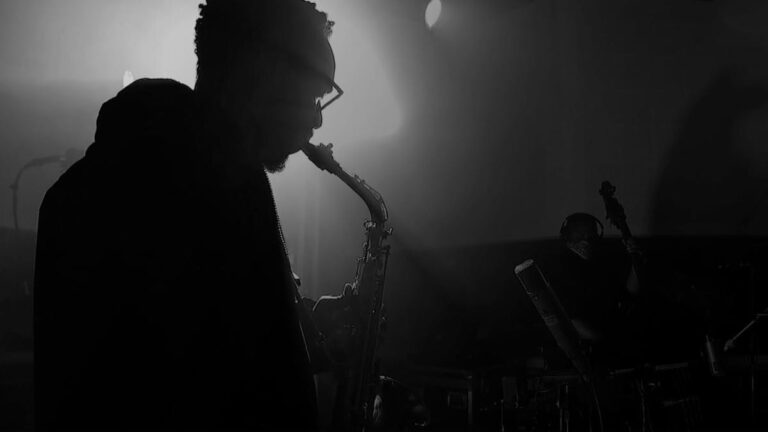
    The first movement, titled “The Voice of King Nipsey,” begins as Curry walks up to the mic and performs his verse in silence. He starts by articulating all variety of horrid things that happen in the United States. After he is finished, a Terrence Martin saxophone solo follows with Kamasi Washington and the rest of the band later joining in. 

    For the second movement, “Any Day Could be Your Last,” we again see Denzel opening up with a poem without the aid of background music, as he descriptively lists things he wants out of life. He ends his poem with the title of the feature, with the band once again following up, only this time, on a more somber note, with added vocals from Los Angeles singer, Alex Isley. Her vocals meshing with the jazz music, as well as added visuals of scenes from the civil rights movement.

    The third movement, “Pig Feet,” being the last installment once again begins with Denzel Curry but without a poem, just an intro. The band immediately starts playing and more visuals of police brutality through the years get run throughout the concert. Denzel Curry does end up rapping with the band as his background beats and he is joined by battle rappers Daylyte and G Perico. 

    Written by the trio of Terrence Martin, Kamasi Washington and Denzel Curry, Racism on Trialwas directed by Devin DeHaven, mixed by Manny Marroquin and engineered by Ethan Mates. Denzel Curry, Daylyte, G Perico and Alex Isley served as vocalists, while Kamasi Washington played saxophone, Marlon Williams the guitar. Terrence Martin, Robert Glasper, Paul Cornish played the keys, Trevor Lawrence Jr. and Jonathan Pinson were on the drums, Allakoi Peete on percussion, Dominique Sanders on upper brass, Paul Cartwright and Yvette Devereaux played the violin, Molly Rogers on the viola and Peter Jacobson on the cello.

    All proceeds from the sale of “Racism on Trial” will go to Crenshaw Dairy Mart, Trap Heals, Transgender Law Center, Sankofa.org, and Black Men Build.

  • Wu Tang Wednesday: RZA composes another type of ‘Ice Cream’ for Good Humor

    “French-vanilla, butter-pecan, chocolate-deluxe, even caramel sundaes is gettin’ touched, and scooped in my ice cream truck, Wu tears it up.”

    Iconic lyrics, on an iconic beat, this Raekwon and Method Man collaboration is one of the many iconic records that have solidified RZA’s status as one of hip hop’s best producers. Yet, the man behind some of hip hop’s most recognizable beats isn’t finished composing songs about ice cream.

    And as of recently, French-vanilla, butter-pecan, chocolate-deluxe ice cream will now be served from Good Humor ice cream trucks sans-racially insensitive undertones. Celebrating their 100thanniversary, the pioneers of the ice cream truck have decided to make a much-needed change to their marketing strategies, ditching their old theme — with racial undertones and history — for a fresher, more inclusive version, composed by the Wu Tang head honcho. 

    They called me up and was like ‘We gotta do something about this, Riz. We can change the dynamics, we can make a new ice cream jingle for a new era. We wanted to make a melody that includes all communities, that’s good for every driver, every kid.

    – RZA in a social media video accompanied by the new jingle.

    The old jingle “Turkey in a Straw” is tainted with a history of being performed in 19th century minstrel shows, with the lyrics often replaced in favor of more egregious options. 

    Good Humor has said in a statement that it is now “calling on all drivers to stop playing ‘Turkey in the Straw’ immediately” and, to ensure that, they have released the song as a free download for every ice cream truck to use.

    The RZA endorsed jingle, keeps many of the same elements that will continue to endear children to ice cream trucks, while incorporating sped up drums, giving it a faster pace, as well as a hip hop feel.

  • Wu-Tang Clan’s Masta Killa Celebrates 51st Birthday

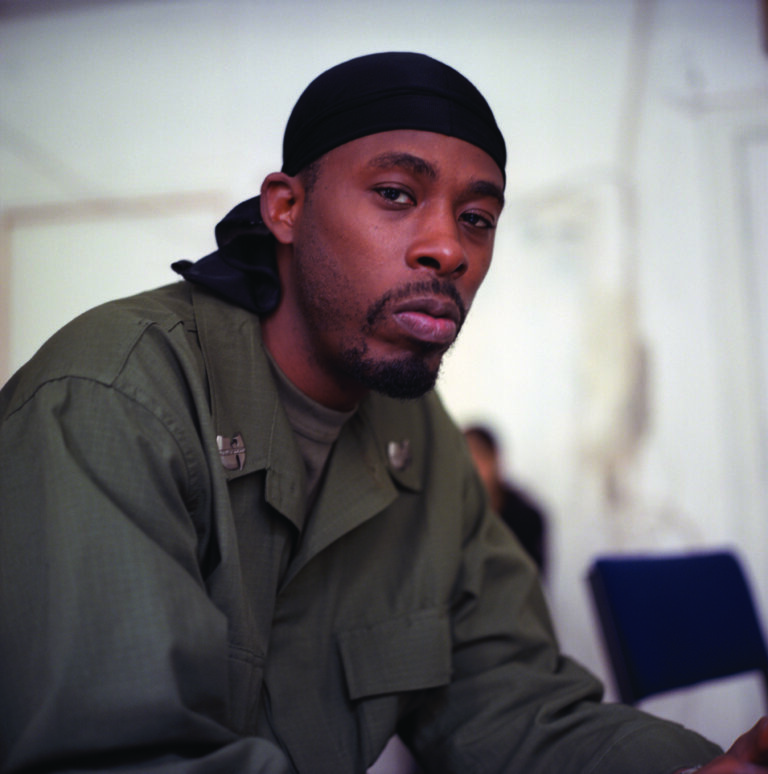
    It has been well established that Wu-Tang Clan remain to be one of Staten Island’s proudest musical groups. However, the groups most recognizable members such as Ghostface Killah, RZA, and GZA stand in the way of the groups lesser known but equally important members. Today, we focus on Masta Killa, one of the more obscure members of the famed Wu-Tang.

    Masta Killa

    Born Elgin Turner in Brooklyn, 1969, Masta Killa, though one of Wu Tang’s lesser known members, proved himself to be a mainstay throughout the group’s evolution throughout the 90’s.

    Masta Killa was the last to join the Wu Tang Clan and, subsequently, was not featured on the group’s debut single, “Protect Ya Neck.” The only Masta Killa feature on Wu-Tang’s debut album, Enter The Wu-Tang (38 Chambers) can be found towards the end of “Da Mystery of Chessboxin’.” Killa was one of the only members of Wu Tang that had not had a technical background in rap with almost zero experience as an MC. While the rest of Wu-Tang was recording verse after verse on 38 Chambers, Masta Killa was concentrating his efforts on perfecting his flow.

    Masta Killa’s absence of rudimentary hip hop techniques led to him being taken under the wing of Wu-Tang founder, GZA. While the majority of Wu-Tang Clan’s members were known for their hyper and energetic flows, Killa and GZA in contrast had a much more relaxed and slow-paced, almost effortless flow. The similarities between the two are evident on the group’s sophomore album, Wu-Tang Forever, which saw improvements in Masta Killa’s technical ability. The two would continue to influence each other’s flow and delivery throughout the remainder of their both careers.

    Masta Killa’s solo career began in 2004 when he released No Said Date which was met with high praise from Wu-Tang fans. Songs such as “Old Man” helped to cement Killa’s solo career which would continue throughout the early 2000s with his latest album, Loyalty is Royalty, in 2017.

  • Jam Master Jay Killers Finally Charged After 18 Years

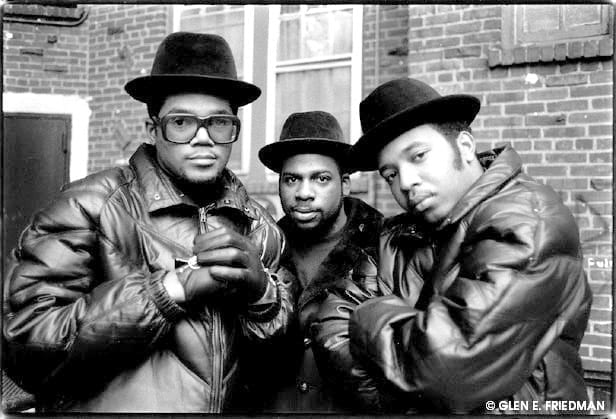
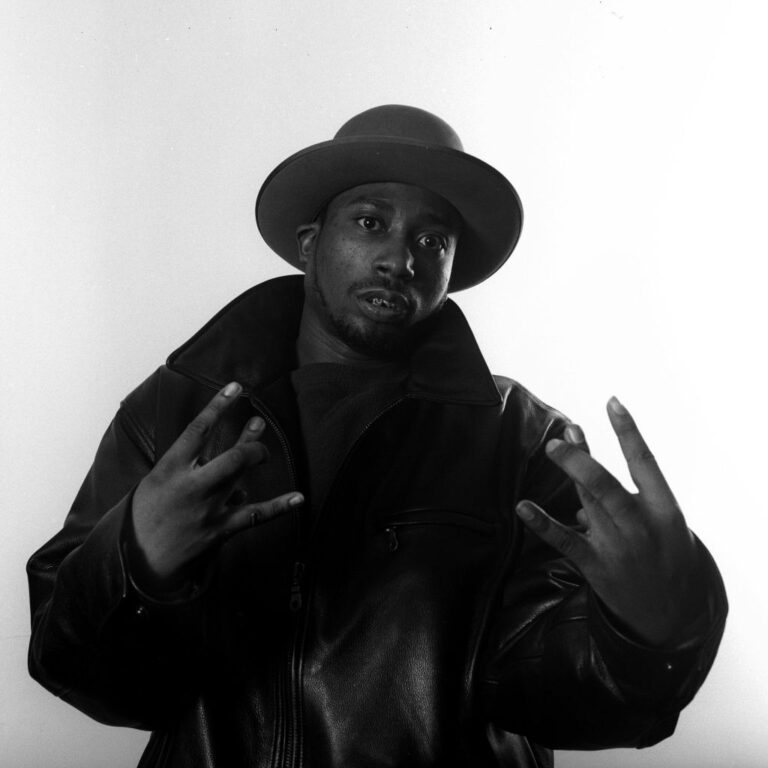
    Jam Master Jay, best known as the DJ for Run DMC, was murdered in 2002 and his murders have finally been arrested after 18 years. Two men who had long been suspects in the case were arrested and charged on August 17.

    Jam Master Jay
    Run-DMC

    Jam Master Jay’s (legal name Jason Mizell) was murdered in his studio in Queens. His murder became notorious in the rap community as being one of the world’s coldest cases. One of the main questions asked by his fans was why this happened, to Jay of all people. Jam Master Jay was known for being a peaceful, old-school DJ whose group rapped mostly about sneakers, girls, basketball and their hometown of Hollis. His murder was baffling to the rap community and finally, after 18 years, there are some answers from New York City and Federal authorities.

    https://www.facebook.com/ABC11/videos/759256228169465/

    According to The New York Times’ article, New York City and Federal authorities blamed the fatal shooting of Jam Master Jay on a cocaine deal gone wrong. The suspects charged with the murder are Ronald Washington and Karl Jordan Jr., who were also charged with engaging in drug trafficking in a 10-count indictment unsealed on Monday in U.S. District Court in Brooklyn. Jordan had his arraignment on August 17 and pleaded not guilty. Washington is expected to be arraigned later in the week. Both Jordan and Washington face minimum sentences of 20 years in prison if convicted. Washington is currently serving a federal prison sentence for six robberies. Mr. Jordan was taken into custody on August 16, 2020.

    Seth D. DuCharme, the acting U.S. attorney in Brooklyn spoke on the matter saying,

    “This is a case about a murder that for nearly two decades has gone unanswered. Today we begin to answer that question of who killed Jason Mizell and why.”

    According to court papers, Mr. Washington and Mr. Jordan are both suspected of breaking into Jam Master Jay’s studio on Merrick Boulevard in Jamaica, Queens, at about 7:30 p.m on Oct. 30, 2002. Both were armed. Mr. Washington forced someone inside the studio to the ground at gunpoint, the papers say, Mr. Jordan fired a bullet into Mr. Mizell’s head, killing him almost instantly, according to The New York Times. 

  • Wavy Cunningham and DJ Mercy Continue the Fight on Two New Projects

    If one thing is clear, it’s that Wavy Cunningham always makes music. I’ve seen him write a song in a notebook, and then release it days later. He never waits. He gave his fan base a week between the releases of his new EP, Fight Back, and album, Club Wavy. They set sails on July 31st and August 7th, 2020, respectively.

    Photo by Zach Hitt

    Always Be Closing

    Wavy might not yet be a household name, but his charisma and performance style converts first time listeners into fans with little effort. That’s how he got me to listen. I’ve seen this happen during live sets, both at shows where he’s the featured headliner, and guest spots on stage too. But his ease around people doesn’t negate his work ethic.

    Unique Style

    In fact, Wavy, along with his frequent collaborator and producer DJ Mercy, enjoy writing, recording, and releasing music in extremely quick succession, unlike certain artists who wait for “outside influences and people around them” to lead to an album’s refinement, Wavy says. 

    Every year, major league record labels dispose of a tremendous amount of resources for their artists to drop a project only once every few years, on average. However, Wavy releases multiple projects per year without a label, so I talked with Wavy about his process, his plan, and his methods. We also dug into his newest work, Club Wavy and previous efforts such as Catch Me If You Can (2016).

    More Music on Deck

    At this point in time, Wavy Cunningham and DJ Mercy have over five projects on Spotify with dozens of smaller EPs, demos, singles, and mixtapes collecting listens on SoundCloud. “We also have a bunch of unreleased projects,” says Wavy. It allows the duo to pull from a vast repertoire of well-written rhymes and vintage samples when it comes to live shows. And Wavy is not concerned about what others are doing. He mentions wanting to go his own way, instead of “running on the hamster wheel,” or following the same pattern that other artists do.

    The New Normal

    Speaking of shows, performance is Wavy’s bread and butter, in my opinion. So with a lot of the world shut down due to the dangers of the COVID-19 health crisis, we might not get to see his live vibe for songs like “Doin’ My Thing,” (one of my favorites) and “1B” for quite awhile. Wavy told me that platforms like Twitch and live streaming methods have allowed him and other artists to put on virtual shows. “We’ve done…a concert on Instagram Live and we pulled out unreleased tracks. It’s cool to [be able to] do that.” Wavy also said that he and DJ Mercy have tentative plans for another Internet set, in which they’ll perform an album from beginning to end.

    Most Improved Goes To…

    Although the concept of recording and turning over material so quickly may seem chaotic, Wavy has a plan for the future, and music waiting to be released. “Each project is a learning experience,” he says, in which he and Mercy have been able to learn from each studio session and improve the listening experience little by little. They’ve made little changes along the way that lead to a steady climb in quality. 

    Notably, Entreband’s MostlyEverything took care of the mix and master to balance out the technical sonics of both projects, and producers Frank Finesse, Phil Dreisin, Hyuka, and N-Pro all lent instrumentals to pair with Wavy’s flow. “We went for more original sounds…this time. There’s less samples and more elements of [live instruments],” Wavy says. These instruments perfectly balance tracks such as “Get Away” (Fight Back) and “Whattup?” (Club Wavy) both of which feature a glassy guitar intro.

    To close the latter of the projects, Club Wavy, Cunningham wrote “All We Need is Love.” This track contains a beautiful tribute to Breonna Taylor and other people who have been killed due to systemic racism and police violence. The swan song perfectly closes both projects and carries a message that will be heard the loudest.

    Verdict

    Overall, Fight Back and Club Wavy are strong entries into Wavy’s catalogue and will stay as his most cohesive work until he comes up with something, which probably won’t be long from now.

    Club Wavy and Fight Back are both available on all major streaming services, with the music video for “Whattup?” being available for views on YouTube and Facebook.

    Key tracks: Whattup?, Get Away, Never Ends, All We Need is Love

  • Wu Tang Wednesday: The art of Shadowboxin’

    Shadowboxing is defined as: “boxing with an imaginary opponent especially as a form of training.” One usually shadowboxes when preparing for a combat sport. Hence the metaphorical brilliance of the GZA — aka the Genius — on his classic album, Liquid Swords. On the LP’s eight track “Shadowboxin’,” GZA and Method Man come together to topple their metaphorical challengers, with Method Man’s verse in particular being considered one of the best of his career.

    Released as the fourth and final single off of 1995’s Liquid Swords (as the B-side to the “4th Chamber” track featuring Ghostface Killah and Killah Priest.) “Shadowboxin’” was produced by cohort RZA, the record samples Ann Peebles “Trouble, Heartaches & Sadness” off of her 1972 album, Straight from The Heart, 1993 hit-record “Slam” from Queens hip hop group, Onyx. As well as, the popular fight scene “Shaolin Monk vs Shadow Boxing Kung Fu” from martial arts film, Shaolin vs Lama

    Along with the looping drum kit, RZA uses turntables and distorts the chopped-up sample for a more grimy and raw sound, a common theme within the Wu Tang Clan catalog. 

    By 1995, Method man had become one of the more popular and in-demand rappers of the time, and while his crossover-appeal would bring an additional audience, it was his performance on said records that would make him a talking point. He set the tone, spewing out “F**k that” within the first couple of seconds of the song, almost like an impatient fighter, who no longer wishes to wait for his turn:

    “I breaks it down to bone gristle

    Ill speaking scud missile heat seeking

    Johnny Blazing, nightmares like Wes Craven

    N*** gunning, my third eye seen it coming before it happened”

    He begins his verse aggressively, with an urgency of a man who has no time to spare and came out firing, with his flow, wittiness and clever word play on full display.

    “Rap insomniac, fiend to catch a n**** snoozing

    Slip the cardiac arrest me, exorcist Hip-Hop possess me

    Crunch a n**** like a Nestle, you know my STEEZ

    Burning to the third degree, sneaky a** alley cat top pedigree 

    The head toucher, industry party bum rusher 

    You don’t like it? D*** up in ya, f*** ya!”

    He calls himself a “Rap insomniac,” conveying that he doesn’t tire of hip hop, while also paraphrasing that he is not to be slept on. The next few words further demonstrate this, as he is so addicted to hip hop culture that he is now a “fiend” and his only fix is to prey on those who aren’t as good or as dedicated to rap as he is, or in his words are “snoozing.” Hip hop is a competitive art form and Method Man makes it clear that he is out to outperform the competition.

    Shadowboxin'
    Rap Insomniac

    While always razor sharp, GZA’s style varies from Method Man’s aggressive approach. Always one to drop knowledge, his delivery resembles that of a slam poet, although he is just as lethal with his pen and confident in his abilities.  

    “I slay MCs back in the rec room era

    My style broke motherfucking backs like Ken Patera

    Most rap n****s came loud but unheard

    Once I pulled out, round ’em off to the nearest third

    Check these non-visual n****s, with tapes and a portrait

    Flood the seminar trying to orbit this corporate

    Industry, but what them n****s can’t see

    Must break through like the Wu, unexpectedly

    Protect Ya Neck, my sword still remains imperial

    Before I blast the mic, RZA scratch off the serial

    We reign all year round from June to June

    While n****s bite immediately if not soon

    Set the lynching and form the execution date

    As this two thousand beyond slang suffocate”

    Shadowboxin'
    Da Genius

    He begins his verse with a jab, as he claims to “slay emcees.” While we don’t know who he is referring to, the ambiguity of his and Method Man’s verses are part of the song’s theme. He rhymes as if his lyrical vigor is directed at one or multiple people, though neither he nor Method Man mention anyone in particular. Or just maybe, their only competition is themselves, and they are simply shadowboxing. 

    The Genius and the late ODB in action

    Method Man gets the final word, with the last verse something of an exclamation point to their lyrical exercise. 

    “When my mind start to clicking and the strategy

    Is mastered the plot thicken, this be that Wu shit

    I don’t give a cotton-pickin’ f**k

    Flying guillotines here they come, bloody bastards

    Hard times and killer tactics, spitting words plus

    Semi-automatic slurs, peep the graphic

    Novel from the genie bottle,”

    Shadowboxin'
    The people’s choice: Method Man

    “Shadowboxin” is one of hip hop’s truly flawless records and helped further the legacies of two of the Clan’s most lyrically potent rappers. This song along with is B-side, “4th Chamber,” are part of the reasons why Liquid Swords is so highly regarded within hip hop circles. 

    It has been sampled by Gang Starr in their 1998 record, “You Know my STEEZ” (a play on one of the records iconic lines). It was also sampled by rapper/producer Tony Touch and fellow Clan member Inspectah Deck and clan affiliate, Killa Sin, on their collaborative “Killa Armee Freestyle.” 

    With Contributions from Maxwell Amankwah

  • A Tribe Called Quest’s Ali Shaheed Muhammad Celebrates 50th Birthday

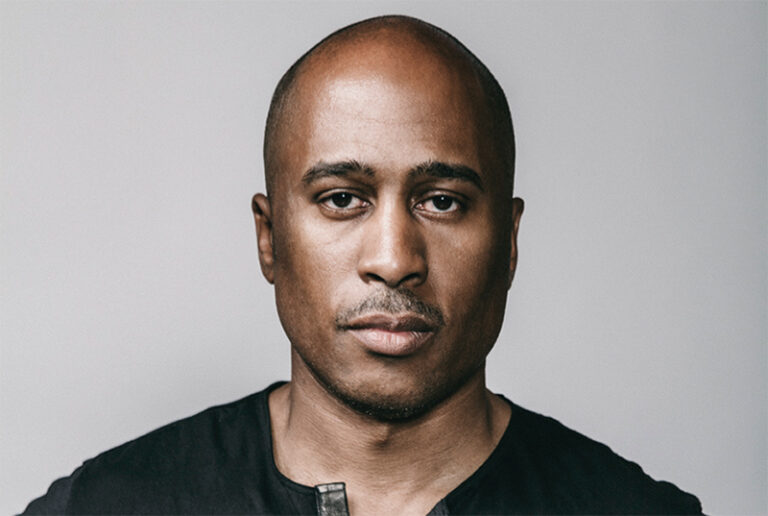
    Give your favorite A Tribe Called Quest album a spin today. The man behind the turntables, Bedford-Stuyvesant’s Ali Shaheed Muhammad, who mixed up the beats that Q-Tip and Phife Dawg rhymed on celebrates his birthday today.

    Ali Shaheed Muhammad

    Born August 11, 1970, Ali Shaheed Muhammad became one of New York City’s underground rap legends. As a hip hop producer, Ali Muhammad is responsible for the early jazz rap sounds that A Tribe Called Quest is known and loved for.

    Growing up in Bed-Stuy, Muhammad’s uncle, Michael Jones, who was a bassist and DJ himself, began teaching him at the age of eight. Ali would DJ parties in his Bed-Stuy neighborhood and recorded demos before joining Tribe in 1985.

    Coming together in the early 1980’s in Queens, A Tribe Called Quest consists of Ali Muhammad (the only member not from Queens), who held the role of co- producer, assisted by the groups main composer, Q-Tip, along with Tribe’s MC, Phife Dawg. Together, the trio would be looked back on as pioneers of the alternative hip hop sounds which are still popular today. Muhammad was just 19 when the group released its first album, People’s Instinctive Travels and the Paths of Rhythm, in 1990

    Ali Muhammad and A Tribe Called Quest rose in popularity through their second album, the 1991 jazz-influenced album Low End Theory. The album was stripped back compared to their previous, with instrumentals consisting mostly of bass, drums, and the regular use of Jazz sampling, all sounds that find themselves synonymous with the underground alternative hip hop scene.

    Later on in 1995, Muhammad co-wrote and co-produced the Top 40 pop hit that launched the neo-soul movement, D’Angelo’s “Brown Sugar,” and earned another Grammy nomination via Lucy Pearl’s “Dance Tonight” in 2000. Muhammad has remixed songs for Janet Jackson, Maxwell, Maroon 5 and KRS-One, and has writer, producer or co-producer credits on more than 20 albums. He would also go on to found The Ummah, a production company with Jay Dee and Q-Tip.

    Throughout the early to mid 90’s A Tribe Called Quest maintained their commercial success through the release of their 1993 album, Midnight Marauders, which saw technical improvements in the groups dynamic. A Tribe Called Quest seemed to be on an unstoppable rise to success however, the group went on an eight year hiatus. Despite not working together during those years, individual members had the chance to pursue moderately successful solo careers until their reunion in 2006.

    Have a great birthday Ali Shaheed Muhammad!

  • Cardi B’s “WAP” Misses the Mark

    Cardi B broke the internet on Friday, August 7 with her new song and video “WAP.” Featuring Megan Thee Stallion, the song serves as a comeback for both of them.

    “WAP” has ignited controversy for many reasons, but its lyrical content is the most conspicuous of the bunch. While sexual subject matter is nothing new for either rapper, they abandon past metaphors and double entendres in favor of a literal approach. There’s nothing wrong with this in theory, but the song coasts solely on shock value. It worked, though: a Republican congressional candidate’s Twitter rant gave them free publicity, and the video is trending on YouTube:

    Although Cardi and Megan’s prior hits were full of catchy hooks and Instagram caption-ready lyrics, both are largely absent here. The straightforward verses are a missed opportunity for them to show off their wordplay, which they’ve weaved with their sexuality in the past. The Frank Ski sample gets old quickly, and Megan outshines Cardi on her own song.

    However, while Cardi often faces accusations of ghostwriting, it’s completely believable that she wrote her own verses here. One line goes, “I want you to touch that li’l dangly thing that swings in the back of my throat,” which is the trademark brazenness that only Cardi B could pull off. Also, as we’ve come to expect from the Bronx rapper, the video’s visuals are stunning. It’s rare that a music video feels like an event anymore, but her surrealist Dr. Seuss take on the Playboy Mansion is truly something to behold. Carole Baskin of Tiger King infamy decried Cardi’s use of big cats in the video, despite their addition in post-production with a green screen. This seemingly random feud most likely began when Cardi defended Baskin’s archenemy Joe Exotic earlier this year.

    Mostly featuring up-and-coming artists such as Normani, Rosalía, and Mulatto, the “WAP” video’s main attraction is Kylie Jenner. Her cameo spawned memes as well as backlash, including a petition to remove her from the video. Besides looking out of place, signees cited her cultural appropriation and alleged mocking of Megan Thee Stallion’s shooting injuries as reasons.

    Contrary to many “WAP” critics’ complaints, the problem doesn’t necessarily lie in the song’s raunchiness, Kylie Jenner inclusion, or use of exotic animals, but how one-dimensional it is. Cardi and Megan have always been outspoken about their sexuality in their music, but they supplemented it with other aspects of their personality and artistry. Compared to “I Like It”’s trap-salsa genius and “Savage”’s boasts of complexity, “WAP” feels lifeless, uninspired, and derivative of their peers.

    Cardi B’s second studio album is set for release later this year.

Built in Breakdance