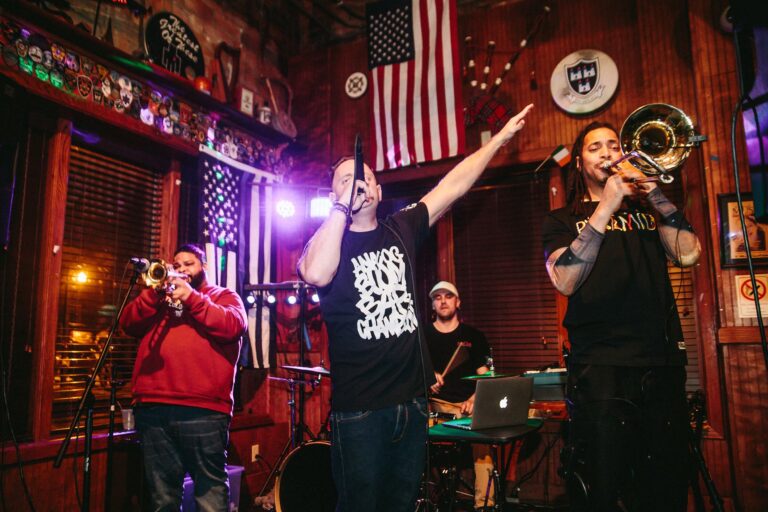
Inner City Bedlam have a stated mission to break the boundaries holding back the inner cities of every city in the nation, to destroy racist ideology while providing the soundtrack to the inner city, and seek to change the face of American culture by providing outlets to educate the world about black culture through music.
David Jonathan and the Inner City Bedlam create an expansive and kaleidoscopic sound, formulated around their love of jazz-inspired melodies and warmly sophisticated rhythms. In teaming up with Chuckie Campbell, they release a stunning remix version of “No Collusion,” which stands out for its modern, organic sound that is polished but not overproduced.
In addition to the edgy performance value, quality production and a balanced mix makes for a lively and stark sonic approach. Many subtle nuances are found in “No Collusion,” which adds to the richness of the track when taken together.
Collaborating on “No Collusion” is Chuckie Campbell, an American recording artist, poet, fiction writer, editor, publisher, and educator who has been named Best Hip Hop Artist by All WNY Music Awards and ArtVoice Awards. Campbell performs with The Black Den, a six-piece live approach to hip hop filled with fluid instrumentation, lush musical arrangements, and heartfelt poetic lyrics.
The year is 2010. Every middle schooler has an armful of Silly Bandz, people still expect Avatar sequels within the next few years, and female rappers are all but extinct—enter Nicki Minaj.
While the Lil Kim and Lady Gaga inspirations were immediately clear, Minaj was still unlike anything anyone had ever seen. Her eccentric accents, peculiar alter egos, and quirky wordplay made her an instant hot topic, sure to reignite the flame of female rap that had petered out with the retirement and incarceration of its biggest stars. It seems unfathomable in an era dominated by Cardi B, Megan Thee Stallion, Doja Cat and Minaj herself, but for a hot minute, she was the lone femcee in a boys’ club.
It’s also hard to believe Minaj’s debut album Pink Friday came out a decade ago. While time has flown by, it feels strange imagining a world without her undeniable contributions to pop and hip hop. Since Pink Friday she’s gone on to see higher highs (and lower lows), but it remains her most heartfelt and cohesive effort.
The Origins
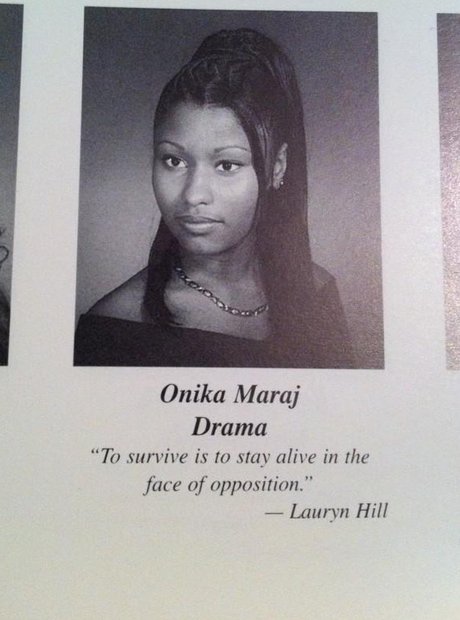
Onika Tanya Maraj was born on December 8, 1982, in Saint James, Trinidad. Her father, who was a drug addict, burned down their house when she was five, which prompted her mother to relocate the family to Queens, New York. Maraj went to LaGuardia High School in Manhattan, the performing arts school that inspired the film Fame.
After gaining recognition from a trio of mixtapes in the late 2000s, Maraj signed to Lil Wayne’s label Young Money Entertainment in 2009. One of her first appearances as the Nicki Minaj we know today was on “BedRock,” a song from Young Money’s debut collaboration album with Lil Wayne and Drake. Both have since become frequent collaborators, with Drake’s star rising at the same time. Minaj soon got to work recording her debut album, Pink Friday, and quickly secured A-list cosigns from the biggest names in rap and pop alike. Eminem, Rihanna, Kanye West and will.i.am all appear on the standard version, but despite some great features, they never quite manage to overshadow her.
The Album
After a year of building hype through featuring on otherartists’songs, Pink Friday was released on November 22, 2010. It debuted at #2 on the Billboard 200, reaching #1 a few months later, and was eventually certified triple platinum with over 3 million sales. It was also nominated for three Grammys, including Best Rap Album. Lead single “Your Love” sampled Annie Lennox’s “No More I Love Yous.”
Minaj’s detractors might dismiss the suggestion of any depth in her discography based off of the raunchiness of “Anaconda” or “Stupid Hoe,” but Pink Friday rarely approaches the subject. It certainly isn’t family friendly, but besides a stray Eminem verse and swearing for braggadocio purposes, the album is surprisingly tame by her standards. The Nicki Minaj on Pink Friday is far more concerned with making history, endearing listeners to a likable underdog, and preparing for world domination. The album is a masterclass in versatility, with each track peeling back a new layer to who she is and what she’s capable of as an artist. Besides mononymous performers with decades under their belt (think Cher or Prince), you’d be hard-pressed to find a better chameleon. She switches between budding queen bee and insecure ingenue with ease, leaving room for her best incarnation: provocateur Roman Zolanski.
His name has aged horribly in the post-Me Too era, but Roman Zolanski is far and away Minaj’s greatest alter ego. A moody, flamboyant, and frankly bizarre character, Roman is essentially Nicki’s evil twin from London. He’s afflicted with Tourette’s syndrome, prone to violent outbursts, and speaks in an exaggerated Cockney accent. During her feud with Minaj, Lil Kim compared Roman to Fire Marshall Bill, Jim Carrey’s character from In Living Color. He’s definitely an acquired taste, but he’s responsible for some of the most creative insults in Pink Friday. Minaj wastes no time eviscerating her idol-turned-nemesis on “Roman’s Revenge,” and on “Did It On ‘Em” she coins her now-famous catchphrase: “These girls are my sons.”
Roman’s incendiary trolling is only one side of Pink Friday, though. Breakout pop single “Super Bass” introduces Minaj as a bubbly, flirtatious, Pepto Bismol edition Barbie (today, her fans are affectionately called “Barbz”). Originally a bonus track, it went viral in early 2011 and is now Minaj’s signature song. The lyrics speak of her prerequisites for romantic partners, most importantly the double entendre in the title. The hook is commonly misattributed to Nicki, but it’s sung by uncredited co-writer Ester Dean. Minaj’s guest spot on Kanye West’s “Monster” makes a compelling case, but the opening verse of “Super Bass” is easily her most memorable. Just say the opening line “This one is for the boys with the boomin’ system” to a group of Gen Zers, and watch them fill in the rest.
Although Minaj’s cartoonish personas still breathe life into Pink Friday ten years later, the album’s most charming aspect is her vulnerability. 2020 Nicki Minaj isn’t remotely relatable, but she was once humble and outwardly insecure. Recorded on the brink of breaking out, she’s happy to revel in her newfound success (see “I’m the Best” and “Blazin”) but often grapples with self-doubt. On “Dear Old Nicki” she admits to missing her life before fame, while on “Here I Am,” she struggles to separate her self-image from external approval. Minaj shows hints of weakness on later tracks (“Marilyn Monroe” and the haunting “Grand Piano”), but on Pink Friday she’s at her most uncensored—emotionally, of course. The ridiculousness of Roman is absent here, but it still makes sense that they’re paired together in the same project.
Minaj’s follow-ups lean too far in either direction—Roman Reloaded gets lost in its absurdism, whereas The Pinkprint is a real downer—but for an early moment in time, she achieved perfect balance. Pink Friday masters pop and rap with ease, and it’s simply funto listen to. The writing is often laugh-out-loud funny, like on the Buggles-sampling “Check It Out,” and surprisingly poignant to those only familiar with the shock value of her derriere ditties.While there have been better female rappers before and after, none are as multifaceted. Nicki said it best on Little Mix’s 2018 song “Woman Like Me”: “Uh, a million, I’m getting my billy on / Greatest of all time, ’cause I’m a chameleon / I switch it up for every era, I’m really bomb / These bitches really wanna be Nicki, I’m really mom.”
The Legacy
A new wave of female rappers has since sprang up, and while she once saw them as competition, Nicki has learned to play nice. Just this year she achieved her first #1 on the Billboard Hot 100, a remix of Doja Cat’s “Say So,” after a decade of being clowned for not having one at her level of fame. Surprisingly, Iggy Azalea and Cardi B both beat her to the punch: previous mega-hits “Super Bass,” “Starships” and “Anaconda” peaked at 3, 5 and 2 respectively. It’s an impressive comeback after a short decline—Remy Ma’s 2017 diss track “Shether” damaged Minaj’s credibility, and her 2018 album “Queen” underperformed.
Almost every female rapper after Nicki would readily admit to idolizing and even copying her. While she’s always been generous with her features, she’s finally begun collaborating with her proteges. Besides “Say So,” she’s appeared on Megan Thee Stallion’s “Hot Girl Summer” and Migos’ “Motorsport” alongside Cardi B. Never mind that their alliance went down in flames—Cardi still paid her respects to Nicki in an Apple Music interview last August:
When I was six, seven, eight, there was a lot of different female rappers. And then, there was a time that there were no female rappers at all. I have to keep replaying songs from the early 2000s. I have to keep replaying it, replaying it, replaying it because for a while there wasn’t no female rapper. And then there was one female rapper that dominated for a very long time. You know what I’m saying? And she did pretty good. She’s been still dominating.
Last Friday, Minaj dropped a 10th anniversary complete edition of Pink Friday available for streaming. It includes all standard and deluxe tracks, as well as Young Money’s “BedRock.” Bonus track “Girls Fall Like Dominoes” could be Nicki’s mission statement: the first verse is about converting male rappers’ fangirls to devoted Barbz, and the second name-drops female music and fashion icons, most of whom Nicki has since worked with. It’s remarkable in retrospect, and encapsulates the essence of Pink Friday: a woman ready to break barriers and celebrate her weirdness. Over the last decade, it’s safe to say she’s more than earned her title of Queen.
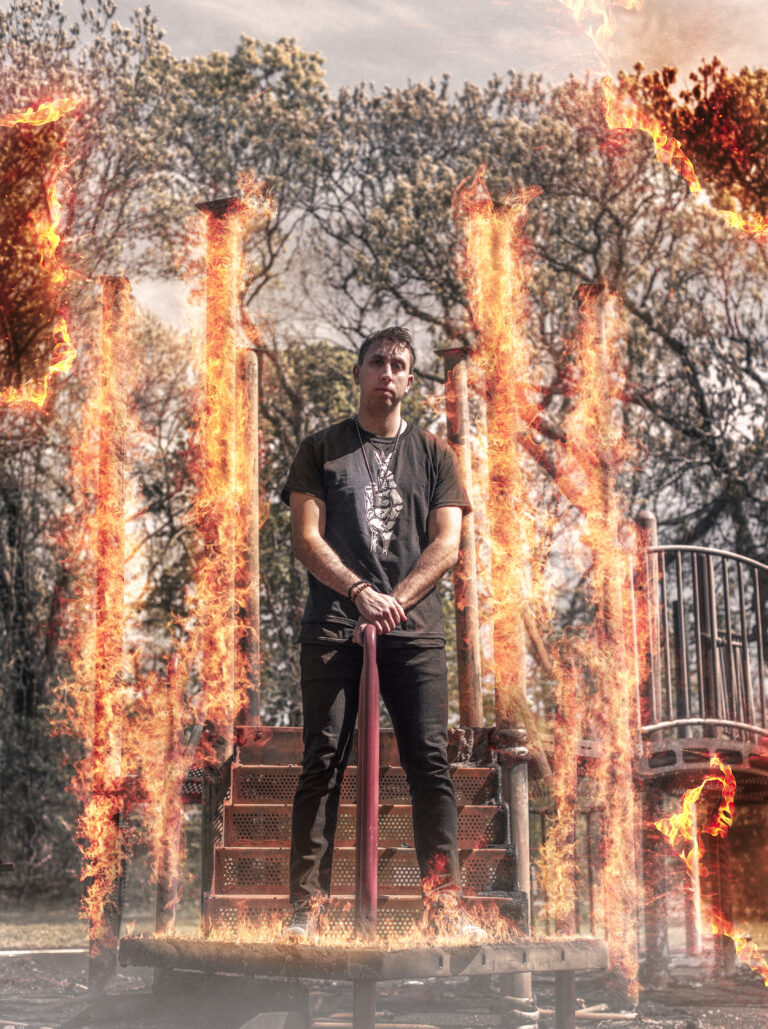
Long Island rapper Nikmoody has been writing his entire life, taking the lemons of life and turning them into more than just lemonade. Case in point: a 1,000-point scorer in both high school and college, Nikmoody transferred his passion for Basketball to the pen after an ACL tear, leading him to a Masters degree in English Literature.
Drawing on influences such as Kendrick Lamar, Atmosphere and J.Cole, as well as Nirvana, Moody creates a conscious lyricism with soul, amid a blend of grunge and boom-bap hip hop. With the release of “Either Way,” he shows growth in style, adding in trap sounds within his strong lyrical base. Experiences of loss and addiction have helped Moody find his voice, adapting his music as he evolves within hip-hop, which he considers to be the most descriptive art form in the world, when combined with pain and passion.
Moody released his first EP, House of Mirrors, in 2017 and hasn’t slowed down since. He has continued to create music, releasing eight singles, ten music videos and his 2019 EP The Quiet One. Moody has performed at SXSW in Austin, headlined at SOB’s in Manhattan and opened for Wyclef Jean, Dizzy Wright, Raz Simone and KOTA The Friend.
Nikmoody works with his passion and continues to release singles, including April’s “Hysteria,” which was written with the guise of trying to bring a unified culture to Long Island. While The Quiet Two is planned, Moody notes below in an interview with NYS Music that it may not surface in 2020, as new projects have his attention.
PeteMason: Recently you posted on Facebook: “I know I haven’t been as active on social media lately. It’s only because I’m locked in. We been experimenting with new sounds, new flows…New music coming very soon.” Inquiring minds want to know – what new sounds and flows do you have coming?
Nikmoody: There’s been a lot of experimenting in the last few months. I wrote that in my post because I’ve been digging into other genres like trap, grunge rock, dubstep. I’ve been trying to find a way to harness the aggression that lies at the heart of my music and display it melodically. It’s been a learning experience but I’m really excited about the direction of the new music.
PM: How has quarantine life been for you on personal and creative levels?
NM: Quarantine has been a rollercoaster. My family got sick early into the lockdown so that was nerve-racking and worrying. But after everyone got healthy, I was still unemployed and stuck in the house. It became a blessing in disguise because it was the first time in my life that I was able to be creative without being in school or having to work full time. It allowed me to broaden my horizons musically and try new things. It also gave me a peak into what life would be like when I turn my music into my full time occupation. That was quite beautiful.
PM: Speaking about sacrifice in an August post, you discuss everyone being on their own journey, closing with “But that is their journey, not mine. I still see 100,000 at Bonnaroo every time I touch the mic.” Is it safe to say that performing at Bonnaroo is a big destination on your own journey?
NM: 1,000%. I’ve been to Bonnaroo twice as a camper (once general admission and once with an RV) and I have to say those were some of the most incredible days of my life. Nothing but music and love in the air. I met a lot of people from all over the world at those shows and to this day, Bonnaroo is the most coveted memory my friends and I have. To play there would be a dream. Chance the Rapper on Saturday night of Bonnaroo 2018 is the greatest show I’ve ever been to. To imagine myself doing the same is fun to think about.
PM: You’re from Brooklyn and Long Island – how did growing up between the two influence your creativity, your love of music, and connection to others?
NM: Well I kind of split time with where I grew up. I lived in Canarsie, Brooklyn until I was 11. Then, my family moved to Merrick, Long Island. Although I didn’t spend my high school days in BK, the attitude that comes with growing up in Brooklyn still sticks with me. It was a drastic difference moving to Long Island. That juxtaposition is vital to me as a person. Coming from a small apartment in a diverse neighborhood and moving to a house in an all white town took a lot of adjusting for me as a kid. I didn’t have a lot of friends growing up. I didn’t know how to connect with my classmates in Long Island. I liked rap, basketball and frequented corner stores. They liked pop punk, lacrosse and traded baseball cards.
It took me a while to fit in but I learned a lot in those confusing times. That’s when I really started to write a lot and just observe people. I never really hung out with one group of people, I wasn’t always with the athletes or the stoners or whatever stereotype you can think of. Fast forward to now and that duality is present all over my music. Learning to combine all these influences into one complete thought has been a challenge but when I do, you’ll know when you hear the song who it is because no one else could make it.
PM: How does The Quiet Two differ from past releases, and how does it connect to The Quiet Ones?
NM: Well I’m not sure if The Quiet Two will ever see the light of day if I’m being honest. I will be dropping some of the songs off that project as singles but I’m not sure if it’ll drop as a full entity. I’ve started working on something else that I’m really proud of. It’s early on but the music has evolved a great deal. It differs in the fact that it’s a bit more modern, the sounds we’re using are more in tune with the times but the lyrics and rhyme schemes have stayed in that old school realm of hip hop. I’m still the quiet one that you got to watch haha.
PM: When did you come up with the mantra “I can turn a negative into a positive with just one line – +”?
NM: I write lyrics on paper for the most part and I was just playing around with symbols one day and that line came into existence. I think it really represents what I stand for and my logo in general. While it looks dark and negative, it’s ultimately positive. We’re spreading hope at the end of the day.
Nikmoody now focuses on the one year anniversary of The Quiet One with the upcoming release of his new single “No Pulse.” Due out on Thursday, November 19 as thanks to his supporters for continuing the journey with him. Given the pandemic and artistic responses to increased isolation and time to create, whatever comes from Nikmoody will surely resonate with his audience.
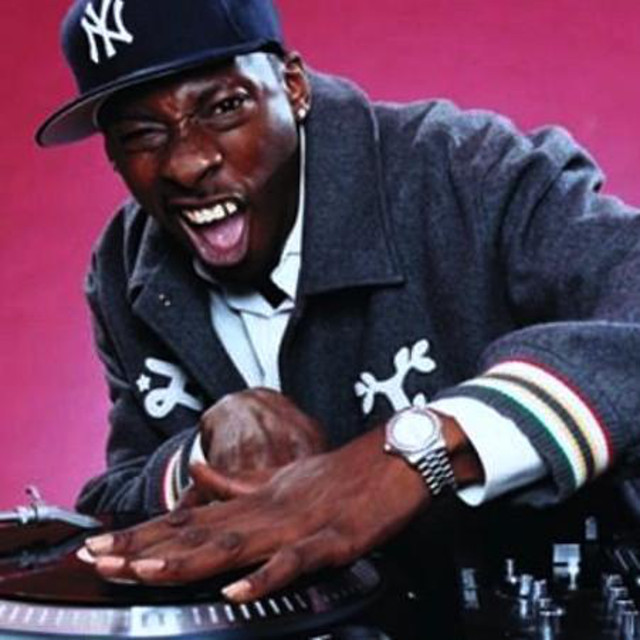
Pioneering hip hop producer, Pete Rock, is set to release the third installment of his PeteStrumentalsseries of beat albums. The Bronx native released the inaugural project in 2001, beginning a trend of beat albums for producers looking to share their un-versed work.
The second edition was released in 2015, with the latest version set to feature his live ensemble, The Soul Brothers.
With the album set to arrive on December 11 through his Tru Souls imprint, the legendary producer released the album’s first single and video “Say it Again” last week. Now he has decided to share the project’s second single, “Rejoice.” Amidst a strong Jazz and Funk influence, the record features looping guitar and drum set, with a strong 70’s feel. Running just over two-minutes, it resembles something of an Isaac Hayes composition, standing as the perfect cross between laid-back and up-tempo, action packed music.
In an interview with OkayPlayer, the fabled producer went into more depth on the song’s creation. “I created ‘Rejoice’ in my basement as just a simple idea of a beat I made in my head. I listened to some jazz that day and heard something interesting and remembered it and just gave the band a direction reference; and they took it from there.”
Known for some of the most iconic production in rap history, the Grammy-winner has taken a different approach to this upcoming album, this time assembling a full-on band. The outfit includes, two-time Grammy-winning drummer Daru Jones, later on recruiting guitarist Marcus Machado, bassists Mono Neon and Christopher McBride, keyboardist BigYuki (A Tribe Called Quest), and vocalist Jermaine Holmes (D’Angelo). “I want the best; I’m like James Brown and Kool & The Gang; I want precision,” Pete Rock alerts.
Of the many fabled rappers that have hailed from Brooklyn, AZ might be the most overlooked. When great Brooklyn emcees are the topic, the usual suspects are The Notorious B.I.G., Jay- Z, Big daddy Kane, amongst others. Rarely is AZ ever brought up and that is seemingly how he prefers it, having given himself the moniker “AZ Quiet Money.”
AZ — whose rise to notoriety came from his classic guest-verse on Nas’ magnum opus debut-LP, Illmatic — has mastered a rare skill in a profession that is filled with ubiquity and hubris. The art of playing the background and biting your time. It also helps that as a famed lyricist, AZ has laurels to rest on.
Which is why it comes as no surprise to see the “Sugar Hill” rapper tease the sequel to his platinum-selling debut, Doe or Die,on his own accord. In an Instagram post which features a teenage picture of AZ and Nas, the caption reads “We been cooking up since 94 & We still cooking.,, Doe or Die 2 Coming soon!”
Although talks of a sequel to his debut can be traced as far back as 2015 (the album’s twentieth anniversary), there seems to be a re-invigoration from the “Mo Money, Mo Murder” rapper, having released a new record — “Found My Niche” — and an accompanying music video earlier this year.
A return album would be AZ’s first since 2009’s, Legendary. The “Firm” rapper (along with close associate, Nas) has gained a reputation for a specific style of rap. While gangster and mafioso Hip Hop ruled the mid-1990’s, AZ’s claim to fame was that while he was from the areas where great dangers lied, his records weren’t always in first person and oftentimes portrayed stories from the neighborhood. In addition, AZ’s knowledge of self and higher learning has always made him a favorite among hip hop connoisseurs, making a possible release to Doe or Die 2,much anticipated.
With the May premiere of Laurel Canyon, its two-part series dedicated to the California rock of the ‘60s and ‘70s, EPIX proved it might just be TV’s best new source for music documentaries. With its latest effort, By Whatever Means Necessary: The Times of Godfather of Harlem, EPIX is heading East and uptown. The mission here is to spotlight the many musicians and the musical genres they birthed, from soul, funk and jazz to boogaloo and proto-rap, that helped inspire social change during the turbulent 60s, in New York City’s most culturally percolating neighborhood.
This four-part series is the counterpart to Godfather of Harlem, the acclaimed period drama featuring Forest Whitaker and Giancarlo Esposito. This Emmy Award-winning series follows the story of Bumpy Johnson, the notorious Harlem gangster who sought his own version of economic empowerment against the Italian mob, in an era when Black men and women had little power or choices for upward mobility. The action of the series spans the decade and is fueled by a soundtrack featuring the best of this very best era of Black music.
The fascinating story of this golden era is told in interviews with musicians like Martha Reeves, Gladys Knight, Herbie Hancock, Carlos Alomar, Nile Rogers, A$AP Ferg, Chika, Gary Bartz and Joe Bataan, along with the activists who were there pushing forward the drive for civil rights like Al Sharpton. It also contains a remarkable bounty of rarely-seen archival footage, of interviews and live performances by giants like John Coltrane, James Brown, Gil Scott-Heron and many more.
NYS Music speaks here with Keith McQuirter, the series’ Executive Producer and Director about what viewers can expect with the premiere of this series, November 8 at 10 pm ET/PT.
Sal Cataldi: The EPIX dramatic series for which your documentaries are a companion, Godfather of Harlem, is set in the ‘60s in NYC, a time and place of incredible change and musical innovation. Why was music so interweaved with and reflective of the currents of that particular time and place, the civil rights movement and the like?
Keith McQuirter: What drew me to do this series was to examine how music was used as a force for good in the fight for civil rights. There is a long history of Black protest and empowerment music and our series looks at the years, from 1960 – 1969, from the point-of-view of Harlem residents. The scripted series, Godfather of Harlem, is really a civil rights story, told in the criminal underworld. Our series focuses on an entirely different palate – how music impacted culture and politics, and how culture and politics impacted the music. It allows audiences to see the national story of the Black freedom struggle through the personalities, music and activism coming out of Harlem.
Harlem was a very political place in the ‘60s. Many black families fled the south due to racial terrorism and sought better economic opportunities, only to be face racism, discrimination, limited opportunity and segregated schools in the New York City. You had dueling philosophies of Malcolm X and Martin Luther King Jr. and the megawatt influence of Adam Clayton Powell Jr, who was both a Baptist minister and congressman representing the neighborhood. You had the Garveyites, the Black Panthers, the Young Lords and some many others in the fight for civil rights. Not everyone agreed on the approach, but they all agreed that it was time for a change. The freedom songs coming out of the Black church, the jazz of John Coltrane, Charlie Mingus, Max Roach and even Chubby Checker’s Twist spoke to power and change. Our series brings it all together through interviews with eyewitnesses, luminaries and archival that gives a unique look at this part of Black history and culture that is rarely ever told.
SC: The first episode spotlights The Apollo Theater, with comments from performers like Martha Reeves of Martha and the Vandellas and Gladys Knight, and even actor Giancarlo Esposito, one the stars of Godfather of Harlem who saw performances there as a child. What are some of the more interesting things you uncovered about the Apollo in your interviews and research?
KM: The Apollo Theater has been a cultural bedrock in Harlem and America for decades. If you wanted to be a star on the national stage, performing at the Apollo was a rite of passage for many artists. So all the greats performed on the Apollo stage. We spoke with Martha Reeves and Gladys Knight, who told us about her first time performing at the Apollo at a very young age. Both she and Martha talked about how nervous they were because the Apollo audience is known to be a tough crowd. If you get booed off, you might get a tomato thrown at you or other unpleasant things. It was interesting to learn the origin stories of these two legends.
But there is a lesser known story that I appreciated. In the late 1960’s, the Apollo Theater had a mentorship program, where they developed and groomed underprivileged, musically talented teens to be professional entertainers. The teens formed a band under the direction of the theater called Listen My Brother, in which 17-year-old Luther Vandross was a member. We interviewed Carlos Alomar of David Bowie Band fame and Robin Clark, both members of the band. They met as teens during the Apollo program and married before their 20th birthdays. Fifty years later, they are still married! It’s a truly musical love story. Their homework was to go upstairs and watch the Supremes and the Temptations — study their grooming, choreography, stage presence and incorporate it into their rehearsals and their own performances. Can you imagine that type of education? Robin Clark shared about how one day Aretha Franklin came down to the basement where they were rehearsing and talked to the teens about the music business. Robin said she couldn’t believe her idol casually made a surprise visit to their rehearsal. Its apparent that the education and mentorship paid off because both Robin Clark and Carlos Alomar have had illustrious careers in the music business for decades.
SC: The series illustrates how jazz, and especially the new breed of free jazz musicians, were reflecting the civil rights movement. How did the works like John Coltrane’s “Alabama” and Max Roach’s “Freedom Now Suite” energize the drive for equality?
KM: John Coltrane’s “Alabama” is a haunting elegy for the four little girls who died in the Birmingham church bombing in 1963, that was recorded just two months after the tragedy, when grief still weighed heavily on people’s hearts. Coltrane modeled the piece after Martin Luther King’s eulogy to the four girls that was delivered three days after the bombing. The saxophone begins in a tone and cadence of profound mourning, and gradually gains complexity and intensity, expressing the steady resolve to continue the struggle against racist brutality. The message in Coltrane’s piece remains relevant today, with racially-motivated violence still threatening the lives of Black people.
I also interviewed Warren Smith the legendary percussionist, who played with so many greats like Miles David, Aretha Franklin, Janis Joplin, Nina Simone and Max Roach. He says that Coltrane was unafraid to express his emotions in ways that were new at that time. He inspired Smith and others to fully lay into their instruments to express their anger and to say something meaningful.
This was in contrast to when most pop music at that time still avoided addressing political and racial issues, in an explicit way. Many jazz artists were fearless about expressing Black rage and resistance through their music. Jazz was the perfect vehicle for conveying the message of resistance, since the genre is deeply rooted in the historical Black experience. So, Max Roach’s “Freedom Now Suite” was a celebration of emancipation and the years of struggle that followed the end of slavery.
The incredible vocalist Abbey Lincoln expressed the anxiety and anticipation of emancipation against a frenetic avant-garde rhythm section. Roach said in an archival interview we found that, “We could never finish the song because we don’t really know how it feels to be free.” We also interviewed jazz saxophonist Gary Bartz, who played with Roach on the “Freedom Now Suite” and he remembers when he found out that the record was banned in South Africa – clear evidence that music could be a weapon for change.
SC: Curtis Mayfield was especially important, as a musical messenger, a sort of pop music poet of the struggle. What was it about him that connected so strongly with the movement and which resonates today?
KM: Curtis Mayfield had come up in doo wop music, collaborating with his old friends from Chicago’s Cabrini Green housing projects. As an artist, he understood the power of music to uplift and empower. He focused on building a viable music career and began to write songs that sent an implicit message of hope to young Black people hungry for change. His song, “It’s All Right,” speaks directly to the young people:
“When you wake up early in the morning, feeling sad like so many of us do, Hold a little soul, and make life your goal, and surely something’s got to come to you. And you’ve got to say, It’s all right…”
The song launched Mayfield’s career and his band, The Impressions, and it captured the spirit of resistance and hope that characterized the beginning of the decade. He later released “Keep on Pushing” capturing the civil rights movement determination for change. There were many artists providing the soundtrack to the civil rights era, but Mayfield is prominent because his music always deliver the message of empowerment.
By the end of the decade, his music had come a long, long way. His lyrics had become explicitly political, and his sound was funkier and more soulful. He released “(Don’t Worry) If There’s Hell Below, We’re All Going To Go” where he calls out the courts and the police as political actors, talks about the drug epidemic and pollution and how all of this decay and corruption is going to bring us all to our downfall. This message juxtaposed to Richard Nixon’s who was just elected president by an overwhelming white conversative calling for law and order and a return to the old America. It all sounds incredibly familiar.
SC: James Brown is another giant highlight in the series, especially the role he played in black pride, in actually changing the racial terminology from “Negro” to “Black” with his anthem “Say It Loud, I’m Black and I’m Proud.” How powerful an impact did this song have in the community?
KM: In the late 60’s, James Brown released an unexpected anthem, “Say it Loud (I’m Black and Proud).” This song made James Brown one of the most prominent performers to celebrate Black identity. Ever since his historic live album recorded at Harlem’s Apollo Theater in the early 60’s, Brown had personified unadulterated, unapologetic blackness. But his lyrics had always avoided politics, and his personal style still reflected an earlier time – especially his hair, which he kept in a carefully-maintained pompadour. By the time this came out, Brown cut his hair and sported an Afro in message with the changing time.
Brown later complained that “Say It Loud” ultimately cost him record sales, radio play and bookings at white clubs; but, at the moment it came out, it was an instant hit. Brown’s words were also taken up by activists across the country, who were marching in a never-ending series of protests – against the war in Vietnam, inferior schools, irresponsible landlords, unfair practices, and all the other problems the community still faced. His music fueled Black resistance and allowed Black folks to freely celebrate themselves and their culture with pride.
SC: How did The Last Poets and Gil Scott-Heron, the pioneers of the fusion of poetry into music, impact their times and ours today?
KM: In our series, we interview Felipe Luciano who talks about his trajectory into revolutionary culture. He was a kid who grew up in Spanish Harlem of Puerto Rican origin, but he consider East Harlem his homeland – not just his birthplace, but the place that made him who is today.
Luciano says that he felt lost when he got out of prison in 1966, but he found his purpose when he met other young Nuyoricans who were developing a radical new political consciousness, inspired by their Black friends engaged in the freedom struggle. He had studied Puerto Rican history while in prison, read the writings of Pedro Albizu Campos, trying to understand why his parents’ generation gave up on statehood and accepted the humiliation of being ‘colonized’ by the U.S.
Activism gave him hope. He was excited by the emergence of the Black Panther Party for Self Defense on the West Coast, and the bold call for Black Power from Stokely Carmichael, a New York-raised activist of Trinidadian origin. He decided it was time for Latin people to work for radical change too. When he heard about the opening of a New York chapter of the Young Lords, a Puerto Rican organization modeled on the Black Panthers, he got involved immediately.
So by the time Luciano became a member of The Last Poets in the late 60’s, he was already a leader in the Young Lords and was a revolutionary. When you hear the music of The Last Poets, accompanied by African-inspired Congo drums, it make sense they were so incredibly free to express themselves, in ways most people just didn’t at that time. They spoke truth to power, but also they just spoke truth, often in incendiary ways, but it freed people to be able to express themselves without barriers or shame.
In an interview, the jazz saxophonist Gary Bartz said it was like a secret language that he and others understood deeply, but not everyone could relate. Hip Hop can be that way too, in that it is specific to a group or even a neighborhood and is not always inclusionary. Luciano believed poetry was just as important as marching in the streets. You see this same reverence for lyrics in young artists today – Kendrick Lamar, CHIKA, Janelle Monae and so many others — they are reflecting the times, giving empowerment and allowing us to be free to be ourselves. The Last Poets showed us freedom of expression in words, and its fitting that they have the designation as being called “The Fathers of Hip Hop.”
SC: The series doesn’t just focus on Black artists but the Latinos of Harlem who forged their own kind of music of celebration and liberation. Tell us about some of them, especially the pioneers of boogaloo?
KM: East Harlem, nicknamed ‘El Barrio,’ became the capital of Puerto Rican culture in the mainland U.S. And although Puerto Ricans became American citizens in 1917, in the U.S. they were still seen as foreigners.
In the ‘60s Spanish-speaking migrants were the majority of the neighborhood’s population, but many of them struggled with poverty, unemployment, and racial discrimination. The language barrier made it difficult to find decent, well-paid jobs, or navigate government agencies. This generation found comfort in the music from back home, and bandleaders like Tito Puente and Tito Rodriguez reigned supreme at the city’s biggest Latin club, the Palladium Ballroom in midtown.
Miguel “Mickey” Melendez, an East Harlem resident, and a member of the Young Lords who we interviewed in the series, spoke about the American-born children of Puerto Rican migrants were growing up as Harlem teenagers, and their day-to-day experiences – and the music they loved – were completely different from those of their parents. These kids went to school with African-American classmates, hung out with African-American friends and neighbors, and danced to doo-wop, soul, and R & B. They would create a new genre of music that gave voice to the intersection of Black and Latin culture — boogaloo, the soul of El Barrio.
Denise Oliver-Velez, another member of the Young Lords, talks about Joe Cuba’s “Bang Bang,” a song, composed spontaneously at a ‘Black dance’ night at the Palm Gardens Ballroom, was one of the first boogaloo songs to launch the craze that swept New York, and then the world of Latin music. It combined English and Spanglish lyrics with an R & B rhythm on timbales and melodic piano, and immediately inspired a wave-style dance. Within weeks, the Joe Cuba Sextet recorded and released “Bang Bang” as a single, and it became one of the most successful Latin recordings to cross over to mixed audiences, selling over a million copies.
When Joe Bataan got out of prison, he tells the story about how desperate he was to achieve his dream of becoming a musician. He had the reputation of being a gangster at that time and would sneak into a local school to play the piano. One day, he discovered a group of musicians using ‘his’ practice space, so he stuck a knife in the piano and told them that from then on, they would be his band. He wanted to make a name for himself and hoped that music would save him from the cycle of gang violence and incarceration.
After a debut recording that went nowhere, Bataan’s first hit was a boogaloo cover of the Curtis Mayfield ballad “Gypsy Woman,” spiced up with Latin percussion and an irresistible hook. All the band members were shouting “She smokes!”. Bataan remembers how, in 1966 and 1967, you could hear boogaloo echoing throughout the neighborhood – and how proud he was, coming from the streets, to representing his neighborhood in a way everyone could celebrate.
For Felipe Luciano, Boogaloo was more than just party music. It was an expression of Nuyorican identity, giving voice to their generation’s rage against the discrimination their parents had faced, and demonstrating their deep connection to the Black struggle. In its own way, boogaloo was a music of defiance against ghetto life and the elusiveness of the American dream.
SC: The series contains so much remarkable archival footage that is largely unseen. What are some of your own favorite moments of the musicians on film that you unearthed?
KM: For a nerd like myself, archival research is a fascinating, deep dive exploration that can take you on many adventures. Finding archival of Max Roach and Abbey Lincoln performing “Driva’ Man” and “Triptyh: Prayer / Protest / Peace”from the “Freedom Now Suite” is like finding gold. I could not stop watching it over and over again.
I also enjoyed unearthing Apollo performances from Martha and Vandellas and other Motown acts. To see these entertainers as teenagers in archival footage, who I’ve known my whole life to be legends and then getting to interview them too, it was just incredible. Artists like Herbie Hancock and Gladys Knight are of my parent’s generation, so their music was always a part of the soundtrack of my life.
I really love the archival we found of the Last Poets performing “Hey Now” and “Jibero, My Pretty N****. “ New York indie filmmaker Herbert Danska filmed them on a Harlem rooftop for his film Right On! A film that screened at the Director Fortnight in the 1970 at the Cannes Film Festival. It shows three Black men on a rooftop – Felipe Luciano, David Nelson and Gylan Kain – with a percussive accompaniment performing poetry. It’s rough, raw, and a bit strange. It’s truly great stuff.
SC: The ‘60s were a pretty special time, an era where music really helped, as Giancarlo Esposito says in the series, becoming “the force that gave the people strength.” Do you think music has the same impact today?
KM: Every time I visit a Baptist church and sing those old songs that my grandparents and great grandparent sang, I feel uplifted, and some of those songs have been around for hundreds of years.
Music is healing, empowering and motivating. It reenforces the stories of our lives and reflects our dreams, hopes and ambitions. Music is culture. And, culture is inherently political. This year has seen a proliferation of protest music by known and unknown artists. It’s a tradition that has been passed down generationally and young people are making it their own, especially through the use of social media. Most of the musicians I spoke to for this series have expressed how inspired they are by activism happening today in music. The work from the ‘60’s civil rights movement never ended because we still are facing police brutality in our communities, disparities in healthcare, massive incarceration and gun violence – we have so much work to do. The musicians have a role in providing us and generations of activist to follow soundtracks that empowers, uplift, affirms our identity and our humanity.
In honor of hip hop icon The Notorious B.I.G.’s induction into the Rock Hall of Fame, Pepsi released the remastered version to his one-of-a-kind Pepsi freestyle from 1997. The brand-new audio sparked online conversation about whether or not it was meant to be an ad. Nonetheless, the marketing tool was a success and brought attention to the fallen legend’s upcoming ordainment into the Rock Hall.
Furthermore, Pepsi have doubled down on their celebration of the “Juicy” rapper with a newly announced “BIG Pepsi Freestyle Challenge.” Partnering with flagship New York radio station, Hot 97 — where B.I.G.’s original freestyle was recorded – Aspiring recording artists will have an opportunity to showcase their lyrical prowess with the ability to earn numerous prizes in the process. Using a beat provided on Hot 97’s website, entrants are to deliver their best freestyles mentioning Pepsi along with posting it on their social media outlets using the hashtags #BIGPepsiFreestyle & #Hot97Contest. A winner will be named a Champion plus four free nights of studio recording time and one week of digital market on Hot 97. Freestyles must be submitted by Friday, November 6 at 11:59 p.m., while official contest rules can be found here.
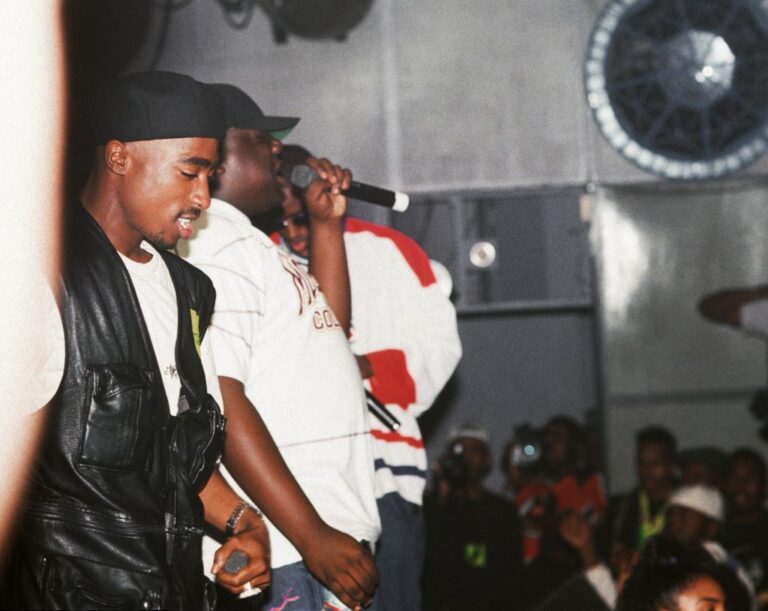
NEW YORK – JULY 23: Rappers Tupac Shakur, The Notorious B.I.G. aka Biggie Smalls (Christoper Wallace) and Puff Daddy (sean Combes) perform onstage at the Palladium on July 23, 1993 in New York, New York. (Photo by Al Pereira/Michael Ochs Archives/Getty Images)
Known for his mind-blowing freestyling, songwriting, intricate rhyme schemes and off-the-cuff delivery, The Notorious B.I.G.’s Rock Hall of Fame indication comes as no surprise. He will headline the 35thannual class of Rock Hall inducteeswith the likes of Whitney Houston, Nine Inch Nails, The Doobie Brothers, amongst others. With a short career spanning only four years (he debuted in 1993 and was shot and killed in 1997), The Notorious B.I.G was able to transcend pop culture with his debut LP, Ready to Die, along with his posthumous diamond double-disc album, Life After Death. With hit records such as “Juicy,” “Hypnotize,” “Mo Money Mo Problems,” the Brooklyn bred emcee set a standard for lyrical competence combined with stylish bravado, leaving many following in his footsteps.
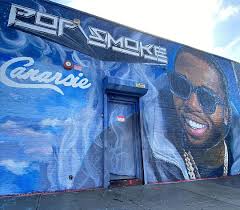
Fallen Brooklyn drill rapper-turned-superstar Pop Smoke had a career that was as short as it was promising. The slain rapper’s posthumous debut album — Shoot for the Stars, Aim for the Moon— not only debuted at number one on the US Billboard 200 (being certified platinum only one month after its release), but also accomplished the rare feat of having all 19 of its tracks simultaneously chart on the Billboard Hot 100. Spawning four RIAA certified platinum singles in “Mood Swings,” “For The Night,” “The Woo” and “Dior.”
The Canarsie, Brooklyn bred artist — whose death at only 20-years-old on February, 19 resulting from a botched robbery— was justly honored at the 2020 BET Hip Hop Awards. Migos stalwart, Quavo, led the tributes with a two-song performance of collaborations he shared with the late rapper. Beginning with “Shake the Room” off of Pop Smoke’s first project of 2020, Meet the Woo 2 and following up with “Aim for the Moon,” from his latest LP.
With adjustments made for COVID-19, the Atlanta emcee performed his portion of the records in a music video style setting, being placed in a white, futuristic, space-themed room, while images of the perished neophyte and his lyrics appeared in the background.
Despite no longer being among us, Pop Smoke’s presence in popular culture is unwavering, with the “Welcome to the Party” rapper also being awarded best new Hip Hop artist in his lone nomination of the night.
The success of his latest project has also proven to be a legacy booster as Shoot for the Stars, Aim for the Moon, recently reclaimed the top spot on the Billboard 200, three-months after its original release. And with a new music video for “Aim for the Moon” recently shared, it’s clear that new content for Pop Smoke is still in the works.
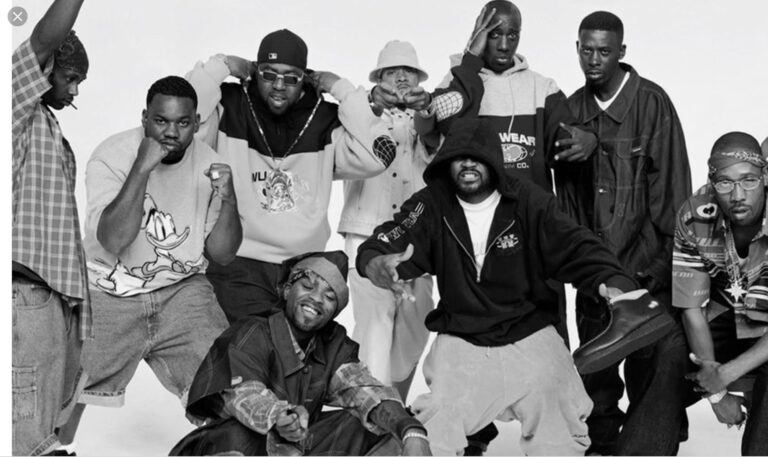
After a groundbreaking debut album — Enter the Wu-Tang (36 Chambers) — and a host of successful solo projects (GZA’s Liquid Swords, Method Man’s Tical, Raekwon’s Only Built 4 Cuban Linx, to name a few), the clan were in high-demand. They had accomplished a rare feat in the world of music. It established many of their members as individual stars, whose popularity could rival the group’s.
The ego that accompanies success of such magnitude is liable to create division within any faction. It helped break up the Fugees. The clan is no ordinary group. Displaying their idiosyncrasy within a world of hip hop came with the release of their second LP, 1997’s Wu Tang Forever. The lead single “Triumph,” was a record that rang through the air waves. It was the first (and only) song where all nine Clan members rapped on. Moreover, it also introduced affiliate and later member Cappadonna.
The record ran for 5 minutes and 38 seconds, with no chorus or break, except for the energetic opening monologue from Ol’ Dirty Bastard and a short interlude. Inspectah Deck began the track, followed by Method Man, Cappadonna, ODB’s interlude, U-God, RZA, GZA, Masta Killa, Ghostface Killah, with Raekwon concluding the record.
About the Track
In an interview with Power 106 radio station, RZA broke down the production on the record. He divulged that they recorded “Triumph” in Los Angeles. Musically he combined his new Yamaha keyboard V71 series with his ASR-10, MPC and Nord lead keyboard. His goal was to make a track with classical sounds, but still grab hip-hop with a touch of soul. While the drums meet classic hip hop, the strings added a new element.
When asked about not having a chorus, he explained that for every Wu-Tang project, he wanted to have a song that reminded the people of their first record “Protect Ya Neck” with great rapping and a strong beat to compliment.
Speaking to DJ Vlad, Inspectah Deck — whose opening verse is one of the most-heralded in hip hop history — he acknowledged that using his “Triumph” verse twice helped his legacy, as it was originally recorded for Tony Touch’s 50 MC’sVol. 1 tape. RZA made the beat at around 5 a.m., as he and Ol Dirty Bastard were the only ones up. Inspectah Deck explains he could hear the kicks and snares from his room. He knew it was a smash-hit. He got up and asked to get on the record. Later that day the rest of the group had jumped on as well, because his verse was so outstanding.
Sampled to Example
“Triumph” samples “Just Found Me” and its multiple elements of soul, disco and fuck music, by the Rance Allen Group. It also sampled “To the Garden of the Temple” from the 1983 film Duel to the Death, and some lyrics from “Da Mystery of Chessboxin” from the Clan’s own 36 chambersLP.
Besides the mind-blowing lyrics and production, “Triumph” is known for its incredible video, with Rush Hourdirector Brett Ratner behind the camera. It was one of the more expensive music videos of 1997 costing around $800,000. The video begins with breaking news: a massive swarm of killer bees attacking New York. Ol Dirty Bastard is up on a skyscraper surrounded by police helicopters and officers with their guns drawn.
Interesting enough, ODB wasn’t actually in the video. Always one to act on a whim, Ol’ Dirty was uninterested in filming the video since he didn’t have an official verse, he left the set before filming began. It forced the director to get a stand in.
Inspectah Deck is seen climbing the side of the building when “ODB” jumps off, as the bees follow in his path. Meanwhile Method Man and the other Clan members arrive on motorcycles, shooting fireballs at the bees. The bees are then seen passing through Cappadonna’s lair while U-God is seen burning down the forest. RZA appears with angel-like wings, later transforming into the killer bees and killing the Alcatraz prison guards. We then see GZA from space viewing the mayhem. A celestial God like figure.
During GZA’s verse there is a brief cut to the 1915 film The Birth of a Nation, he then makes a gesture to the bees and they swarm back down to Manhattan in the form of Masta Killa who stood on a tower in the form of the Wu-Tang Symbol. A crowd gathering around him. At the end of the video, the bees make their way to a club where Ghostface and Raekwon are raping, with Quincy Jones is in the audience.
One of the strangest and creative visuals in hip hop history “Triumph” changed how people looked at videos all together.
Lyrical Highlights
While he didn’t have an official verse, Ol’ Dirty Bastard left his mark in his own unique way.
“What? Y’all thought y’all wasn’t gonna see me?
I’m the Osiris of this shit
Wu-Tang is here forever, motherfuckers
This like, this ’97”
Inspectah Deck began the song with his now-legendary verse that made him known as hip hop’s “set it off” man. He makes listeners immediately wake up with his intricate rhyme patterns and word choices, taking over the record.
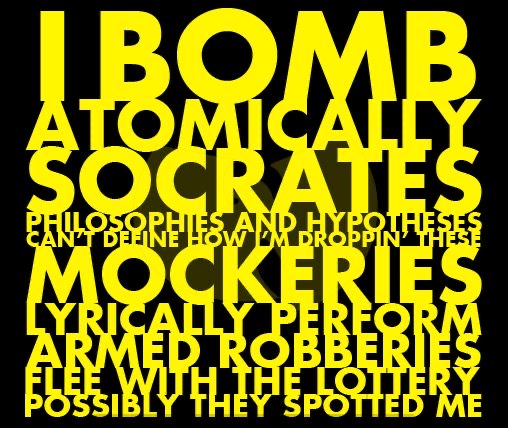
“I bomb atomically, Socrates’ philosophies and hypotheses
Can’t define how I be dropping these mockeries
Lyrically perform armed robbery
Flee with the lottery, possibly they spotted me
Battle-scarred Shogun, explosion when my pen hits tremendous
Ultraviolet shine blind forensics
I inspect you through the future see millennium
Killa Beez sold fifty gold, sixty platinum
Shackling the masses with drastic rap tactics”
Cappadonna rapped like he had something to prove being that he had to live up to what the others were doing. He wasn’t an official member at that point but you couldn’t tell with how he was flowing.
“I twist darts from the heart, tried and true
Loop my voice on the LP
Martini on the slang rocks, certified chatterbox
Vocabulary ‘Donna talking, tell your story walking”
Creating A Legacy
“Triumph” is one of Wu-Tangs most legendary tracks and it holds a special place in hip hop history. Their rapping ability was never in doubt, but the music video gave them a chance to showcase their visual creativity. As we look back at some of Wu-Tangs best tracks, “Triumph” stands the test of time because it epitomizes Wu-Tang Forever and as the lead single it exceeded expectations, as many radio stations and labels initially didn’t want to run the record because they felt it was too long. It’s safe to say, the Clan proved all doubters wrong.
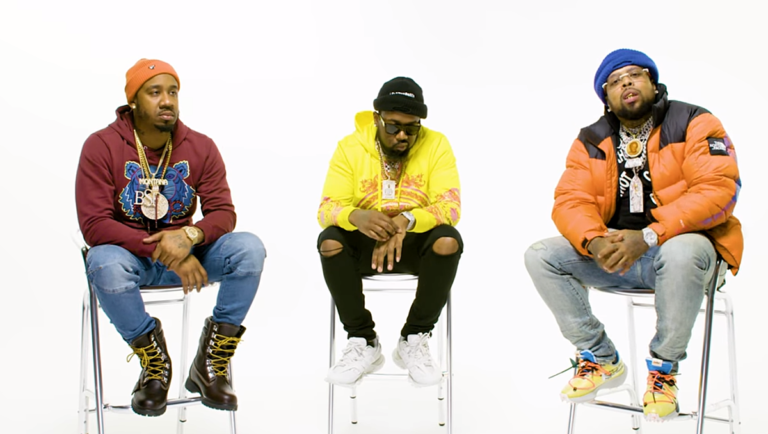
Griselda emcees refuse to rest on their laurels. A week after the label’s visionary/founder Westside Gunn released what he announced would be his final album, his cousin — and arguably the label’s best rapper — announced his latest project and it is more star-studded than ever. Burden of Proof, the upcoming studio album from rapper Benny The Butcher will bookend what has been an increasingly productive year for the Buffalo-bred rap crew.
While the album’s existence was no surprise (Benny the Butcher had been teasing a project for weeks on his various social media outlets), the Shady records signee revealed a list of features as well as a release date. October 16th will see the release of the much-anticipated project, which is two weeks after Westside Gunn’s WHO MADE THE SUNSHINE and a month after Conway the Machine’s From King To A GOD.
With Griselda’s ever-growing popularity, we are starting to see more diverse features and song choices in each respective album. Known for their grungy street-tales, chorus and catchy melodies aren’t a part of the Griselda package, yet this list of features gives a hint that this latest project will see BTB try his hand at different song arrangements. Produced entirely by famed producer Hit-Boy (who also handled the entirety of the production on Nas’ latest album), Burden Of Proof will feature the likes of Lil Wayne, Big Sean, Rick Ross, Freddie Gibbs, West Coat emcee Dom Kennedy, popular up-and-coming R&B songstress Queen Najia, as well as his cousins and frequent collaborators, Conway the Machine and Westside Gunn. This is an important album in what seems to be a concentrated effort to solidify the Buffalo trio as the prominent emcees in not just their city, but the whole state of New York as a whole, a tittle that has never been held by anyone not from the five boroughs.