Category: Interviews

  • Time Warped: Saturday Storm Warning in Atlantic City

    For those of us 25 or younger, Vans Warped Tour has spanned our entire existence – an accumulation of memories, music and friendships interlocked like puzzle pieces from across the country. Each individual has intertwined their story – that admits them into the Warped family. A place where most narratives overlap: growing up listening to pop-punk and rock or aspiring to be on the big stage, old attendees now take the main stage, influenced by the masses before them. Fans threw down, attacking their most inspirational bands with vigor in the pits, belting lyrics verbatim spewing with good vibes, and sand.

    Last weekend marked the second final Vans Warped Tour for a 25th Anniversary bash, after curator, Kevin Lyman announced the ‘last’ run in 2018. The tour was on its East Coast stop in Atlantic City, New Jersey for a jam packed weekend of music on the beach. Nearly 60,000 people crowded the beach to send off the tour in natural rockstar fashion. Promptly at noon the boardwalk was lined for miles with distinctly Vans Warped veterans, band t-shirts and friends to see their favorite headliners from Blink-182, A Day To Remember, Simple Plan, Good Charlotte, 311, CKY, Taking Back Sunday, Andrew W.K. and so much more. 

    Check out Zach Belfer’s Vans Warped Tour Gallery Here!


    The sun was blistering overhead Saturday afternoon as Manhattan’s own, Matt Butler took an early set on the Monster Energy Stage. The folky, singer-songwriter gave a refreshing outsider’s perspective that pushed Warped fans outside of their comfort zone. Butler has gathered the sounds and stories of the road, shaped in ‘Warped’ roots; he grew up playing in punk and rock bands at CBGB’s and Arleen’s on the lower East Side. “My Favorite bands in high school were Nirvana and Fugazi… my favorite album was Ten by Pearl Jam,” said Butler. “I got more into folk and songwriting because of a band called The Replacements and Bruce Springsteen [laughing]. That’s always the bridge – as we say that in Boardwalk Hall, very appropriate.” 

    Butler’s contrasting genres is something that stacks his arsenal, using it to his advantage. “Our presentation is so different than everybody else’s that it has its own draw. I played on Warped Tour all last summer solo – me and an acoustic guitar only. For the 25th anniversary show I wanted to bring a full band, but we were never going to try and compete with some of the other groups here, so we kept it as intentionally stripped down as possible… And I figure im the only harmonica player on the tour at the moment [laughs]. Ya Know.” 
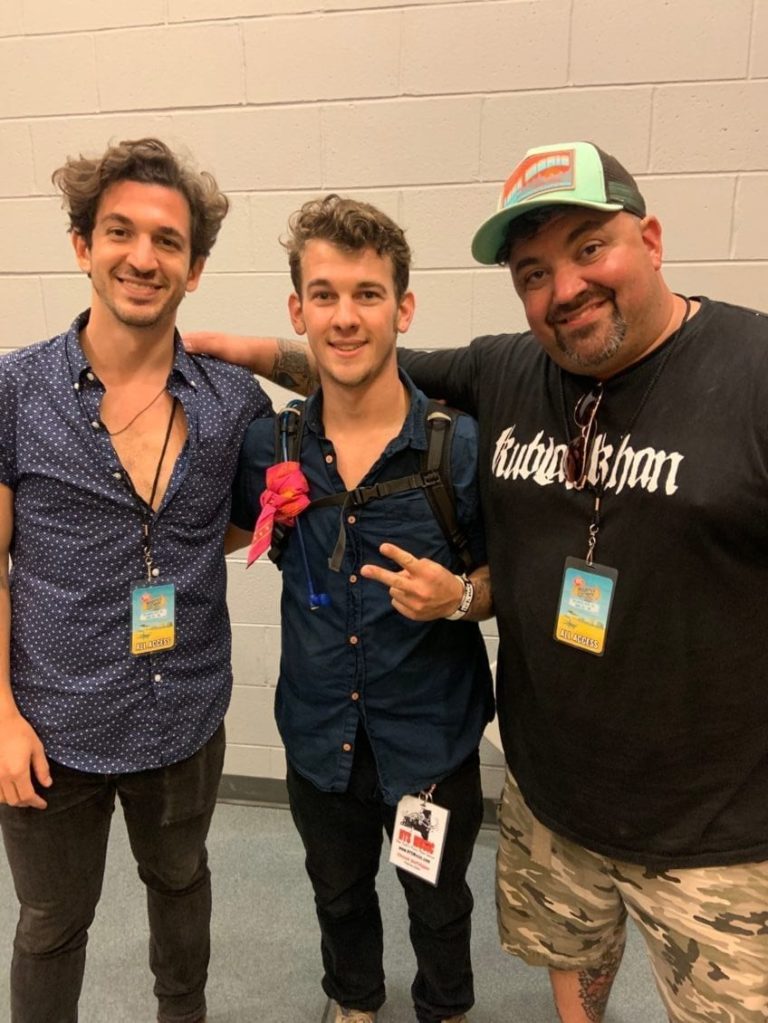
    Manhattan’s Matt Butler, Chuck DeFilippo (NYS Music) and Tour Manager Mario Diurno

    I was drawn to music for as long as I can remember, but music seemed very difficult and inaccessible. As a kid I was pretty insecure and wanted to do things where I was confident I could do it well. I felt like it was this equation: 49% terrified and 51 % desperate, enough to where I have to try this. You have to risk being rejected and judged. That’s part of the plan, that it’s so scary. I think that whatever you’re scared of doing most, that’s probably what it is that you’re supposed to be doing – on an evolutionary level.”

    Matt Butler

    His story is unique, capturing the heart of Vans Warped Tour evolution. As Butler is on the brink of studying music, learning jazz and notation, he taps into the vividness of creating something new. “I tell ya what man, anytime you make something new for yourself again you always remember how exciting it can be and why you live it.”

    “I haven’t played with a band in a while, so playing here today I felt pretty pumped.” Backed by Astoria’s Holy Vulture siblings, Misia and Dante Vessio, the world drum and bass duo allowed Butler to become vulnerable to punk fans. This kick off was the start of a reunion; for Butler he was looking forward to seeing old friends, one playing drums for Tatiana DeMaria and another playing bass for Glassjaw. “It’s funny because the three of us actually played Warped together a couple years ago at Jones Beach. It’s an honor. It’s such an institution of a tour and Kevin is someone to idolize on some level, he’s just a great guy.”

    Butler’s set featured numerous tracks recorded this past March, but not yet released including soon-to-be single, “Tell Lucy That I Love Her.” Butler wrote the tune inspired  by a tour of state prisons, and at this point he has played around 200 jails in the past 16 months. The idea quickly boomed from a fan-funded endeavour to Butler securing his 501(c)(3) non-profit, to officially bring curated arts programs to jails and underserved institutions – a heart-wrenching inspiration and driver for his music. At certain times it can be as little as four people in a room where they collectively share stories, experiences and music. “It’s a way to see the country, I’ll tell you that. This new song (Lucy) comes from the perspective of someone incarcerated.”

    “I can talk about the storytelling component forever. What we’ve done, and what I see it as – we just travel the country with an acoustic guitar telling stories. I think if you do that long enough and you’re open to it enough you can tap into collective consciousness and that’s where stories and songs get channeled from – and hopefully it resonates and connects with people.” 
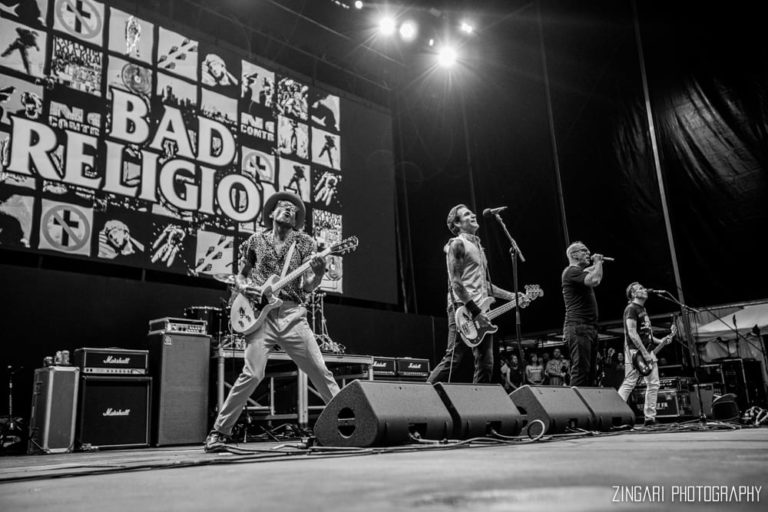

    Bad Religion takes “Off The Wall” MainStage.

    The day saw Less Than Jake, Travie McCoy, Bad Religion, CKY and many more. Fans crowded each stage, big or small and shifted with the tide between the well crafted set changes. Each band drew their most loyal fans in, while the tides washed curious listeners in, late into their sets. The day was hectic with freestyle motocross over head and an arching half-pipe backdropped by the Atlantic Ocean. Afternoon sets from Shiragirl and Kaleido, who NYS got to speak with, kept the anticipation high.  


    Kaleido 2019: Cody Morales, Christina Chriss, Joey Fava. Photo by Steve Sergent. Courtesy of NP!M PR and Marketing

    As the day started to settle in, a dark cloud loomed over the beach. Detrioit rock band, Kaleido, anxiously awaited a pre-set storm as frontwoman Christina Chriss yearned for the stage. “We were one of the last bands that got to play Saturday due to weather and we were just freaking out. This big grey/black cloud was coming ever closer And I thought: this is gonna start right when we go on, like are you kidding me?” It didn’t. 

    “We’ve played random dates and cities on the warped tour since 2013,” said Chriss. “So it’s really, really, special to be apart of the 25th anniversary; Kevin just knocked it out of the park like he always does. This lineup is just insane. I have been jokingly saying: it’s woodstock for scene bands – straight up. It is s just fucking amazing, so were really honored to be apart of it. A bunch of bands that were huge influences of ours have a big hand in influencing all those things that you collect, and it comes out [in Kaleido’s music]. A lot of these bands are apart of that.” 

    Kaleido’s set was no different, a band that draws on so many diverse forms of art. They’re heavy pop, emotion and life wrapped into an ever-changing tube. Their newest single, “Pretending,” was released two weeks ago – a heavy-driving tune that you’ll be sure to throw down to, and swept fans at Warped. The rest of the EP will be out July 19 and is the truest, purest form of what Kaleido really is; Chriss affirmed. 

    “Inside of the kaleidoscope are a bunch of different pieces: the different colors, the different shapes – they all come together to make one beautiful image, that as you shift can change. I feel like I am that as a human with all of those influences and all of that music. 

    Christina Chriss, Kaleido

    ” I am a chameleon type of person. I like lots of different things. I’m not in just one lane,” intensley weaving her hand through the air, her palm set to kill. “So I take all of those things and internalize that, and then let it out the other way with the creativity of writing songs. All audio and video come together to create my art,” inflecting hints of passion through her midwest accent. “I am the human kaleidoscope.”

    Front-woman Christin Chriss. Photo by Steve Sergent – Courtesy of NP!M PR and Marketing

    Chriss touches on basic human emotions and songs that people easily relate to. Kaleido’s high energy shows become intense, as if the dawn of a storm, piercing fans like lightning. “I like to connect with people from the stage and enter their souls with my eyes. Come get some,” said Chriss as she broke into an evil-type laugh.

    As the rain broke, lightning bridged the sky and boardwalk. What about A Day To Rember? What About 311? What about Wage War? Are They Gonna Play? I wanna wach ‘em! – Chriss thought aloud during our interview with excitement and color. 


    Jeremy McKinnon, A Day To Remember.

    After a two hour delay the desolate beach grew new life as everyone recovered. It was a timid storm in the wake of Saturday’s headliner, A Day To Remember. The beach went dark with silhouettes spanning the entire boardwalk. ADTR showed no mercy kicking things off with “2nd Sucks.” Vocalist Jeremy McKinnon, announced “Sticks & Bricks” was named from the security guards of the Vans Warped Tour, a song not originally printed on the setlit. Security had a signal alerting that the crowd was going to be insane, foreshadowing the moments to come as the band let loose into a storm warning. 

    A Day To Remember has a unique ability to contrast intense breakdowns with driving lyrics and melody, blending worlds of warped. The set list showed little rest as people toppled over each other and McKinnon enticed ‘crowd-surfing a crowd-surfer.’ Driving through  “All I Want,” “I’m Made of Wax, Larry, What Are You Made Of?” and “The Plot to Bomb the Panhandle” bodies passed overhead and we were lost in this ocean of people, only to letup for the sentimental acoustic “If It Means A Lot To You.”

    Suddenly a harmonious beach began to sway, with lighters overhead. Par for the course would be closer, “The Downfall Of Us All” – a fitting end to the day. New and old fans alike created a community in and outside of the pit. A Marshmello character emerged with a t-shirt cannon celebrating the band’s most recent single and collaboration with the EDM star.   It was just nuts. In the short 40-minute set we left dripping sweat and covered in sand as nearly 60,000 people slowly evacuated the beach, yet again.

    Slowing down for “If It Means A Lot To You,” fans lit the sky of Atlantic City beach for ADTR.

    Read Part Two: Vans Warped Tour: Sunday On The Beach

    Part 3: Brooklyn’s Shiragirl Empowers Female Musicians With Punk Edge: The Post Warped Interview


  • Interview: Oliver Wood Returns To Upstate With Two New Albums

    Beak & Skiff Apple Orchards is set to host The Wood Brothers and Lake Street Dive with an incredible night of music on July 26 in the rolling hills of Central NY. Lake Street Dive is touring behind their 2018 album Free Yourself Up. The Wood Brothers, fresh off a Grammy nomination for “One Drop Of Truth,” will share the bill. Oliver Wood took time to speak to NYS Music to share the news on two new upcoming Wood Brothers albums, their new studio in Nashville, life on the road, his love for cookies and much more.

    oliver wood
    Dan Smalls Presents

    Sean Nevison: So tell me about the tour with Lake Street Dive?

    Oliver Wood: Oh it was awesome, and it’s not completely over. We have a few more shows left and it’s a really good pairing….if I was going to a show I’d love to go to that show!

    SN: We are stoked to see you guys up here at Beak And Skiff.

    OW: What a beautiful spot, we’ve done that show a couple of times and just love playing there!

    SN: Are there future tour plans after these shows with LSD?

    OW: We’ve got tour with Colter Wall which is in August. He’s a singer songwriter from Canada who is amazing. We have our first headlining show at Red Rocks, Colorado in September which we are very excited about.

    SN:  Who else is on the bill for RR?

    OW: Two incredible bands are opening, Fruition and Steep Canyon Rangers.  We have played RR as a support act several times over the years and we are so excited to headline. Chris and I grew up in Boulder, so that was where I saw my first concerts.

    SN: So changing gears, how did you feel about the grammy nomination this year for “One Drop of Truth” as Best Americana Album?

    OW: Well it was quite cool, we’ve been doing this for a long time.  Sometimes you can get kinda jaded and think that stuff is rigged, which it most likely is. But it is so rewarding because this is the first album that is self produced and on our own label (Honey Jar Records). So I feel like we made the right decision, we wanted to be more independent, creatively and financially, but especially the creative part, to be able to go into your own bubble and not have anyone mess with it.

    SN: Where was “One Drop Of Truth” recorded?

    OW: It was recorded in two studios in Nashville, and mixed four times by different people. We recorded mostly at Studio Nashville with our buddy Brooks Sutton. We have now actually opened our own studio with Brooks, we liked working with him so much! Now we have our own production facility and it’s awesome, we’re working on a new record right now. Anyhow, it was kinda cool when we were at our most independent state and made all our own choices that we got that recognition, I think it’s a good record and I’m proud of it, I mean I think we’ve made good ones before… but man I’m really proud of that.

    SN: So your new space is in Nashville?

    OW: Yeah man, it’s run by our buddy Brooks, but as partners we can go in and record, rehearse and write whenever. It’s a huge luxury and it’s making these new sessions so much fun. It’s like we are our own independent artist with a little playground.

    SN: This new record will be done in the new space?

    OW: Yes, it will be the first one 100% in there and comes out right after the first of the new year. And we’re finishing up a live album that comes out this fall.

    SN: That’s the Fillmore album?

    OW: Yeah, that’s the Fillmore in San Fransisco.

    SN: So you started just with your brother, tell me about your progression as a band?

    OW: Well it just started as my brother and I, him on upright bass and me on steel guitar and we toured around in a little mini van. Both of us had been on other projects and this was our chance to play together which we had never done besides jamming as teenagers at our parents house. So we started doing that, made a record, got a deal and we were lucky that Chris was established with Medeski Martin and Wood so we were taken on by his management and booking.

    What I brought was the songs I had from all these years of playing in other bands that I took and added some new tunes to and we did that first Wood Brothers album. A few years later, we started playing bigger stages and we said we need a third person to round this out and rock a bit more to get some sonic variety. So we hired Jano on percussion, not knowing what an amazing keys player and singer he was. He could just throw these third harmonies like it was nothing.  He can drum, play keys and harmonize all at the same time, it’s like having two musicians with us.  He is also just a great dude and has become part of our family.

    SN: Can you tell me about your writing process?

    OW: Oh man, it’s all over the place. Chris and I both have notebooks. Our favorite way to compile music is to just jam with the three of us, record it, listen to the grooves. We like to play spontaneously with each other and not worry about the song and just play.  That’s been a really fruitful way to come up with music. So we cut those recordings up and we can sometimes use them for a master track or to help the writing progress.

    SN: Your last live recording (Live At The Barn), I was fortunate to attend, could you talk about playing Levon Helm Studios and playing venues in Upstate NY?

    OW: Boy that was amazing. Well when we started The Wood Brothers Chris actually liveed in Saugerties while I lived in Atlanta. In those early days, my brother lived not far from the barn and he got to know Amy Helm and we got very close with those folks and got invited to those rambles. I have very fond memories of playing all over the place up there: Syracuse, Buffalo, Ithaca, Saratoga, Albany, all those places are awesome! I feel like the people of Upstate are just so passionate about their music.

    SN: Who do you listen to when you create and who influences you?

    OW: Man there are so many of them. We get inspiration from everything like Jimmy Reed, J.B.Lenoir that’s been huge Louisiana blues guy, his record Passionate Blues we always go back to and get cool drumbeat ideas. Then there is Ray Charles, Willie Nelson, Sly Stone, The Pointer Sisters and all kinds of things we play and listen to when we set up our gear or get ready to record. A lot of cool old gospel music. Los Lobos, I’m crazy about, we are all crazy about. We run into them at festivals sometimes, but we’re huge fans. They are an American treasure, they are the best American band out there I think.

    SN: So you’ve met some of your heroes and some people look up to you. What is the best wisdom you’ve received about balancing life on the road, family and your art?

    OW: I’m glad you said balance. Some of these folks live the music life to the extreme and the rest of their life can fall apart. I’m not that guy, I have a family that I take so much inspiration from. So I try to keep it connected, and it is a challenge, being away is a challenge. But the wisdom I’ve garnered the last few years in being a musician, a touring one, is that creating music and performing is about connecting with people and connecting people. It is not about money or fame or accolades, it’s not about that stuff. 

    It’s a a huge sacrifice to be out on he road and be away from your family and you go out and you’re like what the hell I am doing, its like I’m floating. But then someone will walk up, or send an email or write a letter and say hey your music really got me through some hard times, thank you. Something like that happens and I say man it really is worth it, this really is important. 

    As far as words of wisdom, when a room full of people are singing together, not for me or my pleasure, but the feeling of everyone singing and being connected. It’s such a moment where we are all one and equal and joyous, that’s what it’s all about.  It’s not that other stuff. I mean the other stuff can be fun but traveling loses it’s charm and money only goes so far if you even make any.  People applauding you is awesome, but it’s not the ultimate part of this job.

    SN: In the end you only have memories you create with people; you connected and connect with, right?

    OW: Exactly, you can leave something healthy for them, to warm their hearts or connect them or if it’s a song people listen to  when they are down…that is a huge thing!

    SN: So just to finish with two fun questions, my friend Aurora who does marketing for Ray Brothers BBQ another Upstate venue…

    OW: Oh yeah man, they wrote us the sweetest letter and we hope we can stop by there sometime!

    SN: They are great folks. Her question is: what is your favorite road trip snack?

    OW: Oh wow. Hmmm. That’s a great question. I’m kind of a sweet tooth guy, so I’d say just an amazing Chocolate Chip Cookie. That’s tough to beat, haha.

    SN: Everyone on earth could get on board with that! Final question, do you like puppets and which is your favorite if so?

    OW: Oh man, that’s so tough. I love the muppets, my whole family does.  I’m actually looking at cookie monster so we will tie it in to the cookie concept and say that.  Man I’m not sure why, but there is literally a blue cookie monster looking at me on my kitchen table right now.  It’s meant to be!

  • Xanthe Alexis’ Mothership Residency: Mind, Body, Music and Soul

    Colorado Springs mother, musician and trauma therapist, Xanthe Alexis, pierces the heart with emotion and unmistakable conviction. She is otherworldly; transcending mind, body, music and soul. Alexis remained on the Top 20 Alternative Folk Charts for six months, and Top 200 for the entire folk genre. Her spiritual workings are proven through a deep connection with the world around her, confronting realities of society through song.   

    Today, June 17, Alexis will begin her Artist Residency at Mothership –  a space for international artists across multiple disciplines to live and hone their craft. Their mission: to support and promote artists through collaborative opportunities; build sustainable artists networks; and help retain creative forces in New York. Alexis will bask in the Greenpoint-neighborhood of Brooklyn through Wednesday June 26. She will perform an intimate Stage One, Rockwood Music Hall matinee at 3 pm, on Sunday, June 23.

    At first listen to  Xanthe Alexis’s 2016 debut-album, Time of War, nothing crosses your mind. In this blank slate, you involuntary start to breathe deeply into meditation, with finger-style guitar. Alexis’ breath (accompanied by Colorado local, Curtis Boucher) slowly restores your soul, filling you as you inhale – and hold. “Hey Love,” is just the beginning of the 10-track, fan-funded release that weaves-raw throughout your body, giving you that one-on-one feeling with Xanthe. A self-release so soft and filled with intimacy, it articulates a chaotic world with grace.

    Her Mothership residency is special for threefold: Xanthe admits, Time of War was mostly first takes, recorded in six hours; She has recorded, but not yet finalized a second album; and already has four tunes in mind that will bloom towards a third release – hopefully to be influenced by the wonders of Mothership, Brooklyn, working artists and the inner workings of Xanthe’s Muse.

    “With the last album, I had a lot – a lot – to say about mental illness. I don’t say it directly. I say it poetically. I think people get what I am talking about; and we need to talk about in our culture,” said Xanthe. “As A kid I was always sup-er sensitive, and emotional. I found music was the safe place for all of that. When you hear a powerful vocalist and all of that emotion, it is accepted in that arena. I was drawn it.”

    There was this force, that transposed our phone conversation. We were connected by more than just music, and had oddly-specific parallels in our spiritual lives. “That otherness is what we weave throughout the music. It is close to all of us, and some of us are more aware of it,” said Xanthe, soothingly. “These strands of conscious explain to a whole other forum,” perhaps in more ways than we know.

    Strangely enough, Xanthe feels zen-ed out in New York, a therapeutic calmness juxtaposed to the city.  ”I’m going to live there [Mothership] for a few days with painters, poets and dancers. That is where everybody comes to work and live.”

    For her upcoming album, Xanthe thought: I’m gonna put something out that is radio friendly that I still feel stayed the course of musical expression that I wanted to capture. But It’s been a long road. It will be interesting to see how this weeks experiences shape her final production of album two, as the lines between her professional world and musical pursuit disappear.

    “It wasnt until recently that my patients knew about my other life,” turning her words plafully. “ I had a music program for middle aged school children. It was totally like School Of Rock; Kids would come together with no experience and become a total band. They would write all their own music and I would teach them chords – the language of music. I’d teach them: the chords are like a painters pallet.” Xanthe would play them a C and ask, “what doesn’t this sound like.” And they would talk about it.

    “What does a D sound like: Oh, Its bright. What does an Em sound like: It’s dark and sounds a little angry. All of a sudden we would have this shared language through emotion. Kids are like sponges, they don’t have all that insecurity and fear yet, so they would just do it, ya know. They are at that age where they are coming out of their innocence, and they need to know that is alright.”

    By combining life’s passion with professional life, those surrounding Xanthe realize “I Practice what I preach. They realize, this is a brave chick.”

    A note from Xanthe: “If you want to be pleasantly spooked-out and hear your heart break a little bit and maybe then soar a little bit, [giggling] Come see me at Rockwood Music Hall, Sunday, June 23 at 3 pm.”

  • Exclusive: CashorTrade Rejuvenates Music Community at Face-Value

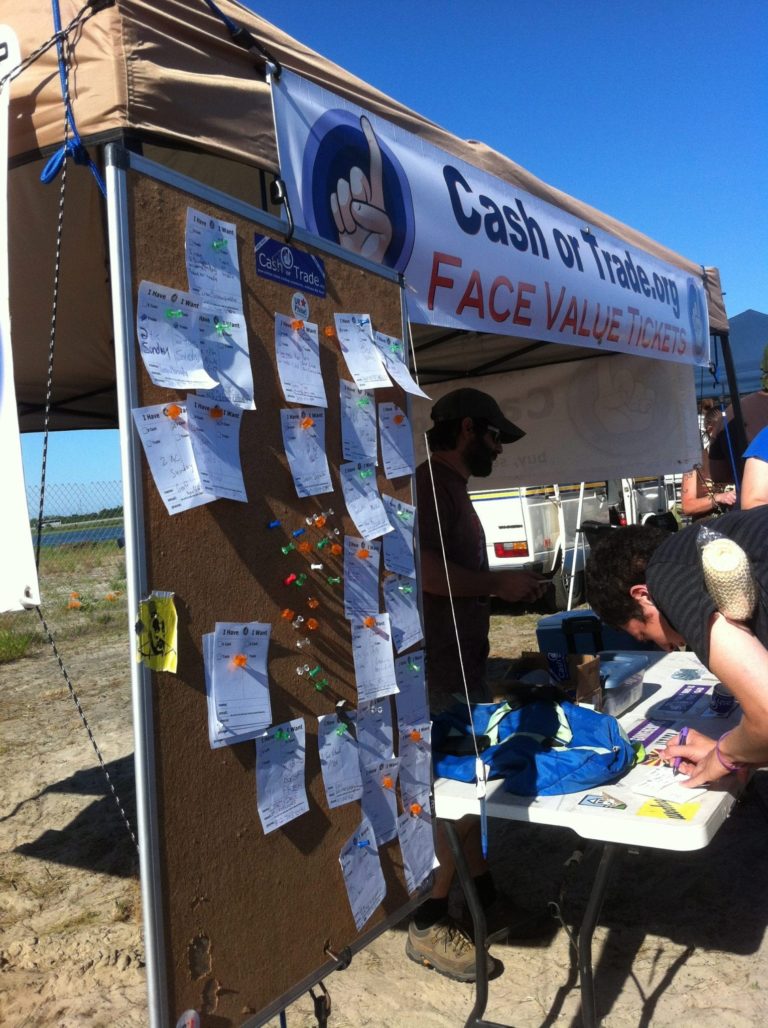
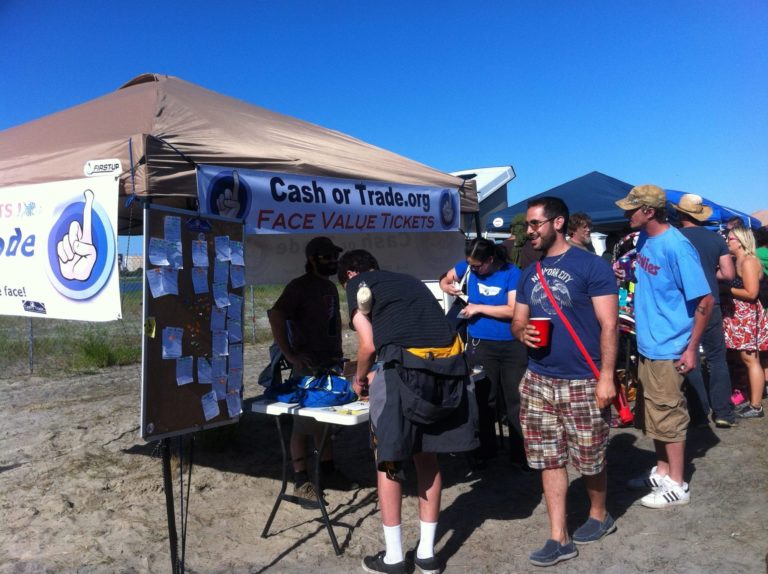
    We have all been there; a concert you simply cannot refuse. A 220-dollar concert ticket followed by 100-dollars in fees, nearly a 50 percent up charge. It’s your favorite band, a no-holds-barred night out, but at what cost. The next few gigs you land 60-80 dollar tickets purchased from an online-fan-page-stranger. They even let you PayPal them after you got through the doors. As diehard fans, and musicians ourselves, we don’t want to be exploited; we want an exciting live music experience. Since we still yearn for human connection and tangible experiences transcending all sound – again, CashorTrade delivers.

    cashortrade

    We linger on this narrative because it is overwhelmingly real. You have already lived through it, overpaying, or missed out from an absurd standing room ticket. CashorTrade, an online ticket exchange and social platform for pure music junkies, is growing rapidly to bring real fans tickets at face value.

    Download the CashorTrade mobile app on iPhone, iPad, Android, or any web enabled device.

    The Vermont co-founders and brothers, Dusty and Brando Rich, have bred CashorTrade from of their passion of live music, as well as disgust in oversaturated and overpriced tickets. Their story begins with a failed attempt to acquire Phish tickets at Hampton Coliseum in Vermont after the bands five year hiatus. It was Phish’s first performance since Coventry on August 15, 2004. The band started with “Fluffhead,” which was not played since 2000 (phish.net), but it should not merit a four-figure ticket price.

    “What got us the most, was seeing the tickets listed for two – thousand – dollars a piece,” said Brando Rich. “When Phish stopped touring in 2004, Stubhub was created, and Facebook… The dawn of peer to peer ticketing platforms. A lot had changed, and five years later [2009] things are up and running… It has taken what used to happen in brick and mortar box offices to the extreme and ruined it for fans.”


    CashorTrade has become a social network that allows people to have friends, share photos and connect with one another. It makes trading with people you know, love and trust that much easier. The Rich brothers have plans on building that further because “we want to better connect friends who have tickets they need. And, for fans to know about shows they are attending or interested in attending,” which is tailored to each specific user-profile.


    The dawn of the internet had changed the concert experience, for better and worse. When it comes to ticket consumption Brando stresses that not all ticket company owners are fans. “I would go as far as saying that most are not fans. In the end, what my brother and I created is most helpful to fans because we are fans. We grew up loving live music – every ounce of it.”

    “We would do whatever we could to get to the next show, fighting to make burritos in the lot, to make money [for our next tickets]. Your community feeds you, clothes you and it becomes your life.”

    This lifestyle shows through the organic growth in the company, nearing a quarter-million users across 20 countries. CashorTrade is growing at 3,000 new users per month, and expanding. With closed first round investors, direct artist-partnerships, festival partnerships and a growing online platform, CashorTrade is on the rise. Fees diminished to ten-percent or less keeps the pressure off your wallet and draws focus to the music and those enjoying it.

    Yesterday, June 12 at 2 p.m. EST, CashorTrade officially partnered proudly with Phish’s official charitable outreach, The WaterWheel Foundation – then again, it all began with Phish. Since 1997, WaterWheel’s outreach aides social and environmental efforts throughout each tour stop, notably local efforts in CashorTrade stomping-grounds: Vermont. Fans selling Phish tickets can opt to donate their profits directly to WaterWheel, while buyers will be charged CashorTrade’s transparent credit card fee (3%). Likewise, 100 percent of those ticket revenues go directly to WaterWheel, who has raised millions for more than 425 groups.

    CashorTrade is closing in on their community, helping tickets stay in the hands of a tight-knit, music loving, and sustaining populous. They provide a platform where we can do it safely, carefree, and now, feel good by effortlessly giving back. Fans now have control and positive choice.

    https://youtu.be/s3kpeoeNDXo

    “We recently partnered with Billy Strings, an up-and-coming bluegrass guitarist, who is an amazing prodigy. I love his vibe and he really seems like the perfect fit for CashorTrade – so we are very excited to become his dedicated reseller.” Likewise, the company has paired with the killer, nationally touring act, Twiddle, said Rich. “They are selling out shows left and right; and they’re from Vermont, so that was a natural fit.”

    “Partnerships are exciting, becoming an artists’ dedicated reseller is something we have always dreamed of doing,” said Rich. Additional partnerships with WaterWheel, Summer Camp Music Festival, Disc Jam and Osiris’ The Drop Podcast are just the beginning for CashorTrade. There is a lot of power in the fans.


    According to their website, festivals are life changing moments. For Brando there are too many to count by hand, but the first Clifford Ball in 1996 holds a special place in his heart.

    Phish played their first time at the former Plattsburgh Air Force Base. “My parents had just dropped me off my first year of college at Johnson State in Vermont. I got settled and drove straight to Plattsburgh, NY. It was the – most – amazing – three days of my life, having never seen so many people. It was something like experiencing a Woodstock-esque festival, with jam-packed streets, mayhem and three miles of party. That was pretty life changing, to see a plane fly overhead with Phish lyrics – and to think – what an extravaganza this is.”


    Become a gold member and receive text/email alerts when what you want is posted. cashortrade.org/gold

    #Embracetheface on Facebook, Instagram and Twitter

  • Fever Dolls: Musical Populists Transcend As Visual Storytellers

    Earlier this month, Fever Dolls released their third single, “Mrs. Carver.” Similar to their previous two releases, this song was accompanied by a thematically sound music video. However, it would be a disservice to simply call this visual component a music video, as its narration and storytelling resembles elements of a short film. Just like “Gennifer Flowers” and “Adline,” there are greater cinematic influences at play here that work together with the lyrics to ultimately enhance the listener’s experience. 

    Fever Dolls The Distance

    NYS Music had the pleasure of asking Renn Mulloy and Evan Allis of Fever Dolls questions regarding their creative vision and how visual media has influenced their music. 


    Sammy Steiner: Who are some of your biggest musical influences? How have they influenced your work?

    Evan & Renn: Our biggest influences are people that play no-frills, hook-driven pop music. We love Motown, new wave, and 70’s FM radio, and see ourselves in that tradition. We’re musical populists. We write choruses you can sing with your friends. 

    SS: What (or who) excites you within the realm of music right now? 

    E&R: RKS, Lizzo, Kacey Musgraves, Billie Eilish…people that transcend genres and think about their music as a fully immersive experience for their fans. That excites and inspires us. We’re noticing more bands that aren’t afraid to draw from pop music, write big choruses, or make the spectacle an equally important part of the live experience. We feel like there’s a better responsiveness to our type of band than there was a couple of years ago.

    SS: Lyrically speaking – do you draw on influences from your personal lives or through the lives of others? 

    E&R: At first our songs were mostly autobiographical and confessional, but recently I’ve started writing more about made-up people. In general, I think I’m probably a better storyteller than a protagonist, and find that writing songs about fictional characters allows me to write about a wider array of subjects than when I was starting out and only writing about my own love life. Moreover, since we always wanted to be a theatrical band, it feels more in line with our vision to play ballads and story songs.

    SS: Do you think the average person’s relationship with music has changed with the rise of visual storytelling? What role has the convergence of visual media had on your creative process and ability to tell a story?

    E&R: It definitely seems that for a lot of people hearing a song by itself isn’t enough anymore. Why stimulate one sense when TV stimulates two! Even Spotify now incorporates video into the platforms of their top tier artists, with these slightly ridiculous 20 second loops of animation or video. For the record, this seems to be about as cool as the iTunes equalizer button, but the point is people are excited by the relationship between audio and visuals, and want more music that speaks to them in that way. 

    Speaking as a member of this generation, I think television is the greatest art form ever invented, and it invades every part of my life and thought process. I constantly find myself reducing complicated life situations to derivative story arcs, and the personalities of people in my life to those of their most similar TV character. It makes living easy. Even when I write songs, I find my brain responds to what I’m writing by concocting scenes from fictional movies that play out in my head over the melodies. For a long time this seemed crazy, but now we try to lean into these associations and embrace the ways in which our band’s music inspires images and non-musical stories for us. We feel like the output makes sense to our audience’s listening experience, and has been more authentic and reflective of the way people in our generation’s brains work.

    SS: With an album on the way, what are your goals for the upcoming year?

    E&R: We’re sitting on a ton of recorded material that we’d like to release in the next year. The hold up is that I’m not a very capable engineer — but I’m getting better at asking for help and relinquishing control. The goal for the upcoming year, beyond the album, would be to release most or all of what we’re recording right now. We’re especially excited about a collection of songs and videos we’re working on about different criminals throughout American history that we’re calling, Only When Its Dark Out.

    Be sure to follow Fever Dolls on Facebook for updates regarding new music. 

  • When Worlds Collide: The Dee Brothers Invade Turning Stone

    Turning Stone, an award-winning, destination resort in Upstate New York, works tirelessly to bring best in music and entertainment weekly. Named as the “Best Countryside Hotel/Lodge” in 2015, their vast accommodations, casino and top tier restaurants clothe a hidden gem – Turning Stone as a music mecca. The renowned Casino not only bring us talent, they foster talent, such as The Dee Brothers.

    Turning Stone Casino and Resort offers a multitude of musical options from large national acts, to new and local talent. No matter how big or small, there is a venue to host it appropriately. The Event Center is the largest with a 5,000 seat capacity.  Here you’ll see large shows, sporting events, and conventions.  The Showroom, first to open its doors back in 2002 seats up to 700, bringing you shows, comics and theater productions. Back in 2013, we saw Exit 33 open offering a variety of nightlight and clubs for music of all types, playing off the venues location.  Whether it’s dancing at Lava, two stepping at The Tin Rooster, rocking out at The Gig, or just slow dancing at The Turquoise Tiger, there is a spot for all music lovers wishing for a great night out. Add in talent throughout many of their restaurants and atriums, and their’s music everywhere. 

    It’s here that Ryan and Joel Dee (The Dee Brothers) found their way from NYC. The two brothers moved to upstate New York to pursue their musical dreams and taking a job at The Gig. The brothers would bartend during the evenings, giving them time to pursue their creative aspirations during the day. Just like something out of a movie, it’s here that they found a spot to play their music. The Dee Brothers took a moment to speak to NYS Music and share a little of how their partnership with the Turning Stone has helped them out as musicians.

    The Dee Brothers

    Kathy Stockbridge: Originally from NYC, tell us how you came to the Central NY Region and Turning Stone.

    Joel and Ryan Dee: We were both itching for more elbow room, so when we heard about the opening of Exit 33, we packed our bags. It’s been the perfect fit, because we can now enjoy the relaxed vibe of Upstate New York, while also getting our fix of high energy at Turning Stone.

    KS: Having a following in your hometown area, did you find it difficult to get started here?

    JD and RD: Working at Exit 33 has really helped us make great local connections, and our flexible schedules allow us to pursue music during our off hours. Plus, working at a music venue continually propels our passion forward.


    KS: While working at Turning Stone, I understand you were given a break to play your music.  How did that transpire?

    JD and RD: Turning Stone is always spotlighting its employees, including through an Employee Talent Show, where we got the chance to play and have returned every year since. It’s been a great new stage that Turning Stone has provided us to showcase our music.

    KS: As an employee of Turning Stone, how supportive are they with your side gig?

    JD and RD: We couldn’t ask for a more supportive employer than Turning Stone. With their flexible shifts, we still have plenty of spare time to work on our music while still making a good living with great benefits.

    We both bartend at the rock and roll venue The Gig, which is awesome because it keeps music front and center in our lives, even at work.

    KS: You hear of musicians working at a venue just to catch a break… how has this helped get your music out there?

    JD and RD: We’re very lucky to work at a place where our passions and jobs collide. While bartending, we’re continually meeting fellow musicians, fans and making other great connections.

    JD: As a songwriter, working at The Gig inspires me because of the music, conversations and moments I experience at work every day. I get to talk music theory and exchange ideas while on the job, which is a huge benefit and provides a ton of inspiration for my songs. Turning Stone is always evolving and working on the next big project, so our advice would be to be ready for any opportunity that presents itself.

    KS: What are your aspirations and dreams for your band Andela? Any new music in the works?

    JD and RD: In five years, we would love to be playing regularly at Turning Stone. But I can also see us on tour, traveling the world with our music. Maybe one day, we’ll get the opportunity to come back and play at the Turning Stone Event Center and bring our story full circle.

    JD: We want to attract a wider audience, and we’ve really gravitated toward the new taste for songs that make you want to dance.

    RD:  This generation’s love for EDM has pushed us into an entirely new realm of music creation. We’re now finding our own sound that’s a balance of dance/club music mixed with a live rock feel.

    KS: What advice would you give other artists starting out or wanting to work with the Turning Stone?

    JD and RD: We’ve both grown tremendously working here and enjoy every day because there’s always something exciting happening that helps us grow and inspires us.


    Learning about how Turning Stone has assisted the Dee brothers, and their dreams, by fostering a great working relationship and giving them a stage to perform – sharing their music that is unique. The Turning Stone happily happens to be holding a huge hiring event this coming Monday, May 13, from 10am to 8pm.

    Learn more: May 13 You’re Hired Event

    The Dee Brothers

    Those that may wish to find employment in fields of hospitality, culinary, gaming and many more should update their resumes and come dressed to impress. The event is titled “You’re Hired!” because qualified candidates could be given job offers on-the spot. Turning Stone recruiters and senior leaders from several departments including gaming, culinary, beverage operations, and hospitality will be on hand to answer questions and conduct interviews. 

    Looking for your foot-in-the-door opportunity may just be right around the corner, off of Exit 33.  If asked how you learned about the event, just tell them Kathy from New York State Music sent you.

  • Tiny Chair Talk With Joyous Wolf

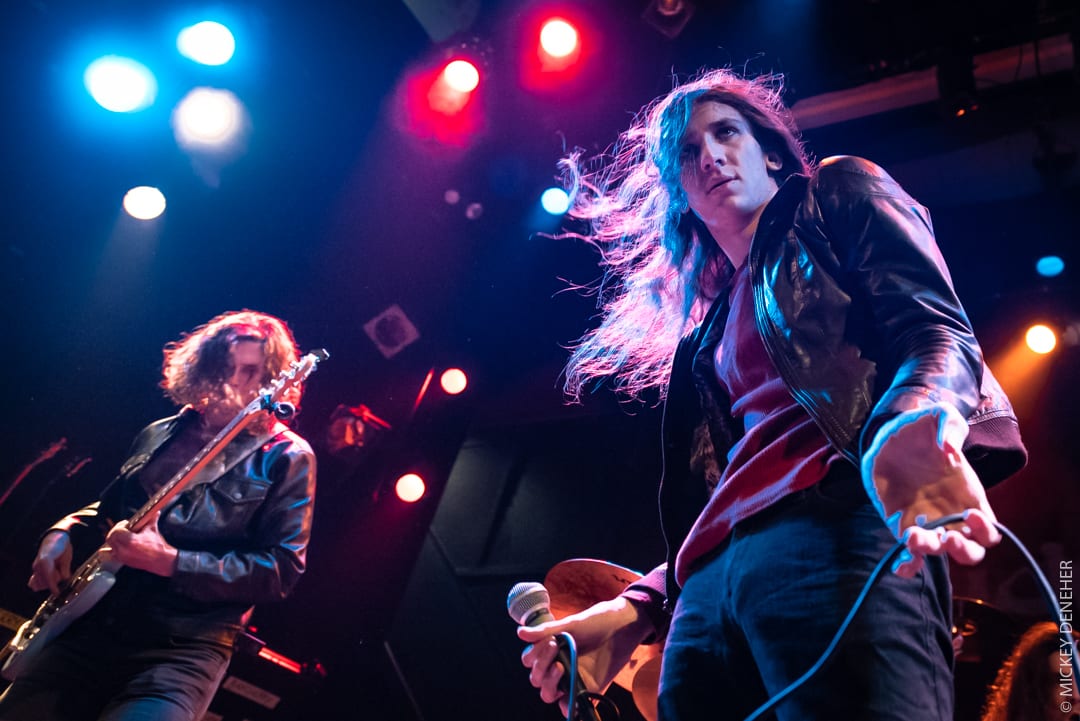
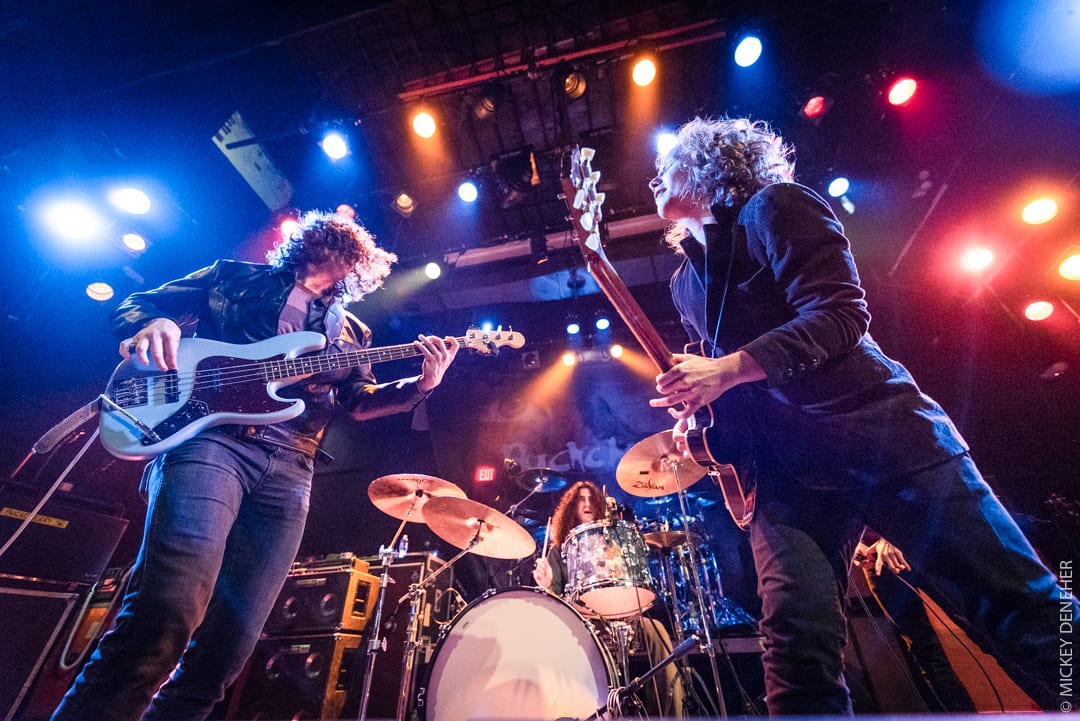
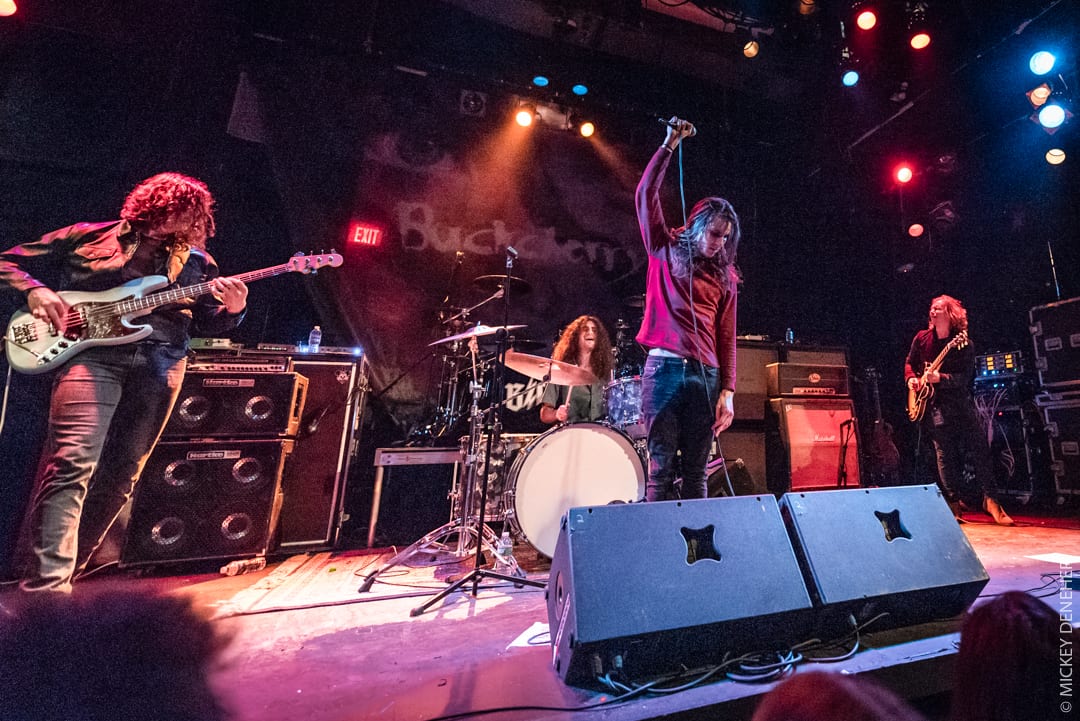
    Vocalist Nick Reese, guitarist Blake Allard, bassist Greg Braccio, and drummer Robert Sodaro comprise Joyous Wolf; a rock and roll four-piece from Southern California who are hitting on all cylinders. After only four years together they have signed with Roadrunner Records, releasing their debut EP (out this month) and currently on a two-month tour opening for Buckcherry. Not too shabby.

    I spoke with Nick Reese and Greg Braccio before their set at The Chance Theater in Poughkeepsie, N.Y. The show marked the midway point of the current tour with Buckcherry. We were led by the band’s tour manager, Stripes, to an upstairs back corner lounge to conduct our interview. Nick and Greg sat down in padded bar chairs that had no legs attached, which puts them close to floor level. I’m now towering over the guys (being 6’2”) so I grab a “legless” chair too and join the guys on the floor. They let out a “yeah,” as we are now all eye to eye. “You should make a new show called “Tiny Chair Talk”” Nick says. We start laughing and get down to rock and roll. 

    Greg Braccio – Bass, Nick Reese – Vocals

    Mickey Deneher: You’re a SoCal band. When I listen to your songs, you’re not the Beach Boys. You’re not the Eagles. Who is Joyous Wolf? Why did you put the band together?

    Nick Reese: There wasn’t a reason, other than boredom.

    Greg Braccio: That’s the interesting thing.

    NR: It kind of happened.

    GB: None of us went into this like we are going to be this kind of band, or that kind of band. Everyone had their set of influences and it just melded into what it is.

    NR: It found it’s own way.

    MD: Creatively isn’t that the way you want it?

    GB: Absolutely.

    NR: That is what we set out for. I could play you our original demos and stuff and it’s a totally different band.

    MD: If you take yourself from the beginning to now, where’s the band gone?

    NR: Everywhere (said with a very big grin, laughing).

    MD: Not only physically, but creatively.

    NR: I think we’ve always set out to be creative. I think we just figured it out ourselves. We really didn’t know what we were. We were pretty much a bunch of guys jamming together, putting out ideas. A lot of evolution has happened since then. That’s all I can say. It’s just evolving. Yeah, a lot of evolution.

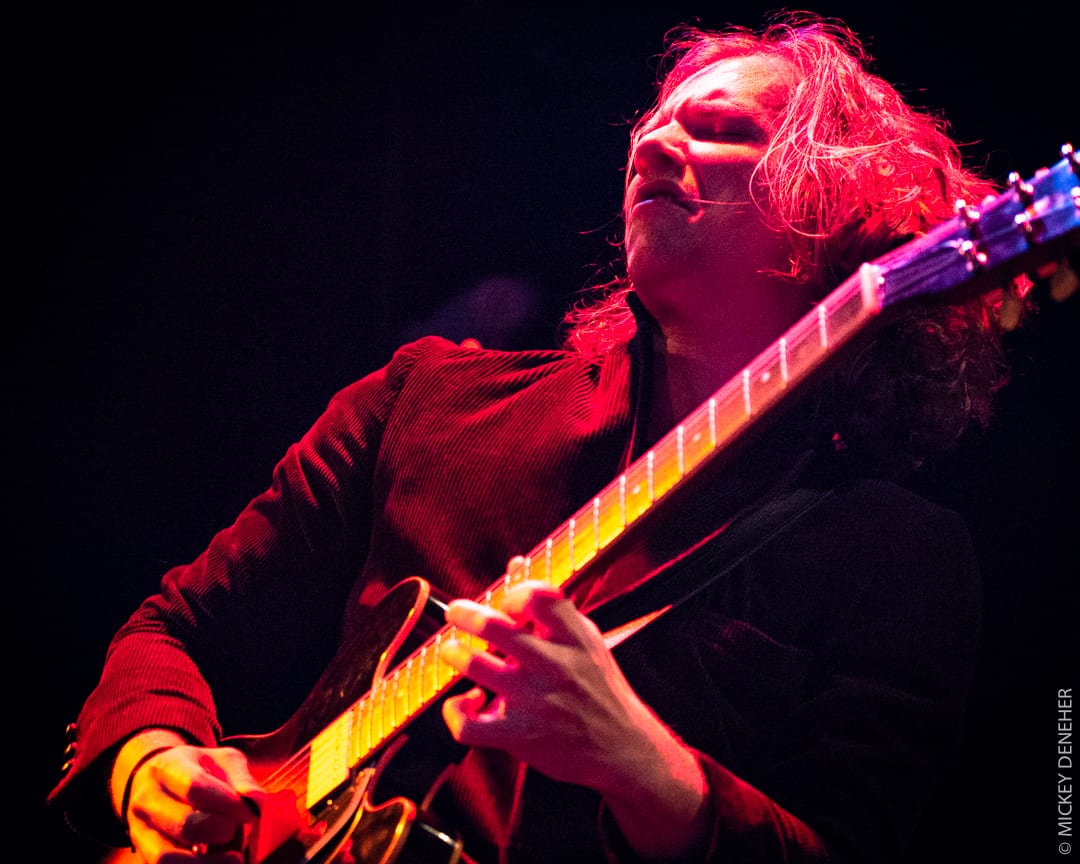
    Blake Allard, guitar

    MD: The writing process. Where does that (direction) come from? Who’s the driver?

    NR: We all write together. Sometimes, someone will go and write something by themselves and bring it, and we all make it happen. That’s pretty much the main thing, or else we just get together and feel out the room, and what ever happens. Sometimes a song happens right there.

    MD: You hear it? You hear it as your playing?

    NR: Yeah.

    MD: And all of a sudden, it’s like “go over here.”

    NR/GB: Yeah.

    MD: That’s a cool thing.

    Robert Sodara, Drums

    MD: In your promo (bio) it says you go from heavy metal to delta blues. That’s a huge swash.

    NR: When we did that thing (promo) it was, what do we listen to? What’s the range? We’ll listen to heavier bands and to Muddy Waters. Between the four of us there’s a pretty big collection of music. That’s really what I think makes this band fun, for me anyway.

    GB: Yeah.

    NR: We get to apply all of it together. There is no one direction. I think people are going to see that on the record. I think they are going to have a lot of different feelings to our music.

    MD: Is it always a personal thing when you write? Or is it, I saw something that impacted me?

    GB: Honestly I don’t really think of it that way. It’s just kind of what ever we are feeling at that moment, or what ever we are playing, or what ever we are doing.  

    I think we try really hard try to just venture outside of the parameter of what’s the normal average rock band.

    – Nick Reese

    NR: As far as myself, that happened to me lyrically. I bring in little bits and pieces, now and then. But the majority of my job is to translate the mass that they create.

    MD: Is it you, or is everyone dropping little snippets of sound?

    GB: It’s either that or we’re all kind of jamming together and it will come up.

    NR: Sometimes it will be at a sound check. Sometimes it’ll be when we are completely far apart. No one’s near each other and someone wakes up in the middle of the night. It’s nothing new as far as how songs are written.

    MD: Your right. It’s nothing new, but it is new.

    NR: Yeah, it’s a new creation.

    MD: You are looking for something new.

    GB: It’s almost inevitable to create something entirely new, especially with rock music. But, it’s really just the four of us having our own set of influences and hoping to create something like a weird blend of genres, what ever you want to call it.

    MD: That synergy sort of groove thing and follow along.

    GB: Yeah.

    MD: And bring people with you.

    GB: Absolutely.

    Nick Reese, Blake Allard

    NR: I think for us, it’s all about the energy of our music. I think that’s what makes it sound fresh. That, and I think we also try really hard try to just venture outside of the parameter of what’s the normal average rock band.  I think we are going to do even more and more of that as we continue on.

    MD: Setting yourself apart. In time, you want people to just say immediately “Joyous Wolf” as compared to “umm, sounds like umm,”

    NR: “Whoever else.”

    MD: That’s the individuality of it.

    NR: We are fully prepared for things like that. Every band that has ever come around has been compared to somebody else.

    GB: It is inevitable.

    NR: Even when Led Zeppelin came around they said they sounded like Jeff Beck’s band. There is never going to be a brand new band that’s not going to get pegged for somebody else.

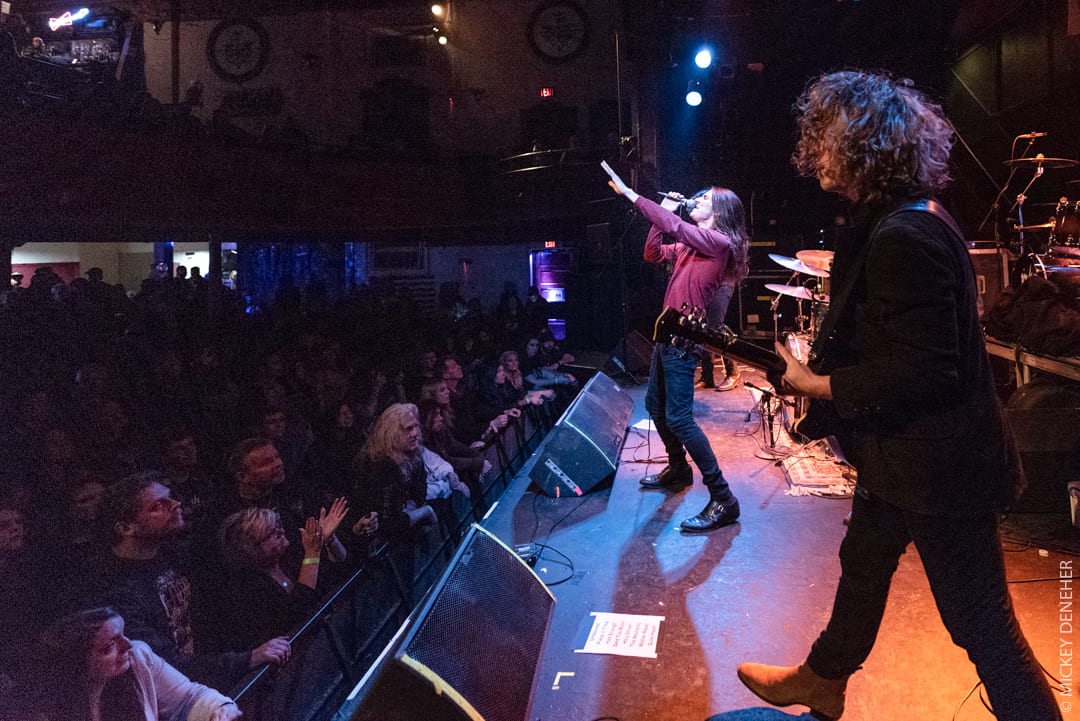
    Opening for Buckcherry at The Chance Theater

    MD: You played at a festival in Sacramento, under a freeway, and got a record deal.

    GB: It sounds that simple, but that’s is pretty much how it happened.

    NR: It was Aftershock Festival.

    GB: It was the third stage.

    NR: And it just happened to be next to the 5 Freeway. I still think to this day that that is the most California thing that could have possibly have happened. We’re playing in Sacramento, in the capital; we’re from California, lived their our whole lives; and we’re playing under the f#cking 5 Freeway.

    That performance lead to signing with Atlantic Records’s Roadrunner label and the recording of their debut EP,  “Place in Time,” in late 2018.

    MD: Had you guys ever been in a recording environment like that? Putting together an album with any other bands or anyone else?

    NR: Not quite like that no. Everything else that we had done was very independent.

    GB: That was like the first professional setting to be doing that in.

    MD: I hear bands talk about the daunting task of going in, getting it right. The producer is such a critical cog in that wheel to make something happen.

    NR: He helped educate us in a couple of ways, as far as our ability to write songs. It’s not like we ever had trouble, he just showed us little bits and pieces to help us do that. Honestly, I think in that perspective, it came out pretty great. As far as it being daunting, I think the only thing that we were worried about was having the material.  We went and took a couple of weeks after our fall tour last year and we worked until (looking to George) when did we go in?

    GB: Late November early December.

    NR: We did pretty much the entire the record in around 2 weeks.

    GB: So it was very new material still.

    Nick Reese, Blake Allard

    MD: The sounds you had in your head for those songs, I take it, all the songs where written prior to going into the studio.

    NR/GB: Yeah.

    MD: Was that sound, the actual sound that came out? Or did it go to someplace else?

    NR: I don’t think there was ever an expectation really. You don’t know what you are going to get, you know, until it is done.

    GB: Yeah, I mean it was close. I would briefly say it was not quite what we were expecting. But overall it’s us. We shine through as much as we could.

    MD: And you can stand up and say, “we are proud of it.”

    NR: Yeah, I’m proud of the songs. I am proud of the songs.

    Greg Braccio, Robert Sodaro, Blake Allard

    MD: I’ve seen a couple of acoustic things that you have done. It’s you (Nick) and Blake (guitar.) Is that something that you may lean more towards going forward? Or is it that just that we need to be acoustic because of where we are and that’s what we do?

    GB: I think when it comes to a full-length album or whatever; we’ll defiantly want to incorporate acoustic or anything really. We are not stuck to one thing.   

    NR: Even on the EP already we are going to have some stuff that a lot of our peers I don’t think would do. I think we’ve already included some elements, things that are not exactly everyone’s idea of rock and roll. We’re really not afraid to go anywhere.  We don’t have any machismo. It could be literally anything. I feel like that’s how rock’s going to go forward, just let it fly.

    GB: Yeah, it’s not supposed to be still the Sunset Strip all leather kind of thing. It’s got to evolve from that.

    MD: No walls. No constraints. You just take if where it goes. Who knows where it’s going to end up, but you are not stopping yourselves.  

    The guys nod their agreement. As we get closer to show time, we talk about what is ahead for the year

    Nick Reese

    MD: Two months with Buckcherry.

    NR: It’s a lot longer than that. We’re doing their second leg in the summer and even more, later in the year. We are also supporting Slash in July. We are also going to go to Europe for the first time this fall.

    MD: This (current) tour you went to Canada and now you are doing a whole leg going back to California.

    NR: Yeah and then we go back to Canada with Slash for six shows. We opened for him at the Paramount in New York last fall. He had picked us to come and open the shows. We were going to play Rock Fest, but when Slash calls, you don’t say no to Slash. 

    We’re really not afraid to go anywhere.  We don’t have any machismo. It could be literally anything.

    – Nick Reese

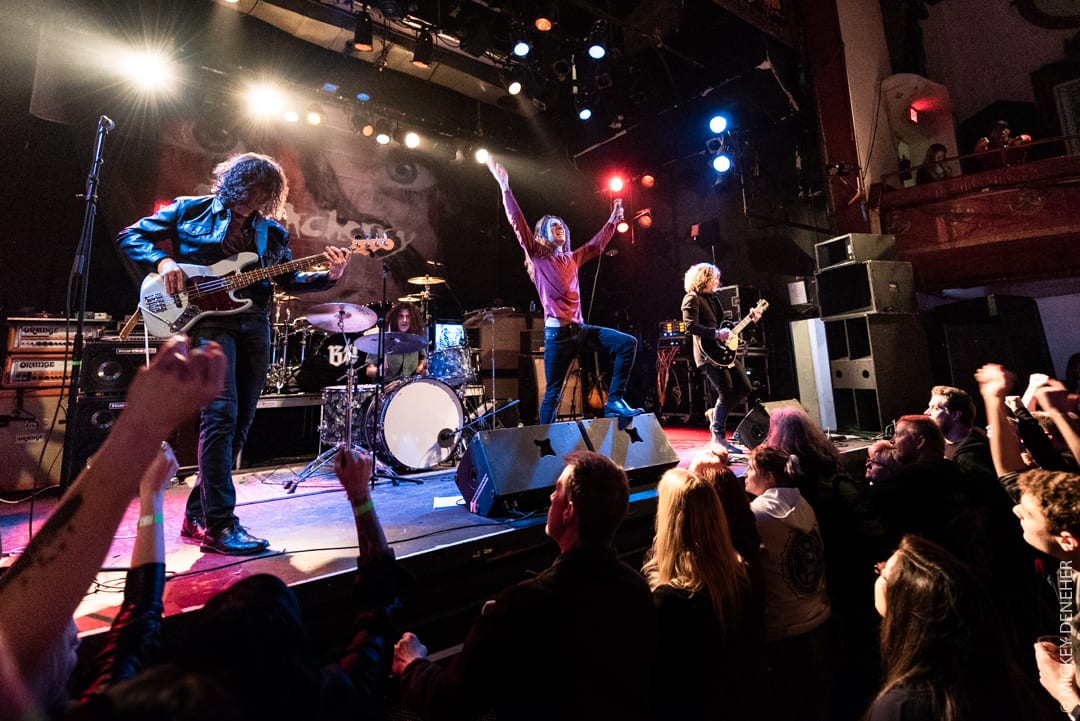
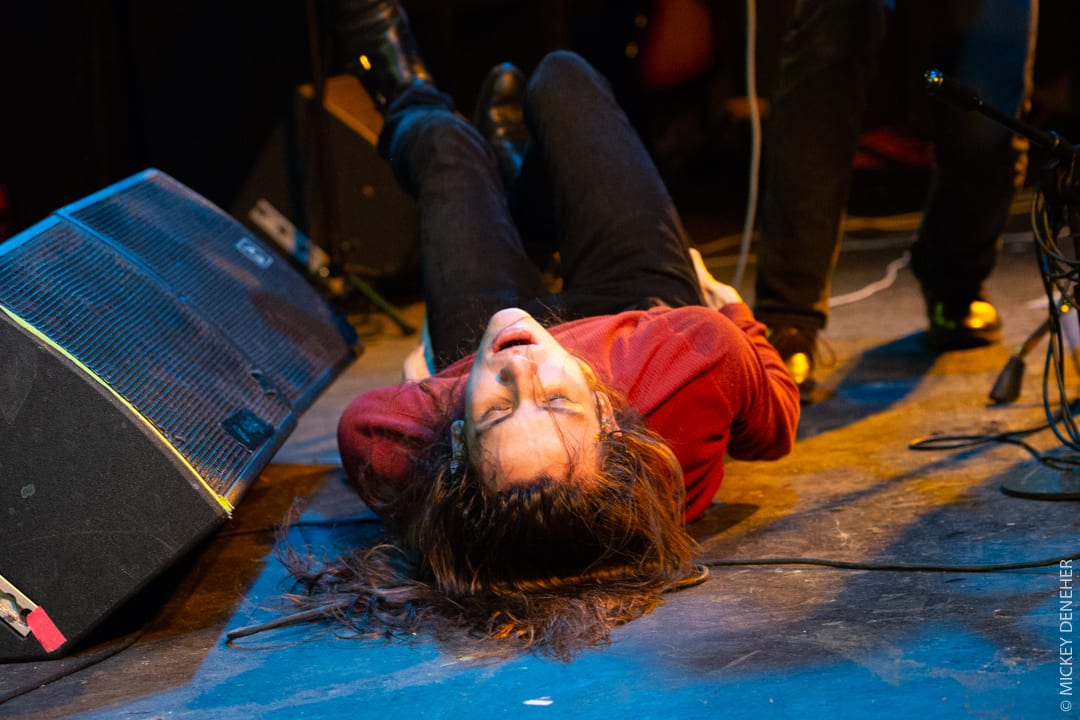
    There is a reason why Buckcherry, Slash and other top-level acts are booking Joyous Wolf to open for them. As the band hit the stage this night, they took charge. Nick gyrated across the stage as if he had conjured up the spirit of fellow Californian Jim Morrison. All the time drawing in the audience with every word sung. Supporting their vocal extrovert, Blake, Greg, and Robert cranked out some heavy, in your face, rock and roll power playing. By the end of the set, hands were pumping high in the air and Joyous Wolf had left their mark. With an impressive, well-produced debut EP and ever increasing exposure opening for some of rock’s best, it won’t be long till these guys are headlining themselves.

  • For The Love of Ska: An Interview with Charles Benoit of Some Ska Band

    Being a music writer is a lot of fun, and there’s no one I like to talk shop with more than Charles Benoit. He writes for Reggae Steady Ska about his favorite genre, ska. He also plays tenor sax in Rochester’s most active ska band, aptly named Some Ska Band. They’re opening for The Pietasters on Saturday, April 27 at Flour City Station. We recently caught a quick bite over lunch to talk ska.

    Some Ska Band

    Paula Cummings: Some Ska Band… How did you guys come up with that name?

    Charles Benoit: Well that was a bad move on my part. It was the first thing that came up. I wanted to start a band with three other guys at the agency. Marshall, that was the guitarist and he’s creative director there. Will, our web developer. And Shad, the videographer. Marshall said, “I’ll do the logo. What’s the name of the band?” The first thing I came up with was Some Ska Band and we went with that. I probably should’ve thought it out a lot more, but it  kind of works because Ska bands are such a niche market. Let’s say a band was coming to town called The Plastic Cups. OK, I don’t know anything about them, and I never heard of them. They don’t give any descriptors. I thought it was kind of funny. “Well, who’s playing tonight at The Bug Jar?’ ‘Some Ska Band.’ ‘I like ska, which one?’” We’re the ‘Who’s On First?’ of Ska Band names.

    PC: I know you can’t speak for the others, but why ska? You’ve been all over the world, and exposed to all kinds of music. What brings you back to ska?

    CB: I can speak to the others, and say they play ska because I forced them to. I was only interested in starting a ska band and that’s it. I was first introduced to ska in 1979 when somebody handed me the first Specials album. It changed my life. I fell in love with the message of Two-Tone: the racial unity, fighting against corruption in big government, and the little man view. It’s always attracted me. So I stayed with ska, and quickly ran out of two-tone albums because there were only a handful of bands. I found myself going back to the old traditional original ska of the Skatalites Desmond Dekker, and all the early originators. There was so much there to fall in love with. And then third wave ska came around and you had The Toasters and The Pietasters and all that kind of action that was going on. It’s been a lifelong interest for me. I just love the appeal. “Oh, it’s repetitive, it’s simple, it doesn’t get very deep.” Well, that’s me: repetitive, simple, and I don’t get very deep. It’s what I’ve always liked about the music. As for the rest of the band, none of them came to the band as ska fans, but I think they’re all pretty committed to the cause.

     Some Ska Band

    PC: I’ve noticed that you guys do a lot of covers that are not were not originally written as ska songs.

    CB: It’s something ska band do. The Skatalites, the originators of the sound back in the early 1960s, one of their first songs they are known for is “The Guns of Navarone.” They took a song and put it to the ska. It’s been a tradition.  If you think a song is good, make it better by putting it to the ska. You can take a crappy song and make it better by putting it to the ska.

    PC: In your band’s description it says that you guys got together with the dream of pulling off the biggest diamond heist the world has ever seen. It wasn’t a robbery, but you recently acquired a gem that you played the album release.

    CB: One of my favorite songs in the ska genre is “Easy Snappin’.” It was written by Theophilus Beckford. I got a chance to talk with Monty Alexander once, the famous piano player. He was in the room when they started developing the sound of the ska. Jamaica was newly independent. They were trying to come up with the sound that was strictly Jamaican, not the stuff coming out of Cuba or the Trinidadian soca sound. They wanted something unique to them. They were literally sitting around in the studio and the musicians started playing an upbeat – Ernest Raglin started playing the upbeat. And they messed around with it. Theo Beckford started playing piano. This is early. It is not ‘63. This is late ’50s, but they knew independence was coming. So they’re playing with the sounds and Beckford pumps out this piano tune called “Easy Snappin’.” It’s the first ska song that was deliberately written to be that. When we did our CD release party at The Record Archive, I wanted to let people know about that. I wanted to make that connection. So through a record collector Darren Reggae, that’s not his real name, I got an original 45 that I played at the show.

    Some Ska Band

    PC: In addition to playing ska music, you also interview musicians.

    CB: I interview them for Reggae Steady Ska, which is the world’s leading international ska and reggae website. It’s based out of Bonn, Germany. I’ve been writing for them for about five or six years. This is a great great chance to get to meet some of my heroes. I wouldn’t have been able to meet them at the show, but going through using the website as a writer I get ‘backstage.’ I’ve talked to Monty Alexander, Horace Panter of The Specials, Robert “Bucket” Hingley from The Toasters, Stephen Jackson of the Pietasters. They’re all willing to share because ska is such a small community.

    PC: Some Ska Band plays with some big-name bands. I saw you open for Bim Skala Bim last year.

    CB: We’ve played with The Pilfers, which are a on the harder side of ska. We’ve played with El Grande. And we’ll be playing with The Pietasters on the 27th. This is a pretty big deal, because my wife says that after the Pietasters, Some Ska Band is her second favorite.

    PC: To whom or what would you attribute keeping the flame of ska alive here in western New York?

    CB: The person who is bringing some of these bigger names is Adam Smith. Adam Smith is such an incredible powerhouse. It’s such inspiring story for anybody, of any fan of any music. Adam doesn’t play music, doesn’t sing – God no, he doesn’t sing. He loves music, all kinds of music. But he has a special place in his heart for ska. He had his favorite band, The Pilfers, and they were just never coming to Rochester. He couldn’t figure out why they weren’t coming. So I jokingly said to him ‘Why don’t you play promoter and bring the band to town?’ Fast forward about a year later, and he and Coolie Rand of Pilfers run a management company called Elevation. They are handling tours and shows all over the country. It’s a cool story about Adam, but the cooler story is if you like music, you can become a promoter. You do risk losing some money, and I don’t think Adam is ever going to get rich doing this. But, he’s bringing in bands he really loves, and getting to host the parties he’d want to go to. So if you’re a fan and you want your bands in town, don’t wait for someone else to bring them. Play promoter and bring them in.

    PC: Some Ska Band released an album earlier this year. Will that be available at the Pietasters show?

    CB: We’ll have the CD for sale, bargain price of five bucks. You can’t beat that. We appeared in a CD What Do You Know About Ska Punk Volume 2. That’s got 167 songs on it, believe it or not. That’s five bucks. We’ll have T-shirts and stuff like that.

    PC: Anything else you want to add?

    CB: This show we’re welcoming MC Lopez. She’s gonna be joining us on keyboard.

    PC: So that’ll bring you up to nine members.

    CB: We have a tradition in the band: at shows, people are often meeting other people in the band for the first time. And that’s going to be the case at this show. The rhythm guitar player will not have met the keyboard player until we’re there. And here’s the thing – we like bringing people from the audience up on stage. So we’re nine people when we start, but we’ve been a lot more than that when we’re finished!

    Catch Charles Benoit and Some Ska Band with The Pietasters and The Pandemics Saturday, April 27 at Four City Station in Rochester. Tickets are on sale now. And be sure to follow Some Ska Band on Facebook for updates and events.

    Photos by Will Browar

  • The DNA Of Cream: From Father to Son, Fifty Years In The Making.

    If you haven’t heard of Cream before, you must live under a bloody rock. Although short-lived, the trio went on to write countless hits from “Sunshine  Of Your Love” to “White Room” and perform the renowned blues cover “Crossroads,” originally by Robert Johnson. Moreover, The Cream’s third album, Wheels Of Fire, was the first LP to reach double-platinum status in 1968, shortly before their disband.

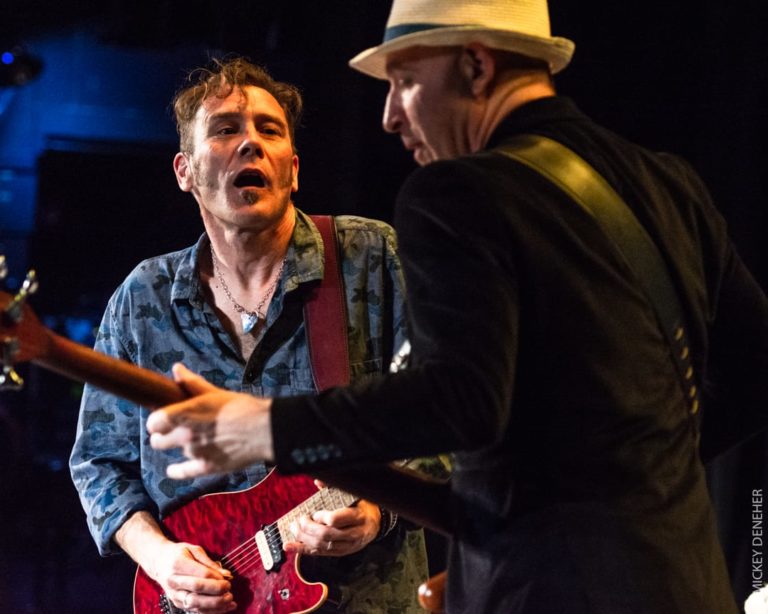
    Sitting in a white room, backstage of Wall Street Theatre, we waited. Classic blues, the heart to rock n’ roll, turned in the background as if being scratched on an old Victrola. The bare walls left the mind open to get lost, solely in the music and a conversation-to-come. Will Johns, nephew of Eric Clapton, strolled in wearing black hoodie and tie-dye scarf, blending in with typical production-crew-attire. In fact, Will’s father Andy Johns was a seasoned engineer working with The Rolling Stones, Led Zeppelin, Jethro Tull and, of course, all three Cream members’ solo releases. Humbling, for someone of such colourful lineage.

    “I was practically born in the recording studio,” said Johns. “My earliest memories were of a multitude of little lights, the smell you get, of electricity and musical equipment. It’s a particular smell.” His London accent emphasised the details, little lights and smell, drawing to precise memories or tangible things. Having people around that were creative from day one overstimulated Johns with endless musical possibility. And then you’d have your normal life. After a split-second debate, Johns lands on “Shit or Shinola,” brightly. “You sort of go towards the light,” now smiling ear to ear.

    Johns continued to recount his earliest musical memories, a story he would tell to the audience with his immense wit. “I started hitting on the drums, first of all. I used to go to Uncle Eric’s house; he had a studio and a drum kit set up. I used to smash on it,” again his accent broke through. “One morning he was like: hmmm, maybe you should play a different instrument.” May it be Clapton’s musical genius or fate, simply put, guitar was in Will’s DNA.

    “People get a kick out of hearing that one note for note, and I know that I get a kick out of playing it, right.”

    Will Johns, On “Crossroads”

    After his Uncle Eric tangent, Johns told the crowd how he just really wanted to play “Crossroads.” Johns fumbled over each note, learning them in real time, sucking us back when he was six years old. He would lean in and out stretching his thoughts into a literal expression along with the neck of his guitar. As the iconic riff became audible, the crowd roared. Johns energy built with each increasing BPM.


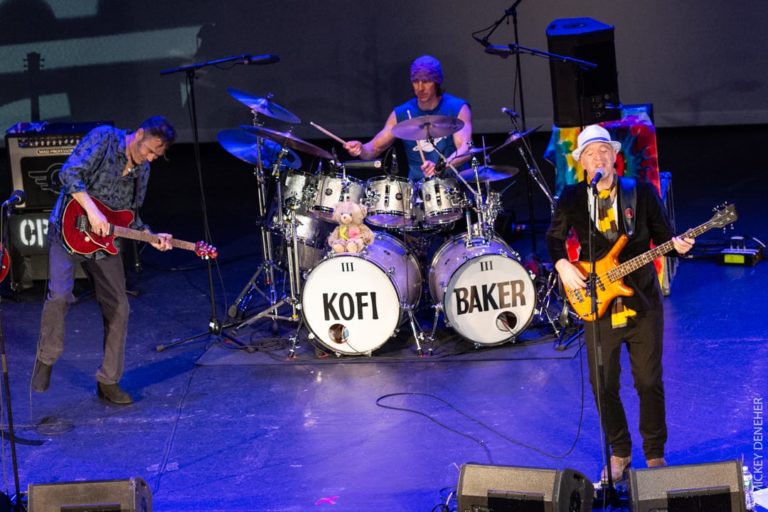
    Musical spawn of Cream’s bassist, Malcolm Bruce enters backstage and sits alongside his brother, facing my father. His forefinger was beyond blistered from the furious bass-playing from the night before, kicking off the tour, also marking his birthday. He was as witty as his partner-in-crime, clever, and sophisticated in far more than music. The energy in the room was towering and their sinergy was overwhelming. Mind you, Kofi Baker, son of the infamous drummer, would make is first appearance on stage. The record played on.

    Charles DeFilippo: You guys were born into this rich culture of music and…

    MB: RICH! (pauses) Or rich, creatively?

    Before the chance to complete the sentence, asking about his first sparks of musical inspiration as a child, considering, Will chimes in, digging into the ‘CH’ and chuckling.

    WJ: Yeah! We haven’t seen any, RICH, yet ourselves.

    Malcolm leads, “I hear a lot of music,”  BUT I DON’T SEE NO MONEY, they completed in unison.

    Not only is music of a way of communication, but also of self expression. Combine this with a musically supercharged childhood, raised by industry legends and tied with a unbreakable bond of brotherhood. It was baffling to witness firsthand. It was so strong in that moment. The sum of two persons, finishing each other’s sentences, quite literally, on and off stage.

    “We  weren’t running in the same circles until our late teens, early twenties. Having said that. Will’s dad and my dad were best buddies for quite a long time,” said Malcolm. Will confirmed.

    WJ: Malcolm’s dad was actually the best man, at my Mum and Dad’s wedding.

    MB: They were dear, dear friends.

    “You don’t always think about what you have, do you? Whoever you are. There’s a perception of rockstars and their kids, a fascination with that stuff as a culture, but maybe we see it more of being a musician. That’s where my dad came from, his idea wasn’t to be a rockstar, he was a working class Scottish man who wanted to be a jazz musician, or play in a blues band. So the very early 60’s when he started out was a different thing…where everything flowered and changed.”

    Malcolm Bruce

    In the midst of his breath, “Farewell Daddy Blues” turned in the background.


    ” I think it is amazing what my dad achieved as a writer and a performer. I am kind-of going my own way. This is just a great way to honour this amazing tradition. We just happen to be apart of that. Will came and jammed with my dad [back in the day], so it is all very natural for us.”

    “[The music of Cream was] addressing anything from experimenting with drugs to baby boomer generations, before that, people were expected to live a certain way. There was that little window of opportunity for people to stand as equals with the middle classes, or whatever. We were born into that, but whether we saw ourselves as special or not, I don’t know. It was just what we knew,” Said Bruce.

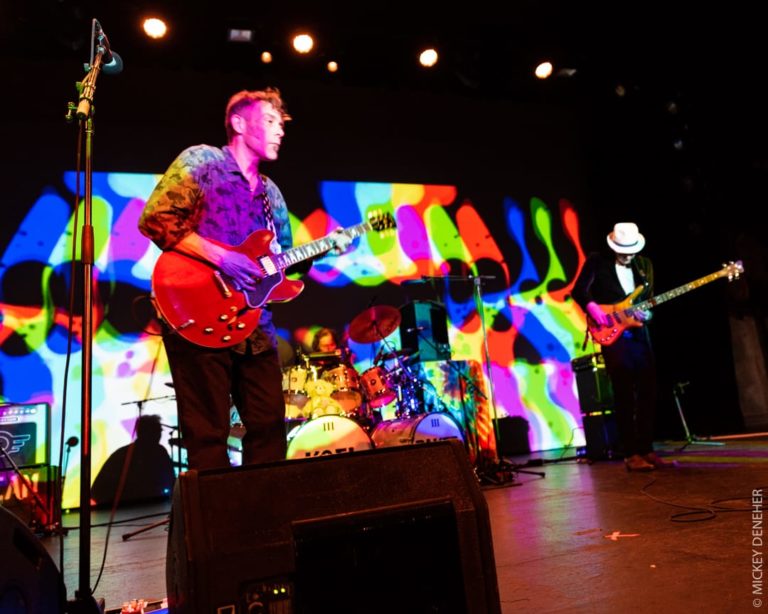
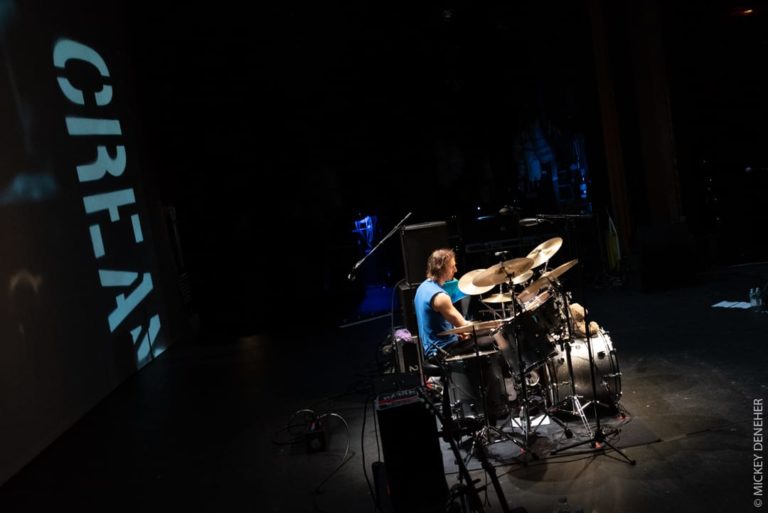
    On stage Malcolm and Will interject notes in between one another, copying syncopation and challenging each others’ melodies. Both of which fell in and far outside the worlds of Cream. Kofi’s whimsical speech about “now it’s time to take a break and go to the bathroom,” before a thunderstorm of a solo, only reeled the audience deeper into the second generation trio. Cream became a byproduct of this beautiful tradition, of musicians simply playing music.

    “I wouldn’t say it has been smooth sailing. The original guys, our parents, our uncle, were ya know (snaps)  – like that,” said Malcolm. That created an energy about the music. “With my dad and Ginger, they had a lot of history before Cream, had been in bands and thrown knives at each other on stage. In a similar way, without the knives, we have a certain freneticism between us. We are all quite strong personalities.”

    “We all have thoughts… and feelings…,” said Will, cutting Malcolm’s words with a blade-sharp precision, as if they were his own.

    Will’s counterpart continued. “For this kind of music, improvised rock, it’s a really good energy to have. You don’t want to make it too easy. The willingness to make mistakes. The willingness to put yourself out on the fringes of, beyond safety. That is part of the uniqueness, you get into the moment and see what happens.”

    The guitarist weighs in. “It makes the music real, which I hate to say, is so rare these days. The motivation, and the actual, attack of the string, right down to every single note, is, very, important. What we’re doing is the old way,” said Johns. “It’s real music. It’s musicians playing with each other. It’s an equal footing. And like Malcolm says: A willingness to go there. Wherever there ends up. To listen and react, without control.”

    After Kofi’s solo, Will was mickey-moucing to the resonance of each drum stroke, re-entering from behind the black curtains. Even on deaf-ears the music was heard in each exuberant motion. Their harmonies belted together as Kofi roared up and down the toms, as his father did in the 2005 live recording at Royal Albert Hall in London.

    “We are not a tribute act,” said Malcom. “The overarching feeling is to take the music and play it, adopting it as our own. It is silly to be them. Who would want to be them anyway,” chuckling.

    Johns will allude to exact Cream parts such as the “Crossroads,” solo, being hailed as one of the greatest guitar solos of all time. “People get a kick out of hearing that one note for note, and I know that I get a kick out of playing it, right.”

    Fifty years from when the original Cream were around until now, nothing has really changed. It is so breathtaking to witness the lineage, not in tribute, but to commemorate the pivotal anchor of rock music and all that it stood for in the 1960’s. The Music Of Cream: 50th Anniversary World Tour is perfect for the non-Cream fan because what’s not to love about real music, and the digging edgy-blues of “Spoonful.”

    Malcolm Bruce and Will Johns are deep into their own musical journeys, bioth with upcoming albums on the way. Furthermore, Bruce is half-way-funded to a full on London Opera production.  Although it’s hard to beat Cream. Catch the The Music Of Cream as the second-generation trio carries on for the last leg of their tour with repeating dates across Florida and Texas, New Orleans and Nashville. Be sure to stay up to date with Kofi, Malcolm and Will on their solo endeavours.

    All photos taken by NYS Photographer, Mickey Dehener  Friday, March 29 in New York at Tarrytown Music Hall

  • Head For The Hills’ Matt Loewen Talks New EP, Music Videos, And More

    Colorado-based, three-piece stringband Head For The Hills released their newest studio work this past Friday, an EP: the politically minded and emotionally vibrant, four-song collection called Say Your Mind. Featuring a heady mix of special guest artists, like Pimps of Joytime’s Kim Dawson, Elephant Revival’s Darren Garvey and others, the record is some of the band’s most creatively satisfying work yet.

    Born out of the Colorado music scene, Head For The Hills have been pushing boundaries in the studio and on stage for over fifteen years now, and that decade and a half has earned them regular performances at mega festivals like Telluride, SXSW, and High Sierra, along with recognitions from the likes of NPR and others.

    Ahead of an East Coast tour this week that, starting in Virginia, will hit NYC, Burlington, Connecticut, Lima, NY and Mt Holly, NJ, the band’s bassist Matt Loewen talked with NYS Music about the new EP Say Your Mind, the title track’s new music video, and more.

    Miles Hurley: So, your new release. How did you guys go about deciding to make an EP of four new songs rather than a full album or something else?

    Matt Loewen: So, we’ve been in a little bit of a transitional period, in terms of being a band that had a mandolin player in it, to being a band that plays with percussion in it. We’ve been an acoustic four-piece band for a long time, so we’ve been in the process of evolving a little bit, I guess. And we went into the studio and recorded those four songs, and I really thought it was a strong statement. But in terms of the EP thing…the way the music industry goes, to make it work you kind of have to put stuff out all the time. And I think we’ve shifted from everybody just put out a record, and then twelve to eighteen months later you put out another record, and then twelve to eighteen months later you put out another record. But that’s just not the way it goes anymore. I mean, I love albums, I have thousands of records, I love the long play album format.

    But I also think it’s cool how things have opened up, and how you have the full myriad of ways of going about releasing music, whether its a record, or an EP, or just a single, or just a video, etcetera. So we’re starting to look at doing all of that different stuff, and we’ve got some other interesting things later this year that are, again, not in the full album format, but just making music and getting it out there.

    MH: That’s cool. So then, would you say the band is in a writing period? Or do you have material that you’re currently sitting on?

    ML: I wouldn’t say we’re sitting on things, but writing, it’s just always happening. We all write a little bit, but there’s two primary writers, Adam and Joe, and they are always writing. So we’ve got some songs that we haven’t recorded. But we don’t do the thing where you hole up for a month and write a bunch of songs. We’re always writing and coming up with stuff.

    MH: I’ve heard a similar sentiment from other artists I’ve spoken with recently, that it’s more common to be touring and working, and living life and all that, and songwriting is worked into the lifestyle.

    ML: Yeah. Which is cool and not cool, sometimes. But overall I think its cool.

    MH: So, for Head For The Hills, bringing guests into the studio process is not something new. But can you tell me about some of the artists you invited this time around? I see Kim Dawson, Todd Livingston, even a horn section. Are these old or new friends to the band?

    ML: Everybody that’s on the EP are people that we’ve known for awhile. The drummer, Darren, was with Elephant Revival, their percussion guy, although they aren’t playing right now. That’s how we know him. The rest of the people we’ve known for awhile, and it was fun to have that kind of family atmosphere. Sometimes you do bring in people that you’ve never met before, and the first time you meet them is when you’re trying to be creative, which can in and of itself be really awesome. But yeah, this time it was bunch of friends, and we got them in there and it was cool. We’d been bringing in some of those people into the live show, locally, because they’re all our Colorado friends. We’ve had the horn section up at some concerts, we’ve had Kim come and sing…so there was a familiarity thing, and it was really rewarding.


    MH: That’s always an interesting thing, hearing what artists create in the studio and then they sometimes have to choose what of that makes its way into the live show. For the EP, did you have to make decisions about trying to recreate some of it’s different sounds live, or maybe just playing them in a stripped down way?

    ML: Well, that’s all part of the process, exactly what you’re talking about. Because inevitably, in the recording we do, there’s typically going to be overdubs. There’s always little things that you add, like Joe will double the violin part, and no matter what you just can’t be two people at once, right? (laughs) So we can’t do that live, and we have to figure out how to approach that. And, with this new stuff, these four new songs, we play pretty much everything. Like “Can’t Stay This Way For Long,” which has a pretty significant horn section on the album, we still play that live. What’s cool about it is, Joe and Todd Livingston, who is playing dobro on the road with us, they’ve learned those horn parts, right? So they’ll come in and replicate some of those parts. And, inevitably, the songs become their own thing live, because that’s just kind of what happens, which is cool. But that’s how I’d say we’ve kind of approached that, on this new stuff. Picking some of those new pieces up, and playing them in the tunes. It’s been fun.

    MH: “Say Your Mind,” the title track, has a great music video along with it, which you directed. Can you tell me a bit about what’s going on in this video?

    ML: The guy that plays the main character is Boots, the one with all the jewelry and that drives the car. He’s been a friend of the band for a long time, and he’s a local. He lives up in the canyon, outside of town. I just think he’s so f***ing interesting. You know, he was born in Queens, had famous parents, moved to the Bay and knew The Grateful Dead and Bill Graham, he was a technical guy that went on tour, was an animal person that was on the Jack Parr show. He’s just a fascinating dude. And I always wanted to make a music video with him, and the original concept was that he was going to be driving around town in this convertible. That was an idea in my head for a really long time.

    Then it came time to do a video for this “Say Your Mind” song, and I started kicking that idea around again, with Boots, and it evolved into this story about a father and his relationship with his kid. There’s some heartache there, and so the story is about reconciliation, about coming together, and love and family can really bring things together. So that’s the story of the video, which to me is a parallel narrative to the song, because the song is really a message from a father to their child. Adam wrote it, he was inspired by this experience to write a song as a sort of letter to your child, and about doing your thing and being happy, living life to the fullest.

    When I think about music videos, I’m most interested in parallel narratives if it’s going to be a narrative-based thing. So instead of something that’s directly following the words of the song, I’m into doing something that’s similar but not exactly the same thing, and telling a related story that can maybe highlight some elements of the lyrics but not be directly tied to it. So that’s what we did with “Say Your Mind.” The party at the end of the video is shot at Joe’s house, with a bunch of our friends and family, it’s Adam’s family that’s in the video, like his daughters.

    MH: You’ve done a bunch of videos for your band in the past as well. Has video production been in your background for a long time?

    ML: You know, I actually started doing it for the band. And yeah, I’ve been doing it for a little while at this point. My background with it is really all centered around making content for us. I’ve expanded and worked with other people. I’ll eventually be doing a video for another group, when we get back from tour. But yeah it began, well, years ago, before video became as ubiquitous and necessary as it is now. But I rented a camera when we recorded our self-titled record in the studio. And I thought, we should video this, why not? Let’s just rent a camera. So we took a bunch of video footage and then I was like, “Well shit, I guess I’ve gotta edit this, or do something with it.” (Laughs) So I got my software and did up the whole thing. That was pretty much the beginning of it, for me, and I’ve had a bit of a network from it, other bands and creative people that need stuff. It’s allowed me to grow and do different stuff, and I’m always looking for more work.

    MH: The last track on the EP, “I Am The Problem.” Honestly, I don’t think I’ve heard anything quite like that, the mix of hip-hop and Americana songwriting.

    ML: Good! Well thanks, I’ll take that as a compliment, whether you mean it that way or not (laughs).

    MH: Definitely a compliment!

    ML: Sweet! Yeah, that’s definitely a product of Joe’s personal background as a writer and as a musician. Separately, he has had different hip-hop groups, one in particular called Whiskey Blanket that still makes records. He’s done that for as long as he’s been with our band. I think, over time, those things get closer to each other, more and more hip-hop worked into his writing for Head For The Hills. Another example is from a few records ago, a song called “Never Does.” It’s very rapid-fire, and if you were to look at the words on a page and the way that the rhymes actually make out, and the way the end line rhymes, all that stuff, it’s pretty similar to the way someone would concept a hip-hop verse. So, flash forward to now, on “I Am The Problem.” The concept for the song was alway that there would be this part in the middle where he raps, essentially. And the decision was made to just go for that. And he goes on and on and on, which is progressive. It’s cool to hear it live, it’s a lot of words, and he just goes for it (laughs). I hope that people are ready for it!

    MH: So, you have a little tour coming up soon, which will start on the East Coast and then head back out west. So I’m curious – over the years, as you’ve toured more and more with Head For The Hills, have there been certain scenes or places around the country that you’ve really taken a liking to, or looked forward to returning to?

    ML: Yeah, I’d say so! You know, being based in Colorado, it’s a lot easier for us to get to the West Coast and the Midwest, so over the years that’s where we’ve spent a lot of time. Especially the Northwest, love going there, love Portland and Seattle and that whole area, it’s been good to the band. I would say the same for Chicago, it’s been a favorite for the group. But over the past couple of years, we’ve just started to expand a little bit more eastward, and have actually really enjoyed getting out there. And I say that because…my initial answer is always the Pacific Northwest, but part of that is bred in familiarity, like we go there all the time. I haven’t been to Burlington, VT ten times, I’ve only been twice, and I love that area. It’s a big-ass country, and there are just so many different people and places. And I find myself enjoying a lot of them where people are open minded, proudly respecting people for who they are, stuff like that. As long those elements are in place, I’m down. (Laughs) If people are close minded and weird, and there’s a bunch of bigotry going on, that makes it harder to really enjoy a place. I’m also really looking forward to getting back to New York, always such a crazy, vibrant place.

    MH: Nice! Well I am personally planning to catch you guys on April 4 when you perform at Rockwood Music Hall. Have you played there before?

    ML: We have been there before. The last time we played somewhere else, but the first time we played at Rockwood, and yeah, that’s a cool spot. The first night we played there, the music that was presented before us was a singer-songwriter with a pianist and bassist, and the bassist ended up being Leland Sklar, who’s like one of the most recorded, most famous studio bassists of all time. Which is just random, but that’s the way that place definitely is, and I got to meet him which was f***ing awesome. And then after him was this band from, like, South America. I’m not even sure what you would call it, definitely not a salsa band but like a modern dance, but it was so good. So yeah, such a cool place. I’m a big fan and definitely looking forward to getting back there.