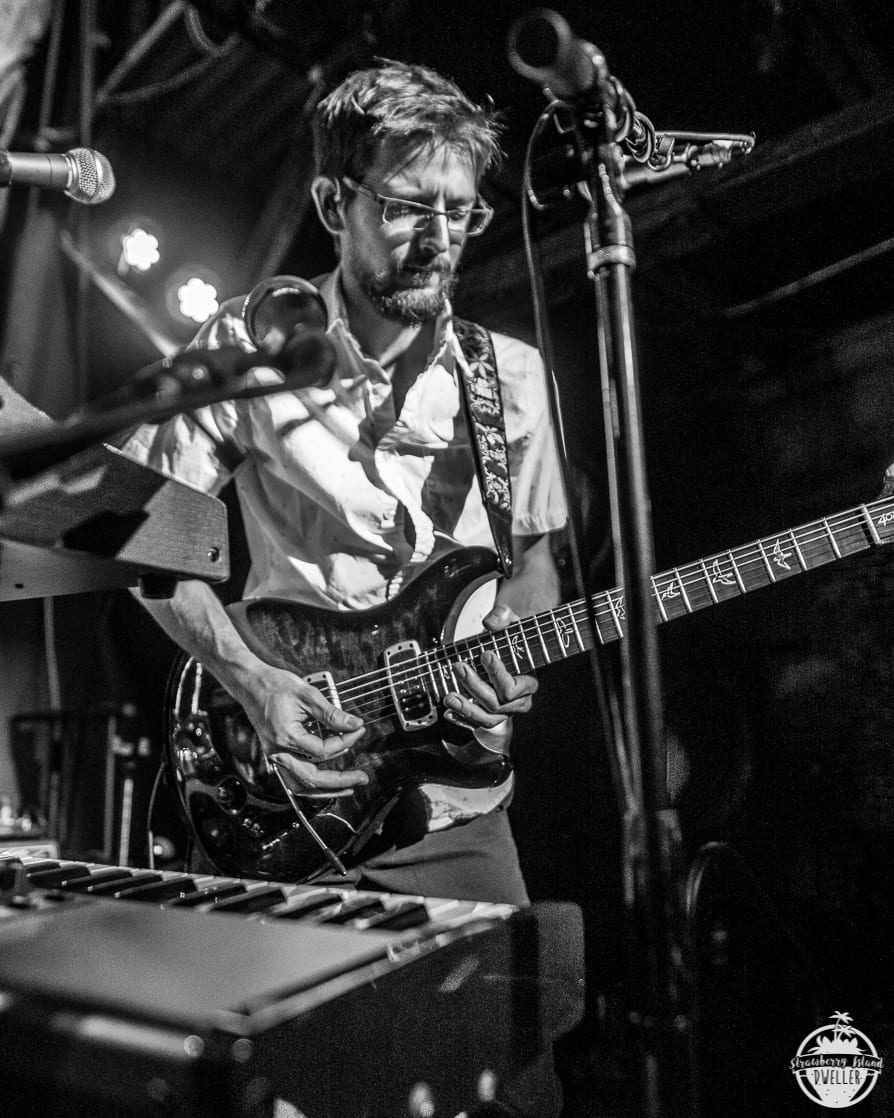
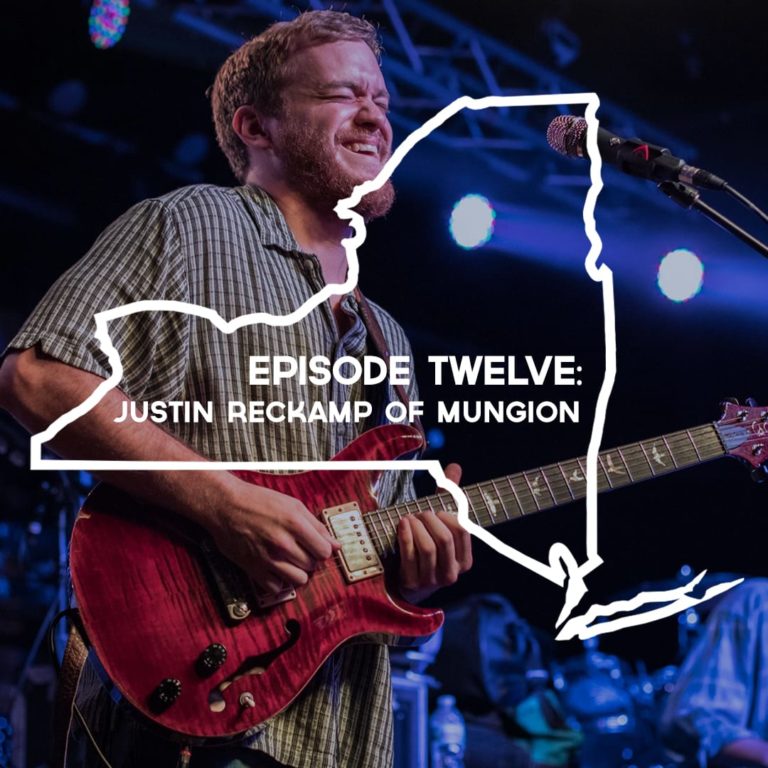
Mungion singer and guitarist, Justin Reckamp, joins host Andy Hogan in conversation about the bands origins, life in the Chicago music scene, fall/winter tours, albums Scary Blankets (2016) and Ferris Wheels Day Off (2018). Listen on Simplecast or iTunes.
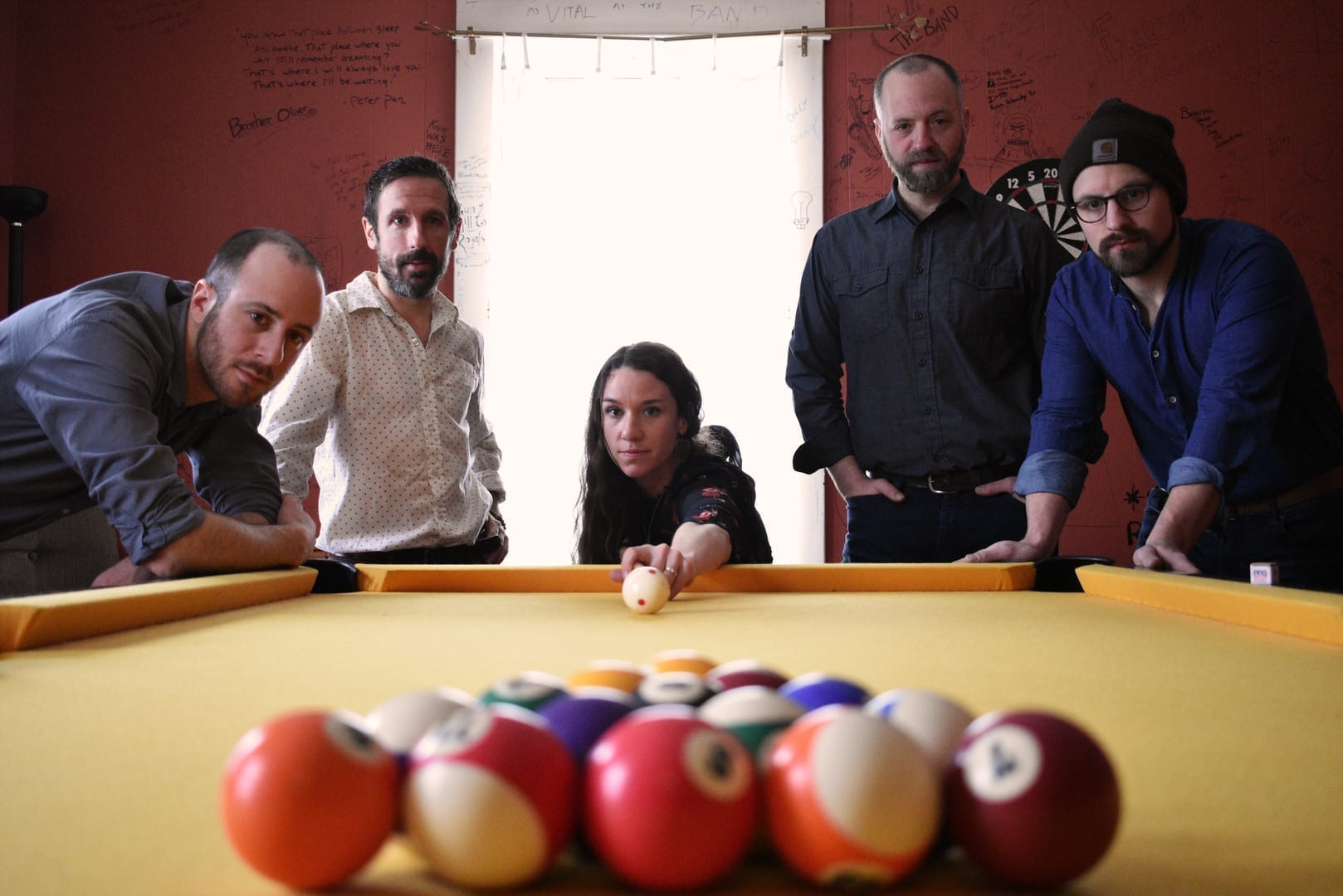
Driftwood is set to release their fifth studio album Tree of Shade this coming spring. This folk-rock and Americana-influenced band has grown over the years from a duo to a five-piece group. Band members include Dan Forsyth (guitar/vocals), Joe Kollar (banjo/guitar/vocals), Claire Byrne (violin/vocals), Joey Acuri (bass), and Will Sigel (drums). Each additional instrument and added vocalist serve to create the rounded and wholesome feel of Driftwood’s music.
Reminiscent of the sentiment of their band name, Driftwood continues to evolve with the passage of time. Tree of Shade consists of eleven tracks and represents the group’s sonic evolution as they experiment with slower paced music. Personally, listening to this album puts me back around a campfire on a chilly summer night. The opening track “California” (which also happens to be violin/vocalist Claire Byrne’s favorite track) helps set the tone for the rest of the album as it embodies the previously described ambiance.
Perhaps one of my favorite aspects of this album is the quality and quantity of the vocals. Songs like “Conquering Man” and “Santa Fe” beautifully portray the strength and conviction in Byrne’s voice while “Stick With Me” demonstrates the bright harmonies the group is capable of delivering. “Stick With Me” is another standout track for guitar/vocalist Dan Forsyth as he loves “how simple and timeless it is.” Other noteworthy elements in their music consist of the raw sounds from the guitar and banjo as well as the ever-present violin as heard in the closing few bars of “Tree of Shade,” the title track of the album.
The group created this album in the Catskill Mountains and undoubtedly captured the energy of their surrounding environment. They said it was their first time working with a major producer like Simone Felice and he really encouraged them to keep it simple and stick to whatever captures the song.When I first heard songs like “Lay Like You Do” and “What You Do to Me,” I couldn’t help but think of other beloved bands who create similar sentiments in their music. Driftwood, like The Zac Brown Band and Mumford and Sons, succeeds in inciting feelings of togetherness through the power of music. Some groups the band cite as their biggest musical influences span across generations including Paul Simon, Dr. Dog, Brandi Carlile, and Bob Dylan. It is evident by this list that they value “great songwriting and music that comes from the heart” as they told me.
“The album is emotional, mature and introspective. In some ways it’s really folky but there are also some tracks that we really took chances on.” The group shared that their goal for the upcoming album is “just to touch people’s hearts” as they “want to connect with [their] audience and share the music and this life.”
Key Tracks: Lay Like You Do, California, What You Do to Me
Bass player ‘Ray’ Beatty is very straightforward when talking about his band Lullwater: “we’re a really loud rock band.” Add their love for Seattle grunge (Pearl Jam, Alice in Chains, Soundgarden) and a “take no prisoners” rock ‘n roll stage presence – you get the DNA make up of this 4 piece band from Athens, Georgia.
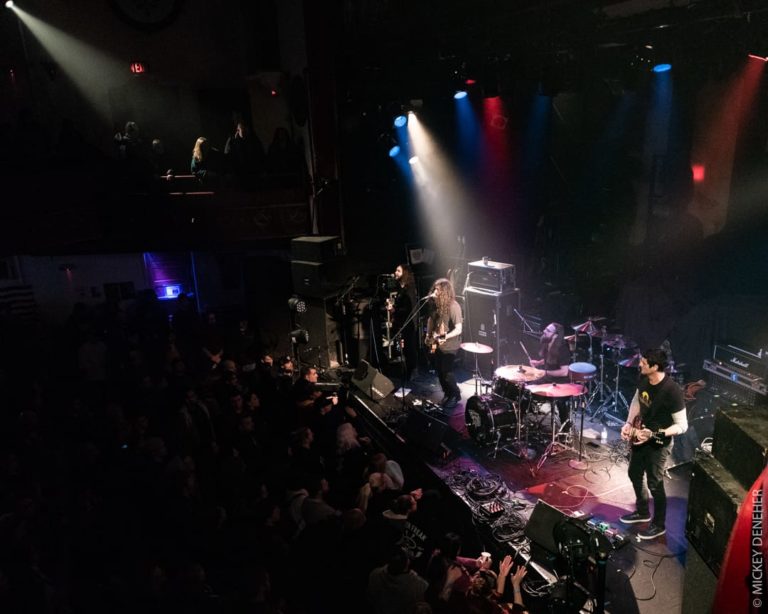
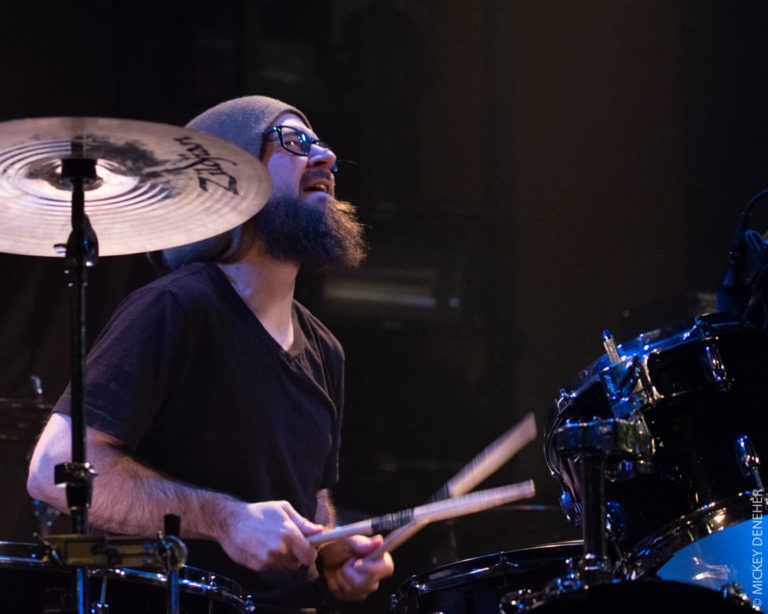
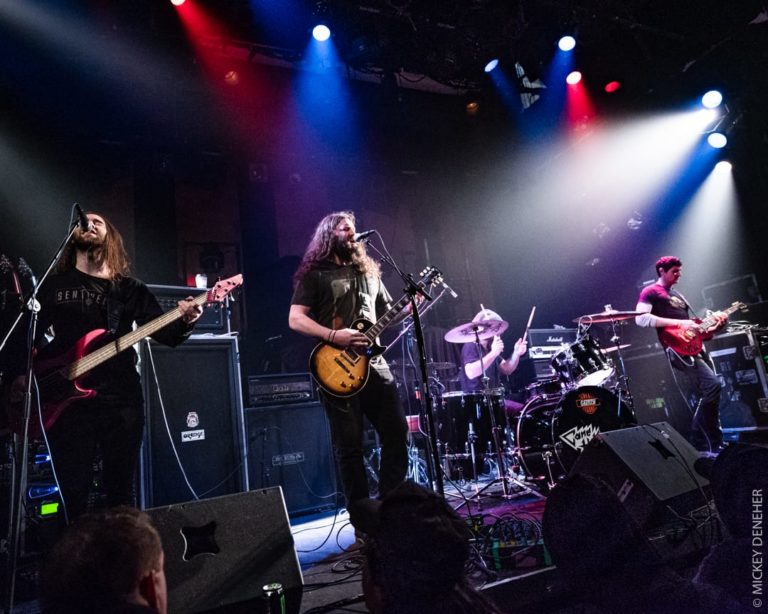
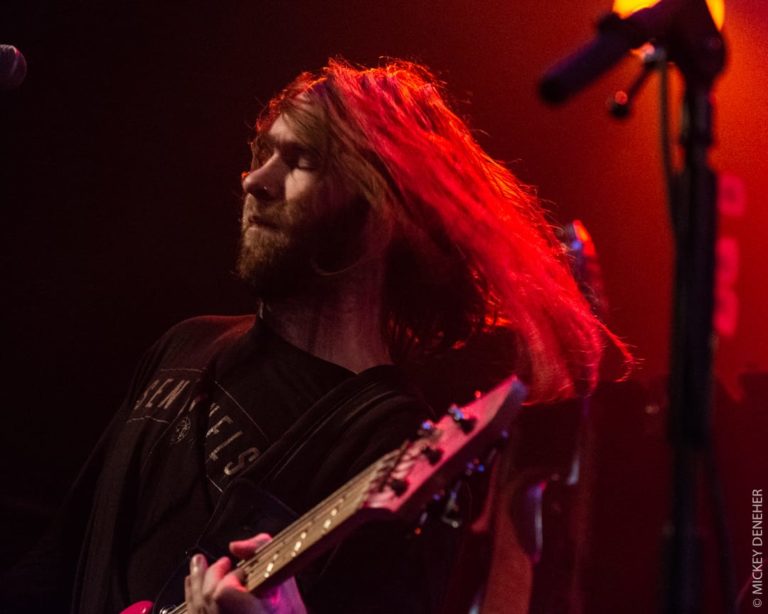
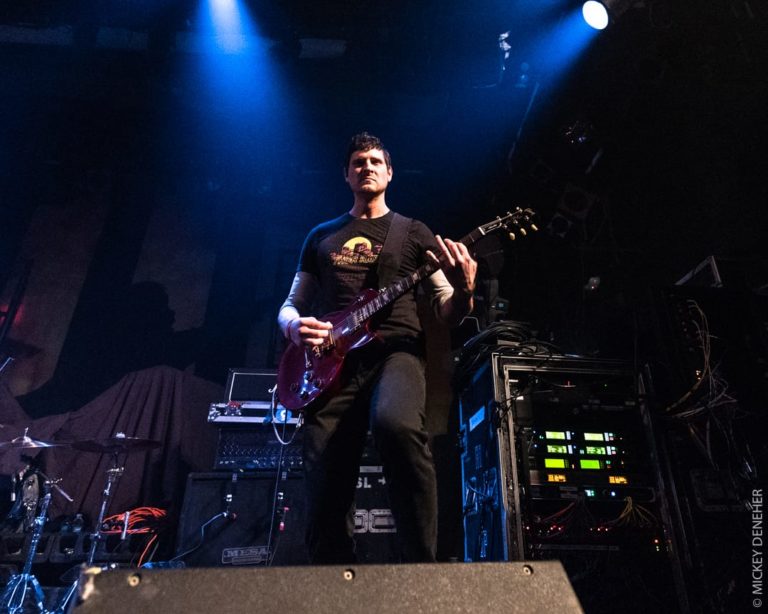
Together for 10 years, Lullwater is comprised of John Strickland on rhythm guitar and lead vocals, Roy ‘Ray’ Beatty on bass and vocals, Joseph Wilson on drums and vocals; and newest member, as of two years ago, Daniel Binnie on lead guitar. I sat down with Ray and Daniel before their set at The Chance Theater in Poughkeepsie, N.Y. The band was finishing up a month long, five band tour, with headliners Sevendust. It was a cold, but sunny afternoon with plenty of snow on the ground as we sat inside the band’s tour van and got down to business.
John Strickland
Mickey Deneher: You’re on month long tour with Sevendust, what’s that been feeling like?
Roy ‘Ray’ Beatty: It’s great. It’s an awesome tour to be on. It’s not just Sevendust. We have Tremonti, Cane Hill, and we got Kirra. Every band on this tour is really awesome. Not to discredit any of the bands we have been on tour with before, but as far as from start to finish, this tour lineup is just totally stacked. Almost every show has been sold out. Crowds have been really rockin’ and we get to watch the machine that is Sevendust. Not just the band, but the crew and everything. Seeing an operation on that level is inspiring. It’s like, oh; that is where we aim to be with our professionality, it’s great.
They’re like hanging out with us, allowing us to hang out with them. Sort of taking us under their wing a tiny bit. It’s a great experience all around. It’s inspiring. It’s very inspiring. You can see how bands that do this for a long time find and maintain success. Manage to do that through hard work.
Lullwater at The Chance Theatre.
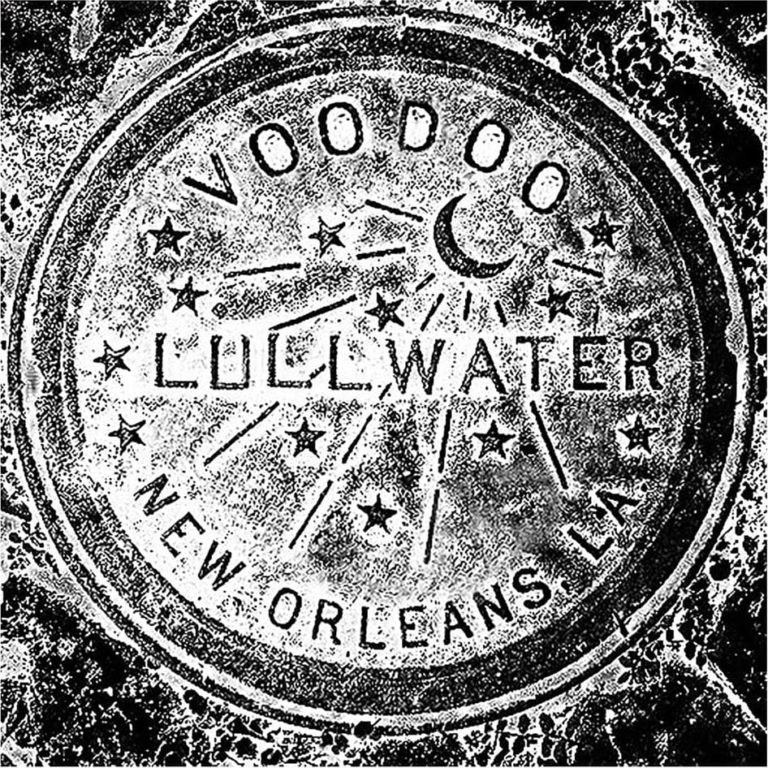
With the tour winding down, the band was preparing for the release of their 3rd and most adventurous studio album, Voodoo. A recording the band calls “a bigger, more intricate and layered, digitally-recorded sound.“ Recorded in New Orleans, the band engaged Jacob Hermann (Anthrax, Machine Head, Amaranthe) to take the reigns as producer. Recorded over a year ago, the band worked hard on the required business details so it would hit the market with full impact.
2019 released ‘Voodoo’ album art.
MD: The new album is coming out, that has to be an exciting thing.
RRB: It is exciting.
MD: You’ve done a couple of studio recordings and some live stuff. Did you go in with songs written and ready, or did you just go in and feel it and make it happen?
RRB: We had the majority of the songs written. But we went in and took the first week of our studio time just looking back at all of our songs; arranging things and changing things. So it’s like we re-wrote the whole album. But we had a lot in. Like 70 to 80% kind of like rough framework were there.
But Jacob, he came in and cracked the whip a little more and made us buckle down more then we have in the past. Made us be more reflective and honest about things that we were trying to make and were the things that we wanted really suiting the song that we wanted.
Roy “Ray” Beatty – Lullwater
Joseph Wilson
MD: You say we looked back, you had them ready, but let me make sure they were there?
RRB: Well, we did maybe a month or two of just practice in our basement leading up to it. Of us, just writing all these songs and playing them. But neither of our producers were able to be there with us. So when we went down to the studio we wanted to get them in on the vibe and also get their input and just make sure everything was the best that it could be. ‘Cause we’ve done albums. Like the previous album, we really didn’t write almost anything before we went in. And that was cool too. But we just really wanted to make this one stand out.
MD: Jacob Hermann?
RRB: Jacob (reiterated with a Swedish accent)
MD: He had some great creds coming in. How was it working with him?
RRB: It was great. It was a little daunting. It was a big step up. Not to say that our other producer, Justin, isn’t also great to work with, and he is. But he kind of goes along with our vibe and we are all very collaborative. But Jacob, he came in and cracked the whip a little more and made us buckle down more then we have in the past. Made us be more reflective and honest about things that we were trying to make and were the things that we wanted really suiting the song that we wanted.
Daniel Binnie: He was extremely critical.
MD: But that’s good.
RRB: It was good.
DB: In a good way.
MD: His name is on there also. It’s a collaboration.
RRB: It is. I think people probably don’t realize, that people that don’t make music, or don’t record their music with producers; don’t realize how much of an impact that those producers have on the album; the sounds that are happening, how the sounds all fit together, a lot of the arraignments and stuff. Your always like “Hey Justin,” “Hey Jacob,” “does it sound good?” “Does it suck or not?” When I personally go into the studio I try to, you know I have all these ideas that we have and I want things to be a certain way, but unless I absolutely am worried something’s going to not turn out good, I try to just give up worrying about anything. Saying the power to veto a sound or to confirm ‘does this sound good,’ is in the producer’s control.
Roy “Ray” Beatty
MD: You (as a band) present it, you play it, you created it, but you need that extra set of ears to help you.
RRB: You defiantly do. If you don’t all do that, it gets to be a to many cooks in the kitchen kind of scenario with everyone saying, “NO, we got to do this riff,” ‘That didn’t quite work, we have to redo it.” It’s like CHAOS. In order to serve the final product, you have to remove yourself a little from it.
MD: The song “Empty Chambers” a first release. Talk a little about it.
RRB: It’s just a loud rock song. Actually, that was the first one we started writing for the album, I think. I was traveling and I had my guitar in my car and I knew that we had our studio session booked and I was kind of freak’n out because nobody had been sending in riffs. ‘Cause usually, the way our writing process works is, other people are coming up with some of the riffs and I‘ll try to arrange them and we’ll all try to arrange them and write. We write together. But for this one, I was just in my hotel drinking and I was like; man, we need songs. So I just wrote that first riff and we just kind of came together and made a song out of it.
Daniel Binnie
You can take kind of what you want from the lyrics. John (Strickland, lead vocals and rhythm guitar) doesn’t like to be super direct with explaining his lyrics in interviews, so I kind of respect that. But you listen to it; you can kind of hear what it’s all about.
Daniel Binnie: I wrote the rhythm for the chorus. Don’t for get me (laughing!)
RRB: Binnie did write the chorus of “Empty Chamber.” Totally wrote that. We took that from a song he made. So it really came together.
MD: What was it that drew you down to NOLA (to record)?
RRB: Jacob had worked in that studio and he said that was the place to go, so we said ok, we trust you.
MD: New Orleans is such a music place.
RRB: It is a music place.
MD: The vibe is a NOLA vibe. Did any of that seep in a little?
RRB: The album is called Voodoo. We where there for Halloween. (Laughing) It definitely influenced the album. It seeps through. You be able to hear it in the final product.
Lullwater
DB: Musically of course, we got some horns and strings and stuff from local musicians on the album. So you got that. As far as the vibe of the town, there is a lot of pain and suffering on that album.
RRB: There is. I feel that like that is the theme of the album overall, everything falling apart and then getting back together.
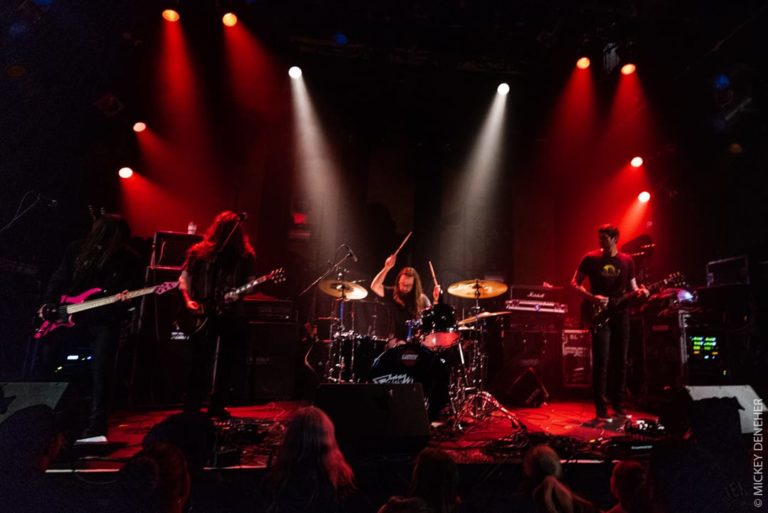
The band hit the stage at The Chance Theater to a very appreciative and packed house. With 2019 in front of them, Lullwater will be releasing an acoustic EP, containing songs from their last two albums, in late spring or summer. The band is now finalizing tour dates for the rest of the year, so look for Lullwater out on the road in support of their latest release.
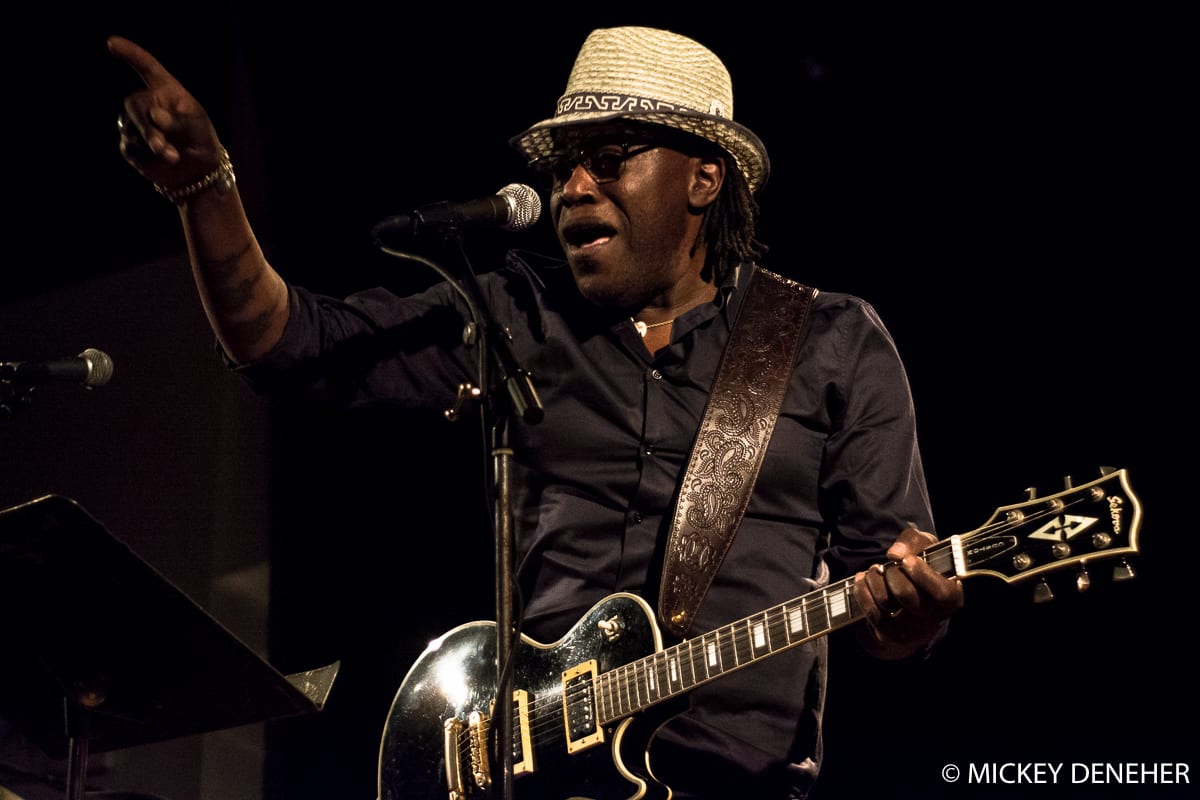
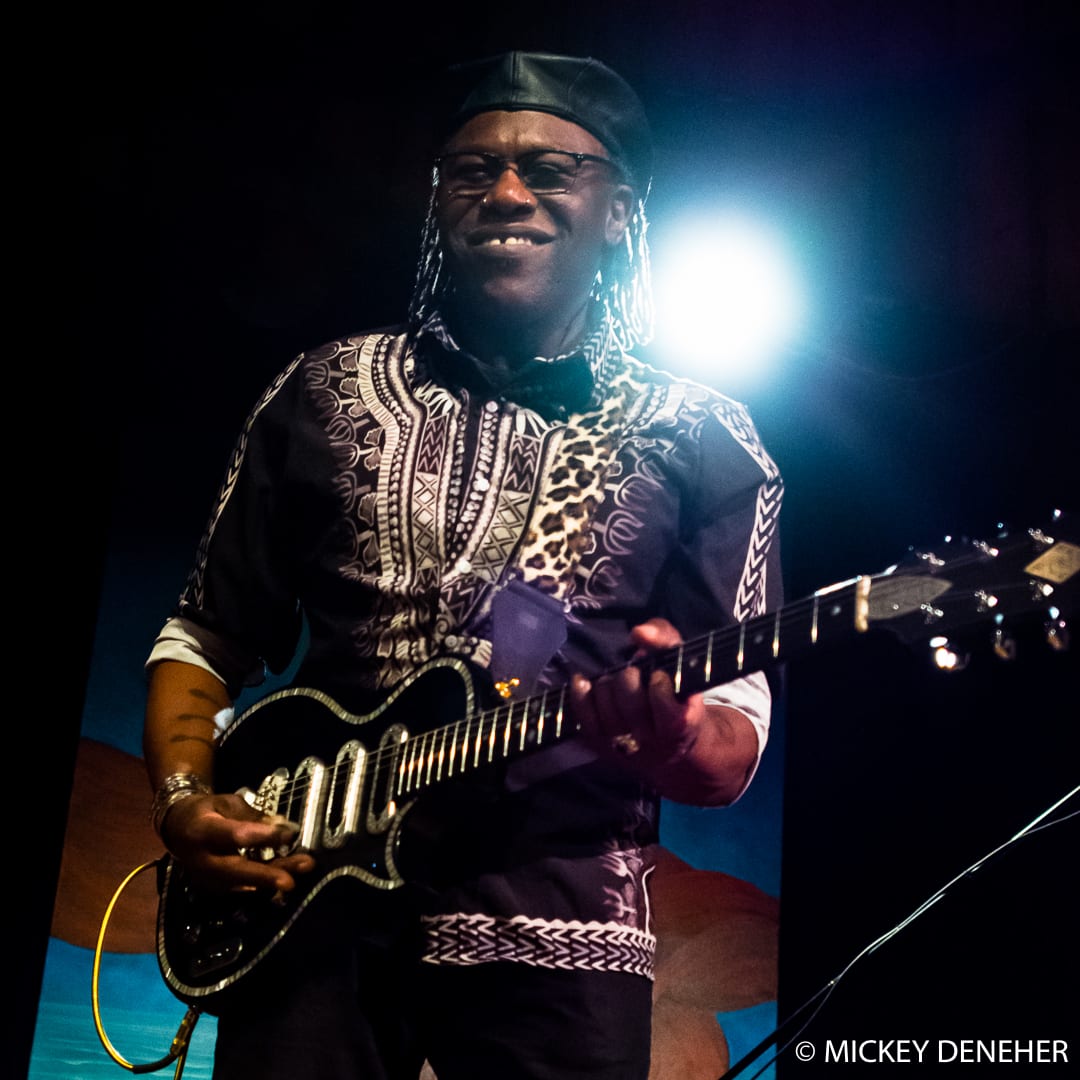
When you’ve won four Blues Music Awards, been inducted into the Blues Hall of Fame, nominated for a Grammy, and are a W.C. Handy Award recipient, your mark on the world of blues is pretty much set. Add a close friendship with B.B. King, James Cotton and Willie Dixon, and you get a glimpse into the life and career of a Blues Master: Mr. Joe Louis Walker.
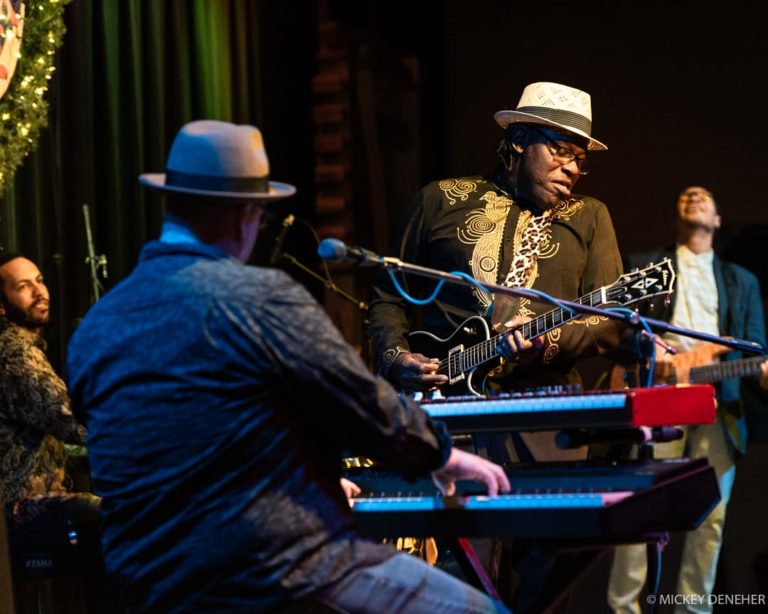
Named “A legendary boundary-pushing icon of modern blues” by NPR, Walker started playing the guitar as a young boy, growing up in the Fillmore District of San Francisco in the early 60’s. Now living in the Hudson Valley for the last 10 years with his wife Robin, Joe has a non-stop schedule traveling the world; touring, writing, recording, and producing. I sat down with Joe after sound check at The Towne Crier in Beacon, N.Y. The band had just gotten in from Buffalo N.Y. and was wrapping up a few dates in the U.S. before heading off to a remote island in the Caribbean for a blues festival.
Charles Sullivan the promoter, he would give us free tickets. So we got to see the Temptations, the real Temptations. We got to see James Brown when he got a brand new bag. I got to see Little Richard with Jimi Hendricks on guitar. I got to see all of that sh#t for FREE! And plus, I got to play the Fillmore.
Mickey Deneher:Your career, over 50 years?
Joe Louis Walker: About 53 years. I’m 69 now. I turned 69 on Christmas (2018). I’ve been playing since about ’61. I joined the union in 1964. I joined the musician’s union. Been a union man all my life. Been living on my own since I was 16.
Joe Louis Walker
MD: You started playing music at a young age. What brought you to the guitar?
JLW: Well the guitar, when I was a kid, was the most accessible instrument, as it is now. The guitar was, when I was 12, 1962, only something you could look at. I went to a catholic school and at that time, you could check instruments out. If you had an aptitude, a little bit of an ear for the talent, they would nurture it. If you really had a talent, you would make a deal with your parents and they would rent you an instrument. Rent you an instrument. Not buy you one. Rent you one. With renting the instrument, come lessons. So I first rented, I checked out the violin when I was about 9, cause I could carry that home. But I really couldn’t make too much (out of it) when you’re fixated on that sound; that electric sound.
My parents had a temporary split and we ended up moving to the Fillmore District, and my world began. We moved to the projects, me and my mom and all of five kids, all of us. One project over, one housing (project), my cousins. I hadn’t seen or hung out with my cousins too much. But the first day I go there, they are on the 3rd floor of the projects; 3rd floor! I walk from the first floor. I am going to walk up three floors. You don’t want to catch the elevators. That’s where a lot of stuff goes on. All the way on the 3rd floor, all the way, the first floor to the third floor, wall-to-wall girls. Just standing and listening to my cousins play. I’m like; I am definitely going to do this now. [Laughing] Wall to Wall!
Dorian Randolph, Bruce Bears, Joe Louis Walker, Lenny Bradford.
MD: Ulterior motives!
JLW: But just to know, that there was something that we could do as young guys and make a few bucks. Buy our school clothes. Become popular without being jocks. Without being serious gang guys.
We literally, had the whole thing for ourselves. Of course there were bands all in the area. There was Sly’s (Sly and the Family Stone) brother Freddy Stewart who had a band with my cousin Ted Weisinger; Freddy Stewart and the Stone Soldiers, one of the big bands in San Francisco. This was before the hippies came to San Francisco. The hippies didn’t come till ’62, ’63, ‘64. I was in the Fillmore district in ’61, ’62. I was 12 years old in ‘62. I was lucky because there was this convergence among all the soul groups. The Fillmore at that time was like Harlem in the Renascence. It was, I would say, 75% African-American, huge amount of Japanese, a nice amount of Chinese and different, various people.
When the hippies came in to the Fillmore Auditorium, in it was sort of interesting because me and my cousins and all of us had been playing the Fillmore since we were young. That’s where we would have our battle of the bands. I went to junior high school a block from the Fillmore Auditorium. So we used to have our rehearsal there, battle of the bands there. Then, if we clean up some times, Mr. Sullivan who owned the Fillmore, Charles Sullivan the promoter, he would give us free tickets. So we got to see the Temptations, the real Temptations. We got to see James Brown when he got a brand new bag. I got to see Little Richard with Jimi Hendricks on guitar. I got to see all of that sh#t for FREE! And plus, I got to play the Fillmore.
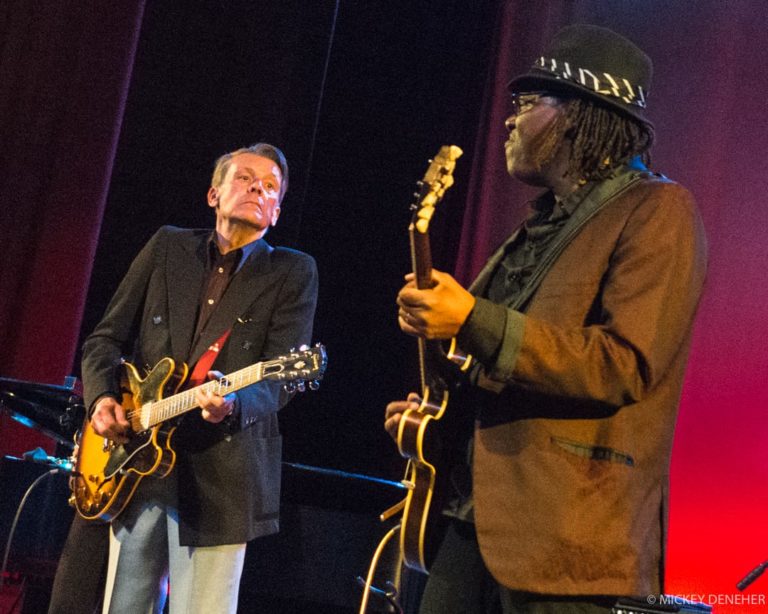
J. Geils, Joe Louis Walker
So when the hippies came there it was like ok, you know, I am cool with this. But as somebody said, very adroitly, they said “you know one of the best things to happened for a lot of the old rock and roll and blues guys was the English invasion, because they brought back interest in them.” But it was also one of the worst things to happen. Cause they put all their heroes out of work. The English guys did not mean to do that. That is not what they started for. There was like maximum R&B. That was, their heroes. That is not what they were about. Period. To note that it turned out that way, was a real drag. That is not what John Lennon and Mick Jagger and all those guys were about. They just weren’t about that. The Yardbirds, they just weren’t about all that. But that’s what it sort of turned into.
But, be that as it may, I was fortunate to be able to see all the Fillmore stuff, then play at the Fillmore. When Graham owned it; Bill would let me come any time I wanted. So I got to see all the shows.. I was fortunate to becoming up in all that stuff. It wasn’t just that; it was the young guys who were finding their musical paths.
MD:At 16 you had a name in the San Francisco music scene. Who were you were playing with?
JLW: Lowell Fulsom, Troyce Key, Percy Mayfield, Erle Hooker. You name it, I backed everybody. Katy Webster, Sly, (Mike) Bloomfield. John Lee, Earl, just on and on, and on and on. I played with all the hippie groups. I was in Blue Cheer, The Oxford Circle. We did a little fusion stuff with some other groups later. The coolest thing about that time, and that place, was that everything was progressing at the same time. What people wore, what people thought, the way the people responding to old mores, the Vietnam war, Richard Nixon, interracial marriage. Everything was happening at the same and the biggest thing I think, was what we invented in the United States in the San Francisco area, was FM radio. That was the biggest thing. Cause without FM radio we’d still be listening to The Monkees, 2 minutes, 40 seconds.
MD:You’re right. Wow, I did not think of that.
JLW: And jam bands.
MD:It wasn’t just blues, experimental, psychedelic.
JLW: It was so much. Oh my God. You could literally go out every night, hit three spots a night… You go to the Avalon Ballroom, The Family Dog (Ballroom), go see John Mayall with Mick Taylor and Muddy Water’s with his band, Big Mama Thorton. Go to the Fillmore, maybe see an Airplane with Quick Silver and Charles Lord Quartet, and Howlin’ Wolf. Four acts, that’s all in one night. That’s all in one night! Then you go to clubs after that.
Joe Louis Walker
The 60’s counterculture movement brought hippies, flower power and alternative life styles to the bay area. While the 70’s found San Francisco awash in a psychedelic haze. Walker made a conscious decision to take a detour from the 70’s status que and attended San Francisco State University, where he earned degrees in both English and Music. “It (was) important for me. Because it was something I started and didn’t finish.” Joe says. Applying his personal growth directive to music, Joe joined the gospel group The Spiritual Corinthians, in 1975.
MD:You went into Gospel. You did that for 10 years?
JLW: Longer than that.
MD:When I think about gospel, to me there is a blues base, a bluestone, that feeling.
JLW: Look at it like this: Gospel, Blues, and Soul music. Just take a for instance. For instance, in blues I mean B.B. King. I don’t mean Eric Clapton. No disrespect to Eric Clapton, ok. In blues, that is the template. Or Howlin’ Wolf. Say B.B. King, cause B.B. to me always was, and I used to have fun telling him this, “you’re just a gospel singer in a blues singer’s body.” When he was young, cause he hit all the high notes, his range was limitless.
JLW on B.B. King, Blues and Soul:
So you take a B.B. King for blues. So you take for soul music (pauses for a second), Sam Moore. Just a voice that’s just wicked, or Al Green. And say in gospel music, you take somebody like my friend, Clarence Fountain (Blind Boys of Alabama). When you have those three, all those three guys are cousins. I could take Bobby Blue Bland and interject him into soul, he wouldn’t miss a step, wouldn’t miss cause he helped invent it. I could take Sam Cooke and interject him into blues. Sam Cooke had a number 3 record; hit record with “Little Red Rooster.” A lot of people don’t know that and it’s cool. I could take Sam Cooke and interject him into soul, wouldn’t miss a step. I can take Sam Cooke, of course, interject him into gospel, wouldn’t miss a step. I can interject B.B. into gospel, wouldn’t miss a step.
Joe Louis Walker, Lenny Bradford
But now I could not interject Eric Clapton into gospel. No disrespect. I could not interject Joe Bonamassa into soul music. I can interject him as a player. But I couldn’t interject him in like Bernie Worrell or Catfish (Collins); Bootsy Collin’s brother; or someone like Jimmy Nolen who played with James Brown; or Freddy Stewart, Sly Stones brother; or Bobby Womack. I’m sure he could play all that, don’t get me wrong, but that style of playing within itself is the total opposite of this (Joe motions moving fingers all over a guitar neck at rapid speed.) Cause when you playing soul music and gospel, you are playing as an accompaniment to the voice. The lyric of the song is the star. Everything else is secondary. With blues now, and I should say blues rock, because its changed. It used to be, which it just blows your mind, go home and put on any record you like. Put on “Little Red Rooster” by Howlin’ Wolf, put on “Boom, Boom” by John Hooker, put on “Baby What You Want Me ToDo” by Jimmy Reed, put on “Got My Mojo Workin’” you will not hear one solo. You might hear four, five notes; but you are not going to hear (Joe makes sounds like a cacophony of notes played at lightning speed.) That is sort of what a lot of stuff has morphed into now. So when it’s morphed into that, and it’s morphed into screaming as loud as you can, singing as loud as you can, with a lot of fake ass emotion. I’m sorry I grew up in the same project with Etta James, I grew up in the same projects man. She never screamed on “I’d Rather Go Blind.” In that particular song she doesn’t scream. She really doesn’t.
Joe Louis Walker
So I guess we all have our points of reference. We all have what we feel moves us. The same things, it moves me all my life. Once I heard the Wolf, I loved it. I loved it just as much now. When I heard “Satisfaction” I loved the song then, I love it now. But blues has morphed, you know it’s just morphed into more of a me thing, as apposed to a we thing. Muddy Waters was great. But he sounded really good with Little Walter, he sounded really good with Otis Spann, you know what I mean. He sounded really freak’n good with Willie Big Eyes Smith. When he didn’t have Willie, when he didn’t have Otis Spann what did he do? He got Pinetop Perkins!
Those guys could literally solo over each other and not step over each other. They could solo a little during the song, but not step on each other. That it was all about we. A lot now is about me. It’s about the individual. That’s sort of the way the music business has morphed.
[bs-quote quote=” B.B. King to me always was, and I used to have fun telling him this, ‘you’re just a gospel singer in a blues singer’s body.’ When he was young, cause he hit all the high notes, his range was limitless.” style=”default” align=”center” color=”#000000″ author_name=”Joe Louis Walker”][/bs-quote]
While attending the New Orleans Jazz and Heritage Festival with The New Corinthians in 1985, Joe had an epiphany that the blues were his calling. He realigned his musical direction and has not looked back. His resume of musical accomplishments include 25 albums to date and countless guest appearances supporting the likes of B.B. King, James Cotton, Branford Marsalis, Peter Green, Elvin Bishop, Issac Hayes.
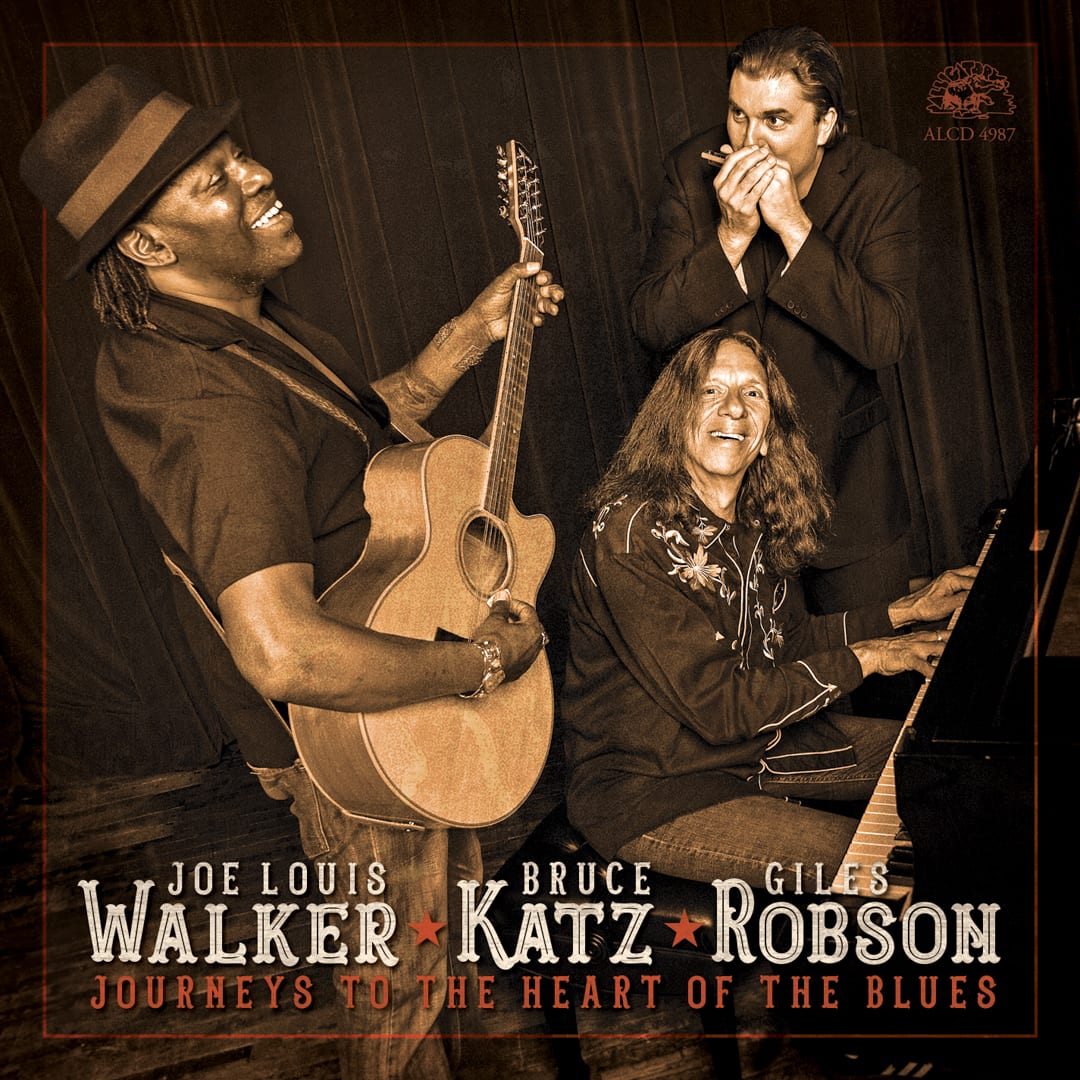
Joe’s latest project is Journeys to the Heart of the Blues. An acoustic blues album nominated for two 2019 Blues Music Awards (Album Of The Year, Acoustic Album.) Joe recorded with renowned keyboard player and fellow Hudson Valley resident Bruce Katz (Greg Allman Band,) and next-generation British harmonica ace Giles Robson. The album is out on Alligator Records throughout North America, Australia, New Zealand and Japan. Munich Records, a division of V2 Records Benelux, will release it in all other territories. The sessions were recorded at NRS Studios in Woodstock.
Joe Louis Walker, Bruce Katz, Giles Robson
Mickey Deneher:You are recording now, correct?
Joe Louis Walker: My album. We are about three quarters finished. A double album.
Joe’s upcoming album is chock full of his friends who he’s has played with over the years. The list includes: Juma Saltan, Mitch Ryder, Jesse Johnson (The Time), John Sebastian, Dion DiMucci, Ray Walker (one of the last living Jordanaires), David Bromberg, Carla Cook (Sam Cook’s daughter), Bobby Will, Charlie Harper (UK Subs,) Waddy Wachtel, Keb’ Mo’, and Jorma Kaukonen.
MD:I saw one of your recording credits is as a primary artist on William Shatner’s “Shatner’s Claus: The Christmas Album”
JLW: Yeah. We are getting ready to make a blues album next year. Going to beam us up baby. For me it’s sort of a double-edged thing. Because it’s amazing that now the blues are so popular, that literally, Captain Kirk, he done run out of universe, but he’s into blues music, and who’s he talking to? Joe Louis! I’m trying to give him a little bit of insight cause he’s very serious.
I just tell anybody that asks me; this is not about the notes. It’s not about the vintage guitar. It’s not about the tour bus. It’s not about the $5,000 Armani suits, with the $500 shades at the Royal Albert Hall. It’s not any of that. It isn’t. This here, comes out of suffering and what it is, its the social studies in survival and how to deal with adverse circumstances that are state sponsored and you have to deal with it. That’s what the blues came out of.
Catch this legendary bluesman and his band at The Egg in Albany on March 13th with The Robert Cray Band; March 21st at City Vineyard, in NYC; and March 22nd at Live at the Falcon, in Marlboro N.Y.
Lenny Bradford, Joe Louis Walker, Bruce Bears, Dorian Randolph
Frequently I am asked what genre of music JJ Grey & Mofro falls under. I always find myself fumbling for words but end up with something like “bluesy, jazzy, Florida Swamp funk.” I am usually met with a perplexed look, and I always add, “You have to go. You have to see for yourself and then you’ll understand.”
I have watched this band grow, develop, and change over the course of almost 20 years. As a Jacksonville native myself, it was never difficult to find what was then Mofro floating around town from one venue or another. They were a bit gritty and unrefined in the early days but still put on a fun show. I moved to Colorado in 2004 and would see them any time they came near or when I returned to Florida. Their shows remind me of my roots and what I refer to as “the real South” — the South that most people do not know or understand. Their music would make me homesick and long for the days of Old Florida.
Now that I am back in Florida, I still find myself traveling for their shows and encouraging any true music lover to do the same. Although Florida has changed, the group still reminds me of the Florida I grew up with – the food, the swamps, real people, and the deep soul. The current configuration of JJ Grey & Mofro is my personal favorite. Each musician is topnotch alone but when combined, the depth of their music knows no bounds. The fluid combination of these seven men is nothing short of incredible.
JJ Grey & Mofro getting “Janky” at the Upstate Concert Hall 10/19/17. Photo by Eli Stein
I was fortunate enough to catch the final two shows of a rather long tour that ended in Boulder (Boulder Theater) and Fort Collins (Washington), respectively. Knowing JJ was sick as he entered these shows and had been forced to cancel the Frisco show the previous night, I wasn’t exactly sure what to expect. Musically, Colorado is a finicky area that has high expectations when bands roll into town, but I was cautiously optimistic as I watched them take the stage. They opened with “99 Shades” to “Sweetest Thing” and into “Somebody Else.” I scanned the crowd and saw a few mouths dropped as JJ belted out notes as only he can do. As the show progressed, the crowd was enamored with what they were watching as they sang and danced along. Always a personal highlight for me is the drum solo (Craig Barnette) for “Ho Cake”; it does not matter how many times I hear that song, it is always a little different and always fantastic. (If you don’t know what a Ho Cake is, check it out and make it! You can thank me later.) The show wound down with a little help from a few of The Commonheart members. Nate Insko (trumpet), Abby Gross (saxophone), and Lucas Bowman (keyboard) joined for an “Ol’ Glory” encore that did not disappoint.
Prior to the Fort Collins show, I was speaking with guitarist Mike Minda from The Commonheart, and he said to me, “We love touring with them. We learn so much musically, personally. We admire them.” There was a bit of a student-master appreciation that I could hear while listening to him speak. As the show began, the Mofro band came out swinging to “Junior” with Dennis Marion (trumpet), Todd Smallie (bass), Marcus Parsley (trumpet), Craig Barnette (drums), Eric Brigmond (keyboard), Pete Winders (guitar), and JJ (vocals and whatever other instrument he can get his hands on). I could see the steam from the tea to help JJ’s throat, but if you couldn’t see that or didn’t know he wasn’t feeling well, you certainly would not have picked it up in his voice or enthusiasm. Fort Collins fans were treated to a smoking “Gal Young’en,” “Orange Blossoms,” and “Lazy Fo Acre” to name a few. As “Ol Glory” began for the second encore, Eric brought an unwavering depth to a song filled with soul that resonates with any music lover. One by one, the members of The Commonheart joined JJ & Mofro on stage for a third and final encore with “On Fire.” Seventeen musicians joining forces and not skipping a beat is no small feat. I know of very few artists who would even attempt to tackle such a challenge.
Although I may always struggle to pinpoint a genre to appropriately describe what I would consider a music lover’s dream band, I can tell you: “If you haven’t been, go.” This is some of the best music out there right now. As they say, “Buy the ticket, take the ride.” You won’t be disappointed. As I overheard leaving Fort Collins, “It’s like being taken to church … you walk out better than you came in.”
The Northeast is in for a special treat when they roll thru Port Chester, New York on March 1st with Big Head Todd and the Monsters.
For your own taste of this Florida Funk visit their website and check out all upcoming dates around the Northeast.
February 8, Boulder, CO
Setlist: 99 Shades, Sweetest Thing, Somebody Else, Every Minute, Jookhouse, Fire Flies, Junior, Gal Young’en, Seminole Wind, Lochloosa, Orange Blossoms, Slow Hot Sweaty, Ho Cake, Shining Down
Encore: Brighter Days, Ol’ Glory
February 9, Fort Collins, CO
Setlist: Junior, Everything is a song, Sweetest Thing, Circles, Every Minute, Florabama, This River, Gal Young’en, Seminole Wind, Lochloosa, Orange Blossoms, Lazy Fo Acre, Ho Cake, I Believe
Last week, NYS Music covered staple jamgrass group Railroad Earth during the incredible northeast run of their 2019 winter tour. While all musicians put on a strong showing every night, one performer stood out in particular: Mike Robinson, special guest musician for the run that shined on pedal steel, guitar, and banjo.
Many music fans may have discovered Robinson during this tour, or maybe already knew him from his days with the progressive grass outfit Jeff Austin Band. Yet, soon enough, the musical world will get to know the singer-songwriter in his own right, when he releases his debut EP, Clevidence, on March 7. Featuring five emotionally and sonically rich songs, Clevidence comes as a great introduction to not only Robinson’s prolific talent across a number of instruments, but also his natural affinity for songwriting and singing.
The album’s release on March 7 will be celebrated with a special performance at Owl Music Parlor in Brooklyn NY, with singer songwriter Emma Frank opening up the show. In anticipation of the date, NYS Music talked with Robinson about the making of the record, his musical upbringing and more.
Miles Hurley: My first question is on your experience with working in the studio. Being that Clevidence is your debut solo EP, was the making of this album a new kind of experience to other recording stuff you may have done in the past?
Mike Robinson: Recording almost all of this project at home was a big departure from other studio experiences I’ve had. I was able to give everything the time it needed without the pressure of the clock that comes with being in an expensive studio. I find that in fancy studios with high hourly rates I am never I able to fully relax. Doing a majority of the recording in my home studio in Brooklyn made it possible for me to focus on the nuances that might have been otherwise overlooked.
MH: One thing that stands out on the EP are the lyrics, which are pretty intense throughout. Do you feel like you were able to express the ideas or messages behind the songs in the way that you wanted?
MR: In the process of writing, I found that using hyper-specific language was a potent way to paint a clear picture of an emotional situation. My goal was to give a listener clear mental images to hold on to. I think the specificity of the lyrics contributes to the ability the songs have to convey an emotional message. This can make things seem especially intense and revealing personally, but not sharing the whole story would feel fake. Songwriting is cathartic for me and can be super helpful for me if I’m struggling in my life. Hopefully it can also be helpful to listeners struggling with their own experiences.
MH: Listening to “How Do You Know” in particular, I’m interpreting a sense of something like self-doubt, or worry. Would that be a close guess? Could you comment on what this one means to you?
MR: “How Do You Know” is about a generation that is terrified, broke, and leaning on substances to deal with it. I’m twenty-six and I’m struck by how many conversations I have with people my age evolve to this conclusion. I don’t want to get into the politics of the specific things that could be to blame for a generation wide problem, but I do want to address that it is a real thing that many people are going through. From lack of health insurance, to being buried in student loan debt, to facing an uncertain collective future, there is a general sense of uneasiness in the air. And I see those around me relying on substances to cope. I don’t know if these are new problems. I just know that they are real ones.
MH: The range of instruments you perform, in general and on this record, is nothing short of impressive. Did you develop an interest towards learning these instruments around the same time in your life, or has your progress as a multi-instrumentalist been more spread out across your career?
MR: My dad plays a few instruments so I grew up with guitars, fiddles and mandolins around. My older brother played bass and drums in high school and my grandpa is a classically trained pianist and even played the cello for a while. I started guitar at age six and it has always been my main instrument. But being surrounded by different types of instruments, I wanted to learn how to play more of them. My first serious double was banjo which I picked up around 15. I didn’t become interested in the pedal steel until a few years ago, but I really got into it. That thing will make you crazy! I was listening to these lush records from the 60s and 70s and wanted to be able to relate to those sounds on a deeper level.
MH: Follow-up question to that, asked by a non-musician interviewer: how hard is pedal steel to learn?
MR: My cousin is studying to become a helicopter pilot and it sounds similar to that with lower stakes. The toughest thing for me was to be able to establish independence in all of my limbs. your left leg is responsible for 3 or 4 pedals and 2 or 3 levers, right leg is on a volume pedal and 2 levers, right hand is picking and stopping strings from ringing and the left needs to make sure the bar is in the right place and in tune. Physically, it’s a very complex instrument to master. While it’s also challenging mentally, it would be even harder if you are a non musician to start. Most of my knowledge came from guitar and I was able to transfer the theory to steel.
MH: There are some great harmonies on the album. Can you give a little background on who’s there with you?
MR: I sing all of the lead and some of my own harmonies, most of the female vocals are an amazing singer and composer based in Brooklyn named Emma Frank with the exception of “How Do You Know” which is sung by Abby Hollander.
MH: Speaking of the pedal steel, it sounded great in the Railroad Earth setting—I caught The Egg show and you sounded fantastic! You’ve been on tour with the band and have performed many shows with them now. Can you speak a little to what that’s been like? Has playing with them met or been different from any expectations?
MR: I did three shows with them that week: Albany at the Egg, Boston at the Wilbur, and the Capitol Theater in Port Chester. That’s been it so far, but I will play with those guys whenever they want. That band and crew are incredible. The songs are great, the players are great, everyone was very supportive and positive. It was a complete lesson in how the business is done and how to keep the music as the focus. The fans are some of the most genuine music fans I’ve had the pleasure of playing for and I would be very fortunate to do some more work with those guys. One of the highlights of my career so far, without a doubt.
MH: You moved to New York at an early age, and is where you are based now, if that’s correct? Have you found NYC to be a fruitful creative environment towards your career as a performer or songwriter?
MR: I’m from Colorado. I moved out here at 18 for college. I was pretty overwhelmed by the city but determined to study with all the inspiring New York musicians I grew up listening to. I had every intention of moving right back home to Colorado when I was done with school but right about when I graduated I had just started seriously gigging in New York. I decided to give being a full time freelance musician a try for a few months. One thing led to another and I found myself living with some of the most inspiring musicians in my generation, touring in several bands and growing as an artist. My life was working too well that I didn’t have a compelling reason to leave. I’m constantly pulled towards a the desire to live somewhere more calm and connected to nature. But 8 years later, New York has yet to let me down in the ways I’ve feared.
Night two of the five night Colorado run took place at a hip little venue in Avon, located in the Vail Valley. Agave, a traditional Mexican restaurant by day – live music venue by night, hosted Aqueous and BIG Something for an intimate show. The welcoming vibe continued with a crowd of Colorado residents and again, familiar faces from back East. Agave filled up while the band completed soundcheck; the excitement from fans was palpable. Situated on a cozy corner stage, Buffalo’s groove-rockers were ready to get the crowd moving.
Holding true to their “cant stop, won’t stop” mantra, it was only fitting that the set opener was “Strange Times,” from the 2012 album Willy is 40, which segued beautifully into a highly anticipated “The Median.” Next up was an exceptionally fun bust-out of the Gary Numan song “Cars,” played only one other time 467 shows ago on 7/28/14. The set concluded with a soaring, extended “Kitty Chaser (Explosions).”
After the set concluded and Aqueous load out was complete, the opportunity arose to sit with Evan McPhaden (Bass/Synth) for a conversation about touring, songwriting and his roots as a musician. The exchange started, Evan spoke about how it felt to be back in Colorado and being on tour with North Carolina’s BIG Something. Very happy to be back in CO, Evan said he’s been excited to be playing new venues and sharing the tour with BIG Something. Stating that a perk of a co-headlining tour allows time to enjoy the show as well as perform. Delving a bit into his involvement in the creative side of things, it was uncovered that Evan contributes heavily to the songwriting process. On Color Wheel, he wrote “Weight of the Word,” the music for “Split The Difference” and “Mandela Effect,” which was a NYS Staff voted Best Album of 2018. When asked about McPhaden’s hand in songwriting, he humbly downplayed his efforts even though he is known as a gifted writer and composer.
Evan began playing music at a young age. Encouraged by his father, whom played bass, Evan picked up the guitar to join in on jams with his dad. He gave it his all, but one day he picked up a bass guitar and he said it just “felt right.” As far as bass-lines go, McPhaden pulls out some low end grooves that provide the heartbeat for both melodies and jams that Aqueous is known for. Giving credit to his rhythmic partner-in-crime Rob Houk, Evan explained that since Rob joined the band he feels much more confidence and flow when performing, and this is certainly apparent on Color Wheel.
The conversation with Evan concluded with some real love for the AQuantainces. Evan shared his appreciation and respect for their fans, stating that watching a fan sing “every single word to every single song” was incredibly moving. Looking forward to the next stop on the tour, the band prepares for more travel through the mountains and more adventures at new venues. Next stop, Winter Park at Ullrs Tavern. These shows will be available on Nugs.net for streaming with a subscription. Full set list for the Agave set can be found below. Tour dates for the Aqueous/BIG Something tour can be found here.
February 14, 2019 Agave, Avon, CO
Set one:Strange Times > The Median, Say it Again > Cars1 > Kitty Chaser (Explosions)
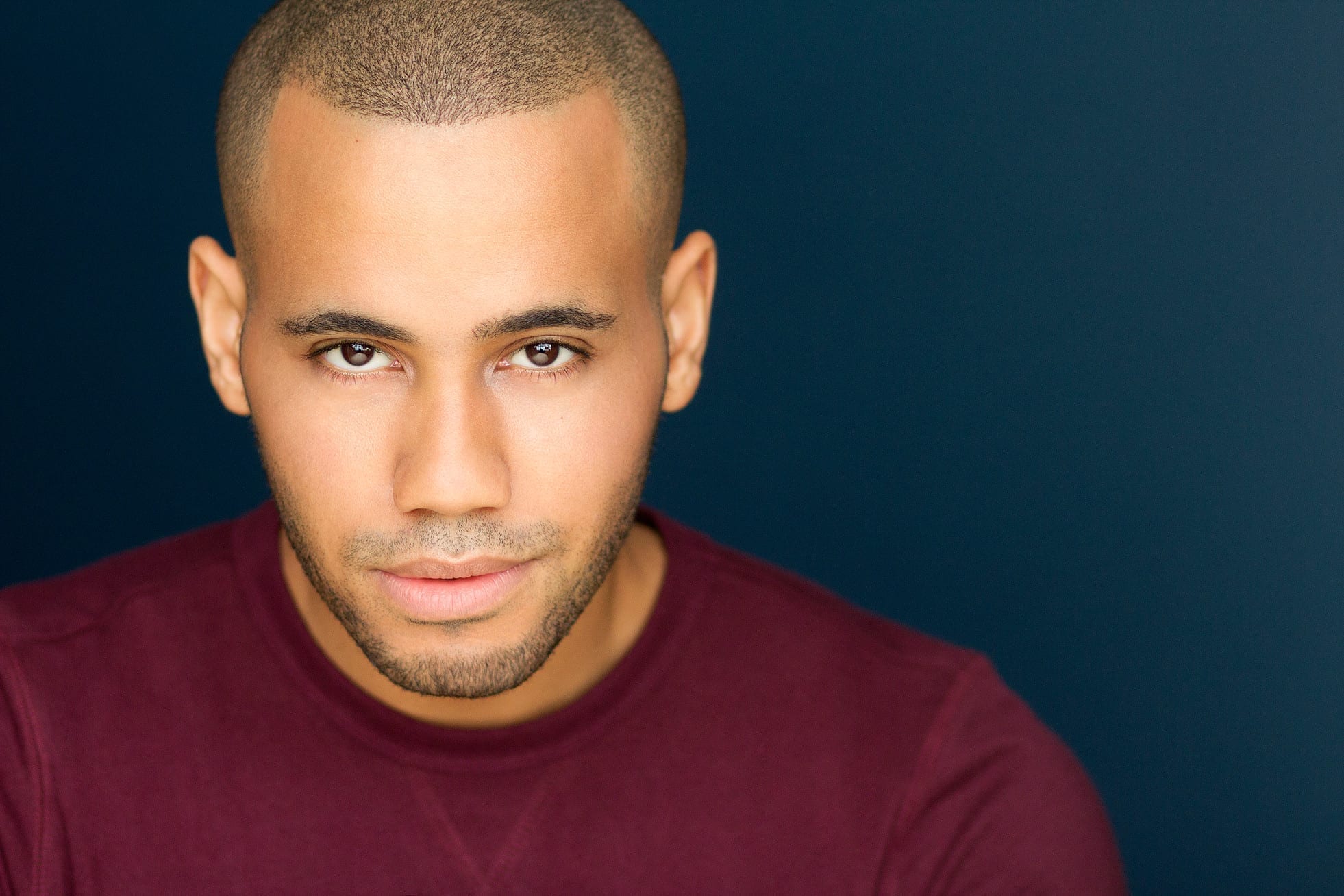
With The Lightning Thief: The Percy Jackson Musical making its way to Schenectady, NY on Friday February 22 and Saturday the 23, James Hayden Rodriguez took time out of his busy schedule to talk about the performance. Rodriguez was very excited to be touring again as one of the four original cast members from when the show debuted in 2017 Off-Broadway. With a wonderful attitude and a humble down-to-earth personality, the conversation was fluid with a few laughs. To Rodriguez, acting in a show like this or any musical is second nature and something he always knew he was meant to do.
NYS Music was able to speak to James Hayden Rodriguez via phone on February 14 as he was just reaching his next stop of tour in D.C, before the cast and crew make their way to Proctors in Schenectady. Rodriguez plays Luke and Others in The Lightning Thief.
Headshot via jameshaydenrodriguez.com
Shannon Marie Palmo: In the musical you are said to play Luke and others. What are the other characters you play aside from just Luke?
James Hayden Rodriguez: My main two characters that I play are Luke and Ares, who is the god of War, who ends up being one of Percy’s biggest villain in the show.
SMP: I read that you guys used the book as your bible, how do you articulate the books on stage? How does that fuse with who you are as an actor, and the freedom that comes with being an actor?
JHR: With Luke specifically, I really have a lot of freedom to just use a lot of my own personal experience. We are all children of Greek Gods, but we are also still human and we have human qualities so we are able to use our personal experience to create these characters which is pretty cool. We have a lot of freedom.
SMP: What do you think are the disadvantages or advantages? What do you like/dislike about doing the tour verse being at one venue in NYC?
JHR: I don’t think there are disadvantages, I think it’s very exciting for us to be just doing the show again at all and the fact that we are able to bring it to all of our fans who were unable to see it in NYC because our fanbase is really massive and its spread and not just in the United States. We are even surprised by coming to these cities and selling out houses and the kids in the audience have read the books and seen the movies and know these characters. They are just really excited that we are bringing it to them. The great thing about the movie is that it has reached a lot of people, so we have a lot of people who are coming to see the show because they have seen the movie. We have the young book fans, but also the people who are new to theatre. They saw this really awesome film so they want to check out how we put this on the stage.
SMP: What is the balance between stage production between dialogue, there’s fighting scenes and it’s also a musical. So how would you say that balances out because some musicals are non-stop music with very little dialogue.
JHR: There’s definitely a lot of dialogue, and Percy is thrown into this world where he is learning this completely new universe to him. He is also dealing with the fact that his mother was just killed by this monster that he didn’t know existed. But when he gets to these really emotional parts in the story, it turns into these big rock numbers, which is really cool. I think we have a good balance from music to dialogue. There’s definitely a lot of scene work which helps us develop the characters and tell the story.
SMP: What is something that goes through your mind when you’re on stage performing whether it’s an actual performance or rehearsal?
JHR: I try to be as present in the story as I can and actively listening to everything on stage. I can’t concern myself too much with who’s in the audience because then it will throw you out of the world and the more you can focus on what is actually happening on the stage the better the performance will be. I don’t like to know if there’s press, or family, or casting directors in the audience.
SMP: With a show being about Greek Mythology, what’s it like being thrusted into such a world as Percy Jackson trying to portray that world on stage because like you said, you guys don’t have CGI as the movie did.
JHR: Yeah, it definitely allows us to be more creative with how we tell the story and that’s what has always been so exciting about theatre in the fist place, and why I got into theatre. You have to use your imagination to tell stories like this and we have been doing this with puppetry, which is cool this time around. We have a puppet team who has really elevated our storytelling. They are scary when revealed. People in the audience scream when they come out.
Rodriguez in The Lightning Thief. Photo by Jeremy Daniel.
SMP: So, what’s it like playing an antagonist like Luke or a character like Luke. When I saw the movie, and who Luke really was, I was completely shocked – without giving too much away.
JHR: (Laughs) Ares is more of the antagonist of this story. I don’t like to think of Luke as the antagonist because he starts out in the show with really good intentions and he’s just really misunderstood. He’s just dealing with his own insecurities and resentment issues because of the relationship with his dad. He’s a teenager as well and coming of age and learning all these new things and starting to have to make choices for himself. And Luke ends up going down a darker path than the rest of the characters. He doesn’t start off this way so you really get to see his journey from being a really good kid to more of a bad kid. I don’t think Luke is an antagonist, I just think he’s trying to make his own path.
SMP: How do you keep up with the physical demands of the show?
JHR: All of us are pretty good at making sure we are going to the gym, doing physical warm ups and stretching so we are not hurting ourselves in the show because the fights are pretty intense.
SMP: Did you guys have to go through fighting boot camp to train?
JHR: Oh yeah, we have a really great fight choreographer who has helped us through our process, and I’m also the fight captain in the show. I take the fights a little more seriously, making sure everyone is safe and doing what they are supposed to do because our choreographer was only here for rehearsals, he doesn’t travel with us.
Animas City Theater in Durango, CO, a venue nestled in La Plata County, is where Buffalo’s Aqueous kicked off their five night Colorado run. Co-headlining a 20-date tour with BIG Something, Aqueous has once again proven that they are a fundamental force in the Colorado music scene. The 270 capacity venue filled up quickly with Colorado residents and familiar faces, that made the trek from the East Coast in support of their favorite band.
Aqueous opened the Durango set with “Second Sight,” a fan-favorite from the Element Pt. I (Live 2017) album. Next the band broke out “Mosquito Valley Pt. 1,” right into a high energy “Numbers and Facts.” Aqueous then reached into their cover song archive and busted out The Band’s “Ophelia,” last time played 92 shows ago on 12/9/17. The set ended with some of the most loved songs in their catalog, “Don’t Do It,” “Weight of the Word” and “Uncle Phil’s Parachute.”
After the show I had the opportunity to chat with David Loss (Guitar/Keys/Vocals), discussing the Aqueous fan-base, band-mates, growth and gratitude. Excited to be back in Colorado, Loss expressed sincere appreciation for the support the band receives from their Colorado based fans. Aqueous is cultivating a steadfast group of supporters across the nation, noted for their familial vibe. Upon my mention of the loyal fan-base otherwise known as AQuaintances, Dave lit up and stated, “I love them, they really are the best.”
Dave Loss is gaining notoriety as one of the most skilled, actively touring guitarists in the industry. Technical and composed, Dave’s guitar tone is unmistakable, evoking sentiments that keep the crowds returning show after show. Recently sponsored by PRS Guitars, Loss and his guitar-wielding counterpart, Mike Gantzer, have an undeniable bond on stage and often come together as one. Balanced, intense and emotive, the partnership of Loss and Gantzer brings about a show experience that has catapulted Aqueous to the front lines in their genre. When discussing what it’s like playing with Gantzer, Dave explained that the two are growing and maturing their sound with every show and that he really loves the non-competitiveness of their musical relationship.
While Aqueous has often acknowledged the influence of jam-veterans moe., both musically, personally and in a business sense, Dave Loss talked with me a bit about some of his other favorite music to listen to. Radiohead takes one of the top spots in his mind and the extreme differences in artistic styling from album to album is what he enjoys most about the band.
At the conclusion of our chat, Dave again reiterated how lucky he feels to be a part of this band, having the incredible crew, the loyal fan-base and the brotherly bond with his band mates. The future is bright for Aqueous and they are certainly poised for incredible success.
The Colorado run rolls on tonight with a Valentine’s Day show at Agave in the town of Avon. The shows will be uploaded for streaming on Nugs.net with a subscription. Tour dates for the rest of the Aqueous & BIG Something tour can be found here.
Official Setlist– Animas City Theater- Durango, CO 2/13/19
Second Sight, Mosquito Valley One>Numbers and Facts, Ophelia* >Don’t Do It, Weight of the World, Uncle Phil’s Parachute
* The Band cover (last time played): 12/9/17 (92 shows)
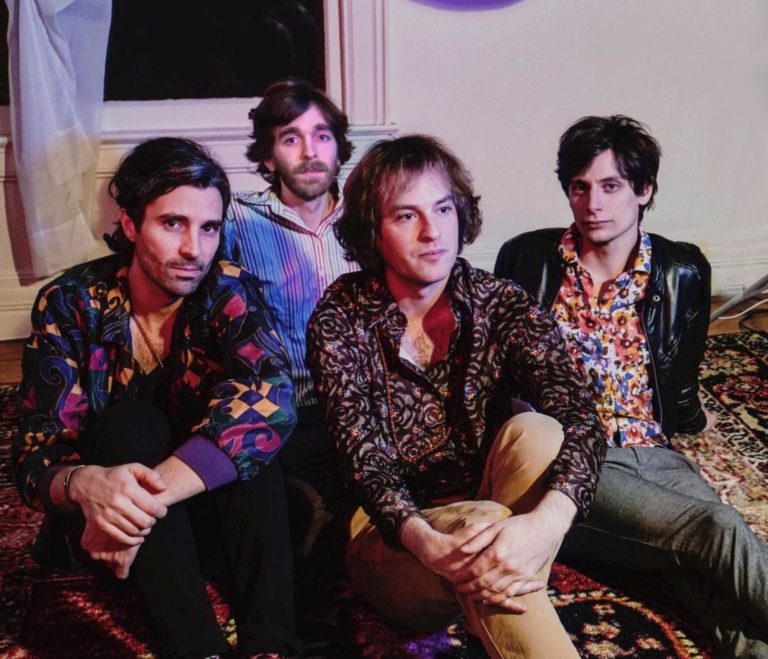
Rochester/Brooklyn band Maybird will soon be launching their second release on 30th Century Records. The first song off the recording, “Don’t Keep Me Around,” is indicative of the unique sound the band has crafted over the past six years – an amalgamation of indie and roots rock, filtered through a psychedelic veil. The four-piece band consists of singer/songwriter Josh Netsky, guitarists Kurt Johnson and Sam Snyder (aka Overhand Sam), and drummer Adam Netsky. NYS Music checked in with Maybird’s frontman to get the scoop on the inspirations and collaborations behind the new work.
Photo by Teagan West
Paula Cummings: You have a new song out called “Don’t Keep Me Around.” What is the story behind the song? Why did you choose to lead with this one?
Josh Netsky: We’ve been playing “Don’t Keep Me Around” live for well over a year now, so our fans are familiar with it and it’s just been waiting to be heard for a long time. We haven’t really explored many of the other songs on the record in a live setting yet, so it felt right to set this one free first. I wrote this song very quickly during a spontaneous recording session with producer Sam Cohen. Quickly in comparison to my usual writing process, at least. Quick songs are usually better in my experience… if you don’t have to think too much about it, that’s a good sign.
PC: Your songwriting has always been influenced by your own personal experiences. What people, places, or events lit the spark that led to the creation of your new songs?
JN: Some of the songs go pretty far back – I think the oldest track was written in 2012. So there are a lot of very different answers here from years of experiences and inspirations. But the overall arc of the album deals with a few main themes. Seeking purpose and clinging to memories/trying not to forget are the big ones. Kurt Vonnegut’s novel The Sirens of Titan was a huge inspiration for the album and put these ideas into perspective for me in the first place.
PC: Who did you work with on the album, and how did these industry professionals shape your work?
JN: For “Don’t Keep Me Around,” we worked a lot with Sam Cohen, who’s an amazing producer and our label-mate on 30th Century Records. He also mixed our entire album. Aside from that, we did most of the work ourselves independently. We all have small studio setups of our own, mostly we worked out of a studio that Sam and Kurt had set up in Ontario, NY. A few of our Rochester comrades put down some horn parts and extra instrumentation.
PC: Can you share any details about the new album?
JN: We’re looking at a late spring release, the date will be announced soon I’m sure. But we will be releasing singles up to that point, so there will be a constant flow of music from here forth. Plus we’ve got some videos and other material that we’re psyched to share alongside the tracks.
PC: Maybird’s Spotify playlist contains some great indie music. Which bands or musicians spur you forward by setting a benchmark that you’re striving to reach?
JN: I love having a Spotify playlist and updating it frequently. That’s exactly what it does, keeps inspiration flowing. We call it Maybird Mixtape. The whole thing started with an actual physical mixtape. We used to dub a bunch of tapes and give them to fans at shows to share what we were listening to. Spotify is obviously a lot easier to manage, but we still make the physical tapes every once in a while. I have a very open ear and use Shazam all the time. If I hear something that I would like to examine closer for whatever reason, whether it’s at a restaurant, in a store, on the radio or whatever… always Shazaming. A lot of what ends up on Maybird Mixtape is from that. I found this band Billy & Dolly that way, for example, and their album ended up being one of my favorites of 2018. Excellent songwriting and production. That’s really the only benchmark – to keep pushing forward in the writing and production… Cass Mccombs, Deerhunter, Daniel Ramano, Kendrick Lamar, Tame Impala, The Voidz, Danger Mouse, Wilco, Sly & The Family Stone are a few regulars on the mixtape. It’s all over the place, it’s all just really good. I think our sound is all over the place as well, and that’s the way we like it.
Check out Maybird’s new song over on Flaunt magazine. And be sure to follow Maybird on Facebook,Twitter, and Instagram to catch their latest music and videos and find out about upcoming shows.
 When I first heard songs like “Lay Like You Do” and “What You Do to Me,” I couldn’t help but think of other beloved bands who create similar sentiments in their music. Driftwood, like The Zac Brown Band and Mumford and Sons, succeeds in inciting feelings of togetherness through the power of music. Some groups the band cite as their biggest musical influences span across generations including Paul Simon, Dr. Dog, Brandi Carlile, and Bob Dylan. It is evident by this list that they value “great songwriting and music that comes from the heart” as they told me.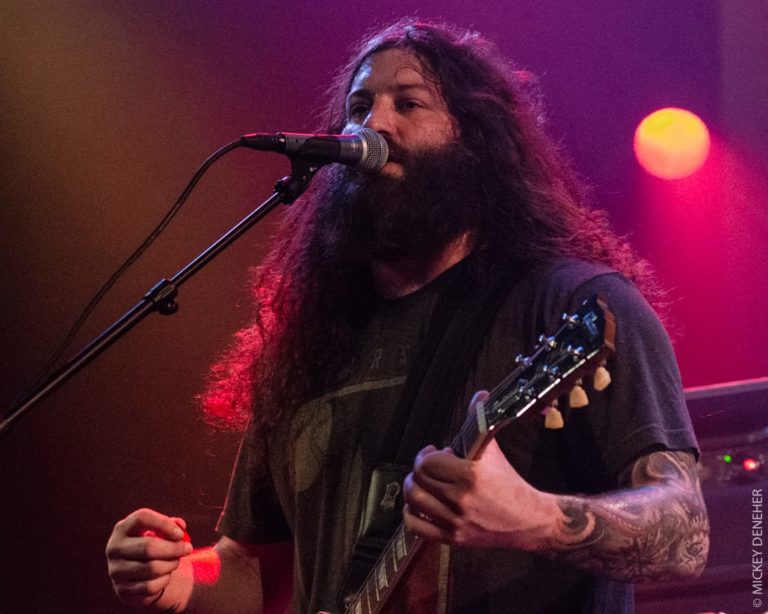





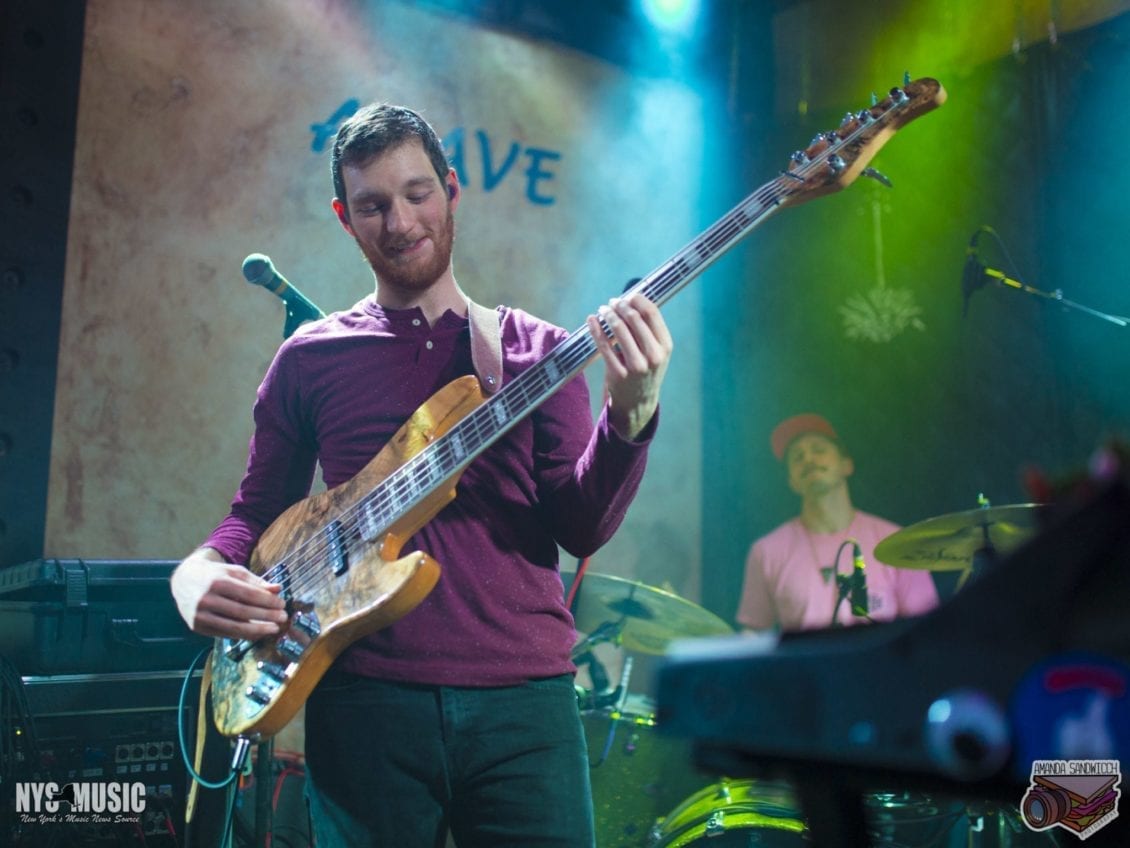 After the set concluded and Aqueous load out was complete, the opportunity arose to sit with Evan McPhaden (Bass/Synth) for a conversation about touring, songwriting and his roots as a musician. The exchange started, Evan spoke about how it felt to be back in Colorado and being on tour with North Carolina’s BIG Something. Very happy to be back in CO, Evan said he’s been excited to be playing new venues and sharing the tour with BIG Something. Stating that a perk of a co-headlining tour allows time to enjoy the show as well as perform. Delving a bit into his involvement in the creative side of things, it was uncovered that Evan contributes heavily to the songwriting process. On