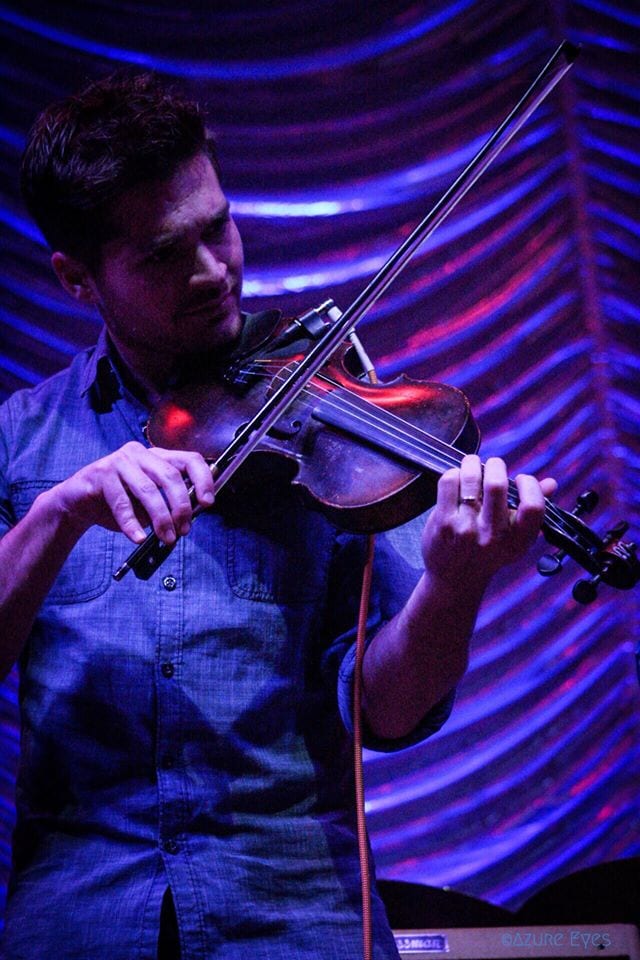
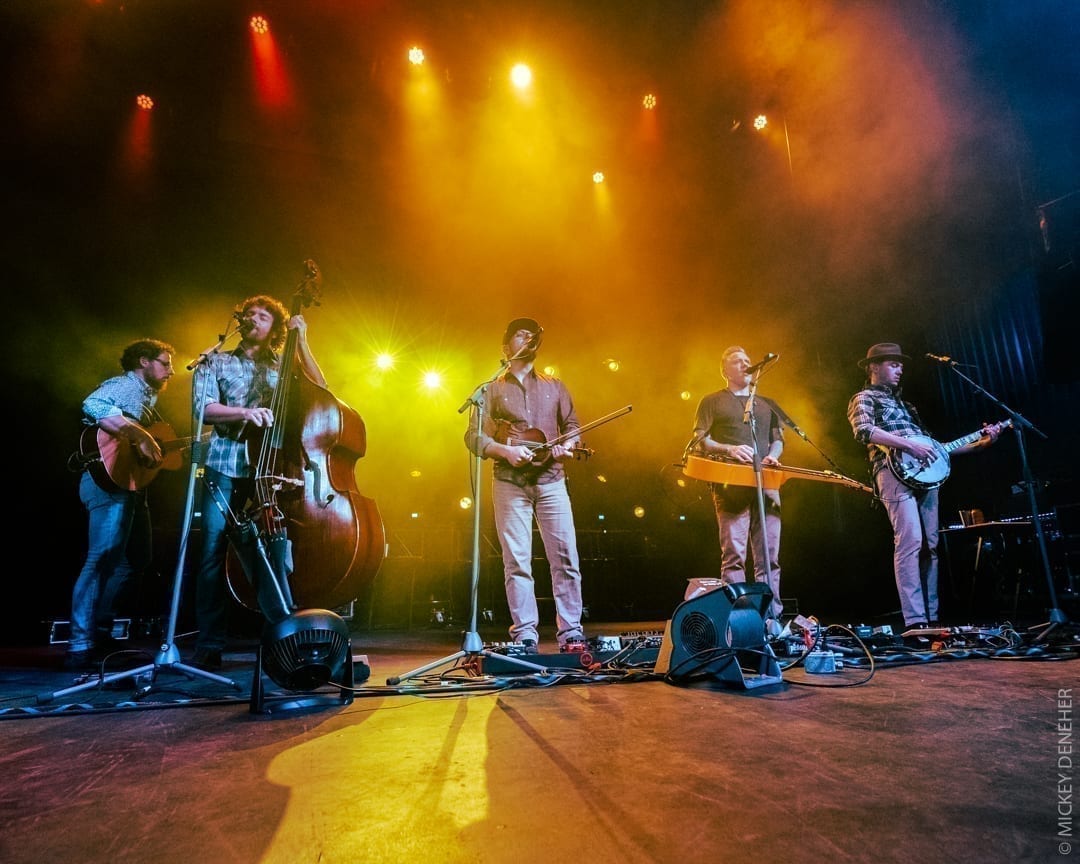
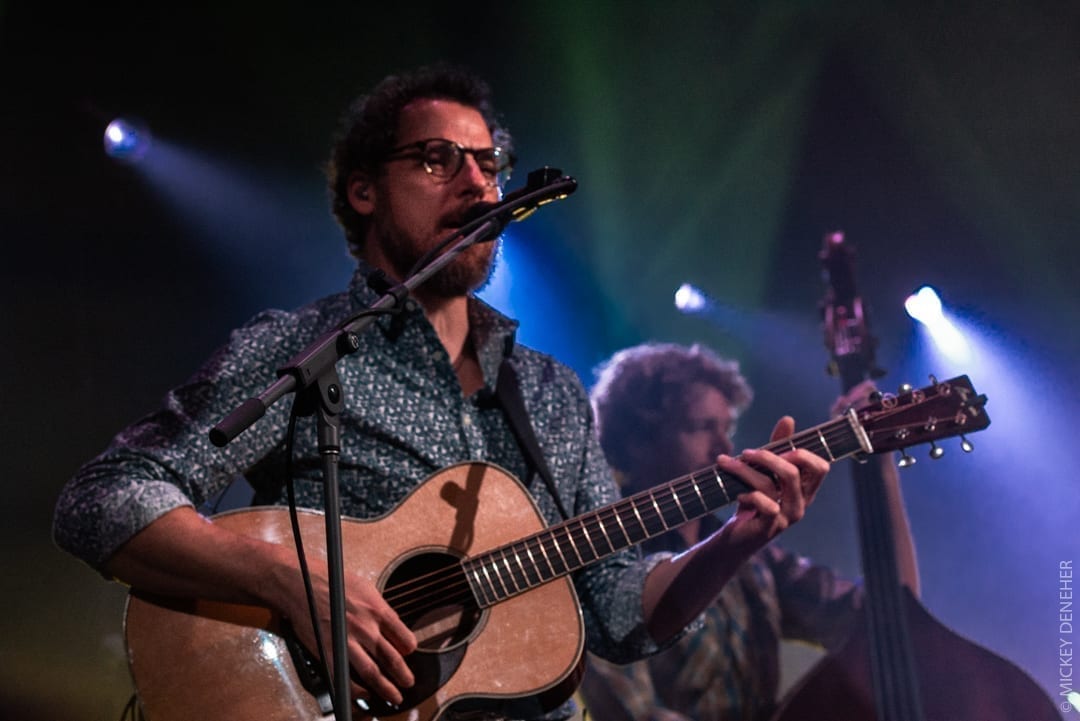
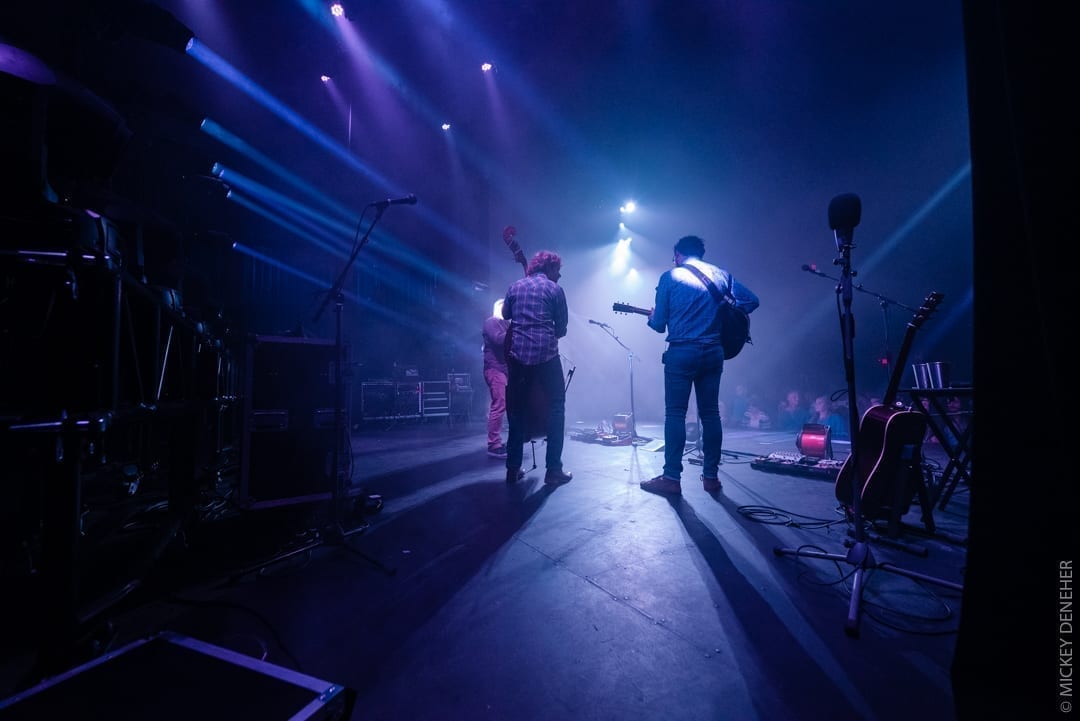
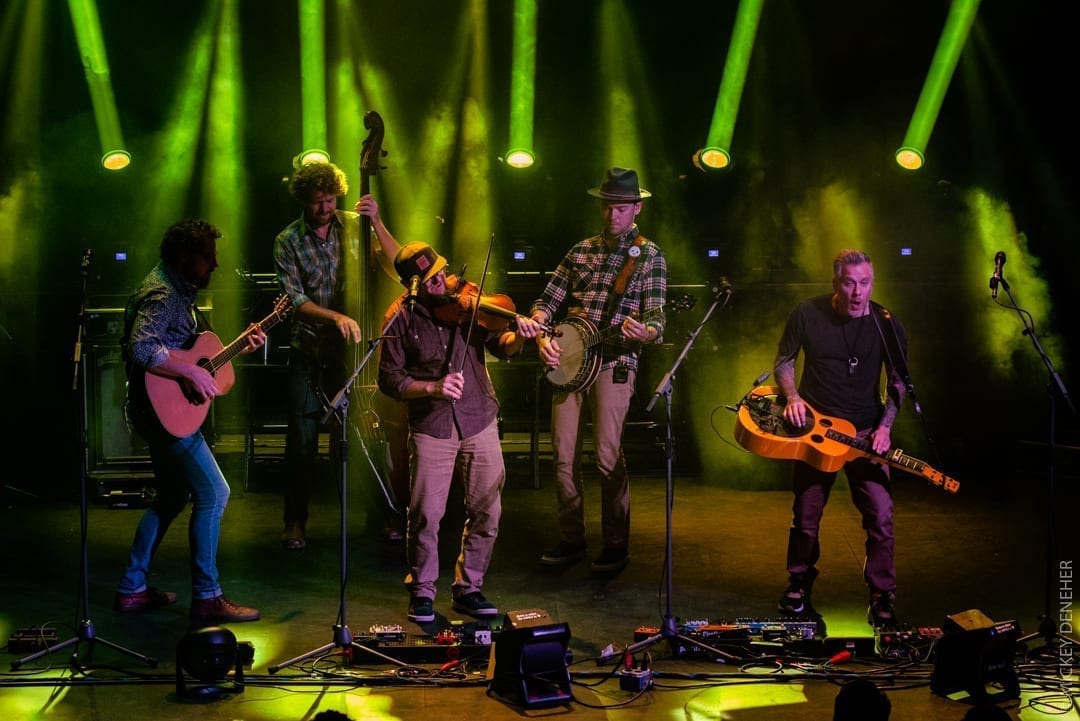
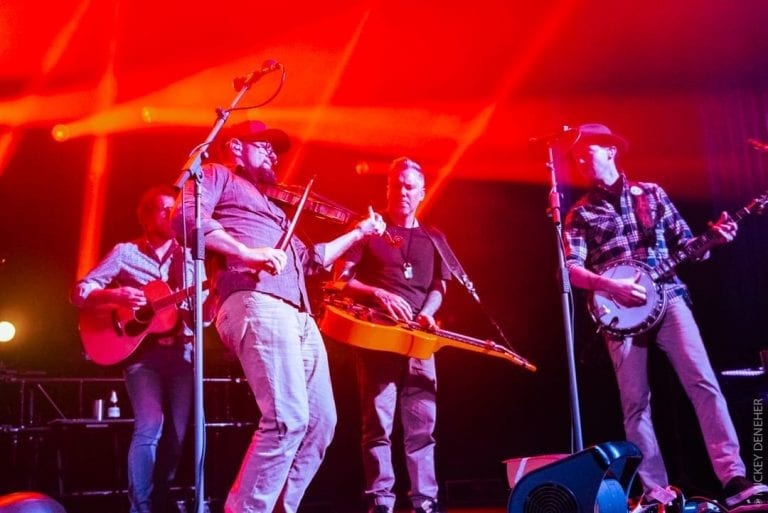
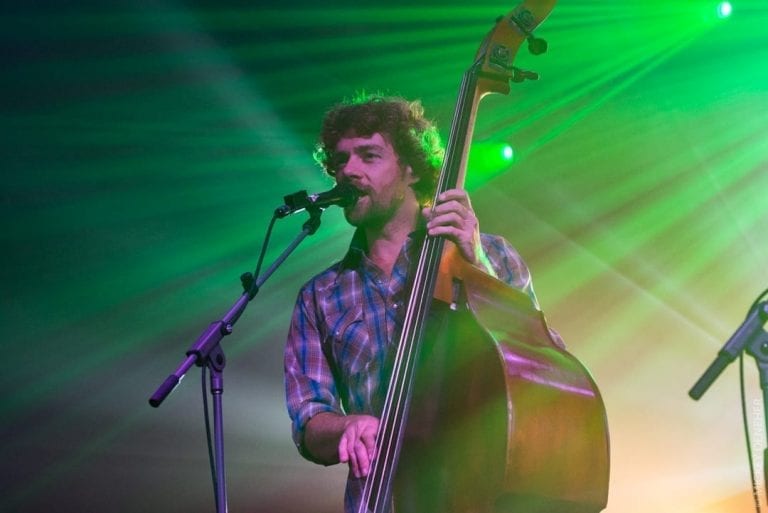
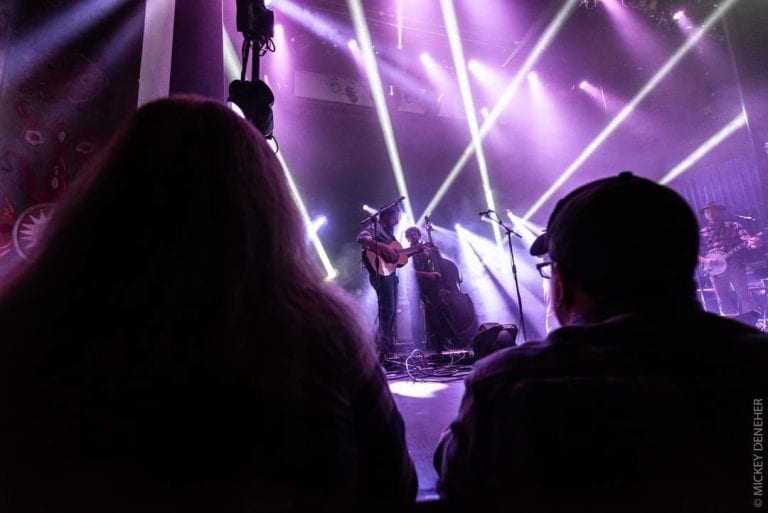
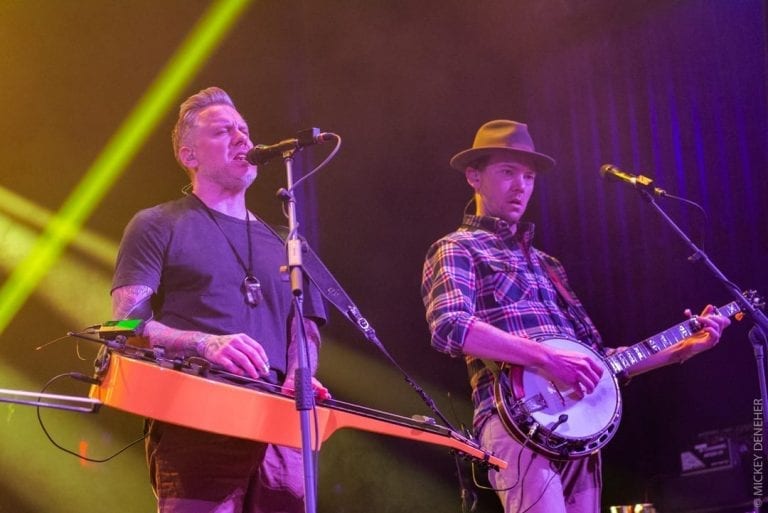
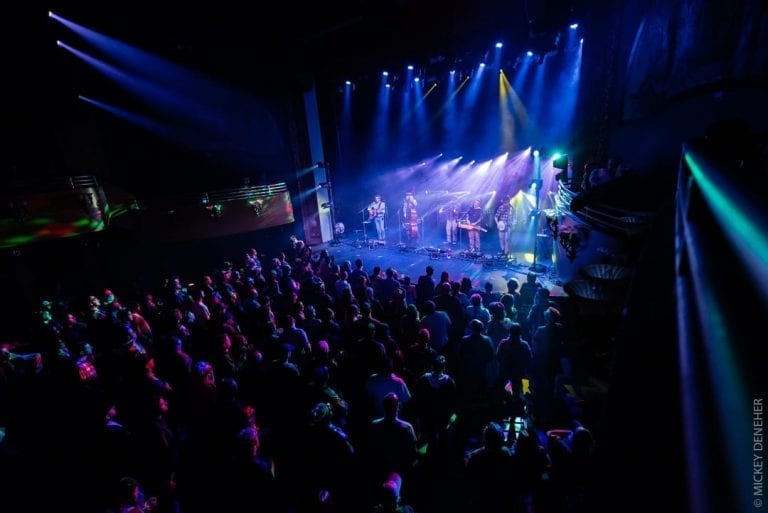
Yonder Mountain String Band announced a lineup change this week. Mandolinist Jacob Jolliff will be leaving the band at the end of this year. His final show will be Yonder Mountain’s New Year’s Eve show at the Wheeler Opera House in Aspen, CO. Nick Piccininni
In a statement, the band wrote, “As of January 1, 2020, we will be saying farewell to our brother and fellow musician, Jacob Jolliff. This comes to you as a deeply considered decision. We are grateful for the music, the memories and friendship we forged with Jake and are in full support of his future endeavors with The Jacob Jolliff Band. We hope to join forces with them down the road.“
Joining the fold is multi-instrumentalist Nick Piccininni, who will be joining the band as its new mandolinist. Piccininni, a Central New York native, has been a part of several projects, one of them is Floodwood, which includes mandolinist Jason Barady, who also performed with Piccininni in Woodenspoon, moe. drummer Vinnie Amico and guitarist Chris Eves. Al Schnier of moe. is a former member of Floodwood. Piccininni also performs as a duo with Barady and in a recent project, Follow the Muse.
Piccininni sat in with Yonder Mountain at a few shows this past year, paving the way for his joining the veteran string band. When reached for comment, he told NYS Music that the foundation of this new opportunity has its roots in the Summer Camp Festival, an annual event jointly hosted by moe. and Umphrey’s McGee in Chillicothe, IL each May.
We used to run into the fiddle player, Allie Kral, at Summer Camp in Illinois when we would go out there with Floodwood. She made the suggestion to try me for the few shows I filled in this summer. I guess it went well enough that they felt comfortable with asking me along with this change! I felt really comfortable with everyone in the band and crew. My first show is in Park City, UT on Jan. 6. I’ve never been to Utah so that’s cool.
Piccininni has every intention of making this a permanent gig while still hoping to maintain time for his other projects.
“I will say that on both sides, I think the idea is to get into this winter tour to make sure the fit is right. But they have expressed that their first choice would be to just move forward with me as their new mandolinist. Piccininni continues, “Barring any personality conflicts, which I don’t think any of us really see being an issue if this becomes my main gig it will be tough to maintain everything I already had going. But I do intend to do my best to keep up with it all. Yonder doesn’t play a super intense schedule, so that does leave room for other projects, which is awesome.”
Piccininni’s next performance is with the Amico-Barady Quintet, moe. drummer Vinnie Amico’s annual jazz show at Tiny’s Grill in Utica on Dec. 29.
Tommy Stinson is perhaps best known for his time in one of the most influential American alternative bands of the past 40 years, The Replacements. However, he also spent 16 years as Axl Rose’s bassist in the Chinese Democracy-era version of Guns N Roses and now performs as a solo act as well as with his bands Bash & Pop and Cowboys in the Campfire. Stinson has certainly lived a rock and roll life, one that included him joining The Replacements at the age of 15.
The road antics of The Replacements read like a movie script. At one point, while holed up in Bearsville Studios in Woodstock recording what would become their 1989 album Don’t Tell a Soul, the band shared the grounds with Metallica. The exploits of The Replacements scared even the hardened metalheads in Metallica during this period. Author Bob Mehr documented many of these stories in his 2016 biography of the band, “Trouble Boys – The True Story of the Replacements.”
The Hudson resident recently sat down with NYS Music in advance of his series of solo New York “living room” shows taking place in early December. Tommy Stinson discussed his latest projects, his time with Guns N Roses, being a dad and of course, his time in The Replacements.
Bash & Pop’s latest album Anything Could Happen was released in early 2017 and Stinson is currently working on the band’s third as well as two other projects — a solo album and one with Cowboys in the Campfire. Anything Could Happen is a raw, bluesy, rock and roll album filled with songs that would fit nicely in a playlist alongside The Rolling Stones, The Faces and obviously, The Replacements.
Mike Kohli: You’re coming from Montreal for this little run of shows in New York.
Tommy Stinson: I’m going to go up to Montreal to do this Joe Strummer benefit thing that happens a lot. Jesse Malin is a big part of how this happens. I’m starting in Montreal and going to Hamilton and Toronto and Buffalo…
It’s kind of my way of keeping myself active a bit. Like I’m working on three different records right now. But I gotta play for the peoples a little bit because it’s what keeps me alive. And I don’t want to make a big fuss about it because I’m in between things and stuff like that, but I can stand there with my acoustic guitar and just sing ya a bunch of shit, a bunch of songs or whatever.
MK: Did you come up with this idea of playing in these types of venues?
TS: Yes, I did and I’ll tell you why. I’m in between records and have been for a while. The intimate gigs with just the bare minimums are a cool part to like – ya know, I’ve played all kinds of places all over the world – What’s interesting to me is to switch it up and do different things, get right in people’s faces and sing a song right to them, that kind of thing. It makes sense sometimes. I figure if I do six to eight gigs a month, I have the rest of the month to work on the other three records I’m trying to finish up and do a thing with and it will work out.
MK: You’ve played in front of 50,000-60,000 people at a time when you were with Guns and the Replacements reunion gigs were big shows too. When you guys first started out, you were probably playing in front of basically a roomful of your friends, right?
TS: Kegger parties and shit, yeah.
MK: You’re coming from a place with a punk rock heart in a way, right?
TS: I’m trying to get myself to a place where I can do it on my own terms. If I feel like getting out and playing new songs, stuff I’ve been working on for Bash & Pop, Tommy Stinson solo stuff, Cowboys in the Campfire…whatever it is. If I feel like going out and playing some songs, not stretch myself out too much. I’ll go do that. Test the songs out. See what people think. See if people like them and all that crap. It gives me a place to start with new material.
MK: But do you feel exposed doing that? Or are you past that stage at this point in your career?
TS: It’s beyond naked. It’s beyond the skin. It’s like you’re fucking up there in your bones going, “Heyyyy, here’s a song I wrote last week…” It’s that kind of thing.
MK: These projects you’ve been talking about, you’re working on albums for all three of these projects?
TS: I’m working on all three at once.
MK: Is that all going to be done at your studio?
TS: Um, no. And I’m not gonna tell ya where they’re going to be done because I don’t know yet. Certainly, a good hunk of it will be done at my studio here in Hudson, New York. A good portion of it could be done in other places too, like Muscle Shoals or Memphis. I got things going on.
MK: I ran into your one-off gig in Ithaca about three years ago. You had a gig canceled in Toronto or something and picked this one up…
TS: That was Ithaca, what was the name of that bar?
TS: Wow. I loved that night. It was fucked up. We got a canceled gig but we’re going that way anyway. Where do we pick one up? That was totally fucking awesome. I lost my voice in the middle of that one. That was kinda fucking weird.
TS: But ya know what? All the dudes I play with are old comrades. They’ve been down the road before. That’s the reason I play with these kinds of people. It’s an important thing. It’s good to get in the trenches with people you love and pull shit like that. I remember that night pretty well, as messed up as my voice got in the end. What a cool bunch of people.
MK: So the guys you played with back then, these are the same guys you’re playing with as Bash & Pop now, right?
TS: Yup.
(Editor’s note: The current lineup of Bash & Pop includes Steve Selvidge of The Hold Steady on guitar, Joe Sirois of The Mighty Mighty Bosstones on drums and Justin Perkins of Screeching Weasel on bass.)
MK: Do you feel like you guys are really starting to gel as a band now?
TS: Well, ya know what? We did that record and toured behind it. And now we’re working on new material for another one. I went down to Memphis to work on some stuff with Steve…I gotta get Joe Kid up here to work up some of these songs before we get everyone in it. The reason I’m saying this is because I really don’t want to produce this one in my studio on my own again. I’d like us to get a good 10-12 song set together of new songs that we could ultimately learn one way or another–over the phone or whatever the fuck–and ultimately come together and play it live in the studio and record it in a heartbeat.
MK: So you’resharing files over the internet to get everyone on the same page?
TS: Only to get the bits down. What I don’t want to do, is get to the studio and do 20 takes of one song. I just can’t do that. I’ve never been able to do that. So my core idea of how to make a record that I would want to listen to again would be to go in the studio and make a record in three days, tops.
MK: Efficient.
TS: That’s the way we did it in the ’80s. You can look back at Queen. They made their first record, they kept re-running the tapes. They basically wore the tapes out to get “Bohemian Rhapsody” and it was a huge hit. There are all kinds of tales of that. But most of it comes from, the band plays live in the studio. You capture what you get in a three-hour session or whatever. And if you don’t get it then you try to get it the next day. The clock’s ticking.
MK: And it creates a sense of immediacy that everyone has to all be together to make it work.
TS: Absolutely! The best Replacements records were done that way. My favorite records were all done that way. It was only because of the advent of multiple…more than eight tracks of sound, 16, 32 tracks…it just became masturbatory. And you could just sit and fuck around and waste a fucking year making a record. No, no, no, we don’t have any money. The best records are made when you’ve got no money and you gotta make a record in a weekend.
MK: So that’s how you approach it these days?
TS: Yeah, totally. Because I hate…no one cares about the sound quality and all that bullshit. The overthinking is overthinking always. People are listening to it on their iPhones or their computers or their iBuds, whatever the fuck they got. It doesn’t really matter. What it comes down to is the song.
MK: I agree.
MK: When I listen to the Anything Can Happen album, it’s got a really raw, Stones-y/Faces feel to it. That’s something you probably grew up listening to, right?
TS: A little bit, yeah.
MK: But it’s still got that Replacements-y sound to it as well. Which you’re not going to escape. You were a Replacement at the age of, what, 11? 12? It’s ingrained in your DNA at this point.
TS: Exactly
MK: Just listening to it, it’s almost like a great lost Replacements album in its sound.
TS: Yeah, yeah. Well, thank you. I appreciate that.
TS: I wouldn’t boo-hoo that. I mean, I came from where I came. I’ve made the records I’ve made. Jeez, I’d be remiss if I didn’t say I didn’t learn a lot from Paul Westerburg (Replacements vocalist) or Peter Jesperson (Twin/Tone Records owner) as well or my brother (guitarist Bob Stinson of The Replacements) or Chris Mars (Replacements drummer). I learned a lot from all those people. We were all buddies and pals and turned each other on to different shit. I’d be remiss if I didn’t cop to it and say, yeah, I’m proud of all that and certainly, I learned a lot from all of them.
MK: When you put this album together when you put any of your albums together really, are you sitting down writing parts for each individual musician you’re planning on playing with? Are you allowing input from them? Is it a collaborative effort?
TS: Ya know it’s mostly a collaborative effort. If I can do that. If I have a song idea, I’ll send it to Steve or Joe or Jeff or Justin…I’ll throw it out, “Do you have an idea for this? For bass or guitar here?” and try to work it out as a group effort. My whole theory is that it’s a group effort the best it can be. If I write the song, I write the song. But if they come up with parts, I always give them their due on the parts that are important. That’s the way I’ve always known how to do that.
MK: Did Luther Dickinson (North Mississippi Allstars) play on this latest one too?
TS: Yeah, he played on Anything Can Happen.
MK: I read that he was in the studio during the production of (1987 Replacements album) Pleased to Meet Me that his dad (famed producer Jim Dickinson) was producing for you guys in Memphis. He jumped in during the recording of “Shooting Dirty Pool.” Is that true? Because he was like, what 14-15 at the time?
TS: Yeah, yeah. He was a kid. He was totally a kid. It was kind of a part of a thing and a story and a bit. And um, yeah, that all happened. I can’t go down that road too much cuz it’s sad that Jim’s not here anymore (Editor’s note: Jim Dickinson died in August 2019). But um, Luther is like a fucking little brother to me.
MK: During that recording, is that when you two struck up a friendship and kept it going all these years? You probably weren’t that much older than he was then, right?
TS: Yeah, I’m a bit older than he is but um, yeah, that’s where we struck up a relationship. But then we also hit it back up. We started a band together, him, Cody (Dickinson) and I. I went to Memphis seven or eight years ago to work up some songs for a new project that I’m gonna leave the name out of. Ya know, we’ve got way deep history I can’t really go into it. It’s a lot.
MK: Is that project something that will see the light of day?
TS: That’s why I’m not talking about it.
MK: OK, fair enough.
(long pause)
TS: Yes. (laughter)
MK: So when you’re playing these solo gigs. I’m assuming you’re doing strictly your stuff. Solo material, Bash & Pop stuff…do you get into any Replacements material? And if you don’t, do you get a lot of guff from the fans looking for you to play Replacements?
TS: No, because I didn’t sing any Replacements stuff. I’d be stupid getting up there trying to fucking sing fucking “Alex Chilton.” I didn’t sing that. I played bass on it and helped write it. I was part of writing I suppose. No, no, I wouldn’t do that. The only Guns N Roses song I would sing would be the one that I fuckin’ wrote that apparently has leaked all over the internet the past 15-20 years. Whatever.
MK: That project there. Going back to what you said previously about getting a recording done quickly, that project, the Chinese Democracy album became almost a punch line in the media for how long it took to complete. What kind of project was that for you? Was that something you were in and out of for years? Did you work on your own stuff too?
TS: Nah, that was a fucking huge undertaking. You’re trying to reinvent the wheel at that point, ya know? Without being able to reinvent the wheel. There was a lot of good stuff that was on that record and I’m totally proud of being a part of it and all that. And you can’t, I can’t get too far into it right now, but you can’t underestimate how important it was to try and make a great record. With all the great records they already made as Guns N Roses from the ’80s. It was a different period, a new time, a new place. And Axl is always forward-thinking in a lot of ways, Mike, ya know? He’s always like, he wants to step 20 years ahead and fucking make a record. And the rest of the guys are like, “But this is what we are. This is how we do it.” And he’s just always pushing the envelope in a way. You’re always gonna have a conundrum with that.
MK: Well that’s the mindset of a creative person. They don’t want to look back. They want to keep looking forward.
TS: EXACTLY
TS: And ya know what? For all practical purposes, it was a great gig for me. And I’ll tell you what, I have nothing but respect for those guys, all of them. A bunch of them are my friends. The only one I don’t know is Slash so much. It was a great gig. And ya know, I wouldn’t take any of it back.
MK: Do you miss it?
TS: No
TS: I miss the people.
TS: I don’t miss the schedule and the touring and all that stuff, the way that was. I did almost 20 years of that and it takes its toll, ya know?
MK: I bet.
MK: So when you left Guns N Roses in 2014, it was during a pretty tumultuous time in your personal life. And so you became a full-time dad at that point. Your daughter was young then.
TS: She’s 11 now. I had to kind of basically (sighs)…I had to say I couldn’t do a bunch of tours right around the time my relationship with my soon-to-be-ex fell apart and had to basically, had to be a stay at home dad. And luckily at the same time, as I was not able to do a four to six-week tour, the Replacements went out and did the reunion stuff on weekends. The weekend gigs I could manage with being a stay-at-home dad and all the stuff going on in my life. But the reality is, I really couldn’t do a four-week tour of Europe or a six-week tour of this or that. I had to say I couldn’t do it because I had a little kid. And I don’t regret any of that. And ya know what? If that’s what spurred on Duff and Slash coming back and playing with Ax, that’s fantastic. People are loving it. It’s great. As well it should be. That’s all I got to say about that.
MK: Your daughter, does she appreciate music?
TS: She’s 11 years old. She sings, dances around. She’s more into gymnastics than vocalizing. (laughter)
MK: What’s she listen to? Does she try to turn you on to stuff she listens to?
TS: Yeahhh, it’s music 11-year-olds listen to, ya know. She knows a good amount of other stuff. One of her big (laughter) — because she asked, which I appreciate so much — one of her favorites is (AC/DC’s) “Dirty Deeds Done Dirt Cheap.” (laughter) She’s done videos for that. I don’t want to put my kid’s face up on Twitter and all that. She’s funny as shit. She knows the solo, the whole thing. She plays air guitar and sings it. She knows the words. I don’t know why it’s one of her faves…
MK: It’s a fun song.
TS: Well yeah, obviously it’s a fun song. I love it as well. I can’t put it out there. I want to be as private as I can and not have her thrown out in public. Ya know, that kinda thing.
MK: Is she aware of your place in music?
TS: Yeah, yeah…her teachers know who the fuck I am and why and all that crap.
MK: Is there any respect for that legacy?
TS: There’s respect for it but it’s a pain in the ass. Some teachers are inappropriate about it sometimes. So you gotta watch out for that.
MK: One thing I wanted to bring up, I don’t know if it’s even touchy…Rock and Roll Hall of Fame, you guys have been on the ballot for a few years. I think you guys should definitely be in. Thoughts?
TS: Well, I’ll give you one last anecdote before I gotta go. I gotta go to a parent-teacher meeting right now. One last anecdote on that particular question. Questlove is working his ass off to get the Replacements in the Rock and Roll Hall of Fame. And that’s all I’ll say to you.
MK: No shit, Questlove? Nice.
TS: No shit.
MK: That’s great.
TS: (laughter)
MK: Let’s hope it happens.
Stinson brings his solo set to Wildflowers Armory in Syracuse Thursday, Dec. 12 as part of a string of New York dates in unorthodox performance spaces. He’s performing a private show in somebody’s living room in Hamburg just outside of Buffalo on Tuesday, Dec. 10 and at Rochester’s Bop Shop Records on Wednesday, Dec. 11. The mini-tour wraps with a performance at Barry Family Cellars in Burdett on Dec. 13. Tickets for all but the Hamburg show are still available and range in price from $25 to $100 for a special “Drinks with Tommy” ticket.
With musical seeds from Boston’s prestigious Berklee College of Music, where founding members Chris Pandolfi and Andy Hall attended and met, planted in the fertile soil of Nashville, TN, the The Infamous Stringdusters (Andy Falco [guitar], Chris Pandolfi [banjo], Andy Hall [dobro], Jeremy Garrett [fiddle], and Travis Book [double bass]) have cultivated a sound yielding a self-described fusion of All-American bluegrass and rock.
Formed in 2007 and experiencing some early lineup changes, the band is now past the decade mark and getting stronger by the year. I spoke with the Andy Falco (a Long Island, NY native) before seeing them at a scheduled stop at the Wall Street Theater in Norwalk, CT, part of the band’s 2019 fall mid-Atlantic/ Southeast tour.
Andy Falco
Mickey Deneher: What has enabled the band to continue as a creative unit for over 10 years?
Andy Falco: Everybody has a lot of respect for each other, personally and musically. I trust my band mates’ instincts and that trust is reciprocated. One thing I have heard a lot about us from engineers and people we have worked with is, “Wow you guys really are a democracy.” Normally bands say, “We’re a democracy,” but it’s always one or two guys that are really making all the decisions. If I have an idea that I swear is the best idea for something and somebody else in the band is like, “I don’t know. I think this way would be better.” I trust that. It’s how we operate on any decisions, musical or otherwise. Having that trust for each other allows us go forward. There are no egos or any of that bullsh*t. It’s all about trying to make the best music. You need to trust your boys.
Chris Pandolfi
The band has been rewarded for their creative efforts by capturing three International Bluegrass Music Association awards in 2007 (Emerging Artist of the Year, Album of the Year for Fork in the Road (in a tie with J.D. Crowe & The New South’s album Lefty’s Old Guitar, and Song of the Year for the album’s title cut). They were also awarded a 2011 International Bluegrass Music Association nomination (Instrumental Group of the Year), a 2011 Grammy nomination (Best Country Instrumental Performance), and a Grammy win for Laws Of Gravity as Best Bluegrass Album in 2018.
MD: What were you guys feeling when you won your Grammy for Laws of Gravity?
AF: I will describe to you the scene. We were sitting there in the row and the category comes up. You could feel the seats in our row just shaking because everyone’s leg was bouncing up and down. We’re nervously waiting and when you get the announcement and it’s like, “Holy Sh*t.” It’s a shock. It’s an amazing thing, an amazing experience. It’s a special thing.
There are no egos or any of that bullsh*t. It’s all about trying to make the best music. You need to trust your boys.
Andy Falco
I don’t know if there are other bands in our corner of
bluegrass, the jammier side of bluegrass that have been recognized in that way.
For us, we felt like it was for all of the bands in our corner. Hopefully more
bands, our peers in our world, will also be nominated and be winning Grammys.
Jeremy Garrett, Andy Hall, Chris Pandolfi
Of course, the next day you’re already on to thinking about the music, because that’s the most important thing. You don’t do this to win awards. But to be recognized, it’s an honor. You have that trophy, as my daughter calls it “the singing trophy.” I have it on the piano and every now and again if you are feeling that self-doubting, you can look up at that and get that feeling of being recognized. We are blessed that we had that opportunity.
MD: It’s a confirmation to you that the decision was right and the trip was worth it.
AF: A great way to describe it.
Not sitting on their laurels, in 2019 the band put out its 9th studio album Rise Sun. This project looked to interject components of their live show into the creative recording process.
MD: Was there pressure going in to record Rise Sun after winning a Grammy?
AF: I can speak for myself, that in my mind I didn’t feel pressure. I felt like I just wanted to make a record that reflected our art as accurately as Laws of Gravity did. If we made what we felt was a good record and was what we wanted to say, then that would be a success to me.
In the end I felt even better about the record we made.
That’s normal. As you evolve as an artist, as a band you’re making different
records. You should feel like your latest record is your best.
Rise Sun reflects us now. What we are now. Go back to Things that Fly or another record and that reflected us then. As long as you are feeling good about the art that you are making, and the music your making, and feel like it’s reflecting and it’s honest music, then that is a success to me. No matter what awards or anything.
Andy Hall
I hope people like it. You can’t chase that. That’s not
really going to get you your best art. You have to chase from within and
hopefully be able to have the album reflect that.
MD: Share the approach to the album.
AF: The idea was to approach the record as a studio album, but the experience be closely related to the way a live show would run down. In a live show, one of the things we really developed over the last few years is the idea of having these transitions in between songs where it is just a completely unknown improvised section of music. We know where we are coming from, we know where we are going to, but don’t necessarily know what’s going to happen in the middle. By developing that in our shows, it was something we (then) wanted to bring into the studio as well.
MD: The shift was of a technical nature also.
AF: This record was done differently. In the pre-production, we decided on which 13 songs we were going to actually record and, not only that, we decided exactly what the order they would appear on the record was. So before we went to the studio, we knew the order of the songs, the sequence, even where the breaks would be for the vinyl (a double album). So we decided to record it in that order.
We record everything live in the studio and we overdub little extra bits. The foundation of the track is cut live. You could feel that energy. The first cut on the album “Rise Sun” has this energized, fresh in the morning kind of feel to it. In contrast, the last song “Truth and Love” has this weariness in a way. That was at the end of these long sessions. You could feel energy that ebb and flow as the record goes, just as you would on a live set.
With a vow to producing quality recordings, the band’s live show raises that commitment exponentially. The floor seats at the Wall Street Theater had been removed to allow a free and open space for the night, which was maximized by a joyous house. With the first set acting as a primer, the crowd exploded into dance, hands in the air, and singing from the first note of the second set until the night was over. A light show bathed those enraptured in the music as the band took everyone along on their improvisational jams and one of a kind segueing in and out of songs. It may have been a cold November Sunday night outside, but there was a barn-burning going on inside with The Infamous Stringdusters.
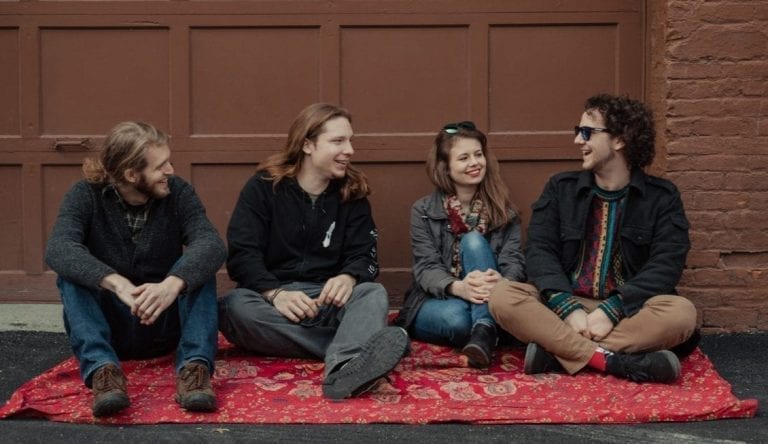
The Capital District scene has produced great bands for decades – Blotto, Ominous Seapods, Mister F, Formula 5, Wild Adriatic, Annie in the Water, Candy Ambulance, just to name a few. Add Glass Pony to the list of bands with immense promise and potential that call the greater Albany area home. The quartet have risen over the past year with a psychedelic jam sound that has brought in a large swath of fans to shows across the region.
They’ll have an album release show on November 2 at Parish Public House in Albany. Glass Pony recently premiered “Stardust” off the upcoming self-titled debut album, and spoke with NYS Music about the album, what it’s like seeing the local scene from both sides of the stage, and where they see themselves in a few years.
Pete Mason: The first track on Glass Pony, “Grover’s Mill 1938,” find’s its roots in Orson Welles’ ‘War of the Worlds’, with a spooky, creeping build throughout the song. How did interest in an 80 year old radio program lead to writing a song about this infamous New Jersey town?
Greg Pittz: This is Eddie’s tune, and it was one of the first things we ever worked on. I remember him showing me the demo on his phone while we were at Blue Sky one night. It’s an interesting song, because at first we didn’t take the jam out too much beyond the chord structure, but now it’s one of my favorite vehicles. It’s grown into a very strong show piece.
Eddie Hotaling: Honestly, I had just finished watching a documentary about the broadcast. It’s such an interesting story. Imagine what it felt like for those people who actually thought that Martians were invading Earth. It was Halloween eve and war was on the horizon… put yourself in their shoes and try to imagine the panic that people felt when they turned on their radios and heard what sounded like an actual news broadcast reporting an alien invasion. That’s where the song comes from, it’s from the perspective of somebody who lived through those few hours of terror that night with an image of that New Jersey town under attack burning into their mind.
PM: What is the story behind the 10 minute odyssey of “Maximus”?
GP: This was the first thing I wrote for us, and in a way it sort of encapsulates everything about my musical tastes. I grew up playing death metal, and this song has some very traditional metal “punches” that set up the fast, dancey verse grooves. Those “punches” also come with some killer bass bombs and organ screams. I love all of that. You can hear a lot of organ slides like that in versions of “The Other One” from the 80’s – Brent was great about that. The intro to the song comes from my love of post-rock – that music style is all about the build up. You need some patience, but it can be so effective. The dark, spacey middle section is an homage to my love of Pink Floyd, especially the song “Dogs.” Matt’s synth is killer here, and I’m really hoping listeners go to another place when they’re listening. Eddie also did a great job on his lead work for this part. He had a clean slate – I just had the chords, and he came up with his parts on top. This section gives way to a big, triumphant guitar melody that I absolutely love to play live; when it’s really working, it feels so good, especially with Jeff’s bombs underneath. It might be my favorite thing for us to play live, and I like it too because the bar count is odd for this section – it’s a 7 bar phrase, which is kind of weird. It gives a sense of tension and movement, and I love Chanda’s drum fills here, we’re all moving together as a unit. I didn’t intentionally set out to write a song like this, a big thing with multiple sections, but it just came together that way. I’m glad Matt (Richards, Formula 5, Annie in the Water) was able to play on this song too, because his keyboard work is exactly what I always envisioned it having when I wrote it.
EH: This was the first song Greg wrote for the band. The prog and post-rock elements help establish the variety that makes this band unique.
PM: “Bolly Golly” is easily your most catchy song and loved when performed live. Imagine this song as a music video. Where is it set and what is the tone of the video?
GP: So, this is a funny story. I go to a post-rock festival called Dunk! Festival every year in Belgium. Two summers ago, I came home from the festival and when I picked up my guitar, literally the first thing I played were the chords that became the verse and main rhythm for this song. I must have been primed for creativity, because it was literally, literally the first thing that came out, and it was so different than all of the music I had heard at the festival. The rhythm is sort of based around the Bo Diddly beat, and post-rock never uses that. Lyrically, the song is about Eddie’s trip to Ireland and his discovery that there are, for some reason, palm trees in Ireland. I don’t know if it was the first time we jammed on it, but Eddie came up with the guitar and vocal melody while we were jamming. The chorus lyrics were written while I was on a bike ride – a lot of stuff comes to me when I ride my bike for some reason. I was about to pass over Delaware Ave on the Rail Trail here in Delmar, and I immediately took my phone out and punched in the words. As a music video, is it too on-the-nose for it to be set in Ireland?
Chanda Dewey: We start off at a beach party, drinking Corona’s with Kenny Chesney. We’re all hanging and Kenny introduces us to the Bolly Golly palm trees, they are cool little cartoon palm tree folk. Then the band ends up getting on a boat, but the boat is really a space ship and we’re kidnapped by the Grover’s Mills aliens. We are pretty concerned and try to escape but when we get to their home planet we find out that the Bolly Golly palm trees are there too so all is good. End scene would be us partying with the aliens and palm trees.
EH: The music video, directed by Twinkie (his directing debut), follows a tasty treat trying to escape his death after being chosen from a Japanese vending machine by a hungry postman. It’s set on a breezy summer day in Japan. It’s warm inside the vending machine but nobody is melting, and it’s a pretty relaxing afternoon. The postman stops for a break and picks a snack. Panic fills the chocolate treat as it falls to what is sure to be it’s last moments of life. Just as the jam starts about half way through the song, the treat slides out of the postman’s hand and begins an escape. It is almost caught several times but as the jam comes to an end the treat takes a crucial turn and secures his freedom for another day. It’s not easy being a tasty snack and the ups and downs of that life is something that is brilliantly portrayed in the Bolly Golly music video.
PM: “Hypnos” reminds me of Patti Smith, a little bit of Chris Robinson, and some spoken word mixed in. From what influences did this song originate, and how does the energy reflect on the band’s core sound?
GP: This is kind of our goth/krautrock song, and it’s become a big crowd favorite and maybe our most potent jam vehicle. I love The Cure and Kraftwerk, and the dancey 80’s motorik drum beat thing with spacey guitars over top could fuel me forever. I can’t get enough. (If you like “Hypnos,” you need to listen to “Red Flags and Long Nights” by She Wants Revenge, “Hallogallo” by Neu! and “Entrada” by Barrows.) I think this song works well because even though it’s darker, it’s still dancey, and jambands don’t really play dark music these days. I wrote the song to be about all the nonsense we get bombarded with today – empty distractions that don’t really fulfill us. Kids who get everything given to them, people who troll Tinder looking for meaningful connection, people who always have to have the new, shiny thing, etc. It’s kind of a snarky condemnation, and I must have been feeling salty at the time. I think its energy is really reflective of what we do well though – dancey grooves with explosive jams. When we do it right, the climax is one of the most potent things we have in our arsenal. I always feel like I’m surfing a tornado when we get there, it’s all chaos and a whirlwind, and then we slam back into the theme and it’s just a great, great feeling. When we’re done, I feel like I’ve held my breath through the whole thing.
EH: I remember Greg telling me he had a new song that had sort of a Talking Heads vibe. The song has a lot of energy and opens up for an upbeat jam. It’s also a song I get to scream in, which I think is another element that helps set us apart in the jam scene. The jam has a very high energy peak at the end and it’s a hell of a lot of fun to play live.
PM: Arising from the Albany scene and playing in the greater 518, what are some things you have observed as musicians that you didn’t see as fans?
JeffPicarazzi: As a musician in the 518 music scene I have learned that anything is possible if you have the right people to work with. Meeting, playing and making friends with all these traveling musicians/ promoters/ bar owners/ sound engineers helps make it all possible. I used to think it was rocket science to play with a jam band and still maintain that level of interest and consistency. But it’s not, its very accepting and open to basically any direction we want to go, which I knew all along as listener but not as a musician. We can go anywhere we want with this jam and to me that’s the beauty of it, we can rely on the things we know and groove and it doesn’t need anything else. If I can recognize and acknowledge that the groove is happening and it is now, the opportunities are endless.
GH: As far as playing Albany and local shows, the biggest thing for me is a feeling of “we belong.” When I was younger, I always saw the stages and venues as these lofty things that “professionals” had a right to be playing. It didn’t seem like a thing that I could take part of – it was always outside of me. Now, I realize they’re simply there for the taking if you’re willing to work hard and earn your spot.
CD: I think most fans have a sense of the awesome music community we have here in the Albany. For me as a fan, I only had a small idea of the relationships beyond the community of fans and musicians. As a musician I have seen how much further it extends than I fully realized. Between all of the other bands, the bar owners and staff, promoters, other artists, just everyone else involved that you don’t initially think of, there is an incredible amount of collaboration and support that makes all of this work. We’ve met so many amazing people since we have started this and are very lucky for that.
EH: I’ve been part of the Albany scene for years not only as a fan but also professionally as a live sound and recording engineer. Even though I had been writing and recording my own music for years I saw myself more as a behind the scenes person. I think part of that was from the insecurities I felt from being surrounded by such great musicians all the time. Although I was confident in my writing I hadn’t done too much performing. The support and encouragement that this artistic community gives each other is incredible and that’s the biggest thing that has stuck out to me since we have started playing more. It makes me wonder why I waited so long; if you wait to start doing something until you’re perfect, you won’t ever start. This area has a lot of passionate artists doing some very creative things and I’m so grateful to be a part of it.
PM: Where do you see yourselves at the start of 2021?
JP: At the start of 2021 I would like to have played a New Years Eve set or show to ring in the new year, and playing a lot more outside of the Capital Region and New York as a whole. I would like to have Colorado in our foresight and weekend/tours booked for the upcoming spring in states and territories we haven’t been. That being said, I am so happy to see how far we have come in this past year! It’s a lot to take in sometimes but at the rate we are going those aspirations of mine for 2021 seem more like a plan and less than a wish.
GP: At the start of 2021, we’re looking to begin moving outside of Albany and take our weird thing to the people elsewhere. We also have a ton of new material beyond this album that we’re looking to get recorded also, but I’m not sure when that will happen. Just keep moving forward to grow and grow!
CD: We’ve got a solid amount of material that came up around or after the time we recorded this album. Hopefully we can get some of those songs recorded and have another album ready by early 2021. Beyond that, we are hoping to start playing outside of Albany, we haven’t done too much of that yet.
EH: I’m very proud of how far we’ve come in the last year and I think the next year is going to be even better. By the end of this year we’ll have our first album out and hopefully by the end of 2020 we’ll release our second. We already have a batch of songs that are ready for the next release and we’re excited to get those recorded. In 2020 we’re also planning on getting outside of Albany and starting to establish some connections in other cities so hopefully by 2021 we’ll have made some friends and new fans in places across the Northeast and we’ll be working on growing those audiences and setting our sights even further out.
Keller Williams is in the midst of a huge tour that’s stopping in for two upcoming Upstate NY performances in Albany at Skyloft on October 24 and in Syracuse at Westcott Theater on October 25. Keller has been touring extensively this year in support of the release of his latest album, Add. NYS Music was lucky enough to catch Keller Williams for a brief interview during his busy tour schedule. He was very down to earth and easy to talk to. We quickly digressed from talking about his tour to talking about his favorite shows at Red Rocks and Phish at Lockn‘.
Williams’ upcoming record, SPEED, features his bluegrass outfit Keller & The Keels (Williams on vocals, along with progressive flatpicker Larry Keel and bassist Jenny Keel) as they reinterpret popular songs in their trademark psychedelic Appalachian bluegrass style. Some of the covers heard on SPEED include Fiona Apple’s “Criminal,” Kacey Musgraves’ “Slow Burn,” Weezer’s “Island In The Sun,” and many more. SPEED is the trio’s third collaboration together, following their 2006 release Grass and 2012’s all-covers album Thief.
When asked about where the name for the new record came form he said, “The inspiration was an excuse to hang out with my friends, the Keels”.
Melting with Larry Keel at Floydfest 2016
Keller’s got so many projects going on like Grateful Grass, Grateful Gospel, Keller & The Keels, it’s hard to keep up! That guy stays on the move. Yet he manages to be on the road for three and a half days and home for three and a half days. Very balanced. Jokingly, Keller says it only took him thirty years to develop an ideal schedule.
Keller will be playing a two-day NYE run in St. Louis at the Old Rock House. On the first night, Keller will play with The Keels, and the second night with Grateful Grass. Lots of surprises are in store, but Keller likes to keep ’em that way. You know, surprising! He is also very excited to play in the psychedelic labyrinth known as Meow Wolf.
On favorite places to play: “Red Rocks Amphitheater in Colorado…it’s very historic and there’s a certain amount of honor. A certain amount of history that went down there. As a music fan, I just love it. But there’s so many other places that are as epic or as historic as Red Rocks that I love playing. Any given night, any given gig, could possibly be my favorite place to play ever”.
“It’s like the best camera you have is the one you have in your hand,” I said.
“It’s like there’s two types of weed. Some and none,” Keller replied as I burst into laughter.
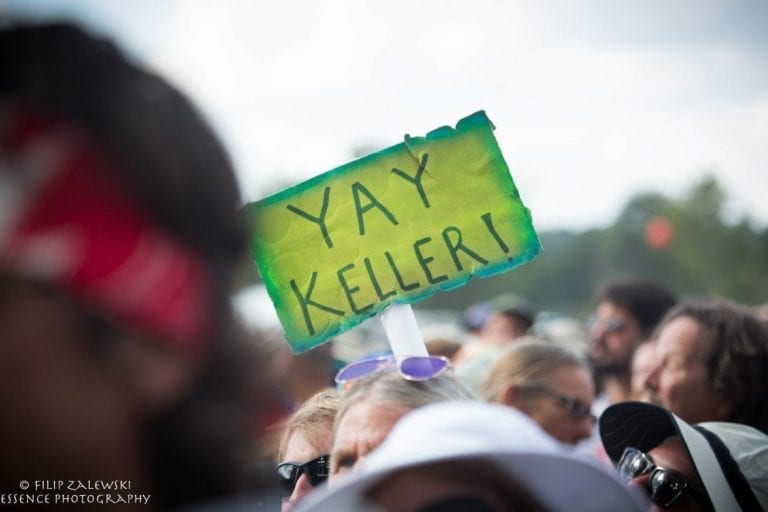
Yay Keller! At Lockn’ 2019
Keller is a staple of the jam community, a part of the Dead scene, and a “phan.” His music is so easily accessible to the ones around him because he is one of them. He is a Deadhead playing to Deadheads. They breathe the same air, and drink the same Kool-Aid. Keller gets it. He makes it look easy and fun, just like a good show should feel. When he plays five sets at a festival, which isn’t rare for Keller, plan to dance at all five.
All smiles. Keller at Lockn’ 2018
So we digress and start to dig into show stories from Keller’s vault…
On Red Rocks concerts that stood out and Phish: “In 1990, I started seeing Phish. In the early ’90s they started to go into arenas kind of early. And I was used to pushing my car to the Grateful Dead show ’cause the line to get in would take hours. And I would always be in these old cars that would overheat, so you had to push them in…
So I started going to Phish shows, it was probably right after Jerry died. Probably like ’96 or ’97, the run of three Phish shows at Red Rocks. I remember those being super intense.”
When a contract issue arose while Keller was in Boulder, Colorado, he checked out Odesza at Red Rocks. “I used some connections to get me and a couple of friends in. I remember standing on the top, towards the back, where you can see the stage, and hear just beautifully, and you can see the whole skyline of Denver. And I remember elevating, I think I elevated, I elevated, I rose up higher than where I was standing. It was real, it happened.”
When asked about his favorite festival, he narrowed it down to just festivals in his home state of Virginia. “Floydfest: one of the very few festivals I can go with my family. Lockn’, I go and hang out there, me and my wife go. But we don’t take our kids there.”
Keller at Floydfest 2016
His two favorite festivals are right in his home state of Virginia, both at which he makes an annual appearance. “The Blue Ridge Parkway is really popping now with color,” Keller stated as we drooled over the beauty of that mountainous state.
At Floydfest 2016, Keller was seen on stage more than anyone else. They even put him in charge of what is now an annual super jam of epic proportions. “Greg Allman had cancelled, and we put that set together. It’s become a staple at that festival every year since, with me in charge.”
With The T Sisters at Floydfest 2016, filling in for Greg Allman
If he had to be stranded on an abandoned island with one musician, Keller would like no one else to spend his time with than his already good friend and band member, Larry Keel. According to Keller, he’s also a master fisher.
Keller is just so relatable and down to earth, it’s hard to not gravitate towards him. One time at Floydfest I asked a stranger for a lighter only to realize it was Keller who I was asking, another time I ran into him at a festival in Tennessee, and we were both sweaty guys with vapes at Lockn’ in the media tent.
Keller sitting in with Twiddle at Lockn’ 2016
On the hot, hot 2016 Lock’n music festival,”
On the hot, hot 2016 Lockn’ music festival: “That was a really interesting year. There was a couple years, they’d plug in my motor home right behind stage. The year that Phish was there…you know when they come to a festival they create their own fenced in zone. It’s not just like, here’s your trailer, Phish. No, they have their own fenced in area. That extended out the fence between the public and the festival. So I could go to the fence and be in front of the speakers and in front of the screen.
And I saw so many shows sitting in a folding chair, sitting by the fence, looking up. And it was just loud as hell! And it was so hot that year we had to take naps in the day ’cause we’d been up all night, and our motor home would become a subwoofer. And would just vibrate. Yeah, that was a fun year, I remember that year very well.”
Keller Williams Grateful Gospel at Lockn’ Festival 2019
Keller is an incredibly hard working and inspiring musician who seems like he never stops, hence the new album SPEED. This man cannot be stopped. But seriously, Keller is a true staple of the jam community, the scene if you will, and it was an absolute honor to wrack his brain about his music and his relationship with the music we love.
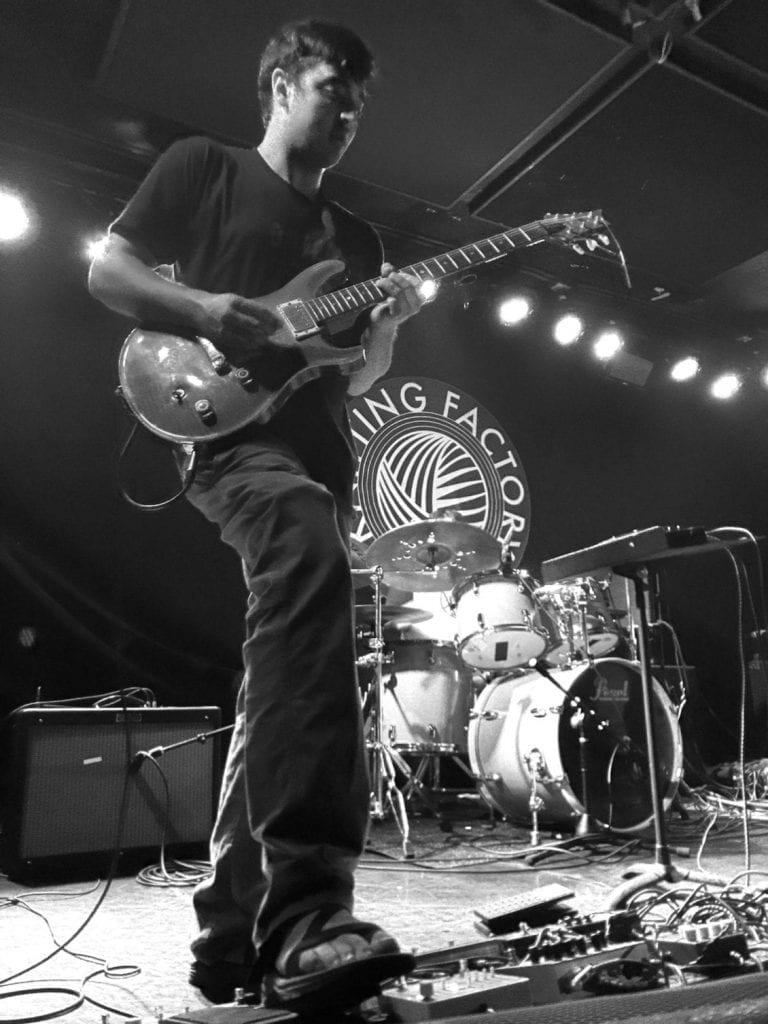
Denver, Colorado psychedelic jam-trio Cycles are making their way through the northeast this week, performing a series of shows throughout New York state as part of an extensive 2019 fall tour. Last night, the band played at Buffalo Iron Works, with Colorado’s The Magic Beans and Connecticut’s Eggy, for a commemorative night celebrating the venue’s tenth anniversary. This past Wednesday, Cycles sat down for an interview with NYS Music in Brooklyn, NY, just before performing a set at famed music club The Knitting Factory.
This was a first time appearance for the trio’s drummer Collin O’Brien, not only at the venue, but in Manhattan altogether. “I haven’t been to New York in like fourteen years,” he told NYS Music. “I’ve been freaking out walking around all day.”
It was a return, however, for the band’s guitarist Patrick Harvey and bassist Tucker McClung, whom have performed as Cycles in NYC before. “We’ve played New York a few times,” said McClung. “There was Brooklyn Bowl, and then we played at American Beauty once, for a Phish after party. That was really fun.”
“There’s a really sick jam from that [Phish] show,” said Harvey.
Sick jams were definitely in full supply for their The Knitting Factory show, which saw the band deliver a full range of musical styles, from jazz to funky-metal to soulful rock, across a dizzying set of songs that were all linked together via impeccable technical abilities.
While new to the city, O’Brien is also a relatively new addition to Cycles, at least as a full time member. The Chicago-born drummer moved to the band’s home base of Denver earlier this year and jumped on board with the band just in time for huge gigs like Arise Music Festival, Peach Music Festival, and Resonance Music Festival just last weekend. “I love it,” he said. “This has been the best summer of my life.”
He certainly fits into Cycles’ live musical experiment, with constantly shifting drumbeats and tempos thrown up against barrages of shrieking guitar solos from Harvey and slap-happy bass rips from McClung. As a unit, the band navigates an amazing balance between improvisational spontaneity and technical precision, and the results fuse together unique, often even quirky, song material with a sustained sense of freewheeling whimsy. A sense that, musically, anything could happen at any moment.
In their Knitting Factory show, they showed this resolutely. Some songs bled out into super spacey, affecting moments of trippy space rock. Other moments saw battles for highest intensity between chromatic guitar picking and dramatic drums fills—sometimes while McClung was balancing his bass on one finger like a vaudeville performer. At one awesome point in the set, Harvey broke from a melodic guitar solo to incorporate audio samples of an eighties’ sounding, glam rock tune into a hard-driving metal-funk jam from bass and drums. Does that sound odd? Absolutely. It is exhilarating and actually pretty groovy.
“I think when we first started, it used to be challenging to make it sound really full,” commenting on the three-piece driving force behind such heavily improvisational shows night after night. “But now, it just feels like I get to do whatever I want all the time. We’ve been playing together so much over the past three years, I feel like we all know where to get in and fill space, or where to leave space.”
Tucker McClung, Bass.
“Yeah, there is a lot of freedom in not having a lot of people on stage,” said O’Brien. “It’s easier to communicate ideas more instantaneously.” This sense of freedom is what gives the band the inspiration to perform a live musical game show next month, at Denver’s Cervantes’ Masterpiece Ballroom (where they will actually have many people on stage).
Tucker broke the concept down to NYS: “It’ll be one set of us performing as Cycles, but we’ll open up the night with a set of this game show. It’s going to be a super interactive experience. We might have as many as 30 to 40 people coming up intermittently and participating in the show, and we’ll be the host band for this Johnny Carson mixed with Wheel of Fortune kind of experience.”
“And,” added Harvey, “we have a game show host who is the freakin’ man! Dennis Craig. Definitely the best host any game show could ask for.”
“It’ll be a healthy amount of uncertainty,” said O’Brien. “Stuff will go wrong in the best possible way.”
Cycles Guitarist Patrick Harvey. Photo: Miles Hurley
The rest of Cycles’ schedule coming ahead has them linking up with jam scene contemporaries like The Magic Beans, Sunsquabi, and others. The trio looks forward to a huge hometown show in December: a debut at Denver’s The Fillmore Auditorium opening up for Umphrey’s McGee.
“I used to see them all over the place when I lived in Chicago,” said O’Brien. “They’re so nice. They’re just some normal guys that are like really, really freaking talented.” McClung, meanwhile, talked about seeing the six-piece staple act for the first time at this year’s Resonance Music Fest. “Yeah, they did an acoustic set which was pretty awesome. I was getting really pumped watching it.”
This week, catch Cycles as they finish their New York stretch with a show tonight at Syracuse’s The Westcott Theatre, followed by shows next week at Olive’s in Nyack and at The Hollow in Albany. While this season of touring seems to continue a road-tested sense of hardcore gigging for the band, they show no sign of slowing down, an instead an invigorated and grateful attitude for the experience.
When you’re as blessed to be doing what we’re doing, it’s foolish to be agitated at the world. Because you have this awesome opportunity to rock out. There’s nothing better than this. If there was something better than this, I’d be doing it.
Patrick Harvey, Guitar.
For more information about the band, their music, and their upcoming shows, head to their website.
Marco Benevento who hails from New Jersey and now calls Woodstock home, could be described as a jack-of-all-trades, playing in jazz groups, the premier Grateful Dead cover band and touring with members of Phish and numerous other projects. With Let It Slide we get a true taste of the genius of Benevento’s tastes, influences and abilities with tight arrangements and gorgeous songwriting.
Photos: Matt Long
After his first album Invisibile Baby was nominated for the prestigious Independent Music Awards’ Best Jazz Album, it is interesting to see how far this Berklee School Of Music has delved into the indie and jam band scene, covering artists such as My Morning Jacket and The Knife on his second record. Much of this was self-produced, so now with Let It Slide, Benevento has an incredible treasure trove of experience and influences. Combined with the incredible producer Leon Michels, also from Upstate NY, this record flows together impeccably. Benevento claims, “This record has a really nice mix of what Leon does at his Diamond Mine Studio and what I do at Fred Short Studios. The final call on everything was always Leon’s though, because I trusted him completely. I’d never put my music in someone else’s hands before. I’d been hesitant to work with outside producers in the past, but the experience of making this record ended up being so freeing and exciting! I loved every single minute.”
The new record showcases Benevento’s ability to slide in and out of genres. At one moment he can catch you with the seemingly endless hooks and beautiful layers of the title track and then move to an atmospheric love song like “Solid Gold,” celebrating the joys of living in the moment, a notion often lost in this day of technology and dating services.
One of the most beautiful tunes on the record is the John Lennon-esque “Lorraine,” co-written by Simone Felice. Benevento says of his songwriting, “I started as an instrumentalist so I tend to write the music first and come to the words after. Often I don’t know what the song is about at first and then I see my own personal philosophies subconsciously bubbling up throughout.”
Another favorite of this reviewer is the very catchy and groovy “Send It On A Rocket” that almost sounds like a Beck tune from Mutations. Fans both new and old can be thankful that this new record really hits an incredible stride and works as an entire piece of art. The maturity of the songwriting showcases Benevento’s more than 20 years long career of creativity. Upstate, NY is truly lucky to have such a talent, so be sure to catch him on the road with his own band, JRAD or “The Duo” with Joe Russo. Let It Slide is another incredible installment on the continuous journey of an amazing player and poet.
Let It Slide comes out September 20 and can be pre-ordered on vinyl, cassette and CDs currently HERE. The record is under Beneveto’s own label, Royal Potato Family. The official album release party is October 12 with support from Mikaela Davis at The Cohoes Music Hall.
TRACK LIST:
1. Let It Slide 2. Solid Gold 3. Baby Don’t Make Me Wait 4. Gaffiano #1 5. Say It’s All The Same 6. Humanz 7. Gaffiano #2 8. Send It On A Rocket 9. Lorraine 10. Nature’s Change 11. Oh Baby Can’t You See 12. You Got Away 13. Gaffiano #3
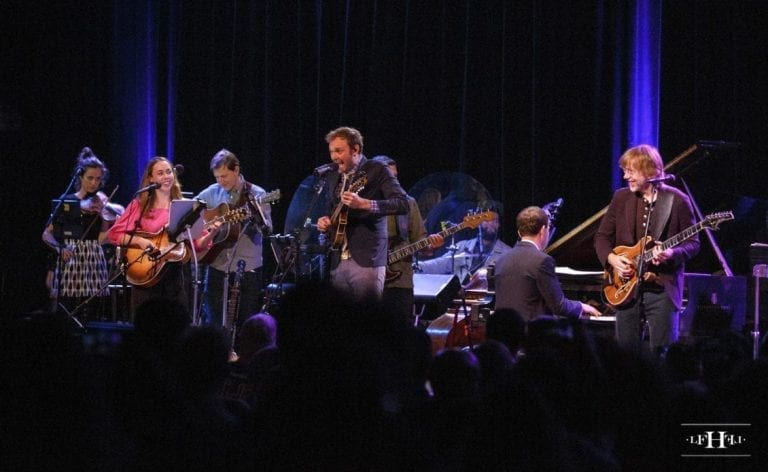
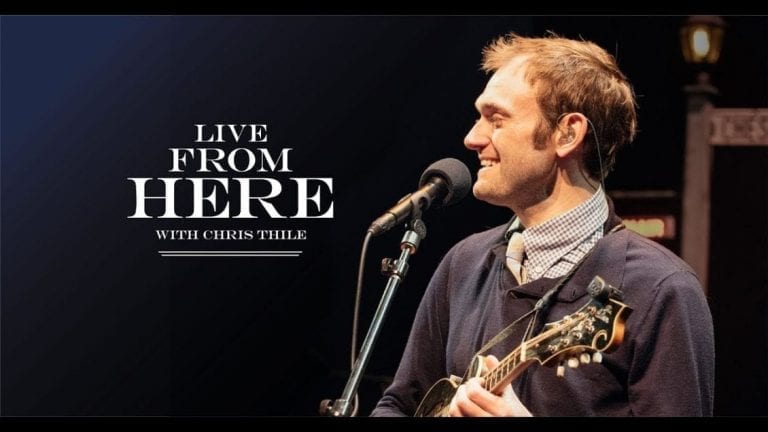
Chris Thile, as a member of Punch Brothers and Nickel Creek, has won multiple Grammy Awards and sold millions of albums. As the host of Live From Here, he has spanned genres and brought a wide range of musicians together for weekly performances at Manhattan’s Town Hall, where the latest season kicked off earlier this month.
Thile looks at art as a conduit to conversation, and towards collaboration with the audience as creating art together. It is in this way that he fits as a natural host of a two-hour weekly show broadcast on public radio, one that will see very special guests appearing each week this season – Grace Potter, Dawes, Trey Anastasio, and Wynton Marsalis, to name just a few.
Chris performs this Saturday, September 21 at Bethel Woods Center for the Arts as part of Vibrations Series which celebrates the power and possibility of the ’60s and what that decade means to us today. Launched in 2019, “the series has brought together change-makers, artists, and influencers to open conversations, inspire thinking and awaken purpose.” With an emphasis on the arts and civic engagement, Vibrations brings the legacy of the past into conversation with the movements of today, something that Thile can relate to. Chris spoke with NYS Music about the role of artists in bringing about change, music that has engaged audiences, and what gave him an early glimpse at what hosting a show like Live From Here might be like.
Pete Mason: With the upcoming Vibrations Series at Bethel Woods this weekend, when growing up, how did you come to discover the era of the 1960s – the change, the conflict, the music – and in what way did that seep into your songwriting and understanding of American culture?
Chris Thile: That’s a spectacular question. The Beatles were the first non-rootsy thing I was intentionally exposed to by my folks. Up to that point, I was listening almost exclusively to folk music in various forms and a very specific swath of folk music at that. For example, bluegrass music and fiddle tune music and almost no popular music of any kind, and just a little bit of classical music on the radio and jazz via my dad’s record collection. All of a sudden, my parents were raising a child with no real sense of popular music, particularly the popular music of their childhoods. So they checked out Rubber Soul from the library for me and it blew my mind. People writing songs about things other than having a little home on a hill and “Mule Skinner Blues” and “John Henry.” These were songs about people’s lives and they were contemporary songs, not that “John Henry” wasn’t in their day, but just updated by 100 years or so. I think it was becoming socially difficult to write about a vast amount more than it had been up until that point. It would still be many years before I heard Dylan at that point and, generally, cover songs by artists from the roots community, such as Tim O’Brien who made a beautiful album of Dylan songs called Red on Blonde.
So it has seeped in there. Particularly, the biggest lesson is that its ok to write a song about anything, provided that you do it well – that’s the big rule. I think above all, that’s a lesson to learn from the ’60s.
PM: How do you see your role, and the role of artists, in capturing pivotal moments in American history, especially from the past 20 years or so?
CT: I think that art exists for a variety of reasons. It turns on a camera in the documentary film of our life, our experience in the world, and we gain some perspective. I think that is one of art’s most noblest responsibilities – to help us gain perspective on the world and what’s going on and what it means to be alive, not just in our moment but in the moments previous and be able to better serve our respective moments if we’re aware of other people’s moments. And it also serves as respite, what we’re collectively experiencing. There are so many different things that it can do that I would hesitate to look at one thing and point that out and say that’s the one thing that art’s supposed to do in times of turmoil and in times of peace. It’s just so good at doing a variety of things.
PM: What can aspiring artists do to bring about civic engagement through their music and performances? What is there that they can do beyond inspiring an audience to step away doing something more?
CT: I think that the very best thing an artist can do is to make their art well. I think there’s a lot of reasons you make what you can make. Sometimes I think that art made with the specific intent to elicit a particular reaction can actually be fairly compromised, by dictating the feeling your audience should have. For instance, Dylan is at his best as a lyricist (and at his best very often). I think that any one of us could have a unique reaction to a Dylan lyric, that he leaves a great deal of room in every lyric for you to cultivate your own sense of meaning. And so when you talk about things like ‘what an artist can do to bring about civic engagement,’ I would be wary of art that makes that its directive and explicit aim, because I feel like the way to engage a person… I think the best art is collaborative with the audience, with the person who is sitting in front of it, listening to it, looking at it, reacting to it. And that if you as an artist attempt to dictate what your listener is to think or experience, then they’ll switch off, they’re not going to engage, they’ll feel manipulated, bullied into feeling a certain way. I don’t think art is good at proving points or answering questions, it’s good at asking questions and good at getting people talking to one another about things. So I would go back to the way an artist can engage his or her audience is engaging them as artists, and asking them to enter into a collaboration as to the meaning of the art that they are working on.
PM: Can you think of any songs that stand out to you that fit this mold, where they don’t go in with a specific intent, but it just naturally comes out and the audience is engaged rather than pressured?
CT: I would say that Stravinsky’s Rite of Spring did a pretty spectacular job engaging its audience. Along with Diaghilev’s ballet, his choreography, it engaged people to the point that they rioted over it. That seems like it was pretty powerful, it really came out of the clear blue sky, not that there weren’t hints to the possibility of this beforehand, but I think a lot of musicians interacted with that piece. And it’s called Rite of Spring, it depicted a certain kind of reality and the art was so good that people got talking about it. “Is this OK? Can we do this?” Meaning not “Is ritualistic sacrifice OK?” but rather, “Can we make art about it?” I think that piece did an extraordinary job engaging its audience and I sincerely doubt that riots were the intended result, but that’s what happens when you pose a specifically well-worded question.
I feel like Radiohead has been excellent in writing art that gets people thinking about climate change and just the environment in general. It often is in the abstract lyrically. I think that someone like Gillian Welch has done an extraordinary job in the ways in which lives led, say, 60-100 years ago and the study of those lives might be relevant to the living of theirs. I think she operates in this beautiful, undefined aesthetic that has a foot in American folk music of the early part of the 20th century but also right now. There’s so much, I don’t even know where to begin.
Think of someone like Ornette Coleman with a record like The Shape of Jazz to Come. Kind of making people think about music that is made up on the spot, and in what ways is that music to you and in what ways is it not. I think a lot of people talked and debated about that and we ultimately felt that Ornette’s take on that was ultimately brilliant, but it created a lot of controversy in its day. I love that. I do think that art is better at asking questions than answering them. I’ve noticed that in young writers and in my young writing. It always seems like I’m answering a question and I see young writers now… it starts to sound like we think we know what’s going on. Looking back on particularly younger lyrics, I think, “My god, you really thought you knew what you were talking about and you really did not. You thought you had an answer to something. At least from where I’m standing, at 38, I do not think there’s an answer to that question, my 23-year old self. Nice try.”
PM: With two weeks of Live from Here in the books, how has the transition from Minnesota to NYC been, and how has curating and preparing shows at Town Hall been?
CT: I love Town Hall, I adore making music there, it feels like home at this point. Last year we did more shows at Town Hall than at any other place, so the transition has been happening, just gradually, and this year was sort of completing something that was already happening pretty naturally. I live in New York, and there are so many people, so many artists coming in and out of the city. Regardless of where they live here, everyone comes through here – this is one of America’s biggest windows to the world and the world’s biggest window to America. It’s nice to be here for that reason. We have this two-hour canvas that we get to paint every week and there is a lot of space for things to happen and it feels good being in a place like this where on any given night there are hundreds of wonderful things happening and it seems maybe like it’s a little easier to coax a few of those things onto the show week in, week out. And that’s nice, it takes some of the edge off.
PM: With all the years of Nickel Creek and Punch Brothers, was there ever a point where you expected to be the host of Live from Here, or any similar roles? Looking back, did you ever think ‘oh yeah, I always wanted this job.’?
CT: Certainly not this specifically. There have been times when I wondered whether doing something of this sort would be interesting. Punch Brothers had a residency at The Living Room on the Lower East Side of Manhattan and we called it P-Bingo night. It was a one-band musical variety show, with one guest per show who would do a couple things with us. And we’d try to make funny things happen, some covers, an original of sorts each show, and stylistically try and get all over the place, in service of our general mutually held belief that genre is really a discussion of the cover of the book and not the book. Which is fine, it can be interesting, the aesthetics of the thing can be really, really interesting, but it is a question of aesthetics largely. And that’s one of the thesis statements of Live From Here, but I had a great time doing that, particularly because it was thrilling and hair raising to come up with a show that was entirely different on a weekly basis.
With Punch Brothers it was a shorter show but also it was all us, so it was a lot of material and we ended up stressing ourselves out so we did it less and less. But we did at a certain point wonder if we could make the thing it into a show, a radio show or television show, and even pitched it to a couple people, although we never got any interest. So when this came along, it wasn’t thinking about whether I wanted to do it, but this legendary time slot was being offered to me with a chance to commune with the public radio listening faithful on a weekly basis. It was too tempting to resist and it put me back in the mind of doing P-Bingo night with Punch Brothers and how much fun and how thrilling and dangerous it felt making all that new content. The energy that comes with thinking about the transition from doing that at a 100-person club on the Lower East Side and doing it for a couple million people on the radio live, it got a little too exciting to resist and I’m really happy and having a great time.
Meet Witty Tarbox. The funky surf-rock jam band hailing from Buffalo, NY that just packed the Town Ballroom to celebrate the release of their debut album, Origins of Schmitty. Comprised of Cody Tarbox (bass), Bryan Williams (guitar/vocals), Alex Khoury (guitar/vocals), Seth Bykowski (saxophone) and Colin Gray (drums), this band has quickly made a name for themselves in the WNY music scene. This year they made their debut at Night Lights Music Festival, and have opened for notable bands such as Consider the Source and Litz.
Origins of Schmitty release party at the Town Ballroom – 9/6/2019 – Photo: Zachary Todtenhagen
How this band came to be is a perfect representation of Witty Tarbox – spontaneous and weird. One night, Bryan and Alex were at Nietzsche’s bar in Buffalo and after a drink or two, Bryan asked Alex if he wanted to start a band, and Alex said “Yeah!” After that Bryan got up for a few minutes and came back to say “Awesome, just booked us a show here, it’s in three weeks, we need a band.” They called up their friends from college, Cody and Colin and they opened up for a sold-out Delicate Steve show with a setlist composed of about 90% covers, including the Arthur theme song, and the first original song they played together, “Trevor.”
As Witty Tarbox started to gain momentum, they met Seth, who was playing with another local Buffalo band at the time. They asked Seth to sit-in with them and after that Seth found himself sitting-in on almost every show for about a year, until he was asked to officially join the band.
From there, the band has become a staple in the WNY music scene. Their shows are always high-energy, fun and most importantly, weird. One thing you will hear walking through the crowd at any Witty Tarbox show is “Wow these guys are really good, but they’re weird!” As a band, they pride themselves in that. For their album release party they asked everyone to wear costumes and go all out weird, and all out weird it was. Their performances bring a fun new take to the jam band scene. See for yourself in this video of ‘Prepare To Launch’ from this past weekend at Riverboat Bar in Alexandria Bay, NY.
Witty Tarbox released their debut album, Origins of Schmitty, just over a week ago. Schmitty is a character that has been in the Witty-verse for some time now, as the band uses characters to tell stories with their music. The album tells a story of heartbreak, debauchery, and healing; the story of Schmitty. It starts off with a deep acoustic song, “Group Therapy,” which was never actually recorded in the studio. When they went to record it, the band felt that they couldn’t capture the same feeling they had when they recorded the video of Alex and his guitar one late-night in Cody’s living room. So, the audio on the album is actually ripped from that original iPhone video.
“Prepare to Launch is probably one of my favorites [to perform] because the monologue that Alex does and watching like the front row of people, who probably have mostly never seen us before, and just watching their faces and tapping their buddies like ‘What the … what is going on?’ ”
Cody Tarbox
If you have seen Witty Tarbox live before, you might recognize a few of the songs, such as “Fa Napoli” and “Goodbye, Jackie.” Both songs, which were debuted under different names, evolved as the band experimented with new jams and finding new elements to try in the songs. Cody makes his debut on vocals in “A Universal Feeling or Two,” which has also been in rotation for about a year and a half under a different name, without lyrics. When the lyrics were introduced, Colin hated them, but once he heard Cody record it (in one take no less), it quickly became one of his favorite songs off the album. Well, either that or “Norman,” which is a favorite among the Witty team. The album ends with “Kokiri,” named after Colin’s favorite place in his favorite video game, and features Mike Gantzer of Aqueous. You can give the whole album a listen below.
He’s a cool guy, cool attitude … and I think [Aqueous] likes to support Buffalo and the music scene here, and just in general, everyone is kind of really supportive of each other. I like how everyone works together in Buffalo, because it’s so small and there is this sense of comradery here that’s really nice and it helps everybody grow.
Alex Khoury, on working with Mike Gantzer and the Buffalo music scene.
Witty Tarbox had an extremely successful summer, and they owe a lot of it to their team. They are incredibly grateful to their management, Tim Merrill and Jes Tarbox, for keeping them on their toes and keeping them focused. Another big part of the Witty team is Brandon Kempisty, who collaborates on a lot of their costumes and props for shows that help keep it weird. Together they’ve created this wonderful Witty-verse that fans have fallen in love with.
We wouldn’t be where we are now without everyone else. It takes a village as they say.
Cody Tarbox
Witty Tarbox – Origins of Schmitty release party – 9/6/2019 – Photo: Zachary Todtenhagen
Check out their upcoming shows below, and visit their website or Facebook page for more information and even more exciting announcements for this fall/winter.
Upcoming Shows
October 6 – Folkface’s Fest – Darien Center, NY
October 26 – Brick Bar – Oswego, NY
November 2 – King’s Rook club – Erie, PA
November 15 – Unofficial moe. After Party – Nietzsche’s – Buffalo, NY
Brian Stollery, former Video Director for Relix, brings his more than five years of experience in the music industry with a focus on bringing the best business solution to his clients.
Coptium (loosely, “choose growth” in Latin) is a term that any business, particularly those in the entertainment industry can embrace – in order to remain competitive and successful, you must grow. Alongside growth comes the need for professionals to help small businesses to develop and reach their potential.
Enter Coptium, a management consulting firm that offers an unprecedented, holistic, human approach to traditional consulting and management. With a team including a Fortune 500 marketing company, Madonna’s former business manager, and a team of industry experts, Coptium offers effective, robust accounting, business management, social media and marketing services at a fraction of the traditional cost.
The end goal is simple: A world in which music and art are supported and valued as equally as the corporate dollar. How to tie art with financial freedom? Coptium’s “Launch” series is a new, curated showcase concert series that truly nurtures and artists work, provides and activated community around their music, and compensates them with not only monetary pay, but also business and financial support services.”
Pete Mason: When did the idea to create a business like Coptium come together?
Brian Stollery: When I was creating videos at Relix, it was a lot of fun and something I enjoyed, but I was one person and could only work with one band or artist on a video at a time. It would go online, it would get views, it might move the needle for the band or the event. I quite simply wanted to widen my scope and now I am working with renewed focus on moving the needle of the world. As much as I love making a video with a band, I would much rather step in and help bands really move the needle and really grow their bottom line. And I have found that a lot of bands historically don’t think of themselves as a business. They don’t have a P&L sheet, they don’t generally file taxes as a band, and they don’t think of themselves as a viable financial business entity.
The team I put together can help them do this. Artists can create and do what they want to do while we take care of the rest. With Coptium, we can widen the scope and effect the entire community as a whole, rather than just with one band at a time.
PM: What do you find is the biggest initial hurdle bands face?
BS: Bands rarely have startup capital. Musicians know how to create, they know how to play music and so much of that comes from feeling and emotion and that space in our brain, but bands are never coming from the analytical part, the business side of things. They’re never saying “Let’s form a band, and then reinvest 20% of our gross! Then let’s look into tax deferment and pay our taxes quarterly!” No band ever says that, because they’re musicians and they like to play music. If they wanted to do business, they would have gotten an MBA. If you look at some bands with startup capital that have a business manager, they are the bands still out there today playing and making money.
PM: What is the best advice you can offer bands that are starting out?
BS: Get a band credit card, put all your expenses for touring on that credit card. Log a spreadsheet of all of your income, a note on each performance’s revenue. Create another spreadsheet of expenses, and that’s all you need to always be flat with the IRS. If you have an accountant, that would make their life easier. If you do band taxes through Turbotax or one of those companies, you could do your taxes in an hour. There are a million reasons you may bypass this, but this is your business and you are allowed to deduct business expenses from taxes. If you don’t do that, you are probably overpaying on taxes. It sounds so counterintuitive as a musician to put your income and expenses on a spreadsheet, but it is a very easy way to actually see if you have a profitable foundation for your business.
If you’re interested in performing as part of the “Launch” concert series, or interested in learning more about Coptium’s business services, contact Launch@Coptium.com for more info.