The Old Great Lakes is a captivating collection, brimming with the beautiful verse and evocative arrangements Tough Old Bird has become known for. However, this work transcends everything they’ve done, pioneering beyond the confines of traditional folk. Tough Old Bird is the moniker taken on by brothers Matthew and Nathan Corrigan.
Inspiration for The Old Great Lakes came from a lot of sources: the environment, literature and a lifetime of music appreciation.As the name implies, The Old Great Lakes was shaped by an innate love for geography and environment. Matthew and Nathan have toured quite a bit over the last few years, but their music has always been deeply affected by their Western New York roots.
“We grew up in a little one-stoplight town called Fillmore, NY, and that environment definitely found its way into a lot of our music,” said Nathan. “But I think where we grew up probably had less of an influence on this album than on our previous ones. Our music has always felt pretty rural, but this, to me, is more of a city album. I imagine it taking place in more of a rust belt setting – places like Buffalo and Rochester.”
Listening to the album it’s easy to pick out references to a post-industrial backdrop. The percussion in some songs drone on like the trip-hammers of the old mills. And when they sing about a woman in the snow in the alley, one can feel the unyielding cold of New York winters seeping into your bones.
Don’t be mistaken, thinking this is a period piece. The songs have a timeless quality about them, and could just as easily be set a hundred years ago as they could today. This comes in part from being steeped in diverse influences from bands ranging in genre – from rock to country, and from the beginning of recordings to the present.
Our parents had a huge record collection and started us out on bands like The Beatles, The Moody Blues, Squeeze, or John Prine… I remember our dad calling me downstairs once and we sat and listened to The Wall by Pink Floyd straight through.
Matthew Corrigan
“Growing up I felt like a sponge for new music,” he continued. “My teachers showed me Pearl Jam and The National. My friends got me into Iron & Wine and The Avett Brothers. I think I listened to R.E.M. for two years straight in high school.”
These influences shine through on this album. Whereas their previous work has more of a traditional feel; this time they incorporated more diverse sounds and techniques. The songs carry on the traditions of Americana, but there’s more willingness to take chances on this album – a quickening sense of adventure and risk-taking. It veers away from the expected.
“We wanted to create something new,” explained Matthew. “Nathan and I both had a vision for what we wanted for this album that dates back several years. We both knew we had to create a certain environment that these songs inhabited, and that environment was different than what we had created before.”
Nathan added, “We were a lot more open to electric instruments on this album – electric guitars, keyboards, effects – and more ability to use those things than we had the last time around. I think we’ve had a tendency in the past to think of ourselves as a folk band, and with this album I think it was more important to be open to anything, and not worry about what genre it was or whether it sounded like some abstract idea of how we were supposed to sound.”
A cohesive concept achieved through the use of repeated motifs and musical phrases make this more than just a collection of tracks. There are melodies that repeat throughout the album, tying the songs together. And the lyrics contain a narrative arc, a sonic novella complete with setting and a cast of characters.
The Great Lakes themselves are the most pervasive symbol on the album, they appear in every song in some form. They aren’t the direct subject of any given song, but are placed in the background as an unchanging setting for all of these human stories to take place. They have battered shorelines, sunken ships, lighthouses, and hold watchmen and lost sailors, but they steadily churn and rest at the edge of every city and landscape and story. I feel that they passively narrate the emotional arc of the record.
Matthew Corrigan
The musical composition adds to the emotional tug of the album. From the triumphant horns to the maudlin violin, the soundscape mirrors feeling behind the story of each song. They called some friends, old and new, into the studio to execute their vision for the album. Jay Corwin was on upright and electric bass. Charlie Caughlin, of The Brothers Blue, played fiddle on two songs. Sean Ebert from The Fredtown Stompers played trumpet on a couple. And Marty Benzinger played drums. Matthew credits these musicians with bringing the songs to a whole new level.
Matthew and Nathan went with a new producer this time. They met musician/recording engineer Brent Martone through the Buffalo music scene. Last winter, they got together to turn the vision for The Old Great Lakes into a reality.
“He did a great job of getting us to push ourselves, but without ever steering the record in a particular direction,” said Nathan. “He also has a lot more know-how when it comes to effects and electronic stuff, so we would try to describe how we wanted something to sound and he would be like: great, here’s five ways we can do that!”
Matthew added, “I think he understood the songs from the start which created a very freeing environment to work in, no idea wasn’t worth chasing. Brent also challenged us musically and conceptually in ways that we had never been before. Every song on the record benefited from honest critique and deconstruction.”
The resulting album marks a milestone in their progression as musicians. It builds upon everything they’ve done so far.
“Every album we’ve worked on has expanded our knowledge in some way,” said Matthew. “Gambling Days taught us how to work in a studio, Beasts taught us how to flesh out arrangements and put together a batch of songs that was thematically cohesive. All that experience was carried over onto The Old Great Lakes. That being said, there were also several times on this new album that we purposefully rejected things that we had done before.”
“In terms of lyrics, every song is a push to write a better song than the one before,” he continued. “Every song is a lesson in how to use language.”
Listen to The Old Great Lakes, which is out now. You can purchase it on CD or digital download on their website. Follow them on Facebook and Instagram. Tour dates to be announced soon.
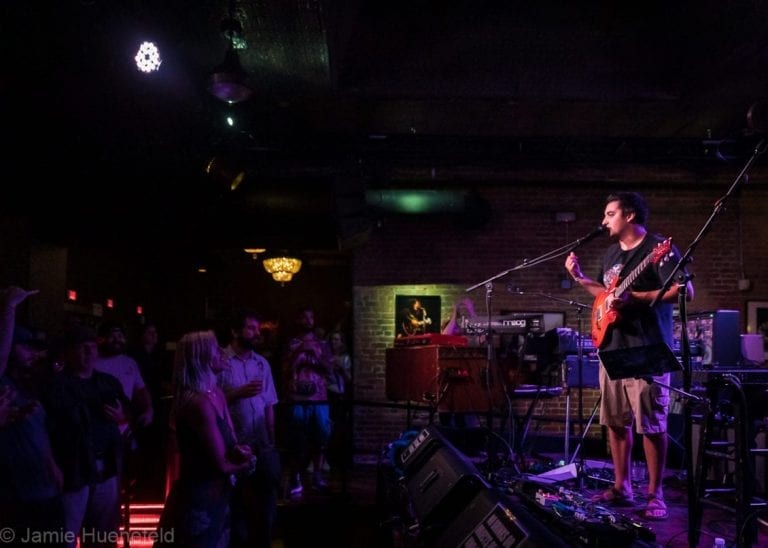
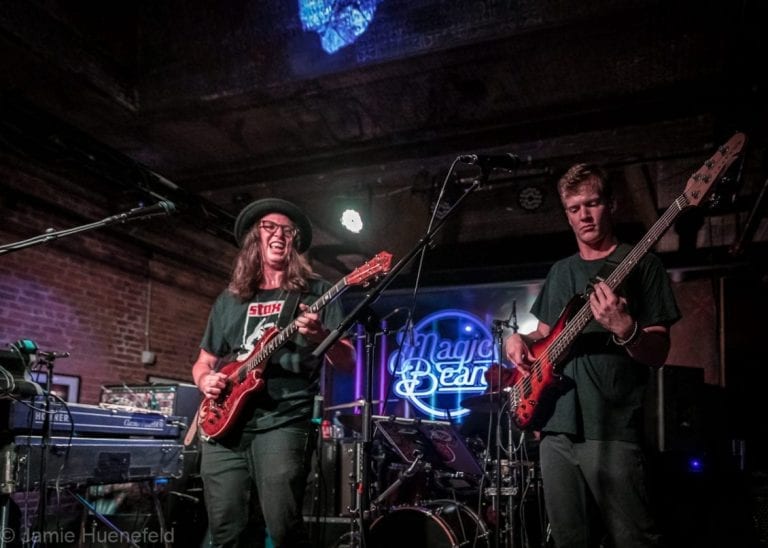
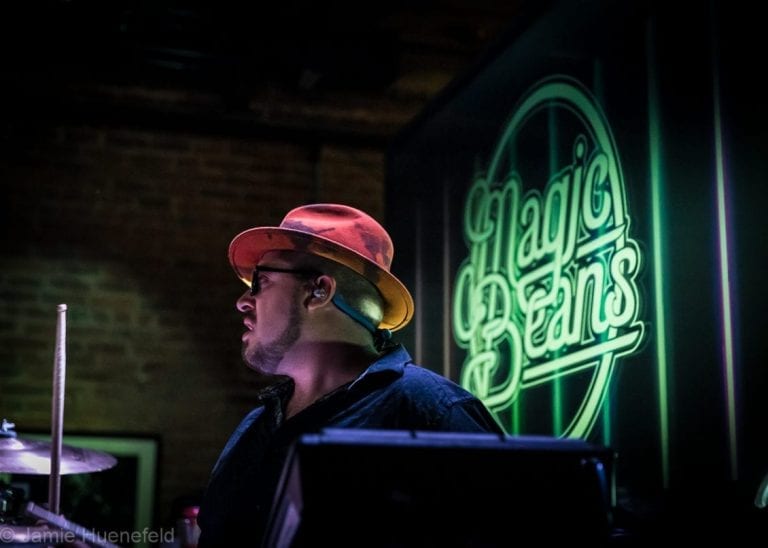
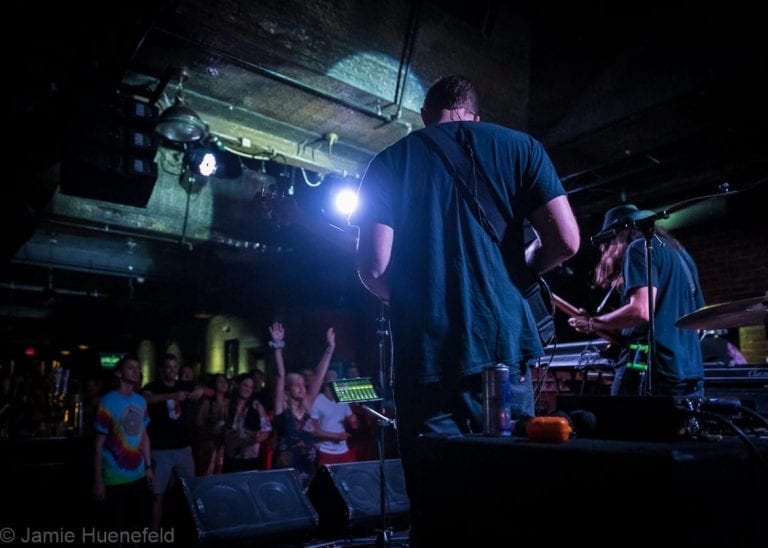
On Thursday July 25, three bands from Denver, Colorado descended on Port Chester, New York for a night of musical magic at Garcia’s, the bar adjacent the famed Capitol Theatre with Cycles, The Jauntee, and Magic Beans who have all had an extremely successful year, riding the waves of headlining sets at festivals throughout the summer, recent album releases, and upcoming releases.
Before the music began, I had the opportunity to sit with Chris Duffy (bass, Magic Beans) and Caton Sollenberger (guitar, The Jauntee) about their feelings playing together, influences, and plans for the future.
Tom Dillon: Being that you’re all from Colorado, can you comment on what it feels like to be playing together out east?
Chris Duffy: It feels really relaxed. Cycles, they’re good friends from Denver. We played Baltimore together last night and will be at Peach Festival tomorrow. Jauntee just moved to Denver last year and we all sort of share a fan base. It’s a good vibe, there’s more conversation in the green room.
Caton Sollenberger: (Laughs) Yeah, it’s cool to be in this “family” setting. All three of us played Beanstalk last year and we’ve all been able to help each other out. We (Jauntee) did five weeks out east in the spring and it feels great to be in this kind of a homecoming. This is our fourth time at Garcia’s so it’s good to be here.
Scott Ferber of The Jauntee
TD: Speaking of Beanstalk, this was the 7th year for the festival, how was that?
CD: Ah man, it was awesome! (Tucker McClung of Cycles chimes in “Favorite Beanstalk so far!) Yeah it was incredible. Each year it feels more dialed in, the crew just gets tighter and tighter.
CS: Unfortunately we missed Beanstalk this year, but just moving to Colorado was a big thing for us. We started going out west a while ago, which always seemed impossible from Boston, so we feel like we have a good home base out there. The scene is really welcoming.
TD: It’s been a great year for the Beans between the 7th year of Beanstalk, opening for the Disco Biscuits, and debuting at Red Rocks. What are your thoughts on the space you’ve carved out for yourselves in the jam band scene?
CD: Well, we are pretty aware of our influences. There is so much good production happening right now in neo-soul and hip-hop – which we listen to a lot of, so we try to show that through the jam band lens. We like to see how the jam band crowd will react to different sounds and influences and we’ve been pleasantly surprised at how much people are grabbing onto the more heartfelt singing and songs. Those are some of our most streamed songs, the ones that are more songwriting heavy.
Scott Haschey of Magic Beans
TD: You seem to take a more rhythm-based approach to improvisation, is that intentional?
CD: We try to interpret our influences and not just copy them. We have a lot of peaking guitar solo jams like a lot of jam bands but that doesn’t really satisfy all our desires creatively. Scott (Haschey, guitar) really values good songwriting and puts a lot of thought into arrangement, lyrics, and digging deep into human emotion as opposed to singing about some fabled jam band monkey in a tree – even though we love that stuff too.
TD: So what’s next and what are you looking forward to?
CS: Jauntee has a live compilation coming out with takes from our last New England run. It’s going to be called Jaunts Of Our Lives. We picked the best stuff that we liked and mixed it all down. There won’t be any print but it’s all high quality and will be out on streaming and on Bandcamp as a pay-what-you-want deal. It should be coming out real soon, like any day. To be honest it might even already be out!
CD: Well, we just released Off Leash and are really happy with the way the album came out. We were able to inject a lot of different styles so there’s something for everyone but we feel like we’ve barely scratched the surface of accessing our inner producers as far as using other sounds – drum machines or samples on stage. We just keep pressing on. We’ve talked about getting together and releasing maybe a hip-hop EP or a remix or dance thing, but you might hear us swing into a more acoustic or Americana sound also.
Cycles
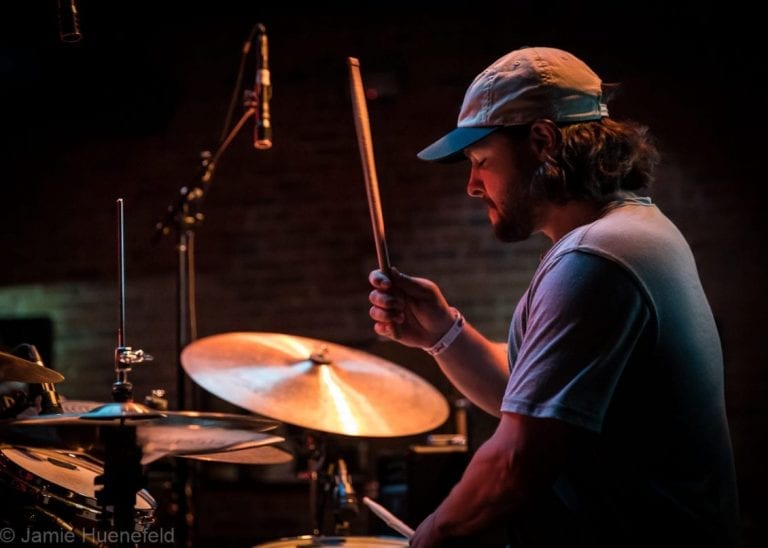
First up was the eclectic trio Cycles, comprised of guitarist/loop-master Patrick Harvey, bassist Tucker McClung, and newcomer drummer Colin O’Brien in his fifth official gig with the band. Cycles are completely unique in their sound and approach, blending genres from rock to soul into a mix of progressive power.
Through their opening hour set, the rhythm section was relentless. Offering a batch of material that can also be found on their recent live release Selections, Vol. 1, the trio covered all their bases. From the opening instrumental “Strife” and the bouncing “Be Yourself” to the more delicate “Everything Must Go,” the mood shifted but the sound was consistently huge. This is in large part due to Harvey’s control over his gear. While his guitar playing is ferocious, his use of a looper is equally as impressive. As he layers swells over chords, he creates massive sonic landscapes that reverberate through every corner of the room. He has mastered the art of painting with sound and it seems to be something he has taken hold of as totally his own.
The Jauntee
After a speedy equipment swap, The Jauntee got straight into some easy-going funk with “When The Love Is.” With tasteful riffs and well-placed transitions from section to section, The Jauntee is one of the few bands on the scene who explores free improvisation to a level where they begin to touch on what a band like Phish was doing or has done.
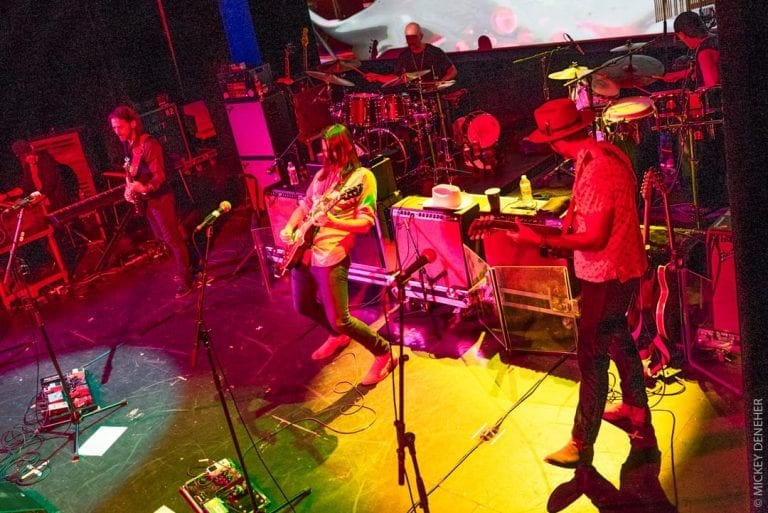
Adding the first sounds of piano and organ to the night, The Jauntee carried the groove steadily throughout their set. Their uplifting content is explicitly demonstrated in “Way To Grow” as the lyrics reference, “Feel good music to let your spirit free.” The progressive number “Flutterby” is an impressive run through ascending melodies, quickly moving scale patterns, and was executed flawlessly. It’s obvious that this group has been together for a while and the members are comfortable together. The jams are patient and poised. They take the time to really settle in, letting the crowd feel the beat, giving the music room to breathe, allowing it to grow by feeding off the moment. This was most honestly exemplified in the second half of the set during “Dirty Job” as the band slowly raised the energy level from foot-tapping funk, building anticipation through a series of tense syncopations, to a final release of sustained guitar under a canvas of organ.
Magic Beans
It’s easy to see why Magic Beans has steadily, and quickly, built momentum as a band to see. Though they live some 2,000 miles away, fans showed up in force to watch them in Port Chester. One fan even thanked Chris Duffy for putting on such a good show the night before in Baltimore.
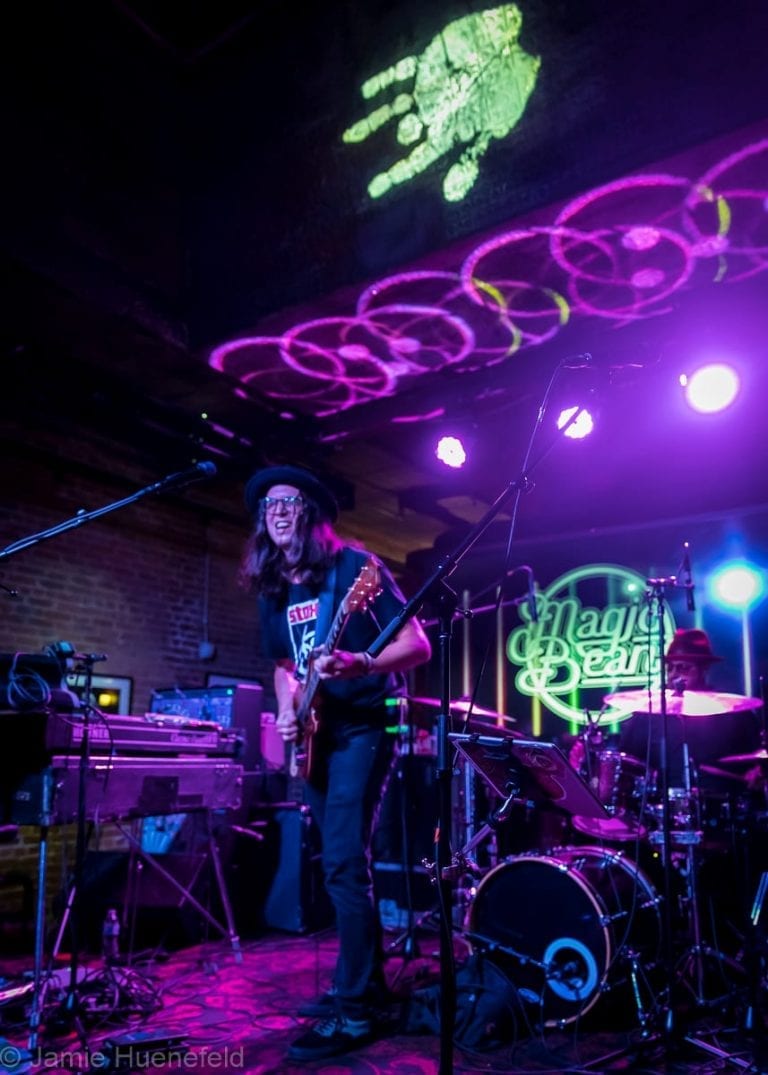
The Beans are locked in to their feel-good sound. It’s music that’s meant to not only make you dance, but make you feel good about it. Kicking things off with the party-funk single “Feed The Beast” from their newest album Off Leash, the band exhibited that they came prepared to lay it down. Keyboardist Casey Russell kept a wide smile all throughout the affirmative “Always Cool” off of 2017’s Common Mind. Two songs in and raving with jubilance, guitarist Scott Haschey broke a string and didn’t miss a single note. While he stepped off to re-string, the rest of the band wasn’t going to wait up. After a short filler with Casey on lead vocals and a impassioned organ solo, the rest of the set was indeed magical.
Casey Russell of Magic Beans
With just 6 songs on their setlist, Magic Beans intertwined all styles, incorporating a variety of sounds from their respective toolkits during an hour and fifteen minutes. Lush organ, euphonic synthesizer, filtered bass, drum samples under tight beats, and vibrant, rich guitar tones were all on full display. A touch of each was compiled into the finale “Contraband,” another track from Off Leash, bringing this night of magical music to it’s conclusion.
Off Leash is available on all streaming platforms now and Magic Beans can be seen in the Northeast once again on their soon-to-be announced Fall Tour.
It’s been about four months since local singer/songwriter and classically-trained pianist Katie Louise released her debut EP. Unleash, a seven-track collection of originals, was a labor of love — and an expression of pent-up baggage — that resulted in an album that somehow makes a piano fit in seamlessly with modern-day pop music. Since the release, a lot has happened for Louise, including gigs, wedding planning and buying a new house.
Kaitlin Lembo: It’s been four months since you released Unleash and we’ve seen you in several shows since then. How has life been since the release?
Katie Louise: To be honest, this year has been crazy. Right after I released the EP, I was hit with a lot of new milestones: wedding planning, my fiancé and I buying our new home, starting all the renovations. I definitely haven’t had time to market Unleash the way I wanted to, but I’m hoping after the wedding in September to make music videos for some of the songs.
Kaitlin Lembo: What made you decide to release merch with the EP?
Katie Louise: I’ve always had merch, but I believe in ‘new EP, new merch.’ It’s a complement to the EP and it’s also a fun creative outlet. This merch has done better than ever; stock is moving quickly and we’ve gotten so much love! It’s been a slam dunk.
Kaitlin Lembo: How was the response to your EP?
Katie Louise: People seem to really enjoy it. Again, I haven’t had time to market much, so I know it could be much better. We had originally sat aside a bit of money for marketing and we just haven’t had time to touch it yet; we are hoping to dip into it after the wedding and do some serious marketing. But those who have heard it seem to give overall very positive feedback. It’s an amazing feeling to have people love what you write!
Kaitlin Lembo: Do you think you’ll be releasing another EP in the near future?
Katie Louise: Ideally, I’d like to release something new every two years. It seems like a nice time period for something to do well, while not becoming boring or overplayed. I have been working on some new stuff but it’s taken a backseat to the things happening in my personal life. But I would love to release something else at some point.
Kaitlin Lembo: You played with Skeeter Creek and now you’ve performed with SIRSY just this past Sunday. What has it been like to perform with two staple upstate acts?
Katie Louise: It’s absolutely exciting. When I first started, I was booking a few gigs here and there. My fiancé helps me book gigs now and since he’s taken over, he’s everywhere and booking me with some really incredible people. I loved performing at Wicked because it’s a whole different world musically from Trick Shot, even though it’s in the same place. I used to perform here when I started gigging, and to come back full circle and perform with SIRSY and see where I’ve come from is so motivating and inspiring.
This article was originally published by The Spot 518, is property of Spotlight Newspapers in Albany, N.Y., and appears as a special to NYSMusic. TheSpot518 and NYSMusic work in partnership to provide readers with in-depth coverage on the local music scene in the Capital District and New York state, respectively. For more, visit TheSpot518.com.
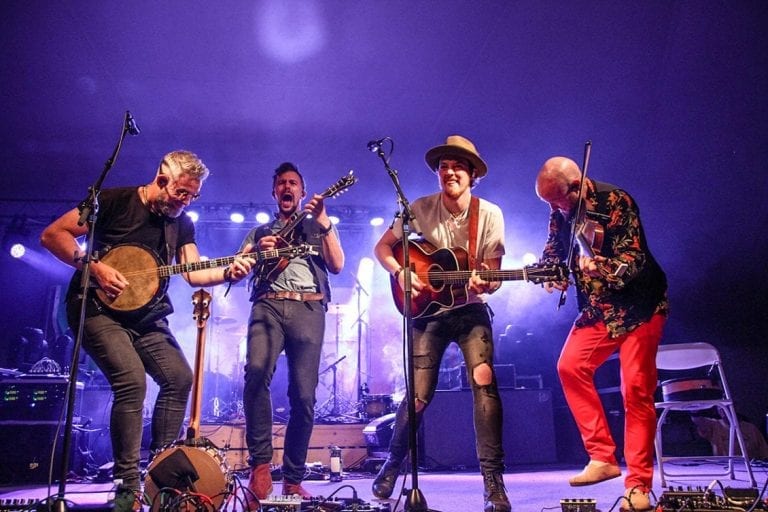
This past week, We Banjo 3 released their most recent live album titled Roots to Rise. Recorded in Ann Arbor, Michigan at The Ark, lead singer David Howley took a moment to discuss with NYS Music the making of the album, how it came to be, and what makes this so very special to both the band and the fans.
New Yorkers are in for a treat as the lads will be playing at two locations this week. They will be playing in Buffalo for the first time on July 24 at the 9th Ward at Babeville, and then heading east to return to The Great American Irish Festival in Frankfort on July 26.
A local favorite, this interviewer can attest to the fact that this We Banjo 3 must be seen live. Their incredible high octane performance transcends their audiences and by the end of the show there is not one person sitting down. Each band member brings a unique flair and sound that together is musical magic.
In addition to their amazing talent and stage presence, this band makes an effort to reach their audience with a message. Their music forms a community, and the message they extend is one of hope and collectiveness. Over the past year, since the release of their last album Haven, they have raised both awareness and funding for Mental Health America. Their willingness to speak on a subject that’s not easily approached sends a message of hope to many.
Take a moment to listen to our conversation above, and by all means, hope to see everyone at the shows this week.
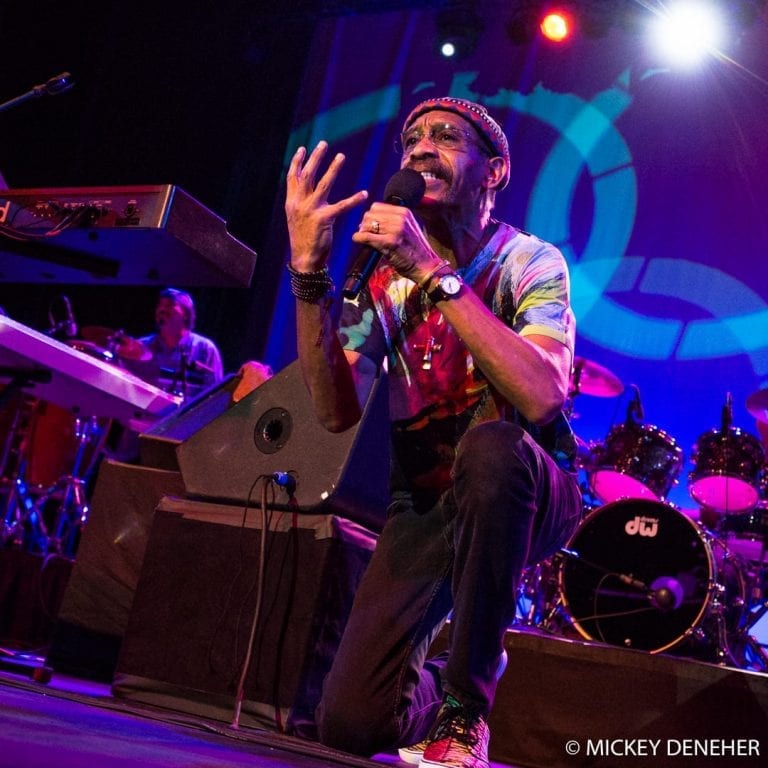
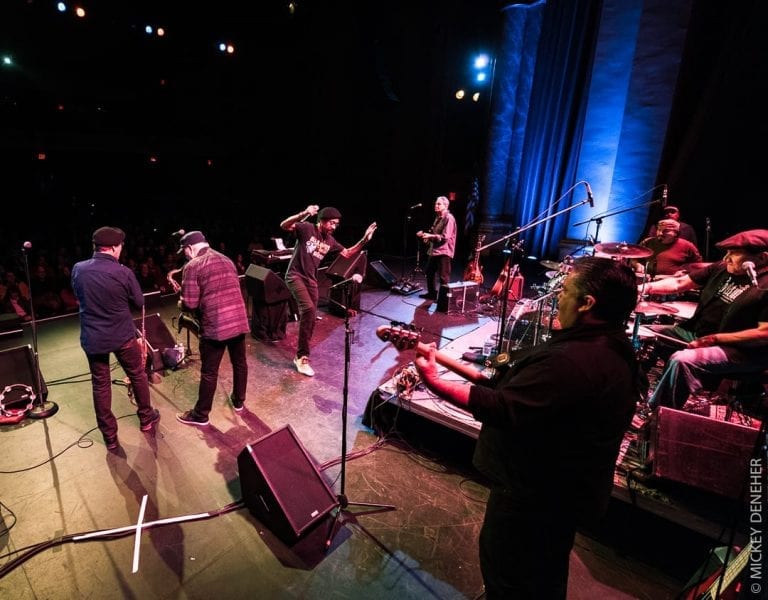
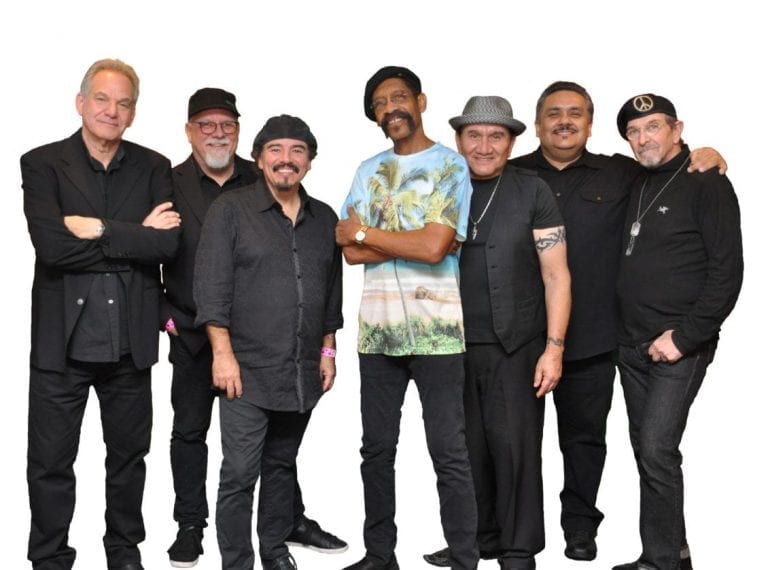
We, the people, live in a world of deception and violence, plagued with its unknown burden at every corner. What is so beautiful about the human race, is that we are natural born fighters. Hence, we must wage WAR. Our allies, the multi-platinum, genre-less fusion group WAR, have been by our side since their inception in 1969. You are familiar with their renowned hits “Why Can’t We Be Friends,” “Low Rider” and “The World Is A Ghetto.” Fifty years later, and more than 50 million records sold, founder and last standing original member, Leroy “Lonnie” Jordan is rooted in the bands original message of peace, the people and love.
Paralleling messages of Martin Luther King Jr., it is extraordinarily special that the band will be performing at King’s Memorial Square in Manhattan Park in Rochester, NY on Thursday July 25. WAR will headline alongside stout openers Taz Niederauer and Grupo NextLevel apart of Five Star Bank’s Party in the Park series. Tickets can be purchased here or at the doors for $7 – VIP, season passes and amenities available, where kids 12 and under are free. Bazaar in the Park, a collection of rotating local artists and vendors selling unique wares across from the fountains will return as well.
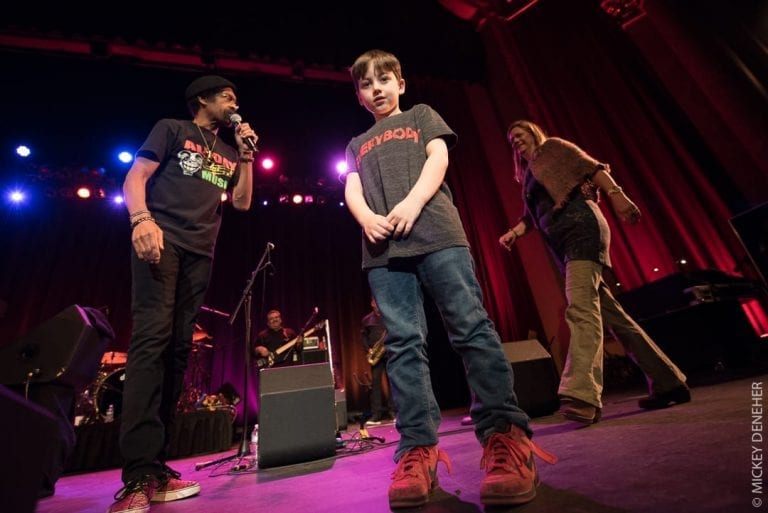
Lonnie Jordan @ Paramount Hudson Valley in Peeskill, NY. Photo By NYS’ Mickey Deneher.
“People can remember that this gentleman, Martin Luther King, was a non-violent. Thats bottom line. He had the same message we did through our music. He was a doctor of communication and a troubadour himself. He preached NON-violence, that’s the key. The fact that he could get so many people together to march and express that, and show that you can stand up against violence when you’re together as one – totally for peace.
WAR was well ahead of their time back in 1969, so much that their sheer versatility hindered them, unable to be classified for any awards or music recognition. Their timeless approach and harmony proved in the long run and has earned WAR the title of the first and most successful musical crossover phenomenon, that forever fused rock, jazz, Latin and R&B, while transcending racial and cultural barriers with a multi-ethnic line-up.” Lonnie didn’t even think their music would play on the radio, in shock.
WAR @ Paramount Hudson Valley. Photo By NYS’ Mickey Deneher.
Multi-instrumentalist Lonnie Jordan has been a last-standing original member for over 20 years – keeping the essence of WAR alive. “We’re still a jam band like we were back then. I still feel blessed by the people that stayed and supported us over the years. Thank God we have different genres of music that can put us on any stage at any time. It’s been a good ride, and I don’t plan to drop anytime soon [chuckling]. This is my healing power – for me and the people – I am a doctor of music.
Lonnie dubs WAR as universal street music, which is way beyond the mass of categories that the band carries.
WAR Press Photo by Dan Atiliano.
“This goes into the universal. Even other aliens from other planets can groove off of our music and understand it. That’s all it is: grooves and messages. Our Rock and roll hall of fans [the people and fans] – they put us here and can take us out.
Lonnie Jordan, WAR.
With age comes experience and Lonnie definitely has some stories to tell, all of which are built and prided in his people. When Lonnie speaks of the people, better known as the bands’ rock and roll hall of fans, there is no doubt Lonnie is speaking to the world in its entirety – down to each molecule, to the stars and beyond. “Just like Jimi Hendrix used to say: are you experienced? Well, we took that message and said: yes we are experienced – because everyday is a new song. We realized it everytime we go into the studio, our engineer would turn the tape on and we would just jam,” said Jordan. In fact, Lonnie said that Hendrix jammed with them back in the day, including the night before Jimi passed.
Everything shapes WAR and Lonnie himself. From listening to his mother play old classics from Jimmy and Tommy Dorsey, Harry James, Glenn Miller and all of the bands serving our country as far as entertaining the troops, to old black and white films, Lonnie was on the hook. He broke out into Frank Sinatra’s “Laura” after mentioning the title and drifting off into a melody across the phone line.
A pivotal song inspiring Lonnie, as well as black and white films, humming across the phone.
“All of these movies had beautiful love stories, and they had beautiful music – and that is what inspired me. I was a couch potato as a kid – laying on the floor right in front of the TV (with no room on the couch). After pretty much being tortured by four brothers, and you’re the youngest , all I did was cry. And my brothers used to always tease me and say: Oh yo- you gonna be a singer; you scream loud. And indeed I did,” said Lonnie, reminiscing with spurts of laughter.
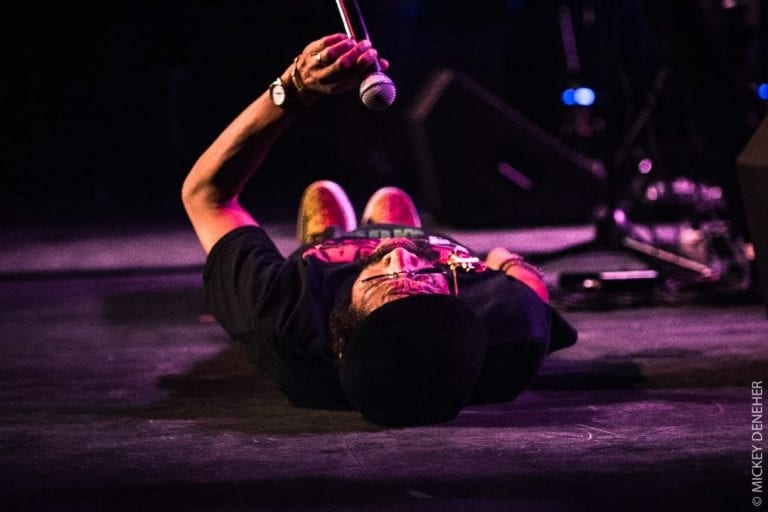
Lonnie connects with his rock and roll hall of fans. Photo By NYS’ Mickey Deneher.
From there Lonnie stuttered on a backlog of musical influences from: Ray Charles, Elvis Presley – when country western music was actually country and western, Ray Price, Bill Evans, Coltrane, Monk, Billie Holliday-types, James Brown, and a slew of Latin influences from Tito Puente and blues acts Jimmy Reed and Memphis Slim. The list goes on, including Bellafonte, “when it wasn’t even called reggae – it was calypso. That’s what I brought to the table back in the day, bringing all these genres together in one salad bowl – that is what WAR is all about,” said Lonnie.
WAR’s Mission states: Our instruments and voices became our weapons of choice and the songs our ammunition. We spoke out against racism, hunger, gangs, crimes, and turf wars, as we embraced all people with hope and the spirit of brotherhood. It’s just as apropos today. Lonnie takes this one step further.
“We We were raging against wars – a sign of the times. The Vietnam war was raging so we said: hey we are gonna call ourselves WAR – our basis behind it is to wage war, to stop the war and to stop wars in our own neighborhood back in those days. And just let people know they do have a choice not to use guns and bombs, (rather) to use love, or for musicians use your instrument to shoot out rhythms and melodies and most of all harmony – harmony bringing people together; it is also apart of music. We are doctors of communication. Thats how we express ourselves.
“Turf all looks the same. The ground all looks the same. The jungle, concrete, all looks the same. If you asked me to categorize it – I can’t – I conveniently do not remember, especially at 71.
Lonnie Jordan
Unfortunately the bad people [in this world] outweigh the good; the only way the good people can stand strong, and stronger, is by coming together with peace because love outweighs people – bottom line.”
‘It’s all the same’ – Photo By NYS’ Mickey Deneher @ Paramount Hudson Valley in Peeskill, NY
Be sure to catch WAR this Sunday (7:30-8:30 Set) at Great South Bay Music Festival, and stay tuned for our set coverage on War!
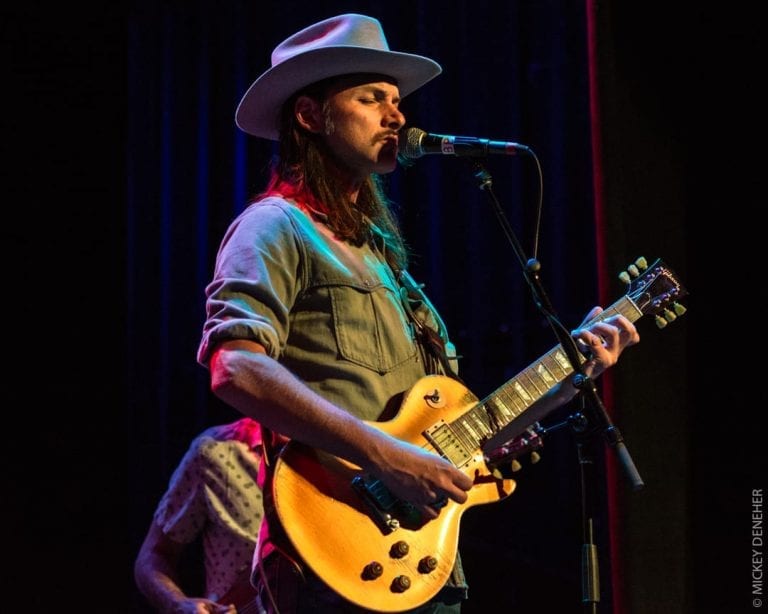
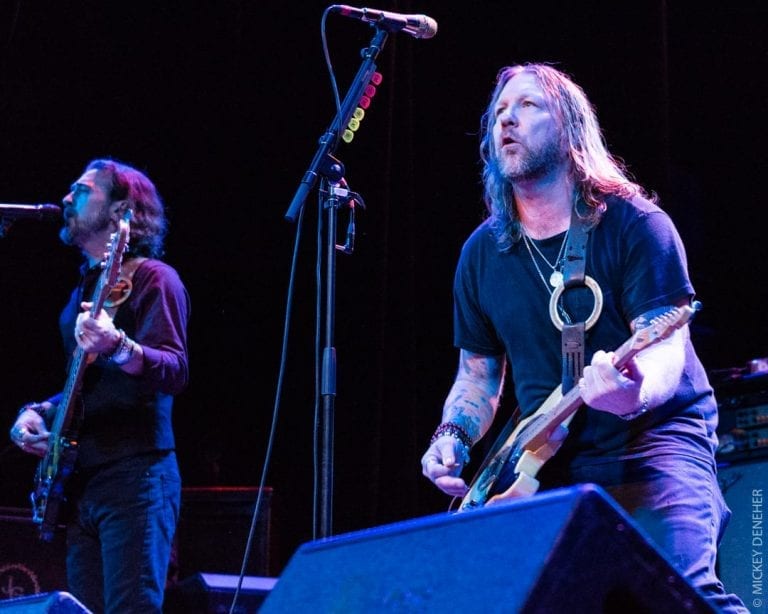
During my formative years, I would look to my father for insight, knowledge and direction, trying to absorb as much as humanly possible. When I caught Devon Allman (son of Gregg Allman) and Duane Betts (son of Dickey Betts) fronting the newly formed Allman Betts Band at the Wall Street Theater in Norwalk, Connecticut, I surmised that these sons of rock, had absorbed much too.
Already with established musical careers, the coalescing of their talents began in December 2017 at an event organized by Devon, honoring the music and memory of his late father. In 2018, Betts started opening for The Devon Allman project and joining Devon on stage for a few Allman tunes as part of the show. Realizing that something viable was in their midst, the two started writing together and the seeds of the Allman Betts Band were sown. Later that year, with songs penned, the pair headed to the famed Muscle Shoals Sound Studio. Their efforts resulted in the band’s debut album, Down to the River. Then, on March 27, 2019, fifty years and one day from the first time the Allman Brothers Band played together in Jacksonville Florida, the Allman Betts Band kicked off their inaugural tour at New York’s Brooklyn Bowl.
Devon Allman, Duane Betts
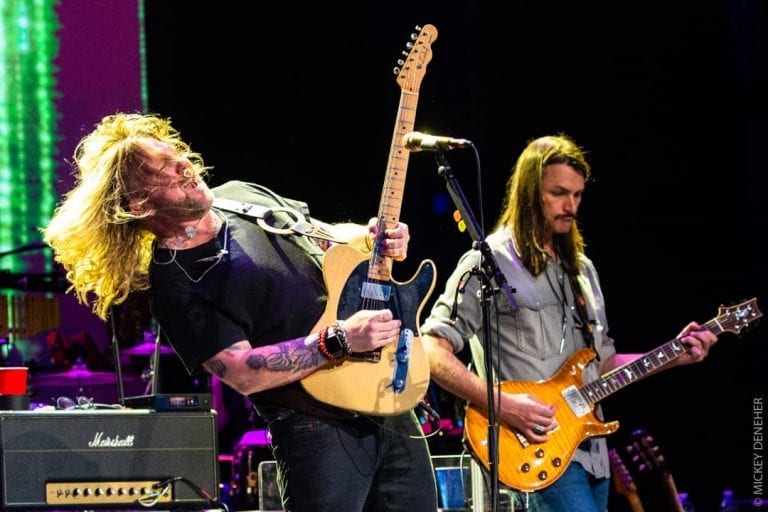
Walking in the intimate Wall Street Theatre, you felt the buzz, in anticipation of hearing this new band. JD Simo, (who sat in with the Allman Betts band for a song) opened the show. This three piece from Nashville cranked out a powerful set of rock and blues tunes, priming the pump for what was to come. Devon, Duane and band (Berry Duane Oakley – bass, vocals; Johnny Stachela – guitar, vocals; John Ginty – keyboards; R Scott Bryan – percussion, vocals; John Lum – drums) took the stage and did not hold back. A night filled with songs from Down to the River augmented with Allman Brothers tunes and a few covers thrown in for good measure. Throughout the night Duane and Johnny Stachela lit up the stage with blistering guitar solos. The rest of the band was right there with them flowing with every twist, turn, and bend. Mid set, Devon took center stage with his Linhof T-style electric guitar in hand, and led the band through a searing version of Prince’s “Purple Rain.” Set audibles where being called and every song was like gasoline being poured on an open fire. Yeah, the Allman Betts band are for real.
The day before the show, I spoke with Duane Betts by phone from East Hampton, N.Y where the band was playing a sold out show at the Guild Hall. We started our conversation talking about the debut album, which had been released the prior week.
Mickey Deneher: Congrats on Down to the River Debuting #1 on the iTunes Rock chart. You guys have to be feeling really good about that.
Duane Betts: Yeah we’re really jazzed up about that. We put a lot of hard work into it and everybody did their job. The people came out and showed their support and interest. It made us feel really good. It’s something we look forward to building on.
You are basically capturing a moment of a band coming together and getting a live performance from one of the first times they ever played together and played that song.
Duane Betts
MD: I know that you and Devon were working with (songwriter) Stoll Vaughn for the album. Was there an even balance in the writing process or was it ‘hey I got an idea and I throw it out to you?’ How did you guys approach that?
DB: Some of the ideas were brought in. There’d be a little spark and then we’d go from there. There were a couple of things that we started from scratch together. It just depends on the tune. But it was all very collaborative. Certain people maybe contributed more in a lyrical sense to certain songs and less in the musical sense or vice versa. A lot of the tunes were: once you come up with a feeling, an idea, then all the songs kind of have to be part of a thread and tell the same story. Not that every song is talking about the same thing, but they fit together well and live together well.
The majority of it was written by myself and Devon and Stoll together. The three of us. There’s a cover on there, Tom Petty’s “Southern Accents.” There is a song written by a dear friend of mine that passed away (who) I was in a band with in my early twenties. His name is Chris Williams. He was the son of the great song writher Jerry Lynn Williams who wrote a lot of stuff for Clapton, B.B. King, Bonnie Raitt and people like that. He passed away in a car accident. But I love that song so I started playing that and we decided to use that song on the record. That’s “Autumn Breeze.” There was a song written by Cisco Adler (Down to the River), where Devon added a verse, and we worked that up. That covers the gamut.
Allman Betts Band
MD: Right out of the gate “All Night” (the first single) and “Shinin’”are straight away fun jam tunes. Then you get in to “Down to the River,” “Autumn Breeze,” “Southern Accents” and “Long Gone” – there’s a different groove to them. It’s awareness and personal insight.
DB: Yeah all those tunes just fit together. We had more tunes to choose from, but those are just the ones that ended on it and that live together. It’s always fun to write. We look forward to building on that body of work.
MD: You go into the studio, the songs were written. Did they evolve during the recording sessions or stay true to what you brought in?
DB: Some of these tunes we’d never played together. Last year as The Devon Allman Project with special guest Duane Betts, we had started playing a couple of them, maybe two or three of them. There were some that were brought in that we had never played and we worked them up in the studio. You play them a few times, start getting it good, and then you get a take, and there you have it. You’re basically listening to maybe the fifth or six time we’d ever played it. Now there are other tunes like “Autumn Breeze” we had played. “All Night” we had been playing. So some of it we had been playing and some of it we hadn’t played till we were in the studio.
“Down to the River ” Allman Betts Band album artwork
MD: Fresh stuff, experiencing it and making it happen. That’s got to be exciting – putting it together like that.
DB: Yeah. It’s a different experience. You are getting a kind of vulnerability that you wouldn’t get if you had worked it all out. You are basically capturing a moment of a band coming together and getting a live performance from one of the first times they ever played together and played that song. So that’s what unique about it. “Long Gone” is one of my personal favorites. It’s powerful and has a timeless kind of quality to it. It’s really cool and we look forward to getting it out there to more people and it’ll keep growing. Slow and steady wins the race.
MD: “Long Gone” is a great way to close out the album too.
DB: Yeah I think so. That was a good one. Good way to end.
MD: You recorded at Muscle Shoals, in one big room.
DB: Yeah that’s the way it is. The amps were isolated, the guitar amps were. Yeah we were all in a room. We could all basically see each other.
MD: What was that vibe like? It’s like the place to record.
DB: Yeah it was really cool. Really down home vibe. I really wanted it to come out good. Get good live performances. When you’re on stage and your not thinking about it and you don’t know you are being recorded it’s one thing, but when your in the studio and the drummer is around the corner, and you have head phones and all that stuff, you kind of wonder sometimes man I hope we can get a really good one. But we did really well. The vibe at the studio is everything. There’s all the records that have been recorded there. You’re in Alabama, you’re in a kind of semi-remote place in Alabama. It just kind of reeks of vibe, you know. It couldn’t be any more like down home and like real.
MD: And then you did it right after Thanksgiving, so you got to work off all that food that you ate. (Laughing)
DB: Yeah exactly. (Laughing)
There’s always jams man. We jam a ton. We are big on that. You just have to come see the show.
Duane Betts
MD: You guys are a new band. People always say about a new band they sound like this band or some name comes up. I’m sure people may have been thinking Allman Brothers 2.0 – Allman Brothers; the next generation. Influence is there, but I hear the band’s own voice coming through. Was that a conscious effort or was it a natural occurrence?
DB: We’re defiantly not trying to be the Allman Brothers, I can tell you that. There’re certain songs that require we approach it in a very musical manor. That’s just an obvious influence, because we want to approach it in a kind of elegant musical manor. Like “Autumn Breeze,” with twin guitars. Yeah there is defiantly an Allman Brothers influence there. But there are also other influences everywhere too. I think that the more stuff we do, the wider variety of influences you’ll hear. For this one, I hear Stones from the Mick Taylor era, Sticky Fingers, that style. I hear some Neil Young sounding stuff on “Long Gone.” There’s Derek and the Dominos, there’s other influences there. We have a ton of influences.
MD: And you have to draw from that. That is how you came up playing. You were influenced by those people.
DB: Yeah, that’s just what we come from. And the influence is there. There’s no doubt and we’re not trying to hide the influence.
Berry Duane Oakley, Devon Allman, John Lum, Duane Betts
MD: Lets talk about the tour. Three months in, how are those songs feeling live?
DB: We just started playing a few of them, because we didn’t want to play the whole record before the record was out. “Long Gone” has been amazing. We’ve been playing “All Night,” “Melodies are Memories,” and “Good Old Days.” We’ve been playing a few of them for quite a while and they have been feeling pretty good for a while now. We did “Southern Accents” last night. I don’t play on that, so I didn’t do it (laughing). Devon and Johnny and John Ginty did “Southern Accents” so that one was really cool. But “Long Gone” is really a stand out for all of us. We think that’s like a really poignant, serious tune that has some real credibility.
MD: And you guys have some great players talking about John and Johnny. Are you guys now indulging, some jams happening in the set these days?
DB: There’s always jams man. We jam a ton. We are big on that. You just have to come see the show.
MD: Allman Brothers songs are part of the set.
DB: A few.
MD: How do you pick them, what to play?
DB: The ones we enjoy playing, the ones that have a reaction. The combination of those two things. Just ones that aren’t obvious. We play a bunch of them. We’ll play enough. Were obviously not going to go out there and do half Allman Brothers. We’re not a tribute band. But we enjoy playing a few. We might do three or four. It just depends on the night. Sometimes we do a sit down acoustic thing and if we do that your going to hear some stuff that you won’t hear if we stand up all night. Just depends on the venue. There’s one or two you can pretty much guarantee hearing every night.
Duane Betts, Johnny Stachela
MD: I take for granted that you and Devon have known each other your entire lives. In the back of you mind do you think this band was inevitable? It was going to happen some time, some place?
DB: No. No. I don’t. I think (it was) just timing. We were doing some stuff, then that wasn’t happening. It just felt right to do it because it meant something. We didn’t agree to do the band when we agreed to go on tour together last summer (The Devon Allman Project with special guest Duane Betts). It was more for us to kind of just feel it out, put our toes in the water. It was a really good opportunity for me to promote my solo release as an opening act. Then I would sit in. At a certain point, we were like yeah. Then (thinking) maybe after we’re comfortable for a month or two, maybe we’ll sit down and write some tunes and just see what happens.
If it didn’t work out, if we weren’t really feeling it, we don’t have to do anything beyond that. But we did feel it. So that’s why there is a band. We really locked into a vision and an idea and agreed on everything. Then we built the band and we brought Stoll in to help organize and write with us. Once the ball got rolling it just felt really good. That’s why you go to the next phase, which is actually putting the band together and recording a record. But yeah, it wasn’t inevitable.
Before the show I attended, I met a man who brought his young son, five or six years old, with him to the show. This was his son’s first concert. He was so stoked that this was his first. It got me thinking of two other fathers, who I am certain, feel that same joy about their son’s rock ‘n roll dreams.
When I was very small, before I learn to talk. My father held my hand and his, And showed me how to walk. And sometimes I would cry, or sometimes I would fall, But always he was there for me, to help me thru it all
In My Father’s Footsteps – Terry Jacks
Devon Allman, Duane BettsJohn Ginty, Berry Duane Oakley, Duane Betts, John Lum, Johnny Stachela , R Scott BryonDevon AllmanJohnny Stachela , R Scott Bryan, Duane Betts, Devon Allman, John Lum, Berry Duane Oakley, John GintyDevon Allman, Johnny StachelaBerry Duane Oakley, Devon Allman, Duane Betts, Johnny Stachela, R Scott BryanDuane BettsDevon Allman, Duane BettsBerry Duane Oakley, Devon AllmanDevon Allman, JD Simo, Duane BettsBerry Duane Oakley, Devon AllmanJohn GintyBerry Duane Oakley, Devon Allman, Duane BettsDevon AllmanJohn Lum, Devon Allman, Duane Betts, Johnny Stachela, R Scott BryanDuane Betts
When diving into the music of Vera Sola, the inevitable result is a transportation. You’re picked up and delivered into a pensive, intimate, cathartic, often moody and sonically lush environment. It’s a world that is curated, with a meticulous intentionality towards each ambient instrumental flourish, and at the same time, wild with emotional abandon.
Before delving into playing her own music, Danielle Aykroyd was a seasoned storyteller and performer. Stemming from a love of poetry and prose, Aykroyd married her story crafting with music. With the release of 2018’s Shades, her full-length debut, Aykroyd achieved a personal and public triumph. Personally, it was a powerful fist-thump to the chest, as she took her music from the “smoky city hookah bars,” or “poorly lit open mics” she describes frequenting in an interview with Ravelin, to the public stage. In music news, it was a highly praised piece of work, lauded for its virtuosity and dynamism – a bold piece of work powered by a “unique talent,” as described by The Line of Best Fit.
“Someone once told me they find my sound to be ‘frustratingly influenceless,’ but I think that comes from the fact that there are so many disparate influences that a single vein is hard to find.”
Her songs are often a wrestling act, as she seeks to come to conclusions and confront often-harsh truths. There is an intoxicating, cathartic freedom to the heart-beat rhythms and layered harmonies abundant in her work. At the same time, there’s an astute self-reflection and caution – like someone who’s gathering courage to step over the line between darkness and light. It’s a balancing act shaped by the expressive vibrato of her voice. When she repeats “I want to hurt you,” in Shades’ “Small Minds,” it belies the complicated feelings beneath the surface – the feelings of somebody who couldn’t bear the thought of hurting somebody they love, yet wishes that person could feel a semblance of the pain they’ve caused.
Faced with a bit of downtime between tours, we connected with Vera to gather her thoughts on performing, songwriting, time spent in NYC and (local) plans for the future. Before heading off for a new round of shows, Aykroyd will join Sad Songs Summer Camp, an immersive songwriting workshop where guests will learn and craft music directly with the Milk Carton Kids and guest hosts.”Nestled in a remote camp in Big Indian, NY, she’ll be a featured songwriting and lyricism coach, working directly with camp goers to help them hone in and craft their stories. The camp takes place from July 23 to July 26 and space is limited. Learn more about joining.
Rob Simakovsky: You’ve recently finished a tour, traveling nationally and internationally. What was that experience like? Any highlights or favorite moments?
Vera Sola: The whole thing is so surreal. Two years ago I was holed up in my bedroom alone with my songs, and now I’m singing them out to faces around the world… in wild places like Alpine caves, or Prince’s club from Purple Rain, or a sold-out Saturday night at Irving Plaza. It’s like a fever dream. I still don’t believe it. When people tell me they like my music I experience this brain glitch, pure cognitive dissonance—“How do you know I make music?”
My very favorite show was the last one on this U.S. leg… there was a violent thunderstorm and the electricity cut out a number of times during my set. I ploughed through unplugged and unmic’ed, and the power kept dying and coming back for certain crucial moments in the set.
RS:Now that you have some down time, is there anything in particular you’re catching up on?
VS: I have trouble winding down, especially after working for so long without meaningful time off, so I’m just trying to be easy on myself. Allowing for days where I just watch TV and read and do laundry and don’t feel guilty that I haven’t written anything or solved some intense problem. I guess I’m just catching up on being a normal person in a house with a solid foundation.
That and writing and demoing. I have a lot of songs rattling the cages right now.
Photograph by Damon Duke
RS: You’ve performed with a full stage, but also often perform in your own intimate sets, supporting artists like The Milk Carton Kids. What’s the solo experience for you like on stage?
VS: The full band can be comfortable in that there’s a cushion to fall back on—other energies to draw on if I’m tired, other noises to cover for my mistakes. It’s far less vulnerable and easier to hide my humanity.
Solo there’s nothing but the self to confront and be confronted with. It’s harder to capture and keep the attention of an audience when one’s just up there alone. But if the landing sticks, it’s more rewarding because of how stacked the odds feel. Either way, bad show or good show, I think there’s great beauty and power to getting up there alone. And I like the more difficult route, I’ve never been one to just take what’s easiest.
RS:Many artists approach songwriting in different steps. Some write either the melody or lyrics first, and some may flesh out an entire story. How do you usually formulate your songs?
VS: Sometimes they come together, lyrics and music, sometimes they’re separate. I’m constantly writing, accounting for ideas. I write a lot in the notes on my phone, both fragments and fully fleshed poems. Sometimes there’s a melody to the words and sometimes not.
It depends on the situation. There are songs I’ve written in minutes, and songs I’ve been slaving over for years. There’s one in the bank right now that has my very favorite chorus I’ve ever written, but the verses—both lyrically and melodically—are objectively terrible. Don’t know what’s going to happen with that one. Hoping for a breakthrough at some point.
RS:Are there connecting themes between your music, or recurring themes you find yourself revisiting?
VS: I think a lot of my work comes out of longing. Not just a lovelorn longing—but for a better world, for reconciliation, for understanding. Longing, to me, is best described as a searching for something not immediately attainable. In that process I make a lot of music, fill that void, whatever it might be, with song.
RS:You mentioned you have a particular love for 70’s and 80’s punk. “The Cage” could almost be rearranged into a punk song with a drum and snare 4/4 rhythm. Does the “punk” pathos, or your history of punk influences play a role in your songwriting?
VS: Absolutely, all the music I’ve ever loved finds its way into my compositions. Someone once told me they find my sound to be “frustratingly influenceless,” but I think that comes from the fact that there are so many disparate influences a single vein is hard to find.
When it comes to punk, I’m definitely hindered by the fact that I barely know how to play guitar with a pick. Down-strokes are not my strong suit…That said, I do still have a rather hard-hitting sensibility to my stuff, especially when I’ve got the band going.
But I think even more than the sound itself, I’m influenced by the raw nature of punk, a sort of purity of expression. At a certain point I discovered that same unbridled truth in the work of early folk and blues songwriters like Skip James. And that’s what moves me most. I don’t like being limited by genre, I just want to play and sing and let fly what will. I need that freedom or I lose touch with myself as a person and a performer.
Vera Spla
RS:Let’s talk about your voice, particularly your expressive vibrato. Was it there before you found your songwriting niche, or did it develop as you found your own style?
VS: I’m not sure if I’ve found my songwriting niche yet! I have trouble locating what I do and how I write in any particular place at all.
As for my voice, it sort of appeared out of nowhere. I’d been writing songs for years, but was too afraid to sing them, and that fear was a literal choke-hold. Even when I decided I was going to record something (I didn’t know yet what it would be), I had a very limited vocal range. It wasn’t until I actually opened my mouth to sing in the studio that I let go of all that tension and fear, and that’s when the vibrato arrived. What’s particularly cool (to me) about the album I made is that it truly is a ‘record’ of that moment of catharsis. You hear, on those songs, me quite literally hearing my own voice for the first time.
That was just over two years ago now. I’ve grown stronger and more self-assured. I’ve certainly developed my voice—but it’s completely true that I didn’t even really have one until February 2017.
RS:A few of your songs seem to have thematic dualities: Peace and struggle; joy and longing; betrayal and forgiveness. There’s an acceptance of balance. Would life be too boring if things were always good, or as they should be?
VS: I’ve lived a very privileged life, but it surely hasn’t been without its sorrow. I’m lucky in that even in the darkest moments I’ve been able to hold on to my sense of humor. There’s a lot of laughter and good-hearted self-deprecation in my work. That’s where I find a sort of radical acceptance.
Otherwise I’m a person who feels very deeply, and everything around me deeply too. I’m quite a pessimist, so it’s hard to even imagine a perfect world. To be completely honest, I play music as a way to process and conquer and come to terms with what’s hard about life. So I probably wouldn’t be a musician if everything was awesome all the time.
RS: You spent a good amount of time in New York growing up, and have said that the NYC environment had an impact on your work. How?
VS: The city’s got this special coexistence of cold detachment and deep empathy. Growing up in that environment I learned to observe and to listen and to draw from the diversity of the surroundings for comfort and creativity.
RS: Any particular local spots you’d visit for artistic inspiration?
VS: I like to walk long distances alone and compose in my head as I do. Doesn’t really matter where, as long as I’m moving through the streets at a clipping speed, it’s good.
RS:After going on tour with The Milk Carton Kids, you’re now going to be a guest instructor on July 23 at their Sad Songs Summer Camp, where guests can workshop their songs directly with some amazing artists. How did the opportunity come about?
VS: Kenneth has been a dear friend for a little while. He says he’s always admired the way I approach lyrics in particular. I think the kicker, though, was a discussion we had about a couple of Dylan songs. I was giving him a run-down of various critical interpretations, as well as what the words meant to me personally, and he invited me to teach a course on lyricism and poetry. I told him that I was deeply unqualified but he made a compelling case for why I should do it, and it was such a great opportunity and he’s such a doll I couldn’t say no.
RS: How does it feel to be able to have a chance to coach others in their songwriting?
VS: Totally wild. I guess I do have a few tricks up my sleeve thanks to a striking combination of personal error and schooling. I’ve been lucky enough to study under some incredible poets and it’s cool to be able to pass along what they taught me.
RS:You recently released a couple of new singles,and are going to be playing a new set of shows in July and August. What exciting news should our readers keep in mind?
VS: More music as soon as humanly possible. I’m excited about what I’m making now.
RS:Being a storyteller, how might you give guidance to somebody who might have a start and end of a story, but not a middle?
VS: Oh gosh, I have a number of those going right now. I have no idea…make a list of possibilities and roll some dice maybe?
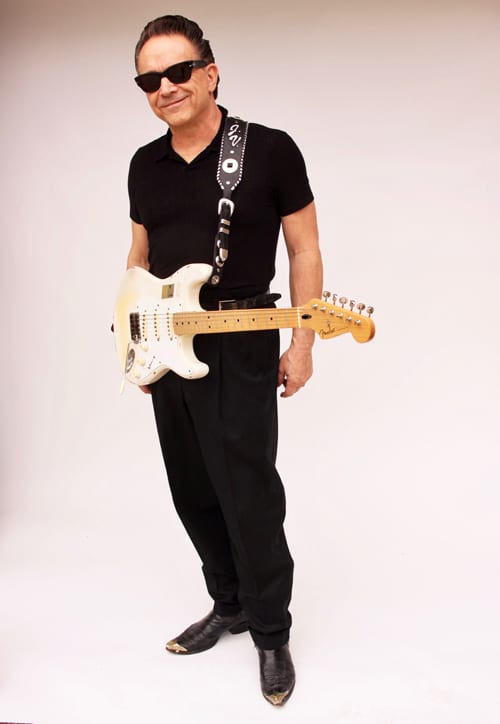
Ask Jimmie Vaughan what he thinks of what the Fabulous Thunderbirds have done since he left the band in 1990, and he chuckles. “I don’t know what they’ve done. I’m busy worrying about myself.”
The T-Birds may have been his highest profile gig outside of Family Style, the one double-Grammy winning CD he recorded with his late legendary brother Stevie Ray Vaughan, but he’s won two Grammys since then as a solo act and plays the Suffolk Theater in Riverhead, New York on Friday, July 12 and Darryl’s Place the next day touring on the release of his latest CD, Baby, Please Come Home.
The Chicago Tribune summed Jimmie up adroitly when they said, “Jimmie Vaughan is one of the great guitarists of the last 30-40 years, though you might not know it – he’s not about calling attention to himself. He’s about substance and economy rather than excess and showmanship.”
While his guitar work with the T-Birds fused the swamp blues sound of Slim Harpo and Lazy Lester with a gritty bar band rock that made the songs “Tuff Enuff” and “Wrap It Up” pop chart hits more than three decades ago, his current style rests comfortably in the retro R&B songs he covers on the new album.
The originals of all 11 numbers were first released in the 1950s including Chuck Willis’s “What’s Your Name,” Fats Domino’s “So Glad,” Jimmy Reed’s “Baby, What’s Wrong,” and T Bone Walker’s “I’m Still in Love with You.” As diverse as that sounds, the arrangements consistently feel like they were recorded in the Duke/Peacock label’s Houston studios between 1947 and ’54. Vaughan’s guitar playing throughout is elemental, retro perfect, on point, prickly and as unlike his late brother Stevie Ray’s sound as Chuck Berry is to Jimi Hendrix.
It is unavoidable that Stevie’s history-making legacy would cast a huge shadow over everything Jimmie has done since his brother died in a helicopter crash in 1990 a month prior to the release of Family Style. Jimmie Vaughan says the pain even today of having to put out that album after his brother’s passing is indescribable.
“We were together every day in the studio. We had a great time. We went to New York, Memphis, Dallas. We had a good time with each other, and we enjoyed it, and we had a fabulous record. We were looking forward to it coming out, and then that happened. I don’t even know how to describe it. I don’t know what to say still.”
Listen to any one of Jimmie’s solo albums back to back with one of Stevie’s, and it makes you wonder how two brothers four years apart in age and living together growing up could be so different. The common thread was Jimi Hendrix.
“We both loved Hendrix. I found the 45 of “Purple Haze” in the garbage can at a TV show. It was a promotional copy that they had thrown away. So, I got it early on before it came out. If you’re already into Muddy Waters, and you hear Hendrix, it’s exactly like Muddy Waters had a kid who went into outer space and came back and knew stuff nobody else knew. But it’s still Muddy Waters.
“I could do “Purple Haze” and “Foxy Lady” with the band I was in. They were all 21, and I was 15, (in 1966). Stevie was there on that set, and then somebody would challenge him. Stevie had to outdo me in his mind. He was my little brother, and sometimes little brothers have to try harder than big brothers.”
Stevie would go on to become the biggest influence in helping blues cross over into the mainstream since Hendrix himself, eclipsing his brother’s popularity by a huge margin. And when they recorded Family Style, it was that process that added a capability to Jimmie’s talents that finally would turn him into a solo recording artist four years after Stevie died. The biggest boost to Jimmie’s solo career came from handling vocals for the first time.
“I never had any vocals training. It wasn’t my goal. So, when I got to Family Style with Stevie, (producer) Nile Rodgers said, ‘Stevie’s gonna sing his songs. What songs are you going to sing?’ I said, ‘Well, I wasn’t really thinking of that.’ He said, ‘Well, you gotta sing.’ So, I said ok. I had to do it. That was a good way to start for me. and I’ve been singing ever since.”
Jimmie’s vocals on Baby, Please Come Home are a perfect complement to his extraordinary guitar playing.
Eric Clapton who lost three members of his entourage in the same helicopter crash that killed Stevie, invited Jimmie to perform at five Royal Albert Hall blues concerts in London soon after the accident. I was working on my Buddy Guy biography at the time and spent an evening with Jimmie, his mother, and the Beefeaters guards in their pub in the Tower of London. The Brits made this American blues journalist feel like royalty. The good cheer was palpable, but it was as if Jimmie were inside a bubble apart from the goings on. I didn’t know what to say to him. “Well, neither did I. I didn’t know what to say to you or anyone. So, it’s just what I had to do, and actually it was the best thing for me at the time to play which is what I’ve always done anyway.”
It was four years after Stevie’s passing before Jimmie released his first solo album Strange Pleasure including the song “Six Strings Down” dedicated to his brother. It was produced by Nile Rodgers and featured Dr. John on bass. Career highlights since then have included a special guest appearance on Bo Diddley’s 1996 album A Man Amongst Men, playing guitar on the tracks “He’s Got A Key” and “Coatimundi.” He played a member of the fictional Louisiana Gator Boys led by B.B. King in the Blues Brothers 2000 film and earned a Grammy for Best Blues Album for his 2001 release, Do You Get The Blues?
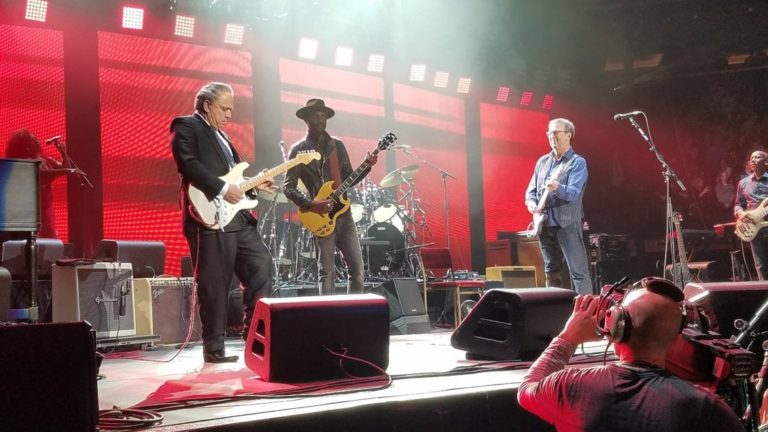
In the new millennium he’s recorded with Omar Kent Dykes’ On The Jimmy Reed Highway, Lazy Lester’s Blues Stop Knockin’, toured with Dylan in 2006, and joined Gary Clark, Jr. for the encore of Clapton’s show at Madison Square Garden on May 19, 2017.
If you read between the lines, you could get the impression that Jimmie’ career is about the guitar licks where his brother’s was about the glory.“The thing about Stevie and I playing so differently is just that he would do the Hendrix thing, and he would do Albert King and Hendrix incorporated into his style. He stole their riffs and put it into his playing and did it so well, that it became part of his thing.
“I already was doing a different thing. So, if Stevie were here right now, it would be interesting to see how he played, but when you’re young and you’re out there having a good time and – ”
He pauses.
“This is not to take away from Stevie’s playing. I don’t want you to think that. I’m just trying to explain why he did all that.”
One has to wonder where Jimmie would be today if Clapton hadn’t pulled him back out on stage. “I’m grateful that Eric got me to play ’cause I didn’t know what to do and how to handle a group at the time. I had left the Thunderbirds, and I was just in turmoil. Like, what do you do with all this information? Where do you put it? Where’s my place in it? You know what I mean? So, anyway, that was my first outing, and I’ve been playing ever since. So, I think I was good for me that Eric got me out of the house and away from myself.”
Shira Yevin, better known as Shiragirl, upset The Vans Warped Tour atop her pink tour bus in 2004, so much that the following year she was given her own SHIRAGIRL stage to curate the amazing female talent in the industry. Since, she has been drawing fans with her edge and overwhelming personality – full of energy. So infectious that she has shared the stage with Joan Jett, NOFX, and Rancid, whom she is currently working on her upcoming album with.
“I’m Stoked to be playing the Warped 25th Anniversary in AC. I lived in Brooklyn for a long time, but I am originally a Jersey Girl, little known fact, so it’s pretty cool to be here.
Shiragirl. Photograph by Lisa Johnson – Rock Photographer. All Rights Reserved.
I’ve played in a lot of awesome, fun Jersey shows and obviously all the Warped Tours over the years. In Jersey we would do a lot of basement shows and in New York it’s about the clubs. I love New York City, it’s my favorite city in the world.”
Shiragirl just released a new single on Tuesday, July 2, called “Nothing to Loose” off their upcoming EP, Andi Underground. Produced by Rancid’s Tim Armsrong, the album weaves a mysterious concept loosely inspired by Alison in Wonderland. “It’s a dystopian tail where black mirror meets the runaways,” said Shiragirl. The album was recorded at The Boat studio, mixed by Cameron Webb and mastered by Andrew Alekel. Shiragirl features co-performers Raine Palladino and Leanne Bowes.
Finally, Andi’s crew hacks the system and takes down the filter software, and all that it upholds: social control, apathy and compliance. Now the people are free to see reality how it really is, rise up, empower themselves, and most importantly, do as they please.
Depicting “Creepin” – Andi Underground (To Be Released July 19).
“Nothing To Loose” when Andi follows Rabbit down a dark hole to an underground world.
“This is the character Andi Underground,” as she pulled a pair of anime-esque stickers out of her bag and showed me. “It’s about this girl that runs away from home and falls into an underground world and decides she needs to save everyone. I’ve always loved Alice in Wonderland. There’s a lot of different ways you can spin it; a lot of metaphors.”
The record is also inspired by our current political climate. “I feel that as much as we escape into TV and movies talking about futures, it is here already. Technology controls our lives, there’s a lot of things happening in the news where one could say we’re already in borderline dictatorship. There’s a lot of scary things happening so the record is an artistic way to make a statement about what I think, or dangers of the cultural norms that grow from being so technology based.”
“I think its hard in the social media day and age you have to put everything out there, you have to be on it – on it- on it. It’s hard to live in the moment with that, but constantly sharing content, music, videos and sharing, speaking to the fans and being connected to the fans. It is so cool to meet people after the show, just to feel like we made their day better is a great feeling.”
“It’s amazing to see how the tour has grown and affected so many people,” said Brooklyn’s Shiragirl. “To be apart of this is a huge honor – there are so many amazing bands. We are super stoked to be apart of the final chapter. Last year we were lucky enough to bring back the stage for the final full cross country tour. I just have nothing but great things to say about Kevin Lymann. I wanna be like him when I grow up.”
The sun was hot, quickly rolling into sets, swimming and hanging at the beach with friends. The pressure of squeezing so many good bands into a single Sunday of Vans Warped Tour grew daunting, but others vibed out. Nearly every band was packed – both Full Sail and Blackcraft stages shared adjoining beach and in the end, the mass of people merged as if they were one.
California’s Atreyu took Van’s “Off The Wall” mainstage at doors. Over the past 15 years the band, who has preserved a near original lineup, pulled out all the stops from favorites “Becoming The Bull” and their cover of Bon Jovi’s “You Give Love a Bad Name,” with a metal twist, of course.
Guitarist Travis Miguel in his comfort zone. Photo by Chuck DeFilippo.
Guitarist, Travis Miguel, was hyped on the gig. “It’s not every day that you literally get to play on the beach. Usually when you’re at a big festival like this, nine times out of ten it’s in the middle of nowhere in some field. It’s nice to see the Atlantic Ocean from the stage.” This energy and consciousness allowed longtime brotherhood to shine though in the delivery of their material from intense oldies like “Blow” or the more cinematic “House Of Gold,” from their latest album, In Our Wake.
“Vans Warped Tour is pretty surreal; I remember my first Warped Tour was 1998 and Deftones played, CIV and Rancid. Incubus played on this little flatbed-truck-stage before anyone knew who they were. It was a long day, I remember getting sunburnt and the Deftones went on – everyone lost their minds in a dirt field in Orange County. It was gross, pulling dirt buggers out for two days and beign sunstruck… but with that being said I had the fucking time of my life,” said Miguel.
“I’ve gone to Warped Tours since then, but in 2005 we actually played and that was surreal because not long before that – I was the kid going to Warped Tour having the time of my life. To be asked to play the 25th Anniversary is cool because it is like bringing back old memories: seeing crew people, friends I haven’t seen in years, and you pick up right where you left off. It’s sensory overload because there’s so much going around: press, a half pipe out there, a human cannonball, music everywhere – it’s a fun day for sure.”
Travis Miguel, Atreyu.
“Now that I’m older, looking back, it’s safe to say that everybody in the band’s view is: we’re extremely lucky to be doing this. We don’t take it for granted. There’s a lot of bands we came up with back in the day that are long gone and the fact that we still get to do this, essentially the same five members for 15 years…I’m definitely proud of that.”
Atreyu embodies the morals of Warped, fans and crew alike. “We’ve all seen each other at our best and our worst. It’s very much a brotherly relationship between the five of us: we get on each others nerves just as much as actual brothers would, I’ve been in two of their weddings and we’ve been apart of each other’s big life moments. It’s definitely a family vibe,” said Miguuel.
Sunday kicked in, full force from the start, making it difficult to navigate through all the great bands playing. The beaches were packed – a sea of people relaxing or constantly shifting from stage to stage. Mid-afternoon highlights included Circa Survive frontman, Anthony Green, crowd-surfing his way from the mainstage into the Atlantic.
Punk-rockers, Keep Flying, dominated the Monster Energy stage early on in the day with their addictive horn lines and heart-racing tempos. The sextet blew up at last years Warped Tour, and if you didn’t know any better, you would think they had been there from the start. They controlled the crowd with showstopper “I Always Knew,” both visually and musically overstimulating. Not to mention the electrifying horn section, intricate harmony and energy from each member.
Keep Flying, dominating the Monster stage with furious drums, punk-horns and electricity.
The day carried on with Worcester, MA veterans, Four Year Strong. Contrasted by their laid back vibe and over-familiarity with Vans Warped Tour, the four piece pulled out all the stops. Opening with “Heroes Get Remembered, Legends Never Die,” FYS set the bar with signature double-bass, dueling-guitar and dueling-vocal exchanges. The crowd was absolutely insane.
There was just too much to digest: Big D and the Kids Table, Dirty Heads, The Used and Bowling For Soup – but the day rolled on. The Skatalites changed the pace on The Blackcraft Stage with authentic reggae flare. As the sun set and punk-rockers grew tired, a solid crowd swayed for Kingston, Jamaica’s finest. Atlantic City was blessed by none other than “The Queen of Ska,” Doreen Shaffer, who soulfully harmonized with the band. Born in the 1940’s, Shaffer filled the crowd with a youthful energy, and soul.
Cusped between electronic, pop and rock genres, Andy Black turned heads for unfamiliar listeners, drawing them to the Monster Energy stage as they passed on the beach. His most explicit example, the album titled track “Ghost Of Ohio” fuses these elements into something obscure and refreshing. Fans of any taste can harmonize with his energy and showmanship.
Taking Back Sunday warmed up the main stage for Warped closers’ Blink-182 with driving tracks like “What It Feels Like To Be A Ghost,” while lead Adam Lazzara strut the entire length of the stage, twirling his microphone like a noose. Later in the evening, ska legends, Reel Big Fish, drew attention from the Full Sail stage as the crowd shifted angles to The Blackcraft stage for an epic RBF Set. Kicking of the set with “Asshole,” turning backstage into a skank-inspired dance party.
Vans Warped Tour did an amazing job attending to sparse incidents in the pits or those who needed medical attention. Surrounded in a mosh-pit or relaxing by the beach was one in the same, because everyone truly had each other’s backs. The mass of Vans Warped Tour cannot be defeated, as we all plead for another year.
Reel Big Fish skank-party as the sun set on the Atlantic.
Interviews with Atreyu, Matt Butler, Kaleido and Shiragirl spoke on behalf of the festival as a whole: its status, impact, family vibe and overall positivity. Regardless of why you were there, who you were with and who you saw, Vans Warped Tour’s 25th Anniversary Tour was the necessary cap to years past.
“It’s amazing to see how the tour has grown and affected so many people,” said Brooklyn’s Shiragirl. “To be apart of this is a huge honor – there are so many amazing bands. We are super stoked to be apart of the final chapter. Last year we were lucky enough to bring back the stage for the final full cross country tour. I just have nothing but great things to say about Kevin Lymann. I wanna be like him when I grow up.”
Stay Tuned for the full Post Warped Tour interview with Shiragirl.
Reminisce with highlights from the bands of Vans 25th Anniversary Warped Tour.