On the evening of August 16, 2017, Blues Hall of Famer Joe Louis Walker graced the Photo City Improv stage in Rochester, NY. Joe Louis Walker has been playing the blues since the 1960’s and is still rocking both classic and contemporary styles. Earlier this year, Joe Louis Walker’s new album, “Everybody Wants A Piece” received a nomination for Best Contemporary Blues Album at the 59th annual Grammy’s. Before their show at Photo City Improv, NYS Music had the humbling opportunity to sit down with Joe Louis Walker’s drummer, a Syracuse NY native, Byron Cage. Here are some bite size nuggets of knowledge, quoted directly from Cage:
On Working With Joe Louis Walker:
I’ve been playing with Joe Louis Walker almost four years. It’s been a wonderful four years. I am learning and growing as a musician, and as a young man. Joe is my mentor. He’s a complete mentor. He’s a great guy onstage and off stage.
Joe has taught me to be proud of who you are and be proud of what you do. To be able to share the blues with the world is privilege. It’s a cultural experience, and you want to represent yourself well.
We try to keep our music authentic and stay true to the roots of the blues. There is nothing wrong with new age experimenting or adding new things… A lot of spontaneous things happen every night. But, when traditional blues is called for, that’s what we play. When it’s time for electric or rockin’ blues, we can do that too. It’s fun to exercise all these different music muscles in one night. We work together as a team; we are a real band. Our chemistry off stage shows on stage. We all genuinely care for each other as people and musicians. This is represented in our live performance, and everything else we do.
On Live Music:
When you play music, the sky is the limit. You don’t level out unless you want to. You can keep growing and growing as long as you push for it. There’s always something new to learn. There is always something new to experience and explore musically. That’s what we want to do. Keep it fresh.
Music is a universal language. No matter where we go, from Australia, to Asia, to Europe, to Brazil, we connect through the feeling of the music. We vibe together. I believe that is what life’s about.
At the end of the day, the goal is to share something positive. There is so much crazy stuff happening in our world. People are dying senselessly. We are experiencing a whole new wave of hate. What better way to fight against that hate than to pull everybody together to enjoy some music- to smile and laugh with one another. Then, we shake hands at the end of the night, and create good memories. It’s a beautiful thing. I’m happy to be a part of it.
Born and raised into the culture of New Orleans, Louisiana, The Soul Rebels have been a brass ensemble since 1991. Fast forward to 2017, the band has toured Africa, China, Japan, Australia, Europe, and beyond. They have regularly collaborated live with Talib Kweli, Nas, Macklemore & Ryan Lewis, Marilyn Manson, Metallica, and many others. In His Own Words: Lamar LeBlanc, co-founder and snare drummer of The Soul Rebels, spoke with NYS Music before their show at Photo City Improv in Rochester on August 12.
For audio of the entire conversation, please listen to the Rochester Groovecast episode at the bottom of this page.
On The Soul Rebels:
When we first started Soul Rebels, our message was so strong. The band was based on the premise of freedom. Freedom for individuals to distinctively show their own personal individuality. That’s what the name personifies, freedom of the soul.
We rebel for, not against, but for freedom of expression, love, peace, and strength.
You have to have camaraderie because you are together so long, so many hours, and so many days. If you don’t have some type of connectedness interpersonally, it’s not gonna work. If it’s not connecting vibe wise, it’s definitely going to show in the musical representation of the group.
Cyril Neville and Milton Batiste always stressed, be real and be yourself. Don’t try to be someone else. Don’t try to imitate someone else, because you can’t be better than that person at doing what they do, you can only be the best at what you do.
Soul Rebels has always tried to be different. And not just be different to be different, but be ourselves…It was a struggle because New Orleans had already had a foundation of how they felt a brass band should be.
We always wanted to play the hip hop and funk. We always wanted to have the swag that we have…Kind of a Public Enemy fight the power type vibe…Bob Marley warrior type spirit…still infused with love and freedom.
On Aspirations To Start A Podcast:
We’re blessed to have survived the ills of the community of the ghetto. We often just talk about all of the issues, from politics, to financial situations, to marriage, to interpersonal connectedness with people.
We’re trying to see how we can connect more with the young people. This will go a long way to keep the future preserved. We think we can do that with a podcast.
Women, relationships, that’s definitely a topic we want to touch on. We see the woman as being very powerful and very influential on all of these issues. So, we can’t do it without a powerful woman. It wont work. I don’t care how strong a man thinks he is, if you don’t have a strong woman there, it’s not gonna work.
You have to get a woman’s perspective. You have to hear it from them. Feel it from them. They have to speak for themselves.
On The Aftermath Of Hurricane Katrina:
Katrina affected the city. It affected the culture. The people are so strong and resilient, but, they did lose a lot. It’s functioning and back but it’s no way near completely what it was prior to Katrina.
A lot of new buildings, new infrastructure, but before, it was the raw New Orleans that had been around for so long. The demographics are different now, down to the type of resident and everything, but, it still has it’s authentic culture.
You can’t fight God. The people are so strong and they love the city.
On Touring:
It’s amazing how music can transcend so many different lines of communication. It can cut through all the B.S and go straight to a person’s soul. No matter where they are. No matter where you’re from. That’s the gift of music that I’ve seen. We can’t speak the language…but, when you play the music, oh man, I don’t care where we are, the people come and galvanize around.
Management have made it so everywhere we go we get treated well. I’ve never had that bad experience. That’s not to say maybe a plane wont lose your luggage or something, but, I got it back, so it was still positive.
On Personal Development:
I was always a sponge…I always look at myself as a student…one who is constantly learning.
I read constantly. That’s a gift I got from my mom. I just love reading. Even in this day and age, I still love the physical texture of a book.
On Fashion:
My passion beside music…God…family…I really love fashion. My store, my more or less boutique…I probably would call it LeBlanc, I think it’s a cool last name that my family gave me.
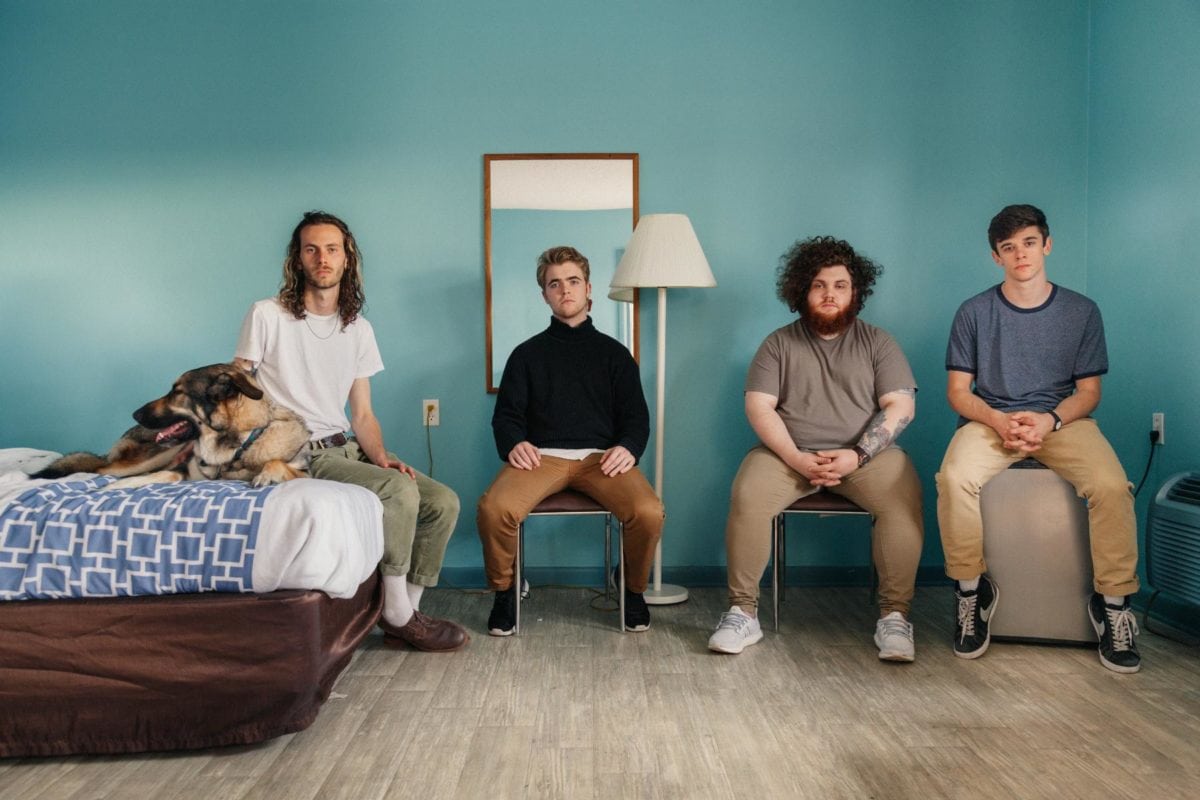
Head North’s debut full-length album The Last Living Man Alive Ever In The History Of The World represents a new direction for the band. The Buffalo-based quartet has shed their teenage pop punk angst and emerged from last year’s break with an impressive coming-of-age indie rock venture.
Head North. Photo: Eli Ritter
On The Last Living Man Alive Ever In The History Of The World, singer Brent Martone’s weathered vocals convey a wisdom beyond his youth as he delivers storylines of characters searching for meaning in a dystopian world in which love and God are forbidden. The instrumentation augments the myriad of moods, from the melancholy march in “Sort of Medicine” to the frantic breakdown in “Pulse.” Experimental elements from spoken word segments to a snippet of bird songs contribute to the authenticity in the story. The result is a work that is honest, ambitious, and creative. It’s as intriguing on the first listen as it is on the hundredth. Maybe even more so.
NYS Music sat down with drummer Ben Lieber over a cup of coffee at an unpretentious shop away from the touristy area of Buffalo. We talked about the evolution of the band, the creation of the album, and playing live shows.
Paula Cummings: Head North started as a pop punk band?
Ben Lieber: We had a great year in 2015. We were very busy. We did the country three times that year, and put out two releases. Everything was going great. We were like ‘We got this record deal, we’re going to be on tour with these bands, we’re 18/19 years old, pissed off at the world, let’s make an angry emo record, and it will sell.’ And that’s what it did.
PC: What factors led to changing the direction the band was heading?
BL: The way we operated our band, and the trajectory that we were on in 2015, helped us decide what type of band we wanted to be and how we wanted our sound to reflect that. And I think what it came down to was being genuine. The sonic direction was a result of personal growth as well as realizing what we didn’t want to do.
PC: At what point did you know this was going to be a concept album?
BL: Brent had the basic idea of the story for a long time. He spent a lot of time with himself to figure this out. I also think there’s a lot of the narratives in the record that are true to our lives, which had to happen for there to be a resolve in the story. Our lives needed to happen. It’s comforting because we went through all that shit and it took so long, but clearly it needed to happen in order to make this record.
PC: What was it like to record the album?
BL: We funded the recording ourselves. When we were recording, I feel we were all in this mindset that it had been so long since the band was hyped, we were so far out, that we didn’t care. The record was solely ours at this point, so we could do whatever we wanted. It was very freeing. Previous to this recording, we had always done it in the format of instrument to instrument. That’s cool and allows for speedy work, but it doesn’t allow you to get into the vibe of the song. But with this recording, we had the whole studio for two weeks, and we did it song-by-song. Having that ability made a huge difference.
PC: Head North has played everywhere from basement house shows to large venues. Where do you prefer to perform?
BL: Playing a massive venue, the wall of sound is the coolest feeling for sure, but I still like the intimacy of a small show. The new music is set up for a full stage. We run sample pads and multiple harmonies, and try to create a massive sound. Sometimes we struggle to translate that to a house or DIY show. But the best way to accomplish that is to play it like a punk show like we used to. At the end of the day, it’s about getting energy out, feeling it. It’s a live experience. And I like playing first. I like opening a show. Being the first band is sink or swim. If you’re sick, you’re going to win them over, but if you’re not, people aren’t going to care. I like that challenge.
The Last Living Man Alive Ever In The History Of The World is available through iTunes, Spotify, Soundcloud, and Bandcamp. Physical copies on CD and vinyl, as well as other merchandise, are available on the Head North webstore.
Tart Vandelay is as fun and feisty as their name. With bopping beats and catchy choruses, they’ve been winning the hearts of music lovers in Western NY and beyond with their live shows over the past year. Next month, they’ll be playing two sets during Rochester Fringe Festival.
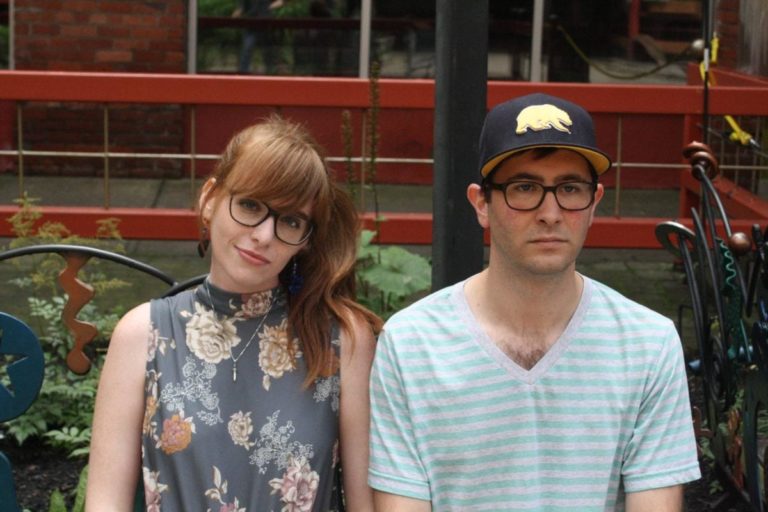
Charismatic couple Katie Halligan and Martin LoFaso started the project while studying at Berklee College of Music, and have since added band members Pete Zamniak on bass and Christopher Dubuc-Penne on drums. Last fall’s EP Frontier Pioneer is a zesty little delight. Blending art with inspiration, the collection of songs are the acoustic equivalent of a novella which celebrates the triumph of the human spirit over adversity.
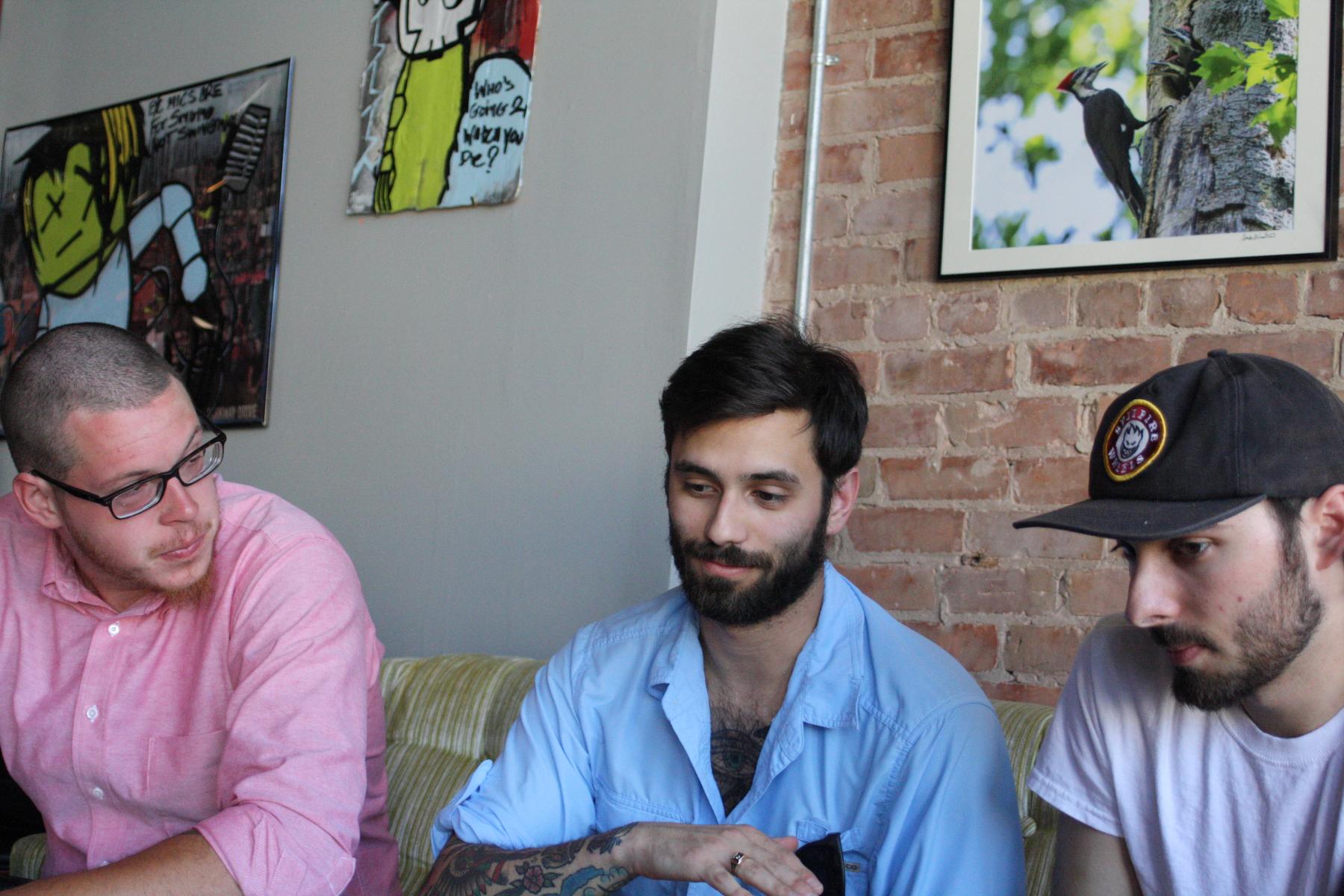
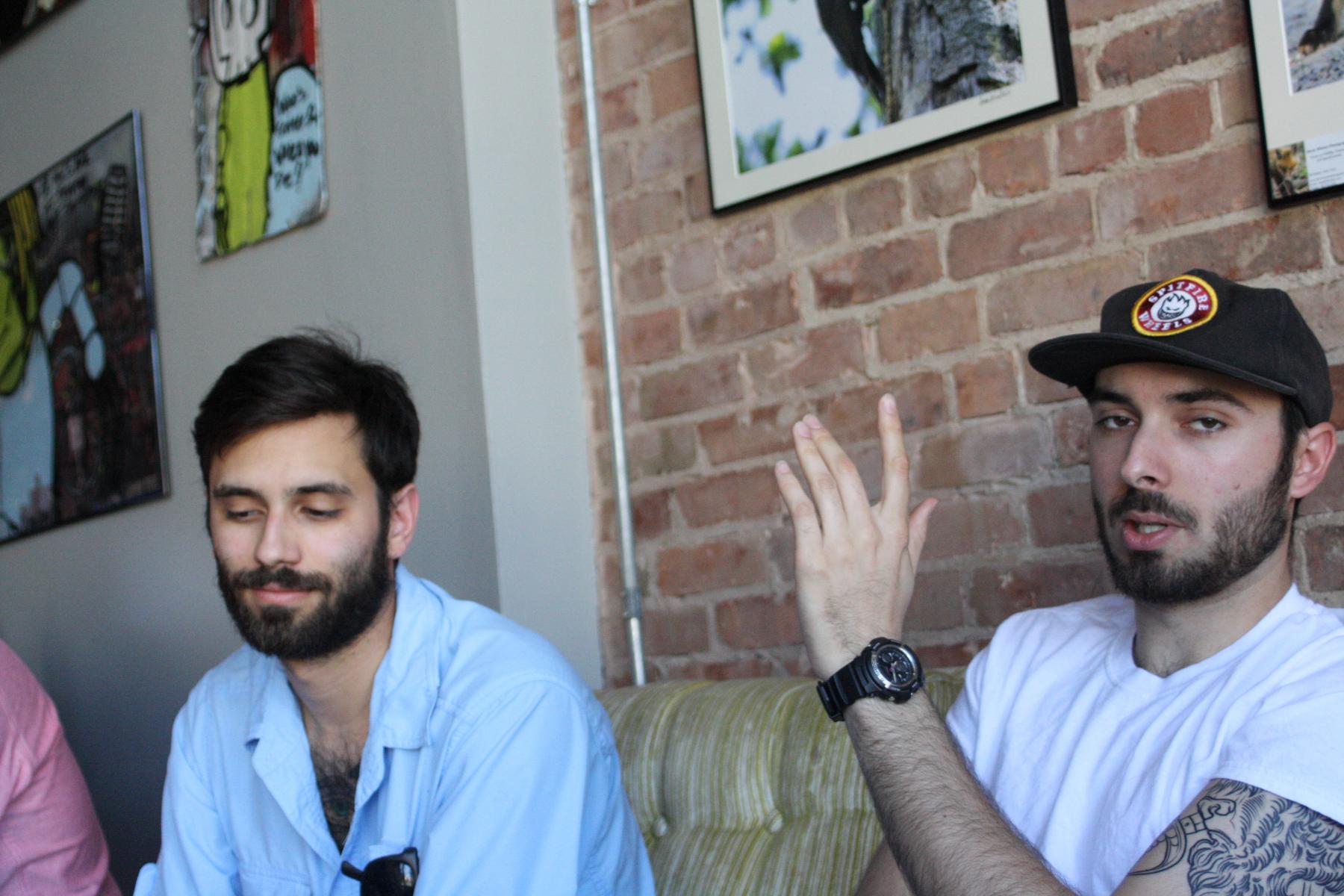
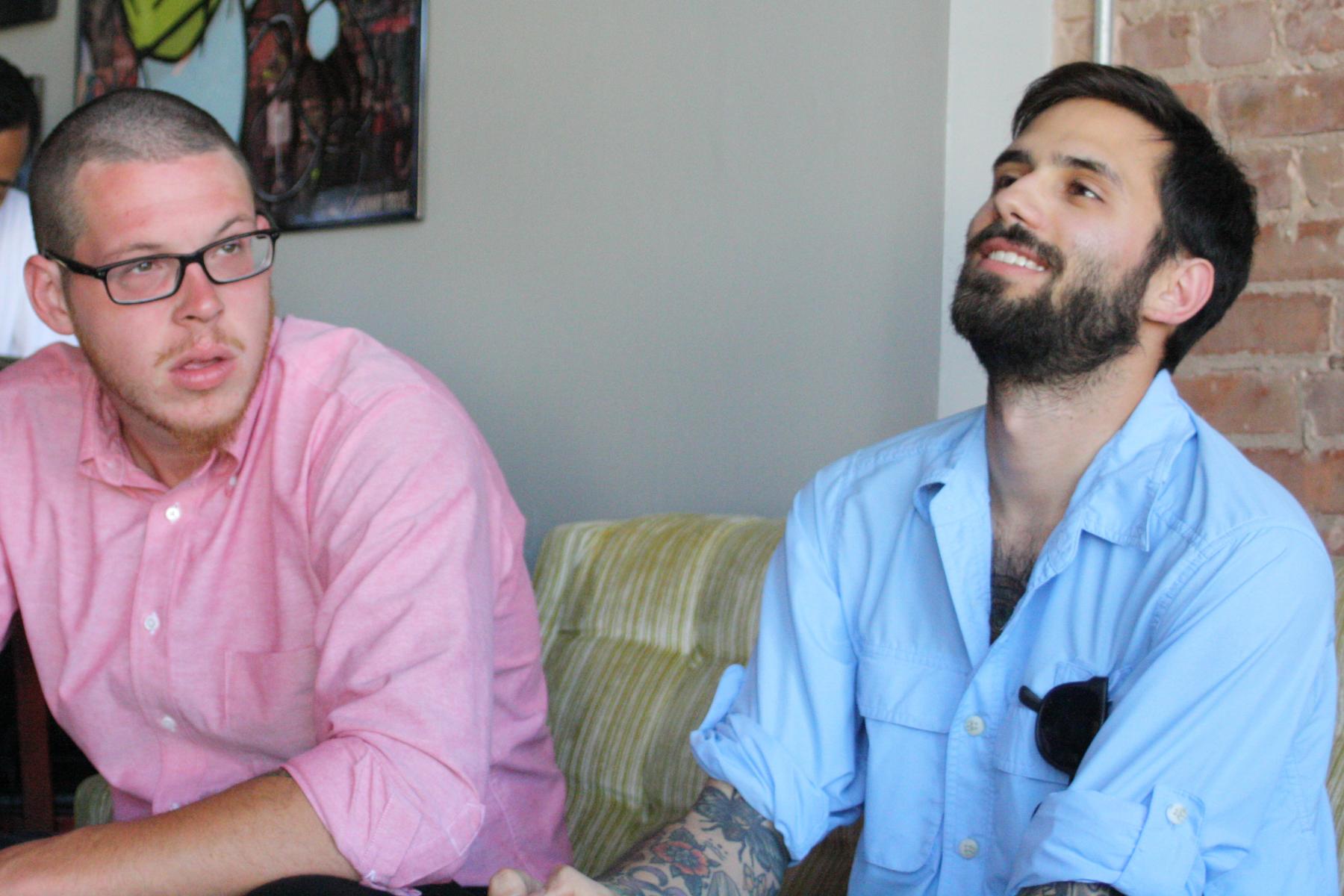
NYS Music met up with Halligan and LoFaso at Village Gate, an eclectic multi-use community in the heart of Rochester’s Neighborhood of the Arts. We talked about the joy of making music, and they created a playlist of some of their indie faves.
Paula Cummings: The name Tart Vandelay, does everyone get that it’s a Seinfeld reference, or are there people who don’t?
Martin LoFaso: They either do or they don’t. If people are too young or their parents didn’t watch Seinfeld, they don’t get it. But they still appreciate it, it’s still kinda goofy for them, so they still like it. But I was raised on Seinfeld, and I always loved the name Art Vandelay. George is my favorite character. He’s the despicable person who stands out in a group of despicable people. Even compared to other despicable people, he’s bad. It’s just funny to watch and I was always into that name. Luckily, Kate suggested Tart Vandelay.
Katie Halligan: I thought that adding a letter in front of it, and changing it slightly would just make it a fun play on words.
PC: What instruments do you play?
KH: I sing. I also have a looping station that I use, and I play ukulele and auxiliary percussion – different types of shakers.
PC: When you use the word “sing” you also mean vocalizations, not just words.
KH: I loop vocal percussion, and then I add harmonies on top of myself to fill out the sound and make it sound like there’s a chorus.
ML: You also play bass and keys and sax, but not for the band yet.
KH: I play a lot of other instruments. The next one I will be incorporating into the live performances is keys, the piano.
ML: In the band, I just play guitar and do backing vocals. I can play other instruments – bass and keys and the drums. She likes being a multi-instrumentalist, and I really like guitars. Any of the writing I do is on guitar. It’s just the instrument that speaks to me the most.
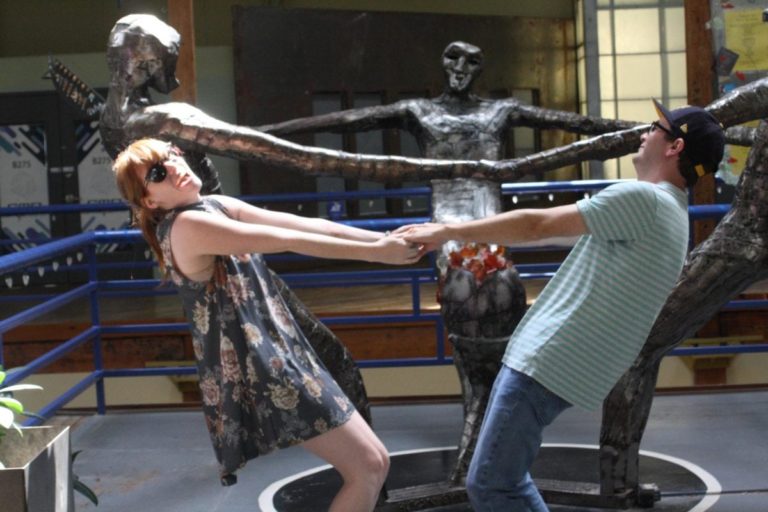
PC: I’ve seen you on stage, and it looks like you’re having so much fun.
ML: I’m glad that comes across. What’s interesting about the live show is trying to communicate that feeling. That’s what bands are selling. The good ones are selling a specific feeling at a live show, and it changes based on the band. Have you seen our full band?
PC: Not yet. That is one of my questions, the difference between playing as a duo and as a full band.
ML: There’s a lot more energy as a full band, but we still try to retain the cheery disposition. Just having fun. But I think a lot of our songs, especially as a duo, become very meditative. I think we still try to retain that with the full band because that’s the feeling that we’re selling, this sort of transcendence. As opposed to if there was a band that was heavier and wanted to sell more of like an angsty feeling, an aggression feeling. There’s nothing wrong – there’s no wrong feeling to feel. It’s just different bands sell you different feelings. And maybe that’s the feeling that we’re trying to get across.
KH: Definitely transcendence, with all our music. Being honest about the human experience. We’re trying to translate that on stage. Hopefully people in the audience not only enjoy it, but explore a lot of different feelings.
ML: I think making people cry is the best. Especially if you’re going out to a live show. A lot of people have built up defenses about being that vulnerable in public in front of people. I can totally understand that – a room full of strangers watching you bawl your eyes out. But really, we’ve been able to get through to people like that before just with a song, the message cuts so deep for them. That’s the thing, it’s just such a deep connection – it’s the deepest I think – to create that vulnerability, get people to feel the most raw that they can feel.
KH: But not always in a sad way.
PC: You have a song “Alien” that speaks to a lot of people about feeling out of place in the world.
KH: You’re taught from when you’re young that the nail that sticks out gets hammered. But we really try to embrace that because what else do we have but our differences? It’s a beautiful thing. I definitely wrote that pretty autobiographical. I’m glad that it speaks to other people. How could somebody not feel the same way at some point in their life and somehow relate to it? And I like the groove, too. That was one of the songs that wrote itself.
ML: It was the first one you finished.
KH: Yeah, that was the first. The first Tart Vandelay song.
PC: So were you in the dorm room at Berklee when you wrote that?
ML: We had an apartment along the subway line. Yeah, I wrote the guitar part.
KH: It started as a project he was doing.
ML: That’s usually our writing process – I’ll get the skeleton as far as the guitar line and bass of the song. Then it goes to her to write lyrics and rearrange.
KH: If I feel it needs a bridge or something, I send it back to him.
ML: Like Katie said, that one was autobiographical. I think they all are in a way. I think we’ve made a concerted effort as far as the writing itself. If we’re really after something that’s universal to the human condition and at the root of something that everyone is able to go through, then it should resonate even if it comes from an individual standpoint. The universal timeless things we all go through, existential questions and stuff like that. We don’t have to write for other people. We write for other people by writing for ourselves. It’s just a matter of getting people to surrender, to go to the feelings that deep.
PC: You have some creative pursuits outside of music as well?
KH: Right now, I’m a professional henna artist. Also, in my spare time I enjoy drawing and painting.
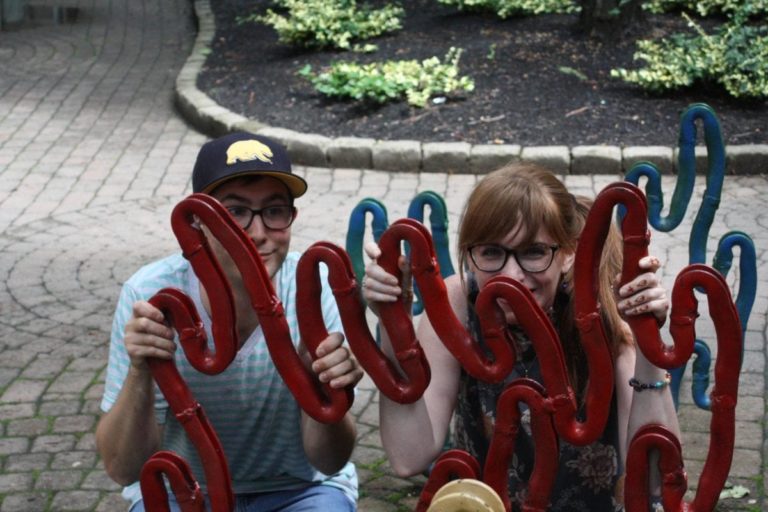
PC: What do you like to listen to?
ML: This year in September will be the 20th anniversary of my favorite album. It’s called Dots and Loops by the band Stereolab. I can appreciate their music, but I really only listen to that album. Some of our other favorite bands are Wilco…
KH: My Morning Jacket-
ML: Grizzly Bear, St. Vincent-
KH: White Denim, Dirty Projectors. We’ve been compared to Dirty Projectors.
ML: Tune-Yards.
PC: How do you like to listen to music?
KH: Usually in the car, because we’re always on our way to someplace else.
ML: I’ve been using Spotify. I have mixed emotions about Spotify. As a consumer, it’s just so easy.
PC: And easy to curate playlists.
ML: Which is mostly what I do, make a bunch of playlists.
KH: It’s mostly through Spotify that we listen to stuff. Sometimes we still use CD’s and mix tapes that we’ve made.
ML: Sometimes radio. Rochester has amazing radio stations. Both WRUR and WITR are great. 95.1 WAYO is great. WBER is an institution. Both of our jazz stations. We listen to local radio in Rochester, but if there’s nothing on at the moment that I like, I’ll go back to Spotify.
PC: If you made a playlist right now, which songs would you include?
ML: I would grab maybe the song “Diagonals” from Stereolab.
KH: I would grab “Touch Me I’m Going to Scream, Part 2” by My Morning Jacket.
ML: That one’s great. I’ve been really digging Wilco’s album they put out last year. It’s called Schmilco. It’s pretty low key and acoustic. I would probably put “If I Ever Was a Child” on that.
KH: My next song would be “Huey Newton” by St. Vincent.
ML: “Unto Ceasar” by Dirty Projectors.
KH: I just thought of one. We didn’t mention the band earlier, but the song, I love it so much. “Great Curve” by Talking Heads. I love Talking Heads.
PC: What would you name this playlist?
ML: We might call it something like “Summer Slummer.” We usually aim for cheesy puns when naming things. More fun that way.
PC: Let’s talk about Fringe Fest. You will be playing at Java’s. Have you played there before?
KH: No, this will be our first time playing there. We love going there, so it will be nice to play there. I think our music always translates well in a coffee shop setting. Especially because Java’s is artsy and perfect for Fringe Fest.
Tart Vandelay will perform as a duo at Java’s Cafe in Rochester on Sunday, September 17 at 5 pm and Thursday, September 21 at 9 pm as part of Rochester Fringe Festival. Both shows are free and open to the public. Attendees are encouraged to arrive early for seating/standing room.
Since last year, Brooklyn-based Escaper has been offering listeners a medium through which to contemplate the most practical methods for farming space worms. Or finally realizing that astronauts can create aliens by giving birth in space, or that there are so many cats on the internet because dog people go outside. Either way, Will Hanza of Escaper (bandleader/guitarist) took a moment to reflect on the creative spirit of making music that facilitates the contemplation of life’s most important questions.
Photo Credit: Brian Edward of Sobokeh
Ally Dean: The band members in Escaper have collaborated with a highly impressive assortment of musicians. Does Escaper come first for all band members? Is it a challenge for members to juggle this band with other collaborations and projects?
Will Hanza: We are all proud of our past accomplishments, for sure! Scheduling is tough for any band, but we manage pretty well. There is a lot of creative opportunity surrounding each player, which is terrific! We all support each other’s other projects, which is really fun. Doing so only helps—rising tides raise all ships, and all that. One of the nice things about Escaper is that it was specifically designed to be a band where each member is able to be completely themselves, as players. For each of us, the band is a conduit of free expression, which I think lends itself to the higher levels we are able to get to as a team.
AD: What do you think people most often contemplate as their minds wander to distant places under the melodic gaze of your music?
WH: Fun question. We do try to make transportive music. Hopefully, there are no constraints to where the mind wanders. Maybe it’s something transcendental and thought provoking. Maybe it’s, “pizza vs. tacos?” or, “why don’t cats like to swim?” Regardless, our duty is to move ourselves when we play, or we have little chance of moving the listener.
AD: Do you form your own meanings for what the songs represent or do you prefer not to assign specific meaning to them?
WH: The songs have taken on some meaning and ‘vibe’ as they have developed. Being an instrumental album, it is certainly more open to interpretation. That said, we call our song titles our one shot at “lyrics.” The songs and titles have developed into their own story line. The journey of escaping confinement is allowing one to be oneself without barriers, and only then is one truly able to unlock all doors and open themselves to many different realms. In the end, our hope is that the listener is able to find their own meaning in all of that.
AD: Skeleton Key is your first album together. Have you all had separate recording experience before coming together for this?
WH: Yes. We’ve all recorded/been part of other albums. All separately, except Will and Jay, who were both on the Kalen & the Sky Thieves album, Bluebird (also on Ropeadope). Johnny Butler was an original member of Sister Sparrow & the Dirty Birds and recorded with them. He also has credits with Beyonce, Randy Jackson and others. Adam Ahuja was also on the Ropeadope roster with his band The Flowdown before joining Escaper.
AD: I read that you guys laid each track down in one take. Is that because you all had an exact goal and executed it perfectly on the first try, or because this style of music lends itself to a little flexibility and you could afford to have a little creative freedom, while still feeling satisfied with the end result?
WH: A little bit has been lost in translation, as far as how we made this album, so this is a good chance to clarify how we went about our process. We recorded most of the album together in one day in the studio. We all played together, simultaneously, while isolated in different rooms, but with windows so we could see each other. This enabled us to best capture the synergy of playing live. Instead of layer upon layer, we all played together, lending the ability to also play *off* of each other, and inspire each other in the moment. Lift each other up in the moment. While a couple of tracks had some light layering for some orchestral effects, for the most part what you hear is the 5 of us just playing with each other at the same time. The music definitely lends itself to the flexibility of “how do we feel right now,” which we absolutely wanted to allow for in the studio.
AD: As of now you have a few dates booked in July and just a couple in the Fall. Are you hoping to add more dates in support of the new album or are you not trying to tour too extensively just yet?
WH: Oh yes. We had a great release show in NYC back in May and have played Brooklyn Bowl a couple times since the release. We’ve played around the northeast, from New England to Virginia. The late July/early August dates are mostly in New York state! We’re excited for the pre-Phish show at American Beauty in NYC on July 26. We’re also excited to be returning to some Hudson Valley favorite spots; July 28 at Snug Harbor in New Paltz, NY and August 4 at Olive’s in Nyack, NY. We haven’t released all of our Fall schedule yet, which will include a couple more festivals and bunch of dates in the northeast, in particular. We’ll continue to fill out our schedule for Fall, Winter and beyond! With the next album currently being recorded and mixed (and due for release in a few months), we’ll be on the road quite a bit. Stay tuned!
Upcoming Tour Dates:
7/21 – New Haven, CT – Pacific Standard Tavern
7/26 – New York, NY – American Beauty NYC
7/28 – New Paltz, NY – Snugs
8/4 – Nyack, NY – Olive’s
Sitting down to drink a beer with a band is an experience for which every journalist yearns. I had the pleasant opportunity to sit down with Guitar/Vocalist Jeffery Kueber and Keyboard/Saxophone/Vocalist Mathew Lester of Buffalo’s Funktional Flow for an interview
The meet-up took place at Three Heads Brewery in Rochester, NY. Over a heady Three Heads Brewery beer, we discussed Flowfest, Night Lights Music Festival, The Great Blue Heron Music Festival and Cobblestone live. We also discussed the birth of the band, their long-term growth and a few of their influences. In reality, we just sat down and chatted. It was a ton of fun!
The conversation was recorded in full and used as a “Rochester Groovecast” podcast episode. The episode also contains two Funktional Flow tracks, “Back Door” and “Time Will Tell.”
TreadWater is an integral part of Rochester’s thriving underground music scene. As well as their own musical contribution, a member of the band is actively involved in fostering the growth of the DIY community by arranging shows for local and traveling up-and-coming indie artists.
NYS Music met up with TreadWater members Steve Haramis, Caleb Barefoot, and Adam Kramer at Vineyard Community Space. This foursquare house owned by Monroe Park Vineyard Church sits beside a former church converted into an arcade. Like the place where they practice and perform, TreadWater is a study in contrast – their music is hardcore at heart, but full of surprising elements such as classic rock beats, crisp guitar riffs, tempo changes, and melodic segments.
Photo by Corinne Cummings
Paula Cummings: Tell me about the formation of the band. You guys got together last year, right?
Steve Haramas: We were all in bands previously together. Adam and Caleb were in Rhema most recently, and before that Adam and I were in a band called Endangered Youth. I said “We should be in a hardcore band.” So that was it. It was that easy. I think when you’ve been friends for years, you don’t have to talk about it, you just do it. We practiced for a couple months, tried to find what kind of sound we wanted.
Adam Kramer: I feel like things came together pretty quickly because we have a chemistry because we’ve all played together.
Caleb Barefoot: My band before played with Endangered Youth quite a few times, so we knew each other from playing shows together since 2013.
PC: How did you decide on a band name?
AK: It was a long process.
SH: It’s never been that hard to name a band. Every other band I’ve been in was it was like “That’s the band name, there it is.” (snaps fingers)
CB: You usually have an idea of what the band’s going to sound like and you pick a name to fit the style. That’s easy. But with this, we talk about influences and what we’re good at playing. We went into it not knowing what to expect or what would come of it. We had been writing a lot. We had the EP written before we came up with a name. Once you have so much written it’s hard to come up with what the band means. It’s like working backwards, I guess. Trying to get the name to fit the band rather than the band fitting into the name.
SH: I think that’s good because when you try to follow the footsteps of the name or a certain sound you’re restricted to that thing. We just let it go where it went and named it based on that.
CB: We had a couple stand-in names, but then one practice Steve said, “I have a name, how about Treading Water.” And I said, “What about TreadWater, because Zao, a band we like, has an album called Treadwater. It fits our style.
PC: You guys have a really interesting sound. Who are some of the bands who have influenced you?
CB: Other than Rhianna?
SH: Some are unconscious. You start playing, then you go back and you hear things. But nothing is consciously in my head like, “I want this to sound like that.” The influence is unconscious.
CB: We listen to a lot of the same bands: Solid State, Tooth and Nail Records, mid-2000’s.
AK: Early metalcore.
CB: Early hardcore crossover into metalcore.
SH: Zao, obviously.
CB: Norma Jean, Chariot.
AK: Early Underoath.
SH: I listen to a lot of 90’s screamo, too.
PC: So how do you get your sound? What gear are you using?
CB: You push it as loud as it can go.
SH: You can make something sound clean and distort it at the same time. I want something that still has some character to it. It’s dirty and has some grunge to it, but it’s not indiscernible. You can still pick apart the different tones in there. It’s the reason why I use a Stratacaster to play is because I feel it’s a guitar not used for metal, so it’s interesting to try to use it to make that sound. It still has a lot of character to it.
CB: I guess Nirvana and The Melvins are a couple more influences, my big influences as far as drums. My mindset in recording was more classic rock. I use a vintage 1970’s drum set.
AK: I’ve been playing though a Thunderbird bass. I’m not much of a gear-head, but the Thunderbird sounds great.
CB: Just loud and open is what our band tries to achieve.
SH: It’s loud and you can feel it when you listen to it. You let it break apart and lose it’s intricacy when you play live, but it’s more about the feel of the set. You push the volume and feeling.
Photo by Corinne Cummings
PC: You recently put out your first release, Arrows In The Sun. Tell me about the songs on it.
AK: As far as the lyrics for the songs, the lyrics were put together at the last minute. We didn’t intend on Steve and I being the main vocalists. We had other people who had come to practice, but it didn’t work out.
SH: A few weeks before our first show, we still didn’t have anyone, so we sat here in this room and wrote the lyrics and rehearsed it quick.
AK: That’s why this first stuff is minimalist as far as lyrics. It’s more about the music. We were going for catchiness.
SH: It’s not about how much you say. You can say a couple lines and you can make it punchy and have an impact.
CB: I think the band in general is continuing that with the new songs to be more minimalist with vocals and lyrics, and focusing more on making decent songs musically.
SH: I wrote three songs and Caleb wrote two. “Burning Bark” is about family, distance from family, and the process of going through that. “Backwards” is about frustrations with your own limitations and behavior. Hence, “Backwards,” not wanting to regress and wanting to move forward. “Speak” is about life and death and what’s important, which is love.
CB: I wrote “Shattered” and “Pretender.” Well, “Pretender” Steve and I co-wrote the lyrics. They’re more about frustration with hypocrisy and the judgmental.
SH: It’s funny because when we were in Endangered Youth, generally we were angsty about something all the time. And now it was like, “I don’t know what to write about.” I had to actually think about what I wanted to write about that means something. We’re not as angsty as we used to be.
CB: I think that’s a good thing. It’s about love and death.
SH: And “Signals” is just a transition track. It was one of the original names of the band that we threw out. So we threw it on there as a recognition of that name.
Photo by Corinne Cummings
PC: We’re here at Vineyard Community Space, where you rehearse and play sometimes. Who are some of the bands you’ve met through being here?
AK: Mostly it’s people we’ve known since before being in this band. This next weekend we’re going to do two shows with this band called Condition Oakland from Pennsylvania. And Tyler, the main songwriter in that band, he and I have been friends since we were 17. And we’ve always played different music genre-wise. When he plays solo it’s folk punk, and sometimes he plays with a full band and it’s hot water music, that style of punk rock. And we are what we are. But they’re some of our best friends.
SH: And California Cousins.
AK: We play with them at The Bug Jar. I appreciate those guys so much. They are the backbone of the DIY scene in Rochester. Almost every show that happens in this space, there’s a member of California Cousins here. So it’s been cool to get to know those guys and work together with them. And the guys from Druse, they’ve been really cool as well.
SH: Tim Avery is always part of the shows, too.
CB: We played with a band called Mother Moon from Baltimore. It was one of the only bands we’ve played with so far that we’ve sounded similar to. We didn’t feel like the odd band out on the show.
PC: Does having such an eclectic sound make you more versatile and able to jump onto shows with different sounds?
SH: The bands we’re playing with tonight, I imagine it would be hard for them to jump on certain shows because it’s straight death metal. It wouldn’t work. But if you’re more punk rock you can slip onto other shows. Our set has a lot of diversity, too. We have different songs – new and the EP. Tonight, we’ll play more of the heavy stuff but next week, we’ll play more of the melodic stuff. We tailor to the show we’re playing and morph a bit.
AK: Steve and I come from a scene that’s really small in central Pennsylvania. The first shows I played, I was in this really crappy emo band. We were playing shows with death metal bands. That’s what I grew up around, this diverse scene, because there’s not enough people in each individual subgenre. It’s part of where I come from, so I like to continue that in the booking and the shows we play.
SH: And those people who come will stay throughout the shows from across genres. They don’t just see one thing and leave. They participate in anything.
CB: We haven’t played with any hip hop bands yet. I wish we would. That would be awesome.
PC: So Adam, you book some of the shows here.
AK: Myself and Tim Avery book the shows here.
PC: Do you have a philosophy behind who you look for?
AK: If a band asks me for help – I get a lot of messages just because of the network of DIY booking and touring – I try to help them out. If it’s a young band, even if I don’t think they’re that good, but they’re touring and putting themselves out there, I want this to be a place where we’re supportive of young artists.
SH: It’s not about the musicality, it’s about the attitude. You have to be supportive, open-minded and laid back.
AK: Generally, good attitudes. Most people play in bad bands before they play in bands that are less bad. So hopefully this can be that for locals and for bands coming through on their first tours. That’s it – just foster a community, more than just a spot to put on shows.
The Dirty Pennies play a mean twelve bar blues. However, they don’t box themselves into the genre. They use the blues as a springboard to launch into other musical directions.
Their debut album Kick Out The Rocks demonstrates this versatility – from the boogie-woogie title track to the alt rock “Explosions” and the folk ballad “Man on a Wire.” The Dirty Pennies started as a duo five years ago, with Ryan Klem on vocals and lead guitar and Lucas Howe on drums. Last year, bassist Joe Mungo joined the group. NYS Music sat down with the trio at Boulder Coffee Co. in their hometown of Rochester to discuss the evolution of the band and their sound.
Lucas Howe, Joe Mungo, Ryan Klem
Paula Cummings: Ryan and Lucas, you started as a duo about 5 years ago. How did you meet & decide to start a band?
Lucas Howe: We played in another band before that wasn’t really our cup of tea, you could say, and then we both decided to jam and start our own thing.
Ryan Klem: I remember when we were playing in the band, but we both had different writing styles. I came from the singer-songwriter style. We came up with a happy medium of sound, bringing in that twelve-bar blues like The White Stripes, The Black Keys.
PC: Tell me about how you became a trio.
Joe Mungo: When I moved out here three years ago, I started working with Ryan. The first weekend out here I saw them play a show. So I approached him a couple days later at work and said, “Hey, man, if you ever want to jam or anything sometime, I’d be interested in playing with you guys.” The first time we played collectively, after practice they were like, “Okay, you’re in. Let’s do this.”
RK: We had someone working with us from Cleveland for a while who said, “You guys should get a bassist.” We also had enough people coming up to us after shows saying “You guys sound like the Black Keys” or “You guys sound like the White Stripes.” I don’t want to sound just like The Black Keys and The White Stripes, so bringing in another element has been able to…
LH: It opens up a lot more.
RK: What we were doing was straightforward, what we were able to do. There was a big margin where we could write what we wanted, but there was only so much we could do with a guitar and drums. With a bass now, we can touch indie rock, we can touch country… we can touch lots of different things.
PC: You’ve been a live band for so long, what was it like when you finally got into the studio?
RK: It’s strange because people think of us as a live band, but we did an EP that took the course of three years. I was up at school, living in the Adirondacks, and I would come back and just play a show every once in a while, not really knowing where all of this was going. But what I will say is Kick Out The Rocks was the first time I’ve felt like going into the studio and hammering something out.
JM: For me it was return-to-my-roots. When I lived in Geneva, my hometown, I was in another band, my friend and I, and we were setting up a studio. It was a very grassroots thing in a basement. I think we played four shows total, so all the time we were playing it was in the studio setting. So it was nice to go back to that. But it was a completely different experience because Blue Brick Recordings is a legitimate studio with different rooms and things set up. It was really fun to have the professional setting.
LH: I still think I like that people look at us as a live band. You hear the songs on the record, but I think you don’t get the same experience… I like to go nuts.
RK: Right, live is different.
JM: Recording in the studio, one thing that trips me up a bit is “Okay, I need to nail it this time.”
LH: It’s really stressful.
JM: It gets really frustrating if you can’t get it after a few tries. You get frustrated and you just want to move on for the day. But live, it doesn’t have to be the same every time.
PC: The album has strong blues overtones, but also blends a wide range of sounds. Who are some of the bands that inspire you?
RK: I like Wilco.
LH: Deer Tick is pretty sweet.
JM: If I had to name a band that’s currently out, I’d say Houndmouth has a similar sound to us.
RK: I feel like we’re always listening. It’s harder now to find your style. If you’re someone who really grasps onto music – you want to listen to music, you want to play music – there’s just so much of it out there.
JM: The more cool stuff you hear, it’s like, “Let’s do something like that.”
RK: And then it will change and I’ll be like, “Why do I like so much reggae stuff now?”
PC: What is your favorite comment by someone who reviewed your album?
JM: Frank DeBlase (City Newspaper) gave me my best one. He said my bass was “sassy and precarious.” I really liked that comment, sassy and precarious.
LH: I mainly liked that it seems like everyone that wrote about us said you can’t find one song that’s not catchy, that you can’t tap your foot to. We always hear that it’s catchy music.
RK: The thing is that you get a little of everything. That’s what we’re trying to do, a little of everything.
LH: That’s important to do, to split up the album – not just have it all grunge garage blues the whole time.
RK: I think we touch on all of our strengths on the album, which is nice. We all have different backgrounds in music. In the twelve songs we have, I can name one song in particular in each of our styles where we really honed in on that track specifically. And it’s very cool we all got to do that. We compromise in a sense but we also stay unique through it, which is really hard to do sometimes.
PC: What’s on the horizon for The Dirty Pennies?
LH: We’re touring in mid-August.
RK: Other than that, we’re writing new stuff.
JM: I think that’s the focus right now – new music.
RK: I love our record, but I’m ready for new stuff already.
LH: We have been playing some new songs in practice that we haven’t really played live or are obviously not on the record.
JM: We’ve got three or four new ones that are almost there.
LH: It’s always nice to write new stuff. It’s nice to go in other directions.
PC: What else would you like our readers to know about you?
RK: We’re high-energy. We like to put on a fun live performance.
Their next show on July 15 is at the BASIC BRAND (skate board / apparel company) Launch Party at Kashong Creek Craft Cider in Geneva, NY. For updates on shows and events, check their website or follow them on Facebook.
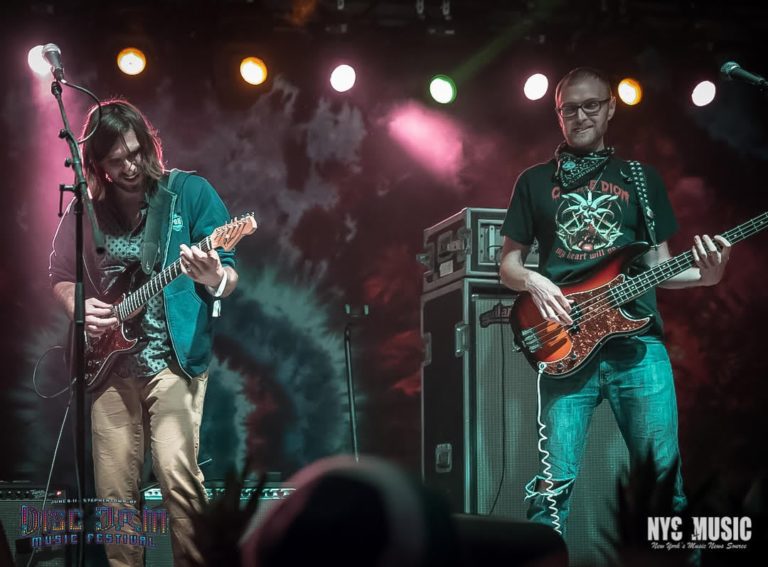
A weekend spent in Stephentown, NY meant a finely curated lineup over four days at Gardner’s Farm. Having headlined every single year since the festival’s conception in 2011, this year was no different as progressive jam outfit Dopapod prepped for their Friday night set ahead. With a recent spring tour in the rear view mirror, the quartet offered fans a live compilation album, II Saw Live Dopapod, Evil Was II, to curb the anticipation ahead of their impending studio album, which they’ve been placing the finishing touches on. The strings of the group, bassist Chuck Jones and guitarist Rob Compa were kind enough to chat with NYS Music just ahead of their 9:30pm headlining set. Jones, adorned in a mock, heavy metal Celine Dion tee started off by noting their progression as a group over the years as we dove into fun tidbits about the upcoming album and the band as a whole.
Alyssa Ladzinski: Your most recent release was a live album of fan-favorites, what can you tell us about your upcoming release?
Chuck Jones: We just finished our new studio album, we’ve been working on it a lot this last month when we haven’t had any shows. I think we’re trying to release that in the fall before touring.
Rob Compa: We just finished all the recording and tracking for the studio album. There’s gonna be some songs nobodies heard yet, there’s gonna be a lot of instrumentation that a lot of people probably aren’t expecting. I.E. people can expect lots of strings, violins and cellos in certain songs. It’s the first time I recorded guitar parts at home with my amp in my closet, trying not to piss off my neighbors too much. It was a lot of fun to make. It was the most fun I’ve had in a while actually.
AL: Your auxiliary chord breaks while touring in the van. What’s one album the four of you can agree on listening to, front to back?
CJ: I don’t know if we could, our tastes are so diverse there’s no one album we can all agree on. We would get to a point where we could settle. Probably Pink Floyd we can all agree on. That’s what makes this group so enjoyable to play in, everyone has such eclectic tastes from all over.
RC:Uberjam by John Scofield or Wish You Were Here by Pink Floyd.
AL: Now you’re all alone on a road trip, what’s one album you’re singing along and playing air instruments to?
RC: Lately I’m not listening to that much music. I could always go for Ben Folds Rock in the Suburbs all the way through or Dire Straits first album.
CJ: Silence. I enjoy the time to think. There’s a lot of saturation in listening, at this point I’ll have to think about putting on music.
AL: Create your own super group you’d want to play in.
CJ: Mike from Aqueous, Beau from Kung Fu, I’m not sure. I like to let other people handle these things and I go to my safe spot.
RC: Well I love James Searl from Giant Panda, Tim Palmieri on guitar, Scotty Zwang on drums, Caden from the Jauntee. I’ll leave it at that, no keys.
AL: Favorite show you’ve seen lately?
CJ: I just moved to Colorado a month ago and quickly I went to see two nights of Primus. Once in a smaller room and then at Red Rocks.
RC: Main Squeeze at Brooklyn Bowl for their CD release. Lyle Brewer of Ryan Montbleau Band played a solo guitar set at Rockwood Music Hall in NY.
AL: If the guys were going to surprise Rob and Becky with an impromptu performance at the wedding, what would it be and who would fill in for Rob on guitar?
CJ: Probably a Phish song, I think he would love that. I can only play “Cars, Trucks and Busses.” He would love if we played a Phish song and had Luke play guitar. Or Pink Floyd.
RC: “Kick N’ Bach” by Frogwings but they’d have to get the real guitarists on the track, Herring and Trucks. Becky would scream with glee.
AL: Being with NYS Music, I have to ask, who’ your favorite NY native artist?
RC: The Niche in Rochester, my heroes when i was 18. They’d sneak me backstage and they were the first band in the scene to let me sit in with them.
CJ: Giant panda, Aqueous, NY Jazz Trio. NY is saturated with good music.
AL: If you could switch bodies with anyone in Dopapod, who would it be and why?
CJ: I’d stay with myself. Maybe Neal cause it would be really fun to be that good at drums.
AL: Weirdest thing a fan has done for you?
CJ: A fan once made a T-shirt with my face on it. My mom has it. It’s weird and flattering and my mom loves it. She was wearing it the other day.
RC: One time at a show in Syracuse my 96 year old grandma was there in a wheelchair and people kept offering to buy her shots. She didn’t have them, but I thought that was pretty funny.
AL: What’s your biggest challenge as a band as of late?
CJ: Having more responsibilities. I’m about to be 30 in August and you look around at festivals and realize the age group ranges from 18-24. This is a young person’s sport!
RC: Half of us are on the East Coast while the other half is in Colorado. Trying to make that work is a thing. Today is the first time we’ve played together in a month and a half. Financially, it’s a challenge too. There’s always the ebb and flow of your band being a hot ticket or not. If you haven’t put out a new album in a couple years, you don’t have any fuel or anything to hand people. So dealing with that.
AL: Rob, you offer guitar lessons to prospective students. How has that worked out for you?
RC: I get a lot of bite and about half of the work. With teaching, I like that I’m directly helping somebody. I don’t really feel that so much when I’m playing on stage. Maybe it happens accidentally, but it doesn’t happen intentionally for that reason.
AL: You seem active on Facebook enough to notice the day in and day out analysis of your music in Dopafam. Is it weird to see your music that deeply dissected on a regular basis?
CJ: They notice the small details. The fact that there’s one person, let alone a handful of people spending that much time listening to our music is all you can ask for.
AL: Can you pinpoint one Dopapod show that stands out as a favorite?
RC: I really liked the last Richmond show we played. It was just a lot of fun and my favorite part was Neal, our drummer has a mic, so he talks to us while we’re playing and during a song I was soloing, he told me how to solo the whole time. You can only solo on this string, now you can only solo on this string and the first five frets of the guitar, now only on A flat. It was just goofy. If I had a favorite one five years ago it would probably be bad because you just keep getting better.
Setlist: 8 Years Ended, Present Ghosts, Mucho, Indian Grits > Freight Train Filled With Dynamite, Priorities, Trickery, Cloud World
 Paula Cummings: The name Tart Vandelay, does everyone get that it’s a Seinfeld reference, or are there people who don’t?
 PC: I’ve seen you on stage, and it looks like you’re having so much fun.
 PC: What do you like to listen to?

 AL: Create your own super group you’d want to play in.
 AL: Being with NYS Music, I have to ask, who’ your favorite NY native artist?