Category: Interviews

  • MINDSET EVOLUTION Debut Performance at ROTR

    The crowd of eager fellow concert junkies and music lovers formed before the Jäger Stage of ROTR, waiting for the next band to make their appearance. Then the band makes their appearance known and the crowd begins to cheer, most in an excited manner, while some drunken. They began to play their first song, “We Are Stars” and the crowd threw their horns up, bouncing along to the beat. This band was very interactive with the crowd, made them feel like they were a part of the next big thing. This incredible band continued their set with “Ready”, “Invisible”, and quite a few more before performing their latest single, “Burn It Down”, which dropped recently. Who is this band, you ask? Introducing, Mindset Evolution.

    Originating from Peoria, Il., Mindset Evolution is a five piece active rock band, with members Rob Ulrich (vocals), Skylar Baer (guitar), Bradley Prentice (guitar), Josh Bodeen (bass), and Joey Gibbs (drums). They formed in 2005 with a goal to get to where they are now. “We wanted a way to say that you have to find a way through, over, or around obstacles, and sometimes you have to completely change the way to do that, so it takes a mindset evolution,” explained Ulrich to Upstate Metal’s Kate Drexel last night at Rock on the Range, in the air conditioned media tent. Well, indeed they have gone through many obstacles like working very hard to go from playing in their hometown to being a part of the Warped Tour lineup. And with that, they have a strong fan base, as well as becoming the winners in the Best Buy Music Gear Battle of the Bands. Throughout the years, Mindset Evolution has toured with bands such as Seether, Hinder, Breaking Benjamin and quite a few more well known names. “Honestly, a lot of it came from our home rock station. They have been huge supporters of us for a long time and they would always throw our names out for us, and it started picking up that way. Last year, we won the Rockstar Energy Drink Uproar Battle of the Bands and then we got to tour the whole nation. Last year, we got to tour with Godsmack, Shinedown, Staind, and Adelitas Way…it was killer, killer,” said Rob when explaining how they got to tour with such major bands. “And In This Moment,” chimed in Joey, when pointing to Drexel’s white rubber In This Moment bracelet. “Ah, they are murderous, they’re so good live, love them!” said Rob, enthusiastically. When it comes to their influences, the band as a whole has a very eclectic taste in music. For Rob, “Tool, well, everything that Maynard James Keenan does, Eagles, Beatles, Clearwater Revival, Jay-Z, Eminem, kind of all over the board…a little Garth Brooks, I love Garth Brooks.” As for Joey, he makes the statement that makes Drexel very excited, “I have to say Trent Reznor is a God, that’s about it. I’m a huge Nails fan.” Then he proceeded to mention that he listens to Motley Crue, other 80s music, as well as “a lot of electronic music, like Depeche Mode.” As a band, according to Ulrich, the genres are very diverse for each of the members. “I think that’s awesome, that’s what makes bands…it gives them the opportunity to create something special and have those kind of influences coming, they’re so diverse, that when they happen to come together in a song, it creates something unique for that band.” Gibbs added that, “It’s a unique influence for the band especially when we sit down and write together, different elements are coming out of our style.”

    Be sure to look out for their upcoming record, Brave, Bold and Broken, out this summer and their latest single, “Burn It Down” is out for digital download.

  • Review: IN FLAMES Fires Up ROTR

    The crowd by the Jäger stage grew with every passing second as the sun over Crew Stadium was setting. They wanted more, nay they needed more live rock music. Once the sun had finally set, the background music quieted and the stage lights turned to a light blue hue with white, hinting it was the next band’s, In Flames, turn to rock the small stage at ROTR. The cheering from drunk and excited Rangers increased immensely as each band member made their presence known one by one, starting with Daniel Svensson (drums), Peter Iwers (bass), Niclas Engelin (guitar), and Björn Gelotte (guitar). The last to appear was their frontman, Anders Fridén. In Flames was more than ready to show the concertgoers of Rock on the Range what they had up their sleeves.

    They started the set with the first and title song from their latest record, Sounds of a Playground Fading, followed by the next two from the same record, “Where the Dead Ships Dwell”, and “Ropes”. “I think it’s a song that we all kind of liked from the beginning, music wise, rhythm wise. Dynamically, it’s a really cool song, also a song we like to play live and since it is a live song, we consider it a live song, we wanted to incorporate how other people see it like especially the audience or fans or that people that go to our shows, so we asked them to help in making the video. It’s going to be interesting for us to see it through,” said Gelotte to Upstate Metal’s Kate Drexel in the Media Tent earlier that evening, when asked the story behind the single.

    The rest of the setlist consisted of quite a few songs from their older records, mostly from their latest one. In Flames ended their set with “Deliver Us” and from their 2006 record, Come Clarity, “Take This Life”. For a first time performance at Rock on the Range, they sure did one hell of a job and gained a lot of new fans. “I guess our booking agent sorted it out. No, actually, maybe, I think they wanted to add what we do to the lineup, to get our diversity to what’s going on here. We love playing in the U.S., in general. This is the fifth time on this album so we did four tours, and now we’re doing this really short tour. We did a warm up show in Chicago yesterday, and today, we’re doing Rock on the Range, then we go to Mexico”, explained Björn to Drexel, after asking about how they got to be a part of this incredible festival.

    All in all, they showed Ohio what this heavy metal Swedish band is made of and In Flames picked a fantastic setlist. Their vibe was mind blowing and they are a must see band, if one has not seen them already.

  • The Gaia Theory Interview

    Here’s another band who answered my call for a written interview on the 315 Street Team Page. The Gaia Theory a type of metal best called Electronicore hails from Massena NY.

    Nick was the front man for the short lived yet face melting band In Seven Days. Aleskey (Guitarist) also has a electronica side project called “Word Child” which you can find on sound cloud. The Gaia Theory is currently at a stand still since they’re looking for a guitarist, bassist and a keyboard/synth player so if you think this music is up your ally hit them up! They were also featured in my compilation video “Music For You EarHole” which is where you can give their music a listen or it up FB and listen to some tracks they have up on the music player.

    (Steve) First off is it ok if I asked what happened to In Seven Days?

    (Nick) haha yeah its fine… Uhh ya know we hit a standstill and things just weren’t going the way we wanted and we all wanted different things for the band.. After our last show I quit the band and it just died out after I left..

    (Steve) How did you get together with your new band mates after the split?

    (Nick) I actually gave up on music for a few weeks just needed time to myself…. But then I got off my ass and wanted to get back into playing because it’s my life. So I posted adds on Craigslist looking for people to fill the spots and that’s when I found Aleksey (guitarist) the and it went from there haha

    (Aleksey) Yea basically, I had a post on craigslist and so did he, it was like destiny haha. And the rest of the mates we just found over time.

    (Steve) Give a brief description on what The Gaia Theory is and why you decided to name your band this?
    (Aleksey) The Gaia Theory is a scientific theory that basically states, that all living and non-living organisms on earth, work together in a constant utopian method to form a self-regulating environment, that basically contributes to maintaining life on earth. The name Gaia derives from the Goddess Gaia, who was the Goddess of Earth, and as mythology states, the mother to all gods. We chose the name, because it seemed to work with the style of music were playing, this whole concept of everything working together harmoniously, to create a stable sound haha. Plus the name sounds cool as hell.

    (Steve) Does anything from this idea affect your lyrics?

    (Nick) umm not at all ya know each song I write has its own story. Like one will be about death and gore. And then another will be about hope and uprising… Each song has its certain sound and lyrics meant for each other.. I also listen to what the band has come up with and I close my eyes and vision what it makes me think of.. And then write the lyrics

    (Steve) How does the writing process go for you guys? Does each individual person bring their own pizazz to the band or is it directed as a whole?

    (Aleksey) I mean it’s hard to say, sometimes it’s just directed as a whole, and other times we all bring in something different. We all come from different musical backgrounds, for example I come from a pure classical background. Our drummer comes from more of a punk/hardcore background, and so on. For the most part, we try to write everything together, my last band I was in, I basically had to write all the music, and that tends to be a lot of unwanted pressure, because then I have to keep in mind what I like and what every single person in the band likes. So I for the most part am trying to avoid taking that type of responsibility again.

    (Steve) Who does your artwork?

    (Nick) Aleksey and I do the artwork for the band

    (Steve) Nick you told me that your guitarist was from Russia, Does he give you guys a….worldly sound haha just joking. What kind of influence does he bring to the band?

    (Aleksey) To start off I’m Ukrainian haha, and I don’t think I do, except for the occasional slip of my accent, and the random folk strumming, can’t say I bring much of an Slavic ethnic musical background to the mix, but it might be a good idea to try.

    (Steve) Do you guys do your own recording? If so could you give any tips on to do this as a band starting out?

    (Aleksey) Well our current tracks we have up, I did the recording for them, and this was the first time I’ve ever done this type of recording. I’m used to producing electronic style music, but live music was new to me. For the most part were going to be doing self-recordings. It’s cheaper and we have full control over the final sound. The only tips I got, is find the software you want to use, read up on it, or YouTube the shit out of it, and just get started on it, you’re not going to sound good at first, I guarantee it. A big tip I got when recording guitars, for each guitar part record it 4 times, pan one side all the way right, one all the way left, and the other two pan 75% in each direction. It will create a fuller sound, trust me on that, it’s the only reason our recordings sound half decent, and make sure in the mixing process you equalize everything and throw compressors on everything. Otherwise, the beauty of this age is that it is the information age, use the internet to your advantage, there isn’t anything you can’t learn online.

    (Steve) You said you’ll be ready for shows this summer, do you have any lined up already or are you just waiting till you get to that step?

    (Aleksey) We don’t have any lined up, but we have connects, Nick and our drummer have access to the whole upstate New York scene, and being from Brooklyn, I got a bunch of connects down there and other parts of the tri-state area. Plus, recently since the upload of our latest track, we have been offered shows left and right. So were not too worried about landing shows, were mostly concerned about finishing up our set, and being read

  • Former Members of ‘The Band’ to Play The Egg: Jim Weider and Garth Hudson in Project Percolator May 18th

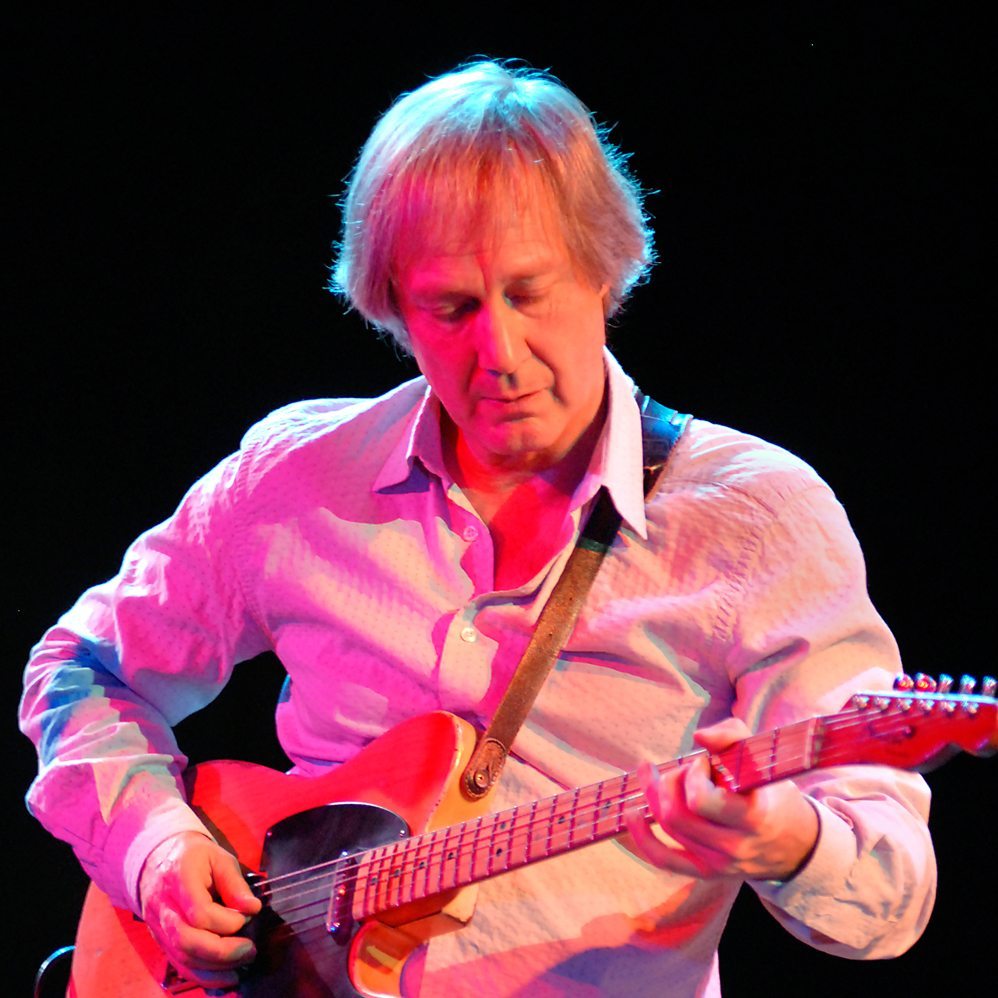
    Woodstock native Jim Weider heads up the Thruway to present Project Percolator featuring Garth Hudson at The Egg on Saturday, May 18th. Jim Weider talked with about his project, growing up in Woodstock and fondly recalls his time spent as a member of The Band.  His resume is long, his music is well crafted and he aptly presents something that is uniquely him.

    JW

    Tabitha (TC): Let’s start off by talking about Project Percolator.  Describe what people can expect from a live show.

    Jim (JW):  It’s all groove instrumental with my Telecaster Guitar. It’s rock style and blues over the top.  We have several albums out and it is structured songs. I like to write instrumentals that are structured just like vocal tunes.  There will be verses, bridges and everything.  Then we have sections in the songs where we stretch it out. We play them differently each time. We might go into a Led Zeppelin line so it’s as exciting for the audience as it is for the band.  All the musicians are so great behind me; depending who takes off, we follow the other.  We try and jam out on certain songs.  We’ll do “The Weight” by The Band, with a reggae feel and then in the middle we’ll jam it out then go into double time. If Garth Hudson (The Band) takes off on the keyboard, we’ll all follow him.  So we do everything differently each night.  It’s kind of exciting for both of us – the audience and us.  I always have a blast playing with these guys.  Rodney Holmes is just an amazing drummer to be seen. Avi Bortnick (John Scofield Band) is on guitar and he plays much different than me. Of course having Garth is a true dream. We’ve been together for many, many years. Garth comes up with amazing sounds. You’ll hear Garth Hudson like nobody’s ever heard him before because the way this band opens it up and lets us play. Everybody has a blast.

    TC: How did you determine with whom you would work with for Project Percolator?

    JW: It started about seven years ago with Percolator. I wanted to branch out from my blues – rock records into something different. I just felt like I was cornering myself. I wanted to get into groove music. I started writing and came up with drum loops. I was lucky enough to get Rodney Holmes. He played with Santana and Brecker Brothers. He freed up and joined me. Once I got Rodney, we toured Europe and United States. Rodney’s been with me the whole time. The bass player, Steve Lucas (Bruce Cockburn) joined up on the Pulse record. We’ve been together for quite a while now. We’re going to play some new tunes, and we’ll bring in some Dylan stuff and some Band tunes also, which we do our own versions.

    TC:  You have worked with Garth Hudson for a number of years, most notably with The Band.  How is working with Garth similar or different in Project Percolator than prior commitments?

    JW:  Garth does some shows with us.  He just fits in because Garth always made all the great atmospheric sounds for The Band.  He was always into effects and sounds so putting him in the midst of Project Percolator works out perfect.  He goes with the flow.  He uses his ears and comes up with some great stuff and then we’ll break it down, then it’ll just be Garth by himself.  He just fits right in with this kind of music because it’s wide open and flowing.  It’s like a glove and very entertaining.  I get a kick out of it and so does the band.  I think the audience will too.

    GH

    TC:  What sparked the idea for Project Percolator?

    JW:  I had done a couple of blues-rock records.  There were a million blues bands and I had done the roots rock thing with The Band.  I just wanted to stretch out more.  Get more down to the R & B feel where it’s about the groove.  So I started with loops. I started recording by myself.   On the first record the drums were over-dubbed.  We’ll do some songs with some loops still.  I just wanted to get out of that corner write something totally unique that’s not your standard blues shuffle.  I really felt like I needed to come up with something fresh and I just stayed with it.  Of course I still played with Levon up until his time of passing.

    TC:  We just past the one-year anniversary of Levon Helm’s passing.  Having worked closely with him for many years, how has his passing impacted you both professionally and personally?

    JW:  Well, you can’t put a finger on when you lose someone you’ve been with that long of a time.  We played a lot of shows.  It’s deep rooted and it’s a huge loss – as a friend and a musician.  About four years ago, Jimmy Vivino went back to Conan on the left coast.  When he did, I joined up.  I still kept Percolator going but it was great to be back playing with Levon.  We did a lot of shows.  I never saw him happier.  He was on top of his game.  He was just very happy and it was great to be with him.  He really inspired me.  He had my back and looked over my shoulder since we started to work together.

    TC:  Do you have a favorite pastime or memory of Levon?

    JW:  Laughing across the country in the back of the bus at three or four in the morning.  That’s what keeps coming up.

    TC:  How has being born and raised in Woodstock contributed becoming a musician?

    JW:  Everybody was playing music.  One after another a new group would come out. Then The Band, from our hometown, came out and that was a huge inspiration.  It was just one thing at a time that led to the fire burning to be a musician.  All these great players were playing around town.  I never went too far.  I went down and saw Paul Butterfield playing at the local café.  All these great musicians playing live and then I saw Sound Outs (impromptu concerts) before there was the Woodstock Festival.  It was a big inspiration living around this area.  It was a fantastic time to be alive for music.  All the sounds were inspirational.

    TC:  When did you first begin to play for an audience?

    JW:  Early on we would play high school dances.  We practiced in my grandmother’s garage.  We had cookies and coffee and just practiced for a high school dance or a hippy party in some older person’s backyard barn until I was old enough to play in bars.

    TC:  What was your first band?

    JW:  It’s hard to remember.  I think I came up with a brilliant idea smoking something other than cigarettes looking up at a bunch of trees laying in the woods going, “hey, I got a great idea for the band, Leaves of Green!”

    TC:  Your resume of musical endeavors is jam packed with various projects.  You’ve done everything from session work, to production, touring, and even large telecast concerts.  Is there and event or a project that stands out for you?

    JW:  Well I guess playing at Dylan’s 60th Anniversary at Madison Square Garden.  We were doing all Dylan tunes with The Band.  Playing the Berlin Wall with Roger Waters when that went down.  Just being able to play Carnegie Hall was fantastic.

    TC:  What was your most surprising, yet satisfying collaboration?

    JW:  Being able to produce tracks on a Mavis Staples disc and playing with her was fantastic.  I also recorded with Scotty Moore, so that was full circle.  I also got to lead The Band at South-by-Southwest in Austin.

    TC:  Is there a collaboration you have yet to do that you would like?

    JW:  I’m not quite sure.  I have to think about that.  People ask me that a lot.  I am starting to write a new album and I have a new live CD that I’ll have at the show.  I had Blues great, James Montgomery play with us.

    TC:  What do you believe was a defining moment in your career?

    JW:  I’d say when I joined The Band in 1985 changed everything.  Levon getting me in the band was pretty amazing.

    TC:  Besides music, do you have another passion, hobby or activity that you enjoy?

    JW:  Yes!  I like to be outside.  I like to go fishing and talk a walk in the woods in stuff.  There is a reservoir not far from me, which is where I like to relax.

    TC:  What is your secret to longevity in the music business?

    JW:  Keep listening, keep the glass half full and just stay at it, don’t give up.  It’s harder now than it’s ever been, but you just have to keep an open mind.  Play for the love of music because if you do it for any other reason, you should get out.

    Preview the sounds in this video:

    Squirrels in Paris

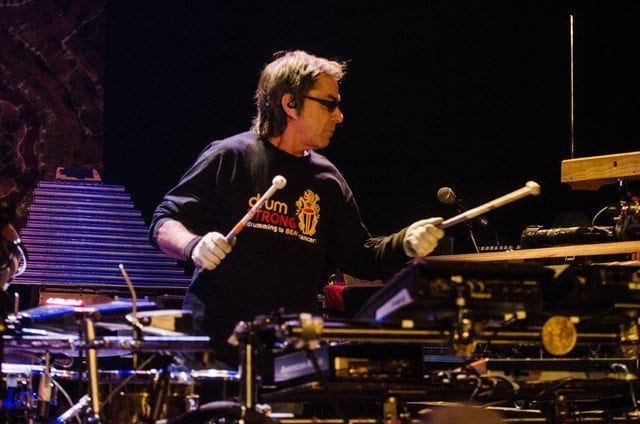
  • Mickey Hart, Approaching 70, Keeping the Spirit Alive with Evolving Group

    When Hurricane Sandy devastated the east coast last year, drummer Mickey Hart sat around watching the news, saddened but inspired by the resiliency shown.

    “It was heart-wrenching,” Hart, one of the four living members of the Grateful Dead, said in a recent phone interview. “I saw Bon Jovi on NBC News and all of a sudden the song just popped into my head.”

    The song he is referring to is titled “JerseyShore,” and is available for free download at mickeyhart.net. Hart said he wanted to give back to the people affected by asking for donations from those who download the song. You can download it for free, but the site encourages you to donate whatever amount you can. Hart is giving 100 percent of the proceeds to the Sandy Relief Fund.

    mickey hartHart said that he and his group, the Mickey Hart Band, collaborated to come up with the song. He gave credit to bassist DaveSchools, also of Widespread Panic, in helping the song develop.

    “It was my idea for the song, but the entire band contributed,” Hart said. “It just popped out, but everyone in the band lent a voice to it. … To me, music is many things, and one of those is that it helps to heal, to sing about what hurts and to illuminate pain. It’s like medicine and it boosts confidence.”

    Hart’s band has been going strong for three years now, with an ever-changing cast of musicians. For a guy who is about to hit his 70th birthday, Hart said he is as inspired as ever to write new music – he disclosed that a new album should be released by the end of the summer – while keeping the Grateful Dead spirit alive by putting a new take on old classics. The album does not have a title yet, but Hart said that he and long-time Dead lyricist Robert Hunter have collaborated on it, and that Hunter is rejuvenated.

    “Hunter is writing at the top of his game,” Mickey Hart said. “He’s still chock-full of ideas for great songs, and we’re gonna play those songs on this tour.”

    Hart joined the Grateful Dead in 1967, right around the time Hunter moved into the famed house at 710 Ashbury St. in San Francisco. Hart said his relationship with Hunter is just as strong as it was 46 years ago.

    “There’s no one like him,” Hart said. “He has an egoless style.”

    The band recently wrapped up the first leg of the Worlds Within Tour and announced a second leg, which focuses mainly on the northeast. The tour starts May 8 in Charlotte, N.C., and concludes May 24 at the Dark Star Jubilee in Ohio. In between are stops in Virginia, New York City, Pennsylvania, Maryland, Washington, D.C., Delaware, Connecticut, New Hampshire, Boston and Burlington, Vt.

    On May 22, Hart brings his band, which comprises vocalist Crystal Monee Hall, keyboardist Joe Bagale, guitarist Gawain Matthews, percussionist Sikiru Adepoju, with whom Hart won a Grammy in their Planet Drum project in the 1990s, drummer Greg Schutte and multi-instrumentalist Jonah Sharp to the Westcott Theater in Syracuse. The following night, the band will perform at the WaterStreetMusic Hall in Rochester.

    Schools will not be involved with this tour, as he has previous commitments. Schools said he is prepping for Widespread Panic’s upcoming summer tour. Schools joined the band in late 2011, and has toured with band ever since.

    “He’s got a day job, man,” Mickey Hart said. “But I can say that ‘BassMountain’ is still a big part of the band. He and I have a great dynamic in working together.”

    Filling in for Schools on the Worlds Within Tour is Adam Theis, who will also play trombone, according to Hart.

    On Jan. 6, 2012, the band performed at the Westcott, throwing down some amazingly brilliant and completely different takes on the Dead’s repertoire. Hall’s voice adds a layer of depth the Dead didn’t have vocally. Prior to joining Hart’s team, Hall was a part of the Tony Award-winning musical RENT.

    Before that show, Hart talked about his plans for taking light waves captured from outer space by scientists from Lawrence Berkeley Labs in California and turning them into sound bytes. From there, Hart used those sounds as either inspiration, or built a song or rhythm around them.

    To Dead fans, this may bring up the “Drums>Space” segment that happened at almost every show, but Hart cautioned otherwise, saying: “This is not space like (the Dead) used to do; we’re not interpreting what space is. This is us using the source material, the sounds of space, to play with our sound. This band can do that.”

    The conversation then turned toward the obvious: Will the living members of the Dead ever tour again? Was 2009’s tour the last?

    “I can’t answer that,” Hart said. “I look forward to any reunion of any kind, but it has to feel good.”

    Hart concluded the conversation by connecting the fans and the band.

    “These shows are gonna throb,” he said. “Fans will experience it with us. We need the audience, and they need us. Each night will be three hours of powerful music, and I consider it a privilege that I continue to do this. I might not be able to do some of the things I was capable of in my 20s, but I can say I am focused. I’m almost 70 and I don’t see myself retiring.”

    For more information on the tour, please visit mickeyhart.net for shows and ticketing information.

  • Interview: Brian “Head” Welch & JR Bareis of LOVE AND DEATH

    The lights dim down at the Upstate Concert Hall, only things really lit are the banners that represent the upcoming band.

    Three band members step onto the stage; a young man with long blonde hair and his eyes were decorated with zig-zag eyeliner, held a guitar, indicating his role in the band. The bassist wore whiteout contact lenses and a long sleeved striped shirt. The drummer, sat behind his kit in dark clothing, hair in front of his face, a bit difficult to see. Finally, the man we all knew from the band we all love, made his presence known when he stepped onto the stage with his arms crossed in front of him. Suddenly, a different kind of metal started to play from the speakers. Throughout the speedy setlist with the cover of Korn‘s “Blind”, a sea of bobbing bodies took over the venue mixed with head banging and fist pumping. The music was incredible and fresh, but the big question was: who is this band? Ladies and Gents, introducing the band combined with Korn and Pantera (“Korntera“, if you will), Love and Death, featuring Brian “Head” Welch from Korn as their lead singer.

    Upstate Metal’s Kate Drexel had the incredible opportunity to interview Brian and the band’s lead guitarist, JR Bareis, in one of the cozy backstage rooms with black leather couches. Among the many topics, the history behind Brian’s nickname came to light. “I was named it when I was a kid, my head grew before my body hit puberty and so they made fun of me.”

    After sharing a few laughs, the topic changed to Love and Death and how Brian recruited the members through YouTube auditions. “To save time, ’cause I didn’t want to fly people out because everybody lived in different states, so I was like, ‘I’m not gonna fly no one out, I don’t got that cash nowadays’ and I can tell if they’re a good fit, like just listening to them and watching them play and just feeling their vibe.” However, JR felt very differently about the auditions, having to do it locked up in his room and rock out like he was on the stage “It’s awkward…it’s weird and I didn’t move around as much when I first joined but after playing a lot…I went from playing worship music to like this band so it was a big change.”

    When asked about his biggest influences, Head gave off quite the list from AC/DC to Pantera. JR told Head that he was his biggest influence in both a joking yet serious manner, changing the subject to the release of the first Korn record in 1994, JR not born yet whilst Drexel was two years of age at the time, and mentioned that he was in college. After sharing a few more laughs, the influences topic returned, Head spoke of another big influence, Rage Against the Machine. “We took that passion and took it to a more darker, trippier place, but they are a huge influence. I’m surprised more people didn’t connect that… we all love that type of music and we did it right with his album, so we’re happy.” Head revealed that all of their songs come from JR (who he referred to as Gary) to which he responded that it comes to him randomly and all of the songs written were used on the album. “I think, back in Korn and stuff, I think God inspires all gifts for all different kinds and I think they all, like in Korn in back in the day, like corn came from Him, they got cloudy from all the drugs and stuff, and the drinking so we couldn’t write good stuff, anymore, like towards the last couple of years that I was there, so now I just believe that it all comes back from God, too because He’s the giver of all gifts,” explained Head. Drexel then told Welch that she currently attends a Catholic college where they have a bit of a conversation of the school’s environment.

    When asked about how the band became part of the In This Moment tour, Welch mentioned that it had something to do with the band’s management and was unsure on how they got to be part of this incredible opportunity. As for their downtime, “Sleep….I don’t have a lot of downtime lately, which is pretty cool because I’ve had a lot of downtime before but it just seems like…but I like to read and just get filled up spiritually in my catholic school…I read a lot of catholic books, that’s my high.”

    Love and Death is scheduled to play at this year’s Rock on the Range. Be sure to catch them on tour and check out their record, Between Here and Lost, because this is one you will not want to miss out on.

  • Review: TRAPT, 3 PILL MORNING, and ACIDIC

    Monday night, Acidic,3 Pill Morning and Trapt rocked the small local venue of Brighton Music Hall, where Kate Drexel was able to catch the show and do interviews with 3 Pill Morning’s lead vocalist, Jeff Stebbins, and Trapt’s Chris Taylor Brown.

    The mixed chatter that bounced off the brick walls of Brighton Music Hall died down as soon as the lights dimmed. The show was about to begin with Hollywood’s favorite small band, Acidic, opening with one of the tracks from their recent record, “Drive Thru”. The crowd began to warm up to this entrancing, incredible sound and vibe the band gave off. Before the second song, “The Brave”, Mike Gossard (vocals) dedicated it to the people of Boston for their strength, referring to the recent marathon bombing. Through the speedy setlist, Mike introduced the next song, a cover of The Beatles’ “Come Together” and invited Trapt’s drummer, Dylan Howard, to do guest drumming along with their drummer, Matt Whitaker. Gossard ran through the crowd while singing soulfully and jumped onto the bar, taking everyone by surprise. He made his way back to the stage to continue the setlist with the performance of “Satellite”, “Copper Man” and “Strata Red”.

    After Acidic’s killer performance, it was 3 Pill Morning’s turn to blow everyone out of the ballpark. The chatter once turned into cheers once the lights dimmed and their ears were filled with a song with electronic beats. The band members came on stage one by one dressed very formally to the theme of their latest record, Black Tie Love Affair. They began with “Revolution” and once the song ended, the electronic beat was back. Before their second song, “Nothings Real”, Stebbins introduced the band to the audience then proceeded to perform. “I Want That For You” had the whole crowd jumping, a sea of bobbing bodies. In the middle of the set, Stebbins toasted to Boston. The speedy setlist ended with their well-known single, “Loser” and “Skin.” This was one very explosive, energetic band that connected with their fans. “We’re just turning that live show into something that’s special instead of sitting at home, not doing anything or listening to the CD on Spotify. We want people to come out and have that experience with us,” said Stebbins after the show, when asked to describe their live performances. Next to hit the stage, the main event, Trapt.

    The anticipation grew immensely as the crew set up the stage for Trapt. Finally, the cue that it was time for them to make their presence known. The audience cheered drunkenly and wildly as the whole band stepped upon the stage. The lights shown upon Chris Taylor Brown’s face as he asked the crowd the question that was the title to the first song, “Who’s Going Home With You Tonight?” By the end of that song, Brown dedicated their second song, “Waiting”, to the strength of Boston causing the crowd to cheer very loudly. He gave a very powerful, spin-chilling speech before the performance of their third song, “End of My Rope”. “Bring It” had the concertgoers bouncing to the rhythm of the song. Occasionally, Brown brought out his guitar to a few of the songs. The way the lights hit the stage while Trapt was playing gave off a very intimate feel, and a sense of connection with the fans was very evident. Before each song, Brown gave incredible explanations behind those songs and performed them with great energy. The setlist ended with their latest single, “Love Hate Relationship”, “Still Frame” which had the audience jumping yet again, “Stand Up” and of course, their very famous single, “Headstrong” to which the audience sang along and bounced to. “It’s just one of those songs that’s kind of like the attitude of what we’re about, that’s not being trapped and not feeling the way we did and freeing ourselves from the confines of everything that you are automatically thrown into and it’s that attitude that we’re not gonna conform into anybody’s will and we’re always going to be headstrong,” explained Chris, when asked about the story behind the song.

    All in all, incredible, energetic vibes and just the kind of show Boston needed after what they went through. This was the night that the headstrong band met the headstrong city.

  • Meg and Laura Interview Tyler Hilton this Monday!

    Oh, what’s that sound? That’s right. That’s the sound of my teenage hopes circa One Tree Hill Season 3 coming back knocking on the door. His raspy voice and seamless songwriting makes you wish every song with the pronouns ‘she’ and ‘her’ was written about you. Ring a bell?

    Yes, you’ve guessed it. It’s Tyler Hilton. Not only is he currently on tour with Ryan Cabrera and Teddy Geiger, but Syracuse’s Westcott Theater happens to be one of the venues he’s playing. And here’s the best part: the notorious Meg and Laura will be talking to this contemporary Howie Day this coming Monday about his latest record, “Forget the Storm” and will be broadcasting the interview on their SoundCloud at 3 PM EST, Monday May 6th. Details are available on Facebook.com/themegandlaurashow.

    Don’t miss the show! Buy tickets through the Westcott Theater.

    Here’s an exclusive new track Tyler Hilton sent our way and we hope you enjoy it.

    [soundcloud url=”http://api.soundcloud.com/tracks/90331428″ params=”” width=” 100%” height=”166″ iframe=”true” /]

  • Bovine Social Club: An Interview with Samuel Saint Thomas

    Surely seeing or hearing a name like Bovine Social Club would conjure up images of cattle gathering.  Is there a club for such a thing?  Well in a sense, yes.  In this case people are not coming together to discuss cows or any such variation.  Instead, this is a band with a unique and humorous outlook rich in Americana roots.  caught up with lead singer and guitarist, Samuel Saint Thomas and talked about his band co-founded by Jeff Barg (drummer).

    Tabitha Clancy: You and your bandmates have many years experience as musicians. How did Bovine Social Club come together?

    Samuel Saint Thomas:  I had taken some time of to study. To be honest, I burned out as a singer-songwriter.  During the time I was a singer-songwriter, I had worked with a lot of different people – almost all of the guys from Railroad Earth at one point. I was in the same bands in the same neighborhood.  One of the people in that scene was Jeff Barg, our drummer now.  I had seen him around a couple of times and every time I’d see him he’d say, “Why don’t we start a band?” We both ended up at the same table at Tim Carbone’s birthday party.  Jeff was pretty forceful at that time.  So I said, “I’m going to think about this.” And we put together a list of things, a guide as to how we were going to go about this.  We started planning that night.  Over the next year the band went into development. By that time I had graduated.  I had just completed my graduate education.  We were really inspired, as well, by what was going on with Railroad Earth (RRE).  Next thing I know, Johnny Grubb had left RRE and he came on board and helped to get us started.  I guess at the end of that year of development, Tim Carbone had heard about the project. I went to see him play somewhere and he came up to me and said, “Hey, I want to produce your record.” So that changed things drastically because we just thought we would put a band together and play around town.  Tim said he was going to produce the record, and then everything started falling into place.  We were off and running.
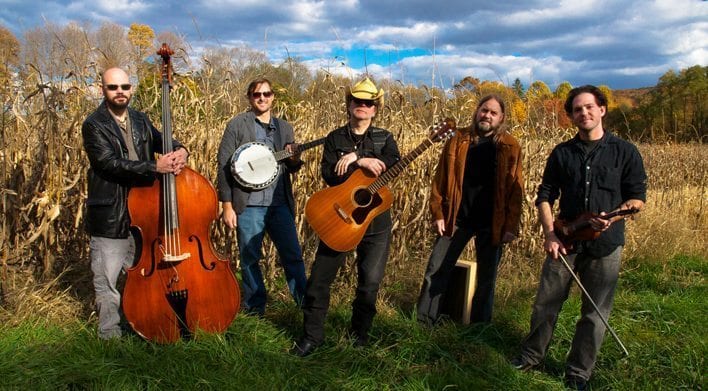
    bovine social clubTC:  Lets talk about your self-titled disc. What approach did you take going into the studio for the first time as a group?

    SST:  The approach was, “Tim, do whatever you want.”  We gave him a blank slate. I had produced records before and it was kind of hard to keep my mouth shut.  He came to our rehearsals and took notes on the songs.  He came back with a bunch of ideas about audio arrangements and tempo changes and things like that. We didn’t quite have all the songs we needed. Being put under the gun, I came up with two more songs.  This was very interesting because I was forced to come up with these two songs at the last minute. I always write songs over a period of a couple weeks and whatever came to mind is what ended up in a song. This time I did a little research. I picked up a book on gardening and went through the book.  I picked out the things that I thought was the most interesting about gardening and put it in the song. I just completed a song last night doing the same thing about the dust bowl. I did my research about the dust bowl and it’s the most interesting things that I try to express in a poetic way.

    TC:  How did working with producer, Tim Carbone help shape the disc?

    SST:  I think it first shaped the way that we played, that in turn made the disc what it was.  He took time with each one of us to work on specific things such as phrasings, or he would ask us questions; he would give us insight. For instance, for me, I have what Tim calls a “folk musician tick” with a very specific way that I finger the guitar when I’m playing chords. He said that really isn’t helping the song. That’s true from what I know about writing fiction or non-fiction. If it’s not helping the song, it doesn’t need to be there, it doesn’t matter how expressive or how creative. Tim was very focused on the song, so that in turn influenced the disc.

    TC:  Are there any future projects in mind?

    SST:  Yea, how to approach it is a difficult thing because the music business changes daily.  We’re probably going to have to wait until the fall to see what the climate is for what I would call music product, which is very different than playing music in the living room or a large concert hall.  I can’t imagine recording is going away.  We as human beings have this tendency to want to record everything for posterity or whatever reason.  I’m certainly not going to stop writing songs; I’m not going to stop recording them. It’s how we get them out there is the challenge.

    TC:  Speaking of projects, tell me a little about Chords4Carrots.

    SST:  The way we’ve marketed the band is quit unique because we’re really not a local band anywhere.  There is not a local scene per se where we live because we’re not a major metropolitan area for one thing and Americana music in the northeast is really in its baby stages once again.  We’re always trying to think of unique ways to go about this and one of the things that we’ve done is to produce our own shows.  If there is not a decent place to play, then we create one.  We create the whole show.  It’s labor intensive, of course. We partner with farming organizations, ones that stress local and organic.  We are partnering with a non-profit farming alliance in NJ to launch our first music festival this summer, which is part of Chords4Carrots.

    It’s an idea I had early on based in musicians getting asked to play a lot of benefits.  Why is it that the band doesn’t decide what they want to do rather than just wait for a phone call? Why don’t we have our own benefit program? What we found is not a lot of organizations know much about producing music events. If we’re going to put that kind of energy in, it should be successful. We put together Chords4Carrots and partner with organizations that want to raise money.  We teach them how to promote a music event. We have a complete twelve-week program.  From the inception, we name the event, find a venue with them and we walk them through the whole process. In the process, our arrangement with the organization is that we play for a percentage. They win and we win.

    TC:  What motivates your song writing?

    SST:  Well it changes over the years. I think that when your life is in turmoil then that’s probably going to come to the frontal lobe. The best songwriters write about what they’re experiencing. If you go back to my solo projects, a lot of my songs have to do with heartbreak and pain. For the last ten years or so, I’ve had none of that.  My life is quite nice.  I’ve started looking outside of myself for bigger things.  Such as the idea of unconditional love, or the idea of health.  That probably gave away to the song Picking Jamboree that is about how great it is to garden.  So, it doesn’t seem to be focused on my shortsightedness or just looking at myself.  Maybe my graduate education in writing has helped in some way to influence my song writing.  Things that concern me that is true for all is what is influencing my song writing these days.

    TC:  Your band mates have diverse and eclectic musical backgrounds.  Describe how your songs are created and shaped as a result.

    SST:  Of course that’s changing since we spent so much time with Tim last year.  We were under his guidance. We sort of grew our own legs so to speak. So as we go into rehearsal in developing a new song, we all ask ourselves about the song. The song dictates what sound the guitar should take, the sound the violin should have, the rhythm the drummer would use. People come with their own chops. For instance, Johnny (Smith) is a graduate of Berkley school in Boston. He has a lot of sensitivity to jazz and progressive rock. He tries to adapt that to something more organic.  They try to match my vocals so that it’s a cohesive thing.  The drummer can come up with a rhythm but it matches the way that I frame the words. I just come up with the skeleton of a song – it’s a rather organic process and if it’s works in the first 30 minutes or so, then it’s a keeper.

    TC:  Tell me about your musical upbringing.  How has that shaped you as a musician today?

    SST: I’ve tried to get a way from it, but I’ve come full circle and I feel like that I’ve embraced it now.  My father studied and played jazz in NY for several years until he met my mother. Through her, he became a minister. He took Jelly Roll Morton style into church. I didn’t have any idea that’s what that was until many years later. I discovered Jelly Roll Morton and realized it sounded exactly like my father. That surprised me.  This mix of people at my Dad’s church was African American and people from the south, so we had both influences of music.  I’m just wondering the connection where those two things have met.

    TC:  Do you have a fond musical memory of that time?

    SST: Oh yea, my sister playing her 45 rpms of bluegrass gospel constantly, one after the other.  She met a truck driver who played guitar. He used to come to the house a lot and I’d hear his southern twang.  Also listening to my mother and father rehearse their songs in the church. You could walk right through a door into the church from our living room. He had four pianos; he was always pretty close to one.  He had a radio show and recorded that every Sunday afternoon.  He recorded out in the church. He sat up there with his recorders, his microphones, and I sat next to him. Of course I couldn’t make a sound. He would record his one-hour radio show, my mother would sing, he would play the piano and then he would preach. It just seems to me that I heard music from morning until night without any break.

    TC:  Who are some of your current musical influences?

    SST:  The tried and true: Bill Monroe, Tom Waits, Bob Dylan, Hayes Carll, early Wilco and Johnny Cash.  I really like a lot of what is happening in the jam scene. It allows for creation in the moment right on stage. I really enjoy stretching out on stage and allowing that moment to speak to something new.

    TC:  What are the best and worst things about playing live?

    SST: I’m trying to understand the need the audience has to be social. I come from concert roots.  It seems now people are sick and tired of being on Facebook or Twitter.  When they see each other, they seem so happy to be there; they enjoy each other socially.  Musicians are going to have to address the need for people to be social. Maybe that means bands should take a couple of breaks instead. I know I don’t want to get angry on stage.  When a band hits the stage, they are there to work.  It’s my job to work to put on a great party for the audience. It’s not our party.  We’re serving someone else so they can have a great time.  With that in place, when you have support from the audience, you can give twice as much. I don’t think the audiences realize this; the more support you get from the audience, the better job the band is going to do.

    TC:  Describe what people should expect from the live Bovine experience.

    SST:  We come prepared.  We have an agenda. We also feel we are not just musicians, we’re entertainers.  We are there to put on a good show – a good time.  We’re there to work.  If I were to say anything to the fans, it would be, “this is your party.”

    TC:  How did you all decide on the band name?

    SST:  Well we were just being random one night.  Somebody in the room mentioned Bovine something, and then the word network got attached.  We had three or four names on a list. We (Jeff Barg) went for a beer and we weren’t going to stop until we had a name. I looked them up on my phone.  Nothing came up in Google for Bovine Social Club.

    TC:  Your band mate Seth Mandel has an extra talent as a nationally ranked Scrabble master.  Have you ever challenged him to a game?

    SST:  No (laughs)! I would surely lose.

    Members of the Bovine Social Club include Seth Mandel (multi-instrumentalist), Johnny Smith (banjo), Joe Borthwick (bass), Jeff Barg (drummer) and Samuel Saint Thomas (vocals, guitar).  They will be playing Olive’s in Nyack, NY on April 26th, as well as opening for Steep Canyon Rangers at Bethel Woods on May 3rd.
  • The Manhattan Project release Atomic Bomb Party vol. 3

    The Manhattan Project, one of the northeast’s newest powerhouses, came on to the scene in 2010 and is further making a name for itself with the release of Atomic Bomb Party vol. 3.

    The album’s opening track, “Endless Nights,” builds from the start into an all out barrage of sonic output layered with tasteful precision. Deep tonal exploration collides with danceable grooves for a menacing yet satisfying start to the party. Police sirens scream out in the background as Shawn Drogan’s drums continue to build the track for one last explosion of sound. The synth-heavy “Full Bounce” eases its way in with Charlie Lindner at the helm before the beats hit. Enter a layer of dub bass that tactfully wobbles in the background and the track is in full swing with a plethora of hihat chops. The breakdown is soothing and reflects a great contrast and range in the duo’s highs and lows. Beautiful vocals come and go taking the mind with them and returning it to the track just in time for the beat. “Bitcrusher” welcomes powerful vocals, a couple of sizable builds and captivating melodies for a sonic ride that may be the album’s shortest track in length, but also may be its strongest in regards to fan appeal.

    What starts out as light percussion and spacey synth builds oh so slowly with a focus on effects, before the bass enters the picture and the listeners fins themselves in the full swing of “Hiroshima.” The combination of middle eastern and Asian influences is evident and reflects a well-round arsenal. The EP concludes with “Aftermath,” a piece that begins with an almost apocalyptic buzz, chirping birds and the eventual warning of an “emergency.” Heavy bass drops and the composition takes off with soaring highs, clashing with deep lows in the albums’ ultimate build and release. The Manhattan Project’s overall output far exceeds that of a typical duo, though nothing about this duo or their music is typical. They are the past in their utilization of worldly influences. They are the present in their tasteful innovation. Atomic Bomb Party vol. 3 offers listeners a fresh perspective on a constantly developing music.

    J-man’s Conversation With Shawn Drogan(Drums):

    J-man: What are your thoughts on the new album?

    Shawn: We’re really excited about this one for a couple reasons; It’s very different than the previous two EP’s. Not only are the BPM’s of each song slower than the last, we explore different rhythms and feels on this one. There’s still a lot of variety like the last and it still sounds like us, but I think people will hear some evolution in the music. Another reason, is that this was an important one to get right and I think we did it! It’s been two years since we’ve released a studio album and we felt like we had to take it up a level this time around. A lot of the music came together fairly quickly in the weeks going into the studio. We only had a certain amount of time to write songs we felt good about and I feel we ended up producing some of our best stuff to date.

    J-man: What is your thought of the direction of “mainstream” electronic music and where do you see TMP in relation to a lot of the mainstream music?

    Shawn: I think music in general is in a great place! Popular music is popular for a reason. Our music definitely hits on certain levels of mainstream, but also offers something more for people that want something deeper.

    J-man: Can you talk about why it is you gentleman opt out of utilizing laptops in your live performances?

    Shawn: We both come from a very instrumental background and wanted to utilize that element mainly when we started, but take it somewhere new. We never really planned it out that way, but as we started to develop our sound, we didn’t feel a need for laptops to perform. Now I guess it kind of sets us apart in a way.

    J-man: What does TMP have coming up this spring/summer that you guys are most exited about?

    Shawn: We’ll be hitting a lot of new cities in the next few months which is always fun, and we’ll be announcing some more festivals very soon.

    The Manhattan Project’s websitewww.themanhattanprojectlive.com