New York City’s own Scotia Rose have made their debut with two singles, “Run” and “Queens and Kings.” Beginning with an intensely suspenseful drumline, “Run” offers a unique blend of hard rock and country pop. “Queens and Kings” is a heartwarming ode from Scotia Rose’s front man to his bandmates, admiring their work ethic and dedication.
Comprised of musicians from NYC’s cover band circuit, Scotia Rose was formed after the COVID-19 Pandemic. Led by Jeff Weiss, the band includes musicians from different genres, with Jason Laney on keyboards and backup vocals, blues/rocker Marcela de Campos on guitar, Antoinette Ady on violin, and Andrew Koss on bass.
Frontman Jeff Weiss wrote “Run” as his previous band, U.S. Americans, were getting ready to play their final show. He said of the experience, “I wasn’t quite ready to throw in the towel…The only answer I could find was to keep pushing, keep fighting, keep running. Run away from that ending toward a new beginning.”
Weiss credits “Run” for giving him the courage to start over. “Once I finished it, I knew it was time to close one door and open another.” The bittersweet feeling of moving on shines through in the accompanying music video, with footage that evokes feelings of hope and loss. The director of the music video, Kevin Banker, made the video with full creative liberty. Weiss said, “I didn’t tell [Banker] what the song was about. I prefer not to and let the listener find their own meaning. Kevin said he felt feelings of loss and he wasn’t wrong.”
The second single, “Queens and Kings”, offers a release of optimism, with a melodic chorus and bright piano. Scotia Rose took the music video as an opportunity to showcase their stage presence and dynamic. The video features footage of the band hanging out in Carl Schurz Park and playing at The Cutting Room, shot by Hugo Salazar.
Scotia Rose marked the beginning of a promising career with their debut. The band is set to play more shows in New York and Connecticut. Tickets are available at the following link, and the music video for “Queens and Kings” is available below.
Mariah Carey, the queen of Christmas, has just announced a 2024 Christmas tour, visiting 20 cities across the U.S. with two stops in New York State: one in Belmont Park and the other in Brooklyn.
The annual tour is particularly special this year, with 2024 marking the 30th anniversary of her Merry Christmas album and âAll I Want For Christmas Is You.â
The best-selling female artist of all time, with over 200 million records sold, Mariah Carey, has announced her highly-anticipated annual Christmas extravaganza is back and going national. Careyâs Christmas Time will visit 20 cities across the country, including a stop at Prudential Center in Newark, NJ, on Friday, December 13; UBS Arena in Belmont Park, NY, on Sunday, December 15; and Barclays Center in Brooklyn, NY, on Tuesday, December 17, 2024.
This tour marks Carey’s grandest holiday spectacle to date and is the first of many surprises she has in store to celebrate the 30th anniversary of her legendary album Merry Christmas and its record-shattering single “All I Want For Christmas Is You.” The show will feature the global superstar’s timeless holiday classics alongside fan-favorite chart-toppers, promising an unforgettable festive experience.
Tickets will be available starting with a Verizon presale beginning Tuesday, August 6. Additional presales will run throughout the week ahead of the general on-sale beginning on Friday, August 9 at 10 a.m. at LiveNation.com. Fans can also purchase VIP packages, which may include premium tickets, access to the pre-show VIP Lounge, exclusive VIP merch items and more. VIP package contents vary based on the offer selected. For more information, visit here. See below for the full list of tour dates.
Photo Credit: Jeff Kravitz / Getty
Full Tour
Wed Nov 06 | Highland, CA | Yaamava Theater
Fri Nov 08 | Los Angeles, CA | Hollywood Bowl
Wed Nov 13 | Greater Palm Springs, CA | Acrisure Arena
Fri Nov 15 | Phoenix, AZ | Footprint Center
Sun Nov 17 | Austin, TX | Moody Center
Tue Nov 19 | Houston, TX | Toyota Center
Thu Nov 21 | Dallas, TX | American Airlines Center
Sat Nov 23 | Atlanta, GA | State Farm Arena
Mon Nov 25 | Nashville, TN | Bridgestone Arena
Wed Nov 27 | Rosemont, IL | Allstate Arena
Fri Nov 29 | St. Louis, MO | Enterprise Center
Sun Dec 01 | Washington, DC | Capital One Arena
Tue Dec 03 | Philadelphia, PA | Wells Fargo Center
San Diego’s very own almost monday is an electrifying trio making waves in the alt pop scene. Comprised of the ever-charismatic lead vocalist Dawson Daugherty, guitarist Cole Clisby, and bassist Luke Fabry, the guys have perfected the art of blending surf rock, indie pop, and 80s new wave into a sound that’s as catchy as it is unique.
Since dropping their debut EP don’t say you’re ordinary, almost monday has been on an unstoppable ascent. Their music captures the essence of youthful exuberance, heartbreak, and the rollercoaster of life, all wrapped in upbeat, danceable tunes.
almost monday rocked Madison Square Garden on July 27th as they opened for AJR. Dawson, wearing an “I ❤️ NY” shirt, set a high-energy tone for the night.
The set started off with “is it too late?”, immediately grabbing the crowd’s attention with an upbeat rhythm. Dawson’s boundless energy was on full display as he bounded across the stage, throwing in some impressive martial arts kicks and slices at the climax of each song. The fans couldn’t get enough, cheering louder with each jump.
Following up with “cough drops” and “can’t slow down,” the band kept the momentum going, and the energy in the room only grew. The highlight came during “tidal wave,” when the anthemic chorus had the entire audience singing along, their voices echoing through the legendary arena.
With “sunburn” and “only wanna dance,” the band showcased their talent for crafting feel-good tunes that make you move. The chemistry between Dawson, Cole, and Luke was undeniable. Their playful stage interactions added extra charm to their performance. “sun keeps on shining” had a perfect summer vibe, bringing a touch of their sunny Californian roots to New York City.
Closing with “life goes by,” almost monday left everyone on a high note. The crowd’s response was nothing short of enthusiastic, with cheers and applause ringing out long after the final chord. It was clear that almost monday had won over many new fans that night.
Their dynamic performance, featuring Dawson’s karate kicks and infectious tunes, left everyone smiling and with a new favorite band.
almost monday isn’t just a band to watch; they’re a band you can’t afford to miss.
Setlist: is it too late?, cough drops, can’t slow down, tidal wave, sunburn, only wanna dance, sun keeps on shining, life goes by
It was almost 9pm and the crowd was enraptured by an ecosystem of hundreds of tiny radiant lights sparkling from the Brooklyn Bridge. Yet, as soon as Amber Bain stepped on the stage, it was clear that she was the most incandescent star amongst them all, and she was here to deliver an utterly transcending performance of a lifetime. English synthpop and folktronica artist Amber Mary Bain, professionally under the moniker The Japanese House, performed at her sold-out show on The Rooftop at Pier 17 on July 27 – gloriously guiding her audience through a journey heartache, loneliness, yearning and unfulfilled desires.
Photo by Alisha Goel
The night started with one of her most popular songs “Touching Yourself” from her sophomore album In the End It Always Does. While the guitar and sax in the background make it sound like a fun lightweight pop song, the verses harrowingly grappled with the isolating feeling of not being able to forge a connection with someone no matter how hard you try to.
Photo by Alisha Goel
The set featured artists vocals from artists like Matty Healy from The 1975, Charlie XCX and members from MUNA and Bon Iver, perfectly complementing Bain’s signature layered vocals, experimental guitar riffs and electronic pop instrumentals. Her music fluidly infuses intimately confessional songwriting, potent storytelling and tender vocals, creating a highly nuanced and immersive listening experience.
Photo by Alisha Goel
A perfect example of this was her performance of “Sad to Breathe,” which started out as a gentle instrumental exploration on heartbreak, and then completely mutated into a catchy upbeat pop song. Bain also played “Boyhood,” a song about trying to embrace and find oneself amidst all the chaos, while also leaving the listener contemplating and reflecting on their alternate paths and experiences that brought them to this point in time.
The stage was decorated with colorful orbs, and the lights beautifully contrasted the gorgeous NYC skyline and the East River in the backdrop.
Photo by Alisha Goel
The encore section of the concert featured four songs, including a country acoustic guitar rendition of “Boyhood.” Bain played her latest single “:)” and prefaced it by saying, “It’s about being in love, about being gay. It is my favorite song to play,” which gained a lot of head nods and laughs from the audience.
Photo by Alisha Goel
Before bidding the crowd farewell with fan-favorite “Sunshine Baby,” Bain expressed her gratitude and emotionally declared that this was her favorite show she had ever played. Then the lights dimmed, and the whole venue screamed the lyrics “Sitting in the back seat/ Driving with my sunshine baby” – creating an ethereally cathartic moment of casual magic.
Photo by Alisha Goel
The Japanese House – The Rooftop on Pier 17 – July 27, 2024
Setlist: Touching Yourself, Sad to Breathe, Something Has to Change, Morning Pages, Follow My Girl, Boyhood, Baby goes again, You Seemed So Happy, Over There, Friends, Worms, Chewing Cotton Wool, Saw You In a Dream, Dionne Encore: Still, :), Boyhood(Acoustic Version), Sunshine Baby
Photo by Alisha GoelPhoto by Alisha GoelPhoto by Alisha GoelPhoto by Alisha GoelPhoto by Alisha GoelPhoto by Alisha GoelPhoto by Alisha Goel
Tag’s Summer Stage, located in Big Flats, NY, is set for three more concerts in their summer series.
The large Southern Tier venue has hosted an impressive line-up featuring Billy Currington, Rip Moore, Larry Fleet, Brantley Gilbert and more. The rest of the season will feature Primus, Coheed & Cambria, The Australian Pink Floyd Show, and Flo Rida, bringing in a diverse genre of music from country to hip-hop, something for everyone to dance to.
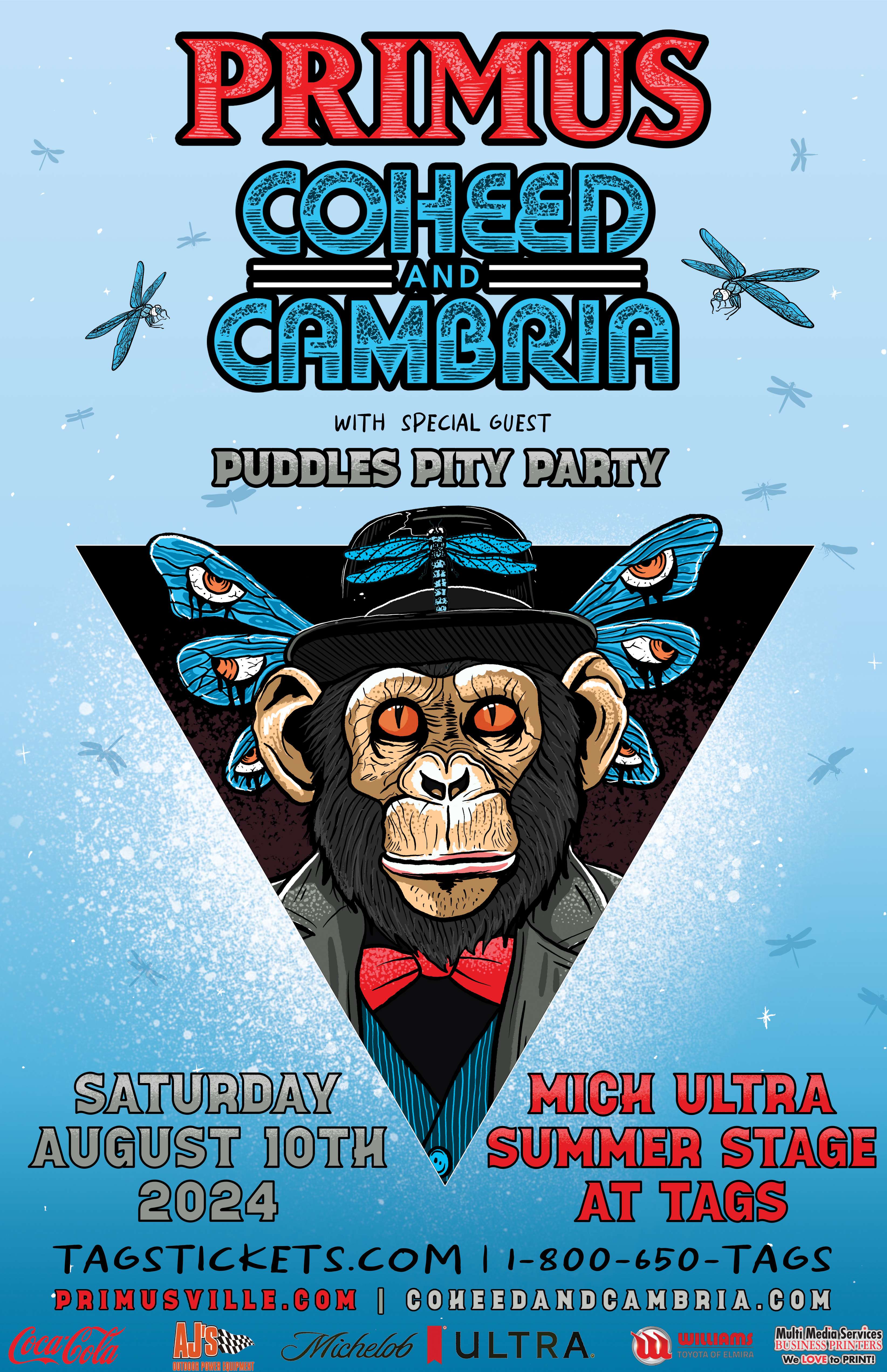
August 10th, 7:00PM – Primus, Coheed and Cambria with Puddles Pity Party
The Mich Ultra Summer Stage at Tag’s welcomes cutting-edge rock superstars, PRIMUS with special guests’ progressive rock, & science fiction comic band Coheed and Cambria & America Got Talent Puddles Pity Party. Joining together for a night of unforgettable entertainment
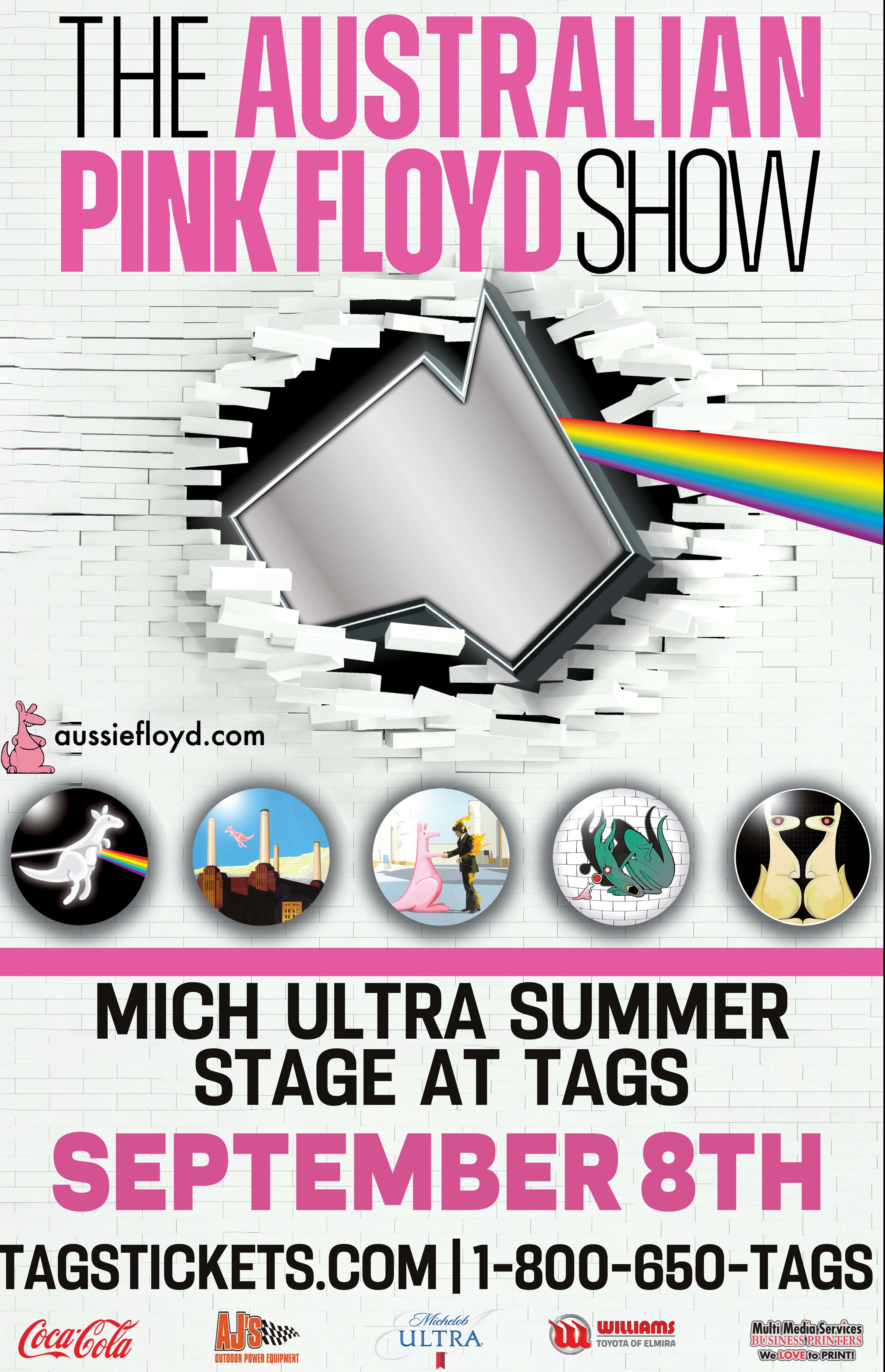
September 8th, 7:30PM – Australian Pink Floyd Show
Selling over 4 million tickets worldwide and described by The Times as “The Gold Standard” and The Daily Mirror as “The Kings of the Genre”, The Australian Pink Floyd Show Performing the music of Pink Floyd with a note for note perfection, this critically acclaimed show has been astonishing audiences worldwide for more than three decades.
Always striving to reproduce the complete Pink Floyd experience and bring the music to new audiences, the show continues to include a stunning light and laser show, video animations, state-of-the-art, high-resolution LED screen technology, and other special effects. In addition, and in true Pink Floyd fashion, there are several huge inflatables including a giant pig and their own unique Pink Kangaroo.
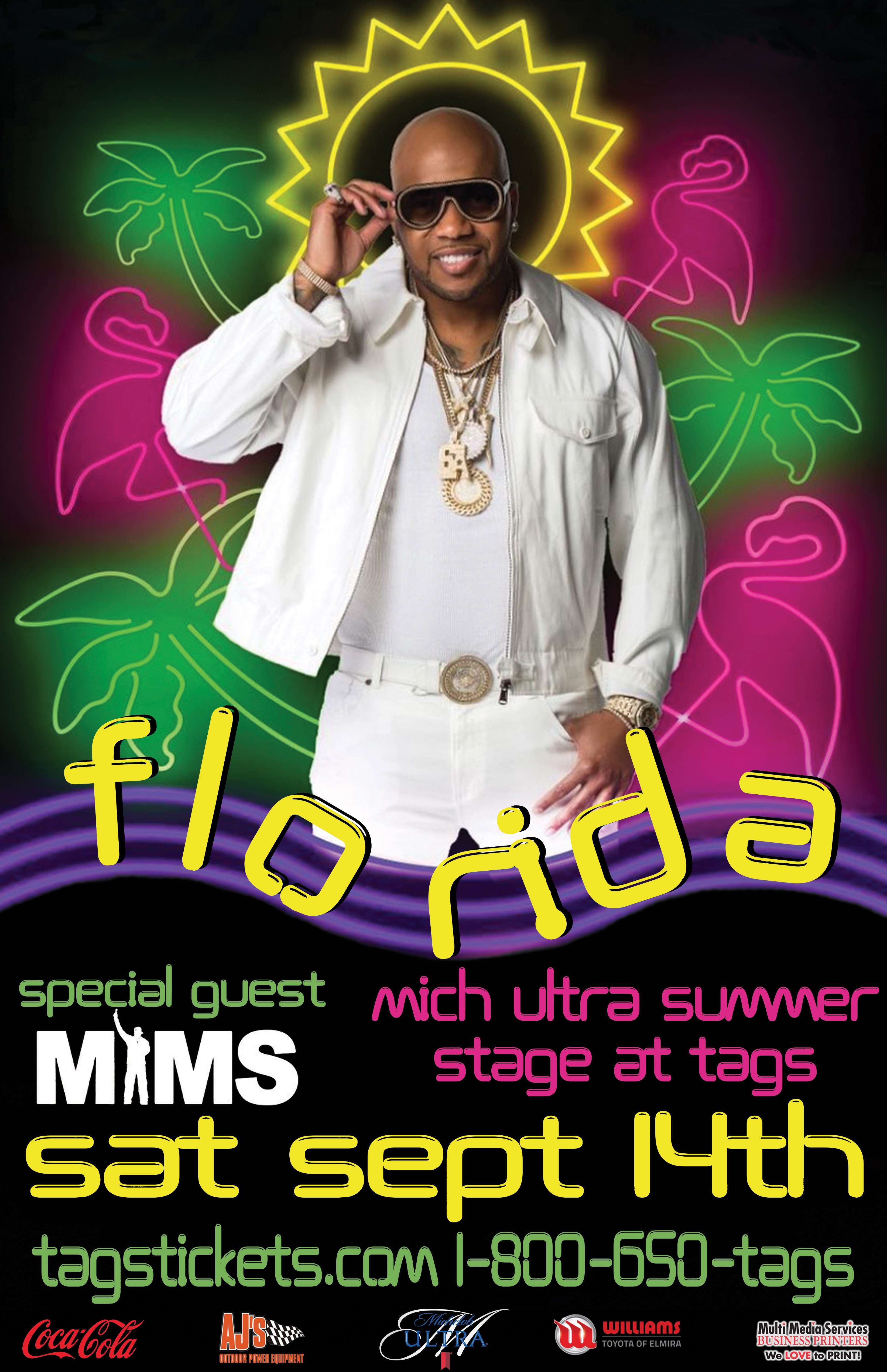
September 14th, 8:00PM – Flo Rida
Grammy-nominated hip-hop superstar known for his party anthems, Flo Rida, brings his high-energy party to Tag’s Summer Stage Series for one electric night on, Saturday, September 14th. Joining Flo Rida is the #1 US Billboard Hot 100 chart-topper, with over 100 million records sold worldwide, is MIMS. To get the party started off right a world-class DJ will spin the tunes to keep you dancing the night away. It promises to be one unforgettable evening. We can’t wait to see you all party at “My House”, as we all have a “Good Feeling”, it’s going to be one of the “Wild Ones.”
From the moment I hit play on Hot Freaks’ new album Hot Freaks Forever, I was instantly transported into a nostalgic time warp, addictingly reliving the raw angst and bittersweet memories of my high school days. With 10 funky synth-pop and disco tracks, Minneapolis indie pop-rock band Hot Freaks resurrected from an almost decade long hiatus and infectiously captured all of our hearts at the Mercury Lounge on July 19.
Photo by Alisha Goel
“We had already been talking about reuniting,” said frontman Leo Vondracek. “I could tell that our Spotify streams had been creeping up, which was weird because we weren’t doing anything about it at all.”
After years of inactivity from the band, the song “Puppy Princess” from their debut album Hot Freaks went viral and became an overnight hit. “I didn’t really think it was that big of a deal, but then later that week we were getting emails from record labels. It was very surreal,” Vondracek recounted.
Photo by Alisha Goel
Opening their set with “Let’s Start a Country” from their new album, the night started with everyone chanting unisonally “One, two, three, let’s start a country,” perfectly encapsulating the feeling of wanting to move away from modern civilization and disappear into a vacuum.
They then transitioned to some of their more personal and intimate songs like “Write Me Letters” and “Heartache” from their previous album. When asked if their songs are generally autobiographical, Vondracek replied, “The songs that have worked are the ones that have this vulnerability and intrigue. They’re mostly, I guess, autobiographical, and even if it’s not like the whole story, they have a nugget of truth in them.”
Photo by Alisha Goel
Comparing their latest album to their debut album, Vondracek commented, “I feel like maybe compared to the first record, the second one is a little less vulnerable or more hiding behind metaphors.” Keyboardist Celeste Heule seemed to agree with this, and shared her thoughts on it: “I do feel like the second album has a lot of secret vulnerabilities in every song, but that could also because I read into lyrics and have my own vivid imagination. I don’t even know what they’re about or what Leo is thinking, but I feel like I’m reading into his soul. It’s stuff he doesn’t want me to know.”
One of my favorites of the night was “Stuart Little Vibes,” a quirky song with a soothing bridge that made me feel sublimely elevated from the venue. While Vondracek described this song as “a bit cartoonish,” he also felt the song was very postmodern. “It was like an idea of a thing, it wasn’t an actual thing. We wanted to try making something funky and weird in a fun way,” explained Vondracek.
Photo by Alisha Goel
Diving into their songwriting process, Vondracek commented, “It’s like writing a diary entry and making yourself find a balance. If you’re feeling low, vent it, and if you can put it into a fun pop song that has a self-contained arc to it – that’s like really fun.” Vondracek also talked about finding courage in the process: “It’s kind of like skydiving. You have to get ready to bolster yourself up to jump out of that plane. It’s really similar – the courage to get up there and be vulnerable.”
The band also performed “What Can I Do?” from their latest album. While a lot of their music is about love and yearning for unrequited crushes, this song thematically stood out to me from their other music – painting an introspective picture on the struggles of moving on with melancholically upbeat instrumentals in the background. “It felt like a very first thing that popped into my mind. I thought that it was really fun because it was kind of a straight shooting, simple lyric and a sad vulnerable thing,” said Vondracek. Bassist Sarah Darnall added, “It’s like you did a really hard yoga class and you get to do your Savasana at the end.”
Photo by Alisha Goel
When asked about finality and completion of a song, Vondracek interestingly remarked: “A lot of time it feels like archaeology, like thrusting the dirt off and uncovering. Sometimes there is this intrinsic feeling, but more and more, I barely have that magic feeling. I think we all seek that feeling of completion, but if you don’t feel that, it doesn’t mean it’s bad. Sometimes you just have to take that leap of faith and believe that’s good.”
The night ended with their two most popular songs “Puppy Princess” and “I Wanna be your Boyfriend.” The crowd went absolutely crazy, and people were jumping, screaming their guts out and hugging their friends. The atmosphere was intoxicatingly electric, and the intensity made it feel like a massive block party where people were busting out their best dance moves. It was chaotic, unhinged and just the right amount of freaky.
Photo by Alisha Goel
Hot Freaks – Mercury Lounge, NYC – July 19, 2024
Setlist: Let’s Start a Country, Together Above, Write Me Letters, Heartache, End of the Night, Stuart Little Vibes, Boyfriend, Outset, Not Concerned with Everything, Girlfriend, I Want You To Be My Daddy, Baby Boy, What Can I Do, Puppy Princess, I Wanna Be Your Boyfriend
Photo by Alisha GoelPhoto by Alisha GoelPhoto by Alisha GoelPhoto by Alisha Goel
During the 1960s, the Brill Building revolutionized all aspects of the music industry. The operations of this one building turned the fledgling genres of rock and pop into a streamlined machine. In a matter of a few years, the building’s music businesses revolutionized the process of songwriting, recording, and promotion. On top of this, the building produced timeless hits of the 1960s and launched the careers of the biggest singer-songwriters in history. So how is it that a rather unassuming building in the heart of Manhattan could have such an immense impact?
The Brill Building in 1931
Building the Brill
The origin of the Brill Building can be traced back to one man: Abraham Lefcourt. Lefcourt was born in Birmingham, England in 1876 but immigrated to Manhattan in 1882. He worked his way up through the ranks of New York City society, starting work as a shoeshine and newsboy. Lefcourt’s break came when he made his foray into the world of real estate. In 1910, he built a 12-story building housing garment businesses.
By 1930, he had developed 31 multi-million dollar properties throughout Manhattan’s Garment District. In 1929, Lefcourt turned his attention to a property on the corner of Broadway and 49th Street. This property housed the Brill Brother’s men’s clothing store, but Lefcourt had greater ambitions for it. He aspired to build the tallest building on Earth – a 1,050 foot skyscraper – on the site of the store. Lefcourt soon leased the property from the Brills and began construction on his $30 million colossus.
Abraham Lefcourt Photograph, Building Investment and Maintenance, June 1927, Courtesy of Avery Architectural and Fine Arts Library, Columbia University in the City of New York
This plan was far from unique to Lefcourt. During the 1920s, Manhattan moved upward, with firms competing against one another to build the tallest tower in the city. The years following WWI saw the US population and economy boom, leading to a need for 10 times more office space than was available. On an island as small as Manhattan, the only choice was to build upward. As architect Louis Horowitz remembered, “Our bellwether was proven by the sudden hurry of many to lease offices from us-inland manufacturers of everything that fighting soldiers needed. Brokers, lawyers and a host of others signed up for space.”
A growing sense of optimism additionally fueled this upward movement as the US entered the “Roaring Twenties.” The US had become the world’s foremost economic superpower, leading in GDP and per capita income. In line with this was a trend of growing consumerism. More and more people could afford automobiles, radios, and tickets to movies – both silent and sound. In this period of unparalleled growth and prosperity, architectural projects likewise expanded, mirroring this growth.
As soon as there was demand for skyscrapers, there was also competition. By 1930, three Manhattan buildings were vying to be tallest in the world. The first completed was the Bank of Manhattan Trust Building at 40 Wall Street. With its upper pyramid reaching a staggering 927 feet, the building was the largest on record upon its completion in May 1930. The building however would not keep this title for even a year before the Chrysler Building topped it at 1,046 feet. As the legend goes, Chrysler waited for the completion of 40 Wall Street, before raising the Chrysler Building’s trademark spire, giving it the title. Again, within only a year, both towers had been dwarfed by the massive 1,454-foot Empire State Building. In spite of this, Abraham Lefcourt thought that his Brill Building stood a real chance at winning this architectural space race.
The Empire State Building under construction in 1930
The Brill Building, however, was doomed at liftoff. First was the property’s miniscule layout. When constructing the tower, Lefcourt only had 13,000 square feet to work with. This was nothing compared to the Chrysler Building’s 37,000 square foot base, or the Empire State’s 91,000 square foot base. These much larger buildings had already run into issues on their upper floors, with elevators and utilities leaving next to no usable space.
As if the space constraints were not bad enough, the market crashed one month into construction. October 29th, 1929 – known as Black Tuesday – ravaged Wall Street, and kicked off the multi-year Great Depression. By 1932, the US stock market had lost 89% of its value, and unemployment rose to 25% as banks collapsed across the country. Lefcourt surprisingly viewed this as a blessing in disguise. He hoped that investors would abandon the stock market, and invest more in land, only emboldening his construction plans.
It was clear that construction constraints and the collapse of the global economy could not stop Lefcourt. However, personal tragedy in 1930 ended his architectural aspirations. On February 3rd, Lefcourt’s son Alan died of anemia, and within one month Abraham had stopped construction of the building at only ten stories. Abraham christened this new office building the Alan E. Lefcourt Building in honor of his late son.
While nowhere near as tall as its competitors, the Lefcourt building was an architectural marvel in its own right. The white brick tower embodied the Art Deco style of the 1920s standing in stark contrast to the other buildings on Broadway. In addition, it features ornate terracotta reliefs, and brass portrait busts of Alan Lefcourt.
The Brass Portrait bust of Alan E. Lefcourt above the Brill Building’s entrance
When the building opened in 1930, it hosted modern amenities that made it desirable as an executive office space. Upon its opening, the New York Times reported that it boasted “new automatic-stop, high-speed elevators,” and a shopping lobby. Lefcourt began by leasing out entire floors to firms which were to be later subdivided. While some law and accounting firms, as well as utility offices opened, this model was largely a failure. By 1934, many offices were still vacant, leading to a shift in strategy. Floors were divided up into small office spaces that were individually leased to tenants. This proved to be a success, attracting specifically the music industry to the building. Within only ten years, 100 music tenants had moved into the Brill Building.
The Origins of Popular Music in New York
The music industry within the Brill Building built off of a longer tradition of pop music in Manhattan. Since 1890, Midtown Manhattan had housed its own music industry known as Tin Pan Alley. The area along West 28th Street originally housed residential row houses, but shifted towards music with the establishment of M. Witmark and Sons publishing in 1893. By 1900, the block had the largest concentration of music publishers anywhere in the country. On top of this, Tin Pan Alley housed a large concentration of saloons and music halls that worked alongside publishers.
Tin Pan Alley in 1905
In many ways, Tin Pan Alley invented modern music promotion through the process of “plugging.” Plugging was the idea of having as many people as possible hear your song. In an era before radio, TV, or film, plugging required live performance. As a result, Tin Pan Alley publishers allied with local music halls to promote their compositions. These promotions included free sheet music, singalongs, and other events. Because of these plugging techniques, Tin Pan Alley was always alive with the sound of piano tunes. This lively atmosphere gave the area and industry its name, with “tin pan” being slang for the cheap pianos used in the area’s saloons.
Throughout its operations, Tin Pan Alley launched timeless hits and legendary careers. The Alley’s composers penned songs including “Take Me Out to the Ballgame,” “God Bless America,” and “Hello Ma Baby.” Many of these Tin Pan Alley hits transcend era and genre, remaining well known almost a century after their composition. In addition to hits like these, many of the alley’s composers became celebrities in their own right.
Sheet music for a Tin Pan Alley novelty song
One such composer was a young Russian immigrant named Israel Beilin, who immigrated to Manhattan in 1893. Upon his naturalization, immigration authorities legally changed his name to Irving Berlin. At only 19, Berlin was composing songs for Tin Pan Alley publishers. With hits like “Alexander’s Jug Band,” and the aforementioned “God Bless America,” Berlin took over popular music. Throughout his career, he penned hundreds of songs, and topped the charts 25 times.
Tin Pan Alley publishers also revolutionized the music industry through the creation of dance crazes. capitalizing off past theater and ragtime hits, the alley’s composers began writing danceable novelty songs. These – like modern dance crazes – were meant to be fads, spreading quickly and aiding in the sale of sheet music to clubs across the country, Many of these Tin Pan Alley dances were just that, with the “Turkey Trot,” “Grizzly Bear,” and “Cubanola Glide” quickly gaining popularity then falling out of favor. One dance – The Foxtrot – became a craze unlike any other, growing into its own genre. These dance crazes foreshadow a technique that Brill Building songwriters would latch onto decades later. In fact, Brill Building writer Neil Sedaka argues that its songwriting infrastructure was a natural evolution of Tin Pan Alley plugging.
Despite its massive success and revolutionary methods, Tin Pan Alley did not last forever. For one, the local industry could not keep up with the technological advances of the 1920s. Much of Tin Pan Alley’s profits were directly tied to the sale of sheet music, which quickly became outdated as radio and recordings were becoming more widespread. Despite this, many publishers were able to persevere despite lowered sales. The invention of the sound movie – or “Talkie” – was what really ended the alley’s operations. The medium was a great vehicle for song promotion, leading to West Coast entertainment firms buying up many of the local publishers in the alley.
As Tin Pan Alley was dying down, a new genre called Jazz was exploding in Manhattan. During the Harlem Renaissance of the 1920s, New York became a hub for African American musicians and artists. Jazz was not a new genre, with its roots originating from the musical tradition of America’s enslaved population. As the New York Times reported in 1926, “Jazz came to America 300 years ago in chains.” Despite this long history, the 1920s was when jazz really emerged onto the music scene. In Harlem’s speakeasies, like the Cotton Club, artists like Duke Ellington and Louis Armstrong revolutionized the genre and introduced it to larger and larger audiences. As a result of these artists, the 1920s is often remembered as the “Jazz Age.”
Harlem’s Cotton Club in 1937
As the US entered the 1930s, many Jazz artists began incorporating elements of Tin Pan Alley songs. Jazz bands were growing in size, featuring large horn and rhythm sections. Bandleaders began performing slower, lushly orchestrated jazz versions of the foxtrot. This type of swing music became known as “Big Band” due to the size of the ensembles performing it. Big Band soon became the defining sound of the era, with bandleaders like Count Basie, Benny Goodman, and Bob Crosby topping the charts.
The Brill Building Becomes a Music Hub
When Tin Pan Alley’s influence began to wane, many of its songwriters still remained in New York. Needing work, many publishers, songwriters, and promoters began to lease small offices in the Brill Building throughout the 1930s. Stars of the Harlem Renaissance like Cab Calloway and Duke Ellington, as well as big band stars Louis Prima and Nat King Cole all had offices in the building during the decade.
In addition to these big names, songwriters continued their work in the building, adapting the process of plugging for the radio era. These composers would take songs written in the Brill Building and present them to radio stations and orchestras to be made into hits. Brill Building songs were frequent features on Billboard’s Hit Parade radio program, with stars like the Benny Goodman, Glenn Miller, and Tommy Dorsey Orchestras performing them. The building’s operations during the Big Band Era established the framework that its songwriters perfected during the rock n roll age.
The Benny Goodman Orchestra
By the 1950s, Big Band and crooners were falling out of fashion with American teens, who were becoming enthralled by rock ‘n’ roll. Much like its predecessor jazz, rock originated from the musical tradition of enslaved African Americans in the South. This musical tradition, encompassing blues, country, and gospel slowly melded together to form something entirely new. Building off of guitar virtuosos like Robert Johnson, bluesmen like T Bone Walker and Muddy Waters began to incorporate electric instrumentation into their stylings.
These bluesmen established the electric guitar as the centerpiece of the genre, establishing the foundation for rock ‘n’ roll. In 1951, Jackie Brenston released “Rocket 88,” often considered to be the first rock record. The song is heavily indebted to the blues, being led by piano and saxophone with an underlying distorted guitar. The song hit #1 on the Billboard R&B charts, kicking off the rock era. By 1958, with the release of Chuck Berry’s “Johnny B. Goode,” rock had become the genre of American youth. Piggybacking off of this success, radio programs, jukeboxes, and American Bandstand all highlighted rock music.
It was this explosion of rock ‘n’ roll into the American mainstream that truly made the Brill Building. By the end of the 1950s, songwriters played a major role in rock music, penning tunes for rock stars to perform. Perhaps the most influential songwriters were the duo of Jerry Leiber and Mike Stoller, who wrote Elvis hits “Hound Dog,” and “Jailhouse Rock.” With songwriters like these, there was a “professionalization” of the rock genre, with a streamlining of the songwriting, recording, and promotion processes.
The Brill Building quickly became the center of this professionalized rock industry. By 1962, the Brill Building housed 162 music businesses. In 1958, publishing duo Don Kirshner and Al Nevis founded Aldon Music, which quickly became the city’s paramount music business. The firm was originally located at 1650 Broadway – a block away from the Brill Building – but cooperated closely with the building’s businesses. Kirshner and Neivis recognized the importance of marketing towards America’s teens, and created an assembly line for rock music production. Aldon Music realized that teen songwriters could best understand the sensibilities that would appeal to the youth market. As a result they established a team of young writers to crank out pop songs.
“Every day we squeezed into our respective cubby holes with just enough room for a piano, a bench, and maybe a chair for the lyricist if you were lucky. You’d sit there and write and you could hear someone in the next cubby hole composing a song exactly like yours”
– Carole King
This songwriting process was ruthlessly efficient. Writers would work in small offices, often adorned with only an upright piano, penning teen pop songs for hours each day. Once finished, writers would take their songs to the building’s publishers until someone bought them. On top of that, publishers could get arrangements, vocalists, and lead sheets all from within the building’s businesses. With all of those pieces, a demo could be recorded all within the same day. In many ways, the Brill Building was its own self-contained industry, containing all the ingredients needed for pop song writing, recording, and publishing.
“We had an office we worked out of with a piano. It was on the sixth floor and the window didn’t open and the air-conditioning didn’t work, and Hal smoked constantly”
– Burt Bacharach
The Aldon Music Staff
As previously mentioned, Aldon music employed many teenage songwriters, many of whom grew up in musical circles together. One such songwriter was a young Carole King. Born in Manhattan in 1942, King immersed herself in music at a young age, learning music theory and piano as a child. By the time she entered Queens College, she was already writing songs with her friend Paul Simon, who would also go on to work in the Brill Building. It was at Queens College that she met her husband and songwriting partner Gerry Goffin. Together Goffin and King penned countless Brill Building hits.
Carole King and Gerry Goffin in 1959
Their first was the 1960 smash “Will You Still Love Me Tomorrow” by the Shirelles. The song combined doo-wop vocals, lush strings, and upbeat rock rhythms to create a new sound that would define the Brill Building’s hits. The song’s lyrics, discussing the impermanence of love, struck a chord with America’s teens, launching the song to Billboard’s no. 1 spot. This was the first time in history a song by an African-American girl group had achieved this feat. This song not only established the Brill Building’s firms as pop hitmakers, but also started the songwriting career of King and Goffin.
They would continue this success with a bonafide dance hit, building off the Tin Pan Alley tradition. In 1962, the duo penned “The Loco-Motion” sung by Little Eva. Prior to this hit, Eva Boyd was an aspiring singer working as a babysitter for King and Goffin. When Don Kirshner suggested the duo write a pop song akin to “Mashed Potato Time,” they quickly composed “The Loco-Motion,” and had Boyd record a demo of it. When they brought the demo to Kirshner, he decided it was ready to be released. The single soon rocketed to no. 1 on Billboard, spawning its own dance craze soon after. Later artists including Grand Funk Railroad and Kylie Minogue covered this song, spawning hits in their own right. Throughout their 10 year partnership, Goffin and King penned over 80 songs together.
One fellow writer for Aldon Music was King’s childhood friend and songwriting colleague Paul Simon. Simon was born in Newark in 1941, before moving to the Kew Gardens neighborhood of Queens as a child. Starting at the age of 13, Simon began to pen songs with his school friend Art Garfunkel. The duo, going by Tom and Jerry released their first single “Hey Schoolgirl” in 1957. The song was a minor hit, reaching no. 49 on the pop charts.
Simon continued his songwriting at the Brill Building under the alias Jerry Landis. Working for Aldon Music and his own Paul Simon music, he wrote over 30 songs until his departure in 1964. Unfortunately for Simon, none of his songs became radio hits. “The Lone Teen Ranger” was his highest charting song, released under the name Jerry Landis in 1962, reaching no. 97. As his career progressed, Simon grew more and more embarrassed of these early songs, even successfully suing to block their release in 1967.
A young Paul Simon and Carole King in the Brill Building, 1959
Also originating from the same social circle as King and Simon was Neil Sedaka. The Brooklyn-born Sedaka was raised in Brighton Beach, where he picked up classical piano at an early age. It wasn’t until high school that Sedaka embraced rock music, founding the Tokens. This band later topped the charts with the classic “The Lion Sleeps Tonight” without Sedaka who left in 1958. Rock music most importantly led Sedaka to meeting his then-neighbor Howard Greenfield. Sedaka, alongside Greenfield, and his ex-girlfriend Carole King all went on to work together at the Brill Building. Greenfield and Sedaka became an especially prolific duo, selling over 40 million records in their time together.
Sedaka and Greenfield
The duo first hit the mainstream with their 1958 hit “Stupid Cupid” performed by Connie Francis. The song was a defining release of the Brill Building, featuring a clean, upbeat rock groove and handclap percussion. The lyrics are about being madly in love despite wanting otherwise – something extremely relatable for teenage listeners. Francis sings, “I can′t do my homework and I can’t think straight,” giving the song a specifically youthful bent. The song peaked at no. 15 on US charts, but went all the way to no. 1 in the UK.
Following the success of “Stupid Cupid,” Sedaka and Greenfield went on to pen countless hits performed by Neil Sedaka himself. Their countless hits from the Brill Building include “Oh Carol,” “Calendar Girl,” and “Breaking Up Is Hard to Do.” Even following their departure from the Brill Building, the duo continued to pen hits for Captain & Tennille, the Carpenters, and ABBA.
Other Brill Building Songwriters
In addition to the teen songwriting staff of Aldon Music, many other firms in the Brill Building had their own resident songwriters penning bonafide hits. One such writer was Kansas City-born Burt Bacharach. Growing up in Forest Hills, Queens, Bacharach was immersed in a musical family, learning piano, drums, and cello at a young age. During childhood, jazz was Bacarach’s true passion with him often using fake IDs to sneak into local jazz clubs to watch legends like Charlie Parker and Count Basie.
Following music school, Bacharach was drafted into the US Army, where his career really took off. While stationed in Germany, Bacharach met crooner Vic Damone, becoming the conductor for his backing big band. For the next decade, Bacharach toured Europe with Damone and later Marlene Dietrich. Although Bacharach enjoyed these tours, his true passion was songwriting, returning to New York to pursue it full time. As Bacharach remembered in a 2014 interview, “I’d hear some of these songs that were being submitted to the Ames Brothers, and I thought they were so absurdly simple, and maybe very easy to write. So I left to come back to New York to write songs.”
Burt Bacharach and Hal David
After returning to the states, Bacharach quickly found work in the Brill Building, working for Famous Music. Working at this firm, Bacharach quickly became friends with lyricist Hal David. Bacharach and David quickly forged a legendary partnership, with Bacharach composing and David writing lyrics to countless songs. The duo was not immediately successful, however. Bacharach recalled “Hal and I wrote some very terrible songs early on. There was a song called ‘Underneath the Overpass,’ and another called ‘Peggy’s in the Pantry.’ Very bad songs.”
Despite these “very bad songs,” it was not long before the duo broke into stardom. The break came in 1957, as two of their songs became actual hits. “The Story of My Life” performed by Marty Robbins was the first of these hits. By early 1958, the song topped the Country and Western Charts, and was no. 15 overall in the country. Their second hit “Magic Moments” was a far cry from country. Sung by traditional pop legend Perry Como, the song rocketed to no. 4 on the Most Played by Disc Jockeys chart. While these songs were vastly different styles, they both highlight the magic of Bacharach and David’s partnership, featuring lush instrumentation and catchy lyrics.
A major turning point in Bacharach’s career came in 1961 with the recording of The Drifters’ “Mexican Divorce.” During the recording of this R&B track, a backup singer caught Bacharach’s eye. The singer Dionne Warwick had worked her way up in the industry, singing in a number of gospel groups and recording backing vocals for a number of soul tracks. Bacharach noticed her impressive vocals and stage presence and knew she was destined for stardom.
Within a year, Warwick released her solo debut single “Don’t Make Me Over” written by Bacharach and David shot to no. 21 on the Billboard Charts, beginning her path to superstardom. Her big break came in 1964, with her fourth single “Anyone Who Had a Heart,” which reached no. 8 hit and broke the top ten in five other countries.
Warwick and Bacharach’s magnum opus also came in 1964. “Walk On By” highlighted Warwick’s vocal prowess unlike anything else, with softly sung verses and a booming chorus. Bacharach’s lushly orchestrated instrumentation accompanies Warwick’s vocals. Piano, horns, strings, and staccato backing vocals drive the song forward. The centerpiece of the song comes with David’s lyrics about the pain of seeing a past lover you still hold feelings for. The song shot to no. 6 on the Billboard Charts, and spawned countless classic covers by artists like Isaac Hayes, Gloria Gaynor, and Seal. With Warwick, Bacharach and David sold over 12 million records.
The success of the Brill Building’s firms quickly attracted the original rock songwriters: Jerry Leiber and Mike Stoller. In 1964, the duo established Red Bird Records in the building, which quickly went on to become one of its premier record labels. The label employed the then-husband and wife songwriting duo of Jeff Barry and Ellie Greenwich. By this point, the couple had already made a name for themselves writing Brill Building pop songs.
In 1963, Barry and Greenwich reached success with the no. 3 hit “Da Doo Ron Ron” by the Crystals. The lyrics reflect a youthful crush, with the singer falling in love with a man named Bill during their walks home. Most importantly, this song marked the songwriting duo’s first collaboration with writer/producer Phil Spector. Spector co-founded Philles Records, and became the paramount producer of Girl Group songs. On tracks like “Da Doo Ron Ron,” Spector honed his iconic Wall of Sound production technique, layering percussion, backing vocals, and orchestral instrumentation.
The pinnacle of the Barry-Greenwich-Spector alliance also came in 1963. In August, the Ronettes released the timeless classic “Be My Baby.” The song skyrocketed to no. 2 on the Billboard charts, becoming the 35th most successful song of 1963. In addition to this commercial success, the song revolutionized the recording process. “Be My Baby” was the epitome of Spector’s Wall of Sound, featuring warm backing vocals, cellos, handclaps, shakers and countless other instruments from the legendary Wrecking Crew backing band. At the time of recording, engineer Larry Levine was especially moved by the production: “I love those strings, particularly at the end. They made me cry when I was mixing.”
Perhaps no one was as affected by the song as the Beach Boys’ Brian Wilson. Wilson was obsessed with the song, spending countless hours listening to the song to dissect its production. In 1964, Wilson even penned a response titled “Don’t Worry Baby.” The song reached no. 24 on the Hot 100 and marked the beginning of a more experimental era for the Beach Boys. Spector was not a fan to say the least, saying he would have liked “a nickel for every joint” Wilson smoked to understand “Be My Baby” in a 2008 interview.
Since its release, “Be My Baby” has been recognized as a high point in the history of pop music. Rolling Stone, Billboard, and Time have all independently ranked the song within the top 100 greatest of all time. Additionally, the Grammys Hall of Fame inducted the song in 1999.
To close out a year of countless hit songs, the songwriting team released one of the most iconic Christmas songs of all time. In November 1963, Spector’s Phillies Records released A Christmas Gift for You from Philles Records. On this record was the Barry-Greenfield penned “Christmas (Baby Please Come Home)” sung by Darlene Love. The song applied the Brill Building’s trademark angsty teen lyrics to the holidays. On top of Love’s singing is a lush Wall of Sound backing by the Wrecking Crew, which featured a young Cher on backing vocals. In 2010, Rolling Stone recognized this song as the greatest rock and roll Christmas song of all time.
Throughout the remainder of the 1960s, Barry and Greenwich continued to write iconic songs for Red Bird Records. Under this partnership, the duo continued to make a name for themselves as the premier writers of Girl Group hits. In 1964, they released their first song for Red Bird, “Chapel of Love” by The Dixie Cups. The song’s classic vocal harmonies shot it directly to no. 1 on the Hot 100, dethroning the Beatles.
Perhaps the duo’s greatest hit with Red Bird records was The Shangri-Las’ “Leader of the Pack.” The song eschewed the songwriting tropes of other girl group songs, discussing heartbreak and loss. The song tells the story of a girl named Betty who falls in love with Jimmy: the leader of the local motorcycle gang. While the song starts out like other girl group songs, discussing falling in love at a candy shop, it quickly changes tone. Betty’s parents force her to break up with Jimmy, who then dies in a motorcycle crash while speeding away in heartbreak. The song shot to no. 1 on November, 28th, 1964. Since its release, it has been inducted into the Rock and Roll Hall of Fame, and recognized as a timeless pop song.
As the 1960s progressed, Barry and Greenwich’s marriage deteriorated, with the couple divorcing in 1965. Despite this, they continued to pen songs together until the end of the decade, partnering with the recently-discovered Neil Diamond. The duo’s last Hot 100 hit “River Deep – Mountain High” was recorded by Ike and Tina Turner in 1966. While this version only peaked at no. 88, a 1970 cover by the Supremes and the Four Tops went all the way to no. 14.
Decline of the Brill Building
Despite its hit-making power, the Brill Building could not hold its stature at the top of the music industry forever. One of the biggest factors bubbling up through the 1960s was the rise of singer-songwriters. Rather than buying songs procured by professional salaried songwriters, new artists were increasingly performing self-written songs.
Aiding in this rise of the singer-songwriter was the folk revival of the 1960s. Audiences flocked towards artists like Bob Dylan, Joni Mitchell, and Neil Young. Bob Dylan specifically grew to become the voice of a generation with albums like Freewhelin’ Bob Dylan and The Times They Are A-Changin’. His self-penned songs included political critiques and social commentary that brought a new authenticity to the genre. As the decade progressed, music in this vein grew increasingly popular with the growing counterculture and anti-war youth.
Perhaps the group that aided the greatest in this shift away from Brill Building style songwriters was the Beatles. Bursting into the US with their 1964 American debut Introducing…The Beatles, they spearheaded the British Invasion. Soon young British bands were exploding in popularity across the US, performing often self-written songs. The Beatles specifically reached no. 1 on the charts a whopping 20 times with their songs. Ironically, songwriters, who were the driving force for the Brill Building system, aided greatly in its end.
This shift towards the singer-songwriter was not the only factor working against the Brill Building industry in the 1960s. Possibly the biggest force was the larger movement of the entertainment industry to the West Coast. By the early 1970s, most of the building’s music tenants had moved westward, leaving only a select few in the building. Of those remaining were Paul Simon Music, St Nicholas Music, which specialized in Christmas songs, and Broadway Video, founded by Lorne Michaels of SNL fame. Along with these businesses went the Brill Building’s songwriting staff. By the early 1970s, Carole King, Jeff Barry, and Neil Diamond had all made the move to Los Angeles.
Legacy of the Brill Building
Although the Brill Building was only briefly at the helm of pop music, it left a lasting impact felt to this day. Firstly, the Brill Building paved a way for women in pop music, especially women of color. The 1950s and 60s was a time of immense racial and sexual discrimination in the United States. Following World War II, women were increasingly forced into the domestic sphere, as men returned from the war. Societal expectations placed women in a secondary role, expecting them to lose all sense of personal identity as they focused on household duties.
In addition to this, racial discrimination plagued the United States during this period. Throughout the South, Jim Crow laws were in effect, segregating public places and restricting African American voting rights. Even outside the South, racial discrimination permeated life, especially in New York City. In 1964, at the height of the Brill Building’s fame, riots shook Harlem caused by police violence and economic discrimination against the city’s African American population.
Protesters in Harlem, 1964
In this context of extreme discrimination, the Brill Building provided a vehicle for women – especially African American women – to fight the discrimination and social expectations of the era. Artists like Dionne Warwick, Little Eva, and the Ronettes all became superstars, reaching number-one on the charts. Musical feats like this were something unimaginable only a decade earlier. Ronnie Spector of the Ronettes especially reflected this change. During this time when women were expected to be “good girls,” Spector made a name for herself as the original “bad girl of rock and roll.” In a period when girl groups – and women more generally – were expected to conform, she forged a distinct public image, dazzling audiences across the world.
On top of performers, the Brill Building provided an avenue for female songwriters to rise to fame. While women like Patti Page and Rosemary Clooney had reached the top of the charts throughout the 50s, their songs were more often than not written by men. The Brill Building changed all of this. Women like Carole King and Ellie Greenwich wrote songs for women from the perspective of women. This helped cement the concept of professional songwriters and proved that women played an outsized role in the field. With this shift also came a growing maturity and professionalism in the genre of rock and roll. This trend helped shift rock from a genre marketed towards young people towards a more adult-oriented movement.
“Stylistically, its innovations can be credited with much of the responsibility for the increased presence of women as performers and producers of popular music”
– Ian Inglis, Music Historian
While the rise of the singer-songwriter worked to kill the Brill Building industry, the Brill Building also worked to create some of the most famous singer-songwriters of all time. Perhaps the first to make it big independently of the Brill Building was Paul Simon. In 1963, Simon reunited with his former Tom & Jerry bandmate Art Garfunkel. Now going by their real names, the duo recorded their debut Wednesday Morning 3 A.M. The album was unfortunately overshadowed by British Invasion bands such as the Beatles and Rolling Stones, and sold poorly. Due to this, Simon temporarily shelved the project. That was until 1965, when an electric rerecording of “The Sound of Silence” unexpectedly shot to no. 1 on the charts, propelling Simon & Garfunkel into nationwide stardom.
Throughout the remainder of the 60s, the duo recorded 4 more studio albums, culminating with 1970’s Bridge Over Troubled Water. This album represents a pinnacle of the folk and singer-songwriter genres, spawning classics such as “Cecilia,” “The Boxer,” and “Bridge Over Troubled Water.” The importance of this record was recognized upon its release, with it winning the 1971 Grammy for Album of the Year. Since its release, countless publications have included it as one of the greatest albums of all time, including Rolling Stone who ranked it at no. 51.
Following the breakup of Simon & Garfunkel, Paul Simon continued to revolutionize American popular music. Throughout his solo career, Simon repeatedly incorporated aspects of world music, helping to introduce the musical traditions of various cultures to American audiences. This began with his self-titled post-breakup debut in 1972. The album kicks off with “Mother and Child Reunion” – a full fledged reggae track recorded in Kingston, Jamaica, recorded with the legendary reggae group the Maytals. Upon its release, the song shot to Billboard’s no. 4 spot, becoming many Americans’ first introduction to reggae.
Perhaps the highlight of his career was 1986’s Graceland. Prior to its release, Simon had become enamored with South African mbaqanga music after receiving a bootleg cassette from a friend. Simon traveled to South Africa to collaborate with artists, most notably Ladysmith Black Mambazo, who sang alongside Simon on much of the album. This album was significant as it provided support for many Black South African artists during the period of Apartheid discrimination in the country. Additionally, Simon once again helped to introduce new music – this time traditional Zulu music – to American audiences.
The album was additionally very commercially successful. Upon its release, the album sold 16 million copies, becoming Simon’s best selling release of the 1980s. The album additionally spawned countless hits, such as “Graceland,” “Diamonds on the Soles of Her Shoes,” and “You Can Call Me Al.” In 1987, Simon also won the Grammy for Album of the Year. In 2006, the National Recording Registry added the album for its cultural and historic significance. Not too bad for a songwriter who got his start penning novelty tunes in the Brill Building.
If Simon was the most successful Brill Building songwriter to remain in New York, then Carole King was the most influential who moved to Los Angeles alongside the music industry. In 1968, King alongside her children moved to Los Angeles’ Laurel Canyon, which was a hub of songwriters. It was in Laurel Canyon that King came to know legendary singer-songwriters Joni Mitchell and James Taylor.
James Taylor, Joni Mitchell, and Carole King in the Studio
In 1970, King released her first solo album aptly titled Writer. Writer featured rerecordings of songs King had written at the Brill Building. Among the tracks were “Goin’ Back” originally recorded by Dusty Springfield and “Up On the Roof,” which had become a no. 5 hit for the drifters in 1962. This album, however, did not make much of a splash upon release, and King’s breakout had to wait another year.
In 1971, King entered A&M Recording Studios alongside her friends Joni Michell and James Taylor to record her sophomore album. With songwriting aid from her ex-husband Gerry Goffin, King penned and recorded twelve tracks for this new album titled Tapestry. Among the tracks were re-recordings of past King-written hits, including Aretha Franklin’s “(You Make Me Feel Like) a Natural Woman,” and the Shirelles’ “Will You Still Love Me Tomorrow.” In addition to these were newly written tracks, including “I Feel the Earth Move,” and “So Far Away.”
Carole King and her cat Telemachus on the cover of Tapestry
King released Tapestry on February 10th, 1971 to immediate rapturous acclaim. Upon release, the album shot to Billboard’s no. 1 spot, where it remained for five weeks. Tapestry remained on the charts for a then-recordbreaking 313 weeks. Since then, Tapestry has been certified 14x platinum as one of the best-selling records of all time. In addition to this commercial success, the album received immense critical acclaim.King went on to sweep the 1972 Grammys, winning Album of the Year, Record of the Year, and Song of the Year. With her 1972 Grammy wins, King became the first woman to win the record and song of the year awards.
Since the release of Tapestry, King has been recognized as one of the greatest singer-songwriters of all time. King is an inductee in the Long Island Music, Rock and Roll, and Songwriters Halls of Fame. Tapestry is specifically recognized as a high point of the singer-songwriter genre. Both Rolling Stone and Apple Music ranked Tapestry within the top 100 albums of all time, at 25 and 38 respectively.
The Brill Building Today
The Brill Building, while less involved in the music industry, remains in operation to this day. Large electronic billboards cover the building’s original facade, advertising the newest Broadway shows. Where the eponymous Brill Brothers store stood now houses a CVS Pharmacy and TD Bank, a stark change from the bustling music offices that used to rule the building. With all of this change, there have been efforts to recognize the Brill Building’s importance and preserve its structure. In 2010, the New York Landmarks Preservation Comission named the building as a New York City Landmark for its importance to music and architectural history.
Today, while walking through Manhattan’s Theater District, people may not think to look twice at the Brill Building. It’s not the tallest, most modern, or most eye-catching building by any means. However, that unassuming facade hides a storied history dating back to the days of the roaring twenties. The Brill Building single-handedly changed the way popular music is produced and consumed, birthing countless timeless classics in the meantime. So next time you hear a Paul Simon song, or look at the Billboard charts, remember how one little building in Manhattan changed it all.
Train performed at Artpark Amphitheater on Friday, July 19, with Yacht Rock Revue opening, with both bands had the crowd singing and dancing to their classic songs all night.
Train
Yacht Rock Revue is not your typical tribute band. They add their own flare to the songs they sing, an array of classic hits songs from the 70s and 80s. Within their set, they also mixed in some of their original songs as well in the mix that the crowd loved. The band got the crowd grooving early on in the night, gearing them up for Train.
Yacht Rock Revue
Train started the night with a classic ‘Calling All Angels’, and the crowd immediately engaged with lead singer Patrick Monahan. The way that he kept everyone so engaged from start to finish was truly a true show of his artistry. He picked up the beat with his next song, “If It’s Love.” During this song, he grabbed the phones of some of the crowd and took selfies of them. It was a very sweet moment to see the interaction that he was having with the crowd when he was doing this, and had a smooth transition to “Get To Me.”
When you go to a Train concert, you can tell he’s been doing this for a while because of his smooth transitions from song to song and stage presence. Not to mention his fantastic song discography. Crowd favorite songs were “Play That Song,” “Hey Soul Sister,” and of course, the classic “Drops of Jupiter.” with the crowd embracing the iconic piano intro.
Many in the audience likely left the show with sore throats from singing, but with giant smiles on their faces.
Train – Artpark, Lewiston, NY – Friday, July 19, 2024
Setlist: Calling All Angels, If It’s Love, Get to Me, Save Me, San Francisco, Meet Virginia, Free, Over the Hills and Far Away (Led Zeppelin cover with Pat’s son, Rock, on vocals), Long Yellow Dress, Play That Song, Parachute Angel in Blue Jeans, 50 Ways to Say Goodbye, Marry Me, Bruises, Hey Soul Sister, Drive By, We Were Made for This, Hotel California (Eagles cover with Yacht Rock Revue), Drops of Jupiter
Greenwich Village’s annual Village Trip Festival will return on Saturday, September 14th. The 2024 edition will feature two full weeks of musical performance, comedy, and lectures.
Village Trip began in 2018, as a way to celebrate Greenwich Village’s countercultural history and spirit. Dating back to the 1910s, Greenwich Village was a hub for boundary-pushing thought. Village Resident and anarchist writer Hippolyte Havel described the village as “a spiritual zone of mind [with]…no boundaries.” In addition to spearheading the movements for women and LGBT rights, Greenwich Village was at the hub of musical innovation throughout the last century.
The 1930s saw legends of jazz and blues, like Leadbelly and Billie Holliday play at its many nightclubs. By the 1960s, its taverns and parks had become hubs for young songwriters in Manhattan. At the center of this musical movement – and Village Trip – was the Music Inn instrument shop. Throughout the 60s and 70s, legends like Bob Dylan, Joan Baez, and George Harrison frequented the shop.
In addition to performances and instrument shopping, Greenwich Village played an important role in inspiring classics of the rock and folk genres. The neighborhood is said to have inspired Joan Baez’s “Diamonds and Rust” and The Mamas & the Papas’ “California Dreamin’” among others.
The Village Trip’s first year featured a free concert by the legendary singer-songwriter Suzanne Vega. Since 2018, the event has expanded to neighborhood wide block parties, concerts, and events for both NYC locals and visitors to enjoy. In addition to music, past festivals have included writing seminars, book talks, and walking tours of the village.
Beginning on September 14, the 2024 Village Trip promises 13 different events for visitors to enjoy. A Block Party on West 4th Street will kick off the festival beginning at 2pm. Centered around the Music Inn, the party will feature performances by artist-emeritus David Amram. With a set featuring percussion, guitar, and bouzouki, the festivities are sure to spill out into the neighboring areas. During the block party, visitors can walk the same streets as Bob Dylan during the writing of The Freewheelin’ Bob Dylan.
September 15 will feature two events: a concert and a film screening. First is a performance by Janis Siegel and Yaron Gershovsky titled Colors of My Life – A Cy Coleman Songbook. Siegel and Gershovsky were both previously members of the legendary vocal jazz group The Manhattan Transfer, as vocalist and keyboardist respectively. This show will highlight the works of legendary Broadway composer/pianist Cy Coleman. With four decades worth of compositions under his belt, critic Clive Barners called Coleman “a permanent gem in Broadway’s musical crown.” The time and location of this performance are not finalized. Tickets will be $30.
September 15 will feature two screenings of Lead Belly: The Man Who Invented Rock & Roll. The film follows legendary bluesman Lead belly through his troubled life, career, and imprisonment. It features interviews with countless rock legends, tracing how Lead Belly’s compositions were key in developing early rock and roll. The film screenings will take place at 4pm and 7:30pm. Following the screening, there will be a Q&A with Alvin Singh II, Director of the Lead Belly Foundation. Tickets start at $25.
September 16 will feature The Music of the Bard: Words & Music of Shakespeare in the Park 1956-1967. This event traces the work of Joe Papp, the visionary behind Shakespeare in the Park and the Public Theatre. The Music of the Bard will feature selections from David Amram’s scores from Shakeapseare in the Park productions. In addition, actors will reenact their favorite scenes, and Gail Merrifield Papp will read excerpts from her memoir Public/Private: My Life with Joe Papp at The Public Theater. The event will last from 7:00-8:15pm, with tickets being $30.
September 17 and 18 will feature talks regarding the history of Greenwich Village. First, Rolling Stone senior writer David Browne will discuss his new book Talkin’ Greenwich Village: The Heady Rise and Slow Fall of America’s Bohemian Music Capital. This talk will discuss how such a small neighborhood fostered so much musical talent, and how government forces acted to subvert that musical innovation. This talk will begin September 17 at 6pm. This will be followed by a talk from Rutgers University history professor Ruth Feldstein. Feldstein’s talk will discuss how Black female entertainers in Greenwich Village impacted the larger pushes for civil rights and women’s liberation. Her talk will begin September 18th at 6pm.
September 17 will also feature a musical celebration of the works of three pioneering New York artists: Georgia O’Keeffe, Edward Hopper, and Jackson Pollock. The event will feature a number of compositions for piano, flute, viola, cello, and vocals inspired by these artists’ works. A screening of PBS documentary on Pollock’s life will precede the performances, with a special talk by the film score’s composer. This event will take place 7-9pm, with tickets starting at $20.
September 19-22 mark the festival’s “American Primitive & Inventors of Genius Weekend.” This stint of events celebrates Greenwich Village artists that have pushed the boundaries of their field. The weekend places a specific focus on the genre of American Primitivism, a classically-inspired strain of acoustic guitar compositions. Throughout the weekend, composer Agustin Castilla-Avila will host free conferences with a host of musicologists analyzing microtonality in the genre.
September 20 will feature a performance from Grammy-winning guitarist John Schneider. His performance will explore the works of pioneering American Primitivist composers Harry Partch and Lou Harrison. Included in the performance are Partch’s December 1942 and Barstow, as well as Harrison’s Just Guitars. The performance will take place from 7-9pm, with tickets starting at $17.50.
Also on September 20, 8x Grammy-nominated drummer Bobby Sanabria will perform his renowned Latin jazz. For over 50 years, Sanabria has mixed free jazz with elements of Cuban and Brazilian folk to craft his award winning brand of jazz. In 2018, his album West Side Story Reimagined (2018) won the Jazz Journalists Association Record of the Year award. Afro-Latin jazz band Ascensión will accompany Sanabria during the performances. Bobby Sanabria & Ascensión will perform at 7pm and 9pm. Tickets start at $25.
September 21 will feature a tribute to Laura Nyro by vocalist Diane Garisto & the Laura Nyro Project. Garisto has made a name for herself signing backup for some of the biggest names in music. She has previously sung with Billy Joel, Paul Simon, Steely Dan, and more. Since the 1990s, Garisto has performed tributes to the late Laura Nyro. Across her 22 studio albums, Nyro established herself as one of the most prolific singer-songwriters in history. She mixed pop, gospel, and rock to write dozens of classic songs. This performance will begin at 7pm, with tickets starting at $25.
Also featured on September 21 is a performance by pianist Eliza Garth. Garth will play Sonatas and Interludes by the legendary New York composer John Cage. Cage’s minimalist compositions helped revolutionize 20th century classical piano. The performance will take place at St Mark’s Church, a historic meeting space for many of the village’s artists, including Cage. Garth’s performance will be from 2-4pm, with tickets starting at $17.50.
September 22 will feature yet another performance from Janis Siegel, this time celebrating the music of Duke Ellington and Billy Strayhorn. This performance will honor the compositions of Ellington and Strayhorn, as well as recognize the hardships of their lives in such a deeply racist and homophobic era. Pianist John di Martino will join Siegel using his grammy-nominated piano chops to bring the Ellington and Strayhorn compositions to life. Tickets for this performance are $30.
On September 23, Village Trip will feature the special event The Parting Glass – A Drop of the Irish. The purpose of this event is to recognize the deep influence of New York’s Irish community on its musical tradition. In addition, the event will remember NYU professor Mick Moloney and singer Dan Milner who recently passed. Following a concert, there will be a special event at Wicked Willy’s pub, where attendees are encouraged to bring instruments and join in on the festivities. The event will begin at 6:30pm, with tickets starting at $25.
September 24 will feature a celebration for the centennial of James Baldwin’s birth. His writings, including his 1953 novel Go Tell It On the Mountain are literary giants, discussing the issues of racial discrimination in the US. Following his early life in New York City, Baldwin joined civil rights leaders in the Selma March and used his platform to call for political change. This celebration will feature readings by actor Daniel Carlton, as well as performances of music enjoyed by Baldwin. The event will begin at 7pm, with tickets at $25.
In contrast to the musically focused events of the festival, September 25 will feature a night of comedy. The Grisly Pear comedy club will feature established and up-and-coming comedians performing observational jokes about modern life. In the past, this venue has featured legends like Lenny Bruce, Jon Stewart, and George Carlin. The night of comedy will begin at 8pm, with tickets starting from $15.
September 27th will feature a special concert titled “From the Courtyard.” This concert seeks to recreate the sounds of an 1890s tenement courtyard, which housed immigrant families in the city. Much like the scene it will recreate, the concert’s performers come from many cultural backgrounds, each offering their own influences. Among the many pieces performed are Yiddish klezmer pieces, Mexican folk, and the Afro-American Suite by Undine Smith Moore. This special performance will take place from 7-9pm, with tickets starting at $20.
Village Trip will conclude with a free concert in Washington Square Park, featuring female musicians. Among the artists playing are the Washington DC-based alt-rockers BETTY. Founded in 1986, the trio’s music has been featured in countless tv shows. Along tours, they used their platform to call for equal rights for women and LGBTQ Americans, gaining feminist icon Gloria Stenem as their biggest fan. BETTY will be joined by Janie Barnett, who will perform her brand of Americana. Barnett got her start in Virginia’s bluegrass scene, before settling in New York where she continued to hone her folk chops. Her work has led to collaborations with legends like Linda Rondstadt and Bonnie Raitt.
The final act to play will be Tish and Snooky Bellomo. The glam-punk duo traces their roots back to the heyday of punk rock at New York’s CBGB club. As singers and owners of the punk boutique Manic Panic, the duo were icons of the Lower East Side, endearing themselves with members of Blondie and the Ramones. The concert will take place on September 28 from 4-7pm.
For more information regarding the Village Trip festival, visit their website here.
Despite at least five confirmed tornadoes and a microburst of nasty weather, the show went on as planned Wednesday night, July 17th at SPAC in Saratoga Springs. Making good on their name, Rain: A Tribute to the Beatles, not only weathered the storms, but delivered a surreal night of nostalgia and note-for-note precision that had fans both young and old twisting and shouting for more.
Hitting the mark with spot on impersonations of the Fab Four – from the iconic haircuts and replica outfits, to the playful mannerisms and distinct personalities, the career retrospective performance encapsulated everything music fans know and love about The Beatles, arguably the most important and influential rock n’ roll band of all time.
Rain performing in Saratoga Springs on 7/17/24.
Transporting fans back to the heyday of Beatlemania as Rain, the acclaimed tribute band took the Broadview Stage at SPAC by storm shortly after 7:30pm. Dividing up the show into distinct eras of The Beatles, the throwback party kicked of with “Please Please Me” from the 1963 debut album of the same name. After working their way through “ I Want To Hold Your Hand” and a pair of love songs that included “This Boy” and “P.S. I Love You,” Rain transitioned into the A Hard Day’s Night portion of the show.
After an exciting rendition of “Can’t Buy Me Love,” fans were treated to some lesser-known cuts like the surf-rock inspired “Roll Over Beethoven,” “Tell Me Why” and “I Should Have Known Better.” Briefly pausing to welcome the audience to the show and inviting them to sing along with the next song, a poignant version of “Yesterday” had the entire pavilion on the cusp of tears.
Rain performing in Saratoga Springs on 7/17/24.
After an entertaining video package chronicled The Beatles rise to international superstardom, the show then entered the iconic “Shea Stadium” era of Beetlemania. Featuring a distinctly harder edge than earlier in the night, songs like “I Feel Fine,” “Day Tripper,” and “Drive My Car” sounded just as good today as they did nearly sixty years ago. While I personally found it hard to sit during this part of the show, fans needed reassurance that it was “OK” to get up on their feet for the next number, “Twist and Shout.”
Rain would break character a bit after “Eleanor Rigby,” by introducing the mysterious “5th Beatle” lurking in the back of the stage, their version of legendary record producer George Martin, who played all the string and horn parts via keyboard. Prominently featured on the potent “In My Life,” the first half of the show came to a close with “Got to Get You into My Life.”
Rain performing in Saratoga Springs on 7/17/24.
After a brief intermission, things were about to get a little weird in Saratoga. Entering the experimental/psychedelic era of The Beatles, from the moment the opening chords of “Sgt. Pepper’s Lonely Hearts Club Band” filled the air, the audience was spellbound. Now dressed in vibrant Edwardian military officer outfits, Rain both looked the part and sounded it. Flowing directly into “With a Little Help From My Friends,” the lysergic loving anthem “Lucy in the Sky With Diamonds,” and “Lovely Rita,” the transitions between the early mop-top era, the psychedelic phase, and the mature later years were seamless, showcasing the band’s versatility and deep understanding of the Beatles’ evolution.
Rain’s meticulous attention to detail was evident in every aspect of the show, from the authentic period costumes to the spot-on Liverpudlian accents. Each band member perfectly embodied their respective Beatle, not just in appearance but in musical prowess and stage presence.
Rain performing in Saratoga Springs on 7/17/24.
One of the standout moments was their performance of “A Day In The Life.” Featuring all the complicated bells and whistles of the original, Rain pulled it off flawlessly. The chilled out “Flying” instrumental went largely unappreciated, but fans got back into it for the remainder of the Magical MysteryTour portion of the show that included stellar renditions of “Penny Lane” and “Strawberry Fields Forever.” Complete with vibrant visuals throughout, the multimedia aspects of the show added an extra layer of immersion, with historical footage and colorful animations enhancing the live performances.
While not necessarily a “pavilion only” show, the somewhat relaxed security allowed most fans inside, leaving only a handful of people to linger on the lawn. Perhaps that’s why I felt so seen when Rain played “Fool on the Hill” and “Come Together” as I made my way across the notorious slope. “Get Back” was the lone song played from the Let It Be album, while “Revolution” and “The End” closed out the second set to a bittersweet ovation of gratitude.
The Fool on the Hill: Rain performing in Saratoga Springs on 7/17/24.
The setlist was a well-curated journey through the Beatles’ illustrious career, featuring beloved hits and deep cuts alike. Rain’s musicianship was impeccable. The harmonies were tight, the instrumentation was faithful to the original recordings, and the energy was palpable. When the band returned to the stage for the obligatory encore, the crowd couldn’t resist singing along to the ever appropriate “Give Peace a Chance” and finally the show closer “Hey Jude,” creating a communal experience that felt both nostalgic and celebratory. A vivid and heartfelt homage to the Beatles, it was a night of pure musical joy and a chance to relive the magic of one of the greatest bands in history.
Rain performing in Saratoga Springs on 7/17/24.
Rain (Beatles Tribute) | July 17,2024 | SPAC | Saratoga Springs, NY
Set I: Please Please Me, I Want to Hold Your Hand, This Boy, P.S. I Love You, Roll Over Beethoven, A Hard Day’s Night, I Should Have Known Better, Can’t Buy Me Love, Tell Me Why, Yesterday, I Feel Fine, Day Tripper, Drive My Car, The Word, Eleanor Rigby, In My Life, Got to Get You Into My Life
Set II: Sgt. Pepper’s Loney Hearts Club Band, With a Little Help From My Friends, Lucy in the Sky With Diamonds, Sgt. Pepper’s (Reprise), A Day in the Life, Flying, Magical Mystery Tour, Strawberry Fields Forever, Penny Lane, I Am the Walrus, The Fool on the Hill, Tomorrow Never Knows, Come Together, Get Back, Revolution, The End