Category: Features

  • The Rise of AI in Music

    As Artificial Intelligence (AI) tools expand across the internet and become more commonplace in industries like computer science, finance, and technology development, questions are raised in the world of art and music. AI has the power to generate an answer to almost any prompt you can think of  – and it’s only getting smarter. In an industry based in creativity and humanity, what happens when it becomes computer generated? 

    Right now, the transparency of AI art is pretty rough. With a tool like These Lyrics Do Not Exist, a lyric generator made by programmer Peter Ranieri, users can quickly generate song lyrics for any number of genres, moods, and topics. But here’s the catch: they’re not great. 

    When asked for a happy rock song about love, here’s what it produced:

    Lyrics generated by platform These Lyrics Do Not Exist

    With grammar errors like, “I have seen love make men heart stop,” it becomes clear that this specific AI is, well, not human. Nevertheless, as tools like ChatGPT get more and more use, they become smarter, after having interacted with humans so much.

    What does this mean for artists? As shown in discussions of the recent WGA and SAG-AFTRA strikes in the film and television industry, AI poses a threat to those who make a living off their artistry. AI has the ability to generate songs based on an artist’s likeness, replicating their voice, style, and sound. Once art can be generated by the click of a button, hiring and commissioning people to do the work instead becomes costly, and, to big studios, record companies, and corporations, potentially no longer necessary. 

    This isn’t to say that AI music doesn’t have its place. On platforms like Mubert, which boasts over 100 million AI-generated tracks, the focus is the artistry, rather than the function. Mubert is used by content creators who put the royalty-free music in the background of YouTube videos, online streaming platforms, interviews, and podcasts. With the ever-growing supply of online video content, the demand for music that creators can use without copyright strikes grows.

    Mubert, AI Generative Music

    On Mubert, artists are commissioned for sample audio tracks to help teach the AI how to write music. The company maintains relationships with artists, and meets royalty and legal requirements for their compensation. Currently, Mubert owns a library of over 2.5 million samples that they use to train the AI. 

    But with platforms like Mubert, one question still stands: is this art? It is certainly music, given the sounds of many instruments, melodic tunes, and overall composition. However, since it’s completely detached from humanity, and, with just an algorithm generating the music, lacks any sense of creativity, making it hard to categorize it as artistry.

    Steve Mink, known musically as SM Ink, suggested the idea of categorizing AI music separate from its human counterparts. Mink believes, “It could be great as a way to develop new ideas, or find new sounds.” This would allow the creation and spread of AI-generated music, creating space for the royalty-free platforms like Mubert.

    Steve Mink, aka SM Ink
    Steve Mink, aka SM Ink

    In conversation with Scott Hannay, a multi-instrumentalist, transcriber, and producer from Upstate NY, he expressed hesitation towards the use of AI in making art. 

    I think there are already plenty of tools out there already that could discourage musicians to develop their skills further, so I’m not too particularly worried about it [discouraging musicians from developing their skills further]. But I do absolutely think it could assist musicians in creating more complex compositions. And it could do the same for people who are otherwise non-musicians; which is both alluring for non-musicians or amateurs, and scary for people who have worked their whole lives trying to build their career in music.

    Scott Hannay

    Regarding ethical considerations of AI music generators, Hannay feels that concerns grow towards a need for less hiring of composers and musicians for background music in the film and television industry – commercials and radio, specifically.” So many radio commercial music beds are simple, but somebody still has to write it and record it. “Entire radio jingles can easily be shoehorned through AI and ChatGPT if they wanted, potentially removing jobs from the industry,” said Hannay.

    Scott makes a key point in the use of AI in radio jingles and film/TV. Musicians make a living not just in traditional songwriting and performing, but also in advertising, film scores, video games, and freelance commission on sites like Fiverr and Upwork. As artificial intelligence tools become smarter, the threat to those musicians’ jobs grows.

    Photo: MK Devo

    Despite these issues, AI can be a useful tool for musicians in their writing and arranging processes. As Marc Brownstein (co-founder of HeadCount and bassist for Disco Biscuits) points out, AI can be used as a critical tool in developing and transcribing arrangements.

    AI brings so many possibilities into the world of music. Thinking about it in terms of the possibility of computers replacing musicians is an extremely limited view. 

    We think of AI as a tool that can assist musicians in ways never even imagined. Here’s an example. We haven’t played “Papercut” in a few years because I lost the file that contains the sheet music for the fugue and it’s a little tricky to pull off without sheet music. This last week we ran a version of the song into an AI machine and the machine was able to extract all of the individual parts into multi tracks.

    We were then able to use this AI-assisted set of tracks by inputting them into a DAW and converting the audio to MIDI, which can then be turned back into sheet music. This all leads me to believe that soon if it doesn’t already exist, there will be a I machines that can transcribe music directly into sheet music. This is an extremely useful tool for learning music.

    Marc Brownstein
    Marc Brownstein
    Marc Brownstein

    Brownstein poses the contrasting idea of, instead of AI writing and producing the music, it can be a tool that musicians use in their creative processes. Just like any other field, tools like ChatGPT can be extremely helpful in making tedious tasks easier; transcribing sheet music is a perfect example. 

    Toshi Reagon, daughter of Bernice Johnson Reagon, a musician and civil rights activist, referenced her mother, who said, “That what she has discovered about technological advancement through time is that usually is that whoever is at the epicenter of this transformation commercially, is trying to find out what you need or what you have, take it from you, and sell it back to you, in a way that is exploited and usually creates a lot of wealth for a few people, and not ever distributed evenly across the creatives or the participants in it.” 
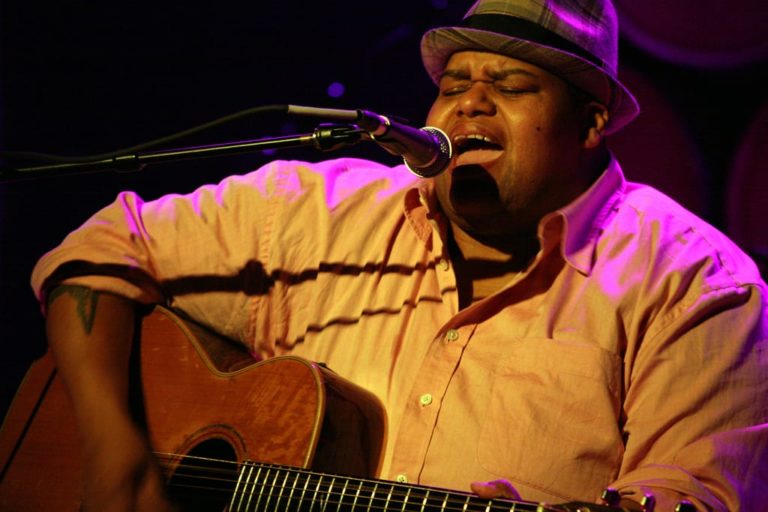
    Toshi Reagon
    Toshi Reagon

    This is the prime issue with AI advancement in the arts. Artists who have built a career and thrive off their creativity and originality are threatened by those “at the epicenter,” who can readily weaponize artificial intelligence to essentially plagiarize established artist likenesses. As we see AI expand and grow, with new skills and strengths, creatives begin to wonder when their jobs will become automated too.

    Art is a unique form in that it almost always requires a physical body to create: a hand to move the paintbrush, a voice to sing from, or an arm to play an instrument. Now that technology can replicate that, a troubling dichotomy narrows between human and computer. Nevertheless, artificial intelligence can work alongside humans, as a vital tool and creator in its own right. While the capabilities of AI expand, musicians, creatives, and people in all industries are just beginning to see the possibilities of what it can accomplish.

    https://www.youtube.com/watch?v=PC7o6KSurx4
  • Godsmack Bringing the Best of Times to the Oakdale Theatre

    Hard rock fans piled into the Toyota Oakdale Theatre in Wallingford, Connecticut on Wednesday, October 25, where Godsmack brought their Best of Times World Tour. This show is Godsmack’s second show of the four additional fall dates that were added in August in support of their new record, Lighting Up The Sky, which was released this past February.

    Godsmack is made up of Sully Erna on guitar and lead vocals, Robbie Merrill on bass guitar, Tony Rombola on lead guitar and Shannon Larkin on the drums. Erna, Merrill, and Rombola have been in the band since the recording of the band’s debut record, with Larkin joining in 2002.

    As fans were still finding their seat, the house lights dimmed and EXTREME hit the stage. Like Godsmack, EXTREME is also from Boston. EXTREME is made up of lead vocalist Gary Cherone, guitarist Nuno Bettencourt, bassist Pat Badger, and drummer Kevin Figueiredo.

    EXTREME delivered a bombastic set of new songs off their most recent record, SIX, as well as classic hits like “Get the Funk Out,” and “More Than Words.” Throughout the entire set, Cherone was interacting with the crowd, getting them to sing along while dancing around the stage. Bettencourt shredded away on guitar with a slight nod to the late Eddie Van Halen and the band plowed through their opening set.

    As two curtains were raised while the road crew swapped out equipment, a video montage of The Beastie Boys with Queen’s “We Will Rock You” blasted through the theatre, the excitement was building for the New England natives.

    When the curtain fell and the first song “When Legends Rise” blasted through the row of speakers, Godsmack took the stage with a thunderous cheer from the crowd. In a theatre that typically doesn’t showcase pyrotechnics, Godsmack showed off their theatrical side with fire during their first few songs. Throughout the hard rock extravaganza, Godsmack blasted through a setlist of newer material from their aforementioned Lighting Up The Sky record as well as classics off of their older records.

    Throughout the show, the general admission section became a sea of bodies. From the start of the show till the band said their final goodbyes at the end, concertgoers were crowd surfing, attempting to form mosh pits and fist bumping.

    As Larkin’s drums were pushed forward at the start of “Batalla de los Tambores,” a second drumkit was hauled forward and Erna hopped on the drums for a drum battle. At the end of the battle between bandmates, the band jumped into a jam that included short covers from artists like Aerosmith, Metallica, AC/DC, and Led Zeppelin. With each new recognizable riff from Rombola, the fans all clapped and cheered in applause. Some fans were so enthusiastic about some of the covers being played that they took out their air guitars and played along.

    Towards the tail end of the set during “Whatever” which is off their self-titled debut album, Erna brought up the “future of rock and roll.” Children like one boy, Michael, and his sister Amy joined other kids that ranged from eight to 17. With Erna prancing around the stage, he riled the crowd up hailing the next generation of rock and roll.

    The band’s second to last song, “Under Your Scares,” featured Erna playing the piano that had a QR code to a link to Scaresfoundation.org which is the band’s foundation that fights mental health. As the band jumped into the song, Erna dedicated the track to some of the musicians that the music world had lost like Chris Cornell, Chester Bennington, and Van Halen.

    As fans walked out of the theatre, smiles were on their faces as they witnessed Godsmack deliver a hard rock performance that was unforgettable. Fans were leaving the building singing their favorite songs, air guitaring, or looking at the new concert t-shirt they bought to add to their collection as they filed out into the cool Connecticut night.

    Setlist: When Legends Rise, 1000hp, Cryin’ Like a Bitch!, What About Me, Surrender, You and I, Red, White & Blue, Awake, Keep Away, Voodoo, Batalla de los Tambores, Whatever, Under Your Scars, Bulletproof, I Stand Alone

  • Video Premiere: Ryan Liberty Megan “Sweep”

    New Paltz native Ryan Liberty Megan just released his chaotic video for his dreamy and melodic song “Sweep.”

    The track hits your ears in all the right places with a groovy trumpet instrumental in the back as well as Ryan’s semi-raspy nostalgic voice. An alt-country track, “Sweep” is a song you can put on when you need a release, swaying back and forth to the guitars and harmonies dancing together in harmony.

    Speaking of “Sweep,” Ryan Liberty Megan said “Imagine it like a phone call that’s being made to the most fragile part of you, giving you instructions on how to survive other humans, how to survive humanity. And in the end, the most important part of that advice or sage wisdom is to be able to just sweep it away. You need to be able to let things go.”

    Ryan Liberty Megan is a New Paltz native, a doting father who gave up music to provide for his son, returning to music after about ten years, giving him that familiar relief. He started as a noise rock artist known for chaotic and rowdy shows, and turned the page into the simpler yet complex artist he is today. Reminiscent of acts such as Mr. Bungle, Ween, and Melvins, he transcends also into acts like Beck, Wilco, and The Flaming Lips.

    Photo by Matthew Hersch.

    The video accompanying “Sweep” is chaotic and brings the viewer on a journey. With a kaleidoscope of dark purples and lighter colors, the music video features Ryan singing the sweet tune, transitioning in and out of backgrounds that include things like dogs, horses, and the highway. The most intriguing part of the video is random trivia strewn throughout.

    Some say things like “A snail can sleep for three years,” or “The eye makes movements 50 times every second.” About the video, Ryan said “I loaded this video with useless trivia, so no matter what, people will walk away with something they didn’t have before. My buddy owns a float spa, and he filmed me floating in a tank for some of this!”

    The music video for “Sweep” by Ryan Liberty Megan is out now.

  • Hearing Aide: TAUK release new LP “Equalizer”

    Long Island natives TAUK officially released their new album, Equalizer, today, October 27. This marks the band’s 9th studio record and 15th official release. 

    tauk equalizer

    This will be the band’s second official release in 2023; TAUK Moore, a joint release and collaborative LP featuring vocalist Kanika Moore, was released just four months ago in June. An electric performance with Moore at Electric Forest in 2018 sparked the flame that birthed the project and eventual record. TAUK consists of Matt Jalbert, Charlie Dolan, A.C. Carter and Isaac Teel.

    Equalizer returns to the band’s original roots; prog rock, electronic and funk influenced instrumentals. Ethereal melodies, atmospheric textures, peaking guitar solos and the addition of horns only scratch the surface of what Equalizer has to offer. Tracks like “Traverse” change time signature effortlessly, while “The Fly” returns to its central theme to bring the listener back home. A melting pot of musical ideas, instrumentation and genre are explored throughout the LP.

    Their songwriting does not follow your typical verse-chorus structure on a lot of their songs. Instead, they take the listener on a compositional journey, with each section seamlessly weaving itself into the next. 

    Photo courtesy of progarchives.com

    TAUK is currently on tour in support of their new album. Dubbed the “Equalizer Tour”, these 29 shows will feature Kanika Moore, as well as Dopapod on select dates. Although they don’t make any stops in New York this time around, you can catch them on the East Coast this December. Visit taukband.com/home for more info. 

    Listen to the three singles off Equalizer below.

    Key Tracks: Melvin’s Mind, Sound the Alarm, Home of the Beast

    Equalizer becomes available on all major streaming platforms Friday, October 27.

  • Golden Era of New York Experimental Music Captured in New Book, “Transfigured New York”

    In 1980, Brooke Wentz landed her dream volunteer job as host of WKCR-FM’s late night radio show, “Transfigured Night.”  Billed as an “exploration into the world of new music,” this Columbia University broadcast allowed the then-student free reign to conduct candid interviews with dozens of avant-garde pioneers in free jazz, no wave and electronic and world music before they emerge as internationally-renowned artists.

    Transfigured New York

    Thanks to the downtime afforded this busy music executive due to the Covid lockdown, these long unheard interviews are now contained in a fascinating new book: Transfigured New York: Interviews with Experimental Artists and Musicians, 1980-1990 (Columbia University Press). Wentz’ latest writing is a virtual and very vivid time capsule of musical and artistic creation from 1980-1990 – a juncture when New York’s uptown and downtown converged to birth bold new sounds and a new generation of sonic visionaries.

    The musicians and artists tell their stories and share their thoughts about the creative process, capturing the ambition and energy that animated their work against all odds.  Legends in the making like Bill Frisell, Philip Glass, John Lurie, Laurie Anderson and Glenn Branca convey what it was like to be a struggling artist in 1980s New York, a time when the city was alive with possibilities and affordable for artists. Others who were well known at the time, including John Cage, La Monte Young and Ravi Shankar, advocate for their distinctive ideas about art and open up about their creative lives.

    Transfigured New York contains an astonishing range of interviews covering the waterfront of creative musical genres – all rescued from dusty cassettes and reel-to-reel tapes of interviews that were only heard once, at their initial airings.  Morton Subotnick, Joan Tower, Steve Reich, Joan La Barbara, Vernon Reid of Living Colour, Arthur Russell, Eric Bogosian, Bill T. Jones and many more are included.  The scene is set with a forward written by someone who was in the thick of the experimental action, former Sonic Youth guitarist Lee Ranaldo. These interviews are also accompanied by a collection of historic black & white photos, captured by renowned photographers of the era. This book is a one-of-a-kind account of one of the most exhilarating and inventive periods for art and culture in New York City’s history.

    Wentz is launching the book at a November 13 event at the home of the New York avant-garde music scene, Roulette (info here)  The event will include conversations with many of the artists profiled including Peter Gordon, Zeena Parkins, Brandon Ross, Tim Berne and Ikue Mori. Several, including Don Byron, Elliot Sharp and Shelley Hirsch, are also scheduled to perform.

    Wentz is a Billboard Music Award–winning music producer, music supervisor and founder of Seven Seas Music and The Rights Workshop.  With Seven Seas, Wentz is a key supplier of world music from 145 countries for licensing in prestige film and television productions including Anthony Bourdain: Parts Unknown. The Rights Workshop has handled music supervision for films including Melancholia and Bill Cunningham New York.  Wentz is a leading expert on music copyrights and former ESPN music director. Her other books include Hey! That’s My Music: Music Supervision, Licensing, and Content Acquisition (2007) and Music Rights Unveiled: A Filmmaker’s Guide to Music Rights and Licensing (2017).

  • Psymon Spine Release Kinetic Single “Boys” Ahead of Hometown Brooklyn Show

    Psymon Spine, a Brooklyn-based alt-pop group, recently embarked on their US tour, finishing with a hometown show at Alphaville on October 26. The group recently released their newest single, “Boys,” alongside an official music video on October 10.

    Psymon Spine

    Psymon Spine developed as members Noah Prebish and Peter Spears were in college, later adding Brother Michael to the group. Vocalist and former member Sabine Holler lends her voice to the new track, “Boys,” since her relocation to Berlin during the COVID-19 pandemic.

    “Boys” is an upbeat alt-pop track, featuring a new-wave-inspired melodic riff. The track features Sabine Holler’s light yet hypnotizing vocals against a synth-heavy dance rhythm. The group cites influences such as Talking Heads, Os Mutantes, and the NYC dance music scene.

    By nature every Psymon Spine song must be a little cheeky to bypass our own self-criticism, but in reality ‘Boys’ is just a very earnest song about friendship.

    Psymon Spine
    Psymon Spine live photo
Photo Credit: Alyssa Gisselle
    Photo Credit: Alyssa Gisselle

    Psymon Spine will make their way home for a show at Brooklyn’s Alphaville on October 26, as well as a show in Troy on November 8. The group will play new tracks like “Boys,” as well as hits from their most recent album, 2021’s Charismatic Megafauna. Tickets are on-sale now.

    Psymon Spine Tour

    10/13 – Madison, WI @ UW Madison

    10/14 – Northfield, MI @ Carleton College – The Cave (private event)

    10/15 – Galesburg, IL @ Knox College

    10/16 – Chicago, IL @ Color Club

    10/17 – St Louis, MO @ The Sinkhole

    10/18 – Nashville, TN @ The Basement

    10/21 – Memphis, TN @ Wiseacre Festival

    10/26 – Brooklyn, NY @ Alphaville

    11/8 – Troy, NY @ No Fun

  • Hearing Aide: MVW and Valee Bring VALEEDATION To the Rap Game

    MVW and Valee have combined their idiosyncratic styles to bring about their latest avant-garde endeavor, VALEEDATION. The join-effort sees the duo make good on years of collaborations, with their like-minded approach bringing the best out of one another. The 14-track project — exclusively produced by MVW — offers a minimal yet expressive approach to hip hop. Moreover, in a boisterous genre, Valee and MVW present themselves through a colorful-yet subtle hue.

    Valee (left) & MVW (right) bring Valeedation to the game

    After all, Valee’s unconventional style and infectious energy, along with his distinctive lyrical delivery and unwavering commitment to artistic exploration has led to his own niche existence within a fickle music indutry. Meanwhile, MVW’s expertise in contemporary classical composition is showcased as he weaves together intricate musical arrangements. All in all, their unique blend of classical-trap music is part of the connection they’ve developed through their shared artistic vision.

    VALEEDATION Review

    “The music feels like scenes in a movie more than tracks on an album, highlighted by different lighting on a thematic, subtle vibe. There is this sense of installation.”
    – MVW on VALEEDATION

    Ultimately, VALEEDATION serves as another installment in the series that is MVW’s hip hop voyage. Notably going away from contemporary rap music’s in-your-face production style — where the beats usually outshine the artist — MVW has countered with a a more subtle, complementary style. Since embarking on his hip hop journey in the fall of 2021, the former classic composer has featured a myriad of rappers on his classical-trap beats. However, none have quite meshed with his musical ethos quite like the Chicago-bred Valee.

    Comparatively, his own musical exploits have seen the former Good Music signee depart from mainstream conventions. Rather, he immerses himself in innovative aesthetics that challenge the status quo. This avant-garde approach serves as a guiding beacon for MVW. In effect, VALEEDATION offers hip hop fans a unique lens through which to navigate uncharted territories in music.

    Another key point is the continuation of MVW and Valee’s symbiotic musical relationship. With this latest effort serving as the final stamp of approval in MVW’s hip hop passport. Through 14 unique records, the duo charter through a wave of unexplored, genre-bending possibilities. Record like “Tailor Swift” and “Could Be” offer an alternative, unsaturated production style, which Valee does his best to command. All the same, songs like “Pistachio” and “Yo Yo” see the duo share the stage between MVW’s spacey prodcutions and Valee’s colorful metaphors and one-liners. Overall, the album follows a theme of internal dichotomy between conventional ear-catching tunes versus unconventional beats and flows that challenges the microwave music consumption of today.

  • The Allman Brothers Band & Owsley Stanley Foundation to Release Exclusive 2-LP “Orange Sunshine” Vinyl

    The Allman Brothers Band in tandem with the Owsley Stanley Foundation is offering a special release exclusive 2-LP limited run of electric “Orange Sunshine” vinyl on November 3.

    Presented by the Owsley Stanley Foundation and The Allman Brothers with members including Duane Allman, Gregg Allman, Dickey Betts, Berry Oakley, Johanny Johnson and Butch Trucks. The vinyl displays a collection of restored and mastered recordings of the ABB’s performances at New York City’s Fillmore East captured by the legendary Grateful Dead soundman Owsley ‘Bear’ Stanley.

    The 2-LP exclusive “Orange Sunshine” vinyl is essential to listen to for Allman Brothers fans, showcasing the original tapes from the Owsley archive, a seven-song set blues masterpiece featuring “Hoochie Coochie Man,” “Statesboro Blues”, the spin-off of Donovan’s “Mountain Jam,” and the ominous Gregg Allman composition “Whipping Post.”

    I had no prior experience with mixing their music, so I hope you don’t mind the rough edges in my mixes here. There was a wonderful feeling at these concerts that made the shows a lot of fun for us all…I had a good time working at these shows, and I hope you will have a good time listening to this historic early Allman Brothers Band.

    – Owsley “Bear” Stanley

    The Allman Brothers were on the brink of stardom in the 1970s and became best known for a wicked blend of rock, jazz, and R&B creating a unique groundbreaking sound. While only together for 11 months, promoter Bill Graham booked them in San Francisco and New York, inviting them back to the Fillmore East on a triple bill with Grateful Dead and Love. Fortunately for us, the Dead’s soundman Owsley “Bear” Stanley had his tapes rolling.

    Bear’s Sonic Journals: Allman Brothers Band Fillmore East February 1970 tracklist:

    LP Side 1:

    In Memory Of Elizabeth Reed 9:22

    Hoochie Coochie Man 6:04

    Statesboro Blues 4:16

    LP Side 2:

    Trouble No More 4:11

    Outskirts Of Town 8:29

    Whipping Post 8:11

    LP Side 3:

    Mountain Jam 15:20

    LP Side 4:

    Mountain Jam (continued) 15:46

  • Bad Religion Rocks the Paramount in Huntington, Long Island

    On the evening of Tuesday, October 24, Huntington, Long Island was treated to a blistering performance by the legendary punk rock band Bad Religion. The Paramount, a renowned venue on Long Island, was almost sold out as fans eagerly awaited a night of high-energy music and a setlist spanning the band’s impressive 40-plus-year career.

    Formed in 1980 by a group of punk rock enthusiasts in Los Angeles, California, Bad Religion has since become a driving force in the punk and alternative music scenes. Known for their thought-provoking and socially-conscious lyrics, the band has released numerous albums that have left a lasting impact on the genre. With a unique blend of punk and melodic sensibilities, they have earned a dedicated fan base worldwide. The current lineup includes Greg Graffin as the lead singer, Jay Bentley on bass, Brian Baker on guitar, Mike Dimkich on guitar, and Jamie Miller on drums.

    The October 24 show was part of Bad Religion’s 2023 North American tour, which consisted of an impressive 22 shows. This leg of the tour was set to culminate at the Starland Ballroom in New Jersey on October 29, after which the band was scheduled to take their electrifying act overseas to Argentina, Brazil, Chile, Peru, and Colombia in December.

    Bad Religion took the stage to raucous applause and immediately launched into their set. They opened with “The Defense,” and from that moment on, it was non-stop punk rock euphoria. The band expertly weaved their way through their extensive discography, performing fan favorites like “Against the Grain,” “Infected,” “No Control,” “Sorrow,” “Generator,” and many more.

    One remarkable aspect of the performance was the relentless mosh pit that raged at the center of the floor, where bodies surged and collided in a frenetic dance of exhilaration. People were continually crowd surfing, their figures soaring over the rail, borne aloft by a sea of outstretched hands. In the midst of this chaotic fervor, Bad Religion displayed their unwavering energy and enthusiasm, traits that have been the hallmark of their live shows for over four decades. Their music, often delving into pressing societal and political issues, struck a deep chord with the crowd. Fans not only sang along and shouted their approval but also joined the relentless mosh pit, passionately responding to the band’s contagious punk anthems.

    The climax of the night came with the encore, which featured one of their most iconic songs, “American Jesus.” In total, Bad Religion played an impressive 26 songs, showcasing the depth of their catalog and their enduring ability to captivate audiences.

    A special mention must be made of the opening act, Speed of Light. Comprised of a group of young, talented musicians, this band had the honor of warming up the crowd for Bad Religion. Riley Christensen, a 16-year-old prodigy, took center stage as the lead singer, bassist, and songwriter. Her older brother, Cameron Christensen, at 19 years old, played guitar, sang backup, and also contributed to the band’s songwriting. Completing the trio was Tyler Christensen, the drummer, who not only kept the rhythm but also provided backup vocals and songwriting.

    The night of October 24 at The Paramount in Huntington, Long Island, was a memorable one for punk rock enthusiasts. Bad Religion delivered a performance that not only showcased their enduring talent but also underlined the continued relevance of their music. As they continued their North American tour and looked forward to their international dates, it was clear that Bad Religion’s legacy in the world of punk rock remained as vibrant as ever. The show was a testament to the timelessness of their music, and fans left the venue with a sense of satisfaction, knowing they had been part of something truly special.

    Setlist: The Defense, Against the Grain, Past is Dead, Anesthesia, Wrong Way Kids, To Another Abyss, Fuck You, Requiem for Dissent, Infected, My Sanity, Portrait of Authority, Delirium of Disorder, No Control, Do What You Want, Recipe for Hate, We’re Only Gonna Die, Los Angeles is Burning, 21st Century (Digital Boy), Drunk Sincerity, Candidate, I Want to Conquer the World, Sorrow, You, Fuck Armageddon…This is Hell, Generator, American Jesus

  • Dmitry Wild Drops Newest Track, “Rock N Roll Is My Business”

    Dmitry Wild, a New York-based rock artist, released his newest track, “Rock N Roll Is My Business.” Following up to his 2022 album, Electric Souls, his newest track comes alongside a few recent singles.

    Inspired by an experience at a business convention, Dmitry Wild penned “Rock N Roll Is My Business” in response to a question posed to the audience, “What is your business?”. Finding himself at odds with the businesspeople and conventiongoers, he was inspired by his own answer, “Rock N Roll Is My Business.”

    Wild’s newest track exudes confidence, accompanied by ever-present horns and funky, layered vocals. He latches onto the classic rock-n-roll figurehead frame, and creates a Halloween-esque sound that solidifies his place in the rock-n-roll business.

    Dmitry Wild

    “Rock N Roll Is My Business” released following Wild’s single, “Son of a Gun,” another funky rock track with a bright, eclectic music video alongside. In addition, he released “New York Stones” in July, a rock ballad dedicated to the city of New York. Wild sings, “No matter where we go, no matter what we do, New York is in our soul, the city that gave us rock and roll.” 

    Catch Dmitry Wild at his upcoming shows in New York. He will play Woodstock’s The Colony on October 28, as well as Freddy’s Bar in Brooklyn on November 5. Finally, he will make a stop at No Fun in Albany on December 21 to close out the year.

    Dmitry Wild Upcoming Shows

    Oct 28 – Colony, Woodstock, NY

    Nov 5 – Freddy’s Bar, Brooklyn, NY

    Nov 16 – The Eight Room, Nashville, TN

    Nov 18 – Venue TBD, New Orleans, LA

    Dec 21 – No Fun, Albany, NY