Category: Profiles

  • A Farewell To Hotel Pennsylvania

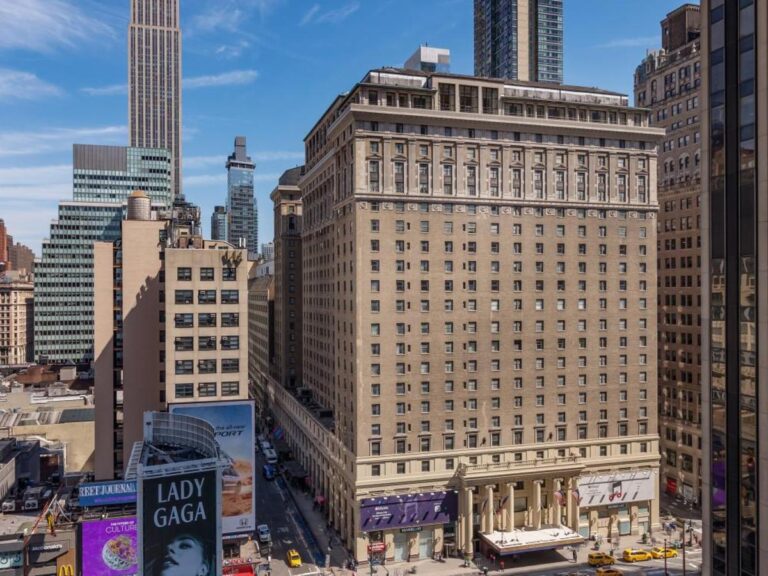
    An iconic location in mid-town Manhattan is closing its doors for good. The Hotel Pennsylvania will not reopen, succumbing to this past year’s lack of business and years of narrowly avoiding the chopping block. The fourth largest hotel in New York City was well situated, right across from Madison Square Garden and Penn Station, making it a natural and affordable stop for travelers and concert goers alike.
    hotel pennsylvania

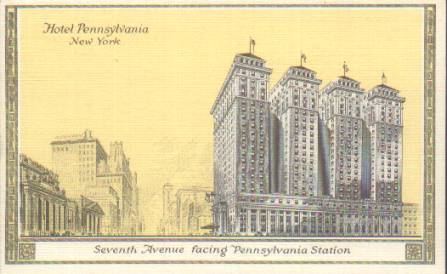
    Located on 7th Avenue between 32nd and 33rd, and built by the Pennsylvania Railroad under the operatation of Ellsworth Statler, The Hotel Pennsylvania first opened on January 25, 1919. Original Pennsylvania Station designer William Symmes Richardson was the architect of the well-situated hotel. The hotel would undergo a few name changes, including Hotel Statler (1949), The Statler Hilton (1958), New York Statler (1979) New York Penta (1983) and finally Hotel Pennsylvania, beginning in 1991. If there was a centennial celebration, it was muted, but earned.
    hotel pennsylvania

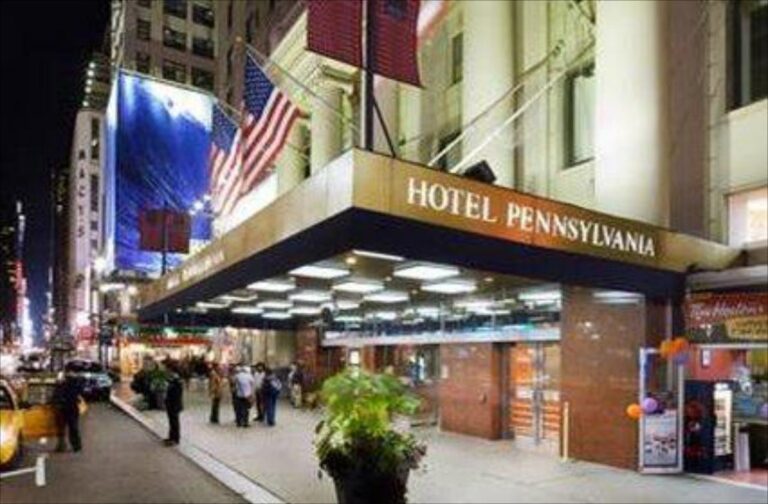
    Hotel Penn has had its share of criticisms in recent years, being perpetually under renovation in the last decade, and not living up to the glory years of the mid-20th century. There were rumors it was haunted, the elevators would sometimes not open entirely on your floor, or need a moment before ascending from the lobby. But amid any issue with Hotel Pennsylvania, the location and history could not be beat.
    hotel pennsylvania

    Full disclosure: I’ve stayed at Hotel Penn at least 40 nights, dating back to December 2005. I’ve heard all the complaints of Hotel Penn, and while some are justified, it always felt like this Grand Hotel got a bad rap. I never had a bad stay, or encountered the issues that people complain about. You look for a 3-star hotel in mid-town, you have to accept what a 3-star hotel brings to the table.

    The Music

    There is a fair amount of history in this huge hotel, most notably The Glenn Miller Orchestra’s “Pennsylvania 6-5000.” Until early May 2021, you could call 212-PE6-5000, and hear the refrain from “Pennsylvania 6-5000” before connecting to an operator. It was, until this month, the longest continuous use of a phone number in New York. From the moment you called the hotel, music and history was inviting you in.

    Jack Albin Orchestra held a long term engagement at Hotel Pennsylvania in the early 1930s, often led by vocalist Bill Coty. Despite being popular in his day, little is known of Albin, although he did record for many labels, including Hotel Pennsylvania Music. “You’re The One,” recorded in 1930 features vocalist Paul Hagan. Hagen recorded with several bands including Ben Bernie’s groups, Bill Moore’s Syncopators, and Fred Culley and his Royal York Hotel Orchestra.

    In 1930’s and 40’s, the Café Rouge at Hotel Pennsylvania was one of the most popular nightclubs in New York City. Home to Big Bands at the height of their heyday, including Glenn Miller Orchestra, Duke Ellington, The Dorsey Brothers, Woody Herman, Count Basie, and The Andrews Sisters, among others. The Café Rouge was connected to the NBC Red Network (the NBC Radio Network after 1942) which brought the music from the hotel and Café to captive audiences across the country.

    In November 1939, bandleader Artie Shaw, who had a long-term engagement at Café Rouge left the bandstand between sets. Shaw decided he had had his share of the band business amid his success over the past two years, and quit his band on the spot. Shaw’s principal orchestrator from 1937–39, Jerry Gray, was hired by Glenn Miller as a staff arranger when Shaw deserted the band.

    In the pre-war 1940s, the Glenn Miller Orchestra had multiple long-term bookings in the room, corresponding with the time of Miller’s highest profile as a bandleader. Broadcasting from The Café Rouge, some performances were recorded by RCA Victor. During the time of Miller’s residency at Hotel Pennsylvania, Gray wrote “Pennsylvania 6-5000,” with lyrics by Carl Sigman, a song that would become iconic alongside the hotel.

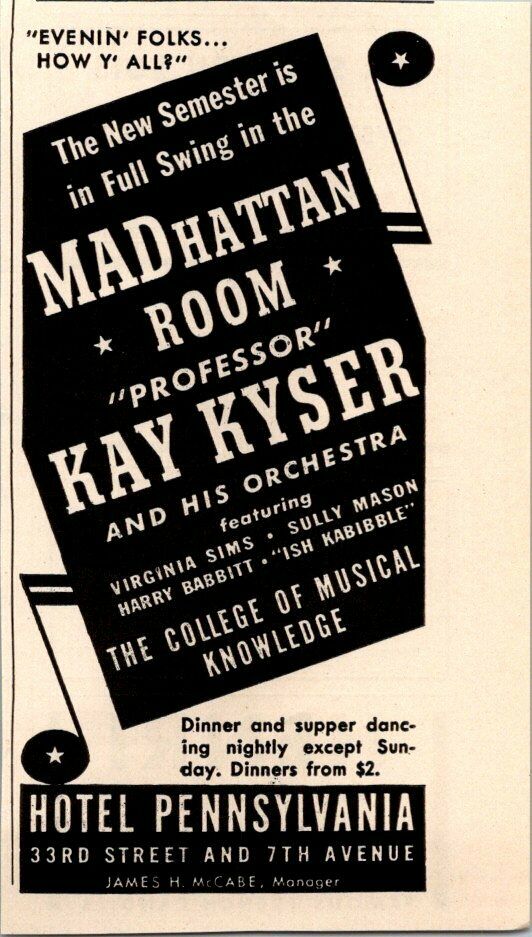
    Other notable musicians to perform at Hotel Pennsylvania include Benny Goodman‘s famous orchestra including Harry JamesZiggy Elman and Gene Krupa, who broadcast from the hotel’s Madhattan Room in 1937. Les Brown‘s band, with vocalist Doris Day, would introduce “Sentimental Journey” at The Café Rouge in November 1944.
    hotel pennsylvania madhattan room

    Present Day

    The era of music at Hotel Pennsylvania would seemingly cease by the 1950s, with limited evidence of music performances at the hotel. The Café Rouge would be severed from the hotel at an unknown time, having a standalone address on 32nd street. By 2014, The Café Rouge was converted into an indoor basketball court known as Terminal 23. The original interior decor remains intact, with a fountain, beamed ceiling and other architectural details remain.

    As for the hotel itself, Vornado CEO Steven Roth, who owns the property, said of the hotel in a letter to shareholders, “while it may have been a grande dame in its time, it is decades past its glory and sell-by date.” In an effort to revitalize the area as the Empire Station Complex, meaning that more than a city block, including Hotel Penn, will soon be razed to make way for PENN15.

    With no protection that comes with Historic Landmark status, beginning with a denial in 2010 by the New York City Landmarks Preservation Commission to designate Café Rouge as a landmark, the Hotel Penn as a whole has likewise not been saved by the status that prevents facing the wrecking ball.

    Architect Richard Cameron, contests the grounds on which developers seek to demolish what was at one time the largest hotel in the world. Using the history of old Penn Station, which met a similar fate, Cameron said:

    We used to have the greatest train station in the world right across the street, literally right across the street, and sadly for me I was too young – when I got to New York it was already gone. The language that was used to destroy that station is the exact same language Steve Roth is using today to argue to destroy this; it’s tired, it’s old, it’s dirty, can’t be reused. We need something new. Everybody admits that what happened across the street was one of the worst crimes in terms of architectural legacy that ever happened in this country. We’re about to commit the exact same crime right here with the Hotel Pennsylvania.

    Richard Cameron, as reported by AMNY.com
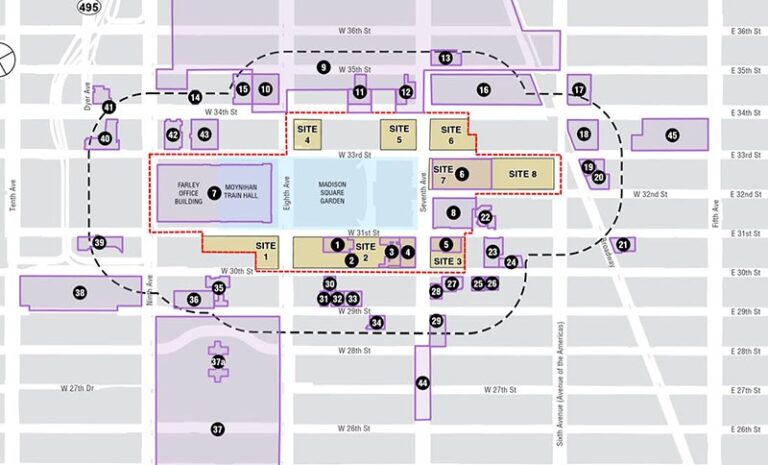
    The proposed layout of PENN15 and surrounding area around Hotel Pennsylvania.

    Staying at Hotel Pennsylvania

    While there was music ingrained within Hotel Pennsylvania, there was of course music across the street at Madison Square Garden, making the location prime for crowds arriving for concerts and events, while looking for the easiest location to stumble back to afterwards. Bands that thrived on multi-night runs – the Grateful Dead and Phish, among others – meant Hotel Penn was often fully booked, offering a proximate and affordable rate for travelers and fans on a budget. This is precisely how I ended up staying there over December 30, 2004 through January 1, 2005. The Hammerstein Ballroom was a short walk for the Disco Biscuits’ New Years Eve show that year, and made for great late night revelry with many fans staying there or just popping by to celebrate the New Year as so many had in decades prior.

    Upon arrival, check-in could be the longest line in the world at any time of day, or the shortest. Your keys would work when you got to the room, then not when you returned from a show. The valet doors, well outdated, were a nice historical touch. Rooms varied in size – people were much shorter and smaller when the hotel was built – so you might find the confines of a two-bed room tighter than modern hotels.

    Even remodeled rooms at Hotel Penn were still small compared to modern hotels.

    Hotel Pennsylvania was dog friendly too, serving as the official hotel for Westminster Kennel Club Dog Show, held annually at Madison Square Garden. Being able to bring a dog to the hotel can be helpful to some travelers, and the courtesy extended by the staff with regards to pets was top notch. The support for Westminster in providing the closest location possible for pets in New York City is noteworthy in itself.

    A Personal Story

    Having stayed there and willingly accepted the 3-star-ness of the hotel, I looked to Hotel Penn as the perfect location for a PhanArt show. Despite New York City being one of the most expensive cities in the country, Hotel Penn was able to provide an affordable location for these event, the only option beyond venues such as the now closed American Beauty on 30th street. The Gold Room provided well for five PhanArt shows beginning in January 2016, a rare find in a town where the cost to rent out a space for an art exhibit is cost prohibitive without major financial backing. For a group of Phish-inspired artists, Hotel Penn provided a home that the streets and lack of vacant lots in Manhattan could not.

    In 2019, after much encouragement from past successes, the hotel brought the event to the 18th floor, which allowed for even more artists to take part, in addition to yoga sessions and providing a meeting place for fans, friends and groups. The staff worked with the artists as professionally as any other, and gave me more reason to look at Hotel Penn as having no more than a faded glory in need of a polishing.
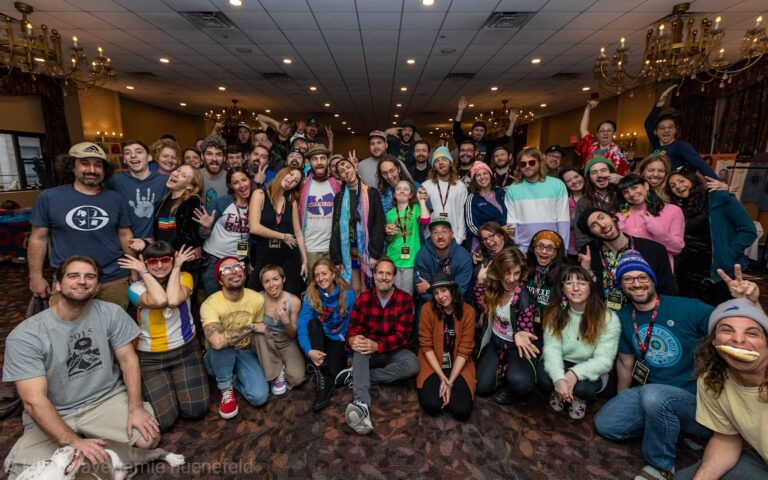
    The artists and team behind the December 30, 2019 PhanArt Show at Hotel Penn. Photo by Jamie Huenefeld.

    The history of Hotel Pennsylvania may be overshadowed by the past few decades where it fell farther from its glory days, but the history from within should not fade away as the hotel meets its doom.

    Maybe it sounds a bit funny
    When I’m away from my honey
    Here’s what I do with my money
    Pennsylvania Six, Five Thousand
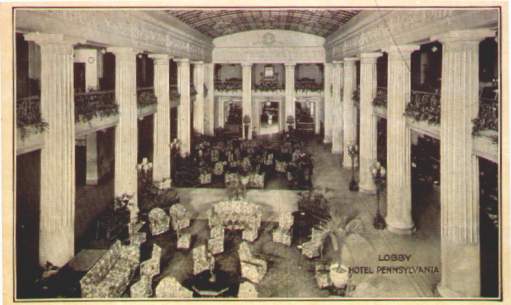
    hotel pennsylvania
    Lobby of the Hotel Pennsylvania
  • Hearing Aide: Trauma Cat ‘Prepare To Apologize’

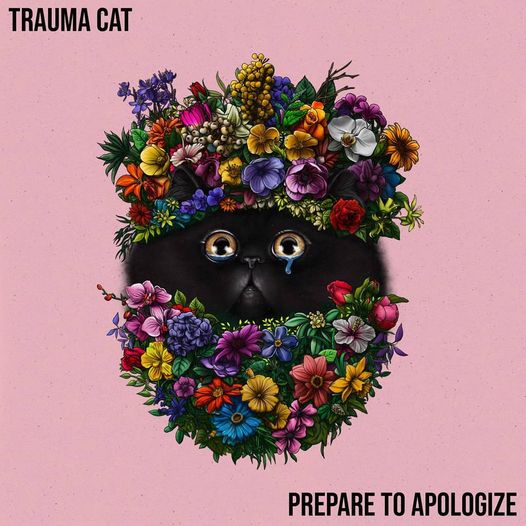
    From the post-industrial hellscape of Syracuse, New York comes Trauma Cat, who have delivered to the world their first full length LP entitled Prepare to Apologize which was released in April 2021. This irreverent and ecclectic gem that was co-produced by the band and the elusive St. Julian P. Dingusand, sports 15 tracks (3 tracks including “Joshua,” “Fire in the Jail,” and “Freaks with Wings” are re-issued singles) that span rock genres that include pop, alternative, electronica, and prog rock.
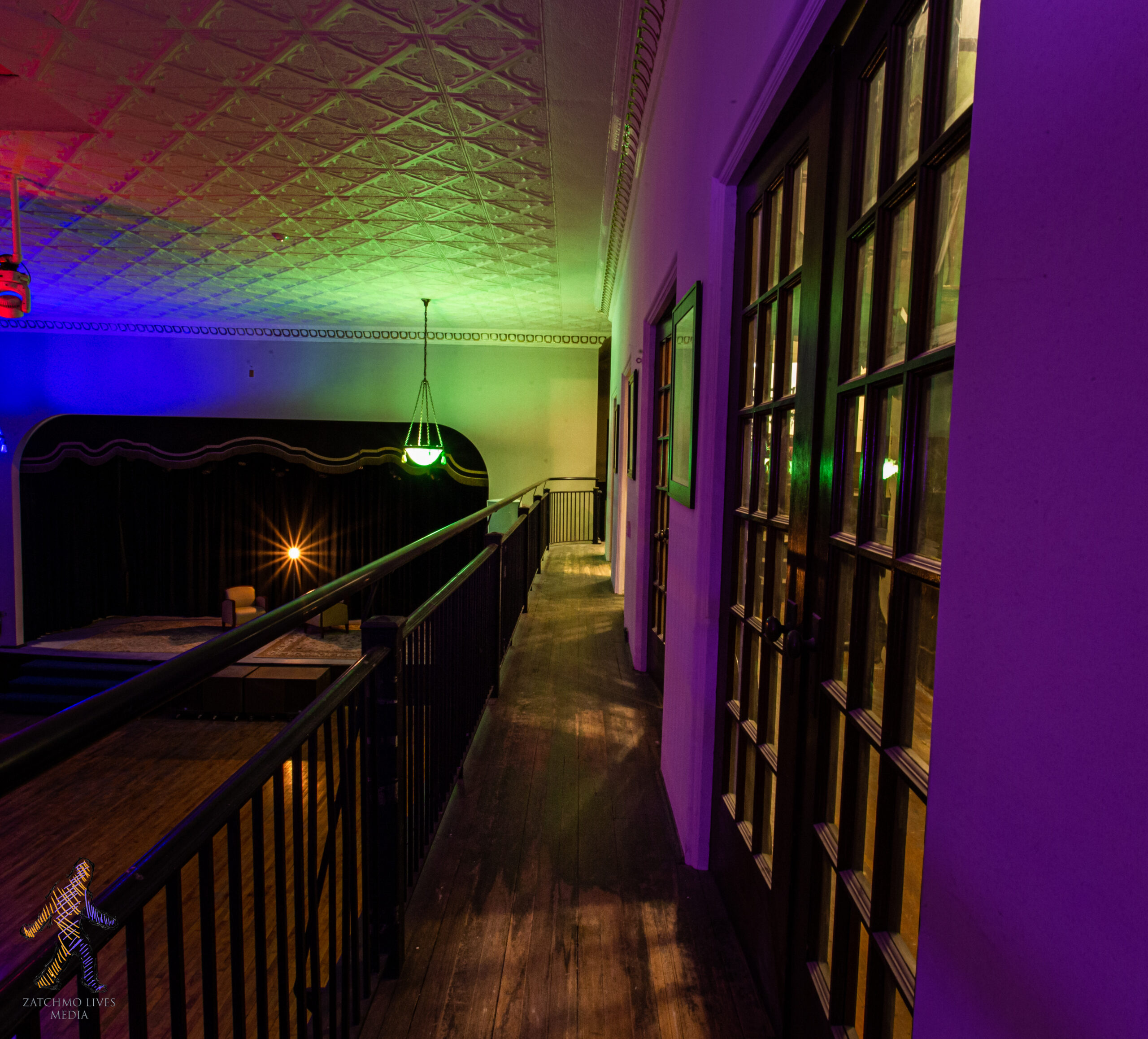
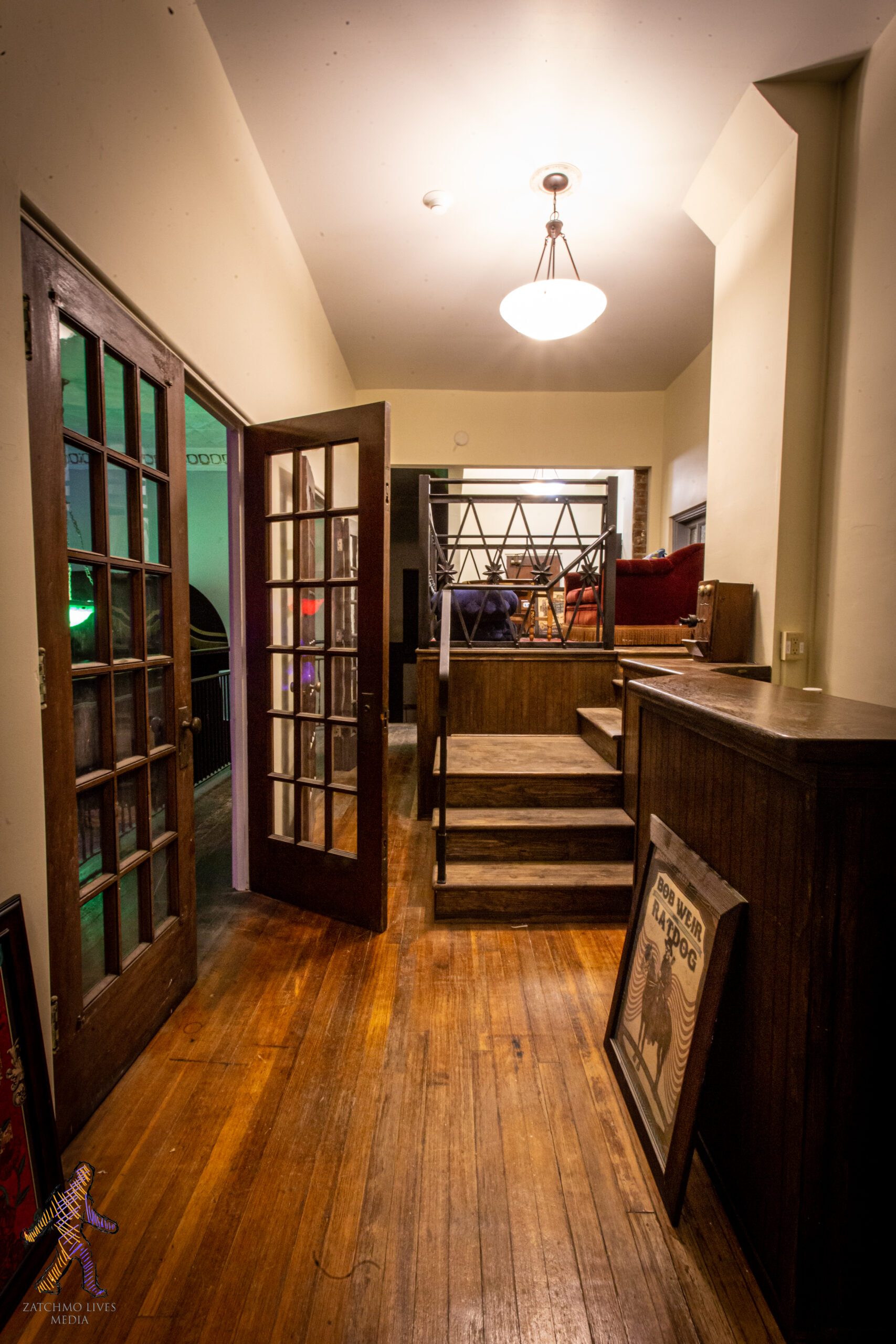
    Trauma cat

    The band has cheekily branded their special brand of musicial gumbo on their website, “Though critics speculate on the band’s true origin and the meaning of their existence, Trauma Cat are widely credited as the founders of “cuck rock,” an indeterminate school of music indebted to incessant apology and shameless cross-genre appropriation. Others have described Trauma Cat’s sound as “uncomfortable art rock,” and their politics as “alt-wrong.”

    The Trauma Cat roster is comprised of the musically talented and fashion forward Ralph Kojig (guitar and vocals), Roman Pando (bass and vocals), and Rutger DiBoyere (drums). Together they comprise a wonderfully creative power trio that has been successful in creating a personau that is reminicent of a combination of punk pioneers Devo and Saturday morning cartoon favorites Josie and the Pussycats. The glorious result of this concoction is the band’s demonstrable irreverance and hilarious comedic take on the music biz, and yet despite this silliness, they have created an enjoyable record and that is fun, fresh and creative.

    Trauma Cat has released the following “documentary” to introduce listener’s to their own distinct brand of “Cuck Rock” and to “apologize for their new LP.”

    https://www.youtube.com/watch?v=y7DSttG7mx8

    The record starts off with title track “Prepare to Apologize,” which is initially a short verbal rant between members Kojig and Pando, that leads into a short but sonically pleasing acapella number. The track seamlessly transitions into the second song on the LP “Indivisible,” reminiscent in musical style to a mash up of Rage Against the Machine and Tool. Heavy on bass and sporting great vocals that are both provided by Kojig, “Indivisible” illustrates why Trauma Cat won the 2021 Syracuse Area Music Award for Best New Artist.

    Prepare to Apologize’s third track is “Trauma Cat.” This is a fun and upbeat tune that has all the makings of the band’s offical theme song if they ever decide to create their own must see reality TV series (look out Kardashians). Kojig provides just the right amount of heavy guitar and along with DiBoyere percussion this track will get the listener’s blood pumping.

    Another highlight on the record is fourth track “Joshua”, which was originally released as a single by the band back in November of 2020. Trauma Cat deftly released a remarkably professional music video for “Joshua” that was animated and directed by El Salvadorian sensation Lincktendo back in January 2021. Lyrically the song describes a daliance into bisexuality that ends up in a bad breakup which then ultimately ruins a friendship. “Joshua” is a strong tune with loads of pop sensibility which makes it ideal for radio play. It features songwriter Kojig’s hypnotic chorus, “It came over me like a wave”, which is a catchy and memorable hook that will stay with listeners.

    “Fire In The Jail” is the eleventh song on Prepare To Apologize. This anti-social anthem promtoes dissent against the world’s demanding vapid conformity. Breaking out of the prision of these imposed expectations. Kojig sings, “I just can’t believe that these people…content to live like sheep following the crowd.” Living on your own terms without worrying about other people’s perceptions an expectations is the core message of this rebellious song, which utilizes a good amount of vibrato on guitar and reverb on Pando’s vocal to evoke a distopian landscape.

    Although this trio of self-depricating muscians does not take itself too seriously, the musical craftsmanship and production value of Trauma Cat’s debute LP shows passion and commitment that these Jester’s of “Cuck Rock” have for their craft. Prepare To Apologize is a great album that hopefully will be the first of many that these denzians of musicial mayhem produce for an ever increasingly bleak world that is crying out for more mirth and humor.

    Key Tracks: Joshua, Trauma Cat, Lob A Grenade, Fire In The Jail


  • Brooklyn Rapper Jellz Looks to Put a Scare in the Rap Game With “Ghost”

    The drill music scene has a certain connotation attached to it. The kind the public is accustomed to is violence laden, with expectations of braggadocious laced money talk. It’s been that way from the beginning and while we have seen success stories, there have been far more casualties of the antagonizing and deadly sub-genre. 

    Enter Jellz, the Brooklyn-bred emcee who embarked on his musical journey just over a year ago. 

    I don’t think drill has to be just violence. There’s a different part of the streets that isn’t tied to violence and that’s fast money. That’s more my speed. I think that it may deter some people, but not everyone. As an artist, I’m just trying to get the fans that like my style and aren’t looking for me to be someone else. Plus, I wouldn’t even consider myself a drill artist, I have so many vibes that I’m waiting to show, drill is just the outlet.

    Shot while on vacation in Los Santos, Colombia, the music video for “Ghost (Freestyle)” sees the up-and-coming rapper bring much more flair than the drill scene is accustomed to. Drill rap music videos are often shot on location, in the neighborhoods where the artists have familiarized themselves with. Of course, many of those records are diss tracks or namedrop gangs who operate out of those areas. With no such ties, the Bedstuy-bred Jellz sees this as an opportunity to showcase his own vision as an artist. 

    I think that like everything else, anything that’s over done [or] repetitive gets boring. So, I wanted to switch up the scenery. How many up-and-coming artists are traveling on vacations to rollout a single  and make videos there? Not too many. In order to separate yourself, you have to be a little different.

    The “Bulls**t” rapper presents himself with a Jefe-like persona, as he spends the music video surrounded by local women in bathing suits and ski masks, insinuating promiscuity and danger. Jellz then proceeds to list the avenues in which he makes money, possibly making history as the first drill record where the artist admits to having worked a job. 

    jellz

    Stuff like 20 in a box, did a like 30 on the stocks, don’t forget I had a job, if I make a M off rap I’m movin’ wock.

    He accentuates his fast-money style of drill rap several times during the 1:48 video, rapping,

    I really get to the money but hang with some demons, lurking, scheming, searching, fiending, they’ll do you for no reason.

    And 

    We ain’t gotta hug a block, we ain’t gotta touch a rock.

    jellz

    If Jellz’s style of rap doesn’t put him at an advantage, his quality of work and transparency might just do the trick. 

    For the videos I shot in Colombia, I actually just went on a trip and decided to record a video there honestly. I just needed a vacation at that point, and I wanted to mix business and fun, so I did 2 videos out there. I don’t think it puts me at a crazy advantage, but visuals are important , so I do want to give the best quality that I can.

    As much as violence and warfare sell, so too do tales of frivolous expenditures, when mixed with Jellz’s showmanship and earnestness, it may result in a very promising future. 

  • The Iconic Concerts of Central Park: from Simon and Garfunkel to SummerStage

    Central Park is not only the continent’s first public park, but arguably the most iconic. Artists have traveled from across the globe inspired to paint, play and write about the 843 acres of beauty. 

    central park

    The sacred space is surrounded by world-renowned music venues, museums, and galleries.  Harlem’s home for R&B and soul, the Apollo Theater, sits just 15 blocks north of the park while Carnegie Hall attracts world-class orchestral talent just two blocks south of it (slightly northeast of Radio City Music Hall). Rock aficionados frequent the Beacon Theatre on West 72nd street to the west of the park while sophisticated symphony-enthusiasts admire the NY Philharmonic at Lincoln Center.  Hugging Central Park on the east, art-lovers marvel at the rotating and static exhibits on Museum Mile and photographers snap photos of New York’s impressive architecture. 

    It would be hard to imagine one of the world’s most culturally blended cities without a gathering place for people to connect with nature and community. And some of the most memorable gatherings in the early to mid-twentieth century occurred at Sheep Meadow between West 66th and 69th streets. To bookmark the tumultuous 1970’s in the drug-infused, crime-filled, disco and punk era, James Taylor played the last big concert at Sheep Meadow in front of a quarter-million people. After Sheep Meadow closed its grass to tarps, blankets and bare feet, large concerts were given a new space on the Great Lawn located mid-park between 79th and 85th street.

    central park

    They don’t call it the Great Lawn for nothing. Some of the largest crowds in recorded history packed the 55-acre plot of land to “be a part of it” as Frank Sinatra would say. Maybe it’s the park’s natural setting that makes it so appealing for concert goers or it could be the central hub, but many performances in the ‘80s created a sense of hope and peace during some of the roughest years. While the NY Times called 1980, “the worst year of crime in the city’s history,” music provided a momentary lapse of chaos. In June 1980, an estimated 200,000 spectators on the Great Lawn welcomed Pavarotti and then two months later, Elton John entertained 400,000 fans. 

    The following September, Simon & Garfunkel reunited for their first live performance in 11 years as a duo. The free benefit concert supporting the nonprofit Central Park Conservancy was expecting around 300,000 guests, but an estimated half a million people showed up for the legendary reunion. After opening with “Mrs. Robinson” and “Homeward Bound,” Simon commented, “Well, it’s great to do a neighborhood concert,” and thanked the police, the fire department, the park administration. The subsequent live album recorded that night went on to peak at number six on the Billboard 200 chart in 1982 and was positively received by music critics and worldwide fans of NYC-based folk.

    https://www.youtube.com/watch?v=5OegZZNPsKA

    While the magic created that night in Central Park between the future Rock and Roll Hall of Famers sparked a world tour the following spring, the relationship between the two musicians was creatively impossible to maintain, so they decided to call it quits before ever releasing a reunion album. On the positive side, their benefit concert to support the park’s restoration and maintenance plans was reimagined by other artists on the Great Lawn for decades to come. 

     Another major Great Lawn milestone took place in June of 1982 as part of the “No Nukes” movement. Central Park’s Rally for Nuclear Disarmament was held on June 12, 1982, and invited chart-topping musical guests including Bruce Springsteen, Linda Ronstadt, James Taylor and Jackson Browne to play in front of an estimated crowd of 750,000. Four years later, in July 1986, a record-breaking 800,000 people were reported at the New York Philharmonic and U.S. Marine Band joint concert to celebrate the restoration and reopening of the Statue of Liberty.

    central park concerts

    In April 1990, another massive crowd of three-quarters of a million packed Central Park for Earth Day. The musical guests were the B-52’s, Hall & Oates and Eddie Brickell. That same year, the Central Park Conservancy’s SummerStage concert series was moved to Rumsey Playfield, located just off the East 69th and 5th Avenue entrance to Central Park. While not as big as the massive Great Lawn and Sheep Meadow gatherings, the SummerStage has brought world-class acts to the area for over three decades, promoting everything from Central Park preservation, Greenpeace, voter awareness and social justice.  

    central park summerstage

    Paul Simon returned in 1991 to a giant crowd on the lawn, but every attendance record for a single artist was destroyed by Garth Brooks in 1997 for a show better known as “Garthstock” due to the giant turnout in a city not known for country music. Dave Matthews Band would bring the free benefit show back to the Great Lawn in 2003 to support music and art education in the NYC public school system, drawing an estimated 85,000. Matthews greeted the crowd saying, “So nice to run into you in the park here, the greatest park in the world, and the greatest city in the world.” 

    The Black Eye Peas filled the Great Lawn in 2011 for yet another benefit concert raising over $4 million for the Robin Hood Foundation. In 2019, nearly $1 billion was raised during the Global Citizens Festival supported by headliners: Queen + Adam Lambert, Pharrell Williams, Alicia Keys, OneRepublic, H.E.R., and Carole King. The city’s incredible fundraising ability is only as powerful as the people that support the events — artists, promoters, attendees. Concerts on the Great Lawn are not only legendary due to the phenomenal performances in the epic “green lung” of the country’s largest city, but many of the concerts have transcended music and focused on the greater impact of people helping people. 

    What’s so special about Central Park is that you don’t have to be one of the hundreds of thousands to enjoy a memorable live music experience in Central Park. The grounds are full of talented performers from all over the world, and the magic of New York’s most iconic park is that you never know who you’ll run into playing in the paths and park entrances.

    If you happened to be in the park during 2013’s installment of Jazz and Colors (a Peter Shapiro sponsored event), you might have run into an impromptu jazzy set with a touch of psychedelia. Bassist Phil Lesh, guitarist Eric Krasno, and drummer Joe Russo dropped their equipment on a random path and started playing to a crowd of zero, then a few dozen, then a few hundred. It’s moments like these that accentuate the excitement of being in the park on a fall afternoon.

    trey anastasio central park

    Just this past September, as the leaves began to turn during a global pandemic, you might have run into Phish’s Trey Anastasio playing solo acoustic in support of the Parks Foundation’s SummerStage Jubilee. When asked the energy of a quarantined city, Anastasio remarked, “Yes, it’s weird walking through Times Square right now, but Times Square was tourists. But if you go into residential neighborhoods, I mean listen, it’s the greatest city in the world…always has been.” 

  • In Remembrance of Eli Harris, the Godfather of Syracuse music

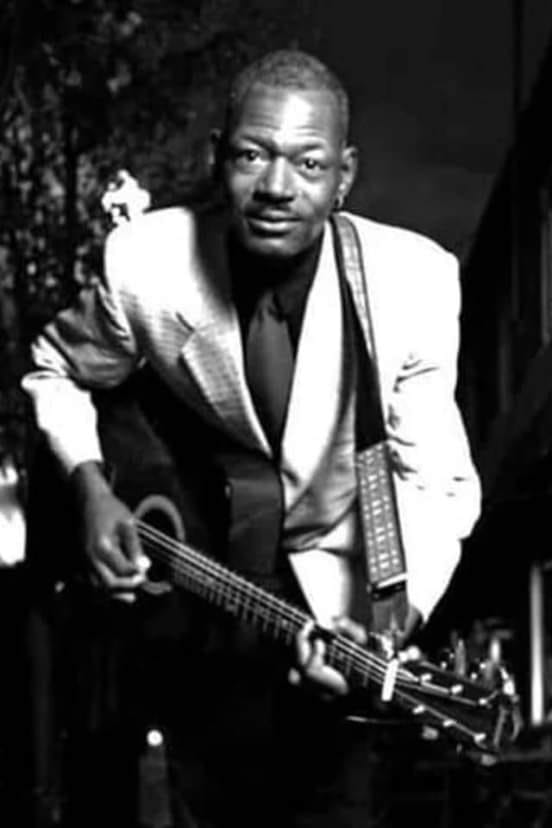
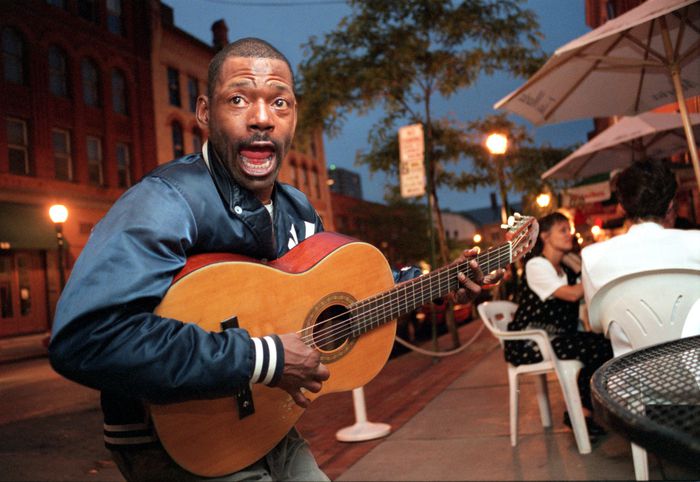
    A year ago today, the Syracuse music scene lost a legend, the likes of which will not be seen again. Eli Harris, Jr., a fixture throughout Syracuse, especially University Hill and Downtown, was a street musician of renown well beyond the 315. You could find Harris performing across town, outside the Landmark and Westcott Theatres, bringing his positive spirit and wide range of musical stylings to crowds and passersby for decades.

    Whether he was performing on Marshall Street – also known as Eli’s Alleyway – near Hendricks Chapel or Crouse College before Syracuse Football and Basketball games, downtown in Armory Square, showing up for late night fraternity pranks and performances, Eli Harris was always a welcome sight to see, always with a song and a smile ready for you. While you may not have known Eli, his music or his presence in Syracuse, he made his mark and leaves a legacy behind.

    Eli Harris died as a result of a pair of hit and run accidents on April 8, 2020. He was 62 years old.

    eli harris
    Eli Harris, Jr.

    Eli was one of a kind. He had a wife and kids he loved and would talk about them the rare times he put his guitar down. From late nights at Chuck’s or Faegan’s when Eli would pop in for a nightcap, to summer evenings at NBT Bank Stadium or downtown in Armory Square, Eli had a significant place in the Salt City. Eli was a legend, a staple, a key ingredient to the city, and one of the most positive people you’d ever meet, always keeping his spirits lifted high so he could lift others even higher.

    Elijah Harris, Jr. was born in Syracuse on August 19, 1957. A Marine veteran, serving proudly from 1974-1977 while stationed in South Carolina, Eli was father to 9 children and 35 grandchildren. No matter what life threw at him, Eli was resilient and turned struggles in life into music. In that regard, one could call him a blues musician, but Eli was much more than that. In a 2010 interview with the Post-Standard, Harris told the Post-Standard, “I do the ‘60s thing right up to hip-hop.”

    Considered by folk/hip-hop/singer-songwriter Joe Driscoll to be ‘The Godfather of Syracuse music,” a title few would contest, Driscoll first saw Eli when he was 11 or 12 years old.

    We would ride our bikes down to Marshall Street, and watch Eli play for hours. I used to watch his hands to cop new chords, and learn the covers he was doing.

    My first memories were of him doing medleys, blending five or six songs into one groove. Blew my mind. I vividly remember ‘Sitting on The Dock of The Bay’ by Otis Redding and ‘Easy’ by the Commodores as some of the first I fell in love with. His original “Eli’s Alleyway” as well, where he would skat and chat about all the happening on M Street (Eli’s Alleyway).

    Joe Driscoll

    Syracuse musician Joe Altier also first met Eli early in life, seeing him at SU events at the Carrier Dome.

    No matter the weather, he was there, you couldn’t help being drawn to this musician. He was soulful, upbeat, and had a positive vibe always. This guy is about as real as it gets.

    Joe Altier

    When Joe started playing Bull & Bear downtown around 2000, Eli would stop in and they’d play together. Whenever they saw each other, Joe got a huge shout out from Eli and always supported him, whether he was playing music or selling shirts downtown. 

    It was really nice to get to know him on that level. Sometimes we just sat and had beers together at Blue Tusk and shot the shit.

    He had already lived a rough life, he went through a lot of shit – personal, family, professional – but he woke up every day to sing, to hustle and to bring joy to the world. To see him pass, it was a gut punch for the town. It was unfortunate how we went out, totally preventable.

    Joe Altier

    Eli also served as inspiration for the song “Moon,” written by Jamie Notarthomas. Jeff Tripoli, who played drums on the track, recalled the inception and recording of the song, with Eli being such a presence in the scene in the mid-90s.

    Eli was the soul of Syracuse nightlife and culture. I can remember many winter nights below freezing when these city streets were warm with the sound of Eli’s contagious vibe. He could always keep a crowd with his off the cuff lyric improvisations about “that guys goofy hat” or maybe a humorous lyric about some attractive ladies swiftly strolling by his sidewalk performances. And thats what I loved most about Eli, how present and passionate he was as a human in our society. More than just a seriously talented street musician, Eli was capable of spreading joy to every face that saw him. A lot more of these stories are detailed in a song written by Jamie Notarthomas we recorded together long ago called “Moon.”

    Jeff Tripoli

    In 2012, Eli completed a inpatient rehab program at the Veterans Administration in Bath. In addition to battling drug and alcohol use, Harris fought hepatitis C and depression, after the death of his wife and son. He might share his struggles privately, but through his music, he let love and positivity reign.

    More than a Street Musician

    Eli’s presence around town served as an influence on the next generation of Syracuse musicians, Driscoll among them.

    Eli was definitely my biggest influence. Before Eli, I thought about James Taylor, Peter, Paul and Mary when I thought of acoustic guitar. 

    Eli was ripping James Brown, Sugar Hill Gang, and Parliament Funkadelic on a 6 string. He revolutionized my view on music. My first sets were me doing Eli covers: James Brown, Otis Redding etc…

    You can still feel loads of Eli in all I do. The funk chords, the mixing and medleying of funk, soul and hip-hop. The freestyle/chat with the audience, all of that evolved from my love of watching him everyday, studying his hands, and learning his craft of showmanship and engagement.

    Joe Driscoll

    In 2006, SU Recordings was founded, and brought the music of Eli to a wider audience, and now, posterity. A group founded specifically for music industry majors and minors, SU Recordings gave hands-on experience in running a label, including scouting artists, working with disc manufactures, developing artwork and organizing promotional events.

    Eli was one of the first three musicians asked to be a part of the label. The first album released by SU Recordings was a biographical album from Eli and the album release party was held on April 18, 2006 at Chuck’s.

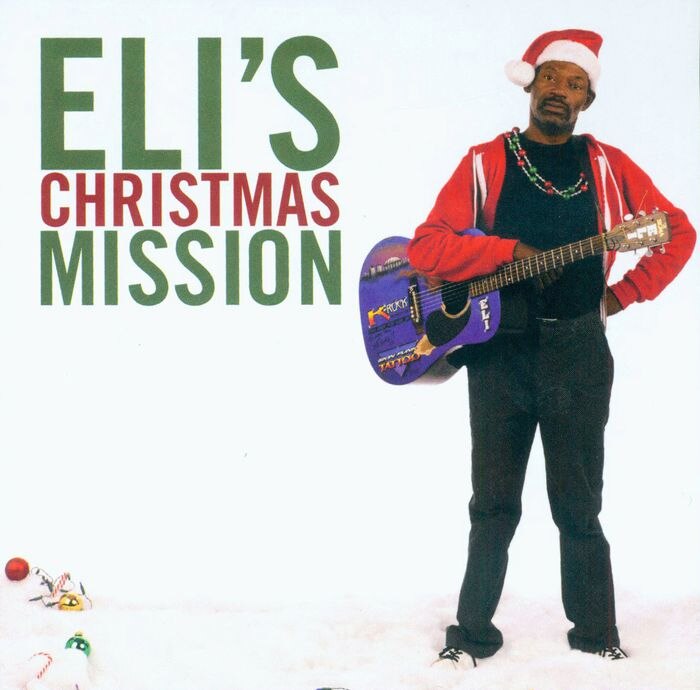
    A second album, Eli’s Christmas Mission, featured three classic holiday songs – “Jingle Bells,” “Santa Claus is Coming to Town” and “Rudolph, The Red-Nosed Reindeer” – as well as three originals – “Christmas Love,” “Angel” and “Glory.” The album was aptly released by Marshall Street Records.

    Eli, man. Just that he was the nicest guy and I remember how excited he was when he gave me his album and I played it in Faegans.

    Scott Isaacs, ’99

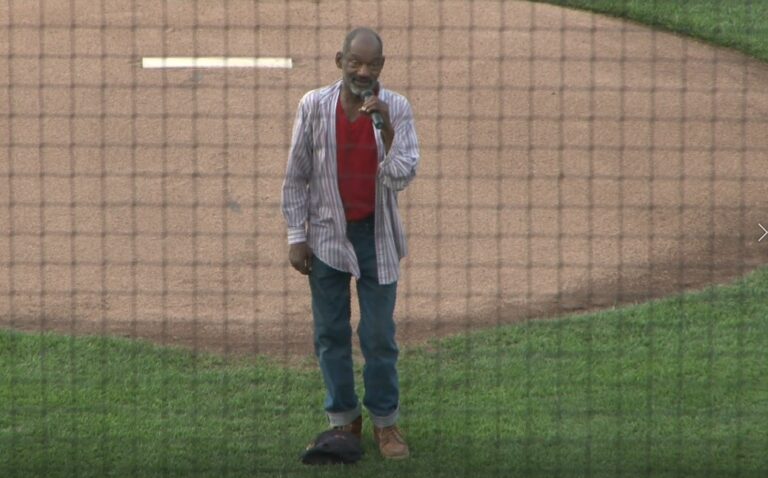
    Eli performed the National Anthem at Syracuse Mets games, and would stick around to perform outside the stadium when fans headed for the exits. When Eli passed, the Syracuse Mets minor league team shared the following:

    We’ve had the privilege of having Eli sing the national anthem for us occasionally over the years. If you didn’t hear him then, there’s a chance you’ve heard Eli playing while leaving the stadium. It is with heavy hearts that we mourn the passing of a Syracuse legend, Elijah Harris Jr. brought smiles to many and was a radiant soul that we will certainly miss.

    Syracuse Mets
    eli harris

    Legacy

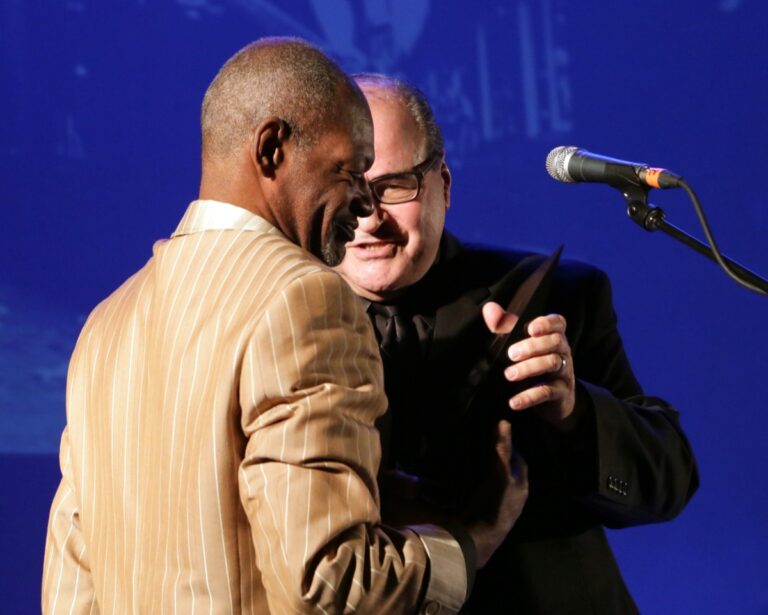
    Along with the praise of musicians and Syracuse locals, Eli was given even greater accolades as the years passed. At the 2019 SAMMY Awards, Eli was the recipient of the first ever Founders Award, a testament to his years of performing in Syracuse.

    eli harris
    Eli Harris presented by with the Founders Awards by SAMMYs Founder Frank Malfitano

    A scholarship in Eli’s name was announced by Syracuse University in September 2020 and will begin supporting part-time music students this fall. Harris would regularly work the line “You stay in school, get some college knowledge” into his performances, and his family worked with SU to honor him with the Eli Harris Scholarship. Harris’ daughter, Lakisha, said to The Daily Orange last year,

    He gave what he had inside of him, so he could teach everyone else how to love through music. He used music to communicate that. They embraced my dad with open arms from day one.

    Lakisha Harris

    A mural of Eli, via art collective 315Alive!, will bring his legacy to life, close to the corner of Marshall Street and University Ave, near Marshall Street Mall. Jacob Alan Roberts of 315Alive! announced the project in July 2020, saying, “We’re gonna use sort of an artistic approach to something that will be unmistakably Eli, using, say he always wore SU gear, so a baseball cap or, course, him playing his guitar.” See a sketch of Roberts’ mural here.

    With Eli’s death at the start of the COVID-19 pandemic, his funeral was private and tributes were limited to social media and online performances. One such tribute to Eli on Disruption Network brought Driscoll, Anthony “Zee” Donaldson, Jack Brown, former SU professor and Bandier program founder David Rezak and more together to honor him. Watch the tribute here.

    In March 2021, the driver who hit Eli was brought to justice. During sentencing, Judge Stephen Dougherty said that while he “Can’t compare one victim to another victim, we all knew Mr. Harris, knew him for the performer he was. He was a beloved member of the community.” A GoFundMe continues to benefit Lakisha and Harris’ family that continues to cope with the loss.

    He was a legendary part of this town. Everyone knew him. You walked by and whether you stopped or not or tipped him, you knew him. There will never be another Eli. He did leave his mark, not just on me but so many others.

    Joe Altier
    photo by Suzanne Dunn
  • Langston Hughes: Prolific Writer and a Leader of the Harlem Renaissance

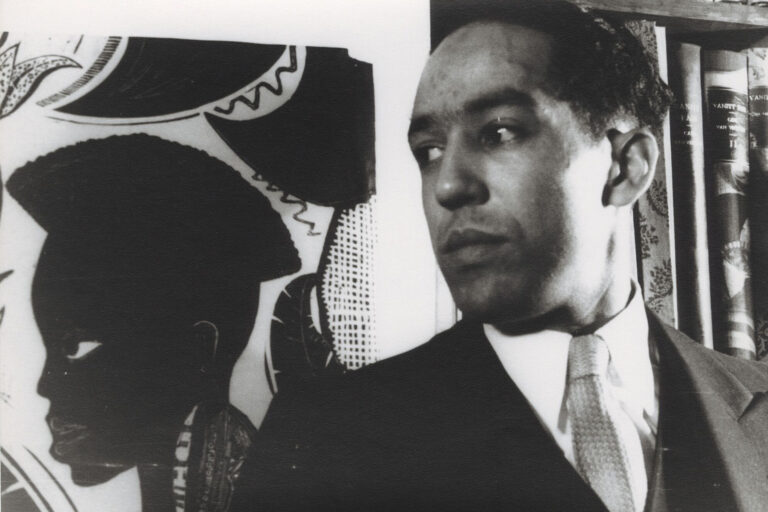
    Langston Hughes, full name James Mercer Langston Hughes, was born around February 1st, 1902 in Joplin, Missouri. He was raised by his mother and grandmother, and grew up in a series of towns across the United States midwest, showing a proficiency in writing from a young age.

    His tumultuous childhood may have given him the experiences that made him such a profound writer down the line. By the age of 12, Hughes had already lived in 6 different American cities.

    Furthermore, by the time he released his first book, Hughes had already been to Mexico, West Africa, the Azores, the Canary Islands, Holland, and worked as a doorman at a nightclub in Paris.

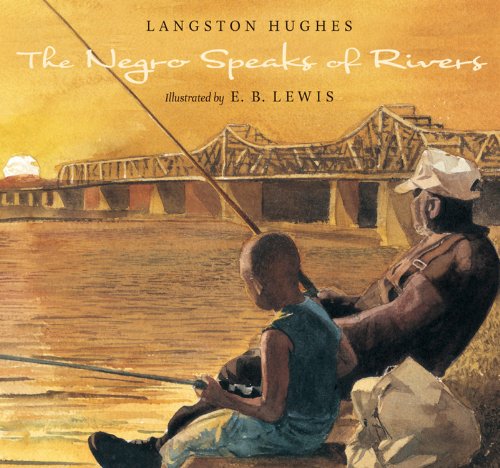
    By the time of his high school graduation, Hughes had already written his first acclaimed poem, “The Negro Speaks of Rivers.”

    The Negro Speaks of Rivers: Hughes, Langston, Lewis, E. B.: 9780786818679:  Amazon.com: Books

    This poem would be published in The Crisis, the official magazine of the NAACP and the world’s oldest black publication.

    After graduating, Hughes moved to New York City and attended Columbia University for one year before dropping out. During his time in the city, he explored Harlem and found the place where he’d establish his career.

    It would be in this neighborhood that Hughes would play a central role in one of the most important cultural events of the 20th century. This event, the Harlem Renaissance, would be the flowering of African-American culture in the United States.

    During this time, black artists, writers, and intellectuals would reconceptualize the African-American image separate from the stereotypes that they had been defined through by white society for centuries.

    A Voice for Black Artists

    In his writing, Hughes spoke about the black experience in America, but in new ways that many black intellectuals at the time disagreed with. Hughes aimed to “honestly portray the joys and hardships of working-class black lives, avoiding both sentimental idealization and negative stereotypes.”

    This concept was outlined in an essay, “The Negro Artist and the Racial Mountain,” where Hughes stated:

    We younger Negro artists who create now intend to express our individual dark-skinned selves without fear or shame. If white people are pleased we are glad. If they are not, it doesn’t matter. We know we are beautiful. And ugly too.

    Hughes writing, and many of his contemporaries writing, focused on the “low-life,” that is, the real lives of African-American’s who found themselves in the lower part of the social-economic system.

    He was the first African-American man to make a living off of his writing and giving public lectures, and by doing proved wrong many white Americans who disregarded blacks simply because of their race. For one of the first times, whites considered a black writer to be on par with white contemporaries.

    Hughes was also a pioneer of jazz-poetry, a form of literary art that is characterized by jazz-like rhythm and the feel of improvisation. The development and growth in popularity of jazz music was one of the ways the arts, specifically art created by African-American’s, flourished during the renaissance.

    One of Hughes acclaimed poetry books, The Weary Blues, is a prime example of his unique style of phrasing that is influenced by jazz music. Here is a short excerpt from the book that exemplifies this style of poetry:

    To the tune o’ those Weary Blues.
    With his ebony hands on each ivory key
    He made that poor piano moan with melody.
         O Blues!

    The Weary Blues, a poetry book released by Hughes in 1926.

    An Incredible Legacy

    Langston Hughes had an everlasting impact on writing, as well as future generations of African-American artists. His approach to the portrayal of African-American life in writing at the time was new to many, and proved to be revolutionary.

    His career was also unique and second to none. It took him all across the globe, and allowed him to develop into the visionary writer he came to be.

    Besides being regarded for his poetry, Hughes also wrote plays, essays, short stories, and novels. He would also frequently travel across the United States, and to the Soviet Union, Japan, and Haiti to give lectures. He even served as a war correspondent for American newspapers during the Spanish Civil War.

    As the years passed, new generations of African-American intellectuals and activists began to take issue with some of his viewpoints, perturbed by the fact that Hughes never really identified himself politically.

    Although his popularity wavered at points throughout the years for these reasons, especially in the exceedingly racially turbulent second half of the 20th century, Hughes reputation as a trailblazer for the freedom of African-American art and culture is everlasting.

    Langston Hughes died of complications of prostate cancer on May 22, 1967, but his legacy and profound impact on African-American culture and the world of literature lives on.

    His home in Harlem, on East 127th street, received landmark status in the city of New York and was added to the National Register of Places in 1982.

    A Collective of Writers Are Saving Harlem's Langston Hughes House From  Gentrification - Bloomberg
    Langston Hughes home in Harlem.

    In most of his work, Hughes continued to discuss important issues regarding African-American’s in American society, and their experience in the face of centuries of discrimination and prosecution.

    His work exemplified the attitude of the Harlem Renaissance, and he is remembered as a central figure of the era in which African-American culture blossomed and defied the prejudiced and discriminatory attitude that was cast upon it by American society.

  • Sarah King Dishes Out Five Wonderfully Uneasy Pieces with The Hour

    Singer-songwriter Sarah King has released her debut EP, The Hour, a splendid, soulful voyage to the darkest corners of Americana.  It’s the perfect showcase for her show-stopping vocals and gothic bluesy story songs, something made all the better by the smartly minimalist arrangements conjured by co-producers, Simone Felice and David Baron (The Lumineers, Bat for Lashes, Jade Bird, Felice Brothers).

    sarah king
    photo by Arielle Thomas

    The tune that will likely command the most attention is her reinvention of Black Sabbath’s “War Pigs.”  This take is as slow and minimal and softly acoustic as its gets – a thumb strummed solo guitar riding an E minor drone (sorry, Spinal Tap, this and not the D minor, is the saddest of keys/chords).  Even though this guitar and voice spotlight is swaddled in a cathedral’s worth of cavernous reverb, it retains a crispness and clarity, like all the tracks on this impeccably engineered collection.  This cover is further distinguished by the ghostly alternative melodies King conjures, she’s like a bebopper of acid folk.  There’s shades of Nick Drake, Alexi Murdoch and Blue-era Joni Mitchell in the quietude and Dolly Parton, one of her inspirations along with Adele and White Stripes, in the controlled country crack in King’s voice.

    The track “Poison” has a churchy gospel vibe.  Here Sarah King responds justifiably likewise to a cruel lover who can’t take what he dishes out (“I’m not bent, I’m not broken by your crimes. I gave you a taste of your medicine and you say I poisoned you”). Like many tunes on the album, there’s great texture here – tiny sonic delights barely audible in the mix like the ghostly roto-speaker electric guitar in this tune. 

    My personal favorite, “Nightstand,” hammers home the spooky soulful vibe. It’s a murder ballad driven by a swirly Rhodes piano, guitar crunch, Hammond organ wail, rich background vocals and gut-punch lyrics.  Case in point, the chorus:

    I was born with the cord wrapped around my neck
    It’s not something I could ever forget
    The world’s been trying to take me out since the day I first arrived
    There’s a darkness a-reaching for my hand
    I keep a gun in my nightstand
    Waiting for music to bury a body by

    The funereal shuffle of “Cold Hard Ground” brings to mind the artsy country blues of Wrecking Ball-era Emma Lou Harris.  It’s a minor blues articulated with a slurry snare-brushed beat, honey toned organ and minimalist piano. Co-producer David Baron, proprietor of Sun Mountain Studios in the Hudson Valley where the EP was recorded, is an analog synth collector.  He adds some very outta-space keyboard swirl and ambience here, along with (possibly) a mellotron-treated vocal chorus.  He’s a master of the less is more approach.

    sarah king
    photo by Christian James

    “Not Worthy the Whiskey” is a swaggering stomp-and-holler about making peace with your dark past.  The tune is propelled by percussive handclaps and stomps and boasts a whistling-down-the-alley intro ala Billy Joel’s “The Stranger.” It’s another deep blue lament, ones that floats in and out like a dream.

    Like much great music, King’s debut EP was born of loss.  In the press notes she says: “My dog died, my ex-husband died and my mama died too.  Life is too fucking short,  I’d just spent almost a year traveling in a tent away from my instruments and facing so much loss, I realized I never wanted to be away from music again.”

    King’s partnership with Felice came about when she sent him a shot-in-the-dark email containing a performance video of “Nightstand,” which to an invitation to record that tune and four more.  We are lucky that King found the strength to put her loss into such fresh, emotionally revealing, brave music.  And she’s lucky to have found, in Felice and Baron, producers who could bring her art to life is such a beautifully restrained and achingly gorgeous way.

    Key Tracks: Nightstand, War Pigs, Not Worth the Whiskey

  • Noel Paul Stookey Releases “Just Causes” Compilation

    Noel Paul Stookey today releases a 15-song compilation paired with non-profit beneficiaries in the spirit of giving back, with each track bearing a theme of social concern.

    Noel Paul Stookey just causes
    Album art for “Just Causes”

    The “Paul” in Peter, Paul & Mary, the seminal 1960s act, will be donating to a different cause for each track on the compilation. Curated and remixed by John Stuart, the compilation focuses on social issues. Stookey spoke on the project after taking part in over 50 albums: 

    Every songwriter eventually realizes that his art is meant for service: to entertain, inform and in a best-case scenario, to inspire.

    As I look over the fifty plus years that I’ve attempted to capture ‘lightening in a bottle’ – a moment realized in a song that transcends time – I recognize that some musical creations seem to have a longer life because they address issues that still challenge us, no matter the generation.

    The idea for a compilation that donates 100% of its proceeds to charity struck Stookey at a strange time. “I was literally picking up groceries at our local store when I noticed for the umpteenth time that Paul Newman’s brand of products from his Newman’s Own company advertise on the packaging that ‘100% of profits go to charity,’” he explains. “I thought what a great concept and what the term ‘profits’ means in my life. I’ve been very fortunate in my musical pursuits, and the idea of ‘giving back’ at this point in my life and career struck a chord with me.” 

    Some issues discussed in the songs on “Just Causes” include hunger, reproductive rights, immigration, missing children, safe energy, drug addiction and the environment. The songs strive for justice for all. One song, “Danny’s Downs” tells a moving story about a family who welcomes a son with Downs Syndrome. The song’s profits will be donated to the National Down Syndrome Congress.

    “Just Causes” is Noel Paul Stookey’s first release since 2018, and will be available on March 22nd, 2020.  you can find more information noelpaulstookey.com.

  • Lark Hall Brings a Century of History to Albany’s Music Scene

    Albany has many venues, but for more than a decade, there has not been a mid-sized music venue for bands to ‘graduate’ to once they prove themselves capable of filling clubs, including The Hollow, Parish Public House, Pauly’s Hotel and various area clubs and bars. If your band can sell out any of these rooms, the next logical stop is either Putnam Place in Saratoga Springs, or wait until you’ve built yourself up enough to return to The Egg, Upstate Concert Hall or open up at The Palace for a larger act. This has created a gap for artists from and playing in the Capital District, one that is bridged by the arrival of Lark Hall.

    lark hall
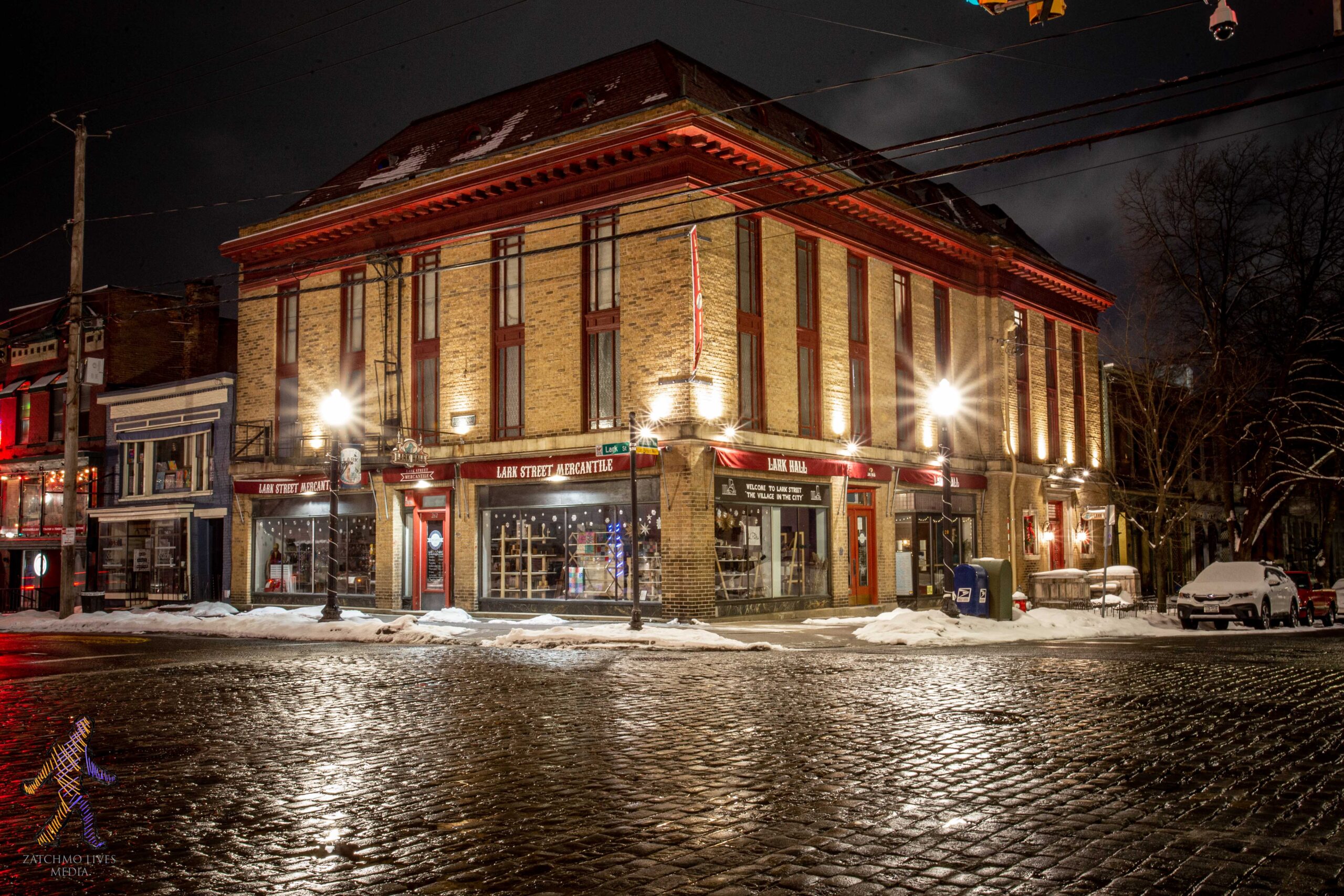
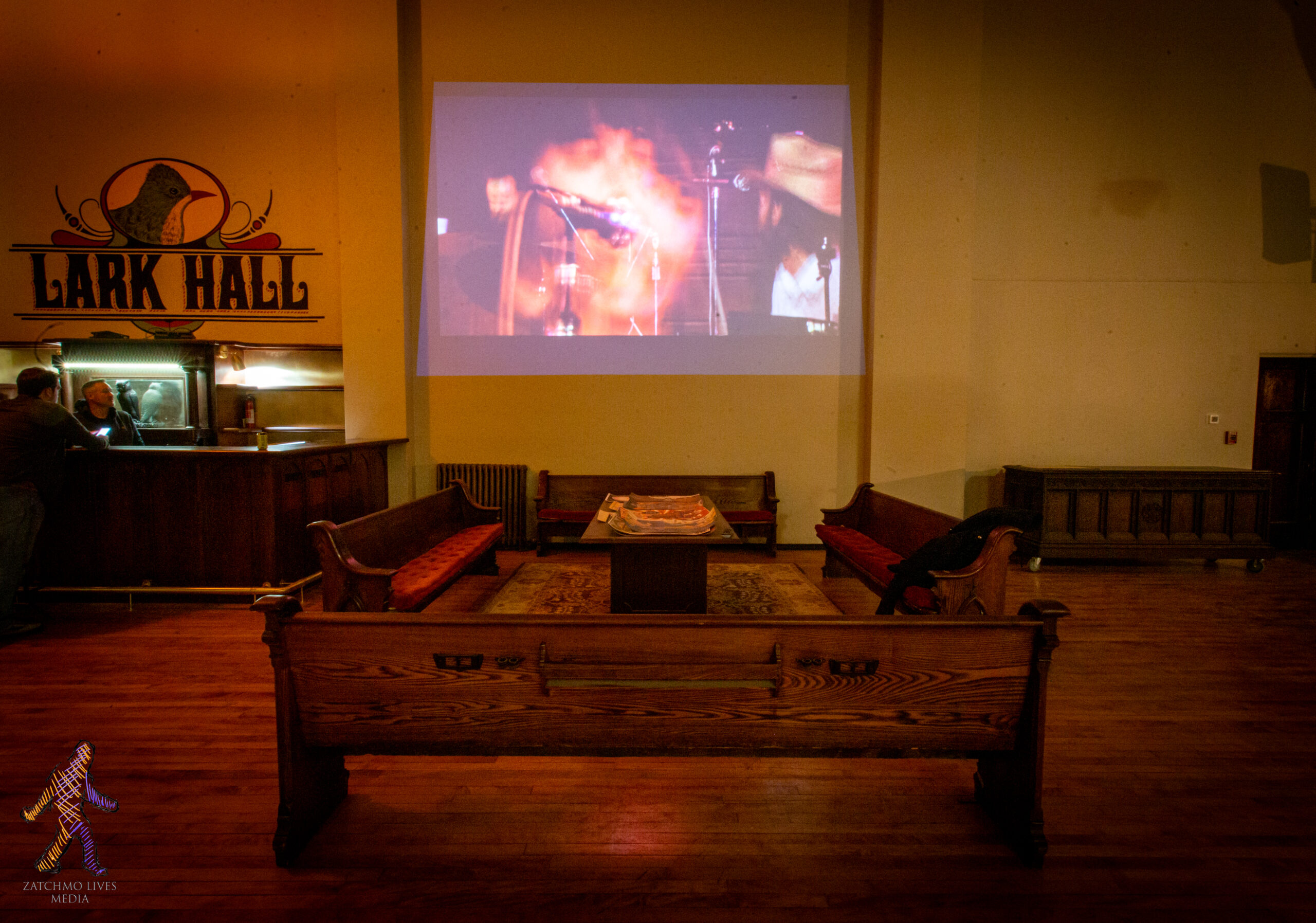
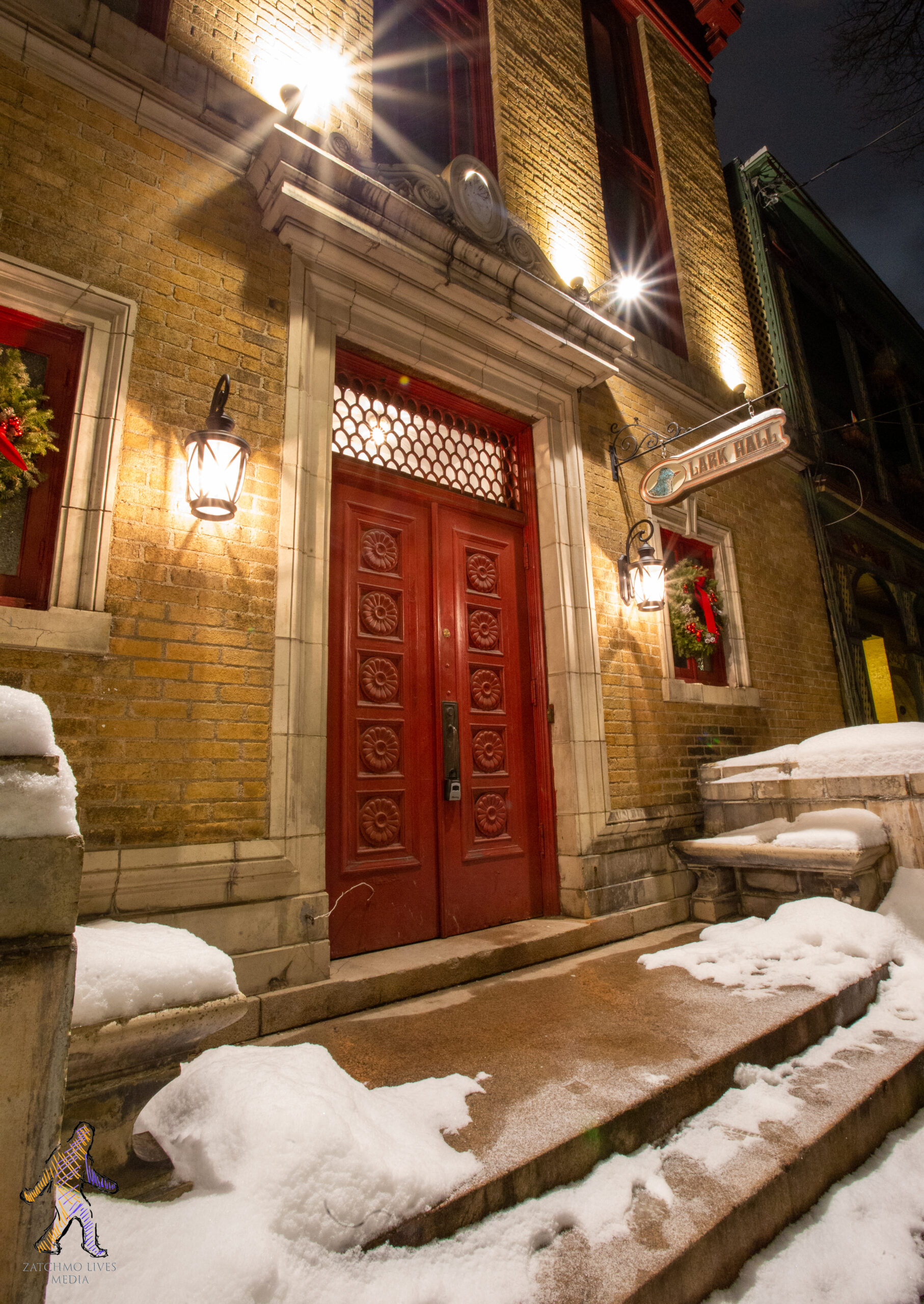
    Lark Hall, Albany, NY – photo by Zach Culver

    With a room for shows, weddings, events and gatherings, Lark Hall will be more than just a music venue holding events on the side.

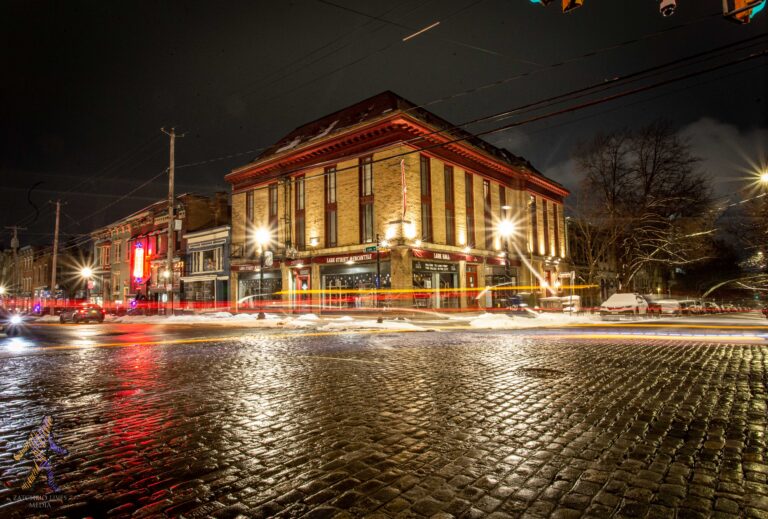
    Like Tipitina’s in New Orleans, The Capitol Theatre in Port Chester or The Colored Musicians Club in Buffalo, the history is in the walls of the building, one that was built in 1916 and has had only two previous tenants – Daughters of the Eastern Star, and for the 40 years that followed, a dance studio. The music history has only started to be written.

    Using pieces of history from across the Capital Region, Lark Hall draws on local heritage as they prepare to bring a 300-450 capacity multi-purpose venue to Albany’s Center Square neighborhood.

    NYS Music got an exclusive first look at Lark Hall, Albany newest music venue, right in the heart of town.

    History in the heart of Albany

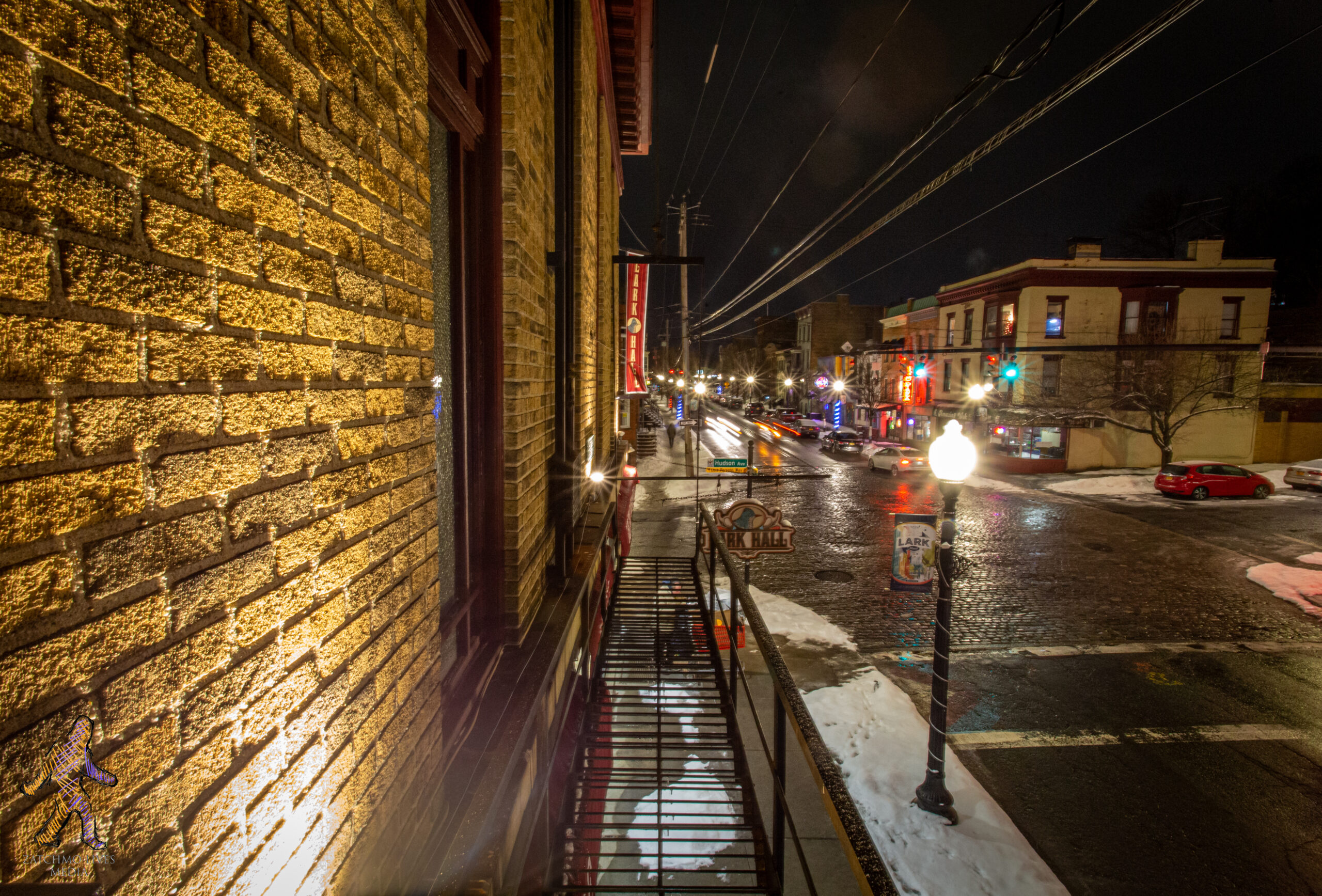
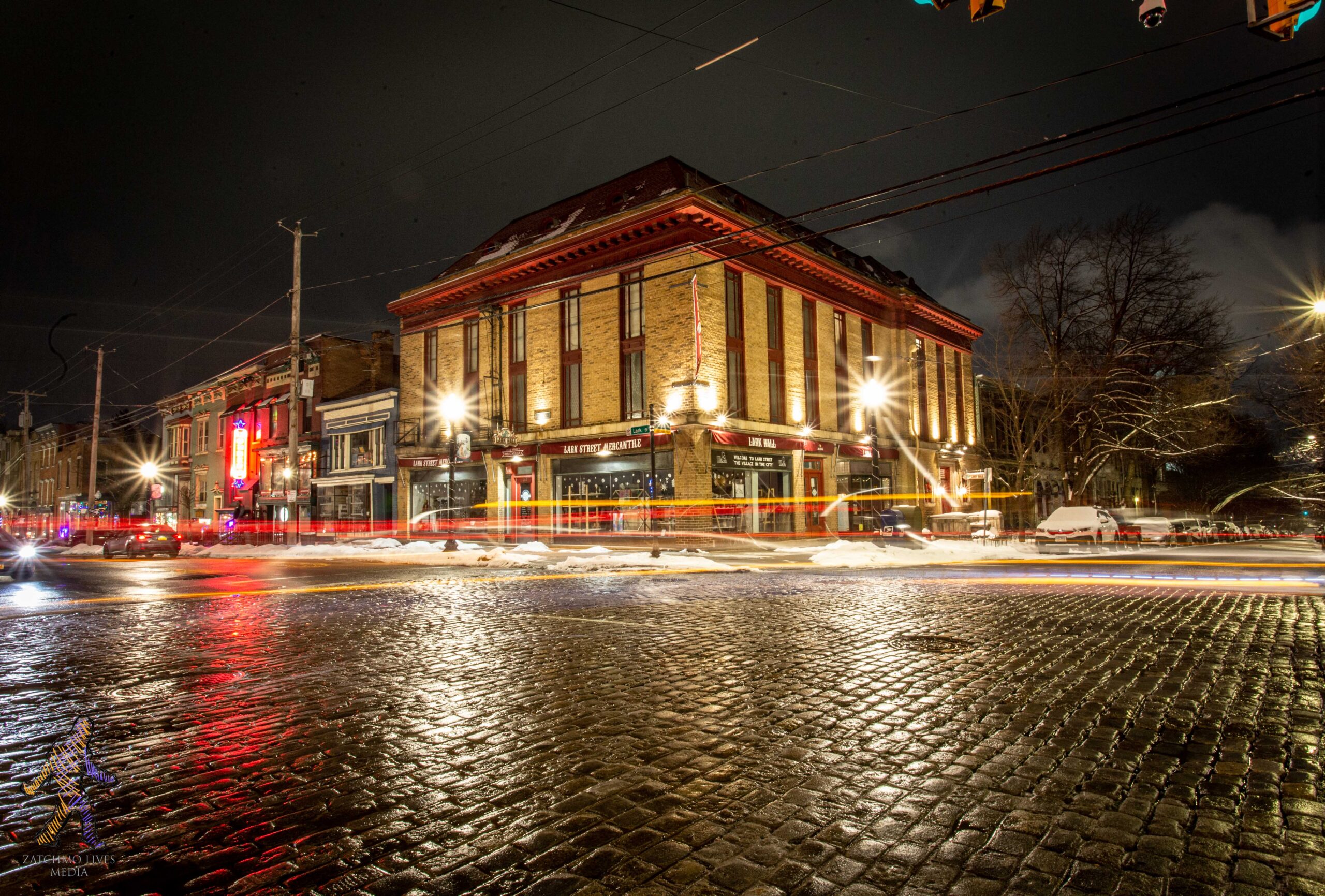
    Lark Hall has a long history of being operated and owned by women, including the current iteration of the venue with Lark Street Yoga on the ground floor. In 1916, the corner of Lark and Hudson Ave was the starting location for the 48th Annual Suffrage Convention, where 600 delegates were expected. From across the state, supporters including Margaret Hinchey, Jane Olcott, Vira Whitehouse and Leonora O’Reilly were in attendance.

    lark hall
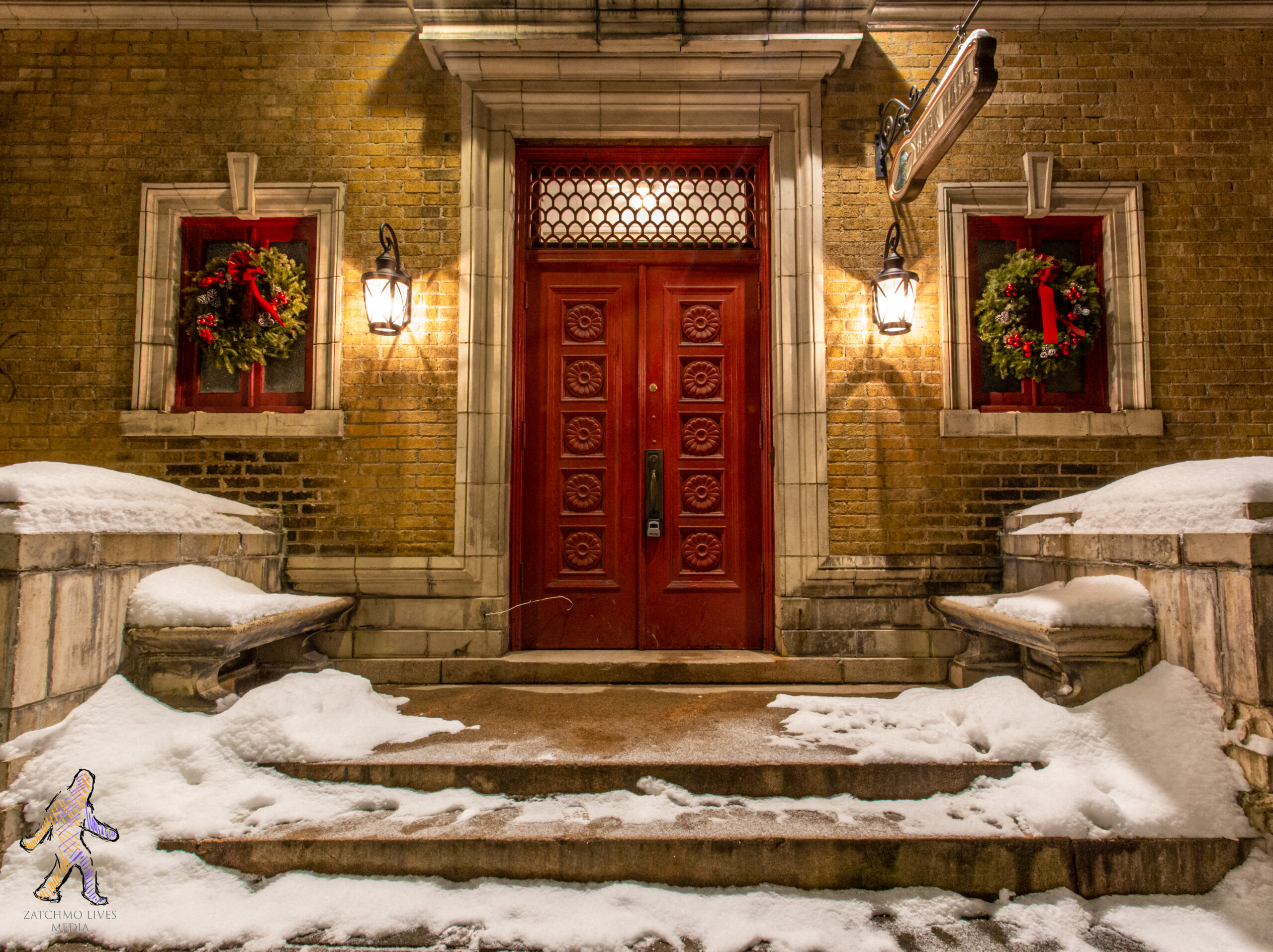
    photo via Historic Albany Foundation

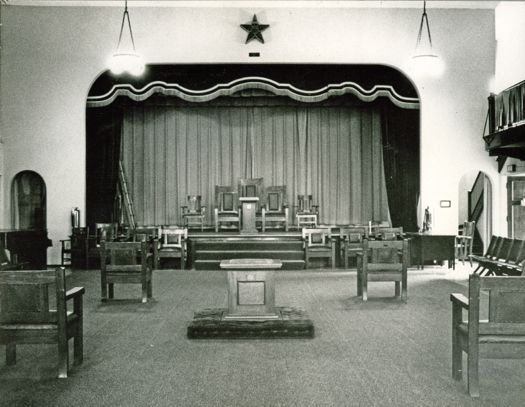
    Constructed by women, for women, it initially served as a chapter house for the Daughters of the Eastern Star, the female equivalent to Free Masons. A building that took less than six months to build hosted the 1916 state suffrage convention as one of its first events – a year later the 19th amendment, guaranteeing women the right to vote, would be passed by the Albany legislature, located a short 12 minute walk away.

    The hall would serve as a community asset in Center Square, with Red Cross bandage packets assembled by volunteers during World War I, providing food for neighbors during the Great Depression, or holding vigils for husbands, brothers and sons during World War II. USO events were held, as well as cotillions and school dances heading into post-war America; at one of these events, TV and radio personality and Albany native Andy Rooney met his wife here at a dance. The father of Rock n Roll, Chuck Berry, traveled to Albany and played Lark Hall, along with many others over the years.

    lark hall
    photo courtesy of Lark Hall

    Purchased by eba Center for Dance & Fitness in 1977, the Hall shifted to be a focal point for the arts, dance and performance for over 40 years, until closing in 2017. Justin and Jenn Miller saw the history of the location and outbid others to take over ownership of the historic venue.

    We bought it with a vision to both restore the building’s natural beauty and maintain it as a community and performing arts venue. We’re also fortunate to be home to Lark Street Yoga and Lark Street Mercantile, both of which contribute to Lark Street’s vibrancy and sense of place.

    Jenn Miller, owner, Lark Street Yoga

    Locally sourced materials found a second life in the century-plus old building, including the original curtain bunting behind the stage that matches the age of the building.

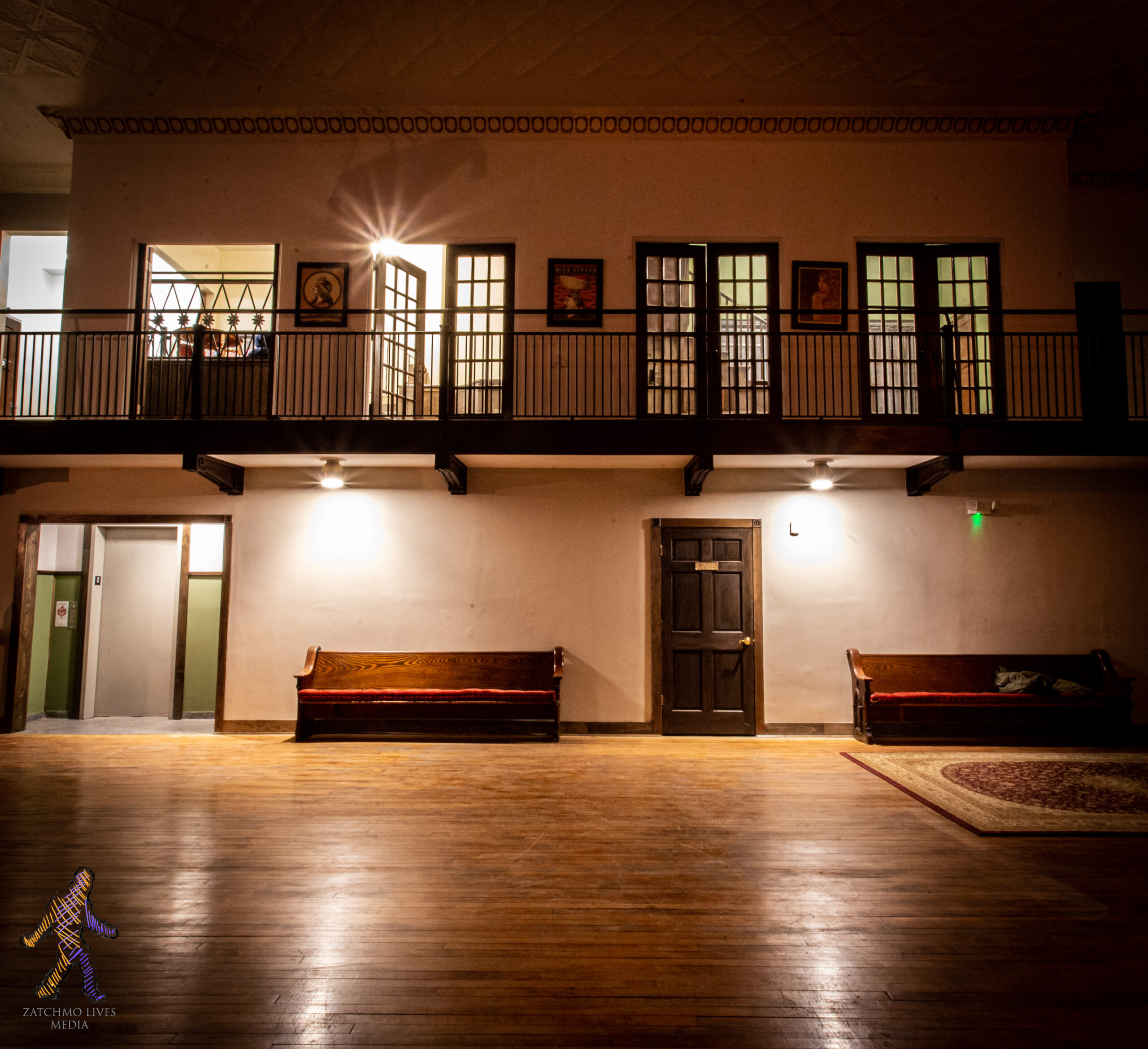
    Part of the decor added over summer 2020 includes church pews from First Presbyterian on 15th street in Watervliet. The pews serve as seating that will eventually ring the room, and for now serve as ways to socially distance limited audiences in the room. Additional pews were repurposed and made into the bar.

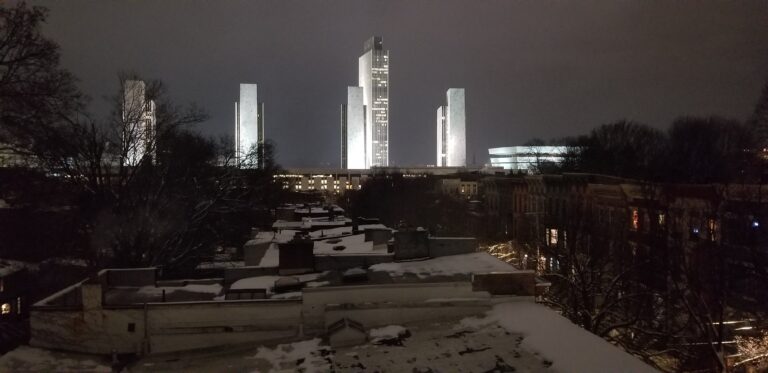
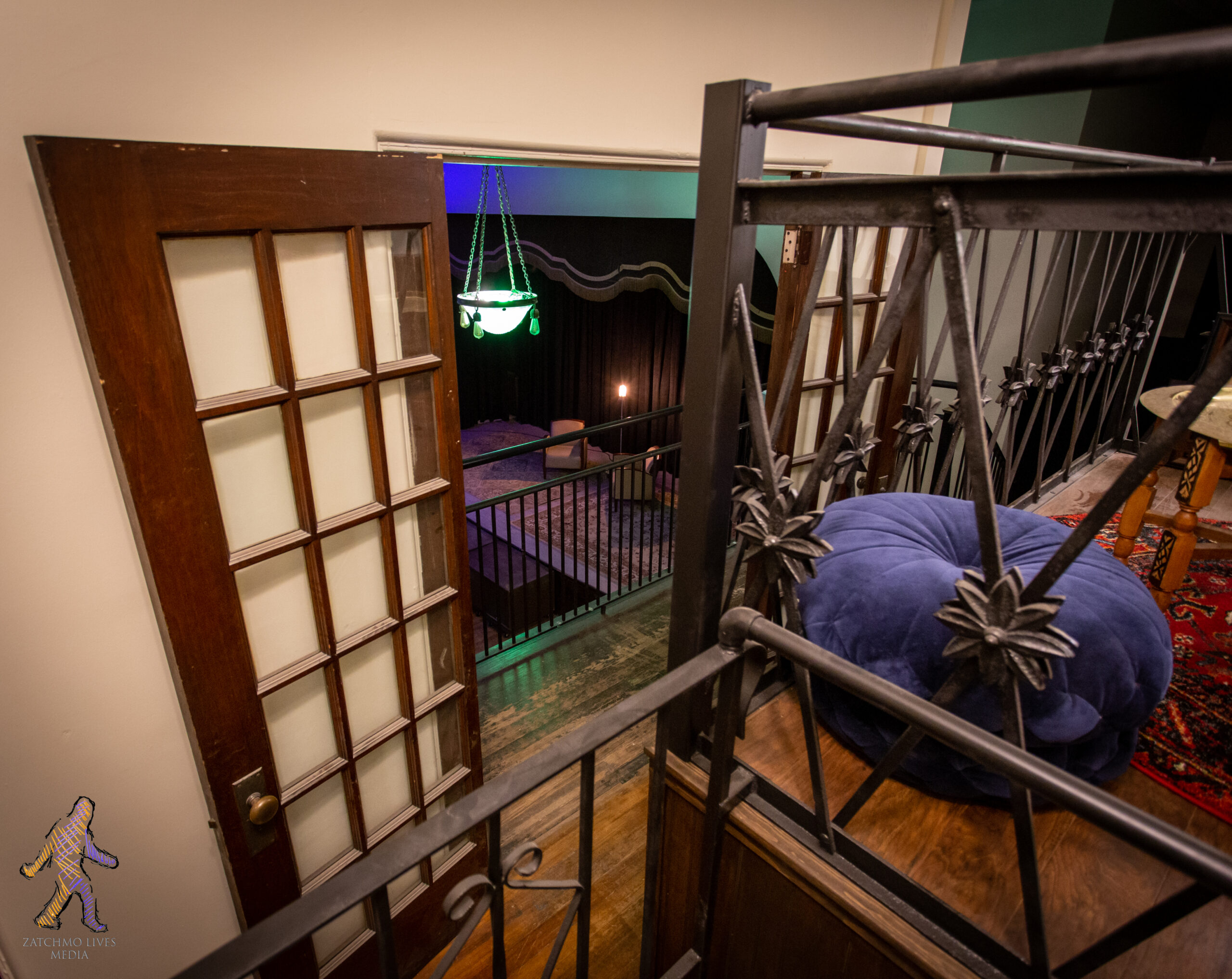
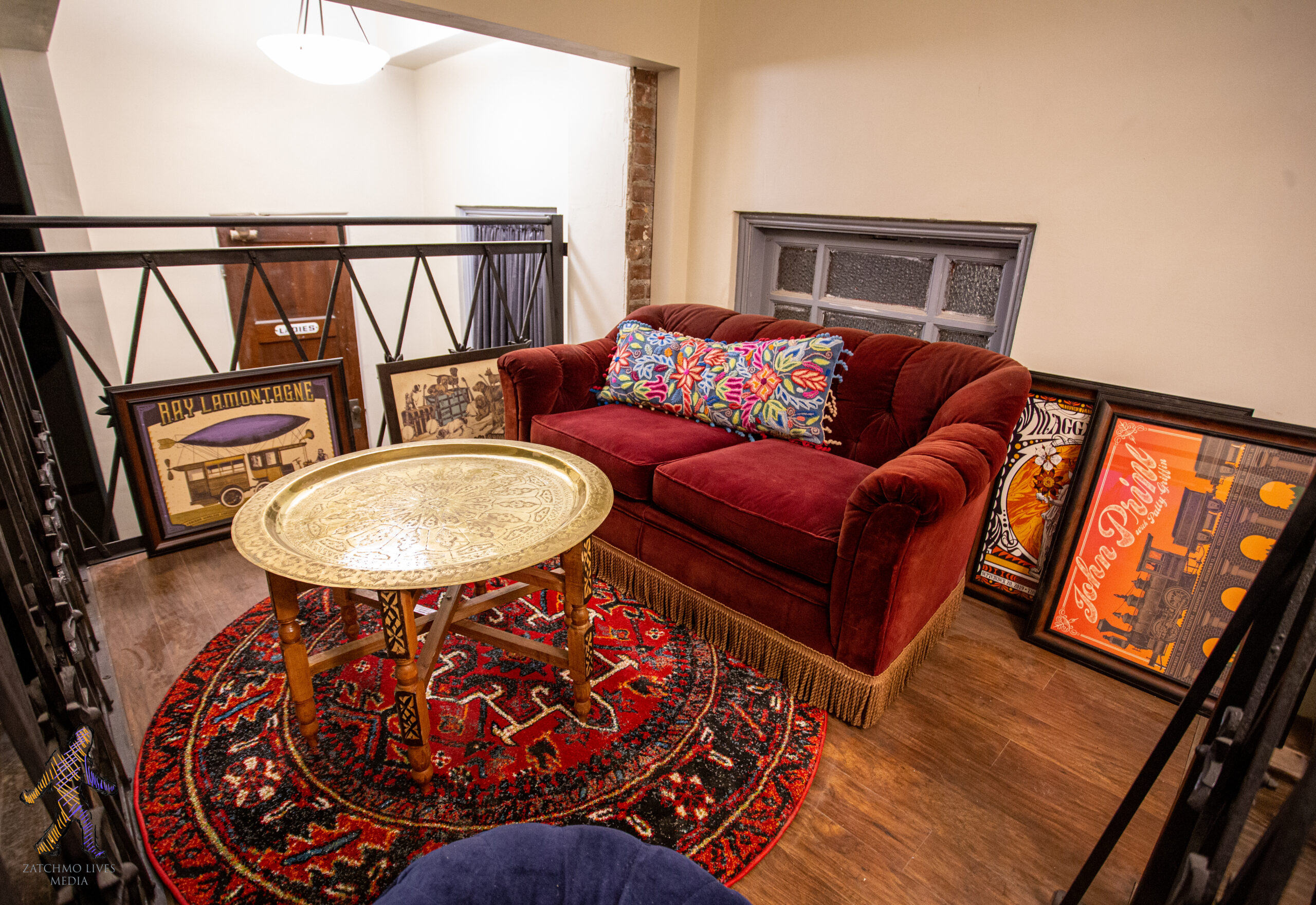
    The Millers upcycled the fence from their first home for a kitchen island in the residency upstairs, and framed concert prints from their personal collection pepper the venue on all available wall space. The decor in the bathrooms features brass fixtures and Moroccan tile, and a fully furnished Green Room / Apartment on the third floor will allow bands ample room to stretch out before a show, or a place to stay during an extended residency. Views of the Empire State Plaza from the third floor bring a sense of proximity to a town affectionately known as ‘Smallbany.’

    empire state plaza
    Looking East towards the Empire State Plaza

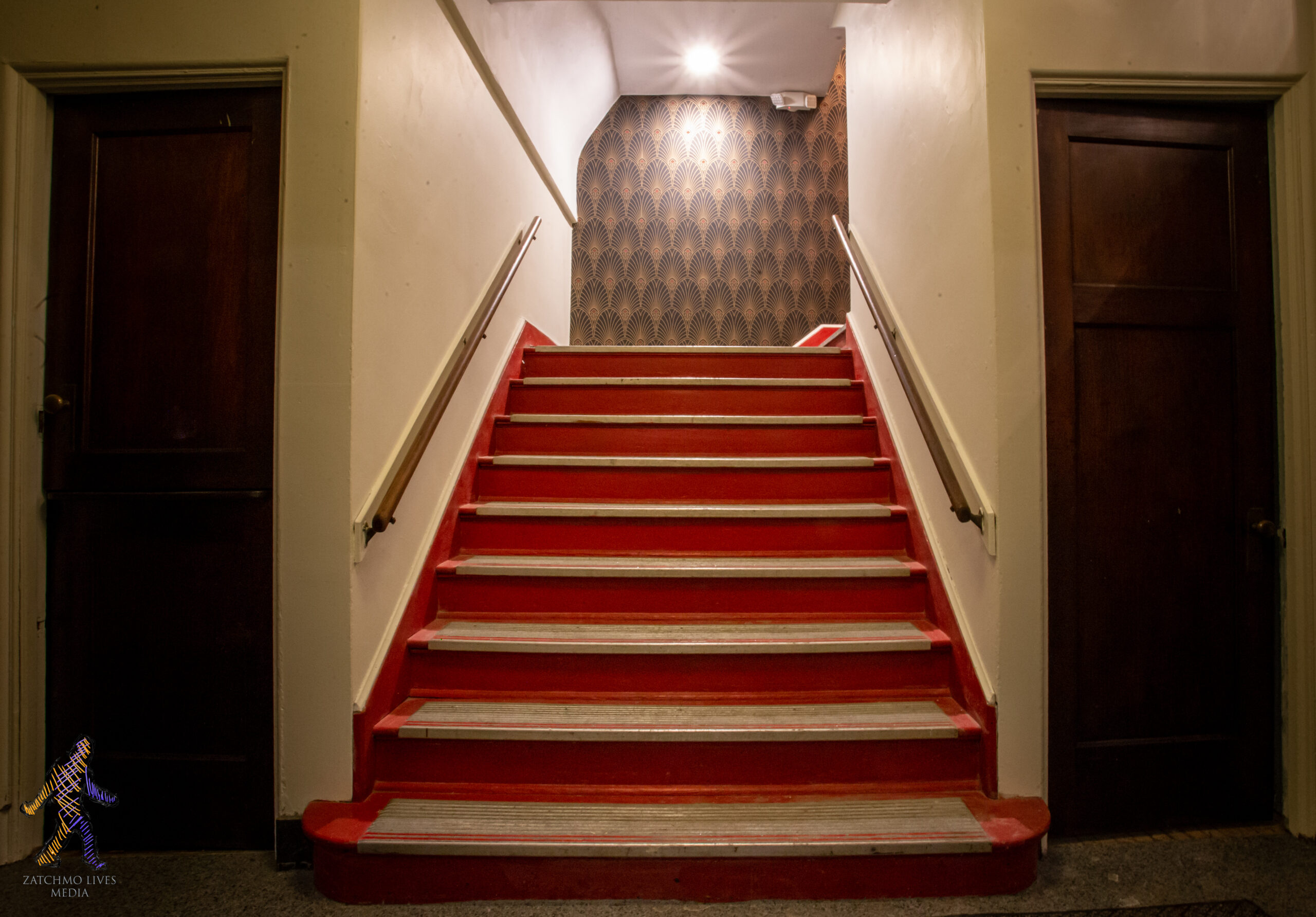
    There are of course some changes that were made to the building. Plenty of fresh paint on the walls and wood stain on the bar and trim, as well as art deco wallpaper reminiscent of HBO’s Boardwalk Empire. 22 foot long/46 foot wide heavy gray curtains opposite the stage double as a buffer to allow limited sound to Lark Street and cover the windows, making the room intimate upon arrival. A VIP booth upstairs stage left is designed for 5-6 people, offering a direct view of the stage as well as a private bar. Add in a long overdue elevator and the building is ready for 21st Century crowds in 2021.

    Having purchased the building in March 2018 and opening Lark Street Yoga in September that year, the Millers bring business experience and their fervent music fandom to Lark Hall. A venue run by fans, for fans has immense potential, and has already welcomed audiences virtually with Window Sessions in summer 2020, and the new Practice Sessions, which kicked off on March 4 with Glass Pony.

    Music has always been a shared bond and connection since the first time we met and started dating.  Traveling to see live music together has always been our favorite pursuit and escape – and over the years we’ve been fortunate to check off a long bucket list of seeing shows at legendary venues big and small – from Red Rocks in Morrison, Colorado to Preservation Hall in New Orleans.  

    Early in our relationship, and while moving into a new home, we both found our old boxes of concert tickets and memorabilia, and as we went through the piles of mementos, we realized we had been at dozens of the same shows and festivals before we’d met. Our musical paths had eventually connected at the right time and we’re now incredibly blessed to pour this passion into our shared vision for Lark Hall.  

    Justin Miller
    lark hall

    More than just a music venue

    Yet with all the history within the walls, Lark Hall will not just be a music venue. The Millers plan to utilize the ample space for meetings, weddings, private shows and birthday parties. The venue’s cabaret license will allow for music and events to start as early as Noon, 7 days a week, with shows going as late as 11pm Sunday-Wednesday, and until 2am Thursday – Saturday.

    Any event, music or otherwise, will have the benefit of Lark Hall’s state of the art sound, lighting and projection system.

    lark hall
    Lark Hall, Albany, NY – photo by Zach Culver

    Lighting in the hall features the original fixtures, including five original chandeliers with Edison light bulbs hanging in the room, providing an array of colors to illuminate the room. Kirk Lyons of Lyons Den Entertainment serves as sound and light engineer for Lark Hall, and set up the room so the light rig blends into the ceiling and offers an unobstructed view of the concert. State of the art sound is set up throughout the room, making any event – music or otherwise – capable of having sound on par with the best music venues in the area.

    We wanted to make Lark Hall a world class sounding room so I called in a favor from my friend Stan Denis, a Danley Sound Labs dealer. The type of speaker used in the mid-high cabinets is a point-source system that makes it so the sound is almost exactly the same in every seat. Ken Mark of Adirondack Scenic helped us with the giant curtains against the back wall. They are designed to help dampen the audio reflections in the room.

    As far as the lighting design goes, I wanted something simple yet effective. I didn’t want to change the intimacy of the small theater feel, but needed to add that bright LED ‘wow.’

    Kirk Lyons, Lark Hall sound and lighting director

    Stan Denis of Denis Entertainment Group advised the Millers on their labor of love, and speaks to their commitment to making Lark Hall a success.

    So many people who get into this business get hardened very quickly because they are trying to survive as they are growing their company. and they start to lean on artists and support crews and people in a way that is counterintuitive to getting creative art. Justin and Jenn are so passionate about music and the music scene, as well as the quality of the shows they want to produce. They’ve been asking the right questions since the beginning, with regard to creating the best experience for bands and audiences alike.

    Stan Denis

    For the full scope of what Lark Hall offers, take a walkthrough tour from Mirth Films.

    Neighborhood

    Center Square, the neighborhood surrounding Lark Street, is the heart of Albany, a mini Greenwich Village to call our own. Bars, restaurants, small independent businesses, tattoo shops, and bodegas are found in between brownstones and apartments that date back to the late 19th Century.

    Local businesses are on board with Lark Hall’s arrival, knowing that patrons will be making an evening of a show or event at the new venue. Early arrivals can dine at any number of restaurants on Lark or Madison Avenue, and those wishing to extend the night have plenty of bars to choose from.

    Historically music has been a huge part of the fabric of our historic and fabled Lark Street. The opening of Lark Hall heralds the return of the street’s heartbeat and will no doubt bring countless new generations to the street. 

    Savoy Taproom first brought live music back to Lark Street in early 2016. Lark Hall builds on the foundation we laid by bringing a concert venue to the street, which will bring people – people who will shop, drink and dine on Lark Street.

    Jason Pierce, owner, Savoy Taproom

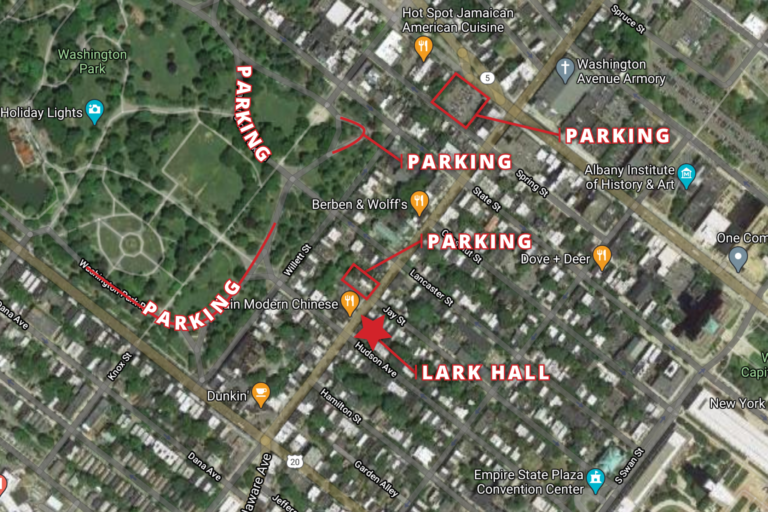
    One thing that Lark Street may seem to lack but has quite a bit of, is parking. For those driving to a show, there is the 60-space Trinity Church lot only 50 feet away, and a 200 car lot next to 204 Washington Ave. And of course, there is Washington Park, with ample spaces to park at anytime of day. Considering the distance to walk for shows at The Egg, or at Crossgates Mall, the setting and available parking for Lark Hall is comparable, if not better.

    With more parking available than you may realize, the arrival of Lark Hall means local restaurants and bars will benefit from early arrivals and late revelers, tying the community together and giving the neighborhood a centerpiece. Carpooling and ride share are of course options for getting there, as well as the CDTA #13, which stops right outside Lark Hall and runs until late in the evening.

    lark hall
    A handy map for parking near Lark Hall (and all of Lark Street)

    Since taking over the property at the corner of Lark and Hudson (also the name of their two cats), The Millers and their team worked hard throughout the COVID-19 pandemic, making all needed renovations, and officially opening up in May 2021. Now, with the addition of The Eleven, the venue expands to welcome music lovers on two floors to a fresh vibe on Lark Street.

    Photos by Zach Culver

  • Rob’s School of Music in Rockland County Thrives Nationally

    Musician Rob Spampinato from Rockland County turned his multigeneration music program Rob’s School of Music into a virtual success despite the pandemic.

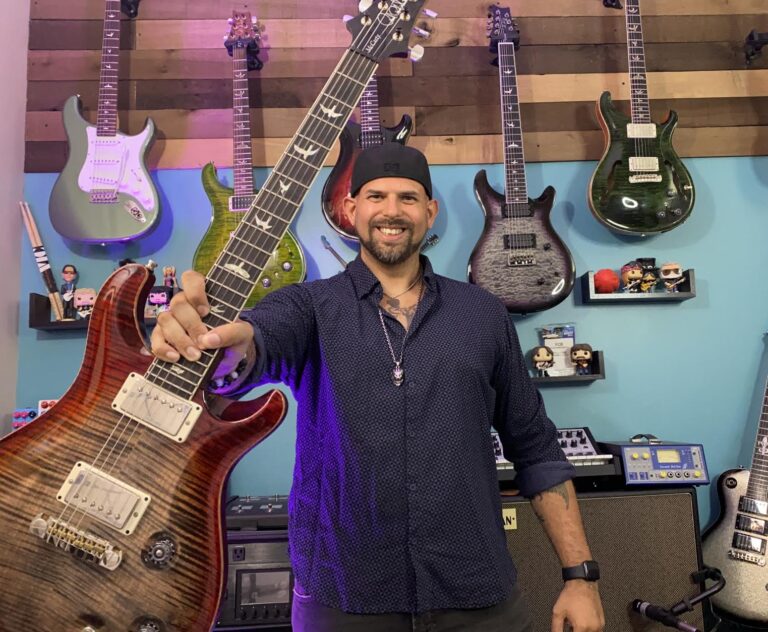
    Rob's School of Music founder
    Credit: Rob Spampinato

    Growing up in Rockland County served as the foundation for his love of music.  “Rockland County was an incredible play to grow up for a young musician. I remember places to see and perform music for all ages. Some of my first live music memories were watching the bands play the Fourth of July Fireworks at RCC every summer with my whole family. My band heatedXchange actually played that same event back in 2017, which was an amazing full-circle moment for me,” said Spampinato.

    When he was a teenager he would hang out and perform at the Nyack Center and Rockfest in New City. In high school, his band was the very first rock band that was allowed to host a show at the Suffern Community Center. In the early 2000s, they rented out the Antrim Theater and hosted sold-out events. The music scene in his younger years shaped him into the musician today. For adults and before COVID-19, he credits Rockland as a place where you could go to a bar in any town and see live music. 

    Spampinato has been a professional artist for over 20 years. He’s been on tour with bands In Question and Diecast as a guitarist. He is currently recording and performing with his band Heatedxchange. Spampinato has also worked with several corporations across the nation including Dos Equis, Mini Cooper, and Joe’s Crab Shack, to name a few. Rob’s School of Music is his current endeavor which he founded in 2017. It is a music education program for people of all ages to learn and achieve musical skills. The students can receive lessons in guitar, ukulele, drums, bass, piano, singing, violin, DJing and even audio production.

    My mission statement with Rob’s School of Music is to give people the skills to play music forever. I tour extensively around the county in my 20s and when I opened the school I wanted to give that knowledge back to the community.

    Rob Spampinato

    Before the pandemic teachers went to different schools and hosted seminars within the county to discuss how music boosted confidence, dedication, and expressiveness. The students would perform live at Suffern Street fairs. When everything shut down in March 2020, Spampinato had to find a way to keep the school going. Rob’s School of Music became even more of a success as it went virtual. While it’s based in Suffern, students from all over the country take lessons leading to 4,500 virtual lessons since the beginning of the pandemic. Students in Rockland County and Bergen County in New Jersey receive in-person lessons. 

    New technology and software allow lessons to be designed for each individual student’s specific learning style. There are multiple cameras set up that allow students to see their teacher and receive guidance from all angles. In April 2020, an Instagram was made for Rob’s School of Music and now there is a Youtube interview series with notorious musicians to give students more guidance. Some guests include former Kiss guitarist Bruce Kulick and Alice Cooper guitarist Nita Strauss.

    Spampinato wants to eventually expand to a second physical location somewhere else in Rockland and continue to grow the virtual lessons. Students are able to focus more on playing their instruments from the comfort of their homes without other distractions.

    When I say ‘My goal is the give people the skills to play music forever,’ my intention is to break down the preconceived notions of what music education is and make it a highly personalized, fun experience so that students have the skills to make music a part of their life forever.

    Rob Spampinato

    Although he is the teacher, he becomes inspired by his students and seeing their growth and reactions to achieving their musical goals, no matter what age. “Not only do I get to take people through their musical journey, but every day I get to play music and grow as a musician. Every day I learn something new while teaching which I then make part of my lesson programs,” said Spampinato.

Built in Breakdance