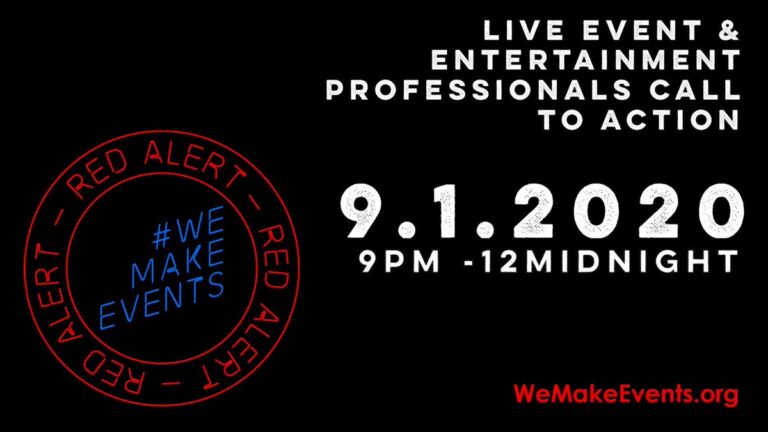
Music venues across the United States plan to light up in red on the evening of September 1, 2020 demanding the passage of The Restart Act. The red lights illuminating the venues across the country will symbolize being in a ‘Red Alert’ as part of the the #RedAlertRESTART as a call to action to help venues during the coronavirus pandemic.
The purpose of this demonstration is to try to convince Congress to pass the Restart Act. The act, if passed, would provide much-needed assistance for millions of Americans who have lost income due to the coronavirus pandemic sweeping across the world. The call to action is being spearheaded by the #WeMakeEvents coalition. The #RedAlertRESTART campaign’s purpose is to try to bring awareness to the fact that live music and venues are being disproportionately affected by the COVID-19 pandemic and need support desperately.
In the recent Billboard article it explains why this act is so important. This relief bill, if passed, will offer, “up to 90% forgiveness for loans to companies that have high revenue loss and doesn’t penalize industries that rely on part-time employees. In addition, rather than basing loan amounts on payroll, the Restart Act includes grants that are made to eligible recipients in an amount equal to 45% of gross revenue from 2019, with a cap of $12 million” according to the article.
On Tuesday night from 9PM – 12AM PST music venues across the nation plan to light up in red to highlight that the live events industry, particularly music venues, are on red alert for their survival. This lighting up will involve venues physically lighting up their facilities in red light in any and every way possible.
Brad Nelms, director of WeMakeEvents North America, explained in a release reasoning behind the campaign saying, “The entire live events industry is on the brink of collapse. Without financial relief, many businesses stand to permanently close, and families risk bankruptcy and homelessness. We want to take this opportunity to show the world the scale of what it takes to make live entertainment events happen and demonstrate how much this crisis has affected our community. This is a human issue, not a political issue, and it requires immediate action. While we realize there are a lot of issues going on right now, and other organizations will be staging events on other dates, we feel very strongly we must act now to save our industry.”
People looking to participate and support the movement can follow these simple steps posted on the WeMakeEvents’ website. There is three steps to follow. First, contact your representatives below using the Action network widget. Second, post a red-tinted photo of your favorite live event to your social media with the following caption: “#RedAlertRESTART: the live events we love may never recover from the pandemic, we need to take action! Take two minutes to contact your representatives here, and post a red photo of you at your favorite event, too. You can turn your photo red here. And lastly, check out the hashtag #RedAlertRESTART and share/RT images of venues and live events workers you love.
For more information on this call to action visit WeMakeEvents’ website.
I jumped on an opportunity last year: I worked around New York City on stage crew as a stagehand and production assistant. On show nights, I wore all black. I set up electronics, speakers, lights, and stages for artists big and small. I hustled as one of thousands of production assistants who make live shows possible as part of stage crews.
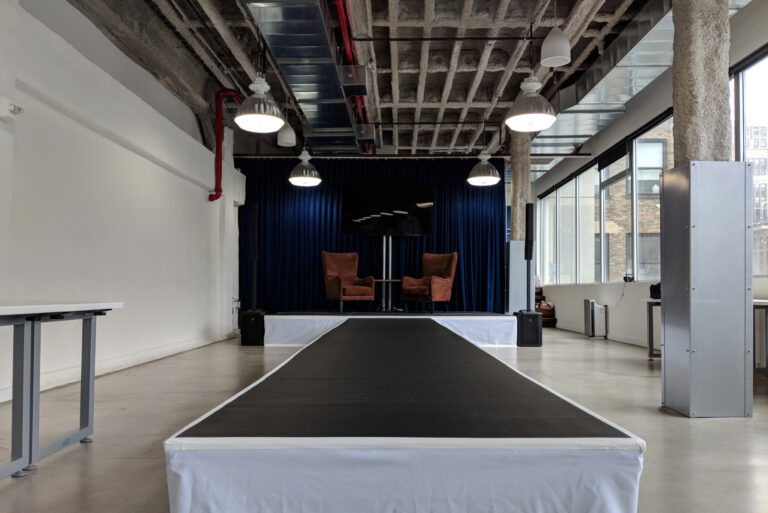
An empty stage waits in Midtown, Manhattan. Photo by Zach Hitt.
In March of 2020, a confirmed COVID-19 case infected Westchester. That changed everything. Now in August, many more cases and many businesses remain closed. Those that have reopened endure significant operating restrictions. Most industries have a lot less money in their cash register. Some businesses have gone belly up.
No live music for a while, either. Fans know this. Eliot Byron knows this. Byron began rigging live shows 25 years ago. serving on the stage crews of the IATSC Local One in NYC and as the Crew Chief of Capitol Theatre in Port Chester.
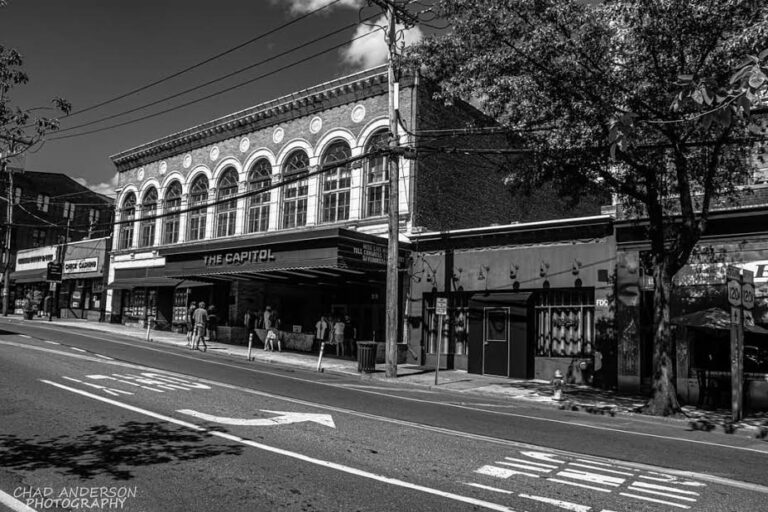
The Capital Theatre. Photo by Chad Anderson.
Just a few train stops north of Westchester, Port Chester shows came to a halt in March — as well as the rest of New York, under the orders of Governor Andrew Cuomo.
“We had a live event [in March]…but they started getting calls and decided not to do it. That was the first indication that we weren’t gonna see live shows for a while” says Byron.
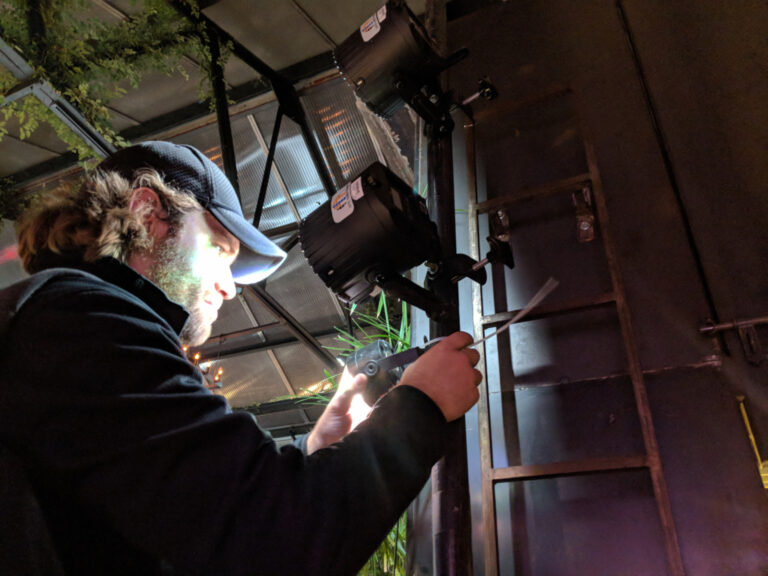
A Stagehand assembles and tests lights. Photo by Zach Hitt
Lights, Camera, Action…
The quarantine disappointed fans and live stage crews alike. But a stagehand’s job is comparable to a goalie. A majority of the time, it’s thankless, difficult work that goes unnoticed if executed correctly. But stagehands are the first to take the blame when things go wrong. “The artist [needs a crew]…that safely unloads trucks in a timely manner. You can’t just grab random guys off the street to do this, either. We are the manpower that gets these shows in and out in a safe, efficient process,” Byron explains.
Byron tells me that stage hands often take part in setting up the stage, lights, and sound, connecting the artist’s equipment with the venue’s electronic set up. It’s neither simple nor easy. And if the government or the industry doesn’t provide financial help soon, crew chiefs like Byron will be tasked with hiring and training all new crews who have less familiarity with the equipment, and less experience. “If this goes on for a long time without some kind of incentive to keep people in the industry, then we’ll be tasked with training a whole new set of people to perform a very, very specialized task,” says Byron. The lasting effect could have extreme ramifications for not only the live music industry, but surrounding businesses like bars, nightclubs, restaurants, and attractions, all of whose sales increase during live shows.
Give the people what they want?
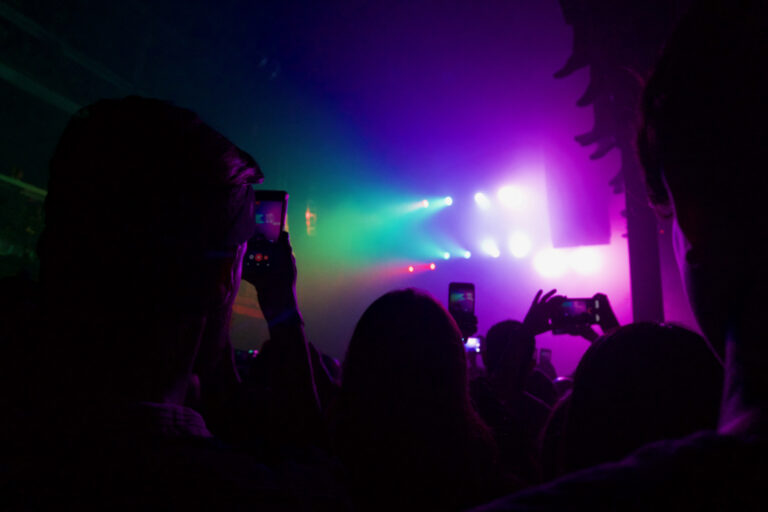
Fans of The Neighbourhood gather at Terminal 5 in Manhattan for a concert. Photo by Zach Hitt.
Frequent attendees of live music have voiced their concern on social media and in public. Some people want economies to reopen immediately, while others have shared concerns of spreading the COVID-19 virus. But while these fans have the safety of their homes and many have other jobs to return to, stage crews will likely be the last group of people to restart their employment. “We were the first to be shut down and we’ll be the last to go back to work,” says Byron.
Who are those guys backstage?
While many people understand that putting on a live show is a team effort, many do not understand the role of a stage crew. And to add confusion, major touring bands have their own road crew, or “roadies,” that differ from stage crew. A road crew is a team of technicians that travels with the performer to assist the artist with the equipment they bring, such as guitars or drums. Stage crews function as a bridge between the artist’s equipment, and the venue’s, such as the speaker system, lights, and sound mixers. In order for a show’s success, the two teams have to work together.
In most venues, especially larger ones, an event employs a team of specialists to lay tracks for a performance. This includes building a heavy stage, lifting bulky speakers, and hoisting enormous light shows to extreme heights. Falls, injuries, and series harm all sit and wait for the first sight of a shaky team or wavering leadership.
Different Vans, Different Plans
Some stage hands moonlight as roadies for touring artists. I met Luis “Lou” Rodriguez working on stage and A/V gigs around NYC. Rodriguez’ professionalism cannot be overstated. Along with local A/V gigs, he started working as the monitor engineer for Big Sean in 2015. Rodriguez takes responsibility for the sound heard by the artists in the stage monitors. He’s carved several big name notches on his stage belt, including The Bronx’s Cardi B, Chicago’s Common, and Yo Gotti from Memphis.
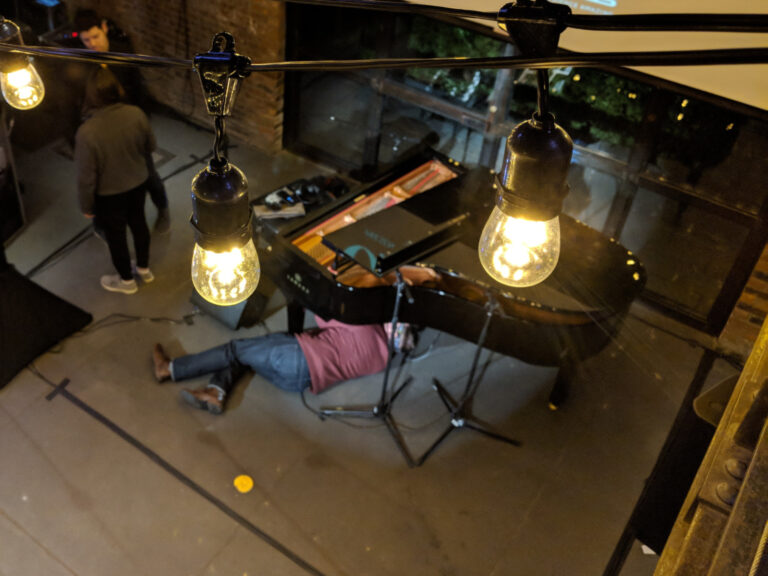
A roadie fixes the sustain pedal on a grand piano prior to a Jojo and Jordan XL show in Queens, NY.
Photo by Zach Hitt
Help Wanted
Nowadays, stage techs and roadies struggle in the same predicament: finding work. Since it is not easy to switch careers, many of those who used to lift heavy speakers and lights now depend on the kindness of tax dollars and crowdfunding to make ends meet. “There are crew members who have not gotten ahead of this. There are no shows, so that means no income for us. But we still have lives to lead,” says Rodriguez. “Everything around the house has gotten tighter.”
While the American government sent out a $1,200 check to adult citizens two months ago, a statistically low number of people live in areas where this covers more than one month of rent. An additional $600 sporadically made its way to certain qualifying individuals, but this has not alleviated the struggle, especially considering that most stage hands live in major cities where rent and medical bills can swiftly pile, Rodriguez tells me.
Will we see live shows again soon?
Different experts have shared opinions on when major US industries such as shows and sports will reopen to the public. While Dr. Anthony Fauci, a reputable infectious disease specialist, has repeatedly warned that the US should stay seated until we have a vaccine. Others propose middle ground: a plan to reopen. Either way, the day that hundreds of people can stand close together in the same room is undetermined.
“There’s no set day,” Rodriguez says. “In Europe, they’re trying a few things out. They’re holding some festivals while social distancing, so the audio set up [and my job] pretty much stays the same.”
Ending one song and starting another
Even if the US reopens, many people and venues fell behind on bills long ago. For this reason, several groups have proposed petitions for government intervention and assistance. A UK protest, themed “Red Alert,” saw many venues shine red lights outside as stage techs walked through the streets with equipment cases, according to a report by The BBC. The uproar has walked hand in hand with organizations like NIVA, or National Independent Venue Association to lobby for bills like The Save Our Stages Act, a bill which proposes $10 Billion Dollars in funding venues and stage crews during the financial burden of the COVID-19 outbreak. New York Senator Charles Schumer co-sponsored the bill.
Either way, the stage hand and roadie are both important parts of the live music industry, and the economy at large. Without them, we don’t have live shows. And without live shows, our economy sees less stimulation as live shows directly impact their surrounding environments negatively. This means a noticeable decline in sales for bars, nightclubs, and more. “I don’t know if it’s financially viable to put on the shows without an audience. They still have the paperwork, the utility, the taxes. There’s all the employees, stage crew, bartenders, security. How long can they last?” Byron considers.
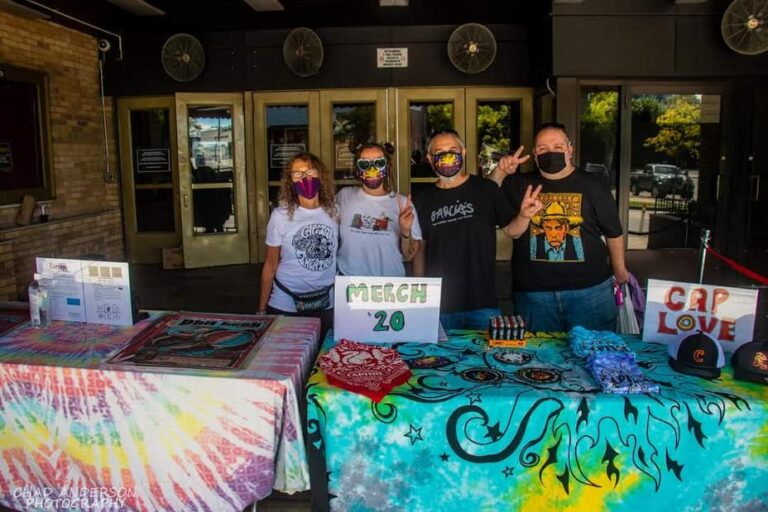
People selling merchandise outside The Capital Theatre. Photo by Chad Anderson.
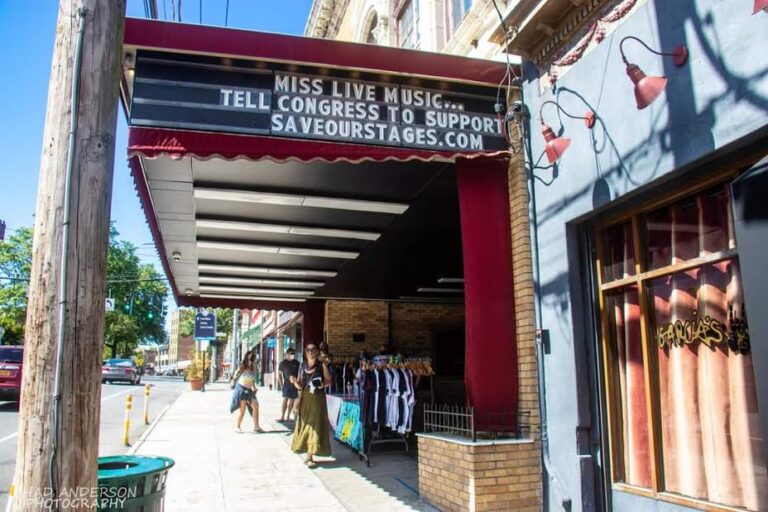
For The Capital Theatre, owned by Peter Shapiro, efforts to keep the venue open included an outdoor merchandise sale featuring hats, masks, and posters. Additionally, the sign outside the building directs those who love live music to call Congress and support SaveOurStages.
The sign outside The Capital Theatre. Photo by Chad Anderson.
What Can We Do for the Stage Crew?
The public must call upon political leaders to pass new legislation in order to help stage hands, roadies, and concert venues. You can read more about Save Our Stages by visiting their website, SaveOurStages.com.
But even with some solutions proposed, unanswered questions about live shows still linger pending a major change, like a vaccine, Byron notes. “Planning a tour is tenuous. Who is gonna ensure the tour? Who is responsible if the artist gets sick and misses a couple days?”
The same could be said about a stage crew: what will they do when they still aren’t allowed to work and the government’s assistance dries up?
Bandcamp announced their plans to waive their revenue on September 4, 2020 from midnight to midnight Pacific Time to support musicians facing hardships during COVID-19. The music company plans to keep waiving their revenue for these first Friday of the month days for the rest of the year.
According to the Crack Magazine when Bandcamp withdrew its fees for a day back in March as a promotional act people ended up buying $3 million worth of music in 24 hours. Since then BandCamp has continued these waved revenue days periodically including a 3 month stretch back in May, June, July of this year as a move intended to help independent artists and labels, who are being affected by the coronavirus pandemic.
According to Bandcamp’s website since the pandemic hit in March, people have bought more than $75 million worth of music and merchandise directly from artists and labels, and to date, fans have paid artists over half a billion dollars on Bandcamp.
Bandcamp started waving it’s revenue on the first of the month back in May saying, “To keep supporting musicians during the Covid-19 pandemic, we are waiving our revenue share on all sales this Friday, May 1, from midnight to midnight PDT. Let’s come together as a community to put money directly into artists’ pockets” via their Twitter page.
To keep supporting musicians during the Covid-19 pandemic, we are waiving our revenue share on all sales this Friday, May 1, from midnight to midnight PDT. Let’s come together as a community to put money directly into artists' pockets: https://t.co/hPhgm7WBR4pic.twitter.com/DG6KYI2IN5
Bandcamp announced plans to continue the first Friday revenue waiving until the end of the year considering the pandemic is far from over. The following dates will continue this first Friday tradition: September 4, 2020, October 2, 2020, November 6, 2020 and December 4, 2020.
New York favorites to check out and support on September 4
Giant Panda Guerilla Dub Squad are a Western New York favorite by reggae fans. They formed in 2011 and are based out of Rochester. Giant Panda Guerilla Dub Squad’s sixth studio album MAKE IT BETTER was released September 16, 2016 on Rootfire Cooperative and debuted at #1 on the Billboard Reggae Chart. Their newest single “Good Love” released on February 7, 2020 is available for $0.99 on Bandcamp along with more of their content.
Aqueous is another Western New York favorite hailing from Buffalo New York. They have a devoted following for their indie-jam rock sound. They have recently made it into the national music scene due to their unique way of performing where no two shows are ever the same. They enjoy blurring the lines between a multitude of styles and genres. Their latest live performance for the Live From Out There streaming performances are available on BandCamp for each song for around $5 along with more of their content.
Consider the Source is another favorite from New York City. Consider the Source is an instrumental trio formed in 2004. They are self acclaimed SiFi/ MiddleEaster/ Fusion sound that breaks normal genre concepts. The group has released five studio albums, two live albums, and one compilation album. They have become widely known especially by Radiohead fans for their Radiohead inspired performances. Their latest album You Are Literally A Metaphor was dropped in 2019 and is available on Bandcamp for $10 along with more of their content.
For more information on Bandcamp and their first Friday revenue waiving visit their website.
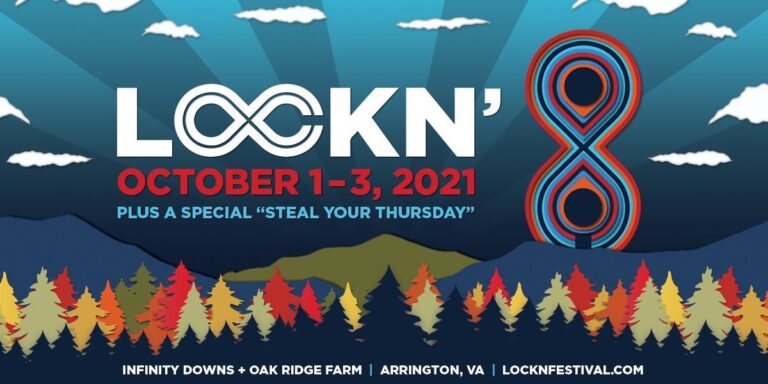
LOCKN’ Festival is officially being postponed to October 1-3, 2021 due to COVID-19. The festival had originally planned to take place in June 19-21 of 2020, was delayed to October 2-4 of 2020 in hopes the virus would subside, but was officially postponed until 2021 on August 29, 2020.
The 8th annual LOCKN’ Festival will take place at Infinity Downs & Oak Ridge Farm on LOCKN’s 387-acre property located at the foot of the Blue Ridge Mountains in Arrington, VA. The LOCKN’ 2021 festival will mark an all-star celebration of Phil Lesh’s upcoming 81st birthday, with the legendary musician performing alongside an array of famous friends and special guests over the three-day event. There will also be a special “Steal Your Thursday” which will kick off the festival weekend on Thursday, September 30, 2021.
A complete artist lineup and additional ticket information will be announced soon. Individuals who already purchased LOCKN’ 2020 tickets can obtain a full refund for tickets and camping accommodations or choose to have their ticket rollover to LOCKN’ 2021. LOCKN’ 2020 purchasers transferring their order to LOCKN’ 2021 will receive one free access voucher for all three crowdless performances from the LOCKN’ site by Joe Russo’s Almost Dead on October 2-4, 2020. There will be a lot of additional benefits applied per ticket type, with VIP Ticket Holders and Super VIP Ticket Holders will receive an invitation to a private celebration at LOCKN’ 2021 with complimentary food and beverages, along with some surprise guests. Super VIP Ticket Holders will also get a very special ride on the Main Stage turntable. GA ticket holders who rollover will also be entered to win a VIP ticket and camping upgrades for LOCKN’ 2021.
For people who are looking for a refund on their LOCKN’ 2020 tickets instead of a rollover can request a full refund of the total purchase price, including all fees. Requests must be made by September 27, 2020 by 11:59 PM EST. Refunds will be processed in as little as 30 days following the deadline; refunds will be issued to the ticket holder’s original method of payment. If no selection is made by September 27, 2020 orders will automatically roll over to 2021.
There is also the option for LOCKN’ 2020 ticket holders to donate their current ticket to LOCKN’ if they are unable to attend in 2021 to help to ensure another year of music and family on the farm. A portion of the face value of all donated ticket sales will be given to HeadCount to support its mission of promoting participation in democracy by registering voters at live and virtual events. For complete details on how to rollover tickets, request a refund, or donate LOCKN’ 2020 tickets, visit here.
For more information on LOCKN’ Festival 2021 visit their website.
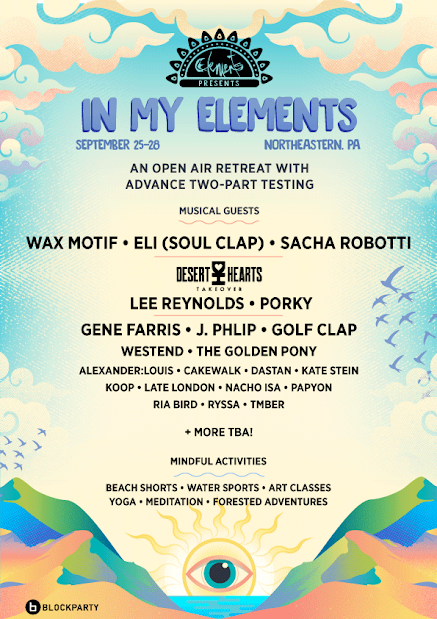
In My Elements, created by Elements Festival, has announced their fall edition and will attempt to recreate the concept of the Elements Festival in a smaller, more intimate environment. This fall installment will take place on September 25 – 28 on Lake Como in Pennsylvania.
In My Elements festivities will focus on the safety of attendees by being a tested and contained retreat. The festival, in addition to onsite cleaning and safety protocols, will require all guests, staff and vendors to participate in an advance 2-part COVID-19 test prior to entry and will limit attendance to 250 people following PA outdoor gathering limits.
The festivities will include music for techno and house devotees as well as intimate stages where guests will be able to experience the sounds from their Air and Water stages. There will also be special programming with daily yoga and meditation sessions and wellness activities held in open-air environments, to help calm the mind and cleanse the spirit. Exciting art installations and wild shows. The festival will be located in forests and lakefront settings giving guests a peaceful place to explore.
In My Elements full lineup includes: Wax Motif, Eli (Soul Clap), Sacha Robotti, Desert Hearts: Lee Reynolds + Porky, Gene Farris, J.Phlip, Golf Clap, Westend, The Golden Pony, Alexander:Louis, Cakewalk, Dastan, Kate Stein, Koop, Late London, Nacho Isa, Papyon, Ria Bird, Ryssa, TMBER, with more regional DJs to be announced.
The TCR 2-Part Testing Model required by attendees will work by first In the week leading up to the retreat, people will take a test at one of their certified testing locations in multiple cities. Results will be reported before the retreat. Although testing kits may vary depending on location, the preferred test is the Mako Medical TaqPath COVID-19 Combo Assay with 100% PPA and 100% NPA. At home mail-in tests are available as an add-on to tickets for an additional fee. The second part of the two part testing is that when guests arrive on site, their cars will be guided into distanced parking spaces where they will take an active COVID-19 rapid test. Results will be received in about 30 minutes and guests will be directed into the event grounds. This test will be a Sofia 2 SARS Antigen FIA with 96.7% PPA and 100% NPA sensitivity, manufactured by Quidel.
General admission passes are now on sale and can be purchased here. This time around the In My Element guests have the option of camping or cabin packages, including a deluxe cabin apartment option. Camping passes are currently sold out and cabins are following close behind. If there’s another lockdown, or the gathering is cancelled for any reason, they will issue full, automatic refunds of all tickets and credit card fees, no questions asked.
For more information visit In My Elements website.
Angered that the State Liquor Authority (SLA) created new guidelines last week in regards to live music and ticketed events, establishments have teamed up to file a lawsuit.
According to the SLA’s website, venues and bars cannot hold ticketed events, karaoke and other live entertainments. They claim that an establishment is allowed to have “incidental live music,” but it cannot be ticketed or advertised.
“Only incidental music is permissible at this time. This means that advertised and/or ticketed shows are not permissible. Music should be incidental to the dining experience and not the draw itself. All other forms of live entertainment, such as exotic dancing, comedy shows, karaoke etc., are not permissible currently regardless of phase.”
via SLA website
To many establishments, they feel these new guidelines will affect business drastically. According to the lawsuit, these rules restrict “free speech.”
“Despite the fact that coronavirus is not transmitted via sound waves, the SLA just decimated already struggling businesses. This rule prohibits lawfully operating establishments from advertising the entertainment that is lawfully available: to wit, a ban on advertising of music at food service establishments. This constitutes a content-based restriction on free speech,” the lawsuit states.
The lawsuit was filed with the support of the New York Independent Venue Association. Forming this past summer, NIVA has been on the forefront of the #SaveOurStages movement. Their mission was and still is to get financial support from Congress to the industry. They represent over 100 independent music venues including The Tralf, Littlefield, Birdland Jazz Club in Manhattan and Buffalo Iron Works in western New York.
The new guidelines appeared not too long after multiple raves throughout NYC got busted for illegally selling liquor and disobeying the social distancing rule.
Bill Crowly, a spokesperson for SLA told Gothamist that large gatherings such as these can be very dangerous.
“These high-risk gatherings would create exactly the situation we are trying to avoid, where people congregate, mingle, and create congestion at points of ingress and egress,” Crowly said.
On the side of the restaurant/bar industry, a manager, Kim, at Littlefield said that its been a hard time reopening and that costumers have to respect that.
“Nightlife is so vital here—I don’t know why else people would move to New York, and I feel like it’s going to die. We’re holding out as long as we can with whatever aid we can get. But this is going to change the whole landscape of nightlife in New York,” said Kim.
In an excerpt from a previous interview with Street Pharmacy‘s Ryan Guay and James Searl of Giant Panda Guerilla Dub Squad on their collaborative track titled “They Don’t Give A $$$$.” Released July 2, both artists took the time to reflect on the past few months. The radical adjustments and adaptations both of them needed to make in order to survive the lockdown music industry were foremost in their minds. With the lockdown came an increased online presence for the both of them, which meant more online interactions with right-wing fans that became heated around the release of “They Don’t Give a $$$$,” interactions which both James and Ryan elaborated further upon in the context of a divided political climate.
Thomas Lent: COVID-19 has negatively affected a majority of the entertainment industry, but how has each of your group’s plans and strategies around shows and monetization changed?
Ryan Guay: I’ll let James take this one first.
James Searl: Well, our situation, I think. In Giant Panda Guerilla Dub Squad, anytime outside conflict has come up with the group we’ve always gotten more efficient and a little bit more communicative about whatever hole we needed to plug previous to that conflict. So when people left the band we didn’t expect to leave. We had to address that. We kind of really get tighter and more trusting of each other, because people who were originally in the band, the founders with me, found that actually, we have to work harder to find what we have now. That turned out to be something that works better. The next example would be any of us having children. Was this gonna, kill our ability to tour or come up with music? We just got more efficient at touring and putting out albums that we’re happy about. With Coronavirus I think we felt pretty good about the time that we have the kind of reflected and work on new material. We’re recording a new album which we’re having a hard time finding the time and money to get that together in a quick manner. Now we have even a bigger block of time. We’re securing news funds, recording music, and working on new songs, because nobody has anything else to do playing live for the next, god knows how long. Because, at least in the states, I don’t know people are really gonna feel how serious this is.
TL: Well, I can say that in Buffalo at least, I live in a suburb outside of Buffalo and specifically East Aurora, and we have an elder.
JS: That’s where my whole family is from!
TL: Really? Small world! I think about thirty-five people died in that place alone so I would say that people are taking things far more seriously.
JS: I hope so, that’s not what it’s like where I’m living. I went to get some beer at a store in southern Michigan. I live near the border around there and nobody is wearing a mask and the cashier said something about it and I’m like “I’m wearing this for your protection!”, So I said I didn’t know if masks were required here or not, I know that Michigan has some pretty serious laws right now and they said that “We tell people they don’t have to wear masks because we would lose half our business” and I’m like ok, but really, “Half the people? Really?” you’re selling beer and cigarettes, two products that people are going to be getting anyway. But as far as moving forward goes theirs a different presence online and I don’t like being ultra-online. I don’t like that idea like everybody being so online, but I also can’t imagine what this would have been like twenty years ago, I just can’t imagine it. Now because we have all these different ways to still be together with apps and to stay in communication with music. I mean, every Tuesday when I’m putting my kids to bed and start to clean the house and stuff and I can find a show for RootFire where I get to listen to classic Reggae tunes, whereas like before, I probably wouldn’t have gotten to see that. Clinton Fearon, one of my heroes, actually plays every Sunday at his house and he’s in his 70’s! So I think it’s nice for him to not have to leave his house to share with his fans all over the world. Could we have done this before? Sure, but nobody did. And we’ve just been accelerated into the future about what live music is gonna look like. What live music is about is connection and that goes back to the fans with the MAGA hats at the front row of the Panda show. I wanna find a way to talk to you because I’m glad you’re listening to the music and I’m glad that we’re connecting with the music but obviously theirs a personal disconnect that probably could be reconciled as well as it could without conflict. It would be easier reconciled just to listen to a song and having your own time to reflect on this stuff. Especially not having to deal with you personally, I’ll say.
RG: That’s a good point. I’ve definitely seen some or received some comments from fans that are no longer fans and not supportive of what our video and what our song represents because they’ve interpreted it in a way that they feel almost insulted. That’s not the intent here. We’re trying to communicate with people that need not understand the premise. They quite frankly get the wool pulled over their eyes and were just trying to have a conversation. James says that “Now we’re having good conversation” in the second verse and we want to have good conversation, a positive dialogue. If anything that’s the way that social media has proven that this discourse is anything but civil. As a result of being locked down and everything else that has occurred. I think that probably, other than stuff James already mentioned, as to how this has affected musicians, that is also the same thing with us but being online means you’ve gotta put yourself out there in a way. It can be volatile out there. I experienced this first hand. The first week that this song has been out I’ve had to mitigate these comments where fans have felt betrayed that we have done something like this and my response is “Sorry that you feel that way but this is how we feel about it and you should really look into this because our lyrics over the last 15 years that we’ve been playing, you’ve probably missed some of that.” So it’s yeah it’s kind of like the idea that people are tweeting against Rage Against the Machine that have been fans for 20 some odd years and then realize that they have left-wing values.
TL: When I was listening to your track I thought that you weren’t just punching one way or the other. You have clips of Nancy Pelosi in there as well. I don’t think you were particularly going after one side, you were going after one class though. It’s not as if it is a good class, particularly if you’re talking about the one percent there and you know, who’s defending them? Why would you?
JS: Exactly who in the 1% is listening to this song? Like if this song is about you, if you’re the person that doesn’t give a fuck about us, then there’s only so many people that could be.
RG: Their probably not hearing this song in reality.
JS: And ya to be fair, at least Panda, I was thinking about how over the years Ryan would say that he got some pushback on a song, like I’ve been dealing with pushback online just for speaking and trying to change people’s minds about being anti-racist and pro-environment for many many years and it has been incredible to realize how many, I mean, I’m not trying to pigeon hole people but it’s always a white dude. It’s a white young man commenting, “Why don’t you shut up and play music,” “What about black on black crime.”, just you know straw man arguments. Stuff that we just don’t have the time or energy to deal with on that level, but we always try to be there and are open to have conversations but people don’t want to listen. Reggae, Rage Against the Machine, and hip hop all of this is revolution music that has been around since recorded music acts as a pressure valve for people to be more comfortable, and they’ll say “I am tolerant I listen to Bob Marley, and I’m voting for Donald Trump,” and it’s like, well you know what, I think we should have some more detailed dialogue about that stuff.
RG: The discourse that were trying to have here is to cut the extraneous bullshit that that people are being fed. This is how we end up with the culture of you know. Young white men that feel disenfranchised. But actually they are a more privileged class, you know- and it’s mind-boggling to me- that some of these lyrics could be misinterpreted. At the end of the day, the purpose of this song is to cut through the bullshit and the same with the video. The video shows that on both sides, that when you’re at the top, those people don’t really don’t give a fuck about you. No matter who you are. They only care about the bottom dollar, the bottom line, just like you said about share prices, people being concerned about yeah reporting, rail blockades because they’re worried about shareholders losing you know a lot of money or losing faith in the company. That is absolutely ridiculous. We’re facing catastrophic climate change that could end humankind as we know it and somebody is worried about stock prices. That seems so wild to me. You know people need to talk about these things, and you need to understand that this is coming from great, and you know I hate to quote Warren Buffet, but I’m gonna do it. You know when people are fearful he says to be greedy when people are greedy he says to be fearful. Right now you know the people at the top of the top are perpetuating this fear in society and it’s resulting in an exorbitant amount of greed. How is the stock market not ya know completely shattered? It doesn’t make any sense!
TL: When it comes to the young white men who are you showing up to your shows wearing MAGA hats being obtuse my current hypothesis is that conservatism represents a counter-culture and the youth enjoy rebelling and they enjoy being contrarian. They feel that when all their professors and their teachers are all liberal. “I’m gonna be conservative because that’s what they don’t like and that’s what they aren’t.” It’s to be contrarian, would you agree with that?
RG: Yeah. I agree with that yeah that makes sense. I think that a lot of these young white men and other people that are taking the uber-conservative side of things, I think that they lack a spiritual connection with themselves and they’ve lost their sense of identity. This counter-culture is that identity. That search for an identity, where they feel the need to identify with something that looks like them and that’s what I found with having to defend this song. When I’m looking up their Facebook profile, I’m seeing just “Being lost,” and I’m seeing that they are not being sure of themselves or who they are. That seems to be the case for a lot of these people I’m assuming. I’m Canadian so this might not be as big here so I might not be seeing it as often. James, what do you think of that?
JS: I think there’s a good degree of that on both sides and that’s like a bigger conversation about the American psyche or the American identity. When I was growing up all suburban kids listened to hip hop. And it’s like, why is that? Why are they listening to music that is directly about where you’re not from and not made by people in your position? In a lot of ways, it could be really beautiful because that’s one way that some people that are in an oppressed situation are making communication and it is being observed by people on the other side. That would be the call that we would all answer too. I think that that’s been my motivation in my life for my music, doing as good of a job as I can do. I’m not like a, you know, I don’t feel great about everything that I’ve accomplished for human rights since I’ve listened to Rage Against the Machine when I was 11 years old. It’s like, “Oh this is the side that I’m not being told”, “This is what I’m not experiencing” and I feel like it’s my responsibility as a moral person to bring justice and rights and to improve culture by talking about it because if you’re not talking about it then you’re supporting it.
And that’s from Zack Del La Rocha from his concert in Minnesota that I had a recording of that I was listening to when I was 13 years old. “If you’re not a part of the solution then your apart of the fuckin problem” that was in the middle of the speech in “Wake Up” and I’ve never forgotten that speech. It gave me goosebumps then, it gives me goosebumps now. He was talking about Leonard Peltier from the American Indian Movement in that speech. The thing I wanted to say about the young men who are rebelling and being conservative as apart of rebelling, what troubles me about that is that in the sixties, early seventies, in the eighties, with whatever that rebellion was I’m not sure, or grunge in the 90s was everybody was the, the counter culture was resistant to the greater culture, the hegemony, the mainstream. What’s scary about these guys is that there is already a structure ready to like accept them with this counter-culture and give them the tools to carry out this system. This includes tons of legitimate journals, newspaper writers, college professors, and ya know the money that’s given to colleges.
TL: They’re not organizing in garages, they’re being given grants from super PACs.
JS: Right! When I was in college I studied international relations and, being taught by hip-hop and African music things that I didn’t learn about growing up in the suburbs necessarily, points of perspective. I knew that jobs I would get to try and fix those things, there was no money there. Not even to pay me but not even to exist in a way that was meaningful. My counterparts in college were like, republican conservative people who went on to be funded by the Koch brothers and went on to be the president of not-for-profit groups in Washington D.C. who use 49% of their power to influence politics and 51% to influence culture because that’s what they have to do to be a non-for-profit. These are Koch brother founded organizations. That makes me really scared about these, that was going to have to be dealing with these young people as adults with power that are already coming from privileged places and they’re ready to be moved right along into positions of power.
Matt Gaetz, the 37-year-old Congressman from Florida, he’s just atrocious. Stephen Miller for instance he’s my age. If you thought these guys were old and dying out you’re wrong they’re being replaced with more young people. In the verses that I wrote in the song with Ryan I think one of the main points is to not be passive about this. Be active. Get on the streets. Sacrifice as much as you can because this is a fight that needs as much energy as possible because the people that don’t give a fuck about you. They also have all the money and a lot of them have all the guns.
RG: All the guns.
JS: They have all the guns because we’re non-violent people! We know that if you put a gun in your house you’re twice as likely to die from it. You know it’s like everything points to, I don’t want to have a gun but what am I gonna do when all these crazy people, ya know, it’s all about certain numbers. It feels good to go to a protest. Not on the internet. Actually out on the streets with people who believe in these things as much as you do. Ya know to these young MAGA kids it’s never the way that you see it on the news. It’s never a bunch of violent people (at the protests) its young, old, men, women, non-binary people, everybody’s there at these protests and so many times the cops just come bust it up. In Denver, my friend was in one for the boy Elijah and everybody was playing violins outside and the police came and tear-gassed everybody. This is not a time to be passive. You know Ben Shapiro, Jordan Peterson, they all tell you to watch. Wait and watch and just see what happens all of this is gonna come crashing down. Donald Trump is gonna rid the world of pedophilia, I’ve heard this from so many people, panda fans included. It’s just like “Sit and Watch, Sit and watch other people do this for you”!?! Why aren’t you apart of your movement that you speak so highly of?
LarkFest is a well known Albany tradition loved by it’s community for bringing guests from all over, vendors, artists, and musicians to the Lark Street Corridor in Albany. Unfortunately, this year the festivities have been cancelled due to the ongoing Coronavirus pandemic. The festival was scheduled to happen on September 19, 2020 from 10:30AM -5:30PM.
Lark fest is put on by the Lark Street Business Improvement District. It is a celebration of everything unique and exciting about Lark Street and the creative culture of the greater Capital Region of New York. LarkFest was cancelled this year due to the inability to keep attendees safe which is the festival’s highest priority. On top of the inability to keep people socially distancing and safe, the restrictions on mass gatherings make it impossible to make LarkFest happen this year.
The team behind LarkFest encourages people to continue to safely support the artists, musicians, businesses, and vendors that make this event so special each year despite it being cancelled this year. LarkFest plans to be back and booming in 2021. Until then, there are a few local arts & cultural organizations that are so critical to the foundation of what makes their community unique and beautiful the team behind LarkFest want to point people in the direction to support. These organizations include African American Cultural Center, Albany Center Gallery, Albany Symphony Orchestra, Creative Impact Capital Region Artist Fund, Irish American Heritage Museum, Palace Theatre.
For more information on LarkFest visit their website.
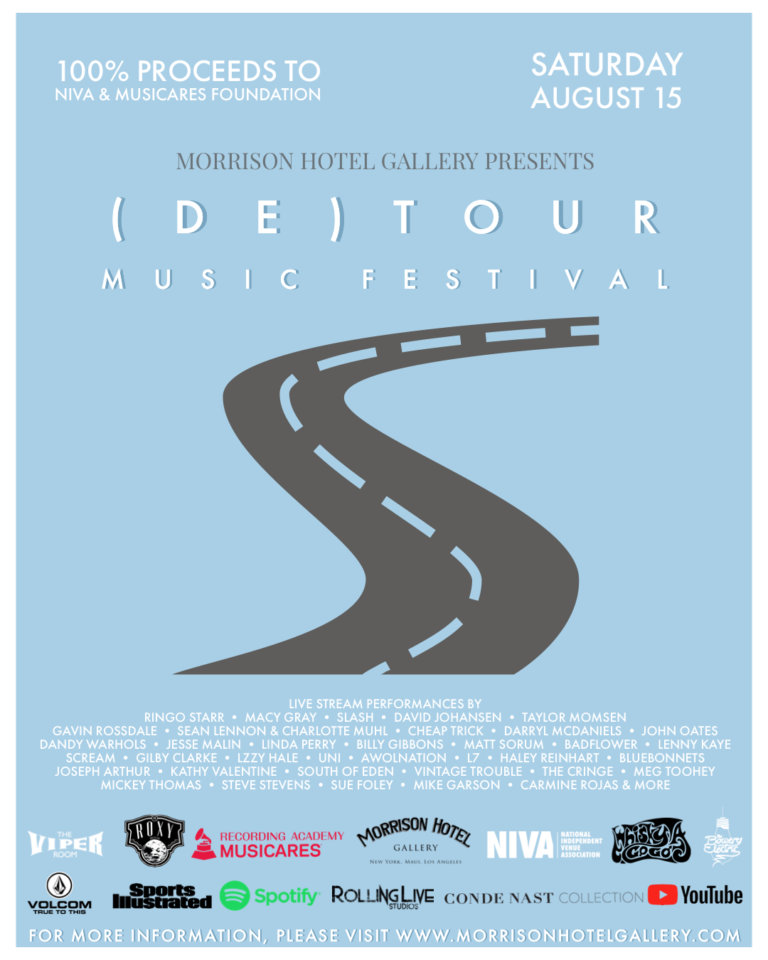
The day-long festival, (De)Tour, will include several all-stars playing in association with Recording Academy’s charity MusiCares. MusiCares’ mission is to raise money to assist with tour and concert cancellations due to COVID-19. The festival is free, but donations to MusiCares’ COVID-19 Relief Fund are critical for the concert’s success. The charity aims to lessen the stress felt by the entire music industry as all in it face complete uncertainty.
In a festival like no other, (De)Tour offers fans unlimited online access for the entire day. Everyone will be able to enjoy the many talented artists from the comfort of their own homes. (De)Tour will showcase talent like Ringo Starr, Slash, Gavin Rossdale, Macy Gray, Taylor Momsen, Cheap Trick, and tons more.
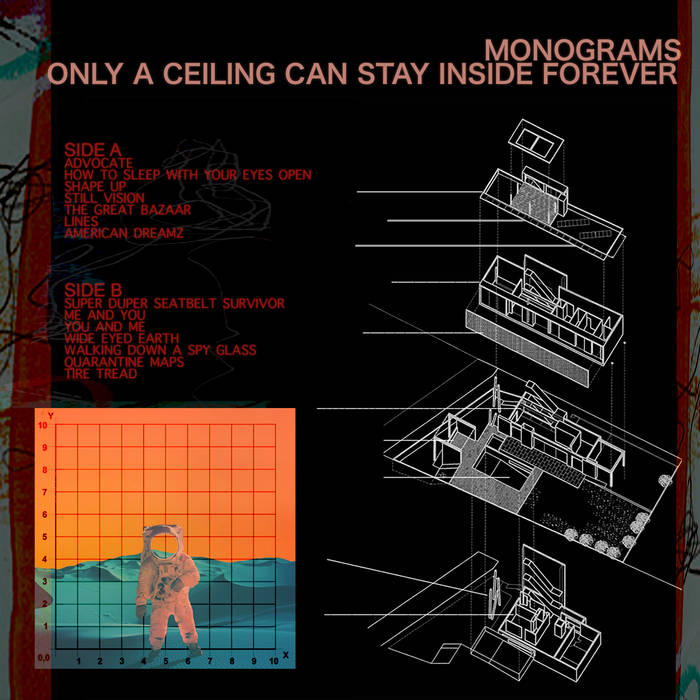
Brooklyn’s “nuke wave” dark synthpop band Monograms has come out with new single “Lines” to go along with their newest album, Only a Ceiling Can Stay Inside Forever.
Monograms started a Brooklyn bedroom recording experiment that evolved into a full band. The band features frontman Ian Jacobs (multiple instruments), Ali Yildiz (drums), Michelle Feliciano (synth), and Devan Davies-Wood (bass). The dark and moody tone to their music sets Monograms apart from other mainstream pop. Their sound manages to remain ambient and musically interesting without becoming chaotic or unharmonious. The combination of Jacobs’ songwriting talent–his artful and poignant lyrics, clear beats, and angular riffs–allows him to truly make each song its own unique world with a notable landscape.
The newest LP, Only a Ceiling Can Stay Inside Forever, was recorded in Jacobs’ home studio during these past months of the COVID-19 quarantine. The album is a culmination of his feelings towards the social justice issues which plague America today. “Everyone I know just feels really frustrated about the situation,” says Jacobs. “The politics, the sacrifices everyone is making, and the reality has been a very twilight zone-like kind of time for the entire world and the country.”
Jacobs expressed that in the midst of uncertainty and fear, he “just needed to do something creative to bob and weave with all these things, so [he] just started writing some words down and recording some ideas and experimenting.” Even though the songs were different, “after a few weeks, it all started to spiral into what felt like a cohesive thought” for Jacobs.
“Lines,” featuring Kat E., is a perfect representation of Monograms’ dark and brooding synth. Jacobs colors the song with what feels like melodic distortion that reminds the listener of the fear and uncertainty that has troubled all during these past few months. “Lines” is thoughtful and modern and showcases Monograms’ truly unique sound.
Only a Ceiling Can Stay Inside Forever is available on all streaming platforms, and can be purchased on Bandcamp. 50% of all Bandcamp sales will be donated to Know Your Rights Camp, an organization whose “mission is to advance the liberation and well-being of Black and Brown communities through education, self-empowerment, mass-mobilization and the creation of new systems that elevate the next generation of change leaders.”