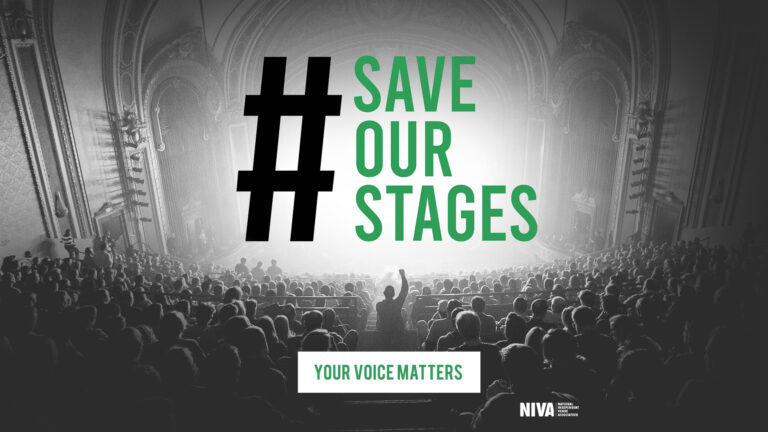
Since the coronavirus pandemic, many music venues are struggling without live audiences. In an effort to keep independent venues from closing, the National Independent Venue Association, NIVA, has launched a partnership with YouTube Music to preserve live music venues across the United States.
Courtesy of NIVA
Through the #SaveOurStages initiative, NIVA and YouTube are working to adopt a plan to safely bring live music back to venues. According to NIVA, “90% of independent venues report that if the shutdown lasts six months and there’s no federal assistance, they will never reopen again.” The Save Our Stages initiative includes a letter to Congress urging that funding be given to these venues, as they not only are important for art and entertainment, but contribute greatly to their town’s and city’s economy. An overwhelming amount of people have signed this letter, and artists can still sign here.
In the meantime, YouTube is boosting NIVA’s Emergency Relief Fund, which NIVA has created to help the country’s most vulnerable venues while waiting for Congress’ response. The fund will provide short-term relief to independent venues that are currently at risk of closing due to the COVID-19 shutdown. It will aim to work closely with federal programs to keep venues open. Applications for venues will be open until September 24.
YouTube’s involvement in the project will spread awareness to a large amount of people that would not have heard about #SaveOurStages. “YouTube’s direct involvement helps us generate awareness for the plight of independent live music and raise funds for NIVA’s Emergency Relief efforts,” says Stephen Sternshein, co-founder and treasurer of NIVA. “This could literally be the difference between some venues going under or holding on until Congress comes back from recess to pass much-needed federal relief.”
“YouTube is a place where artists and fans around the world come to connect and build community. With traditional concerts on hold, never has there been a more important time to support the live music industry through our partnership with NIVA. We’re committed to doing our part in saving independent venues and continuing to bring artists and fans together through music.”
The independent concert industry will be reeling for years to come from the devastating revenue loss related to COVID-19, so we’re excited about what YouTube and NIVA can do together to bring the live experience back.
The COVID-19 pandemic has impacted the whole world, either directly, or indirectly. As a response to the pandemic, Governor Andrew Cuomo, has passed legislation that the states hope will help regulate COVID-19’s impact on the state. While guidelines for life during a pandemic are important, the broadness of certain rules has put many small businesses at risk of extinction. 443 social club
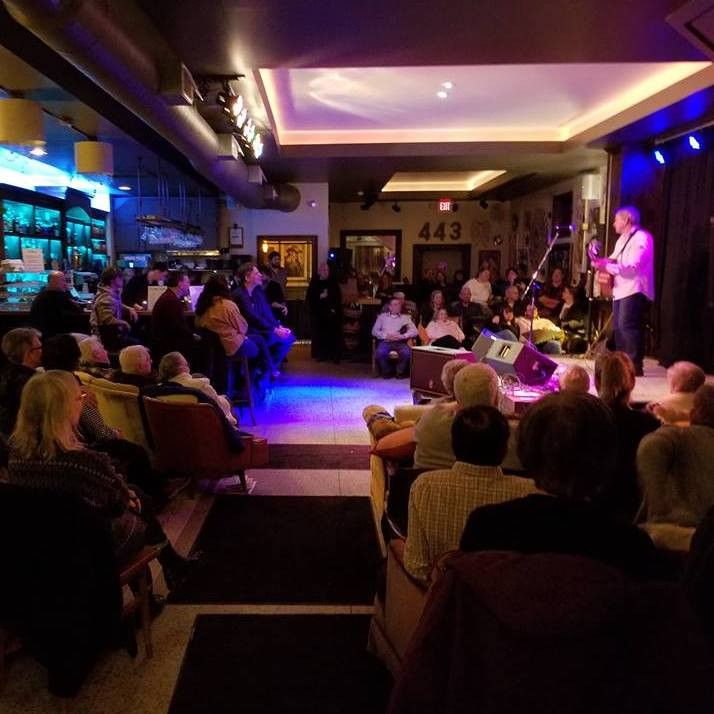
One of those venues, The 443 Social Club & Lounge in Syracuse is a place where those fond of live music can appreciate the ambience of a nice night out. A hub of live entertainment in their town, this restaurant seats 88 people but, as a result of the pandemic, it has operated with only 36-person capacity to meet state guidelines.
While the reduced customer base hurt business, it had allowed a mom-and-pop style business to stay afloat. That is until, a new wrinkle in New York state’s coronavirus guidelines for bars, restaurants and similar venues in New York state prohibits them from offering live music that customers pay for separately. The rule forced an immediate halt to The 443’s business. While they offer eatery, their main form of attraction is their live music.
Although we have all had to deal with the effects from COVID-19, actions like this towards small businesses still tug at the heart, knowing that hardworking individuals are in danger of losing their businesses, through no fault of their own.
The 443 Social Club & Lounge has chosen to take action, posting a letter to Governor Cuomo on their website that details, among other things, their compliance to COVID-19 rules, their determined attempts at keeping their business afloat, as well as the city’s mishandling of its small businesses. The letter is heartwarming and brings up questions, including ‘What was Governor Cuomo thinking with this new rule?’, and ‘How could they not have implemented any verbiage for small-capacity lounges?’ Let’s hope The 443 and other small businesses get an opportunity to get back on their feet, sooner rather than later.
Read below for The 443 Social Club & Lounge letter to Governor Cuomo, as originally posted on their website and socials.
Dear Mr. Cuomo –
I am a small business owner in Central New York. My husband and I operate an 88 seat cafe/bar that features listening room style acoustic performances. We had just celebrated our one year anniversary when COVID-19 hit.
When we closed our doors on March 15, I understood we would likely be shuttered for at least a few months. I understood we would be among the very last businesses allowed to reopen. There was a certain relief in letting go and accepting it, in understanding it was completely beyond my control. I had faith we would receive some kind of aid to help get us through, and for while we did.
I watched your daily press conferences religiously. With the vacuum in national leadership, I was grateful to be living in NY, grateful we had someone taking charge of the situation. Your no-nonsense, fact-based daily briefings were oddly comforting, even when NY’s numbers were high and the news you were sharing certainly wasn’t good.
Spring turned into summer and New York began it’s cautious, phased reopen.
We were busy reimagining our business so we’d be ready to go once CNY made it through the first few phases. We knew we would be facing an entirely new reality and there wasn’t a single aspect of our business that didn’t get retooled.
You can find the complete outline of what we did HERE.
We are classified as a restaurant, so we planned to reopen when indoor dining resumed in Phase 4. I checked with Empire State Development at the end of June to clarify the rules on live music. While we are classified as a restaurant, music is definitely our main focus. I was told it was allowed as “small scale entertainment”.
Well, it doesn’t get much smaller scale than our place, especially since we were going to be operating at about 40% capacity – just 36 people. We waited another month just to be sure numbers didn’t spike with everyone moving around again before we started planning a very limited schedule.
And then things got weird.
You declared food must be ordered by anyone who wanted an alcoholic beverage. The intention was to keep people seated, I get that, but keeping people seated was not an issue at our place to begin with. Our guests were anxious to comply with the rules, but not always hungry when they arrived. So, sometimes they placed to-go orders to eat later, which didn’t really accomplish anything. It disrupted the natural rhythm of service, where guests used to relax and enjoy their first drink before ordering, and worst of all, it meant the entire room ordered their food at exactly the same time. It was a logistical nightmare for our tiny food prep area and I had to schedule another person to help at a time when we could least afford it.
But, we were settling into a groove and figuring it all out. We planned to take advantage of the last 6 weeks of good weather and outdoor shows when you dropped the hammer.
On August 18 I learned about the new SLA rules prohibiting us from advertising or charging a fee for live music. I read it, then reread it, incredulous.
Prior to COVID, almost all our shows had a fee associated with them. It’s the only way the business model works financially in a small room and it’s important to us that everyone is paid fairly. With drastically reduced capacity, cover charges and tickets are more important than ever. We thought more venues charging for live music was one of the few bright spots in this whole mess…it’s healthy for our music scene to put a financial value back into the experience. And obviously, tickets are the best way to control a crowd.
The ban on advertising music is astonishingly cruel. We are all doing our level best to make our limited capacity work and now you’re telling us we cannot advertise to fill the few seats we do have? Are we are supposed to just open our doors and hope for the best?
We closed our doors again, wasting thousands of dollars we spent to reopen.
Governor Cuomo, we are DROWNING.
We are frantically treading water to keep our noses above the surface until (hopefully) some federal aid comes through. You looked at us, and instead of throwing us a life preserver you handed us a cinder block and told us to keep treading water.
The last 6 weeks of warm weather might have sustained our businesses for a bit longer, but the new guidelines have taken away even that flimsy lifeline.
In your August 9 press conference, the very last question was about bringing back live entertainment and Broadway. You said there were no plans to reopen “Broadway and other indoor, high-density arenas”.
And this is the main point of my letter.
“Live Entertainment” is far more than Broadway and far more than “high-density arenas”…and literally nobody is suggesting we open those things right now.
It is small rooms like mine that don’t even come near the 50 person gathering limit.
It is wineries and breweries who have acres of wide-open space to spread out their guests.
It is the venues who cut their capacity down to almost nothing and are doing a hybrid of a small live performance + paid live stream.
It is the rooms that moved all their events to their parking lot or back yard.
It’s different for everyone, but tickets and advertising are fundamentally necessary whether we are trying to fill 20 seats, 200 seats, or 2000.
And yes, live entertainment is also crowded rooms and mosh pits and huge amphitheaters packed full of people. We aren’t asking for that. Nobody is asking for that. We are asking you to allow hundreds of small businesses across New York State to be allowed to reopen and run their venues with all reasonable precautions in place. We have spent thousands of dollars to adapt to do it as safely as possible because we understand and respect how serious COVID-19 is.
But you know what else is serious?
Losing a business we’ve invested our life savings into. Putting our staff out of work. Our city losing one of its few dedicated music venues. Musicians losing a place to ply their craft. Our community of music lovers losing their gathering place.
You have told us we have 99.2% compliance with bars and restaurants right now. Why are the 99.2% paying such a steep price for the non-compliant .8%?
We have waited patiently throughout this whole saga and watched every other industry open up without any corresponding spikes in cases. For the most part, we haven’t even been part of the conversation. But time is running out. Many of us will be closing our doors for good in the next few weeks.
We are about to become collateral damage in the war on COVID-19, and Governor Cuomo – I know this is not your intention.
I know you have a lot going on and “live music” probably sounds like a hobby people are supposed to give up once they get out of college. WE ARE MORE THAN THAT. We are musicians, venue owners, sound and light techs, production, security, hospitality. We are savvy, smart, creative, and ridiculously hardworking. We feed other businesses like hotels, restaurants, and shops, plus our everyday vendors – trash, payroll, insurance, linen service, food, and liquor. We are the first ones to donate and support fundraisers for our neighbors in need. We are a port in the storm where you can forget about all that’s wrong in the world, if only for a few hours.
We are respectfully asking for the chance to try and salvage our businesses before it’s too late.
The Low Beat, located on Central Avenue in Albany, has permanently closed. This marks the first music venue in the Capital District to officially not reopen due to the economic shutdown caused by COVID-19, and no relief coming from Congress.
Having opened in 2014, The Low Beat was a relocation of sorts for Valentine’s, which closed in February 2014 due to expansion of Albany Medical Center. Owner Howard Glassman oversaw both venues, both of which played host to waves of jam, punk, hardcore and indie artists who passed through the Capital Region, with live music nearly every night of the year.
photo by Sarah Winner
At Valentine’s in the 1990s, bands like moe., Ominous Seapods and more built followings that last to this day. Wednesday nights with The Deadbeats were infamous among local Grateful Dead aficionados, and those nights continued at The Low Beat with bands like Ampevene, Glass Pony and others gracing the ‘No Pepper Games’ stage.
Glassman said opening up a new venue in the wake of the closing of Valentine’s,
It’s gonna be a little different, only because it’s going to be our bar. It’s going to be our building. We can do whatever we want and not have to worry about getting kicked out. This is what I do, so this will be around as long as I’m around. I think people need to feel like they have their place. Think about all the bars that have closed. CBGB’s, Maxwell’s, think about when the Palais Royale was still open. It’s not the same (as Valentine’s) but it’s not the same for different reasons. But once we open up, hopefully the first Wednesday when The Deadbeats play, and people come in and they’re like “Ah there’s Grumpy and there’s Chris,’ and they settle in, and I think when their ass makes an indentation in the seat, they’ll be cool and say ‘Alright. This is where we’re gonna hang for the next 20 years.’ I think it’s the vibe. It’s totally a vibe thing.
March 9 was the final night of music at The Low Beat, which saw The Deadbeats perform ahead of the COVID-19 pandemic sweeping through the country and closing music venues, shopping malls, bowling alleys and other communal places of leisure.
This past weekend Glassman opened the doors to The Low Beat and invited people to come down to the venue and pick up anything they wanted before the doors were permanently closed. All Glassman asked in return was a little money to help pay off his final bills, as reported by the Times Union.
Starting Monday, September 14 from 9am-5pm, stop in and get what is left of the venue’s memorabilia, just be sure to bring your own screwdriver, boxes and cash.
When asked for his final thoughts on The Low Beat, Glassman simply said “It was never EVER boring.”
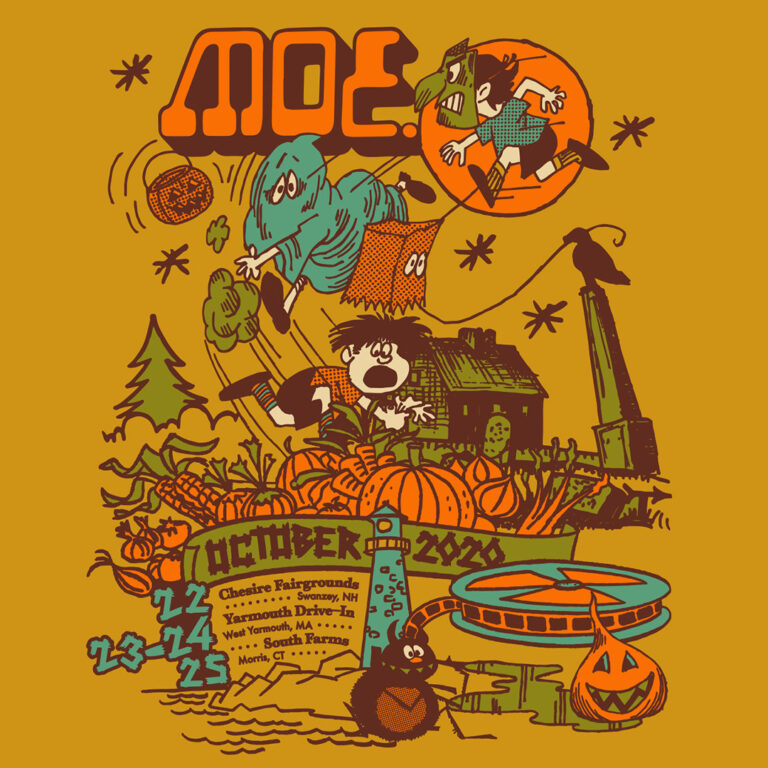
moe. has announced additional shows to go along with their two nights at Yarmouth Drive-In in Yarmouth, MA later this month. They’ll hit Chesire Fairgrounds in Swanzey, NH on October 22 and South Farms in Morris, CT on October 25, in addition to the Cape Cod shows held in between on October 23 and 24.
moe. is a well known and loved jam band that formed at the University at Buffalo in 1989. Made up of band members Rob Derhak, Al Schnier, Chuck Garvey, Vinnie Amico, and Jim Loughlin, the band has been around for three decades and is known for their “mind-bending” sound that gives them an edge in creating mesmerizing musical synergy, unfettered showmanship, and smart, resonant songcraft that makes them unique to the jam band scene. Some of their most well known songs are “Nebraska,” “Silver Sun,” and “Okayalright.”
Tickets for the just announced New Hampshire and Connecticut shows are on sale now. moe. Yarmouth Drive-in exclusive pre-sale tickets went on sale on September 10 via the Yarmouth Drive-In’s website.
Yarmouth Drive-in near Cape Code will be following safety procedures to keep guests safe. People will be required to park in spots with 10ft between them and other vehicles and there is marked out 6ft distancing in anywhere there will be queue of people. Any time people leave their vehicle they will be required to wear a mask and there will be contactless entry where tickets will be scannable on guests phones at the entrance. Concessions will also be available to order via an app telling purchasers when their food is ready making it so crowds aren’t waiting for food. There will be backstage testing and temperature checks for all of the staff as well. The full list of safety guidelines can be found here.
After the moe. Miracle Mile Drive-In concert was cancelled by venue management on July 29 due to safety concerns just days before the event was supposed to take place. There were many concerns with out of control shows in NY like the Chainsmokers performance which created this need for extensive safety guidelines. The extensive safety guidelines Yarmouth Drive-in have implemented will hopefully keep the show going.
Billy Joel has decided to push his shows to late 2021 and 2022 at Madison Square Garden in the light of the ongoing coronavirus pandemic. He was originally supposed to take the stage in March of 2020 but like many shows he had to postpone to later dates.
Billy Joel’s Madison Square Garden shows were originally supposed to take place between March 19, 2020 and Monday, August 3, 2020. It was then initially rescheduled to take place between September 26, 2020 and February 3, 2021. They have now been pushed back and are taking place between November 5, 2021 and February 12, 2022. Pretty much all 2020 shows have been pushed but few have been pushed back as far as Billy Joel has pushed his shows. The longer the world deals with the coronavirus it seems less and less likely that we will be back to normal in 2021 particularly in the live entertainment industry.
In a message posted on Billy Joel’s website it asks fans to, “Please be advised that the six Billy Joel concerts which were originally scheduled to take place at Madison Square Garden between March and August 2020, and were subsequently postponed to September 2020 through February 2021, have been rescheduled to take place between November 2021 and April 2022. All original dates, along with their corresponding initial rescheduled dates and the new rescheduled dates are outlined below. Tickets for the original show dates and initial rescheduled show dates will be valid for the corresponding new rescheduled dates in 2021 and 2022.” Those outlined dates can be found here.
Ticket holders who aren’t able to attend the new dates can request a refund before October 5, 2020. If a refund is not requested during the allotted time, tickets will automatically be transferred to the new rescheduled show date and no action is needed by the ticket holder. People interested in a refund for tickets purchased through Ticketmaster, visit my.ticketmaster.com/account. For refunds on tickets purchased through the Madison Square Garden Box Office, call the MSG Guest Relations department at 212-465-6225.
The New Rescheduled Show Dates are the following: Friday, November 5, 2021 Monday, December 20, 2021 Friday, January 14, 2022 Saturday, February 12, 2022 Thursday, March 24, 2022 Friday, and April 8, 2022.
For more information please visit Billy Joel’s Website.
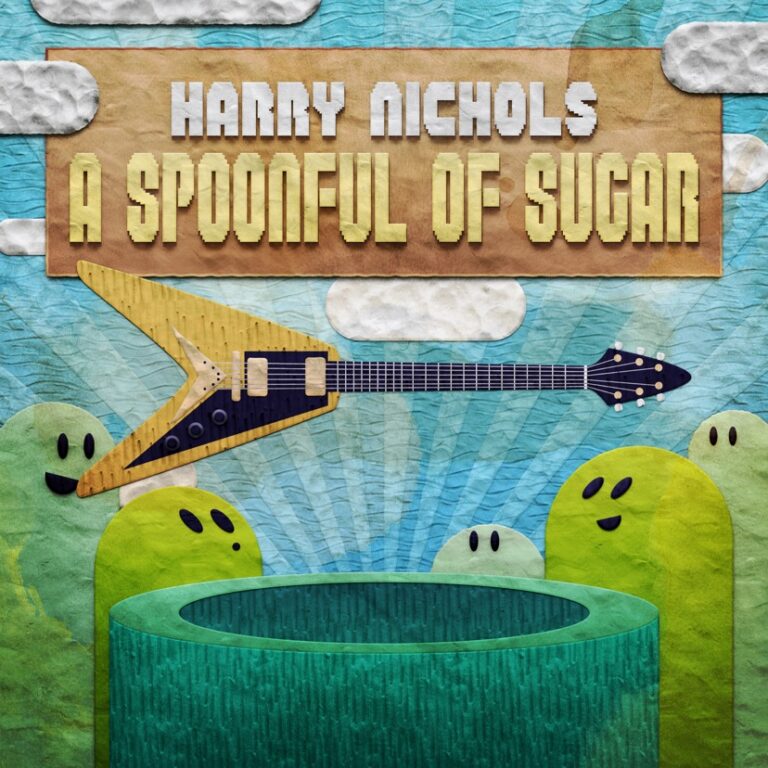
Alternative Ithaca musician Harry Nichols released a new solo EP, A Spoonful of Sugar, on September 4. Nichols has been influenced by various styles–beachy, punk-pop, folk, indie, and rock, to name a few–but this EP has its roots in electro-pop.
Harry Nichols started writing music at fourteen. He has been releasing music as an independent artist since 2010, and has several albums and EPs out on Bandcamp, which draw inspiration from Blink 182, The Beach Boys, and Bob Dylan. He has made a name for himself in Ithaca’s concert scene, and has been playing live for years. Many of his concert videos are on the Finger Lakes Music Press YouTube channel.
Since his last nerd-life inspired record This Isn’t the Album you’re Looking For…,Nichols focused on contributing to his bands Noon Fifteen and Julia Felice and the Whiskey Crisis. He released a few demos and solo EPs since, but this September, Nichols finally releases his latest solo EP. Nichols considers this easy listening track, A Spoonful of Sugar, his first major release in six years.
ASoS was written and recorded entirely during the COVID-19 quarantine. The track is much poppier than Nichols’ other work, and the razor sharp melodies match the emotions behind the lyrics. Nichols takes pop punk and soul and blends them into synth and digital drums, as those were the tools he could work with by himself during quarantine.
Although the lyrics are a reflection on the loneliness of social distancing, the music is upbeat and energetic. Nichols lets the listener momentarily escape from the current sadness and stress and live in this poppy world he makes with A Spoonful of Sugar. ASoS is available for purchase on Bandcamp now.
Uptown Theatre photo from Uptown Theatre’s website.
The process of a building being added to the National Register of Historic Places is a lengthy one. To be added to the list, a building has to be submitted, reviewed, and approved by the state before the state makes a recommendation for said building to be added to the National Register. The New York State approval for Uptown Theatre took more than a year.
Uptown Theater has been showing films at its location on Genesee Street since December 29, 1927 when it opened but was unused for several years after shutting its doors in 2013. Then in May of 2017, Devin Mahoney, who was from South Utica decided to form a small team and formed UTCA to take ownership of the Uptown Theater in hopes of restoring and reintroducing the building as an entertainment destination for the Utica community. It’s now known for featuring live music performances, comedy acts like The Uptown Improv Company, classes, and much more.
According to the 315 Music, the venue being included in the National Register makes, “commercial properties or historic homes eligible for such funding as state and national grants, state and federal historic rehabilitation tax credits, preservation programs, and civic charities that promote local history, culture and arts.” The Uptown Theatre will now be available theoretically for such funding.
There are currently extensive renovations already taking place at the Uptown Theatre. They hope as venues come back amidst the COVID-19 restrictions they plan to add live music and comedy to their schedule when it becomes safe to do so. They are also offering online events and classes while they remain closed in consideration of New York State COVID-19 prevention guidelines and occupancy restrictions.
People interested in learning more about Uptown Theatre can visit its website.
New York music venues decided to file a Federal lawsuit against State restrictions on live music on September 6, 2020 in the U.S. District Court in Manhattan. The lawsuit involves ten establishments across New York who believe the live music restrictions are unworkable and unconstitutional.
The Federal lawsuit challenges both the ad ban and the rule against charging for shows as being arbitrary since there is no evidence those actions have any effect on the slowing coronavirus spread.
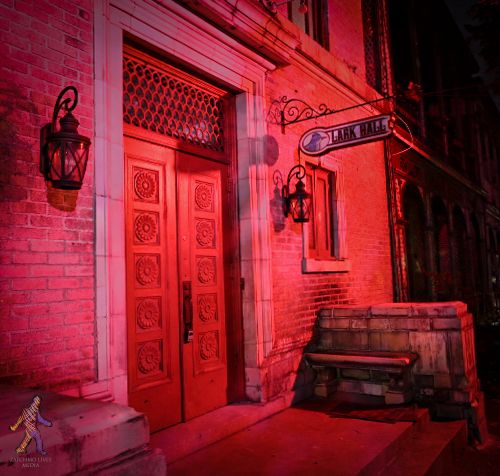
Lark Hall lit up in red demanding the passage of The Restart Act. Photo by Zach Culver.
Last week New York state announced rules that aimed to contain the spread of the coronavirus according to state officials but many venues feel they have been disproportionately singled out in this new ruling. The rules allow only what the state calls “incidental” music to be performed at venues making it impossible to promote performances and therefore making it difficult for venues, bars, and restaurants to intrigue an audience to attend their establishment.
The ten establishments involved in the lawsuit are establishments that serve liquor and host or promote live music or entertainment. These venues come from all across New York state including four in New York City. The others are located throughout upstate New York in Buffalo, Niagara Falls and Clifton Park. The plaintiffs in the case are Turks Group, LLC, operating as The Sultan Room & The Turk’s Inn in Brooklyn, 49 Illinois Restaurant, LLC, operating as Buffalo Iron Works in Buffalo, The New York Independent Venue Association, a trade association, Columbus Ale House, Inc., operating as The Graham, in Brooklyn, Upstate Shows, Inc., operating as Upstate Concert Hall in Clifton Park, Jayarvee, Inc., operating as Birdland Jazz Club in Manhattan, Capitol Enterprises, Inc., operating as The Capitol Theatre in Port Chester, Jukimoo, LLC, operating as Littlefield in Brooklyn, nfinity on Main, Inc., operating as Tralf Music Hall in Buffalo, and Rapid Theater Niagara Falls USA, Inc., operating as The Rapids Theater in Niagara Falls.
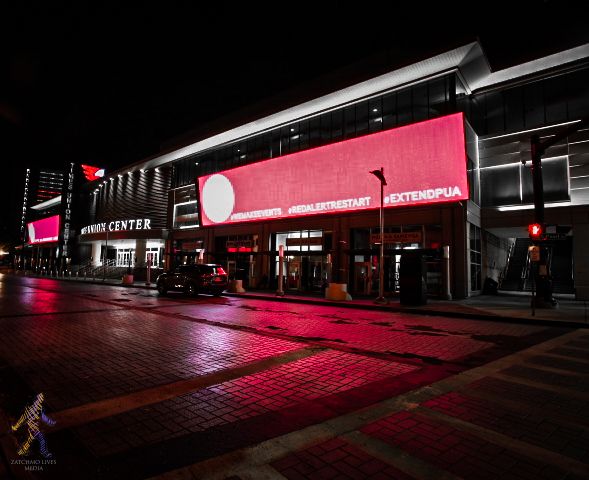
Times Union Center lit up in red demanding the passage of The Restart Act. Photo by Zach Culver.
The defendant named in the lawsuit is the State Liquor Authority Chairman Vincent Bradley. The State Liquor Authority has been the leading charge in enforcing Governor Andrew Cuomo’s coronavirus orders. They do this by having the ability to suspend liquor licenses and impose fines on establishments not following the rules.
According to syracuse.com, “The lawsuit asks the court to halt the state’s enforcement of the orders. It also seeks payment for the cost of the lawsuit and lawyer’s fees, but does not specify monetary damages.” The state’s coronavirus rules are simple and easy to follow for most of these establishments. People being required to wear a mask, social distance, use hand sanitizer, having employee health checks, and ect would be very doable for establishments who host live music and yet they are being singled out from being able to promote their businesses.
The Federal lawsuit says, “The advertising and ticketing of shows would allow establishments to maintain better control over their limited capacity, allowing them to tell patrons in advance that an evening is sold out and thus avoiding the gathering of crowds trying to gain admission (and the increased risk of transmission that comes along with such gatherings).”
For more information on the New York’s new guidelines for establishments and how they effect the establishments and musicians read NYS Music’s article on the guidelines.
Make Music Winter celebration will return in 2020 across the country on December 21. The celebration is free, outdoor, and will take place in different cities nationwide. Attendees of the musical event will not only be it’s audiences but also it’s participants into music makers.
The third nationwide rendition of the Make Music Winter takes place on winter solstice, December 21, while its counterpart the Make Music Day takes place on summer solstice, June 21. The the winter celebration first started in 2011 in New York City. Since then the celebration has grown and last year it took place in nearly 40 cities in the United States in 2019. The celebration will ring in the longest night of the year, and celebrate the end of 2020. Both celebrations are presented by The NAMM Foundation.
Most of the celebrations include parades. Unlike a traditional parade, most of the events for this celebration will stay on the sidewalks. Some march through a park or along an elevated rail line, or ride on bicycles, or take place on train cars and platforms. However you do it, being mobile brings music throughout your city, and helps you stay warm in the winter weather. The events are also participatory. Meaning that everyone is invited to be part of the music-making, whether by singing, playing an instrument, tap dancing, carrying a boombox, or whatever the event calls for. The whole idea of the celebration is for everyone to make music together in celebration of winter solstice.
This year’s celebration will be a socially-distanced event and will focus on keeping it’s participants as face as possible. People interested in participating should fill out this short form to register an event somewhere close to home.
For more information on the Make Music Winter celebration this year visit their website.
Reggae legend Toots Hibbert has been placed into a medically induced coma. The Jamaica Star reports the 77 year old is being cared for at University Hospital of the West Indies (UHWI).
“Toots is fighting for his life and his family is asking for prayers,” publicist Claude Mills said.
On Monday news broke that the singer was awaiting results of a COVID-19 test after having shown symptoms. While awaiting test results, Mills noted that Hibbert was showing signs of the virus, and the musician’s inner circle have self-quarantined while awaiting their test results. Hibbert had recently released his latest album Got To Be Tough.
Original story follows below:
Toots and the Maytals singer Toots Hibbert has been hospitalized in Kingston, Jamaica. He is currently in the intensive care unit at the private facility. According to a statement released by his family Hibbert has been tested for COVID-19 and is awaiting his test results.
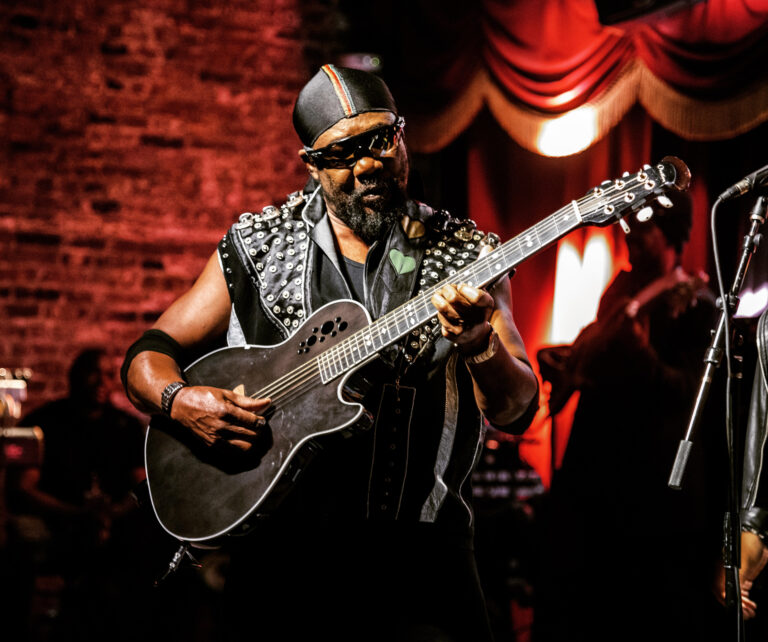
Toots Hibbert. Photo by Robert Tellerman.
According to his family, Hibbert is in good spirits and is getting better day by day and receiving the best treatment possible. The family thanks everyone for their prayers and in particular the minister of culture Olivia ‘Babsy’ Grange and the minister of health Christopher Tufton for their assistants in getting Hibbert tested. They also thank the medical professionals taking care of Hibbert around the clock.
Statement made by Hibbert’s family.
Toots and the Maytals are a Jamaican musical group that were formed in the early 1960’s under their original name The Maytals. They are widely known for their ska and reggae sound. Some of their most widely known songs “Pressure Drop,” “Funky Kingston,” and “Bam Bam.” They recently released their first album in over ten years titled, Got to be Tough. The album features many originals as well as a Bob Marley cover of “Three Little Birds” featuring Ziggy Marley. It also features a track with Ringo Starr on percussion and Ringo’s son and longtime Who drummer Zak Starkey on guitar. Hibbert is notably famous for coining the genre name “reggae.”