Capital One City Parks Foundation SummerStage announces the launch of its digital series SummerStage Anywhere. The series will highlight genres that were born in or deeply represent New York including hip hop, salsa, jazz, global, indie, and contemporary dance. SummerStage Anywhere will start on June 6 at 7PM EST and will feature performances each weekend for the rest of June.
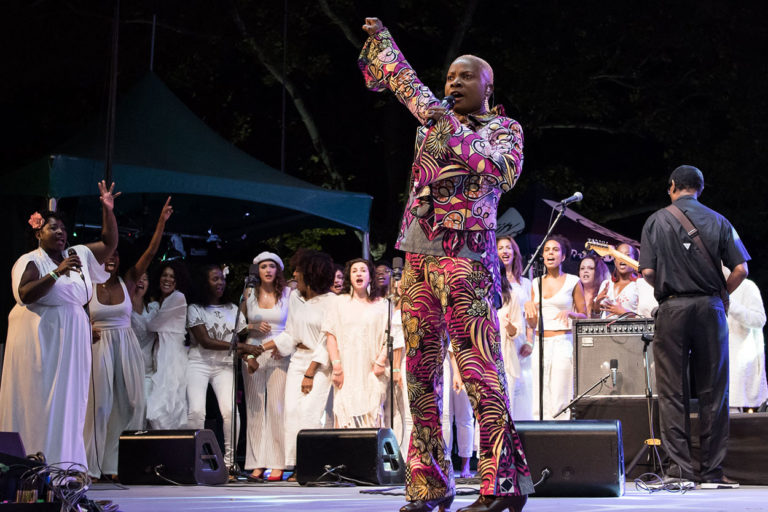
Angélique Kidjo photo provided by City Parks Foundations website.
The series will debut on June 6 with an original performance by New Yorker pop phenom MAX. MAX performing a love letter to New York of sorts. Max has been called a “Young Pop God” by GQ in the past and has been called the “top popstar to watch” by Billboard and was nominated for “Best New Pop Artist” at the 2019 iHeartRadio Music Awards.
On June 13 LAMC (Latin Alternative Music Conference) will be taking the stage and highlighting key voices in the Latino LGBTQ community. Some of the performers include pop singer Kany Garcia, hip hop artist Mabiland, indie electro pop musician Javiera Mena and rock band Circo. The event will be hosted by Los Angeles’ KCRW radio DJ Raul Campos and the Latin Grammy winning artist Cheo, formerly of Los Amigos Invisibles.
On June 19 SummerStage Anywhere will be hosting a celebration for the 155th anniversary of Juneteenth. Juneteenth for those unaware is the nationally celebrated commemoration of the end of slavery in the United States. The event will be featuring Jamel Gaines’ Creative Outlet Dance Theatre and poet Carl Hancock Rux, and a panel discussion led by Executive Artistic Director of The Billie Holiday Theatre, Dr. Indira Etwaroo.
On June 26 the series will wrap up with an exclusive performance from Angélique Kidjo. Angélique Kidjo is a Grammy Award-winning Beninese singer-songwriter, actress and activist. She will also be doing a live Q&A session after her performance.
The series will be available on SummerStage Anywhere’s website and streamed exclusively on the SummerStage’s YouTube channel. SummerStage is an independent, non-profit organization, and relies on donations to make it’s free performing arts festivals possible. Anyone interested in supporting the SummerStage series can donate.
For a full schedule of upcoming programming and more information please visit SummerStage Anywhere’s website.
Music has the power to bring people together in the name of solidarity. Throughout protest history, there have always been songs to aide in carrying the cries for social justice. Protest music came into mainstream popularity during the civil rights movements of the 1960s and 70s, with folk and gospel artists such as the late Pete Seeger and Mahalia Jackson. In todays current political state however, protest music has chosen a different voice. Hip-hop along with punk music have provided the loudest songs of racial protest during the black lives matter movement.
“Sound of da Police” by KRS-1
Off of the Bronx natives’ debut studio album, Return of The Boombat, “Sound of da Police” takes a hard look at police brutality. Although released in 1993, the song remains relevant in the current Black Lives Matter movement. Throughout the song, KRS-1 makes comparisons between the police and overseers who would police southern plantations while keeping slaves in check.
Key Lyrics:
“Officer, Officer, Officer, Officer! Yeah, officer from overseer You need a little clarity? Check the similarity! The overseer rode around the plantation The officer is off patrolling all the nation”
“One Four Love (Pt.1)” by Mos Def
The second track off of Mos Defs’ Hip Hop For Respect EP released in 2000 is another song centered around police brutality and racially-centered violence. With a hook that sings ” My people unite and lets all get down.”
Key Lyrics:
“My people unite, hop up and do it right We gotta have what? love peace and understandin One god, One love, One light One aim, One voice, One fight”
“Changes” by 2Pac
Riddled with commentary on the life of an inner-city black man, “Changes” is 2Pac’s timeless meditation on racial injustice. The song consists of verse after verse of 2Pac calling for change.
Key Lyrics:
“I see no changes all I see is racist faces Misplaced hate makes disgrace to races We under I wonder what it takes to make this One better place, let’s erase the wasted”
“Sunshine” by Pusha T
Bronx rapper Pusha-T takes a conscious approach in his 2015 release “Sunshine” telling America that the country is in need of a miracle. Pusha remembers Freddie Gray, another victim of police brutality and neglect.
Key Lyrics:
“These ain’t new problems, they just old ways I see one time turn sunshine into Freddie Gray Just another n**** dead, just another n**** dead Send another to the FEDs, send another to the FEDs”
“Banned in D.C” by Bad Brains
Well affiliated with the Afropunk movement of the 70s and 80s and regarded by many as the pioneers of hardcore, Bad Brains deliver this rage filled track about racial solidarity.
Key Lyrics:
“We, we got ourselves Gonna sing it, gonna love it, gonna work it out to any length Don’t worry, no worry, about what people say We got ourselves, we gonna make it anyway”
“Don’t Shoot” by Dave East
Dave East takes a creative approach, altering his voice to reflect on his encounters and experiences with NYPD through out his childhood, as a teenager, and as an adult. Born and raised in Harlem, Dave East delivers descript bars verse after verse detailing life in the city and coming to terms with racism and police neglect.
Key Lyrics:
“Left and right I’m seeing homies get interrogated, we ain’t safe where we live, this America ain’t it?”
“Spiritual” by Jay-Z
https://www.youtube.com/watch?v=TFW5p2Qlx7M
In 2016, “Spiritual,” was Jay-Z’s first solo release in 3 years. Penning the lyrics after the shooting of Michael Brown in 2014, Jay-Z said he held onto the release because he knew ” his death wouldn’t be the last” in a statement released with the song. Jay-Z calls out police brutality and the cycle of poverty and depression many in the black community are stuck in.
Key Lyrics:
I am not poison
Just a boy from the hood that got my hands in the air
In despair don’t shoot
I just wanna do good”
“Oppressor” By Jesus Piece
East Coast hardcore band, Jesus Piece target the oppressive behavior of police in the song “Oppressor” off of their 2015 EP release. Fronted by Aaron Heard, one of the most prominent black vocalists in the current hardcore scene, the song is delivered along with a brutal instrumental and has since been a highlight of many hardcore festival performances, bringing together people of color in the hardcore scene, all taking turns grabbing for the microphone.
The Apollo Theater and Gibson have partnered together to bring music fans “Let’s Stay (In) Together: A Benefit To Support The Apollo”, a live streaming benefit concert. Airing June 4 at 7:30 PM ET, the concert will be free for views made possible through Apollo’s media partner Tidal. Originally planned for June 2, The Apollo decided to postpone the show and stand with others in the music industry to observe Blackout Tuesday.
This special event will feature performances by “Captain” Kirk Douglas of The Roots, Kool & The Gang, Gary Clark Jr, Robert Randolph, Ray Chew and many more artists. Not only will the artists perform songs from legends like B.B. King, Patti LaBelle and Stevie Wonder, the Apollo’s 86 year contribution to the arts and culture will be highlighted. Viewers will also witness poems and performances dedicated to the memory of those whose lives have been lost due to the Coronavirus Pandemic.
Proceeds are set to benefit an emergency relief fund to financially support the theater now and into the future once it had to cancel live events through the month of June due to the coronavirus pandemic. Portions of the funds will also be used for micro grants to support local merchants and businesses in the 125th Street neighborhood that Apollo Theater calls home.
By partnering with Gibson through the Gibson Gives foundation, this marks the beginning of a new partnership that in the future will include brand new show programming, music preservation, music education initiatives, and support established and emerging talent.
“Music has the incredible power to connect, transform and heal. We hope you will support the legendary Apollo Theater and join us for a special event featuring music that lifts our spirits, shapes our lives, and continues to unite us all.”
Words are like honey; they can be sweet to hear but the message might not always stick. And over time, messages get lost in translation. Take the late great Muhammad Ali, who refused to fight in the Vietnam war because, as only he could put it, “no Vietcong ever called me n*****.” When Ali took his stance, he was stripped of his world championships, boxing license and was vilified by the public.
“I am not allowed to work in America and I’m not allowed to leave America,” Ali said in February. 1968, the start of his first full year of exile from boxing. “I’m just about broke.” This is why the Kaepernick comparisons aren’t apt. While Ali struggled to afford groceries, Kaepernick is backed by a billion-dollar corporation in Nike. After Ali’s passing in 2016, revisionist history took over. Ali’s mid-career struggles were now celebrated. Despite being spurned by the very country that now celebrates him.
What does this all have to do with Lauryn Hill? Well, have you ever asked yourself how the first woman to be nominated in ten Grammy categories in a single year, and the first woman to win five trophies in one night found herself out of the spotlight a couple of years after her acclaimed solo debut? Well, I’m here to tell you this was coming all along, oh and she warned us about it.
Lauryn Hill’s Revelation
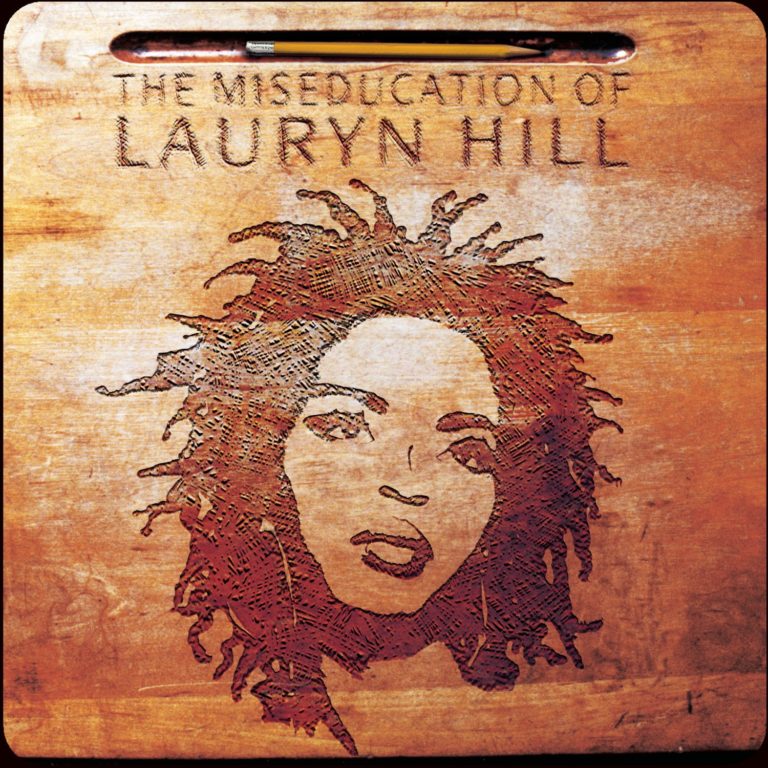
The Miseducation of Lauryn Hill is a magnum opus of black music, encompassing the best of multiple genres. However, due to her lack of activity musically, Lauryn Hill’s presence in contemporary pop culture is now reduced to jokes about her punctuality, and not the sacrifice she herself prophesied.
On “Final Hour,” the album’s seventh track, she makes her priorities apparent, regardless of her status as a world-famous entertainer. In the chorus she raps “you can get the money; you can get the power. But keep your eyes on the Final Hour.” With the “Final Hour” representing religious salvation. She even raps later in the record “I’m making sure I’m with the 144.” The 144 is a reference to the Book of Revelations. In it 144,000 people are specifically chosen by God to serve as his agents.
by 1998, Lauryn Hill had taken the world by storm
Lauryn Hill has always been open about her faith and spirituality yet, in her earlier work as a member of The Fugees, religious references were further and fewer in between. So, what changed? After selling millions of records, winning awards and being propped as the face of a generation of women, had Lauryn Hill learned new information that brought on this stance?
Decoding The Lyrics
At the end of the first verse she says, “People feel Lauryn Hill from New-Ark to Israel (clever play on words here as she makes a reference to the “Ark of the Covenant” and she’s from Jersey). And this is real, so I keep makin’ the street ballads, while you lookin’ for dressin’ to go with your tossed salad.” Followed by the aforementioned chorus, these lyrics emphasize her stance on the music industry. After all, tales of the the entertainment industry’s sexual deviance are now far too common. Hence, the “dressing” and “tossed salad” lines.
Throughout the song, she juxtaposes her glamorous life with her faith. Symbolizing that one wouldn’t be there without the other. In the last verse she says, “now I’m a get the mozzarella like a Rockefeller / Still be in the church of Lalibela, singing hymns a cappella / Whether posed in Maribella in Couture / or collecting residuals from off The Score.” While it may seem braggadocious, she lets the listener know what she would choose if it came time for a decision by saying, “I’m making sure I’m with the 144.”
Hence why she denounced the “dressing” (a symbolism for opulence) because the cost is her spirituality and beliefs. Being Lauryn Hill of course, (at one time one of the world’s most popular entertainers) there may not have been an option to continue her career without politics, corruption and possible harassment (there’s Harvey Weinstein’s in the music industry too).
Aftermath
It comes as no surprise that by the turn of the millennium, Lauryn Hill was out of the public eye. Yet, sehe returned in 2002 with her MTVUnplugged No. 2.0 live album. However, critics weren’t as kind this time around, as chic hip hop girlie Lauryn way to a spiritually devoted Mrs. Lauryn Hill. While her lyrics pick up where she left of on “Final Hour.” So, no. Lauryn Hill didn’t go crazy, she didn’t lose her rapping and songwriting abilities. She made a decision.
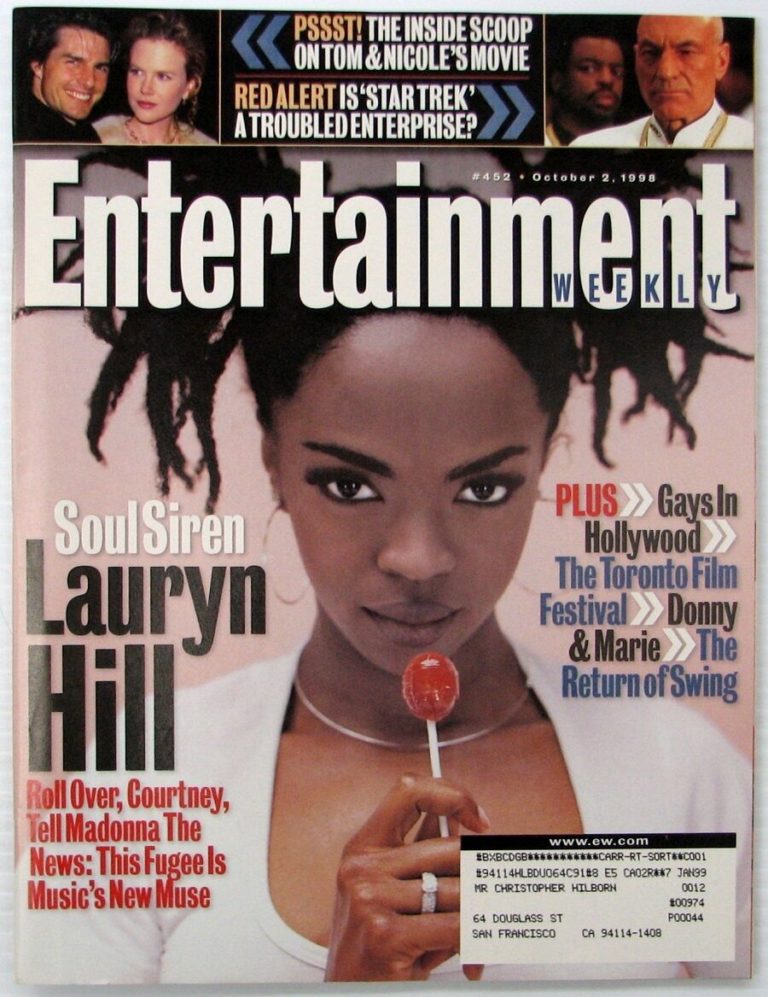
Lauryn Hill is now 45 years old. She still tours and performs medleys of her most popular songs (oftentimes restructuring the entire song and keeping the lyrics). She never regained the same level of stardom and probably won’t ever grace the covers of Time, Rolling Stone, Vibe, People or Entertainment Weekly ever again. Yet, it seems to have been a conscious sacrifice, preferring to sing her hymns for those that are keen to listen for their education and enjoyment. Not because the machine tells them to.
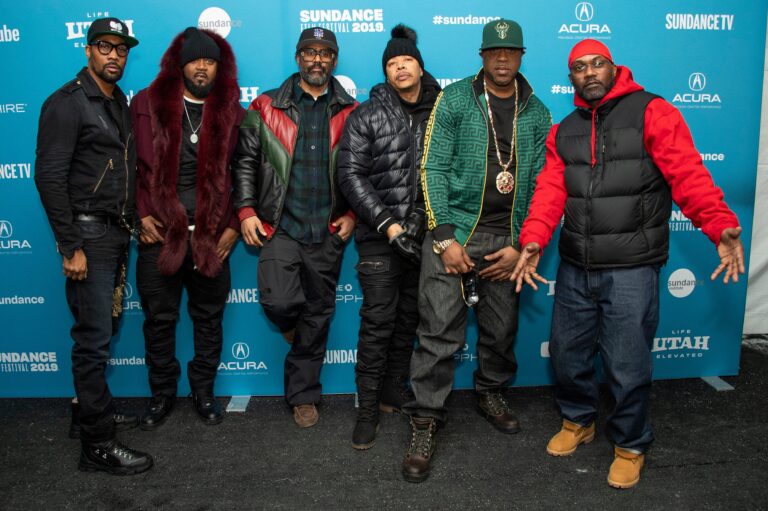
Iconic hip hop group, Wu-Tang Clan are no strangers to good marketing. The Grammy-nominated outfit is partially known for their extremely popular “Wu Wear” clothing brand — founded by Wu-Tang Clan affiliate Oliver “Power” Grant. The Wu has always been able to find the perfect middle ground between good marketing tactics and staying authentic to their brand. Like when the late Ol’ Dirty Bastard began ranting during the 1998 Grammy awards and proclaimed that “Wu-Tang is for the children.” He was upset that the group had been overlooked for best rap album and unintentionally came up with a popular catchphrase, one that the Wu has always stood by.
In light of the current COVID-10 crisis, the hip hop veterans continue to stay ahead of the curve, as the group announced their “Protect Ya Hands” collaboration with the plant-based brand Jusu. The sanitizer is one item in a campaign launched by the group and Ottawa, Canada, Mayor Jim Watson.
https://www.instagram.com/p/CAaQf9BnFTM/
In addition to the sanitizer, they have released the “A Better Tomorrow” collection (named after their 2014 studio album), which includes a T-shirt emblazoned with the famous logo of Wu-Tang Clan and a reusable food bowl. For every bottle purchased, another will be donated to The Ottawa Mission, a homeless shelter in Canada.
Additionally, the collection benefits the Children’s Hospital of Eastern Ontario, with the group’s official website stating “CHEO combines excellence in clinical care, research and education with a commitment to working with our partners to advance seamless care that’s provided where, when and how it’s needed.”
The sanitizer can be yours for $20. The T-shirt goes for $40, while the Pure Kitchen reusable bowl costs $21. “The purpose of 36 Chambers and Wu-Tang is to always see a better tomorrow,” says the official website. You can help Wu-Tang Clan on their mission by clicking here.
A breakout single isn’t the easiest thing to find. If it were, millions of aspiring rappers would have landed record deals. And although the ball seems to get rolling after that first big hit (save for the one-hit wonders, of course), an artist is still dependent on their initial ability to connect with an audience. For most, the components of the ever elusive-hit record seem to be simple (distinctive instrumental vocals, engaging lyrics, etc..) yet, the subtle ways in which they are applied often escape aspiring artists. Which is why when one finds one of those elusive records, they hold on to it, play it and share it to the world.
“Pressure,” the latest release from cousins and Queens duo Runitup Rich and Runitup Sho feels like one of those songs. With a Lil Uzi Vert-esque flow and delivery throughout, the Runitup duo seem to have found the exact medium they had been searching for. “The sound we started with was just something we mimicked and thought it sounded like a bump and as we kept going and following music trends, we decided to start trying to be more melodic,” says Sho. “With my background and singing and Rich’s chop-and-go flow, we came up with a sound that was still us but gave an opening for a broader spectrum of music.”
It isn’t just the distinctive guitar riffs nor the infectious chorus, but the duo’s effervescence throughout the song that will likely coax listeners into joining them in sing-a-longs. With the record also falling shy of two minutes, there will be plenty of people playing it on repeat.
As Runitup continue to establish themselves, they refrain from thinking about fame and opulence. The duo is more focused on growing, exploring their sound, evading any hastiness. “Who knows what the future holds as we continue making music. We get to see more of what the supporters of our music want, and we can form a better direction for Runitup as a whole.”
Staten Island’s own, and at one point a member of the FBI’s most wanted list, Denis Coles aka Ghostface Killah was born in 1970 in one of New York City’s most often overlooked borough, Staten Island. Thus, May 9th marks the birthday of the one and only, Ghostface Killah
He began his solo career in 1996 with the release of Ironman following Wu Tang’s breakout release, Enter The Wu Tang (36 Chambers). Renowned for his booming voice and fast-paced flow, Ghostface has remained to be one of the Clan’s most notorious members. As the roommate of Wu Tang founder RZA, Ghostface is credited with playing a role in bringing the original seven members of the group together.
Ghostface was featured extensively on fellow Wu Tang member Raekwon’s, early mixtapes, making a name for himself before Wu Tang Clan essentially took over the world of hip-hop.
What separates Ghostface from the rest of the gangsta rap group MCs is his often colorful and imaginative storytelling which has remained the highlight of his performances throughout the years.
Recently, the works of Ghostface Killah and the rest of the Wu Tang Clan has been celebrated in the media with the short film For the Children: 25 Years of Enter the Wu-Tang (36 Chambers) which dives into the group’s early years on the come-up in the late ’80s and early ’90s hip-hop scene. Wu Tang and Ghostface Killah have transcended music and represented how their rough upbringing on the streets of New York has brought them to make incredibly moving art and music. The legacy of Wu Tang has been cemented into New York history with Staten Island declaring November 9th as Wu Tang Clan day, turning the classic phrase ” Wu Tang forever” into a reality.
On the heels of a run of successfully executed song releases, Lefrak City rapper Kyngjo has unveiled the official music video for his most popular record “Calling Me,” continuing to build buzz with the prospects of a debut project drawing ever closer. His journey as a rapper dates back to just over two years ago – as hopes for a future in basketball became bleak, thanks to an injured knee – now with his mind fully focused on being a successful rapper, he hopes to etch his name amongst a list of legendary Queens natives.
Produced by Multi-platinum and Grammy-nominated producer TheBeatPlug – who gained notoriety with producer credits on Joyner Lucas’ viral record I’m Not Racist – “Calling Me” follows the classic adage that as a rapper, women will follow, and so too will interminable and deceit-filled adventures bound to leave those involved with querulous significant others. The record sees Kyngjo divulge tales of his experiences playing the side piece to a spurned woman who has now fallen for him and… won’t stop calling. The Dream of Dre directed music video brings to life the tension between significant others when Kyngjo is involved with the women having to convince their man that he is indeed “just a friend.”
The Wu-Tang Clan is one of the most celebrated and impactful musical groups in history. In our era of transparency, it is only fitting that a biopic of sorts would materialize itself. Telling the complete story of a group as large as the Clan isn’t feasible (not to mention any adjacent characters) in 90 minutes (the pre-requisite for big-screen biopics). Therefore, enter Wu-Tang: An American Saga.
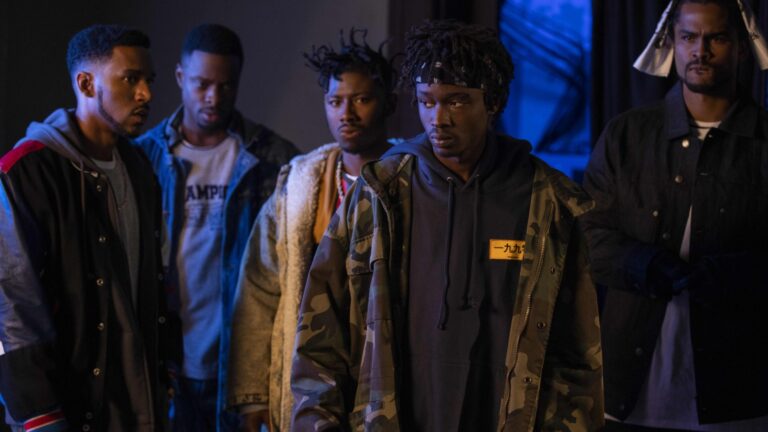
In 2019, the Emmy-nominated Hulu original series rehashed the rise of the legendary hip-hop group. Written by Alex Tse and RZA and executive produced by Tse, RZA, Method Man, Brian Grazer, Michael Rosenberg and Francie Calfo, the series debuted on Wednesday, September 4 with three episodes and followed with an ensuing episode each week, in honor of #WuTang Wednesday.
https://youtu.be/kBy9umOnhZw
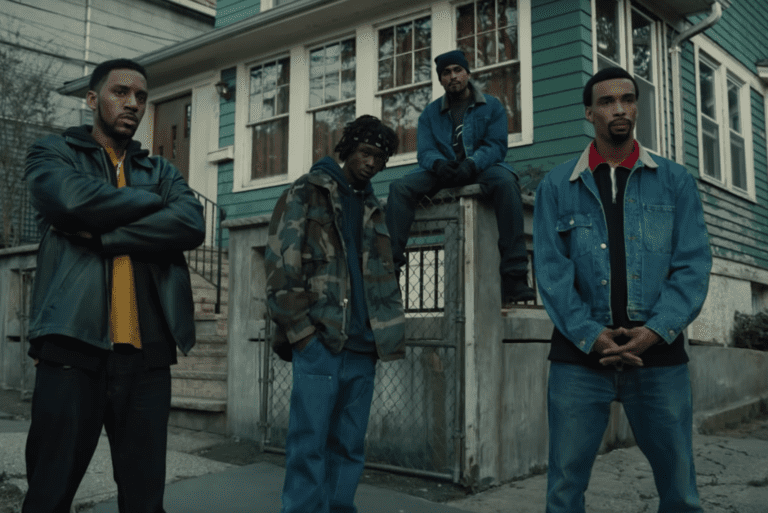
Inspired by RZA’s guide to the clan, The Wu-Tang Manual and its follow-up, Toa of Wu, the series is set in the early in 1990s Staten Island, New York during the peak of the crack epidemic. It follows the formation of the clan through the lens of RZA. Bobby Diggs’ (RZA) love for music and producing gives him hope for making it out of the inner-cities of Staten Island. His ambitions also include formulating a super-group highlighting the borough’s talent, hoping to harness their untapped potential. What stands in their way are the allures of the street life, the drug trade and vices that have ruined many a dream for young minorities.
The series format resembles that of The Get Down— a Netflix original series that gave a fictionalized chronology of hip hop’s birth — yet, Wu-Tang: An American Saga has intensity and realism (felt from the opening scene and onward) that outpaces the former. While the screenplay is captivating on its own (who doesn’t want to have some semblance of an idea of how the most unique rap group ever was formed?), the acting makes it that much more enjoyable. Rappers Dave East and Joey Badass each embody their respective roles. Dave East, who had the challenge of portraying the Clan’s most mainstream member in Method Man and in his first real acting gig, does an honorable job of representing the hip hop legend. Moonlight actor Ashton Sanders’ portrayal of RZA is award-worthy, from his speech to his mannerisms; the production value is very high.
Although based in the 1990s, issues tackled are those that are still prevalent in present-day black inner-cities. Obstacles such as poverty, crime, the inner workings of the drug trade as well as the corruption that follows, are all issues the main characters have to bypass on their way to success.
In that same vein of realism, characters are also seen hitting rock-bottom and having to reinvent themselves to ascend to greater heights. Young black males are forced to be the man of the house at young ages (seen with RZA’s brother Divine, who was the family’s main provider through his drug dealings). With illegal affairs such a big part of the series, the consequences of the street life and the dangers that it invites are also highlighted. The inevitable run-ins with the law, prison sentences, prison life, the pain of a mother losing a son and the gut-wrenching feeling of wanting to change your environment and the helplessness one feels in those moments are all captivating themes that the series explores. The destitution of the “hood” leads many of the Clan members to follow the five percent teachings and philosophies they’ve gone on to (along with many other notable hip hop acts) popularize in their music.
Even though many of the accounts have been dramatized/fictionalized, it is still really fun to get insight on the influences that made the Clan unique. For example, RZA’s creativity and genius comes from his quick thinking and ability to solve problems and applying those abilities into his production. We also get an idea as to how he became the group’s de facto leader, as he was playing peacemaker between members long before platinum records.
Wu-Tang: An American Saga is must-watch television. Not only is it informative, the cast – which ranges from Shameik Moore, Ashton Sanders, to Dave East and Joey Badass. do an exemplary job of portraying each respective pioneer of the Clan. With no big-screen release date to rush storylines, writers can take ample time to figure out the best cross between dramatic/entertaining television and re-counting the tales of some of the most important figures in rap history.
Hit records celebrating a city are supposed to bring people together. Take Ja Rule’s 2004 smash single “New York,” for instance. Featuring hip-hop heavyweights Fat Joe and Jadakiss, the song was released as the second single from his 2004 studio album R.U.L.E. and peaked at number 27 on the Billboard Hot 100. Having caught on with the masses as a major hit, it should have also served as reminder amongst New York emcees of the bond they share as the proprietors of hip hop. Here you have a global record with an infectious chorus – What native New Yorker doesn’t enjoy chanting “I’m from New York?” – Yet, it served as the fulcrum for the ensuing turmoil between the city’s rap juggernauts.
The year is 2004, 50 Cent – on the heels of his incredibly successful debut studio album Get Rich or Die Tryin’— is the biggest rapper in the world, oh and he happens to hate Ja Rule’s guts and subsequently, anyone who associates themselves with him. Their beef stems from 50 feeling slighted because their big homie Kenneth “Supreme” McGriff, chose to back Ja Rule’s music over him. That along with many other incidents – that have been covered in magazines and documentaries – have led to the two Queens rappers loathing each other for the better part of 20 years. They’ve gone back and forth with numerous diss records and even had an altercation at the world-famous Hit Factory studios in New York City, which resulted in a brawl between each other’s entourages and 50 Cent being stabbed.
While 50 Cent’s contempt for Ja Rule drove his actions, it’s also important to note that although the latter reached fame and notoriety a few years before his adversary, in 2004, 50 Cent had a ton of pull as the most in-demand and popular rap act of the time. Which means, he acted without any regards for what his contemporaries thought, and since he was backed by Dr. Dre and Eminem (the highest selling rapper of all-time), he didn’t need to maintain relationships with his New York counterparts. So, what began as a dispute between 50 Cent and Ja Rule quickly transformed and saw the “Many Men” rapper taking shots at Fat Joe and Jadakiss on his sophomore album The Massacre. On the diss-record “Piggy Bank” – which he also attacked Nas, Nas’ then-wife Kelis, The Game and Lil’ Kim on – he slams Fat Joe, “that fat n**** thought Lean Back was in the club/ my sh*t sold 11 mil, his sh*t was a dud. He then proceeds to go after Jadakiss on the very next line, “Jada’ don’t f**k with me, if you wanna eat/Cause I’ll do yo’ little ass like Jay did Mobb Deep/Yeah, homey, in New York n**** like your vocals, But that’s only New York dawg, yo’ ass is local.”
With that began a division between 50 Cent and two more prominent New York rappers (add them to the list), and since 50 Cent had beef with Ja Rule, Fat Joe and Jadakiss, so did everyone associated with him; including his entire G-Unit crew (because that’s how 50 rolls and who wants to piss off the biggest rapper in the world?).
While New York consistently delivered rappers with hard-hitting lyrics along with plenty of big hits, the division amongst them wasn’t easy to overcome (It wasn’t all on 50 Cent as other rappers like Cam’ron also had the propensity to verbally assault their contemporaries). Nonetheless, as the South grew stronger, major acts like Outkast, Ludacris, Lil Wayne, UGK, T.I. and Young Jeezy were all delivering a stellar product and it was much easier to find cohesion among their power players, eventually paving the way for the south to become the “it” region in hip hop.
50 Cent and Fat Joe have since settled their differences in 2012 when their mutual friend and business associate Chris Lighty passed away, while Jadakiss and 50 have also found common ground. As for Ja Rule and 50 Cent? Well they still can’t stand each other. Yet, the two hip hop legends have given us plenty of hit songs and iconic moments to discuss for years to come and “New York” serves as just a small part of their long and complicated history.