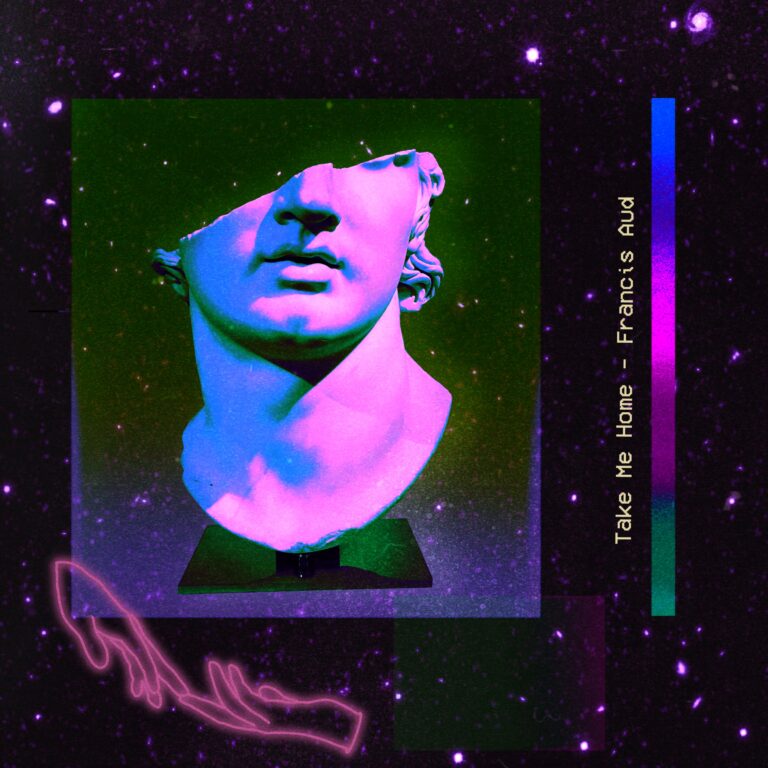
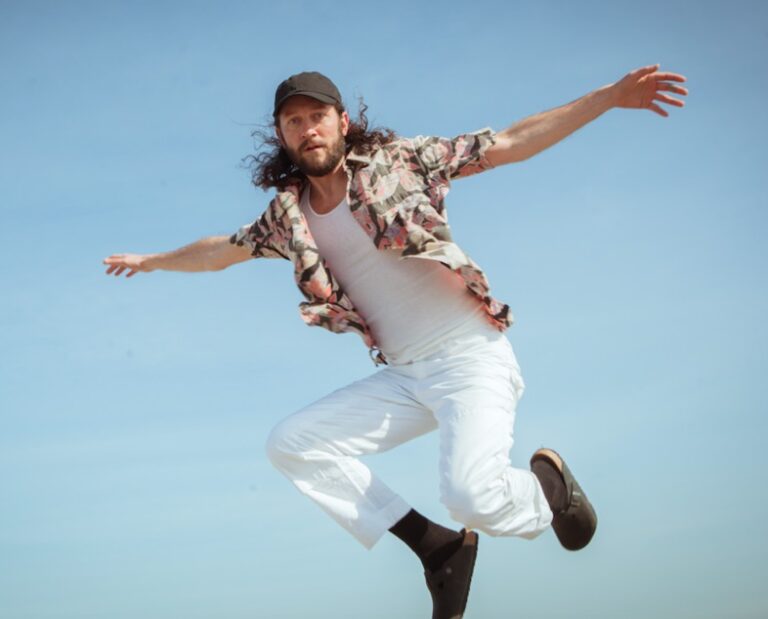
Brooklyn electro-pop funk artist Francis Aud recently released his newest single “Take Me Home,” blending bittersweet lyrics with an upbeat and unique electric funk.
Francis Aud started out as a retro-soul artist and released his debut EP Tender Things in July 2017. Since then, his music has evolved into what he calls ‘FONK,’ his own original blend of electro-pop and funk. This refreshing mix gives his music personality and makes his sound memorable. Francis tells NYS Music:
My biggest inspirations are Al Green, Marvin Gaye, and Sam Cooke. From listening to those guys, I then found Jackie Wilson, James Brown, and then followed the thread of musicians they influenced all the way up to contemporary pop artists like Bruno Mars and Parcels.
Francis Aud
What he listened to as a child has been “carried in his psyche,” and he says that listening to “super romantic Spanish crooner music or The Commodores” all the time as a kid still influences his own writing style today. “I almost exclusively write about love, relationships, and desire and I still try to phrase the lines I sing like how a crooner would…old habits die hard I guess!” He’s been releasing several FONKY singles since 2018 in preparation for a bigger release in the future.
“Take Me Home” looks back on a past relationship with bittersweet nostalgia. “When it comes to lyric-writing,” Francis says, “I’m always trying my best not to write lyrics that aren’t devoid of meaning (if that makes sense.) I think lots of the time when people hear the words ‘pop music’ their mind immediately jumps to this idea of extremely surface level and superficial lyrics that come from lazily relying on overused tropes and clichés. I think good pop music doesn’t have to be devoid of a deeper meaning and there’s lots of proof around me of that.”
Photo courtesy of Amanda Blide
Despite its somewhat sad message, the single is in no way a downer. It’s upbeat and dancey. “That comes from my shameless love of 80’s music,” the artist admits. “I seriously, positively, TRULY, love music from the 80’s, especially the movie soundtracks where the arrangements were super over the top and used cheesy keyboard sounds on everything. Because that music makes me happy, I think it’d be worth exploring the juxtaposition between that music and the lyrics and I’m just lucky to call it a success!” The 80’s vibes in “Take Me Home” are clear, but with an original and modern spin that is lacking in some other “cheesy” pop.
Francis Aud’s music and website both shine with his positivity and humor. “I don’t think I can ever remember a time where I wasn’t blatantly making terrible dad jokes and puns,” he says about his ever-present humor. “In terms of positivity,” he notes, “I think it comes from both my parents and also comes with the territory of being a musician. With my parents being immigrants and coming to this NYC during the really rough 80s’-90’s, they had to work their asses off to make things happen and they had to have an optimism that things would work out. I think I naturally picked up on that. ALSO, when it comes to being an artist, you almost have to force train yourself to become more positive on a daily basis because there really is no guarantee that your art will be heard or even enjoyed.”
Despite the global halt brought by the Coronavirus, Francis has been keeping busy working on music: “I’ve been spending most of the quarantine teaching myself more about music production and trying my best to ‘level up’ my home recording set-up,” and “I’ve been working with more getting more comfortable using synthesizers and more of the electronic aspects of music production,” he says, as he can’t record in a full studio with a band right now due to the quarantine. “Aside from that, I’m always trying to hone my writing and working to finding that distinct balance between saying something meaningful and being catchy.”
Each Sunday evening from 7-9pm on 102.7 FM, you’ll find EQXposure on WEQX, featuring two hours of local music from up and coming artists. Tune into WEQX.com this Sunday night to hear music from Cassandra Kubinski, Hamilton Craig, Lucas Neil, and many more!
WEQX has long been the preeminent independent station in the Capital Region of New York, broadcasting from Southern VT to a ever-expanding listening audience. NYS Music brings you a preview of artists to discover each week, just a taste of the talent waiting to be discovered by fans like you.
This Saratoga Springs artist has quite the impressive resume. This song was produced by Chris Sclafani who was an engineer on hit songs by Ed Sheeran, Selena Gomez, and Gwen Stefani. She’s recorded and/or performed with the Goo Goo Dolls, 10,000 Maniacs, Jull Sobule, Dickie Betts, and many others. Her songs have been used in ABC, NBC, and Lifetime shows including Dance Moms where her music was used 13 times while helping to raise tens of thousands of dollars for causes like Autism support and pet rescue. Oh, and here’s what Billy Joel has to say about Casandra.
Cassandra Kubinski is very similar to the singer/songwriters of the late 70’s…proves that the genre (singer/songwriter) can still be transcendent.
Billy Joel
The official music video for “Stardust” was shot in Boulder, CO in July and is expected to be released in September.
This singer/songwriter is from Shushan, NY and has played mainly in the Troy small venue and house show scene. He draws inspiration from “outsider music, the eccentric and naïve stylings of fringe figures excluded from the musical mainstream. He tries to inject the free-spirited ethos of such musical mavericks as Wesley Willis and Daniel Johnston into a more accessible pop format.” Be on the lookout for his new EP, recorded with Rick Spataro of Florist, which should be out by the end of this month.
Lucas Neil – “Wild Winds”
He is a 23 year old independent musician who is currently living the van life in Rhode Island. He grew up in Saratoga Springs, New York and is the son of Jeffrey Johnson who was the drummer of a group called The Make who toured along the east coast through the mid to late eighties. Lucas believes The Make first got radio play on WEQX. If so, he says it’s fun to follow in his dad’s footsteps. If not, it’s probably fun anyway. Regardless of whether or not his dad got played on EQX first, keep an ear out because he says the best is yet to come.
We’re moving quickly through the ‘Summer of Home‘ and while live music is slowly making a comeback, we’re a ways off from having it back to what we remember as normal.
NYS Music looked back at the past decade and came up with a Spotify playlist of ‘Songs of Summer’ from bands across the Empire State. Looking for funk, jam, soul, rock, reggae or Americana? We’ve got an incredible sampling below. Give a spin and listen to born and bred New York artists.
The message that Jazz at Lincoln Center Orchestra with Wynton Marsalis’ is sending in their new single doesn’t mince words. “Everybody Wear They Mask” was composed by Marsalis and recorded at orchestra members’ homes in New York, New Jersey, Illinois, Georgia, Texas, and Iowa during quarantine.
The song is the band’s call for everyone to do their civic duty and use face coverings in public to prevent the spread of COVID-19. And for those who don’t want to wear a mask, the song has a slightly more pointed message: “Why you gotta be like that?”
Some of jazz legend Mynton Marsalis’ best work of the last four decades has been influenced by socio-cultural and political issues. In 1985, his Black Codes (From the Underground) won a Grammy, in 1996, Blood on the Fields became the first jazz piece ever to win a Pultzier Prize, All Rise was performed by Symphonic Orchestras all across the world in 2002, and in 2007, From the Plantation to the Penitentiary was said to “[reveal] some important truth about this country with a lot of anger and heart.” It seems only fitting that now, during this historical time of national protest, Wynton Marsalis release a new work that reflects on these human rights issues.
“The Ever Fonky Lowdown” directly addresses the racism, deception, and greed that clouds the country’s chances of human rights for all and pushes us further away from democracy. It was written in 2018 to combat human suffering and exploitation on the universal scale, but is now, in 2020, more topical than ever. The album’s narrator, “Mr. Game,” says it himself: “We are here tonight, but this is an international hustle. It has played out many times across time and space and is not specific to any language or race. It takes on different flavors according to people’s taste, but always ends up in the same old place.” These issues have been happening to countless all throughout history, and it is time to strip away the distractions to attack the injustice’s sources directly.
NYC-based dance-pop artist Michael Tapper has released the video for his debut single “Sleep In My Clothes” from his new project Practice. The song and video were both made pre-2020 madness, and yet the themes of isolation and self-quarantine root it (maybe too much) into current reality.
As an accomplished drummer and indie rock lifer (Tapper was previously the drummer of We Are Scientists, BishopAllen, Fool’s Gold and Yellow Ostrich), Tapper’s point of self-discovery that led to the creation of his album Not a Game took place in 2013, when he headed out on a 28-day sailing trip from Mexico to Hawaii with his brother-in-law. The album Not a Game represents an exciting new chapter in his career as well as the beginning of something else entirely — a fresh start, sonically and perspective-wise.
The moniker of Practice itself was borne out of this constant, self-exploratory toil, along with a connection to the practice of meditation itself. NBA legend Allen Iverson’s infamous “practice” speech was another inspiration for the project’s name, and the speech itself is showcased over the rippling synths and hissing snares of album centerpiece “Practice.”
Speaking about “Sleep In My Clothes” Tapper explains the song’s message on the struggles he’s encountered during this global pandemic:
Like everyone, coronavirus has upended my life and consumed probably the majority of my waking energy for the past month or so. My wife is a doctor in Manhattan, so we started quarantining before most people (when she’s not at work), concerned that she might bring it home from the hospital and not wanting to spread it to our friends or neighborhood. Our fears were founded because we did get it early, but thankfully our symptoms were mild. During this quarantine time, I was able to finish up preparing this music video for release. As I showed it to a few people, one friend mentioned that it embodies things we’re feeling during this isolation period. As one friend put it: “the vibe of the “Sleep In My Clothes” video is how I feel on a bad day during this quarantine — crying my mascara off (if I even had the will to put any on).”
The video starts very literally with me waking up in all of my clothes and walking out the door, which is the first verse of the song, but then takes it a step further by diving into a pool fully clothed. Later, the character experiences a sort of baptismal rebirth transformation, ending up completely naked, which is a literal reference to the lyrics but also a metaphor for honesty and vulnerability, which is what’s happening lyrically at the same time.
Cardi B broke the internet on Friday, August 7 with her new song and video “WAP.” Featuring Megan Thee Stallion, the song serves as a comeback for both of them.
“WAP” has ignited controversy for many reasons, but its lyrical content is the most conspicuous of the bunch. While sexual subject matter is nothing new for either rapper, they abandon past metaphors and double entendres in favor of a literal approach. There’s nothing wrong with this in theory, but the song coasts solely on shock value. It worked, though: a Republican congressional candidate’s Twitter rant gave them free publicity, and the video is trending on YouTube:
Although Cardi and Megan’s prior hits were full of catchy hooks and Instagram caption-ready lyrics, both are largely absent here. The straightforward verses are a missed opportunity for them to show off their wordplay, which they’ve weaved with their sexuality in the past. The Frank Ski sample gets old quickly, and Megan outshines Cardi on her own song.
However, while Cardi often faces accusations of ghostwriting, it’s completely believable that she wrote her own verses here. One line goes, “I want you to touch that li’l dangly thing that swings in the back of my throat,” which is the trademark brazenness that only Cardi B could pull off. Also, as we’ve come to expect from the Bronx rapper, the video’s visuals are stunning. It’s rare that a music video feels like an event anymore, but her surrealist Dr. Seuss take on the Playboy Mansion is truly something to behold. Carole Baskin of Tiger King infamy decried Cardi’s use of big cats in the video, despite their addition in post-production with a green screen. This seemingly random feud most likely began when Cardi defended Baskin’s archenemy Joe Exotic earlier this year.
Mostly featuring up-and-coming artists such as Normani, Rosalía, and Mulatto, the “WAP” video’s main attraction is Kylie Jenner. Her cameo spawned memes as well as backlash, including a petition to remove her from the video. Besides looking out of place, signees cited her cultural appropriation and alleged mocking of Megan Thee Stallion’s shooting injuries as reasons.
I wanna say thank you to every woman that was apart of my video! The fact that you made time in your schedules means alot to me! It was so important to me to include different women,that are different races and come from different backgrounds but are so powerful and influential.
Contrary to many “WAP” critics’ complaints, the problem doesn’t necessarily lie in the song’s raunchiness, Kylie Jenner inclusion, or use of exotic animals, but how one-dimensional it is. Cardi and Megan have always been outspoken about their sexuality in their music, but they supplemented it with other aspects of their personality and artistry. Compared to “I Like It”’s trap-salsa genius and “Savage”’s boasts of complexity, “WAP” feels lifeless, uninspired, and derivative of their peers.
Cardi B’s second studio album is set for release later this year.
On August 14, Brooklyn-based band Gawn will release their debut album, Thee Essence Ov Everything. The band’s newest single, “Pushed Aside,” is available to stream now.
Photo from @g_a_w_n on Instagram
Thee Essence Ov Everything is the perfect mix of soft, indie, and electric rock. Each song is individually interesting but maintains in harmony with the rest of the record. I had the opportunity to talk to Zach Koeing about Gawn, the band’s soul, about the new track and album.
Marilyn Feerick: How did you first get into music?
Zach Koeing: I started playing music probably when I was 10 years old. I grew up in a house with musicians. My dad was a guitar player and songwriter and he taught me to play guitar.
MF: What does “Pushed Aside” mean to you?
ZK: The meaning of the song and the lyrics is kinda just moving on from old friendships that have faded away, maybe because they’re toxic or people change.
MF: I read that it was hard to get one solid group to consistently do shows, so you play with different people almost every night.
ZK: When the project first started, it was more of just a recording project. It was different friends coming to the studio, handing out, laying down some tracks, writing some songs together, and when it kinda came down to shows, it seemed like a lot of people’s schedules were clashing with each other and stuff like that. So, it just seemed to be a lot less stress ad a lot easier to get a group of guys together on the flay than try to rely on just one group of people.
MF: Is having a rotating band more confusing, or does it help you keep everything more fresh?
ZK: I think it sounds like it would be more confusing, but it does feel like it is fresh because every single time that I sit down with a new group of people, it feels like I’m able to come up with something new and something original. With the same group of guys, it would seem like it would be harder to come up with new stuff. There’s definitely different feels. People play differently, and ideas some of the guys will bring to the table will just be kind of on a whim and it’s just like ‘that was it, let’s keep it,’ and if that guy wasn’t there that night, it wouldn’t have happened.
MF: How has COVID-19 and the quarantine affected you creatively? Are you writing anything new?
ZK: Before COVID, we were talking to our publicist about doing PR and all the promotions and everything for [the album], and out of nowhere, the country was shut down and we were kinda just like ‘oh no what are we gonna do? Are we gonna tour, should the record come out, should we go with it?’ And especially during the black lives matter protests, we didn’t want to be shining any light on us when there’s something more important going on. So we decided to basically just put it on the back burner until we started to find out what was going on in the world. During that time I had a little four track recorder at my house that I sat next to, like, every morning and every night just writing new ideas, because we weren’t working or anything so we were just kinda adjusting…to being home all the time. And I had my own little recording setup. So, I recorded about 30 new ideas on a four track during quarantine.
MF: And lastly, do you have any plans for projects once quarantine is over?
ZK: Me and the guys recorded two new songs probably like a month ago, so we plan on releasing probably a seven inch after we do the record and then hopefully next year we’ll be able to tour.
Stream “Pushed Aside” and other singles by Gawn in the meantime before Thee Essence Ov Everything comes out on August 14.
BOMBZR, one of New York City’s many exciting up and coming musical acts, is here to share some groovy tunes. Born out of the City’s underground funk and jazz scene, BOMBZR are the perfect accompaniment to any Friday night club scene.
“Butterscotch Baby” is one of the groups highlights featuring a slick, infectious hook and a indisputable groove. This track showcases the wide range of talent BOMBZR bring together as a group.
Rich Bomzer, leader of the group says “For me, Butterscotch Baby is a soul driven love song with a little bit of everything that makes up a good R&B song- with horns, strong vocals, talkbox and a great hook.”
“Butterscotch Baby” features Ramon Jackson on vocals, a friend of Bomzer. The two met working with Valerie Simpson at the Sugar Bar in NYC.
Comprised of musicians with working alongside artists such as Elton John, Kanye West, Valerie Simpson and Roy Ayers, BOMBZR have their own original music that mixes retro throwback soul with the new music of today.
To find out more about the band and keep up with what they have going on, follow them on ReverbNation.
Ryan Guay of Street Pharmacy and Giant Panda Guerilla Dub Squad‘s James Searl have unveiled a passion project collaborative track titled “They Don’t Give A $$$$.” Released July 2, both artists spoke to NYS Music about the inspiration and writing process of “They Don’t Give A $$$$” as well as the experience of working together on the track.
Thomas Lent: What would you say was the inspiration behind “They Don’t Give a Fuck”?
Ryan Guay: I had written that chorus in the months before the pandemic and James and I had been in discussion on getting together and collaborating on a song that talked about how the corporate elite sort of use manipulation and tactics to make more money and fill their pockets, and it doesn’t really help anybody but themselves. I thought it would be a really unique chorus to say “they don’t give a fuck” but say it in a way that reflects more what they are actually doing. They don’t want to give up anything to anyone and they will do anything in order to make that happen. So that’s where the initial inspiration for that chorus came from and I sent it in an iPhone memo to James and James and I started writing back and forth with ideas over the phone and I think that’s where James,
James Searl: Yeah, that’s totally right and one of the cool things about collaborating with another artist on a song is that I think to start with, ya know if you go into the office at like 8:30 a.m. and like we put up a vision board or something and we’re gonna put out a perfect song but in my way. It’s conversational which is how music is, and Ryan and I, we met each other fairly recently. In the past couple of years. We’ve had some nice conversations just about all the things we relate to together and all the things we have in common especially growing up so close to each other but also divided by a national boundary. I feel like this chorus kept making its way into the conversation and what we were talking about things that like, Ryan, forgive me I think you studied history in school?
RG: Yes, I studied history
JS: I studied international relations and we have just like the same interests but different knowledge. We would be telling people different things and be like, “Ya they really don’t give a fuck”. Not only was it the chorus that Ryan had sent to me but it would always keep coming up in our conversations and I feel like that’s a really fun loop to get into creatively was like, it’s a natural, how they bring it all together, especially as musicians in this time, I think it can get a little bit cliché to say, “Oh we’re writing a song that’s relevant to this time”. I think as an artist, it’s our responsibility to kind of talk about what’s always been happening, and until that goes out of style its always going to be in style. It’s not that it’s like for this time or for that time but for all time and talking about the indigenous situation in both the United States and in Canada or Black Lives Matter, it’s just, the common denominator is always that theirs this very rich, mostly white, mostly male, very small population that’s kind of…I wouldn’t say pulling the strings necessarily, but taking advantage of the divisiveness especially. I think another thing that one particular circumstance Ryan had called me and said “hey they’re coming down the street and there’s all of these white supremacy signs being held and all of these alt-right people looking respectable; they don’t look like neo-Nazis like we’re used to seeing, they’re wearing nice shirts and kakis”
TL: Yeah, they changed their image after Charlottesville
JS: They did and Ryan was like “I’ve never seen this in Canada before” and it was just funny (it wasn’t funny) but he was earnestly, very concerned. He went and talked to the leader of the right-wing group that was talking about getting rid of immigrants and everything and it was just so wild to be seeing this happening in the States and in Canada. When we were growing up, the first song I wrote in a band was called “A Groove To Kick a Nazis Ass Too” and it was all about not being racist and it was cool to be against that when we were younger so it’s hard to believe that this is a trending thing with young men who would be in our similar positions now. It’s just, “How did this catch on?” I would say that it has a lot to do with how the song came together.
RG: That happened in January of 2019 in the dead of winter. These guys were putting up signs on the corner of the street in my hometown of 50,000 people, signs that were encouraging people to kick the immigrants out of Canada. “Not my Canada,” stuff like that. I’ve never seen anything like that before, ever, and the first person I messaged and sent a picture too of this occurrence was James. Because we talked about this boiling point in the United States and I never saw it, I never expected that. They had their polo shirts and they’re eating their double-doubles, just “smiling and waving” The next minute they were putting signs up near my rental property. I live in the basement of one. I rent housing to international students and they were putting signs up on these lawns marking where international students lived saying, “Kick them out”. I had never seen anything like it.
TL: With the ending of the visa program, they have basically done that at this point
RG: That’s exactly what they did.
JS: My wife is a professor and every professor is up in arms because it’s cruel to the students involved and it’s dumb, it just doesn’t make any sense. It’s clearly racist and it’s part of the xenophobic atmosphere that’s in politics right now. Another thing is that when you come across it now, these young men now are reading…oh, why can’t I think of anybody’s name?
TL: Evola? Marcus Aurelius is often interpreted as one of their heroes.
JS: Ben Shapiro! When they read Ben Shapiro or even just Jordan Peterson. Whatever powers that be that are trying to pit you against these immigrants, they don’t give a fuck about you. Like these young MAGA guys in their hats. I remember a couple of years ago these young white boys with their MAGA hats came to the front of the stage and know every word to every song so it’s kinda like they’re fans but they know that they’re trolling us and it’s just like, I don’t know why you guys are bringing this attention to yourself. The people that you are supporting, they don’t give a fuck about you. They’re not going to share when it comes time for that. All of the things that we heard before when it comes time for you to reach out to help, there is not gonna be anybody there. Ya know, you can’t eat money and the indigenous people have told us this my whole life. Be wary of these people that are trying to ruin the environment and turn a blind eye to it. In the end they’re trying to kill all of us and they’ll kill all of you too. They don’t care.
RG: Yeah, I’m metis and I’ve got family members that grew up on a reserve and, you know, colonial imperialism is….
TL: I’m sorry, can I interrupt? You said you were metis – can you explain what that is?
RG: Metis means I’m mixed blood, I have some indigenous background.
LT: Thank you for the clarification.
RG: Yeah, yeah no problem. So yeah, as you know, colonial imperialism is somewhat of a dirty word. The Christianization of indigenous people, you know, is really a disguise for the economic motive of imperialism of exploited resources. You know, that’s Canada’s terrible, dirty secret, really. This attempt to, quote-unquote, assimilate indigenous people openly has left a gaping wound in the culture and indigenous people are, you know, marginalized most in our country. The last residential school closed in 1996, it’s not that long ago. I think a lot of people have this perception that Canada is all hunky-dory, but it’s not, especially when it comes to the treatment of indigenous people and I know that from firsthand experience. We have the pipeline/railroad controversy clip in the first part of the music video, the Wet’suwet’en controversy. It’s a four hundred and sixteen-mile pipeline they protested going through their land for reasons and I’m not sure if you’re familiar with this, but in Canada, almost all the indigenous problems, almost all of the First Nations in Canada and its allies formed a massive national railroad blockade in protest. To stop the trade and they stopped, the C. N. for a month. Around when the coronavirus actually started to take shape. The RCMP, which is equivalent to U.S. federal police were created for the purpose of controlling the indigenous population in the eighteen hundreds. So they were sent in to do what they were apparently meant to do in stopping the blockade and if the coronavirus didn’t happen they would probably have gotten a lot more got international attention, but that’s what the significance of the whole clip is.
TL: After finding your inspiration, how would you describe the writing process for “They don’t give a $$$$?”
RG: Okay, I’ll start with that one James. I pounded out the chorus on an acoustic guitar and just repeated it over and over and over again so I could remember it. I wasn’t near anywhere to recording and it became something. It has been an ongoing theme in our conversations. It always comes back to that. So. I think when music, sometimes theirs just something divine about it. You know, you are the vessel that music is coming through, and that lyric, melody, just came out and it didn’t change at all. I just sent it to James and said. “Hey, James what do you think of this?” And then James right away was sending me lyrics. He was inspired by it and I was inspired by what he was sending me. So then I got into a computer and started to produce it and send him some ideas with an electric guitar just some drum tracks on-we did it for the most part electronically. This was in 2019 in the winter/fall when we started to send these ideas back and forth. I remember standing in line somewhere in the mall and James sent me a great idea for what became the second half of that verse. The second half of the second verse. And I just felt that we had something of serious significance because he was able to take my hook and make it mean something. You can say they don’t give a fuck about you and you know it could be like. Who is it? What does that mean? But James is able to channel that marriage of lyrics and melody to put it together to support the thesis statement. To be fair James drove a very far distance to make this happen.
JS: Ya I drove up to Welland Ontario which is ya know a beautiful place. I wanted to go see where Ryan is from and where Street Pharmacy does their work because since we’ve gotten to know each other it’s like finding old friends that you knew were there but you didn’t know where. So Welland was like a very familiar feeling place. It is only 20-30 minutes over the border from Buffalo. So it’s almost exactly where I’m from. And ya I just went there and I brought my base with me and Ryan had the drums and some guitars went down. I sat down and I played the bass line. The drummer Ivan was also there so it was cool to feel the vibe of the drummer in the room with me while I was playing. It felt very electric to finally sit down. When I figured out what the baseline was going to be I was very excited. That’s not always the situation when you’re with your band. Maybe when you’re alone or just with the producer. This was like with we’re making something fresh, and it was the first time we’ve done that. Ryan, as we were getting on the phone- and it was like the middle of the conference call that I realized he was extremely talented and capable and was engineering everything. He has a special touch and I love the way he mixes these things and makes them sound good.
That was also very inspiring sonically alone. And then just working on the sonics of the tune. I actually wrote like a book with different verses for the song over time and then on that trip I think I was a little bit exhausted, traveling, just like living my life, which is like trying to balance a lot of things that one time and I didn’t end up getting to lay down the vocals on that trip. I really liked the verses that I had but we kinda delayed the track and then it came time to be like “Hey I think we should really put this together this is a message that people would really like us to sing” ya know were just artists putting music out there but WE want to say it. That’s another part of being an artist. It was the first time that I ever sat in my basement at night and wrote some lyrics, recorded it, and send it to Ryan and Adam to use that track, as a point of pride for myself, to say that “I’m good, we can do this” and I don’t have to leave my house during the quarantine. I can lay down my vocals for Ryan who is in Welland and we can make a song and we can put it out. Like this is using the tools that we have to our advantage. That’s like kind of how it all came together.
RG: Ya there was a lot of exchanging of material over the internet because the coronavirus made it almost impossible to meet and then the borders closed. So we just used it to the best of our ability. There were a lot of other people involved. My friend Mike who plays in a band called Silverstein was very helpful in getting some of the sounds. He was located here and I was sending the files to him in the latter stages. Our friend Adam was on the track and was really happy with the vocals. I think this is one of the first time James engineered his vocals.
JS: Ya it was my first time engineering something that normally someone else would do all the time. The thing that keeps me going is working with people who really know how to engineer their sound and be able to engineer my sound as well. For Adam to think that it was useable-
RG: He (Adam Tune) was really impressed. He’s got a good ear for being able to tell when things are right. And that’s really hard, a lot of people who attempt to engineer, they don’t use their ears. They more or less watch the meters as opposed to listening to the track. A lot of times that’s what people are just starting out do but James’s ear is fantastic. His ability in the studio to capture the moment and put it into a file and record it, especially with his bass tone and his vocal tonality, it was really inspiring for me as an engineer and a producer to be able to pull those takes out fo someone and it was like “WOW let’s try to do some other cool things”. I think at the end we tried some other, Tom Morello Esq, octave, whammy pedal type things with the base where James is going up and down a full octave. It’s almost like a bass solo at the end. That was the most fun part of the process for me, ya know this is something I forgot to mention too. The person who introduced us, who I think wants to remain nameless, came down from Buffalo to meet us and he hand introduced us. I think James has a story about that. It was really cool for him to see the idea that he something that he had sort of an idea, being a fan of Street Pharmacy and then approach me at a show and say “You really need to work with this band their great”. I said “Ok” and the same thing happened to James and it ended up working out.
TL: It sounds like you guys really enjoy collaborating together. Can listeners expect more collaborations?
JS: That’s the hope, ya we certainty want to do that.
RG: Definitely. When you get together in a room with somebody and – I write commercial songs for a living under another name and another company- so I’ve done a lot of co-writing sessions and sessions for corporations and it can be difficult. But James and I have this instant, I think it comes from friendship so, we’re interested in the same things. I don’t think Rochester is too dissimilar from Welland. Because I’m so close to the border I grew up on a lot of American 90’s Alt-Rock, early 90’s late 80’s stuff, and American Punk. James had that background as well, with both of us playing in reggae-oriented bands now and ya know we listen to the same music. 90’s golden age hip-hop, Reggae, Dance hall, and also listening to 90’s alt-rock got us to this place where we can speak the same language. We can play something and be like, “Ya I know what that is it’s giving me a Helmet vibe” and James going “Wow you know Helmet I don’t know anybody who knows Helmet!”. We can talk like that without even really needing to speak. I’m really happy about that, that’s the best thing for me that’s come out of this experience other than having a song that’s very meaningful and I hope that it can help people open their eyes to the seriousness of the situation.
Frank Palangi, the homegrown Queensbury, NY indie rock singer, guitarist and musician who has shown he can do anything and everything he sets his mind to, has released his latest video for “Gone Mad.”
Filmed at Sweet Basil’s, as well as his home studio, Palangi coordinated for the video in recent months with Director Cameron Gallagher and Producer Frank Palangi.
The video is composed as an otherworldly talent competition at a mysterious location, which leaves Palangi walking into a rigged scenario and leaving him with no control. “Gone Mad” serves as the third chapter of of recent videos, including “Break These Chains” and “Set Me Free.”
Frank’s music is an evolution of the rock and metal sounds of the 80’s and 90’s with a dose of post-grunge mixed in. Despite the title, “Gone Mad” offers a refreshing and positive outlook that serves up a feeding frenzy of heavy guitar work and deep, gritty vocals.