Category: Artist Profile

  • Forgotten Genres: The Tielman Brothers & the Instrumental Delights of Indorock

    The late, great Edward Van Halen wasn’t the first musician of Indonesian descent to set the world ablaze with his fiery guitar work.  That honor goes to The Tielman Brothers, a quartet of Indonesian immigrants to Van Halen’s native Holland, who helped pioneer a new musical genre in the early years of rock-n-roll. It was a fusion of exotic world and American musics – a high energy, theatrical and largely instrumental guitar-driven variety played by Indonesian immigrants to the Netherlands dubbed Indorock. Although it was big in continental Europe for a time, Indorock has remained virtually unknown in the world beyond.

    Tielman’s story begins in 1945 in Surabaya, Indonesia, then a Dutch colony. That was when four brothers – Andy, Reggy, Loulou, Ponthon and their sister Jane – were inspired to start performing traditional folks songs and dances at parties by their musically-inclined father, Herman. Within a year and half, they were on tour as The Timor Rhythm Brothers, playing the music and dances of their homeland with costumes and even war-like rituals employing spears and swords. The musical style they played, kroncong, was a fusion of traditional Indonesian music with Portuguese fado and saudade, sounds that came to these islands when European explorers arrived, with their guitars, in the 16th Century.
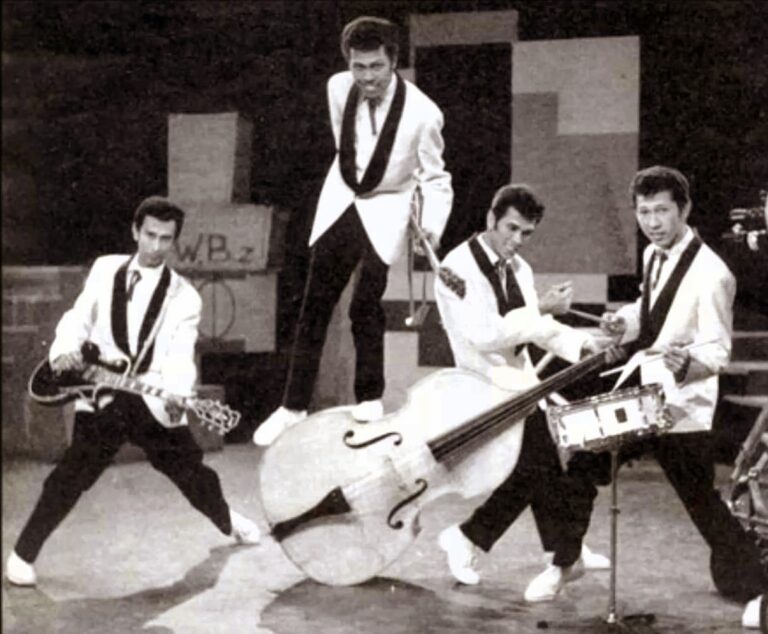
    indorock

    All that changed in 1951 when the Tielman’s heard the hillbilly rock of “Guitar Boogie” by Arthur Smith. In search of a harder, more American sound like Smith’s, they moved brother Loulou over to the kit drum set. They eventually began to add covers of hits by Les Paul, Elvis, Chuck Berry, Fats Domino and Gene Vincent to their act –  all propelled by the ferocious guitar licks and versatile vocals of Andy Tielman.

    The Tielman’s joined the wave of more than 300,000 Indonesians who would emigrate to Holland. They brought spice to its culture, cuisine (the famed rice buffet, Rijsttafel) and music. In 1957, the family relocated to Breda, Netherlands where they began playing as The Four T’s. Their big break came in 1958 when they secured a gig in the Hawaiian section of the Dutch pavilion at the World’s Fair in Brussels. Hawaiian music was becoming a global sensation at that time. Naturally, it became another ingredient in their fast-expanding polyglot musical brew, along with a little country & western, rockabilly and their native folk. 

    The World’s Fair crowds were blown away by their frenetic brand of rock-n-roll. It was a roar of volume and energy complimented with showy antics like tossing their guitars, playing them with their teeth, their toes, behind their backs and heads, and upside down – all without missing a note or beat. It was Hendrix’s bag of tricks, minus the burning guitar, ten years before Monterey Pop. Their electrifying act quickly garnered bookings far and wide, including some in Hamburg’s notorious Reeperbaum red light district, commencing two years before the Beatles’ first stint.
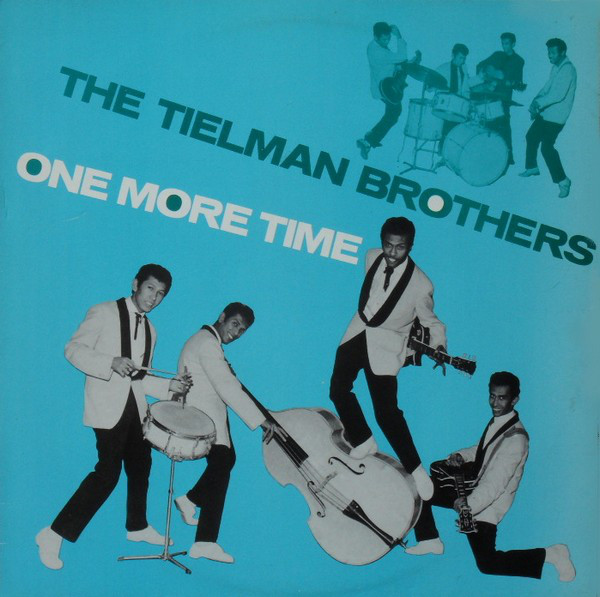
    indorock

    A year later, they would finally be performing as The Tielman Brothers, in Holland and mostly frequently Germany. The year also saw the release their debut single, “Rock Little Baby of Mine,”  widely considered the first-ever Dutch rock-n-roll record. Around the same time, brothers Andy and Reggy started playing their signature Gibson Les Pauls. It was something that would influence a host of European guitar heroes-to-be including Jan Akkerman. The blistering technician who led Holland’s most internationally successful Indorock band, Focus of “Hocus Pocus” fame, Akkerman got turned on to the Tielman’s and their Les Pauls at age 12, while watching a performance on German TV.

    “Andy’s white Les Paul was cool, but seeing Reggy playing his Black Beauty, I knew that was my guitar and I would have to have one someday,” says Akkerman. “I had played a Gretsch White Falcon in a bunch of bands since my dad bought it for me in 1963. But I had wait around seven more years or so, until my days in Focus, to finally get a black Les Paul Custom. It was an instrument that became a signature of my sound and the bands through the mid-70s.”

    The Tielmans stuck with Gibson guitars until the mid-60s when they moved on to Fender Jazzmasters. Lighter axes made their acrobatics easier to perform and became choice for the majority of Indorockers. Interestingly, Andy created a custom 10-string Jazzmaster in order to thicken his sound.

    Much of The Tielman Brothers’ notoriety came as a result of high octane performances on Dutch and German television, ones that we can enjoy today thanks to YouTube. 

    On January 23, 1960, Holland was hit with an earthquake of Indorock sound and sight… when The Tielman Brothers appeared on AVRO TV’s “Weekend” show. 

    The slim, sharply dressed brothers kicked off their performance with “Black Eyes.”  It’s a sleepy Santo & Johnny-esque ballad driven by trills and tremolo at first, which then moves onto a stop-time tango beat, and finally, a Gene Vincent/Cliff Gallup-styled rockabilly rave-up to close. Brother Andy was centerstage with his inspired riffing and cool lounge lizard presence – using bends, slides, muted strings and classical-styled tapping to ring harmonics out of his guitar.

    This TV performance also included “Rollin Rock,” six-minutes of the brothers pulling out all stops on their instrumental Indorock prowess and showbiz schtick. Drummer Loulou played Andy’s guitar with his sticks and solos repeatedly. He walked around his kit as he thumped away. Ponthon alternatively runs, rides and slides his big acoustic bass across the stage. Then positioned himself beneath it as he took his solo. Andy swung for the fences as usual – playing his Les Paul with his feet, his teeth and behind his back, the latter while dancing atop Ponthon’s bass.

    The Tielman’s performance also included their radical new single, “18th Century Rock.”  Could it be they started the whole European classical/prog rock thing with this rockabilly’d-up version of Mozart’s “Piano Sonata No. 16 in C Major?”  The stodgier segments of Dutch society were not impressed and criticized the band heavily in media. Interestingly, they would go on to enjoy greater success in Germany, Italy, France, Switzerland and Sweden than Holland.

    The first Indorock bands I heard in Holland were the Poetiray Brothers, Electric Johnny and his Skyrockets, The Crazy Rockers and the Tielmans with Andy at the helm, who were the best of the lot. What a great talent he was, a genius in his own right who I had the pleasure to see and play with many times. Andy and the Tielmans were more of an influence on me than the Beatles or the Rolling Stones. I put him right up there in my favorites, with Jimi, Django and Julian Bream.

    Jan Akkerman

    “I remember seeing them one night in the ‘60s in the Hague at a chic place called Palais de Dance,” Akkerman recalled.  “What I heard and saw was unbelievable, as it always was. They played high-energy rock-n-roll, romantic ballads and even instrumental covers of tunes from West Side Story. I heard from Andy that when they played at the Star Club in Hamburg, The Beatles would come listen and watch him play his guitar with his teeth!”

    The original band of brothers would stay busy, add some new members and release a steady stream of singles and albums until a serious car accident caused two to leave the band in 1964.  The band, then with only Andy aboard, scored their biggest hit in The Netherlands with the Hawaiian-inspired vocal ballad, “The Little Bird,” which reached #7 in the Dutch Top 40 in 1967. 

    Even after a move to Australia in his later years and the dissolving of the band in 1979, Andy continued to be a popular performer, returning to Europe to play and record and sometimes re-make his hits until his death in 2011.

    “After I left Focus in 1976, Andy came to visit me often and we even recorded an album, R&R, Our First Love, which sadly never got released,” adds Akkerman.  “A few month before his death, I ran into him at an Indonesian marketplace in the Hague. His daughter was playing violin; she was very good and he was very proud, more proud of that than anything at that moment. Shortly after that, I got the news he was terminally ill, but he kept playing till his last breath. Andy, for me, is still numero uno.”

    The Tielman Brothers combined the very best of many good things. They boasted the intricate instrumental guitar stylings of The Ventures, The Shadows, Link Wray and Dick Dale, with rockabilly/pre-punk energy, relaxing South Sea islands folk balladry, some Great American songbook croonery, primitive prog rock with their classical interpretations and much more. It was all delivered with the kind of crowdpleasing antics that may obscure the instrumental brilliance at first glance. 

    As Akkerman relates, The Tielman Brothers were just the tip of the Indorock spear. Some lesser known groups of Dutch/Indonesian musicians slightly preceded them like The Real Room Rockers; and many more followed, including The Crazy Rockers and The Blue Diamonds. They are all well worth the listen.

    Also worth a long listen and look is Akkerman’s work on the spectacular, new 9-CD,2 DVD Focus 50 Years anthology. This elaborate boxed set collects remastered editions of the band’s seven studio albums, plus assorted b-sides, alternative mixes, unreleased outtakes, demos and live and television performances from the Indorock/prog/fusion band’s peak years, 1970 -1976.

  • Queens Rapper Kyngjo Making a Leap With ‘Who That’ Official Video

    Upon the release of the music video for his single, “Calling Me,” Lefrak city native Kyngjo was happy with how his music was progressing, but was not fulfilled. Having begun his foray into the rap game only a year prior, he had seen significant growth in his sound and audience. With songs like “I’m Good Luv,” “Calling Me” and “Hypnotize” having reached tens of thousands of plays, he felt like it was time to up his production value.

    “A lot of people want to rap, but what separates most of them is who puts their own money behind it,” he adds. “People always say this, but you really have to invest in yourself.” 

    Kyngjo Who That

    With that, he embarked on a quest to shoot his best music video to date. The slick & catchy single “Who That,” which contains features from Long Island native, Pell The Don and Bronx rapper, Goggle Boy.”

    “I just felt like that was a song I could push,” he explains. “Everyone did they thing on it and it’s something you could bump in the club or in your whip.” With a more polished music video in mind, he sought out popular Queens videographer, V.Lens. “I have ideas, but I also want a videographer who can come with their own [ideas] and knows how to shoot a story, not just record the video.”

    Together, both artist and videographer brainstormed ideas and eventually came up with a fitting storyline to match the record. And so, the quartet made their way to the Long Beach section of Nassau County, as the boardwalk was designated as the perfect locale.

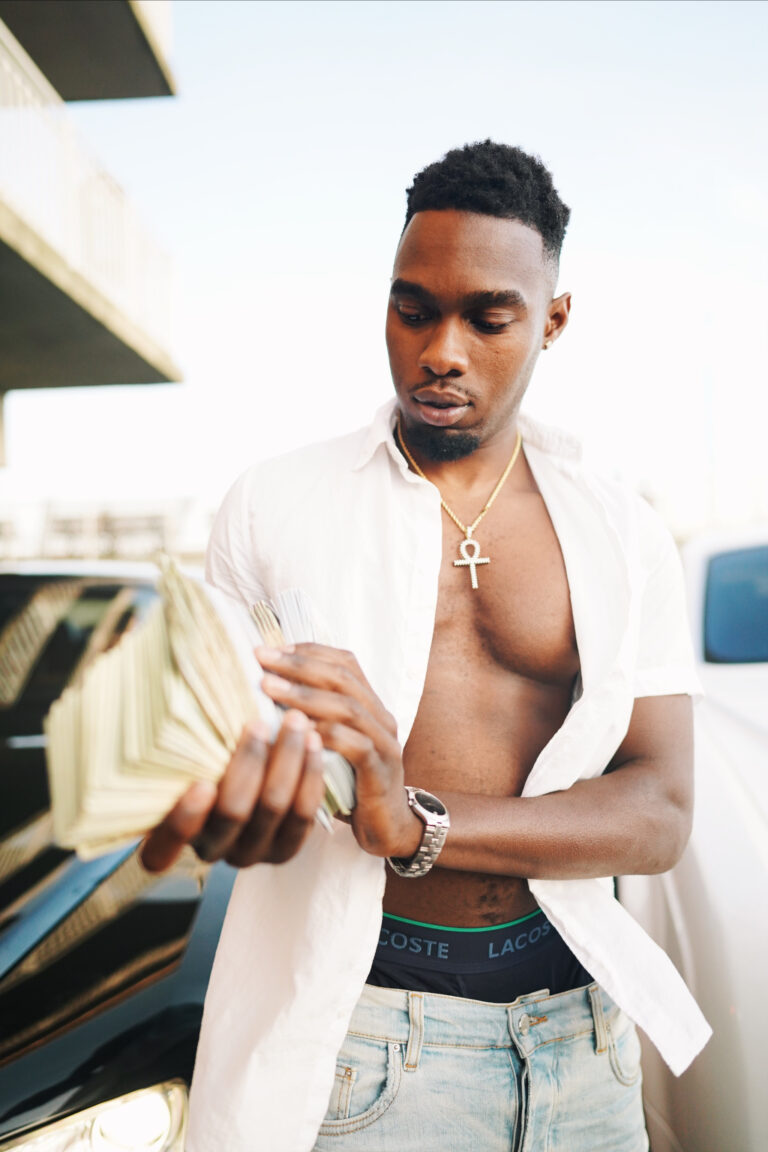
    Actress and model, Ceecee Valez, played Kyngjo’s love interest in a plot that sees him and Pell The Don counting wads of cash when Kyngjo peers off, noticing Valez’s character making her way out. The rest of video sees the trio deliver their verses in the two Rolls Royce Wraiths and inside a club-themed locale.

    Overall, the music video was quick and to the point (along with plenty of eye-catching props). Each artist got their chance to showcase not only their verses, but how well they work in front of the camera as this was a significant step up for each of them. “I wanted to separate myself from a lot of other people and I feel like I did that,” Kyngjo reveals.

    Kyngjo Who That
  • Broadway Buskers Series Takes Final Bow

    Broadway Buskers Concert Series concluded their season of live streamed performances for Broadway fans everywhere, this past October.

    Since 2018, Broadway Buskers has hosted concerts in Times Square to showcase Broadway workers’ original music in between shows. The Times Square Alliance did not let COVID-19 stop them from sharing music and good vibes with the Broadway community. From August to October, fans streamed Broadway Buskers concerts every Tuesday at 7PM.

    Broadway Buskers
    Photo via Getty Images

    The final two shows wrapped up the series with a bang. Juwan Crawley (Unbreakable Kimmy Schmidt, Aladdin), Cheeyang Ng (Eastbound, MĀYĀ), and Anthony Norman (The Prom, Chicago Med) closed the season after baby chemist (Katie Lee Hill & Travis Artz: New Amsterdam, SpongeBob LIVE on Nickelodeon; Transformers: Cyberverse, My Very Own British Invasion) and Jai’Len Josey (SpongeBob SquarePants) performed the week before. Watch Buskers performances on the Times Square Alliance’s YouTube channel.

    Broadway Buskers

    Even though the quarantine has hurt many, people are connecting virtually like never before. Songwriter and Broadway actress Jennifer Sanchez notes:

    “The most rewarding part about buskers has been connecting with the artists and the gifts of their songs. The openness and supportiveness was special…even when the virus shut it down and we all felt kind of isolated, we were able to make collaborate and music. It’s pretty magical.”

    Cheeyang Ng describes the shift to online as “challenging,” because “without the face-to-face human connection one gets when we’re doing something like that in Times Square is quite sad.” Still, having virtual concerts “means the opportunity for a wider range of people to hear some new musical theatre.” Even though Broadway is closed, programs like Broadway Buskers are making theatre more accessible than every before.

    Broadway Buskers
    baby chemist, photo by Gabriella Spiegel

    For baby chemist, their set became “hybrid show of live interview, sketch, and banter mixed with pre-recorded musical performances.” Hill said “by playing into this new hybrid format, we were actually able to create an atmosphere that was closer to the off-beat vibe of what one of our live, in-person shows is like!”

    She loves “that Broadway Buskers gives actors a platform to show another side of their artistry, giving them a chance to perform in a way you might not have heard them get to do yet in an onstage musical.”

    With these weekly shows, the Times Square Alliance has celebrated songwriters from all places and backgrounds. Audiences watched the talent the Broadway community has to offer for free. If possible, however, fans can donate to Broadway Cares/Equity Fights AIDS’ COVID-19 Emergency Assistance Fund to help those struggling. Broadway Cares/Equity Fights AIDS has been funding AIDS treatment and creating grants to help those in need since 1988.

  • Louis Armstrong: Pioneer of Jazz

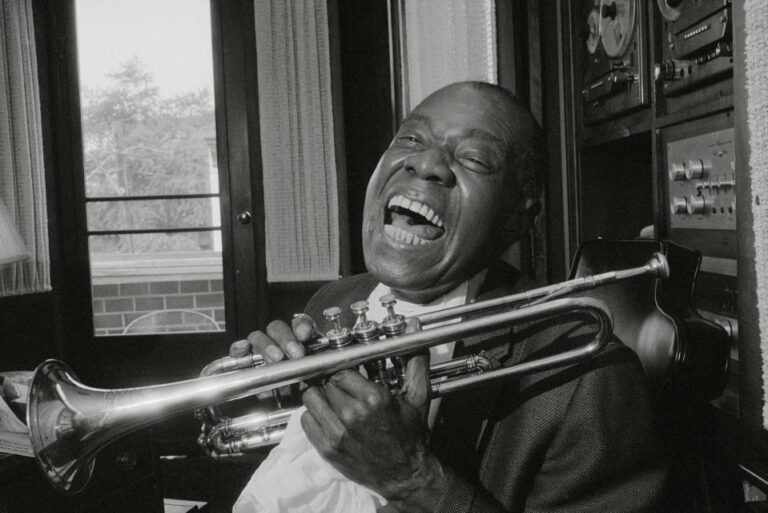
    On August 4, 1901, Louis Armstrong was born in New Orleans. Until the age of five, Armstrong’s grandmother was his caregiver. At the age of six, he attended the Fisk School for Boys, an all black school in New Orleans. While performing odd jobs for the Karnoffsky family, Armstrong heard the early sounds of jazz from King Oliver.

    Louis Armstrong

    Armstrong and the Karnoffskys bonded over their discrimination. Armstrong faced the obvious racial discrimination, but the Karnoffskys, a Jewish houselhold, also faced discrimination by “other white folks.”

    In his early career, Armstrong performed on riverboats along the Mississippi River. This gave him more musical experience, particularly regarding reading music. He improved him trumpet playing, creating his own style and personality.

    Chicago

    In 1922, he moved to Chicago by invitation of King Oliver. Although race relations were poor, the city was flourishing and Armstrong was bale to find a job. The band, headed by Oliver, soon became one of the most influential bands in Chicago. Armstrong was able to live luxuriously in Chicago. Armstrong made his first recordings with Oliver for Gennett Records.

    Louis Armstrong

    Louis Armstrong’s second wife, Lil Hardin Armstrong, wanted him to develop his own style apart from Oliver. Her influence eventually undermined Armstrong’s relationship with his mentor, especially concerning his salary and additional money that Oliver held back from Armstrong and other band members.

    New York

    Armstrong and Oliver parted ways in 1924. Soon after, Armstrong received an invitation to travel to New York and join the Fletcher Henderson Orchestra, the best African-American band at the time. Armstrong adapted to the tightly controlled style of Henderson, playing trumpet and experimenting with the trombone. The other members were affected by Armstrong’s emotional style. His act included singing and telling tales of New Orleans characters, especially preachers.

    During this period, Armstrong made numerous recordings with Clarence Williams, Ma Rainey, Bessie Smith, and Alberta Hunter. Additionally, Duke Ellington‘s orchestra went to the Roseland Ballroom to catch Armstrong’s performances.

    Return to Chicago

    In 1925, Armstrong returned to Chicago. He joined his wife’s band, the Lil Hardin Armstrong Band, but also created the Hot Five. This group included Kid Ory, Johnny Dodds, Johnny St. Cyr, Armstrong, and Lil Armstrong. Over the next year, the group recorded twenty four records. Armstrong’s recordings of “Weather Bird” and “West End Blues” remain today as some of the most famous and influential improvisations.

    He began to scat sing (improvised vocal jazz using nonsensical words) and was among the first to record it, on the Hot Five recording “Heebie Jeebies” in 1926. The recording was so popular that the group became the most famous jazz band in the United States, even though they had not performed live to any great extent. Young musicians across the country, black or white, were turned on by Armstrong’s new type of jazz.

    After separating from Lil, Armstrong started to play at the Sunset Café for Al Capone’s associate Joe Glaser in the Carroll Dickerson Orchestra, with Earl Hineson piano, which was renamed Louis Armstrong and his Stompers, though Hines was the music director and Glaser managed the orchestra. Hines and Armstrong became fast friends and successful collaborators. It was at the Sunset Café that Armstrong accompanied singer Adelaide Hall. It was during Hall’s tenure at the venue that she experimented, developed and expanded her use and art of Scat singing with Armstrong’s guidance and encouragement

    Back to New York

    Armstrong returned to New York in 1929, playing in the pit orchestra for a musical with Fats Waller. He also made a cameo appearance as a vocalist, regularly stealing the show with his rendition of “Ain’t Misbehavin’”. His version of the song became his biggest selling record to date.

    He soon began working at Connie’s Inn in Harlem, the rival to the Cotton Club. He also continued recording, performing many of Hoagy Carmichael‘s music with “Stardust” becoming the most successful. As with his trumpet playing, Armstrong’s vocal innovations served as a foundation stone for the art of jazz vocal interpretation. His resonant, velvety lower-register tone and bubbling cadences on sides such as “Lazy River” exerted a huge influence on younger white singers such as Bing Crosby.

    Throughout the 1920’s, Louis Armstrong played a major impact on the Harlem Renaissance. His impact on the Renaissance influenced other major figures such as Langston Hughes. Within Hughes’ writings, he created many books which held the central idea of jazz and recognition to Armstrong as one of the most important person to be part of the new found love of their culture.

    Jazz Revival

    After spending many years on the road, Armstrong settled permanently in Queens, New York in 1943 in contentment with his fourth wife, Lucille. After spending many years on the road, Armstrong settled permanently in Queens, New York in 1943 in contentment with his fourth wife, Lucille.

    Louis Armstrong

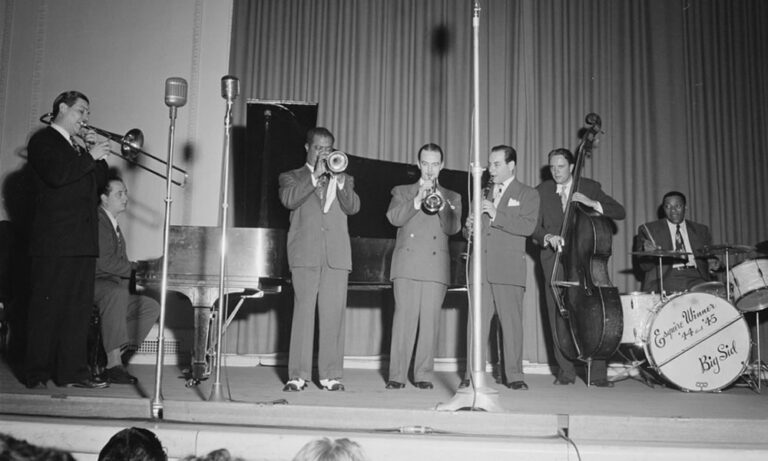
    During the 1940s, Armstrong performed at the famed second Cavalcade of Jazz concert held at Wrigley Field in Los Angeles with Lionel Hampton’s band. Following a highly successful small-group jazz concert at New York Town Hall, Armstrong’s manager established a six-piece traditional jazz group featuring Armstrong with Jack Teagarden, Earl Hines and other top swing and Dixieland musicians. Armstrong’s manager named the group Louis Armstrong and His All Stars.

    Around the World

    By the 1950s, Armstrong became a widely beloved American icon and cultural ambassador. Around the world, he had a fervent following. However, there was an obvious generational gap between Armstrong and younger jazz artists like Miles Davis and Sonny Rollins. The younger generation viewed Armstrong and his act as outdated.

    In 1948, Armstrong heard Suzy Delair sing “C’est is bon” at the Nice Jazz Festival. He loved the song and recorded his own in 1950. This became a worldwide success. In the 1960’s, he toured Ghana and Nigeria.

    After leaving Decca Records, Armstrong became a freelance artist, but continued touring. This was an intense schedule, but Armstrong had to rest in 1959 when he suffered a heart attack in Italy.

    In 1964, after over two years without setting foot in a studio, he recorded his biggest-selling record, “Hello, Dolly!”, originally sung by Carol Channing. Armstrong’s version remained on the Hot 100 for 22 weeks, longer than any other record produced that year, and went to No. 1 making him, at 62 years, 9 months and 5 days, the oldest person ever to accomplish that feat. In the process, he dislodged the Beatles from the No. 1 position they had occupied for 14 consecutive weeks with three different songs.

    In March of 1971, Armstrong went against his doctor and played a two week engagement at the Waldorf-Astoria’s Empire room that ended in a heart attack. He was released from the hospital in May, and quickly resumed practicing his trumpet playing. Still hoping to get back on the road, Armstrong died of a heart attack in his sleep on July 6, 1971, a month before his 70th birthday. His honorary pallbearers included Bing Crosby, Ella Fitzgerald, Dizzy Gillespie, Count Basie, Frank Sinatra, Ed Sullivan, and Johnny Carson.

    Awards and Legacy

    Armstrong was posthumously awarded the Grammy Lifetime Achievement Award in 1972. Twelve of Armstrong’s songs have been inducted into the Grammy Hall of Fame. He is a member of the Down Beat Jazz Hall of Fame (1952), Hollywood Walk of Fame (1960), Big Band and Jazz Hall of Fame (1978), Ertegun Jazz Hall of Fame (2004), Rock and Roll Hall of Fame (1990), Louisiana Music Hall of Fame (2007), and the Long Island Music Hall of Fame (2007).

    Louis Armstrong

    New Orleans’ main airport was renamed Louis Armstrong New Orleans International Airport. In 2002, Armstrong had recordings preserved in the United States National Recording Registry. The U.S. Open’s former main stadium was named the Louis Armstrong Stadium since he lived nearby.

    Though Armstrong is widely recognized as a pioneer of scat singing, Ethel Waters precedes his scatting. Billie Holiday said that she always wanted Bessie Smith‘s ‘big’ sound and Armstrong’s feeling in her singing. Other major jazz musicians like Duke Ellington have praised Armstrong through strong testimonials. 

  • Chaz Shepherd Pays Tribute to George Floyd in Powerful New Video

    Philadelphia based actor/singer-songwriter, Chaz Shepherd, is well-versed in the arena of soulful, R&B music, but he has more to offer. The musician recently released a powerful tune about protest and standing up for one’s rights.

    Music is an expression and I felt that this sound expressed the time and the movement that is happening now.

    Chaz Lamar Shepherd
    chaz shepherd
    Chaz Lamar Shepherd

    Shepherd reflects on his latest musical accomplishment, “We Will Breathe,” a song of protest.

    The album that I’m currently working on is about love and and unity. It will be a representation of me. “We Will Breathe,” however, is about protest. It’s about being sick and tired and says, enough is enough.

    Chaz Shepherd

    Much like many artists, Chaz Shepherd is happy to use his platform to stand up for what he believes in. He says it’s not a musician’s job to create a political or social stance, but he knows that has always been him.

    Growing up in Philadelphia, the actor/singer found his love for music in the upbeat, loud, soulful church he attended as a kid. There, he was able to expand his vocals and create the passion you can hear in his music today.

    Along with his musical career, Shepherd had memorable roles in many different movies and shows over the years. From the early 2000s show, 7th Heaven, to the popular Netflix feature, Marvel’s Luke Cage, Shepherd has always seemed to flare the screen with his acting.

    The global pandemic hit the music and film industries hard: venues shutting down, workers losing their jobs and live music stopping. In-person music events seem like a thing of the past. Shepherd looks at these isolation days as time to work on his music and better himself in every way.

    I’ve been able to live very comfortably and work on my creativity. I am thankful every day that this virus hasn’t affected me the way that, unfortunately, half of the planet was affected.

    Chaz Shepherd
    chaz shepherd george floyd
    George Floyd

    The well-rounded artist says his inspiration for “We Will Breathe,” was provoked by the murder of George Floyd in May of 2020. Throughout the year, Shepherd has been an activist and supporter of the Black Lives Matter Movement, along with other organizations that support equality. According to him, this song isn’t about love. It’s about standing up for human rights.

    I became more than what I thought I was. I directed and produced a video I also performed in. I just want this video to become more popular and to contribute to, not only, the BLM movement, but also all over.

    Chaz Shepherd

    “We Will Breathe,” can be found on all platforms. The video itself is featured on Shepherd’s very own YouTube Channel, Chaz Shepherd Official. Soon to come, is an album featuring soul, R&B, gospel and more.

    “We Will Breath” by Chaz Shepherd.

  • Celebrating 10 Years of “Pink Friday”

    The year is 2010. Every middle schooler has an armful of Silly Bandz, people still expect Avatar sequels within the next few years, and female rappers are all but extinct—enter Nicki Minaj.

    Pink Friday

    While the Lil Kim and Lady Gaga inspirations were immediately clear, Minaj was still unlike anything anyone had ever seen. Her eccentric accents, peculiar alter egos, and quirky wordplay made her an instant hot topic, sure to reignite the flame of female rap that had petered out with the retirement and incarceration of its biggest stars. It seems unfathomable in an era dominated by Cardi B, Megan Thee Stallion, Doja Cat and Minaj herself, but for a hot minute, she was the lone femcee in a boys’ club.

    It’s also hard to believe Minaj’s debut album Pink Friday came out a decade ago. While time has flown by, it feels strange imagining a world without her undeniable contributions to pop and hip hop. Since Pink Friday she’s gone on to see higher highs (and lower lows), but it remains her most heartfelt and cohesive effort.

    The Origins

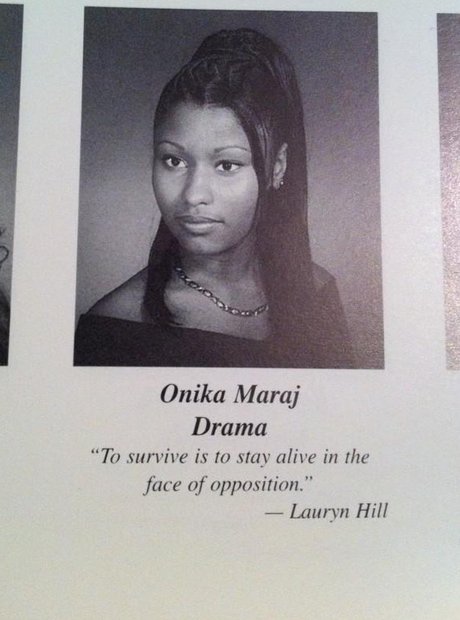
    Onika Tanya Maraj was born on December 8, 1982, in Saint James, Trinidad. Her father, who was a drug addict, burned down their house when she was five, which prompted her mother to relocate the family to Queens, New York. Maraj went to LaGuardia High School in Manhattan, the performing arts school that inspired the film Fame.

    Pink Friday

    After gaining recognition from a trio of mixtapes in the late 2000s, Maraj signed to Lil Wayne’s label Young Money Entertainment in 2009. One of her first appearances as the Nicki Minaj we know today was on “BedRock,” a song from Young Money’s debut collaboration album with Lil Wayne and Drake. Both have since become frequent collaborators, with Drake’s star rising at the same time. Minaj soon got to work recording her debut album, Pink Friday, and quickly secured A-list cosigns from the biggest names in rap and pop alike. Eminem, Rihanna, Kanye West and will.i.am all appear on the standard version, but despite some great features, they never quite manage to overshadow her.

    The Album

    After a year of building hype through featuring on other artists’ songs, Pink Friday was released on November 22, 2010. It debuted at #2 on the Billboard 200, reaching #1 a few months later, and was eventually certified triple platinum with over 3 million sales. It was also nominated for three Grammys, including Best Rap Album. Lead single “Your Love” sampled Annie Lennox’s “No More I Love Yous.”

    Minaj’s detractors might dismiss the suggestion of any depth in her discography based off of the raunchiness of “Anaconda” or “Stupid Hoe,” but Pink Friday rarely approaches the subject. It certainly isn’t family friendly, but besides a stray Eminem verse and swearing for braggadocio purposes, the album is surprisingly tame by her standards. The Nicki Minaj on Pink Friday is far more concerned with making history, endearing listeners to a likable underdog, and preparing for world domination. The album is a masterclass in versatility, with each track peeling back a new layer to who she is and what she’s capable of as an artist. Besides mononymous performers with decades under their belt (think Cher or Prince), you’d be hard-pressed to find a better chameleon. She switches between budding queen bee and insecure ingenue with ease, leaving room for her best incarnation: provocateur Roman Zolanski.

    His name has aged horribly in the post-Me Too era, but Roman Zolanski is far and away Minaj’s greatest alter ego. A moody, flamboyant, and frankly bizarre character, Roman is essentially Nicki’s evil twin from London. He’s afflicted with Tourette’s syndrome, prone to violent outbursts, and speaks in an exaggerated Cockney accent. During her feud with Minaj, Lil Kim compared Roman to Fire Marshall Bill, Jim Carrey’s character from In Living Color. He’s definitely an acquired taste, but he’s responsible for some of the most creative insults in Pink Friday. Minaj wastes no time eviscerating her idol-turned-nemesis on “Roman’s Revenge,” and on “Did It On ‘Em” she coins her now-famous catchphrase: “These girls are my sons.”

    Roman’s incendiary trolling is only one side of Pink Friday, though. Breakout pop single “Super Bass” introduces Minaj as a bubbly, flirtatious, Pepto Bismol edition Barbie (today, her fans are affectionately called “Barbz”). Originally a bonus track, it went viral in early 2011 and is now Minaj’s signature song. The lyrics speak of her prerequisites for romantic partners, most importantly the double entendre in the title. The hook is commonly misattributed to Nicki, but it’s sung by uncredited co-writer Ester Dean. Minaj’s guest spot on Kanye West’s “Monster” makes a compelling case, but the opening verse of “Super Bass” is easily her most memorable. Just say the opening line “This one is for the boys with the boomin’ system” to a group of Gen Zers, and watch them fill in the rest.

    Although Minaj’s cartoonish personas still breathe life into Pink Friday ten years later, the album’s most charming aspect is her vulnerability. 2020 Nicki Minaj isn’t remotely relatable, but she was once humble and outwardly insecure. Recorded on the brink of breaking out, she’s happy to revel in her newfound success (see “I’m the Best” and “Blazin”) but often grapples with self-doubt. On “Dear Old Nicki” she admits to missing her life before fame, while on “Here I Am,” she struggles to separate her self-image from external approval. Minaj shows hints of weakness on later tracks (“Marilyn Monroe” and the haunting “Grand Piano”), but on Pink Friday she’s at her most uncensored—emotionally, of course. The ridiculousness of Roman is absent here, but it still makes sense that they’re paired together in the same project.

    Minaj’s follow-ups lean too far in either direction—Roman Reloaded gets lost in its absurdism, whereas The Pinkprint is a real downer—but for an early moment in time, she achieved perfect balance. Pink Friday masters pop and rap with ease, and it’s simply fun to listen to. The writing is often laugh-out-loud funny, like on the Buggles-sampling “Check It Out,” and surprisingly poignant to those only familiar with the shock value of her derriere ditties. While there have been better female rappers before and after, none are as multifaceted. Nicki said it best on Little Mix’s 2018 song “Woman Like Me”: “Uh, a million, I’m getting my billy on / Greatest of all time, ’cause I’m a chameleon / I switch it up for every era, I’m really bomb / These bitches really wanna be Nicki, I’m really mom.”

    The Legacy

    A new wave of female rappers has since sprang up, and while she once saw them as competition, Nicki has learned to play nice. Just this year she achieved her first #1 on the Billboard Hot 100, a remix of Doja Cat’s “Say So,” after a decade of being clowned for not having one at her level of fame. Surprisingly, Iggy Azalea and Cardi B both beat her to the punch: previous mega-hits “Super Bass,” “Starships” and “Anaconda” peaked at 3, 5 and 2 respectively. It’s an impressive comeback after a short decline—Remy Ma’s 2017 diss track “Shether” damaged Minaj’s credibility, and her 2018 album “Queen” underperformed.

    Almost every female rapper after Nicki would readily admit to idolizing and even copying her. While she’s always been generous with her features, she’s finally begun collaborating with her proteges. Besides “Say So,” she’s appeared on Megan Thee Stallion’s “Hot Girl Summer” and Migos’ “Motorsport” alongside Cardi B. Never mind that their alliance went down in flames—Cardi still paid her respects to Nicki in an Apple Music interview last August:

    When I was six, seven, eight, there was a lot of different female rappers. And then, there was a time that there were no female rappers at all. I have to keep replaying songs from the early 2000s. I have to keep replaying it, replaying it, replaying it because for a while there wasn’t no female rapper. And then there was one female rapper that dominated for a very long time. You know what I’m saying? And she did pretty good. She’s been still dominating.

    Last Friday, Minaj dropped a 10th anniversary complete edition of Pink Friday available for streaming. It includes all standard and deluxe tracks, as well as Young Money’s “BedRock.” Bonus track “Girls Fall Like Dominoes” could be Nicki’s mission statement: the first verse is about converting male rappers’ fangirls to devoted Barbz, and the second name-drops female music and fashion icons, most of whom Nicki has since worked with. It’s remarkable in retrospect, and encapsulates the essence of Pink Friday: a woman ready to break barriers and celebrate her weirdness. Over the last decade, it’s safe to say she’s more than earned her title of Queen.

    Listen to Pink Friday: The Complete Edition here:

  • Billie Holiday: Improving the Improv

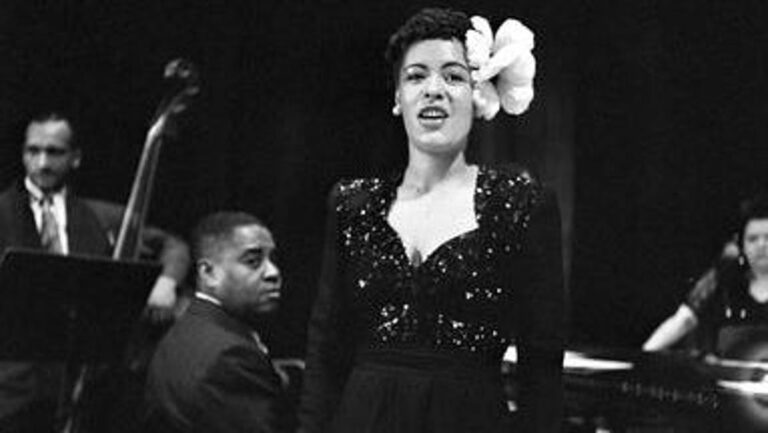
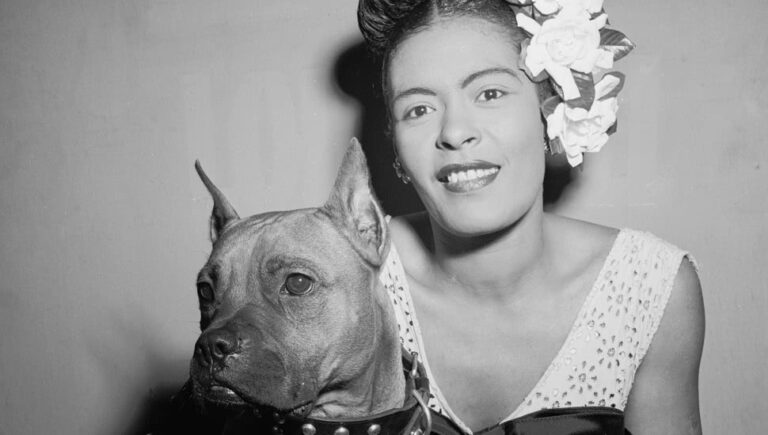
    Eleanora Fagan was born on April 7, 1915 in Philadelphia. As a child, she started going by Billie Holiday, Billie from Billie Dove and Holiday from her dad. She began listening to records by Louis Armstrong and Bessie Smith. Her mother Sadie cleaned houses, but could not make a living, so moved to New York City.

    Billie Holiday

    As a teenager, Holiday began singing in nightclubs. She teamed up with saxophonist Kenneth Hollan, performing at numerous clubs in Harlem. In 1932, Holiday replaced Monette Moore at a club where John Hammond, a producer, heard her and signed her to a record. At the age of 18, she made her first recording with Benny Goodman.

    The Depression Era

    In 1935, Holiday recorded pop tunes with Teddy Wilson. Holiday was allowed to improvise; her improvisation of the melodies to fit the emotion was revolutionary. Their first collaboration, “What a Little Moonlight Can Do” became Holiday’s ‘claim to fame’.

    Holiday soon achieved the title of big-band vocalist with Count Basie. She was able to choose her own songs, often opting to portray herself as a woman unlucky in love. “Summertime” a hit from Gershwin‘s Porgy and Bess became a hit for Holiday. Basie soon accepted Holiday’w involvement in the band, saying “When she rehearsed with the band, it was really just a matter of getting her tunes like she wanted them, because she knew how she wanted to sound and you couldn’t tell her what to do.”

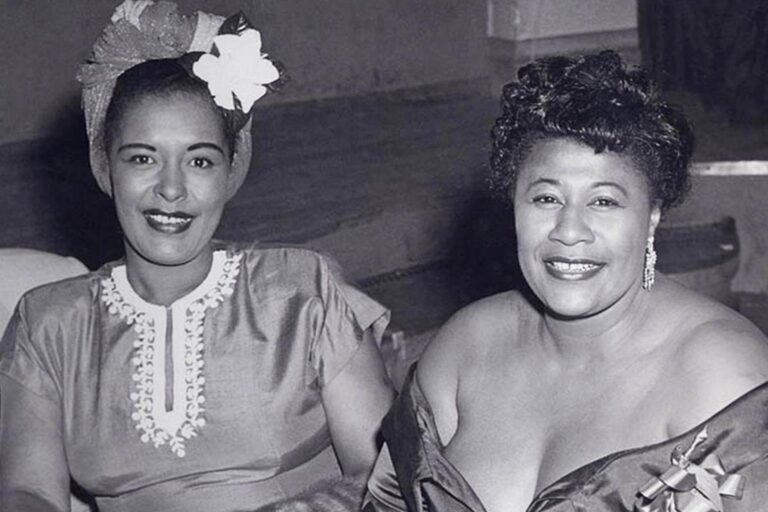
    Soon, Holiday found herself in competition with Ella Fitzgerald, the singer for the Chick Webb Band, the direct competitor of Count Basie’s. On January 16, 1938, Basie and Webb’s bands had a battle at the Savoy Ballroom. Metronome magazine declared Webb the winner while DownBeat magazine pronounced Basie the winner.

    Billie Holiday

    Holiday left Basie in 1938 and was picked up by Artie Shaw. This put her in a unique situation in that she was a black woman singing in a white orchestra in the segregated South. With Shaw, Holiday achieved notoriety, but could not sing as often as with Basie. Additionally, Shaw was pressured to hire a white singer with whom Holiday had to share time. In November 1938, Holiday was asked to take a service elevator at the Lincoln Hotel which may have caused her to leave the group soon after.

    Columbia and Commodore

    Holiday was recording for Columbia Records and when she was introduced to “Strange Fruit,” a poem about lynching. She performed it in 1939 with trepidation, later saying the song reminded her of her father’s death. He was denied medical treatment due to racial prejudice.

    For her performance of “Strange Fruit” at the Café Society, she had waiters silence the crowd when the song began. During the song’s long introduction, the lights dimmed and all movement had to cease. As Holiday began singing, only a small spotlight illuminated her face. On the final note, all lights went out, and when they came back on, Holiday was gone. Columbia Records found the subject matter too sensitive to record, so Holiday recorded it with Commodore Records. The song remained in Holiday’s repertoire for twenty years.

    Commercial Success

    Holiday got into an argument with her mother Sadie that ended in the daughter storming out, shouting, “God bless the child that’s got his own.” She then wrote “God Bless the Child,” her most popular and most covered record.

    Billie Holiday

    In 1942, Holiday recorded “Trav’lin Light” with Paul Whitman for Capitol Records, reaching number 23 on pop charts and number 1 on R&B charts. Holiday signed with Decca Records in 1944, recording “Lover Man”, another hit. In September 1946, Holiday began her only major film, New Orleans, in which she starred opposite Louis Armstrong and Woody Herman. Plagued by racism and McCarthyism, producer Jules Levey and script writer Herbert Biberman were pressed to lessen Holiday’s and Armstrong’s roles to avoid the impression that black people created jazz.

    On May 16, 1947, Holiday was arrested for possession of narcotics. During the trial, she heard that her lawyer would not come to the trial to represent her. Dehydrated and unable to hold down food, she pleaded guilty and asked to be sent to the hospital. She was sentenced to Alderson Federal Prison Camp in West Virginia. The drug possession conviction caused her to lose her New York City Cabaret Card, preventing her working anywhere that sold alcohol’ so she performed in concert venues and theaters.

    After her release in 1948, her manager, Ed Fishman, thought she should sing a comeback concert at Carnegie Hall. On March 27, Holiday played Carnegie Hall to a sold out crowd. A record number of tickets were sold in advance, a feat made more impressive since she did not have a current hit record. Holiday was again arrested on January 22, 1949 in San Francisco. That October, she recorded “Crazy He Calls Me”.

    https://www.youtube.com/watch?v=Z_1LfT1MvzI

    The loss of her Cabaret Card hurt Holiday financially. This problem worsened when Holiday’s records went out of print in the 1950s. She seldom received royalties in her later years. In 1958, she received a royalty of only $11.

    By the 1950s, Holiday’s drug abuse, drinking, and relationships with abusive men caused her health to deteriorate. She appeared on the ABC reality series The Comeback Story to discuss attempts to overcome her misfortunes. Her later recordings showed the effects of declining health on her voice, as it grew coarse and no longer projected its former vibrancy.

    In early 1959, Holiday was diagnosed with cirrhosis. She stopped drinking on doctor’s orders, but soon relapsed. She quickly lost 20 pounds. On May 31, 1959, Holiday was taken to Metropolitan Hospital in New York for liver disease and heart disease. The Federal Bureau of Narcotics had been targeting Holiday for the last twenty years. As she lay dying, they raided her hospital room, placing Holiday under police guard. Holiday died on July 15, 1959 at 3:10 a.m. due to heart failure caused by cirrhosis of the liver.

    Billie Holiday

    Legacy, Awards, and Accomplishments

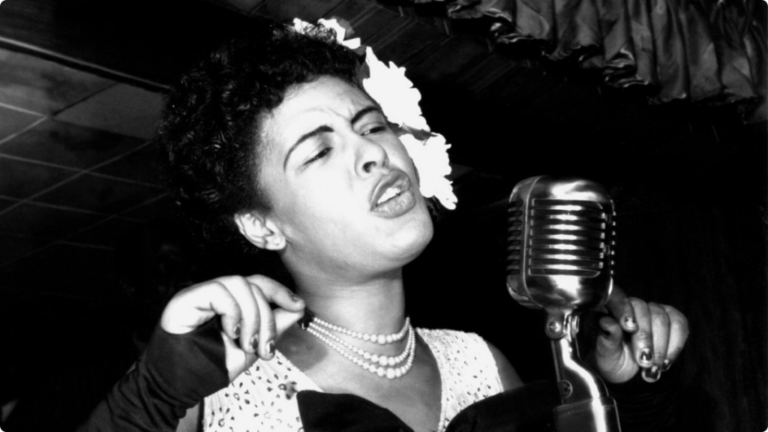
    Holiday’s improvisation made up for a lack of training and was quoted saying that she wanted her voice to sound like an instrument. Frank Sinatra called her “the greatest single musical influence on me.”

    Billie Holiday and eight of her recordings have posthumously been inducted into the Grammy Hall of Fame. Holiday received a Grammy Lifetime Achievement Award (1987). “Strange Fruit” is also listed in the National Recording Registry by the Library of Congress. Four of her albums were awarded the Grammy for Best Historical Album. She is a member of the ASCAP Jazz Wall of Fame (1997), Rock and Roll Hall of Fame (2000), and the Ertegun Jazz Hall of Fame (2004).

  • Nikmoody Transforms Setbacks and Pain into Conscious Prose

    Long Island rapper Nikmoody has been writing his entire life, taking the lemons of life and turning them into more than just lemonade. Case in point: a 1,000-point scorer in both high school and college, Nikmoody transferred his passion for Basketball to the pen after an ACL tear, leading him to a Masters degree in English Literature. 

    Drawing on influences such as Kendrick Lamar, Atmosphere and J.Cole, as well as Nirvana, Moody creates a conscious lyricism with soul, amid a blend of grunge and boom-bap hip hop. With the release of “Either Way,” he shows growth in style, adding in trap sounds within his strong lyrical base. Experiences of loss and addiction have helped Moody find his voice, adapting his music as he evolves within hip-hop, which he considers to be the most descriptive art form in the world, when combined with pain and passion.

    Nikmoody

    Moody released his first EP, House of Mirrors, in 2017 and hasn’t slowed down since. He has continued to create music, releasing eight singles, ten music videos and his 2019 EP The Quiet One. Moody has performed at SXSW in Austin, headlined at SOB’s in Manhattan and opened for Wyclef Jean, Dizzy Wright, Raz Simone and KOTA The Friend. 

    Nikmoody works with his passion and continues to release singles, including April’s “Hysteria,” which was written with the guise of trying to bring a unified culture to Long Island. While The Quiet Two is planned, Moody notes below in an interview with NYS Music that it may not surface in 2020, as new projects have his attention.

    Pete Mason: Recently you posted on Facebook: “I know I haven’t been as active on social media lately. It’s only because I’m locked in. We been experimenting with new sounds, new flows…New music coming very soon.” Inquiring minds want to know – what new sounds and flows do you have coming?

    Nikmoody: There’s been a lot of experimenting in the last few months. I wrote that in my post because I’ve been digging into other genres like trap, grunge rock, dubstep. I’ve been trying to find a way to harness the aggression that lies at the heart of my music and display it melodically. It’s been a learning experience but I’m really excited about the direction of the new music.

    PM: How has quarantine life been for you on personal and creative levels?

    NM: Quarantine has been a rollercoaster. My family got sick early into the lockdown so that was nerve-racking and worrying. But after everyone got healthy, I was still unemployed and stuck in the house. It became a blessing in disguise because it was the first time in my life that I was able to be creative without being in school or having to work full time. It allowed me to broaden my horizons musically and try new things. It also gave me a peak into what life would be like when I turn my music into my full time occupation. That was quite beautiful.

    Nikmoody

    PM: Speaking about sacrifice in an August post, you discuss everyone being on their own journey, closing with “But that is their journey, not mine. I still see 100,000 at Bonnaroo every time I touch the mic.” Is it safe to say that performing at Bonnaroo is a big destination on your own journey?

    NM: 1,000%. I’ve been to Bonnaroo twice as a camper (once general admission and once with an RV) and I have to say those were some of the most incredible days of my life. Nothing but music and love in the air. I met a lot of people from all over the world at those shows and to this day, Bonnaroo is the most coveted memory my friends and I have. To play there would be a dream. Chance the Rapper on Saturday night of Bonnaroo 2018 is the greatest show I’ve ever been to. To imagine myself doing the same is fun to think about.

    PM: You’re from Brooklyn and Long Island – how did growing up between the two influence your creativity, your love of music, and connection to others?

    NM: Well I kind of split time with where I grew up. I lived in Canarsie, Brooklyn until I was 11. Then, my family moved to Merrick, Long Island. Although I didn’t spend my high school days in BK, the attitude that comes with growing up in Brooklyn still sticks with me. It was a drastic difference moving to Long Island. That juxtaposition is vital to me as a person. Coming from a small apartment in a diverse neighborhood and moving to a house in an all white town took a lot of adjusting for me as a kid. I didn’t have a lot of friends growing up. I didn’t know how to connect with my classmates in Long Island. I liked rap, basketball and frequented corner stores. They liked pop punk, lacrosse and traded baseball cards.

    It took me a while to fit in but I learned a lot in those confusing times. That’s when I really started to write a lot and just observe people. I never really hung out with one group of people, I wasn’t always with the athletes or the stoners or whatever stereotype you can think of. Fast forward to now and that duality is present all over my music. Learning to combine all these influences into one complete thought has been a challenge but when I do, you’ll know when you hear the song who it is because no one else could make it.

    PM: How does The Quiet Two differ from past releases, and how does it connect to The Quiet Ones?

    NM: Well I’m not sure if The Quiet Two will ever see the light of day if I’m being honest. I will be dropping some of the songs off that project as singles but I’m not sure if it’ll drop as a full entity. I’ve started working on something else that I’m really proud of. It’s early on but the music has evolved a great deal. It differs in the fact that it’s a bit more modern, the sounds we’re using are more in tune with the times but the lyrics and rhyme schemes have stayed in that old school realm of hip hop. I’m still the quiet one that you got to watch haha.

    PM: When did you come up with the mantra “I can turn a negative into a positive with just one line – +”?

    NM: I write lyrics on paper for the most part and I was just playing around with symbols one day and that line came into existence. I think it really represents what I stand for and my logo in general. While it looks dark and negative, it’s ultimately positive. We’re spreading hope at the end of the day.

    Nikmoody now focuses on the one year anniversary of The Quiet One with the upcoming release of his new single “No Pulse.” Due out on Thursday, November 19 as thanks to his supporters for continuing the journey with him. Given the pandemic and artistic responses to increased isolation and time to create, whatever comes from Nikmoody will surely resonate with his audience. 

  • Made in NYC: Frank Zappa, Madison Avenue Ad Man

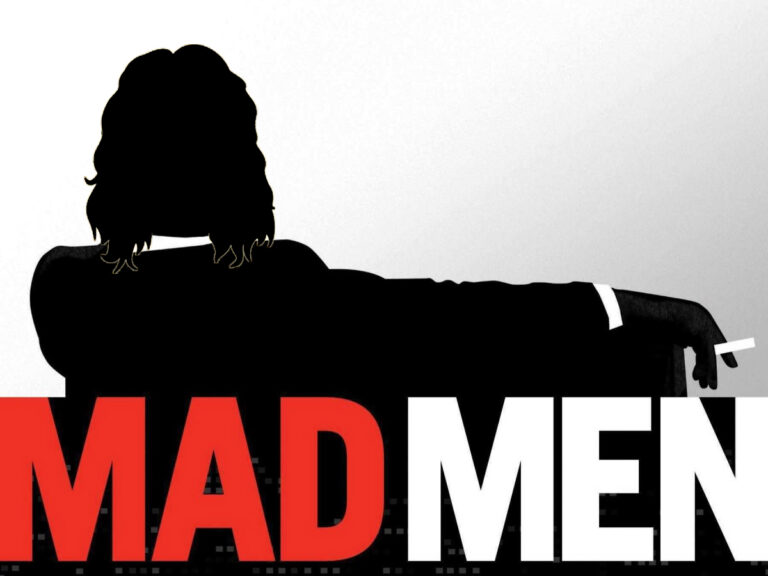
    AMC’s Mad Men is one of TV’s most critically acclaimed series. It’s a stylish recreation of the martini stoked Madison Avenue advertising world of the 1960s, arguably its most creative era. However, there’s one bizarre chapter I would’ve loved to see this show cover that occurred in 1967.  That was when some bold ad agency creatives recruited Frank Zappa to use his unique sonic talents to sell cough drops and electric razors.

    Frank Zappa Adman

    This little known chapter of Zappa’s creative life transpired while he was residing in New York to play an extended run at the Garrick Theater with his Mothers of Invention. 

    Zappa’s most notable venture in advertising came with an animated commercial for Luden’s Cough Drops, one that actually captured a CLIO, the Academy Award of the ad business.  The frenetic soundtrack Zappa conjured bears similarity to some of the sped-up, chopped-up vocals, instrumentation and effects that would be featured on We’re Only In It for the Money and Lumpy Gravy, albums he recorded during his New York stay.

    Ed Seeman was the award-winning artist who hired Zappa for the project. Here’s how he recalls it in a post on his website.

    “In 1967, I hired Frank Zappa for $2,000 to do the soundtrack for this TV commercial that I was animating and producing. It won a CLIO Award for “Best Use of Sound” and was the beginning of a two-year relationship that had me filming 14-hours of footage to be used for a film he called ‘Uncle Meat’.”

    The second Zappa advert from this era is even more mysterious. It’s a never-aired one for Remington Electric Razors.  It also contains one of the seemingly most oddball collaborations among musicians of the era, with Zappa utilizing the vocal talents of soon-to-be country rock superstar Linda Ronstadt.

    This is another item all together, weird as a jingle ever was. It’s remarkable multi-part suite in 60 seconds, a mini-operetta with some cool stop-time sections, a stomping pulse, airy whole tone passages and, once again, sped up instrumentation and vocals. Frank Zappa recalled the ad in an 1980s interview as follow:

    “After the CLIO, I got this request from Remington, who were looking for some kind of ‘new sound’ for their commercials. So Linda Ronstadt happened to be managed by Herb Cohen, who was our manager at the time, and they supplied me with this advertising copy, and they wanted music for it.  So Ian Underwood and I put the track together and Linda did the vocal on top of it, and we made a demo.  They paid $1,000 for the demo, and that was the last I heard of them.  They didn’t like what we did.” 

    One person who reportedly did was The Simpsons’ creator and die-hard Zappa/Beefheart freak, Matt Groening. 

    https://www.youtube.com/watch?v=Xqog63KOANc&feature=youtu.be

    When Danny Elfman was hired by Groening to write the theme for The Simpsons, he gave him an ‘inspiration’ tape.  It contained The Jetsons theme, Nina Rota’s soundtrack for the Fellini film, “Juliet Of The Spirits,” some easy-listening music for Esquivel, a teach-your-parrot-to-talk record and Zappa’s Remington Electric Shaver jingle, which he got on a bootleg.  One listen to both will demonstrate how this never-heard bit of Zappa got into the DNA of one of TV’s most memorable theme songs.

    However, this wasn’t Zappa’s first experience in the world of commercial advertising.  Before finding fame, he worked as an illustrator for a greeting card company.  Some examples of his art, for the cards and more, can be found here and in the forthcoming Alex Winter documentary

  • Harlem Renaissance: Ethel Waters Breaking Barriers

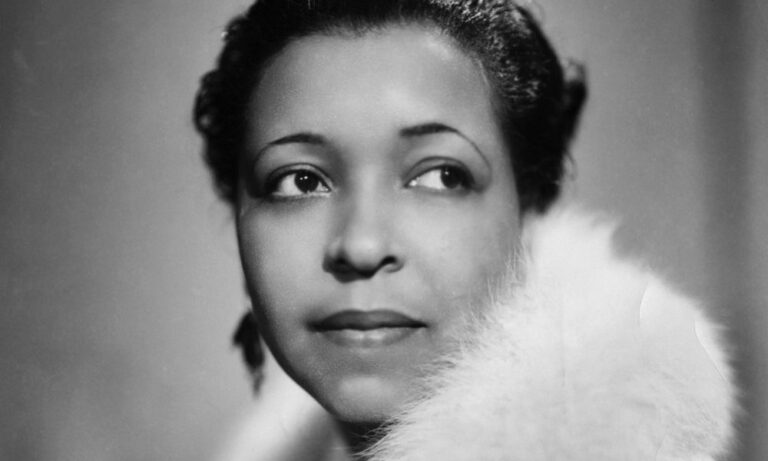
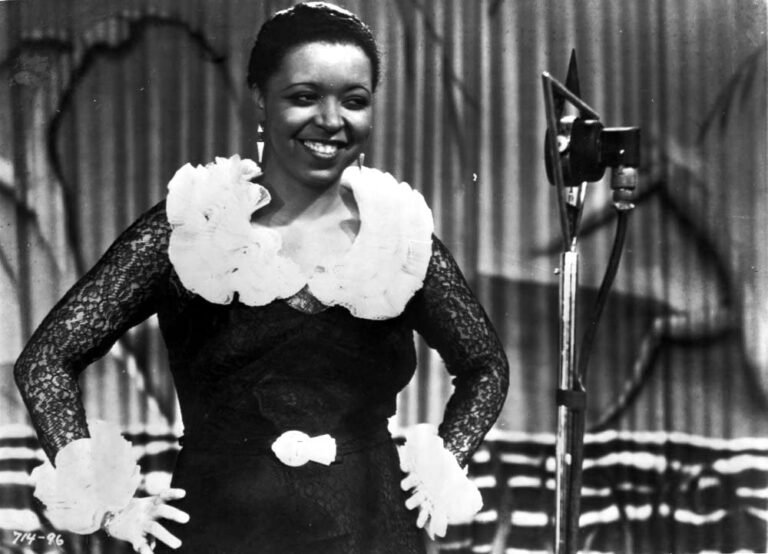
    Ethel Waters was born on October 31, 1896 in Chester, Pennsylvania. She was raised in poverty by her grandmother as well as two aunts and an uncle. When asked about her childhood, Waters once said “I never was a child. I never was cuddled, or liked, or understood by my family.” On her 17th birthday, she attended a costume party and sang two songs. Her performance impressed the audience so much that someone immediately offered her a job in Baltimore.

    Ethel Waters

    Baltimore

    When offered the job at the Lincoln Theatre in Baltimore, she received $10 per week, nearly double what she was making before. Even with her success, she fell on hard times and joined a carnival of freight cars going to Chicago. Soon after, she headed to Atlanta where she worked at the same club as Bessie Smith. Smith demanded that Waters not compete with blues songs, and Waters agreed to sing ballads and popular songs.

    Harlem

    Waters moved to Harlem in 1919, getting her first job at Edmond’s Cellar, a club that specialized in popular ballads. When she arrived in Harlem, female blues singers were becoming more and more powerful. She became the fifth black woman to make a record, originally joining Cardinal Records, but later switched to Black Swan.

    At Black Swan, she was accompanied by Fletcher Henderson. Over the next two years, Waters became the highest paid black recording artist at the time. In 1924, Paramount bought Black Swan and Waters stayed for the year.

    https://www.youtube.com/watch?v=tJBI2E_6lFA

    She switched to Columbia in 1925 and began working with Pearl Wright. She continued touring, joining with Earl Dancer in what was colloquially called “white time,” the Keith Vaudeville Circuit, performing for white audiences. In Chicago, they earned an unheard of $1,250. Later, in 1926, Waters recorded “I’m Coming Virginia” which was a hit partially due to her performing it on Broadway. In 1929, Waters and Wright arranged “Am I Blue?” which became a hit and later her signature song.

    Film, Theater, and Television

    In 1933, Waters appeared in a satirical all-Black film, “Rufus Jones for President”, featuring future star Sammy Davis Jr.. She went on to star at the Cotton Club. Later that year, she stared in the successful Broadway musical, “As Thousands Cheer”.

    Waters held three jobs: in “As Thousands Cheer”, as a singer for Jack Denny & His Orchestra on a national radio program, and in nightclubs. Due to these three jobs, she became the highest-paid performer on Broadway. Even with her success she still had difficulty finding work.

    Ethel Waters

    Waters moved to Los Angeles in 1942 to appear in “Cairo”. That same year, she starred in “Cabin in the Sky”. In the latter, Waters sang the Academy Award nominated “Happiness is Just a Thing Called Joe”.

    In 1939 Waters became the first African American to star in her own television show,  The Ethel Waters Show, a 15-minute variety special. She was nominated for an Academy Award for Best Supporting Actress for the film “Pinky”.

    In 1950, Waters won the New York Drama Critics Circle Award for her performance in “The Member of the Wedding”. Later that year, she became the first Black actress to star in a television series with “Beulah”.

    Awards and Accomplishments

    Her recording of “Stormy Weather” was listed in the National Recording Registry in 2003. She became a member of the Gospel Music Hall of Fame (1983). In 2004, she received a star on the Hollywood Walk of Fame. Additionally, three of her recordings have been inducted into the Grammy Hall of Fame: “Dinah” (1998), “Stormy Weather” (2003), and “Am I Blue?” (2007).

    https://www.youtube.com/watch?v=_QbeNSatFFo