Bieber brought out Chance the Rapper as a surprise special guest for the night’s first song “Holy.” With a church-in-the-woods stage design, the more mature Bieber gives a nod to his relationship with wife Hailey Baldwin, and making references to their shared Christian beliefs. The lyrics stand out as a departure from Bieber’s past songs.
That the way you hold me, hold me, hold me, hold me, hold me. Feels so holy, holy, holy, holy, holy. On God, runnin’ to the altar like a track star. Can’t wait another second.
https://www.youtube.com/watch?v=TlQY-MBWHik
For the second performance of the night, Bieber was joined by benny blanco on piano for “Lonely,” a song referencing his early rise to fame in the past decade. This performance began from Bieber’s SNL dressing room, singing in the mirror, then walking towards the stage through the halls of Studio 8-H. This intro is similar to the music video for “Lonely” that was released this past week, starring Jacob Tremblay as a young Bieber.
Maybe when I’m older it’ll all calm down, but it’s killing me now. What if you had it all but nobody to call, maybe then you’d know me. Cause I’ve had everything, but no one’s listening, and that’s just oh so lonely. Everybody knows my past now, like my house was always made of glass. Maybe that’s the price you pay for the money and fame at an early age.
https://www.youtube.com/watch?v=rml0FwAL8H0
Bieber does not hold back on “Lonely,” with a single spotlight on him for the song on a barren stage, save for Blanco. The two songs present Bieber in a different spotlight than the tabloid view of recent years. Justin Bieber appears focused and stepping into a new phase of his career with “Holy” and “Lonely.”
Watch last week’s musical performance from Jack White, where he paid tribute to Eddie Van Halen, and Megan Thee Stallion from the season premiere.
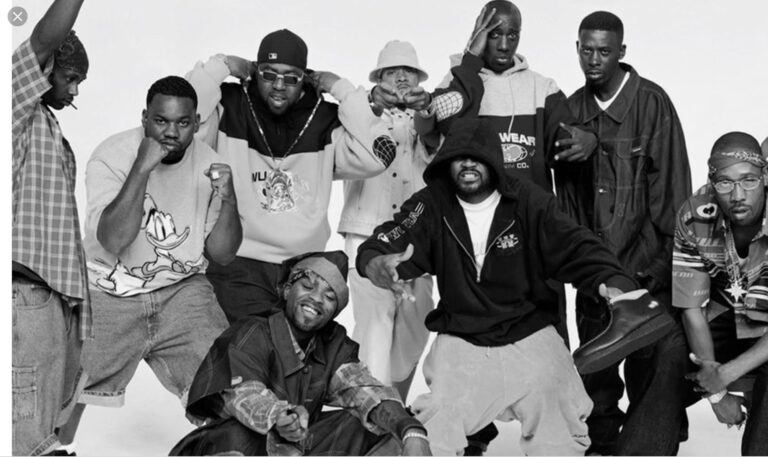
After a groundbreaking debut album — Enter the Wu-Tang (36 Chambers) — and a host of successful solo projects (GZA’s Liquid Swords, Method Man’s Tical, Raekwon’s Only Built 4 Cuban Linx, to name a few), the clan were in high-demand. They had accomplished a rare feat in the world of music. It established many of their members as individual stars, whose popularity could rival the group’s.
The ego that accompanies success of such magnitude is liable to create division within any faction. It helped break up the Fugees. The clan is no ordinary group. Displaying their idiosyncrasy within a world of hip hop came with the release of their second LP, 1997’s Wu Tang Forever. The lead single “Triumph,” was a record that rang through the air waves. It was the first (and only) song where all nine Clan members rapped on. Moreover, it also introduced affiliate and later member Cappadonna.
The record ran for 5 minutes and 38 seconds, with no chorus or break, except for the energetic opening monologue from Ol’ Dirty Bastard and a short interlude. Inspectah Deck began the track, followed by Method Man, Cappadonna, ODB’s interlude, U-God, RZA, GZA, Masta Killa, Ghostface Killah, with Raekwon concluding the record.
About the Track
In an interview with Power 106 radio station, RZA broke down the production on the record. He divulged that they recorded “Triumph” in Los Angeles. Musically he combined his new Yamaha keyboard V71 series with his ASR-10, MPC and Nord lead keyboard. His goal was to make a track with classical sounds, but still grab hip-hop with a touch of soul. While the drums meet classic hip hop, the strings added a new element.
When asked about not having a chorus, he explained that for every Wu-Tang project, he wanted to have a song that reminded the people of their first record “Protect Ya Neck” with great rapping and a strong beat to compliment.
Speaking to DJ Vlad, Inspectah Deck — whose opening verse is one of the most-heralded in hip hop history — he acknowledged that using his “Triumph” verse twice helped his legacy, as it was originally recorded for Tony Touch’s 50 MC’sVol. 1 tape. RZA made the beat at around 5 a.m., as he and Ol Dirty Bastard were the only ones up. Inspectah Deck explains he could hear the kicks and snares from his room. He knew it was a smash-hit. He got up and asked to get on the record. Later that day the rest of the group had jumped on as well, because his verse was so outstanding.
Sampled to Example
“Triumph” samples “Just Found Me” and its multiple elements of soul, disco and fuck music, by the Rance Allen Group. It also sampled “To the Garden of the Temple” from the 1983 film Duel to the Death, and some lyrics from “Da Mystery of Chessboxin” from the Clan’s own 36 chambersLP.
Besides the mind-blowing lyrics and production, “Triumph” is known for its incredible video, with Rush Hourdirector Brett Ratner behind the camera. It was one of the more expensive music videos of 1997 costing around $800,000. The video begins with breaking news: a massive swarm of killer bees attacking New York. Ol Dirty Bastard is up on a skyscraper surrounded by police helicopters and officers with their guns drawn.
Interesting enough, ODB wasn’t actually in the video. Always one to act on a whim, Ol’ Dirty was uninterested in filming the video since he didn’t have an official verse, he left the set before filming began. It forced the director to get a stand in.
Inspectah Deck is seen climbing the side of the building when “ODB” jumps off, as the bees follow in his path. Meanwhile Method Man and the other Clan members arrive on motorcycles, shooting fireballs at the bees. The bees are then seen passing through Cappadonna’s lair while U-God is seen burning down the forest. RZA appears with angel-like wings, later transforming into the killer bees and killing the Alcatraz prison guards. We then see GZA from space viewing the mayhem. A celestial God like figure.
During GZA’s verse there is a brief cut to the 1915 film The Birth of a Nation, he then makes a gesture to the bees and they swarm back down to Manhattan in the form of Masta Killa who stood on a tower in the form of the Wu-Tang Symbol. A crowd gathering around him. At the end of the video, the bees make their way to a club where Ghostface and Raekwon are raping, with Quincy Jones is in the audience.
One of the strangest and creative visuals in hip hop history “Triumph” changed how people looked at videos all together.
Lyrical Highlights
While he didn’t have an official verse, Ol’ Dirty Bastard left his mark in his own unique way.
“What? Y’all thought y’all wasn’t gonna see me?
I’m the Osiris of this shit
Wu-Tang is here forever, motherfuckers
This like, this ’97”
Inspectah Deck began the song with his now-legendary verse that made him known as hip hop’s “set it off” man. He makes listeners immediately wake up with his intricate rhyme patterns and word choices, taking over the record.
“I bomb atomically, Socrates’ philosophies and hypotheses
Can’t define how I be dropping these mockeries
Lyrically perform armed robbery
Flee with the lottery, possibly they spotted me
Battle-scarred Shogun, explosion when my pen hits tremendous
Ultraviolet shine blind forensics
I inspect you through the future see millennium
Killa Beez sold fifty gold, sixty platinum
Shackling the masses with drastic rap tactics”
Cappadonna rapped like he had something to prove being that he had to live up to what the others were doing. He wasn’t an official member at that point but you couldn’t tell with how he was flowing.
“I twist darts from the heart, tried and true
Loop my voice on the LP
Martini on the slang rocks, certified chatterbox
Vocabulary ‘Donna talking, tell your story walking”
Creating A Legacy
“Triumph” is one of Wu-Tangs most legendary tracks and it holds a special place in hip hop history. Their rapping ability was never in doubt, but the music video gave them a chance to showcase their visual creativity. As we look back at some of Wu-Tangs best tracks, “Triumph” stands the test of time because it epitomizes Wu-Tang Forever and as the lead single it exceeded expectations, as many radio stations and labels initially didn’t want to run the record because they felt it was too long. It’s safe to say, the Clan proved all doubters wrong.
Manhattan-based non profit, The Kitchen, will premier of The Brooding Exercises. The video project can be viewed at The Kitchen OnScreen, the venue’s virtual streaming platform on October 16-18. Times will be announced closer to the premier date.
The video is in response to the cancellation of a previous project, Vivification Exercises. The video project stars Ka Baird and Max Eibacher. Organizer Matthew Lyons, Ross Karre (Audiovisual Supervisor and Camera), Merve Kayan (Camera), and Caley Monahon-Ward (Audio Assistance) round out the production team.
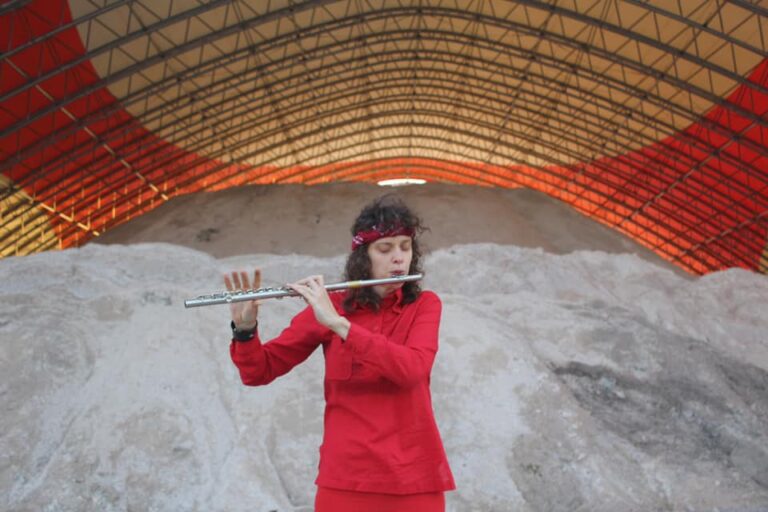
Ka Baird is an American multi-instrumentalist, recording artist, producer and performer based in New York City. Baird is known for raw, ecstatic, boundary-pushing live solo performances. Energetic body movements, extended vocal techniques, luminous flute percussion/meditations and innovative use of live electronics fuse to create the concept of ‘body music.’ Centered in radical present tense and vigorous expression, the performances seek extreme release, both through physical exertion and psychic extension.
Ka Baird’s latest recording Respires was included on Pitchfork’s Best Experimental Albums of 2019 list. In addition, Baird is a founding member of the legendary psych-folk/avant-garde group Spires That In The Sunset Rise, founded in Chicago in 2001.
Max Eilbacher is an Baltimore-based intermedia artist who works primarily makes abstract computer music. The sound is an eclectic mix of electroacoustic, musique concréte composition and process intensive computer music.
Soon to celebrate its 50th year in 2021, The Kitchen remains one of New York City’s most forward-looking nonprofit spaces. Programs range from dance, music, theater to video and film. All programs aim to showcase ingenious work of emerging and established artists alike. Known as the epicenter of the New Wave avant garde music genre in the late 70s, The Kitchen was home to many successful artists like Glenn Branca and Lydia Lunch.
In July 2020 OnScreen program formed to host online program offerings, including virtual performances, livestreamed events, and newly published texts.
The Grateful Dead‘s 1983 fall tour saw the band playing a slew of shows in the Northeast in October. After two shows at Madison Square Garden the week before, and two more at the Hartford Civic Center, the Dead made their way Upstate and paid a visit to Lake Placid and the Olympic Center.
Only a few years ago, this venue housed one of the greatest upsets in sports history thanks to the “Miracle On Ice” in the 1980 Winter Olympics. Now it was the Dead’s turn to leave their mark on the place. This would be the only show in Lake Placid the band would ever play. Fans dubbed the tour stop as the ‘Special Olympics for Jerry’s Kids at Lake Acid,’ and where the opportunity presented itself, covered up the ‘PL’ in ‘Placid’ at every sign to the journey to the Olympic Town for added effect.
Most Grateful Dead shows are known for fun first sets that set the mood before things “take off” in the second one. This may be one of the few shows that goes against that notion thanks to such a powerful opening set. Some early warm up tones of “Sugaree” can be heard before the band launches into the real things. Garcia leads the way with some blistering guitar licks with the rest of the band just trying to keep up. It results in a near 17-minute version that’s arguably one of the best jams of the night – rare for an opener.
This opening burst of energy reemerges in the “Little Red Rooster” that picks up soon afterwards. With sublime bluesy licks provided by Garcia on guitar, Bob Weir’s customary growling vocals and beautiful organ fills from Brent Mydland, this one is a true group effort. A steadily building jam that slowly grows in intensity makes this a memorable “Rooster” that stretches past the nine-minute mark.
Things then slow down a tad with the “Friend of the Devil” that comes next, played in its slower tempo. Afterwards, Weir reassumes vocal duties and leads the band through a standard run through of “My Brother Esau.”
But that frenetic energy displayed in the opening 1-2 punch doesn’t seem to reemerge until the jam that arises from “Bird Song.” With more intricate guitar work laid down by Garcia, this one takes after its namesake and soars. An appreciative crowd make their feelings well known at the end of this one.
There’s no let up in the rest of the set. Weir belts out the lyrics to a quick but powerful “Hell In A Bucket” that includes a brief “Mustang Sally” quote towards the end. At its conclusion, Garcia immediately drops the opening guitar lick to “Deal” and the band is off and running again. The high octane, extended jam that results from this one stretches this “Deal” well past the ten-minute make and serves as an appropriate closer to an absolutely fiery opening set.
While the second set may not offer up as much firepower as its predecessor, there are some memorable moments to be sure. “Touch of Grey,” a newer song at the time that would later propel the Dead to a new level of stardom, begins the set. Despite some brief feedback issues, it gets a nice hand from the crowd when all is said and done.
“Samson and Delilah” produces more high energy interplay between band members, with bassist Phil Lesh making his presence clearly felt on this one. Then comes a bust out of sorts in “To Lay Me Down,” the first one played in 82 shows. Though it shows little signs of rust as more poignant guitar work and delicate vocals from Garcia pepper this one throughout.
Despite some early fumbling of the lyrics in the “Terrapin Station” that comes later, the band makes up for it with a beautifully patient and well executed version. The heavily percussive outro jam then bleeds right into the beginning of the traditional “Drums” segment, like it has so many times.
After some heavy noodling from Garcia in “Space,” showcasing all sorts of guitar effects, “The Wheel” slowly emerges. The revved up Lake Placid crowd is audibly charged up for this one. Allegedly, crowd members in both the concourse and lower bowl linked arms and danced arm in arm around the arena during this one. What a sight that must have been.
The second set comes to a close with a couple of longtime covers that the Dead have perfected by now. “Goin’ Down The Road Feelin’ Bad” sees the crowd getting into it once more, vigorously clapping along in time. This is followed up by The Rascals’ “Good Lovin’,” giving Garcia one last chance to lay down some impressive guitar solos. And Bob Weir’s Pigepn-esque “rap” at the end sends the crowd into a frenzy.
One more cover choice ends this one. Perhaps in a nod to John Lennon’s birthday which is October 9th, the Dead trot out The Beatles’ “Revolution” for the encore. It almost sounds like a slower version of “Deal” at first. And with that, the band’s lone performance in Lake Placid was complete. This was no “Miracle” though, just another Grateful Dead show.
Grateful Dead Olympic Center – Lake Placid, NY 10/17/83
Set 1: Sugaree> Little Red Rooster, Friend Of The Devil, My Brother Esau, Bird Song, Hell In A Bucket> Deal Set 2: Touch Of Grey> Samson & Delilah, To Lay Me Down, Women Are Smarter, Terrapin Station> Drums> Space> The Wheel> I Need A Miracle> Goin’ Down The Road> Good Lovin’ Encore: Revolution
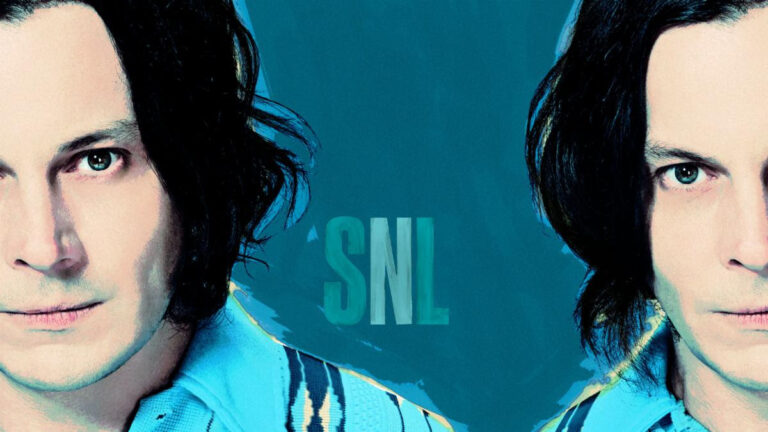
Jack White filled in as musical guest for the second episode of the 46th season of SNL, hosted by Bill Burr. Called in last minute to replace country singer Morgan Wallan, White and his power trio including Dominic Davis (bass), and Daru Jones (drums) first performed a medley of “Ball and Biscuit,” “Don’t Hurt Yourself” and “Jesus Is Coming Soon,” and “Lazaretto” off White’s second solo album later in the show.
This was the fourth time Jack White performed on Saturday Night Live, going back to 2002. The first performance began with the infectious riff of “Don’t Hurt Yourself” from White’s collaboration with Beyoncé, before transitioning into “Ball and Biscuit” from The White Stripes’ fourth album, Elephant, which also featured a nod to Blind Willie Johnson’s “Jesus Is Coming Soon.”
As noted by Benjy Eisen on Twitter, “Jesus is Coming Soon” has a COVID-19 tie-in, as the original song was written about the 1918 H1N1 influenza that killed over 50 million people worldwide, and includes the lines “It was an epidemic/It floated through the air.”
“Lazaretto,” the title track of White’s GRAMMY-winning sophomore solo album followed as the second performance of the evening. Bassist Davis wore a shirt that read PRINE, a nod to the late singer/songwriter John Prine, on what would have been his 80th birthday.
White gave a subtle nod to the late Eddie Van Halen during “Lazaretto,” using a model of guitar similar to Eddie Van Halen’s, but also playing a finger tapping solo mid-song, a signature move of Van Halen’s.
The White Stripes Greatest Hits arrives on December 4 on Third Man Records/Columbia Records.
kurt.riley+praxis are best known for shaping the alternative music scene in Central and Upstate New York. Riley has loved and played music from a young age; his influences include glam rock, Moroccan ritual music, new wave, 1930s pop standards, and Eighties post-punk. After a pause of a few years for a college degree, Riley started developing concept albums featuring other-wordly characters – Kismet in 2016, and Tabula Rasa in 2017.
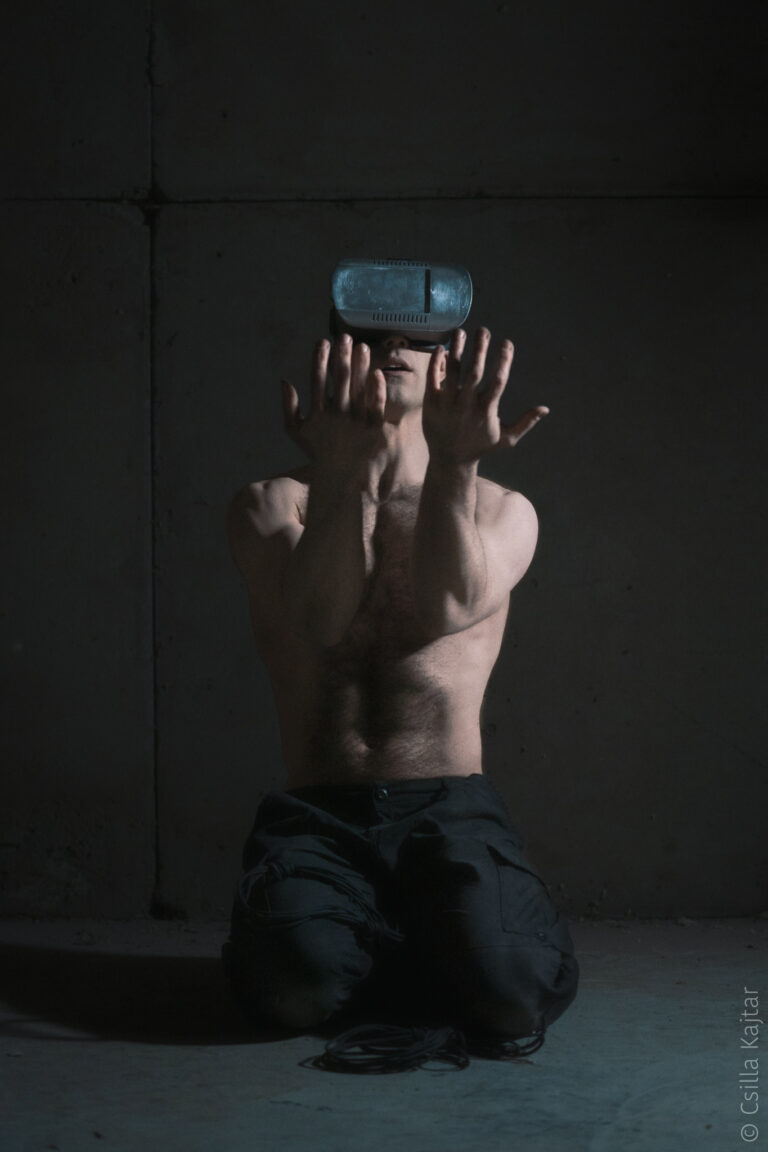
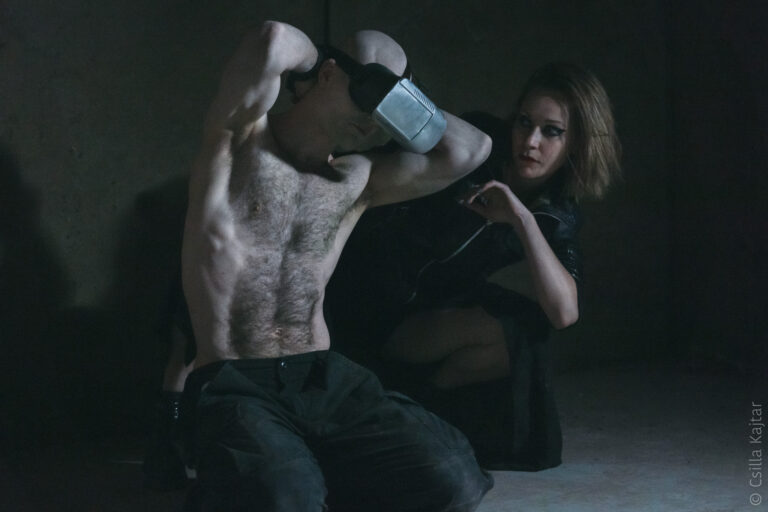
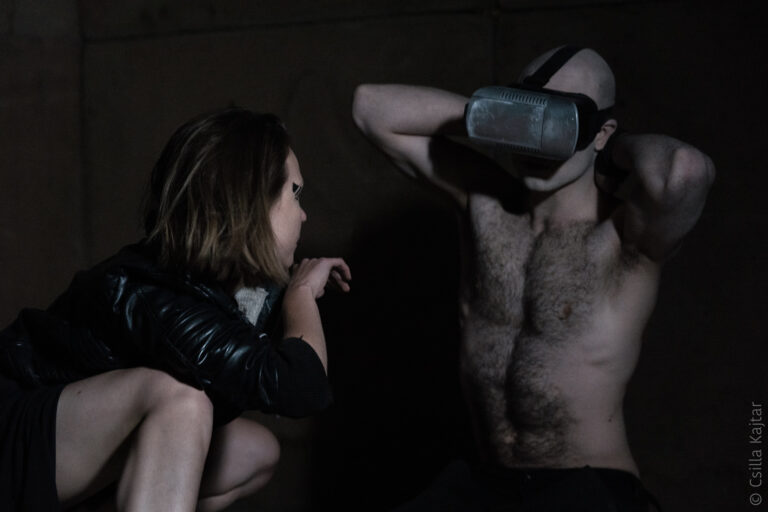
“Free,” releasing today, October 9, is the fourth track from Riley’s current ongoing project, Chrome Empire. The album is built around its main character – an android living in a dark future – and uses science fiction themes to address real-world events.
In “Free,” the android (portrayed by Riley in the video) has gained self-awareness, and is captured by a monolithic megacorporation seeking to prevent the rise of intelligent machines. An employee of the corporation has been put in place to get him to talk.
Previous singles released from the Chrome Empire project are “Future Shock,” “Say You Love Me,” and “Evergreen.” The story arc starts with “Future Shock” that sets the dark, futuristic scene. The android, having a mind that came from a human a long time ago, remembers his love and tries to find her (“Say You Love Me”). In “Evergreen,” he is trying to escape the control of the megacorporation and finds footage of an evergreen Earth of the past.
In each single, Riley has chosen to include non-human characters which was “Much more fun – and more palatable – than talking about our current reality in a plain manner. Plus, I get to dress up!” he said.
There will be at least a dozen releases in total, scheduled through the rest of 2020 and 2021. After “Free,” the next one coming up (scheduled for early November) is called “Get Connected.”
“Free” is scheduled to air at 5:00 PM EST on Friday, October 9, 2020 on the kurt.riley+praxis YouTube Channel.
When I was young, I didn’t understand My grandfather was a preacher man Told me to read the bible Crucial for my survival Grandmother joined him, now they sleep Keeping to the vow, so dark and deep While I maintain location Staring at revelation But I’ll never be free Oh lord, no, I’ll never be free Not me Leaders are debating over déjeuner Waters start to rise at the chestnut tree Only the weak are humble So they shall let it crumble On the horizon, the horsemen ride Stocked up my rations and I’m locked inside Stun my profane synapses All while the world collapses And I’ll never be free Oh Christ, no, I’ll never be free Not me
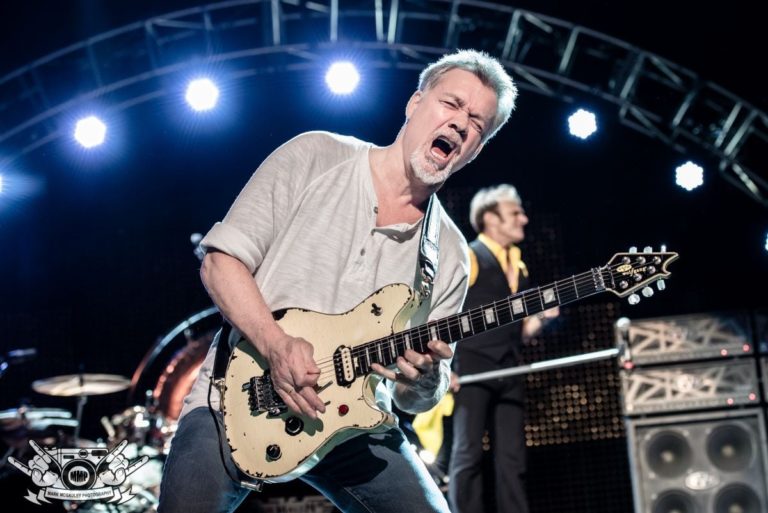
Esteemed guitar icon and rock legend Eddie Van Halen passed away yesterday at the age of 65 after an extended bout with cancer. Best known as the shaggy haired lead guitarist of the eponymous band that he co-founded along with his brother, Van Halen‘s passing is a loss sure to be felt throughout the music industry. And it marks the end of an era for an American band that reached a level of popularity few others have.
Eddie Van Halen – photo by Mark McGauley
Edward Lodewijk Van Halen was born in Nijmegen, Netherlands, on January 26th, 1955, a year and a half after his older brother Alex, to a Dutch father and an Indonesian mother. His father, also a musician, joined the Dutch Air Force band as a way to make money. When Eddie was eight years old, the family immigrated to Pasadena, CA where they set roots down and later established one of the most successful American bands of all time.
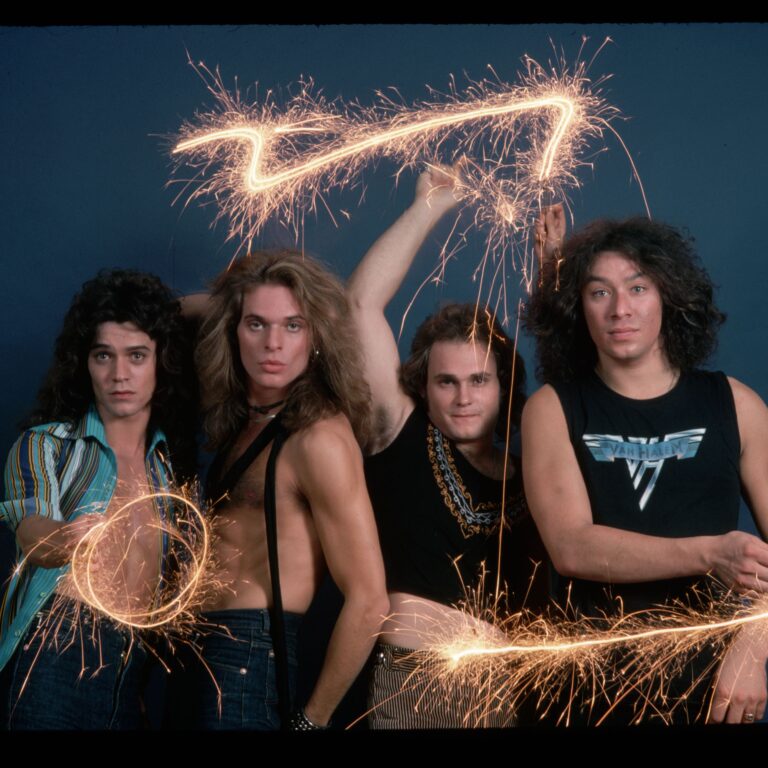
(l-r) Eddie Van Halen, David Lee Roth, Mark Anthony, Alex Van Halen
Originally, Eddie was a drummer and his brother would play guitar. Frustrated that he couldn’t handle the drum solo on The Safaris’ “Wipe Out,” the brothers decided to make one of the most impactful instrument switches of all time. The Van Halen brothers would go on to join several local short lived bands in the Pasadena area. In 1972, they formed a band called Genesis featuring Eddie as lead vocalist/guitarist, Alex on drums, and Mark Stone on bass. They initially rented a sound system from David Lee Roth but decided to save money by letting him join as lead vocalist even though his previous audition(s) had been unsuccessful.
Roth was the only guy who had a PA. We were renting his PA every weekend for $35 and getting $50 for the gigs. So it was cheaper to get him in the band.
Eddie Van Halen
The band later changed its name to Mammoth, after learning Genesis was already in use. In 1974, the band replaced Stone on bass with Mark Anthony from local band Snake and again re-named itself, this time for good, to Van Halen. Like most bands, they started out playing parks and backyard parties in the Pasadena area. This soon gave way to gigs at small bars and strip clubs in the Hollywood area.
What helped Van Halen significantly in its early years was their ability to self-promote. They would hand out flyers before shows at local high schools and also after Aerosmith and Black Sabbath concerts when they be in the area. After catching a show at a Sunset Boulevard club, Gene Simmons even helped produce a demo recording for them and took it to KISS management who would later inform him this fledgling band “had no chance of making it.”
That would seem to change in 1977 when the band was offered a recording contract by Warner Bros. Records shortly after a show at the Starwood in Hollywood. By the end of the year, the group had recorded their debut album Van Halen at Sunset Sound Recorders.
By now, the band had a solid collection of original songs like “Runnin’ With The Devil” and “Ain’t Talkin’ ‘Bout Love” to go along with their rotation of cover songs that were prevalent early in their career. The debut effort peaked at #19 on the Billboard charts and sold more than 10 million copies in the United States, receiving Diamond certification.
This helped Van Halen land a tour opening for Black Sabbath, a band whose parking lot they were flyer-ing only years ago. The group’s chemistry owed much to Eddie Van Halen’s technical guitar wizardry and David Lee Roth’s flamboyant antics and stage persona, strong points which later made them rivals.
Van Halen II was released the next year and produced the band’s first commercial hit, “Dance The Night Away.” The 1980s would then see them maintain a rigorous pattern of album releases and supporting tours that would cement the band as global icons. They even earned an entry into the Guinness Book of World Records for the highest-paid single appearance for a band: a $1.5 million payout for a 90-minute set at the 1983 US Festival.
While it was soaring commercially, the very fabric of the band was beginning to fray behind the scenes. Tensions between Eddie Van Halen and Roth were rising over the direction of the music. Roth preferred more dance-pop numbers while Van Halen was becoming interested in exploring new musical avenues and veering away from cover songs.
I was getting sick of their ideas of what was commercial. That’s how we ended up doing all those covers on [1982’s] Diver Down. I never wanted to be a cover band.
Eddie Van Halen
When it came time to record a follow-up to Diver Down, Eddie insisted they record “Jump” and incorporate synthesizers into other tracks. The result was the smash 1984 that turned them into MTV superstars as videos for “Jump,” “Panama,” and “Hot for Teacher” went into heavy rotation and the album began selling by the millions, reaching Number 2 on the Billboard 200.
1984 would be, by far, Van Halen’s biggest commercial success, with the album going five-times platinum only a year after its release. It peaked at #2 on the Billboard charts that year, behind only Michael Jackson’s legendary Thriller. But this would also mark the end of an era, as Roth would quit the band later that year, embarking on a solo career.
Saturday Night Live returned for its 46th season on October 3, with host and SNL alum, Chris Rock, and musical guest, Megan Thee Stallion. The season debut was also the first to be recorded live, from New York, back in Studio 8H since March 7, prior to the pandemic. In the cold open take on Tuesday’s debate, Jim Carrey played Vice President Biden, and Alec Baldwin returned once again to play President Trump. The top memories of the night though belonged to the musical guest.
Megan Thee Stallion has had a huge year. She collaborated with her idol Beyoncé on “Savage,” broke the internet with Cardi B’s “WAP,” made the Time 100 list, and quickly recovered from a widely-publicized shooting. She also remained enrolled in school, continuing to study health administration at Texas Southern University.
https://www.youtube.com/watch?v=J9wq14EnezU
Megan’s first performance of the night was “Savage,” in front of a black-and-white graphic saying “Protect Black Women.” While Beyoncé wasn’t in attendance, Megan did a dance break over her verse. Midway through the performance, she stopped rapping as the black-and-white set turned red with bullet holes to reference her shooting. Audio of a Malcolm X speech began playing: “The most disrespected, unprotected, neglected person in America is the black woman.” Beyoncé herself previously sampled the famous speech in her 2016 visual album Lemonade. Megan then chimed in with her own words:
"We need to protect our Black women. And protect our Black women. Cuz at the end of the day, we need our Black women.
We need to protect our Black men and stand up for our Black men because we're tired of seeing hashtags of our Black men." – Meg #SNLpic.twitter.com/wJfTxSu4Cc
She closed out the night with her new song “Don’t Stop,” featuring Young Thug. While not as immediately impactful as “Savage,” it arrives just in time for Halloween with references to Casper the Ghost and Buffy the Vampire Slayer.
https://www.youtube.com/watch?v=kcJxX6h3770
Besides her performances, Megan also appeared in two sketches: “Bottom of Your Face,” a song about catfishing on dates by wearing a mask, and “NBA Bubble Draft,” a fictional game show where basketball groupies compete to enter the Bubble. Watch sketches from the season debut below.
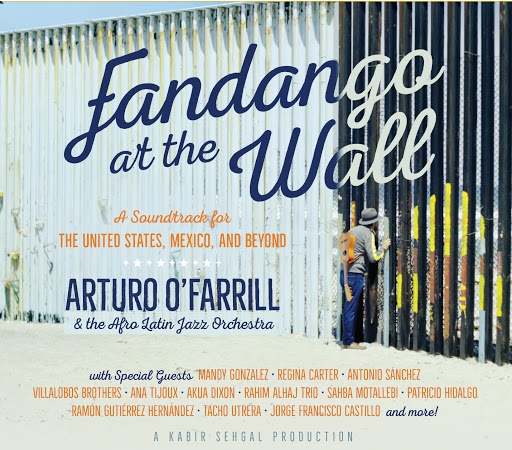
The music documentary Fandango at The Wall premiered on HBO Latino on Friday, September 25 and is now streaming on HBO Max. Taking place on both sides of the United States/Mexico border, founder Jorge Francisco Castillo invited multi-GRAMMY Award-winning musician Arturo O’Farrill and multi-GRAMMY Award-winning producer Kabir Sehgal to Veracruz.
The intent behind the film was to meet the masters of Son jarocho, who perform 300-year-old folk music. Musicians took their places on both sides of the Tijuana-San Diego border, playing big band, jazz arrangements. People gathered on both sides, enjoying the presence of the harmonious music despite being on alternate sides of the United States/Mexico border.
Since the election of our current president, border tension has been rising in the past few years. The wall may be symbolic of division, but the annual “Fandango Frontierizo” music festival aims to unite all people together, regardless on whatever side of the wall a person is on.
The film was directed by Varda Bar-Kar and executive produced by Quincy Jones, Andrew Young, and Carlos Santana.
Our film shows how the border can become a place of friendship and amity by harnessing the power of Afro-Mexican music known as Son jarocho I’ve been making music for decades, and I’ve never experienced a more enveloping and transformative artform.
Fandango at The Wall features Son jarocho legends Andrés Vega, Martha Vega, Ramón Gutiérrez, Wendy Cao Romero, Tacho Utrera, Fernando Guadarrama, and Patricio Hidalgo. Guest appearances include multi-Grammy nominee and MacArthur Foundation fellow Regina Carter, CNN historian Douglas Brinkley, Mandy Gonzalez, The Villalobos Brothers and Grammy nominees Rahim AlHaj and Sahba Motallebi. For more information regarding “Fandango at The Wall,” visit the film’s website, as it sure to present a diverse, and interesting, expression of music on visual platform.
Experimental funk/jam legends Lettuce have issued an eye-catching official video for the instrumental “Silence Is Golden” off latest album, Resonate.
The colorful, animated storybook visual was created by the Los Angeles-based team at Black Balloon Media. The video is directed by Brad Strickman, produced by Shane Strickman and illustrated by Carolyn Arcabascio.
Images from the video will be transformed into coloring book pages for fans to enjoy, with the first available to download here.
With this video, we want to take you on a visually stunning, colorful journey into a fantastic storybook-like world that invokes peace and inspires creativity. We want to make the connection resonate between ourselves, nature, and the spirit that binds us all together. Lett us present, ‘Silence is Golden.’
Lettuce Guitarist Adam “Shmeeans” Smirnoff.
Black Balloon Media previously worked on a video for Neil Young’s “Powderfinger,” which is what attracted Lettuce to work with the company, seeing a similar style and approach for “Silence is Golden”
Smirnoff connected with the Black Balloon Media team and advised them on the song’s themes of music and nature intertwining and connecting all of us. This also led to discussing having the band members animated in the video and playing their instruments within nature, creating a wide variety of scenes – not just one setting, but instead, in all of nature.
From there, as we do with all projects, we put together some boards and a treatment. There was a little back and forth on the style, colors, and look of the band members. We brought on Carolyn Arcabascio to do a lot of the illustrations. We love her watercolor, painterly style and it fit the direction very well. We had worked with her previously on an animated video for Palisades “Erase the Pain.”
Brad Strickman, Creative Director
With the team together and boards and treatment approved, the team started building shots and assembling an edit. Since “Silence is Golden” appropriately has no lyrics, the video was approached a little differently.
We didn’t have to worry about sync as much as you would with a song with wall to wall singing. We still wanted them to be playing correctly and in time, but we had some leeway. In fact, we built a lot of the scenes without them playing at first, and then as the edit got finalized, we animated them to be more in sync with the locked timing. This gave us more flexibility. As it came together we would send them updated versions. They were loving it, so minor adjustments along the way, handling any notes they had and polished it as we went.
Brad Strickman, Creative Director
“Working on the art, it was amazing to me how Lettuce’s music already felt so visual,” adds the video’s illustrator Carolyn Arcabascio. “You can just imagine the colors as the song goes from dreamy and trance-like to energetic and explosive. A total dream project for an illustrator.”
Brad Strickman, director, also shares, “We really enjoyed bringing this video to life for Lettuce and their management team. The song has such a great vibe and, right from the beginning, we loved their concept of nature and music connecting us all.”
The connection of nature to music is essential to understand. The sound of the leaves swaying in the soft breeze along with the crickets and birds singing, can be very inspiring. This song represents a quiet place that resides in all of our minds that can bring peace to our souls. Lettuce meditate to the golden silence.
Lettuce drummer Adam Deitch
Black Balloon Media, in addition to Lettuce and Neil Young, has worked with Linkin Park, Disturbed, Bebe Rexha, Prince, Neffex, Palisades, Bad Bunny and Stone Temple Pilots, among many others.
Resonate, Lettuce’s seventh studio album, is a sonic continuation of the acclaimed sextet’s 2019 GRAMMY Award-nominated album Elevate, which earned Lettuce their first collective nomination in the category of Best Contemporary Instrumental Album.
On Resonate, Lettuce continue to be celebrated boundary-pushing innovators nearly three decades into their lauded career, blurring the lines and smashing it up with jazz chords, psychedelic passages, big horns, strains of soul and go-go, hip-hop elements and a joyful, uplifting improvisational sound all their own. They also found inspiration from many of their idols, such as James Brown and Earth, Wind & Fire, for the new music. Resonate was helmed by esteemed producer and engineer Russ Elevado [D’Angelo, The Roots, Erykah Badu] and written and recorded during the same Colorado Sound Studio sessions for Elevate.