Category: Interviews

  • Interview: Sarah Pinsker, Novelist and Indie Rocker who predicted our Quarantined, Concert-Less Future in “A Song for a New Day”

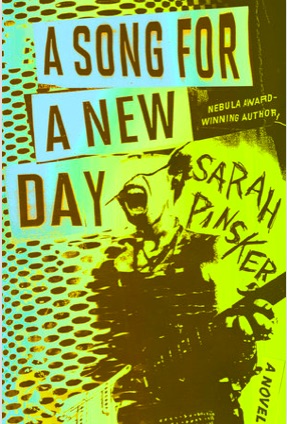
    If anyone can lay claim to the title of “Rock and Roll Nostradamus,” it’s Sarah Pinsker. Born in New York City and a present-day driver of the fertile culture scene in hip Baltimore, Pinsker is a true multi-hyphenate. First off, she’s a singer/songwriter who has released a number of noteworthy albums with her band, Stalking Horses.  More prominently, she can now lay claim to being the hottest rising star in the world of science fiction, whose eerily prescient debut novel, A Song for A New Day, just won the milieu’s highest honor, The Nebula Award, putting her in the company of legends like Isaac Asimov, Arthur C. Clarke, Ursula Le Guin, William Gibson and Neil Gaiman.

    I stumbled across Pinsker’s book right as it came out in September 2019, drawn by the cool cover art, her background as a musician and its seemingly far-off but maybe too near premise, one steeped in the world of indie music making, technology and, one of my guilty pleasures, future dystopia! 
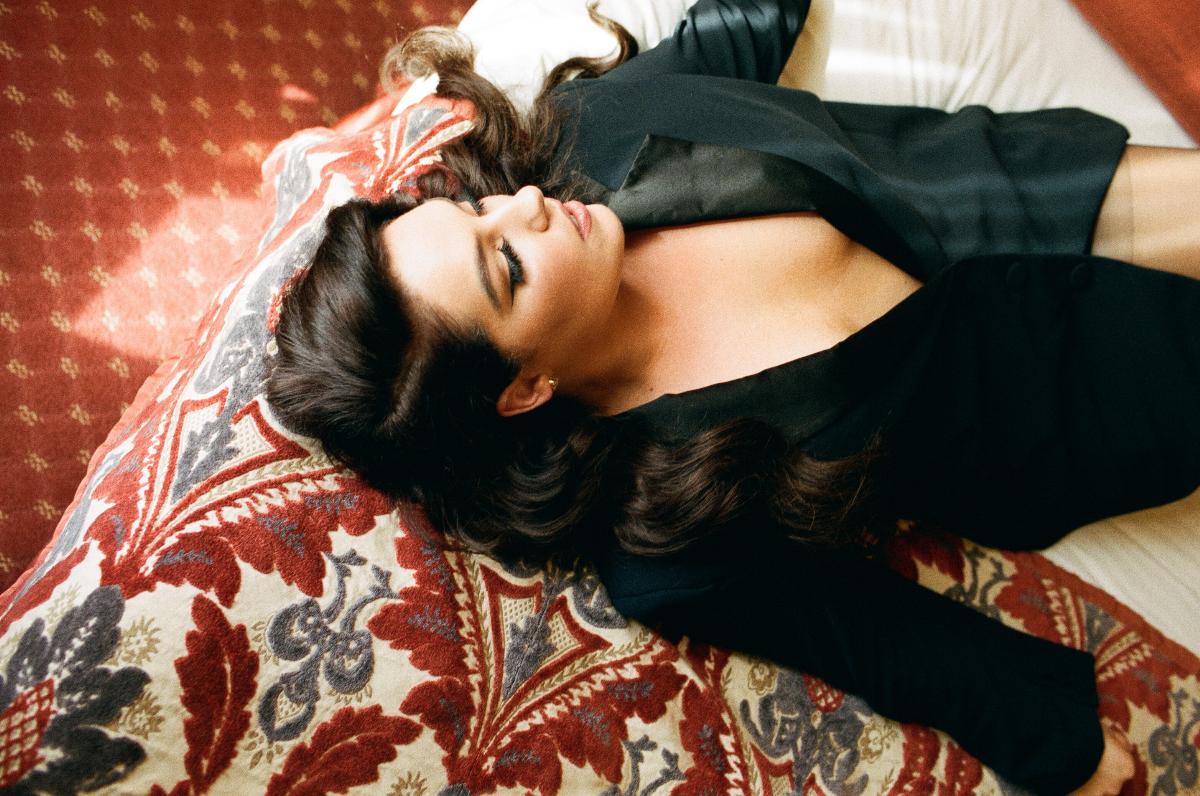
    Sarah Pinsker

    In Pinsker’s novel, a deadly virus/pandemic unleashed by a terror attack that brings society to its knees.  All public gatherings are prohibited for two decades, and everyone hunkers down quarantined in their homes, working and entertaining themselves via VR-equipped hoodies, and receiving most of their necessaries via drone from one mega corp.  As gatherings are banned, so, too, are live musical performances.  But, don’t worry, there are still shows, not in crowded bar and venues but streamed hologram performances of only the most visually appealing of acts coming from the HQ of mega promoter, StreamHoloLive, straight into your hoodie.

    Starting to sound familiar yet?

    Pinsker’s novel revolves around two women.  First is Luce Cannon, an emerging indie artist on the cusp of a big mainstream breakthrough when the virus takes down the world (best character name for a rocker ever, right?). Then there is Rosemary Laws, a 20-something woman who doesn’t remember the time before the fictional quarantine who becomes a roving A&R person for StreamHoloLive.  Her mission? To infiltrate the small underground network of clubs that still run live shows, illegally and until they are busted, to find new talent to holo-stream. 

    Musicians will love this book because it’s written by one of her own. Pinsker is someone who brings spot-on descriptions to the power of a kick drum, a power chord and the day-to-day lives of musicians, especially those who are scuffling to create and survive in both the old IRL and the new post-performance world.   

    How did Pinsker go from indie rocker to sci-fi darling?  What commonalities does she see in her two creative lives?  NYS Music gave Pinsker the chance to elaborate in the following Q&A.

    Sarah Pinsker
    Author and musician Sarah Pinsker

    Sal Cataldi: I understand your debut novel, A Song for A New Day, is an elaboration of a novelette you wrote five years back.  What, from what you have witnessed as a musician and as someone who reads the headlines, made you conjure such a premise?

    Sarah Pinsker: My memory of the seed for the initial novelette was that I had passed the “Our Lady of the Highways” shrine on I-95 again, and I was thinking about all of my touring friends who had written songs based on that lovely title. I think I had “Our Lady of the Open Road” before I had a story, and then I started thinking about a band on the road long after everyone else had exited that life, and what would have put a stop to it. I worked backward from there, thinking about the things that might be societal roadblocks, and the technological advances that would reinforce the changes. 

    SC:  How does it feel to be the woman who predicted our socially distanced, outlawed gathering present? How did it feel when you started to see this fantasy of yours beginning to come true in headlines?

    SP: Most near fiction SF writers I know don’t set out to be predictive, so it’s a dubious celebration.  I’d wanted to talk about things I *didn’t* want to see come true, and head them off at the pass. When people ask how I got so close in my “predictions,” it just feels like common sense to me. Humans are sadly predictable.

    It’s been frustrating to see people say that my book is anti-social distancing. It doesn’t glorify flouting restrictions on gatherings during a pandemic; the problem in the book is that the country stays that way long after the threats are gone. I think there are opportunities right now to create a new and better normal, but we also have to do active work to make sure that we still have music and arts and venues when all of this is past.

    SC: How much of you is in the Luce character?

    SP:  Hers is an easy voice for me to write, but she’s not me. She’s an amalgam of a whole bunch of musicians I adore. I guess the part of her that’s me is the way she feels on stage; I took that from my own experience. And I guess I tend to be skeptical of new technologies.

    SC:  Sounds like you’re a diehard DIY indie musician.  What’s the worst part of the corporate music business that is in this book, and actually just out in the world as a musician.  Seems like MTV on steroids, with the accent on looks.

    SP: I think I’d spoil the book in saying what I think are the worst parts of the corporate music business I wrote. If you look at what’s happening right now, the corporate venues will get loans, the arenas will make it, but the small clubs are drowning. Big musicians are doing fine, but the indies who depend on touring are struggling, as are the musicians who play senior centers and restaurants and libraries, and the people who run sound, the roadies and techs, the indie venue owners and staff… Some of my friends are doing online shows with tip jars, which is actually an opportunity to reach their largest audiences ever, but I can still easily see that access getting throttled. There are already corporations looking to take advantage of this situation, even while musicians try to do their best to survive. In the best of times it’s difficult to make a living at music, and it doesn’t need to be that way, but the system is set up to elevate a very small percentage of the musicians out there and not necessarily to make access easier for all.  

    SC: Now that we are in the midst of a streaming music present, what do you think about it?  Any artists that particularly inspire you in what they are doing in the medium?  Like your character, do you lament the loss of live performance?

    SP:  Right at this moment, I am extremely grateful for the musicians who are streaming shows (and the theaters, and the museums, and the national park cams…) It’s not like in my book, in that we are still in the moment where this is necessary and appreciated. I like clicking into a show and seeing people I know are also there in the comments. I like sitting on my porch at sunset and listening to musicians I adore. 

    There’s a folk musician named Susan Werner who has been playing Sunday night shows online. Sometimes she invites friends, sometimes she has a theme, but she’s always been good at mixing a fun stage presence and quick wit with her songs. She often has a sponsor or a charity getting some of the money, and donations/tip jar are encouraged but not mandatory.

    A lot of folk and acoustic musicians are doing similar things. Rufus Wainwright was doing a song a day in his bathrobe — I haven’t checked in a few weeks to see if he’s still going. LEA, thisislea on most sites, is a DC-area musician who always did cool community-oriented stuff. I played at an album release of hers a few years ago, where she invited people to play a song of theirs that was in conversation with a song of hers, and then she would play the connected song. She’s done some virtual choir stuff since this started. I’ve seen some Baltimore bands like Gingerwitch and Manners Manners and Santa Librada do triple bills online where each band does a set, and at the end gives you the address to find the next set. And I know a couple of venues here have offered to open for a band to record a show without an audience. 

    So yes, I think musicians are making the best of it, and while I lament the loss of live performance where I’m in the room where it happens, these shows are still special and appreciated. They feel intimate, and I love seeing some of these performers that I haven’t had a chance to see in a long time, either because schedules don’t align, or they haven’t been touring in my area. 

    SC:  Which came first, your music or your writing career?   Tell us a bit about both, and how they inform each other.

    SP:  Career-wise, music, though I had written and submitted short stories for publication before that. They’re both forms of storytelling to me, with their own advantages and disadvantages and tropes to explore. In my twenties my stories got shorter and shorter, and I found myself telling stories in song form. I loved the immediacy of playing, and the collaborative nature of performance; even when you’re on stage alone, you’re engaged in a conversation with your audience. I can’t say why I switched horses back to fiction at the moment I did. I struggle a little with doing both at the same time, so my music has suffered for my success in fiction. I have a fourth album completed that I really need to get out into the world, but that just feels like too much.

    SC:  Who are your three big inspirations in each of these areas? 

    SP:  I hate answering those questions, because I always feel like for every name I mention, there are a hundred more. In fiction, I guess I’d say Ursula K. Le Guin, Octavia Butler, and Karen Joy Fowler, in terms of the way reading their fiction makes me want to up my game. In music? Argh. Um, I’ll just name one. My friend SONiA, from the band disappear fear, has been my model for what an ethical life in music looks like from the beginning. She’s a wonderful songwriter, a dynamic performer, and she’s comfortable with a band or solo and with adapting songs to both.

    SC: You just received the Nebula Award for the book, which is the highest honor in science fiction.  Did you at all expect it?  What does it mean to your future as a writer?  Are you the first musician/writer to win?

    SP: I didn’t actually expect to win the Nebula. There were amazing books on the list, and I had assumed that one of those books was going to win. Getting onto finalist lists is always a tremendous honor in itself, and I don’t think it’s ever healthy to assume the top honor is yours, so I like to choose a book to root for that isn’t my own. That way, I’m happy if they win and surprised if I do. I think there have actually been other musicians who have won — Nicola Griffith and Catherine Asaro, among others, I believe.

    SC:  As an expert prognosticator and musician, what do you think the future holds for indie musicians and live music venues?  Will this ever go back to what it was, or will there be a new normal based somewhat on what you created?

    SP: I’m not an expert prognosticator, but I think what the future holds will very much depend on what we do right now. We should be helping venues pay their rent while they are closed, so they still exist when this is over. We should be giving basic income to everyone to encourage people who can stay home to stay home and allow those who can’t to do their jobs more safely. If we do those things now, we’ll have venues when this moment is over. 

    I do think there’s a lot we can learn from this, and there are things I’d like to see in a new normal. 

    There’s an accessibility in this moment: people who use wheelchairs and couldn’t get down the steps into basement venues get to see bands. Ditto people who couldn’t afford big ticket prices or didn’t have a way to get to a show, or didn’t have childcare, or whose health is too fragile even when we’re not in a pandemic to risk being in a crowd. We can definitely come back to a mix of both if we choose to. 

    We can encourage seeking out smaller bands, who may be playing to smaller crowds, rather than giant stadiums. We can normalize staying home when you’re sick, and we can normalize wearing a mask in a crowd if that’s what it takes to bring back live music. Music is about community, and we can continue to forefront that community-mindedness. But above all, we need to help musicians and techs and venues weather this with actual financial help, as they have in other countries. I’d rather wait longer in order to come back safely than rush it and risk the health of everyone involved, no matter how much I’d like to go to shows again. 
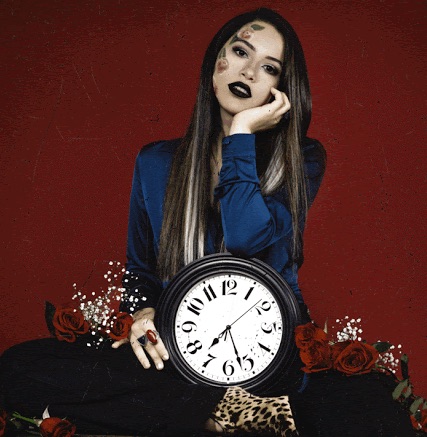
  • Interview: Natalie Claro’s Inspiration for “Discomposure”

    After seeing Paramore in concert, the then-14 year old Natalie Claro was inspired to take on a music career. Claro writes and produces her own music, integrating genres of pop, rock, folk, R&B, and country into her songs. 

    Natalie Claro

    Claro grew up in Tampa, Florida starting her career as a local musician when she was 15. By the time she was 17, Claro released her own music and started performing shows in New York. She explains what she loves the most about the music industry:

    The aspect of being able to have an outlet where you can just say whatever, speak your mind, and have a platform to be able to do positive things not only for your community but just as many people you can reach in general. I’ve always loved that part of it.

    In her album, Disconnect Claro describes it as her “analysis of the world.” Her EP Selfish Topics “is an analysis about myself,” Claro says. Her songs discuss issues such as depression, insecurities, and uncertainty. She uses her music to speak out about the positive and negative aspects of life.

    Claro is currently working on new music and has released the music video to “Discomposure.” “The song is about anxiety and stress,” she says. The music video for “Discomposure” illustrates Claro expressing fear and worry, yet finding solace in music. She communicates through her songs that we can find positivity and strength through some of our darkest moments. Claro shares what she wants her music to represent:

    I always use my music as a message towards anyone that is listening to it. I try to be a positive influence to my listeners.

  • Interview: Singer Songwriter duo Kelly and Kat talk new single and getting started in the Music Industry

    Sisters Kelly and Kat were in high school when they found a Facebook post that encouraged them to participate in the Disney and Kohl’s National Sing Your Frozen Heart Out Contest. To their success, the sisters won the contest and made an appearance during the American Music Awards. Life took them on a different direction, deciding from that day forward they would pursue a musical career as a singer songwriter duo. 

    kelly and kat

    The singer-songwriter duo perform at local bars in Long Island and continue to write songs on a daily basis. Their music comprises elements of rock, pop, and jazz accompanied with their soft vocals and smooth harmonies.

    Kelly and Kat’s new single “We Were” is a piano ballad that shows the discomfort in remembering the good times of a past relationship. Their previous singles like “One Day” describes the confidence in moving forward from a relationship while “Nobody Knows” explains the significance of learning to accept yourself. 

    Music has allowed the sisters to form a strong bond. Kelly and Kat share their thoughts on the impact it has had on their lives:

    I’m happy with our path and the way that everything turned out. We both knew we wanted to do music and we really love what we do. I love waking up every day and seeing this as a part of my life.

    -Kelly

    I’ve always wanted to make music that can be a support system for others. There is nothing more intimate than helping someone through music. 

    -Kat

    Check out NYSMusic’s coverage of Kelly and Kat’s release of their debut single “One Day” from 2019

  • Hearing Aide: Your Name Here ‘Graduation at the Apocalypse’

    In the midst of a global pandemic, as well as coping with trials and tribulations of being a twenty something, Rochester native, Garrett Eckl of Your Name Here has released a full length album that was written and produced by himself. Graduation of the Apocalypse is Eckl’s second full length concept album, which covers topics such as relationship troubles, self worth and mental health –  topics that relate to Eckl on a more personal level that compared to his prior album.

    His vulnerability and advancement of his musical prowess has birthed the story of an immersive journey where two teens find themselves in the middle of an apocalyptic world that has been ravaged by an alien invasion/ virus. His use of music technologies, personal experiences and opinions on current world issues act as fuel to propel his story through highs and lows, like a true theatrical experience – something that Eckl said he really strived for on the album.

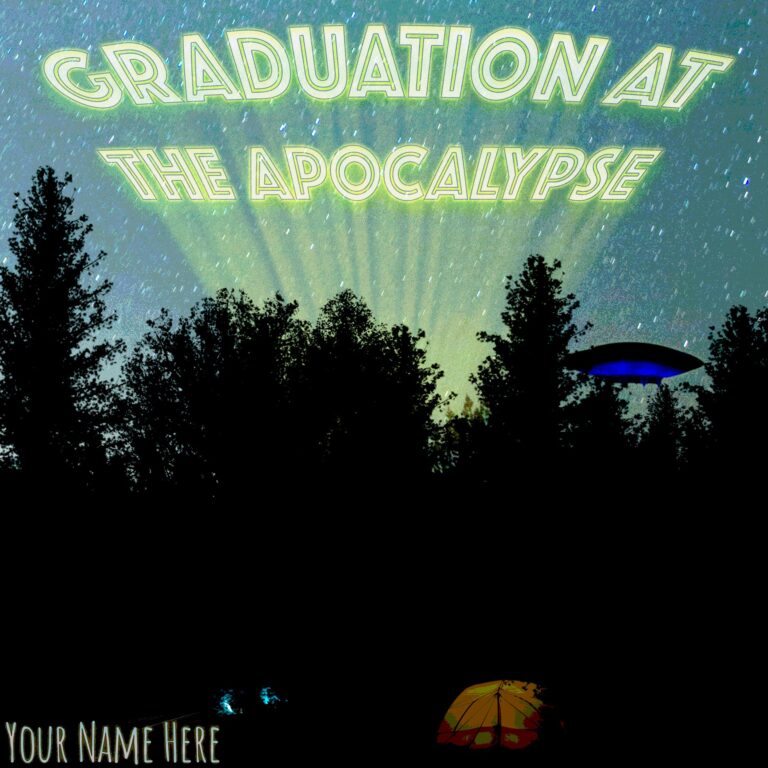
    Graduation at the Apocalypse

    Eckl, who left his job at NASA to pursue music, recently moved to San Diego where he received bachelors in music recording technology. He has set his sights on a masters in computer music and intends to pursue academia. In an interview with NYS Music, he said recent life events pushed him to create a new album, namely his move to San Diego. His cross country move and relationship troubles have spilled onto the album, in the best way possible. He said the experience taught him that he needs to learn to let go of certain things in his life.

    “The album is very cyclical in nature. The first song “Graduation Day” ends with me singing about not wanting to grow up and lose my youthfulness (“some kids live into their forties, some kids live until they’re married, some kids die on graduation day but I’m never gonna go that way”). That same verse is repeated at the end of the album in “Now I Know.” This signifies that despite everything the protagonist has been through, he still hasn’t become the jaded and boring person he feared he would become.” 

    The result of these revelations and life experiences is this: Sonically, this is what you get when you mix Ben Folds 5, Weezer and the play Dear Evan Hansen together. Listeners will feel an array of emotions, as one does in a play. There are tracks that are instrumentally uplifting and chipper, coupled with lyricism describing the complexity of  love in relationships, like in “Graduation Day.” “Everyone Thinks You’re A Little Strange” is also a prime example of Eckl’s style – a huge sound consisting of string quartets, chanting choirs, dynamics and builds, highs and lows and stories that everyone can relate to. 

    But we’re also strung through songs that set the scene of how grim things are in this reality – i.e. “The Apocalypse.” This was a stand alone song that proves how Eckl is growing and learning. The song never speaks of the protagonists, says Eckl. “I wanted this album to be open to interpretation, but I wanted it to be very clear that this (song) was about the apocalypse.” In this track, Eckl is able to hold onto his style that sets him apart from others in the genre, but is able to create an intense tonal shift, all while using recognizable instrumentation and voicing that is seen throughout his other works. It’s an incredible feat and once again legitimizes this album as something that could easily be mistaken as an OST from a Broadway show. 

    Each song is unique and easily distinguishable. Everything sounds just as Your Name Here should sound, but each one feels like it’s own standalone story. String them together, and listeners will go on a personal, reflective journey as well as getting a taste of Eckl’s experience. It’s been exciting to run through each of the songs, and it’s been exciting to wait for each track, as Eckl has been releasing 1 song per week for the past few months. The last song of the album, set to be released July 5, is called “ Letter In A Locket”. We’ve made a playlist on Spotify of every released track, but listeners can find it on Apple Music and below via Youtube. Those who want to dive even deeper into the immersive world Eckl has created, can also look into the Alternate Reality Game (ARG) that he has made to coincide with the album. Find more information on his ARG, here.

    Key Tracks: Graduation Day, Everyone Thinks You’re A Little Strange, The Apocalypse

    https://www.youtube.com/watch?v=HFIm1qlqlUw&list=PLoaRur6mHKcuUHwt43X6bOsQRPgP_qfXv
  • Phantom Planet Releases First Record in 12 Years and Shares Their Journey

    Many will remember Phantom Planet for their song “California,” but for many fans there more than just a theme song.  The band actually started their career at just 15 years old and will later be an indie rock staple with songs like “Lonely Day,” “Big Brat,” and “Do the Panic.”  Now after 12 years the bank has come back with their highly anticipates album Devastatornow available worldwide.

    Devastator is the first album Phantom Planet has released in 12 years.

    The album is a great tribute to summer with songs like “BALISONG” and “Only One,” and the lyrics are on point!  However, after listening to the album, it left me with several questions for the band.

    Fortunately, I had the amazing chance to chat with lead singer, Alex Greenwald to not only discuss about the creative process with the album- but to also discuss the challenges that were involved:

    Tamara Estrella: Thanks Alex for chatting with us here at NYS Music, I remember when there were teasers that a song was being produced.  However, once you did the release and the mini tour, what led to the creation of the album?  Was this all a part of a big plan that fans didn’t know about?

    Alex Greenwald: The night we played our first show in January 2019, our last album’s producer Tony Berg (who is a LEGEND) said he was floored watching us and invited the band to record in his new studio. The ‘new studio’ happened to be Sound City which is one of LA’s most historic places to record, where many, many great records have been made. Nirvana’s “Nevermind” for example. Also, the hugely successful version of Fleetwood Mac with Lindsey Buckingham and Stevie Nicks actually formed in the room we recorded in. THEN ,when we were mixing the album, Bob Dylan was recording at the same time across the hall. Making this album was incredible.

    TE: Listening to songs like “Time Moves On” and then seeing the album art….I hate to ask…but was this album inspired about personal events?  Or was there another meaning behind it?

    AG: Before I answer this question, I’d like to make it clear – as the person who wrote it – that these songs are about whatever you think they’re about. You, the listener are who gives these songs meaning. Ok. Now to answer your question. Yes. A lot of the songs on Devastator were inspired by a breakup with someone I’d been in a relationship for seven years. Every time I told someone about the breakup – that she got to keep our dogs – they would say something like: “My G_d that’s devastating!” Always that word. So, the album just kind of titled itself.

    TE: I love watching your YouTube videos and it’s great to see that you guys were even able to release a music video during all of this.  How has this whole pandemic experience been for you guys as a band?

    AG: The pandemic has affected everyone in such different ways, but the one thing we all have in common is that we are trying to live our lives to the best of our abilities while under house arrest. I’ve been learning all I can about anything I can, and being as creative as I can be during this time. The band has been sharing music amongst its members, collaborating via “satellite”. We’ve been making home vids of certain songs and putting them up online. I made a music video for our new song “Only One” with a green screen. I found a bunch of royalty free video from the internet, and edited it to the song. I filmed myself with my iPhone. It came out way better than I thought it would, seeing as I had absolutely no experience making music videos or editing or green screening. One of my favorite qualities of human beings is our ability to adapt. I see a lot of adapting, and although the circumstance are FAR from ideal, I have seen so many flashes of beauty through this dark unprecedented time. Stay strong everyone. We still have each other, even if we can’t be close right now. Love will carry us through.

    So as Billboard shares, be ready to ‘dance, smile, cry and go through all the emotions,’ for an 11-track musical narrative that was seriously 12 years in the making- and honestly worth the wait.

    Check out Phantom Planet’s latest video “Only One”:

    Here is the full Track Listing for Devastator:

    1. BALISONG

    2. Party Animal

    3. Only One

    4. Leave A Little Light On

    5. Time Moves On

    6. Through The Trees

    7. Torture Me

    8. Dear Dead End

    9. Waiting For The Lights To Change

    10. Gold Body Spray

    11. ROTK

  • Interview: Lexi Mariah Releases New Single “SOURPATCH”

    21 year-old pop artist Lexi Mariah has released her new single “SOURPATCH.” Mariah’s music represents emotions of ambition and enthusiasm that are filled with exhilarating sounds of pop.

    Music has always been a big part of the pop artist’s life from playing the piano at seven years old to learning how to play ukulele, guitar, and bass all on her own. Ever since Mariah first performed on stage, she discovered her passion for music and began pursuing her music career. She’s been writing her own songs at eight years old and enjoys performing at local bars, and open mics. 

    lexi mariah

    Artists such as Cher Lloyd, Taylor Swift, Meghan Trainor, and Alessia Cara have inspired Mariah’s style. Her music incorporates pop elements but isn’t “afraid to be experimental” she says, looking to incorporate other genres into her music. 

    Her latest single “SOURPATCH” takes a powerful approach and communicates a different message from her previous singles. Mariah says that the song is about “the two different sides of someone’s personality, finding the fine line between the nice and the nasty side.” Her other songs such as “Strange” illustrate the pain and sorrow in losing someone, while “Oh Boy” conveys confidence and perseverance. 

    As for now, Lexi Mariah has been advocating for the Black Lives Matter Movement and is continuing to write her own songs while quarantining. She hopes to get back to the studio to record music and go on tour once the lockdown is over.

    Lexi Mariah describes what she wants her music to represent:

    I want a wide range of people of all ages to be able to listen to my music and enjoy it. I want to spread positivity and make uplifting bold empowering music.

  • Interview: Escaper Guitarist Will Hanza Talks Quarantine, Producing “Apotheosis,” And Future of The Band

    Escaper guitarist Will Hanza’s spirits are high as he and his fellow bandmates prepare for the highly anticipated release of their new album Apotheosis this Friday (June 19th Ropeadope Records). Hanza spoke to NYS Music about the inspiration and process involved in creating Apotheosis as well as the future plans of Escaper with quarantine in mind.  

    Thomas Lent: The album art for Apotheosis by Matthew Chase is striking – what input and guidance, if any, did you and the band members have on the design?

    Will Hanza: Oh the art is all Matt’s and he’s done a lot of work for us in the past but as far as our contribution goes he gets an advanced copy of the album, listens to it, and the we discuss what the album is about, what the meaning is, and then he creates the art. Apotheosis definitely feels like a breakthrough in his own art.

    Escaper - cover art - Apotheosis Will Hanza

    Tl: What was the songwriting process like for Apotheosis?

    WH: It sort of depends on the individual track, the first few albums were instrumental but then we had some vocals. “Apotheosis” was one of our first tracks with vocals. A lot of our writing process comes from jams at first, and then we refine It from there. Open sky for example started as a solo acoustic. I brought it to the band and then fleshed it out more. For “No Strings” I remember Phil saying he wanted an “Ah Ah Ah!” feel, then we dug into that and then we started refining it into what “No Strings” finally became. The first track, “Vista,” was born out of us jamming after a song during a concert and a new sort of ‘danceable’ track came up and we decided to make it into another own song. We called it “Vista” because we felt the song elicits the feeling of climbing a mountain and reaching a new vista point.

    TL: For the listener, what would you like the main takeaway to be from Apotheosis?

    WH: We want this album to be a journey, start at “Vista,” goes to Open Sky – “Eye in the Open Sky”- then you realize that you are it, that we all can have that ‘Third Eye’ realization. I mean, the third track “Superhead” is all about your higher sense of self. Then when you make it to “No Strings,” it’s a fun song, once you find your sense of self, you can go onto the dance floor so to speak.

    TL: Your “Escaper at Home” Youtube video series is a real treat to see. How was much of Apotheosis created in this virtual way during quarantine? 

    WH: Oh well ya that series was partly a treat for the fans but the album was created by us when we were together last year. It largely came out of our new drummer (Ricky Petraglia) and playing smaller shows and harvesting new material from the quartet and writing with each other late last year and refining it. Near the end of that year, we got to work with John Davis again and recorded and mixed the whole album in 6 days. Much of it was actually recorded live as well. “Res Magna” for instance had a lot of improv involved in its creation.

    TL: Quarantine has made life harder for just about everyone, how do you see artists making it in this new lockdown environment?

    WH: There’s a lot of hurt, it’s hard to complain about anything in my life, I don’t want to take away from other peoples struggles now with all of the new movements and causes but we scheduled this release 6 months out and had to cancel our tour we had planned with it so it’s hard. To compensate we’ve done these online things but were itching to play. We’ve looked at private parties, beaches, small events outdoors that can have a certain capacity. I know it’s somewhat controversial but music is good for people’s souls, and I believe people need that. Hopefully, by fall or next summer, we can be back on the road.

    TL: What is one more thing you would like to impart upon the listener for Apotheosis?

    WH: I’m hoping everyone will get it into their ears, now there’s vocals, songs with messages and important feelings that make a positive album. We’ve also tried to include the danceable part of it to have the experience and the grove as well since we’ve missed dancing with people at shows. Overall we’re very proud of the album, we hope it can help people “Escaper” a little bit.

    Escaper will release Apotheosis on June 19th 2020, on Ropeadope Records.

  • Interview: Quarantine Streaming with Guitar God Gary Lucas

    Since commencing his professional career in the early 80s, Gary Lucas has done about just about everything you could do with a guitar, beginning with his stint as guitarist for Captain Beefheart, followed by his songwriting and performance partnership with Jeff Buckley, and collaborations with dozens of notables just beginning with the likes of Lou Reed, Leonard Bernstein, John Zorn, Joan Osborne, Patti Smith and Iggy Pop.

    A rarity who is equally adept at acoustic and the most tripped out electric, in idioms from traditional folk, Delta blues to pop, psychedelic, classical, world musics and the most avant jazz,  Lucas has rightly earned the highest accolades from cognoscenti like The New Yorker (“the thinking man’s guitar hero”) and The New York Times (“Guitarist of 1,000 Ideas”).  Even after 40 years and 30+ albums, Gary continues to be one of the busiest musicians going.  He has toured over 40 countries, very often as a solo artist, unleashing spellbinding performances in small clubs to performing with symphonies in huge halls to creating live soundtracks to the projections of silent era film classics like “The Golem.”

    gary lucas
    photo by Brad Balfour

    As per usual, Gary had a very busy year planned when Covid-19 slammed on the brakes, including a new 2-CD retrospective, tour dates in 10 countries and, of course, more collaborations with unique artistic partners,  here and abroad.   

    When Covid came to crush the live performance business, Gary did was he does best; he improvised and created great art, and a place of comfort for his fans from around the globe, on a shoestring budget.  On March 19, he inaugurated a series of three-times weekly concerts streaming live solo acoustic concerts on his Facebook page from his Greenwich Village apartment, with a diverse playlist, including tributes to his two biggest partnerships, with Beefheart and Buckley.  Here’s how he did it:

    Sal Cataldi: First off, what had you had planned in the way of live work that got cancelled as a result of the Covid-19 crisis and quarantine?

    Gary Lucas: I had an album coming out on May 1, a Best Of double CD on the Knitting Factory label titled The Essential Gary Lucas, covering 40 years of music-making from Captain Beefheart to Jeff Buckley and Beyond—with shows booked in NYC, London, France, Italy, and Finland in support of the release. Now the album release has been postponed to early September and I naturally had to postpone the live shows till such times. Too bad as the album package itself by Steve Byram and liner notes by Glenn Kenny is a thing of beauty, and I think people would enjoy it, particularly during this very difficult period. But the way things are going, early September may prove just as problematic a time to release an album and tour as it is now– who knows? We shall see what we shall see, que sera sera and so forth.

    SC:  You’ve probably been one of the busiest musicians when it comes to live streams.  When did you decide to take the plunge?  How many have you had thus far and how long do you see continuing at this point?

    GL:  I’ve done about 30 half-hour solo concerts streaming live on my Facebook page every Tuesday Thursday and Saturday at 3pm EST since lockdown mid-March.  And I’ve archived them here. I only missed two—once because my iPhone melted down the morning of the show and I had to scramble to get a replacement (an iPhone 11) for the next show. Then this week, because of observing Blackout Tuesday in the music biz in support of the worldwide protests against racism. I was inspired initially to begin by the example of my friend and collaborator Ada Pasternak, who does these kind of shows frequently on Facebook from her family house in Connecticut with her parents and siblings–they are great.

    SC:  How has the audience grown through since your debut streaming performance?  How do you interact with them?  Is it actually more interactive on some level than a live performance? 

    GL:  It depends really—the streams always get thousands of views, people all over the world share them.  I’ve had Facebook Messenger feedback from Australia, where one fan gets up at 5 am to watch my shows live each time I play, plus fans giving me shout-outs in Russia, Ukraine, Greece, Turkey, Morocco, Israel, South Africa, all over Europe of course, Cuba (where it’s very difficult to get internet access), Canada, Japan, Burma, Thailand…  There are tons of viewers.  I also talk to them directly after the shows on Facebook Messenger for about half an hour, and they also Messenger me whenever they like over Facebook to ask questions, sharing some of their work with me, and showing support. It’s more interactive in a way than a live performance actually —it’s different though. Nothing beats having a living audience in the room with you while playing and getting their feedback in real-time and in one-on-one exchanges after a live gig, I have to say, streaming is more like you’re hurling your music, throwing the thunderbolts into the ether— very strange and disembodied—and you never know who might be watching. The fans do comment while I’m playing but I am unable to read them while playing as it distracts from my focus. I do detect a stream of hearts throughout rising on the screen of my iPhone image as I play, which is a good feeling!

    SC:  What are the technical particulars involved in your streaming performances, in getting a good image and sound? Any big glitches?

    GL:  I just prop my phone up on my windowsill and hit Live Video on the iPhone at 3pm, and away we go! No other interface involved. The camera and the mic in the iPhone 11 are very good for these kind of seat of the pants performances, which are mainly acoustic or just playing electric through a small amp. I don’t bother with pedals for these streaming shows—this gives me tremendous freedom to switch between my guitars at will depending on my mood at the time.

    SC:  You seem to be doing a lot of thematic performances, retrospectives on your work with Captain Beefheart and Jeff Buckley for instance.  How do come up with what you play, is it very pre-meditated or seat of the parts?

    GL:  A little bit of both actually. With my Jeff tribute, it started as me wanting to pay homage to Jeff, specifically to mark the 23rd anniversary of his tragic passing on May 29.

    SC:  Obviously live work is a significant part of your revenue earned as a musician.  How has this impacted you and are able to make up some of the difference with donations via PayPal?

    GL:  Yes I have, some fans have been extremely generous and have contributed to my virtual tip-jar multiple times. It’s been a help but not enough to fully replace the typical income from my live shows. On the other hand, it’s been steady work. It’s given me some relief from the constant pressure of having to constantly line up new shows out of town on my calendar, which have to be decent paying gigs, in any case– I won’t play any old gig at this stage of the game, certainly not a door gig. 

    SC:  On the cancelled gigs, how many have been rescheduled and are you now rebooking tours?

    GL:  Not yet, as no venues anywhere have truly re-opened at this point, to the best of my knowledge (and I keep checking with agents around the world). This is going to be a problem for awhile I reckon, as how can clubs and venues stay in business if they are forced to cut their attendance policy in half in order to satisfy social distancing requirements? Every time it seems the curve is flattening somewhere there are new spikes, and now with the recent mass protests in the streets…I am trying not to think about this too much, I’m just keeping on keeping on at this point with my live streaming concerts until this is hopefully sorted.

    SC:  You’re kind of unusual among guitarist with your acumen on both acoustic and electric.  Tell us a little about your influences and how you have grown to do some pretty eclectic things like live music for the scores of classic films like The Golem and Spanish Dracula?

    GL:  I grew up loving all sorts of music, from Top 40 radio to English progressive rock to free jazz and, of course, American folk and blues. I loved all the same guitarists back in the day that everyone else usually cites, but I especially I loved the crazier psychedelic players such as Syd Barrett, all the guitarists with Captain Beefheart over the years, and also the English folk-blues virtuosos like Bert Jansch. America country blues master Skip James is maybe my favorite all-time guitarist. I got into live scoring of films going back to my love of cinema, especially fantasy and horror cinema, from earliest childhood. I used to show 8mm silent horror films to my friends and neighbors in the basement of our house growing up on Syracuse (and charge a nickel for the privilege). It was a short step from that to accompanying films, which I began doing in 1989 on a commission from BAM and New Music America to do something different with my music and another art form. I brought in my childhood friend Walter Horn on keyboards and we jointly composed the score for “The Golem,” which we debuted at the Museum of the Moving Image in Astoria as a duo. I figured out a way to do the score solo after some initial and very well received performances, and toured in 20 countries with the film solo. Since then I’ve gone on to compose at least a dozen more live solo guitar scores and perform them at cinemas and music and film festivals all over the world. My last live gig before lockdown was up at Cornell University in Ithaca NY with “The Golem”, which was extremely well received.

    SC:  You’re probably one of the busiest guy in guitardom, when it comes to recording? What are some the recent and forthcoming records you are most excited about? 

    GL:  I love the recent release on Knitting Factory of The World of Captain Beefheart album, which I recorded with soul legend Nona Hendryx (Labelle) and Jesse Krakow, Jordan Shapiro and Richard Dworkin. Nona really brought something new to the proceedings in terms of being able to cover the more r&b side of the Van Vliet oeuvre, as well as very capably plunging into the Deep End of Beefheart’s most outré material. And I love the last album released before lockdown,  “The Complete Jeff Buckley and Gary Lucas Songbook” on the Italian Esordisco label, which I recorded with Italian vocalist The Niro (Davide Combusti) and producer/ multi-instrumentalist Francesco Arpino. The album contains new studio versions of all the 12 songs I co-wrote with Jeff, 5 songs of which never got any official release before. The album was voted Album of the Year in Classic Rock Italia. I have two more albums ready for release with my Chinese pop trio featuring Mainland Chinese singer and erhu virtuoso Feifei Yang and Jason Candler on sax—we do some covers of Dylan and Leonard Cohen in Mandarin, which sound really fresh. I also have a new acoustic EP recorded in France before Xmas with a young French -Moroccan singer, Yass Boud, which sounds amazing—there’s also an EP in the works with a young Dutch acoustic bassist and vocalist Peter Willems to be recorded in Holland this summer. Plus a second Pearly Clouds album is in the works to be recorded in Budapest—this is my for lack of a better description psychedelic Hungarian folk trio featuring Toni Dezso on sax and traditional Hungarian folk vocalist Eniko Szabo. And I’m currently working on finishing songs for a new Gods and Monsters album featuring my longtime band of Billy Ficca (Television) drums, Ernie Brooks (Modern Lovers) on bass, and Jason Candler (Hungry March Band) on sax. There’s other stuff being planned too. I try and stay busy always.

    SC:  As for your retrospective, what was impact you wanted to make with this collection?  Was it hard to choose these tracks over a 40-year career?

    GL:  I am very excited about this double CD retrospective of course. Besides containing what I consider the cream of my recorded output, it also contains some rare and unreleased tracks. Hopefully, it should provide a good overview of my work across the 30-plus albums I’ve released over the years for folks who might know my own work except for one thing only, for instance my work with Captain Beefheart, or with Jeff Buckley. It’s designed to be a good introduction to my music for folks who don’t know my work at all. Hopefully it will expand my fanbase, secure more live gigs if we ever get out of lockdown (I love to tour!), and win more appreciation for my own music in the world at large—isn’t that what most artist’s want? I’m not an Art for Art’s sake kind of guy.  My music was designed to be user-friendly without following the trends of the moment.  And I don’t look down on fans; I love and appreciate my fans. And, yes, it was damn hard to make the album’s selections. I kept switching and substituting tracks–until finally I said that’s it. Making that selection was like asking a mother with a very large brood of kids to choose her favorite children.

  • Interview: Lorelei Rose Taylor’s Debut EP ‘Versailles’

    Brooklyn based singer-songwriter Lorelei Rose Taylor released a gift to the world on May 22. Stepping into the studio for the first time to record her music gave light to her debut EP, Versailles, which lyrically navigates her own stream of emotion, intertwined with dreamy baroque-pop sounds. As Taylor explained to NYS Music, she treads on the strong influence of The Cranberries’ Dolores O’Riordan, evident in her flawless singing, which also subtly nods to Florence Welch and Lana Del Rey.

    Taylor grew up between Texas and Upstate NY and began exploring music on her own at a young age. But it wasn’t until 2017 when her interests returned to music following her college studies. With the help of the friendship of Robbie Grabowski, she began writing her own music and was given the courage to step into the studio in 2019.

    Versailles EP

    Taylor recently spoke with NYS Music about her experience bringing her music to the world for the first time and some of the inspirations into her songwriting.

    Steve Malinski: The Versaille EP is your debut audio portrait to the public. How would you introduce yourself as a musician/songwriter?

    Lorelei Rose Taylor: I would introduce myself as someone that’s very consistent in my message and my sound. I think I’m overall pretty melancholy, as much as I try to fight it that’s kind of just what happens.

    SM: One thing I noticed about your sound is that it’s very clean and refined – particularly on one the songs, “If You Love Another,” almost right away I can hear the influence Dolores O’Riordan has on your singing. How has she been an influence on you and your songwriting?

    LRT: She’s huge. I mean The Cranberries in general…when I think of my past and you know, out of my experiences in childhood that really shaped my direction, she stands out tenfold and it really comes back to growing up. I felt like it wasn’t a glamorous childhood by any means. So I’m in my room and I had this white boombox and I would like to sneak out to the living room. Remember those rotating CD things with the velvet interior that held the CDs? So I’d go in there and grab all the CDs I could find and shove them in the back of my room.

    I would just like sit there for hours listening to all the weird stuff, and everything like that. I was kind of obsessive in that way. That was my outlet. No Need To Argue was that album that stayed with me and never left the rotation and I feel that way because I think Dolores sings like there’s a pain in her voice – that’s definitely her style – but she’s also really strong like you’re safe under her wing, in a way. I just I felt very understood by her. 

    And then “If You Love Another” was actually inspired by W.B. Yeats who is an Irish poet legend. I love the Irish. But yeah, I feel like it’s twofold, like there were a lot of strengths that I was trying to channel which I found in Dolores.

    SM: Now that Versailles been released, what does that milestone – reaching that accomplishment mean to you?

    LRT: I feel like I’ve always…this sounds so cliche, but like… dreamed of this moment. And now that it’s here, it feels a little bit like that false beginning, you know, when you’re like watching a show and they tease the beginning, and then they start the bullshit of the intro and the music. And I think it’s like the real show, the real beginning. That’s kind of what it feels like for me. Because I think… I don’t think like I’m doing the Lord’s work here. Like, I love the EP, and I’m so proud of it but I think that there’s so much growth to come and like so much exploratory work that I’d love to do from here. So it’s the beginning, but I don’t think it’s like the big moment for me, but I’m excited to see what happens.

    SM: You’ve been exploring music since a young age…so what drew you into eventually writing your own songs?

    LRT: So growing up, I spent a lot of it solitary and I feel like when you don’t have an outlet you kind of build your own and I feel like the writing and music that I turn to when I’m alone or whatever I was going through experiencing and it just always stuck with me. I recorded the Robbie Grabowski (from I Can See Mountains, Super American) and he like, kind of pulled the rest out of me.

    SM: So the motivation to actually bring your material into the studio was that driven by Robbie?

    LRT: Oh, yeah. Before that, I was just fucking around, like I wasn’t really… I mean, I dreamed of recording but I didn’t have that motivation or confidence to do anything with it and then he was like, “put your shoes on, we’re going to the studio today!”

    SM: So this being your first recording project, how was the recording experience?

    LRT: Oh my god. terrifying. I think it was last August [2019] – was the first time I’ve ever sat down in the studio. I was just right in front of a mic, that’s not my comfort zone. I don’t pretend to be a performer. So it was traumatizing. And I’m really grateful that I recorded with Robbie and Stephen Kellner and Jesse Cannon and Roderick, kind of like this very tight-knit circle which I’m grateful for. So Robbie just became a mentor and he was just like “pick up from the beginning, relax, chill out, it’s gonna be fine,” because I was terrified and it’s really difficult.

    And you know, I learned a lot because when you’re singing a cover, for instance, “When You’re Gone,” that came super easy because I was just spinning the musical machine, you know, you have to channel the emotion, the performance, are you on TV?,  the lyrics…there’s so much in one moment that you have to articulate and get right and I was just learning a lot the first time. I think “Casanova,” the first track on the EP, was the first song that Robbie and I wrote together, the first one we took to the studio and it took me probably eight months, nearly a year to like come around with that song and say “okay, we can just push it to the public,” because I just hear fear and I hear trauma because I was so scared in the studio. I guess it adds to the vulnerability a little bit.

    SM: So now that you’ve learned a lot from that experience, do you think that might influence how you write your songs going forward? Or do you think you’ll still have the same approach?

    LRT: Yeah, I’ve learned so much. And I think like, it really comes down to going back to being alone and just alone with my thoughts and not having to worry about any other element. It’s just me and the music and I feel like, especially during quarantine, recording by myself, there’s a different… It sounds very different when I’m writing alone and recording alone. There’s a different confidence. There’s a different way. I’m excited to share what I’ve done now alone in my own little studio to bring that to studio that’s going to be very different.

    SM: You’re very introspective with respect to writing your songs and the emotions flow from what you’re feeling in that moment. So, when you go and you listen back to the songs especially in these current times, do they have a different meaning to you?

    LRT: Yeah, I definitely think so. I mean, from like a personal standpoint…My favorite piece of was that our job is not to like our own music. It’s just to like keep making it. And I feel like the biggest thing in quarantine and creating (or trying to), removes that element to it. Hearing back the EP there’s so many moments where I’m like, “oh, I wish I did that differently” or “I wish this was scratched completely” but I think that removing that and just living in the moment more… I mean with COVID there’s just so much that we took for granted and I feel like just so lucky to be in a position to keep making music and I’m eager to get back to it. I feel like I’m more grateful for the music that I’ve made and more proud of it. I hope to make… all I have right now is that fucking record, so I hope to make happier ones because everything is very sad right now.

    SM: You’ve also had a full length album in the works too?

    LRT: Yeah, that was in the works. I mean, I’ve been writing for so long, but with everything that happened I didn’t have time to go back to the studios. I was like, well, I could either release an EP now or just have radio silence for the next… who knows how long. But yeah there’s a full album which will likely be called After Party. And it’s nearly done. It’s just like, you know, the finishing touches. But to your point now that everything has happened, I suppose there’s gonna be a lot of changes that I want to make to it with so much time to think.

    SM: Have you been able to create any new content in this quarantine?

    LRT: I’ve written one song from beginning to end. I was sad one day about two months ago and I was like, I’m clocked out, I’ve got nothing. So much of what I write is thriving off other people’s energy and people that I meet and see and right now I’ve only seen one human being for a few months now. It’s just very hard to find that inspiration. But I did write one song, a demo I recorded which was really an interesting experience because I wrote the whole track. I bought a MIDI controller and I produced the whole thing which I…that’s not my element… so I sent it to Robbie and he was just like “okay keep going.” It was kind of like a little pat on the back like, “okay this probably sounds like shit but like, I’m not gonna tell you that.” But yeah, great to bounce ideas off of him. Hopefully I have at least one more on the way in this infinite era.

    SM: Once this whole thing blows over and you’re finally able to get the album recorded, what do you think you’re gonna be up to as far as live shows? Do you want to go out and perform these or just share them?

    LRT: Yeah, definitely performing is on my roster. Especially around New York. New York has been home to me for eight years so there’s like a bond I have here. I’ll probably get back up to Syracuse. I spent a lot of my time there and all my friends are there, having like that space to have the energy to go off of which is very nice to perform to. Looking forward to that, looking forward to the album. My first music video for Versailles will be out soon, waiting for the final cut and my album will be out sooner than later.

    You can stream Lorelei Rose Taylor’s EP Versailles below.

  • Interview: Dan Smalls on COVID-19 Infecting the Music Industry.

    Dan Smalls is a promoter who works in central New York and the surrounding areas. He heads Dan Smalls Presents (DSP), which promotes concerts and events in Cooperstown, Syracuse and Albany, as well as DSP’s home base in Ithaca. NYS Music spoke to Small about how COVID-19 is affecting the music industry, particulary in a smaller market such as Ithaca.

    Dan Smalls. Photo via Dan Smalls.

    Nora Hones: As a promoter, what are the difficulties you expected to undergo during COVID-19, and what are some unexpected challenges? 

    Dan Smalls: Well I think they are both the same honestly. There is so much uncertainty with what people know about the disease and how it’s transmitted, I think we are pretty clear that our business is the one that is the most affected. Anytime people are indoors and are in close proximity for a period of time you’re gonna have a problem. So we sort of expected there to be issues, maybe not as much as there was, but the hardest part is not knowing when we will be back to doing shows again.

    In the same vain, I don’t expect it to be the same again. Things changed when 911 happened and I think the future of the music industry is very different now. That being said we are luckily going into it in a really good place, where we feel like surviving it will be okay and we are pretty forward thinking in how we are as a company. So I think we will be prepared for whatever comes next and be ready to capitalize on it. 

    Dan Smalls speaking into microphone. Photo via Dan Smalls.

    NH: In a city like Ithaca, that has a really big music scene and central business, what are fallouts you are expecting due to the pandemic?  

    DS: Well I think this community is relatively isolated, at least when you talk about Ithaca, in that it’s driven from education and the services surrounding it. That being said education is impacted and if people aren’t coming back to town then that will affect our community more than most. In most economic downturns, cities like Ithaca can survive pretty well because education is always here. It’s not manufacturing, it’s not things that change. If kids don’t come back it’ll be a little more [difficult] than in the past. So we will have to see, I think Ithaca College is very bold by saying they are going to have kids on campus this fall but who knows at this point. Like anyone who says that stuff it’s a little bit of an interesting choice at this point.

    NH: So coming off of that [vein of thought] as a promoter who is working through this, what are your ideas of how things will work once they start the phased reopening of different venues like, State Theater vs. the Beak and Skiff?

    DS: I’m not going to pull punches here, but my opinion is that we’re (and maybe I’m wrong, I hope I am) but I don’t think indoor shows in theaters are going to be. I think the best case-scenario is probably March or April of 2021 at th0is point. I think outdoor shows next summer we have a better chance, but again, all of this is predicated on so many unknowns. Will there be a treatment or a breakthrough? I’m not a proponent of believing a vaccine will come out any quicker than in the past, but I’m also not trying to get elected so I don’t have to say these things. But it’s definitely doom and gloom to believe it’s going to be a long time but it’s better to be prepared for a longer break and come out of it in different ways and find ways to spend the time like with different types of programming or content creation in the meanwhile. 

    NH: I 100% agree with you. I think it’s going to be a long time before we are back to indoor shows. 

    How is that really going to work with them being postponed all at the same time and trying to prioritize?

    DS: There is for sure lots of traffic, but that being said I think we are going to manage it pretty well and it will come together as it does. I think there will be a lot of opportunities when it’s done with bigger acts playing in smaller venues just because they will be afraid with how much their tickets will be worth. But there will be a lot of traffic, no doubt. This is how people make money now so the question is: how do we manage that and prioritize?And really, I hate to keep going back to it, but there is just a ton of unknowns. How many venues will survive? Luckily our partners are mostly in very good shape and I think we are going to chrome out of it okay but we will have to see. It depends how long [this pandemic] goes on for. 

    NH: I know you are involved in some smaller festivals like the Ithaca Reggae Fest for example, how do you think this pandemic will affect small festivals like that across the United States? 

    DS: They are all going to lose a year. 

    NH: For sure, but how many do you think will be able to come back in the capacity they were used to coming back in every year? 

    DS: Well again, it’s going to depend on how the industry is going to [handle things]. Everything is going to be understated, I really believe it’s going to take years to get back to what we are used to. So a lot of them will probably not take the risk. A lot of it was dictated by sponsorship dollars and all of that and I don’t know if all of that will be as out there when the economy is struggling. 

    NH: Have you seen a lot of sponsorships getting pulled?

    DS: Not at this point. It’s more just that everyone is trying to believe that a future will come back around and I just don’t know if the sponsorship piece of that is [will,] it’s relatively small at this point. 

    Dan Smalls (right). Photo via Dan Smalls.

    NH: What’s your thoughts a venue’s chance of surviving with so many small businesses closing? 

    DS: Being the Vice President of the Independent Promoter Alliance not-for-profit, that recently formed to help guide indie performers and their venues, I’m hearing a lot of challenges from a lot of people. The question is just who is going into this in a position where they aren’t behind the eight-ball financially I guess. Venues who serve food and things like that have been able to pivet pretty well, at least some of them have, it really just comes down to how management has done in the past and how they run their businesses. I don’t know how else to put it.

    We don’t have a ton of venues of that size. We generally have [places that are] 300 and up [for capacity] but I hope they [venues] all find a way though. I really do but I think looking at what’s happening to restaurants in NYC [you can see] there is going to be a lot of fallout here and the question is just how long we can prop them up or whether the economy will come back quicker than people will believe. Again, I hate to go back to uncertainty, but that’s all we really are talking about here. It’s hard to make a prediction.   

    NH: For sure, everything is very uncertain right now. And there is so much fake news out there, nobody really knows what’s going on. 

    DS: I wish they never created it. I wish it was just news, you know? 

    NH: Me too, believe me I always have to tell people you have to check out the website you’re looking at. 

    What are your thoughts about bands, who are smaller local bands whose members supplement their income with performing, how it’s going to affect these bands and their members who are no longer able to supplement their income? 

    DS: Well a lot of them are finding creative ways though selling special merch or doing live-streams and stuff like that, and I think that’s all we really have for now. So the question is who can do them [the most] creative, and do them a little more uniquely, and go from there. I think how you find ways to stand out in that game are important. 

    Photo via Dan Smalls.

    NH: What kind of advice would you give to musicians who are trying these creative ways to supplement their income?

    DS: What I think, is that there are so many – It’s the wild wild west. There is no other way to put it. The more I think about it, anything goes tight now. Everybody is talking to everybody and the goal is just how do we take care of each other through this? The spirit of working together between managers and agents and promoters and venues has never been better and that’s what I think we are looking for in this. Let’s work together and go from there, you know? 

    NH: Definitely. Have you heard about these social distancing concerts that have been being put on, like the one in Arkansas? 

    DS: I will completely say no thanks. That’s not something I’m interested in doing. I think they are just such a terrible experience we aren’t interested in those at this point. 

    NH: I think that’s the safe and fair opinion on them at this point. It seems like a very risky revenue and road to go down. 

    DS: Yeah I agree. It’s just for us how we categorize our business, [is] we have been a forward thinking artist and fan-centric business. And we want the best experience for both the fan and the artist. It’s been our motto and our goal from day one. So that being said we’re not going to start doing things different because of this. We would rather wait it out and do it proper. 

    NH: So what kinds of things are you doing currently, despite COVID-19 sort of destroying everyone’s plans? I saw you’re doing the live-stream for Bob Dylan’s birthday, but what other things is Dan Smalls Presents currently doing? 

    DS: We are going to keep doing those [live-streams] for the State Theater and some one offs here and there for other venues close to us. We’re announcing some ticked live-stream stuff in the next couple of weeks here with the Whitney show this week and we should have a couple more of those coming. We are making the best use of the time. We’re gonna do our best to just keep coming up with creative ideas and that’s our goal. More will come out of this for working with managers on lots of crazy ideas. So stay tuned, everyday is a new idea. 

    NH: So how do the ticketed live-streams work? I’ve seen some different things about them but I’m not sure exactly how they work. Do people buy a ticket and get a code for the live-stream or something like that? 

    DS: Yup, they buy a ticket and it gives them access. Whitney has done it, Japanese Breakfast has done it,  there’s a bunch of them that have happened already. They’re pretty cool. They are just another way [to do things.] There are two schools of thought, the suggested donation generally works pretty well but some of them want to have a wall up and have a ticket and that works. It’s really simpler than it looks. It’s just like buying a ticket to a show and all they do is send you a link and a code to get into to watch it. 

    NH: Okay, awesome, that sounds really cool. So that was pretty much all my questions. Do you have anything else you would like to say? Anything else you would like to put out into the world? 

    DS: I wish the news was better and everything was more solid but unfortunately at this point we just don’t know. It’s day by day, hour by hour, and it’s a good time to take stock of your friends and your family and your life. What we [have] learned is that the go, go, go mentality doesn’t have to come back that way. I have been pretty good about that even in the past. I think we were ready for this, we were prepared for it from a financial standpoint, we will weather the storm and come out the other side strong.

    For more informations visit DSP’s website.