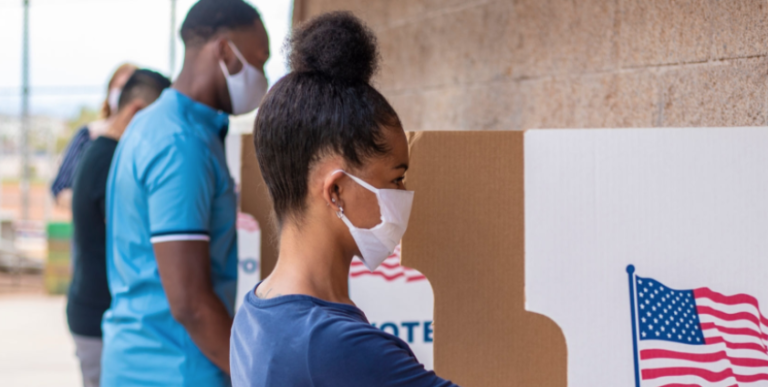
It is hard to believe that Election Day is just over six weeks away and there have been many efforts to get people out to the polls. However, even with the pandemic that hasn’t stopped organizations like HeadCount from getting people registered to vote.
Andy Bernstein, Executive Director of HeadCount, says that despite barriers, the organization’s efforts are going really well.
Headcount has seen a spike in voter registrations in comparison to previous election cycles.
“We moved all our activities online and we’re registering more voters than ever,” Bernstein said.
HeadCount is a non-partisan organization that uses concerts-and now adds online events- to reach out to music fans to register to vote. However, now that concerts are at a standstill, there have been more musicians trying to reach out to fans via social media and even Zoom. Bernstein says that fortunately the organization was already aware of this early on during the pandemic.
“First, we worked with Soffi Tukker, Dave Matthews and Camila Cabello on promotions where fans could enter to win a private zoom with the artist, but [needed to check] their voter registration status,” he said. “We’ve done literally dozens of these now, and our new partner Global Citizen, is doing even more through the Just Vote campaign. Dave Matthews will do a short private show through that.”
Bernstein also says that Evanescence is also going to perform an online show through HeadCount. But the goal for these shows is that in order for a participant to view it-they need to check their registration status.
Since this election cycle seems to deal with more passionate issues, Bernstein says that he definitely has seen a spike in voter registrations- similar to what he saw during the 2018 elections.
“We registered three times as many people for the 2018 midterms as 2014. And it was the highest turnout for a midterm election in 100 years,” he said. “Our goal is to register 200,000 voters and directly engage 1 million voters.”
And what Bernstein means by ‘directly engage,’ is to have voters sign up for an absentee ballot, check their status, or to even look up a ballot which can all be done on the HeadCount website.
Now that the election is just six weeks away, the organization is currently doing a huge text messaging campaign so that those who haven’t registered yet can do so via text messages. And if someone would like to volunteer to help out the organization with its efforts, they can just visit HeadCount.org/volunteer and pick a night to help.
“They’ve been lots of fun,” he said. “All you need is a computer (not even a phone) and you join a Zoom session with other volunteers from all over the country.”
This year, the presidential election will take place on Tuesday, November 3rd. Register to vote and request an absentee ballot with HeadCount.
Brooklyn based alt rock band, The Upstart Crows, today debut their catchy single and accompanying music video for “Stuck.”
Lead Vocalist/guitarist Jon Adams.
Lead Vocalist/guitarist, Jon Adams, says the new single displays the “frustrations with feeling stuck in life.”
“Stuck is a catchy ballad reflecting on the frustrations of feeling stuck in life, waiting for change to come, and not being sure if it will ever come.”
Adams formed the band along with band mate and drummer, Forest DeCoste, in the basements on Keene, NH. The two made their way to Brooklyn where they went on to release their first self-titled album. The two recently parted ways, although both are on good terms. Adams says that he was in the process of looking for new band mates when the global pandemic happened, so in the meantime, he’s playing solo.
“Recently Forest decided he wasn’t interested in playing in the band anymore so he quit the band. We are still on very good terms, and we even still play DND every week. I was in the process of finding new band mates and moving the project in a new direction but Covid put the kibosh on that for now. So currently it is just me.”
Jon Adams
In regards to live shows and concerts starting back up, Adams says that we still have a long way to go, but he’s hopeful for the future.
“It looks like live music, for now, is live streams. But I bet we will figure out a creative solution to have live music again. I hear some people are doing shows at drive-in movie theaters now. “
Jon Adams
Be sure to check out The Upstart Crows past sounds and tune in to watch and listen to Stuck.
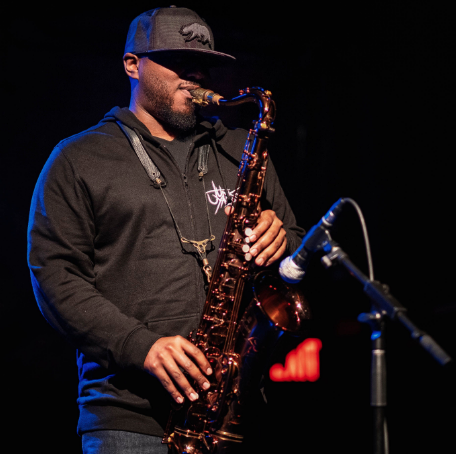
NYS Music and Music Minds have teamed up to check in with musicians around the New York scene and see how they are holding up and how they are feeling about their craft. For this installment, we talked to James Casey, saxophone player of Trey Anastasio Band.
James Casey is an NY/LA-based multi-instrumentalist, singer, producer and composer, born in Washington, D.C. to a musical family, and raised in Phoenix, AZ, from where he left to pursue a Music Business degree at Berklee College of Music. After leaving Boston, Casey moved to New York to continue to develop his passion for making music.
Over the years, Casey has become one of the most in-demand sax players in New York and Los Angeles and has toured the world with multiple artists. When not on the road, Casey has found a niche in the studio, producing and performing for many different acts, including his own, Animus Rexx. Casey is also co-founder and owner of Aux Chord, an online live-streaming venue.
Adam Chase: What are the biggest issues facing musicians during this forced hiatus?
James Casey: I’d probably say: stagnation and complacency. We’re all in the same boat of not being able to have live, in-person concerts right now, and we have no idea on how long we Americans will be in this predicament. I think the worst thing any of us could do is to sit still and wait for things to get better. We don’t know what better looks like or when that will be. As of today, NY passed a law basically saying venues can’t pay for live music right now. And understandably so!
We definitely can’t be trusted to be smart about this pandemic…but we also can’t remain where we are. Live in-person concerts are only part of being a musician. We should use this time to shore up deficiencies in our playing/performing, begin (or finish) that project you’ve been putting off, expand your musical horizons, or even start a new, adjacent musical venture! There are very few times in life that you will have this much time as an adult, it would be a shame to waste this opportunity!
AC: Have you found and tricks to staying positive?
JC: Hah, well, fortunately I was able to make my way to Hawaii a bit before NYC shut down. Right now, being on Kaua’i, I’m able to go to the beach, enjoy the outdoors, and be in an environment where people take coronavirus seriously…but with no community spread. I don’t know how I would have been had I stayed in NYC, in my little apartment during this time.
As far as remaining positive is concerned, I try to continually touch base with family and friends…and I really don’t like talking on the phone or FaceTiming. I know that a lot of people are in a much more difficult situation than I am, so I try to listen to what they’re going through and respond positively without bragging too much.
AC: What effect do you think musicians can have on social change?
JC: Musicians are the amplifiers of ideas and feelings. Any ideas or feelings. If you say something in a chant or with a simple melody, it remains in the consciousness of the listener and will bubble up from time to time. If it’s a good melody, idea or feeling, the effect is exponential.
There’s a reason we still hear the songs from the civil rights era right now; not only were they great songs, but they all conveyed a great message, a great idea and enough emotion to keep them circulating forever. “What’s Going On,” “Someday We’ll All Be Free,” or even “Strange Fruit” (from before the Civil Rights era) are songs that have become timeless and will eventually be revered like “Amazing Grace.”
We as musicians have the ability to write these iconic songs and we have a duty to chronicle the era in which we are living. I urge everyone I’ve spoken to on this subject to “write that song,” “tell that tale,” and talk about the things that are bothering you because you never know who it will resonate with. It could be the next song to bolster the movement.
AC: How have you been using your time during the shutdown?
JC: Surfing! Hah, not really. I tried, but I can’t stand up on the board yet.
I saw this pandemic coming (to the US) pretty early. I live in NYC and there’s no way it wasn’t gonna get there and explode. So while I was trying to figure out a way to leave, I was also trying to figure out how musicians would be able to work while not being able to play shows.
The idea I came up with was an online venue…but I had no idea it would get as bad as it did. Cut to April, and I see everyone on my timeline doing livestreams on Facebook and Instagram. They were all asking for tips and basically busking. That’s when we put the idea into high gear and created a platform where musicians can do live stream shows of all production capabilities (living room to a huge theater or soundstage) behind a paywall. It’s called Aux Chord and you can find it at AuxChord.live. I’ve been spending most of my time cultivating and growing our platform.
AC: What do you want people to know about Aux Chord?
JC: Well, we put it together for musicians. Since its inception, we wanted to find a way to have high quality audio and video without gouging the artists. I’m an artist and I know how difficult it is to deal with venues, so we made the pricing structure as simple as possible so the artists get as much as possible. Also, I think every artist should do at least one livestream. It’s not as daunting as it seems before you attempt it. If I, a saxophone player, can do a whole show from a locked down island with no Guitar center and Amazon taking a month to deliver anything, I’m sure you can from the comfort of wherever you are! Plus, to all the bands out there, we have different venues and staging areas around the country and production capabilities from small venues to giant sound stages, so hit us up!
AC: What song or album would you nominate for the soundtrack to 2020?
JC: My initial thought was “Scream” by Michael and Janet Jackson…but honestly, if you just record someone falling down like four flights of stairs, then have them stop and stand up, only to fall down five more, that would be my nomination.
In the final installment of NYS Music’s interview with Street Pharmacy‘s Ryan Guay and Giant Panda Guerilla Dub Squad‘s James Searl, the pair take the time to dig deep on their relationship to modern progressive activism in Canada and America, and the inspiration for “They Don’t Give A $$$.” Ryan reveals the dark past of Canada while James shares his family history with the abolitionist movement. Catch up with parts one and two.
Thomas Lent: You know, we’ve been talking about a wide variety of different crises here, but you know this track is about activism. Emphasis on the active. To promote the causes that your groups stand for, what specific causes would you like your listeners to contribute to?
Ryan Guay: Well, I think, first and foremost, looking from the Canadian perspective. The indigenous people have received the worst brunt of what it is to be Canadian but not be Canadian because they aren’t acknowledged that they are Canadian. Something I would like to bring up to an Americans attention is the Truth and Reconciliation Document that was written in 2015 where the federal government in Canada formally apologized, to make reparations for certain indigenous populations of Canada. If you want to read about what actually happened here and how terrible it was for all indigenous people, especially young people being shipped off to residential schools and being raped by Catholic priests, and you know going back to their, to the tribes, back to the “rez” and not being accepted because they lost their culture. Looking into the highest suicide rate in Canada and who that belongs to, and why.
I think it will be mind-blowing for a lot of people that have this perception of Canada as being this very apologetic, say sorry all the time, nice people. Just read that it will definitely open your eyes to the situation here that needs more attention being brought to it. That the people who die the most from murder in Canada are indigenous women who are in prostitution rings. Why? How did that happen? We had such a strong attempt at, quote-unquote, “assimilating” their culture into Europeanized society, why is this a thing? Obviously, the whole story has not been told. Apologies are one thing but actual action is a different thing, and theirs is definitely not enough and the situation with the pipeline being built says that. The fact that the RCMP exists for the sole purpose of keeping the indigenous population in check, to quote Sir Francis Bonhead, who created the Indian act. I think there’s a lot of work to be done here. That’s something that’s important for the song and that why those clips were included in the video. For me as a Canadian, as a person who is of mixed blood, it’s a story that should be told and should be told world-wide. James could probably speak more about the Black Lives Matter movement and other groups that we want to support as well.
James Searl: If the listener had reservations about being active or for like how to get active in the movement for the good, ha, that’s so cliche. But they should seek out who the groups that are in their communities that are representing the most marginalized people. Whether it’s Black Lives Matter, the Movement for Black Lives, or other groups that are working to bring all sorts of services to the indigenous community and also money and representation. They should be trying to find out who those organizations are in their community and listening to what their platforms are and what is important to them. If you have reservations about it, take a step back and realize what these people who are not you and come from a different situation are trying to say and to, you know, support that. Even if it doesn’t resonate with who you are, kind of have the faith that these people are doing all the work and they know what they are talking about. Let people represent themselves and support them when they do. Learn how to be a good ally and lend your body. Especially if you’re young and don’t have a family and you don’t have much to do. Show up, wear your mask, and be supportive. There are people that are being beaten up and killed out there. The more people that are there the less that will happen.
One of the greatest things that I heard about from some of these protests in New York was the young white women, when the cops would come up and start to rough up some young black men and women or teenagers in the protests they would yell out, “White Shield” and all these little white girls would run up to the cops and be the ones there to get beaten and they would stop. It was like, “Wow,” when I was 20-21 that is not what the young white girls I knew were doing. So be part of these movements. Again the situation in the United States, the plight of the indigenous folks here, and the plight of enslaved Africans that were brought over, are very different stories but they all come to the same place and what was done to them was done by the same people. I think its important to recognize what that common denominator is, and that’s “American Empire.” Our tax dollars are used for that all over the world. Even now, there’s more people enslaved now around the world than there were during the trans-Atlantic slave trade.
TL: Right! In Liberia and North Africa right?
JS: Well, in the Congo, with mining the lithium for our batteries in our phones. I think it’s important to acknowledge that there’s always been abolitionists. We don’t hear about them. That’s kind of what this argument about the founding fathers is about right now. Why are we learning about these guys, Thomas Jefferson for example, who raped his wife’s half-sister who was given to him as a wedding present because she was enslaved and was the product of a rape her father committed. Thomas Jefferson then took that wedding gift, that was a person, and his wife’s half-sister, to France, where he started to sleep with her and made babies. Why are we learning about him and not about that part of him and not about the abolitionists that were around at the time and we’re calling them out for it?
There’s always been people who knew the wrong thing was happening so it’s hard to live in 2020 and know that, “Oh we’ve come so far, we eradicated slavery, it’s been over for so long.” Well really because we’re all on our cellphones. While we can’t yell at every individual cell phone owner we can all as cell phone owners, you know, make it loud to Apple and Google, who make these technologies, or our governments, to pass laws that make sure people are working in safe conditions, and are paid a reasonable wage. It all comes down to “Workers of the world unite.” It’s all part of the same call. It’s been happening for hundreds of years. This is not a new moment this is part of a long moment. Additionally, the education part of that is important and I’d like to recommend books to people for people to read.
TL: What books would you recommend?
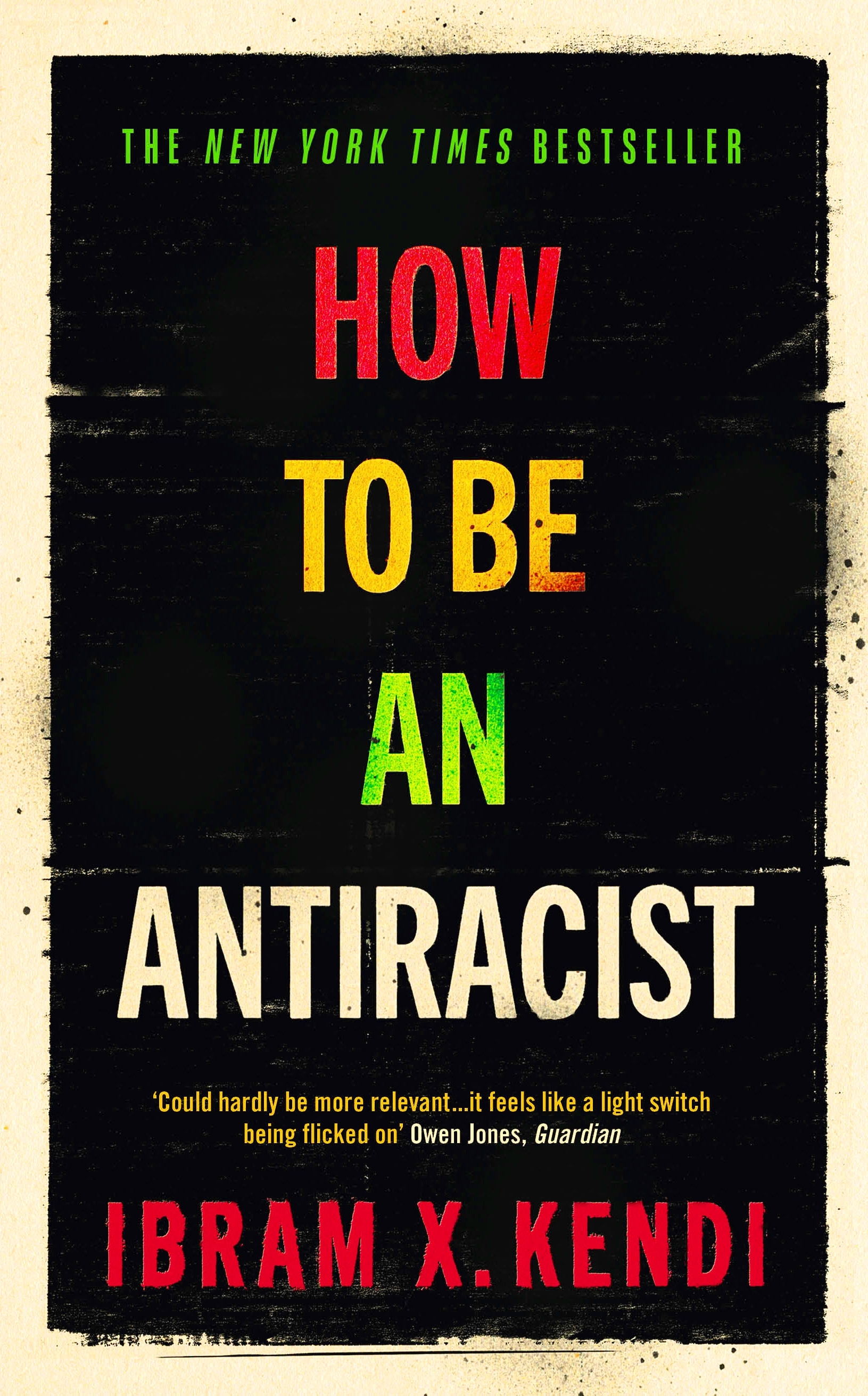
JS: The New Jim Crow by Michelle Alexander is super eye-opening about everything from the trans-Atlantic slave trade to the drug war and the prison industrial complex. It’s one line, and white America has been doing this to black America since before the founding of the country and its nation’s wealth is built on. We wouldn’t have what people call “American Exceptionalism” without it. Of course “American Exceptionalism” is also a flawed term, highly flawed. But, the more you see, the more you know, the more you see and if you can be anti-racist, and that refers to Ibram X. Kendi’s book How to Be an Antiracist. People talk about how this book is sold out in some places but it’s in audiobook form so it will never sell out in theaudio form. They can just keep giving it to you. He reads it himself, again I’ve been pretty devoted to studying, because of reggae and hip-hop, I’ve been devoted to learning about, what Bob Marley called “The real situation” and the line that he says in “So Much Things to Say”: “Never forget who you are and where you stand in this struggle.” It means something different when Bob Marley says it that when I say it because I’m coming from a different place.
I’ve been devoted to learning about this stuff and the history of racism in America and the history of the political economy of the United States and the world, for like since I was 17-18 years old. The things I’ve learned from The New Jim Crow and How To Be An Antiracist are things that I had never thought about before up until a year or two ago. So I think that being an antiracist is something that is gonna legitimately take everybody their entire life to work on, including their children’s life, and maybe even some generations after that. It’s not a small calling so the time to start is now and you can start by educating yourself about it and there’s great resources out there. People have done the work. People don’t want to do that, that’s why it was so amazing to see that show Watchmen on HBO, like I sorta knew about the Tulsa Bombing, and I’ve been trying to know about this stuff for a long time, and I’ve been trying to wrap my head around this history. But even now it was like, “Oh what happened in Tulsa? Oh ya, black Wall Street was bombed, firebombed by planes, and women and children were killed.” Now we all know about it and that’s because artists have with movies, shows, books, and plays, that’s always how I’ve really learned about that stuff. As much as I want education and school and books to inform me, more entertaining media has done a good job for me.
TL: I agree, modern media has been doing a much better job of representing these untold stories.
JS: Hey man, you’re from East Aurora, do you mind if I tell you a small family story?
TL: Sure go ahead!
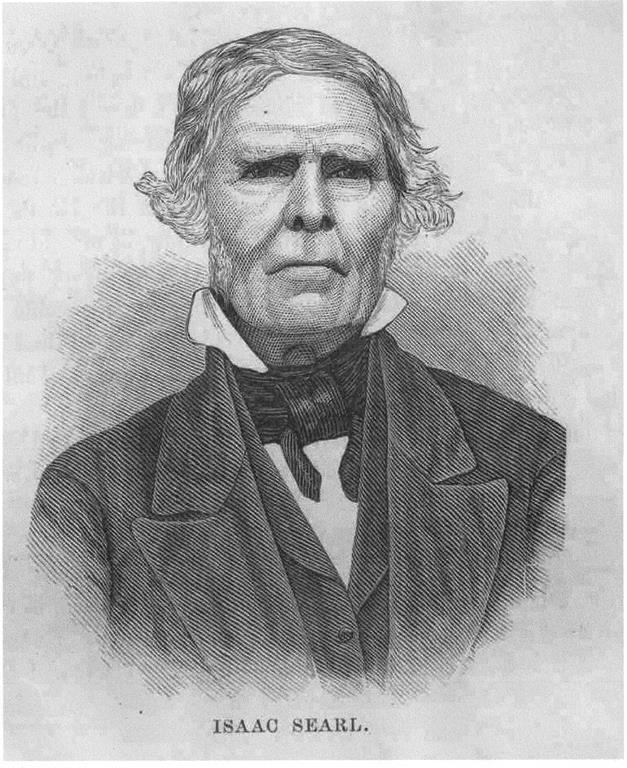
JS: My dad’s from East Aurora and the way that my family got to East Aurora was in the 1800s, I had a relative named Isacc Searl who moved his family from Vermont after he lost everything in a drought, he was a farmer and they were suffering so he moved his family and they ended up in Cattaraugus county. We didn’t really know about who he was but my dad got into genealogy when I was a little kid and he found a picture of him at the time and started putting it on shirts for our family reunion every year. All the family from East Aurora, Buffalo, and Rochester would come hang with us and we would celebrate the family of Isaac Searl. The picture was from the eighteen hundreds and he looked like an “Old Searl” and just a couple years ago some history was unearthed that a person who was on their death bed in the late 19th century told a secret.
He told a secret about, “Hey listen in the 1820’s and 30’s the Underground Railroad was really happening around here and these were the people that were involved.” They’re all dead now so they can’t go to prison, but Isaac Searl used to hide people who were traveling on the Underground Railroad in his house and then get them to the boat that would take them to Canada. So like, it’s amazing, and it made me proud to know that my family, the white part of my family came to the United States in around 1632, a long time ago, and I’m sure a lot of them were involved in all sorts of terrible shit but it’s nice to know that is a guy who had already lost everything risked his life and his family, and losing everything again, to do what he knew was right. It’s important to me to remember that even in those times people knew what the right thing to do was and you can be like those people now. You can always be one of those people. I’m really proud of all my young cousins from East Aurora that are in their teens and twenties, it’s like, “Wow, you’re so cool. I’m so glad I don’t have to like, be arguing with you guys about this stuff, it gives me a lot of hope.”
TL: That’s fantastic, do you have any other points you would like to communicate too the listeners?
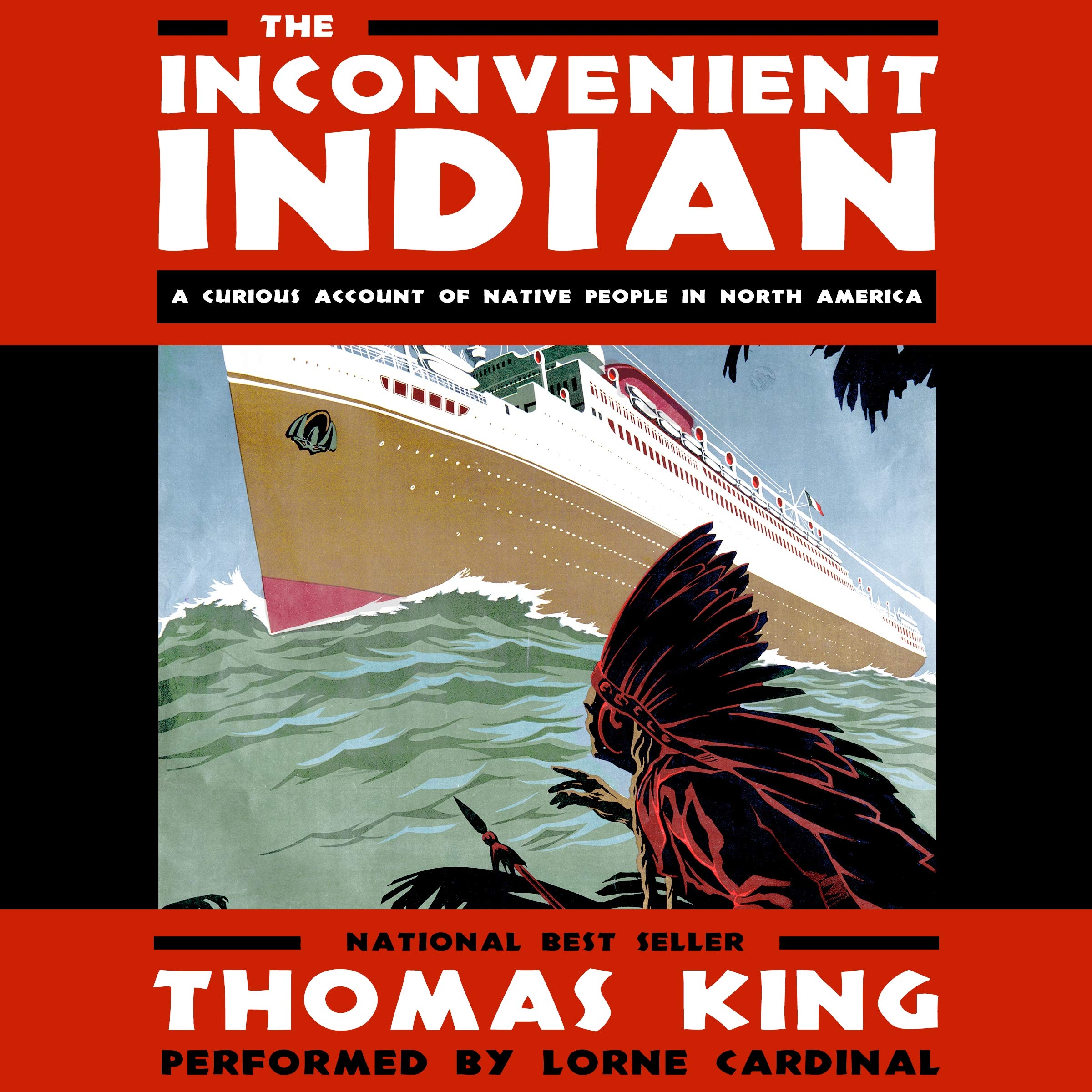
RG: For books, I would say that The Inconvenient Indian: A Curious Account of Native People in North America by Thomas King is a great book for people to check out who are interested in the real history about the relationship between North American Natives and non-natives, what that looks like from the perspective of the indigenous people when they first met. It’s a unique account. I think I just told James to check out The Indian Horse by Richard Wagamese.
JS: I just bought both of those books from my local female black-owned book store. She’s ordering them for me thanks for the recommendation.
RG: No problem, I think those are the books I would recommend.
TL: Do you guys have any closing statements that you want to add for the track?
JS: Ryan has got an incredible team up there and it would be a great honor for me to do more stuff like this.
RG: It’s amazing that a random fan was able to connect us and we were able to hit it off so well. James is such an enormous talent and he’s such a good person, his heart is in the right place, and I really hope that we continue to work together to make music that creates change and helps people realize what’s up in the world and makes people feel good and positive and that we’re moving forward in the right way. I feel very lucky, the invisible line is a lot more significant to Canadians trying to get into the United States to tour and make music. You don’t know what’s going to happen when you get over there, but to find a kindred spirit in James and to make music with James, and Eli played on the track, he did fantastic I forgot to mention that. I just feel really lucky James and all of Giant Panda Guerilla Dub Squad are some of the best musicians I’ve ever worked with for any genre and it’s been amazing to work with them.
JS: And enjoying music and talking about activism and talking about what’s right and what’s wrong it all happened at the same time. Friends, family, while your cleaning in the kitchen, making love in the bedroom, all this stuff you don’t have to separate this stuff as different parts of your life, they’re all part of your life.
RG: Yeah, we want people to get out there and do something. The last line that in the verse that James wrote: “It’s not what you say it’s what you do.” It’s important to not only have these conversations but also to do something that can affect change. That’s what this song is really about, it’s a call to action. Before we leave there’s one more thing I wanted to add to another question you had asked, something that was really disturbing to me while we were working on this song. In Toronto, on July 2nd and 3rd, there were some riots for an African-Canadian woman who was tossed out of a balcony by a police officer who was called to interview for some sort of domestic call. There were protests in my neighborhood in Welland, which is about 80 minutes outside of Toronto. There was a person from that group that I was discovering before, trying to pay young men to go into Toronto to break things and cause a riot rather than a peaceful protest. That to me, if there isn’t a reason to get up and say something, if that isn’t a reason I don’t know what is gonna be. If you have somebody like that who goes into a neighborhood and pays broke college kids to go and break things in Toronto for $200 a day each, there’s the issue. It was scary to see that.
JS: Don’t be that guy!
RG: Don’t ever be that guy!
TL: Don’t take money to go destroy another community, got it!
RG: Ha ha, yeah, I just wanted to add that to your previous comment about what was going through our heads while we were writing it. I called the police who interviewed and they were aware of the situation and had marked the group as a terrorist organization which is positive. In Canada, that’s what the situation is.
JS: That’s the way that the KKK over here is.
RG: I noticed that actually. As a matter of fact, the KKK in Canada actually started in my home town in 1908, so yeah.
JS: The grand wizard lives a town away from me.
RG: Wow that’s close
JS: And people know that that’s what’s crazy to me, everybody knows him. I guess I’m not gonna try anything.
In an excerpt from a previous interview with Street Pharmacy‘s Ryan Guay and James Searl of Giant Panda Guerilla Dub Squad on their collaborative track titled “They Don’t Give A $$$$.” Released July 2, both artists took the time to reflect on the past few months. The radical adjustments and adaptations both of them needed to make in order to survive the lockdown music industry were foremost in their minds. With the lockdown came an increased online presence for the both of them, which meant more online interactions with right-wing fans that became heated around the release of “They Don’t Give a $$$$,” interactions which both James and Ryan elaborated further upon in the context of a divided political climate.
Thomas Lent: COVID-19 has negatively affected a majority of the entertainment industry, but how has each of your group’s plans and strategies around shows and monetization changed?
Ryan Guay: I’ll let James take this one first.
James Searl: Well, our situation, I think. In Giant Panda Guerilla Dub Squad, anytime outside conflict has come up with the group we’ve always gotten more efficient and a little bit more communicative about whatever hole we needed to plug previous to that conflict. So when people left the band we didn’t expect to leave. We had to address that. We kind of really get tighter and more trusting of each other, because people who were originally in the band, the founders with me, found that actually, we have to work harder to find what we have now. That turned out to be something that works better. The next example would be any of us having children. Was this gonna, kill our ability to tour or come up with music? We just got more efficient at touring and putting out albums that we’re happy about. With Coronavirus I think we felt pretty good about the time that we have the kind of reflected and work on new material. We’re recording a new album which we’re having a hard time finding the time and money to get that together in a quick manner. Now we have even a bigger block of time. We’re securing news funds, recording music, and working on new songs, because nobody has anything else to do playing live for the next, god knows how long. Because, at least in the states, I don’t know people are really gonna feel how serious this is.
TL: Well, I can say that in Buffalo at least, I live in a suburb outside of Buffalo and specifically East Aurora, and we have an elder.
JS: That’s where my whole family is from!
TL: Really? Small world! I think about thirty-five people died in that place alone so I would say that people are taking things far more seriously.
JS: I hope so, that’s not what it’s like where I’m living. I went to get some beer at a store in southern Michigan. I live near the border around there and nobody is wearing a mask and the cashier said something about it and I’m like “I’m wearing this for your protection!”, So I said I didn’t know if masks were required here or not, I know that Michigan has some pretty serious laws right now and they said that “We tell people they don’t have to wear masks because we would lose half our business” and I’m like ok, but really, “Half the people? Really?” you’re selling beer and cigarettes, two products that people are going to be getting anyway. But as far as moving forward goes theirs a different presence online and I don’t like being ultra-online. I don’t like that idea like everybody being so online, but I also can’t imagine what this would have been like twenty years ago, I just can’t imagine it. Now because we have all these different ways to still be together with apps and to stay in communication with music. I mean, every Tuesday when I’m putting my kids to bed and start to clean the house and stuff and I can find a show for RootFire where I get to listen to classic Reggae tunes, whereas like before, I probably wouldn’t have gotten to see that. Clinton Fearon, one of my heroes, actually plays every Sunday at his house and he’s in his 70’s! So I think it’s nice for him to not have to leave his house to share with his fans all over the world. Could we have done this before? Sure, but nobody did. And we’ve just been accelerated into the future about what live music is gonna look like. What live music is about is connection and that goes back to the fans with the MAGA hats at the front row of the Panda show. I wanna find a way to talk to you because I’m glad you’re listening to the music and I’m glad that we’re connecting with the music but obviously theirs a personal disconnect that probably could be reconciled as well as it could without conflict. It would be easier reconciled just to listen to a song and having your own time to reflect on this stuff. Especially not having to deal with you personally, I’ll say.
RG: That’s a good point. I’ve definitely seen some or received some comments from fans that are no longer fans and not supportive of what our video and what our song represents because they’ve interpreted it in a way that they feel almost insulted. That’s not the intent here. We’re trying to communicate with people that need not understand the premise. They quite frankly get the wool pulled over their eyes and were just trying to have a conversation. James says that “Now we’re having good conversation” in the second verse and we want to have good conversation, a positive dialogue. If anything that’s the way that social media has proven that this discourse is anything but civil. As a result of being locked down and everything else that has occurred. I think that probably, other than stuff James already mentioned, as to how this has affected musicians, that is also the same thing with us but being online means you’ve gotta put yourself out there in a way. It can be volatile out there. I experienced this first hand. The first week that this song has been out I’ve had to mitigate these comments where fans have felt betrayed that we have done something like this and my response is “Sorry that you feel that way but this is how we feel about it and you should really look into this because our lyrics over the last 15 years that we’ve been playing, you’ve probably missed some of that.” So it’s yeah it’s kind of like the idea that people are tweeting against Rage Against the Machine that have been fans for 20 some odd years and then realize that they have left-wing values.
TL: When I was listening to your track I thought that you weren’t just punching one way or the other. You have clips of Nancy Pelosi in there as well. I don’t think you were particularly going after one side, you were going after one class though. It’s not as if it is a good class, particularly if you’re talking about the one percent there and you know, who’s defending them? Why would you?
JS: Exactly who in the 1% is listening to this song? Like if this song is about you, if you’re the person that doesn’t give a fuck about us, then there’s only so many people that could be.
RG: Their probably not hearing this song in reality.
JS: And ya to be fair, at least Panda, I was thinking about how over the years Ryan would say that he got some pushback on a song, like I’ve been dealing with pushback online just for speaking and trying to change people’s minds about being anti-racist and pro-environment for many many years and it has been incredible to realize how many, I mean, I’m not trying to pigeon hole people but it’s always a white dude. It’s a white young man commenting, “Why don’t you shut up and play music,” “What about black on black crime.”, just you know straw man arguments. Stuff that we just don’t have the time or energy to deal with on that level, but we always try to be there and are open to have conversations but people don’t want to listen. Reggae, Rage Against the Machine, and hip hop all of this is revolution music that has been around since recorded music acts as a pressure valve for people to be more comfortable, and they’ll say “I am tolerant I listen to Bob Marley, and I’m voting for Donald Trump,” and it’s like, well you know what, I think we should have some more detailed dialogue about that stuff.
RG: The discourse that were trying to have here is to cut the extraneous bullshit that that people are being fed. This is how we end up with the culture of you know. Young white men that feel disenfranchised. But actually they are a more privileged class, you know- and it’s mind-boggling to me- that some of these lyrics could be misinterpreted. At the end of the day, the purpose of this song is to cut through the bullshit and the same with the video. The video shows that on both sides, that when you’re at the top, those people don’t really don’t give a fuck about you. No matter who you are. They only care about the bottom dollar, the bottom line, just like you said about share prices, people being concerned about yeah reporting, rail blockades because they’re worried about shareholders losing you know a lot of money or losing faith in the company. That is absolutely ridiculous. We’re facing catastrophic climate change that could end humankind as we know it and somebody is worried about stock prices. That seems so wild to me. You know people need to talk about these things, and you need to understand that this is coming from great, and you know I hate to quote Warren Buffet, but I’m gonna do it. You know when people are fearful he says to be greedy when people are greedy he says to be fearful. Right now you know the people at the top of the top are perpetuating this fear in society and it’s resulting in an exorbitant amount of greed. How is the stock market not ya know completely shattered? It doesn’t make any sense!
TL: When it comes to the young white men who are you showing up to your shows wearing MAGA hats being obtuse my current hypothesis is that conservatism represents a counter-culture and the youth enjoy rebelling and they enjoy being contrarian. They feel that when all their professors and their teachers are all liberal. “I’m gonna be conservative because that’s what they don’t like and that’s what they aren’t.” It’s to be contrarian, would you agree with that?
RG: Yeah. I agree with that yeah that makes sense. I think that a lot of these young white men and other people that are taking the uber-conservative side of things, I think that they lack a spiritual connection with themselves and they’ve lost their sense of identity. This counter-culture is that identity. That search for an identity, where they feel the need to identify with something that looks like them and that’s what I found with having to defend this song. When I’m looking up their Facebook profile, I’m seeing just “Being lost,” and I’m seeing that they are not being sure of themselves or who they are. That seems to be the case for a lot of these people I’m assuming. I’m Canadian so this might not be as big here so I might not be seeing it as often. James, what do you think of that?
JS: I think there’s a good degree of that on both sides and that’s like a bigger conversation about the American psyche or the American identity. When I was growing up all suburban kids listened to hip hop. And it’s like, why is that? Why are they listening to music that is directly about where you’re not from and not made by people in your position? In a lot of ways, it could be really beautiful because that’s one way that some people that are in an oppressed situation are making communication and it is being observed by people on the other side. That would be the call that we would all answer too. I think that that’s been my motivation in my life for my music, doing as good of a job as I can do. I’m not like a, you know, I don’t feel great about everything that I’ve accomplished for human rights since I’ve listened to Rage Against the Machine when I was 11 years old. It’s like, “Oh this is the side that I’m not being told”, “This is what I’m not experiencing” and I feel like it’s my responsibility as a moral person to bring justice and rights and to improve culture by talking about it because if you’re not talking about it then you’re supporting it.
And that’s from Zack Del La Rocha from his concert in Minnesota that I had a recording of that I was listening to when I was 13 years old. “If you’re not a part of the solution then your apart of the fuckin problem” that was in the middle of the speech in “Wake Up” and I’ve never forgotten that speech. It gave me goosebumps then, it gives me goosebumps now. He was talking about Leonard Peltier from the American Indian Movement in that speech. The thing I wanted to say about the young men who are rebelling and being conservative as apart of rebelling, what troubles me about that is that in the sixties, early seventies, in the eighties, with whatever that rebellion was I’m not sure, or grunge in the 90s was everybody was the, the counter culture was resistant to the greater culture, the hegemony, the mainstream. What’s scary about these guys is that there is already a structure ready to like accept them with this counter-culture and give them the tools to carry out this system. This includes tons of legitimate journals, newspaper writers, college professors, and ya know the money that’s given to colleges.
TL: They’re not organizing in garages, they’re being given grants from super PACs.
JS: Right! When I was in college I studied international relations and, being taught by hip-hop and African music things that I didn’t learn about growing up in the suburbs necessarily, points of perspective. I knew that jobs I would get to try and fix those things, there was no money there. Not even to pay me but not even to exist in a way that was meaningful. My counterparts in college were like, republican conservative people who went on to be funded by the Koch brothers and went on to be the president of not-for-profit groups in Washington D.C. who use 49% of their power to influence politics and 51% to influence culture because that’s what they have to do to be a non-for-profit. These are Koch brother founded organizations. That makes me really scared about these, that was going to have to be dealing with these young people as adults with power that are already coming from privileged places and they’re ready to be moved right along into positions of power.
Matt Gaetz, the 37-year-old Congressman from Florida, he’s just atrocious. Stephen Miller for instance he’s my age. If you thought these guys were old and dying out you’re wrong they’re being replaced with more young people. In the verses that I wrote in the song with Ryan I think one of the main points is to not be passive about this. Be active. Get on the streets. Sacrifice as much as you can because this is a fight that needs as much energy as possible because the people that don’t give a fuck about you. They also have all the money and a lot of them have all the guns.
RG: All the guns.
JS: They have all the guns because we’re non-violent people! We know that if you put a gun in your house you’re twice as likely to die from it. You know it’s like everything points to, I don’t want to have a gun but what am I gonna do when all these crazy people, ya know, it’s all about certain numbers. It feels good to go to a protest. Not on the internet. Actually out on the streets with people who believe in these things as much as you do. Ya know to these young MAGA kids it’s never the way that you see it on the news. It’s never a bunch of violent people (at the protests) its young, old, men, women, non-binary people, everybody’s there at these protests and so many times the cops just come bust it up. In Denver, my friend was in one for the boy Elijah and everybody was playing violins outside and the police came and tear-gassed everybody. This is not a time to be passive. You know Ben Shapiro, Jordan Peterson, they all tell you to watch. Wait and watch and just see what happens all of this is gonna come crashing down. Donald Trump is gonna rid the world of pedophilia, I’ve heard this from so many people, panda fans included. It’s just like “Sit and Watch, Sit and watch other people do this for you”!?! Why aren’t you apart of your movement that you speak so highly of?
Ed. note – we made every attempt to find photo or video footage of moe.s performances on Last Call with Carson Daly, but the only footage we could locate is owned by NBCUniversal.
In the Jam Band scene, fans are aware of a few things about their favorite bands, one; your favorite bands have the best live shows, two; it’s a community that is incredibly accepting even if someone doesn’t get it, and three; you’re going to spend your whole life trying to show people this band and they may have never heard of them, and you know they are not on any popular TV shows they like.
You’re not going to turn on Saturday Night Live this week and see Phish playing “Wilson,” or catch a Umphrey’s McGee song on Fallon anytime soon. Sure the occasional Dead & Company pop up or even Dave Matthews on Kimmel, but for the most part you won’t be able to answer, “Oh, they were on Colbert the other night.”
Not even bands like the Grateful Dead or the Allman Brothers garnered that commercial success that so many bands saw in the 70’s and throughout the rest of their career. We’ve all seen the occasional interviews with Weir and Garcia on Letterman back in the 80’s but for the most part, you had to go out and find that band or you were told about from a friend or heard the show was amazing.
But for one week in television history Upstate New York’s own moe. was “ Call with Carson Daly’s” house band.
That’s right not just a blip in the radar of a one night appearance but an entire week of television exposure for a jam band.
On the heels of announcing their forthcoming album, This is Not, We Are, NYS Music spoke with moe. guitarist and vocalist Al Schnier and drummer Vinnie Amico about their time 15 years-ago as house band for Carson Daly.
For those who don’t remember, Daly was the host of the popular MTV show Total Request Live, a show that ran from 1998 to 2003 and was affectionately known as TRL. The show was born from Daly’s other two show’s Total Request, and MTV Live.
TRL for those who remember was not where you would really find bands like moe. on. the show featured the top 10 videos of the day and Daly interviewed popular celebrities and guests.
But in 2002, Daly was given the final slot of late night that went on after Conan O’Brien. The time slot that was for those up way too late at night or just getting back from a long night out.
“It was the late late show,” says Schnier. “It was the one that came on after Conan. So whoevers watching that show, is probably our demographic anyways.”
In 2005, moe. was at the height of their success, they had been touring for 15 years at this point. Playing shows at venues like the Fillmore in San Francisco, to Red Rocks, to opening for bands like the Grateful Dead and the Allman Brothers.
“We were probably at the top of where we have been (in our career),” said Amico. “We had just released Wormwood and we had just done Conan O’Brien”
“At that point we have 15 years of being a touring band under our belt, we’ve played with bands like the Allman Brothers and the Grateful Dead, you know, played a bunch of festivals and toured all over the place, really had gotten to experience a lot and had been all over the world at this point but to do television is a totally different thing.”
Al Schnier
Daly was going for a completely new spin on what music could be on late night television.
“It was a great concept for his show. They didn’t have a house band,” said Schnier.
Each week would have a completely new band featured for the entire week, playing their own original songs as well as some covers as the ins and outs of guests and into breaks. The idea had never been done before in Late Night and was the launching pad for many bands like the Killers, to Ed Sheeran.
Last Call’s first studio borrowed the set from SNL’s studio 8H, where Daly came out with no monologue, no jokes, just straight into the show with guests interviewed and each week featuring a new house band.
An idea that seemed simple enough, it would give bands a large platform, bigger than just one night on a talk show, exposing them to a new audience. Many of these bands were just cutting their teeth, while moe. were the seasoned vets.
But as any jam fan knows, there is a difference when you bring on a band like moe. something will always follow.
The fans, or in this case the moe.rons followed. For probably the first time in the show’s short history, the audience wasn’t there for the guests or Carson, most of them were solely there to see moe. in the most intimate setting they had been in, in years.
“What I do remember is how loud and into it our fans were. I think the crowd was mostly our fans to see us in that TV setting. It seemed to be shocking even to Carson, like “Holy shit, these guys have a cult following.” I think even Carson was cracking up about it, I mean our fans were pretty rabid.
Vinnie Amico
“The thing was there was a ton of moe. fans in the crowd,” said Schnier “Carson Daly got a kick out of the crowd. Because mostly every show was full of moe.rons. So they got the joke or got a kick out every song we would play.”
The band would often center their sets around which guest was coming out at that time. Schnier remembers the time, a specific guest the band found attractive, was coming out and centered a song around their entrance.
“We specifically chose to play “She Sends Me” for this celebrity as her walk on music”
Schnier couldn’t recall who the guest was but remembers the band and the audience enjoying the poignant song choice. That guest was character actor Aisha Tyler.
In just three days of shooting, moe. would perform as the house band for five different shows. Each time performing sets of their own originals, some more popular tunes like, “Rebubula” for Eva Mendes entrance; to performing the “The Pit,” for Wu-Tang-Clan’s RZA’s entrance.
Even doing a cover of Blue Oyster Cult’s “Godzilla,” for a very humorous entrance of NBA Champion Dennis Rodman.
But the guests on the show weren’t the only memorable experiences for moe. that week, Schnier recalls the time as a surreal moment in their career.
“Wow.. there’s a surreal quality to it.” said Schnier, “The thing that I remember, it’s kind of like when you’re a kid and memory of going to the State Fair or your memory of a graduation, an event, it’s really just one picture in your head. And my memory of being on Carson Daly is from our vantage point, where we are standing on the stage… you look across the sound stage and there’s Carson and where his guest would sit and to the right is where our fans were. The whole experience is just kind of surreal, because it’s like nothing else we have ever done.”
The day to day of working on a show like that can make the average celebrity sighting commonplace, and for Schnier he found that out first hand in an elevator going up 30 Rockefeller Plaza.
I remember riding in the elevator with Sigourney Weaver. I was beside myself that I was in the same elevator as her. It was just wild, I’m just there with my guitar and going to do my thing and she’s just gorgeous going to do whatever she was doing. I was like, “Ok, this is awesome, this probably happens all the time here to everybody but people like me!”
Al Schnier
One of the most appealing aspects of the Jam scene is that working man’s mentality of its artists, the humility of the everyday man or woman that other artists lose along the way to commercial fame. But even now 15 years later, hundreds of shows since, Schnier still looks back on the time with fond memories and feeling lucky to have gotten to do the show.
“It was cool being part of the staff,” said Schnier. “You know you had your name tag and you got to check in everyday, ride up the elevator and then see all of these random people. People who were shuffling through the building, people doing Saturday Night Live, The Today Show, and you were going to work doing your thing.”
That humility came in when asked if they thought they received a boost in fandom or recognition. Both Amico and Schnier saying they weren’t sure if they really ever noticed a growth in crowds, but nearly two years later on New Years Eve of 2006 moe. entered the New Year by playing Radio City Music Hall.
Today, moe. looks back on that time fondly, as they, like the rest of us quarantine and cope with the lost summer of live music. But both Amico and Schnier are staying positive and using this time to hone their crafts.
“I’m playing everyday and practicing on a pad, not even hitting my drums, getting my fundamentals together. I’m not a big woodshedder like a lot of musicians, which means my fundamentals suck, I can go out and play a million songs and play them very well, but my chops aren’t the best. So I’m actually going back to a beginning, getting myself to be a better drummer.”
Vinnie Amico
“To be honest, I’m doing fine. I feel like there are a lot of silver linings to this, in many ways I’m actually taking advantage of the found time,” says Schnier. “I’ve been playing so much music, learning a bunch of songs and teaching. The irony is that I told my wife after New Years, that I am going to make a concerted effort to play music everyday this year and not so much as a resolution but as a sort of lifestyle change. You know, I thought I kind of owed it to myself and my bandmates to be playing music everyday… I never anticipated it to be like this for hours and hours everyday but it’s been amazing.”
The two are even picking up new gigs, Amico as an internet home chef and Schnier playing private house parties over Zoom.
“I’ve been doing some cooking on Instagram live,” says Amico. “So I’ll keep doing those… people seem to like my cooking more than my drumming.”
“Meanwhile, I’ve started doing live lessons online with Lesson Masters,” says Schnier. “Then started doing private house parties, via Zoom and Live Lesson Masters and that thing has exploded and taken off unexpectedly. So I’ve been really busy, I’ve been playing gigs still every weekend.”
Both Amico and Schnier acknowledge moe. has been fortunate to have had such an amazing career in the jam scene, but knows how hard it is to be starting out as a touring live band, especially during this time. NYS asked the two what fans can do, in the meantime while we quarantine, to support artists.
“Really by sending them money,” says Schnier. “There’s a number of ways they can support that, buy their merch, support their online shows… who knows, if there’s a way you can reach out and maybe invest in the band, to actually be a legitimate patron of the arts. It’s like supporting public radio, maybe you’re in a position to just buy a hat or a sticker, all of that really helps. But maybe you’re in a position with disposable income and you want to see a band survive and you can help in that way.”
Schnier went on to talk about the importance of staying connected to friends and fans.
“The thing about this scene and the thing I love about our fan base is if we have one purpose it’s about connection,”says Schnier. “Even more so than the music, it’s just about connecting people. So if I could provide a platform where we are still doing that and we’re staying connected and we’re doing it virtually, it feels pretty good. We can all spend a Friday night together in our own homes, you leave those things feeling pretty recharged much more so than just cruising instagram and Facebook or watching something on Netflix, because you’re seeing people and interacting with them.”
moe. released their long awaited follow up to 2014’s No Guts, No Glory, on June 26. The band will also be celebrating their 30th anniversary this year, and although they may not be touring this year, moe. fans can anticipate some of the best and tightest sounding moe. live shows and albums to come out of this quarantine.
It has been over fifty years since the Woodstock Music & Art Festival made its mark in history from August 15-18, 1969 in Bethel, NY, and one year since the festival marked its golden anniversary. The Museum at Bethel Woods displayed a special exhibit throughout the year of Woodstock photographs and artifacts and hosted a weekend of music in their pavilion and throughout their grounds where the historic festival was held.
Throughout that weekend in 2019, Bethel Woods had a meeting spot for 1969 festival attendees at the top of the hill where the original festival was held. There, I was introduced to Lisa Law who, upon noticing my camera, was quick to say, “Here, do you want to take my picture?” We only had a brief introduction at that time with all the hustle and bustle of the festivities that day
Lisa Law is an accomplished photographer and videographer who considers herself to be a historian/documentarian with her camera, capturing candid moments as they happen. In the last five decades she has shot iconic portraits of now legendary musicians (sometimes at major moments in music history) and documented social/cultural changes and the lives and society of indigenous people, through both still and video photography. Her documentary film and book by the same name, Flashing On The Sixties, features her images and videos from that era. More than 200 of her images are also on exhibit in the Smithsonian Museum.
As a member of the Hog Farm Commune (which included Wavy Gravy), she was part of the group flown from Los Angeles to New York to provide the “security” for Woodstock. At the festival, Law was responsible for setting up the Hog Farm kitchen and getting food ready for the festival-goers who wanted it. Even with all of this, she managed to weave in her photography and videography to capture the arrival of the crowds and other scenes at the festival.
Shortly after the conclusion of the 50th anniversary weekend at Bethel Woods, I caught up with Lisa in the Town of Woodstock to hear more of her story. Starting with her early days with a camera, she brings us through her experiences behind the lens over the years, including recent works with establishing a museum in Yelapa, Mexico. Her experience at Woodstock is only a portion of a much greater story.
Lisa Law, showing her photo of Tom Law setting up a teepee before the start of the 1969 Woodstock Music & Art Festival
Steve Malinski: What drew you to photography? What got you into picking up a camera for the first time?
Lisa Law: Well, my father was a 16 millimeter [film] man. He used to make movies of wild boar hunts in Mexico, fishing in Guaymas, the garment industry demonstrations in North Hollywood. So, he was always making movies on 16 millimeter. Besides being a furrier and father of three, he joined the Navy in the second world war. He gave me a little Brownie when I was probably six and I’d go around shooting, you know, kids follow what their parents do. So, I would go around shooting my girlfriends and swimming in the swimming pool. I love horses. I was a horse person – I had my horse in the backyard and a swimming pool in the backyard. I used to go riding at Griffith Park.Griffith Park is where the Greek Theater is. There’s a mountain there. And you have to go around like this to get to the valley. Laurel Canyon is up on top. Mulholland’s on top, and Topanga goes over.
So, the thing about me is that I was always a person who kept their negatives. A lot of people don’t keep their negatives, so I have all the negatives of everything I ever shot. So I was shooting my life story with this little Brownie, and then at the age 15 I moved to San Francisco to live with my aunt. I shot everything there too. And then I went to the College of Marin and I started working for the manager of the Kingston Trio. He was a photographer and gave me a Honeywell Pentax.
I took two classes one in City College in San Francisco and one in College of Marin in portraiture. That’s when I learned to really crop in the camera. Whereas before I didn’t know how to do that, but I was already good at shooting what I was interested in. And I am instantaneous. When I shoot, I see something and I shoot. A lot of photographers wait, la la la, say “smile,” all this stuff, right? I wasn’t like that, I just shot immediately. For example, so I just shot a conversation I had earlier today. She didn’t see me doing it.
I started shooting for Frank Werber, Kingston Trio, Sons of Chaplin, [history trend] and I got some backstage passes to The Beatles. And I shot Sonny and Cher backstage. I went to the Cow Palace, saw The Beatles. And I shot Peter Paul and Mary at a concert and that’s how I ran into their road manager [Tom Law] and ended up marrying him. So we knew everybody on the West Coast and the East Coast in the music business, basically because there weren’t too many people at that point. And so I was shooting Peter, Paul and Mary. And then when I was working for Frank Werber over in Sausalito, there was the Trident Restaurant. It had mostly jazz on the weekends at night.
Well, I heard this other group in Berkeley, called Brazil 65. And I said, “Frank, you gotta get this group. They’re fantastic. And it would be good on a Sunday afternoon. Over on the deck your restaurant on the water there on Sausalito.” And because Sausalito is very popular town, a lot of tourists go there and shop and boat and sailing and everything. So he said, “No, no, no.” And I said “come on you just trust me.” So that’s where the Brazil 65 got their name, basically was playing at the Trident. That’s when they became popular – Sérgio Mendes. Bill Evans played there. You know, it was really great. So I was shooting all the music I could possibly shoot and because I met Tom Law at the Peter Paul and Mary concert and Berkeley, I then moved down to LA. And he had bought a castle with his brother {John Philip Law, the actor] in the Los Feliz area [in LA].
Bob Dylan… because Albert Grossman was Bob Dylan’s manager… He knew Bob and Bob wanted come out to LA to hang out for a while and he rented some rooms from Tom in this castle. And that’s when I shot my famous pictures of Bob at The Castle, because he was staying there and I was living there and he would sit down at the dining room table I would just keep my camera out, start shooting.
The Velvet Underground stayed at the house too, Lou Reed. Andy Warhol came over, I shot them at The Trip. And my pictures are used more than anybody’s from that gig.
Andy Warhol did his screen tests (I guess they’re called) of these people that hung out at the factory with him and he projected them behind the Velvet Underground. So as you’re watching Lou Reed play with his band you’re seeing these videos of the same people, but it was like a screen test projected from the back. As the concerts happening, you’re seeing the projection of Andy Warhol’s screen tests. But other people photographed it too. But they strobed [flashed] it. And because I was then shooting with a Nikon and a fixed lens I was able to get really sharp shots with the projected images of the same people playing doing their screen tests behind, and I was very artistic, was the only time that Andy Warhol did that type of projection behind the group. It was called Andy Warhol and The Velvet Underground, and they only played three nights, and I shot them the first night because they were staying in Tom’s house.
Well, those pictures, if you look at all the books on the Velvet Underground, those are the pictures they used because I was the only one shooting at that time, that was shooting really good pictures. The other people were strobing which just gave a white background.
SM: When you’re in these close settings with Bob Dylan and Lou Reed, did you ever get a sense of shyness or intimidation when you’re taking pictures of them?
LL: Well, Bob kind of made me feel kind of weird. He wasn’t that…friendly? We were friends, but I was his masseuse and cook too. But I’d be sitting there and I have my camera shooting away and he’s sitting there and once in a while, he’d like make a face or something.
So, I was shooting as much as I possibly could. But I probably could have shot more. And I didn’t say, “Okay, stand there I’m going to take your portrait.” I just shot whatever was happening. That’s what I’m known for, is shooting at the moment that something’s happening. But that’s setting up a shot. I take group shots now. I’ll take whole group shots of bands, then I’ll set them all up. And I’ll shoot families and get everybody together. When I was shooting for my book Flashing on the Sixties, most of those pictures are very candid shots. Like Cher backstage at the Cow Palace with Sonny. David Crosby getting ready to go on that same event at the Cow Palace. I shot the Byrds at Hollywood High School in concert. I shot John Lennon running behind the stage with his guitar when the girls are chasing him. And when Dylan was staying at The Castle with us, we went down to the Whiskey a Go Go and saw Otis Redding.
When I was sitting at a table with Bob Dylan, Tom, and a bunch of friends, I just jumped up and went up to the stage and started shooting. Well, Otis was bouncing all over the place. Half the pictures were out of focus because it was too dark. But I was able to get like three or four really good ones. Those were then used by Atlantic Records as his promo shot and album cover after he died.
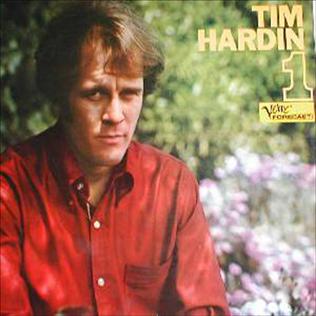
So with Tim Hardin, I shot his first cover and last cover. I shot him behind The Castle in the garden. Then he went to Verve Records, he said he need an album cover. So I went to Verve, and they used it. So I knew how to get to Capitol Records and how to get to Verve Records and Atlantic Records and they used them as their promo shots or album covers.
Album cover of Tim Hardin 1, photographed by Lisa Law
After we moved to Mexico and then back to LA, we went to the Haight Ashbury. So I documented the Haight Ashbury, the human being atmosphere. The Streets of the Haight. Monterey Pop….at Monterey Pop I had a little puppy that I had to feed with a bottle because the mother couldn’t be him. So I missed out shooting Otis Redding and Janis Joplin because I’m holding this baby puppy. I never considered myself a photographer. So, it didn’t matter, just took care of the little puppy dog.
SM: So at that point was photography just a hobby for you? At what point did it to turn into more of a career over hobby?
LL: It was after I divorced my husband in 1978. So all the way up to 1978, even Monterey Pop….that was just documenting my life. I’m very good at documenting my life.
So when I moved to New Mexico, and I’d started shooting the Hog Farm and Ken Kesey and the buses. Then I would print them up and leave them in their office and I was getting to be known as a historian.
When we went to Woodstock…Of course, I shot us getting on the plane [in LA], waiting in the airport, putting the tee pee poles and tee pee on the plane. I didn’t shoot in the plane, which is weird. And it’s probably because I had my two-year-old with me and she was sitting on my lap and I probably didn’t do it because of that. I didn’t shoot one picture inside that plane. But when we got off the plane, as soon as we came around the corner from where you get off… all these cameras were there. And the lights, cameras, rolling and rolling! They sent a jumbo jet to pick us up, empty. Who does that? Do you know how much that costs?
SM: Let’s see, in 1969 dollars….
LL: Expensive. But the airline probably donated it. So the press, they said, “Ah, we hear you’re the security.” Wavy [Gravy] says, “Well, do you feel secure? Yes? Well then it must be working.” “What are you going to use for riot control?” “Seltzer bottles and lemon pies!” So we then got on buses, and we went to the site and the last picture on that first roll [of film] was of my husband putting up the tee pee. So that was the last black and white then I changed to slides (Kodachrome).
But also when I went into town to get the food, I got a camera and some film, and I shot Super 8 . Because I shot Super 8, I was able to document behind the scenes. The same way I document with a still camera, but now with a movie. Because of that all my footage is being used now in every single one of those documentaries you’re seeing on TV, they know who to come to. And a new one that just came out from by Bohemian Films, The Festival That Rocked the World is the new one that just came out and not the American Experience from PBS. It’s a whole other one. It’s I think the best one. It has footage and vocals and stuff like that have never been seen before. It’s got a lot of my footage and me talking about everything. Because I have so much information about the Hog Farm and everything and I’m so talkative. They really liked it, liked working with me. I’ve gotten used to doing it. Before I couldn’t even speak – when my when my book came out and they interviewed me on the radio and I could barely speak.
Lisa Law, with a figurine of Wavy Gravy, at Bethel Woods Aug. 2019
SM: When you were actually at Woodstock, you were running one of the kitchens?
LL: Yes, there was only one kitchen, basically. Our kitchen, the Hog Farm kitchen. There were two but one of them was for serving us while we are setting up everything and the other one was for serving the crowds. I helped design that one, the kitchen and the five food booths that had 10 lines. So, I went and got $3,000 from John Morris and while I was shopping, they were building the kitchen and the serving booths. When I got back they were just finishing that.
So as soon as we got our pots out of the boxes, we started cooking. And I went and took a flatbed truck and went to a farm next door and I said, “I’ll take this row, that row, and that row.” Now that footage of me saying that was filmed by the [Bethel Woods] museum, they did an interview with me. So they used that footage of me saying that in one of their exhibits. When I went to see it recently, I leaned back in the beanbag and then I would talk and the other people around me. They would go “what?” and I’d say, “Well, that’s me over there! That’s me over there!” “That’s you?!” they’d respond. And I would narrate it for them. They liked it. So anyway, that’s what I did. I went and got all the vegetables from farmers locally. And it was August so they had a lot of it. So we’re cooking bulgur wheat and then I bring all that food and then the volunteers would chop it up, stick it in the pot to cook. And so people were waiting in that line. If you were hungry, you could eat. You did never go hungry at Woodstock.
SM: Even with a crowd that large?
LL: I had half the food leftover.
We were cooking non-stop, and people were in line. There were 25 to 30 people per line and there were 10 lines and it was just going: serving, serving, cooking, serving, serving. I bought 160,000 paper plates. I kind of knew what was gonna happen and when I went to town I got another three thousand. I spent $6,000 of their money to buy the stainless steel pots, to buy the cleavers, to buy the trash cans to mix the muesli in. To this day I still have the two cleavers and the stainless steel pot. One’s at my daughter’s show in Santa Fe. She’s got an exhibit up right now. She did a whole thing called “Hail Hail Rock and Roll: Happy 50th Woodstock!”
SM: Was the scene when you arrived at Yasgur’s Farm after travelling up from JFK different than what you expected?
LL: Well, when I got there they were already serving 100 people. The first group arrived by bus and they already set up a kitchen with plywood and two by fours and plastic. This was happening maybe a few weeks before the festival. They were already making the free stage, the little kitchen, and they had brought food with them. And they were they were cooking what they had with them, and [Max] Yasgur had yogurt, milk, eggs. He was selling stuff to us from his farm, and he had brought water and milk trucks over.
And they were fixing a LOT of food. I mean, big plates of food for everybody. Because they were being fed, everybody helped. We needed something done, we’d put them to work. Because otherwise I’m not gonna sit around doing nothing. They all helped. So we had different groups that came in and helped. And then the [crowds] started arriving and I had looked around and I said, “You know, this is gonna be bigger than we think it is.”
And that’s when I went to town and I spent that money. When I went in to get the money from John Morris, I said, “These people are going to starve if we don’t feed ’em.” And the concessions that were up on the hill? Those pointed roof ones… They were out of food the first day. There was no way to get more food because there was no way to get anywhere.
It was solid people and solid cars. And in my footage I stood right in the middle of them coming in. I just stood right there. And today I still shoot that kind of shot during parades and marches. I just stand [still]. And they walk around me. And you can see their faces and chanting in their signs and I shoot demonstrations like that.
SM: How did you find the time to take all of the photos and footage in between making sure the kitchen was up and running?
LL: Because I shoot on the run, I’m always shooting. Like I just finished visiting today and I’ve already shot 100 pictures; I should actually shoot you, too. And I shot at lunch today and shot portraits without even anybody really knowing I was doing it, that’s how I get away with murder. Unfortunately, you know, these ones aren’t as sharp, they’re in focus but they’re just not – they’re pixelated more with the phone. I hope [these cameras] get better. And then next i-Camera. I should be shooting with a camera. But I like to be more candid. If you have a full camera, it’s more intimidating than a phone.
SM: That’s my problem when taking photos. Everyone sees you with this big camera and they’re suddenly aware of your presence and their expression goes from candid to… not natural.
LL: Right. So I was shooting at the Woodstock event at the museum [Arlo Guthrie] and I was sitting there and I turned around and the sun was still shining. And all these kids are dancing like crazy and I get to snap them because that’s where the action is. It’s these people happy, dancing, celebrating. So I think probably I’ve shot over 1,000 pictures the last three days [at the 50th anniversary] and a bunch of the people came to my exhibit [at The Stray Cat].
SM: What was the lasting effect of Woodstock? Did it change your perspective on photography or have a major impact on your life?
LL: Well, what it did show me is that I have to shoot more because I looked at other people’s photographs that were up in the museum – all of those photographers and their best pictures from Woodstock. There are pictures in there of the food booths up on top of the hill and in front of the stage. When I was shooting the movie, I wasn’t shooting much of the stills. So when I consider it, I did a horrible job of shooting my stuff. But I did get some. If you look at my show, you will you will see some good pictures of Wavy coming in and the aerial shots [from a helicopter] and cooking shots and stuff like that. I could have shot 10 times as much. But I didn’t. I did get the movie, which is being used a lot by every single documentary filmmaker. They’re using it, but I didn’t shoot enough stills. And if I was really smart, I would have gotten a bigger camera and really shot the heck out of this year’s anniversary. But I figured that, at 76, do I need to take all those pictures? Because I’m still sitting in my office with thousands of pictures that nobody’s ever seen. So you have to think about that. Do you just keep shooting? Or do you slow down a little bit? Now, I also have Woodstock Three [1999] – and Two [1994] – nobody’s ever seen my Woodstock Three pictures. I’ve documented the heck out of Woodstock Three, for People magazine. I have an entire shop of Woodstock Three, never been seen. So I have all these rooms, slides, and proof sheets, pictures that nobody’s ever seen before. And so that makes me feel bad that I want to share everything that I’ve taken. That’s why I take pictures, it’s for sharing. That’s why people look at pictures. It’s because they want to see what you saw, what happened. And it’s very important – photographer’s work is very, very important because you could tell somebody about what happened but you can’t really describe it unless you show them an image. A photograph is worth 1,000 words, right? So I feel that I owe it to society to be able to share that.
About four years ago, I did a show in Yelapa, Mexico. I didn’t want to bring it home because it belongs down there. So I built a museum to house the pictures. [El Museo de Historia at Arte y Cultura de Yelapa]
There was an old building that used to have a sheriff’s office. We fixed up the sheriff’s office, we fixed up the plaza and we built the museum. I have 108 pictures on the walls. It took five months to build. I was the builder. I was the curator. And then I went and got tables full of artifacts, then I had to write up all the wording go with each one of those things. So there we are cutting the ribbon on the opening day, which was my birthday, March 8, [2019], alongside the guy who gave me his crew to build it the woman with the funding, and all my government people. There were a lot of compliments. I wanted to show the people what Yelapa was like back before there was electricity and plumbing.
We spent a lot of time getting the museum ready. Five months, five days a week.
Lisa Law (center) at the ribbon cutting for El Museo de Historia at Arte y Cultura de Yelapa. Courtesy Lisa Law/Santa Fe Reporter
SM: Back to Woodstock, do you think the 50th anniversary weekend was the celebration that everyone kind of hoped for?
LL: For the people that paid for their ticket and got their passes and came all the way up there to do that? They were very happy. And the ones that went over to Gerald’s [nearby gathering], those guys were happy. Okay, but it wasn’t like a Michael Lang thing. And Michael Lang’s things are too big and too corporate; nine never work. [Woodstock] Two and Three did not work. They did not work. Right. Okay. What happened here was very strict over the at the museum, and kind of loose over at Gerald’s. It worked, because there were two different ones. 100,000 people didn’t show up. Maybe 16,000 over at the museum [Bethel Woods] and 200 or so over at Gerald’s.
Well, this was the big 50th anniversary. Well, Michael Lang was invited to that. They gave him a house near Yasgur’s Farm. And he and Henry [Diltz] and and Bill Hanley and all those guys hung out in that house. So Michael Lang got to celebrate Woodstock, even though he couldn’t put on his event. They brought him over to be at their event to celebrate with those people who celebrate Woodstock every year. That was great for Michael Lang.
Back in 2015 I took a closer look at Twiddle, who I had seen previously as a small-font band at music festivals around the Northeast. Nothing had stuck out just yet, beyond a surprise version of the “Duck Tales” theme song at The Big Up in 2010. But after seeing them in small rooms and grow to perform at The Palace in Albany and as far away as Lockn‘, my perspective of the band changed, for the better.
The recent Roots Tour was a rousing success, where Twiddle made stops at venues that served as notable points in Twiddle’s history in Vermont. The Roots Tour – featuring archival and recently recorded streams, band interviews, plus two live streams from Higher Ground – brought out the best of the band, collectively and individually.
https://www.instagram.com/p/CDB5S_ahEx2/
The band interviews were the hidden gem of the Roots Tour, and worth the price of admission alone. Each band member spoke individually, and later collectively, providing insight into each of the venues they performed at during the tour, and how that little corner of Vermont (of which there are many) affected Twiddle’s growth over the last 15 years, especially those important formative years.
With three shows at Champlain Valley Exposition in Essex Junction, VT taking place this weekend, NYS Music caught up with keyboardist Ryan Dempsey to talk about Roots Tour, how he has spent time during quarantine and where he would be had he not been a musician.
photo by Dave Decrescente
Behind the keys for 15 years, Ryan Dempsey doesn’t wonder where the time has gone.
“The time was well spent, and I really have no regrets. I’ve been having fun along the way. So sometimes it seems like a long time but other times I feel like it was just yesterday.“
Twiddle started out at Castleton State College and almost immediately met Mihali Savoulidis and would form Twiddle. And it does surprise him how this all got started.
The universe has a way of working itself out. I wouldn’t have imagined myself ever being a professional musician when I met Mihali. I was studying to go to L.A. and be a film director but I’m happy it worked out the way it did. I trusted Mihali’s leadership and his confidence in the fact that we would be a band one day and it would all work out.
photo by Dave Decrescente
The concept for Roots Tour, taking the viewer and band through the roots of Twiddle in Vermont, could have worked in a non-COVID-19 world. A tour, with exclusive tickets and chances to see the band at old haunts (The Perfect Wife, Nectar’s, and The Pickle Barrel, among others), would have been as well received as anything Twiddle has done in the last five years. But given the circumstances of no live music, the Roots Tour would be presented as a wholly online experience.
I think it was a collective and unanimous vote between the full band that it would be a good time to bring up old footage and a bunch of material that we’ve been collecting for 15 years and releasing it in a documentary kind of style. I think it was just the right time to do it. We have been talking about it for years and we always said, “Just hold off, let’s hold off, let’s hold off,” and then, when COVID became prevalent, we thought it was just the perfect time to get down and look at all of our material we had over the years and compile it all together and see what we had. And I think it was a successful venture.
There was of course the nostalgia that will evoke and tap emotions in the unexpected places. For Dempsey, that place was the Eaglerock Estate, also known as the ’Twiddle House’ where Mihali, Ryan and Brook Jordan lived, wrote, rehearsed and played shows, and later met Zdenek Gubb who officially joined the band.
Going there was very nostalgic and seeing my band there as adults and looking back and thinking back to when we were children or you know just out-in-the-world young adults and not having a clue what we were doing and scared to death on what we were doing, but always following our intuition. It was cool to go back to Eagle Rock and be with my brothers and have our own moment and go up to our rooms and have stories of years that we were there and how the music shaped itself in those early times. That was very cool.
Now with Roots Tour behind them, and three Drive-In shows in Vermont this weekend, Dempsey was asked what he was missing the most about playing live right now.
I miss the gathering of people. I’m a very social person, so playing live is important for me because obviously it’s great to see fans interacting and showing their love for the music as we play on stage, but I also miss going out after and before shows talking to every fan I can, in the front or the back, and shooting the shit with them. A lot of good family with our fan base that I have come to know and learn to love over the years and I miss being able to interact with those people personally.
photo by Dave Decrescente
One would suspect that musicians of any ilk are spending their time in quarantine these past five months staying productive and writing songs. That is true for Dempsey as well, but with the distractions that come from not having a typical routine to fall into.
So, my duck and my raccoon poop on me while I play so that’s affected my concentration; when I’m on the piano, I like to have one of the animals up there. But actually it hasn’t really affected it because I’ve been busy doing Cameos and we still practice with Twiddle, but it’s hard. It’s like when you work out, you get used to working out every day and then, when you stop, you kind of get out of your original routine. So I guess I’m not playing as much anymore even though I can still practice, but being able to be with Twiddle every day on the road, every day you wake up and you immediately go to soundcheck and you practice for hours. So without having that daily routine it’s kind of throwing me off. I still am trying to stay creative, but as far as practice, I should probably be a little bit more disciplined about practice.
Now with 15 years of Twiddle under his belt, when asked to look back and give Ryan Dempsey in 2010 advice, he turned to the last five years of his life with his wife for words of wisdom.
Watch out for that Alexandra girl, she’s coming for you. To relax a little bit more and not be so stressed out. To trust your intuition and just not listen to anyone, not family, friends or even haters – just do you and believe in your passion and your dream and not take shit from from anyone.
And what advice would he give his 2015 self? He thought of that Alexandra girl, simply saying “You’re about to meet the love of your life.”
Now, with Drive-In shows this weekend in Essex, Twiddle will hold their first public performance since their Winter Tour in March. What does Dempsey expect from the show?
“I expect us to be so nervous that we fall on our faces and make fools of ourselves. We will be so scared that we will start playing a song and we’re all gonna just forget the song! It is going to blow and the audience will say “you suck, I hate you Twiddle” and then I don’t know… I’d like to see people in bubbles… big plastic bubbles just rolling around while we play.”
On August 14, Brooklyn-based band Gawn will release their debut album, Thee Essence Ov Everything. The band’s newest single, “Pushed Aside,” is available to stream now.
Photo from @g_a_w_n on Instagram
Thee Essence Ov Everything is the perfect mix of soft, indie, and electric rock. Each song is individually interesting but maintains in harmony with the rest of the record. I had the opportunity to talk to Zach Koeing about Gawn, the band’s soul, about the new track and album.
Marilyn Feerick: How did you first get into music?
Zach Koeing: I started playing music probably when I was 10 years old. I grew up in a house with musicians. My dad was a guitar player and songwriter and he taught me to play guitar.
MF: What does “Pushed Aside” mean to you?
ZK: The meaning of the song and the lyrics is kinda just moving on from old friendships that have faded away, maybe because they’re toxic or people change.
MF: I read that it was hard to get one solid group to consistently do shows, so you play with different people almost every night.
ZK: When the project first started, it was more of just a recording project. It was different friends coming to the studio, handing out, laying down some tracks, writing some songs together, and when it kinda came down to shows, it seemed like a lot of people’s schedules were clashing with each other and stuff like that. So, it just seemed to be a lot less stress ad a lot easier to get a group of guys together on the flay than try to rely on just one group of people.
MF: Is having a rotating band more confusing, or does it help you keep everything more fresh?
ZK: I think it sounds like it would be more confusing, but it does feel like it is fresh because every single time that I sit down with a new group of people, it feels like I’m able to come up with something new and something original. With the same group of guys, it would seem like it would be harder to come up with new stuff. There’s definitely different feels. People play differently, and ideas some of the guys will bring to the table will just be kind of on a whim and it’s just like ‘that was it, let’s keep it,’ and if that guy wasn’t there that night, it wouldn’t have happened.
MF: How has COVID-19 and the quarantine affected you creatively? Are you writing anything new?
ZK: Before COVID, we were talking to our publicist about doing PR and all the promotions and everything for [the album], and out of nowhere, the country was shut down and we were kinda just like ‘oh no what are we gonna do? Are we gonna tour, should the record come out, should we go with it?’ And especially during the black lives matter protests, we didn’t want to be shining any light on us when there’s something more important going on. So we decided to basically just put it on the back burner until we started to find out what was going on in the world. During that time I had a little four track recorder at my house that I sat next to, like, every morning and every night just writing new ideas, because we weren’t working or anything so we were just kinda adjusting…to being home all the time. And I had my own little recording setup. So, I recorded about 30 new ideas on a four track during quarantine.
MF: And lastly, do you have any plans for projects once quarantine is over?
ZK: Me and the guys recorded two new songs probably like a month ago, so we plan on releasing probably a seven inch after we do the record and then hopefully next year we’ll be able to tour.
Stream “Pushed Aside” and other singles by Gawn in the meantime before Thee Essence Ov Everything comes out on August 14.
Ryan Guay of Street Pharmacy and Giant Panda Guerilla Dub Squad‘s James Searl have unveiled a passion project collaborative track titled “They Don’t Give A $$$$.” Released July 2, both artists spoke to NYS Music about the inspiration and writing process of “They Don’t Give A $$$$” as well as the experience of working together on the track.
Thomas Lent: What would you say was the inspiration behind “They Don’t Give a Fuck”?
Ryan Guay: I had written that chorus in the months before the pandemic and James and I had been in discussion on getting together and collaborating on a song that talked about how the corporate elite sort of use manipulation and tactics to make more money and fill their pockets, and it doesn’t really help anybody but themselves. I thought it would be a really unique chorus to say “they don’t give a fuck” but say it in a way that reflects more what they are actually doing. They don’t want to give up anything to anyone and they will do anything in order to make that happen. So that’s where the initial inspiration for that chorus came from and I sent it in an iPhone memo to James and James and I started writing back and forth with ideas over the phone and I think that’s where James,
James Searl: Yeah, that’s totally right and one of the cool things about collaborating with another artist on a song is that I think to start with, ya know if you go into the office at like 8:30 a.m. and like we put up a vision board or something and we’re gonna put out a perfect song but in my way. It’s conversational which is how music is, and Ryan and I, we met each other fairly recently. In the past couple of years. We’ve had some nice conversations just about all the things we relate to together and all the things we have in common especially growing up so close to each other but also divided by a national boundary. I feel like this chorus kept making its way into the conversation and what we were talking about things that like, Ryan, forgive me I think you studied history in school?
RG: Yes, I studied history
JS: I studied international relations and we have just like the same interests but different knowledge. We would be telling people different things and be like, “Ya they really don’t give a fuck”. Not only was it the chorus that Ryan had sent to me but it would always keep coming up in our conversations and I feel like that’s a really fun loop to get into creatively was like, it’s a natural, how they bring it all together, especially as musicians in this time, I think it can get a little bit cliché to say, “Oh we’re writing a song that’s relevant to this time”. I think as an artist, it’s our responsibility to kind of talk about what’s always been happening, and until that goes out of style its always going to be in style. It’s not that it’s like for this time or for that time but for all time and talking about the indigenous situation in both the United States and in Canada or Black Lives Matter, it’s just, the common denominator is always that theirs this very rich, mostly white, mostly male, very small population that’s kind of…I wouldn’t say pulling the strings necessarily, but taking advantage of the divisiveness especially. I think another thing that one particular circumstance Ryan had called me and said “hey they’re coming down the street and there’s all of these white supremacy signs being held and all of these alt-right people looking respectable; they don’t look like neo-Nazis like we’re used to seeing, they’re wearing nice shirts and kakis”
TL: Yeah, they changed their image after Charlottesville
JS: They did and Ryan was like “I’ve never seen this in Canada before” and it was just funny (it wasn’t funny) but he was earnestly, very concerned. He went and talked to the leader of the right-wing group that was talking about getting rid of immigrants and everything and it was just so wild to be seeing this happening in the States and in Canada. When we were growing up, the first song I wrote in a band was called “A Groove To Kick a Nazis Ass Too” and it was all about not being racist and it was cool to be against that when we were younger so it’s hard to believe that this is a trending thing with young men who would be in our similar positions now. It’s just, “How did this catch on?” I would say that it has a lot to do with how the song came together.
RG: That happened in January of 2019 in the dead of winter. These guys were putting up signs on the corner of the street in my hometown of 50,000 people, signs that were encouraging people to kick the immigrants out of Canada. “Not my Canada,” stuff like that. I’ve never seen anything like that before, ever, and the first person I messaged and sent a picture too of this occurrence was James. Because we talked about this boiling point in the United States and I never saw it, I never expected that. They had their polo shirts and they’re eating their double-doubles, just “smiling and waving” The next minute they were putting signs up near my rental property. I live in the basement of one. I rent housing to international students and they were putting signs up on these lawns marking where international students lived saying, “Kick them out”. I had never seen anything like it.
TL: With the ending of the visa program, they have basically done that at this point
RG: That’s exactly what they did.
JS: My wife is a professor and every professor is up in arms because it’s cruel to the students involved and it’s dumb, it just doesn’t make any sense. It’s clearly racist and it’s part of the xenophobic atmosphere that’s in politics right now. Another thing is that when you come across it now, these young men now are reading…oh, why can’t I think of anybody’s name?
TL: Evola? Marcus Aurelius is often interpreted as one of their heroes.
JS: Ben Shapiro! When they read Ben Shapiro or even just Jordan Peterson. Whatever powers that be that are trying to pit you against these immigrants, they don’t give a fuck about you. Like these young MAGA guys in their hats. I remember a couple of years ago these young white boys with their MAGA hats came to the front of the stage and know every word to every song so it’s kinda like they’re fans but they know that they’re trolling us and it’s just like, I don’t know why you guys are bringing this attention to yourself. The people that you are supporting, they don’t give a fuck about you. They’re not going to share when it comes time for that. All of the things that we heard before when it comes time for you to reach out to help, there is not gonna be anybody there. Ya know, you can’t eat money and the indigenous people have told us this my whole life. Be wary of these people that are trying to ruin the environment and turn a blind eye to it. In the end they’re trying to kill all of us and they’ll kill all of you too. They don’t care.
RG: Yeah, I’m metis and I’ve got family members that grew up on a reserve and, you know, colonial imperialism is….
TL: I’m sorry, can I interrupt? You said you were metis – can you explain what that is?
RG: Metis means I’m mixed blood, I have some indigenous background.
LT: Thank you for the clarification.
RG: Yeah, yeah no problem. So yeah, as you know, colonial imperialism is somewhat of a dirty word. The Christianization of indigenous people, you know, is really a disguise for the economic motive of imperialism of exploited resources. You know, that’s Canada’s terrible, dirty secret, really. This attempt to, quote-unquote, assimilate indigenous people openly has left a gaping wound in the culture and indigenous people are, you know, marginalized most in our country. The last residential school closed in 1996, it’s not that long ago. I think a lot of people have this perception that Canada is all hunky-dory, but it’s not, especially when it comes to the treatment of indigenous people and I know that from firsthand experience. We have the pipeline/railroad controversy clip in the first part of the music video, the Wet’suwet’en controversy. It’s a four hundred and sixteen-mile pipeline they protested going through their land for reasons and I’m not sure if you’re familiar with this, but in Canada, almost all the indigenous problems, almost all of the First Nations in Canada and its allies formed a massive national railroad blockade in protest. To stop the trade and they stopped, the C. N. for a month. Around when the coronavirus actually started to take shape. The RCMP, which is equivalent to U.S. federal police were created for the purpose of controlling the indigenous population in the eighteen hundreds. So they were sent in to do what they were apparently meant to do in stopping the blockade and if the coronavirus didn’t happen they would probably have gotten a lot more got international attention, but that’s what the significance of the whole clip is.
TL: After finding your inspiration, how would you describe the writing process for “They don’t give a $$$$?”
RG: Okay, I’ll start with that one James. I pounded out the chorus on an acoustic guitar and just repeated it over and over and over again so I could remember it. I wasn’t near anywhere to recording and it became something. It has been an ongoing theme in our conversations. It always comes back to that. So. I think when music, sometimes theirs just something divine about it. You know, you are the vessel that music is coming through, and that lyric, melody, just came out and it didn’t change at all. I just sent it to James and said. “Hey, James what do you think of this?” And then James right away was sending me lyrics. He was inspired by it and I was inspired by what he was sending me. So then I got into a computer and started to produce it and send him some ideas with an electric guitar just some drum tracks on-we did it for the most part electronically. This was in 2019 in the winter/fall when we started to send these ideas back and forth. I remember standing in line somewhere in the mall and James sent me a great idea for what became the second half of that verse. The second half of the second verse. And I just felt that we had something of serious significance because he was able to take my hook and make it mean something. You can say they don’t give a fuck about you and you know it could be like. Who is it? What does that mean? But James is able to channel that marriage of lyrics and melody to put it together to support the thesis statement. To be fair James drove a very far distance to make this happen.
JS: Ya I drove up to Welland Ontario which is ya know a beautiful place. I wanted to go see where Ryan is from and where Street Pharmacy does their work because since we’ve gotten to know each other it’s like finding old friends that you knew were there but you didn’t know where. So Welland was like a very familiar feeling place. It is only 20-30 minutes over the border from Buffalo. So it’s almost exactly where I’m from. And ya I just went there and I brought my base with me and Ryan had the drums and some guitars went down. I sat down and I played the bass line. The drummer Ivan was also there so it was cool to feel the vibe of the drummer in the room with me while I was playing. It felt very electric to finally sit down. When I figured out what the baseline was going to be I was very excited. That’s not always the situation when you’re with your band. Maybe when you’re alone or just with the producer. This was like with we’re making something fresh, and it was the first time we’ve done that. Ryan, as we were getting on the phone- and it was like the middle of the conference call that I realized he was extremely talented and capable and was engineering everything. He has a special touch and I love the way he mixes these things and makes them sound good.
That was also very inspiring sonically alone. And then just working on the sonics of the tune. I actually wrote like a book with different verses for the song over time and then on that trip I think I was a little bit exhausted, traveling, just like living my life, which is like trying to balance a lot of things that one time and I didn’t end up getting to lay down the vocals on that trip. I really liked the verses that I had but we kinda delayed the track and then it came time to be like “Hey I think we should really put this together this is a message that people would really like us to sing” ya know were just artists putting music out there but WE want to say it. That’s another part of being an artist. It was the first time that I ever sat in my basement at night and wrote some lyrics, recorded it, and send it to Ryan and Adam to use that track, as a point of pride for myself, to say that “I’m good, we can do this” and I don’t have to leave my house during the quarantine. I can lay down my vocals for Ryan who is in Welland and we can make a song and we can put it out. Like this is using the tools that we have to our advantage. That’s like kind of how it all came together.
RG: Ya there was a lot of exchanging of material over the internet because the coronavirus made it almost impossible to meet and then the borders closed. So we just used it to the best of our ability. There were a lot of other people involved. My friend Mike who plays in a band called Silverstein was very helpful in getting some of the sounds. He was located here and I was sending the files to him in the latter stages. Our friend Adam was on the track and was really happy with the vocals. I think this is one of the first time James engineered his vocals.
JS: Ya it was my first time engineering something that normally someone else would do all the time. The thing that keeps me going is working with people who really know how to engineer their sound and be able to engineer my sound as well. For Adam to think that it was useable-
RG: He (Adam Tune) was really impressed. He’s got a good ear for being able to tell when things are right. And that’s really hard, a lot of people who attempt to engineer, they don’t use their ears. They more or less watch the meters as opposed to listening to the track. A lot of times that’s what people are just starting out do but James’s ear is fantastic. His ability in the studio to capture the moment and put it into a file and record it, especially with his bass tone and his vocal tonality, it was really inspiring for me as an engineer and a producer to be able to pull those takes out fo someone and it was like “WOW let’s try to do some other cool things”. I think at the end we tried some other, Tom Morello Esq, octave, whammy pedal type things with the base where James is going up and down a full octave. It’s almost like a bass solo at the end. That was the most fun part of the process for me, ya know this is something I forgot to mention too. The person who introduced us, who I think wants to remain nameless, came down from Buffalo to meet us and he hand introduced us. I think James has a story about that. It was really cool for him to see the idea that he something that he had sort of an idea, being a fan of Street Pharmacy and then approach me at a show and say “You really need to work with this band their great”. I said “Ok” and the same thing happened to James and it ended up working out.
TL: It sounds like you guys really enjoy collaborating together. Can listeners expect more collaborations?
JS: That’s the hope, ya we certainty want to do that.
RG: Definitely. When you get together in a room with somebody and – I write commercial songs for a living under another name and another company- so I’ve done a lot of co-writing sessions and sessions for corporations and it can be difficult. But James and I have this instant, I think it comes from friendship so, we’re interested in the same things. I don’t think Rochester is too dissimilar from Welland. Because I’m so close to the border I grew up on a lot of American 90’s Alt-Rock, early 90’s late 80’s stuff, and American Punk. James had that background as well, with both of us playing in reggae-oriented bands now and ya know we listen to the same music. 90’s golden age hip-hop, Reggae, Dance hall, and also listening to 90’s alt-rock got us to this place where we can speak the same language. We can play something and be like, “Ya I know what that is it’s giving me a Helmet vibe” and James going “Wow you know Helmet I don’t know anybody who knows Helmet!”. We can talk like that without even really needing to speak. I’m really happy about that, that’s the best thing for me that’s come out of this experience other than having a song that’s very meaningful and I hope that it can help people open their eyes to the seriousness of the situation.