Category: Interviews

  • Louie Pérez of Los Lobos talks Ritchie Valens, Holiday Stream and more

    From La Bamba to Kiko, having gone Disney and recording a holiday album, Los Lobos has been around for nearly half a century and continues to break new ground with their blend of Tex-Mex, country, R&B, rock and roll, and traditional Mexican songs. Louie Pérez, drummer, guitarist and lyricist for Los Lobos has faced the struggle of the music industry shutdown, but looks forward to “Still Home for the Holidays” livestream from Belly Up Tavern in Solana Beach, CA on Friday, December 11 at 10pm ET/7pm PT.

    In 2019, Los Lobos released Llegó Navidad, a Latin Christmas album recorded in Los Lobos’ home in East Los Angeles, featuring Spanish-language holiday songs. Translating as “Christmas in here,” the first holiday release from Los Lobos continued to demonstrate the versatility of a band well-versed in mixing rock n’ roll with blues, folk, soul and traditional Mexican music. Instead of relying on over-played seasonal standards for Llegó Navidad, Los Lobos and friends researched and collected nearly 150 different traditional (and not-so-traditional) Christmas songs from North, Central and South America. 

    los lobos louie perez
    Los Lobos (L to R) – Louie Pérez, Conrad Lozano, David Hidalgo, Steve Berlin, César Rosas

    Pérez talked with NYS Music over the weekend about the current state of writing with bandmate David Hidalgo, how venues and bands are faring at this time, and the legacy of Ritchie Valens.

    Pete Mason: Louie, thanks for speaking with NYS Music today. How have the past nine months been for you and Los Lobos?

    Louie Pérez: We’re just kind of dealing, have had quite a break you know, I guess this break is kind we’ve all been needing for a while, but what a terrible way to get it.

    I’m dying to get back on the road again, but it’s just kind of very surreal at this point. It seems like a life I had a long time ago. It’s only been seven or eight months now I guess. I don’t know what to expect, that’s another conversation we can have another time, but I don’t know what the future of live music is going to be. It can be different that’s for sure. I’m hoping that we can still get some solutions for next year so that we can get back to live music, especially because there’s only so much we can stream, I think, at the end of the day.

    I don’t know what the future of love music is going to be really. Nobody’s got an answer yet and hope we have some in the spring because with a vaccine out there, there’s got to be some ways we can have shows. I don’t really know what the face of live music will look like in the future. I can’t see it being back to our old normal. 

    There’s love for the musicians out there, I think their careers evaporated overnight. For myself, I was leaving on a Friday morning for Colorado, we were gonna do a run of shows for a week there. And at 10 o’clock in the evening my wife walked in and says “I’ve been watching the news all night. You better check with your roadmaster but look what’s going on.” I was scheduled to leave at 6 in the morning so I called our booking agent and he called back and it all went away. It was all gone. That was the last thing I heard about that.

    When something like this happens, it feels so cataclysmic, you can’t help the banality of the whole vibe as just so, so strange. It just feels like it’s the end of a time concert, especially for musicians. It’s been really hard time for a lot of musicians, we’re okay, we’re getting by, we’re all right, and I’m glad my wife and my kids are safe. And, and that’s all we can do at this point. 

    PM: Working with up and coming musicians from across New York State, we see it, we hear it and know the reality some bands are facing: looking into other alternatives, taking studio time, hoping to stay afloat, until we can have music back.

    LP: Yeah, it’s good to know that the community, the sense of community is there for musicians. I think all of us in general, we just put our nose to the grindstone. We do what’s right in front of us, as musicians, we get a gig here, a musician gets a studio gig, or a guy gets a road gig for a couple of weeks. However it works, we do what’s in front of us, and there’s some crosstalk obviously, between us, but to know that when things get as bad as it has gotten, that there is a community that we can look to and there is support among all of us to try to help each other out. That’s the good thing, the only thing that I think that we can skim off the top of this pandemic, is that we realize that, that there is that sense of family and community. Especially at a time where we’re united, it’s just so at risk of disappearing lately. Let’s see what happens after, after February.

    PM:  I’m hopeful for what happens in January, because we’ll be able to get some relief. So we have that and a lot of local music venues are going to be able to breathe a little bit easier with the passage of the RESTART Act, but they’re not out of the water even then. Hopefully there’s more long term change. So all the local musicians can make it because big bands don’t become big bands overnight. They start out small.

    LP:  Yeah, that’s right. I was just reading a pretty interesting piece. Not a lot of revelations and things that we know as musicians. This is a piece in The New Yorker a couple months ago that is a pretty good piece to talk about, art in the digital age and really kind of the nuts and bolts of what really goes on in the gig economy as far as musicians go, and how really, a lot of us are very fortunate and a lot of us are just in there just trying to get by. 

    PM: So with your holiday stream on Friday, Los Lobos researched the songs to include on your holiday album Llegó Navidad. How did the Christmas album come together and what will we hear on the stream this week? 

    LP: Well, it’s the first time we’ve ever done a Christmas record. In all of the years that we’ve been together. We just celebrated this past Thanksgiving 47 years as a band. So the first time we ever can say, ‘Well, this is way overdue.’ And then in looking around for a studio to record it in, we discovered a studio in East Los Angeles where we grew up. So we’re really going home for the holidays on this record, which would throw a really interesting spin on this thing, and we spent a good part of a few months in the studio in East Los Angeles, literally around the corner from where my mom would pay our utility bills at the 1st Street grocery store. That’s how personal it was, and it was great.

    We had a couple people, one on the East Coast and one on the West Coast, do a search and curate so we can get all the songs together. We spent a few days just going through material and ended up with the songs, it’s a Pan-Latin record. At first I gave this a lot of thought of all the Mexican Christmas songs but it just was stunning how many songs and Christmas music there is all over the place, all over Latin America so we have quite a few to choose from. and that’s how it went together and it was really well received and we toured behind it around the holidays last year.

    We just got this idea that everybody’s been doing these festivals online and we’ve thought ‘Well, let’s do one ourselves.’ We got all our friends together and we’ll put something together and we’ll have a bunch of bands contribute songs and it’ll lead to us headlining the live stream. We’ll do a lot of the Christmas songs so we can pepper in a lot of popular songs as well from throughout the catalog. 

    It’s quite a lineup. We’ve got Southern Avenue, John McCauley of Deer Tick, Greyhounds, and Los Cenzontles, which is a great group from the Bay Area. They have a cultural center where a lot of young kids come to learn about music with their culture, which is Mexican culture so they’re going to do some traditional songs. So we got all this rock music, we get some traditional music thrown in there, and we have a group that is going to be doing some traditional music but more electrified, so it’s a great mix. A friend of ours, Gilbert Guerrero, he’s going to be our emcee. They’re really looking forward to it. It’s been fun putting it together, and of course I have to mention that it had some hair pulling, and here we are down to the wire. It’s gonna be fun.

    PM: For Eastcoasters, where is Solana Beach in relation to Los Angeles?  

    LP: South L.A., on the way to San Diego, it’s a great vibe. It’s kind of a roadhouse venue. And it’s where people just kind of show up. The Rolling Stones actually did an unannounced show there a few tours back. It’s a really great room that people love and it sounds great. We did one there and they have a good crew and facility that worked with our people to get this livestream happening and try to make it as seamless as possible, because it is not easy doing these live streams. And if they’re live, if you get some kind of dropout somewhere, there’s nothing you can do about it live, like live television used to be in the ‘50s 

    PM: There’s a raw aspect to it that I enjoy because we see a lot of local bands that are attempting it, and I think they were the first to jump in because they were more needed, and the bands that are up a level and more established, they have their cache of videos they can they can air and plan something more professional and take care of more folks because they can bring in lighting and sound.

    LP: These gigs that we’ve been doing virtual, we’ve been doing some since July. We did Philadelphia Folk Festival, Hardly Strictly Bluegrass, and it’s a weird thing. We show up at the studio, we do a 45-minute set for this gig, and then we do 30 minutes separate for some other gig, and then we do four songs for this; we pretty much work from two o’clock in the afternoon to eight or nine o’clock in the evening. And by that time we’ve already done half a dozen gigs. Then we just set them all up. We used to joke about phoning it in and that’s exactly what we’re doing now. That’s what everybody’s doing. 

    PM: You’ve been writing with David Hidalgo since high school. How has your writing evolved, particularly in the last year, given that you may not see him as often. Has there been any alteration to your writing method? 

    LP: As far as the pandemic is concerned, in COVID times, it just doesn’t exist, we haven’t really worked on anything. To begin with because we work and tour so much, we work on so many other different projects that we can write on demand when we have a new record, then at that point, we go into writing mode. I’d like to say we’re writing all the time, but the fact that we work so much, the notion of going back to the hotel room to write a song, it’s just nuts. You can’t do it. And then to get home for such a short amount of time, we just completely immerse ourselves in family and things that we need to do. So we rarely get a chance to write songs when we’re not making a new record.

    But in the years since How Will the Wolf Survive?, the idea of sitting together in a room and writing together, it just doesn’t happen that way, we do it by correspondence now. It’s just unnecessary because of the fact that our time is at such a premium. I am the lyricist and he’s the musical component; yes, we split up the chores that way, but there’s more dialogue than that. To call him just the musical side and my separate lyrical side, that would be discounting ourselves, because we are songwriters any way you look at it, and ultimately we do go through everything, before we present it to the band. That’s the only thing I think that’s changed over the years, it’s just a logistical thing because we just don’t have the freedom of time. I can’t think of anything that I enjoy more than sitting down and working on a song and writing, but you just can’t get to them. 

    PM: I did want to ask about La Bamba, because I, like many others, discovered you because of the movie. I think what caught me off guard more was not only that Ritchie Valens was so young, but he was very influential and you guys really kept his voice alive. I don’t know if we’d be listening to his music as much if the movie hadn’t been made, since for a generation, that was the first introduction to his brief but important career. Los Lobos continue to celebrate his music and Chicano music. How do you look at Valens after all this time?

    LP: Rolling way back to when we were kids, we were into music. We would buy 45s and I just remember that “La Bamba” was always part of that stack of 45s that showed up at like a backyard party or something. I didn’t really understand as a young kid or an early teen the importance of who this was, until probably about the time the band formed in 1973. He went hand in hand with this Mexican-American renaissance, a Chicano movement of us Mexican-American kids who grew up here, were born here and pretty much homogenized to American culture, that we had this renaissance, where we all kind of discovered our culture. 

    Ritchie Valens was the musical thing that just goes along with the traditional Mexican music and floated to the top, so everybody discovered a lot of things about musical heritage. He was an important figure then, and after about 10 years of being a band that played traditional Mexican music, we found ourselves playing electric music again in the punk rock clubs in Hollywood, and “Come on, Let’s go” and “La Bamba” were no brainers, they just became part of the set. Of course, when we would play it back then, in punk rock clubs in basements of Hollywood neighborhoods, we’d crank it up and we played it way too fast. 

    What finally happened was, we got offered by Ritchie Valens’ family, they presented the idea of making a biopic movie on his life. They asked for us and we said OK, we went into the studio and the rest is history – a traditional Mexican song became the number one hit around the world. It’s quite a statement, and at the same time, that your band became a household word. Now Ritchie is where he deserves to be and what we all continue to do is try to keep that legacy alive. He’s as important a figure as Elvis, Chuck Berry, Buddy Holly, all of those; he just fits right into the short 17 years that he lived.
  • Taking Meds to Make Their Audiotree Live Debut December 4

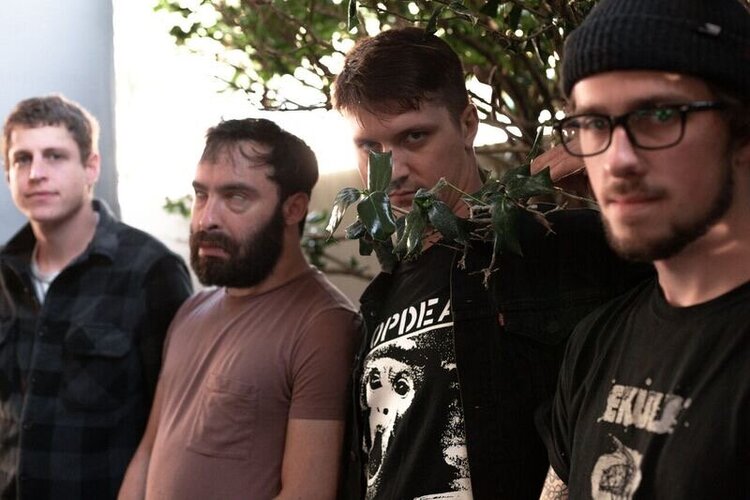
    The members of Taking Meds are looking forward to taking a trip out to Chicago at the beginning of December to perform on Audiotree Live. 

    The NYC-based indie punk band had to cut a cross-country tour short this spring when COVID hit. Shows started getting cancelled while they were on the road. “On the fourth day we were in Georgia, and 50% of the shows had cancelled,” Taking Meds frontman Skylar Sarkis told NYS Music. “We decided to head home.” 

    Eight months, an EP, and a music video later, and they’re excited to finally be hitting the road again. While they’ve been actively working, they haven’t been able to play some of their new songs in front of an audience since March.

    Taking meds

    “Everyone’s missing live music,” continued Sarkis. Most venues have not reopened since the start of the pandemic, due to contagion risk at gatherings. “Audiotree has a COVID-friendly way of continuing to do what they’re doing, and I think being able to access high-quality studio sessions online is really key for everybody right now.”

    This will be Taking Meds’ debut on Audiotree. What started as an artist discovery platform has continued this tradition by continuing to work with emerging independent artists and artists on indie labels. The recorded sessions are just one facet of Audiotree’s footprint in the music industry, but they have become a cornerstone in the international music scene over the past decade. 

    Tune into Audiotree on Friday, December 4 at 4PM CT (5PM EST) for the Taking Meds performance. Viewers will be treated to a few songs off the band’s new EP The Meds You Deserve, released in July on Smartpunk and Near Mint. Sarkis added that they plan on debuting a new song from their next LP, which they just finished recording with Kurt Ballou at GodCity in Massachusetts.

    Taking Meds is comprised of Sarkis on vocals and guitar, Ben Kotin on guitar and vocals, Jon “Steel Wolf” Markson on bass and vocals, and Alex Salter on drums. They don’t all live in the same city. It’s an occasion when they are able to gather at the studio, or go out on the road together, or shoot a music video. 

    Earlier this year, they got to meet up with director Luke LeCount to make a video for one of the songs on The Meds You Deserve, “Sucks To Be Me.” It features Sarkis as his narcissistic alter-ego, firing band members as he tries to impress some sleazy A&R types. He can be seen playing out this persona in a series of off-the-cuff low-budget promotional videos on the Taking Meds YouTube channel. 

    Leading up to the tour, they released a series of humorous videos about packing for tour, filmed by their manager/agent Alex Martin and featuring Sarkis trying to pack merch, gear, his cat, and pictures of Michael Stipe of REM. While Sarkis cites REM, Fugazi, and other bands from that era as band influences, their angular sound is impossible to pigeon-hole as any one genre.

    “We’re just trying to write whatever we want,” explained Sarkis. “Lately that’s coming out sounding like it’s pretty squarely influenced by early 90s stuff. I’m trying to make songs that I would want to listen to.” 

    Other people are digging their sound, too. Most fans have discovered them through word of mouth or by catching a live show. “My experience with this band is that there’s not a lot of hype. We get fans when we’re on tour and they stick around. It’s cool to build a fanbase that’s loyal.”

    Their recent EP The Meds You Deserve, and their full length albums My Life As A Bro and I Hate Me are available for purchase digitally. At the time of press, there are a handful of copies of The Meds You Deserve and I Hate Me on vinyl at Near Mint

    Follow Taking Meds on Facebook, Instagram, and Twitter to stay on top of news and content. 

  • Interview with Keith McQuirter on EPIX’s New Music Docu-series “By Whatever Means Necessary: The Times of Godfather of Harlem”

    With the May premiere of Laurel Canyon, its two-part series dedicated to the California rock of the ‘60s and ‘70s, EPIX proved it might just be TV’s best new source for music documentaries.  With its latest effort,  By Whatever Means Necessary: The Times of Godfather of Harlem, EPIX is heading East and uptown. The mission here is to spotlight the many musicians and the musical genres they birthed, from soul, funk and jazz to boogaloo and proto-rap, that helped inspire social change during the turbulent 60s, in New York City’s most culturally percolating neighborhood.

    The Times of Godfather of Harlem

    This four-part series is the counterpart to Godfather of Harlem, the acclaimed period drama featuring  Forest Whitaker and Giancarlo Esposito. This Emmy Award-winning series follows the story of Bumpy Johnson, the notorious Harlem gangster who sought his own version of economic empowerment against the Italian mob, in an era when Black men and women had little power or choices for upward mobility.  The action of the series spans the decade and is fueled by a soundtrack featuring the best of this very best era of Black music.

    The fascinating story of this golden era is told in interviews with musicians like Martha Reeves, Gladys Knight, Herbie Hancock, Carlos Alomar, Nile Rogers, A$AP Ferg, Chika, Gary Bartz and Joe Bataan, along with the activists who were there pushing forward the drive for civil rights like Al Sharpton.  It also contains a remarkable bounty of rarely-seen archival footage, of interviews and live performances by giants like John Coltrane, James Brown, Gil Scott-Heron and many more.

    The Times of Godfather of Harlem

    NYS Music speaks here with Keith McQuirter, the series’ Executive Producer and Director about what viewers can expect with the premiere of this series, November 8 at 10 pm ET/PT.

    Sal Cataldi:   The EPIX dramatic series for which your documentaries are a companion, Godfather of Harlem, is set in the ‘60s in NYC, a time and place of incredible change and musical innovation.  Why was music so interweaved with and reflective of the currents of that particular time and place, the civil rights movement and the like?

    Keith McQuirter:  What drew me to do this series was to examine how music was used as a force for good in the fight for civil rights.  There is a long history of Black protest and empowerment music and our series looks at the years, from 1960 – 1969, from the point-of-view of Harlem residents.  The scripted series, Godfather of Harlem, is really a civil rights story, told in the criminal underworld.  Our series focuses on an entirely different palate – how music impacted culture and politics, and how culture and politics impacted the music.  It allows audiences to see the national story of the Black freedom struggle through the personalities, music and activism coming out of Harlem.  

    Harlem was a very political place in the ‘60s.  Many black families fled the south due to racial terrorism and sought better economic opportunities, only to be face racism, discrimination, limited opportunity and segregated schools in the New York City.  You had dueling philosophies of Malcolm X and Martin Luther King Jr. and the megawatt influence of Adam Clayton Powell Jr, who was both a Baptist minister and congressman representing the neighborhood. You had the Garveyites, the Black Panthers, the Young Lords and some many others in the fight for civil rights.  Not everyone agreed on the approach, but they all agreed that it was time for a change.  The freedom songs coming out of the Black church, the jazz of John Coltrane, Charlie Mingus, Max Roach and even Chubby Checker’s Twist spoke to power and change.  Our series brings it all together through interviews with eyewitnesses, luminaries and archival that gives a unique look at this part of Black history and culture that is rarely ever told. 

    SC:  The first episode spotlights The Apollo Theater, with comments from performers like Martha Reeves of Martha and the Vandellas and Gladys Knight, and even actor Giancarlo Esposito, one the stars of Godfather of Harlem who saw performances there as a child.  What are some of the more interesting things you uncovered about the Apollo in your interviews and research?

    KM:  The Apollo Theater has been a cultural bedrock in Harlem and America for decades.  If you wanted to be a star on the national stage, performing at the Apollo was a rite of passage for many artists.  So all the greats performed on the Apollo stage.  We spoke with Martha Reeves and Gladys Knight,  who told us about her first time performing at the Apollo at a very young age.  Both she and Martha talked about how nervous they were because the Apollo audience is known to be a tough crowd.  If you get booed off, you might get a tomato thrown at you or other unpleasant things.  It was interesting to learn the origin stories of these two legends.

    But there is a lesser known story that I appreciated.  In the late 1960’s, the Apollo Theater had a mentorship program, where they developed and groomed underprivileged, musically talented teens to be professional entertainers.  The teens formed a band under the direction of the theater called Listen My Brother, in which 17-year-old Luther Vandross was a member.  We interviewed Carlos Alomar of David Bowie Band fame and Robin Clark, both members of the band.  They met as teens during the Apollo program and married before their 20th birthdays.  Fifty years later, they are still married!  It’s a truly musical love story.  Their homework was to go upstairs and watch the Supremes and the Temptations — study their grooming, choreography, stage presence and incorporate it into their rehearsals and their own performances.  Can you imagine that type of education?  Robin Clark shared about how one day Aretha Franklin came down to the basement where they were rehearsing and talked to the teens about the music business.  Robin said she couldn’t believe her idol casually made a surprise visit to their rehearsal.  Its apparent that the education and mentorship paid off because both Robin Clark and Carlos Alomar have had illustrious careers in the music business for decades.     

    SC: The series illustrates how jazz, and especially the new breed of free jazz musicians, were reflecting the civil rights movement.  How did the works like John Coltrane’s “Alabama” and Max Roach’s “Freedom Now Suite” energize the drive for equality?

    KM:  John Coltrane’s “Alabama” is a haunting elegy for the four little girls who died in the Birmingham church bombing in 1963, that was recorded just two months after the tragedy, when grief still weighed heavily on people’s hearts. Coltrane modeled the piece after Martin Luther King’s eulogy to the four girls that was delivered three days after the bombing. The saxophone begins in a tone and cadence of profound mourning, and gradually gains complexity and intensity, expressing the steady resolve to continue the struggle against racist brutality.  The message in Coltrane’s piece remains relevant today, with racially-motivated violence still threatening the lives of Black people.

    I also interviewed Warren Smith the legendary percussionist, who played with so many greats like Miles David, Aretha Franklin, Janis Joplin, Nina Simone and Max Roach. He says that Coltrane was unafraid to express his emotions in ways that were new at that time.  He inspired Smith and others to fully lay into their instruments to express their anger and to say something meaningful.

    This was in contrast to when most pop music at that time still avoided addressing political and racial issues, in an explicit way.  Many jazz artists were fearless about expressing Black rage and resistance through their music.  Jazz was the perfect vehicle for conveying the message of resistance, since the genre is deeply rooted in the historical Black experience.  So, Max Roach’s “Freedom Now Suite” was a celebration of emancipation and the years of struggle that followed the end of slavery.

    The incredible vocalist Abbey Lincoln expressed the anxiety and anticipation of emancipation against a frenetic avant-garde rhythm section. Roach said in an archival interview we found that, “We could never finish the song because we don’t really know how it feels to be free.” We also interviewed jazz saxophonist Gary Bartz, who played with Roach on the “Freedom Now Suite” and he remembers when he found out that the record was banned in South Africa – clear evidence that music could be a weapon for change.

    SC: Curtis Mayfield was especially important, as a musical messenger, a sort of pop music poet of the struggle.  What was it about him that connected so strongly with the movement and which resonates today?

    KM:  Curtis Mayfield had come up in doo wop music, collaborating with his old friends from Chicago’s Cabrini Green housing projects.  As an artist, he understood the power of music to uplift and empower.  He focused on building a viable music career and began to write songs that sent an implicit message of hope to young Black people hungry for change. His song, “It’s All Right,” speaks directly to the young people:

    When you wake up early in the morning, feeling sad like so many of us do, Hold a little soul, and make life your goal, and surely something’s got to come to you. And you’ve got to say, It’s all right…” 

    The song launched Mayfield’s career and his band, The Impressions, and it captured the spirit of resistance and hope that characterized the beginning of the decade.  He later released “Keep on Pushing” capturing the civil rights movement determination for change.  There were many artists providing the soundtrack to the civil rights era, but Mayfield is prominent because his music always deliver the message of empowerment. 

    By the end of the decade, his music had come a long, long way. His lyrics had become explicitly political, and his sound was funkier and more soulful.  He released “(Don’t Worry) If There’s Hell Below, We’re All Going To Go” where he calls out the courts and the police as political actors, talks about the drug epidemic and pollution and how all of this decay and corruption is going to bring us all to our downfall.  This message juxtaposed to Richard Nixon’s who was just elected president by an overwhelming white conversative calling for law and order and a return to the old America. It all sounds incredibly familiar.   

    SC:  James Brown is another giant highlight in the series, especially the role he played in black pride, in actually changing the racial terminology from “Negro” to “Black” with his anthem “Say It Loud, I’m Black and I’m Proud.”  How powerful an impact did this song have in the community?

    KM: In the late 60’s, James Brown released an unexpected anthem, “Say it Loud (I’m Black and Proud).”  This song made James Brown one of the most prominent performers to celebrate Black identity. Ever since his historic live album recorded at Harlem’s Apollo Theater in the early 60’s, Brown had personified unadulterated, unapologetic blackness. But his lyrics had always avoided politics, and his personal style still reflected an earlier time – especially his hair, which he kept in a carefully-maintained pompadour. By the time this came out, Brown cut his hair and sported an Afro in message with the changing time.

    Brown later complained that “Say It Loud” ultimately cost him record sales, radio play and bookings at white clubs; but, at the moment it came out, it was an instant hit. Brown’s words were also taken up by activists across the country, who were marching in a never-ending series of protests – against the war in Vietnam, inferior schools, irresponsible landlords, unfair practices, and all the other problems the community still faced.  His music fueled Black resistance and allowed Black folks to freely celebrate themselves and their culture with pride.

    SC:  How did The Last Poets and Gil Scott-Heron, the pioneers of the fusion of poetry into music, impact their times and ours today? 

    KM:  In our series, we interview Felipe Luciano who talks about his trajectory into revolutionary culture.  He was a kid who grew up in Spanish Harlem of Puerto Rican origin, but he consider East Harlem his homeland – not just his birthplace, but the place that made him who is today. 

    Luciano says that he felt lost when he got out of prison in 1966, but he found his purpose when he met other young Nuyoricans who were developing a radical new political consciousness, inspired by their Black friends engaged in the freedom struggle. He had studied Puerto Rican history while in prison, read the writings of Pedro Albizu Campos, trying to understand why his parents’ generation gave up on statehood and accepted the humiliation of being ‘colonized’ by the U.S. 

    Activism gave him hope.  He was excited by the emergence of the Black Panther Party for Self Defense on the West Coast, and the bold call for Black Power from Stokely Carmichael, a New York-raised activist of Trinidadian origin. He decided it was time for Latin people to work for radical change too.  When he heard about the opening of a New York chapter of the Young Lords, a Puerto Rican organization modeled on the Black Panthers, he got involved immediately. 

    So by the time Luciano became a member of The Last Poets in the late 60’s, he was already a leader in the Young Lords and was a revolutionary.  When you hear the music of The Last Poets, accompanied by African-inspired Congo drums, it make sense they were so incredibly free to express themselves, in ways most people just didn’t at that time.  They spoke truth to power, but also they just spoke truth, often in incendiary ways, but it freed people to be able to express themselves without barriers or shame. 

    In an interview, the jazz saxophonist Gary Bartz said it was like a secret language that he and others understood deeply, but not everyone could relate.  Hip Hop can be that way too, in that it is specific to a group or even a neighborhood and is not always inclusionary.  Luciano believed poetry was just as important as marching in the streets.  You see this same reverence for lyrics in young artists today – Kendrick Lamar, CHIKA, Janelle Monae and so many others — they are reflecting the times, giving empowerment and allowing us to be free to be ourselves.  The Last Poets showed us freedom of expression in words, and its fitting that they have the designation as being called “The Fathers of Hip Hop.” 

    SC: The series doesn’t just focus on Black artists but the Latinos of Harlem who forged their own kind of music of celebration and liberation.  Tell us about some of them, especially the pioneers of boogaloo?

    KM:  East Harlem, nicknamed ‘El Barrio,’ became the capital of Puerto Rican culture in the mainland U.S.  And although Puerto Ricans became American citizens in 1917, in the U.S. they were still seen as foreigners.

    In the ‘60s Spanish-speaking migrants were the majority of the neighborhood’s population, but many of them struggled with poverty, unemployment, and racial discrimination. The language barrier made it difficult to find decent, well-paid jobs, or navigate government agencies. This generation found comfort in the music from back home, and bandleaders like Tito Puente and Tito Rodriguez reigned supreme at the city’s biggest Latin club, the Palladium Ballroom in midtown.

    Miguel “Mickey” Melendez, an East Harlem resident, and a member of the Young Lords who we interviewed in the series, spoke about the American-born children of Puerto Rican migrants were growing up as Harlem teenagers, and their day-to-day experiences – and the music they loved – were completely different from those of their parents. These kids went to school with African-American classmates, hung out with African-American friends and neighbors, and danced to doo-wop, soul, and R & B.  They would create a new genre of music that gave voice to the intersection of Black and Latin culture — boogaloo, the soul of El Barrio.

    Denise Oliver-Velez, another member of the Young Lords, talks about Joe Cuba’s “Bang Bang,” a song, composed spontaneously at a ‘Black dance’ night at the Palm Gardens Ballroom, was one of the first boogaloo songs to launch the craze that swept New York, and then the world of Latin music. It combined English and Spanglish lyrics with an R & B rhythm on timbales and melodic piano, and immediately inspired a wave-style dance. Within weeks, the Joe Cuba Sextet recorded and released “Bang Bang” as a single, and it became one of the most successful Latin recordings to cross over to mixed audiences, selling over a million copies.

    When Joe Bataan got out of prison, he tells the story about how desperate he was to achieve his dream of becoming a musician.  He had the reputation of being a gangster at that time and would sneak into a local school to play the piano. One day, he discovered a group of musicians using ‘his’ practice space, so he stuck a knife in the piano and told them that from then on, they would be his band. He wanted to make a name for himself and hoped that music would save him from the cycle of gang violence and incarceration.

    After a debut recording that went nowhere, Bataan’s first hit was a boogaloo cover of the Curtis Mayfield ballad “Gypsy Woman,” spiced up with Latin percussion and an irresistible hook.  All the band members were shouting “She smokes!”.  Bataan remembers how, in 1966 and 1967, you could hear boogaloo echoing throughout the neighborhood – and how proud he was, coming from the streets, to representing his neighborhood in a way everyone could celebrate. 

    For Felipe Luciano, Boogaloo was more than just party music. It was an expression of Nuyorican identity, giving voice to their generation’s rage against the discrimination their parents had faced, and demonstrating their deep connection to the Black struggle. In its own way, boogaloo was a music of defiance against ghetto life and the elusiveness of the American dream.

    SC:  The series contains so much remarkable archival footage that is largely unseen.  What are some of your own favorite moments of the musicians on film that you unearthed?

    KM:  For a nerd like myself, archival research is a fascinating, deep dive exploration that can take you on many adventures.  Finding archival of Max Roach and Abbey Lincoln performing “Driva’ Man” and “Triptyh: Prayer / Protest / Peace” from the “Freedom Now Suite” is like finding gold.  I could not stop watching it over and over again. 

    I also enjoyed unearthing Apollo performances from Martha and Vandellas and other Motown acts.  To see these entertainers as teenagers in archival footage, who I’ve known my whole life to be legends and then getting to interview them too, it was just incredible.  Artists like Herbie Hancock and Gladys Knight are of my parent’s generation, so their music was always a part of the soundtrack of my life.

    I really love the archival we found of the Last Poets performing “Hey Now” and “Jibero, My Pretty N****. “ New York indie filmmaker Herbert Danska filmed them on a Harlem rooftop for his film Right On!  A film that screened at the Director Fortnight in the 1970 at the Cannes Film Festival.  It shows three Black men on a rooftop – Felipe Luciano, David Nelson and Gylan Kain – with a percussive accompaniment performing poetry.  It’s rough, raw, and a bit strange.  It’s truly great stuff.

    SC:  The ‘60s were a pretty special time, an era where music really helped, as Giancarlo Esposito says in the series, becoming “the force that gave the people strength.”  Do you think music has the same impact today?

    KM:  Every time I visit a Baptist church and sing those old songs that my grandparents and great grandparent sang, I feel uplifted, and some of those songs have been around for hundreds of years. 

    Music is healing, empowering and motivating.  It reenforces the stories of our lives and reflects our dreams, hopes and ambitions.  Music is culture.  And, culture is inherently political.  This year has seen a proliferation of protest music by known and unknown artists.  It’s a tradition that has been passed down generationally and young people are making it their own, especially through the use of social media. Most of the musicians I spoke to for this series have expressed how inspired they are by activism happening today in music.  The work from the ‘60’s civil rights movement never ended because we still are facing police brutality in our communities, disparities in healthcare, massive incarceration and gun violence – we have so much work to do.  The musicians have a role in providing us and generations of activist to follow soundtracks that empowers, uplift, affirms our identity and our humanity. 

  • Interview: Musicians For Musicians Founder Sohrab Saadat Ladjevardi

    Musicians For Musicians Founder Sohrab Saadat Ladjevardi is the personification of the activist-musician. He’s got the high-energy, super creative foreign import that keeps New York City’s melting pot, eternally percolating. 

    MusiciansforMusicians.org

    Born to Iranian parents in Switzerland, Sohrab came to New York in 2008, after living 20+ years in Japan. While there, he honed both his uniquely singular style on the saxophone, while also becoming a 6thdan master of the samurai sword art of Kendo.

    Today, Sohrab is a force not only for the music of his SoSaLa ensemble, but for his tireless advocacy for all music-makers.

    MusiciansforMusicians.org

    In 2015 he founded Musicians For Musicians (MFM), in New York City. MFM is a non-profit dedicated to the realization that: music is a true profession, musicians need to unite if they are ever to be treated fairly and compensated well for their efforts, in live performance and recording.

    Through workshops, Meet Ups, a resource rich website, lobbying efforts, Zoom conferences and much more, Musicians For Musicians is helping artists from all genres empower themselves to change the status quo. The group is growing quickly with the addition of a chapter in the Hudson Valley and a forthcoming one in San Francisco. MFM has attracted luminaries like jazz greats Billy Harper, Joe Lovano and David Liebman, Dr. Cornel West and, most recently, The Who’s Roger Daltrey as Board Members and vocal advocate.  

    MusiciansforMusicians.org

    Here, we talk to Sohrab about this important work and his latest musical project, a new SoSaLa CD titled Nu World Trashed.

    Sal Cataldi: What is MusiciansforMusicians.org? When did you found it and what is its main mission?

    Sohrab Saadat Ladjevardi: Musicians For Musicians (MFM) is a 501(c)(6)non-profit musicians’ rights organization which I established in 2015. MFM seeks to elevate the work of all musicians to the level of a true profession, one recognized and appropriately rewarded by society. It’s a membership organization and an association of professional musicians with the right to lobby that exists, alongside but separate from, groups like the American Federation of Musicians.

    SC: Networking and education seem to be big parts of the organization.  Tell us a little bit about what you do in this area, in terms of your workshops, newsletter and recently launched podcast series.

    SSL: During Covid-19, it’s essential that we musicians keep sight of what’s most important in our lives: music! Musical activities, many of which are social, have been dramatically curtailed. There are emotional and financial issues, and the politicization of the virus itself, many of the resources on which we depend have been severely cut back.

    We are helping by continuing to run educational ZOOM Webinars with guest speakers in lieu of live events, such as the Online Music Marketing webinar we held in September, while also advising members regarding Unemployment Benefits and other resources available to them. MFM continues its twice-monthly podcast, MFM SPEAKS OUT, with episodes featuring interviews with musicians on their work and the issues that impact them, along with our on-line magazine DooBeeDooBeeDoo NY and via social media.  We continue to reach out to pro musicians’ rights politicians and collaborate with other musicians’ rights organizations to improve creators’ lives via legislation.

    SC: Your mantra is that musicians have to be treated as professionals, compensated for their talents and time, in live situations and in recordings.  Is this situation improving or getting worse?  What can be done to fix it?

    SSL:  Unfortunately, our community is fragmented and we have difficulties to organizing. MFM’s goal is to unite musicians, and musicians of all genres are welcome to join. Unity means real power. Numbers only speak.  At the end of the day, we know that the only real way to protect our rights is through legislation.  For protecting ourselves against any kind of exploitation of our work, we need to know the business side of making music and have the courage to speak out in an organized form.

    The public needs to hear from the musicians themselves that “music has value.” For each work we do, we must be compensated fairly. Musicians must stop playing for free or for donations. MFM is trying to reach out to younger musicians, especially those who tend to play for free, without acknowledging that they’re devaluing their music.

    So, answering your question whether the situation for professional musicians will improve or is getting worse, my answer is very simple and short. It depends on the musicians themselves, whether they are willing to do some soul searching, change their attitude towards music and “making music.”

    SC: It seems you preach independence and self-help for musicians.  How can we do a better job in this area, with musicians helping each other, bookers, journalists etc?

    SSL: I’m just talking about facts based on experience and observations made by me, a professional musician and MFM’s president.  As musicians, we shouldn’t care about bookers, journalists, etc; we should think of ourselves first. Find out how we can empower ourselves with knowledge and wisdom as a group and as business league. MFM wants to revolutionize musicians’ thinking.  Give them some self-respect back. It’s time to do some soul searching…

    We should work out a concept and strategy together, how to deal with club owners, bookers, agents, labels, publishers, etc. Becoming equal partners in the forthcoming negotiations. Make them understand that they must compensate musicians fairly. Accept our own contracts with our terms. Musicians don’t depend on them; they depend on us. We bring the food to their table. Musicians are essential workers, essential as doctors and nurses. Music is essential to people’s lives!

    SC: With luminaries like Dr. Cornel West, sax greats Dave Liebman and Joe Lovano, legendary jazz man Billy Harper, you have a bunch of heavyweight participants and advisors.  How are they active in the organization?

    SSL: Yes, we’re lucky to have these heavyweights in our organization. Like any non-profit organization, MFM has three groups running the show: the Membership, the Board of Directors and the Advisory Committee.  It’s a very democratic-socialistic organization. All three groups are equal when it comes to making decisions and voting. It’s an organic and active organization.

    MFM’s Board includes Billy Harper and the Advisory Committee members consists of educator and activist Dr. Cornel West, Grammy-Award winner Arturo O’Farrill, jazz maestros David Liebman and Joe Lovano, and others with rock, classical and world music backgrounds. All of them have a lot of knowledge, expertise and experience which they share with the organization.

    Since 2016, many of them have run workshops and talk events. Billy Harper and I, for example, started the monthly MFM Public Musicians Meet Ups. Board member Roger Blanc has organized mixers at the Zinc Bar.  Ken Hatfield, who is a musician’s rights expert, reports regularly about the development of copyright laws and musician’s rights issues in general. Then we have members who are qualified in their respective fields. One of them is Adam Reifsteck, who ran a workshop last year and a recent Zoom Webinar speaking about marketing on Facebook. Another is Dauwoud Kringle, who is a driving force behind our DooBeeDooBeeDoo online magazine and podcast, a great Ethno-jazz electronica musician with his Gods Unruly Friends ensemble. Depending on the topics, we also invited experts from outside to educate our membership. All workshops and talk events are documented on video and uploaded on the membership platform.

    Speaking of Dr. West, he has a special position in MFM. He will be our “public bull horn” after the November election. He strongly believes in a musician’s social-political role in society, because he calls them “the avant-garde of the artists.” What he’s saying is that if musicians can get their shit together, the whole artist community, including painters, writers, dancers, and many other artists, will profit from it. So, we musicians have got some heavy responsibility on our shoulders.

    SC: With COVID, it seems everyone is moving up to the Hudson Valley! You have a chapter up there. Tell us a little about its history and where you see more chapters developing and your upcoming fundraiser.

    SSL: I don’t know whether everyone is moving to the Hudson Valley, but what I have known, for a while, is that many working musicians live in the Hudson Valley, and many of them, world class musicians. One of them joined MFM in March 2019, legendary jazz saxophonist Joe Lovano. But my real interest to reach out to the Hudson Valley musicians started when Kingston’s guitarist/band leader (future350 Nu Bossa Quartet) and music activist Stephen Johnson joined in January 2019. He joined because he strongly believed that the Hudson Valley community needed an organization which would care and speak for them. After MFM Board approval, it was established in October 2019.  Since then, several musician joined and he organized Meet Ups and Zoom calls. Joe Lovano actually brought his horn to open up one of those meetings.

    SC: Any new chapters planned?

    SSL: I think San Francisco could be the next one, because we have two members from there. One of them is Mario Guarneri, who runs two musician non-profit organizations: Jazz In The Neighborhood and Independent Musicians Alliance (IMA). IMA is very active in fighting for musician’s rights in that city. Both of our organizations have many things in common.

    One big initiative is our first MFM fundraiser,which started October 20 and will run through November 20. It is a great opportunity for MFM to reach out to its members and musicians outside of MFM with the idea that musicians should help each other out first, before they ask for support from outside sources.

    Yes, we’re going through an uncontrollable pandemic, but still we should care for each other with whatever money you can spare. I wasn’t sure whether this will work and whether the membership would participate in this fundraiser. Fortunately, it’s working thus far! We’ve collected more than $1000 in the first week, which is super. And most of those contributions came from the membership.

    Special thanks must go to MFM members themselves. First off, Keith Levenson, music director and conductor of The Who, and recording engineer Michael Walsh who created a fundraiser video featuring Roger Daltrey of The Who, Dr. Cornel West, Arturo O’Farrill and many other MFM members. The video describes beautifully what MFM stands for.

    SC: Tell us a little bit about your life and when and how you first got involved in music. And what musicians most inspired you.

    SSL:  I was born to Iranian parents in Switzerland in 1953. They soon moved to Hamburg, Germany where I grew up. Early piano lessons ended abruptly, after my teacher couldn’t stand my style of playing! In the late 60s and early 70s, I played the drums and flamenco guitar. In 1974, I moved toJapan to study martial arts, eventually settling on Kendo, Japanese swordsmanship. After years of study and achievement in Kendo, I began to think about applying that philosophy, discipline and hard work to music.

    In 1979, I bought a saxophone, and six months later, I played my first gig in Osaka. A year later, I played at the Montreux Jazz Festival. Between 1979 until my departure to New York in 2008, I had developed as a professional musician, making a name from myself in the Japanese indie scene. I toured and recorded in Japan, Europe, Hong Kong and the U.S. with my bands and released a couple of CDs.  In 1987, I started my indie label Kampai Records and, in 1993, my own music company POP BIZ Ltd. In 2008, I closed that company and moved, with my wife, from Tokyo to New York. I started my career in NYC as a street musician and “jammer/gigger.”

    In 2011, I formed the inter-continental collective, free jazz/world music group SoSaLa in NYC.

    In the same year, I released my first CD “SoSaLa Nu World Trash” on my own label, called DooBeeDoo Records. The CD was very well received. People liked how I blended my melancholic melodies with those of my native Iran, fueled by improvisation, with lo-fi electronics, the diverse instruments made for an ambient and psychedelic take on World Music. I have also worked with Malian pop star Salif Keita, jazz legend Ornette Coleman and Morocco’s Bachir Attar and the Master Musicians of Jajouka.  I became a U.S. Citizen in 2013, then, in 2015, founded MFM.

    SC: I understand you have a new album coming out with your SoSaLa and that it features a guest spot by Dr. West?

    SSL: Yes, a new SoSaLa CD titled “Nu World Trashed” on  DooBeeDoo Records and published by DooBeeDoo Worldwide Music. It will be a limited edition of 300 CDs distributed by CD Baby.

    The CD Baby release is planned for beginning of December, but, before that release date, I’ll offer it to my fans as a Collector’s Item signed by me with a high-end price of $50. Why? Because I don’t want to sell it for $5, $10 or $15. My music has more value. I don’t want to adjust to the market which will devalue my CD later. Retailers, such as Amazon, will lower my CD price, for sure. People who buy CDs from Amazon strongly believe that music should be cheap or even free.  So, I’m going to sell my CD primarily from my website (https://www.Sohrab.info) before the CD Baby release date. The leftovers will be sold at the retail price of $30. I hope my price policy will succeed and inspire my members to follow in my footsteps.

    The album features nine tracks, with five originals. Two of them were recorded live with my New York music project SoSaLa and the other three with various fellow musicians. The other four tracks are a collaboration with two German producers: Berlin’s Genetic Drugs (three tracks) and Konstanz’ Hubl Greiner and his buddy, the New York keyboard Paul Amrod.

    This is the first time that I released a CD of this kind. Usually, all my previous released CDs were recorded with my band of that time. Usually in a composed improvised format. But this time, it’s a compilation of 80 percent improvised instrumental music and two tracks with vocals. I’ve never done this kind of album before. The nine ‘nu world trashy’ electronic-nu jazzy-desert blues-oriental-ambient tracks are meant to have the listeners “to sit down, forget real time and let them do some soul searching.”

    It’s a concept album with a social-political-cultural message first expressing, musically, anger, especially the track Enough Is Enough. That’s a protest song against NYC’s premier jazz clubs featuring Dr. Cornel West which comes with a video that I hope will become our “hit!”  It’s an electronic-African Beat protest song.  Though Dr. West is featured only for around 11 seconds, his passionate voice radiates positive energy and expresses perfectly what the song was about. Of it, he said: “I’m blessed to be on it and to groove with the grand artists who made this song! It is soulful, powerful and political! I love it!”

    Mystical Full Moon Hymn for Ornette Coleman is dedicated to my mentor, Ornette Coleman, who was the first musician in New York loving the sound of my horn.  He told me I was “the freest sax player in rock music.”  That and my advocacy efforts to unite musicians through MFM are the things I am most proud of.

  • An Interview with Tom Semioli, co-Founder of Know Your Bass Player

    How many bass players does it take to change a lightbulb?  None, the pianist can do it with his left hand! 

    It’s an old musician’s joke demonstrating how little respect some give the men and increasingly women who wield the bass – that indispensable instrument which lays the foundation without which any tune would, let’s face it, sound rather wimpy.

    Since 2013, bass playing NYC journalist Tom Semioli, has been out to change this with Know Your Bass Player (KYBP), a blog of entries profiling the bass greats of rock, jazz, blues, funk and country’s classic eras. In 2014, Mark Preston joined the bass fray as producer and director of a video companion Know Your Bass Player on Film, a video channel with serious production values.

    Know Your Bass Player

    To date, approximately 650 players world renowned to little known but deserving have been profiled in KYBP’s online features. Know Your Bass Player on Film captures the stories of about 50 players in over 180 video episodes, shot on location in NYC and London, and now, like everything in COVID era, via Zoom and Skype.  The video vignettes reveal behind-the-scenes, fly-on-the-wall stories of Bob Dylan, John Lennon, The Pogues, Ronnie Lane, Keith Richards, Ian Hunter, Paul Simon, Boy George, Roxy Music, George Harrison, The Zombies, The Kinks, Les Paul, Joe Jackson, David Bowie and Freddie Mercury, to name a few, by the bassists who were in the studio and on stage with these iconic artists for some of their greatest triumphs…and missteps!

    Know Your Bass Player

    Semioli’s deep well of talent as a writer and player, and his humor, are at the heart of KYBP’s content. He approaches each player’s work and life with both a refined knowledge of the artform and a nose for the kind of humorous anecdotes that make for great reading and viewing, whether you sling the bass or not. 

    Semioli’s creds are impressive. While earning a degree in communications at the University of Miami, he minored in jazz, at the institution that gave us Jaco Pastorius and Pat Metheny.  Upon moving to NYC, he continued in private study with jazzer Ron McClure of Charles and Blood Sweat & Tears fame. Semioli quips that he did his “post-graduate work” during gigs at NYC institutions like CBGB and The Bitter End, all while holding down a series of impressive day jobs in journalism and media.

    So just what is the life of a bass player all about?  We think these words below from Semioli and KYBP’s “About Page” provide some pretty good insight:

    “We are the ones who serve the singer, the song, and the soloist. Though we do not possess the harmonic nor sonic range of a guitar, keyboards, horns and other wind instruments, nor the dynamics of drums –it is us who determine how a chord actually sounds – which, in essence – often determines whether or not you’ll like the artist, or the track. We are the only individuals on the bandstand and in the recording studio with that critical responsibility…  To be a bass player is to exude skill, confidence, humility, patience, tolerance, and knowledge: very few are chosen, and fewer still are called! 

    So, who are these important players, and why should you know who they are?

    Know Your Bass Player

    Sal Cataldi:  First off, when did you get into music?

    Tom Semioli: I vaguely remember The Beatles on The Ed Sullivan Show at age 4 or 5.  At the New York World’s Fair, my mom took me to the British pavilion to witness Beatlemania by proxy at a screening of their movie, Help. Girls were screaming and I thought ‘this is interesting!’

    I was a working musician through most of the 80s, then I moved to California to start a studio business in the early 90s. Somehow, through a simple twist of fate, I became a music journalist, then a music publicist…then I went into the television production field as a writer in the 2000s, when Napster flattened the record business. I’m like a cockroach with four strings! 

    SC: How did Know Your Bass Player dot Com come into existence?  

    TS: I’m sitting at my desk, working for a very successful television news video production company sometime in the early 2010s.  My colleague at the time was among the most influential publicists in the industry. He has a pal who works for a major concert promotions company and they’re discussing Paul McCartney, who is in town to do a show. He asks me, ‘was Paul McCartney the bass player in The Beatles?” My jaw drops! How does he not know that? Well, he’s a few years younger than me, so I forgive him. 

    That same evening I’m watching the great British music television show Later….with Jools Holland with my wife, who was an upright bass player in high school. Sting is the guest. My wife is a huge fan. She turns to me and whispers ‘Sting has a guitar that looks like yours, is he a bass player?’ Ye gods, again, I am in disbelief. The former Gordon Sumner is likely the most famous bassist in the world.

    Next morning, I’m in the dentist chair. She is wearing a Bruce Springsteen t-shirt beneath her open white medical smock – as she just attended her umpteenth show. I stop her in mid-sentence during her Bruce hosannas and inquire “who plays bass in the E Street Band?” She replies ‘bass? Bass fiddle? There’s no bass in the E Street Band.” I point to Bruce’s bassist on her t-shirt Gary W. Tallent. Now I have a mission in life.

    The next morning, I begin posting Know Your Bass Player missives on Facebook. I start off with Tallent, then Danny Klein from the J. Geils Band, Dee Murray from Elton John, Phil Chen from Jeff Beck. Slowly, I start to gather simpatico followers.  After a year or so, I start to archive all the content on a website – thus was born Know Your Bass Player dot Com!

    SC: What is behind the growth and aesthetic of Know Your Bass Player?

    TS: Well, here’s the secret. This website and video series relates to my generation of bass players.  We’re talking the golden age of the album era and FM radio from the late 60s to the 90s. A magic time. My demo is the oft neglected 55 and upwards group. The rocking AARP motley. Stretch jeans, loose shirt to hide the pot belly. Chain wallets so we don’t forget where our money is. Hats covering bald spots. We play gigs with our friends who are still alive in the fringe clubs. The kids are out of the house and married, so now we rock again.  Scotch on the rocks and Viagra. And a nap. Very important! The mainstream has no idea we exist! 

    The whole Know Your Bass Player concept explodes – it’s like the gay liberation movement on steroids! All these bass players start coming out of the bass closet – “you like Carl Radle!” – who was Eric Clapton’s bassist. “I love Carl Radle too!” We hug, we bond, we shed tears over the bassline in “Bell Bottom Blues.” Nobody gets this stuff but us!  Finally we are family! Guys start wearing the Know Your Bass Player t-shirt in public. They come out to their wives, their children, their co-workers! It’s a movement!

    SC:  How did Know Your Bass Player evolve into a corresponding video series?

    TS:  Right about the time I started the Know Your Bass Player website, I reconnected with an old friend – Mark Preston. In addition to being a successful real estate broker, Mark is also an accomplished singer and songwriter. He’s old school, traditional country.

    So I meet up with Mark at one of his gigs. He invites me to travel with him to London to see the Mott The Hoople reunion of 2013. Mott is my all-time favorite band, so of course I’m there.  At the time, the band’s bassist, the legendary late, great Overend Watts had just written a book on his long distance hiking experiences. Watts was among rock’s most elusive characters. But I talk with Mott’s publicist and offer to render a review for Huffington Post books. They were duly convinced.  Mark and I get the VIP treatment, we’re with the band before the show, chatting with Watts, Ian Hunter, Verden Allen, Mick Ralphs, and having a grand time.

    Backstage at the O2 after the gig, we’re among legends such as Jimmy Page, the guys in UFO, Queen, Joe Elliott of Def Leppard – all huge Mott fans in attendance to witness glam rock history. The scene is surreal – the old dudes in leather with their young and not so young wives. Mark says to me ‘hey we oughta film this for Know Your Bass Player!” 

    Enter cinematographer, producer, production company owner Derek Hanlon – a close friend of Mark who has an extensive rock and roll history and was with us at the Mott gig. He’s filmed everyone from Jethro Tull to Motorhead to Madonna – to cite a very, very select few. Derek was headquartered SoHo, London during the 70s, 80s working with record labels, the BBC. Derek has more rock and roll stories… we should be doing a documentary on him!

    Our first inclination was to do a documentary. However, Mark and I were so impressed with all the stories, we felt that I would be a shame to edit out anything, so it became a film series of shorts, something akin to Comedians In Cars Getting Coffee.

    We schedule three bassists just for a test run in London.  Our first filmed interview was Steve Bingham, who was the bassist with Ronnie Lane’s Slim Chance and had a gig at the Half Moon in Putney with a reformed version of the band. Jim Rodford, who played with Argent, The Kinks and at the time was in the latest version of his cousin’s band, you may know them as the Rock and Roll Hall of Fame ensemble The Zombies. And studio ace Mo Foster who waxed sides with everyone from Phil Collins and Jeff Beck.

    Then we continued in New York City over the next few years. Our taped interviews in New York include Sal Maida of Roxy Music, Gary Van Scyoc with John Lennon and Elephant’s Memory, Cait O’Riordan with The Pogues, Graham Maby with Joe Jackson, Rob Stoner with Bob Dylan’s Rolling Thunder, Brian Stanley with Garland Jeffreys, Paul Page with Ian Hunter’s Rant Band, Joe Vasta with Mink DeVille and Joan Jett, my former bass teacher Ron McClure with Blood Sweat & Tears, my former classmate Paul Nowinski with Keith Richards, Les Paul and Rickie Lee Jones; John Ford of The Strawbs, Hannah Moorhead of The Giraffes, Mike Visceglia with Suzanne Vega, Tony Senatore with Genya Ravan, Ernie Brooks with the Modern Lovers, David Goldflies with the Allman Brothers Band.   And we also filmed local players, guys who do the Broadway Shows – we want to represent everyone..

    We went back to London last year and it was even more remarkable. Mark chatted with Chris White about The Zombies’ Odessy & Oracle. Our other guests included Phil Spalding and Mickey Feat – two studio players who are in your record collection! Alan Mair of The Beatstalkers, Graham Gouldman of 10CC, Kevan Frost with Boy George, we shot Steve Bingham again, this time with Geno Washington, John Bentley of Squeeze. We also had an all-star cast who could not make it due to scheduling difficulties.

    SC:  As the site has grown, you’ve gathered more collaborators.  Can you tell us some brief stuff about your team?

    TS:  Our most important collaborator is also a bass player – Mark Polott whom we interviewed on film as he anchored the legendary prog-metal band Haystacks Balboa, an Atlantic Recording act that toured with Rod Stewart and The Faces and Jethro Tull.  He created the look of the revamped website and also edited Season Deux and Season Tres of Know Your Bass Player on Film. Our first season was too DIY looking, as we had to get something out to protect our name. Mark’s graphics afford Know Your Bass Player a unique look.

    We have a “Chicago Bureau” helmed by another veteran bass player – Joe Gagliardo, who also wrote for Goldmine. His contributions are enormous. Chicago has such a rich, untold history in rock and roll. These Chicago stories would be lost to the ages if not for a guy like Joe who is as passionate about the instrument as he is about the legacy of his hometown.

    Our Adjunct Professor is Tony Senatore. A great bassist, composer, recording artist Tony contributes editorials, and helps us with story angles when we film in New York City. Whenever a “bass controversy” arises, we turn to “Senny.” Think of Robert Duvall’s character of Tom Hagen in The Godfather. Bassist Robert Jenkins writes for our “Austin Bureau.” Like Joe, Rob shines a light on players who are in the trenches, making great sounds in one of the world’s greatest musical cities.  We also have contributions from bassists Joe Iaquinto, Graham Maby, Chris Semal, and Jeff Ganz, among others.  

    SC: What are some of your favorites in terms of the video interviews? 

    TS: Truth be told, everyone reveals gems in their personal stories.  But if I had to pick one interview segment – Paul Page’s “All American Alien Boy” is ‘the greatest bass story ever told.” And Paul Nowinski’s “The Dead Conga Player” is a close second.

    SC:  Who are the dream video interviews you have yet to capture?

    TS:  Bruce Thomas of Elvis Costello and The Attractions, Norman Watt-Roy with Ian Dury and Wiko Johnson, Herbie Flowers, and Andrew Bodnar of Graham Parker and the Rumour – all of whom have committed to appearing on camera – we just have to work out scheduling.  

    SC:  What are the attributes that you think make for a great bass player? 

    TS:  Humility! Confidence! Gallows humor! An appreciation of the absurd!

    SC:  Our site is focused on New York and New York musicians.  Who do you think are some of the must-see players on the local scene?

    TS:  My must-see artists include Lorraine Leckie and Her Demons, The Dive Bar Romeos with Joey Kelly and Jimmy McElligott, Edward Rogers, Urban Blue, Tom Clark at the Treehouse 2A, Anne Husick’s various projects, and Emily Duff. In New York City you can plug into any scene and discover unique artists.  That includes the artists I play with, Kathena Bryant and Tim Champion who work under the moniker The Hippy Nuts, along with my pals Stu Richards and Dan Reich as Tex Wagner. And this wild jazz-rock improv trio, Spaghetti Eastern 3. In Manhattan, I’ll drop into the Bowery Electric, the Village Vanguard, The Bitter End, 11th Street Bar after hours and stumble into something remarkable!

    SC:  What are your future plans for KYBP?

    TS:  As for the film series, given COVID-19 we are starting to do Zoom and Skype chats. We did a fine interview with Donnie Nossov whom you know with John Waite, Pat Benatar, Cher, Lita Ford, and Tom Verlaine which also featured legendary Creem writer James Spina. I just wrapped up a Zoom chat with Paul Gray of Eddie & The Hot Rods, UFO, The Damned, and Professor and the Madman.  We’re never going to stop. You can’t get rid of us.

    As for the website, I would like it to be more collaborative. The site is designed to be a quick, digital media read, with the exception of Joe Gagliardo who does long form as he interviews the players. But I’d like musicians, fans, bassists, journalists, and industry folks – producers, camera men, engineers, publicists – to contribute anecdotes, pictures, reflections.

    We have an egalitarian approach – we respect all genres of music. From Rock and Roll Hall of Famers to bar band denizens.

  • An Interview with Carpool: The Ultimate Guide To ‘Erotic Nightmare Summer’

    Hold off on making your Album of The Year lists, alt rock fans, until you’ve taken the debut album from Carpool for a test drive. Erotic Nightmare Summer checks all the right boxes: electrifying riffs, crafty turns of phrase, and choruses you can’t help but sing along to. In short, it slaps. Hard.

    Erotic Nightmare Summer is a follow-up to their 2018 EP I Think Everyone’s A Cop, a work that launched them on the East Coast touring circuit and a spot at Fest last year. They’ve already been named on the lineup when Fest resumes in 2021. 

    carpool

    NYS Music caught up with band members Stoph Colasanto (lead vocals, guitar, synth), Tommy Eckerson (lead guitar, vocals), and Alec Westover (vocals, drums) to talk about the album, starting with the overall concept and inspiration.

    “Lyrically, it’s about the realization that some close relationships had become toxic, and the need to move on,” said Stoph. The music follows suit, pushing the boundaries of what is expected from an emo band. With the help of their producer, RJ Demarco, they challenged themselves to leave their comfort zones instrumentally, incorporating unexpected touches like classic rock elements and instruments that are unconventional for the genre, like violin, sax, and glockenspiel. 

    The story of the album artwork is also intriguing. For most works, the visuals are an afterthought. But Erotic Nightmare Summer was actually inspired by the striking collage that now graces its cover. It was a print Stoph had bought off artist Aaron Gordon from Buffalo to hang up on his wall. “I was just sitting in my room staring at it, and I got some ideas for songs. It just went from there.”

    That spark fueled the concept of the album, and the melodies and lyrics for a handful of songs. Stoph called Tommy over that day, and together they started crafting the majority of the songs that comprise Erotic Nightmare Summer. They’ve fielded a lot of questions since the release. We went track by track through the album because there’s a lot to unpack. 

    Cruel Intentions

    The guitar progression on “Cruel Intentions” may seem slightly familiar to Carpool fans. There’s a reason for that. Tommy explained, “The main riff for Cruel Intentions is one that Stoph has been playing, in several variations. The way he played it for ‘Cruel Intentions,’ we built the song off that.”

    In the story arc of this concept album, this starting point represents the dawning comprehension that some relationships are emotionally damaging, like the song’s 90’s namesake movie. Stoph recalled watching the movie as a kid with his siblings, and really being drawn in by the music on the soundtrack, including Counting Crows and The Verve.

    The lyrics tell a heart-wrenching tale of trying to disentangle from a messy relationship. “And I’m drunk and waiting for your call / I reek like alcohol / When you finally pick up, this is my fault / And I won’t crawl back to you.”

    Whiskey & Xanax

    “That’s for sure the darkest song on the album. The first lyric is ‘Take two steps forward, take your 12 step back,’” explained Stoph, referring to 12-step self-help programs. “It’s like you’re doing well, then all of a sudden something happens and you lose something important to you like your sobriety.”

    “A lot of people advocated for us to change the name before we put it out,” Tommy noted, “But it’s not like we wrote an edgy song just to write an edgy song.”

    “The last thing it’s doing is promoting substance abuse,” added Alec.

    Going against the grain can be hard in the music scene, where drugs and alcohol are pervasive. Bands who want to play live are often performing at bars and house shows, where there’s a lot of social drinking and casual drug use going on. 

    This song also points to how the unhealthy relationships and substance use become intertwined. Alec pointed out, “It’s easy to relate to people’s flaws, especially when it comes to addiction, or being attracted to people with similar flaws.”

    The Salty Song (Erotic Nightmare Summer)

    “I was mad, I was salty,” Stoph said about how he felt when he was conceptualizing the lyrics for the song. “But it’s okay to be mad.” “The Salty Song” was one of the first written for the album, and the seething intensity of the lines is counterbalanced with a mega-upbeat melody. The short, catchy pop song features a big chorus. 

    After writing it, Tommy knew this one was something special. “Stoph and I were texting each other, and I was like, I don’t care if the song or the album does well, I just want people to make a TikTok of one of our songs.” They put out a challenge on social media and it took off. They had responses from a lot of people, including an employee at a mall pretzel shop. “Shout out to everyone who did a TikTok to that song,” 

    Beauty School Dropout 

    Stoph refers to this song as Tommy’s baby. As a fan of the musical Grease, Tommy had been wanting to record the song he had been writing, inspired by his favorite character, Frenchie. 

    “Originally it was called Frenchie,” said Tommy. “We always have ideas for songs lying around, and finally I was like ‘I really want to do it.’ I liked the instrumental, and I wrote the lyrics in the studio under the gun.”

    This song about low self-esteem was a natural fit for the storyline of Erotic Nightmare Summer. It also incorporates an audio clip from the television series Euphoria, pulling in a contemporary reference. 

    Driving Under the Skinfluence

    “This was the first one we recorded for the album,” Stoph said. “This song is a sad one, and a slower one. At this point in the lineage of the album, you’re good, you’re kinda okay with yourself, but you wonder if that person still thinks about you at all.”

    The chorus repeating “I lie, you lie, we both lie. We self-destruct every time,” really drives home the heart-wrenching pain and agony. 

    Come Thru Cool (Punk Ass)

    Stoph admitted this is his least favorite to sing live. “I always feel like I’m going to throw up after.”

    But Tommy loves playing it out. He recalled the day when they wrote the song. “We were literally rehearsing and Stoph started playing this riff. Meanwhile, I’m trying to show him ‘Beauty School Dropout,’ which I had written for like two years and I was dying to finally show them how to play it. And Stoph was like, this is a sick riff. That’s how we wrote ‘Come Thru Cool.’ I love the song now, but at the moment, I was like, seriously, you’re going to write a song in the middle of me trying to show you my song, with no other basis other than the riff sounded cool?”

    Toronto

    “That was our first studio song through and through,” Tommy said. They wrote it and recorded it in the studio with their producer, RJ Demarco. Demarco recorded all the bass lines on the album, and was in all of the group vocals. A man of many talents, he also plays saxophone.

    “There’s a bridge, like a pre-chorus breakdown. I wanted a trumpet player to come in, and I had a specific melody,” Tommy said. “We were in crunch mode at this point, trying to finish it, so RJ played saxophone. It was something a little extra.”

    Like the fan fave “Idaho” off their EP, “Toronto” is a destination song about getting away from it all. Based on the band name alone, Carpool fans can probably expect sing-along road trip songs like these to continue to be a staple in their discography.

    Liquor Store Employee (Old Friend)

    The band gets a lot of questions about this song in particular, regarding the lyrics and the complexity of the instrumentation. It’s a contrast from the shorter chorus-driven ditties like “The Salty Song (Erotic Nightmare Summer).” 

    “I just want to say about Liquor Store, first off, I’m the Liquor Store Employee. That’s me,” said Stoph. “It’s not about my friend Hayley at all – that part references a specific conversation that I had with my friend Hayley… it’s a little something I put in there because I had a conversation with my friend Hailey and it changed my point of view on things.”

    This is Alec’s favorite song on the album. “There’s a super hot beat, and slow parts, and a part that bangs super hard with the lyric. It’s just great. That part in the middle with Tommy doing the lead is probably my favorite part in the album.”

    “This is our band fave for sure,” Tommy agreed. “This and ‘Driving Under The Skinfluence’ are probably our strongest. There’s a good blend of instrumentation, lyrics, and structure.”

    East Coast West Coast

    This is the oldest song on the album, predating Carpool as a band. It’s one that Stoph’s been saving for the right time to record. “This is a song I wrote in 2014, when I was in my first year of college. I’d play it when I came home, at parties, and it was a thing that we did when we had a party. We’d sing ‘East Coast West Coast.’”

    “This is more like a straight up indie rock song,” he continued, ”We’re a dirty emo DIY band at the end of the day, but if you listen to this album, you’re not just going to hear a lot of emo songs and open tunings. You’re going to hear Alec going off on the drums in ways you wouldn’t think. And then you’ll hear Tommy do a classic rock and roll solo that just fits better than anything you could imagine over a contemporary alternative song.”

    They drew on some influences from the music they listened to in their formative years for this nostalgic song about long distance friendships. The sentiment of the song is underscored by the use of violin, played by CJ Westcott (who has now been dubbed CJ West Coast). 

    Stolen Self Help (I Like You)

    This is a softer song, originally written for another musical project, but it made more sense to use it to complete the trajectory of the journey from self-loathing to self-love. And at the end there’s a clip of a little girl saying the band’s motto: Carpool is about sharing smiles with friends.

    “That’s my sister’s best friend’s daughter. Her name is Lila,” Stoph said. “I sent it to my sister’s friend and said, would you be down to have Lila say this in a voice memo? She sent it to me. It’s so cool, especially on that song. It’s like a soft close.”

    Tommy added: “Carpool is a band about sharing smiles with friends. Don’t get it twisted. It is what it is.”

    The band cites numerous people who contributed to Erotic Nightmare Summer, including Taylor Kremis, Jake Amadon, Nick Jones, Trevor Balbierz, CJ Westcott, and artist Aaron Gordon. Also, John Naclerio at Nada Studios who did the mastering, and the crew at Acrobat Unstable Records. And they give a lot of credit to RJ Demarco at Skyway Studios, who also recorded their EP ‘I Think Everyone’s A Cop.’

    “I really gotta shout out RJ,” said Stoph. “I feel like honestly if we didn’t go to him our first time, we wouldn’t know what our sound is. I feel like he understood us better than we understood ourselves. His guidance and structure throughout our time knowing him… especially this past year playing bass for us and being super integral… he made us grow.” 

    Erotic Nightmare Summer is out now for purchase on Acrobat Unstable Records, and can be heard on a variety of platforms, including Bandcamp and Spotify. The band has some material in the wings, including an music video and a cover song. Be sure to follow them on Facebook, Instagram, and Twitter for the latest content and announcements.

    (Photo credit: Matt Sledziewski)

  • Aniello Debuts Latest Single Through Democratic Virtual Concert Series: Team Joe Sings

    Quarantine provided many different things for many people. Spending more time with your kids, finding new recipes to experiment with, maybe even picking up embroidery. For New York City-based singer/songwriter, Aniello, quarantine gave him the opportunity to work harder on his music than ever before, leading him to make it to Billboard alongside notable names like, X Ambassadors, Andrew Bird and Kesha.

    Aniello
    Promotion for Team Joe Sings

    Last week, Aniello debuted his latest single, ‘Stand Up,’ on the virtual concert series, ‘Team Joe Sings,’ created by presidential-nominee Joe Biden and Kamala Harris’ campaign team. Aniello says he wrote this single a few years back, during the 2016 presidential election, but it remains so true to our current state of the nation now.

    “I wrote this song as a message to myself, at first, to just keep standing up, but as a whole it really means to stand up for equality and your beliefs and is also really an anthem to the LGBTQ+ community.”

    Aniello

    He views this election as being the most important one to vote in because of how divided our country has become.

    “Never have I ever been so open about my politics, but right now it is so important. I think Joe is obviously the right guy for the job. Team Joe Sings is a great way to promote people to get out and vote.”

    Aniello
    Aniello Scibelli

    Aniello Scibelli, also known as Neil Davis, grew up in the city and describes himself as a New Yorker through and through. His love for music started at a very young age and it just kept growing.

    “My parents got me this toy keyboard when I was a toddler. As I grew a little older, I would play tunes that I heard from the cartoons I watched,” recalled Aniello.

    He went on to get an education at Frank Sinatra School of the Arts in Astoria, which was founded by musician Tony Bennett and his wife Susan Benedetto.

    “It was really amazing to me that I had the opportunity to learn from the best. I mean, Susan was my teacher and mentored me through school and to this day is still a really good friend of mine,” he said.

    After his father passed away in 2017, his strength to move on from the grief, turned into creativity. Since then, his ability to stay positive through every situation, regardless how tough, lead him to release empowering and motivational music.

    ‘Stand Up’ can be found on Bandcamp and Apple Music. ‘Team Joe Sings’ appears on the featured artists’ Youtube page every Thursday through Election Day.

  • An Interview with Scott Parker, Host of the Official Frank Zappa Podcast, on the many NYC Halloween shows of Zappa

    Frank Zappa. For New Yorkers of a certain vintage, he is as much associated with Halloween as Jack-O-Lanterns and candy corn-induced cavities.  From the mid-1970s to the mid-1980s, Zappa brought each new aggregation of his mighty Mothers to New York City for an ever-expanding run of now legendary Halloween concerts, many of which we can now enjoy in album form and on video. 

    For his loyal fans, many who attended annually like myself, Zappa’s Halloween spectaculars were more like Christmas morning, with a mountain of new surprises to unpack.  They bore a bounty of surprising setlists of new tunes and many reworked old favorites. There was also virtuoso playing from Frank and the newbie rock stars to be he introduced at these shows, like guitar gods Adrian Belew and Steve Vai.  And, of course, the delightfully demented hijinks/performance art he orchestrated, with his band and audience members, and special guests like NBC/SNL’s legendary announcer Don Pardo.

    In honor of Halloween, we are delving into the history of these shows, and the recorded documents you can enjoy, with one of the world’s leading Zappaologists, Scott Parker.  Parker is the author of nine fantastic books about the music of Frank Zappa and, since 2011, the ZappaCast, now the officially sanctioned podcast of the Zappa Family Trust.  In each episode, Parker digs deep into specific subjects, especially new releases, like the incredible The Hot Rats Sessions, with Frank’s former band mates and authorities like Joe Travers, the keeper of Frank’s precious and seemingly limitless vault of recordings. 

    Scott Parker

    Sal Cataldi: Zappa’s Halloween shows in New York are legendary, but they weren’t really his first extended play in NYC.  Can you tell us about when he lived here during his legendary stint at the Garrick Theater, and what albums he recorded here during that stay?

    Scott Parker: Frank always had a soft spot for New York City, partly because his composer idol, Edgard Varése, lived in Greenwich Village until his death in 1965. In late 1966, Frank came to New York City for the first time, to play a series of shows at the Balloon Farm, a sort of proto-psychedelic ballroom at 19-25 St. Marks Place (which, by the way, was the former home of the Dom, where Andy Warhol held his most celebrated run of Exploding Plastic Inevitable events featuring the Velvet Underground as the house band). 

    During that time, Frank stayed at the Hotel Van Rensselaer on 11th Street, but eventually he and his soon-to-be-wife Gail moved into an apartment at 180 Thompson Street, a block away from Edgard Varése’s former home. He relocated his band, the Mothers of Invention, to New York, where they worked through the summer of 1967 at the Garrick Theater, which was a small theater located above the famed Café au Go Go, at 152 Bleecker Street. The beautifully anarchic shows that Zappa and the Mothers performed at the Garrick were some of the most legendary and celebrated of his entire career, and ensured that Zappa would have a loyal fan base in New York City for the remainder of his career.  While in New York, he also recorded extensively, producing four albums, We’re Only In It for the Money, Uncle Meat, Lumpy Gravy and Cruising with Ruben and the Jets.

    SC: Frank’s decade long run of Halloween shows in NYC proper began in 1974 and ended in 1984.  Can you tell us a little about the various venues that presented them and how they grew, from one to multiple night stints?  And why he decided to end them?

    SP: Frank eventually settled on what became a tradition of playing Halloween shows in New York City, and these began in 1974, with two shows on Halloween itself at the Felt Forum, the small theater located at Madison Square Garden. These performances were held at the height of Frank’s commercial popularity, and were riotous, celebratory events.

    scott parker

    In 1975, Frank returned to New York City for another two shows on Halloween night at the Felt Forum, and that venue hosted the 1976 Halloween shows, which has now grown into a run of three shows over two days.

    By 1977, Frank had discovered the Palladium, a comfortable older venue located on E. 13th Street that he had used to stage a series of Christmas season concerts in December 1976. In that year, the Halloween run of shows had expanded to six, spread out over four nights between the 28th and the 31st. This set the pattern for subsequent shows at the Palladium, which Frank would play every year (apart from 1979, when he did not tour in the United States) until 1981. By this time, the run of shows, which always sold out and were recognized as THE big event for the Zappa fan faithful, had grown to multi-night extravaganzas, reaching their peak with a 1978 run of five shows.

    By the end of his 1982 European tour, Zappa announced that he was quitting the road. But he did return with a new band in 1984, and in that year, the Halloween tradition was revived with two shows at the Felt Forum. By this time, difficulties with the local Union had made it difficult for Frank to play shows in New York, And while he did return one last time for a run of three shows at the Beacon Theater in February 1988, he wound up dismissing his 1988 band lineup long before that year’s Halloween could come around. The 1988 band would turn out to be his final touring band.

    Unfortunately, I only became a Zappa fan in the mid 1980s, and didn’t get to see him until 1988, so I missed out on all of the fun of the New York Halloween shows. Fortunately, we have the music! 

    SC: These shows provided material for several albums released during Frank’s lifetime, and now some great box sets recently released.  How many in total, by your estimate, are culled from these performances through the years?  What are some of your personal favorites?

    SP: With the Halloween shows having turned into some thing of a national holiday for Zappa fans, Frank decided to document them on film in 1977. The resultant movie, Baby Snakes, is truly celebratory, and focuses as much on Frank’s New York area fans (which he fondly referred to in the credits as “New York’s finest crazy people”). In 2017 to mark the 40th anniversary of these legendary shows, the entire run was issued as a box set, appropriately titled Halloween 77. This will probably always be my personal favorite of the various New York Halloween box sets, simply because I have a soft spot for it — the Baby Snakes movie was one of my main gateways into Zappa’s Universe, and the shows, as with most of Frank’s Halloween New York shows, are simply incredible!

    While parts of Zappa‘s 1978 run of shows at the Palladium have been made available on various releases, a full release of the run has not yet been made commercially available. But three concerts from the run of shows from 1981, also at the Palladium, will be released in October 2020 in the Halloween 81 box set (more about that in a bit!).

    SC: The album Zappa in New York was recorded during his legendary 1976 shows, when he also appeared as a musical guest on Saturday Night Live.  He expanded the band with the Brecker Brothers, SNL band members and even announcer Don Pardo.  What are some of the highlights of these concerts, tunes and performances? 

    SP: The 1976 Christmas shows, which were Zappa‘s first shows at the Palladium, we are very unique events in his live performance history, not least because the Brecker Brothers and the Saturday Night Live horns gave a unique texture to the performances. Unfortunately, the band suffered from a less-than-ideal amount of rehearsal time, though Frank was able to salvage some of it for the 1978 Zappa in New York LP release. A sizable chunk of these performances was released in 2019, marking the 40th anniversary of the release of that album.

    Those shows saw Frank taking chances with his setlists, in some cases playing material that went back to the 1967 Garrick Theater shows.  While there were some rough patches during that run due to the lack of rehearsal, the shows were still very, very interesting and, of course, the New York crowd was behind Zappa all the way!

    SC:  Then in 1978, Zappa returned to SNL was guest host during Halloween week, and was supposedly incredibly unpopular with the cast!  What was the issue there?  These concerts were featured on an earlier release, produced by his son Dweezil, correct?  Any plans for more expanded releases from these shows?

    SP: Frank was indeed a fan of SNL, but in terms of being a host, his cynical nature got the better of him at times, and he could appear standoffish to the cast. In addition, the druggy vibe of the cast would not have sat well with the teetotaler Zappa. Although Frank is often said to have been “banned“ from SNL after his host turn, I do believe that that was not necessarily a formal ban. But it is true that he never returned to the show.

    The album you mention, Frank Zappa Plays The Music of Frank Zappa – A Memorial Tribute, does not actually include any material from the 1978 Halloween shows, but you can hear excerpts from those shows on such releases as the You Can’t Do That On Stage Anymore CD series, or the 2003 DVD-Audio release, Halloween. With any luck, we will see a full release of the 1978 shows as part of the Halloween series of box set releases!

    https://www.youtube.com/watch?v=gLtZi7kAK8s

    SC: In 2017, the Zappa Trust put together one of its most ambitious boxes, Halloween 77: The Palladium, NYC.  The concerts were notable for many reasons; the shows were filmed and released in the 1979 concert doc, Baby Snakes.  Tell us about the shows and what’s unique about the ZFT’s approach to this box set.

    SP: The Halloween 77 box set was revolutionary, in that it marked the first time that an entire series of Zappa performances were issued. Frank put a lot of care into the recording and preservation of these shows, because they were being documented for Baby Snakes. The Vaultmeister for the Zappa Trust, Joe Travers, did an absolutely bang-up job ensuring that every note from the shows was included in the set. As it turned out, this was an incredible joy to listen to, especially for fans of the film and that particular Zappa band lineup, which features guitarist Adrian Belew and drummer Terry Bozzio. 

    In terms of musicianship, the band heard on this box would be one of Frank’s greatest touring ensembles ever, and the shows were tight and punchy while still containing a large amount of spontaneity. And since Baby Snakes was really my formal introduction to Frank Zappa’s live performance art, this will always be a very special release for me.

    SC: This month, fans can get another great new Halloween box, the six-CD Halloween 81, from a four-night run of shows again at the Palladium. What are some of the highlights of this set?

    SP: Frank’s 1981/1982 live band was, simply put, a razor-sharp musical machine. These shows were filmed for video release (the Halloween late show itself was broadcast live by MTV), so professionalism is the name of the game here. For me, this is a particularly enjoyable tour in terms of repertoire, as Frank was out on the road promoting his brilliant 1981 album, You Are What You Is. Once again, he had an incredible band, featuring the legendary guitarist Steve Vai, and the brilliantly soulful vocals of longtime band member Ray White.

    Although there is less pure insanity to be found in the shows compared to other Zappa Halloween shows, the actual playing is, perhaps, the best of all of Zappa’s Halloween in New York performances, with his own guitar soloing standing as some of his finest ever.

    SC: This new box also provides you with a Frank Halloween costume! Is it something you plan to wear this year?

    SP:  Indeed! The other releases that have come out from Frank’s Halloween performances, Halloween 77 and Halloween 73 (the latter not recorded in New York), come packaged in the style of the box Halloween costumes familiar to me as a kid. So I have to admit, I do appreciate the throwback humor in the design, and I do wear the costumes – – when I can fit into them! 😉

    SC:  Theatricality and audience participation were always a part of Frank’s shows, but maybe never so much as on Halloween.  What were some of the big theatrical moments and surprises that transpired during some of these shows over the years?

    SP:  Anything could happen at Frank’s New York Halloween shows, and frequently did! Back in 1967 during the Garrick Theater run, the shows could be considered anarchic in a number of respects. Zappa saw the Garrick as a laboratory of sorts, one in which he could shape and define his singular performance art. This approach was carried through to the New York City Halloween shows, and particularly the shows held at the Palladium.  Before some of the most rabid Zappa fans in the world. There was frequently audience participation, special guests and general madness that could break out at any time. Because the shows could be highly experimental, there is absolutely no doubt in my mind that Frank absolutely relished performing his Halloween shows every year, and they frequently brought out the best in his bands and himself.

    SC: Any Zappa concert was really an opportunity to showcase his chops as a guitarist. In 1977 and 1981, Adrian Belew and Steve Vai spurred him on respectively, in their big-time music/touring debuts.  What are some of the tracks that guitarists should check out from these shows?

    SP:  For me personally the 1977 shows are special because they feature some of the last straight rhythm guitar playing that Zappa would ever play on stage, a very underrated skill for a man known as one of rock’s finest guitar soloists. When he did crank the guitar up for a solo turn, such as on the song “Punky’s Whips,” the results were absolutely blistering! Adrian Belew is one of the greatest guitar technicians the world will ever know, and he knew how to get Frank to elevate his game, without a doubt.

    Steve Vai was and is quite simply one of the greatest and most legendary guitar players of all time, and Frank brought him into his band when Steve was still a teenager. By 1981, the two of them could be heard burning it up in a guitar duet/duel on “Stevie’s Spanking,” a tune written specifically by Zappa for Vai. 

    There were lots of soloing opportunities for Frank by 1981, and for me, his playing was at its most lyrical in this period, probably spurred on by Steve Vai’s massive technical chops. It’s worth noting that some older video releases of material from the 1981 Halloween shows contain post-production phasing and other effects applied to Frank’s guitar, which tended to drown some of the detail. Fortunately, these effects do not appear in the new box set!

    https://www.youtube.com/watch?v=GPb-X_UIW3s

    SP:  Back in 1973, the Halloween shows (Frank and the Mothers had been playing them since 1971) had yet to acquire that extra bit of “special” that they would get when Frank would stage them in New York.  But the band heard on the Halloween 73 box set is one of the very special Zappa/Mothers lineups which, as you mentioned, would go on to record the bulk of Roxy & Elsewhere, one of Frank’s greatest albums.  They were a remarkably strong lineup, and with Frank’s guitar playing on fire throughout (he was the only guitar player in the band at this time), you are guaranteed amazing music, and you sure do get it in this set!

    SC: I know you are very tight with Joe Travers, the famed “Vaultmeister” who knows everything that exists in Frank’s famed tape library.  Are they any more Halloween releases in the offing?

    SP:  Joe is pretty much constantly working on new projects, and there will definitely be more Halloween releases I’m sure. It is important to remember that the series of Halloween releases is likely to be limited by its nature, and also by the fact that some years, such as 1984, were not recorded by Frank (likely owing to Union issues), while others, such as 1980, were recorded by Frank but sadly erased, due to his dissatisfaction with the performances (he was fighting a bad cold during that run of shows). But there are years that hopefully will be mined in the near future (notably the brilliant 1978 run).

    SC: You’ve written nine books on the music of Frank Zappa. Can you tell us a little about how and when you got into him, and about some of your past and recent books?

    SP: Absolutely! My Zappa journey really began in 1985, so I pretty much missed out on seeing him on tour apart from one show in 1988. I was introduced to his music by a record storeowner named Walt Quadrato, who had been a Zappa fan and collector since 1966, when he purchased the first Mothers album Freak Out! not knowing that the sounds within would change his life forever. He steered me in the direction of that very same album, which I purchased, brought home, played, and yes — my life, too was changed forever! I became what you might call an upside down Zappa fan, collecting every scrap of everything – – paper, audio, video and photographs – – that I could get my hands on. That obsession remains to this day!

    In 1987, purely as a way of helping to organize my own collection, I wrote my first book about Frank’s live work, Hungry Freaks Daddy. This was the first of a series of books covering his entire live performance history, and that series is still ongoing (a new volume will be released next year). Most recently, I have written books that are a deep dive into the recording sessions for Frank’s first three albums, and hope to do more work chronicling his recording sessions in the near future (I have BIG plans!).

    SC:  One great Halloween release not recorded in New York City is 2019’s Halloween 73.  This was recorded in Chicago and is the debut of the much-beloved line-up that would be featured on Roxy & Elsewhere and its recent expanded box.  How do these differ from those shows?

    SC: I’ve been a huge fan of your ZappaCast podcast, which now is supported by and has the blessing of the Zappa Trust.  Tell us a little about how it’s grown, the approach you take to creating episodes, and some of your favorites.

    SP: The ZappaCast actually began life in 2011, and so it’s almost 10 years old now! The idea was to bring some stories forward that our listeners may not have been familiar with. Over the years, we’ve had roundtables, lots of discussions with Zappa alumni, and eventually we did get officially incorporated into Zappa’s Universe when we were made the official Zappa Podcast in 2018. It’s a real honor to work with Ahmet Zappa and Joe Travers (Zappa Vaultmeister) and Melanie Starks (manager of Zappa Records) and everyone over at the Zappa Trust.  Recently, we acquired our very own producer, so that helps to up the production values considerably. The basic idea is to make a show that is as entertaining as Frank would have liked it to be. And I think we’ve done OK!

  • Ban on Advertising Live Music Ruled Unconstitutional in State Supreme Court

    New York State Supreme Court Justice Frank Sedita has ruled unconstitutional the State Liquor Authority to ban on advertising live music at venues and bars, and from promoting live ticketed events, after a Buffalo business challenged the new guidelines.

    Ban on Advertising live music
    Sportsmens Tavern live music venue, pre-COVID.

    Sportsmens Tavern, a music venue and bar in Buffalo’s Black Rock neighborhood, filed the lawsuit after Gov. Andrew Cuomo, along with the SLA, announced that advertising any live show is to be prohibited.

    “I was surprised when the judge announced the ban as unconstitutional because we filed the lawsuit five weeks ago,” said Jason Hall, the owners of Sportsmens’ son.

    According to Hall, the SLA informed them it was okay to continue advertising and promoting even though the new guidelines said the exact opposite.

    In this case, they filed an ’emergency hearing,’ because the ban immediately affected their business. Attorney Paul Cambria, a well-known western New York attorney, advised them to stay off of social media and continue their business as usual while they awaited the ruling.

    This does not mean every venue in New York State should be relieved. While it was a NYS Supreme Court judge that decided to throw away the rules, his district in in Erie County, meaning the SLA can make an appeal at any time. They indicated that they are considering it.

    “Only incidental music is permissible at this time. This means that advertised and/or ticketed shows are not permissible. Music should be incidental to the dining experience and not the draw itself. All other forms of live entertainment, such as exotic dancing, comedy shows, karaoke etc., are not permissible currently regardless of phase.”

    SLA website previously stated.

    In the meantime, live music at Sportsmens Tavern is thriving with a whole lineup featuring local artists this month.

    https://www.facebook.com/sportsmens.t.avern/posts/3524892137569052

    The Buffalo News reports that the lawyer for Sportsmens Tavern asked the court, “What’s the difference on how you fill your place, whether a blue plate special or that the Nerds Gone Wild are going to play there? You still have to follow the safety regulations.

    Justice Frank Sedita III agreed, saying the regulations seemed “not only excessive but also irrational” given the Covid-19 safety precautions that Sportsmen’s Tavern and other establishments must follow.

    “Whether a Sportsmen’s patron is principally motivated by listening to ‘Cheeseburger in Paradise’ or eating a cheeseburger in Black Rock is a distinction without a difference if the (establishment) is enforcing occupancy limits, cleaning, disinfecting, mask wearing and social distancing,” Sedita said at Wednesday’s court hearing.

    Joel Terragnoli, counsel for the State Liquor Authority, contended Sportsmen’s Tavern could advertise that it remains open to serve its customers food and beverages, and even that it generally offers live or recorded music as entertainment for its patrons.

    But since Sportsmen’s Tavern “is not free to hold special musical events, it should not be free to advertise and sell tickets to do the same, and operate a live show/entertainment venue under the guise of running a bar and restaurant, particularly when all other such show and entertainment venues across the state remain closed for public health reasons,” Terragnoli said.

    And even if able to offer live music at its establishment while enforcing social distancing measures, he said, Sportsmen’s Tavern “cannot make an end run around the current prohibition on the operation of show and other entertainment venues by operating its bar and restaurant as a concert hall.”

    “This case is not so much about ensuring public safety as it is about the permissible limits of state power to regulate the speech and the conduct of its citizens,” Sedita said.

  • Presenting NYS Music in Motion, an Interview series with Rocker Frank Palangi

    We’re heading into the fall and NYS Music is gearing up for our first ever season of NYS Music in Motion, hosted by rocker Frank Palangi and sponsored by Helping Friendly Salve.

    The series will bring together seasoned musicians from across New York State, who hail from the Empire State or have made New York their home, and Palangi, a native of Warren County.

    Music in Motion

    Palangi is a homegrown indie rock recording artist, singer, songwriter, and guitarist. Palangi fuels his positive ambition naturally by serving up a feeding frenzy of edge heavy guitars, with a side of deep, gritty vocals. With a no-quit mentality, Palangi draws on influences from 80s & 90s rock, including post-grunge and heavy metal.

    His latest EP, Bring On the Fear, found him working with Lester Estelle (Kelly Clarkson), Brian Craddock and Brandon Maclin (Daughtry), which allowed Palangi to step up and think about the recording process as a whole. The results can be seen and heard in the video for “Gone Mad,” released this past summer.

    Palangi opened up for major bands including: 3 Doors Down, Red Sun Rising, Buckcherry, Candlebox, Aaron Lewis (Staind), Starset, Kip Winger, Jack Russell’s Great White, Lacey Sturm (Flyleaf), FUEL / Marcy Playground, TRAPT with Smile Empty Soul / Candlelight Red / Veer Union, and Powerman 5000 with HEDPE, to name just a few.

    Tune in starting on Friday, October 2 and every other Friday for each installment of Music in Motion on the NYS Music YouTube, IGTV and Facebook page.

    Palangi will have a sit down conversation with each artist, with a first season lineup that includes the following musicians from across New York.

    October 2 – Mick Fury
    October 16 – Belén Cusi
    October 30 – Charley Orlando
    November 13 – Added Color
    November 27 – Sawyer Fredericks
    December 11 – Wavy Cunningham

    Frank has interviewed a great deal of musicians on his IGTV, including American Idol alumni Charles Grigsby, Jess Meuse, Riley Bria, Vanessa Olivarez and Madison VanDenburg, plus The Voice’s Moriah Formica, Daughtry guitarist Brian Craddock, Hole/Candlebox drummer Robin Diaz, Jack Russell from Great White and guitarist Robby Lochner.

    https://www.instagram.com/tv/CEIJRNpAi49/