Category: Interviews

  • The Future of Discovering Music: Interview with Dan Lilker

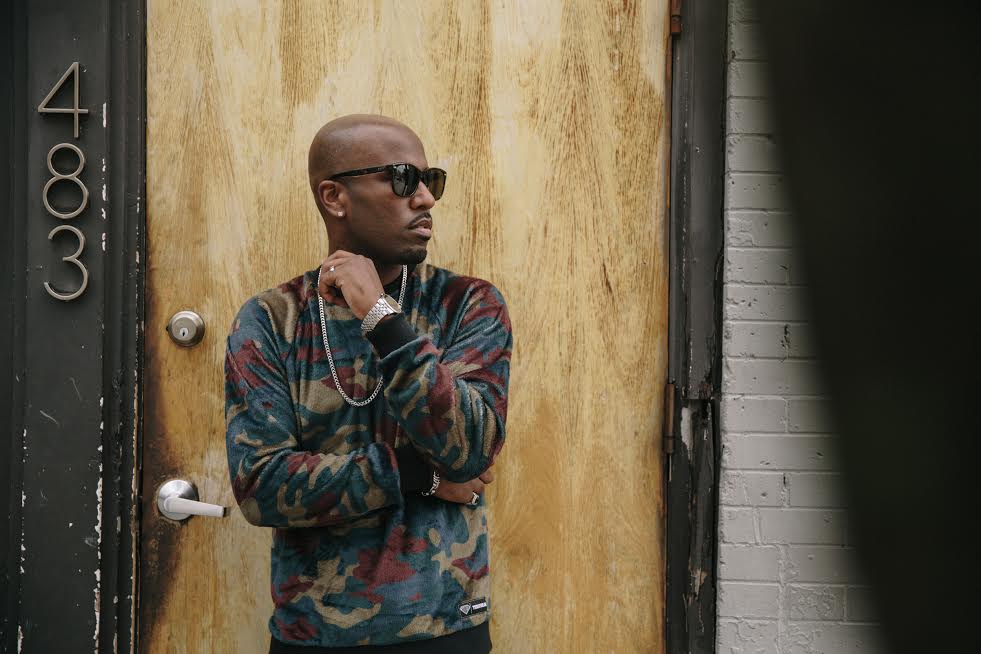
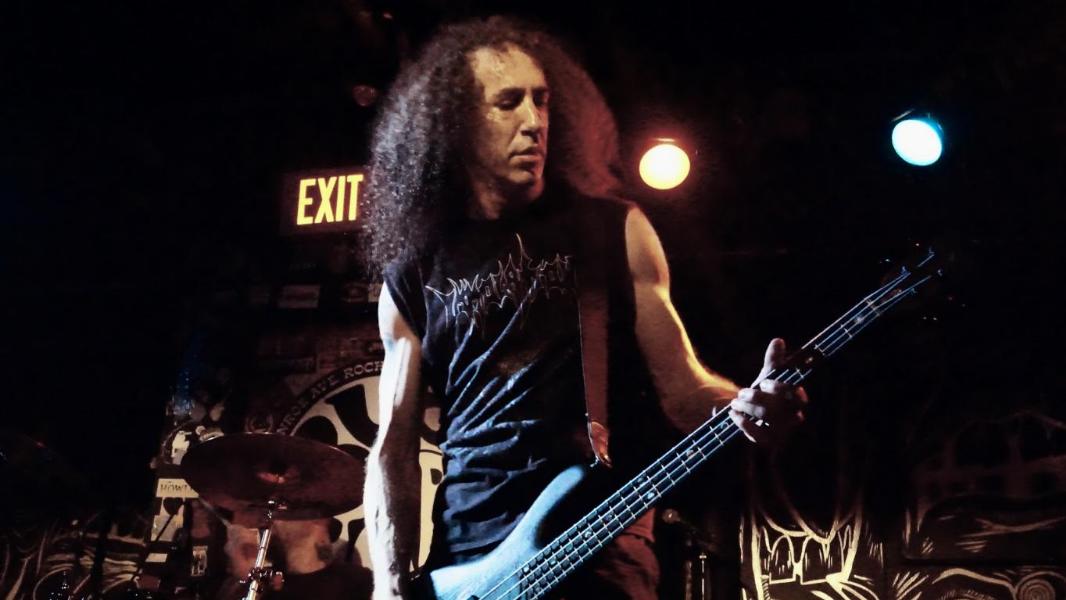
    Dan Lilker is something of a metal legend having been in bands that are household names such as Anthrax and S.O.D while also staying in touch with the local metal scene with bands including Blurring and Nokturnal Hellstorm. When he’s not shredding he’s working at Record Archive. Now he has joined the ranks of Dave Mustaine (Megadeth), Randy Blythe (Lamb of God) and Johan Hegg (Amon Amarth) as a DJ for Gimme Radio, an online 24 hour radio station dedicated to metal, with his show Braindeath.

    Dan LilkerJacob Krug: How did you get the job at Gimme Radio?

    Dan Lilker: I met the Gimme Radio staff at the second edition of the Decibel [magazine] Metal and Beer Fest back in March in Philadelphia which is Decibel’s home base. I was there with a brewery from Virginia called Adroit Theory with whom I helped brew a nice, hazy New England Double IPA called Personal Coma. At first I did a video interview with the Gimme radio crew, and then they asked me if I’d be interested in being one of their DJs. It sounded like a really cool thing to do since although I’d spent over 30 years playing metal, I’d never done anything like this.

    JK: What do you hope to do with your position at Gimme Radio?

    DL: I just want to play a bunch of cool stuff that I enjoy personally as well as songs from bands that have been inspirational to my work. Without hopefully sounding too big-headed here, I do realize that there’s a lot of people out there who respect me and the music I’ve made, and I’d like to think that listeners would find my choice of bands/songs interesting in that respect. If I can get people to check out a band they might not be previously familiar with, then that’s the more direct answer to your question I suppose.

    JK: With on demand streaming services like Spotify and Apple Music becoming the primary way people consume music what do you think Gimme Radio will accomplish?

    DL: These services usually have you search for what you want to hear or provide bland suggestions, while Gimme Radio serves up killer underground metal (as well as more palatable choices depending on the DJ) without requiring input from the listener. You basically sit back and enjoy the ride, and hopefully get turned on to some new bands. We do all the work!

    JK: Do you think the concept of Gimme Radio could be applied to other music genres?

    DL: Possibly, but I think it would work better with more underground genres like industrial or goth music. Two reasons for this- people who like less-known music are more passionate about following it, and also, mainstream pop music (Dave Matthews, etc.) is already all over “regular” radio, and having a Gimme Radio format for it is almost unnecessary.

    JK: Do you think Gimme Radio will be a direct competitor with on demand streaming services such as Apple Music and Spotify?

    DL: It’s indeed possible- for one thing it’s free! Also, as I mentioned above, there’s the advantage of the listener not having to search for what they want to hear, which is a great way of being exposed to new bands. But it’s a slightly different format because of that, so it’s almost apples and oranges anyway.

    JK: What part of metal’s future do you think Gimme Radio will play?

    DL: As more people slowly but surely transition from listening to “hard copies” (vinyl, CDs) of the music they enjoy to online streaming services, Gimme Radio will be there to ensure that the radical underbelly of metal is still strongly represented in this format, so in that respect, they’re just as important as the bands themselves in keeping the flame burning.

    JK: You mentioned people moving away from physical media to digital media. What’s your opinion on the revival of cassettes and vinyl? And how underground sub genres like black metal has strong ties to cassettes.

    DL: Good point…

    Well, perhaps I should have phrased that “as most people transition etc.”. As an employee at a killer record store [Record Archive] I know that vinyl in general is doing really well now, both new and used. Cassettes are also still doing well due to their underground nature, that explains their thriving in black metal, where (like punk) there’s an aversion to corporate industry shit.

    Personally, when we have a metal party over at our place we use my wife’s Spotify subscription with our smart TV, maybe just out of laziness, which is probably what a lot of people do. Not to mention that you can hear whatever you want without owning it or digging it out. And using Gimme Radio with “travel speakers” will definitely be happening at the next bash.

    Check out Dan Lilker and Gimme Radio here

  • Punk Rock Schemes and Melding Scenes: An Interview with Kaiser Solzie

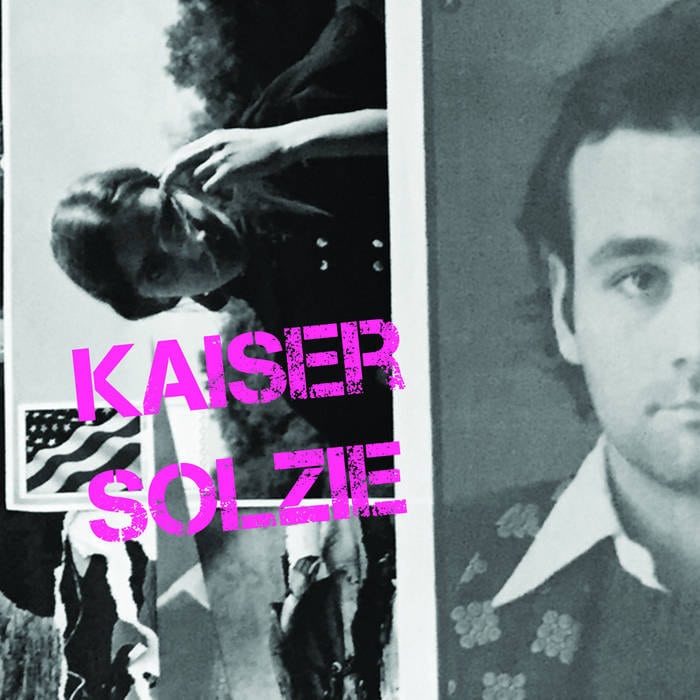
    One of the acts playing the entire run of Warped Tour this year was Rochester’s Kaiser Solzie. At the heart of this band is James Jackson, who took on the moniker Kaiser Solzie when he was a solo performer. He has since been joined by Lenny Palmieri on drums, Brian Lorenzo on guitar, and Jamie McMann on bass. NYS Music caught up with the band’s frontman at the Western NY Warped Tour date to talk about his music and involvement with Warped Tour over the years.

    PHOTO BY RUBY STETTNER – James Jackson (second from right) recently rounded out his band, Kaiser Solzie, with (from left to right) Lenny Palmieri, Brian Lorenzo, and Jamie McMann.

    Paula Cummings: How does this Warped Tour differ from your first time going?

    Kaiser Solzie: We get to play. And I get to bring a lot of friends along, which is awesome. And I’m sober on this tour. I’m learning a lot, meeting a lot of new people. It’s been a full circle for me.

    PC: How long have you been involved with Warped Tour?

    KS: 2001 was my first. I was supposed to work with Phoenix TX and that fell through. I just went anyways. I ended up meeting Kevin and a bunch of the bands like Pennywise and Newfound Glory. Lots of people were like “Oh, there’s this kid on the greyhound bus just traveling around helping us out when he could.”

    PC: You’ve come a long way. This is the second year organizing the local Korner stage?

    KS: It just felt like the local scenes need to come together a bit more and Warped Tour was a good platform to teach that. I could have been like, “Oh, I’ll just pick a couple bands and get them on Warped Tour,” but I was like, “No, we gotta do a little bit more, show community and how we roll.” That’s been pretty cool. We have a lot of rad bands this year. Last year we had a lot of rad bands. And they built the stage. They worked together as a community and a scene, which you don’t see a lot of in other cities, you know.

    PC: You have a song “Punk Pop Hip Hop” that speaks to bringing scenes together.

    KS: We do. We wrote it in Washington Square Park. It was about playing music with everybody else no matter which genre you are. Just everything coming together. I try to bring that out here. We’re going to be playing that today. We’re going to be getting a bunch of people on stage. On the tour we’ve had the rapper Kosha Dillz come up and do a verse, which has been really rad. Other times we’ve had our friend Josh Kramer do a bunch of stuff. It’s been a really exciting experience.

    PC: What’s next after Warped Tour?

    KS: We’re going home. The rest of my band is going to rest. I’m scheming all these other different things. We’ve got a couple tour offers we’re working on. And we were only able to record seven songs for this record. We were rushed to get everything done. So we’re going to record another record when we get back.

    PC: Want to put in a plug for the latest album?

    KS: The new record is called Back Again. It’s an awesome record. It’s got “Bill Murray” on it. It’s got a song called “ADHD.” Lots of gnarly songs. It’s an up and down record, not just a punk rock record.

  • Directing the Flock: An Interview with Pigeons Playing Ping Pong’s Drummer Alex Petropulos

    Pigeons Playing Ping Pong is one of the jam scene’s hardest touring acts. With a stacked summer lineup of shows and festivals and a fall tour which expands to mid-December, it seems the band cannot sit still (which is great for us). In the midst of the madness of Great South Bay Music Festival I had a chance to sit down and talk to Pigeon’s drummer Alex Petropulos to discuss their album Pizazz, their nonstop touring schedule, and what makes the band tick.

    Ryan Randazzo (RR): In October you released Pizazz. What was the recording process like compared to other albums you’ve done, and how have you matured as a band since the last one?

    Alex Petropulos (AP): We’re so happy with how Pizazz turned out. We recorded it at Right Way Studios in Baltimore, and worked with a great engineer named Steve Wright. We’ve worked with him on prior albums, but this is the first studio album I’m personally on. I’ve been in the band for a good four years now, however, because of the timing when I came in, Pizazz turned out to be the first album that I played on, which was just thrilling for me. Before Pigeons I used to do a ton of session stuff, where you’d just be hired to play on an album, and I just enjoyed playing in the studio.
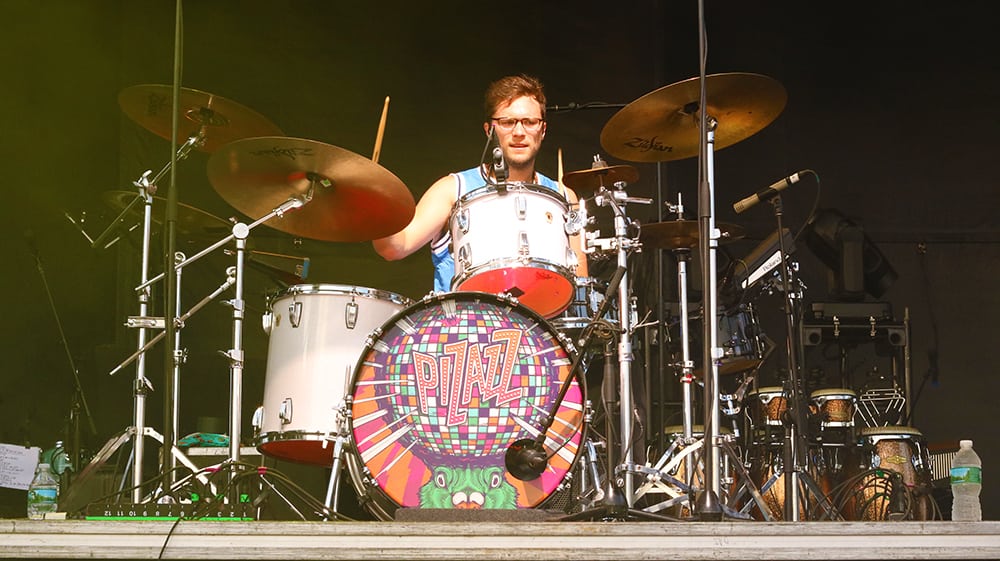
    Alex PetropulosPigeons and this scene is all about the live performance, so it’s a little different for us to go into the studio. Our main goal was to polish these songs that might be new to some people, that we’ve been kind of working on and carving out for years. We’ve been trying to create a nice studio sound, and try to capture our live sound because realistically that’s what we want. That’s our scene, that’s how we bring in most of our fans, with the all improv, high energy feel of the show- which can be tough to capture on an album, but we are so pumped. We think it’s our best album, we’ve gotten great reactions. I love it, it’s got a great funk sound, but still has those classic funk and rock undertones to it. Just the general vibe, I think it’s a good mix for our sound.

    As far as the songs themselves, some were newer. We’re always changing songs and setlists are always different, so it was a good mix of newer songs and songs that we’ve had on our plate for a while that we’ve been morphing over time. That’s another great thing- just seeing how we can tune in songs as time goes, which I think we do pretty well.

    RR: You play a lot of festivals, but also do  an extensive tour, how does your festival sets compare to a normal Pigeons show?

    AP: I love how we’re able to do the hardcore, stringent night to night touring, but in the summer, it is mostly festivals. It is a different vibe, but in a good way. It’s good to kind of switch that vibe up because festivals are often an hour to two hour set, and we kind of alter our minds for them. Our main touring shows we usually play two sets and an encore, and get to play for a long time with the ability to experiment and improv for a while, take a bunch of risks. With certain festival sets you have less time or are in a location where you might not know how the audience is since they might not know anything about us. Like if we play a pop festival, like Bonnaroo, we always try to stay true to our show. We never try to change the show because we think the crowd will be different, but it is something you always have to keep in your mind. If it’s a more family environment we play songs that cater slightly to that while also not straying from our true show. Festivals you get a lot of new ears which is good. I like the balance of it all. In the winter and fall you’re on the go every night, and the summer is still busy but different. We get to see other bands and hang out with them.

    At jam festivals when artists are done playing they’re not just leaving, everyone’s hanging out. We’re music fans too, and that’s the biggest thing for us with festivals. We’re fans just as much as anything. When we go to festivals, just like fans, we’re checking the lineup, checking the schedule to see when we play and who we can go see. We meet up with bands who you talk to on the road, but only get to see them when you’re playing with them.  It not only brings great shows together, but also brings the musicians together to hang and communicate, which is always great.

    RR: Your fanbase calls themselves “the flock,” as you’ve grown over the last few years, how have you noticed the fanbase has changed with you?

    AP: “The flock” is technically the Facebook band group page, but we like to consider any Pigeon fan a member of the flock. It’s constantly growing, and constantly blows our mind. We have fans, for their own pleasure, who will help us out. They post poll questions, do roll calls for shows, get together flock group meetings before shows. It’s great. The community is amazing. It keeps everyone on our toes. They’re our fans who we do see night to night more and more as we’ve gotten bigger. It’s amazing you see the same fan night to night as the tour goes, and one big thing about that, in a good way, is it keeps us on their toes musically. We’ve never once repeated a setlist, which is something we like to keep up, but at the same time it also forces us to keep writing and making new music as opposed to just newer jams. When you see the same person every night, you think “oh wow, we’ve got to mix things up.” We love writing music and are always trying to push more, and the constant support from the fans also pushes us to write more music, and create more for them. We know how on top of it they are, listening to every live show, and it’s awesome. We feed each other. The fan group will hopefully keep growing as we go, but we’re also growing for them at the same time. We have such a great following we’re so appreciative to the flock.

    RR: Where do you think most of your fans come from?

    AP: I would say definitely the live show. Festivals are huge for us because it’s easy to just check things out. There are a lot of festivals in the scene where you don’t know every band, and that’s a cool thing. Festivals are always great for getting new ears, but we’re also always working hard and touring too. We’re constantly touring. We used to play up to 200 shows a year, but now it’s probably around 125. Connecting with the fans live during the show is big for us. We like to incorporate the fans, make eye contact, point people out during the show, make people laugh, and engage with fans during the show. I think that attracts other fans around. One thing I’ve always thought was good with our show was finding a good balance between crowd interaction and the fun, silliness on stage, but also balancing with a great show. I think we’ve been able to do that, and I think we also have a relatable show.

    I love weird music, but we have a sound where even if you don’t know who we are and you’re at a club or something, you hear our kind of punchy dance beats, you’re hopefully gonna start moving your head. I think our relatable, fun in funk style appeals to a lot of people who are just trying to have a good time and listen to good music. It’s definitely all based around the live aspect for sure. It’s crazy, we’ll play a big show in our hometown, [Washington] D.C. or Baltimore, then we’ll go out west to some place we’ve never been, like San Francisco where we just went for the first time, and there were just as many people. It kind of blows your mind. You wonder if there will be people, then its packed and you think “this is just like a hometown show.” It constantly blows my mind how the flock seems to keep growing.

    RR: As you’ve been learning a lot the last few years, what is the biggest thing you’ve learned in that time? What would you tell yourself five years ago that would be most beneficial now?

    AP: I’ve always played music growing up, but never on this level. I’ve always dreamed about seeing a show at Red Rocks, let alone be playing one. The biggest thing I’ve learned, which I was lucky to have learned growing up, is to embrace every moment and constantly have the perspective of “wow, I’m able to do this for a living.” You have to take every day. It’s a lot of hard work and a lot of hard travel and you can get frustrated, but then you get days like this where you get to the site, look around and think “wow, this is work today.” I get to hang out and see my buddies by the water, play an hour set, see Umphrey’s McGee and Papadosio. We’re always looking on the bright side. We’re always trying to embrace what’s around. Things can catch up with you if you’re just waiting for the show. We love playing so much, but we also love the ride. We love going out before shows and finding good food and cool people. It’s much more a community vibe than you would think. It’s a grind, but it’s a great grind.

    RR: Who’s your biggest influence as a drummer?

    AP: As far as the classic guys, drummers like Steve Gadd who played with Stuff, and so many studio guys like Vinny Colaiuta, who played with Zappa and Sting. I love the old guys who revolutionized their own style and just pushed the limits, even just with their grooves. Gadd can sit by his kit for an hour and just groove, and respect that just as much as some crazy fast drummer. As far as new guys there are so many great drummers out there, especially in our scene. Kris Myers from Umphrey’s is incredible. His endurance has always impressed me so much. They can get at it for three hours every night, and he’s just roaring back there. Guys like Adam Deitch from Lettuce. Just hard workers. You hang out with them and they’re chill, cool guys, but they’re also real hustlers. I respect the hustlers and the guys with passion that are always trying to get better. Dave Dicenso is probably my favorite drummer ever. He’s played with a bunch of acts and I got to study with him growing up a little bit, and he’s like a guru master. He’s probably my biggest inspiration when it comes to drumming.

    It’s hard to choose, there are so many great drummers. I also love finding drummers who I don’t love necessarily for the music, for example Justin Bieber’s drummer Devon Taylor. I don’t listen to Justin Bieber’s music, but he is still one of my favorite drummers of all time because I can watch him play, and whatever he’s playing you can tell by the style and feel, he loves it and is pushing it to the limits. I love finding drummers that I don’t necessarily relate to the artist they’re playing with, but you can still see their passion.

    RR: Do you have any personal goals that you’d like to achieve with the band within the new few years?

    AP: I’d love if we played a headlining set on the summit of Mount Everest. I think with how technology is progressing we can make this happen. We were thinking of some sort of bubble apparatus that we’re gonna put right on the peak of Everest, and try and control the climate so we have a good show. There will probably be at least 10 people there. That and the space station. We’re working on Everest and NASA right now.

    RR: What is the biggest challenge you’ve had to work on personally as a musician, or as a band?

    AP: As far as the band, I was pretty lucky. I always grew up playing shows where no one was there, but as for Pigeons, I came in where the band was already well established and generating a decent amount of momentum and success. Not with Pigeons, but when I was younger the biggest thing was just appreciating the grind. There were shows where you’d put your heart and soul into it, giving everything you’ve got, posting flyers, and then you’ve got three or four people there. We’ve all played empty shows. It can be disheartening, but just playing is great. You know it’s just a stepping stone, and you’re gonna get through it.

    With Pigeons we’re lucky enough that we’re constantly shocked with our crowd turnouts. We’re past a certain point. There are still new markets, but we’re getting past speed bumps, or slower markets. We’ve returned to some that might have been slower in the past, but now they’re raging. It’s great to see that progression. Having the patience is a big thing. It’s such a crazy schedule you have to be patient, and just keep grinding and know that it’ll be worth it if you truly believe in it. All the guys in the band believe in what we’re doing, and it’s helped us get to where we are. Keeping that motivation and always trying to get better is so important. We know too that even if things are going great now, its up to us to keep getting better and progressing. As our fan base grows, we have to grow too musically, and it’s something we take pride in doing. Patience and perspective are the keys.

    RR: Do you have any pre or post show rituals you do?

    AP: When we’re on tour and get back to the bus, we like to unwind with Kung-Fu movies. It sounds weird, but we’ll play songs to it. We’ll put on funk music that we’ve never heard, and just play movies and it oddly lines up pretty well.

    Pre-show everyone’s just prepping. We’ll do a little team meeting before we go on then our sound man will give our infamous “bird call” through the radio, and that’s when the show begins.

    RR: You guys have so much energy every show, how do you keep it up so consistently every night?

    AP: Everyone’s able to get in this great mindset. I grew up playing a lot of sports, and music isn’t sports, but before a game player’s get in their headspace. We do the same; we prep in different ways. We all have a good understanding that our battle days and show days are long days of work, but when it comes down to the actual show, the show is almost the quick part. At festivals we know we only have an hour or two to get out there and show the fans what we’re about. We don’t want to look back and think “I could have been a bit more into it.” Everyone knows that right when you step on that stage we’re committed, and that set time is the entire time we have to throw it all out there. There are days when we’re tired and have been doing a lot of travel, but it just washes away right when we take that first step on stage. You just get amped. It’s hard not to get excited when you walk into a setting where everyone’s cheering for you. It’s just fun watching people dance, go nuts with their friends, and throwing their arms up for peaks. Energy is constantly feeding back and fourth between the crowd and the audience. You’re riding a high, and it’s just an adrenaline rush. You come off stage and sometimes the set feels like it was ten seconds long because it was just a blur. It’s important to never take a set for granted, that’s for sure.

    RR: Do you have any big plans for next year?

    AP: We book a long way ahead of time, so we’re looking forward to a long next year, which is in the works. Seeing the tours grow in little ways, like going to a city and being bumped up a venue, is always really exciting. We’ve got a great group that helps us book our show and a great team. You can feel the momentum. Shows are getting bigger and we know that. It’s something we keep pushing, and we’re always keeping busy. We love seeing new places and trying out places we’ve never been to, but also returning to a venue that we know is gonna rage. We’re constantly working to grow and trying new things. We love jam festivals, but also stepping outside of our box by playing festivals like Bonnaroo or Euphoria, which aren’t jam band festivals anymore, but if all goes well that’s how we know we’ll get new ears. We love the mix of the jam community and trying to expand to new things, try new crowds, and new styles. Even with our writing, we’re always trying to progress that. With the position we’re in we’ve got to keep moving forward, and we can’t just think that we’re good because things are going well. That just means we have to work harder.

    RR: What’s the most exciting thing that’s happened to you since joining the band?

    AP: This actually just happened. Jay Blakesberg, amazing photographer, we love Jay and we’ve gotten pretty close to him, and we’ve been able to work with him a good amount. Last weekend we saw him a couple of times, once at High Sierra Music Festival, and I was wearing my Primus Pork Soda shirt with the album cover. He saw me and said “Alex, nice shirt. That’s a photo of mine, I took that album cover,” so he told me all about it. I thought it was funny because I’d been wearing that shirt for years and didn’t know he took the photo. Then a couple days later we’re at Red Rocks and I’m wearing a Bill Walton Celtics jersey; one of the greatest basketball players ever who’s also a big Grateful Dead fan. Jay came up to me and said “Alex, nice shirt. I know Bill Walton really well I’m gonna see him tomorrow and tell him you wore that shirt.” I was like “what is it with the clothes I wear with Jay Blakeserg?” So, I was freaking out about it, then later we got an email from Jay because he took a photo of us in front of the crowd and I had my Walton jersey on.  He sent it to Bill and Bill sent a response to forward along to us saying that he loved the picture and thank you so much. It was just unreal. Growing up I was always a big basketball guy, and the Celtics and Bill Walton are guys on your Mount Rushmore of players. I’d never thought he’d be thinking about me, so that gave me goosebumps.

    RR: What advice would you have for young musicians?

    AP: One thing I always tell young musicians, and I know I keep harping on it, is the grind and perspective. Particularly with drums, when you’re a young kid taking drum lessons, you want to get behind that kit and just start wailing, but the first couple years of drum lessons are just the snare drum and technique. Same with any instrument. There are kids that will start because they see their idols ripping, and they don’t realize it takes years and years to get to the point of being able to do that. But once you do get over that hump, then it’s just pure fun. It’s still fun to do all that stuff, but it’s stuff you have to work on. It’s repetitive and not as flashy, but once you get over that initial hump of learning the basics, as with anything, that’s when you can train and push yourself to try and do new stuff. You have to do it the right way. Some kids will skip lessons and just go nuts and try and learn. Obviously, do what you want that’s fun, but as far as the real road to learning and being a musician it’s important to keep grinding those first few years and I promise it only gets more fun and opens up more doors from there.
  • Timing is Everything: Devon Allman discusses teaming up with Duane Betts, BBQ, the state of music today

    The Devon Allman Project begins a swing through New York Tuesday, July 24, with a stop at Bearsville Theater in Woodstock. This is followed by dates in Rochester, Albany, Baldwinsville, and Pawling. The man with the legendary Allman Brothers bloodline has teamed up with another Allmans progeny, Duane Betts on a tour that has both men joining forces to display their own projects as well as pay tribute to their fathers’ legacies. NYS Music recently sat down with Allman to discuss the tour, being a father and the state of music today.

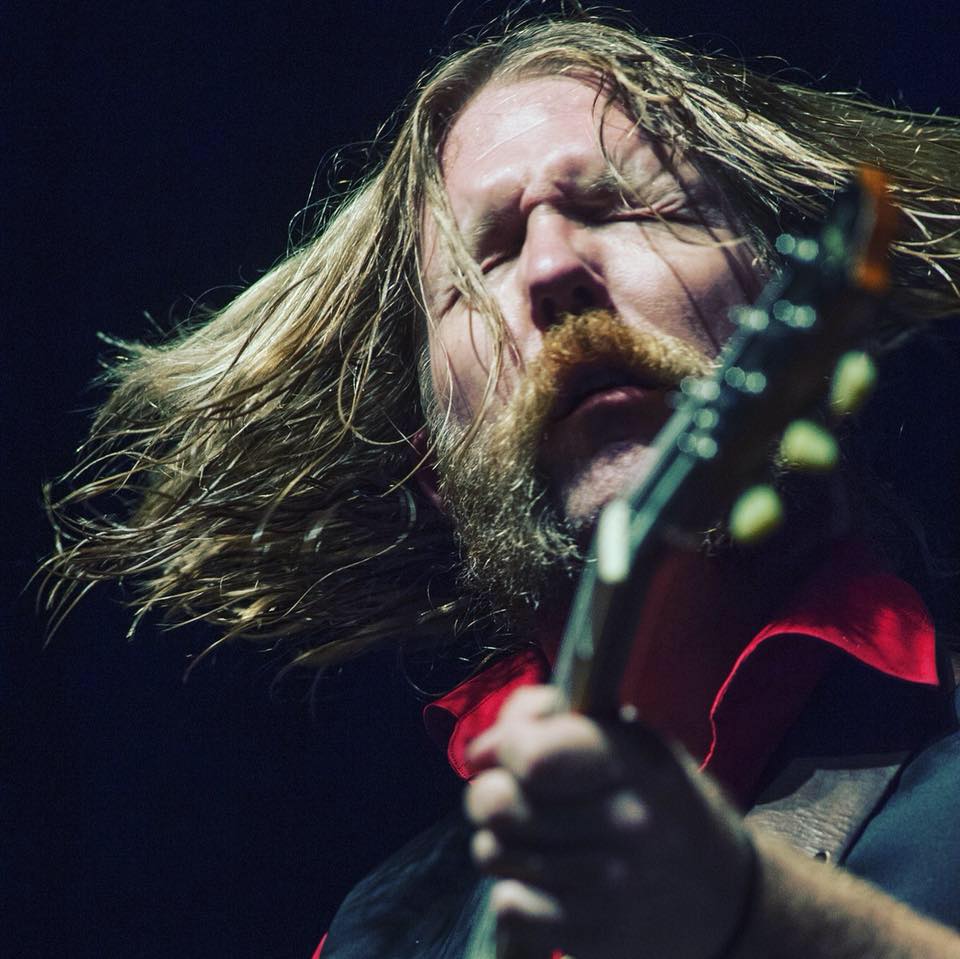
    Devon AllmanMike Kohli: So is the band starting to gel yet?

    Devon Allman: Oh yeah, we rehearsed really hard six months prior. We were doing three to five days a week rehearsal for six months. I wanted us to come out already primed.

    MK: You’re working with Duane as well on this tour.

    DA: Yeah, he’s got a new EP out. He was in his dad’s band for years and a band called Dawes for maybe a year or two. So this is like the first time he’s come out and done his own stuff, fronted his own band. It’s exciting. He’s great.

    MK: You’re sharing a rhythm section?

    DA: Yeah, it’s an eight-piece band at the end of it. It’s a brilliant thing.

    MK: Doing the tour with Duane Betts, a guy you kind of grew up with. This is something you guys, in a way, dreamed of doing, correct?

    DA: We were hanging out with our dads. Their band was experiencing a pretty big renaissance. But that’s where we made our first bond just from being on that tour. I don’t think when we were kids we really had dreams of playing together, but as we grew into adults and started touring and making records, we talked about it. We knew it would be special. And that’s really what it’s all about. We don’t want to go out there and be a tribute band. There’s only one Allman Brothers. But we can certainly do our part to help keep some of their music alive.

    MK: What was the trigger that made you guys decide, “We need to do this together?”

    DA: It was just timing. I lost both parents inside of five months. I took a year off. I didn’t have the heart to go and perform. So I kind of rallied around my family. I spent a lot of time around my siblings and my son. Duane was wrapping up with Dawes. I knew I was going back out there. And I wanted to go back out there in a bigger fashion. So it made sense to team up. Timing is everything.

    MK: So you’re going to be in Syracuse soon. You make your home in St. Louis, right? That’s a big BBQ town. (Laughs). Are you a partaker of the BBQ?

    DA: So they say (laughs) I mean, I go back and forth with being a carnivore and not being a carnivore. St. Louis is really a big baseball town and a good blues town. And we have our own pizza. A lot of people don’t realize there is a St. Louis-style pizza and it’s amazing.

    MK: Well, if you’re in a carnivorous stage while you’re up here, be sure to check out some of our BBQ.

    DA: Is that where Dinosaur is? Oh yeah, I’ve partaken.

    MK: Did you always feel that pull to become a musician? You were obviously exposed to music at a young age. Did you want to become a musician right off the bat?

    DA: I fell in love with music when I was four years old. My mom used to spin a lot of vinyl. I was infatuated from then on. I saw my first concert at nine. I saw Cheap Trick. When Rick Neilsen pulled out that five-neck guitar, I mean that was it. The epitome of cool. I have to get in on this immediately. I started playing guitar at 13. I had dreams of it but I really never thought I’d get to do what I do. I just thought it was an untouchable magic act to tour and make records. I got lucky and I got to do it. And I put a lot of work into it too.

    MK: You’re producing too, right? Also started your own record label?

    DA: Yeah, it’s gonna launch this fall. I’m excited about it. I want to give some younger artists a chance to develop a following, become bonafide recording artists. I haven’t put a record out since Ride or Die. That one came out in, I think, late ’16. I’m definitely due. I’m going in the studio this fall so I’ll have a new record out in probably January.

    MK: Is that going to come out on your label or are you going to shop it around?

    DA: I’ll shop it around. We’ll see.

    MK: I have a son the same age as yours. Does he have any interest in music? Are you persuading, dissuading him in regards to music?

    DA: I’m really letting him feel his way. He played piano for years and years and he played some guitar. I don’t know. He starts college in the fall and he may end up playing music, he may not. I’m not really sure. But I would never persuade him and I would never try to steer him away from it either. I think his love affair, his passion, his career, that’s gonna be up to him.

    MK: Absolutely. This is a bit of a scary time for me. This is my first kid going to college. You just hope you did things right along the way, ya know?

    DA: I mean, I’ve spent 45 years either being somebody’s son or being a father to a son. That’s all over, it’s scary new territory. It’s exciting, but it’s also sad. I’m gonna miss having my kiddo around every night.

    MK: What do you listen to?

    DA: I spin vinyl at home, keeping my mom’s tradition alive. I probably have 500 records. It’s everything, man. There’s Nigerian jazz to thrash metal to Miles and Coltrane. I like to listen to jazz when I’m cooking. I cook a lot. Man, there’s everything.

    MK: Any new artists that have been catching your ear lately?

    DA: Yeah, man, Caroline Rose. She’s a badass. She really is. She’s a gifted songwriter and storyteller and singer. She’s great. I love the new Lucero record. Always loved Lucero. They’re from Memphis, friends of mine. I love just about everything from Jason Isbell lately. I love his records. He’s a friend. There’s good new music out there. You just have to dig for it.

    MK: Do you recognize a renaissance of outlaw country happening, in artists like Isbell and Sturgill?

    DA: I think it’s more a renaissance of organic music in general. Doesn’t matter the flavor. I think people that really get into music are looking for something that is real. There’s so much crap out there.

    MK: Do you think a lot of it has to do with the environment the country is in now?

    DA: No, I think it has to do with the fact that somewhere along the way, it might have started with MTV, ya know, as soon as you could become a TV star by way of music video, I think people started wanting to get into music to become a star, not to make good music. And that’s where it really started getting shitty. If somebody grabs a guitar and wants to tell you a deep story about something they’ve been through, that’s gonna hit you a lot harder than someone who grabs a guitar because they want to be on TV. I guess, since time immemorial in music we’ve had that. There was bubblegum music in the ’50s and ’60s. So it is what it is.

    MK: So you have a good stretch of Upstate NY shows coming up, hitting up Woodstock’s Bearsville Theater. Have you been to Levon Helm Studio?

    DA: No, I haven’t.

    MK: Well, if you ever get the chance, that’s like a church.

    DA: Yeah, I know. I’m a huge freak of The Band. I just got their whole vinyl collection, every album. Amazing.

    MK: Speaking of Woodstock and taking in sites, do you ever get a chance to take in the towns that you’re touring through or is it more a load in, play your show, head on to the next?

    DA: I’m able to a little bit more now because we finally graduated up to a tour bus so we’re arriving to the towns, waking up around 10:00 – 11:00 on the bus, ya know have the whole day until you get called for soundcheck. I went and did a little guitar shopping in New Orleans, vinyl shopping, got to take my men out for sushi in NYC, try to make the most of it.

    MK: It’s good to finally have a bit of that luxury, if you will.

    MK: We’ll see you on your upcoming Upstate dates. Thanks for your time.

    DA: Thanks for your time today, I appreciate you. We’ll see you up north soon.

    The Devon Allman Project is currently on tour with Duane Betts. New Yorkers have several opportunities to catch this unique show. Betts opens the show, performing music from his recent EP using Allman’s rhythm section. Allman follows with a set of his own material and for the encore, all the musicians take the stage to pay tribute to the Allman Brothers.

    The tour hits Baldwinsville’s Bud Light Amphitheater at Paper Mill Island on Saturday, July 28. Tickets are still available for the show through Ticketfly.

    Devon Allman Project/Duane Betts Tour Dates:

    July 24 – Bearsville Theater – Woodstock, NY
    July 26 – Party in the Park – Rochester, NY
    July 28 – Bud Light Amphitheater – Baldwinsville, NY
    July 29 – Darryl’s House – Pawling, NY
    Aug. 3 – Flood City Music Fest – Johnstown, PA
    Aug. 4 – Jergel’s Rhythm Grille – Warrendale, PA
    Aug. 5 – Music by the Bay – Ajax, ON, Canada
    Aug. 7 – Music by the Bay – Ajax, ON, Canada
    Aug. 8 – Kent Stage – Kent, OH
    Aug. 9 – Arcada Theater – Saint Anne Woods, IL
    Aug. 11 – Riverside Park – Rushville, IN
    Aug. 12 – Prairie Magic Music Festival – Valparaiso, IN

  • Victor Wainwright Brings the Train to Funk ‘n Waffles

    Attention, passengers. This is your conductor speaking. Victor Wainwright and The Train is about to leave the station. Please stand clear of the Boogie Woogie and enjoy the ride.

    Victor Wainwright

    “The blues was bleeding the same blood as me. The blues didn’t have to explain the mystery of pain that I felt; it was there in the songs and voices of singers like Lonnie Johnson and Blind Lemon Jefferson, in the cries of their guitars.”

    B.B. King, Blues All Around Me: The Autobiography of B.B. King

    Four-time BMA Pinetop Perkins Piano Player of the Year winner (‘13,’14,’17,‘18) and BMA BB King Entertainer & Band of the Year recipient (‘16), Victor Wainwright sets out on his new endeavor, Victor Wainwright and the Train. The 12-track, band-titled album not only pays homage to the Blues, but also is a full-fledged attack on the music industry – a rebirth of the genre.

    Wainwright is an entertainer – period. “Musicality and the songs themself are second,” said Wainwright. Growing up, Victor idolized BB King. “Seeing King for the first time changed my life! When I watched him, right away I could put my finger on exactly what IT was.” Sheer musical talent and technical skills on stage can only be admired by musicians and artist alike. For the lay listener it is about seeing a great show. They want to be entertained.

    “Artists need to take up the mantle and use Blues as a tool to see past the 1-4-5 (a rudimental chord progression) of a guy sitting on a porch, singing about his dog,” said Wainwright. “I want to invite people in and get them to be apart of this community. It needs younger people to keep it alive.”

    As the highly anticipated Funk ‘n Waffles shows in Syracuse and Rochester approach later this week, diehards and Blues-fans-to-be will have their hands full. The steam train will take flight at Funk ‘n Waffles Downtown in Syracuse, Friday July 6. Showtime *8 pm (corrected from 6pm). And carry on Saturday July 7 at Funk ‘n Waffles Music Hall in Rochester, NY, beginning at 8 pm also. Tickets: $15. (advance), $20. (door). Info: (585) 448-0354 or visit https://www.funknwaffles.com/

    Victor Wainwright

    Musically people haven’t seen anything like this before. It touches on new and exciting, while being familiar and honoring the Blues,” said Wainwright. Victor hinted at a few surprises that will be in store for these gigs including more original music, familiar tunes from your childhood and songs outside the normal Blues repertoire. In addition, Doug Woolverton, who played on the record, will be joining the Train for these Funk ‘n Waffles dates. “Laughter is a huge part of our show. When people are laughing with you, in combination with slow songs, sung from the heart – it becomes a super powerful combo!”

    The record is a testament, backing the mountain of Wainwright’s accomplishments. It is a stout stew of Boogie Woogie, Blues, Rock ’n Roll, wailing horns and free-flowing expression from the drums, keys and bass. The opening track, “Healing” leaves no time for thought. In-your-face stride piano reverberates, before the track takes off in up-tempo eighth-notes topped with Wainwrights soaring voice. The Train is alive.

    Not only did Wainwright compose all of the record, but also produced it himself, with the help of Dave Gross in New Jersey. “What I tried to convey is power. Not in a Marvel comic book sense, but in the form of passion,” said Wainwright. “Exactly like a steam train.” All of the overwhelming energy captured on stage is heard on tape. The band feeds off each other collectively in the studio, achieving something monumental.

    “Wiltshire Grave” has a spooky, New Orleans second-line feel, featuring Pat Harrington on guitar. The tune lingers, allowing you to digest the beauty in each instrument. The raging horns punch through making way for sweeping keyboard licks and an edgy solo guitar. The track also features off-the-cuff percussion effects such as a baseball bat and bicycle bell. All listeners are stopped dead in their tracks. Likewise, “Money” sits back in the pocket, relatable in message – warranting payment to Uncle Sam without delay. Let’s hope he can catch the up-tempo localmotive.

    Notably, the album pays a direct tribute to Wainwright’s idol, BB King, in “Thank you Lucille.” For Victor, “some things deserve to be said as directly as possible.” Upon hearing of King’s passing, Wainwright rushed to the side of the road. His world came to a complete halt. “Lucille is a deity. King talks to her like it is human. I almost felt said for her,” said Wainwright. “She will live on!”

    Victor Wainwright and the Train was released March 9, 2018 and quickly topped the National Roots Music Report charts for Blues in April. It now sits sixth in the Top 50.

  • ¡Viva Mayhem! Takes on CFCU Summer Concert Series Again

    ¡Viva Mayhem!, commonly referred to as Viva, is an eight-piece post-wave ska band out of Ithaca, NY which are fan favorite at the CFCU Summer Concert Series that takes place at the Bernie Milton Pavilion stage in Bank Alley on the Ithaca Commons. Sean Bonney-Burrill is one of the original member and founders of the band and still an active participant when he’s not attending Berklee College of Music in Boston for Contemporary Writing and Production.

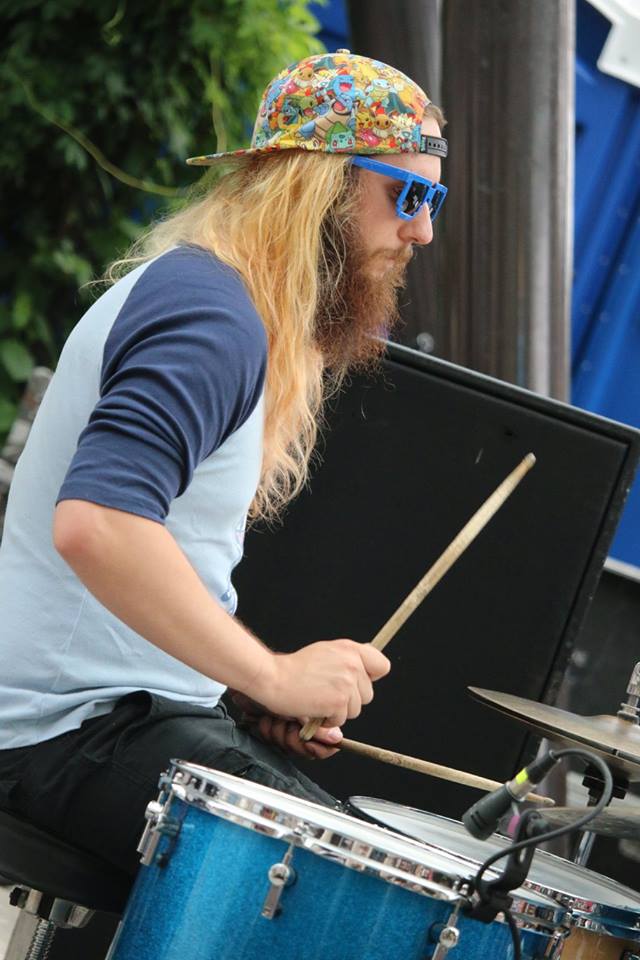
    Viva Mayhem’s drummer Sean Bonney-Burrill playing at the Ithaca Festival taken by Edna Brown Photography.

    Nora Hones: So tell me a little bit about your position in ¡Viva Mayhem! and how the band formed?

    Sean Bonney-Burrill: So my position in it is really weird because the band formed, I don’t remember exactly what year it was formed, but it was five or six years ago as Mayhem Attack Squad and at the time I was the drummer for the band. And at that point, it was just two horn players, guitar, bass, drums and vocals and it kind of went from there to what it is today. Over the years I have switched gears, switched instruments many times. I went from drums, to doing vocals, to doing both vocals and drums at one point, but I didn’t really feel like that had enough energy going on upfront. I felt like that we needed someone upfront to get the crowd excited so since we were having a hard time finding a vocalist that was sticking around in Ithaca, I decided to jump on doing the front man position for a while. Then when I went away to school, we got a new vocalist and a new drummer and I just sort of filled in on whatever instrument needed to be played when another member was out and besides that I would play aux percussion or keyboard. But right now, this summer, I am playing drums again which I haven’t done in almost five years with Viva which is really awesome.

    NH: So how long have you guys been performing at the CFCU summer concert series? Because I know this isn’t your first year.

    SBB: It’s not the first year. I think it was two years ago we started. I know we opened for SAMMUS the first year we did the concert series. It’s basically been since the series started at the Bernie Milton Pavilion after the Commons renovation ended. But we have a lot of fun each time. It seems like the CFCU concert series has been progressively growing a lot stronger each year and bringing in new and interesting bands and really getting some good talent from a bunch of different spots in New York.

    Photo courtesy of CFCU Concert Series website.

    NH: So what got you involved in it? Like did someone approach you or did you apply to be part of the concert series?

    SBB: We did let the CFCU people know about us a few years ago and then it sort of just happened organically over time. As Viva was playing more places around Ithaca and getting their name out more and more we started not as much looking for gigs but working with people to put gigs together. Like I said we opened for SAMMUS our first year that we played the CFCU concert series and that gig was an Ithaca Underground showcase which is actually what we are doing again this year as the headliner instead.

    NH: What is it about this concert series that keeps you coming back to keep performing at it?

    SBB: Well, it always pulls a really cool crowd. You see people that you wouldn’t necessarily see at other shows. It’s great that it’s free and a family event because there’s definitely some festivals around town and stuff like that, but it’s one of those few series that anyone can go and enjoy. You don’t have to pay to go there. you don’t have to be a certain age, we love that. We get to see a really diverse fan base from that. It also always feels like a really good way to connect with the community in a really cool way. It feels like a very quote unquote “Ithacan” thing to do. But besides that, like I said, they always bring in a lot of really cool talent so it’s awesome to be put in a lineup with so many other cool bands who are doing really interesting things with their music in Ithaca and the regional area around Ithaca.

    NH: So what do you think it is about you guys that makes this concert series want to keep bringing you guys back?

    SBB: I would say that the number one thing that we have going for us as a band is energy and excitement. I think that we do really good job engaging with the audience and I think the audience really enjoys engaging back. It doesn’t really feel like performer, audience, and like there’s a barrier between the two. We really want to interact and make people have a good time, get people dancing, and I think because of that people think, “Oh this band is playing on the Commons, should we go? Yeah, we always have a good time. It’s fun and dance-y.” I think that’s one of the reasons they enjoy us is because we are really excited to just go out and perform for people and show them the best time we can.

    NH: You already mentioned it a little bit while we have been talking but I was wondering, as a participant of these concert series, what do you think a concert series like this can bring to a city?

    SBB: Well one really cool thing they can do is make connections between different musicians that you wouldn’t necessarily get to see at some shows because it’s such a wide range of people coming to play these series. And I know, for myself, I love to check out all the other bands playing over the summer. And it’s a different thing than if we were just playing shows and looking for other bands that fit a similar style to us, it doesn’t necessarily work in the same way, which is really cool. Besides that, it’s a way to see people in Ithaca that you wouldn’t always see. It’s hard to have enough money to go see all the great bands in Ithaca, so being able to check out some people who you couldn’t make it to their normal shows at the concert series is really cool. It’s cool to have that showcase on a Thursday evening when there isn’t normally a lot else going on and they always have really quality acts so if you wanna go you know you’re going to have a good time.

    Photo courtesy of Viva Mayhem website.

    NH: Okay, so just to close us up, is there anything about Viva Mayhem we should keep an eye out for?

    SBB: Well on Tuesday, July 3 we will be on WVBR with Tuesdays With The Band at 6 and we will be playing some music off of our newest album, we will be playing music live in the studio and just sort of be talking about the show with the CFCU concert series on Thursday July 5. Besides that, our next big thing we are really looking forwards to is playing at Big Mean BBQ where we will be playing with a huge, awesome lineup of regional musicians like Big Mean Sound Machine, Giant Panda Guerilla Dub Squad, Ithaca Bottom Boys and a bunch of other really fun bands. And that will be August 24 and 25 and we are really pumped to do that right now. We have a lot of new music we are writing right now, which has started to be introduced through our last few weeks of shows, so if you come out on Thursday you will probably get to hear something by us you haven’t heard before.

    The CFCU Concert Series takes place Thursday evenings on the Ithaca Commons. The series is a free outdoor concert series which is open to the public held every Thursday evening from 6-8pm. The series started on June 21 and runs until September 6 (with the July 18 concert moving to Wednesday evening and a special Saturday afternoon show on August 18 at 1 pm.)

    July 5 – Viva Mayhem (Ska)
    July 12 – Maggie Koerner (Soul/Rock)
    July 18* – Taj Weekes & Adowa (Reggae/Afro Folk)
    July 26 – Searson (Canadian Celtic Pop)
    Aug. 2 – Fall Creek Brass Band (Brass Funk)
    Aug. 9 – Stone Cold Miracle (Soul)
    Aug. 16 – The Hilltoppers (Bluegrass)
    Aug. 18* – East Hill Classic Jazz Band (Jazz)
    Aug. 23 – The Blind Spots (Moxy Rock)
    Aug. 30 – Kwame Binea Shakedown (Roots Rock)
    Sept. 6 – Gunpoets (Hip-Hop)
    *Denotes non-Thursday shows. Taj Weekes is performing on a Wednesday evening and East Hill Classic Jazz Band is performing on a Saturday at 1 p.m.

    For more information on ¡Viva Mayhem! Visit their website.

    For more information on the CFCU Concert Series visit their website.

  • Interview: A Raw Take with Three West End Blend Founders

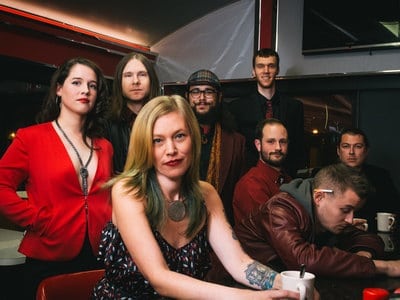
    NYS Music jumped at the punch to sit down with vocalist Erica Bryan, drummer Sam Horan, and bassist Tom Sullivan of West End Blend for an interview and live podcast. West End Blend of Hartford, Connecticut has quickly made noise as one of the top funk/soul acts of the region. They are on the up-and-up and in this raw podcast, WEB’s growth is just one topic of casual conversation. Hit the play button below to listen to the 48th episode of the Rochester Groovecast Podcast.  Also find a timestamp at the bottom of the page.

    Timestamp:
    00:00: Smile by West End Blend
    04:25: Episode Introduction
    06:45: Conversation with Erica, Sam, and Tom of West End Blend.
    41:20: Episode Conclusion
    43:00: Attitude by West End Blend

  • JAZZ IS PHSH founder Adam Chase discusses band, shows in Upstate this month

    JAZZ IS PHSH is in the middle of their Northeast tour across New York, with stops in New Hampshire and Boston, bringing with them an incredible lineup of musicians who explore the music of Phish with a focus on improvisation of the group’s many compositions.  Adam Chase, co-founder of the JAZZ IS PHSH ensemble, is introducing broader audiences to not only the music of Phish from musicians who did not come up in the jam world, but to also introduce Phish fans to musicians that may or may not have been on their radar.

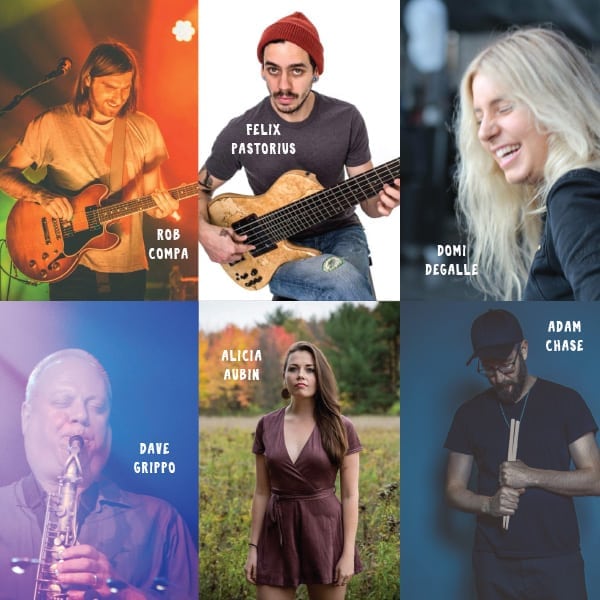
    The current tour includes familiar faces in the jam scene such as Rob Compa of Dopapod, a Berklee School of Music graduate who has been performing recently with Mike Gantzer of Aqueous, where you can hear Compa’s jazz influences come out from a smooth sounding acoustic duo. A trio of horns features trombonist Alicia Aubin of Big Mean Sound Machine and Ithaca College alumni who has performed across the country with the high-energy funk band, and as far away as China and Russia. Rounding out the horns section are Carl “Geerz” Gerhard and Dave “The Truth” Grippo of Phish’s Giant Country horns, the latter two of which performed with Phish numerous times in the early 90’s. Grippo continues to perform with Grippo Funk Band in the Burlington area and has toured with Trey Anastasio Band on numerous occasions.

    JAZZ IS PHSH

    Familiarity with these players will make jam fans feel at home, while Felix Pastorius and Domi Degalle will add in fresh jazz takes on the music of Phish. Son of Jaco, Felix Pastorius walks in his father’s footsteps as a bass guitarist, who at the age of 19 was recommended by Victor Wooten to fill the bass chair in Jeff Coffin’s Mu’tet. He won a Grammy with jazz mainstay The Yellowjackets, and now based in New York City, has started his own projects, including an incredible jazz fusion group The Hipster Assassins. Domi is a teenage musical prodigy and was brought up in a musical family in France and began playing music at age 2, entered Conservatory at age 5 to study classical and jazz. She is now studying on a full scholarship at Berklee College of Music and has performed with the likes of ThundercatDavid GilmourGhost-NoteMonoNeon, Louis Cole & More. Both musicians are well known in jazz circles and join the band for a different angle on the music of Phish, a twist on your everyday troupe.

    The group will perform this month in Albany at The Egg on June 27, at Buffalo Iron Works on June 28, and ANTHOLOGY in Rochester on June 29. They recently stopped at Brooklyn Bowl to perform with Strange Machines on June 16. Check out a photo gallery over at Relix. Adam Chase, who also plays drums in JAZZ IS PHSH spoke to NYS Music about the upcoming shows and how their interpretations of Phish’s music stands apart from others.

    Pete Mason: How did you assemble this tour’s lineup for Jazz is Phish?

    Adam Chase: I really like combining musicians from a variety of backgrounds on each show, whether it’s older and younger musicians, male and female, black and white, etc. And for this project the musical backgrounds being diverse is very important, regardless of gender or ethnicity.

    Having a combination of musicians that are familiar with the music and musicians that never listened to Phish before I introduced them to it is the best recipe for really doing justice to the compositions while pushing the boundaries of what the tunes can sound like.

    For this run I am particularly excited about having the teenage piano prodigy, DOMi, on the road with us. Having grown up in France and having her exposure to music in America be through jazz and classical professors at Berklee School of Music and through her collaborations with Thunder Cat, Knower, and Ghost Note, her lack of knowledge of Phish has been really fun for me. She is so talented that she can take the sheet music I give her and not only play the complex compositions with ease, but is also able to expand the ideas and improvise in a way that I’ve never heard within the framework of a Phish song.

    Being able to pair her talents with Felix Pastorius is very exciting for me as well. As many people know, Felix is the son of Jaco Pastorius, which carries a fair amount of weight for the level of talent one would expect, but what a lot of people don’t know is that Felix himself is one of the best bassists around and he has his own voice on his instrument. His knowledge of music and his approach to playing bass is mind bending and he is one of my favorite musicians to play with.

    In addition we have Rob Compa of Dopapod who is great guitarist and amazing human being, Alicia Aubin from Big Mean Sound Machine who will be making her debut with us and Dave Grippo of The Giant Country Horns. It’s always fun for me to play music with guys like Carl Gerhard and Dave Grippo, because growing up in the 90s as a Phish head, I had a ton of cassette tapes of those guys playing with Phish. They are quintessential figures in the Phish experience.

    PM: What makes the interpretations of Phish’s music done by JAZZ IS PHSH different from those of other Phish tributes?

    AC: There are lots of Phish cover bands. I don’t consider this to be a Phish cover band, though it is absolutely a Phish tribute. I may be splitting hair with terminology, but when I think of a Phish cover band, I think of a band trying to play Phish songs like Phish did in attempt to recreate the experience of seeing Phish (or as close to that as they can get). With Jazz Is Phsh our goal is to create a unique experience, where the music is a vehicle for incredible musicians to put their own identity into the music. Not just from an improvisational perspective but also from a compositional perspective.

    Every song that we have done arrangements for have happened in a group setting with musicians that range from Chris Bullock of Snarky Puppy and Kofi Burbridge of Tedeschi Trucks Band, but also Michael Ray of Sun Ra Arkestra and Anthony Wellington of Victor Wooten Band. With each arrangement, we have not only reharmonizes the vocal melodies to fit into a horn section but for many songs we have composed original parts, reworked existing parts and even mashed up Phish songs with jazz songs and in some cases even jazz influenced hip hop.

    A recent mashup we did took the popular Phish cover “Yamar” (which is actually an old calypso song) and mashed it up with the Q Tip song “ManWomanBoogie”. What makes this mashup so cool is that the Q Tip song was a variation of a sample of a Wayne Shorter jazz piece. What makes this so relevant to me is that jazz is often trapped in a box and held to just being swing music or a sound associated with the legends of the origins of jazz. But jazz is much more than that. Just follow the career of Herbie Hancock and you will see how jazz has evolved into funk, hip hop and so much more. The idea of jam music to me is the intersection of jazz and rock and roll. So to be able to explore the brilliant music of Phish in this way is what jazz is all about.

    PM: Is there an era of Phish that lines up with the sound of Jazz is Phish more than any other?

    AC: I think what we are doing is very unique and different so it would be hard to say if it lines up with any particular era of Phish. I do however enjoy turning on musicians to some of the early compositions of Phish as the complexity of the arrangements are very “Zappa-esque” and provide a challenge and in some cases an explanation of what a musician would find so charming about Phish’s music. But really there are Phish songs throughout their career that lend themselves so well to a horn driven, instrumental, funky jazzy setting.

    PM: This is your first time in Albany, and you’re playing in The Swyer Theater at The Egg – what can fans expect from a show in this intimate venue?

    AC: We are particularly excited to play this beautiful room. It’s always special when playing this type of music, to be in a room with great sound and a great feel. It really opens up the dynamics of the music and the creativity the musicians feel. I find that shows in rooms like this, feel like they have room to breathe, which is very exciting. I am looking forward to really giving each musician an opportunity to showcase their talents while also exploring the music collectively in a way that will really connect everyone in the audience with everyone on stage. When everyone on stage and the audience are all listening wholeheartedly and in the moment, magic can be made.

    JAZZ IS PHSH Tour Dates
    June 27 at The Egg Performing Arts Center, Albany NY
    June 28 at Buffalo Iron Works, Buffalo NY
    June 29 at Xerox Rochester International Jazz Festival at ANTHOLOGY, Rochester, NY
    July 5 at Sweetwater Music Hall, Mill Valley, CA
    July 7 at High Sierra Music Festival, Quincy, CA
    July 8 at High Sierra Music Festival, Quincy, CA

  • Interview: YONAS, His Upcoming Album, and His Creation Process

    Yonas Mellesse, or more commonly known as YONAS, is an independent hip-hop artist from South Bronx who over the past 3 years has been able to sell over 150,000 songs, 20,000 albums and accumulated over 250 million streams.

    photograph courtesy of YONAS

    Nora Hones: I know you have a new album coming out, About Time on June 29th, and I was wondering how long have you been working on this album?

    Yonas Mellesse: So this album I’ve been working on for probably like a year. From start to finish it usually takes about a year for me to put together a project, and in that time span, I usually record like, 50, 60, 70 tracks to find the best 10 to 15. So yeah, about a year.

    NH: What were some of the main themes, and motives behind the creation of your new album? Basically, what were the focuses of it?

    YM: So on this album it’s pretty much to kind of go back to the essence of everything starting for me. You know, I’ve been making music professionally for the last 7 years, so it comes to a point, where sometimes you’re making music just to make music. There comes a point where you make music to continue financial prosperity. And then there is a time in life where you are making music just cuz you love it. So I kinda wanted to go back to making music I just love to make regardless of how people will necessarily receive it. So yeah that was pretty much this album here, it’s going back to making music, enjoying the process, and making music for the love of it. That was kind of what my mind frame was during the project.

    NH: Is there any particular track on it you’re most excited to drop? If so, which one and why? That is if you can tell me, if you can’t I understand.

    YM: I love them all! I love them all! But I would say, “Keep Up” which is the title of one of the songs on the project that I really just lets me talk my shit and go back to the lyrical side of myself. And then the production on the track is just crazy. So I really like that one and “Through The Fire” is another track I’m excited about. It just has a lot of soul and a lot of meaning to it. Those two tracks right there I’m super excited for people to hear.

    NH: What are the difference can we expect from this album compared to your previous EPs and mix tapes?

    YM: I think it’s still the same me, I think I’ve done a good job just being consistent and being myself and telling my story throughout this past 7 years, but I think with this one you can expect more maturity in the lyrics and in the production selection. It sounds more like a grown album but at the same time it doesn’t take away from the fact I love to have fun, I love rap for the sport, I just feel it’s a more mature project and I think people will be able to tell I’m pretty seasoned now when it comes to making music. This is the beginning of that next phase.

    NH: So, sort of off of that note, what is your writing process like?

    YM: I just listen to the music a lot. I get all my inspiration from how the music sounds. The production is telling a story itself and it’s my job to communicate that. It’s a lot of listening, a lot of being in tuned with music almost like a spiritual connection, as crazy as the sounds, and than slowly but surely the words start to just appear. And I just try to capture them and put them down and record it. A lot of listening, a lot of vibing, a lot of time spent by myself to be honest with you. I don’t like too many people being in the studio while I’m working.

    NH: So I heard you had training on violin at an early age and I was wondering it the effects how you write and create music?

    YM: Yeah, I think that’s why I have such a connection to the music part of it and not just the rap part, the hip hop part, because I studied classical violin for 13 years and it taught me the discipline on making music. It’s not supposed to be easy all the time. Sometimes I come up with a song in 30 minutes with a beat, something that people love, but you know for the most part it’s going to take a couple hours, a couple days, a couple weeks, a couple months to really find and make the best music and put all the pieces together. I think studying any classical instrument for anybody really teaches you that discipline, like okay it’s not going to be easy but if you put the work in you’ll get best result at the end.

    NH: That definitely make sense. So I was wondering what are some of the freedom being an independent hip hop artist has given you? And on the flip side, what challenges has it brought you?

    YM: The freedom is that I can do whatever I want whenever I want and I think that’s also a challenge to. It’s knowing when to tell yourself, “No this isn’t a good idea” or “You should be working now instead of going out and having a good time.” The gift and the curse of it is the freedom part of it. You’re your own boss, you’re the artist, you’re the marketing person, you’re the video director sometimes, there’s a lot of freedom but at the same time if you don’t know how to manage that correctly, which no one does at first, it’s something you’ve got to learn, but if you don’t learn how to manage that correctly you could end up steering yourself in the wrong direction and working with people who aren’t necessarily good for the future of your craft. Being able to navigate those waters is probably the toughest part. It’s definitely not easy and I think it would actually be a lot easier being on a major label because you’ve got someone telling you what to do 24-7 and them giving you advice on how the music should sound, they are doing advertising and marketing for you and hiring people for you. It’s a gift and a curse to be independent but I think it’s definitely a gift to be a major label artist which is why I’ll probably be heading in that direction sometime soon.

    NH: Do you have any notable memories either from performing by yourself or, I know you’ve performed with some notable acts like Macklemore and Ryan Lewis an an example?

    YM: Yeah, so, my favorite is actually two memories. It’s the first time I played with Macklemore and it’s the second time and it kind of showed me that anything is possible. And Kendrick was on that first bill as well, it was probably one of my first shows ever, it was myself, it was Macklemore, it was Kendrick Lamar, it was ScHoolboy Q and a few other artists on the line up. It was a venue, South by Southwest, and there was maybe 75 to 100 maybe 150 people crammed into this little venue and it was a great show. I gained a lot of experience from that show. And then you fast forward too 3 ½ years later and I got invited to perform with Macklemore again, to open up for one of his sets, the difference is goes from three artists, three notable artists, fill up a 100-150 cap room to Macklemore performing by himself in an arena of maybe 10,000. And I was like wow at that second show, just remembering we had just performed 3 years prior at this small intimate venue cuz that’s where we were at at the time to filling up an arena of maybe 10,000 college kids that was pretty crazy to me. It showed me that anything can change at any moment and it could take your career from point a to point z.

    NH: Wow that’s crazy. It’s amazing how much can change in just a small amount of time.

    YM: Aw yeah. You just gotta hope things break the right way. You know, people who have never heard of you before are playing your albums all over the world, music is powerful.

    NH: Definitely. Is there anything else you would like to share before we are done?

    YM: Look out for a lot of things YONAS in the near future 2018, 2019, there’s a huge world of people in the underground hip hop scene that have heard of me but there so many more people who haven’t discovered me yet so if they discovering me just now, check me out, look out for a lot more YONAS in the near future. The album is dropping June 29th.

    YONAS’ newest album About Time drops on June 29 and isn’t something any hip hop lover wants to miss. Between his use of melodies with crossover music production pulling from his classical background and his powerful use of words, he really is a unique voice in his field.

    For more information on YONAS visit his website.

  • Interview: Marc Broussard Talks Music and Philanthropy

    Marc Broussard, a master of bayou soul, is currently on his 2018 tour which will feature tracks from his new album, Easy to Love. And even though he was 3,000 miles away in Switzerland in the middle of sound check, Broussard was able to carve out a few minutes to talk about his current tour, albums as well as his current and future philanthropic endeavors.

    Dave Ostroff: Your father is a renowned guitarist – did he have an influence on you musically?

    Marc Broussard: He introduced me to some of my favorite singers in the world; playing records in the house like Stevie Wonder, Otis Redding. My father was and continues to still be one of my biggest influences.

    DO: What influences did you take way from him in terms of music?

    MB: He’s a lead guitar player – I don’t think I’ll ever be a lead guitar player. I just don’t have the discipline to practice as much as you have to practice to be good at that instrument. But I did get a wealth of knowledge in regards to his theory. He just showed me a ton of different chords that a lot of my friends, that are great guitar players, don’t know how to play. I think, he gave me what I needed to start writing songs.

    DO: What can both fans and newcomers expect to see at your FTC show?

    MB: We’re a four man wrecking crew. We put on a dynamic show that has a nice ebb and flow to it. And by the end of it, we’ll hopefully bring our audience into a frenzy state. We’re looking to have a good time. I think that’s what our job is, [to give] people a couple hours of time away from the daily grind of life to hang out, drink, and dance a little bit.

    DO: Your music is definitely perfect for that. The new album, what sets it apart from your prior work?

    MB: This actually wasn’t supposed to be a record project. We were going in to write for a film and TV placement. But after the writing session, we decided to go ahead and make a record out of it, but we only had 6 original songs. So we had to start culling through my back catalogs  to find some quality tunes to knock the record out quickly. My goal as a creator is to proliferate as much as I can, to put out as many albums as I possibly can to feed the demand of my audience. I don’t think that I can outpace my fans desire. My fans generally receive new music quite well and within 2 weeks they’re asking me when the next record is coming. So that’s why we went in and knocked this record with a combination of original material and covers. This was the first original indie album of mine. I’ve put out two records prior but one was a cover album and the other was a Christmas album. This was my first, original indie album and I want people to know that I’m definitely back in the driver’s seat. I think that the final product showcases something very authentic.

    DO: Half the proceeds from your album, S.O.S. 2, benefited the City of Refuge project. Do you have plans to do anything else of that philanthropic nature?

    MB: We have have S.O.S. 3 coming out this year, a lullaby album that is going to benefit the St. Jude Affiliate Hospital in Baton Rouge. It should be coming out the fourth quarter of the year. I wrote a children’s book that goes along with it.

    DO: You mentioned that you’re definitely a philanthropist and that you gravitate towards the problem of homelessness and general poverty. Was there someone in your life that makes you think this way?

    MB: I encounter homeless people all the time. We generally try and get a hotel close to the venue so we can walk around in major cities. So I encounter a large number of homeless people across the U.S. and the world. After sitting down with some folks that work closely in that area (homlessnes and general poverty charities) it became evident that something needed be done. Lack of housing is the real cause but there are loads of other problems that homeless people encounter in life. It’s difficult to land a job if you don’t have an address. If the boss says, “where do I send the paycheck,” and you don’t have an address to send it to, it can be a big deterrent for an employer because it signifies to the employer that you don’t know how to manage your life. And that most certainly is not always the case. So my goal is to do everything I can to help give those folks another chance. I’m doing a very small thing in reality. I’m donating proceeds from the sale of the record, but there’s folks out there doing the actual ground level work, day in and day out, and those are the folks that I’m trying to support.

    DO: Tell me about the S.O.S. foundation.

    MB: I started the S.O.S. Foundation. The S.O.S. projects are all going to be single projects that will be associated with a single organization. S.O.S. 2 is affiliated with homelessness, S.O.S. 3 will be for children that are terminally ill and moving forward, we may try to work with ALS on S.O.S. 4 with the Team Gleasons Foundation. I’ll do these records to go after all of my philanthropic passions. And hopefully in the process feed a wealth of money into a  wide variety of organizations. Hopefully, each record will be attached to a single organization and vision.

    Broussard will come back stateside for a show at FTC in Fairfield on June 19, jump back over seas and finally make his way back home to hit the Brooklyn Bowl on December 15.