Category: Interviews

  • In Conversation with Izzy Heltai About Performing FreshGrass for 3rd Time

    Folk singer and songwriter Izzy Heltai spent his summer on tour all over the United States, but there was one festival in particular he was excited to play, the FreshGrass Festival in North Adams, MA.
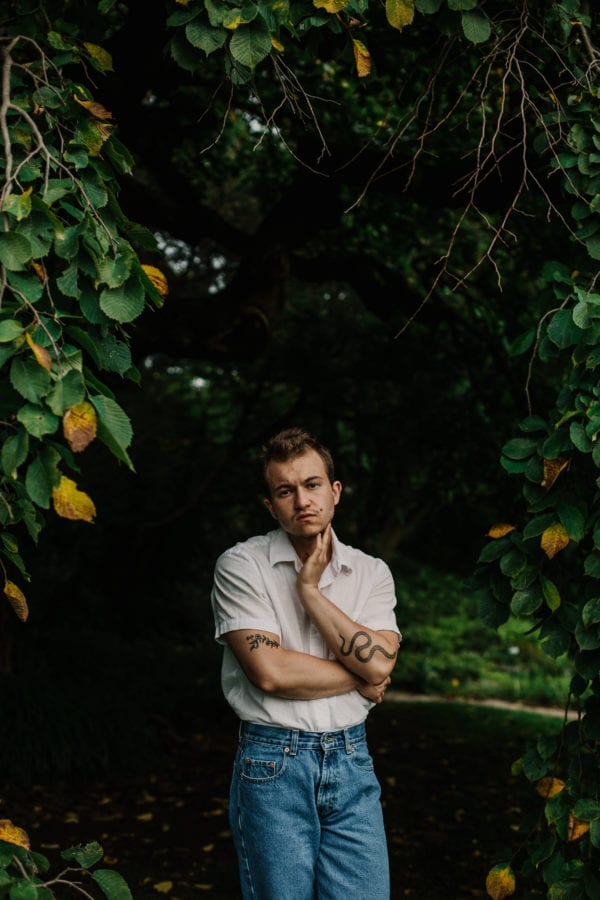
    Izzy Heltai
    Izzy Heltai captured by Emma K. Rothenberg-Ware.

    Having lived down the street from MASS MoCA where the festival takes place the four years he attended MCLA as an Arts Management major, this festival has always felt like a homecoming for Heltai.

    “What’s great about FreshGrass is that its always felt like the festival in my backyard,” Heltai explained. Even though he now lives roughly an hour away in Northampton, there is still something about North Adams and the FreshGrass festival in particular that holds a special place in his heart.

    “The festival took me on before I was really ready to play that festival which, when organizations or places do that for someone who’s just starting to figure out what they are doing, is really cool and really nice,” Heltai explained.

    “Now I feel really ready, prepared, and good enough to play there, but when I first started playing there I had no idea what I was doing.”

    When Heltai climbed on stage in Courtyard C, there was an ease about him that showed he had really come into his own as a musician, a comfort in what he was doing. As he explained it in his interview, the more you practice, the better you get and spending the entire summer on tour it seemed, from the audience’s perspective, he was more than ready for his third year occupying the stage.

    Over the years, Heltai has learned a lot on the fly, but one thing he’s figured out for sure is to not leave practicing until it’s too late, He says one always thinks they will have time to get another practice together during the festival weekend, but the likelihood of that actually happening is pretty low. With his accompanying band, which included stand-up bass player Dan Bisson and electric guitarist Micah Katz Zeiger, it was easy to tell they had run through these songs many times. It was practically second nature for them.

    Izzy Heltai captured by Emma K. Rothenberg-Ware.

    Heltai was more than okay with his 12:30 p.m. time slot on Sunday, explaining that he gets booked at a lot of bluegrass festivals. In reality, he’s more of a singer-songwriter and doesn’t have just a four-chord progression with intense violin or mandolin ‘shredding’ over it. His sound is very acoustic and mellow in comparison.

    “Maybe everyone is a little hung over and ready to listen to some softer folk tunes,” Heltai explained, with a laugh about why he thought his time slot worked so well. For him, getting to share the poster with names like Brandi Carlile, one of his favorite singer-songwriters who also performed at FreshGrass last year, or the Indigo Girls, who performed this year, is one of the best parts about it. It’s an honor for him to be in the same lineup as them.

    Sometimes during performances, when an artist tries to get the crowd to participate, it’s like pulling teeth, but not for Heltai. He had the crowd participating with ease in combination with some witty remarks made by his supporting guitarist, Zeiger.

    Two of his favorite songs to perform are “Not Eden” and “Anyone to Anybody.” He explained they are a lot of fun to play, especially around the North Adams area, because a lot of people know the words and sing along, which was definitely evident at his performance. People all around were matching his words in harmony with the tune and clearly knew these songs.

    One of the big things that helped Heltai in his career was the support from the Arts Management professors at MCLA. They not only taught him how to organize, market, and advertise himself, but also gave him the freedom while still in school to use his tools in the real world and go on mini tours instead of being in the classroom all the time. The goal is to be able to put what you are learning to use outside of a classroom, and Heltai was able to do just that.

    Heltai doesn’t see himself as a successful artist yet, saying, “We will see about successful,” despite the fact he has performed at FreshGrass Bluegrass Festival, Kerville Folk Festival, Falcon Ridge Folk Festival and Ossipee Valley Music Festival. He has also worked as support for musicians such as Ghost of Paul Revere, Honeysuckle, Caitlin Canty, Upstate Rubdown, Frances Luke Accord and The Sweetback Sisters.
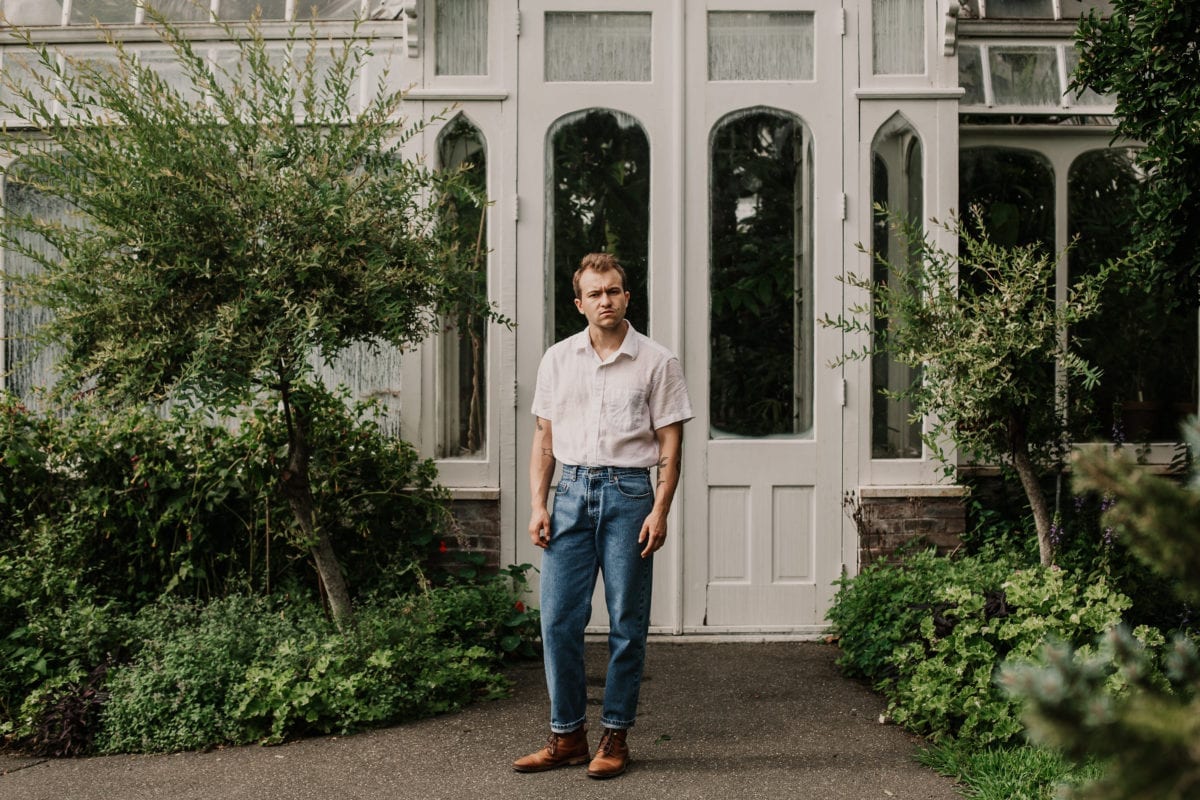
    Izzy Heltai captured by Emma K. Rothenberg-Ware.

    When asked what one of the hardest hurdles to get over is, Heltai replied, “Especially with the type of music I do as a singer-songwriter, I usually play solo, a lot of people just don’t listen and that’s okay.” He explained as a solo artist you have to find the environments you work best in. Sometimes you aren’t going to end up in the best environment, and people there won’t care about your music. That’s unavoidable, and it’s okay.

    From watching him at Stage C, it would be hard for listeners to not care about his music, because the crowd was hanging on every word.

    Heltai plans to start recording his new EP in October and it will include his “Marching Song,” performed at the FreshGrass Festival. His music and social media can be found on most platforms, under the name Izzy Heltai.

    Article was originally published on The Beacon.

  • Arleigh Kincheloe of Sister Sparrow Discusses New Album and New York Tour Dates

    In the middle of her move out of Brooklyn, Arleigh Kincheloe of Sister Sparrow carved out some time to speak with us about her upcoming album and the end of her tour as she hits a few more spots in NY.

    Kincheloe and the Brooklyn-based Dirty Birds got their start in this borough in 2008 and have made quite the name for themselves, performing in almost all of the 50 states and over 10 separate festivals. Their latest work has evolved into something unique compared to their three studio albums. Kincheloe speaks about the reason for the change, the source of her inspiration, as well as a few words of reassurance about the albums development and sonic success.

    Sparrow and the Birds will fly through The Egg on November 10 and Irving Plaza on December 1 – two venues that Kincheloe has deep connections to.

    Dave Ostroff: There’s something different about this album. What would you say is setting this one apart from your previous work?

    Arleigh Kincheloe: This one is a different for me because this is more of a solo project. It’s something I’ve been wanting to do for a long time and I never really had the time to do it. I had a baby and all of a sudden we had to stop touring for a while and I focused on this record and started writing some of the songs while I was pregnant … then when my son was two months old I started going into the studio and working on it. One of the reasons I wanted to do this was we made a lot of records as a band and most of those records were created in a live style – we’d go in and together and try to capture our live side. What I really wanted to do for the first time was let the production side (take control) and kind of explore things I’ve always wanted to try in the studio that I never had because we were trying to go for that live band sound. It was really fun for me. I was trying to be creative in a new way and I was writing with a lot of different people and was really just stretching my legs a little bit. And also I was trying to figure out how to be a new mom. It was a crazy time in my life and I think this record was made all out of love (along with) a lot of exciting stuff happening in my life.

    DO: There’s definitely tons of experimentation in there and it’s very successful experimentation. What kind of musical inspiration have you channeled into this album?

    AK: I always wanted to try too marry modern sounds, hip hops elements, soul and funk stuff that I love. I sometimes still listen to the track and say, ‘I can’t believe it came out like this!’ I have a whole Spotify playlist that was my soundscape for this. The Staples, Aretha Franklin, The Pointer Sisters, Bill Withers, Paul Simon, Joe Cocker – a very ’70s vibe. But I tried to add the modern techniques and drum sounds. The person I worked with in the studio, his name is Carter, we really got each other. I met him because of a song songwriting session where we created “Gold”. After working with him that one day, he got a exactly what I‘m going for. I verbalized exactly what I was picturing and I said, ‘ build me this world!’ and five minutes later he completely created that world. I wanted to make the rest of the album with him because I thought he just nailed it. So that’s where it’s all coming from. It was such a fun experience and it was just the two of us a lot of the time.

    DO: I’ve done some digging and found some initial reactions to the single “Ghost” and your fans loved it. But some are saying they think it’s too poppy and they don’t like the change in style. What would you like to say to some of those people to reassure them this album has a lot more to offer than this one track?

    AK: I want express as an artist that we have to evolve. If we stay the same, then we’re going backwards. We have to try new things and not everyone will like it all the time, but that’s why it’s art and music is subjective and that’s why we’re all entitled to our own opinions. I would definitely like to say wait and listen to the whole album to get a bigger picture because “Ghost” is definitely one of the more poppy songs on the album. I hope people stick around and check the rest of it out. It definitely has a little bit of everything on there. Some of the tracks lean closer to the Dirty Birds sounds and some lean farther away.

    DO: When is the release date?

    AK: It’s October 12th. It’s going to be everywhere that day. You preorder it on iTunes, you get two of the songs now. We’ll be pressing vinyl which is very exciting. The vinyl will have a couple different versions of the songs that we have – Ghost will be different on that vinyl.

    DO: Moving on to the tour and the shows – you’ve found a full time keys player, Nat Osborn. What’s his story? What does he bring to the table?

    AK: We brought him on to be the keyboard player when we did a cover show of Aretha Franklin’s Live at the at Fillmore West album. We did that at the Brooklyn Bowl and we obviously needed a piano player because that album has her playing the organ. We all got along so well – he’s actually an old friend of a couple of the guys in the band and I personally got along really well with him. It’s been adding a lot of freedom in other ways. Whereas my brother on harp, a lot of time he was holding down the organ sounds through his pedalboard and his harmonica, so he now has the freedom to mess around with a different things. My brother is also playing lap steel (guitar) now so we’re bringing a lot of dynamic sounds to the mix which is a lot of fun for us. That is helping bring in the new album songs to life. It’s been really fun and I’m really excited for the rest of the fall.

    DO: You have three NY shows coming up, out of those, do you have a favorite?

    AK: New York is a hometown. I was born in Albany and raised in the Catskill Mountains so Albany is a hometown show in that my dad will be there, my friends from high school will probably come up and see that one. Aand then here in Brooklyn, this is where the band started and where I’ve been for the past decade so those two are both going to be really special.

    DO: I wanted to close out with this – to those who haven’t seen a Sister Sparrow show, what would you say to that are on the fence about seeing you guys live?

    AK: If you’ve never seen us before, we’re all just having a good time. For me, the whole point of this is to have a good time, to spread that feeling of joy and dancing – that’s a very important part of it for me and I hope people also feel the same way. It’s just a good time. We’re a little bit loud, a little bit rock, a little bit emotional as hell. We’re trying to bring everything together, spread a little love, spread a little joy – I know it sounds so cheesy but it’s true! That’s my mission and if I could have a good time up there, hopefully it’s contagious. When the crowd is having a good time then we’re having a good time and visa versa.

  • Brooklyn Comes Alive: ‘My Life Before, Then Forever After’ with Karina Rykman

    Multi-instrumentalist Marco Benevento entrusted his iconic top hat upon Karina Rykman, a fill-in bassist in her early 20’s, at the Music Hall of Williamsburg. Rykman’s mouth agape, Marco’s stare tracked dead in her eyes, sealed shut in the moment. She was in disbelief, but this three-day stint would soon end. It didn’t.

    Benevento, in addition to Ween bassist Dave Dreiwitz, played instrumental roles in shaping Rykman-on-the-rise. She dove head first into a towering repertoire of Benevento tunes,  learning them backwards and forwards, day-in and day-out, Rykman recalls.

    “That first run with Marco was one of the most spectacular moments of my life. I thought that was my last show with them ever,” said Rykman, increasing with excitement. “It was the best time, then scaling the walls (of the Music Hall Of Williamsburg green room post set) throwing ice, tequila and limes.” The room was packed with Karina’s friends, family and teachers. Karina was home.

    “Marco is committed to the vibe and always goes the extra mile,” said Rykman, as she reminisced about the pop-up record player and miles of christmas lights that decorate their oasis backstage. Night after night, the ‘Green Room Road Case’ lives on as Karina’s enthusiasm parallels her sheer musical talent.

    The New York Native has a pure starvation and aestheticism for all things music. It predates her Benevento/Dreiwitz days. It is infectious, inspiring all those around her. In eighth grade, two years after quitting piano lessons, a friend placed a guitar in her lap and taught her The White Stripes’ “Seven Nation Army.”

    “I remember my life before [that moment], then, forever after,” said Rykman. “I was fixated on playing all the time. That was my vibe.”

    Two years after joining Benevento’s band full time, Rykman comes full circle, hosting the second set of The Jam Room at Brooklyn Comes Alive on Saturday, September 29 at Music Hall of Williamsburg. Rykman will play host, alongside Turkuaz guitarist Craig Brodhead, to an undisclosed list of phenomenal musicians and guests. The set will start at 1:45 am, merely 15-minutes after Grammy Lifetime Achievement Award winner and The Meters’ bassist George Porter Jr. ends the first installment of this unique collaboration.

    The Jam will consist of 100-percent improvised music. “How do you prepare for that?,” asked Rykman. “Simply put, you don’t.” Take all the music you’ve learned, scales you’ve studied or harmonies you’ve practiced and “throw them all out the window! It is a crazy exercise of staying focused and in the moment,” added Rykman.
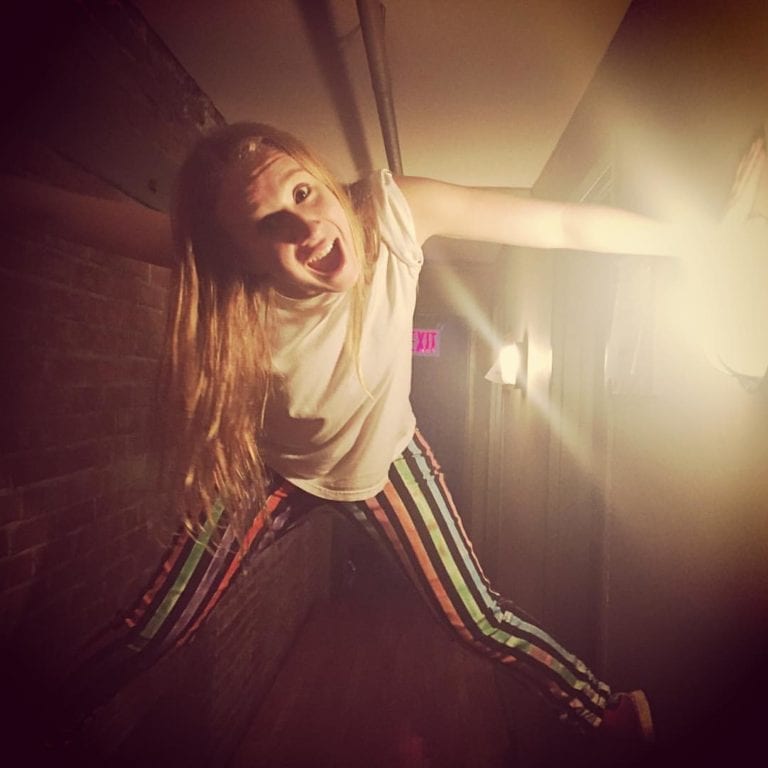
    “I’ve played with people 20-plus years older than me; musicians who have committed themselves longer than I have been alive. It’s really humbling. I’m always absorbing because they have been there. I am just delighted to be accepted.” 

    The female bassist will also be playing with her new project, The Karina Rykman Experiment, at BCA at Rough Trade from 5 to 6 pm. Rykman’s Trio consist of NYU friends, Chris Corsico on drums and Adam November on guitar. “The guys in my band are slaying. Crushing it onstage and off. November is a loop-master and creates a whole world of soundscapes, so there is a lot going on.”

    Three is the magic number. Karina first performed in a trio with Benevento and has taken matters into her own hands. “Harmonically it’s just me and Marco, which makes me deeply, deeply focused on what he is doing. I play a lot of lead and fuzz bass too, which almost acts like a guitar sonically.” Expect no less when The Karina Rykman Experiment takes the stage.

    New Yorkers, beware. Rykman deems Brooklyn Comes Alive “not for the weak of heart.” Whether she is serving as a proving ground with her own ensemble, backing Marco in pure bliss, or sneaking off to see as much new music as she can, BCA will be another one for the books.

    “There’s this scene where people come out to see great improvisers improvise. It’s not for everyone, but there is something to be said to observe those who have toured their asses off and have played music for so many years.” Especially, in the Jam Room. “A collaboration brews with people that don’t perform together often, or ever!,” explains Karina. “To see someone who has put in their 10,000 hours create on the spot, is something to behold.”

    Nobody knows what to expect. As the Jam Room takes flight, the motion will be from “recreational to medical, if you know what I’m saying,” said Rykman [laughs].

    karina rykmanInspired by the vibrant musical communities of Brooklyn and New Orleans, the event brings together more than 50 artists, allowing them to carry out passion projects, play with their musical heroes and collaborate in never-before-seen formations. Each attendee will receive a wristband that grants access to every venue and makes hopping from set to set a breeze, recreating and paying homage to the atmosphere of Jazz Fest by night, which initially inspired the festival’s concept.
    Past editions of Brooklyn Comes Alive have seen unforgettable cross-collaborations amongst legends and favorites like George Porter Jr., John Scofield, Johnny Vidacovich, John Medeski, Bernard Purdie, Henry Butler, Oteil Burbridge, Cyril Neville, Eric Krasno, Jon Cleary, Joe Russo, Skerik, and Marco Benevento, plus members of Umphrey’s McGee, moe., The Disco Biscuits, The String Cheese Incident, Trey Anastasio Band, Lotus, Snarky Puppy, Lettuce, Soulive, The Motet, The New Mastersounds, Break Science and more. Tributes to Herbie Hancock, Earth Wind & Fire, The Allman Brothers, Jamiroquai, and Green Day comprise just a few of the many highlights over the last three years.

  • Robert Walter discusses his new album ‘Spacesuit,’ performing with Mike Gordon and more

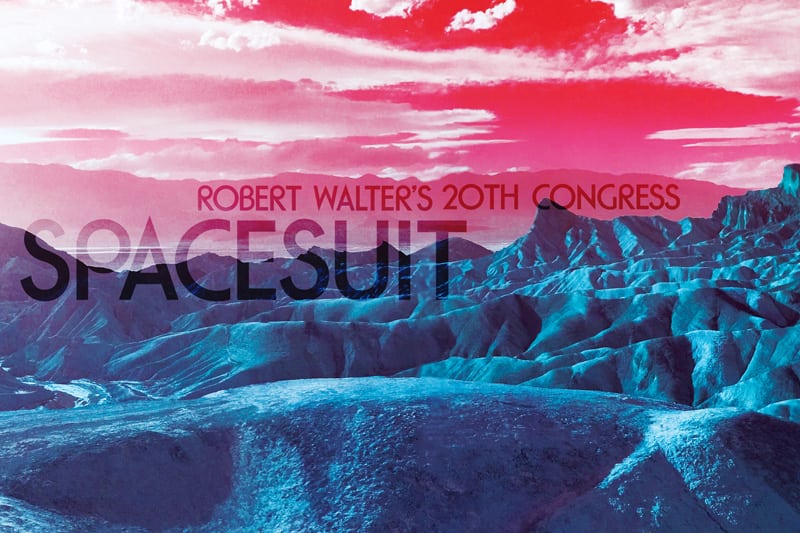
    Robert Walter takes his 20th Congress out of the box and gives his songs room to breathe on his latest album, Spacesuit, out today. The album takes on a sci-fi and psychedelic sound, with meandering compositions that leaves space for improvisation in the live setting. The album lifts off with “Spacesuit” and blasts off with the funky “Nerva and Dumbo,” named for a pair of experimental NASA rockets. Songs such as “13th Key” and “Chalk Giant” jump out with catchy rhythms and a range of influences intertwined.

    Indulging in this album will stoke the listener’s imagination, the progressive melodies capturing your attention and taking it on a journey. Walter, reflecting on the genesis of the album says “I always wanted to make the record that I wish I found going through the record stacks. I love the idea of trying to create an imaginary film or a record from 1972 that you wish you could buy.”

    Robert Walter

    Walter spoke with NYS Music ahead of a performance at Big Henry Vinyl, next to Antone’s in Austin, Texas, to discuss the influences of the album, bringing in New Orleans musicians to record on the album, and how writing and performing with Phish’s Mike Gordon has affected his songwriting.

    Pete Mason: Having been a fan going back to early music festivals this century, I have always wondered – if this is the 20th Congress, what happened to the other 19?

    Robert Walter: My wife was reading a book on Soviet Russia, and the 20th Congress is the most important in Soviet history, a turning point in the Communist Party when they called off their quest for world domination. I saw my band as a chance to break away from The Greyboy Allstars and take a different turn and bring in more effects to a soul jazz sound.

    PM: On Spacesuit it sounds like you are creating space in songs for more improvisation.

    RW: You want to give people sign posts and material to work with, but not so much that they can’t go anywhere. At times an interesting chord change or a bar or the scale can make things irregular, but you don’t want to block people in too, letting people be natural to play. Sometimes we do just play freely, but I like to have a little bit of composition in it.

    PM: How did sci-fi become an influence for the album? Was this just a shift in what you’ve been doing in the studio?

    RW: I always like El Topo and Holy Mountain by Alejandro Jodorowsky’s and sci-fi has always been an interest of mine and there are a surprising amount of effects in some of these soundtracks, more synth especially. I always liked the imaginativeness where you can create things with not a lot of rules and use your imagination on it. The songs don’t have to live by the rules. I wanted to get rid of the rules of a song – is this jazz or funk? – and tear it down and let the imagination flow.

    PM: For this album you brought in a pair of New Orleans musicians, drummer Simon Lott and guitarist Chris Alford.

    RW: I have always been sort of attracted to drummers throughout my career, having played with several drummers from New Orleans. The music can still go places but be rooted in something, especially if you’re doing something a little left of center. They have an anchor in the fundamental American rhythms, the use of clave, but I didn’t set out to hire New Orleans guys, they’re just what I liked.

    PM: How has playing and writing with Mike Gordon influenced this album?

    RW: It’s been five years since I recorded on Overstep, and I’ve been playing with him in Mike Gordon Band for three years. Being around him, you feel like you can be imaginative and inspiring. If something doesn’t work, he throws it out, and he’ll try every route to try to get to something interesting. He broke me out of a lot of preconceptions of how to write music. He’s so open and positive about creativity and indulging new ideas to see if it works or not. He’s fearless.

    Robert Walter

    PM: There is a great deal of futuristic funk and soul on the album. What influenced your writing this time around?

    RW: I have been listening to a lot of German Krautrock, a type of prog rock from the 70s. It tends to be very spare and have a lot of space in it. Kraftwerk is a big one too, and dub reggae which is kinda the same thing. I was interested in music that was subtractive, dealing with the recording and pulling things away to reveal texture. Cymande, a British funk group from the 70s, are very minimal and have simple repetitive bass lines towards this new music. I made a playlist on Spotify of music that directly influences the album.

    PM: Next up for you is a performance at Brooklyn Comes Alive on September 29 with Johnny Vidacovich and Eric ‘Benny’ Bloom. What can fans expect from your set at Rough Trade?

    RW: I am stoked for the Brooklyn Comes Alive set. It’s with Johnny Vidacovich who has been on two of my records so we have a lot of history. Johnny and I used to play as a duo when I lived in New Orleans. He played with Professor Longhair and James Booker, two of my favorite pianists.  Bloom is incredible as well and has great ears and is super fun to be around.

  • Aqueous Discuss Tour, New Album and More at Cobblestone Live Music Festival

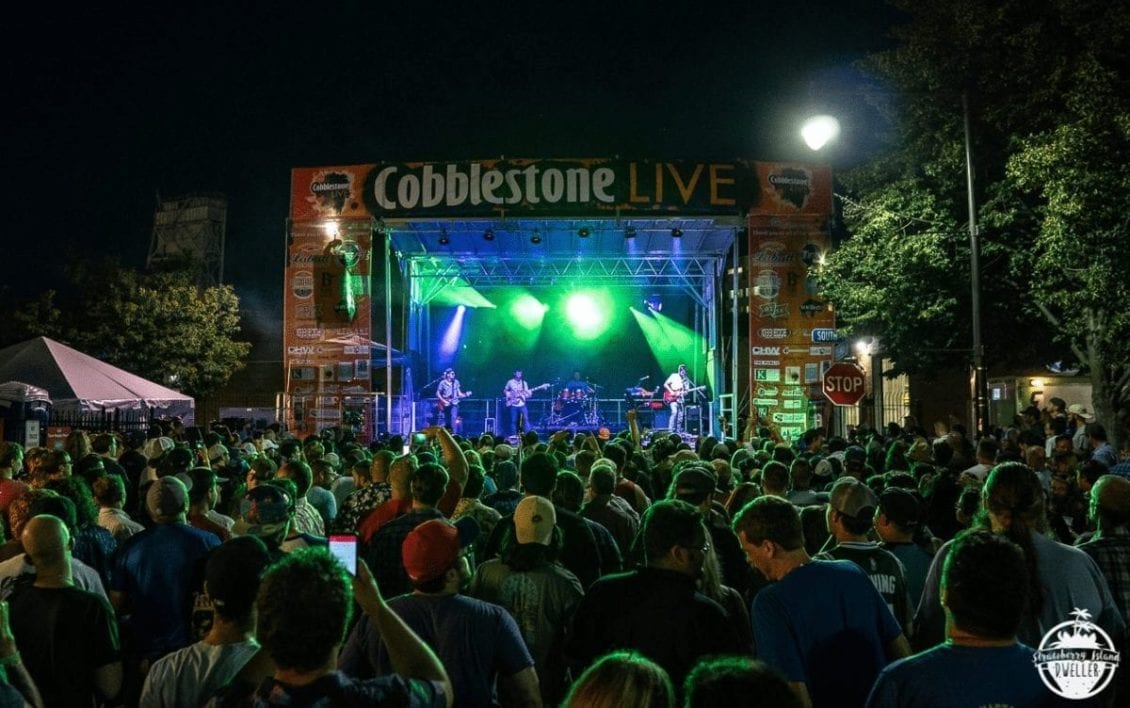
    On day two of the second annual Cobblestone Live music festival, three-fourths of Buffalo’s own groove-rock powerhouse, Aqueous, joined me amidst the celebration of music and art. Dave Loss (guitar/vox), Evan McPhaden (Bass), and Rob Houk (Drums) sat down to discuss their incredibly busy summer thus far, coming home to Buffalo, their new studio album, Color Wheel, and their upcoming, and most extensive fall tour yet.

    aqueous cobblestone

    Andy Hogan: Cobblestone Live is obviously a homecoming for you guys, but you’ve had quite the summer away from Buffalo, so far. Between Summer Camp, Mountain Music Festival, Disc Jam, Electric Forest and Peach, what have been some major takeaways from the tour?

    DL: One of the bigger highlights I think was being able to sell out The Bluebird Theater.

    RH: That was a huge highlight of the summer. I think a good rule of thumb is never expect to sell out, and when you’re not in a hometown scenario, you never know what’s going to happen.

    AH: But in Denver, that’s kind of just the scene, right? People just get out and go to see music.

    RH: I feel like it’s become a second home to us. The response to music out there is just something you don’t see…like, every night there is just a banging show.

    AH: And you see those weird kind of pockets even locally, right? Ithaca, for example, has tons of people getting out to see music on a Friday or Saturday night. Where else do you guys see that?

    DL: Burlington, VT for sure.

    RH: Omaha!

    DL: Yeah! Omaha, Nebraska we’ve had three really good experiences. Once with Papadosio, and twice at the Reverb Lounge.

    RH: People go nuts in Omaha…they throw down.

    AH: Coming back to Buffalo for Cobblestone must be a special occasion. Particularly for you, Dave and Evan, having grown up here. To see this area transform, could you have imagined this would be happening even a few years ago?

    DL: No. Even the whole city in general from ten years ago has seen such growth in a positive way. Like you said, this whole area was not a thing, the whole Canalside area was not a thing, so it’s really nice to see all of this happening.

    aqueous cobblestone

    AH: From what I read online, your first time ever playing down here was not too long after Iron Works opened in 2014…is it safe to say Iron Works is your favorite spot around town?

    DL: It was definitely a huge place for us to continue to grow in the city. Josh [Holtzman] obviously runs it, and he’s our homie so it’s been really nice. Even more than that, it’s helped bring a lot of great music into the city…a lot of other acts that hadn’t really been coming to Buffalo prior to it being open.

    RH: It’s a good spot for a mid-level band…they treat you like a king. It’s not just a great spot to play, they also understand what it’s like to be on the road. At the end of the day, when you treat your musicians well, they’re going to play better, your patrons are going to be happier…it works all around.

    EM: It’s definitely a music venue for musicians. Josh actually used to manage us and would come on the road with us. So he’s seen all the venues we’ve been to and knows exactly what he wants for Iron Works.

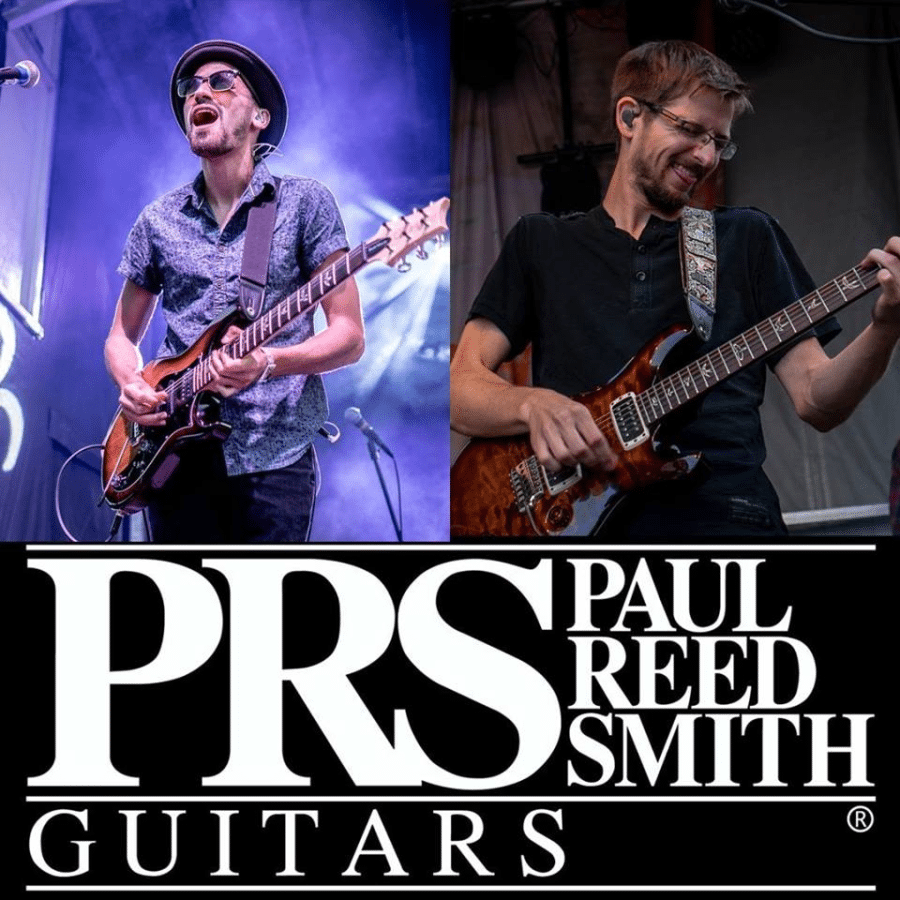
    AH: Now, there’s something new in your live set that I noticed last night. I saw that both you (Dave) and Mike [Gantzer] are now using PRS (Paul Reed Smith) guitars. How does this affect you sonically?

    DL: Haha, he’s finally seen the light! I love those guitars. What’s cool about his, and mine does it too, but you can coil tap. So there are two humbuckers on the outside that can go between single and humbucker, then there is a single coil in the middle. Plus it’s a bolt on neck, all that adds that like Fender Stratocaster snap that you can get. So he can still get that single coil, fatty-strat kind of sound with that guitar, but he can still get the rippin’ leads with the humbuckers.

    Shortly after this interview, Aqueous announced both Mike and Dave are now officially endorsed by PRS guitars.

    aqueous cobblestone

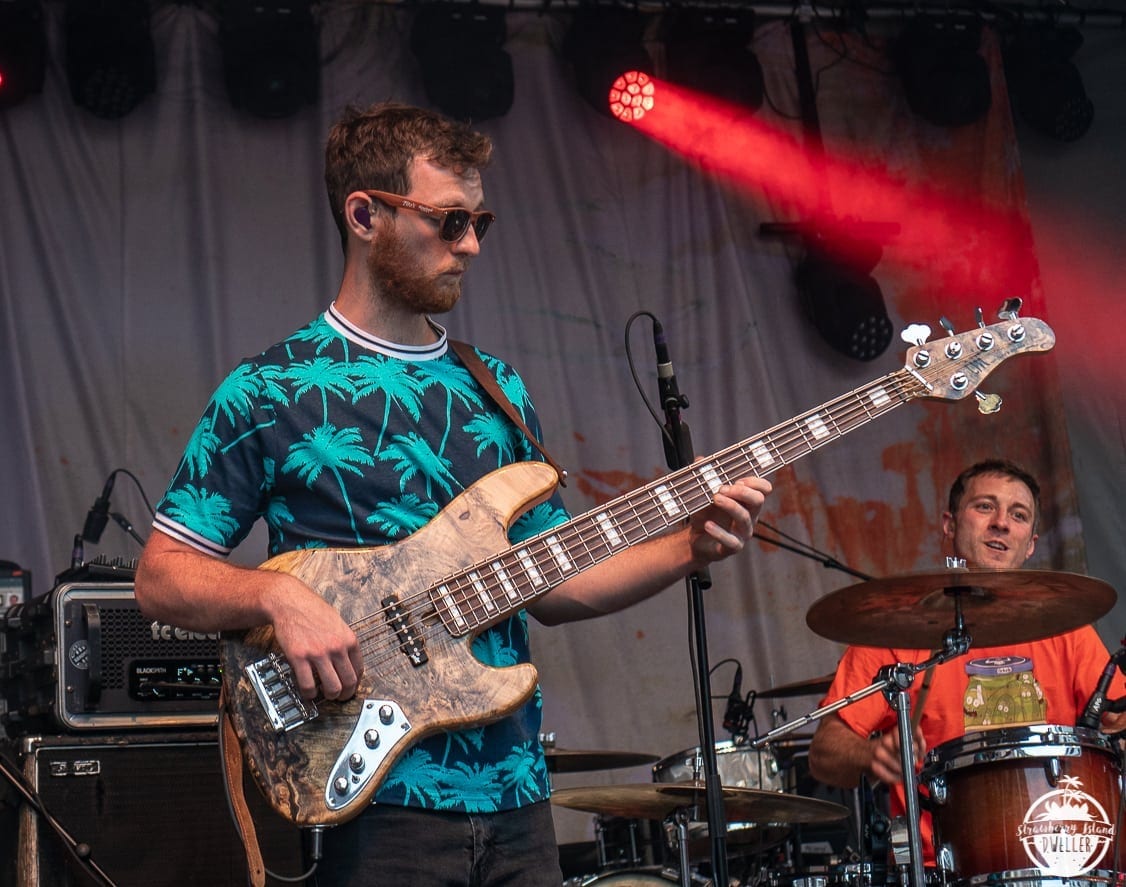
    AH: Evan, while we’re on the topic of gear, what can you tell me about your bass?

    EM: It’s made by a Polish company called Mayones. Our friend Ryan has one, and I got to play it for a weekend and I fell in love with it. It’s deep, but still bright at the same time. I run it through a TC Electronic Blacksmith…I think it’s 1600 watts, which is, a lot. I also have a 6×10 Ampeg Cabinet.

    AH: Rob, I don’t know anything about drums, but I am curious what kind of kit you play; what are your preferences?

    RH: My kit is a Gretsch Renown Maple with a Pork Pie Lil’ Squealer Snare, which is also kind of weird because I play a 12” snare as my primary. Cymbals, I break them so often that I just try to find something that sounds good, usually used.

    AH: It’s funny, most drummers will tell you they prefer used cymbals. Like in the Phish documentary, Bittersweet Motel, Jon Fishman has a room just filled with old, somewhat beat up cymbals.

    DL: I randomly watched that clip the other day for some odd reason!

    RH: Yeah, some of that stuff really builds character. Like having dirt, and just the grit and oil that gets on them. Some drummers like to clean them until their just shiny all the time…I don’t know, I think that might do them a disservice — that metal is there to develop, it’s part of your sound, part of your tone

    AH: Now the new album [Color Wheel] will be your first studio album since the Best in Show EP. You guys recorded at GCR again, right?

    DL: Yep, with Justin Rose.

    AH: When I had Mike on the podcast, he had said that you guys studied a lot of musicians and artists, not only their music, but also the way they actually recorded. Who were some of those artists?

    DL: Steely Dan was always a huge influence.

    RH: I think we were also looking at some late 90s hard rock albums…some Incubus type stuff.

    EM: Even pop material, as well. I feel like in albums in the past, the way we mixed background vocals were kind of loud. I feel like on this one we had more of a lead singer kind of sound. The Beatles, for example, do a lot of very full harmonies that are always upfront.

    DL: Yes! I always love listening to The Beatles before we go into recording…there’s so many interesting mix choices, tones, ect.

    AH: Well in addition to the new album, your fall tour is coming in quick. Is this the biggest headlining tour to date?

    DL: Yes — we’re really excited. We have a lot of great support on it too; Mungion, Heavy Pets, Goose, and Elm.

    AH: Super exciting. I saw that September 7th you guys will be back at the Utica Brewery with moe. What an honor to play with them, and all these bands you get to play with.

    DL: Yeah doin’ another one with them and getting to play with Umphrey’s again in October.

    EM: I think the last couple of years, we’ve been very lucky to be put where we have been…and we’re very grateful.

    Aqueous kicks off their fall tour Friday, September 7th in Utica, NY with moe. at the Saranac Brewery. For tickets, all of Aqueous’ fall dates, and to pre-order their new upcoming studio album, Color Wheel, visit aqueousband.com.

  • Interview: Roan Yellowthorn is Back with New Music and to Talk about Their Growth

    Since last speaking with Jackie McLean nearly a year ago, she and her partner, Shawn Strack have grown tremendously as musicians. They are known as Roan Yellowthorn – an indie pop rock duo. Shawn, who had never been involved in musical production before, is the main engineer and instrumentalist on the upcoming album, Indigo, which is set to be released later this month.

    Roan Yellowthorn

    Their latest single, “Talk About It” is their audience’s first sneak peek as to how the album will sound. This song is a beautiful take on an unresolved relationship as it winds you through a journey both lyrically and melodically. It has a catchy chorus that will remain in your head long after listening to the song.

    My last discussion with Roan Yellowthorn touched on many of the overarching questions regarding her musical influences and the power of a song. This time around, we delved a bit deeper into her artistic development and how this is reflected in her upcoming project. Read more about Jackie and Shawn’s journey below.

    Sammy Steiner: After listening to “Talk About It,” it was clear that Roan Yellowthorn headed in a new sonic direction. Can you talk about how you have grown since “Child in Chief” and your self-titled EP?

    Jackie McLean: The songwriting process has pretty much remained the same except this time I am making a conscious decision to be more honest in my lyrics. The main difference between my last project, (which was made in 48 hours) and Indigo is not only the time we put into it but also the overall production of every song. On this album, my partner, Shawn and I worked very closely to create the entire album ourselves. Shawn used to be a video editor but had never been involved in production before working on this project. The nature of our relationship made our collaborative process extremely complimentary. He knew how to take my abstract concepts and turn them into a reality. Additionally, since we did everything ourselves we were able to go back and tweak every song until we felt it sounded perfect.

    SS: As a follow-up, what has this past year looked like for you guys in terms of the work you put into creating this album? Where did you draw most of your inspiration from?Roan Yellowthorn

    JM: I am constantly writing songs so by the time I started recording Indigo, I already had the majority of the album written. We spent about one week recording in Upstate New York during August and then the following three months were focused on intense mixing and producing. Shawn played every instrument on the album with the exception of the piano which I played. I would say that the biggest difference since our EP is that now we’re doing everything together as opposed to before when we outsourced most things.

    SS: What are some goals you have for the upcoming album and tour?

    JM: My main goal is to bring our music to more people. I really enjoy being able to interact with the audience and hear their opinions in person. We are currently working on putting together a setlist, which will most likely consist of the entire Indigo album as well as a handful of songs from past projects. We are also excited to be experimenting with the drum pad on stage to enhance our live performances by recreating some of the sounds you will hear on the album.

    SS: I had the privilege of getting a sneak listen to the album – for everyone else, can you tell them a bit about what they can expect?

    JM: This album is very personal and very emotional for me. It came together really organically as I kept writing songs to process my feelings. It is an extremely sincere album and I honestly don’t know if I’ll ever be able to write another album like this one. I dug so many emotions out of my soul but now it feels like I’ve shed a layer. I hope that everyone likes it!

    SS: What was it like for you, Shawn, to produce this album having never done this kind of work before?

    Shawn Strack: I used to work in film, media and television so I had a basic understanding of the software and the editing process. After having many conversations with Jackie, I understood her vision for the album and was confident that I could translate those ideas into the music. To give you an example – she once said to me that she wanted the title track “Indigo” to sound as if she was flying through space with stars exploding around her. I added a post rock influenced guitar under the verses while she played the piano and put drum and guitar layers during the chorus.

    SS: Finally, what does the word ‘indigo’ mean to you and to this album?

    Shawn: The color indigo is present in the colouring of the sounds on the album. It can be dark but there are moments of brightness.

    JM: The last song I wrote for the album was the title track, “Indigo.” This song really encompassed the idea behind the entire album and I had really strong instinctual feelings that the album was done once it was written. Afterwards, I came to find many more meanings behind the word as it is also a feeling, color, mood, idea, etc. I finally had a name for the feeling.

  • Success Through Independence: An Interview With NYC’s VHS Collection

    VHS Collection is a band formed in New York City by three longtime friends – Nils Vanderlip (keys), Conor Cook (guitar), and James Bohannon (vocals). They boast a big, modern electronic rock sound with an occasional retro synth aesthetic in the mix.

    Closing out their spring 2018 tour, VHS Collection played an early afternoon set for the second day of Governors Ball on June 2. Their set was a classic example of the phrase “never miss an early festival set.” A loyal crowd gathered for their show with a great deal of energy in tow, a sign of their growing success as an independent band. The band has released a self-titled EP and a handful of singles but is due to release their debut full-length album this year.

    VHS Collection joined NYS Music for a few minutes after their set to chat about their experience at Governors Ball and talk about their independently-driven success and songwriting on their upcoming album.

    Steve Malinski: What is the experience like for you guys playing in your hometown, at one of the biggest summer music festivals in the northeast?

    Nils Vanderlip: It’s pretty special…

    James Bohannon:  It’s awesome. We cut our chops playing in the local rock and roll venues and halls throughout the lower east side and Brooklyn and the fact that we get to play a large festival here outside is pretty awesome.

    NV: Yeah, New York is a big theme in a lot of our songs and lyrics so it’s really cool to see New Yorkers sing those lyrics back to us.

    SM: You guys have been playing music together for a while, so how did you get from being a small neighborhood band to where you are now?

    JB: We started as kids, we all grew up in different areas of the city and jammed on acoustics as young bucks and formed some bands in high school. It all came together nicely, it was a good mix of timing and skill after school in New York. We all had this hunger to play some music and eventually went out to play some live shows. The reception from the early days was pretty high. And in fact, Mercury Lounge, one of our original stomping grounds, is where we’ll be playing after the festival tonight.

    SM: One thing I’ve noticed is that you’ve maintained independence through this whole process – you aren’t signed to a label. How have you gotten to your level of success without the backing of a label?

    Conor Cook: Well, at first it was slowly. We were playing for a year before we got together to pull some money together to make recordings. Spotify has helped us a lot in terms of reaching new fans by putting us in their playlists. That’s probably been our biggest network. But, we’ve put some singles out, made and saved money from that to put into the next batch of recordings. We’ve had enough money just to invest in each next step and not necessarily do the same thing that major label artists would do, like spending hundreds of thousands of dollars on videos and radio ads. Thankfully, fans have continued to stick with us and the shows are slowly building. Every dollar we make from streaming generally goes into the project.

    SM: Speaking of next projects, you have a new album coming out this year. What can you tell us about that?

    JB: It’s been a great process for us. I think it represents the next evolution of our songwriting capabilities, our chance to work with some top industry writers, producers and engineers, and mixers who have worked with acts that we love. So its definitely a step up and the sound is crisp and new.

    CC: We’ve continued to hone in on our sound and I feel there’s a wide variety of songs. Some are really heavy kind of like rock tunes. Some are more electro-pop/synth-oriented songs. They’re all, I’d say, pretty traditional songwriting-esque songs at the core, but dressed up in a lot of different ways. We’ve been doing it in spurts, maybe three weeks of recording and then the next two/three week recording session will be four or five months later. So it’s kind of a reflection of the evolution of our sound over about a year or year and a half almost. I don’t know if anyone else would pick up on that [detail] but I feel like I pick up on it being so close to [the music].

    SM: Yeah, for me only starting to listen to you guys recently, I’ll admit that’s something that might be tough to pick up on.

    CC: Well, you’ll definitely pick up on the variety of songs. And having seen us live, that will all make sense. I feel like all the songs we have on the album translate well to good live shows  – we hope to do a lot more touring in the next year.

    SM: They definitely translate well; It made for one of my favorite GovBall sets so far.

    All: Thank you.

    SM: You guys are heading out on a tour, so what’s in store for that?

    NV: This is actually the last date of our tour but we’re back out in the fall.

    CC: We’ve got a couple shows here and there but we’re looking to do a longer tour in the fall for about a month or six weeks. So, we’re going to go to a lot of new markets. Hopefully we’ll go to Europe – that’s been a dream for us. This last tour was kind of a warm up. We’ve played some of our biggest markets and it’s been a big improvement over the previous year. It’s nice seeing people responding to not just our biggest songs but some of the ones we released a few years ago and new ones we just released.

    JB: We put a single out a month ago and people were singing it in the front row,  “One,” and “Sign” which came out a bit before that.

    VHS Collection’s music can be found on Soundcloud and Spotify, and be sure to check out their live show when they’re in town.

    https://www.youtube.com/watch?v=PGEBVkRiqUo

  • Dark Star Orchestra: A Grateful Dead Time Capsule

    “Dark Star” was first performed, without lyrics, by the Grateful Dead in September 1967. The first version with lyrics was heard three months later. The tunes’ sole focus was improvisation. “Dark Star” was played regularly through the 1960’s, but seldom-heard after 1974. It only appeared on odd occasions in ‘78, ‘79, ‘81 and ‘84 and was last performed in March of 1994 – (deaddisc.com)

    Unbox, Dark Star Orchestra; a continuation of spirit, improvisation and the greatest acid-trip, that ever was, the Grateful Dead. In the midst of digging, we teleport back to the sounds we fell in love with in 1965, obsessed over by ‘69, and post ‘96, we’re left, only aching for more. Dark Star (DSO) is NOT a cover band. They give birth to all that is Dead, then reinterpret it in modern day. DSO is a time capsule – like the vivid memories, postcards and totems we buried long ago.

    “I view it as performance art,” said DSO drummer Rob Koritz. “We are blessed to play music that is 95 percent improvisation and when we’re firing on all cylinders, I can play how I want.”

    Dark Star Orchestra is the idiom of self-expression. In true honor of the Grateful Dead, DSO has made this genre all-inclusive – pulling from rock, jazz, country, The Beatles, Chuck Berry, psychedelia and blues. For Koritz, the list goes on.

    Their testimony goes out to Deadheads and non-cult listeners alike. There is a common thread that weaves through our mind and ears. It’s music. “They hear it and say WOW” added Koritz. “Pretty much everybody will find something.” And when you get confused, just listen to the music play.

    Koritz did everything music. He was in opera, theatre, college marching band and even studied as a classical percussionist. From a music major state-side to traveling overseas, and experiencing the Grateful Dead, Rob is an encyclopedic anchor to DSO in his own regard. A band members’ father is a profound  jazz musician, while another roots himself in progressive rock. A melting-pot would be far to mundane to describe this stew.

    Dark Star Orchestra is prepared in the framework of the Grateful Dead’s catalog. Whether they are playing on a beach or filling massive arenas across the world, familiar tunes will be heard. On the bands’ fourth annual return to Frontier Field, earlier this month, they performed two sets with an encore of “Mr. Charlie” and “C’est La Vie (You Never Can Tell).” Read the full NYS review here.

    Set 1: Alabama, Bucket, West LA, Memphis Blues, Lazy River Road, Esau, Blow Away, Ramble On, Sunrise, Music

    Set 2: China Cat > Rider, She Belongs To Me, Lost Sailor > Saint of Circumstance > Drumz > Dear Mr. Fantasy > Throwing Stones > World To Give > Saturday Night

    “We may go way further out than the Dead would have one night,” said Koritz. “Others we may not be as far out [more structured musically], it all depends.” For the lay-listener Dark Star Orchestra is explained as a group playing Jazz, i.e. improvisational music, in a Rock idiom. The experience becomes trance-like at each venue; in the ear of each listener a different note is digested.It is synonymous with the individual experience. It is unique. Memories of the Dead are relived through this music, we deem our own.

    Like Frontier Field, DSO continues to recur at venues around the world. This past May marked the 7th annual Dark Star Jubilee in Ohio and the band has already announced their 7th annual return to Jamaican Jam In The Sand at Jewel Paradise Cove Resort on January 15-19, 2019.

    DSO is excited to return to Pisgah Brewing Co. for a two night outdoor show in Black Mountain, NC on Friday August 17 and Saturday 18th. The Orchestra carries on across the Midwest with dates in Chicago, Illinois and Ohio. NYS Music fans, be on the lookout for more dates TBA in Rochester and Albany, to name a few upstate. DSO plans to reveal more shows throughout the holidays, with a special New Years Eve show announcement.

  • Empire State Music Podcast speaks with Cobblestone Live founder Josh Holtzman

    Josh Holtzman is the co-founder of Cobblestone Live and General Manager at Buffalo Iron Works. For a complete review of Cobblestone Live 2018, see Jared Lindquist’s article, “Cobblestone Live Hosts Successful Second-Year Festival.” Visit the Empire State Music Podcast for all interviews, including an on-site discussion with Turkuaz’ drummer, MIchelangelo Carubba, at this year’s Cobblestone Live! festival.

    It’s Saturday, July 28, a breezy, sunny summer day in Buffalo, New York, where the second annual Cobblestone Live! Music Festival is well underway. Amidst the heavy foot traffic, intoxicating smell of a food truck’s grill, and overwhelming sound of music flowing through the air, a busy Josh Holtzman, co-founder of Cobblestone Live! dismounts his Trek bicycle and radios to his colleagues, “team, this is Josh, be advised I’ll be offline for a bit for a quick interview.” Holtzman joins me to discuss the history of the Cobblestone district, the origins of the festival, partnership with the Child Advocacy Center, and plans for the future of Cobblestone Live!

    Andy Hogan: Even five years ago, would you have imagined the Cobblestone District would one day host a major music festival?

    Josh Holtzman: Honestly, this area was really only known for the [Key Bank] arena. Most people only knew of it because they saw the Sabers play here. Now, it’s really starting to turn around. We have the Lockhouse Distillery, music venues, the comedy club…it’s fantastic down here.  Josh HoltzmanAH: What can you tell me about the history of the area?

    JH: The district itself is over 100 years old. Iron Works, the building, is 102 years old. Originally it was used for manufacturing; from steel works, machine works, iron works, etc… This was the industrial hub of Buffalo…even down the street a little bit, where the old first ward is, those were all factory and blue-collar workers that pretty much built everything we have today.

    AH: How did the music festival come together? What was the jumping off point?

    JH: it was early on last year. I’ve always wanted to throw a festival. Obviously, we have the venue, and we do 200+ shows a year, but we really wanted to throw a festival that was good for the community and is really something unique for Buffalo. Truth be told, I sent a quick text to Cory from Lockhouse and was like, “Hey dude, what do you think about closing down the streets and throwing a festival?” So, it went from something that sounds cool, to the actual reality of putting together a committee, we hand-picked our staff, and laid out the blueprints for what is Cobblestone Live.

     Josh Holtzman

    AH: Last year, in your first year as a festival, to have the line-up you did was really quite something. You guys had Moon Taxi, Aqueous, The Hip Abduction, and Real Estate to name a few. This year’s line-up is just as strong, if not stronger, with Aqueous returning, plus Turkuaz, Chicano Batman, The Sheepdogs, and Broken Social Scene. What else has changed aside from the line-up?

    JH: We added a lot of non-music programming, and festival experience. We also wanted to make sure that we did increase the line-up, and still get bigger bands. One of the main things we added was an additional stage, so now we have two outdoor stages, instead of one. I think that brings a really cool balance to the festival with people being able to go back-and-forth. As you’ve seen, we have alpacas down here, we have a dunk tank, we have some really cool vendors and graffiti artists. It’s just really a cool vibe right now.

    AH: There’s even superheroes walking around!

    JH: That’s right! Comic-Con is in the house.

    AH: In your mind, what does the process of crafting a festival line-up look like?

    JH: For me, it starts as a fan first. Any artist I book, I’m a fan of. I really like what they stand for, and their music. The other side is really building a vibe that will encompass everything we’re going for. You don’t want to put too many artists of different genres together so that it’s not going to flow, but, you can have fun with an eclectic line-up and really set it up so that it’s an exciting time for everyone. So, it’s a little bit of business and pleasure at the same time.

     Josh Holtzman

    AH: Moving forward, as I can imagine this will be a long standing tradition, what are some other goals you have for the festival in the future?

    JH: Looking down the road, we obviously want to keep raising awareness of the festival, and keep adding non-music programming. Down the line we’re looking to add more outdoor stages, too. I don’t want to say for sure that we’re going to go for three days, but eventually it may get to that point. You know, it’s just about having fun doing what were doing, and having the city catch on, to come on down and to have a great time.

    AH: The other thing I wanted to ask you about is your partnership with the Child Advocacy Center; what can you tell me about them, and their relationship with the festival?

    JH: It’s really important to everyone who is involved in this festival to give back, in one way or another. We’re not doing it for ourselves, we’re doing it for the community. What they do over at the CAC is very, very tireless work. They are helping to stop child abuse and it’s something we can all get on board with. Whether any of us were affected by it or not growing up, it still hits home and we’re going to do everything that we possibly can to raise money for them, while having a good time doing it. I think this is the first of many years we’ll be working with them, and honestly, we owe a lot to them. They provided all the volunteers for this entire event — nearly 100 people for two days, along with getting the sheriffs to donate their time to help us out.

    AH: I know you’re a busy guy, so I won’t keep you too much longer, but I’m curious, what’s the one thing about planning a festival that people may not think about, but you may be losing sleep over?

    JH: You know, it’s a lot, to say the least. I think one thing that people may forget is that the people who are doing this are doing it from their heart, they really care about it and it’s not just a money grab. I think that goes unsaid for a lot of things, but it’s a team that built all of this, and it’s really important that we’re doing it for Buffalo. We’re here having a great time, but we’re going to keep doing what we do for everybody out there.

    This interview with Josh Holtzman was originally intended to air on Empire State Music Podcast, though due to unfortunate audio/technical issues, the conversation was condensed into written word.

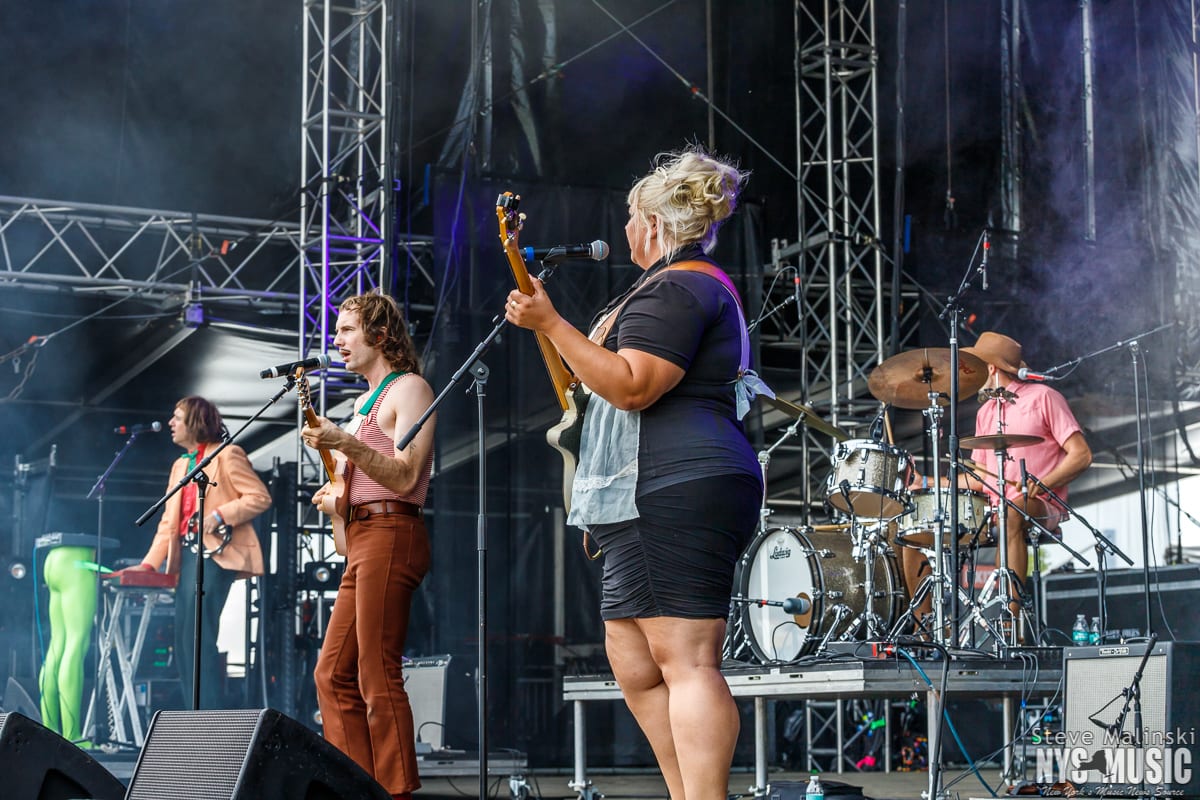
  • Inside the Shell: An Interview with Shannon and the Clams

    The indie garage-punk quartet Shannon and the Clams has been electrifying the nation with a vintage sound which incorporates elements of doo-wop, classic R&B, garage psych and surf rock into their high energy performances. At Panorama Music Festival we had a chance to catch up with guitarist Cody Blanchard and drummer Nate Mahan to discuss their extensive touring schedule, recording their most recent album Onion (produced by Black Key’s Dan Auerbach), and their plans for the future.

    Shannon and the Clams

    Ryan Randazzo (RR): Your music is described in many different ways from doo-wop, surf rock, R&B, psychedelic; you’ve got an entire array of genres in there. How did you sound form to become what it is now?

    Cody Blanchard (CB): It was all Shannon at first. She was playing open mics by herself and just really wanted to love that ‘60’s girl group sound. Then we started a really ramshackle band in 2008 with different people, and it was really punk because we were sloppy and 21 years old. We just kind of rolled with it and made it fun. Then we got better and started working with better people, like Nate our current drummer for the past few years, and he is better than our old drummer. It just got tighter and we added a keyboard player, so that allowed us to get more nuanced, bigger sounds. I also think we get really restless musically and want to explore new zones. Then we hear more different kinds of music we’ve never heard before and it all gets mixed in.

    RR: What kind of music are you guys into right now?

    CB: I’ve been into some old country stuff. I’ve been really into mid to late ‘80’s synth driven R&B stuff. There’s this period of music that me and my wife have been trying to describe and we call it “cocaine comedown,” and it’s like late ‘70s early ‘80s. It almost sounds like disco, but it’s low and everything’s sad sounding. It sounds like the next day. Some of The Eagles’ later shit sounds like that, and Lindsey Buckingham has a couple of really clean and tight sounding tracks. I love that stuff right now. It’s very sad disco music. What do you think?

    Nate Mahan (NM): I don’t know. I’ve still been high out on the early country; just exploring. California country music in particular. The Central Valley is such a strange part of California and there are so many weird genres that originate from it.

    CB: It’s the frontier of the frontier.

    NM: Yeah. It’s not the fancy part of California. You think the fancy part of California, you think San Francisco or L.A., which is glamorous, but the Central Valley has this whole working class thing. It’s strange that it would yield a band like Korn. I’ve been listening to Korn a lot. It’s just a strange zone for creative activity for whatever reason, and I’ve been exploring that recently myself.

    RR: You recently released Onion which was produced by the Black Keys’ Dan Auerbach. How was working with him, and how was creating this album different from other albums you’ve done in the past?

    CB: Very different. He’s a very hands on producer. He likes to get really into the song structure and add tons of layers. It was cool not being responsible for everything. Our first few albums we recorded ourselves and I just felt like we were always doing everything. It was rad to have an outside party to come in and contribute stuff or just have a totally outside perspective on it.

    NM: Getting songs down fast and having lots of time to explore what we could do with them and mess with the arrangements. I feel like it works to such an advantage when you know that what you have is quality and you can really just go from there and build it.

    CB: Yeah, start with a strong foundation and layer a bunch of crazy shit on top of it. The other thing is his studio is extremely streamlined, so I think because he likes to add lots of instruments really fast and not have to wait around to move things in the studio or something. I’ve never seen that before. Most studios you’ll have to go in the closet and haul out the vibraphone, then get out the microphone, and it takes like an hour. He doesn’t have that much stuff, but it’s all ready to go. You can just record that and go, which is cool and inspiring.

    NM: Yeah definitely because if you wander by an instrument, see it and go, “I’m hearing something,” he’ll say, “Great, record.” Five minutes, done. Efficient.

    RR: You guys have a really extensive touring schedule. You’re going to Europe then coming back to the West Coast and working your way east. How have you noticed your audience differs from region to region, and what would you describe as your favorite market/which one do you feel you need to break into more?

    CB: One of our biggest markets is the L.A. area. A lot of young kids there, and a lot of really high energy kids out there. Some really great shows. Europe has been slow for us because we’ve worked with so many different booking agents. I don’t know – we just keep changing, but I think we’re trying to do some of the bigger festivals in Europe to get our name out there. In Europe, I’ve definitely noticed in the Netherlands people are very stiff as an audience. They’re very cool and friendly, but as an audience they’re very stiff. No dancers. I love the U.K. a lot, which most bands don’t like for some reason. We do well there, and I really like the people; they’re really rowdy.

    It’s been interesting touring with Dan Auerbach because our audience is generally very rowdy and unruly, and Dan’s audience, who didn’t know our material also, was very pleasant and mild mannered, so that was kind of fun.

    RR: How were your first few shows with his audience?

    CB: They loved it. It was a really different vibe. New Orleans is a very rowdy place, which I love.

    NM: Florida too. There’s something about that hot weather, you just want to have a good time.

    RR: How do you feel your shows differ from a festival set like today at Panorama and your normal touring shows?

    CB: They’re shorter at festivals. It probably sounds better when we’re touring because we do a normal soundcheck. We’re not as close to the audience at festivals; there’s more an energetic distance so it doesn’t feel as intimate. I feel like we play pretty much the same. We usually do an hour to an hour and fifteen minute set on our normal tours so festivals are just a little shorter.

    RR: I was talking to a couple of your fans after your set, and asked them if they had anything they’d want me to ask you, so their question was: “If you guys all live so far apart from one another, how does your songwriting and recording process work?”

    CB: We each usually make demos at home then meet up for a week or less and rehearse. Usually if we have a show, we meet a few days early. The last record, we met in Oakland and rehearsed a bit then met in Seattle and recorded demos of the songs at a friend’s house with the full band. I feel like next time, going into Auerbach’s studio, we can come less prepared. I feel like we were pretty well prepared last time, but I feel like we could show up and fuck around more. Everything seemed rushed at a different studio before that, so I was going into it like, “We’ve got to be ready with each song,” but it’s tough because stuff is expensive. Playing the songs as a group is also SO different from the recording process.The end product of recording with Dan is different. The things that end up on top are so different from what was originally on top of the recording.

    RR: Are there any elements of your sound or show that you feel like you’d want to add? Maybe a new light rig, psychedelic images, new instruments?

    NM: I think we all have plenty of ideas (laughs).

    CB: I used to think about that stuff all the time, then I started realizing that the return of investment on energy is pretty low. I think people are happy with a very human show or experience. But if we had tons of money… we’ve had tons of weird ideas.

    RR: What’s your weirdest?

    CB: I used to want to do weird sketches on stage and crazy costumes; hire our own lighting person and do our own spotlights. I used to want to do weird inflatable creatures and shit on stage. I made some animatronic, weird monster one time for our record release show three years ago. I just took old toys that are motorized and moved around, but put different things on the outside so they looked totally different. I put real animal fur and fake eyeballs on them; that was cool. That shit is just a lot of extra effort and takes up a lot of space, and we want to focus on the music. We’ve been trying to keep it really efficient. Lately, I’ve been less ambitious with stage elements and more focused on our sound.

    RR: What are your big plans for 2019?

    CB: I’ll bet we record next year. I think I’ll be ready. I think it’ll be a faster turnaround because when we recorded our last album, Dan’s label wasn’t quite ready for records to come out, so we had to wait a year. I think we’ll record. I would like to.

    NM: Hopefully we go and visit Australia.

    CB: Yeah, we were talking about trying to go to Australia or Japan, we’ve just never had a good connection. We’d love to do either of those. We’re heading to Mexico City later in the year, and I would love to go to South America and Central America. I feel like that audience would love it also. We’ve met a few bands from there, like big bands, and they always say, “You’ve got to come down.” Hopefully we’ll get a chance.