Category: Interviews

  • Behind the Gear: Karina Rykman

    Karina Rykman is the bassist of Marco Benevento’s solo band. Karina brings her beefy bass tones and funky grooves to Marco’s upbeat music. Her enthusiastic presence onstage is sure to infect any crowd with enough energy to dance for hours. Check out Karina’s playing at this Brooklyn Bowl show from February 2017, footage courtesy of LazyLightning55a.

    Bass

    1978 Fender Precision Bass (w/ a single coil in the bridge position)

    karina rykman

    Amp/Cabinet

    MarkBass Big Bang into a Fender 1×15 cabinet

    karina rykman

    Pedalboard

    Signal Chain- Korg Pitch Black Tuner > 3Leaf Octabvre > MXR Phase 90 > Akai Deep Impact > ProCo RAT > Eventide H9 > JAM Pedals Delay Llama +

    Behind the Gear: What drew you to using a P Bass as opposed to a J Bass or something with active pick ups? Do you plan on changing your axe anytime soon?

    Karina: I love my P Bass – it’s a 1978, and I picked it out with Dave Dreiwitz so it feels like it has extra good vibes in it! It does have a J pickup in it, so if I want that brighter sound – which I must admit, I never really do – I always have that option. It’s the most reliable bass I’ve ever owned, and it’s incredibly versatile. I used to play a Rickenbacker which was GREAT for straight rock, but didn’t have enough low end for when I wanted to drop the proverbial bomb, or get it real funky. It also has a hipshot, so switching from drop D back to standard is super easy. I have a guy talking to me about building a custom bass…and honestly I’m going to completely model it after this one. I’d just try to make it slightly shorter scale, and lighter. The P Bass is heavy as all hell and basically breaks my back nightly. Wouldn’t have it any other way, though!

    karina rykmanBTG: How do you feel having the many options of pedals like your Eventide H9 and Akai Deep Impact has allowed you to expand sonically live? What are some of your favorite sounds from those pedals?

    KR: The kind folks at Eventide gave me that H9, and I’ve been having way too much fun with it. My favorite preset is called “Mosquitos”…shit gets real weird real quick. That pedal is like a goddamn computer – it does EVERYTHING, and then there’s an app for it, where you can fine tune every preset. It’s a little much, but it’s so ridiculously fun to scroll through. The Deep Impact is the finest synth pedal of all time. So many others just sound out of place when you try to integrate them into a band setting, but the Deep Impact somehow seemingly just blends right in there. I love setting #6. I once did a gig where I basically played on 6 for like 20 minutes – felt great. To me at least!

    BTG: I’ve read in other interviews that your ProCo RAT is a pedal you couldn’t live without; could you speak about why you love the RAT so much?

    KR: The RAT pedal is my choice distortion for when I take my fuzz solos in Marco’s band. It’s not traditionally used with a bass, but I just love the dirty growl of it. It definitely cuts a bit of the low end, which makes me turn it up louder than I probably should. But I love it! I love imperfect shit like that. It’s super brown. I carry around a spare RAT with me everywhere, just in case one malfunctions. In the Marco set, it’s truly the one pedal I couldn’t do without. The rest are all gravy.

    BTG: What are some of your favorite pedal combinations to play with live?

    KR: I love the RAT with the Delay Llama by ToneConcepts and the Phase 90 turned up all the way. That’s tried and true combo for me. If I need a little more low end juice, the Octabvre and the Deep Impact come out together, often with the RAT as well. That’s when things go from recreational to medical, if you know what I’m saying.

  • Rob Derhak is ready for a Comeback

    Rob Derhak of moe. stopped by 98.9 WCLZ’s studio in Maine Friday to guest DJ and spin some of his favorite tracks while also sharing his thoughts on going through treatment for oropharyngeal cancer.

    “I feel great,” the bass player said. “I’m a healthy young man.”

    Derhak stayed busy by writing new music while traveling to Boston for treatment.

    “I did a lot of writing honestly,” he said. “I think I wrote like 15 songs. I’m not saying that they’re all good songs. Some of them are just nonsense that an opioid-addled mind was just jotting down. But some of them came out pretty good.”

    The band is getting ready for the upcoming shows and shaking off a little rust after a 6-month hiatus.

    “We are rehearsing some new material and practicing some of their older stuff,” Derhak said. “It’s been a while.”

    Derhak described the last few shows before moe. took a hiatus due to his health.

    “It was very emotional sort of, shows,” he said. “I didn’t have a full handle on what I had to go through at that point. The turnout of fans and well-wishing people was just beyond like anything I had ever dreamed of or imagined.”

    He went on to say how he didn’t expect the tremendous amount of support from fans.

    The fans gave Derhak a lasting feeling of optimism after their last rendezvous at the Playstation Theater in New York City in July.

    “Nobody was upset in the sense that we were quitting or stopping or doing anything,” he said. “Everyone was just like ‘you got this,’ ‘you’re gonna be OK.’ It was just this giant room filled with people throwing their love at the band and myself and it was overwhelming and amazing.”

    Besides talk about the return and hiatus, Derhak shared some of his favorite songs from other artists and talked about his personal life.

    He explained how certain songs influenced him and shaped how he plays bass today.

    “Bonin in the Boneyard” by Fishbone was a funky song he described as: “One of the reasons I started playing bass in the first place. I was really drawn to these heavy bass-influenced bands.”

    Derhak told a story of how he came to enjoy Primus after a guy at a record store recommended the album “Frizzle Fry.”

    “I brought it home, put it in and it was just so off putting,” he said. “This is nonsense. This is the dumbest thing I’ve ever heard.” Then he said he would give it another chance.

    “Yeah no, no, then I just kept playing it again anyway,” he said. “Then all of a sudden, I just found myself. It was like when I switched from regular Coca-Cola to Diet Coke. Diet Coke is disgusting. My point is I got so I got so used to drinking Diet Coke by forcing myself that I couldn’t drink regular coke anymore. This is disgustingly sweet; this has character. And then I became obsessed with Primus. It just became like one of my biggest influences ever.”

    Another small factoid Derhak shared is he went to college to be a lawyer.

    “That’s what my dad wanted me to be,” he said.

    He said he was into philosophy, arguing and rebelling against everything. But when he discovered film and video and media studies that was the outlet that led him to an artistic life.

    The playlist Derhak created for the show included Steely Dan, Little Feat, J.J. Cale. Bonefish and Primus got some playing time. Jethro Tull’s
    “Locomotive Breath” gave Derhak chills, and he described the first time he heard it in high school: “It was the first time I was ever like, ‘Whoa, music can do this.’”

    He played a Peter Gabriel song with Kate Bush that he really liked and then ended the show with a moe. song, he wrote about his daughter, “Blond Hair and Blue Eyes.”

    Moe. returns from their hiatus on Friday, Feb. 2 and 3 at The Capitol Theatre in Portchester, NY, followed by two shows Friday, Feb. 16, and Saturday, Feb. 17, at the State Theatre in Portland, Maine. The band heads to the Palace Theatre the following weekend in Albany, NY, on Friday, Feb. 23 and Saturday, Feb. 24.

  • The Lizards Tour Through New York and Mass This Winter

    The Lizards they have….. arrived! Toronto-based Phish tribute band The Lizards will tour throughout New York and New England this winter, with the first show taking place on January 26 at The Westcott Theater in Syracuse, followed by February stops in Ithaca, Rochester and The Hollow in early March. Phish fans in need of a winter fix can catch one of Canada’s finest exports and let their 20+ minute jams warm you up as you await Phish to announce Summer 2018 dates.

    Known for recreating the authentic Phish experience for dedicated phans, and even featuring their own light show directed by the infamous TG5, The Lizards put on a must-attend show. For their first foray throughout the Northeast, The Lizards guitarist Rich Grossman talked to NYS Music to chat Baker’s Dozen, the origins of The Lizards and what the scene is like north of the border.

    the lizards new york tourPete Mason: Let’s get the backstory on The Lizards – you’ve played the states a bit already, but when did the band first get together and start playing?
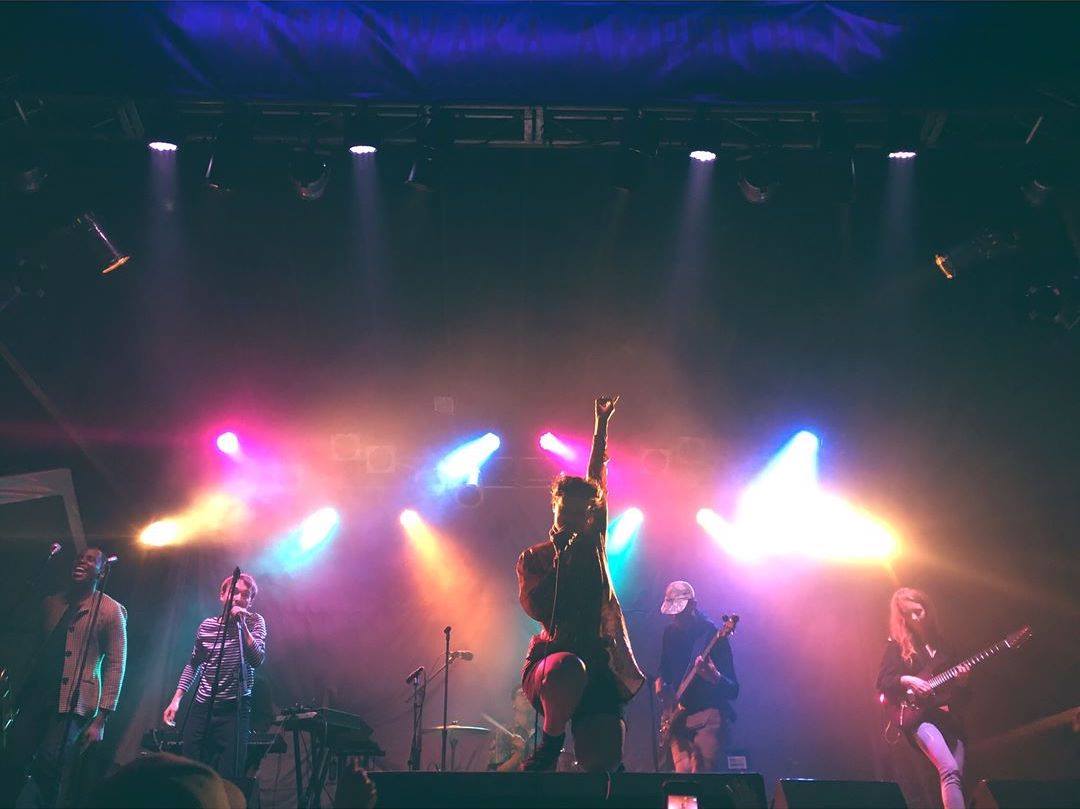
    Rich Grossman: We started up in 2013 right after Phish had come to Toronto. It was the first time they had been here since 2000 and I was stoked to get to see them in my hometown. After a cancelled and rescheduled show, it got me thinking about the “state of affairs” of the jam scene in Toronto. There used to be a number of clubs that serviced the scene in TO, but they had long closed and we eventually found ourselves having to travel stateside to see this music often. Not that we don’t love making the pilgrimage, but the real heart of the jam world has always been the community. By Canadians being nomadic, and not rebuilding at home, we weren’t strengthening our side of the community. I thought starting a Phish tribute would be an amazing way to bring new life into the scene.

    I had known Ben (drums) for years and we had played together in a number of bands, jam and not, so I contacted him first. Neither of us had real candidates for piano or bass so I went to Facebook. I posted something like “does anyone know a piano player who wants to jam some Phish tunes?” and a buddy tagged Joel, our keys player. We’d never met, but I got his number and asked him if he was into it. Not only did he say yes, but when I mentioned we couldn’t find a bass player, he brought Phill to the table. The first time we jammed was the first time a lot of us met each other. We charted out a lot of material, rehearsed it even more and booked a show at The Comfort Zone. Back in the day, this was the hub for jam music in TO. Growing up I would see Charlie Hunter, Ominous Seapods, Merl Saunders and other jam acts there, but management changed over the years and it became a late night rave scene. For whatever reason, they let us put on a show there for next to nothing and we must’ve had 250 people show up the first time. A lot of friends for sure, but a lot of people that just caught word of it showed up. Since then, we’ve done countless more shows in Toronto and in the past year, have started to take it down to you guys. The response is always the same. No matter what country we’re in, people are so grateful that they get to hear this treasured music. It’s very endearing to me, and I know that if I had seen a Phish tribute band and not started one, I would react the same way.

    PM: What aspects of Trey’s guitar playing and tone drew you into honing his sound?

    RG: Once we started the band, the game was on to get the sound. On the first gig, I played a PRS Santana III.The guitar has a very different sound than Trey’s Languedoc, but I could mask the differences with some of the other gear Trey would use like specific pedals. He’s famous for using 2 tubescreamers going into a compressor, so I started there. Over the year or two I amassed almost all pieces to recreate his mid 1.0 sound (93-97) including the Mesa Mark III red stripe, the ross compressor, the whammy II and more. I then started using a Languedoc clone that was built by a luthier in Toronto. It was based off of the Koa 98 model. Once I got that, the tone was really happening. After that, I would add pieces here and there that came later in his career like the boomerang, super tremolo, supa-puss, black cat vibe, etc. I haven’t really “updated” my rig in a few years, because I feel like I have enough pieces of the puzzle to make the gig happen. Trey changes his rig so often these days, to keep up would put me in debt.

    PM: How much of Baker’s Dozen did you get to see?

    RG: I was one of the lucky ones this summer 🙂 Bought my tickets well in advance and lucked out pretty good. I’m a full time musician and to take weekends off in the summertime can prove to be challenging, so I bought tickets to the first Sunday, Tuesday and Wednesday show. Red Velvet, Jam Filled and Powdered night. Thank you Phish!

    PM: For those of us down south, what’s the scene like in Toronto and elsewhere in Ontario and Quebec for Phish and jam fans?

    RG: To be honest, it’s the best I’ve seen it in years. Since The Lizards started, there have been a few Dead and Allman Brothers tributes that have started to perform as well. The other American “Phishy” tributes like Pink Talking Fish and Jazz is Phish have started to come up as well. Toronto has over 2 million people in it, but the jam band community is pretty niche, so we usually see a lot of the same happy faces at shows. Outside of Toronto, I’d say the scene is pretty small. There’s a dedicated group of heads out in Southwest Ontario like Hamilton and St. Catherines but not much else in our province or in Quebec. We have a huge country, but only 35 million people live here so an already small community gets smaller up here and more sprawled out.

    PM: How do The Lizards stand out among phish tribute bands?

    RG: I think what sets us apart from the other bands is that we really try to recreate the live experience aurally and visually. We have a dedicated lighting director (Toby) and sound engineer (Kory) that tour with us, bring, set up and tear down their own gear and work just as hard as us to make the show as much of a spectacle that it can be. Musically, everything is subjective. Some people will like us and some people won’t, but the show looks and sounds amazing, so that’s where I think we stand out.

  • Kalmia Traver of Rubblebucket Dances to Her Own Beat

    We met Kalmia Traver, lead vocalist and sax player of Rubblebucket, a Brooklyn-based funk dance troop, standing in the green room on a carpet already littered with small squares of white confetti paper- a playful hint to where the night would lead.

    Her slender frame and fair skin animated by a vibrant orange and yellow poncho, paired with sparkling gold baggy shorts over black leggings. What could easily have been mistaken for her stage outfit was actually just her driving PJ’s. She would later sport a petticoat upon her shoulders, normally worn underneath a skirt to exaggerate it’s volume. She greeted us with an unassuming and innocent smile before we made our way to a couch along the back wall. The small room was cluttered with other musicians chatting, snacking and sipping on kombucha, a favorite drink of Traver and other Rubblebucket members.

    Traver’s first order of business that morning before departing Brooklyn for the Flower City? Acquiring the leaf blower they use as their confetti cannon, obviously. Then they loaded the van, hit the road and after a tumultuous interaction with the GPS, made it to Anthology an hour late but ready to start the party.

    After taking her spot on the couch to chat with us, Traver parted a grocery bag at her feet to unearth a quart of soup from a local noodle bar which she proceeded to drink straight from the container. No frills here.

    Traver’s free spirited nature made it easy to relax into playful conversation before switching gears to discuss their current projects. Since the release of their EP If U C My Enemies in early 2017, Rubblebucket has been working to complete a full length album, with the first month and a half of 2018 set aside to finish it up. Traver and Alex Toth (sax/vox) had been heavily experimenting with their solo projects, leaving less time for Rubblebucket recordings until more recently. Traver’s project Kalbells explores a softer side with whispery vocals, but a familiar quirkiness, with bells, synths and other curious sounds decorating her tunes. Toth chose to put down the trumpet and pick up a less familiar instrument for his self-titled guitar venture Tōth.

    As projects develop and evolve, musicians are constantly refining their image and identity. Rubblebucket once called themselves Rubblebucket Orchestra. As Traver was discussing the decision to condense their name, some tall guy slid into the conversation to invite the band to breakfast the next morning. The rest of her explanation spun down the drain before we could catch it as the conversation stayed on food.

    Back in November she posted an Instagram photo adoringly posing with a few Brussels sprout stalks. Both Traver and Toth share their concern for sustainable farming and other environmental issues, which they both studied in college. Now they bleed these topics into their performances, hearts set on using their music for more than just giving people a good time. Their Dec. 29 performance at Anthology also included an information table on renewable power so fans could get learnt on how to reduce their carbon footprint.

    Old harvey bruss bruss

    A post shared by Annakalmia T (@kalmiasworld) on

    When it comes to protecting their creative environment, we asked Traver about any pre-show rituals. Traver’s only anchor is selecting an outfit that will accentuate her dance moves to add visual interest on stage and put her in the right mindset for the performance. She gets her “dancespiration” from the world at large and from frequent dance excursions in her room with the help of a mirror. As any good dancer knows, a mirror is the key to methodically evolving dance skills, using the constant visual feedback to refine or exaggerate movements.

    Oh and if you were wondering why a dusting of confetti flecked the green room carpet before the show even began, Rubblebucket came equipped with an arsenal of confetti balloons for the performance. One of the big balloons unexpectedly popped in a “sad happy accident” as Traver called it, providing the sprinkle of playful floor decor for our pre-show hangout.