Category: Reviews

  • Hearing Aide: Lotus ’86 Revolutions’

    From start to finish, it took Lotus 86 days to execute their latest tour that saw sold-out crowds across the United States. To mark the conclusion of a successful run, budding fan base and adding another notch on the touring belt, the post-rock electronic jam band decided to share a live compilation album fresh off the heels of their recent journey. Titled 86 Revolutions, the 14-track release brings listeners through live takes of tracks pulled from the five-piece’s Eat the Light and Build, as well as dug up songs from Lotus’ developing stages as a group.

    “We had a new soundboard for this tour, and the multi-track sources sounded great,” said bassist Jesse Miller, who selected each track and mixed the album. “We release all of our shows, but this was an opportunity for me to spend extra time mixing to expose all the layers that build the Lotus sound.” Group improvisation is the name of Lotus’ game and Miller plays a solid hand in highlighting that through the albums construction.

    We’re welcomed into 86 Revolutions by percussion on “Debris” as Disc One introduces listeners to six tracks of high-energy jamtronica. The entire album can be found via Bandcamp, where more information is listed on track performance date, artist collaborations and more. Proven to be a solid inaugural track with tantalizing guitar, “Debris” is sure to get you grooving by the time Eat the Light track, “Anti-Gravity” ft. electric soul artist Oriel Poole, kicks in. Performed in Ohio, Poole’s soft vocals and lyrics of “You’re my anti-gravity, hold me so I don’t float away,” pair nicely with the spacey jams that help keep the dance mentality alive. At 7:30, the track’s sound takes a turn as it relies heavily on drums and keys until an ultimate fade out transitions into Nomad’s “Livingston Storm” from the very same gig. Loud cheers from the fans can be heard just before the five minute mark until tempo begins to pick up, slow down and do it all over again before closing out the track.

    “Sleep When We are Dead” comes as the first vocal-heavy choice, executed by the band members themselves with breathy vocals, a catchy “Surf Rock” chorus and clean guitar with warbling effects. Lyrics describe grabbing life by the horns, living in the now and of course an allusion to the age old saying “I’ll Sleep When I’m Dead.” Highlights from the first half of the release come in “Expired Slang,” which hails from the instrumental-heavy group’s outrageous performance at the 930 Club in Washington, DC. Hearing the track that’s never been included on a studio album through the buds of earphones and computer speakers does, in fact, do the song justice–which only makes one wonder how impeccable it sounded in person. The recorded take relinquishes zippy synth/keys and heavy electro-funk to end on a powerful note. Disc one’s closing track treats fans to another round of pleasing vocal harmonies and percussion breakdowns with lyric-heavy Eat the Light’s “When Our Nerves No Longer Twitch.”

    The second disc leads with a “Slow Cookin” sandwich, pieced between funky “Neon Tubes” Part 1 and 2 on each end. Recorded during their Aspen, CO gig, Greensfield begins to explore unique time signatures at about a minute and a half into the track. “Slow Cookin’” keeps things rolling with cymbal crashes, drum solos and percussion teases as the sampler and synthy vocals get ample attention. “Neon Tubes” rolls back around, transitioning in with whirling sound effects on the dance heavy song. Guitar harmonies and mastery on “The Opus” instantly draw attention inward for the track that was recently performed for the first time ever at the famed Port Chester Capitol Theatre.

    Quite possibly the cleanest sounding tune from the compilation, “The Opus” is another first-time studio album cut. “Rà-Àkõ-St,” originally by Lindstrøm’ and the first cover included on 86 Revolutions, outwardly appeals to the more electronic side of Lotus. The track is played in a triumphant key, as its improvisational volume and speed bounce from high to low and slow to fast. “Blacklight Sunflare” follows, with exploration of diverse sounds and elements, giving a more progressive rock feel to the album. The second and final cover comes as an ode to Talking Heads with a 9-minute “Moon Rocks,” originally off of 1983’s Speaking in Tongues, complete with David Byrne-esque voice inflection and new wave tendencies.

    86 Revolutions wraps up with an 11-minute “Umbilical Moonrise” off of 2003’s Germination, sure to send long-time fans into an extreme state of bliss. Appropriately placed as the ultimate tour closer, the track was the first to ever be penned by Lotus, giving a “full circle” feel to their start as musicians and conclusion of a triumphant tour. It’s fitting for a calm and reflective song, giving listeners time to unwind and reflect on the 86 day journey Lotus embarked on and condensed into 14, carefully selected tracks.

    Key TracksAnti Gravity, The Opus, Blacklight Sunflare

    Disc One

    1. Debris  8:39  
    2. Anti-Gravity feat. Oriel Poole >  10:22
    3. Livingston Storm  13:26
    4. Sleep When We Are Dead  6:12
    5. Expired Slang  10:56
    6. When Our Nerves No Longer Twitch  6:10

    Disc Two

    1. Neon Tubes Part I >  6:26
    2. Slow Cookin’ >  7:47
    3. Neon Tubes Part II  4:19
    4. The Opus  9:17
    5. Rà-Àkõ-St  7:20
    6. Blacklight Sunflare  7:52
    7. Moon Rocks  9:01
    8. Umbilical Moonrise  11:40
  • Melissa Etheridge Returns to Paramount Hudson Valley with a Big Sound

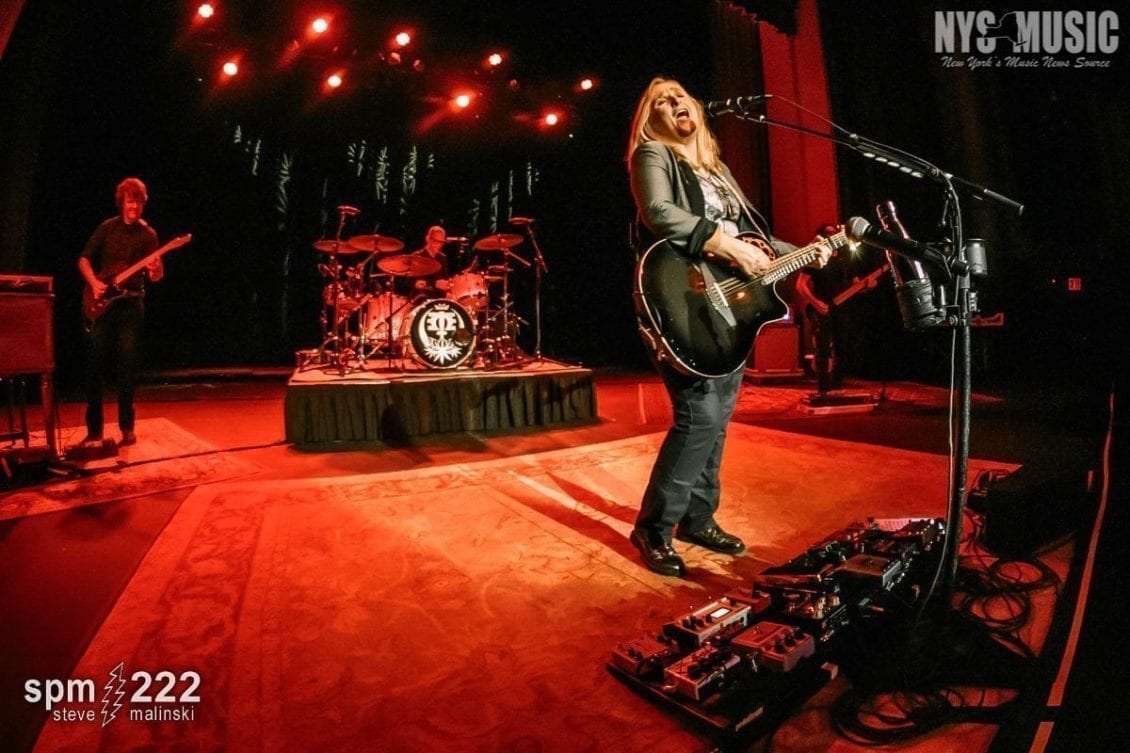
    In less than a year since making an impressive solo performance at Paramount Hudson Valley, Melissa Etheridge returned on April 29 with her full band for another appearance at the historic theater.

    EtheridgeIt was a night filled with some of her popular tunes and several off of her 2016 release, Memphis Rock and Soul, including her take on venerable blues/rock staples from the likes of Albert King, The Staples Singers, and Isaac Hayes among others. The room felt electric from the moment Etheridge stepped on stage with one of her several Ovation guitars in hand, receiving a standing ovation from the crowd even before striking the first notes of “Angels Would Fall.”
    Last year Etheridge made a solo appearance at the Paramount, at times creating a one-person band set against a backdrop of a dozen or so guitars including a new bass she picked up at Division Street Guitars (right around the corner from the theater). This time with a full band the musicianship on stage from everyone was excellent, with plenty of warm-hearted anecdotes to fill the time between songs.

    Her show felt like a tribute of sorts to the Memphis blues and rock and roll songwriting, often citing Stax Records artists as inspiration while introducing the songs off of her latest release. Combined with her showmanship, Etheridge’s rich tenor  vocals validate the authenticity of her take on those songs and the style.

    Although she didn’t pick up a guitar at the local guitar store around the corner from the Paramount as she did last year, Etheridge expressed a bit of gratitude and appreciation for the venue and the city of Peekskill.

    With Etheridge’s trend of releasing a new album every few years, it’s likely just a matter of time before she is welcomed back to the Paramount with open arms.

    Setlist: Angels Would Fall, Similar Features, Any Other Way, I Want To Come Over, Fearless Love, I Want To Be In Love, Respect Yourself (People Stand Up), Hold On I’m Coming, Born Under A Bad Sign, Chrome Plated Heart, Come To My Window, Bring Me Some Water, I’m The Only One->Rock Me Baby->I’m The Only One

    Encore: Like The Way I Do

  • Hearing Aide: Matthew O’Neill’s ‘Trophic Cascade’

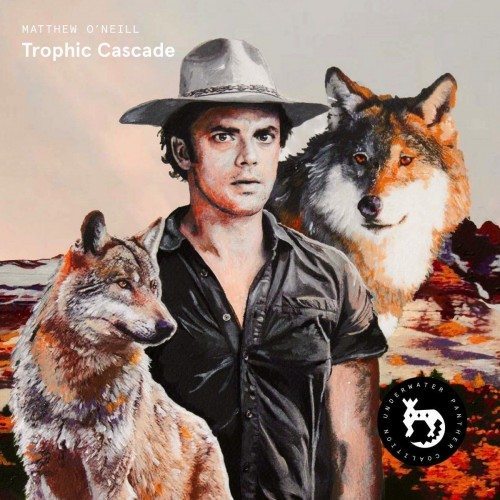
    Underwater Panther Coalition, an emerging record label with a mission to take care of our Earth, recently released Matthew O’Neill’s LP Trophic Cascade on May 5. This debut LP features O’Neill’s single “Louisiana” released in March earlier this year in support of Earth Guardians.

    Currently living in Upstate New York, O’Neill was raised in Pennsylvania and spent much of his time immersed in the Eastern Woodlands. O’Neill’s musical inspiration and style is drawn directly from his relationship between modern life and his exposure to the indigenous lifestyle. Half of all profits from the record sales are to be donated to frontline earth protection groups and more specifically to conserving indigenous rights.

    O’Neill’s perspective of the world is drawn from varied experiences that can be heard throughout his LP as he channels these contrasting lifestyles into music. Trophic Cascade is composed of fourteen tracks that experiment with sounds from a broad range of music genres. Styles such as psychedelia are prevalent during “1000 years” and the mountain styled music peaks through on songs like “Golden Boy” and “Relaunching.”

    Other songs on Trophic Cascade include elements of Americana, rock, folk and soul. “There You Go Again” features a horn section while “Break Stride” embodies a toe-tapping and fun upbeat rhythm. Each of these fourteen tracks embodies another emotional message and strives to build the bridge between activism and action.

    Whether or not you are an avid tree hugger is not integral to be a fan of O’Neill’s music. The sincerity within his music shines through as it goes hand-in-hand with his message of appreciating and protecting our world’s natural beauty.

    Key Tracks: Louisiana, Ain’t No Way, Relaunching

  • Hearing Aide: Jocelyn & Chris Arndt ‘Go’

    As much as we’ve seen styles change over the past few decades within our current blues genre, it’s frustrating that many of the blues creators we see don’t vary in general characteristics. In an older, mostly male-dominated blues world, there seems to be few oddball types of pioneers that redefine the ‘modern’ blues genre, that possess elements of instrumental mastery as well as superb songwriting chops. More specifically, there just doesn’t seem to be enough young people in the blues genre whatsoever.

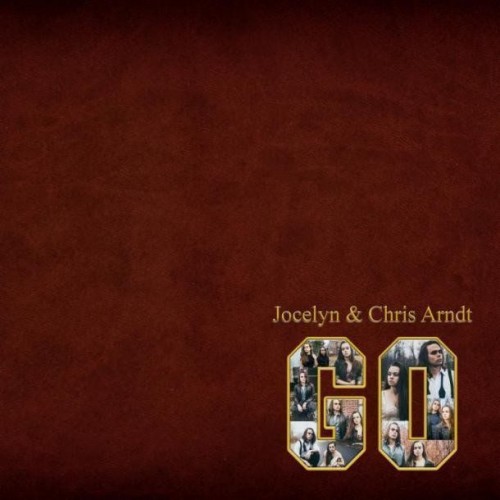
    As early adults and siblings, Jocelyn and Chris share a creative blood. They are unapologetic with their entrance into listener’s speakers in their recently-released sophomore album, Go. Chris Arndt is a powerful songwriting force on all twelve tracks of the album, delivering piercing guitar riffs that are precise, yet purposefully sluggish as a means to flirt with his listeners. Many of his melodic lines are the forefront of song creation, that can be especially noticeable in songs like “History” and “Red Stops Traffic.”

    Only to balance the sound (without overshadowing the existing space) is Jocelyn Arndt, whose lyrics paint several pictures we can all relate to, in tracks such as their uplifting ode to dreams “Footprints on the Moon,” and desolate lullaby “Bad Business.” More apparent than her story is Jocelyn’s extroverted voice, that commands the room by presenting listeners with a delicate, soothing head voice to contrast an assertive, powerful chest voice, and then back, with a complete sense of ease and elegance.

    While they have the support of a full band on this album (occasionally featuring members of Gov’t Mule and Kung Fu), Jocelyn and Chris maintain a unified sound that doesn’t need any backing. They have the freedom to do this by choice, and only being in their early stages speaks volumes as to what their future may bring for blues music, both as performers and songwriters.

    While their tour is nearing its final stops, Jocelyn and Chris will make one more visit to New York on July 6 at the Mercury Lounge. You can buy tickets and follow their happenings on the artist website.

    Key Tracks: Footprints on the Moon, Red Stops Traffic, History

  • Rochester Music Hall of Fame Honors 2017 Inductees

    Last week Rochester honored six people who contributed to the local music legacy. In a ceremony held at the iconic Eastman Theatre, The Rochester Music Hall of Fame 2017 inducted blues man Joe Beard, classical composer Samuel Adler, pop star Gary Lewis, jazz trumpeter Lewis Soloff, radio DJ Roger McCall, and Penny Arcade owner Greg Sullivan. Highlights of the evening included spectacular performances by honorees and distinguished guests David Clayton-Thomas and Paul Shaffer.

    The first inductee was the legendary Joe Beard, born in the 1930’s to sharecroppers in Mississippi, he grew up immersed in the musical heritage of the delta blues. He migrated north and settled in Rochester, where he married and raised four children. In his lifetime, he has played with the likes of Muddy Waters, BB King, and Son House. On this occasion, he performed with his sons, Chris and Duane. They played a trio of songs from his extensive catalog of music, including “Don’t Know Why.” Joe stood center stage, his cherry red guitar a stark contrast to his dark suit, while his sons stood behind. At one point, they took turns soloing on their guitars, playing with as much comfort and ease as a friendly conversation.

    Next up for an award was Samuel Adler, a distinguished composer and teacher, with more than 400 published works to his name. Adler taught at the Eastman School of Music for three decades before relocating to New York City to teach at Julliard. His “Piano Quintet for Piano and String Quartet” was performed by Upton String Quartet with Yi-Yang Chen on Piano. The piece starts slow and lamenting, bursts into discordant notes, then finds triumphant harmony. It is a shining example of Adler’s adept skill as a composer, and why he is highly sought after for commissions.

    Gary Lewis took the stage, sidestepping his way to the mic. His natural ability at showmanship comes from growing up in the entertainment industry, taking the stage at an early age with his father, Jerry Lewis. Gary made a name for himself in the 60’s with his band, Gary Lewis and the Playboys, with rapid-fire hits that bumped bands like The Beatles down on the charts. Gary Lewis met his wife at the Eastman Theatre twenty years ago, and has lived here since. They still tour actively around the world. Tonight, they performed rousing renditions of their greatest hits, including “This Diamond Ring,” which had audience members dancing in their seats.

    The intermission was also a to-do, with performers and local music legends like Lou Gramm meeting with attendees in the hallways to chat, sign autographs, and share a “Kodak moment” with their fans. The second half of the night was more somber, with posthumous awards given to members of the local music community who we have lost.

    Lew Soloff, most notably known for his work with the band Blood, Sweat & Tears, spent part of his career teaching at the Eastman School of Music. His daughters accepted the award on his behalf. Paul Shaffer and David Clayton-Thomas also made the trip to Rochester to help honor their longtime friend. Paul carried out Jimi Hendrix’s “Little Wing” on piano, then took to the organ to accompany as David Clayton-Thomas played a trio of Blood, Sweat & Tears songs, starting with “Spinning Wheel.” He also sang “God Bless the Child,” a song originally done by Billie Holiday, which he said Lew had encouraged him to tackle. He ended with “You Make Me So Very Happy.”

    Roger McCall, the beloved radio DJ known by the alias “Unkle Rog,” worked for over 30 years at WCMF, making him the longest-running DJ at a single station. He worked the graveyard shift, and featured local artists, helping to cultivate the local music scene. Unkle Rog was taken from us in 2003 in a tragic act of violence. His wife and his son accepted the award. A tribute song “All Night DJ” was composed by John Akers. The jazzy number was performed by Akers on vocals and piano, Paul Akers on Bass, Erik Welsh on drums, Andy Calabrese on Keyboards, and James Richmond on Saxophone.

    The final inductee was Greg Sullivan, owner of local venue The Penny Arcade. The nightclub featured live music, bringing in major rock stars like Iggy Pop, Greg Allman, and Huey Lewis & The News. Sullivan also mentored local musicians, providing a place for them to hone their craft and grow a following. The club has been closed for seven years now, and Sullivan passed away in 2014. Sullivan’s wife accepted the award. A tribute song “We’re Rockin’ at the Penny Arcade,” was composed by James Richmond, Mike Gladstone, and Rob Smith. The rocking number was played by Smith and Phil Naro on vocals, David Cohen on drums, Ron France on Bass, Gladstone and Donnie Mancuso on guitars, Will O’Riley on keyboard, and Richmond on saxophone.

    The finale of the night was a tribute song “You Shine,” written by Jeff Cosco in memory of Greg Sullivan and Unkle Rog, and played in homage to the legends by Cosco on vocals, Mancuso, Gladstone, and Joe Chiappone on guitars, Bobby Bond on drums, France on bass, and Andy Calabrese on keyboards.

    All of the performances of the night were supported by the Hall of Fame’s house band, Prime Time Funk. The Rochester Music Hall of Fame is a non-profit agency, and this program was made possible by a host of local patrons and advertisers. For more information about the Rochester Music Hall of Fame and past inductees, visit www.rochestermusic.org.

    Photos by Battista Photography

  • Hearing Aide: Julia Felice and The Whiskey Crisis ‘Devil On Your Back’

    Julia Felice and The Whiskey Crisis, a rock group from Ithaca, have just released their second album Devil On Your Back. The album contains 11 tracks, and has a listening time of 44 minutes. Their tunes have an alternative, bluesy sound, and the album as a whole is more focused than their first, titled “Diving For Falls.” The group’s individual style is more refined on this record, as well, but the tone of their music can get repetitive.

    Julia FeliceThat being said, the tracks on Devil On Your Back do feature some variety.
    “Help Me Break,” the 6th song on the album, is sultry, soulful, and holds a slower rhythm than some of the other tunes. Julia Felice, the lead singer of The Whiskey Crisis, has a deep, raspy voice that is well complimented by the instrumentals this group puts out. “Help Me Break” showcases that factor in a different light. “Denim,” the shortest song on the album, exudes a funky, old school vibe, while “Waste” is one of the few upbeat tunes on the record, holding lots of feeling and spirit.

    The classic sounds that Julia Felice and The Whiskey Crisis produce are strong, much like the stage presence the members hold, which can be demonstrated below. Julia Felice and the others exude focus and passion when performing, which is magnetic. They seem to be an entertaining group to watch if looking for an entertaining night of live music, producing Devil On Your Back for those who enjoy timeless tunes.

    Key Tracks: Help Me Break, Denim, Waste

  • Hearing Aide: Life Of Agony ‘A Place Where There’s No More Pain’

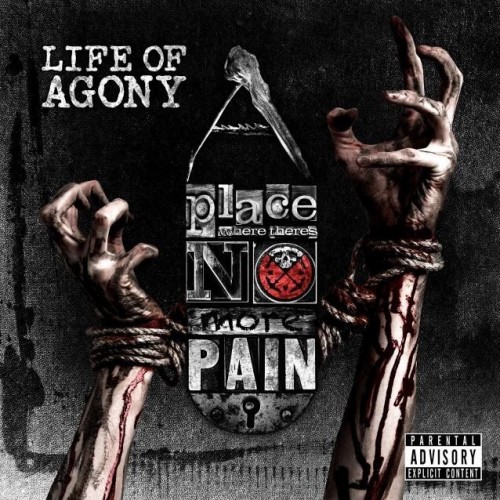
    This year has been a great year for heavy metal releases, and Life Of Agony‘s newest album A Place Where There’s No More Pain released by Napalm Records has had some hype leading up to it since it has been 12 years since the previous album Broken Valley.  But now things are different for LOA.  For starters, Mina Caputo coming out as transgender, new record label, the band spent a few years apart with various bands and projects, so now was the perfect time for the band to be active again, reintroduce themselves to the music industry, and be a force to be reckoned with.

    This album is by far LOA’s darkest album.  As soon as you start it, opening track ‘”Meet My Maker” has a dark catchy rift pelted out from Joey Z’s heavy guitar, then you hear the vocals with the lyrics “Clinging on to what was then when what is now decides….” and you’re just like “fuck yeah. LOA is fucking back.”  Yes, once again, for the 5th time, the vocal style is completely different from the other albums, but you know it’s LOA.  But it works. Mina’s vocals fit all the songs perfectly.  The lyrics scratch deep.  The music is hard.  But what makes this album standout among the other albums is the dark gloomy, impending doomy atmosphere.

    There is an element in this album that has to be brought up.  And that is producer Matt Brown.  The mixing and producing that he did this for album is brilliant and masterful.  I’m not sure of what other projects Brown has produced, but he is one of the guitarists and songwriters for LOA drummer Sal Abruscato’s other band, A Pale Horse Named Death.

    Those who have heard A Pale Horse Named Death’s two amazing albums, are familiar with dark, doomy, gloomy, Type O style music.  So it should come as no surprise that Matt Brown and Sal Abruscato’s style had a strong influence on this album.  The best produced song on the album is “Dead Speak Kindly.”   It has all the elements that I just mentioned.  But the song that stands out to me the most is the next track which is “A New Low.”  That song is heavy and sludgy as hell and really strikes a nerve and speaks to the soul.  Then “World Gone Mad” goes fast and hard to get the mind rushing again.  Perfect workout music.

    When you get to the end of the album,  it ends strangely but appropriately with “Little Spots Of You” which was a soft piano lead track with Mina’s vocals going in a more gentle direction.  It’s a great way to end a doomy album.  Overall, A Place Where There’s No More Pain is damn near perfect for where the band is right now.  I would rank this easily the best LOA album since 1995’s “Ugly.”  Easily this is another contender for the best metal album of the year, and that’s saying a lot considering all the great metal albums being dished out this year.  A lot of these songs need to be played live.  They can be live staples for this band for sure.

    Key Tracks: Meet My Maker, A New Low, World Gone Mad

  • Book Review: Peter Conners’ ‘Cornell ’77’

    May 8 will mark 40 years since the Grateful Dead descended upon Ithaca and performed a concert that would go down as the most talked about show in the band’s 30-year history.

    Many people say it’s the greatest performance in the Dead’s storied history, and it’s easily the most documented show the band ever performed. In the new book, “Cornell ’77,” author Peter Conners dissects the famous and infamous concert at Barton Hall on the Cornell campus in a variety of ways, from culling excerpts of local media at the time, to finding and interviewing attendees of the show, to emailing with the living band members.

    The history of the Grateful Dead has been documented endlessly in print form, with full band documentaries, autobiographies, fan accounts and everything in between. But Conners’ book is the first time a single show has been viewed on such an in-depth level, and with good reason: May 8. 1977, is the most downloaded Grateful Dead concert ever, and has been streamed live more times than any other.

    Conners clearly spent his time in piecing together information for the book. He rounded up newspaper clippings from the time, both previewing and reviewing the show, located a few people who attended the concert and spoke on record, and even got some of the band members to give their input.

    The first chunk of the book gives a history lesson of sorts into the Dead up until that time, including a great deal about the famed Wall of Sound, and more importantly a lot of insight about the near breakup, which turned into a hiatus, in 1974.

    The most interesting parts are in the chapter titled “Cold Rain and Snow,” where Conners depicts a few fans’ experiences of the entire day, from traveling to the area, to getting in the show and how the fans viewed the music at the time. Fan Robert Wagner, who traveled from North Carolina to upstate New York, gives anecdotes about experiencing snow in the spring that catapult the reader back to 1977. This chapter easily is the book’s selling point.

    Something that has been documented ad-nauseam is listener reviews of the show. Conners did not attend the show — he was a Deadhead in his youth, however — but did give some of the better breakdowns of the songs performed that night that I have ever read. At times, Conners’ comparisons were a bit odd: he compared “U.S. Blues’” line about skinning a goat to a cat, which left me wondering what he meant; later, he compared “quaaludes running through the bloodstream” to the jam in “Supplication,” and I was, admittedly, a bit lost. But in the end, Conners ended up giving readers a completely unique review of the show, breaking each song down, while providing a little history and context for each one.

    While the premise of the book is initially intriguing, “Cornell ’77” does have its shortcomings. At times, the book appears to have not been edited very well, as it has a few glaring grammar problems.

    But my main issue with it, is that Connors seems to have pulled most of his information from other sources, while seemingly being unable get much information directly from the four living members of the band. Drummer Mickey Hart pours his heart out, as always, but outside of Planet Drum, the rest of the band is nearly absent outside of Conners taking quotes from past interviews conducted by others. That makes the book not feel fully authentic.

    If you’re a seasoned Deadhead, this book won’t provide you with much new information.

    But if you’re new to the Grateful Dead, this is a book I highly recommend checking out, as your eyes will be opened to an era of the Dead many think is the unquestioned leader in the handful of iterations of a rock and roll band beloved by its followers.

  • Photo Gallery: Sunsquabi Rolls Through Boston

    Late Night Radio and Maddy O’Neal opened a long night of music at Wonder Bar in Allston, MA on Sunday, April 30 for Sunsquabi. Saxophone extraordinaire, Tommy Weeks (Sophistafunk, Funky Dawgs) came up and belted out a few rounds during Maddy O’Neal, and even impressed Sunsquabi enough that he was asked to come back up for a tasty jam with them towards the end of the night. The Squab-Train drove straight through til the wee hours of the morning, delivering that funky Colorado sound we’ve been waiting so long for.

  • Photo Gallery: The Slocan Ramblers Slide Into Glens Falls

    Canadian based bluegrass band, The Slocan Ramblers filled the Folklife Center at Crandall Library in Glens Falls, NY on April 27 to a packed basement soundstage. The four-piece staple, a 2015 Edmonton Folk Fest Emerging Artist Award recipient, quickly won over the North Country crowd with a sharp 21-song set list which consisted of 7 originals in support of their two releases, Coffee Creek and Shaking Down the Acorns. 

Built in Breakdance