Category: Artist Profile

  • Prodigy Bobby Paltauf Comes to Stage One in Fairfield Connecticut

    It’s hard to be so humble and mature when talent comes so naturally to someone, but Bobby Paltauf proved in an interview it’s possible, as he is undoubtedly one of the most professional and grounded  young musicians out there.

    He’s coming to the Fairfield Theater Company‘s secondary venue, Stage One, on Saturday, March 11 and NYS Music revealed some information about the show and how he got started. Paltauf also talks about a pre-show fundraiser with organizations like Horns For Kids, along side Rock Cottage Studio as well as how a portion of the ticket sales going to Zach Staden, a man who requires stem cell therapy for a spinal chord injury.

    Dave Ostroff: What age did you pick up the guitar?

    Bobby Paltauf: Around 7, I’ve been playing for about 10 years now. Started right on a Strat too, it’s a huge guitar. My dad used to play a lot and he had an acoustic and Strat and I dove right into those.

    DO: Did your dad tempt you to play?

    BP: It was always more of my doing. My dad always played great music. When I was a kid we would just rock out to Led Zeppelin. He played one Zeppelin song and it just intrigued me. I picked up his guitar one day and I tried to learn it.

    DO: Did you ever get stumped and need that extra push to keep learning?

    BP: Definitely. It was hard especially when you have those baby fingers. There were songs that I wanted to learn, a lot of Led Zeppelin stuff. It was about a year, year and a half where I was kind of getting it… and then it just clicked.

    DO: When did you get together with the people you put the album out with?

    BP: 2013. I started going to BRYAC. They had a funk night and there, someone told me about this bass player and drummer and we met in their basement and we just clicked right away. We added a keyboard player that we knew and then we put together that record.

    DO: You guys sound fantastic. One of my favorites is Atmosphere. Talk us through the creative process of that song.

    BP: When I first met with the drummer Kaitlyn, and the bass player Miles, we jammed on a funk tune and directly after, Miles started playing some diminished line, and we wrote the tune right there on the spot. It was the first or second time we met. We molded it out every night that we were on tour and it just came to be the song.

    DO: What would you define the album is in terms of genre?

    BP: A lot of it is instrumental, it’s funky with a little bit of jazz influence, so I would just call it a funk rock album.

    DO: A lot of the music, as you said is instrumental, but in some songs you sing. Did you want to stay more instrumental because that’s your strong suit?

    BP: At the time we put out the record I was only 14 and at the point your voice is changing every couple of months. At that point my voice wasn’t my strong suit and I was more engulfed in the guitar, so I just wanted to make that album based around instrumental stuff. I wanted to let my voice develop more. That’s actually what I’ve been doing for the past year/ two years now is writing lyrical based music. The next record is going to be a complete twist, all lyrical stuff.

    DO: Led Zeppelin was your muse for your guitar work. Do you pull any inspiration from famous vocalists?

    BP: Back then I was focused on guitarists. But in the past couple years I’ve been getting into folk singers like Bob Dylan. I like his less technical approach, just singing from your soul. I’ve been working on my own, which will be on the new album.

    DO: Is there an expected date for the album drop?

    BP: Mostly likely early May.

    DO: Compared to Lost and Found, are we going to see a similar genre? Striving for something new?

    BP: I’m definitely going to go for more of a rock and roll feel, going back to the music I really fell in love with years ago. It’ll definitely be more rock based, there will be tracks that go off a little bit and jam with a little bit of funk thrown in. Also some more lyrically developed idea.

    DO: You’re show at the FTC is coming up in March, are we going to see anything from the new album?

    BP: We’re actually going to play the entire new album. We might throw in some stuff from lost and found, but it’ll almost all be new stuff.

    DO: You got to sit in with Buddy Guy among other famous musicians. How did you get that gig and what was it like?

    BP: I played with him at the Ridgefield playhouse and my aunt who works there set me up with him. I didn’t really know who he was. I was more into the rock stuff, but I started to check him out and thought, “I need to see this guy he’s a legend!” She ended up getting me to meet him before the show, he had me play a little bit in front of him, he said, “Stand over here by the side stage and I’ll call you up for a song. It was just so incredible and surreal.

    DO: Was that the most memorable sit in with an artist?

    BP: Buddy Guy was probably the big one. The other one at Catskill Chill when I sat in for The Meters with Paige from Phish. That one was incredible. I was around 14 for that one. I happened to be a in a Meters phase too. It was incredible to play with George and Leo.

    DO: Did any of these big names say or do anything that will stick with you for the years to come?

    BP: I’ve seen Buddy Guy so many times after that. You see he brings so much energy to the shows. It shows that it’s all about the music, but you need to keep people engaged, especially nowadays. The Meters show was a fun jam for jam lovers, but the Buddy Guy one stuck with me. You need to keep the crowd engaged. He walks around the stage, into the crowd and up into the balcony. He has a lot of fun with it.

    DO: You’re playing with Grayson Hughs at the FTC, have you talked to him? Know him at all?

    BP: I’m actually in his band too. He called me up a few years ago, I had no idea who he was. He got my number from a girl in my school who was family friends with him. He’s this legendary soul singer from the 80’s who fell out but is making a come back with a few albums.  He happens to be from Danbury and he tried to put together a band, he found me, a drummer and bass player and we’ve been rehearsing for about a year and a half. We thought about the idea of merging the two bands at a bigger venue- Stage One in Fairfield.

    DO: So your group is going to open first, and then you’ll combine together for the second set?

    BP: We’ll do a little over an hour and then change over and he’ll do about 90 minutes with us.

    DO: Do you guys plan on heading over to NYC anytime soon?

    BP: We plan on doing a bigger run when the album drops. We loved playing New York City, and hopefully try to get a nice run together for the early summer.

    DO: Any other info regarding your upcoming FTC show?

    BP: Before the show we are going to have a bunch of local organizations and causes setup in the art gallery at FTC StageOne to promote what they do and to raise donations.  There will be a table for Zach Standen setup where they will be collecting donations for medical funds, stem cell therapy, and more (as well as a portion of the ticket proceeds will be also going to him).  Rock Cottage Studio will have a setup to spread Horns For Kids, which gives instruments to underprivileged kids who can’t afford them. There will be many other things set up at doors before the show and we will also have merch and cd’s.
  • Erin Harkes, the Busiest Woman in Show Biz

    The interview was wrapping up just a few minutes before her show was to start. Was there anything you’d like to add that my questions didn’t touch upon?, I asked. “We didn’t even talk about my sobriety,” said Erin Harkes.

    The local musician and, as of four years ago, comedian is never shy about the subject of alcoholism. Her sobriety has been covered in newspaper features. It’s a part of her comedy skit.

    I didn’t want to ask, because I didn’t want readers to think it defined you.

    “It’s very much a part of me,” said Harkes. “I would not be who I am without my sobriety.”

    According to the National Council of Alcoholism and Drug Dependence, Inc., roughly one in twelve people in the United States suffer from alcohol or substance abuse. Harkes has been sober for six years. Those participating in Alcoholics Anonymous carry a token depicting the length of their respective sobriety. A reminder. A last extension of a helping hand before one walks into a bar.

    Harkes spends her life in bars. According to last year’s schedule, she worked 274 shows; on a 365-day calendar, that’s three-quarters of her days. The musical comedienne quit her day job about four years ago. “It’s a hard thing to do when you’re surrounded by …,” she said, gesturing behind her: a bar that stretched the length of the room, lights bouncing off bottles of liquor and the shiny metal of beer taps. In a career that often obligates her to perform in front of her former vice, she expressed pride in her ability to maintain the course.

    But, Harkes said she understands not to be overconfident. She’s her own manager, and her own accountant. “No one does me better than me,” said said. She’s her own boss in a line of work that requires a thick skin impervious to crowds unreceptive to her jokes, indifferent to her songs, or the occasional heckler. It’s also needed when she listens to her body, feels a familiar urge, and packs up her equipment. She said it doesn’t happen often, but it boils down to a short conversation between herself and the venue owner: the owner either understands or she doesn’t play there again. Her attitude is not out of contempt. In the end, she said, she has to take care of herself.
    Despite her propensity for travel — again, 274 shows last year — Harkes has attempted to be more selective with her shows. When she first quit her job, she said she would take every opportunity presented her way. Last year, she attempted to taper off the number of shows by selecting quality over quantity. It was a means to prevent herself from burnout. There’s also the balance between her music career, and her comedy one.

    “If I wasn’t doing music full time, I’d probably be doing a lot more comedy,” said Harkes. Her reputation is strongest with music, so it pays more. “It’s like you couldn’t take an unpaid work day to go do whatever your hobby is. So, it’s really hard for me to take comedy shows. They have to be really worth it. … I have to sit down and seriously look at it. Is it really worth it? Is it a good investment? Sometimes the return, you don’t make any money at all doing comedy. So, I just work really hard on the other end to supplement it.”

    So, you’re a double threat like a Bo Jackson?

    “[Laughs.] Do you really have to make a sports reference to a musician?” she asks.

    Adam Sandler?

    “I prefer Bo Jackson.”

    Truth be told, she holds on to early comparisons to former Fleetwood Mac lead singer, Stevie Nicks. Harkes’ soulful lyrics, her music delivery and, perhaps, her light-hued locks, has had people comparing her another double-threat. (Nicks has long been known as a dancer during live performances, and is recognized for her contributions to fashion, as well.)

    “The first music I remember listening to was Fleetwood Mac,” said Harkes. “I loved the harmonies. I loved everything about it. … I was born in 1977. Clearly these albums were before my time. I’d just like to state that [for the record],” she said, as she laughs some more.

    Jackson — again with the sports reference — was a rare gem of an athlete who excelled at two professional sports. He would often be asked as to which he prefered, and obscurely referred to one as a hobby over the other. Harkes said she loves both music and comedy — and doesn’t want to choose.

    “I love music,” she said. “It provides for me. I feel very blessed. I mean, I work really hard and it just blows my mind that I’m able to do it [for a living]. The comedy is way harder. I don’t know if it’s because it’s still new to me still. The excitement is so fresh. I get nervous, and I enjoy that.”

    “They each have their pros and cons,” Harkes said. “I wouldn’t say I love them equally. I love them much differently.” With music, she said, she sits down and dives into the music. No interaction with the crowd is needed. However, she describes comedy as sometimes “terrifying,” because she’s not able to hide behind anything. The interaction between performer and audience is vital to the quality of a show. “It’s like every few seconds, someone’s standing on your chest.”

    “With the comedy, you need the audience and you need the attention,” said Harkes. “It seems like I’m putting myself in a precarious situation, because I’m already an attention-starved individual.”

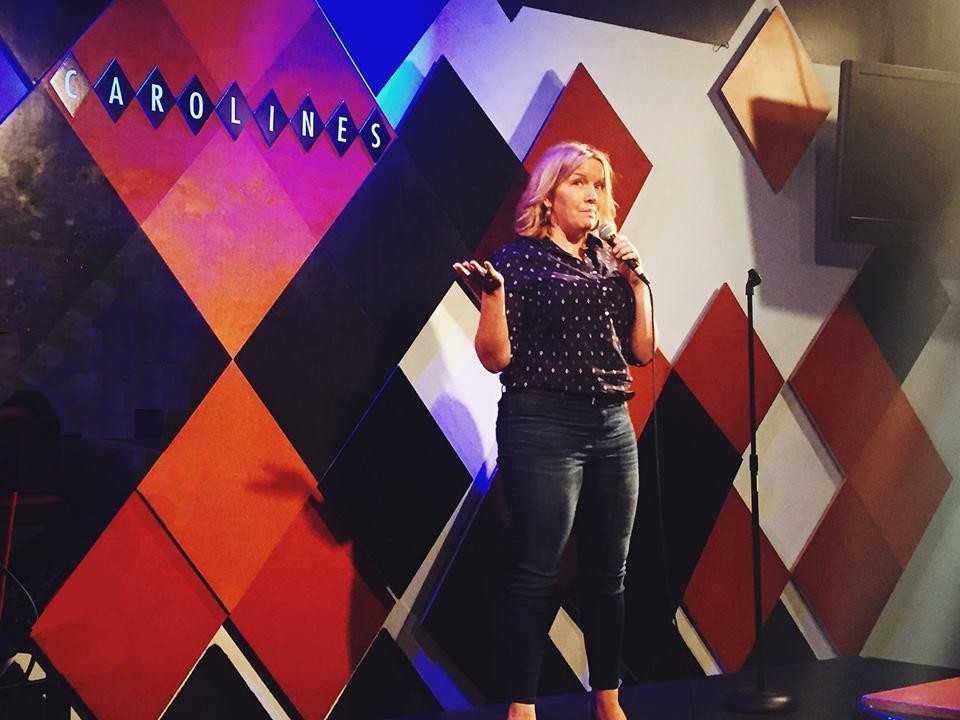
    It’s January, and Harkes has her schedule planned out for the entire year. She’s the regular host of the all-female comedy show “Chicks Are Funny” at the Funny Bone in Crossgates, in addition to the hundreds of shows to which she travels. There is no time to reflect on her progression, but she said she sets goals with each coming year; one of which was performing last year at Carolines on Broadway in New York City.

    “I don’t ever like to tell people my goals,” said Harkes, “and I’m the only one who knows if I fail them.” But, just as she did when she quit her day job, she’s taking the opportunities that come to her. Only this time, the opportunities are getting much better. Before she was able to establish goals for 2017, she was already accepted to perform at the Boston Comedy Festival. And on television, she was asked to appear for the third season of Hulu’s “Laughs TV.”

    “The things I didn’t expect, the things I didn’t anticipate I would get, I got them,” said Harkes. “I don’t know. Sometimes it’s throwing so many things up onto the wall and seeing what sticks.”

  • Band Profile: The Further Unsound

    Almost 40 years ago, the world was inspired by the lyric “Break on through to the other side” and the future of music was about to explode. A generation was about to change, they were ready to fight the establishment and now they had the soundtrack to do so. It was a time when music reflected more art, improvisation, and poetry. Forty years later that same musical work ethic is being applied in upstate New York.

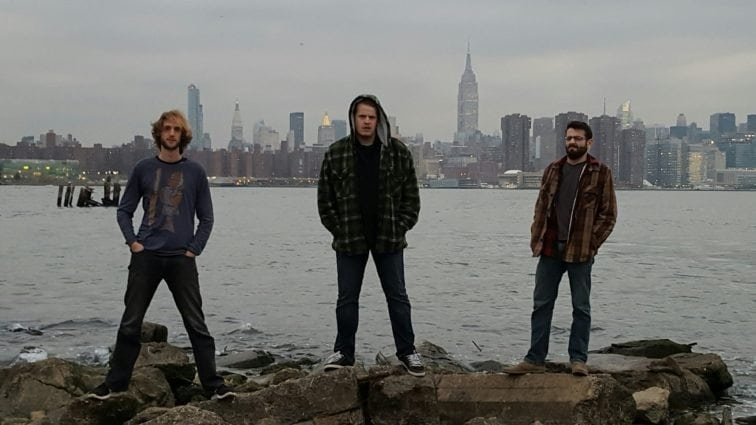
    further unsoundExperimental three-piece project Further Unsound has made its way at warp speed, gaining recognition locally and performing live all over the East Coast.
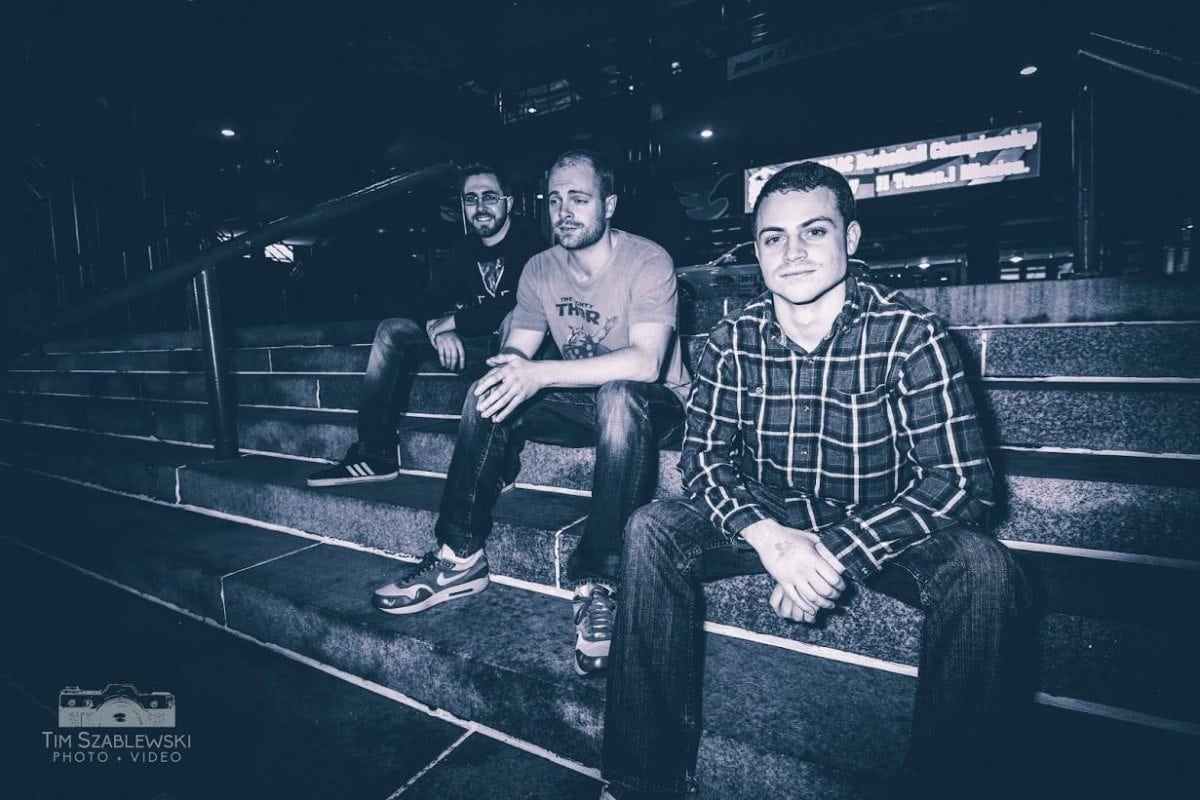
    “I mean, this is how my brain is wired man,” said guitarist and vocalist Matt Malone. “We all have our own way to interpret our feelings to the world and playing live happens to be how I like to do it.”

    Which is exactly how this group took it to another level when writing and recording its latest release. Along For The Ride was a culmination of songs written by Malone, Cole Riddering and the band’s founding member, Sean Cranston.

    “I’m a firm believer that playing live is where it counts most,” said Cranston.

    Along For The Ride, was recorded at the The Linda Norris Auditorium in November 2015 and released in 2016.

    Riddering, the band’s bassist, was the last piece in the puzzle. Prior to bringing Riddering into the project, Malone and Cranston sold everything they had, packed the car and headed to the West Coast.

    With no time restraints, the three booked shows and jammed at random open mics and house gigs along the way, with just the desire to just play where ever they could in their travels.

    “The live recording of Along For The Ride was a good experience, it showed me how much of a conduit I was between my bandmates and pushed me to become exactly that,” said Riddering. “The great thing about writing new music is that we have become a band in the last year and a half, we understand what we’re trying to do with our individual styles and are understanding how to put our talents together. The last album was awesome but I’m excited to be a part of the entire process this time around.”

    The Further Unsound from CRUMBS Cafe on Vimeo.

    Non-stop hard work has brought The Further Unsound into territory none of the bandmembers expected. Since the album’s release, The Further Unsound has played live with Creed Bratton (of The Office), the Launch Music Conference in Lancaster, Penn., the Willimantic Connecticut Street Festival and the recent Drink Albany Fest.

    “Touring the world would be ideal for the future,” said Cranston. “We have started writing our next batch of tunes and, from what we’ve started, I’ve got a feeling that our next effort will be more unique than its two predecessors.”

    This article was originally published by The Spot 518. is property of Spotlight Newspapers in Albany, N.Y., and appears as a special to NYS Music. TheSpot518 and NYS Music work in partnership to provide readers with in-depth coverage on the local music scene in the Capital District and New York state, respectively. For more, visit TheSpot518.com.

  • Singer Sean Rowe is Going Rogue

    Sean Rowe is no stranger to walking a different path, but he needed help with his latest venture — walking away from his record label and seeking a crowdfunding campaign to produce his next record.

    You can call Sean Rowe a “madman” for his recent, unorthodox approach to his music career, but he is a man with a plan.

    The popular blues singer opted not to resign with his record label, chose to crowdfund his latest project, and got the guts to do it by doing something a little off the wall.

    “This all started when there was a giant fork in the road for me in terms of where I was going to go career-wise,” said Rowe. “I had fulfilled my contract with Anti Records… And, I had to figure out where I was going to go next.”

    For the better part of the last decade, Rowe has made a living off his music. It’s the path he’s chosen to walk since he discovered Otis Redding when he was 17. Not your typical Troy teenager coming of age in the early ‘90s. Instead of Bell Biv Devoe, Guns ‘n’ Roses or Pearl Jam, he spent his money on John Lee Hooker and music out of the Mississippi Delta. Obscure stuff you wouldn’t find playing on FLY 92. He speaks of his love for Laura Lee, a gospel R&B artist out of the ‘60s whose sound he describes by comparing her to the icons of Gladys Knight and Aretha Franklin. “That’s all I wanted to listen to,” said Rowe. “I was pretty strict. I emulated all these people that I love. It taught me how to play guitar. It taught me how to sing.” And, for the 10 years that followed high school, Rowe spent his nights cutting his teeth at the local bars and venues that allowed him to strum his guitar and bellow out that signature baritone singing voice.

    Rowe has five albums to his name, the last three under Anti Records, the same label under which Merle Haggard and Tom Waits are signed under. The terms of Rowe’s contract were met after the 2014 release of Madman. Though he describes the experience with the Los Angeles-based label as “great,” Rowe said he needed to push out into the unknown. So, he decided not to resign, and opted instead to go “rogue.”

    “A part of this was realizing that if I wanted to do the best record I could do — I’ve already been comfortable with the last record. I already did that stuff — I want to do something that’s going to throw me out into the abyss,” said Rowe. “Something that is going to challenge me. So, that’s why I did all this.”

    Last July, Rowe launched a crowdfunding campaign with Kickstarter to collect enough money that would allow him to produce his next album. The concept is not necessarily new. In fact, the trend of artists seeking financial help from fans prompted a 2013 Louie Herr article at digitaltrends.com, suggesting bands target modest amounts instead of the $1.2 million raised by musician Amanda Palmer in 2012. Rowe’s $43,000 target would fall under Herr’s modest range. Nonetheless, Rowe said he felt like that was a lot to ask. “We launched this thing, fully realizing that it was a lot to ask.” said Rowe. “We needed to raise $43,000 in one month. And, we were asking our fans to do that.”

    Rowe’s plan kicked into motion around the 2014 release of Madman, the third and final record under the terms of his contract with Anti Records. Rowe started a side project; a nationwide tour that involved the musician playing to many of his fans from inside their own living rooms.

    “Just to try something different, you know?” said Rowe. “And, quite honestly, I also had to make money between tours. It was a combination of needing to work and wanting to do something different that led me to this house show idea, where I started playing in people’s living rooms — fans of mine, who wanted me to come to their house and play.”

    The tour built momentum and became a success in more ways than one. Rowe was able to support himself financially, but the intimacy of playing to his fans from within their homes created a dynamic that felt “very natural” to him. He described the typical show as being no larger than a handful of people, sitting on sofas. But, something about the shared experience drew an epiphany. He could walk away from the conventional path of producing albums through record labels.

    “From that audience, so many other things came, including this idea, said Rowe. “That was a big factor in starting this whole Kickstarter thing. I don’t think it is something we could have done before we did the house show thing.”

    In two weeks, contributors from as far out as Dublin, Ireland contributed enough to match the $43,000 goal. And, by month’s end, the funding effort reached $53,000.

    “That was very, very telling to me, that I’m on the right path,” said Rowe.

    Plotted on that path was the plan to record tracks at Sam Phillips Studio, the same studio built by famed Sun Records producer Sam Phillips, in Memphis, Tenn. Phillips is credited with discovering Johnny Cash, Jerry Lee Lewis, Carl Perkins and Elvis Presley, many consider Phillips to be the Father of Rock and Roll. While building up Sun Records, it’s said Phillips was building his dream studios around the corner. For the kid fascinated by the sound of recording artists before his time, the environment could not be more perfect.

    “It’s like walking into 1960,” said Rowe. “Nothing has changed in terms of the aesthetic of that room. I had all these dreams around this recording that I really wanted to accomplish.” Another part of that dream included working with Grammy Award-winning engineer, Matt Ross-Spang, too. And, the end product provides a thousand vinyl records and another thousand CDs. The record is planned for release by the end of March.

    For Rowe, 2016 has been a humbling experience; from seeing fans help support his upcoming album, to hearing an older track of his play along with the closing scenes of Ben Affleck’s feature film The Accountant. There’s a sense of affirmation that the “madman” isn’t so crazy, after all.

    “It’s a lot to ask of people, and it is validation,” said Rowe. “When you see the people willing to pay quite a large sum of money into something they really believe in, it’s not like telling somebody after a show, ‘hey, that was a great show.’ … When someone is willing to pay $1,000 just for the idea of this album, that’s not even made yet, [who] believes in you that much… . For that to happen, that’s a tattoo. That’s a lifelong commitment that someone makes for you.”

    Sean Rowe on “To Leave Something Behind,” featured in Ben Affleck’s The Accountant.

    “I wrote that about six years ago, and where I wrote it was in London, actually. I was walking through a park out there while in the middle of a tour. And, when you’re overseas and you’re touring out there, and you have family back home in the states, the proximity effect is very palpable. Your communication is off. You can’t just connect, like you can. Over there, it’s always been a challenge to maintain that connection with family.

    It came to me at that time. I was already having feelings of disconnectedness — the not-knowing of how it was going to be with my son being born, because he was still in the womb at the time. I was having all these feelings and emotions popping up. You know, how I wanted to be as a father and what it was going to be like to bring a child up in these times. And, that was six years ago. It’s even more relevant to me now then it was back then.

    Speaking from a father’s perspective, but also from a holistic perspective, how to fit into this world view that seems to be opposed to a lot of the things I hold to be sacred. And, trying to find a place in there, where you can have balance. That was just an ongoing theme for a lot of my songs, really.”

    This article was originally published by The Spot 518, is property of Spotlight Newspapers in Albany, N.Y., and appears as a special to NYS Music. TheSpot518 and NYS Music work in partnership to provide readers with in-depth coverage on the local music scene in the Capital District and New York state, respectively. For more, visit TheSpot518.com.

  • Interview with Lord Electro: Turning up the Electricity in The Capital Region and Beyond

    Albany’s very own Lord Electro is a jamtronica power trio bringing a new sound to the Upstate region. Since forming in 2015, Lord Electro has been making large strides to show the music scene they mean business. With a stream of festival slots, shows with bands such as The New Deal and a library of recordings further proves that these guys are playing their cards correctly and have a drive to succeed. From the start of their show to completion Lord Electro likes to keep the dance party alive, with Dan Gerken (synth) Steve Mink (bass/synth) and Jordan LeFleur (drums).

    NYS Music interviewed Lord Electro and learned more about them as a band and individually. Knowing them from previous bands and performing with them in the past meant a lot to me in regards to learning their approach and what’s driving them to do what they are doing. Keep your radar on for Lord Electro, they are a personal favorite and keep your eyes open for what’s to come this year, including their album Business, due out in March.

    lord electroJared Raphel: How did LE come to be?

    Steve Mink: After Dan’s group, Timbre Coup and my group, Digital Dharma, split, Dan and Steve spoke about putting together a trio highly influenced by The New Deal. We needed a drummer to round off the trio.

    Jordan LeFleur: For me, it all started when Dan would come over and hang at my apartment. He knew I played drums but didn’t really know what kind of a drummer I was. I played some jam music in the past and dance beats always felt very natural to me. So, Dan would come over and jam on my Micro Korg and I would just play over his riffs. After that Dan and I decided to take things into full swing and he mentioned that he had been jamming with a bass player. And that’s when I met Steve.

    Dan Gerken: We always had Steve sit in with Timbre Coup and he knows his tones well so he’d be a perfect fit for a project. Jordan and I came together through a random Groovestick show and started jamming. Soon after, all three of us were together for a jam session and the rest was history.

    JR: Is there a symbolic meaning behind LE’s name, who came up with it and what were some other choices?

    SM: I wanted the name to play off our genres in some way. Because we play Electronic music, “Electro” seemed fitting. For some reason, I always thought “NORD” when hearing electro. Nord is a very popular award winning keyboard. So then I thought about it, and “Lord” popped in. With the DJ scene huge these days, Lord sounds like one person. So when someone hears the name, they think maybe we’re a DJ. But then come to find out that Lord Electro is actually three guys playing instruments, LIVE, as ONE, Lord Electro.

    JR: You have a system of non verbal communications, utilizing hand signals. Explain this to me and how did you come about this procedure?

    DG: I brought in some signals we had used for Timbre Coup and a couple other groups in improv sections that we were building. Each signal has it’s own key or structural meaning and Steve has been known to throw a couple sometimes too. At times I’ll point to a member and they’ll know to start a phrase where we all drop out and they hold it down/build another riff. It’s a great way to insure some semblance of layering and order with also limitless possibilities in an off the cuff setting, which we love.

    JR: What is your goal while playing in a band?

    SM: I want to be successful playing music, it would be a dream to be able to perform doing what I love and support a family while living that dream. At the same time, I want to make bodies dance, and see smiles from ear to ear. I want to feel a connection with the crowd. And that is just as fulfilling.

    DG: This is a great question. There are many things this band satisfies for me. I get to improv, I get to form a sound with these guys that I feel is unique and different. I will always play music for enjoyment and i feel I’ve found a special group of guys to write with and share our music!

    JL: I’ve always wanted to tour the country seeing new cities and meeting new people. For me music is an escape and a stress reliever. When I perform live nothing else matters. Especially when I see people getting down to LE, it completely enhances my performance. I would love nothing more than to see this band take off and become nationally known in the jamtronica scene.

    lord electroJR: LE follows the theme of electronic/jamtronica, though you guys magically create it all with organic performance. Has the idea of implementing automated technology been discussed, thoughts?

    SM: There has been some light talk of using some loops. But at the moment we’re not focused on it. We’re trying to keep the group as organic as possible.

    JL: Eventually the time will come where we use some samples in our music but at the moment it’s 100% organic.

    DG: You know its interesting you bring that up because we just played with our friends Teddy Midnight and I mentioned to Jordan getting into some of the Abelton programming they were doing. It created such well produced layers I was impressed. At the moment we are all mechanical and there’s a certain pride in that. But I wouldn’t be opposed to expanding into the automated world eventually!

    JR: How has/does performing in a band effect your personal life?

    SM: We all work full-time jobs aside from music. So we keep busy juggling. But we do make time for family. I’m lucky enough to have a girlfriend who actively supports our music, from promoting, to attending all the shows, and making custom clothing. She’s amazing and I’m happy I found someone who digs the music I create and the music we both enjoy.

    JL: It can sometimes be tough juggling jobs, girlfriends, and a music schedule all at once, but we make it work.

    DG: I have a wonderful five year old son and that’s a big part of my life. Each of us work. Music is a part of life and everything must be balanced. We are running a business and don’t want to burn out, rather we want to provide a good mixture of shows, recording, hanging together that lends itself to being a part of life not all of it. And in the end our girlfriends and families don’t hate us as much for being never present and the dynamic between band mates is always top notch because we share in those goals together.

    JR: So what’s in store for Lord Electro this year?

    SM: We’re starting off the year with a bunch of shows this winter including three nights with The G-Nome Project in MA,WNY and NYC. We’re releasing our full length studio album “Business” in march. we’re really stoked on how it’s turning out and we’re looking forward to releasing that to everyone including YOU at NYS Music! Our CD release party will be at The Hollow Bar and Kitchen in Albany along with Normal Instruments and the return of SOLARiS. We’re hoping for a great festival season this year. There’s so many great festivals we would love to play for.