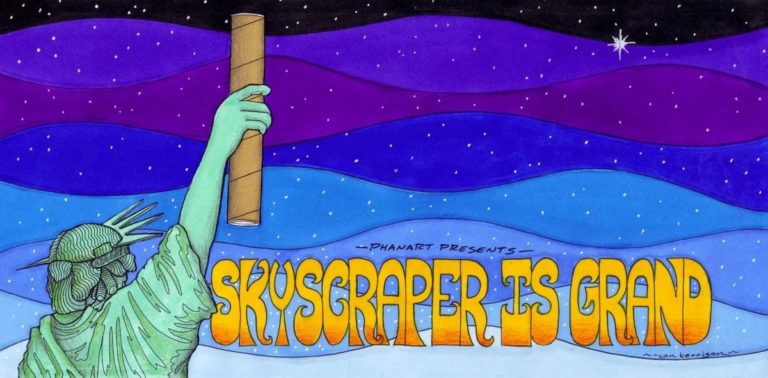
PhanArt will host an art show for the first time in New York City penned “Skyscraper is Grand” on Saturday, January 2, 2016 from 12-7 p.m. at Hotel Penn, directly across the street from Madison Square Garden.
Produced by Pete Mason, founder of PhanArt, owner and Publisher of NYS Music and author of PhanArt: TheArtoftheFansofPhish, PhanArt exhibitions have been held in Atlantic City, Chicago, Las Vegas, Miami and Philadelphia since 2013 and represent a continued effort to promote and exhibit original and unique concert art, posters, pins, apparel, stickers and much more from a wide variety of artists.
The eclectic artists featured at this event show the broad scope of Phish related art and capture the inspiration of the band in their art. Phish’s creative fan base makes amazing art inspired by the band, their music and the locales they play. This event also gives fans the opportunity to meet a generation of artists they might otherwise know casually, form a bond with and develop a greater appreciation for the broader art scene in the Phish community.
In keeping with the great tradition and success of past art shows, “Skyscraper is Grand” will offer freeentry to all patrons and tubes available for purchase. Special edition works only available at the show can be viewed on PhanArt.net and acquired exclusively at the PhanArt show. The initial artist lineup is expected to be announced in early December.
Though she plays their music, it was not your typical Phish crowd Wednesday night at the Massry Center for an intimate performance by Holly Bowling. While the theater was dotted with flatbrims, the crowd looked to be more NPR listener than lot vagabond. The majority of the crowd was nicely dressed and seemed to be over 40.
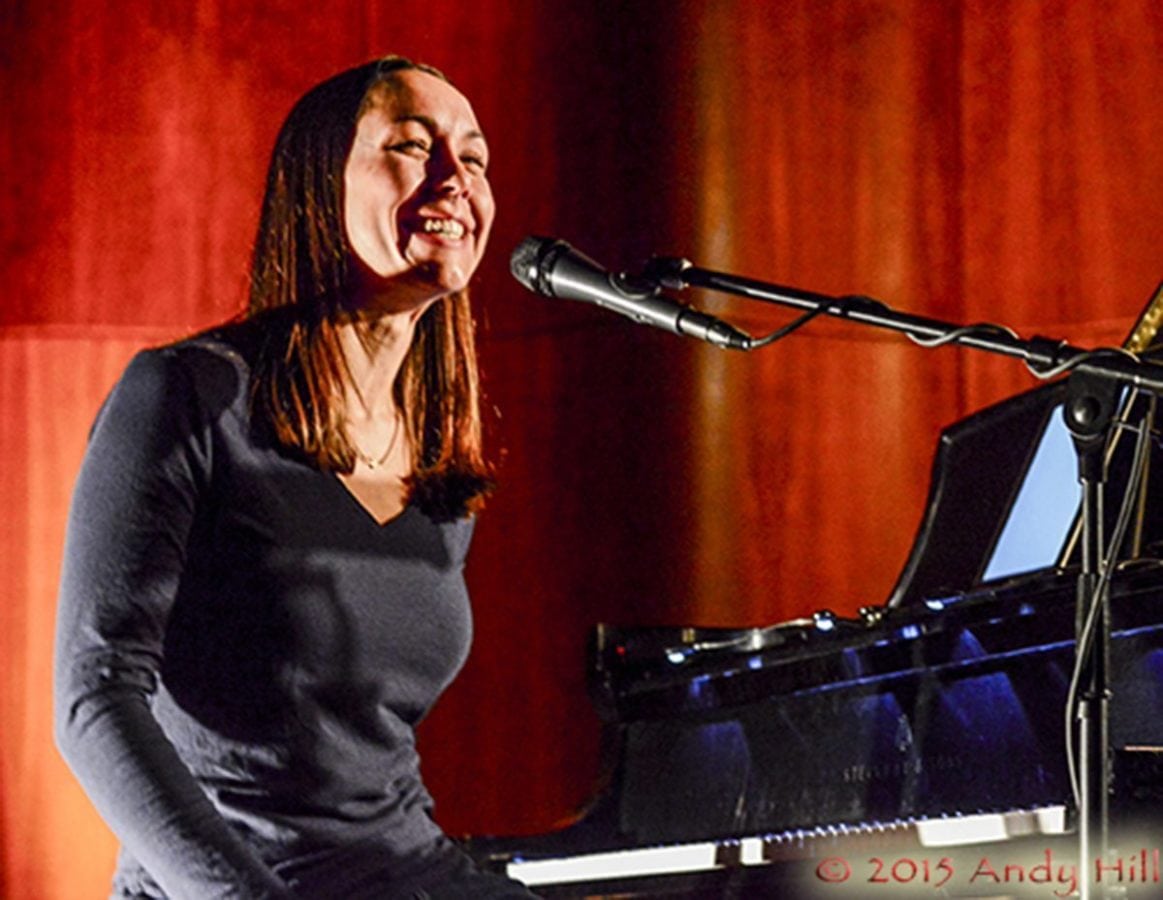
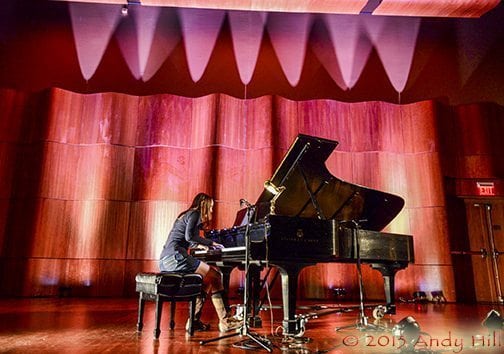
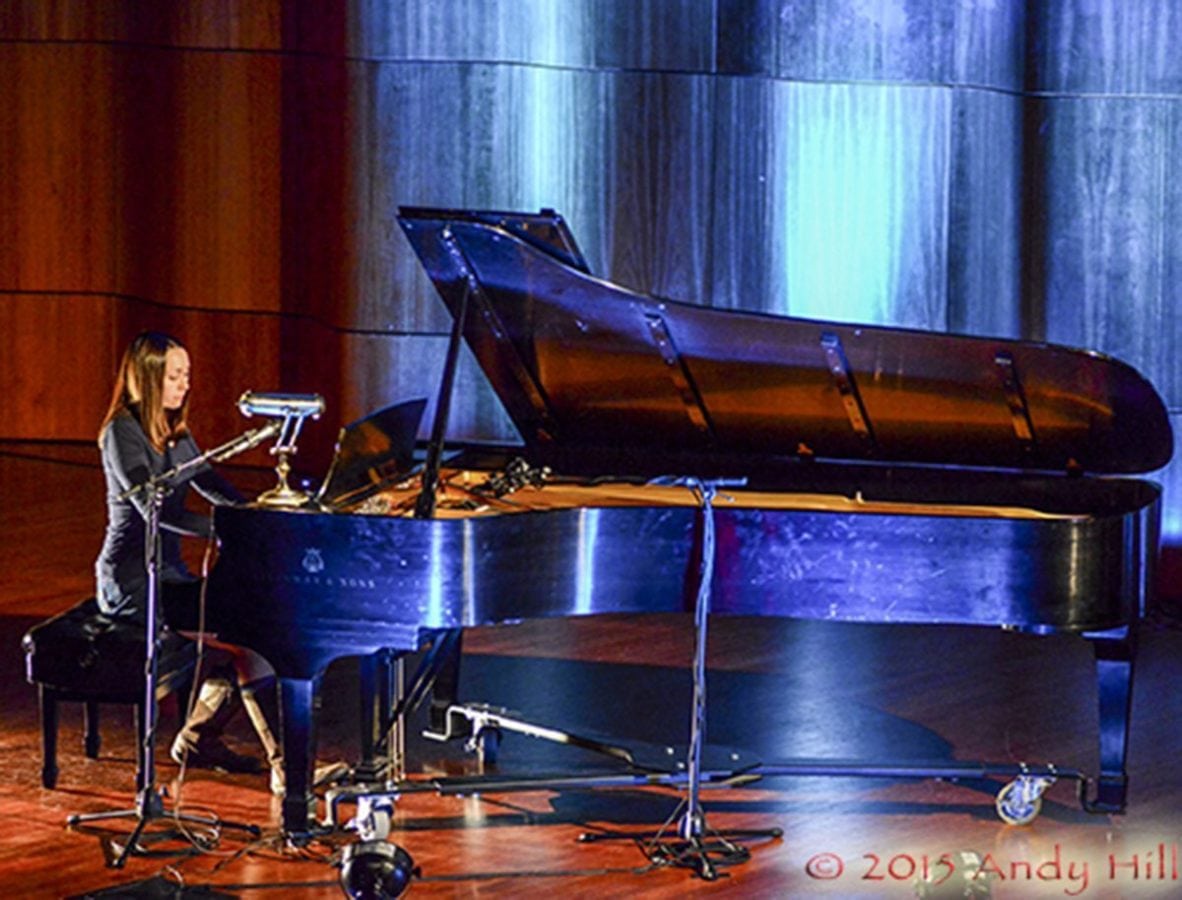
The Massry Center has a true orchestral feel complete with ushers clad in black directing people to their seats and 10 minute intermissions between sets. The stage was sparsely furnished with only a Steinway & Sons piano, an old fashioned reading lamp, microphone, and iPad on which Bowling used to read her music.
When Bowling came out to applause, I wasn’t sure what to expect. The classically trained pianist transcribes the music of Phish and arranges it for solo piano and the end result is quite moving. The first set opened with “The Curtain With,” a slow and pretty introduction to this new take on Phish’s music.
The highlights included “Silent in the Morning,” ethereal sounds with teal lights glowing behind Bowling, making it seem as though she were playing underwater.
The first set also saw the first jam transcription arranged for piano. A local pick, she chose “Twist” from October 23, 2013 at the Glens Falls Civic Center. This song displayed Bowling’s range from her slower tempo into a funky jam that had the audience shouting out “Woo!” amidst giggles of laughter.
At some points during the performance Bowling would roll her body back and forth like she was in a trance. Between songs Bowling would speak, injecting her bubbly personality into her act. She dedicated several songs to her friends, one for a friends’ anniversary (“Waste”) another for a friend who had just lost someone (“Dirt”).
For the second set Bowling played a stripped down version of “Fire on the Mountain” by the Grateful Dead, amid a inside of a sequence that featured “It’s Ice” and “Steam”, which really highlighted the compositional nature of the song. In true Phish fashion she closed the second set with “Squirming Coil” which was truly impressive.
Though it wasn’t the typical Phish crowd at Bowling’s performance, it was certainly the length of a typical jam band show. Her performance consisted of three sets and an encore, the last set being a transcription of the infamous “Tahoe Tweezer.”
Bowling seamlessly blends the worlds of improvisation and careful composition together into something truly thought provoking. Whether or not you call yourself a Phish fan, Bowling’s unique approach to this type of music is a sight to be seen.
Set 1: The Curtain With, Talk, The Horse > Silent in the Morning, Glens Falls Twist, Tela, Wingsuit > Randall’s Chalkdust jam > Wingsuit, Waste* Set 2: Scents & Subtle Sounds, Cassidy** > Dirt > Cassidy*** > If I Could, The Inlaw Josie Wales, It’s Ice > Fire on the Mountain# > Steam > It’s Ice, Horn, Squirming Coil Set 3: Tahoe Tweezer Encore: Harry Hood****
# first time performed by Holly
* Dedicated to Bryon & Holly
** Dedicated to a friend who recently lost someone
*** w/ Dirt mashup ending
****w/ Lizards, Cassidy, Tweezer Reprise teases
Heading into 2015, Trey Anastasio had 32 years of accomplishments on his rock and roll resume. Fronting the most successful touring band of the last 20 years, Anastasio really had nothing to prove to fans and naysayers alike, yet Big Red barreled forth into possibly the most demanding year of his life.
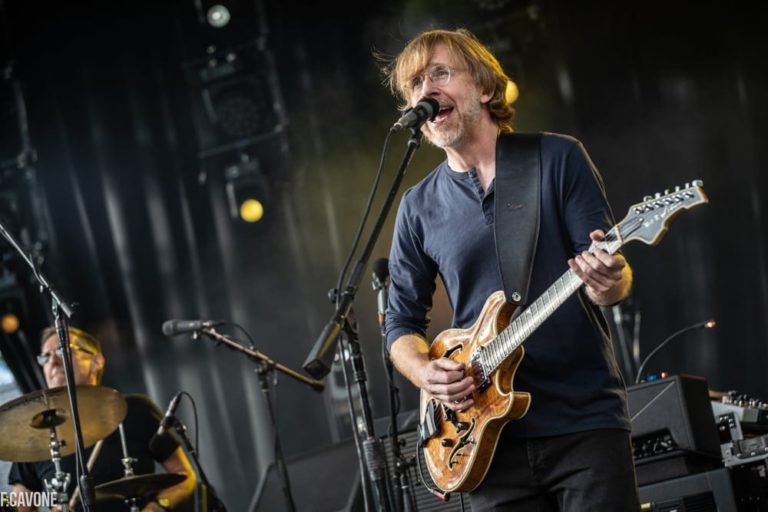
Fresh off a well-received New Year’s run in Miami with Phish, Anastasio didn’t take any time off, as a letter from Grateful Dead bassist Phil Lesh had requested the then-50-year-old step in to handle the role this scene was built upon: Playing lead guitar at a string of concerts celebrating the Dead’s 50th anniversary, essentially filling the shoes of a guy named Jerry Garcia.
The Grateful Dead formed a massive traveling family built around improvisational music and the most dedicated fans on earth from 1965 until the band’s final show at Soldier Field in Chicago on July 9, 1995. Garcia would pass away one month later, and the Dead would go on in various incarnations since.
While the Dead were ruling the hippie world, Phish was honing their craft, relentlessly playing the bar scene in Vermont, before spreading to a Northeast band in the late 1980s. By 1994, Phish had arrived and had a head of steam that just wouldn’t let up. On December 30, 1994, Phish headlined a venue that the Dead made into a second home: Madison Square Garden.
In the clip above, Anastasio commands the biggest stage in music with authority, head held high, strutting around and picking his Languedoc while brandishing a huge grin. After more than a decade of incessant honing of their craft, Phish — undoubtedly Anastasio’s band at the time — had arrived.
There is so much debate about which year of Phish is “best” among the fan base, and the correct answer is that there isn’t a wrong answer. Phish fans cannot be objective, since the band and its catalog are highly subjective. Experiencing Phish is a purely personal thing. That’s why there is endless internet discussion on everything the band has ever done.
I would argue that 1995 was the most transitional year in the band’s history, as it signaled a full shift from playing medium-sized theaters to headlining the biggest venues in the country on a consistent basis. Their sound, and notably Anastasio’s, shifted for the bigger rooms and sheds.
Then, in the summer, Garcia passed away, leaving an asteroid-sized hole in rock music. The Deadheads that planned their lives around when their band was touring suddenly had nothing to look forward to. Every music critic, journalist, writer and pundit have argued every angle since, some saying Phish only got so big because the Dead went away, others saying their fresh sound gave birth to a new generation of fans.
Whatever the case, the two bands were completely different in every way aside from the ethos of what they did: The live show is why both groups have their respective followings. Outside of that, Phish and the Dead couldn’t be more different, but I will let you all continue that discussion.
For the remainder of the 1990s, Phish was the biggest band in America that nobody knew. Anastasio was a guitar god, with his ability to play complex songs without error or hesitation. In 1999, Lesh returned to the stage after some health issues in San Francisco with a band that included Anastasio on guitar and Page McConnell on keyboards. The three shows performed are some of the most highly regarded post-Jerry Dead music, and for good reason. Everyone was in fine form and the music felt inspired and not stale.
Skip to 2000, and the rigors of the road had burned the band out. Anastasio has admitted that the backstage party that was once an intimate setting for Phish in the early years had become an out-of-control animal. Often erratic playing by the band, which in a band like Phish is highly amplified when its leader flubs a composed section of a song he has nailed hundreds of times, led fans to speculate on the guitarist’s health and state of mind.
The final two shows before the break were at Shoreline Amphitheater in California. The first night featured a sit-in by Bob Weir for takes on “Chalk Dust Torture,” “West L.A. Fadeaway” and “El Paso.”
The Dark Days?
Following a 15-month break, Phish returned for a triumphant 2003. The next year, however, spelled doom for the band, as Anastasio announced in a letter on Phish.com that the band “had run its course” and they were breaking up after the Coventry Festival in August, 2004.
Anastasio looked and sounded like a man who needed a break. The guy who used to practice hours every day appeared to be uninspired, aside from a few magical moments, in 2004.
It was an up-and-down 2006 for Anastasio, who formed a group with Mike Gordon, Marco Benevento and Joe Russo, and co-headlined a summer tour with Phil and Friends. Many of those shows featured Anastasio sitting in with Lesh, and speaking as someone who saw the majority of them, I can say it was magical. My favorite guitarist playing my favorite songs was the highlight of my music-going life.
Later that year, in December, Anastasio was pulled over in Whitehall, N.Y., and arrested for possessing prescription drugs including painkillers. Fans’ worst fears were validated: Anastasio wasn’t doing well.
I will call that the turning point, because since then, Anastasio hasn’t missed a beat. He successfully completed Drug Court and stayed out of the public eye for a while. Fans wondered if Anastasio would come back, and if so, how would he be? A healthy Anastasio, though, was all we really wanted.
Then, BAM. October 20, 2007 happened, at the Glens Falls Civic Center in Glens Falls, N.Y., just a few minutes from where his arrest happened. Phil and Friends had a show that night. I just had a deep feeling that we would see Anastasio that night, in one way or another. All of my friends told me I was nuts, that he wasn’t playing with Lesh that night. I was convinced, and to this day, it is one of the only concerts I went in as early as I could.
As I ran down the steps of the bowl, I could see a familiar sight directly in front of me: Anastasio’s unmistakable Languedoc sitting on its stand in the middle of the stage. Throughout the night, Anastasio and Lesh were all smiles, tearing through favorites such as “Help on the Way>Slipknot!>Franklin’s Tower,” “Bertha” and a magnificent “Unbroken Chain.”
That was when I became convinced not only that Phish would one day return, but that Anastasio was a different person. He looked relaxed on stage, he had an enlightened look on his face and he was simply happy to be doing what he was born to do.
The Rebirth
In 2008, Phish announced they were playing three shows in Hampton, Va., in early March, 2009, nearly five years after Coventry. The subsequent seven years have been thoroughly documented and Phish has played better and better with each passing tour.
In 2013, the band broke their Halloween tradition by performing their new album in its entirety instead of choosing a classic record to cover. Last year, they took creativity to another level with Chilling, Thrilling Sounds of the Haunted House.
When it was announced early this year that Anastasio would be playing guitar with the Dead in Santa Clara and Chicago, I was among the absolutely elated. Others were skeptical, and a six-month internet board argument ensued between those who thought he was the right choice, and those who didn’t want him there.
Anastasio entered what he called Dead Camp, where he basically dropped everything he was working on and spent months learning the ways of the Grateful Dead (even though he had years of experience under his belt.) He told veteran journalist David Fricke, in an interview for Relix Magazine, that he basically set out to help the Dead, a band he envied so much growing up, be happy.
With all eyes on him heading into the Santa Clara shows, Anastasio hit a grand slam. His tone, which he spent so much time working on, was immaculate and Jerry-like, but you still couldn’t mistake it for anyone but Anastasio.
It didn’t take long at all until Deadheads were clamoring to the idea that Anastasio was, hands down, the only person to play Garcia’s parts for these shows.
The Chicago run was even more magical, as Anastasio stepped to the lead for a majority of the jams and was the driving force behind, and connective tissue of the band onstage. For me, Anastasio singing “Standing on the Moon” and “Althea” were the highlights, along with his reinvigorated guitar playing.
“I just loved it, absolutely loved it. All this planning and rehearsing, back and forth, tempos and all this shit, arguing about where you’re going to set up, and we walked onstage, and then it was the Grateful Dead. It was amazing. I was freaking out. I loved it.”
The five GD50 shows did something special to Anastasio. On July 21, in Bend, Ore., Phish opened their tour and Anastasio immediately turned heads. His guitar playing had something that seemed to be lacking in previous years. He wasn’t taking a backseat the majority of the time; he was back to leading his band, with those fun microbursts of notes and flurries of scales that had propelled him to Guitar God many years prior.
“When Trey is leading on guitar, that is when we are at our best.”
He even wrote a handful of new songs that Phish would go on to perform (Mike Gordon gave NYSMusic a little preview back in July), songs like “Blaze On,” “No Men in No Man’s Land,” “Shade” and “Mercury,” among others, that have already become fan favorites and jam vehicles.
This 2015 Summer Tour was the best Phish has sounded in a very long time and you can thank Anastasio for that. At the Mann Center for the Performing Arts on August 12, Phish played one of its best sets in years, with highly notable versions of “NMINML,” “Twist” and “Bathtub Gin,” as well as a personal favorite bustout of “Scents and Subtle Sounds.”
In the Relix article, Anastasio even references that show as being a highlight of the summer, saying how free-flowing and easy-going of a set it was.
Then, Magnaball. Phish’s 10th festival is already highly regarded among fans. Tickets sold out in advance. There was a serious buzz in the community. The band, and Anastasio, delivered one of the most memorable weekends of my life. For an idea of just how great Anastasio has been, take a listen to the “Run Like an Antelope” from Magnaball. It’s a throwback to the mid-90s, and Anastasio rips his guitar to shreds while building to a manic peak that I cannot get enough of.
Vintage Trey, if you will.
That’s a pretty successful year, right? Anastasio isn’t done, as he’s about to embark on a tour in support of his new album, Paper Wheels, with the Trey Anastasio Band this weekend.
This year isn’t over, but it’s already Anastasio’s most successful. Thirty-two years ago, he and some guys in a band called Phish were playing Grateful Dead covers in the basement of some building on the University of Vermont campus at an ROTC dance.
In 2015, Anastasio was the leader of the Grateful Dead for five nights in front of millions of fans.
In 2015, Anastasio led Phish on one of their best tours in years.
PeteMason: As you start your east coast fall tour, you are playing a variety of venues – larger rooms such as Higher Ground in Burlington, 8×10 Club in Baltimore, Gypsy Sally’s in Washington D.C., and more intimate rooms like The Lily Pad in Cambridge, MA, and Underground Arts in Philadelphia. How do the listening experiences for the audiences compare in different environments?
HollyBowling: The rooms I’m playing this tour definitely have a lot of variety! It’s less about size though and more about the feel of the venue. I’m playing some spots where it’s unusual to see a solo piano act – places where you’re more likely to see a full band and spend most of the night dancing – and then I’m playing some spots that are more of a mellow environment, places where you might usually see jazz or classical music.
The contrast between them is something I’m really looking forward to. They both have their strengths. Sometimes I think the setting that classical or jazz music is played in can be hard for people to get into. It can be a little restrictive, a little stifling – you can’t move around during the show and there’s a pretty strict concert etiquette. The freedom in clubs that usually play host to rock music can be really refreshing – for the audience but also for the performer. I think it encourages you to play a little looser, to take chances.
But at the same time, there’s something really special about a room full of people sitting down and intently focused on the music together like what you get in a concert hall or a quiet jazz club. No distractions, no socializing, just a really intense inner musical experience. It can be really powerful even though people don’t really express the emotions the music inspires in them as outwardly in a place like a symphony hall the way they would at a club or an arena show.
You can really get lost in the music in a different way and just get swept away. Especially with as many distractions as there are at music events these days, and in life in general, it’s pretty great to find a space to just completely immerse yourself in experiencing music for a few hours and give yourself over to that entirely. So I’m excited to be playing both types of venues on this tour. I think the contrast will be really interesting and each setting will take the music in a different direction.
Pete Mason: Are you viewing these venues as offering a balance between rock club and jazz club?
Holly Bowling: There are definitely some venues out there that have one foot in each world and I’m always on the hunt for those. They’re few and far between but really lend themselves well to the music I’m playing. I mean it’s not really classical and its not really rock, so where do you put it? I think it can be enjoyed in a lot of different settings – and actually, pushing the boundaries and expectations of what you can do in each venue setting is something that’s really interesting to me – but the rooms that are a crossover between the two are really a great fit.
I love to see music in places where you can be comfortable and have some freedom but the focus is also 100% on the music and there aren’t a lot of distractions. It can be a delicate balance to strike but those rooms and crowds are the best. It’s where I most like to see music when I’m on the audience side, and where I like to play best too.
Pete Mason: How have you found yourself pushing the boundaries so far in your performances this year, and in what way, if at all, do you tailor your performance to setting?
Holly Bowling: This year has been interesting because it’s been kind of a whirlwind of experiences. My first album just came out a few months ago and I spent a lot of time leading up to recording it working out arrangements very carefully and doing a lot of meticulous detail work. Then I started playing shows in support of the album and it took a little while for the arrangements to settle and have a little more room to breathe. Whether it’s pushing boundaries or just allowing things to progress and evolve naturally at this point, I’ve enjoyed letting things open up more as the year has gone on. Allowing myself the freedom for improvisation during shows and even letting the arrangements stray further from where the jams usually go and letting them go off the rails a little… that’s been really fun.
Also, I’ve been playing around with segues in the setlists and a different incarnation of the “jam transcriptions” like what I did with the Tahoe Tweezer. I saw a bunch of Phish shows this summer and it was such a spectacular tour musically that, by the end, there were more memorable jams that I really wanted to study than I could possibly ever tackle if I was transcribing and arranging them all from start to finish. So I started playing around with the idea of just pulling out a peak moment from the jam – the theme that you get stuck in your head for a week and can’t stop listening to – and transcribing and arranging just that part. And then I’ve been weaving those into the setlists. It’s sort of an homage and a thanks for the music we got to enjoy this summer, and also a bit of a retrospective of some of the transcendent musical moments from this tour.
PeteMason: Can you give a few examples of the ‘peak moment from the jam’ that you have transcribed?
Holly Bowling: Sure, here’s a story of how you know what the peak moment of a jam is. I came back from Phish’s summer tour and woke up in the middle of the night with a fragment of music stuck in my head. Clearly Phish, and clearly from a recent show, but I couldn’t place it. Couldn’t sleep. I sang the melody to my (attempting to sleep) husband and he knew it instantly and finished the phrase. The next morning (with the melody still stuck in both of our heads) we figured it out – 17:00 – 18:00 in the Mann Twist. I’ve listened to that jam a lot since then. Peak moment for sure.
Another one is the G major section of the “Down With Disease” from Colorado this year, the build from the 12 minute mark on. I mean the whole jam is great, but from 12 minutes on it just blasts off into bliss.
It’s the parts of the jams that you can sing or play a little fragment of and a good portion of Phish fans will recognize it even though it sounds nothing like the original song. I mean, it’s pretty nuts really… I really don’t know of another band where you could play 30 seconds worth of one particular live version of one of their songs, on another instrument, in a different key, several years after the fact, and people in the crowd would instantly recognize the theme. Every time I’ve teased a theme from one of Phish’s jams, people come up to me and know what it was. It’s just nuts. I think it’s the coolest thing what Phish inspires.
Pete Mason: Regarding your recent setlists – you are playing more Phish songs and transcriptions, have been interspersing a few teases and even a few Grateful Dead songs in the mix. Is this a sign of increased comfort as a performer?
Holly Bowling: Definitely. A lot of the material I was playing earlier this year was very new at the time. It’s hard to be playful and creative with something you’ve just gotten a handle on. Now that the songs I arranged for the album are old friends, I can explore new things to do with them. It gives you a more solid footing to launch into whatever else you want to do.
The Grateful Dead songs made their way into my shows by accident. I was planning on doing one show, the last show of my fall tour (in Pittsburgh) that would be Phish and Dead songs interwoven with each other, just as kind of a one-off thing. But when I started working on learning the songs, I fell in love with them and kept finding myself ending up there no matter what I was playing. And there was no reason to fight it. They’re beautiful compositions and very different from some of the more technically intense and high energy Phish songs. I like the contrast and the ebb and flow.
PeteMason: If the songs on the album are ‘old friends’, what ‘new friends’ can fans expect to hear this fall, on Jamcruise and into 2016? Surely you’ve had your share of suggestions from fans
Holly Bowling: I like surprises so I won’t reveal much but I have been working on some new Phish arrangements that have been both challenging and rewarding. I just finished learning “It’s Ice” and it was the toughest Phish composition I’ve learned for sure. There’s a lot of different rhythmic patterns and cycles superimposed on each other which is tricky enough when you’re locking several instruments into sync together, but having them split between two hands was really tough at first! I actually ended up color-coding the score I wrote to help keep the patterns straight. My score for the middle section (the part that’s sort of percussive and dissonant and full of repeating rhythms) is full of purple notes, blue notes, green notes… that part took forever to work out but was incredibly interesting to study and analyze. And there’s definitely some other new arrangements I’ve been working on. Albany will have some debuts for sure!
I am especially excited about playing The Massry Center because it’s so different from the venues where most of us often see music. The acoustics are incredible and they have a Steinway concert grand that is going to be just amazing to play. I think they may have to pull me away from it at the end of the night! I’m actually going to play three sets at the Albany show because I’m so excited to play this music on a piano that really expresses the full range of what the instrument can do. The Tahoe Tweezer jam transcription is really meant for a piano like this – where you can unleash a dark tone from the instrument in the heavy sections but you can also find a sweet, delicate sound and create an ethereal resonance in the middle part of the jam. I can’t wait.
Recently at Club Metronome in Burlington, musical worlds collided when Phish drummer Jon Fishman collaborated with members of Cattle Decapitation, King Parrot, Black Crown Initiate and Dark Sermon, merging for a performance under the name Garbage Dick.
A photo posted by Derek Engemann (@derekfuneral) on
While we await video of this odd performance, go see Cattle Decapitation on tour with Cannibal Corpse as they play several shows across New York state this month including:
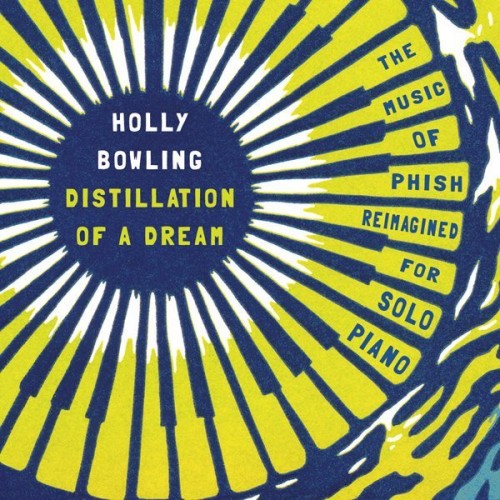
Listening to tribute albums of your favorite band can be hit or miss, but it’s almost always an interesting experience. Holly Bowling’sDistillation of a Dream is no different. She took an assortment of Phish songs, listened to them and transcribed them by ear for solo piano. This album is different from past Phish tribute albums, such as the bluegrass or string quartet tributes, in that it consists of a single musician on a single instrument. The sound and feel are very different.
The aural skill required to take on the task of transcribing not only studio versions of songs featured on the first disc of Distillation of a Dream, but also the complex jams in the three live songs Bowling recorded for the second disc, is commendable. She does justice to the variety of songs she chose for the album. While many fans might already be familiar with her rendition of the “Tahoe Tweezer,” it’s worth giving a listen to the other songs. The album starts off a bit rough with “My Friend, My Friend,” but improves immediately with “The Horse > Silent in the Morning.” Some of the songs seemed to be odd choices for solo piano, such as “Wingsuit” or “A Song I Heard the Ocean Sing”. But those turned out to be some of best songs on the album. There are moments when some of the songs seem unrehearsed. There are moments with small imperfections. Some of these imperfections, like pauses that don’t fit with the song, detract from the music, while others, like slight variations in the tempo, bring that organic feeling of Phish.
Overall, Distillation of a Dream is a solid, creative tribute to Phish. The album reflects the difference between studio Phish as heard on disc one, and live Phish as heard on disc two. However, it is almost as though the first disc feels like a warmup to the more complex second disc. Bowling’s musicality, experience and talent are in full display on this album. The creativity and effort put into the re-creation of these Phish songs and jams make for a fun and interesting listen.
In the middle of their 47-show U.S. tour in 1994, Phish stopped at the University of Missouri on a Tuesday and blew the roof off the place, and phans will now be able to relive the classic show in high quality with a new Live Phish release of 11/22/94
The “Buried Alive” opener comes in flying with a brisk transition to a clean and excitable “Poor Heart,” followed by a beautiful, vocally top-notch “Horn” > “Foam.” In addition to that hungry-energy unique to ’90s Phish, this show is extra special with its heavy doses of bluegrass thanks to the band’s five-day intensive training sessions not long before this show with Aquarium Rescue Unit’s Jeff Mosier.
The band’s infatuation with bluegrass at the time is clear as day in the second set; a raging “Big Black Fury Creature From Mars” ends acoustic and leads into a “I’m Blue, I’m Lonesome” > “Little Tiny Butter Biscuits” > “My Long Journey Home” before resolving into an exceptionally patient “Bowie.” And the “Lizards” encore? Sprinkles on the icing on the cake.
The show was recorded by Paul Languedoc to digital multitrack and was mixed/mastered by Jon Altschiller. The sound quality is crystal, and even the crowd noise is a nostalgia overload, putting the listener in an intimate small auditorium setting with the band that is now gearing up for their return to Madison Square Garden for a four-night New Year’s run.
The new release is available through LivePhish and the LivePhish App. Tickets for this year’s MSG shows are available today at noon EST through Ticketmaster.
Magnaball, Phish’s tenth festival, which took place August 21-23, 2015 at Watkins Glen International Speedway. NYS Music photographer Thomas Sgroi (aka Big Tom) had his camera handy and took these shots from that epic weekend.
It’s been two weeks since Phish’s Magnaball festival and the buzz from the weekend is still in the air. With the summer wrapping up this weekend at Dick’s Sporting Goods Park in Commerce City, CO, we asked NYS Music staffers who attended Phish’s 10th festival what their takeaways were, following time to rest and reflect on the weekend. (Ed. note – this roundtable was conducted prior to Phish’s announcement of shows in Mexico in January)
How does Magnaball compare to past Phish festivals?
Jim Rizzo: Having only attended Festival 8 and Super Ball IX, I’d say that Magnaball was tops. There was a lot going on throughout the weekend that kept everyone occupied and not looking to simply sit around at their campsites. A lot of planning went into the festival, and it showed. I enjoyed myself more overall at this festival than either of the two previous festivals.
Jess Collier: This was my sixth Phish fest, and I’m not gonna lie, it was easier when I was 17 years old. Overall, though, I felt it was pretty similar to the other Phish fests I’ve been to.
Tim O’Shea: For some reason, Magnaball felt smaller and more intimate than Phish festivals of the past. Not sure if this was attributed to residing in RV Camping for the first time or not, but the fest as a whole felt almost like oversized regular Phish shows based on this and the fairly standard song selections for the “announced” shows.
Darren Kemp: Having experienced two previous phishtivals – Camp Oswego and Superball – it seems apparent that every one is an obvious upgrade from the previous. Camp Phish learns from their mistakes and rectifies them with ease. With ample and usually “clean enough” portapotties, unbelievable food and beverage choices at festival reasonable pricing, fast moving shower lines, roving ice carts, professional and not overbearing security, and sound and lights that are simply incomparable to peers, Magnaball proved itself to be one of the best festival experiences of a lifetime.
Neil Benjamin, Jr.: MagnaBall was special in a different way from Superball and Coventry. It felt more together, like every single person in attendance was lost in a world that only the people around them would understand. It was all smiles, and my interaction with fans was the best I’ve experienced. And musically, it was spot-on with exploration all over. I still enjoyed Superball as a whole more, but that had special meaning attached.
How does Magnaball measure up against other music festivals?
Tom Sgroi: I have been to a number of different festivals and as far as setup goes I want to say Magnaball is tops. Watkins Glen is such a perfect setup and the venue worked great. I loved how Phish organized everything and with only them playing made it feel not so rushed like other festivals.
Darren Kemp: No comparison. Instead of running from stage to stage and making decisions about what bands to see, this “one band” festival allowed the days to be about community, art, conversation, caring, and anticipation.
Neil Benjamin, Jr.: You can’t compare a festival where one band draws 40,000 people to ones where 100 draws the same. Phish festivals are unlike anything else in the music world.
Jess Collier: My boyfriend insists that Phish festivals are ridiculous because there’s only one band playing. “What’s the point of throwing a music festival if it’s just one band?” is his reasoning. I never really thought of that before he first mentioned it to me, since my first three or so music festivals were all Phish fests, and I never felt the need for more bands. But once he mentioned it, I started to think that maybe it wouldn’t be the worst thing ever to add some other bands.
Steve Malinski: It’s tough to compare. Magnaball is in its own league of festival with the pace and atmosphere. While it’s not musically packed from 10am until 2am with multiple stages of music, the time to relax and make new friends put it a notch above other festivals – quality vs. quantity, as they say.
What was the Number 1 thing you loved about Magnaball?
Eli Stein: Enjoying a great old band with great old friends.
Neil Benjamin, Jr.: The relaxed atmosphere. I wasn’t bombarded with people selling this or that, and didn’t have to deal with many waste cases. That, and I got to attend it with someone super close to me and also my best friend from childhood. Made it special.
Steve Malinski: The community. I’ve only ever experienced Phish in single-day stints so the music was the only side of Phish I saw. Getting a full 3-day immersion in it, off the grid, with other phans was really special.
Jess Collier: The music of course!
Jim Rizzo: The energy was incredible. I realize it’s not something concrete, but there was a certain energy throughout the festival that existed among the attendees, the band, and each and every person working the festival from the vendors to the security folks. Everyone seemed to share the same energy and excitement that this was a very special event. And that made it even more special.
Tom Sgroi: I think I enjoyed that it was just one band, it allowed for you not to miss anything and not feel rushed.
Tim O’Shea: The number one thing was far and away the “unannounced” but universally known secret set. Take the randomness of Superball’s Storage Jam, add tremendous visual displays and more freewheeling and psychedelic jamming and you’ve got the Drive In Set.
Darren Kemp: Phish
What could have been improved with Magnaball? For future Phish festivals?
Tom Sgroi: I really liked that their was only Phish but I wouldn’t have minded a smaller band at late night.
Steve Malinski: On-site communication of weekend activities and the layout of the grounds. While only so many paper maps can be passed around, it would have been nice to see a board or something along that line at the entrances with a large map and list of activities and events. Since it’s 2015, perhaps even a smartphone app like some other festivals make for themselves would be very beneficial. The field had a few sweet spots for stage viewing but the slant of the field was slightly unfriendly for seeing the stage in some areas. Projection screens on the sides of the stage would have prevented a few achy necks. Warm showers. Though, ice cold showers are a good wakeup call.
Jess Collier: If you’re going to make people camp that far away, maybe give them mini-sites or storage lockers or something closer to the concert grounds so they don’t have to walk the hour round trip to pick up a hoodie during setbreak. Also, screens showing what’s going on onstage would have been great for fans who didn’t want to muscle their way up through the crowd to get a good view.
Tim O’Shea: Portable bathrooms could have been managed a little better. Page side porto’s were extremely crowded and somewhat clusterfuck-ish. And the RV camping area didn’t seem to be equipped with enough either. Thank goodness for the small public restroom with flushable toilets that everyone knew about but still kept hush hush about.
Eli Stein: Directional signage and signage in general seemed to be an after thought. Other festivals I have been to are very easy to navigate and make ample use of clear signs. The festival signs at Magnaball mixed in with the general signs used at the racetrack. They needed to be more clearly from the festival and also needed to more clearly point the way. Big room for improvement here.
Jim Rizzo: The walks from the campsites to the festival grounds were very long. There were also walkways and exits that did not double as entrances, which made things confusing when people tried to visit friends in other campgrounds and make their way back to their own, having to cut through the festival grounds. So I guess improved directional signage would have been very helpful. They should keep this in mind for future festivals. Signage should be extended to the drive in to allow people to better find various campgrounds to at least try to stay in the same campground as friends they aren’t arriving with.
Neil Benjamin, Jr.: Security into the show area was annoying and slow. Let us bring beer into that area and I’m a happy man.
What can other music festivals learn from Phish festivals?
Jess Collier: I love the atmosphere at Phish festivals. They always have the groups of characters roaming about, and the collaborative art installations, both of which could be supercool at a lot of other festivals. I like the idea of themes for the festival as well.
Eli Stein: The quality of sound at Magnaball was as good as any concert I have attended. Outdoor concerts in general and festivals specifically often have horrible sound. Other festivals should make this more of a priority.
Steve Malinski: Other festivals can look up to the security and law enforcement at a Phish festival. They were remarkably friendly and cordial.
What was the best moment of the festival for you? Why?
Neil Benjamin, Jr.: “Blaze On,” hands down. Have had a really rough two years personally and that song picks me up and makes me smile. I got to stand arm-in-arm with my best friend since childhood, singing those lyrics of redemption. It made me tear up for the third time ever at a Phish show. If I could recreate that moment every day, I would. Bumping into old tour friends is up there, too. I just love seeing old faces from years past.
Jim Rizzo: The best moment for me was definitely the Drive In Set. It felt like it was… IT. All the energy from the previous incredible three sets of music came to a head with that set as the anticipation built while attendees arrived wondering what was going to happen.
Eli Stein: The jam in Tweezer mirrored the jam in Weekapaug from Colgate 4/23/93, which is one of my favorite Phish moments of all time, so that’s an easy pick for best moment for me personally.
Anastasia Marie Michalowskij: The thing I loved about Magnaball was how laid back it was. Comparatively it was a cool change of pace to go to a music featival and only see one musical act preform the whole weekend. I also loved all of the instillation art and the featured film. It was nice to see so many other creative artforms being celebrated.
Steve Malinski: Day 2, Set 2: I broke away from my friends for a set so I could do my best to get a good view and managed to get myself to a perfect spot next to the soundboard, no one in front of me. As the set went on a small cluster of set friends formed and we all stood our ground there for the set. It was really great to share the fun of the music with complete strangers.
Darren Kemp: Ending the weekend on the Ferris wheel with my beautiful new girlfriend as fireworks went off over our heads was one of the most memorable experiences of my life.
Jess Collier: “Simple” has been one of my favorite Phish songs since I started listening to them about 20 years ago, so I was thrilled when the first show on the first night opened with that wonderful tune. The beginning of the fest holds so much promise and so much anticipation, so there are few things that compare with the very first chords of the first show, anyway. And to make it my favorite song? Just magic.
 Produced by Pete Mason, founder of PhanArt, owner and Publisher of NYS Music and author of PhanArt: The Art of the Fans of Phish, PhanArt exhibitions have been held in Atlantic City, Chicago, Las Vegas, Miami and Philadelphia since 2013 and represent a continued effort to promote and exhibit original and unique concert art, posters, pins, apparel, stickers and much more from a wide variety of artists.
 The Massry Center has a true orchestral feel complete with ushers clad in black directing people to their seats and 10 minute intermissions between sets. The stage was sparsely furnished with only a Steinway & Sons piano, an old fashioned reading lamp, microphone, and iPad on which Bowling used to read her music.
 The first set also saw the first jam transcription arranged for piano. A local pick, she chose “Twist” from October 23, 2013 at the Glens Falls Civic Center. This song displayed Bowling’s range from her slower tempo into a funky jam that had the audience shouting out “Woo!” amidst giggles of laughter.
 At some points during the performance Bowling would roll her body back and forth like she was in a trance. Between songs Bowling would speak, injecting her bubbly personality into her act. She dedicated several songs to her friends, one for a friends’ anniversary (“Waste”) another for a friend who had just lost someone (“Dirt”).
 Though it wasn’t the typical Phish crowd at Bowling’s performance, it was certainly the length of a typical jam band show. Her performance consisted of three sets and an encore, the last set being a transcription of the infamous “Tahoe Tweezer.”
 Set 1: The Curtain With, Talk, The Horse > Silent in the Morning, Glens Falls Twist, Tela, Wingsuit > Randall’s Chalkdust jam > Wingsuit, Waste*
 Fresh off a well-received New Year’s run in Miami with Phish, Anastasio didn’t take any time off, as a letter from Grateful Dead bassist
 Holly Bowling: The rooms I’m playing this tour definitely have a lot of variety! It’s less about size though and more about the feel of the venue. I’m playing some spots where it’s unusual to see a solo piano act – places where you’re more likely to see a full band and spend most of the night dancing – and then I’m playing some spots that are more of a mellow environment, places where you might usually see jazz or classical music.
 Listening to tribute albums of your favorite band can be hit or miss, but it’s almost always an interesting experience.
 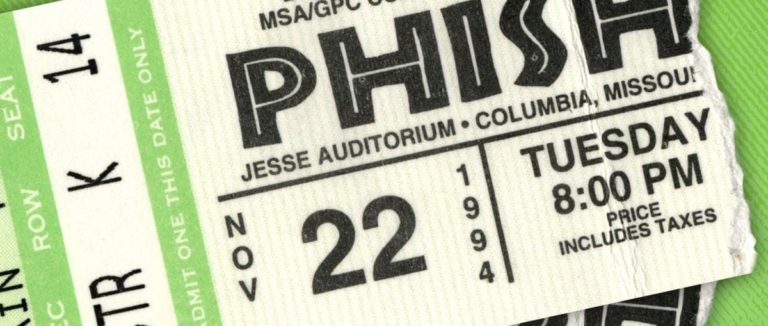 The “Buried Alive” opener comes in flying with a brisk transition to a clean and excitable “Poor Heart,” followed by a beautiful, vocally top-notch “Horn” > “Foam.” In addition to that hungry-energy unique to ’90s Phish, this show is extra special with its heavy doses of bluegrass thanks to the band’s five-day intensive training sessions not long before this show with Aquarium Rescue Unit’s Jeff Mosier.