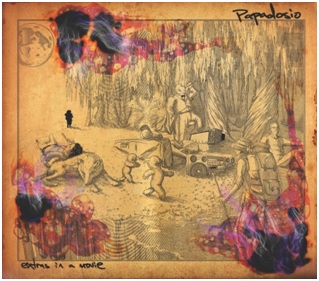
“When spring arrives epiphany/I’m still the last leaf on the tree.” As homage to the changing seasons, Papadosio has changed their musical hues from bright neon to softer, more organic colors in their fourth phenomenal studio album, Extras In A Movie.
Despite their label as a “genre-bending” group of musicians, Papadosio’s initial album releases of Observations and T.E.T.I.O.S. did in fact fall under one specific category- and that was electronic music. Yes, adoring fans may argue that they possess the improvisational capabilities inspired by jazz, progressive rock, and even jam rock to shape their melodic phrasing and musical transitions, and thus don’t belong under the same umbrella as electronic artists Skrillex or Bassnectar. However, I saw a dash of prog rock and a sprinkle of jazz for what they really were to Papadosio- and that is mere sensibility. I believed that to be labeled as a band that dismisses categorization, each style of music had to be crafted on an individual basis, incorporating the key elements and instrumentation of that style, yet somehow creating one inner voice over the entire work, as a subtle reminder of the single creator.
It wasn’t until the release of Extras In A Movie that I felt this proficiency in musical obscurity towards Papadosio, but I am confident that this album will break ground for many listeners, especially those who may not have approved of the band’s stylistic approach at first.
With an addition of some interesting sound effects, acoustic guitars, and tight harmonies, opening track “The Last Leaf,” and tracks “Epiphany,” and “Bypass Default” bring a strong introductory splash to the album, with an erratic yet satisfying mess of musical classes, ranging from styles of barbershop quartets to Pink Floyd to Awolnation. Anthony Thogmartin’s adaptation of vocal timbre throughout each track is complimentary and appropriate, while the surrounding band of Mike Healy, Rob McConnell, Billy Brouse, and Sam Brouse tend to throw in some instrumental surprises, most of the time in an effective and aesthetically pleasing manner.
The fact that the average track is about three minutes long throughout this sixteen track album speaks great masses as well- this album was created to defy the standards of recorded music, and the ideas were organized in this fashion to isolate and preserve the individual conception of each instance.
By writing, recording, mixing, and even video conceptualizing themselves, Papadosio has become the purport of the avant-garde composer, keeping the pillars of studio-induced creativity a strong part of their foundation. Their ability to showcase psycadelia-inspired electronic anthems like the album single “Glimpse of Light,” followed by the stripped down acoustic rawness in “Anima Mundi,” “Gazing the Great Oscillator,” and “Open” adapts Papadosio to any kind of setting, guiding listeners into an array of color, vibrancy, and authenticity. Along with developing their own voice, I also heard inspiration from other great genre gods, including Incubus, Genesis, and Daft Punk.
As part of their grand release, Papadosio has introduced a tour they’ve cleverly named Extras In A Movie Tour – Act 1. If that doesn’t leave you with a curiosity of what “Act 1” implies, I don’t know what will. I suppose the only way to find out is to hitch a ride on their tour, with stops at Irving Plaza, the Westcott Theatre, and Town Ballroom in November.
Key Tracks: The Last Leaf, Epiphany, Bypass Default, Anima Mundi
The String Cheese Incident is celebrating their 20th year together as a band. The Rhythm of the Road Vol 2; Live in Las Vegas is a new release for October. This album is successful because the music explores the uniqueness that life can bring. Each member of The String Cheese Incident comes from a different musical background. These happy differences have lead to the marriage of many genres and twangy Colorado mountain bluegrass. This album is a live performance that exemplifies how sounds of music can all come together to create whirlwind imagery.
Imagine a bunch of road lovin’ country boys who play music. Along their travels meet a man with a bright twinkle in his eye. Graciously he invites them to a paradise in the caribbean- the place he was born. Right as he waved his arm in the follow me motion the young men were swept over by a soft salty wind. When the dreamy haze settles, they realize they have been instantly transported. Their toes rest on the sand in ‘San Jose’, a land entrancingly unfamiliar.
The imaginary cinema of travels inspired by SCI’s music continue in the back seat of a car. One close and personal view of just the side of a man’s face and his delicate reflection on the window. Outside of the window is the sound of the winds and the brown, American earth, passing by at fifty-five miles per hour, backroad. Nowhere to be but somewhere; excitement in the unknown of what lays ahead. The performance on ‘Desert Passage Jam’ is filled with bright expression of musical beauty and occasional slow rhythmic bongos create feelings of undeniable appreciation for life that surrounds us.
Key Tracks:San Jose, Got What he Wanted, Desert Passage Jam, Cedar Laurel, Dirk
While Saturday October 10 was not their first rodeo, (or fashion show, as some say) the reggae revolutionaries of John Brown’s Body brought their musical stampede, including Grayak and Alex Gideon, to the Westcott Theater. Replete with trumpet, trombone and saxophone, their rich sound echoed through the theater as frontman Elliot Martin freely swayed with the music.
JBB’s horn section was the pinnacle of an evening of varied instrumentation from the three acts that graced the stage. One man band Alex Gideon opened first, relying solely on his guitar, looping vocals and sound effects he created live. The Syracuse native was surrounded by a sea of unmanned instruments assembled for the ensuing artists. The gadget dichotomy accentuated his minimalist setup, which could have lent him more credibility had his routine not been as lackluster.
Gideon played a few catchy covers including Joe Cocker’s “Feelin Alright” and Sublime’s ever-popular “Doin’ Time.” To these he injected his own beat boxing to the mix. And to his credit, Gideon generally selected songs well suited for his funky soul singing style, to which he could accentuate with just the right amount of gruffness when needed. Alas, despite a slew of somewhat catchy tunes, including his original track, “Cuse Town,” Gideon’s performance maintained a relatively stagnant energy, with beat boxing and looped sounds that carried minimal variation from one another.
Local folk/reggae group Grayak followed, performing to a room fairly well stocked with humans. Considering the band is fairly new to the scene, the crowd of roughly 200 was an encouraging sight. They played a mix of songs from their 2014 album Made of Light and their new album set to be released February 2016. After the first few songs, lead singer and guitarist Phil Grajko took a moment to graciously acknowledge, “I’ve been listening to JBB for years and it’s an honor to be playing with them.”
Grajko usually relies on sister Hannah Grajko for backing vocals, but amidst her absence, Jessica Brown of Root SHOCK, a reggae band which Phil Grajko is also a part of, filled the backup vocalist position. Having been performing together in Root SHOCK for several years, Grajko and Brown’s seasoned harmonizing capabilities definitely did justice to the Grayak tunes. Brendan Gosson switching between fiddle and mandolin, Blake Propst on upright bass and Tyler Dattmore on drums, completed the quintet.
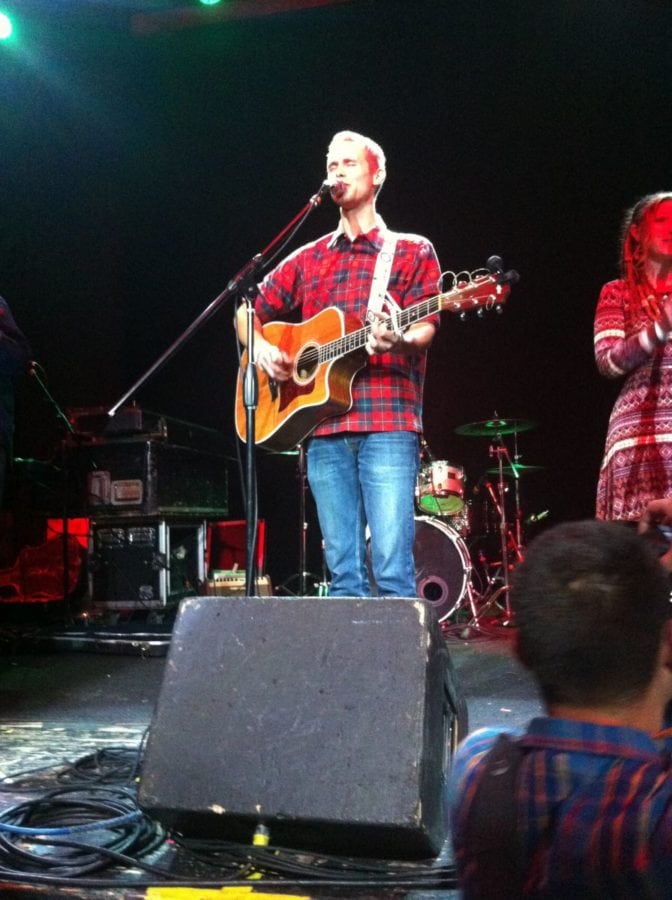
Gosson frequently switched between his two stringed sweethearts, the mandolin providing much more of a staccato sound. During “Maya” a track from Made of Light, Grajko’s guitar work midway through the song had an almost Spanish-style appeal to it. The crowd, which wasn’t too shy to dance, really got moving for “Lovely Girl,” an uptempo number about a girl worth spending time with. Gosson brandished his fiddle once again for “Made of Light,” their title track and last song of the evening.
John Brown’s Body took over, with the horns providing a dramatic opening for “Step Inside,” the first song off their 2013 album Kings and Queens. It is a fitting song to open a set, as the lyrics urge, “Come one and all got to make the dancehall tight,” seeking to usher in participants to partake in the music and merriment. JBB transitioned to some heavier material, playing songs with themes more related to their namesake John Brown, a nineteenth century militaristic abolitionist who saw armed rebellion as the best means to ending slavery. While respecting Brown’s valiant efforts, their performance of “Empty Hands” provided a powerful peace offering to listeners, questioning the need for war, exclaiming “So look into the palm of my hand, no weapons/ No frustration or need for confrontation.”
“Plantation” followed, though it actually comes directly before “Empty Hands” on Kings and Queens. It recalls the trials of working on a plantation and living a life in servitude. The last two lines, “With a guitar we’ve a song warning you/ Give them all a way home.” It acts as a call for freedom, and perhaps the guitar serves as a nonviolent alternative to a weapon as a means of provoking change. Surging forward with messages of inspiration, Tommy Benedetti (drums), Dan Africano (bass), Jay Spaker (guitar), Jon “JP” Petronzio (keys), Scott Flynn/Alex Asher (trombone), Drew Sayers (saxophone), and Sam Dechenne (trumpet) rounded out the battalion. It was a battle well fought by all on stage that evening.
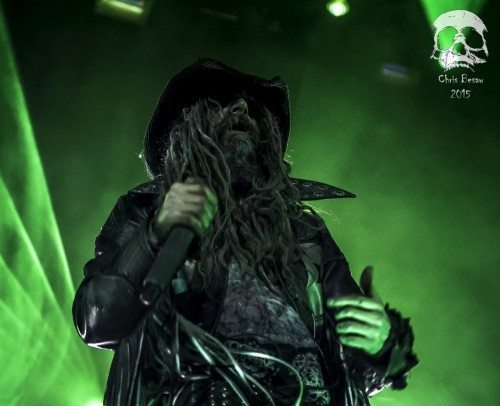
The darkness ascends quietly like a phantom upon the southern NY town of Binghamton, the dead leaves are falling, and there is a slight spine tingling chill in the air. It’s October! Is there a better way to usher in in the Halloween season than with the man who makes all your heavy metal horror dreams come true? Yes folks, that’s right Rob Zombie’s nightmarish heavy metal and mayhem show made a stop at the Floyd L. Maines Veterans Memorial Arena (formerly Broome County Arena) last week.
Fans of all ages were lined up at the venue getting into the spirit of the season. Some were dressed as ghouls and other grotesque creatures; there was even a very impressive Captain Spaulding walking amongst the concert goers! If you’re a fan of Rob Zombie, I hope you know who Captain Spaulding is.
The show opened with Rob Zombie’s drummer DJ Ginger Fish donned in a creepy skull mask showing off his DJ skills. DJ Ginger Fish spun some high energy mixes that included Rammstein, Pantera and even a mix of 50s Doo Wop. Even though he was struggling to keep his mask on the entire time, he still spun a very intense set that the crowd was into.
The lights go out, the smoke begins to roll out onto the stage that is adorned with classic Universal horror movie monster backdrops; 1000s of fans are chanting ZOMBIE! One by one the band quietly creeps onto the stage; John 5 looks terrifying in an LED lit gas mask that I can best describe as a robotic human fly; bassist Piggy D is sporting his Dracula look; Ginger Fish looks ready to dominate the drums; Rob Zombie slinks to center stage, his face hidden beneath a pile of hat and hair. The crowd erupts in a massive mosh pit with bodies flying in the air as Zombie and crew tore into their hit “More Human Than Human.”
Without hesitating they ripped right into “Superbeast” and “Never Gonna Stop (The Red, Red Kroovy).” The band delivered a super high energy set and even played a few covers including “Am I Evil” by Diamondhead and in the words of Rob Zombie, “Since we’re in NY, f@ck it let’s do it,” the band caught concert goers by surprise by unleashing a killer version of the Ramones’ anthem “Blitzkrieg Bop.”
The band took their bows, said thanks and left fans crazed and excited from their explosive performance! Overall, Rob Zombie and crew never disappoints!
Also prior to the show I had the honor and privilege to sit down and talk with guitarist extraordinaire John 5. John 5 was very welcoming, funny and sincere. We chatted about what inspires him as a musician, touring and his favorite horror movies. Check out the interview and enjoy!
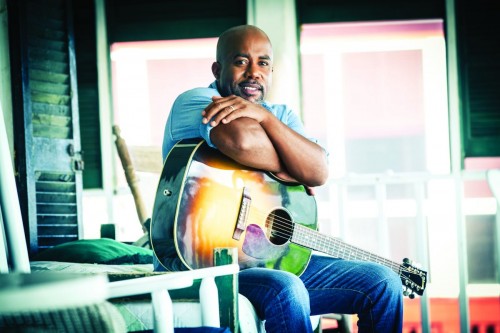
Sometimes a conversation enlightens you and broadens your ability to appreciate things even more so than you already do. This was the case after speaking with Darius Rucker. Known to most as the lead singer to the Grammy Award winning group Hootie and The Blowfish, Darius Rucker had already made his mark on music lovers nationally in the genre of rock/pop.
Why in the world would an artist of his caliber decide to switch genres and “go country?” How would the country genre accept him? What was the motivation behind this need to follow his musical journey down a new road?
I had an opportunity to speak with Rucker about his career, his beloved Charleston, South Carolina, and what motivated him to make this move towards what has become his true calling.
Kathy Stockbridge (KS): Hi Darius, thank you so much for speaking with us at NYSMusic. We are really looking forward to your shows here in New York and want to give you a warm welcome.
Darius Rucker (DR): Thank you.
KS: You were born and raised in Charleston, South Carolina. Were you raised in a musical household?
DR: Well everyone in our house sang. We sang a lot. Especially my mom. She sang all the time. And my sister as well. There was always music being played whether it was the radio or the big ol hi-fi we had. So yes, I would say it was a musical household.
KS: What are a few of your earliest influences in music?
DR: Early on for me Al Green was just everything. I can remember being a little kid (around 4 or 5) and hearing his voice and hearing him hit those notes. I remember thinking ‘that’s what I want to do. I want to do what Al Green’s doing’. He, as well as Gladys Knight and the Pips. Then when I got a little older, like 6, 7, 8, or 9 I started really getting into AM radio and that’s when it just went across the board. The Opry shows, Kenny Rogers, or Cheap Trick. Anything I could hear (influenced me), literally anything.
KS: I, like many others, have followed your career since Hootie & The Blowfish days. You are one of those artists that have been able to successfully cross over from rock to country and you did it so seamlessly. Talk to me a little about that transition, and what made you decide to go from a very successful rock career into a new genre such as country music.
DR: You know, we had been touring for a while. We had been on the road pretty much every summer since we all got out of college. One of the band members mentioned that they didn’t want to do it every year any more. Ever since the late 80’s I was big into Foster and Lloyd. Then Radney Foster came out with his solo record Del Rio TX 1859, and I just remember hearing that record for the first time and after hearing that record I would tell anyone who would listen, that I was going to make a country record some day. I had never thought of singing it, until I heard that record. I just wanted to sing that record. I wanted to sound like that. I wanted to be that. So I said, someday when I get the chance I’m going to make a country album. When we decided to take a break, I was like, I’m going to make my country record. And to be honest with you I didn’t think I could get a record deal.
KS: Really?
DR: I wouldn’t have given me a record deal. I mean why? There was this African-American guy that just came from a very successful rock band, they had a great run and are out touring, so why would some country guy go ‘yeah I’ll give you a shot’? I wasn’t even looking for a record deal to be honest with ya. I was going to do it here in Charleston with my buddies. And then my manager got me a record deal with Capitol. It was fun making the record and then all the hard work started with the tour; going to 10o something radios stations, shaking hands, saying hey, and playing for six people in the cafeteria or the conference room, a lot of work but all in all it was fun. I had a great time and I’ve made some great friends who are still great friends on that tour. And finally we convinced them (the radio stations) that “Don’t Think I Don’t Think About It” was a song that they should play, so they did.
KS: I have to tell you, to me it seemed very seamless. It was one of those things that just seemed like it was meant to be.
DR: I think so.
KS: So right now you’re touring with your new Southern Style album, which is your fourth solo album. Talk to me a little about this new album and what you hope listeners will take away from it.
DR: I hope they take away how much fun I’m having in country music. The songs are always important to me, that’s why I write so many, and to come down to such a small number of thirteen when you write 50 something, it tough to decide but you want great songs on it. You can expect great country music on it because it’s a lot of fun,this album. And it’s been great playing it live and seeing the crowds singing along with the songs.
KS: Is it tough to choose which you decided to put on an album? And the others, do you say I’ll put these back here because I’ll put those on another album.
DR: We keep a lot of them, but some of them we try to get cut by other folks. Every record there are 50 songs I think are great, that I love, but I just can’t cut an album with thirty songs.
KS: Right, exactly. Now I have to say, for several years I lived in Charleston and it became “my happy place”. When you live there it becomes something very special to you. It’s rich with history, culture, architecture, and has a peace that is tough to put into words. When listening to “You Can Have Charleston”, I think you captured some of that emotion I feel towards the city. Talk to me a little about that song and some of the others from that album that focus on that area.
DR: Yeah, Charleston, that’s a great way to say it. It’s “my happy place” That’s a wonderful thing you just said because I think it’s the most wonderful place in the world. I’ve been a lot of places and this is where I want to be. I choose to live here. I can live anywhere in the world I want, but I choose to live here, because this is where I want to be. “You Can Have Charleston”, is such a great song. I love it. When Frank Rogers brought it to me, I thought to myself I wish it was a little more positive but the positiveness of the song for me is how much he loves the city and can’t believe he is leaving it. He loves her and he just can’t stand it, as that’s the last thing in the world he wants to do. That beginning verse with the topsails and the Clydesdale, that’s my life. That’s my city.
KS: In 2012 you had an experience where you joined Old Crow Medicine Show on the stage at The Grand Ole Opry where you sang a little song that was originally sketched by Bob Dylan and modified by Ketch Secor of Old Crow Medicine Show — Talk to me a little bit about that experience.
DR: Oh that was so great. Those guys have been so great to me. We had played the Opry two or three times together where we played “Wagon Wheel”. I can remember after I cut it and started hanging with those guys, I was talking to Ketch and he said ‘I heard your version of it and I love it’. I was like ‘thank you, that means a lot’. Their version is just perfect. And he was like ‘I realized when I wrote that song a long time ago I was going to have to play that song for the rest of my life. So you better look out, because you are going to have to play that song for the rest of your life’. Sure enough, he’s right. Every time I play a country show, I play that song. It’s so cool to have a song that iconic, and to just be a part of that song and the greatness of that song, it deserves to be in the Library of Congress. It will always be one of those american classics. Long before I remade it, it was just a perfectly great song. Written by two guys at two different times of their lives, and is just a wonderful piece of work.
KS: The interesting part of this is that the original lyrics were just a few lines jotted down by Bob Dylan and then Ketch Secor picked up and expanded upon it making it the iconic tune we know today. That song has actually taken you on quite a journey. Talk to me a little about when that song hit and what happened afterwards.
DR: We released it, and then all of a sudden it took off. It took off. You know, we play it everywhere and people love it, my fans just love it. It was one of those songs that you stand out of the way and let it happen.
KS: I can remember the night you received the Grammy for it. It was an amazing evening for you and the song. That same year you were invited to become a member of The Grand Ole Opry. Talk to me a little about that evening.
DR: When I first met with Mike Duncan to sign my record deal I told my management I want to play The Opry as much as I can because it’s important to me to some day be a member of The Grand Ole Opry. I want to be a part of that family. And we did, and we worked hard and when they asked me to be a member of The Grand Ole Opry that was probably the first moment that I thought ‘okay, this is really happening. I’m really a part of country music’, and it was a great feeling. It is truly amazing to me that they kept that from me for a month. My kids knew for like six weeks and didn’t tell me that.
KS: How did they do that? That’s so impressive.
DR: Yeah, they were like 8 and 12 back then, and they didn’t tell me. You’ve got to be kidding me? I’m there and I’m singing my song, and Brad (Paisley) comes up and he says that to me, and I look over and all my friends and family are there. I was like ‘wow, how did you pull this off?’ It was great!
KS: That’s wonderful. And speaking of wonderful, for some that may not know, each year you get back together with the guys from Hootie & The Blowfish to reunite to perform. Tell my readers why this is so special.
DR: Oh it’s a big thing for Charleston. There are people who have seen us for years around the country, some may live here, some even plan vacations around it. They come down to Charleston for the week, see our shows, and in turn we get to help our community. The great things we get to do, for example, the roundup where we get kids and give them haircuts, and dental exams, and eye exams, shoes, backpacks, and all the school supplies they need. And all of this comes from that show. So we keep doing it so that we can help out.
KS: Now you’ve done a Christmas album, Home For The Holidays. What prompted that particular album?
DR: Well I’ve been asked several times by people if I had thought of doing a Christmas record. I had thought about it, but didn’t think it was time. So last year when it was brought up, I thought it was time. So we sat around and we said ‘let’s make something old school’ like those Christmas records we used to listen to. So we tried to make something cool and laid back, and great cool arrangement. I’m so proud of that record, so proud of it.
KS: As a journalist I have this long list of people I’ve always wanted to interview, such as yourself. Who is on your bucket list, what is something you still would like to accomplish?
DR: Ohhh…good question. Lots of crazy stuff. I still want to be on the big screen at The Superbowl, I still want to meet Sir Paul McCartney, I still would love to be in a Martin Scorsese movie, see I want crazy stuff.
KS: Seems doable to me and I hope you can do all of those things! Thank you again so much for speaking with us and we can’t wait to welcome you to our area this October.
As I hung up the phone, I couldn’t help but feel like I had just made a new friend. What a great guy. What an honestly true human being. I had already felt a kindred spirit with him being that he’s from “my happy place”, Charleston, South Carolina. After our conversation though and learning so much about him as a person, as well as an artist, I truly admired his spunk, his vision for his life, dedication to achieving his dreams – TWICE, and his overall genuine demeanor.
It was a few weeks later after I conducted this phone interview that I had the chance to watch another interview Darius Rucker did with Dan Rather for his show, The Big Interview. I saw once again the same genuinely decent person speak of his journey, sharing intimate parts of his struggles, his losses, and victories. When asked by Dan “Why do you think it’s working for you in country?” Darius replies, “..I think the main reason is that people realized how real it was for me. It wasn’t about money. It wasn’t about trying to be a superstar. I was going to do this in the basement with my buddies. It was about the music. I wanted to be country. I wanted to play country music”.
Personally, I can’t wait to see his upcoming show and see my new Charlestonian friend rock the country music as he has rocked all the music he’s performed all these years. I strongly urge you to take in one of two shows he will be playing here this month in New York to see what I’ve seen. He will play Oct. 22, at the Oncenter War Memorial in Syracuse. Then he will trek on down the road to Albany on the Oct. 23 where he’ll play once again at the Times Union Center. Joining him on his Southern Style Tour are newcomers David Nail, and Cam. Both amazing artists that are blazing up the charts with hits.
If I had to describe Darius Rucker I would tell someone he’s a musician that is truly a risk taker, a trail blazer, a door opener, an odds beater, a hard worker, and a genuinely kind man. It was my pleasure interviewing him, and I can’t wait to see this low country fella tear up the stage living the dreams he always wanted and playing the music that was always in his heart.
Although Central New York is not the birthplace of Benny Mardones, to him it will always be home. This is why at least once a year, Benny will come home to play for those that have supported him throughout the ups and downs of his career. He shares his love of music, with those that love him most, his Central New York family.
It was 2010 when I first met Benny Mardones and learned his personal story of struggle and rebirth. Through the trials and tribulations of his life, he remains ever positive and graciously thankful to those that have helped him along the way. In addition, he always gives back to others as a way to pay it forward. Each year that he plays in Central New York, he also works hand in hand with charities that are near and dear to his heart to help them raise money for their cause. This year was no exception. This year he was able to support and help raise over $5,000 for the Clear Path for Veterans, a non profit agency that assists veterans reintegrate into their community.
Diagnosed with Parkinson’s in 2000, Benny Mardones has never let the disease define who he is, or what he will accomplish. Fighting the disease side by side with his loving wife, Jane, they make sure that life is liven to the fullest. It is this attitude and his continuous love of his fellow man that makes me proud to call him my friend.
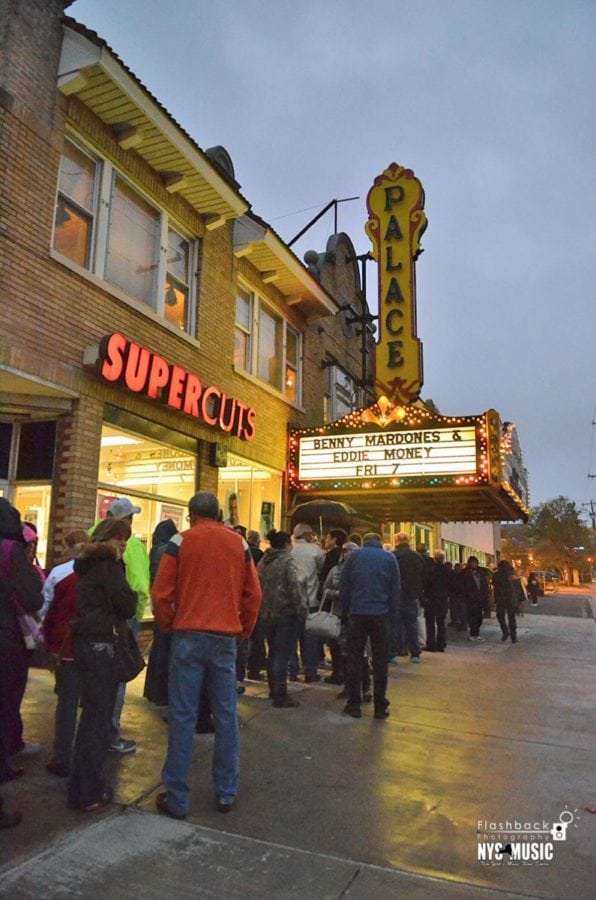
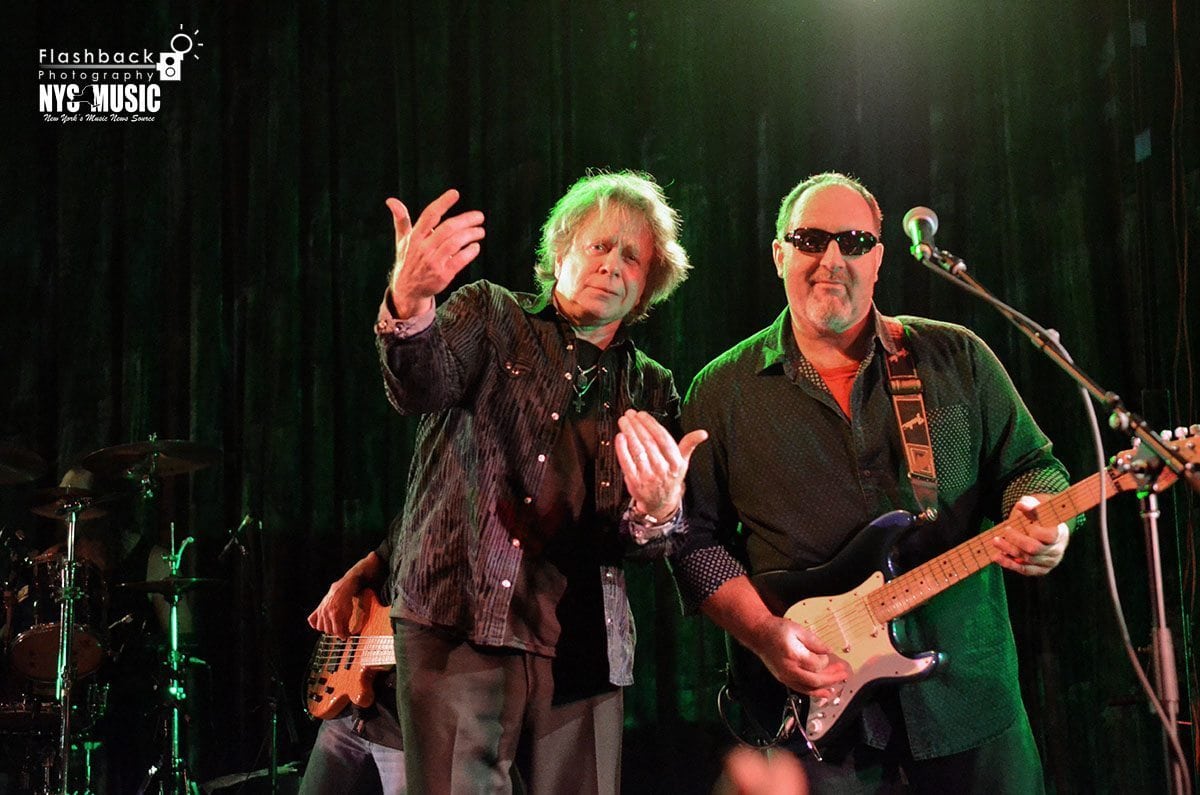
Despite health concerns, Benny lives for music and wants nothing more than to share this love with his Central New York family. To him, it’s the best medicine possible. So when he said to his wife, he needs to come home, that’s all it took. When he approached his long time friend, Eddie Money, and asked if he could join him on this show, Eddie didn’t flinch. He was there in a heartbeat. How can anyone tell Benny no after all he does for others? The stage was set for a night to remember with dear friends filling the sold out Palace Theater.
Opening the show was Syracuse favorites Hard Promises. These talented musicians are crowd favorites all over New York. Opening the show in true rock and roll style singing a multitude of hits from the 80’s, it was their dedication of “Benny And The Jets” to Benny that set the tone for the night and rocked this sold out/standing room only crowd. Hard Promises definitely set the stage at The Palace Theater priming these adoring fans and getting them up on their feet and signing along into the night.
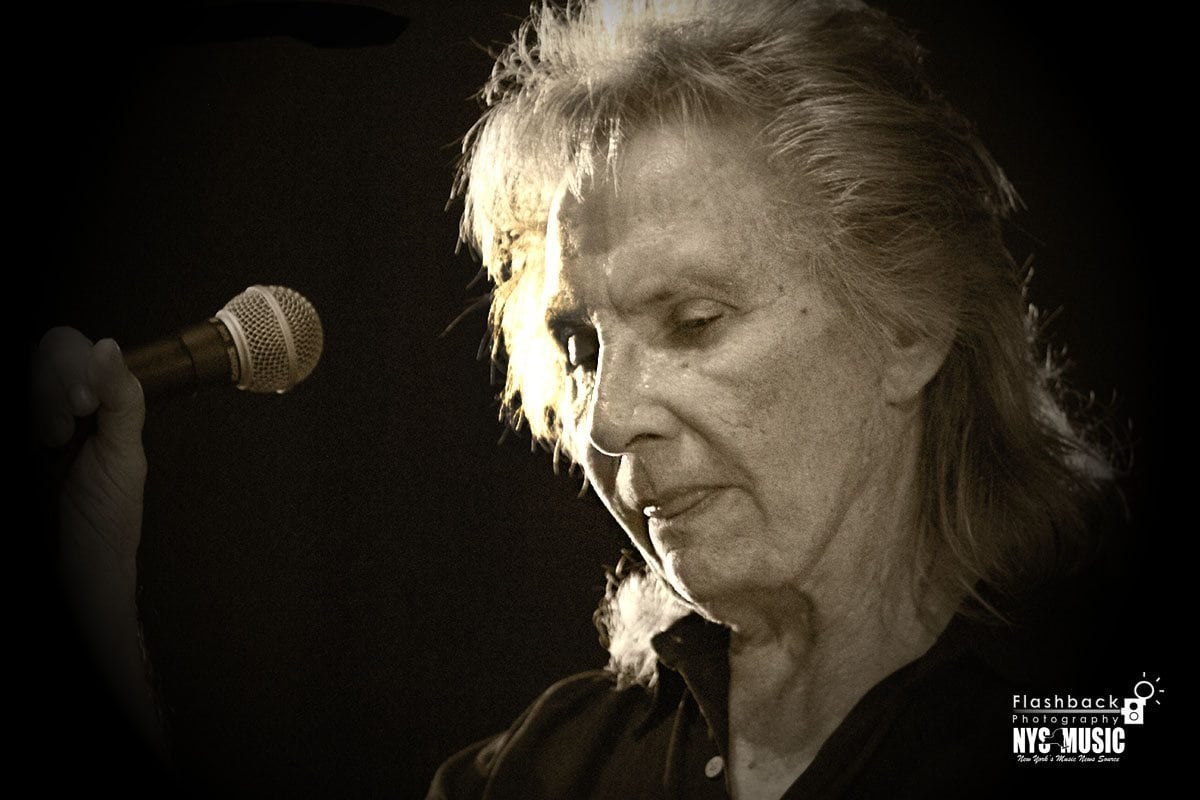
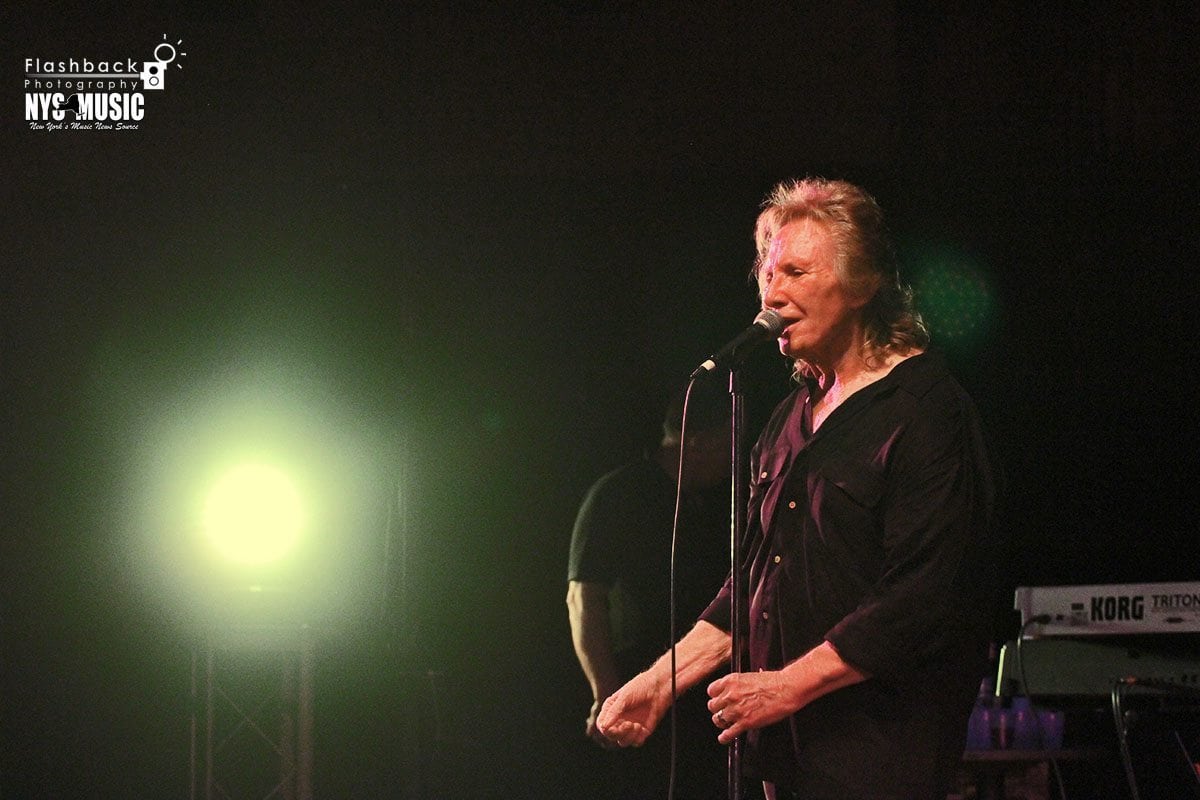
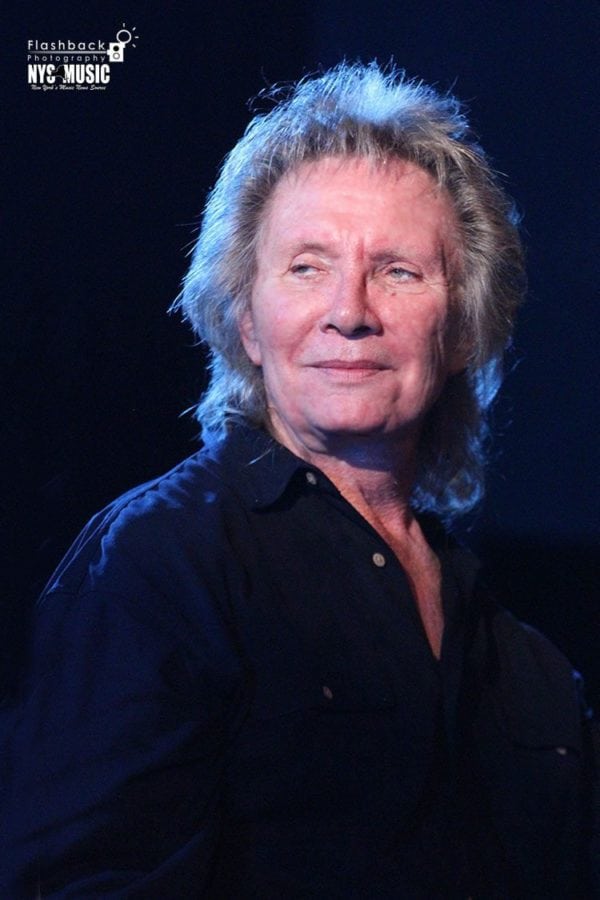
As Benny’s band began to play, Mardones made his way through the masses to take the stage as the cheers from his family resonated throughout the venue. Benny was finally home where he belonged. You could see it in his face. The sheer emotion I witnessed through the entire show moved me beyond words, and brought me to tears. Singing a few new songs from his recently released album, Timeless, a tribute to everything he loves about music. Completely fan funded through a Kickstarter Campaign, and recorded in Syracuse at Subcat Studios with his band, The Hurricanes, as well as a few lucky fans that sang back up, the long awaited project was finally ready to be shared on this night.
Singing fan favorites like “Baby Don’t” and “Way of the World,” Benny also mixed in some new releases as the show began. It was about half way through the show though that Benny relinquished the stage to his life long friend Eddie Money.
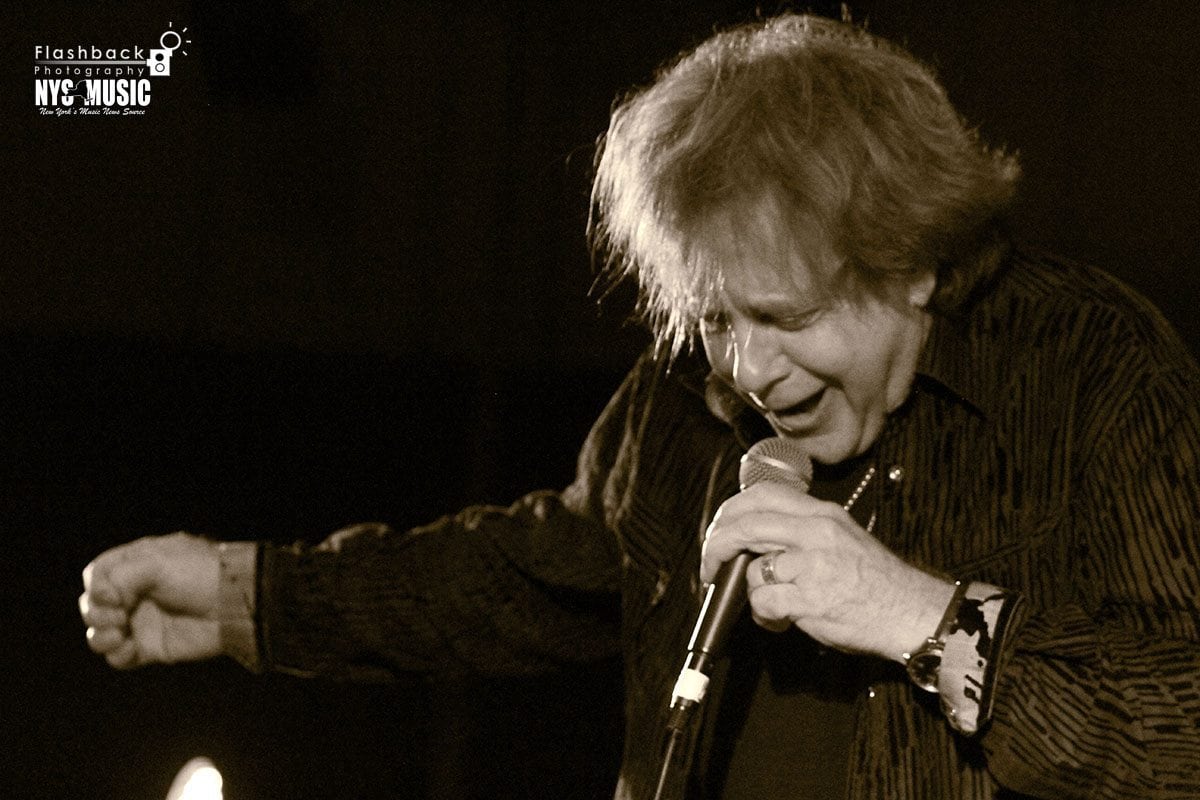
This charismatic performer was a joy to watch as he entertained us both musically and comically. Singing favorites “Baby Hold On To Me,” “Walk on Water,” “Take Me Home Tonight,” and “Think I’m in Love,” but it was Benny’s song “The Train Don’t Stop Here Any More,” that touched me the most. As Benny returned to the stage, the two belted out “Two Tickets To Paradise” and Eddie’s son Julian, joined them on drums as they sang, “Shakin.” That brought the crowd to the their feet dancing both on stage and off. As the night wound down, Benny closed with his signatures two songs that fans never let him leave without singing, the famous “Into The Night,” and “Sheila C.”
Although he’s known to his peers as “The Voice, Benny is also a master songwriter. As I listened to the final production of his Timeless album, I’m moved by several of these songs as they are truly written from the heart. As he played the Palace, he shared “Slip Away,” a rock and roll song that showcases his voice to a “t”, and “Me and Johnny Red,” a song about his love and hate relationship with Johnny Walker. But the one song that moves me every time I hear it, is definitely “Heart In My Hand.” He sang…
“I used to be, the kind of man, that had the world in my hand. And all along, I really knew, I loved the crowds, but I lived for you.
Like a fool, I played it wrong, and like the crowds, baby you were gone
And in the end, I used to die, from the same dream, oh every night.
Oh the curtain, starts to fallen, as you fade away aside another man, and I’m standing in the corner, with my heart in my hand.
So many friends, are not around, I need your love, I need it now. Don’t want to loose. Don’t want to be. Just another, another memory.
Oh the curtain, starts to fallen, as you fade away aside another man, and I’m standing in the corner with my heart in my hand.
I’m standing in the corner with my heart…
I used to be, the kind of man, that had the world in my hand “
Benny, from where I’m sitting, you still hold the world in your hands, and you live in the hearts of us all.
DrFameus proved himself a chameleon of sound, opening for Particle at the Westcott Theater Sept. 23. Allen Aucoin’s one-manned music machine fluctuated from synth and high hat driven 80’s dance to more lazy and free-flowing experimental jazz, pulling samples from Fergie’s “London Bridge” among other unexpected sources. Producing a beat reminiscent of the bass heavy pulsations in Die Antwoord’s “I Fink U Freeky” kept the crowd alert, as they made efforts to sift out other familiar rhythms and samples.
Aucoin’s laptop acted as an instrument as much as the drum kit set up before him. Frequently looking over at the small screen to his left, pressing buttons perfectly in time with the music, he was effectively conducting a mini techno orchestra. “Cold Step” commenced with haunting piano effects, showcasing the DJ-drummer hybrid in a swarm of heavy energetic percussive and techno sounds. At the end of Aucoin’s set, a gentleman brandishing a solid black guitar case sauntered across the room, having plenty of space to breakdown and boogie with the crowd not exceeding thirty spectators.
The Particle crew followed on stage, delivering a slew of zippy electro grooves. Guitarist Ben Combe, with body pivoted forward, scrunched facial expressions and fingers scrambling across the fretboard, plainly indicated his full mental immersion. Keyboardist Steve Molitz demonstrated his own enthusiasm, purposefully pressing specific keys while giving raised eyebrows to the crowd as if to say, “How do you like this?” His effects often produced sounds synonymous to the grand majesty of Manheim Steamroller’s epic instrumental holiday ballads.
Clay Parnell (bass/vocals) and drummer Allen Aucoin rounded out the four-man crew. With their powers combined, the band performed a collection of songs that were as distinctive as a litter of Dalmatian puppies. Their music activated the perfect environment for listeners to zone out but still manage to feel stimulated with high-speed instrumentals and enthusiasm exuding from the musicians.
Recently at Club Metronome in Burlington, musical worlds collided when Phish drummer Jon Fishman collaborated with members of Cattle Decapitation, King Parrot, Black Crown Initiate and Dark Sermon, merging for a performance under the name Garbage Dick.
A photo posted by Derek Engemann (@derekfuneral) on
While we await video of this odd performance, go see Cattle Decapitation on tour with Cannibal Corpse as they play several shows across New York state this month including:
Fans of reggae can feast their ears on the smorgasbord of regional talent performing at the Westcott Theater on Saturday, October 10. Alex Gideon, Thunder Body and Grayak each have a spot to give the audience a taste of their latest musical workings before John Brown’s Body takes the stage as the final act of the evening.
Alex Gideon, guitarist and vocalist from New York-based reggae/funk band The Fat Peace will be stepping on stage as a solo act, relying on his guitar and vocal skills while looping in other instruments and sound effects. Gideon has experimented with a collection of covers while also producing his own original songs.
Thunder Body, a Rochester-based reggae group, has continued to grow over the past few years, expanding its identity far beyond the reggae designation, incorporating ingredients of jazz and soul into an eclectic stew of energy. Matthew O’Brian, former front man of Giant Panda Guerilla Dub Squad leads the troop with vocals and percussion. With his drum kit uniquely positioned to the front of the stage, O’Brian mixes up the traditional musician arrangement, a visual metaphor representing their drive toward differentiation. Supported by Rachel Orke (also former GPGDS member) on analog keyboards and melodica, Dennis Mariano and Sam Snyder on guitar, Jeremiah Pacheco on bass and Brian Blatt with miscellaneous instrumentation, they spread messages of love both for humanity and mother earth, which are entwined in their encouraging lyrics.
Grayak is the beloved reggae/bluegrass/folk brainchild of guitarist and vocalist Phil Grajko. The band, rooted in Syracuse, also features sister Hannah Grajko (vocals), Brendan Gosson (fiddle and mandolin), Blake Propst (upright bass) and Tyler Dattmore (drums). The current lineup is a recent amalgamation of musicians that have begun performing together in increased frequency, branching out geographically to enrich their fan base. Grayak’s song lyrics explore the beauty and influence of the mysterious workings of the universe, intermixed with occasional subtle references to the zombie apocalypse.
Veterans of the national reggae scene, John Brown’s Body, an influence and inspiration for many of the musicians sharing the stage that night, will grace the theater, pulling from nearly a dozen albums of material compiled since their inception in the mid ‘90s. Elliot Martin (lead vocals), Tommy Benedetti (drums), Dan Africano (bass), Jay Spaker (guitar) Jon “JP” Petronzio (keys), Scott Flynn / Alex Asher (trombone), Drew Sayers (saxophone) and Sam Dechenne (trumpet) comprise this flock of future roots revolutionaries. They evoke a lion-like pride of tight-knit, well-rehearsed sound and thought provoking lyrics seeking to engage and empower listeners.
Jubilee Riots (formerly known as Enter the Haggis) made a return trip to Saranac as part of the brewery’s Saranac Thursday Concert Series on July 23. Hailing from the greater Toronto area, Jubilee Riots have made it a tradition to perform at Saranac the Thursday prior to the Great American Irish Festival in nearby Frankfort. While the band wasn’t performing this year’s Irish Fest, its traditional set on the brewery stage attracted many Enter the Haggis/Jubilee Riots faithful.
Jubilee Riots is a band that is constantly working, constantly thinking, always thinking of its fans. The last three albums recorded have all been funded through crowd sourcing. There aren’t many working bands today that can say they’ve been able to produce three straight albums funded exclusively by their fan base. The band’s most recent release, Penny Black, is the first under its new moniker, Jubilee Riots. The first video from this release is an entertaining gospel-like animated take on the song “Trying Times”.
The band began as Enter the Haggis in Toronto in 1996, playing a mix of Celtic and modern rock music. It toured the Celtic festival circuit extensively, building a sizable and loyal fan base along the way. Over the course of seven studio albums, two live albums, a performance on Regis and Kathie Lee and a live DVD filmed for PBS, the band’s sound transitioned to where the Celtic sound was becoming less prominent. The Celtic core was still there but listening to each successive album revealed an evolution to a more mainstream northern roots rock sound. To get a true feel for this transformation, one must listen to the catalog from its beginning to the present release. Doing so reveals a band that has matured in songwriting style and musicianship while still maintaining the feel good presence of the original Haggis sound.
Eventually, a change in the style of music, prompted the band to consider a name change. This was something that didn’t come easily to a band with an already established and enthusiastic fan base. However, as piper/trumpeter Craig Downie, the only original member of the Enter the Haggis, mentioned in the press release announcing the name change, “We toured and recorded as Enter The Haggis for a long time, but that name no longer represents the music that we’re making.”
On Sept. 8, 2014, it became official. Going forward, Enter the Haggis would now be known as Jubilee Riots. The final show as Enter the Haggis occurred at the Westcott Theatre in Syracuse on Oct. 11, 2014. A show that was billed as Exit the Haggis. To celebrate the one year anniversary of that show, the band is returning to the Westcott Theatre in Syracuse for a show on Oct. 9.
Prior to the recent Saranac show, NYSMusic sat down in the 1888 Tavern with lead singer/violinist/man of many hats, Brian Buchanan, bassist/vocalist Mark Abraham and drummer/percussionist Bruce McCarthy to discuss the band’s direction, crowd funding, technology, the writing process, a little hockey and what thought goes into changing a band’s name midstream. Original member Craig Downie and guitarist Trevor Lewington round out the band’s lineup.
NYSM (to Brian): You’re a Leafs fan, have you seen the news today that they hired Lou Lamoriello as the new GM?
Brian: I hope you’re joking. ARE YOU SERIOUS? WOW! (gives a background on Lamoriello’s background building the New Jersey Devils franchise)
NYSM: He’s got a Utica tie-in as well. He used to be the GM when the Devils had a team here.
Brian: Wow, what a weird combination of people. You’ve got Brendan Shanahan as President, Babcock as coach and Lamoriello as GM. That’s pretty powerful stuff.
NYSM: Speaking of change, how are you guys doing with the name change? You’re not the first established band to do it. The Who did it. They were The Detours and The High Numbers. The Beatles did it. They were once The Quarrymen. So you’re in good company.
Brian: It’s a challenge. We knew it was gonna be a challenge. We didn’t make the decision because we thought it would be the easiest business decision in the world. But, also our fans have really been supportive and have been behind us. I think some people are still really confused, saying “I’ll call myself a Haggis Head til the day I die,” and that’s absolutely fine with us. So in some ways it was kind of an artistic decision more than anything else and it still feels good and it feels like it was the right decision to make…”
[Interrupted by a fan looking for a selfie with the band, handled very deftly by Brian “Good times. Good times.”]
NYSM: Obviously you have a huge loyal fan base. When you started doing crowd funding for your albums, it took you, what, eleven hours to reach your goal?
Brian: The first one, yeah. This last one was just about as good too. And we raised about the same amount of money. It’s incredible. Over three records, we’ve raised over $150,000 from the fans, financing the records, the promotion of the records.
NYSM: So you’re not beholden to a record company…
Brian: No, and there’s not a lot of bands out there that can say that. The crowd funding thing is getting a lot more mainstream and a lot more popular, but you still need the fan base to step up. And I know lots of bands who are objectively bigger names than we are who can’t get crowd funding campaigns off the ground. Because they just don’t have that kind of personal loyalty.
NYSM: Well you guys kinda did that through the ground roots anyway, traveling around, meeting your fans, engaging them…
Brian: True, every fan we have is one we’ve played for and shaken hands with. It’s definitely been one fan at a time.
NYSM: You guys are an easy band to like anyway. You’re so cordial to deal with, taking selfies with fans in the middle of interviews…
Brian: We’re Canadian…(laughter)
Bruce: That’s what we’re constantly telling one another too, “Man, you’re a really easy guy.”
NYSM: You guys are all kinda separated now? As far as where you live?
Brian: I live in Philly now. Three of the guys are still in Ontario. From where Trevor lives to where Craig lives is like four hours and then Bruce is kind of in the middle and Mark’s in Maine. We’re definitely spreading out further and further as time goes on.
NYSM: Of course it’s a lot easier now with technology for you to collaborate, as we were saying, with Dropbox and Skype and Google Docs, your Patreon thing…
[Patreon is a crowd funding platform that Brian uses to release music and blogs that he otherwise wouldn’t do within the context of the band, with the eventual hopes of putting together his own traditional fiddle album, covers album or “bizarre and overwrought theatre-pop.”]
Brian: There are so many avenues to generating interest and as a nice by-product, generating income, but even as a band, even though we’re spread out as far as we are,when we were getting ready to put together the last album, we set up a Dropbox account. Trevor and I or anyone else, could record a demo and stick it in Dropbox and the rest of the guys could open it up and listen to it and add their comments. We did all the lyrics and artwork through Google Docs and people could add their thank yous and change lyrics and do everything through there and keep everything updated. The tools that are available for free now are mind-blowing. You think back twenty years ago, the things that we take for granted now as a band; tools that we use every day that didn’t exist. Things that would have taken a team of people to do. You’d have to lick 20,000 envelopes. Now I can spend 20 minutes writing an email and get the same reach.
Bruce: We have a WiFi hub in the van that we use to broadcast. It broke and we haven’t had it fixed yet so we had to grab one of those tourism books and that was the beginning of us driving around just trying to find a hotel; which is how the band used to do things once upon a time before Priceline and Hotwire and all that. It was a sobering experience.
Brian: The fact that we have internet accessibility in the van, when you’re on the road for twelve hours in the van, it’s not twelve wasted hours. We can actually get a lot of work done. You can be interacting with the fans. We’ll do live streaming conversations with the fans while we’re on the actual road.
NYSM: So when you do record, you said you just kind of drop things into Dropbox. Do you still get together in an actual studio to do the recording or is it mainly all Dropbox then putting it all together?
Brian: Even if we did use that, it would be the roughest of rough demos. Then, for the last couple of records, we got together at Bruce’s house. He’s got a studio in his basement. So we’ll do comprehensive demos there to nail down a playlist and then book a professional studio for a month to finalize everything. It’s a nice luxury to be able to do that. My girlfriend’s band, they’ve been trying to put together an album for over a year, because they all have jobs. They all go to school. So they try to find a weekend here or there where they can get into a studio. We have a nice luxury to be able to do it this way.
NYSM: On to your latest album, Penny Black; it’s kind of fan-based project where you asked fans to submit letters and the best thing about it, again, going back to the technology thing, you kind of reversed things. The submissions had to be hand-written and sent via snail mail in order to be considered.
Brian: Analog!
Mark: It was probably close to 500 letters. I still used technology to scan them in and put them on Google Docs. It was cool because I got to read all of them.
Bruce: It was sort of very convoluted that way we set it up, just to end up scanning the stuff anyway.
Brian: We did a video and sent out emails telling people to write us letters by hand, which they would mail to us so that we could scan them into Google Docs then use them to write the album. (laughter)
NYSM: So, why mail? Why that way?
Brian: We just liked the idea of seeing people’s stories in their own handwriting.
Bruce: Well it’s also the whole Penny Black idea.
Brian: The Penny Black was the first mass-produced postage stamp, so we just liked the old idea of people taking the time and writing a letter and really thinking about writing a letter and not just instant messenger. Writing it out in your own words and sending it to somebody. I’ve talked to a few people who said they wrote multiple drafts before sending them. When you’re doing it by hand, ya know, that’s a commitment.
Bruce: Some of them were like ten pages long, double-sided, small print…
Brian: Some of them were anonymous, some put their names to them.
NYSM: So when you looked at some of them, could you tell right away who it was writing?
Brian: Oh yeah, sure. Definitely.
Bruce: Some pretty intimate stuff too. A lot of people signed their names. That’s a lot of trust. We know who these people are.
Brian: These people are bearing their souls and it was pretty heavy at times. They said they’ve never told their story to anybody so it was kind of therapeutic. Then they’ll come up to us after the show and say, “I was the one who wrote such-and-such letter” and you say to them, “I’ve never met you before but I feel like I know a whole lot about you now.”
NYSM: I think that just speaks volumes about how you feel about your fans. You actually kind of put it back on them. It was an album for them.
Brian: Oh yeah, absolutely. That was the whole idea. We meet so many people from so many different walks of life. The best stories are people stories. Everybody you meet has one story you can write a song about. And if they don’t, you can write a song about that.
NYSM: So you had 500 or so letters, do you have enough for another Penny Black in you?
Brian: We could easily write another album. I don’t know if we will but it’s possible. A lot the songs weren’t inspired by just one letter. There were certain themes that emerged; losing a loved one, meeting the love of your life, some coming-of-age story…
NYSM: The release you guys put out when you announced the name change, I think it was Craig who said, “The name just doesn’t fit what we’re doing now.” Kind of de-categorizing yourself in a way, where you’re not pigeon-holing yourself into being just an Irish-style band. We’re not just doing Irish songs, we’re starting to broaden and become un-categorizable, if that’s a word. Is that an accurate description?
Brian: Yup, definitely. We got to the point where we felt the name Enter the Haggis was a perfectly appropriate and suitable name for about 15-20% of the music that we were playing. And, sort of extension of that was the worry that the name was sort of limiting the audience to about that 15-20% of the people who would like what we do. The name is a great name for a certain style of music but it puts a picture in people’s heads before they even hear a note of what kind of music it’s going to be. And you only have so many opportunities to get people’s attention these days.
Ya know, if I hated metal and I heard the name Cradle of Filth, I would never even put the record on. But maybe years later I’d find out that I was completely wrong about that band and the type of music they were playing. It’s always kind of been in the back of our heads that our name might be limiting our exposure to people who wouldn’t even give us a chance based on the idea that they wouldn’t like it before they even heard it.
You hope that people would be open-minded. We’re competing with so much these days, it’s hard enough to even get people to listen to just thirty seconds of a song and if you’re already having to break through a barrier before you even get to that point, then it’s that much harder.
Bruce: Also, 80 percent of the band is different.
NYSM: Right, Craig’s the only original member of Enter the Haggis left, correct?
Bruce: Right. That original, if you want to call it, that Enter the Haggis sound, we don’t play any of those songs. Not a single one. It just got to the point where we still play plenty of Enter the Haggis songs and they still make up the majority of our set. It just got to the point where that first incarnation of the band, Craig was the only remaining member of that and we don’t play any of those songs. I’ve never even heard most of those songs. So it just got to a point where it kind of didn’t make sense. That duality that didn’t kind of meet anywhere in the middle where it was reconcilable.
Brian: We’ve had the luxury of being able to grow up as a band, learning what kind of band that we want to be and we’ve done it in the public eye. I liken it almost to a child actor who became really popular who became known for a certain thing and as they get older and start getting serious, branching out to different things, it’s difficult for them because if you go on YouTube and search their name, all they see is that sit-com, that catch phrase. It’s really hard for them to break away from that and do different things because everybody likens them to that original thing. That’s kind of what a band name is like.
If you go on YouTube and search “Enter the Haggis,” the way YouTube works, the oldest videos are the ones that have been watched the most times and those are what show up at the top of the search. You’ll find videos of ours that are 9-10 years old and that’s not representative of where we are now. We’re not ashamed of our legacy, but we’re definitely competing against it.
Bruce: You know what’s interesting though? Since changing the name and kind of getting a little distance from it, I think we’ve all gotten more interested in the Celtic stuff. More so than we have been in some time. It’s kind of like when you feel you have to do something, it’s an obligation, whereas if you have a choice to do something. You tend to enjoy it more. It’s two very different things. We’re starting to embrace that Celtic element of the past, even a little bit more than we had in the past five years or so.
Brian: Subconsciously, I think we were feeling the pressure as Enter the Haggis to constantly prove that we weren’t just that type of band. So we were almost pressured to move away from it. Who knows what will come next? Maybe we’ll release a trad album. (laughter)
NYSM: Do you have new venues you’ve been playing that you like, that maybe are attracting new fans?
Mark: There are a lot of people who have discovered us since the name change that didn’t even know of us before. I don’t think it was so much changing venues though.
Brian: We’ve had more radio play from this record than we’ve had before. We hit number nine on the U.S. Billboard Heat Seekers chart when the album was released, which we’ve never done before. We finally got played on the biggest rock radio station in Canada, which has never happened before. It was in a like a next big thing type of contest, which we could only enter because they didn’t know we’ve been around for fifteen years.
Bruce: I think you said it was “like” a next big thing contest. It was literally called “The Next Big Thing.” (laughter)
Following our interview, Jubilee Riots went on to perform before one of the largest Saranac Thursday crowds of the summer to long-time, dedicated fans as well as those who had never heard them before. By the end of its second set, the band had the Utica crowd dancing along. It was a night much like what was discussed in the interview. Many there had never heard the band in their previous incarnation and were won over. Such is the life of this hard-working Canadian band.
Jubilee Riots are kicking off its fall tour at the Westcott Theatre in Syracuse with a recording release show on Oct. 9. The band is releasing the historic “Exit the Haggis” from last fall’s Westcott show that night as well as performing. Julia Weldon is the opening act.
Jubilee Riots fall tour dates:
10/9/15 – The Westcott Theatre – Syracuse, NY
10/10/15 – The Town Crier – Beacon, NY
11/5/15 – Flower City Station – Rochester, NY
11/6/15 – The Putnam Den – Saratoga Springs, NY
11/13/15 – Infinity Hall – Norfolk, CT
11/14/15 – Higher Ground – South Burlington, VT
11/20/15 – The Strand Theatre – Rockland, ME
11/21/15 – Stone Mountain Arts Center – Brownfield, ME
11/27/15 – World Cafe – The Queen – Wilmington, DE
 The String Cheese Incident is celebrating their 20th year together as a band.
  JBB’s horn section was the pinnacle of an evening of varied instrumentation from the three acts that graced the stage. One man band
 Gosson frequently switched between his two stringed sweethearts, the mandolin providing much more of a staccato sound. During “Maya” a track from Made of Light, Grajko’s guitar work midway through the song had an almost Spanish-style appeal to it. The crowd, which wasn’t too shy to dance, really got moving for “Lovely Girl,” an uptempo number about a girl worth spending time with. Gosson brandished his fiddle once again for “Made of Light,” their title track and last song of the evening.
 “Plantation” followed, though it actually comes directly before “Empty Hands” on Kings and Queens. It recalls the trials of working on a plantation and living a life in servitude. The last two lines, “With a guitar we’ve a song warning you/ Give them all a way home.” It acts as a call for freedom, and perhaps the guitar serves as a nonviolent alternative to a weapon as a means of provoking change. Surging forward with messages of inspiration, Tommy Benedetti (drums), Dan Africano (bass), Jay Spaker (guitar), Jon “JP” Petronzio (keys), Scott Flynn/Alex Asher (trombone), Drew Sayers (saxophone), and Sam Dechenne (trumpet) rounded out the battalion. It was a battle well fought by all on stage that evening.