Bryan Brundige is a man who wears many hats. He is a producer, musician, band manager, Grandma’s Studio owner and songwriter. He is most prominently known as a horn player in The Chronicles, but suffice to say, he is well versed in all things music. Brundige is not only cultivating his own dream of running a studio, but his efforts are inadvertently bringing a music scene to Albany. He is perhaps, the gatekeeper as well.
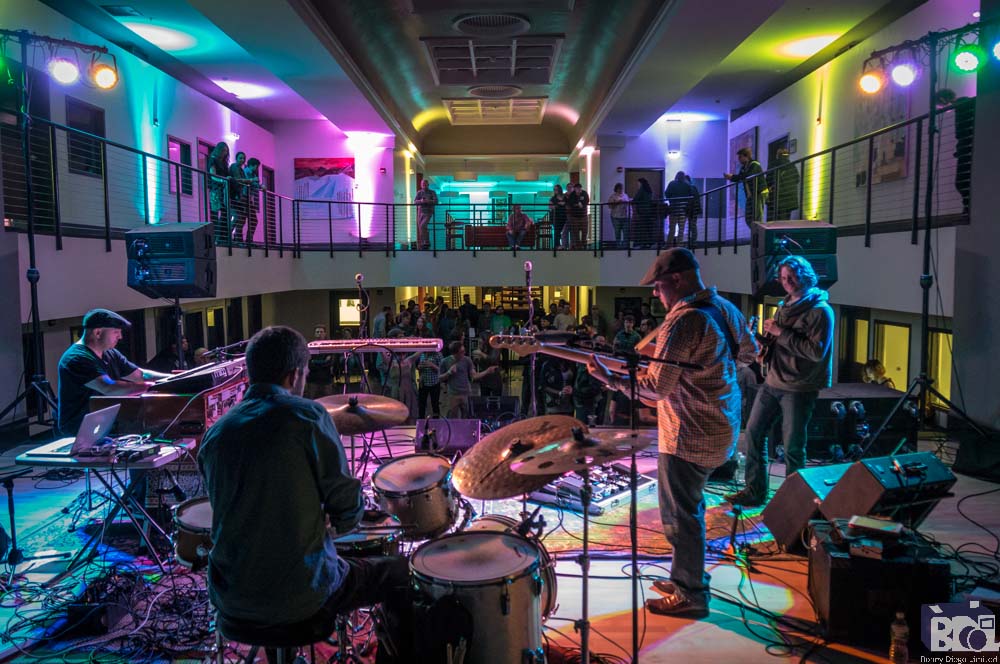
Brundige has planned, developed and now executing his business of music. He has a multi-room studio with digital and analog recording options. He has a number of various instruments if needed from a baby grand piano to drums, providing accessibility for band-client options. Through the concept of the Albany Barn – a live and work-space dynamic – he is also able to give music fans a little something too.
Tabitha Clancy: What is Grandma’s Studio?
Bryan Brundige: It is a multi-faceted recording studio. I can multi-track record. I specialize in songwriting and arranging. I have a lot of connections with musicians so if somebody comes in and needed a horn section or a string section or a keyboard player or a guitar player, I can locate all those musicians. We’re not only a recording studio but also a production house in that we output music all the time. We have bands for hire, a rehearsal space, I can do voice-over work, I can mix audio to film, I can produce albums – I’ve done four at this point.
TC: Where did this idea come from?
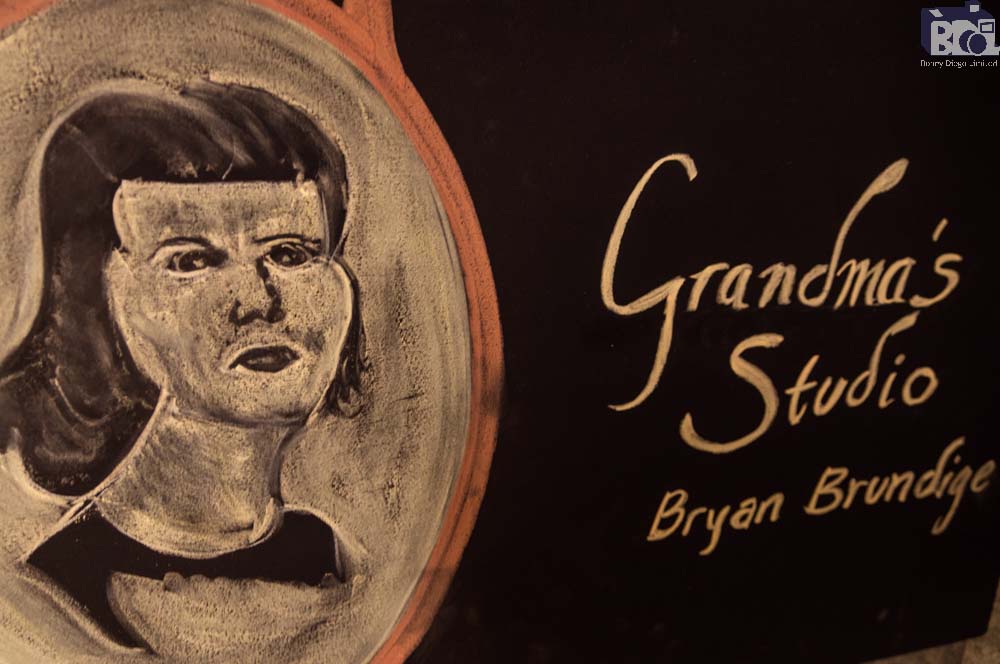
BB: My Grandma’s house. It’s the idea of the whole aesthetic of being comfortable while creating. You know, like when you go to your Grandmother’s house on a Sunday afternoon, and everything seems to be fine and dandy – chocolate chip cookies everywhere, that kind of thing.
TC: As far as recording rooms, what do you have?
BB: I have three rooms: I have an isolation booth, a live room and a control room as well as another closet in the control room for more isolation options. There is a venue out the front door in case I have to record an orchestra or something like that. I can do anything from a solo artist up to a 65 to 75-person orchestra.
TC: The Albany area has been anxious for a new live venue. Is the bigger space available for booking shows?
BB: Yes to a certain degree. The only hiccup is that it is attached to a residential suite, so it’s an interesting situation. Right now there is a curfew at 11pm; we’re trying to change that. This first show went really well and they are interested in having a concert series. I don’t think it will be a Thursday, Friday, Saturday night venue, but more of a concert space. For instance, once or twice a month. It is such a creative zone but the venue is also common space for every commercial tenant that’s there – all of our front doors go out to that space. It’s an interesting dynamic – a live-work-event space, and I’m excited to see what is going to happen.
TC: Will alcohol be provided during live events?
BB: There is not a bar attached and the Barn does not have a liquor license. The promoter is responsible for that kind of thing. It will have to be non-alcoholic events or it will have to be catered. Basically at all of our events will be local, probably Brown’s Brewery and Ben and Jerry’s ice cream.
TC: What are the stage dimensions and venue capacity?
BB: 30 feet wide by 20 feet deep. It holds 400 people. Shows will typically be from 6pm – 11pm.
TC: What types of bands are you looking to get in Grandma’s performance space?
BB: Some bands that have been discussed are Chris Thile, Dumpstafunk, Marco Benevento, Railroad Earth, Soulive – medium sized regional and national bands.
TC: Is the live space recording area separate from the venue area?
BB: Yes, yes. My suite is about 700 square feet. It is a little tight, but it does the job. I have about a 20 foot by 16-foot room for the live room.
TC: How does this relate to the Albany Barn?
BB: The entire building is The Albany Barn. Part of it is residential and part of it is commercial. There are 22 artist lofts and about 11 commercial tenants. They are all artists of some sort, and the idea is to all feed off and work with one another.
Brundige is looking forward to a potential concert series in the works for the 2014 summer. The Chronicles have a few upcoming dates including a Sunday performance at the Albany Tulip Festival. Please follow links for more information.

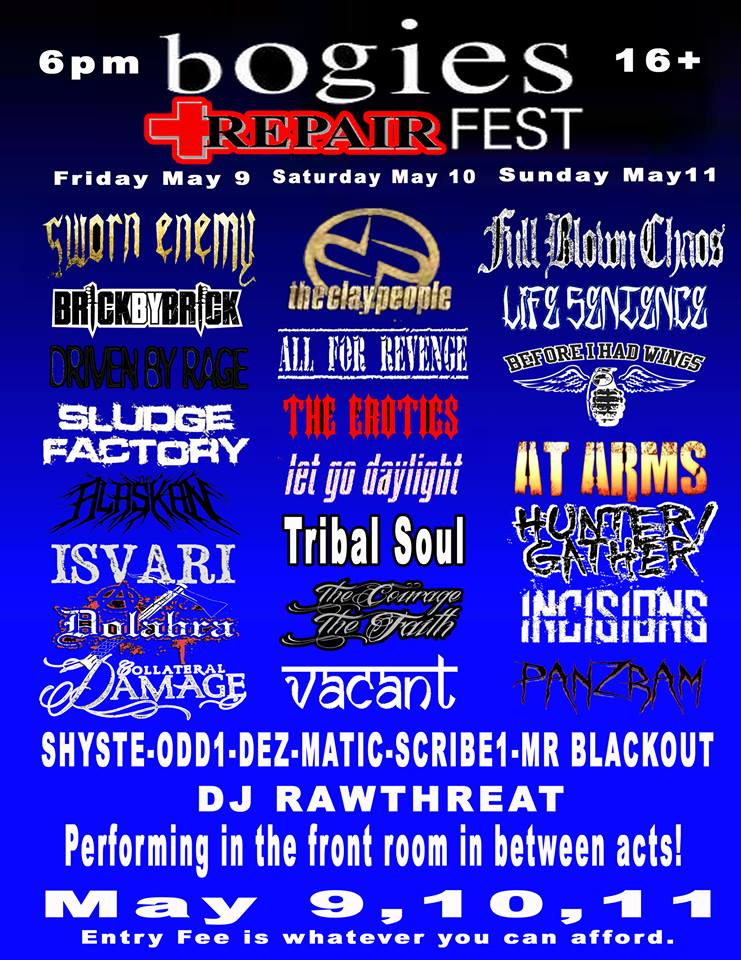 NYS Music sat down with Mike Valente before a Goatwhore show last month and asked a few questions. Here’s what Mike had to say about Bogie’s and some of the memories inside those walls.

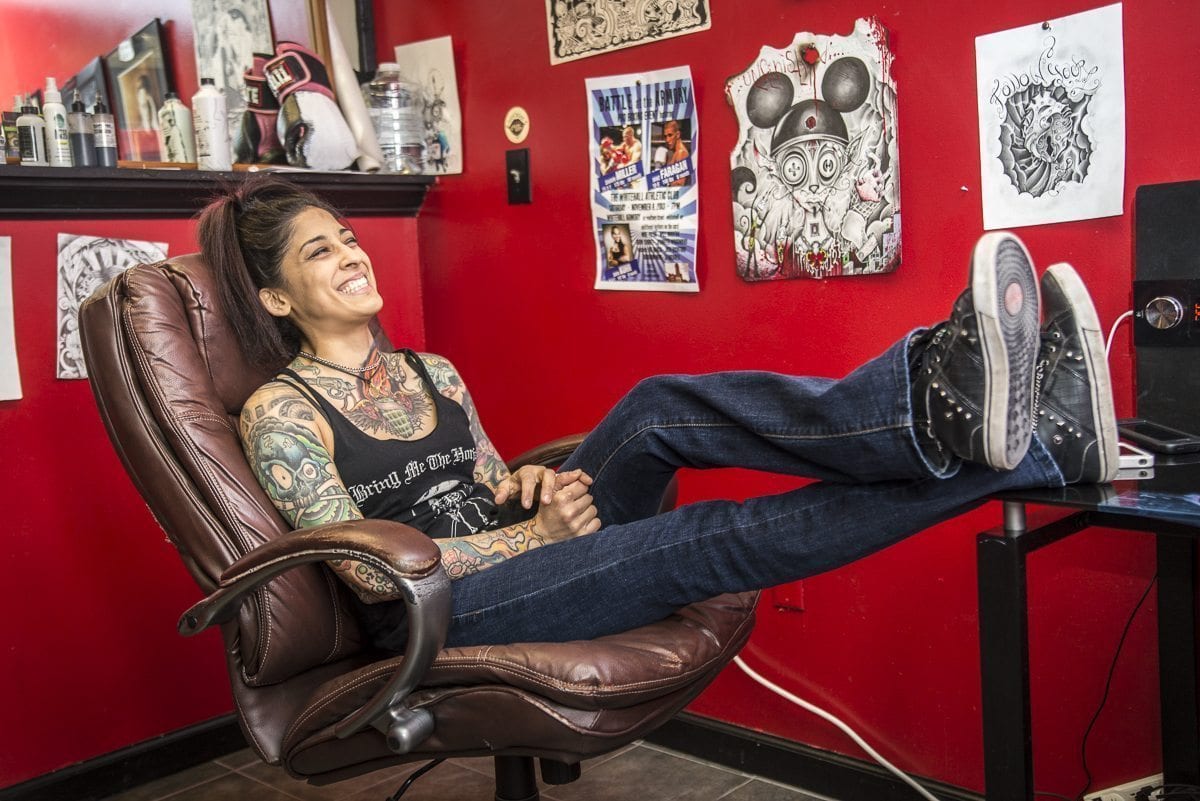 Today, Bruno lives in the Capital Region. But, she is the very definition of a cosmopolitan, having lived throughout the world, thanks in part to her father’s career as a nuclear engineer. Originally born in London, Bruno has lived England, Canada, and the Netherlands. In the United States, she’s lived on both the West Coast and the East Coast. As can be imagined, her father believes in a good education.
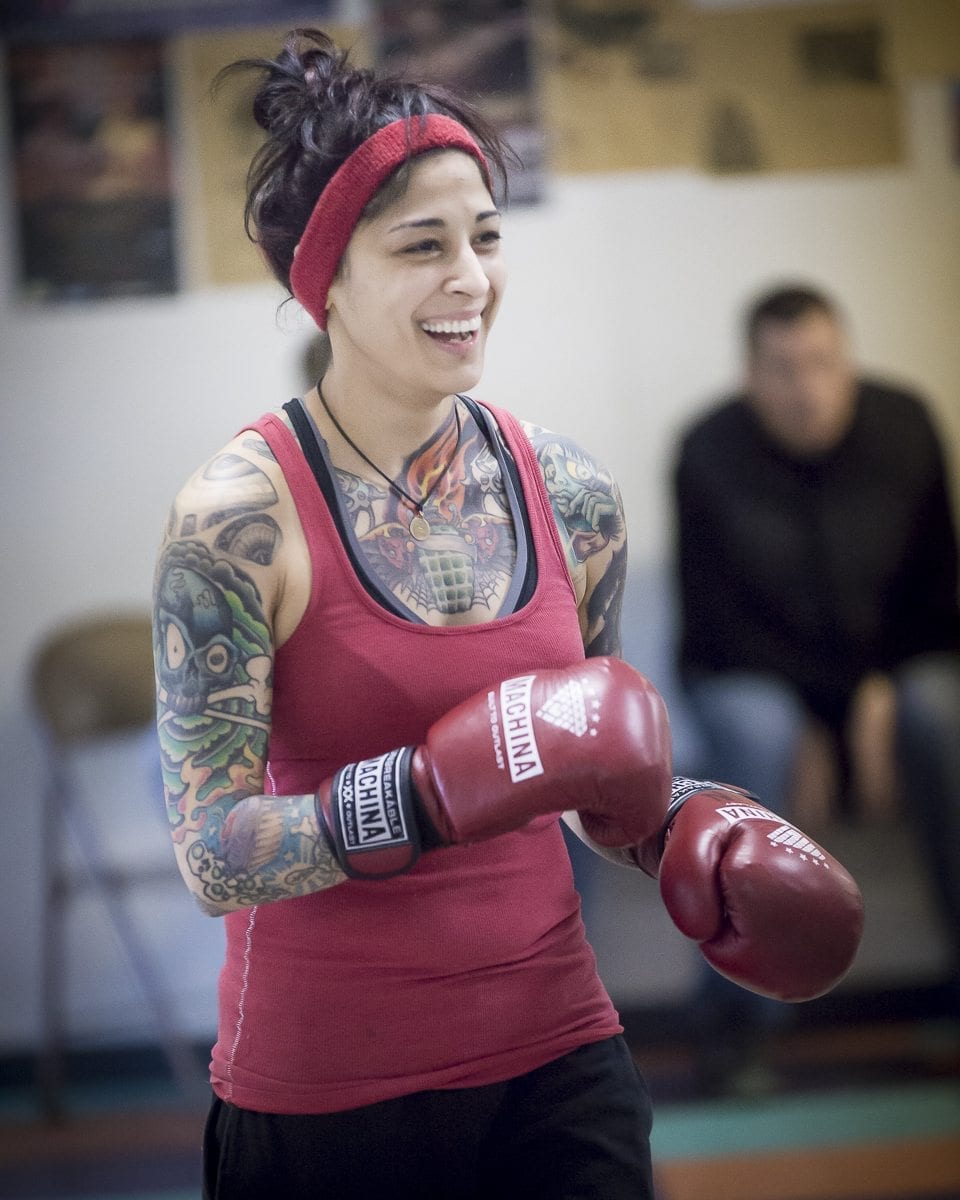
 For starters, Bruno enlisted herself into an amateur boxing program at Sweeney’s Boxing & Fitness in Delmar, New York. Sweeney, has produced two champion boxers out of his gym. One of which, Sarah “The Knockout” Kuhn, who is responsible for introducing Bruno to the gym. All who walk into Sweeney’s gym are immediately made aware of the no none-scene atmosphere. Those who seek training for amateur boxing are warned they must meet “high expectations” or be asked to leave.
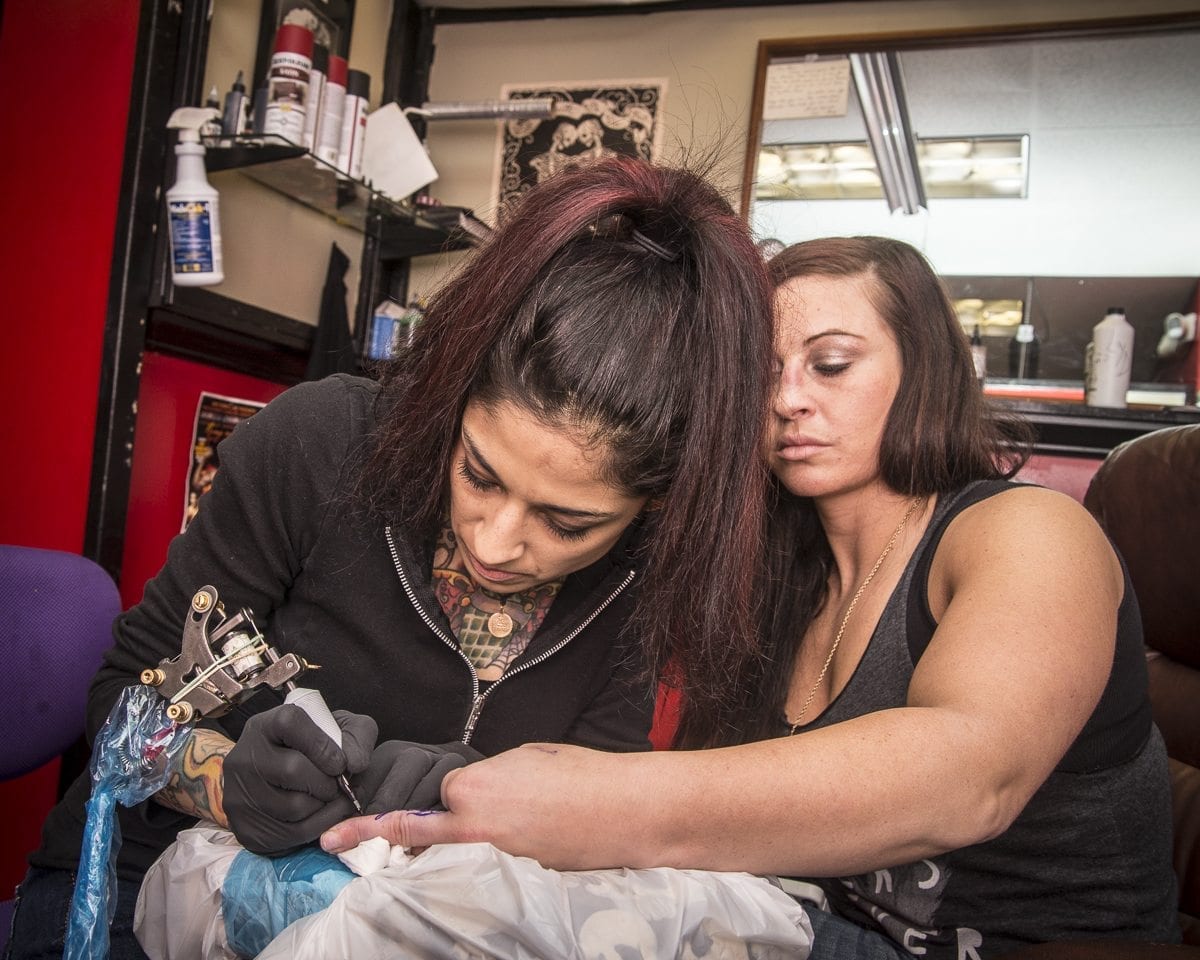
 Like the images tattooed onto her own body, she draws back to things she’s picked up along the path. She still picks up a pen. She writes prose and later posts it onto Facebook for her friends to read. (“Just with the way my words come out on paper. Just writing and writing, and read it later and I’d learn about myself. Same thing will happen with my art. I’ll just zone out and start drawing. When I’m done with a piece, I’ll look at it and I won’t realize that it came from me. It’s like I’m looking at someone else’s art.”) When she tattoos, she can listen to her music. (“Music is very important to me. I listen to ’80s music when I tattoo. I listen to the 80s station on Pandora – Billy Joel, Flock of Seagulls. Stuff like that. I listen to hardcore metal, a little mix of everything. Every now and then the occasional Haddaway.”) The television show has lead to more phone calls; old clients offering up support and new ones from out of town calling in to have work done. It humbles her to remember how long it took to build her credibility with clients. (“It’s been glamorized so much that everyone wants a hot girl tattooing them. But, back in the day, for the trailblazers, it was difficult.”)
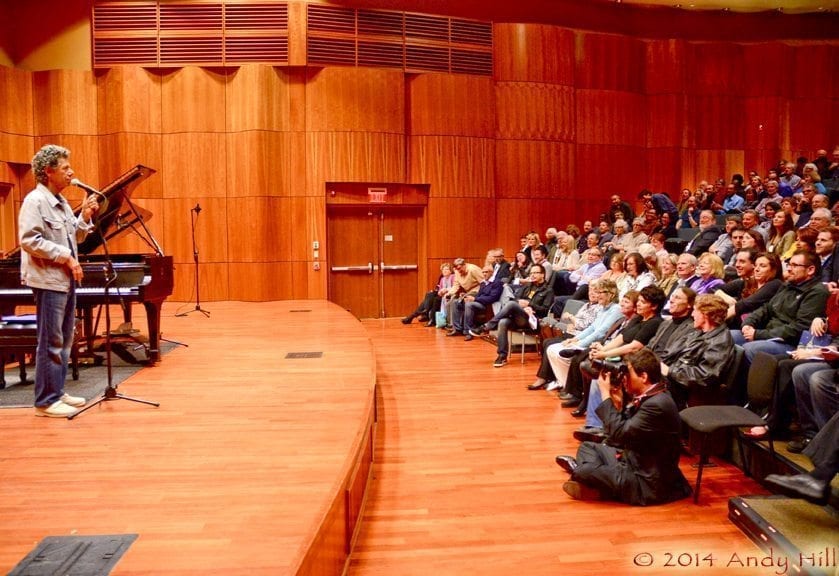
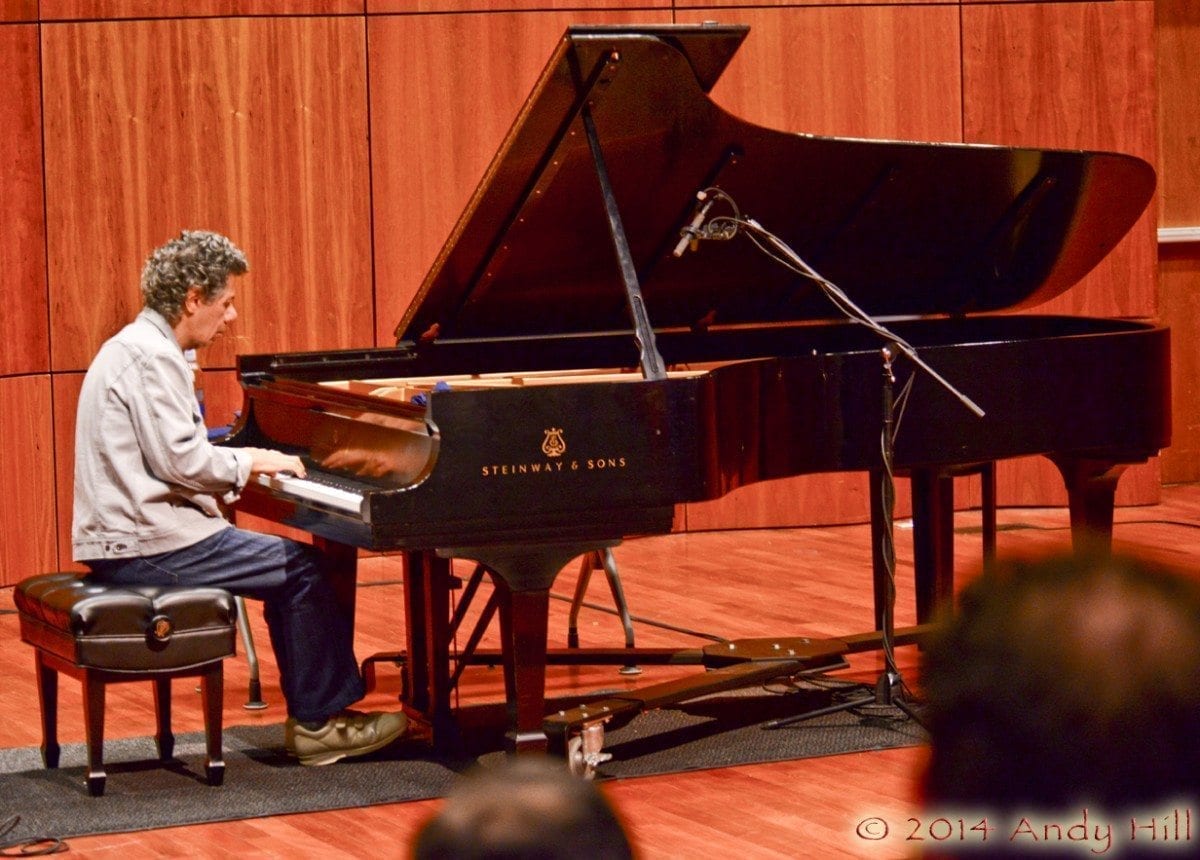 On this evening, Chick Corea used but did not need the microphone to address the sold out crowd, for the venue’s acoustics allowed for his voice to echo throughout the entirety of the Hall. Coming out unannounced, Corea spoke of attending Saint Rose church while growing up in Chelsea, Massachusetts, referencing the collegiate campus of The Massry. He spoke of leaving Massachusetts for New York City, so he could be with his musical heroes, many of whom he performed the work of this evening. Opening with “It Could Happen to You”, recorded by Miles Davis, his fingers glided across the Steinway & Sons piano, followed by an introducing the crowd to Stan Getz “Desafinado” and played bossa nova on the piano.
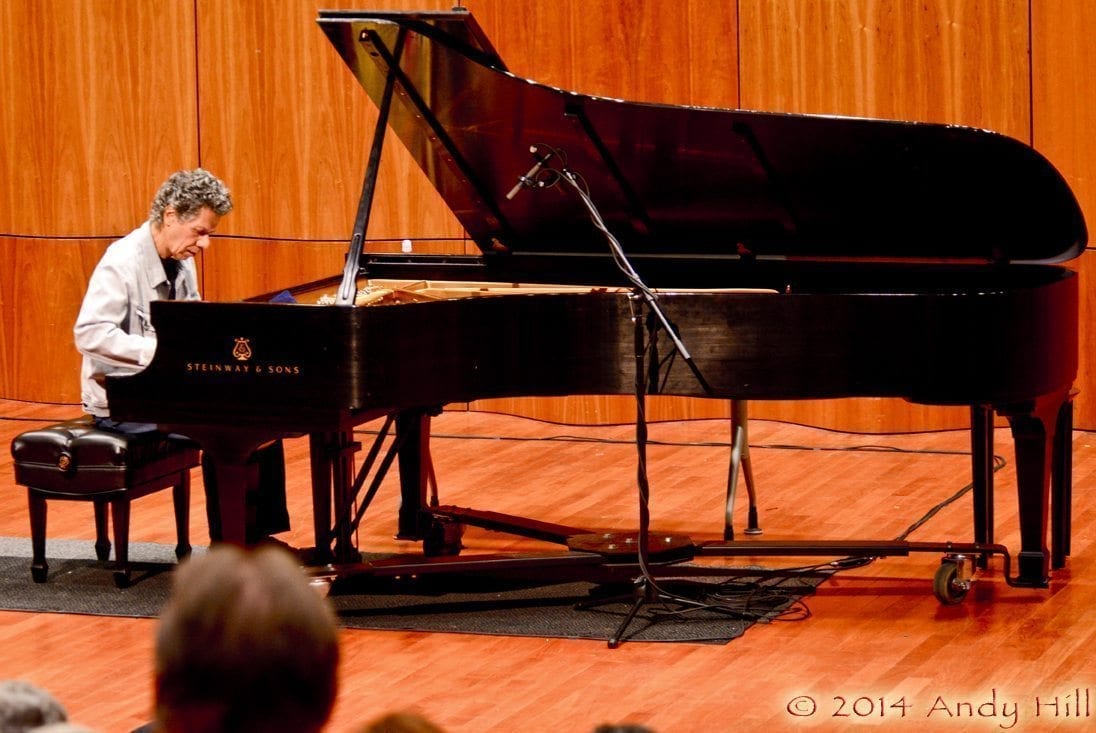 Corea then asked the crowd, “Would you like to hear something by John Coltrane?”, and he then proceeded to play a track from Village Vanguard, off his phone, into the mic, for a solid 30 seconds, with laughs and applause from all. No one complained about this, and it lightened up the evening even more. Chick Corea was not looking for a night of serious, focused performance, but one where he interacted with the audience and kept things light. Two Bill Evans numbers followed, “Song #1” and “Very Early”, the latter a serenading waltz.
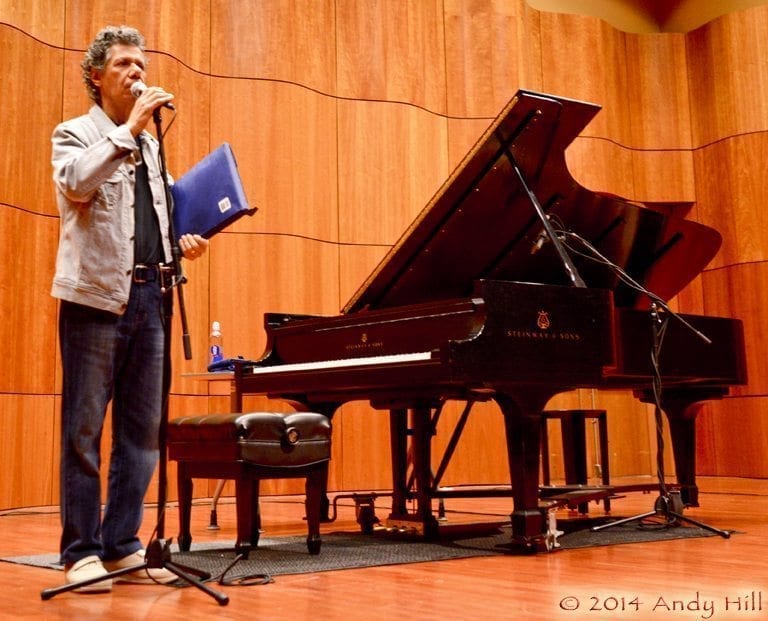 Remarking that Thelonius Monk was the “most profound jazz composer,” he treated the audience to “Pannonica,” elegant and melodic, and “Work,” plucking the internal strings for an added, deep bass sound and a highlight of the evening. Continuing with tributes to those he admired and called friends, he spoke of Stevie Wonder, who he first met in 1972/1973 at The Bitter End in New York City. Having recently discussed American standard songs, such as “My Funny Valentine,” Stevie said to him “What about new standards, like my music?” Donning a flannel shirt, Chick played “Overjoyed” and “Pastime Paradise,” which found audience members mouthing the lyrics to two classic Wonder songs.
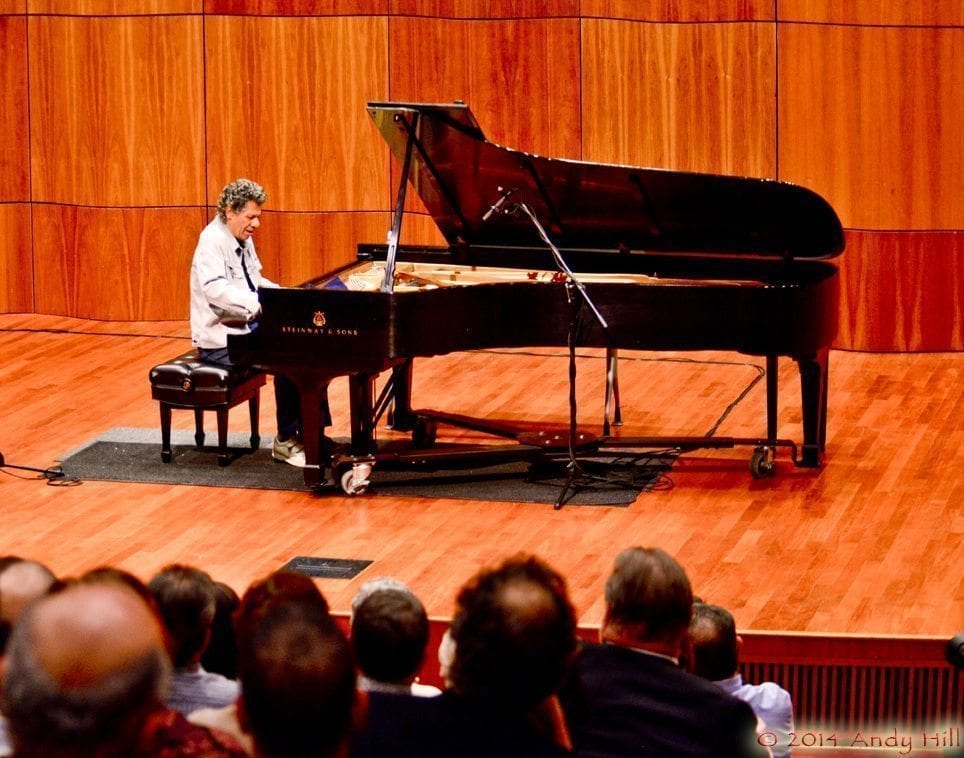 “I have an idea,” said Corea. He wanted to create portraits, also the title of his latest double album, chock full of solo performances. He invited audience members who were interested to come down and have a seat next to the piano while he improvised their ‘portrait’, much as a visual artist might do, but in this case, his medium was the piano. Four audience members were given a rare treat – a personal composition based on nothing more than their name and appearance.
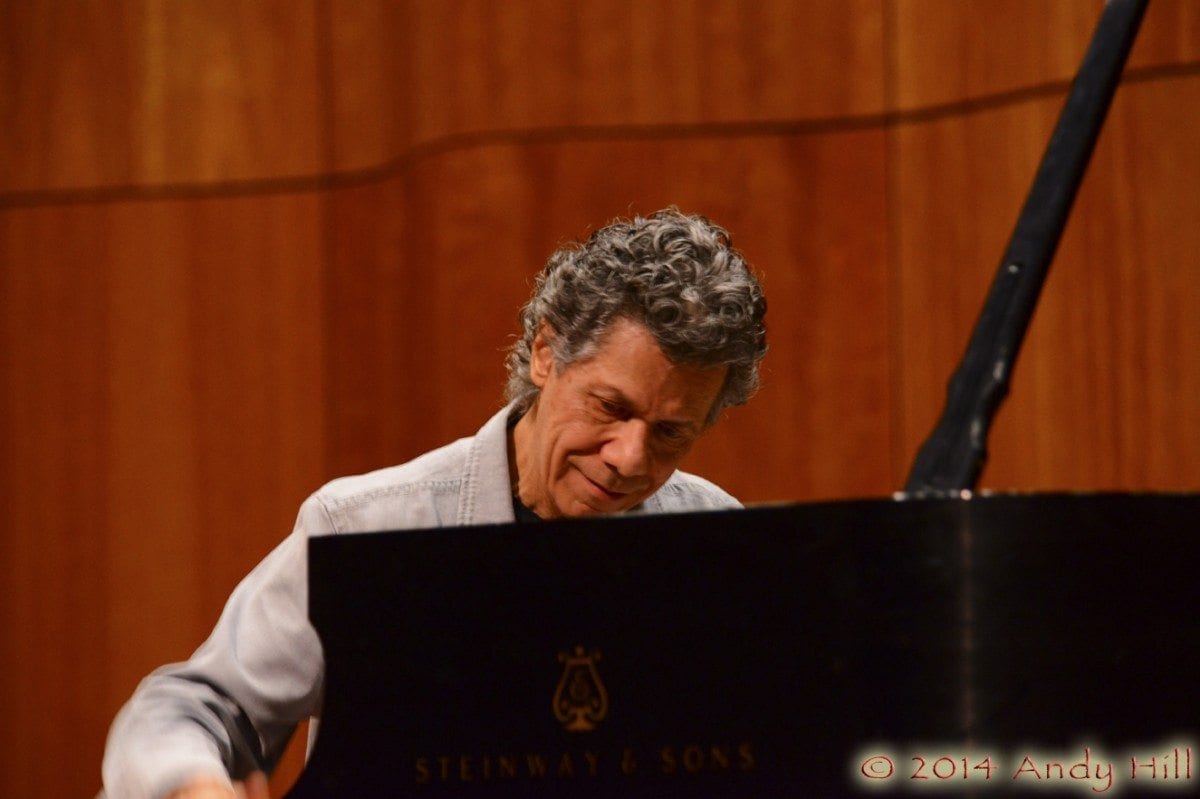 Portrait #1 was for Nancy, a Kindergarten teacher, a lovely number that seemed to combine the theme to ‘Mr. Rogers Neighborhood” and springtime. Portrait #2 for Richard in his off-white suit had a Billy Joel mid-70s vibe. Portrait #3 for Lorena ‘from the mountains’ (Inlet, NY), sounded like
 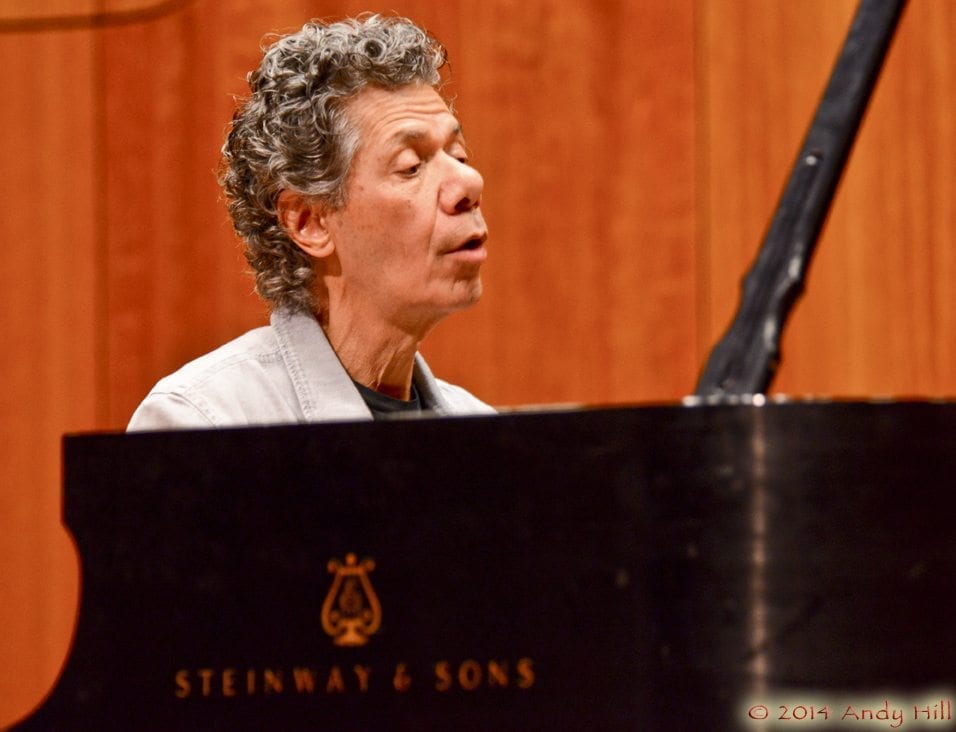 Some of Corea’s “Children’s Songs” could compared to The Grateful Dead’s “Space”, with added piano accompaniment. Ending with a flourish and an audience cheering for more, Chick quietly left the stage, the audience left to catch their collective breathes and reflect on the masterful performance they had just witnessed.