Category: Interviews

  • Interview: Erik Danielsson, Watain and the Brooklyn Ritual

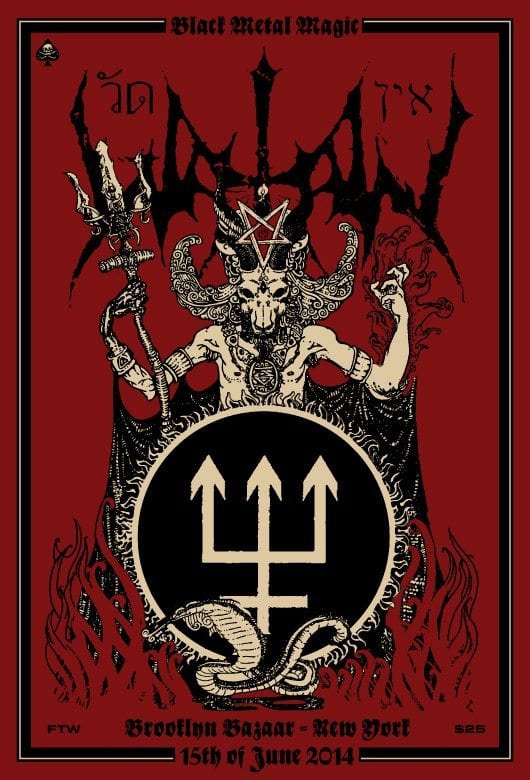
    After an unprecedented and unexpected announcement that Watain will return to the US for the last time this year, we caught up with front man Erik Danielsson for an exclusive insight of what can be expected of this ritual on Sunday June 15 at the Brooklyn Bazaar.WatainTickets for the show can be found by clicking here
    Kassandra Carmon: Hey E! Its’ been a while since our last interview. How are you finding yourself?

    Erik Danielsson: I’m good, it’s been a very eventful year so far. It’s been very hard here, in both good and bad ways. We had gone through a lot of difficult things and good things and we came out before the summer starts.. I feel about a 100 years older since we last spoke, but that can mean something beautiful I suppose.

    KC:  So you’re playing a very unexpected show in Brooklyn in about a week at the Brooklyn Baazar, this show pretty much came out of the blue, how did this come about?

    ED: Pretty much like this: some guy from Brooklyn got in touch with us and pretty much said “Hey we heard you guys have never been able to do your whole show with pyro in the states, how about you play a show in Brooklyn on the 15th of June, because we have a venue here where you can do it. ” We were like “fuck, how is this going to work?”  but we actually made it work, we and a lot of good people around us made it work. We actually owe a lot to our Watain Disciples, because they’ve been extremely supportive and  helpful we everything we need, since all of this was very short notice booking. We have been getting a lot of help from them and other devious people who have really been able to help out, with it actually looking very promising. Basically, we were bound for Europe and we were going to do a festival, so it was very out of the blue for us, like you said, but we took the chance because it’s a good opportunity to do something we have been wanting to do for a long time mainly, bringing a whole Watain show across the sea .

    KC: This show promises to give the New York fans the full Watain experience, of course there is a lot of talk about the use of fire and blood, what can your fans expect?

    ED: I don’t know, I don’t want to sell like ‘come to the show, we are going to do this and that’, that’s not how it works, but I will say this much working in the states means working with a lot of uptight people, it means working with right wing Christian fucking uptight cunts everywhere, unfortunately. But it always comes to playing shows… but this time around we don’t have to do that, that means that we can, what can i say, it’s going to be a little bit more, or a lot more perhaps that American fans are used to to see at a Watain stage. And what that is and  how exactly that’s going to happen its for those who come to the show to experience, but  all along it’s going to be something else.

    KC: It’s kinda like a treat for us, we never get the fire and all of those things.

    ED: Yeah I suppose, for us it seems good because we have never done it in the us,  but for us is like doing a show like we do back at home, but you know I’m exited as well because of the fact that people haven’t been able to see all that, so for us a another adventure.

    KC: It was also mentioned that this would be the last show in the summer in the USA, are there any other plans to tour the United States in the future?

    ED:  There are but they are pretty far ahead of time, as it looks now this is going to be the only US show for the year and it’s because of a lot of reasons, first and foremost doing a show like this now, with the full stage we don’t see another reason to come back doing anything less. We want to find someone we can actually work with to bring the full show in a public scenario… not settling for less. I mean all the U.S. tours we have done have been very special in a way, we really never compromised in the nature of the show, just the different ingredients, but just for the reason that we are not legally allowed to do certain things  and we are kid fed up with that kind of limitations some point we were going say fuck it we are not going to tour if we cant do what we want to do, and this Brooklyn show is a good start.

    KC: It will definitely set up the standard for future tour, you won’t settle for less

    ED: I mean its not all about what you have on the stage or whether you can use pyro, that’s not what Watains concept is all about, but its of course were you draw a line

    KC: Well I am very exited for the show as well, as a photographer, I’ve never worked with fire and pyro so I should be able to get some good shoots throughout the night

    ED: There should be some good opportunities for that

    KC: But as you know I am more of a local photographer, and I know of other press who is coming outside of the NYC area, as well as other fans making the journey, what do you have to say to those fans who are coming from far away to the Brooklyn show?

    ED: It’s going be worth every inch of the trip, because it’s something that we have with our fans and our followers, we always meet a lot of people who make these trips and for them our concerts become, or are a pilgrimage something very important. And I like that idea, the idea traveling a long way to arrive that will eventually explode with fire and chaos. I think there  is something very important and beautiful in there that I fully support and that people are making these trips means a lot because that’s a lot of the energy in the actual concert, knowing that those people are there…

    KC: Well, it’s nice to know I will be seeing you guys soon and we wish you the best of luck with the last minute preparations and details.

  • Interview: Tech and Music with DJ Scarecrow

    Back in May we rejoiced over the celebration of Geek Week, and had plans on speaking with DJ Scarecrow out of Albany about how advancements in technology have influenced his craft.  But, our schedules conflicted, and we couldn’t get together in time.

    Nevertheless, we ultimately caught up with Brian Mattiske, also known as DJ Scarecrow.  Scarecrow’s professional career dates back to the mid-90s, lending him a healthy perspective on how technology has changed the game from spinning turntables to pressing keyboards. Though software makes certain aspects of the trade easier for the novice, Mattiske is quick to remind you that knowledge and skill still separates the men from the boys.

    traktor

    Michael Hallisey: Okay. Let’s go: For starter’s, why don’t you breakdown your musical résumé for us.

    Brian Mattiske: I got into “club” music when I was in high school. Besides the usual stuff, I happened to have a couple friends that were [fraternity] brothers that moved up here from Long Island. So, they introduced me to NYC club music and I was hooked. I then started DJing in my bedroom using my dad’s old turn table, a cassette deck and a SONY Discman. I had always been doing production type stuff since I was in like the 3rd grade with my dad’s dual-cassette deck and other equiptment. Mostly, I recorded stuff from the radio and edited to my own tapes. Then, when I was senior in high school, I bought another turntable. So, then I could do more legitimate mixing. I still remember the first two records that I mixed were C&C Music Factory – “Gonna Make You Sweat” and Mr. Lee – “Get Busy“. All throughout high school I used to take my allowance and go to the record store every week, so I already had a decent record collection.

    MH: Then you went off to college? Did you continue on while at SUNY Oswego?

    BM: Yes, throughout college I had my setup at home in the basement, so whenever I was home I just kept practicing my mixing. Then, when I was a junior in college I did my radio show with a fraternity brother on Saturday nights. We played club and hip-hop music, which I felt was appropriate for a Saturday night show. We would also have other brothers and friends come in or call in and we did sort of a goofy morning show at night. I still have a tape of outtakes of that which I NEED to get to digital. Then when I was a senior in college I started DJing some fraternity events and parties. Right out of college I got my internship with Z-Rock. We did a semi-goofy Saturday night radio show, but it was alternative and hard rock. Unfortunately, Z-Rock went out of business. Then I was kind of left doing odd jobs until I ran into my partner/supervisor from Z-Rock several months later.

    20140604-215329-78809256.jpg
    DJ Scarecrow has gone from dual-cassette tape decks to fully digital formats.

    MH: Z-Rock out of Albany?

    BM: Yup.

    MH: When did you take on the name Scarecrow?

    BM: Scarecrow is my fraternity nickname. I just decided to use it as my DJ name because it suited me in a way and it was unique.

    MH: How’s it suit you?

    BM: Well, I was kinda tall and skinny. Much skinnier than I am now. [Laughs.] And, I was goofy. It came from the scarecrow in the Wizard of Oz. So, when I ran into my friend from Z-Rock, he asked me if I wanted to get into the mobile DJ business with him. So, I just started doing it with him. All kinds of events. But, I really loved the club DJing still. He had a few of those gigs, so I got to tag along and he’d let me spin. Eventually I started filling in for him and some other DJs. Then finally landed at the Lamp Post/Oasis with another friend where I was doing most of the spinning. There I could finally play all the NYC style club music. I did both hip-hop and club there though.

    MH: Who are your mainstays, artists in particular?

    BM: Well, I really go for a variety when it comes to my music. Some of the producers that are pretty consistent in my rotation are: Tiesto, Deadmau5, Sander van Doorn, Armin van Buuren. When I started mobile DJing, I was turned on to DJ remix services like X-Mix, Funkymix, and Ultimix. I still use those. They give you lead ins and outs for every track, with some additional production added, and they provide “clean” versions of hip-hop tracks in particular.

    MH: I understand you’re still mixing today. With that said, that brings your timeline of experience beyond 20 years. You spoke of starting off with cassette tapes and needing to go digital with your old stuff. How has technology changed your craft? For one, there’s little “spinning” involved today.

    BM: Haha, yeah now it’s my hard drive that’s “spinning”.

    MH: What kind of hardware and software are you dealing with to do the job?

    BM: I use a Toshiba laptop along with the Native Instruments Traktor DJ software and their S4 Controller. I keep all my music on a 1TB hard drive so that it can be portable. One of the drawbacks of using all digital are the common problems that come along with it. For example, at the end of last year my music drive died and I had to pay a lot of money to recover data I would have lost. I now subscribe to Carbonite.  Can’t have that happening.

    MH: You need a high-end laptop? What’s under the hood of your Toshiba?

    BM: Yes, you definitely need a high-end laptop. You need a lot of RAM and a good processor. I also learned the hard way that you should never have an integrated video card. They don’t play well with the DJ software. One “problem” with digital DJing in general is that it makes it too easy for the average Joe to say they’re a DJ, when the equipment is doing the work for them. However, most music made before the turn of the century was not perfectly digitalized beats, so you do need to have some skill to mix that. What it does provide is the opportunity for artists to focus more on the production side than just on mixing. You can still scratch and do tricks if that is your thing. At first that was a problem, but now the technology has advanced to the point that it’s no longer necessary to only do that on vinyl. Plus you can now use your vinyl with the digital equipment and software. I have sold most of my vinyl because I was almost exclusively using CDs for all those years of DJing up until a couple years ago.

    Now, I’m selling my CDs and will only be using music files. You can find my CD collection on E-Bay. [Laughs.]

    I do still keep a few records and have a turntable for historical purposes. Also, I’d like to show my kids that. There were a few artists that I collected almost all their record singles: The Prodigy, Depeche Mode, and early De La Soul. Eventually I stopped so I never had them all, but up to a point I did. I have some De La singles that I got in Europe and cannot be bought in the US.

    De La Soul – 3 Feet High & Rising is my favorite hip-hop album of all time. And I’ve never listened to an album as much as I did that one. I listened to it every day for at least 3 months. I wore out the tape, bought another, wore that out, then bought the CD.

    I’ve always believed that song selection is the main key to DJing, so even with the greatest digital equipment, you aren’t necessarily a good DJ. I’ve always prided myself on getting people excited about tracks they don’t know rather than just the same stuff they’ve heard a million times.

    MH: Otherwise the software is fairly user friendly?

    BM: Hmmm, yes I would say it is user friendly. There is A LOT you can do with it though. So, it’s really about putting in hours of practice.

    MH: How does it have an effect on your craft? Does it flatline the learning curve for novices, or does it add more tools to the trade for vets to use?

    BM: I would say a little of both. Like I said, it makes it easy for someone that has never done it before to be “mixing” almost instantly. However, it does add tons of tools that experienced DJs can use and add all sorts of production aspects to their mixes, like loops, effects, samples, etc. The instant access to your full music collection is probably one of the best advantages. You don’t have to dig through record crates or CD’s. Plus it’s way more compact and portable. But it’s so great to literally type a song , artist, or anything into the search and have it instantly filter. So, if you walk up to me and request a song that I may not be familiar with or by a certain artist, but you don’t know the song, I can pull that up right away and see if I have it. Cuz you always have those people that think you are Creskin and they can walk up and say, “Hey do you have that song that goes, blah blah boom tap?” [Laughs.]

    MH: Okay. Last question: where do you see things going with the influence of technology on DJing?

    BM: Hmmm, that is a tough question. It’s hard to see it get even more advanced that it has, but I know it will. They keep coming out with more and more hardware that can be added to your setup to make on the fly production even easier and give more options for more creativity. I can see touch-screen technology being more integrated into it, but there’s always a certain hands-on element to DJing, so I don’t see that ever being taken away. It’s just changed as to what equipment you use and the capabilities that equipment has.

    MH: Sweet. Thanks for taking the time.

  • Hearing Aide: Rebelution ‘Count Me In’

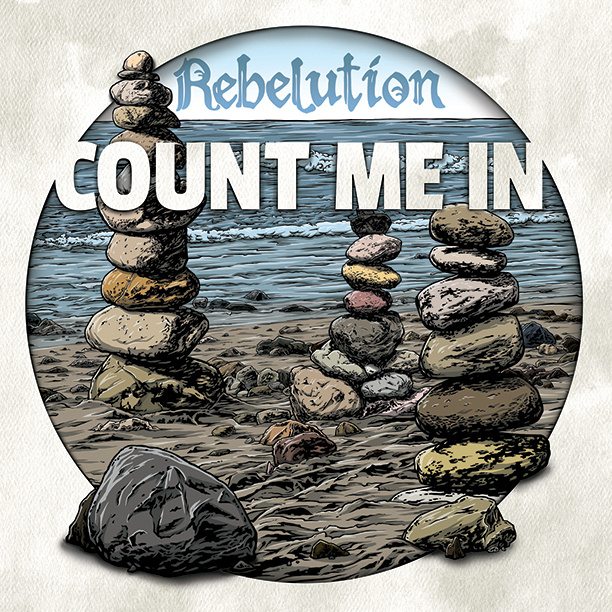
    Cover of 'Count Me In' Despite the conflict-laden name, Rebelution has a way of coloring everything with positivity. The band has always led with that feel, both lyrically and musically. Now in their tenth year, Rebelution is releasing their fourth studio album in Count Me In with many of their fans eager to hear what the Cali-based foursome have been working on as of late. While I’ll say that they certainly delivered, there were still a few surprises in there along the way and a few that were close to instant classics for me.

    The album opens on the title track, featuring a rolling bass line that almost has a swing to it and full of upbeat the band is known for. When I asked drummer Wesley Finley about how they decided to open with this one, he said, “I do have to admit that we struggled with the track order quite a bit this time, all the way until we were going to print! Since we titled the album after the track, it eventually made sense to put “Count Me In” first. Besides that, the track really embodies the general sound the band represents so we figured it would be a good introduction.” These guys haven’t made it to their tenth year missing the mark and the opener is no different.

    With all that said, the first song is merely a setup for the album standout “De-Stress.” That might’ve been by design though as Finley says, “We followed that up with “De-Stress” because it’s up-tempo and keeps the momentum building.” The opening one-two punch is a great start to the album and a possible set opener we might see this summer. The driving intro of “De-Stress” in and of itself makes the song, but singer Eric Rachmany hops around the rhythm with his delivery and adds another dimension to this track. The chorus of “And I might stress/Yes I might stress/ Too blessed to be stressed” are some nuggets we could all live by. In the world we live in today, a little de-stressing could do everyone some good.

    As the album progresses through the tracks, two stand out in back-to-back fashion once again: “Lost in Dreams” and “Fade Away” showed some growth and experimentation from the band. In some cases it felt and sounded great, like the soothing close of “Fade Away”, but something held these two back. That being said, young bands could learn from these guys as Rebelution knows exactly where to push the boundaries; these two tracks weren’t far off. When asked about the creative deviation, Finley said, “We produced “Lost in Dreams” with a friend of ours named AmpLive, who is half of the hip-hop group Zion I and a beat maker for other hip-hop artists. We tour with them every once in a while and are mutual fans of each other’s music, so it was inevitable that collaboration would happen.”

    On that collaboration note, the album features two guest appearances in the form of “Hate to Be the One” (Collie Buddz) and “Roots Reggae Music” (Don Carlos). Both guests are great fits for their respective tracks. When asked about how they chose the two, Finley said, “Collie Buddz we knew from touring together. He had come up on a song or two of ours live onstage over the years and the band is a fan of his voice, which is distinct from him being Bermudan. We sent “Hate to Be the One” to him and he came back with a whopping verse that we were very impressed with and knew we had to use. Eric’s main vocal inspiration has always been the reggae veteran Don Carlos so we instantly thought of him for “Roots Reggae Music”. He too has come onstage to sing with us for years, mostly to his own song we covered called “Johnny Big Mouth”, so we thought it would be great for him to sing something new for us. Our sound engineer is the infamous Errol Brown, who worked closely with the Marley family for many years, so when we mentioned we were thinking of asking Don to be on the track he said, “Call him up and pass me the phone. I’ll get him to do it!” We all listened as they caught up over the phone in a thick Jamaican patois. It was a classic moment.”

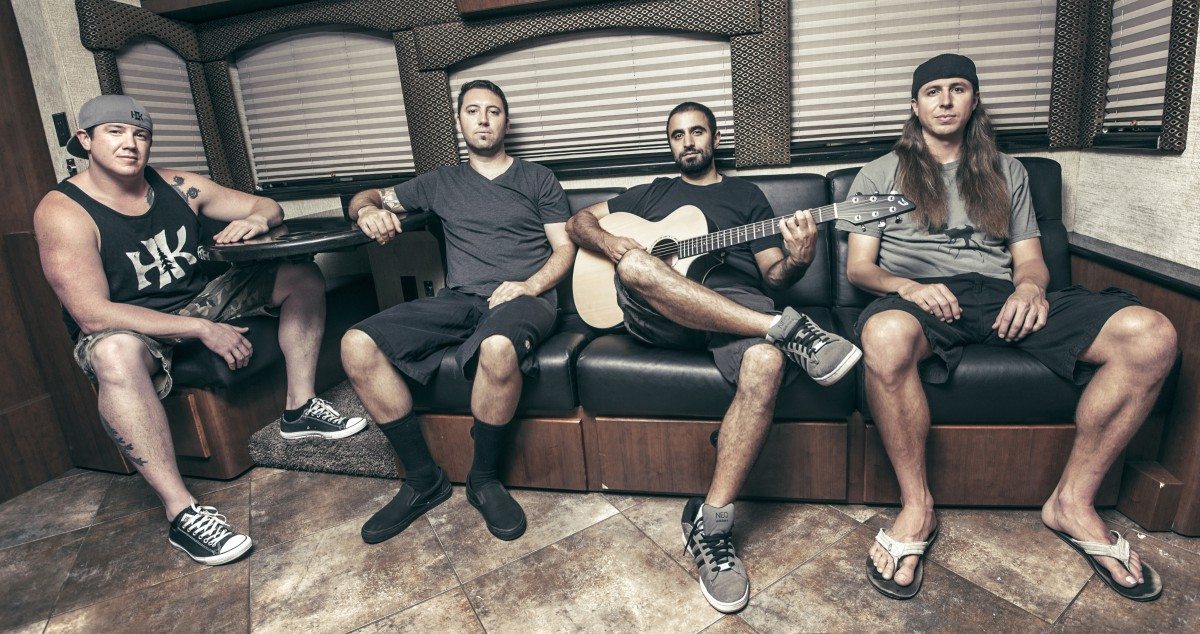
    Left to Right:  Marley D. Williams (bass), Wesley Finley (drums),  Eric Rachmany (vocals/guitar), Rory Carey (keyboards) Photo Credit:  Kurt Hudson
    Left to Right:  Marley D. Williams (bass), Wesley Finley (drums),  Eric Rachmany (vocals/guitar), Rory Carey (keyboards) Photo Credit:  Kurt Hudson

    The album wraps up on two songs that take a darker twist. “Against the Grain” starts off with a mesmerizing horn phrase that transitions to a vocal rally cry to whoever might be listening. The empowering words come with a hint of attitude and grit. The title is the perfect fit as it stands on its own compared to the rest of the album’s sunny positivity. It has almost a “Bad Boys,” fist in the air, fighting-for-your-beliefs feel with Marley Williams running a darker line to color the song. “Invasion” closes the album and keeps the rebel feel going. The last two songs are my favorite combo on the album and feature a darker, more serious tone for the band.

    It’s funny to think, now, that they struggled with the order of the tracks as they couldn’t have decided upon a better layout in my opinion. In flawless fashion, the band has woven together a cohesive, yet varied album that features what they’ve built their careers on while still progressing forward.

    The album drops Tuesday, June 10th, with preorders being taken here.  If you’ve been a fan of the band, or even looking to hear some new reggae, you’re going to want to check this one out.

    Key Tracks: Against the Grain, De-Stress, Invasion

  • Moby Interview – Mysteryland USA 2014

    While at Mysteryland USA 2014, writer/photographer Chris De Cotis had the opportunity to sit down on Sunday, May 25th for an interview with DJ and electronic musician Moby, not long after he arrived at Bethel Woods Center For The Arts. Richard Melville Hall is a classically trained musician who has been performing in the electronic dance music scene for three decades. He ascended to fame and commercial success in the late nineties while I was still in college and earned a Grammy award three years in a row from 2001-2003. I asked him questions about his career as a musician and about his perspective on electronic dance music, music festivals, and the music industry. His stage name is a nickname given to him at birth; he is a distant relative of Moby Dick author Herman Melville and is a part of a family with a long arts tradition.

    Interview Moby at Mysteryland 2014
    Interviewing Moby at Mysteryland 2014

    Chris De Cotis: How do you think music festivals have changed the music business?

    Moby: I first started playing festivals twenty five years ago, and mainly in Europe, because at that point festival culture didn’t really exist in the States. Festival culture in the States seems like it was Woodstock, then Altamont, then US festival, then there weren’t really that many festivals. And then Lollapalooza happened, which is a travelling festival. And Lollapalooza was a festival in that it involved a lot of musicians, but it didn’t feel the same way as like, a Glastonbury. And then slowly European festival culture came to the states, Coachella being one of the first really big European-style festivals, and now, it’s everywhere. And I think, one of the ways it’s changed the music business is that the utility, or the criteria by which a lot of music is judged now is ‘how does it work at a festival?’

    Still, a lot of music is judged on how it works in your living room, how it works in your car, how it works in your earbuds when you’re going to work. But now, there’s this… like dance music, most music played here isn’t the sort of music you’d necessarily want to listen to at eight o’clock in the morning when you’re making breakfast, but it has a utility where it makes perfect sense here.

    CD: How do British festivals compare with American festivals?

    Moby: It’s very hard to generalize. There are great European festivals, and there are shitty European festivals. There are great American festivals, and there are terrible American festivals. They’re neither better nor worse, they’re at times different and at times quite similar.

    CD: Outside of the PR part of it, your set, and then the Speaker’s Tent engagement, will you get to see any other parts of the festival?

    Moby: I have about three hours between the public speaking I’m doing and my DJ set, and so I’ll be walking around, probably going to a vegan food truck and going to different stages, seeing what’s going on.

    CD: Is there anything in particular that you really want to see?

    Moby: To be honest with you, I haven’t really looked at the festival lineup. The nice thing about a festival is that you can wander around and be randomly, accidentally exposed to things.

    CD: Do you have a favorite genre of EDM?

    Moby: No, I like everything. I mean, when I’m home I listen to a lot of, you know, I listen to WC and I listen to Led Zeppelin, and I listen to Pantera and you know, I like everything.

    CD: Do any one of these genres inspire you right now, more than any other?

    Moby: No, again, I just like everything.

    CD: Do you think dance music is, or will be, or has been considered ‘pop’ music, generally?

    Moby: The funny thing is, if you look at the state of electronic music in 2014, there is Lady Gaga, and then there is, you know, big pop records that are made by electronic musicians, and then there is obscure, minimal Berlin techno which will never get played on the radio. As a very broad musical genre, it can exist at the most mainstream and the most underground concurrently.

    CD: Has it become harder for you to evolve or progress as a musician as you’ve achieved more success?

    Moby: I don’t know. My goal as a musician is just to make music that I love, and hopefully in the process make music that other people like, or that other people love. I’m not too concerned with evolving or progressing, I’m more interested in just how the music resonates with people emotionally.

    CD: What other things that you are passionate about has your success allowed you to pursue?

    Moby: I’ve been an animal rights activist for a very long time, and so, as a result of whatever random, weird success I’ve had, I’ve been able to financially help different animal welfare organizations, and environmental organizations and human rights organizations, and I think, as a quasi-public figure, when I look at an issue that I’m interested in or concerned about, it’s figuring out how to be the most effective activist. And sometimes that means just donating money, sometimes it means speaking out about it publicly and trying to draw more attention to it. Sometimes it means getting creatively involved with an organization to see if I can help them in other ways.

    CD: What topic will you be discussing at the Speaker’s Tent today?

    Moby: I started working about ten years ago at an organization called the Institute for Music and Neurologic Function. It was started by Oliver Sacks, who is a neuroscientist, a neurologist. I will be talking about music therapy from both the personal anecdotal level and from a clinical level. Looking at the science behind music therapy, how it effects the endocrine system, how it affects neurotransmitters.

    CD: What is your assessment of the dance music scene over the past five years, and where do you feel we will be five years from now?

    Moby: My background is very strange. When I was really young I played classical music, and then I grew up playing in punk rock bands and studying music theory. Djing and electronic music is… something I came to later, for me.

    What’s been very interesting, because I started making electronic music in the late eighties, and at that point electronic music really was a ghetto, and now, practically speaking, it’s become like the most ubiquitous dominant musical form on the planet. Because every hip-hop artist, most pop artists, dance artists, they all use the same equipment. I don’t think it’s overstating it to say that probably eighty to ninety percent of the music currently being listened to on the planet is produced in some context electronically, and I don’t see that ending because the means of production used to be so much more complicated.*

    Now you just need software, and I feel that the ubiquity of the software, and how egalitarian it is means that anyone can make electronic music, and I just see that continuing to lead to electronic music just being so ubiquitous.

    Stay tuned for Chris’ review and photos from Mysteryland USA.

    *Ed. note:  The late eighties and early nineties marked the beginning of a large growth in the availability and variety of specialized professional audio equipment like synthesizers, drum machines and samplers to more people and at lower, yet still generally high prices.

  • An Interview with Marco Benevento Before Friday’s Stop at Nietzsche’s

    Marco Benevento is coming to Buffalo this Friday for an intimate night of music at Nietzsche’s and sat down for an interview with Jeremiah Shea.  The experimental pianist, who’s known for his engaging live show, will be joined by his band which features Dave Dreiwitz on bass and Andy Borger on drums.  The three were last in the area when they headlined the Night Lights Fall Music Festival this past September and fans of Marco have been eagerly awaiting his return.  Opening up the night will be WeazilDust (Packy Lunn from Jimkata doing a DJ set) and Lazlo Hollyfeld who play regularly in the area and will add to a night of great music.

    https://www.youtube.com/watch?v=ABW_fIufv9g

    I got the chance to sit down with Marco and discuss a few things from his upcoming album to his approach to the stage.  Marco is exactly how you’d expect him to be when we talked: personable, genuine, and appreciative of all of the support he’s had throughout his career.  Our talk only lasted a half hour, but the insight into his music and life went pretty deep as his candid answers were anything but rehearsed.

    IMG_4160Jeremiah Shea: It’s been a little while, but what was the experience like having Holly Bowling sit in with you on more than one occasion?

    Marco Benevento: It was awesome!  The first time it happened, we were playing in San Francisco and the audience was really close to the stage.  The point of the gig was a fundraiser for Bread and Roses and every cent that came into the door went right to that organization.  Nobody got paid for the gig, it was just volunteered time.  Because we were setup so close to the audience, people could actually reach the piano from the audience and press a key down.  I was jokingly saying, “It’s $2 if you want to reach up here and play a couple of keys.”  People just got out singles and were holding money in the air to reach up and play.  Holly just jumped up on stage and I was like, “Oh shit,” but she sat down next to me and said, “Don’t worry, I’m not a crazy fan and I’m friends with Dan.”  Dan is our sound guy, so I knew it was ok and she jumped right into “Atari.”  We totally rocked out and she knew the changes, and then we recreated that same experience at the Highline Ballroom in NY.

    JS: I know you guys are experienced in improvisation, but how was it being the one who was surprised?

    MB: Oh it totally made the night, especially in San Francisco.  There were a lot of people who thought it was planned, so it was a cool experience.  I was totally taken back by her knowledge and how she just knew all of the chords and didn’t flinch.

    JS: You’re a guy who is always testing new ideas and mixing things up musically speaking.  What new projects have you been working on?

    MB: Yeah, my band, which includes Dave Dreiwitz on bass and Andy Borger on drums, went out to Oregon and we recorded with this incredible engineer/songwriter, Richard Swift, who is my age and plays with The Shins and The Black Keys.  He’s just this genius engineer with a studio outside of Portland and we made the record with him that is primarily a vocal record.  It’s all new music I wrote and instead of being instrumental, I put words to my melodies.  We’ve been testing it out a lot lately, but the new record is the biggest project we’ve been working on.

    JS: Is the plan to still have the album out this Fall?

    MB: Yep!

    JS: Now the vocal approach is a little different from what you normally do.  Was that Richard’s idea or yours?

    MB: That was my idea going into it and prior to going into it, we had made demos at my place before we went in.  I knew I wanted to do it and I thought I should do it with a guy who has done a lot of that stuff.  It was all something that I had planned out, but I wanted him to be the guy to capture it all.  We did it in three days and it was just a very natural evolution of sound for me.

    JS: Have you been tinkering with any new gadgets lately for your rig?

    MB: One of my favorite gadgets is my Boss DR-3 delay pedal which was made back in the 70’s or 80’s and is just rockin’. I also have this Casiotone RC-1 which is predominantly featured on the new record.  I sampled a lot of it from the Casio that’s here in my studio and it’s one of the best drum machines I’ve ever heard in my life.  I want to do a whole album with it because it’s that amazing.  The RC-1 has been rockin’ it for me and I never see it for sale or find anyone that knows about it.  It’s just a hidden gem that is so badass.

    DSC07262 (1) copy

    JS: How was your experience at Bowlive this year?

    MB: I’ve been doing that with them for about the last five years and it was great.  They asked me to do it this year, and I said yes, but only if we covered “Soulful Strut” by Young Hault and “The In Crowd” by Randy Lewis. Those are both old school, funky piano jams from the 70’s and were instrumental hits at the time.  It was a lot of fun and they have a great thing going over there.

    JS: You had a pretty packed schedule at this years New Orleans Jazz and Heritage Festival.  How was that experience as a whole and what was your favorite gig?

    MB: I played about 1-4 gigs a day over the course of ten days, so it was busy.  I got the chance to play with George Porter, my old band, and a bunch of other gigs.  It’s always fun to play Jazz Fest.  My favorite gig was probably playing at the Fairgrounds right before Phish with Anders Osborne.  Playing for that many people at the Fairgrounds is a real treat.

    JS: You are very personable on stage and it seems as though you like the interaction with the crowd.  How do they shape the show and what does it do for you to have that back and forth?

    MB: You get so much energy from the audience.  If there’s 50, 200, or 2000 looking at you, dancing with you, and listening to you, you feel that when you’re on stage.  It’s hard to describe, but you feel that.  You can sense that maybe a lot of them are on acid and it’ll be a weird night or they’re drunk and belligerent, and we play to that.  We never write a set list down, so when we go on stage, nobody knows what’s going to happen.  I try to feel out what the crowd wants to hear next.  You can ignore that feeling from the crowd as a musician and play what you’ve already decided on playing, but I don’t like to do things like that.  I like to go out there and think, “what do these guys want to hear?”  You really get a sense of what the audience wants while you’re out there being focused on.

    JS: You’ve said this past year that you wanted to do a residency at the Red Square in Albany this upcoming Fall.  Do you have any details on that?

    MB: The last time I played a gig there, I was egging the crowd on and announced on the mic, “Tell the Red Square we want to play here every Saturday in October,” and the crowd went nuts.  What I said leaked online and we had planned to do it, but the promoter had his hesitations.  We were talking about doing it this October, but I don’t think it’s going to happen unfortunately.

    JS: What upcoming festival gigs are you most looking forward to and why?

    MB: We’re doing this really great one in Oregon, just outside of Portland, called Pickathon.  It’s incredible!  It has such a wide variety of music there and I just really like it.  It’s not every jam band you’ve ever heard of playing there, it’s more a big variety and I just love that!

  • The Unveiling of Grandma’s Studio: A Multipurpose Venue and Studio

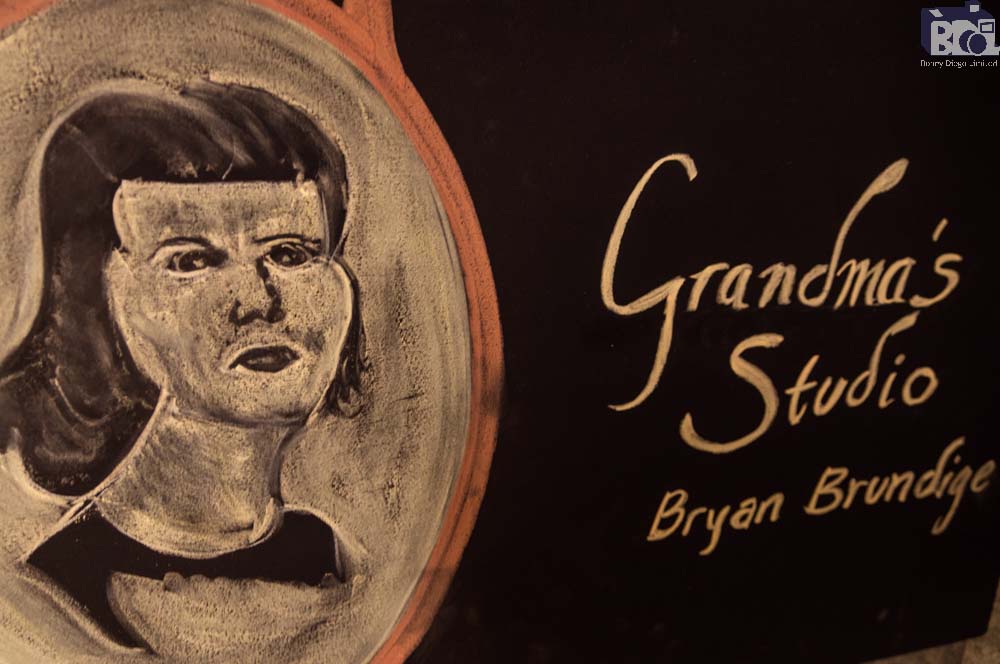
    Bryan Brundige is a man who wears many hats. He is a producer, musician, band manager, Grandma’s Studio owner and songwriter. He is most prominently known as a horn player in The Chronicles, but suffice to say, he is well versed in all things music. Brundige is not only cultivating his own dream of running a studio, but his efforts are inadvertently bringing a music scene to Albany. He is perhaps, the gatekeeper as well.

    20140502 - PJ Katz and The Fat Buckle Band 3

    Brundige has planned, developed and now executing his business of music. He has a multi-room studio with digital and analog recording options. He has a number of various instruments if needed from a baby grand piano to drums, providing accessibility for band-client options. Through the concept of the Albany Barn – a live and work-space dynamic – he is also able to give music fans a little something too.

    Tabitha Clancy: What is Grandma’s Studio?

    Bryan Brundige: It is a multi-faceted recording studio. I can multi-track record. I specialize in songwriting and arranging. I have a lot of connections with musicians so if somebody comes in and needed a horn section or a string section or a keyboard player or a guitar player, I can locate all those musicians. We’re not only a recording studio but also a production house in that we output music all the time. We have bands for hire, a rehearsal space, I can do voice-over work, I can mix audio to film, I can produce albums – I’ve done four at this point.

    DSC00353 (1) copy

    TC: Where did this idea come from?

    BB: My Grandma’s house. It’s the idea of the whole aesthetic of being comfortable while creating. You know, like when you go to your Grandmother’s house on a Sunday afternoon, and everything seems to be fine and dandy – chocolate chip cookies everywhere, that kind of thing.

    TC: As far as recording rooms, what do you have?

    BB: I have three rooms: I have an isolation booth, a live room and a control room as well as another closet in the control room for more isolation options. There is a venue out the front door in case I have to record an orchestra or something like that. I can do anything from a solo artist up to a 65 to 75-person orchestra.

    TC: The Albany area has been anxious for a new live venue. Is the bigger space available for booking shows?

    BB: Yes to a certain degree. The only hiccup is that it is attached to a residential suite, so it’s an interesting situation. Right now there is a curfew at 11pm; we’re trying to change that. This first show went really well and they are interested in having a concert series. I don’t think it will be a Thursday, Friday, Saturday night venue, but more of a concert space. For instance, once or twice a month. It is such a creative zone but the venue is also common space for every commercial tenant that’s there – all of our front doors go out to that space. It’s an interesting dynamic – a live-work-event space, and I’m excited to see what is going to happen.

    TC: Will alcohol be provided during live events?

    BB: There is not a bar attached and the Barn does not have a liquor license. The promoter is responsible for that kind of thing. It will have to be non-alcoholic events or it will have to be catered. Basically at all of our events will be local, probably Brown’s Brewery and Ben and Jerry’s ice cream.DSC00281 (1) copy

    TC: What are the stage dimensions and venue capacity?

    BB: 30 feet wide by 20 feet deep. It holds 400 people. Shows will typically be from 6pm – 11pm.

    TC: What types of bands are you looking to get in Grandma’s performance space?

    BB: Some bands that have been discussed are Chris Thile, Dumpstafunk, Marco Benevento, Railroad Earth, Soulive – medium sized regional and national bands.

    TC: Is the live space recording area separate from the venue area?

    BB: Yes, yes. My suite is about 700 square feet. It is a little tight, but it does the job. I have about a 20 foot by 16-foot room for the live room.

    TC: How does this relate to the Albany Barn?

    BB: The entire building is The Albany Barn. Part of it is residential and part of it is commercial. There are 22 artist lofts and about 11 commercial tenants. They are all artists of some sort, and the idea is to all feed off and work with one another.

    Brundige is looking forward to a potential concert series in the works for the 2014 summer. The Chronicles have a few upcoming dates including a Sunday performance at the Albany Tulip Festival. Please follow links for more information.

  • Local Limelight: North Country Stalwarts Lucid

    Lucid is the top band in New York’s smallest market yet perform quite well in the larger markets throughout Upstate and beyond, making them true underdogs in the Upstate New York scene. This passion to prove their mettle has netted the band of 10 years a recent hit album, Home is Where We Wanna Grow, their own music festival, Backwoods Pondfest, a following of passionate fans, and of course, their iconic bus ‘Lucy’.

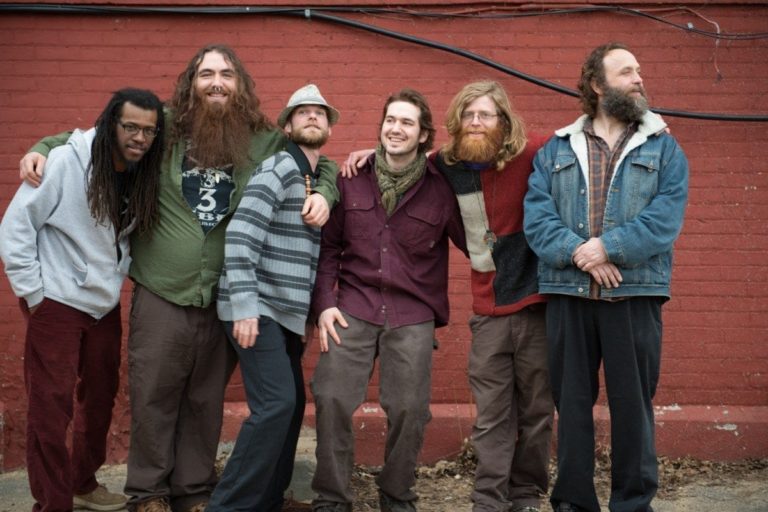
    lucidChampions of the inaugural March Madness tournament, Lucid embodies the North Country spirit and is one of the most successful acts to come out of the region. Playing a mix of rock, jam and funk and self-described ‘wood rock’ in their powerhouse performances, Lucid mixes the sound of six members to create a sound that can be imitated but not duplicated. Featuring Kevin Sabourin (guitar), Lowell Wurster (percussion/harp), Jamie Armstrong  (saxophone), Chris Shacklett (Bass), Andy Deller (Keys) and new addition Chris English (drums), the future is bright and the potential for a burst out of the Upstate area seems imminent for the septet from the northern 518.
    Pete Mason: How did Lucid first start out?

    Lowell Wurster:  Kevin (Sabourin), Jamie (Anderson) and Nick (Sauvie, our first bass player) played with a few different people, just jamming mostly, who found our first drummer, Ryan “Rippy” Trumbull. I knew Jamie and Kevin from growing up in Plattsburgh. One day I saw Jamie walking and we got to talking; he said he was playing with some guys and to come check them out. I went and really dug what they were doing. They were having so much fun and I asked them if I could come to a practice and jam a bit. After practice they asked if I wanted to be in the band! A few months later we were playing a show in Plattsburgh at this horrible place called Maggie’s and had a friend sitting in on keys. There was this dude (Andy Deller) yelling to our buddy what the key changes were. At break we asked our friend Steve who that dude was and he told us his name was Andy and a great key player at that. He played with us the whole second set and the rest was history. Five years later our bass player Nick wanted to pursue higher education instead of being in a band. We had a few fill in bass players until St. Patrick’s Day five years ago we had Chris Shacklett play a show with us, and it was like magic; he fit right in. That night on the bus ride home we asked him if he wanted to join and he said yes. After our first big tour down to Florida, our original drummer, Rippy decided he didn’t want to travel anymore. As sad as it was he decided to leave. we tried out a few different drummers and we asked Kyle Murray to join the fun. He rocked with us for about a year and a half. Kyle decided life on the road wasn’t for him and wanted to phase out as our drummer, then just like magic, Chris English popped up at the perfect moment. By the grace of God, Chris decided Lucid was exactly what he needed in his life and we knew he was exactly what we needed in ours. Chris moved up to Plattsburgh about two months ago and shit is beautiful now.

    Jamie Armstrong: Sabo, Nick (our original bassist) and I were spending time together playing music and hanging out. Stumbled into it really. Andy, Lowell and Rippy (our original drummer) came along shortly there after. We all had mutual musical interests and loved hanging out together, so naturally the band grew more and more over time as we bonded and our music developed. As some members decided to leave (as things started getting more committal) along the way, we’ve seemed to have perfect luck picking up new members to fill the role and evolve the band in a positive way. Great examples of that are Chris Shacklett, who joined on bass in 2009 and Chris English who recently joined on drums.

    Chris Shacklett: I joined the band about four years after the initial formation. The band formed for me when I graduated from Plattsburgh state in 2009 without having any idea how I was going to be an “adult”. Everything felt right from the very beginning and every place in time the band has taken me has been exactly where I needed to be. For my whole life I knew music was the main element of my being, but I never seriously considered playing music to be a career until I joined Lucid.

    PM: What are Lucid’s main influences on their music and style?

    Jamie Anderson : The band itself is very eclectic. We draw on many styles as we all have differing musical backgrounds. If I could some up a style for Lucid it would be ‘homegrown blues Americana.’

    Andy Deller: I think our home is the main influence. That and a stubborn refusal to pigeonhole ourselves in any kind of way. It’s hard to point to other artists that are influences. That is to say, each member brings his own particular influences. Our tastes do intersect; I don’t think there is a one of us who would say they did not like Zeppelin or The Beatles or Hendrix. But I am the only avid Rush fan I know of in the band, and the other fellas have their particular favorites. So we each bring our own thing to the total sound.

    Chris English: My main musical influence and style is all over the map. I’m into a lot more local artists than anything. Some of the music I started listening to at a early age include Donny Hathaway, The Clark Sisters, Buddy Guy, Paul Simon, Grateful Dead, The Funk Brothers, Stevie Wonder, and many more.

    PM: What separates the North Country from rest of Upstate? What makes it distinct?

    Kevin Sabourin: Wilderness, a deep appreciation of nature and life that comes with being a fairly self-reliant people who are hard working. Crafts people, music loving, tough, rugged and beautiful, like the surroundings in which we live.

    Andy DellerWhat separates us from the rest of Upstate is the Adirondack State Park, to be geographically obvious. We’re maybe a little more backwoods and redneck than the rest of Upstate – not that there’s a value judgment on that. It’s neither better nor worse, just different. To be more serious, I think the people in our area really make the difference; I’ve never seen audiences more gracious, more open to something new and different, or more ready to dance.

    Chris Shacklett: I don’t think there is any separation. Separation is not conducive to the band’s purpose. I may be saying this because I believe my scope of the North Country or Upstate is not broad enough to draw any borders.

    Jamie Armstrong: We live way up here in the Northern Adirondacks. Next to Lake Champlain. Fresh air! Being sandwiched between a beautiful mountain range and a huge blue lake is all I need. And the geographical diversity reflects in the people who live up here. The music community is encouraging.

    PM: For those who don’t live there or venture north, what is the music scene like across the North Country?

    Chris Shacklett: Don’t tell me this town ain’t got no heart. You just gotta poke around.

    Lowell Wurster: Well we are spread out up here, but there are amazing pockets of music lovers spread out around the ADK’s. Beautiful little communities that love original music. Folks up here look at music as a necessity, not a luxury. I’ve never met bigger music lovers then in the North Country. Plattsburgh is undergoing some amazing changes and I’m really happy and excited to be on several different community action boards that are helping spread art and music around the area. Saranac Lake is amazing and filled with real folks who thrive for music; their Winter Carnival is something to behold, hearty folks up there. I love it up there, right in the mountains and cold as hell. Backwoods Pondfest has brought tons of amazing acts to the North Country over the last eight years and with its continued success shows the thirst these mountain folks have for original music. They can’t seem to get enough.

    Andy Deller: Well, because of the audiences I described above, the scene is VERY diverse, creative, and supportive. On any given night you can stroll through Plattsburgh or Burlington and find any number of different styles – rock, blues, funk, reggae, metal, jazz quartets, and brass bands. What I truly love is the cross-pollination: people from highly diverse bands getting out and jamming with one another in impromptu acts. It happens all the time here.

    Jamie Armstrong: It’s very rich, with a wide array of styles and ideas floating around, but all held together by a supportive arts community. There’s a lot of support up here. Kids are movin’ and shakin’ and motivated. That goes for our community in general. A lot of great people are trying to make positive change all the time!

    PM: What other musicians do you think also encompass the spirit of the North Country?

    Kevin Sabourin: The Blind Owl Band, who have the same North Country work ethic and attitude that we do of going until the job is done and playing long hours and working hard.  The crowd has been busting there ass all day working, building farming, so we have to work as hard as they do for them.

    Lowell Wurster:  The one that immediately comes to mind is The South Catherine St. Jug band from years and years ago, Sven Curth (who plays solo mostly) but is in the band JIM who plays a few times a year and is made up of some of the North Country’s best.

    Andy Deller: The local artists that don’t receive much press, and maybe even avoid it: Trinity Park Radio, Will Scheifley, and his on again off again Shameless Strangers, Mike Pederson, Giovanina Bucci, Catie Wurster and her band Doomf**k – the list can go on and on. We have a huge, hugely diverse, and highly active music scene up here where people can take the time to have some real professional fun, and it’s all thanks to the audience – the people of the North Country.

    Jamie ArmstrongI guess to sum it up, there’s a lot of musical diversity in a very tight knit community up here in the mountains. People are trying to make things happen in a positive way up here. We love it.

    Chris English: I can say George Wurster is the spirit of the North Country. I love that guy.

    Catch Lucid on tour this summer throughout New York and select New England dates, wrapping up with the Lucid-hosted Backwoods Pondfest Music Festival.

    May 7 Firehouse, Rochester, NY
    May 8 Spring Revival, Macedon, NY
    May 9 Nietzche’s, Buffalo, NY
    May 10 Keegan Ales, Kingston, NY
    May 16 Shake the Mountain Festival, Solid Rock Ranch, NY
    May 22 Blarney Stone Pub, Norwich, NY
    May 23 Olive’s, Nyack, NY
    May 29 Nanola, Malta, NY
    May 31 Main Pub, Manchester, CT
    June 10 Church, Boston, MA
    June 12 Theos BBQ, Springfield, MA
    June 20 Shepard’s Cove, Lake George, NY
    July 25-26 BRYAC, Bridgeport, CT
    August 8-9 Backwoods Pondfest Music Festival, Peru, NY

    Lucid Website Facebook Twitter YouTube

  • Geek Week: An Interview with Scott Hannay, Creator of Umphrey’s McNES

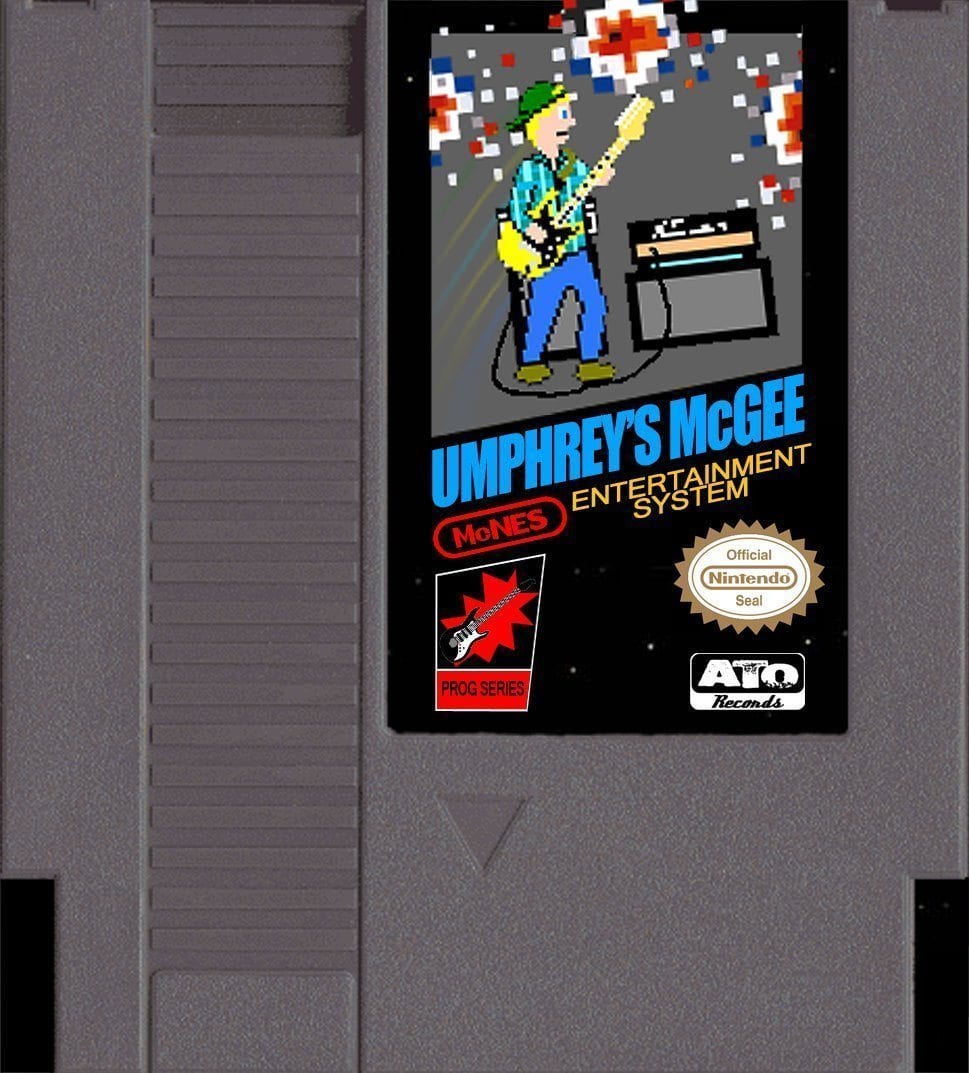
    As Geek Week continues, we catch up with Scott Hannay, keyboardist for Mister F, who also happens to have one of the geekier methods of composing music. Using software and Cakewalk SONAR, Scott rebuilt Umphrey’s McGee songs into the style of NES (Nintendo Entertainment System) songs, sounding like they came right out of the 8-bit games from the 1980s. With over a dozen tracks of Umphrey’s McNES and sit-ins with Umphrey’s, Scott has created one-of-a-kind remakes of the original tracks. He spoke with Editor-in-Chief Pete Mason to discuss his long running McNES music and how these tracks initially came together.

    Pete Mason: How did you one day decide to develop Nintendo remixes of Umphrey’s McGee songs?

    Scott Hannay: When I was 15, I used to transcribe old school Nintendo video game music – entire games’ soundtrack – to sheet music and MIDI files for fun (and instead of homework, usually) and learned a lot about the structure of the 8-bit NES sound chip in the process. I dealt with the limitations, workarounds, ways the old music programmers would simulate chords, making sounds, etc… Fast-forward to 2004, when I learned of Umphrey’s McGee and had been listening to (and absolutely loving) live recordings for a while via etree.org torrents, but never owned a studio album. At one point I visited my friends from Michigan that I’d met that year at moe.down who introduced me to UM, and they had the Anchor Drops album. When “Miss Tinkle’s Overture hit”, I knew right away what I had to do.

    PM: What challenges did you come across in lining up an Umphrey’s song to be developed in the NES format?

    SH: I hit many hurdles along the way. In the beginning, I still didn’t have any studio versions, and listened to the live versions of songs, sometimes pretty rough AUDs where I couldn’t always hear exactly what the bass was doing in this one spot, or the kick drum in another spot, and maybe the keyboards were muddled. To add to this, the NES can only make 5 sounds simultaneously – two square wave (lead) channels, a triangle wave (bass, mostly) channel, a white noise (cymbals, most snares, some SFX) channel, and a 1-bit DPCM wave (kick drum/toms, voices, some SFX) channel. For those keeping track, let’s recall here that that’s only 5 sounds at once – to try to represent the sound of a band with 6 people, each with 10 fingers across their two hands, making an exponentially larger number of notes than I could even begin to use at once.

    So much had to be either sacrificed or compensated for, like chord simulation for example. It’s a very signature sound on the NES – instead of playing a bunch of notes at the same time (which you mostly can’t), you’ve got to alternate the notes so inhumanly fast that it actually sounds like a chord. I try to be a purist to the NES capabilities 99.5% of the time. Their live versions also weren’t as definitive as an album version would be – there would be a lot of jamming sometimes, and I had to find the common denominators between many different versions of the same song. Oh, and one day, after I finally had some studio stuff, I started making my version of “Blue Echo“. I was too lazy to get up, walk across the room, grab the album, walk back across the room, and put it in, so I just started making it from memory. I ended up finishing it that way too, and when I finally listened to their version, I only had to change out two notes in one part each time that part came around – I learned no lessons about being lazy on that day. I guess this last one wasn’t really that much of a hurdle.

    Umphrey's McNESPM: What equipment do you use to create these?
    SH: I use just a simple piano roll-style editor and my ear to input notes in Cakewalk SONAR. The sounds come from a sample bank I found online long ago that sounded almost perfect – if you like out-of-tune music. I went through and tuned all the note samples, organized them by instrument, stereo panned them (in)appropriately. NES audio is supposed to be mono (there’s that other .5%) and ReWired the sounds into SONAR using Reason. Additionally, I have an NES cartridge (appropriately called MIDINES) that has a MIDI cable coming out of it that I can use to run one of these sequences from my computer. It’s not reliable enough to use for my regular tracks, but it’s certainly something special to hear something you’ve made playing through a real NES. There’s a video of my version of Prowler playing through it on YouTube.

    PM: Was there any word back from Umphrey’s after these started circulating among Umphrey’s fanbase?

    SH: Before I had even seen Umphrey’s live for the first time, I had already completed three remakes – “Miss Tinkle’s Overture”, “Bridgeless” and “Prowler”. Well, kind of finished. They all faded out before the end. But I thought of them as being as complete as this silly project needed them to be at the time. I posted them to The Bort, an Umphrey’s fan message board, to see if anyone had the same weird idea I had about their music. The reaction was great! I ended up finding a very supportive community surrounding Umphrey’s. That was impressive to begin with. When I first saw them at Revolution Hall in Troy, NY on 12/7/04, I introduced myself to them after the show and handed them burned discs with the songs. They all gave me hugs and told me someone had already burned it for them somewhere across the country, and they’d already heard and loved it. Brendan Bayliss even told me he showed them to his mom.

    This all blew my 20-year-old mind – that my favorite band out there was cool as hell, really appreciated what I’d done, and had actually heard something I’d made before I’d even met them. Since then, I’d stayed in correspondence with them and eventually was asked to play with them in at the Calvin Theater in Northampton, MA on 4/8/09, and I managed to sit in again in on 11/4/10 at Higher Ground in Burlington. They are very gracious people. I still can’t believe I got those opportunities when I did. I had at that point just finally broken into being in a jam-scene-friendly band – Capital Zen – and suddenly I had also become an asterisk on Umphrey’s setlists. I also have a track on their Soundcloud (“Miami Virtue”) and have had a track featured as bonus content for their album Mantis (“1348”).

    PM: What songs do you hope to convert in the future in the McNES style?

    SH: Lately, I’ve mostly been making remakes for Northeast-based bands, including the likes of Dopapod, Kung Fu, Twiddle, and Aqueous. I’ve had tracks featured on official lespecial and MUN releases, and another brand new one I made for Elephant Wrecking Ball will be on their upcoming release! What I consider to be the hardest one I’ve ever done for anyone is still currently unreleased – I’m so terrifically proud of it and really can’t wait for it to surface. I can’t give it away, but rest assured it’s from some unbelievably good source material. I’ll also be doing one for my band, Mister F, in the near future. However, there are a bunch of older Umphrey’s McGee songs I’d still love to remake someday. “Hurt Bird Bath”, “All in Time”, “Slacker”, “Utopian Fir” … one of these days! I am also considering doing something from their upcoming album, Similar Skin, just for good measure.

    Check out Umphreys McNES on Facebook and Soundcloud, as well as  Scott’s NES remixes of other bands

  • Venue Profile: Bogie’s in Albany, A Scene Coming Together

    While the venue is closer to 30 years old, for the last five years the local hardcore and metal scene in the Albany area have really called Bogie’s on Ontario Street home. To say that Bogie’s has character is like saying the Pope is a little religious – from the black walls and the sticker covered bathrooms, to the fliers thrown throughout the place celebrating past and upcoming shows. Above the bar there are signed drum heads and cymbals, each to tell tales of legends and start-ups alike coming through those doors, to play for the diehards that make up Bogie’s core clientele.

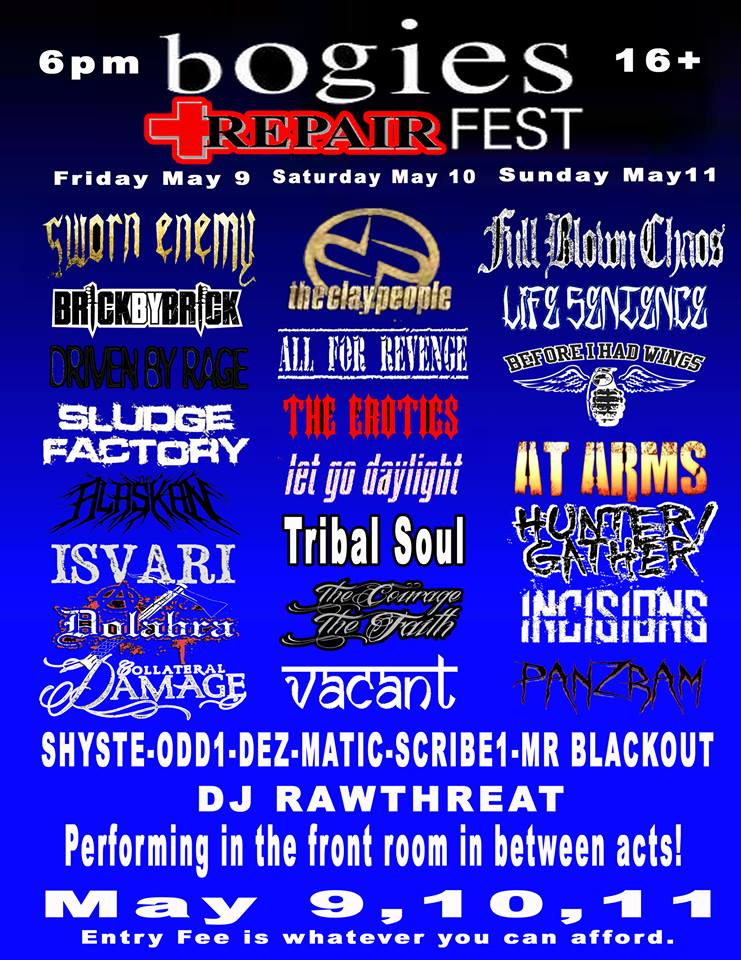
    This coming weekend Bogie’s is reaching out to the community for help. The music scene is not a lucrative one and to keep the metal and hardcore scene alive, Mike Valente is asking friends, family, and fans to come support the venue.  “Repair Fest” is a weekend-long show held at Bogie’s with some of the best local bands on the metal, hardcore and similar scenes. 

    Friday night headliners Sworn Enemy will be gracing the stage along with Valente’s own Troycore band, Brick By Brick.  Saturday will be headlined by local industrial rock band, The Clay People.  The music continues on Sunday with headliner, Full Blown Chaos.

    bogie'sNYS Music sat down with Mike Valente before a Goatwhore show last month and asked a few questions. Here’s what Mike had to say about Bogie’s and some of the memories inside those walls.
    NYS Music: How long have you run Bogie’s?

    Mike Valente: Five years.  

    NYS Music: What have been some of the more notable bands that have played here the past five years?

    Mike: Corrosion of Conformity, Tommy Tutone, Sepultura, Soulfly, Marc Rizzo, Stigmata, Black Flag, I could go on and on.

    NYS Music: What’s one memory that sticks out?

    Mike: Tommy Tutone (of Jenny/867-5309 fan) was blasted on something.  He was wearing sunglasses, chewing gun, he had the worst bus I’ve seen and he was hyped up really good.  He needed someone to sell merch, so Matt was helping him out and Tommy told him to sell signed photos for $3.  $1 for Tommy, $1 for Matt.  When Matt pointed out they were $3 and that only accounts for $2, Tommy ignored the question and told Matt that he should try to get a hummer from the girls.  Completely wasted.

    NYS Music: Repair Fest is coming up. What is it and what are some goals?

    Mike:  There are a ton of repairs needed here.  The bar is surviving, there is enough for salaries except mine and Ralph (Mike’s partner at Bogie’s) most the time.  The repair funds will go toward doors, floors, ceiling, bathrooms, coolers, etc.  This place has taken a beating over the years.

    NYS Music: Do you attribute the damage to the hardcore scene?

    Mike: Not the hardcore or metal scene.  Those guys are the most respectful, it is when we throw college parties that everything gets destroyed.  Like a tornado goes through here.

    NYS Music: Can you tell me about your affiliation with Black ‘n Blue out of New York City?

    Mike: Freddie and Cousin Joe, they are BNB.  They’ve helped a lot and have Black ‘n Blue Bowl, big names and they are only three hours away.  Upstate Black ‘n Blue is completely separate but we help each other out.

    NYS Music: What are some bands that played here before anyone knew who they were?

    Mike: State Champs. They played the first spot of six bands.  they started at the bottom but worked hard.  They are getting big and they are going to be big.  They deserve it.

    NYS Music: Any bands out right now to look out for?

    Mike: Sure.  Before I Had Wings, Collateral Damage and Ego Destroys.  There are others, too.

    NYS Music: Is there a difference between the Albany scene and the Troy scene?

    Mike: Not a difference anymore.  It is the same kids, they go wherever there is a good show.  Troy bands are very proud of their Troy connection though.

    NYS Music: What’s the scene like now?

    Mike: It is okay, all the promoters are working together.  Trick Shots, Upstate Concert Hall and Bogie’s.  We try not to book over top of each other.  None of us are getting rich off this and we all have other jobs to pay the bills.  We have to work together and we do.

    So this weekend, if you have a free day, free afternoon, or even a free hour, come down to Bogie’s at 247 Ontario Street in Albany and support the local venue. If you can’t make the festival, please consider to donate online at their GoFundMe account (www.gofundme.com/6k0qjw) and check out future dates at Bogie’s including these in May: Adrenaline Mob on the 14th, Vanna on the 24th and Blacktide on the 31st.

    Website: www.bogiesny.com

    Facebook: www.facebook.com/pages/Bogies-NY

  • Interview: Thomas Dekker of Zero Times Zero

    Zero Times Zero is an experimental music force working under individual anonymity to create a free-form, artistic, and entirely unique visual and auditory experience through their music and videos. Although a whole horde of producers, artists and musicians are working under a cloak of darkness on the project, one familiar face dares to make himself known.

    Thomas Dekker, already known for his work as an actor, has starred in the 2008’ TV series, Terminator: The Sarah Connor Chronicles as John Connor; The Secret Circle; and is set to later star in the movie Fear Clinic in October with Corey Taylor (Stone Sour/Slipknot). Despite earning his reputation as an actor, Dekker is currently looking to separate his acting career from his music career. Already Dekker has earned musical credits, co-writing the movie soundtrack to the 2013 release, Plush, directed by Catherine Hardwicke.

    One quick look at his current project, Zero Times Zero, tells us that he is definitely going in the right direction with it.

    On April 28th, Zero Times Zero released the first single, “Liar” with a lyric video. The song is very dark with some hard synths. But Dekker’s vocals compliment a sound that would otherwise be a definite industrial edge akin to Nine Inch Nails, but with a dance beat. Dekker was kind enough to answer a few questions for me about his music and how Zero Times Zero made their start in the music world.

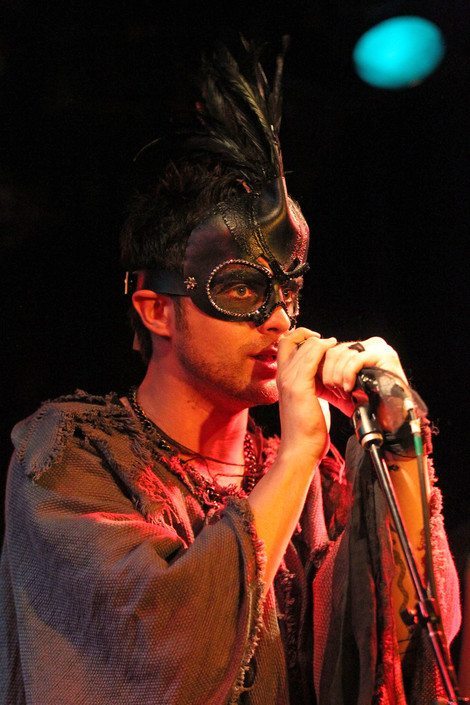
    Thomas Dekker performing at The Viper Room, Los Angeles, wearing a feather mask Los Angeles 04/19/2012 © Rachid Ait, PacificCoastNews.com
    Thomas Dekker performing at The Viper Room, Los Angeles, wearing a feather mask
    Los Angeles 04/19/2012
    © Rachid Ait, PacificCoastNews.com

    Carly Knaszak: Who is part of Zero Times Zero?

    Thomas Dekker: Well now, that is quite a question to start out with. I completely understand why you’d ask it but I also hope you understand why I can’t answer it. Not by providing all names involved at least. The idea behind Zero Times Zero was to create a nameless, faceless force in modern Pop Culture. Quite an impossible thing to do in this day and age I suppose. As a solo artist under my own name, I felt that the public knowledge of my other career was a detriment to the music. And simultaneously, what I wanted to explore in music was a detriment to what was expected of me in said other career. We are not a “band” in the normal sense of the word. We’re trying to recreate the Andy Warhol factory in many ways here. To be creators of not just music but video, performance and photographic art with one concise and focused outlook between us. So this includes actors, film makers, musicians, dancers, etc. However, I will say, the music department is spearh
    eaded by myself.

    CK: When did Zero Times Zero begin?

    TD: I had been discussing with many friends and collaborators, all of whom perform on this new record including Reza Safinia, Ian Krupp, Kristofer Holst, Etc. what a liberating experience it would be to try and champion the unknown. Or to put it in a less hippie dippy sense: to have the ability to experiment and feel out ideas amidst the freedom of anonymity. We were all coming from different backgrounds and artistic interests but found that we shared a common outlook on greed, hope, Armageddon, religion, sexual revolution, anger, pain, madness, science and methodology. And all could be reflected in simple pop song lyrics but then dissected into deeper meaning within the construct of the project. The name of the group was chosen and the project launched in 2012 I believe. We’ve made two albums, “= 0” and the current one “Love and Razorblades”.

    CK: What genre would you describe Zero Times Zero?

    TD: Obviously being a large group full of diverse ideas and inspiration, the music in particular tends to jump from genre to genre a bit. But ultimately we would say “Industrial”. Hard core synths and beats matched with orchestral influence. Dramatic, bold, tough. We want to share opinions and not share them quietly. As the leader of the music, I’ve always been happiest working on the technical side of production and electronic intricacy. It’s a process that becomes deeply personal. Probably much more than people would expect from non traditional singer/songwriters.

    CK: Is Zero Times Zero signed to a record company?

    TD: We are in negotiations with “Cutting Edge”.

    CK: What are some of the musical influences for Zero Times Zero?

    TD: Musically, we would all agree: Nine Inch Nails, Gary Numan, Bjork, Depeche Mode, Pet Shop Boys, Glitch Mob, David Bowie, Rob Zombie, BT, Goldfrapp, Marilyn Manson. And those are just the modern influences, let alone all the classical that comes into play. But we are equally inspired by photographs and films. Gregory Crewdson’s photography book “Twilight” is a massive inspiration when it comes to the stories we want to tell, both with music and performance art. The early films of Ingmar Bergman helped govern our decisions with the new record too. I’ve always found a strange correlation between the muted desperation of those kind of works and the deafening scream of metal, electronica and experimental rock.

    CK: The single Liar was just released, should we expect a new single or a music video for it?

    TD: “Liar” is the opening track of the record. We felt it really set the tone so we wanted it to be the appetizer. However, an official music video is not planned for that track yet. YET. The first official music video will be for the eighth track on the album entitled “Superstitions” which I will direct. It’s the story of a club kid running from a ghost who’s dredging up the kid’s self-imposed abuse and memories. Sadly, the ghost is the kid’s dying future self. Think “Party Monster” meets “A Christmas Carol”.

    CK: Any plans on taking the music to the road?

    TD: We would love to tour! I think we’ve all been a bit overwhelmed by the size of the project we have taken on. Meaning, this is not the kind of music or performance you can put on properly with a few band mates in a small bar. We have video projections, choreographers, programmers, engineers, costumes, interactive experiments. We need the proper funding and interest to really give audiences the hell of a show we have always intended. However, we are so confident in this new album and feel it’s something so special. We believe all of the above will be made possible sooner rather than later.

    CK: When will the new album be expected to come out?

    TD: We are planning the release date of the full album within the next two to three months. But we will be releasing videos, art installations and leaked tracks in the interim to get those who want us to want us!

    Zero Times Zero album EQUALS ZERO can be purchased  HERE

    You can listen to “Liar” HERE

    Warning: This video contains flashing lights which may not be suitable for those with photosensitive epilepsy.

    Keep up to date with Zero Times Zero:

    Follow Zero Times Zero on Twitter HERE

    Follow Thomas Dekker on Twitter HERE