Tina, the Tina Turner Musical on Broadway, will tour upstate to Schenectady from July 30 to Aug 4.
The eight performances are part of the Keybank Broadway series at Proctors Theater. Tina just finished performances further north in Toronto at the CAA Ed Mirvish Theatre from June 18 to July 28.
The historical Proctors Theatre has been open since 1926 and first brought in large audiences by hosting continuous performances like they do today.
Tina first made its debut in London in 2018. Other international productions began to open in the following years. In 2019, Tina opened in Germany. It made its way to the Netherlands in 2020 and Spain in 2021. The show opened on Broadway in 2019 and was nominated for 12 Tony Awards that year and re-started in 2021 after the industry’s complete shutdown due to COVID-19.
The current North American tour has a talented cast led by Ari Groover and Zurin Villanueva who share the role of Turner herself. The musical was directed by Phyllida Lloyd and written by Pulitzer Prize-winning playwright Katori Hall.
Tina tells the life story of the Grammy award winning artist. Tuner began her musical career as a duo with her then husband Ike Turner. The two rose to fame with their cover of “Proud Mary” in 1966. In 1976, Turner divorced her husband after years of abuse. She made her comeback in the 80’s with her solo album Private Dancer. The singer had decades of musical success until her recent death in 2023. A feature documentary TINA exploring the life and career of this esteemed singer is available to stream on HBO Max.
To buy tickets to Tina: The Tina Turner Musical, you can visit the Proctors website here.
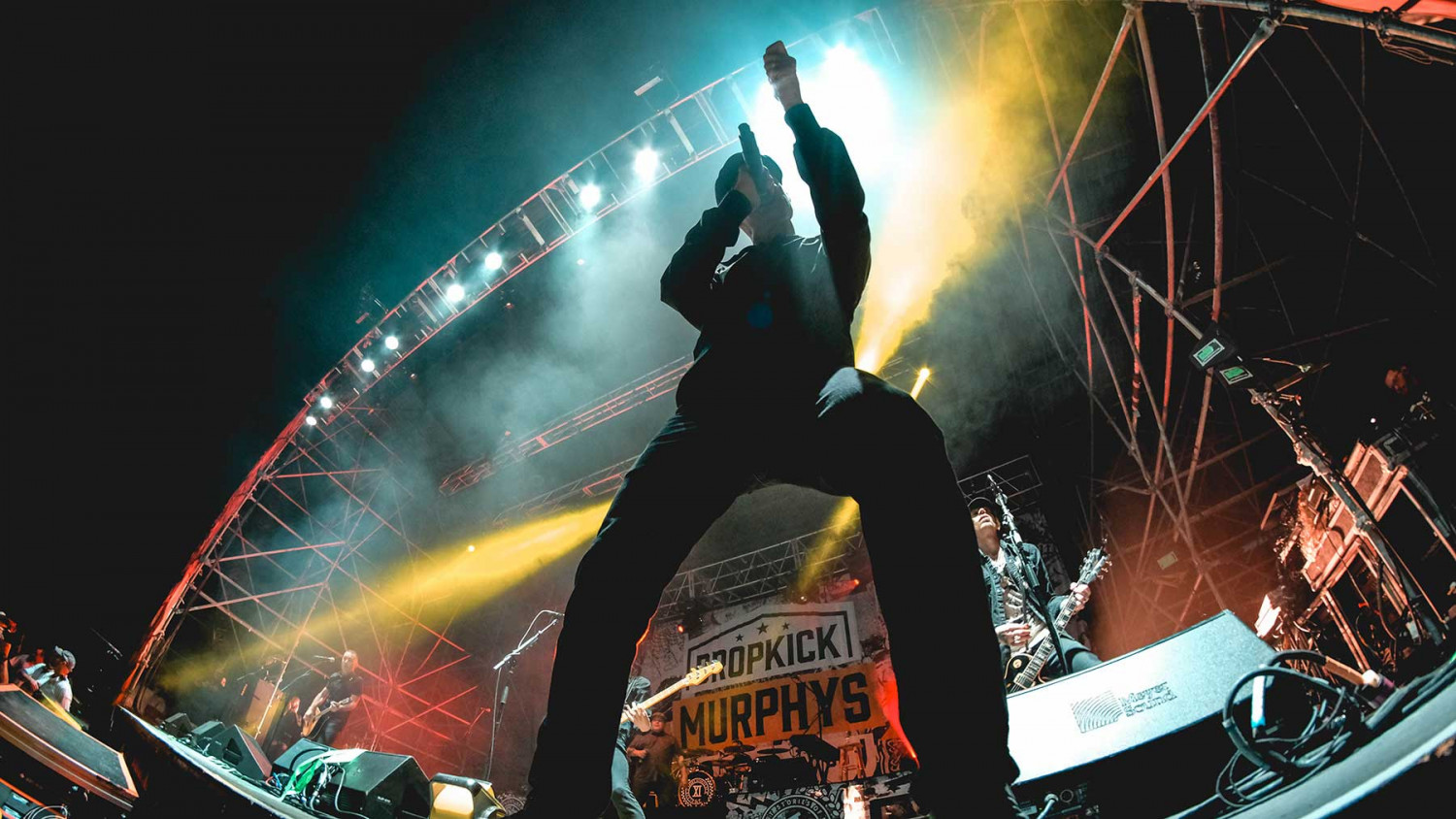
Tag’s Summer Stage, located in Big Flats, NY, is set for three more concerts in their summer series.
The large Southern Tier venue has hosted an impressive line-up featuring Billy Currington, Rip Moore, Larry Fleet, Brantley Gilbert and more. The rest of the season will feature Primus, Coheed & Cambria, The Australian Pink Floyd Show, and Flo Rida, bringing in a diverse genre of music from country to hip-hop, something for everyone to dance to.
August 10th, 7:00PM – Primus, Coheed and Cambria with Puddles Pity Party
The Mich Ultra Summer Stage at Tag’s welcomes cutting-edge rock superstars, PRIMUS with special guests’ progressive rock, & science fiction comic band Coheed and Cambria & America Got Talent Puddles Pity Party. Joining together for a night of unforgettable entertainment
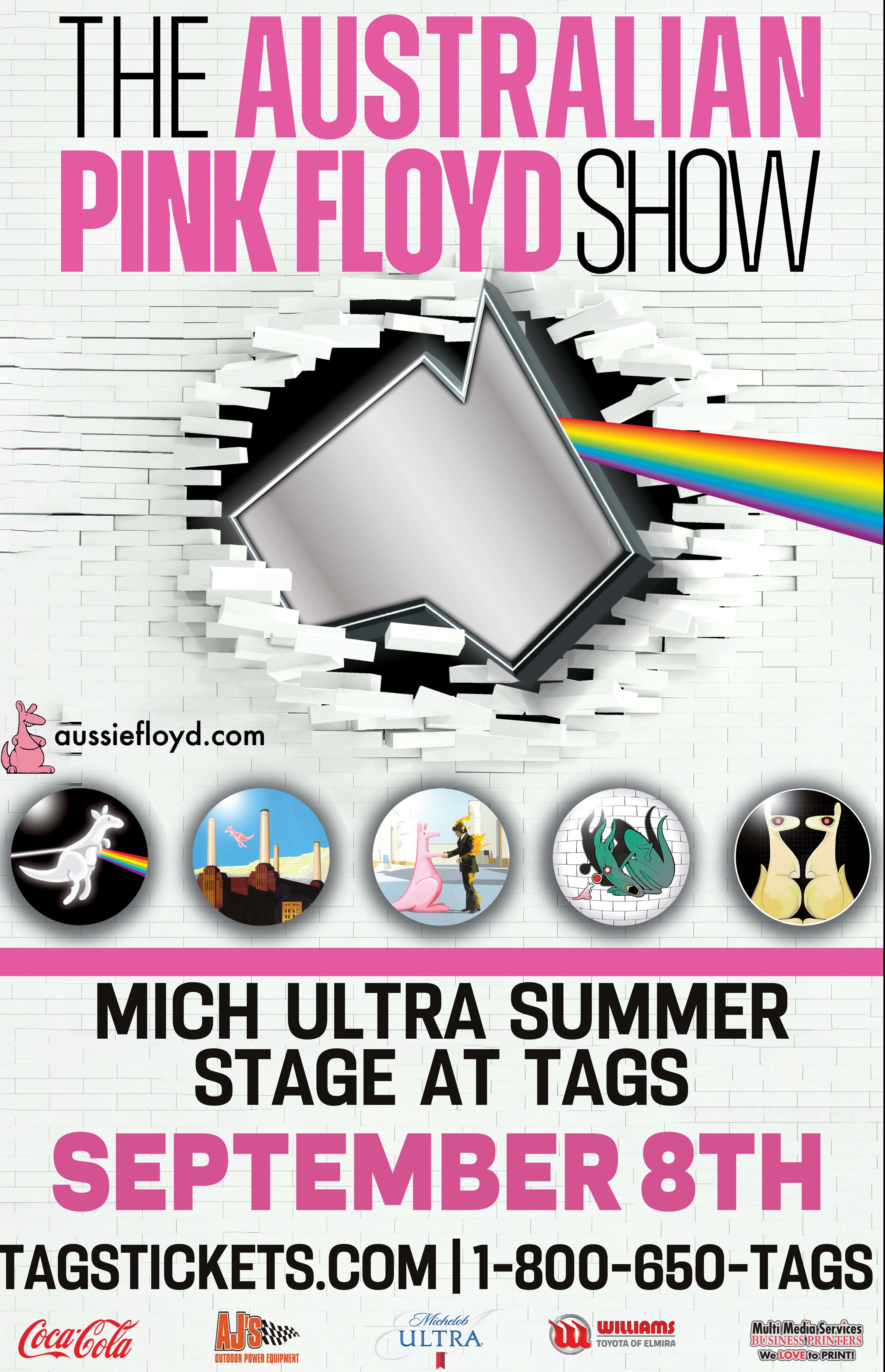
September 8th, 7:30PM – Australian Pink Floyd Show
Selling over 4 million tickets worldwide and described by The Times as “The Gold Standard” and The Daily Mirror as “The Kings of the Genre”, The Australian Pink Floyd Show Performing the music of Pink Floyd with a note for note perfection, this critically acclaimed show has been astonishing audiences worldwide for more than three decades.
Always striving to reproduce the complete Pink Floyd experience and bring the music to new audiences, the show continues to include a stunning light and laser show, video animations, state-of-the-art, high-resolution LED screen technology, and other special effects. In addition, and in true Pink Floyd fashion, there are several huge inflatables including a giant pig and their own unique Pink Kangaroo.
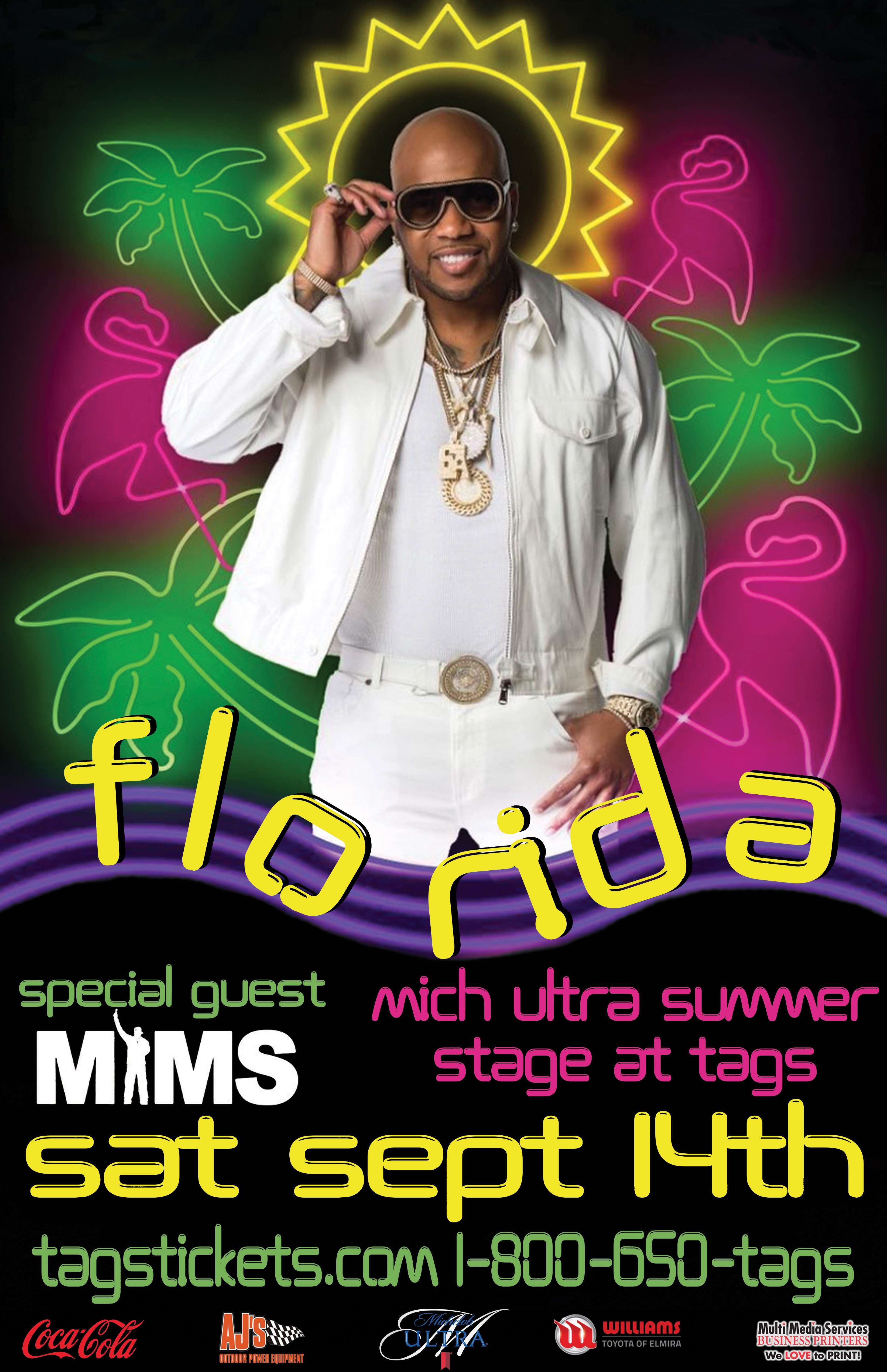
September 14th, 8:00PM – Flo Rida
Grammy-nominated hip-hop superstar known for his party anthems, Flo Rida, brings his high-energy party to Tag’s Summer Stage Series for one electric night on, Saturday, September 14th. Joining Flo Rida is the #1 US Billboard Hot 100 chart-topper, with over 100 million records sold worldwide, is MIMS. To get the party started off right a world-class DJ will spin the tunes to keep you dancing the night away. It promises to be one unforgettable evening. We can’t wait to see you all party at “My House”, as we all have a “Good Feeling”, it’s going to be one of the “Wild Ones.”
The Guggenheim’s performing arts series, Works & Process, announced their extensive Fall schedule which includes shows across NYC. The series is also comprised of twelve residencies in collaboration with multiple partners, as well as seven W&P commissions on tour.
Martha Graham Dance Company in Baye & Asa’s Cortege 2023. Photo: Steven Pisano
This coming Fall, Works & Process will provide a number of exciting diverse shows for patrons to enjoy. Taking place at the Guggenheim Museum, Manhattan West, and the New York Public Library for the Performing Arts, there are plenty of opportunities for unique experiences across the city. The non-profit organization helps foster productions’ journeys from workshop to stage. W&P allows artists to explore their projects without having to worry about the costs and risks of insurance, housing, and studio space.
Furthermore, performance works commissioned by Works & Process for LaunchPAD, which, stands for “Process as Destination” will go on tour. Additionally, the LaunchPAD program allows artists to explore and execute their craft, which is fully funded and has fourteen partners across Massachusetts, New Jersey, and New York. Subsequently, Artists have the opportunity to share their crafts and hard work all over the country as well as internationally.
Marjorie Folkman and Daniel Pettrow in Peter & the Wolf at Works & Process, December 2022. Photo: Titus Ogilvie-Laing, courtesy of Works & Process
Kicking off the season is Gather Round, an outdoor series taking place at Manhattan West Plaza event circle. The series is in partnership with Brookfield Properties Arts & Culture and is free for anyone to watch. Works & Process will host breakdancers as well, to celebrate street and club dance battles every Wednesday in September. The multiplicity of events that Word & Process has to offer in addition to the number of locations, establishes the importance of the performing arts and making it available to the public.
The schedule includes special W&P commissions, full-blown productions featuring skilled artists, in-depth discussions, and exclusive Guggenheim member experiences, among many other various showcases. Undeniably, the schedule wholeheartedly carries on the mission of celebrating and prioritizing every area of art and encouraging the messages performers can tell.
For more details on the Works & Process Fall 2024 Schedule and to purchase or reserve tickets, visit worksandprocess.org.
Works & Process Fall 2024 Schedule
At the Guggenheim
Monday, September 9 at 7 PM– The Metropolitan Opera presents Grounded by Jeanine Tesori, libretto by George Brant
Sunday, September 15 at 7 PM– Opera Philadelphia and Lyric Opera of Chicago presents The Listeners by Missy Mazzoli, libretto by Royce Vavrek
Sunday, September 22 at 3 and 7 PM– American Ballet Theatre presents Crime and Punishment by Helen Pickett
Monday, September 23 at 7 PM– Documentary Preview and Discussion of No Dancing Allowed with LaTasha Barnes, Sekou Heru, Aidan Gibney, Jared Harbour, and Ellen Ling
Monday, September 23 at 8 PM– Rotunda Dance Party: Ladies of Hip-Hop
Sunday, September 29 at 7 PM– Martha Graham Dance Company presents Baye & Asa
Monday, September 30 at 7 PM– W&P Commission Preview: Music From The Sole
Sunday, October 6 at 7 PM– New York City Ballet presents Caili Quan, Tiler Peck, and Gianna Reisen
Monday, October 7 at 7 PM– School of American Ballet at 90
Sunday, November 10 at 7 PM– W&P Commission: To the Body by Nico Muhly (In partnership with Guggenheim Asian Art Initiative)
Monday, November 18 at 7 PM– Tango Essence with Pedro Giraudo’s Tango Quartet (In conjunction with Member Mondays.)
Monday, November 18 at 8 PM– Rotunda Dance Party: NYCity Tango Collective
Friday, December 6 at 6:30 PM– Peter & the Wolf by Sergei Prokofiev with Isaac Mizrahi; Dance Heginbotham with Carnegie Hall’s Ensemble Connect conducted by Michael P. Atkinson
Saturday, December 7 at 11 AM, 1, and 2:30 PM-Peter & the Wolf by Sergei Prokofiev with Isaac Mizrahi; Dance Heginbotham with Carnegie Hall’s Ensemble Connect conducted by Michael P. Atkinson
Sunday, December 8 at 1, 2:30, and 4 PM– Peter & the Wolf by Sergei Prokofiev with Isaac Mizrahi; Dance Heginbotham with Carnegie Hall’s Ensemble Connect conducted by Michael P. Atkinson
Saturday, December 14 at 2:30 and 4 PM– W&P Commission: Third Bird by Isaac Mizrahi and Nico Muhly; Dance Heginbotham with Carnegie Hall’s Ensemble Connect conducted by Michael P. Atkinson
Sunday, December 15 at 7 PM– Rotunda Holiday Concert: Charles Turner & Uptown Swing with Jasmine Rice LaBeija
At Manhattan West with Brookfield Properties Arts & Culture
Wednesdays in September Gather Round: Street and Club Dance Battles
Wednesday, September 4 at 4:30 PM Behind The Groove: CeleBreak Outside! with Kwikstep and Rokafella
Wednesday, September 11 at 4:30 PM Gather Round Kiki Ball
Wednesday, September 18 at 4:30 PM Fabulous Waacking Festival Fall Edition with Princess Lockerooo
Wednesday, September 25 at 4:30 PM Manhattan West Beatbox Battle with The Beatbox House
Works & Process at the New York Public Library for the Performing Arts, Jerome Robbins Dance Division
Thursday, November 14 at 6 PM West African Dance to AfrikFusion: Intergenerational Stories with Marie Basse-Wiles & Omari Wiles
Works & Process LaunchPAD “Process as Destination” Residencies
According to Webster’s Dictionary, a spectacle can be defined as “A visually striking performance or display.” If one were to add an addendum to this, they could add “The Flaming Lips in concert” and anyone would be hard pressed to dispute this.
The Flaming Lips brought their 2024 tour to Beak & Skiff in LaFayette on Tuesday, July 23. The psychedelic rockers from Oklahoma City were continuing a tour which has seen them play the 2002 album Yoshimi Battles the Pink Robotsin full, each night. most recently at Lewiston’s ArtPark. The album, one of 16 in The Flaming Lips catalog, brought the band their biggest commercial success, and has long been the centerpiece of the Lips’ highly regarded live performances.
As the 7:30pm start time drew close, a palpable energy set in across the apple orchard’s concert field. Front-man and equally skilled hype-man Wayne Coyne did his part to energize and excite the crowd as he sat side stage. Once the clock struck half past seven, Coyne moved to center stage and the band wasted no time getting the spectacle started. With the acoustic opening strums of Yoshimi’s “Fight Test”, and a large bust of confetti from the multiple confetti canons placed around the stage, the evening’s festivities were underway. As Coyne sang the song’s opening lyrics, giant pink robots inflated around the stage, dwarfing Coyne and his bandmates.
The spectacle would continue to take new heights as the band worked their way through the 2002 album. Dramatic lights draped the stage and the audience. Coyne shot copious amounts of confetti into the crowd, and tossed giant inflatable beach balls (again, filled with confetti) into the pit. He sang under a giant inflatable rainbow during “Do You Realize”, a song about cherishing the time you have with your loved ones.
Following the performance of Yoshimi Battles the Pink Robots (and a short intermission), the band returned for a second set, which paid homage to the many other stand out tracks through out their career. The band returned to the stage and launched into their 1993 hit “She Don’t Use Jelly”. Other highlights of the second set included “Flowers of Neptune”, “The Spark that Bled”, “Yeah Yeah Yeah Song”, and “Race for the Price”.
It would be easy to anticipate musicians merely going through the motions after 40 years of performances. The Flaming Lips did anything but this. Coyne donned a giant smile between each song, and regularly summoned more and more energy from the crowd. He told stories of the inspirations behind the music, and urged a message of peace and love. In all, the band seemed to take great pride in delivering their spectacle to the audience at Beak & Skiff.
In what would have originally seemed as an odd tour grouping, Counting Crows and Santana have embarked on a summer tour across North America playing a total of 29 shows.
For long time fans of both bands, this will of course not come as a shock as back in 2002 both bands toured together for the first time.
The tour kicked off in Florida and made its way to Long Island this past weekend, with a sold out show at Northwell Health at Jones Beach Theater in Wantagh. Counting Crows opening the night with a 13 song, 70 min set and Santana and his massive band ripping through 19 songs during their 105 min set.
Counting Crows Setlist: Hard Candy, Richard Manuel Is Dead, Mr. Jones, Colorblind, Omaha, Anna Begins, Miami, Big Yellow Taxi (Joni Mitchell cover), Round Here, Rain King, the 1 (Taylor Swift cover), A Long December, Hanginaround, Holiday in Spain
Santana Setlist: Soul Sacrifice, Jin-go-lo-ba (Babatunde Olatunji cover), Evil Ways (Willie Bobo cover), Black Magic Woman / Gypsy Queen, Oye cómo va (Tito Puente cover), Everybody’s Everything, Europa (Earth’s Cry, Heaven’s Smile), The Game of Love, She’s Not There / Spill the Wine / Papa Was a Rolling Stone / In-A-Gadda-Da-Vida, Sacalo, Hope You’re Feeling Better, (Da le) Yaleo, Put Your Lights On, Corazón espinado, Maria Maria, Foo Foo Encore: Are You Ready (The Chambers Brothers cover), Drum Solo, Smooth
The historic Barton Opus 234 pipe organ will soon make a move from Detroit to Rochester. The nearly 100 year old instrument sat at the heart of Detroit’s silent movie industry for years before sitting in storage for over 40 years.
Now, following a restoration process, the Barton Opus will be the centerpiece of the Rochester Institute of Technology (RIT) new performing arts center.
Restorers Carlton Smith and Justin Nimmo with the Barton Opus 234, by Michael Conroy/AP
Built in 1927, the Barton Opus 234 is a timeless marvel of the instrument making industry. Oshkosh, Wisconsin’s Bartola Musical Instrument Co. manufactured the instrument. While many can imagine what an organ sounds like, the Bartola Opus 234 was so much more. Designed to be a jack of all trades needed to soundtrack silent movies, the organ could replicate a whole host of sounds. In addition to organ tones, its keys could mimic strings, flutes, and horns.
Additionally the Opus contains various percussion instruments including cymbals, drums, and a piano aiding in this versatility. On top of all of this were various sound effects: bird whistles, steamboat horns, and more. With its host of instrumentation, the Barton Opus 234 could replicate any musical note or sound effect an organist would ever possibly need to soundtrack a movie.
The history of the Barton Opus 234 begins with the opening of its manufacturer Bartola in 1918. In that year, Dean Barton founded the company to manufacture photoplayers for theaters across the Midwest. These photoplayers were almost like primordial versions of theater organs. Working off the base of an upright piano, Bartola tacked on organ pipes and percussion instruments to aid theater organists in achieving more diverse sounds.
An early Photoplayer organ
Throughout the 1920s, the Silent Movie industry boomed. Each year movies like Fred Niblo’s Ben Hur and the many comedies of Charlie Chaplin were released, raking in millions at the box office. While these movies were silent, music was a necessary part of the theater experience. Musical cues from live musicians built the atmosphere and told audiences how to react to scenes. In this way the silent movie experience was not silent at all.
As silent films grew in popularity, theater organs also grew – more literally. These organs soon began to take over the role of orchestra pits at theaters. They grew larger, sometimes being multiple stories high, and more elaborate with keys to replicate a host of instruments. What made Barton Organs so notably was their intricacy – not only musically, but visually. Organs like the Barton Opus featured exquisite decorated with multi-colored keys and complex wooden inlays.
During its heyday, Bartola made over 250 of these organs for theaters across the Midwest. Movie-goers everywhere from Saginaw, MI to Cedar Rapids, IA could hear their organs during film screenings. Possibly the most famous of their creations was the gargantuan organ that stood in Chicago Stadium – former home of the Blackhawks and Bulls.
Chicago Stadium’s Bartola Organ
The Bartola heyday could not last forever, with the company closing in 1931. As film made the transition into sound productions, the role of silent film organists slowly became obsolete. By the early 1950s, with the advent of television, which brought entertainment to the home, the medium was all but dead.
The individual story of the Barton Opus 234 very much mirrors these larger trends. After its construction, the organ found its home in Michigan, which had become a hub for silent film. Between 1925 and 1928 alone over half a dozen theaters had opened, housing over 23,000 seats. One such theater was the Hollywood Theatre, built in 1927, which went on to house the Barton Opus.
At its completion, the Hollywood Theatre was a sight like no other. Detroiters could see its massive 150 ft tall towers for miles across the city. The exterior of the building was finished with terracotta walls and red brick roofing, giving it the appearance of a Mediterranean castle. Its interior was likewise ornate. The first thing visitors would see was its 60 ft tall lobby, decorated with marble and gold, and featuring a large chandelier at the center of its ceiling.
At the center of the theater’s operations was the Barton Opus 234. At the time of its purchase, the organ was worth a whopping $75,000 – over $1 million today. Throughout its tenure, organist Bob Clarke operated the monstrous instrument, soundtracking the theater’s films and vaudeville performances. Clarke to many was better known as the organist at Olympia Stadium, home of the Detroit Red Wings.
Despite its grandeur, the Hollywood was always playing second-fiddle to other venues around Detroit. At its completion, the theater boasted a massive 3,436 person capacity – still dwarfed by the larger Michigan Theatre. Many even considered the Barton Opus only the second best sounding organ in the city. The Capitol Theatre – later renamed the Detroit Opera House – held that title.
By the 1950s, the Hollywood Theatre was in the throes of death. Its location – far from the residential hub of the city – spelled its doom. As local organist Roger Mumbrue remembered “No one lived down there. It was mostly abandoned freight yards and derelict buildings, so there was just no hope.” Not even special events, like boxing matches or new films could attract a crowd. In 1958 the theater closed for good, becoming a parking lot for Detroit’s school buses.
With the closure of The Hollywood, its assets were auctioned off to the public. Among these was the massive Barton Opus 234. In 1962, a local engineer and music enthusiast named Henry Przybylski placed a winning bid on the instrument for almost $3,500. Following this purchase, the two-story organ had to be disassembled and transported to Przybylski’s home in Dearborn Heights. For the next 40 years, the organ sat disassembled in his garage.
Fortunes changed in 2003, when Steven Ball – head of University of Michigan’s Organ Department – purchased the Barton Opus. Ball’s main goal was the safe storage and restoration of the instrument until it could find a suitable home – ideally a concert hall like it had originally stood. This came to fruition in 2019, when Ball agreed to donate the organ to RIT. It is currently undergoing restoration, with head restorer Carlton Smith estimating the process is about ⅔ complete. Upon completion, it will travel in pieces to Rochester, before reassembly in its new home at the university’s new performing arts center.
A rendering of the RIT Music Performance Theater rehearsal hall
Workers broke ground on RIT’s Music Performance Theater in September, 2023. This project marks the largest theater construction in Rochester’s recent history. Upon completion, the 40,000 square foot theater will boast three stories and 750 seats. At the center of the theater is a large rehearsal hall, with two large balconies overlooking the stage. The centerpiece of this hall will be the restored Barton Opus 234 in its original glory. Upon its completion, the theater will house RIT’s musical theater productions. Current estimates say the theater will to open in January 2026.
Getting a chance to have seen the original Woodstock festival in person, camp on Yasgur’s Farm and brave the elements is a thing of legend. To be camping on those same grounds while enjoying a concert earlier that evening is a legendary experience, one that began this year at Bethel Woods Center for the Arts.
Camping configuration at Bethel Woods Center for the Arts – glamping in the foreground
A one of a kind venue in the Catskills, Bethel Woods is a non-profit performance venue that is the first of its kind to bring camping facilities to music lovers in this nature. Going to great lengths, Bethel Woods offers a Woodstock-esque experience, where one can see music and later rest in the same fields that made the August 1969 concert a cultural event.
This also addresses one major aspect of the region – the need for more hotel rooms and camping options in the area. What better place than right AT the rural venue?
With a range of options in camping, ranging from basic campsite (car or tent), glamping experiences and RVs, the venue also presents programming at the Center, as well as in the campgrounds each day prior to showtime. A tram/shuttle will bring campers to the venue ahead of showtime, a nice perk on these expansive Bethel Woods grounds.
Stunning views of the Bethel Woods campus and surrounding landscape of the 1969 Woodstock festival site is included with any camping experience. Campers will be less than half a mile from the award-winning Museum at Bethel Woods, whether in Pavilion Camping or Best Road Camping.
While on the grounds, explore Bethel Woods’ informative museum to learn about music history and the Woodstock Music Festival, as well as various events, including educational programs, classes and more.
Camping has been available starting in May 2024, with big shows coming in up August, including Phish and Pretty Lights, as well as Tedeschi Trucks and Megadeth later this summer.
There will be food trucks for Phish and Pretty Lights concerts in August, as well as breakfast available at the museum, or bring your own food to nosh on.
You’ll find plenty of things to do in the campground before the shows, including yoga, drum circles, sound baths, plus a range of programming including campfire hootenannies.
The limited local hotels and distance needed to drive to affordable overnight digs in the area has a solution found in Bethel Woods’ onsite camping, and a big improvement for the renowned amphitheatre.
Remember, you still need to buy a ticket to each show, as camping is only reserved for those with tickets to a show at Bethel Woods.
Visit here for more info and book campsites (Glamping is sold out for Phish). Rates: Car Camping starts at $107.46; RV prices range from $172-258; Tent only camping begins at $172; Glamping starts at $335. Prices for camping are for four people, per vehicle.
Pretty Lights has detailed additional details for his shows August 23-24. More info here.
Forest Hills Stadium in Forest Hills, Queens, has become the target of a lawsuit seeking to shut the historical venue down. The 101-year-old stadium has recently come under fire from locals, who have claimed that the venue’s main concert season lowers the neighborhood’s quality of life.
Originally designed in the 1920s to house the U.S. Open tennis tournament, Forest Hills Stadium has been rooted in Queens culture for more than 100 years. Since converting into primarily a concert venue in the 1960s, the stadium has hosted some of the industry’s biggest artists, including Bob Dylan, The Rolling Stones and Hozier.
The current lawsuit against the stadium reflects sentiments given by neighbors for multiple years. The main claims given by neighbors for their desire to shut down, or at the very least change the practices of the stadium, are the excessive noise pollution and littering that shows cause. Claims have been made that windows in houses as far as three blocks from the stadium shake during shows and that the streets surrounding the stadium have excess amounts of trash on the days following shows.
In response to the group of opposing neighbors, Forest Hills Stadium has maintained a stance of being “a great neighbor,” labeling its practices and efforts as “responsive, flexible, engaging, and thoughtful,” as well as citing times in the past when it has complied with community wishes. For example, every show in the stadium ends by 10:00 p.m., cleaners work the streets before, during, and after shows, and hundreds of thousands of dollars have been spent on noise mitigation and controlled amplificationâall results of community wishes or initiatives meant to help community relations.
The closure of the stadium would also have significant economic consequences, and would undeniably impact local businesses and the job market negatively.
Hozier – Forest Hills Stadium, July 2024 – photo by Molly Higgins
The ownership of Forest Hills Stadium switched into the hands of Mike Luba in 2013, who has been the main figure behind its revitalization. The success of Luba’s work, though, has been the cause of the recent issues. More shows are happening than ever, which correlates to the frequency of complaints.
Another lawsuit with very similar goals was recently shut down by Queens Supreme Court Justice Robert Caloras, which attempted to temporarily suspend concerts at the venue. Following that, another ruling from Supreme Court Justice Joseph Esposito concluded that Forest Hills Stadium was “entitled to a preliminary injunction prohibiting [Forest Hills Stadium] from permitting excessive noise to emanate from the stadium.”
In response, the stadium made a statement, saying, “[Forest Hills Stadium] has always sought to minimize its impact on local residents and comply with the law,” and that “it will continue to do so in connection with the recent orders of Justices Esposito and Caloras of the Queens Supreme Court.” Based on the recent developments that have officially concluded, it appears as though shows at Forest Hills Stadium will run as planned, at least for the current summer season.
As a result of the recent developments, the venue has created a Change.org petition labeled “Show Your Support for Forest Hills Stadium!” Over 1,100 signatures have been given towards the current goal of 1,500. In the words of the venue, “Forest Hills Stadium has been a part of the fabric of Queens for decades. If you love Forest Hills Stadium, if you love the music, the history, the singular space, if you believe the venue belongs here and should continue with our mission, please say it out loud!”
For access and more information on the petition to save the Stadium, visit here.
NYC based artist Joe Geni released his single “City Where The Sky Subsides” on July 23 as a preview to his third album Cities Built Upon Cities.
The single is an electronic rock song with operatic vocals and an orchestral background. As inferred in the title, the song describes the story of a date being rained out and the disappointment that came with it. Geni is known for his speed and pitch manipulations. With a 3.5 octave range he has a unique talent.
Geni is originally from Illinois but moved to the NYC area for various jobs with the United Nations and eventually, his music career. Working between Manhattan and Long Island City, the ever-changing environment inspired his writing and upcoming album.
His career started in 2019 with his album After Wandering Empire and then Doggerland in 2021. Geni released another single, “City of Energy” earlier this year which will also appear on the Cities Built Upon Cities album coming out on Oct. 4.
Producer Charlie Nieland mixed his past and upcoming album giving it a new wave feel. Nieland previously worked with popular 80’s rock artists like Debbie Harry and Rufus Wainwright.
You can listen to Joe Geni’s music on any streaming service.
Singer-songwriter, Morley, from New York City, released her new song “Follow The Sound” on Friday, July 26. The song is the second single off her upcoming album of the same name, due Sept. 27.
While building up to the significance of her upcoming album, the song evidently explores the dynamic between witnessing hardships and processing them in one’s own way.
The new title track, “Follow The Sound” is full of Morley’s dedication to activism along with a soft mix of jazz and folk. The song comes after the artist witnessed some of the most devastating fundamental issues currently taking place, firsthand. Impacted by the devastation she saw, Morley channeled what she saw into a piece of work from the perspective of a child who is a victim of family border separation.
“Follow The Sound” is the work of Morley alongside her husband, producer, Chris Bruce, who also plays guitar on the record. Assisting the duo on the song and record are pianist pianist Jon Cowherd, bassist Meshell Ndegeocello, and drummer Jack DeBoe. The song is the second of four singles for the album including “It’s Hard To Stop” (June 21), “Follow The Sound” (July 26), “Here In Love” (August 9), and “Where Are We” (September 6).
‘Follow the Sound’ came to me while participating in an action at the US/Mexico Border responding to inhumane policies of family separation. The song speaks of a dream a child is having after being separated from their mother at the border, in the dream, the mother urges the child to follow the sound of her voice to find a safety beyond the physical realm. Follow the Sound is also a metaphor for following the sound of one’s own inner voice and the voice of the natural world, as one.
Morley
Morley uses her music to articulate her experiences with people of diverse backgrounds. After attending United Nations International School, and later the Duke Ellington High School for the Performing Arts, she’s accumulated knowledge about a variety of different cultures and the issues and discrimination people face. It was through those experiences, that she was able to form her views of the world, and therefore, her music.
Morley actively participates in multi-leveled activism such as fighting for human rights through releasing benefit albums. TED Women and TED X have also honored her as a featured performer and speaker. As a visionary through her music, she has brought artists like Yo-Yo Ma, Esperanza Spalding, Meryl Streep, and Rosanne Cash, among others together for powerful causes.
To stream”Follow The Sound” and learn more about Morley, visit www.morleymusic.org.