After a nine-year-long hiatus, Australian alternative rock band Atlas Genius co-headlines a tour with electronica-pop artist Robert Delong starting this September in Chicago and ending in October in Los Angeles. The tour takes the headliners across North America, with two back-to-back stops in New York on September 15 and 17.
Atlas Genius’s upcoming tour comes in anticipation of their newest album, End of the Tunnel, the band’s first in nine years, set to release on September 6. Co-headliner Robert Delong has also recently announced his newest album, Playlist of Doom, set for release on September 13 through Round Hill Records.
Before their hiatus, Atlas Genius traveled the world supporting Weezer, Blink-182, The Neighborhood, Imagine Dragons, The Kooks, and more. Atlas Genius have performed at some of the most iconic and prestigious festivals, including Lollapalooza, and featured on the late-night television shows of Jimmy Kimmel, Jimmy Fallon, James Corden, Conan O’Brien, David Letterman, and Jay Leno. Delong is no stranger to festival stages, either, captivating audiences with his incredibly unique and dynamic performances at Coachella, Lollapalooza, Bonnaroo, Outside Lands, and Reading and Leeds.
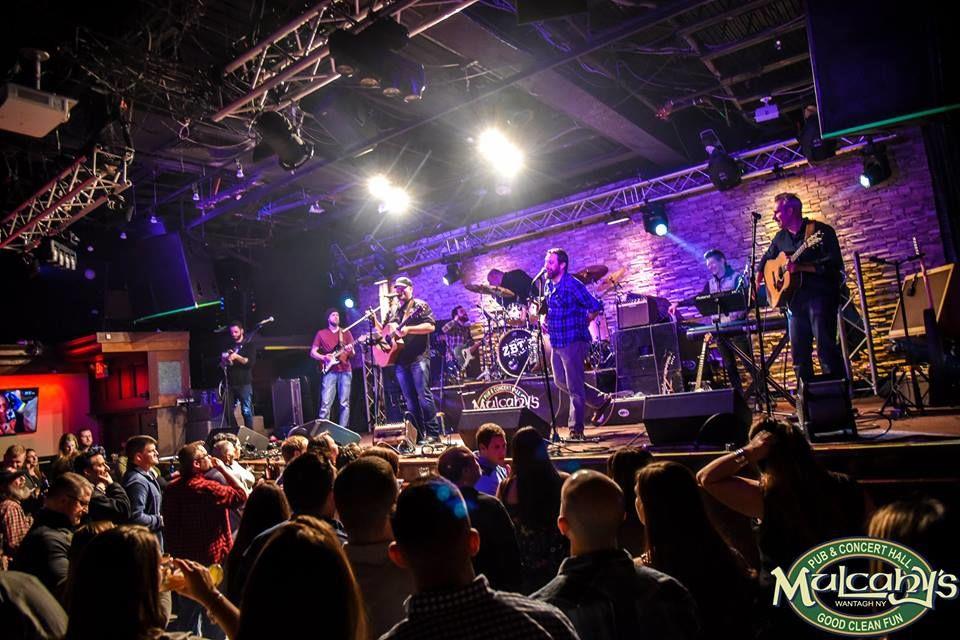
Now, after a long-awaited return, Atlas Genius are ready to re-emerge on stages across North America, including two shows in New York. Their first NY show is in Wantagh, Long Island, at Mulcahy’s Pub and Concert Hall on Sunday, September 15. Their second New York show brings them to the Chelsea neighborhood of Manhattan at Racket NYC, a concert venue located inside the Western Beef Supermarket on W 16th Street.
Mulcahy’s Pub and Concert Hall – Long Island Catering Halls
The full tour dates are listed below. Tickets go on sale on Friday, July 12, at 10 am local. Any additional information can be found on Atlas Genius and Robert Delong’s websites, linked here.
ATLAS GENIUS AND ROBERT DELONG: FALL 2024 TOUR
SEPTEMBER
8 – Chicago, IL – Taste of Chicago
10 – Detroit, MI – The Shelter
11 – Columbus, OH – A&R
13 – Jersey City, NJ – White Eagle Hall
15 – Long Island, NY – Mulcahy’s
17 – New York, NY – Racket
18 – Philadelphia, PA – The Foundry
22 – Boston, MA – Middle East – Downstairs
24 – Hartford, CT – Webster Underground
26 – Norfolk, VA – The Annex
27 – Washington, DC – Union Stage
29 – Atlanta, GA – Hell at the Masquerade
OCTOBER
1 – Nashville, TN – Basement East
3 – Austin, TX – The Ballroom at Spiderhouse
4 – Houston, TX – The Heights
5 – Dallas, TX – Kessler
7 – Kansas City, MO – Madrid Theatre
9 – Colorado Springs, CO – Black Sheep
10 – Denver, CO – Marquis
12 – Bellingham, WA – Bellingham Exit (Wild Buffalo)
The year is 1978, and a new musical movement is bubbling up from Manhattan’s seedy underground. New York City as a whole is in a state of constant decay. Unemployment and crime have increased to record highs, and smog clouds the skyline. For many, the city has become a no-man’s land, as almost a million leave the boroughs. Despite this, downtown Manhattan becomes a haven for Bohemians and artists from around the country. It is these artists who spearheaded the No Wave movement.
No Wave is a movement that defies labels and genre. On one hand, No Wave built off the DIY ethos of Manhattan’s punk scene that had emerged only a few years earlier. However, No Wavers hated the derivative nature of punk, and wished to push boundaries even further than their predecessors. No Wave does not have a unified sound, with different bands incorporating disco, funk, jazz, and noise. While having diverse sounds, nihilism and a desire to break boundaries unified all of these bands.
No Wave legends Sonic Youth
Manhattan in the 1970s
By the start of the 1970s, New York City was in a state of dire economic crisis. In 1970, The New York Times reported that unemployment had increased by 41%, leaving 300,000 without work. These statistics, while being the worst in NYC’s history at the time, would only worsen through the decade, rising to 12% in 1975. As the city’s economic state worsened, many middle class white families fled in a process known as “White Flight.” Throughout the decade almost 820,000 people left for the suburbs, with the Bronx’s population even falling by 30%. This exodus only further eroded New York City’s tax base, worsening its economic woes. This economic crisis came to a head in 1975 when the city nearly defaulted on its debt. In an attempt to cut costs, city officials slashed many social services. Police officers and teachers dropped by 6,000, and firefighters by 2,500.
“It was like somebody escaping from the Warsaw ghetto and saying they’re killing people there. Nobody believed it.”
– Ed Koch, Rep (D-NY)
With the economic collapse of New York City, crime rose to record levels. By 1979, there was an average of 250 felonies committed per week on the New York City subway system, with the overall crime rate being 3 times higher than today. As desperation increased, many turned to prostitution, with over 2,400 arrests occurring in 1976 alone. For many the greatest metaphor for these dark ages was the July 13, 1977 blackout. At 9:34 PM, New York City went completely dark, leaving 8 million without power. For the next 25 hours, chaos consumed the city. There were over 1,000 cases of arson, and people looted over 1,600 stores across the boroughs. As novelist Ernesto Quinonez recalled, “It felt like some sort of bomb had gone off… and all you had was a whole bunch of confetti and paper. [The city’s] frustration had been released.”
Eagle and Westchester Avenues, Bronx. 1970 – Camilo Jose Vergara
The external view of New York City was awful to say the least. NYPD officers began referring to the city as “Fear City,” playing off of rising crime rates- a phenomenon not unique to NYC during the 1970s. This reached the point where people even handed out Fear City survival guides at NYC’s airports, which featured a large image of the grim reaper on the cover. Media portrayal of the boroughs as a dystopian wasteland only worsened this image. Movies like Death Wish(1974) where Charles Bronson plays a vigilante taking revenge on muggers who assault his wife and daughter in Manhattan.
“Welcome to Fear City,” a pamphlet handed out at NYC’s airports
While many fled the city, many young bohemians began to flock to Manhattan, forging a new arts scene. Some were attracted by the graffiti and trash-littered streets and subways, and the idea of “slumming it” in the city. Others, however, had much more practical motivations in moving to the city. As Mark Cunningham of No Wave band MARS stated, “Cheap rents enabled a whole generation of artists to move there after school and not have to do too much slave labor to pay the bills.” Rhys Chatham of the band the Gynecologists adds on, “I had a 1200 square-foot loft for $180 a month.” These low rents, and proximity to other like-minded young people, allowed Music to flourish in New York City.
“All the ‘straight’ people were trying to get out of New York, but all the freaks… we were trying to get in.”
– Maripol, Fashion Designer
Emerging Music Scenes
During the 1970s, New York became a hub of musical innovation, drawing from diverse influences. Most importantly for the development of No Wave was punk rock. Throughout New York City, young people were growing increasingly fed up with musical trends. As legendary singer Joey Ramone remembered, “We were a reaction to all the pretentiousness and clichés and all the bullshit. It was at the beginning of disco, the beginning of corporate rock, like Journey, Foreigner, all that shit. You know, five or six tracks on an album, 45-minute guitar solos or drum solos.” As a result of this, punks looked back to a simpler time of rock and roll, with loud fast riffs and short songs.
Punk was as much a reaction to the social ills of the city as it was a reaction to musical cliches. As publicist Mitch Schneider stated, “New York punk was great because it sounded like the city. It was tightly wound, really urgent, and New York sucked at that time.” Punks wanted to make music that was “real” and reflected their experiences living in the boroughs. As a result songs tackled issues like drugs, violence, and decay. Sonny Vincent of the Testors remembers, “Graffiti everywhere, garbage, violence, drug deals on the street. You name it. But it was ours.”
Television performing at CBGB
The simplicity of punk did not last long. As soon as it began, bands like Television began to experiment with structure, and instrumentation. The CBGB regulars, much to the chagrin of punks like Joey Ramone, proved that punk too could be “pretentious” with long solos, and varied lyrical themes. Bands like Television formed the “post-punk” genre, a more artsy, experimental outgrowth of New York’s punk rock movement. New York’s position as a cultural hub aided in this musical innovation. Touring acts like Cleveland’s Pere Ubu performed in Manhattan, deeply influencing future no wave artists. As Musician Rick Brown recalls here’s a “guy yelling and banging on a piece of metal and there’s a guy twiddling knobs and making weird sound.” Performances like these illustrated that punk could be so much more than just three chords and a lot of energy.
“Hell found potential in nihilism, in the void left after everything’s rejected. Like the abandoned city the no wavers flocked to, his ‘blank’ wasn’t empty or futile, but rather an open canvas offering a road to rebirth. No Wave would take this concept and run with it.”
– Music Historian Marc Masters, on Television bassist Richard Hell
As much as No Wave was indebted to punk, it was also a direct rebuke against many early punk bands. Many early members of the No Wave movement were young visual artists, attracted to Manhattan by its avant-garde scene. Because of this, many of these musicians wanted to push the definition of what music was, rather than rely on past influences. As legendary No Wave singer Lydia Lunch once said: punk was nothing but ““sped-up Chuck Berry riffs.”
Adding to this distaste of punk was the growing commercialization of the genre. While punk had begun in the underground, it had soared to the top of the charts by the end of the 1970s. Punks began incorporating aspects of modern rock and pop, forming a new genre that came to be known as “New Wave.” Bands like Los Angeles’ The Knack and New York’s Blondie reached Billboard’s no. 1 spot with their pop-influenced New Wave tracks “My Sharona” and “Heart of Glass.” Many members of New York’s avant-garde wanted to stand in direct opposition to the mainstream-ification of punk, and create a new movement that was explicitly anti-commercial.
In tandem with the rise of punk, a new genre of dance music emerged from Manhattan’s gay club scene. This genre – dubbed disco – erupted as people moved to the dance floors to forget their worries. With simple 4/4 beats and four on the floor rhythms, anybody could join in. While large clubs, like the famous Club 54 existed, much of disco was spread through independent DJs, sometimes holding concerts in their lofts. Possibly the most famous of these DJs was David Mancuso. At a legendary February 14th, 1970 loft party, Mancuso mixed R&B, psychedelic, and world music for his guests. This event attracted not only dancers, but also rockers, beginning a chain reaction that would lead to the eventual incorporation of dance elements into punk just a few years later.
An October 15, 1974 protests against The Loft by SoHo residents.
The Start of No Wave
Drawing from such varied influences, No Wave is often very difficult to define. Some bands’ sounds have little to nothing in common with each other. Some groups play straight jazz, others pure industrial noise: so how did they become grouped as one cohesive movement? One thing all No Wave bands share is their attitude: unashamedly experimental and nihilistic. Much of this attitude already existed in Manhattan’s avant-garde scene, but were only further honed by this new movement.
The Velvet Underground performing at a show organized by Andy Warhol, April 7, 1966
Starting with groups like the Velvet Underground in the 1960s, Manhattan became a hub for boundary-pressing artists. The avant-garde scene of Downtown Manhattan was an extremely close-knit community, with music and visual arts spread by word of mouth, and displayed at shows in artists’ private lofts. This scene, much like the later No Wave movement, combined extremely disparate styles all united by a desire to make something completely new.
For some, this avant-garde mission took the form of classical music. Following his graduation from Mills College in the early 60s, Steve Reich returned to his native Manhattan to pursue composition. Reich, while classically trained, wanted to redefine what “classical” music could be. His compositions, such as Music for 18 Musicians (1978) were strikingly minimalist. Using tape loops, and layered cyclical instrumentation, they were unlike any classical compositions before. This desire to eschew all past musical tradition was extremely influential for No Wave artists.
The “missing link” between Reich’s minimalist compositions and No Wave is Glenn Branca. Born in Harrisburg, PA in 1948, Branca relocated to Manhattan in 1976. In New York, Branca assembled electric “guitar orchestras” to make a new strain of harsh, classically-inspired compositions. While based in classical choral, and chamber works, Branca’s compositions utilized distortion, unusual tunings, and harmonics to make something more raucous than any classical pieces that came before. Branca’s releases, such as 1980’s The Ascension are considered as high points of the No Wave movement. While these orchestras inspired the sound of many No Wave artists, they also had a much more direct impact on the scene, directly launching the careers of some of its most prolific guitarists.
Many artists of New York’s avant-garde scene, much like the later No Wavers, began as visual artists, but were inevitably drawn to musical performance. Possibly the most emblematic artist in this vein is Yoko Ono. Although many know Ono as the wife of John Lennon, she independently made a name for herself in New York’s avant-garde scene. Throughout the 1960s, Ono was a major patron of the arts in Manhattan, hosting musical shows and art exhibitions in her Downtown loft. One such exhibition was even visited by Dada artist Marcel Duchamp, whose satirical and utterly strange artworks were a major inspiration for many No Wavers.
Following her marriage to Lennon, Ono became much more involved in the music industry, bringing her experimental tendencies along with her, Her 1970 song “Why” off of Yoko Ono/Plastic Ono Band is a perfect example of this. The song features Ono’s warbly screeched vocals repeating the title “Why,” all over fast distorted guitar riffs. Some of these guitar riffs are so distorted that they register as noise or industrial machinery more than instruments. The repeated lyric additionally reflects the nihilism that pervaded much of Manhattan’s art in the decade, and would continue to into the 1980s. If not having been released nearly a decade early, this piece would be almost indistinguishable from some of Ono’s No Wave successors.
These artists in Downtown Manhattan set much of the groundwork needed to create No Wave. Steve Reich’s complete disavowal of past musical tradition, Glenn Branca’s guitar experimentation, and Yoko Ono’s desire to make music that was noisy like nothing else. There was only one element missing from this witch’s brew: blood-chilling fear. This is where the duo Suicide enter the stage. Formed by Martin Rev and Alan Vega in 1970, suicide created punk utilizing the newest synth technology. Their music was possibly the closest manifestation of the No Wave ethos up until that point. It retained the DIY ethos and anger of punk, but looked to experiment like no one else had done.
Perhaps the band’s most striking achievement is the song “Frankie Teardrop” off 1977’s Suicide. The 10 minute long epic tells the story of a factory worker driven to the point of madness by the industrial slog. Frankie’s job repeatedly pays so little he cannot afford food or rent. In a bout of madness, he kills his family and then himself. This song took the hardships of life in 1970’s NYC and turned them up to eleven. It is possibly the most nihilistic the experimental scene ever got, and no doubt influenced the lyrical themes of later No Wave artists. What makes the song more disturbing is the instrumentation. Harsh synths, with sparse reverberated production surround Vega’s screamed vocals.
By this point, the building blocks of No Wave were in place, and it just had to be named. The genre would be christened with a 1978 compilation album titled No New York. Legendary musician and producer Brian Eno compiled this album using performances by four of the most seminal bands in the movement. These bands: the Contortions, Teenage Jesus and the Jerks, MARS, and D.N.A. all had wildly different sounds, illustrating how diverse the genre was. Despite this they were all united by a shared community, regularly collaborating at Manhattan clubs like CBGB and Max’s Kansas City.
This compilation also importantly gave a name to the fledgling movement. James Chance of the Contortions credits Eno with the creation of the name “No Wave.” Other pioneers of the movement disagree. Sonic Youth’s Thurston Moore remembers seeing it in CBGB graffiti prior to the compilation’s release, while others credit singer Lydia Lunch. One thing was clear however, that the name reflected a nihilistic spin off of “New Wave.” This name perfectly mirrored the mission of the genre: to be the antithesis of what punk had become.
No New York, while officially creating the No Wave movement, also did a lot of work in ending it. For many, the point of the movement was complete experimentation and freedom of expression regardless of label. The creation of No Wave as a cohesive genre grouped together many bands that had wildly different sounds, who many times did not view each other as colleagues.
Defining No Wave Bands
With the No Wave movement encompassing so many sounds, it is helpful to look at individual artists and how they fit into the movement. By doing this, we can not only trace the careers of some of the movement’s most influential members, but break down what aspects exactly make them “No Wave.”
Swans
Singer and multi-instrumentalist Michael Gira founded Swans in 1982. Since their founding, the band has proven to be one of the longest-lasting and most influential bands to emerge from the No Wave scene.
Michael Gira of Swans performing at CBGB
By 1982, Gira was already a veteran of New York’s avant-garde scene. Gira had previously headed the NYC post punk band Circus Mort until their collapse in 1981. At Swans’ founding, Gira assembled a rag-tag group of No Wavers to form its first lineup. This lineup, featuring Gira on lead vocals and bass, featured Sue Handel on guitar, and Sonic Youth’s Thurston Moore also on bass. This lineup would collapse before Swans could properly record any songs.
Within little time, Swans had recruited Norman Westberg on guitars and were ready to record their 1983 debut LP Filth. Inspired by the decay of New York City, Gira and his bandmates wanted to record something as bleak as their surroundings. Teaming up with Glenn Branca’s Neutral Records, the band began recording their debut in April 1983. Within only one month of recording, the band had laid down 36 crushing minutes that were ready for release.
“I wanted Swans to be ‘heavier’, though. I wanted the music to obliterate — why, I don’t remember! I think it just felt good.”
– Michael Gira, on Filth
Gira recalled in a 2013 interview, his intention in naming the band Swans. “Swans are majestic, beautiful looking creatures. With really ugly temperaments.” Filth is the musical embodiment of this ugly temperament both musically and lyrically. Starting with the instrumentation, Filth is heavy like no other album had ever been. With drumming from Jonathan Kane and Roli Moismann, each song has a pummeling drive that feels like the listener is being thrown headfirst into a brick wall. This percussion was only elevated by Moismann who struck objects around the studio with a metal strap to aid in its pure noise. Westberg’s guitar is also extremely raucous. At most points in this album, it is barely recognizable as an instrument and not just industrial noise.
Michael Gira’s lyrics also aid in crafting an apocalyptic atmosphere to the album. In his lyrics, Gira wanted to paint a picture of Manhattan in decay, criticizing the societal ills he encountered daily. On “Stay Here” Gira rallies against the enslavement of workers by the capitalist system. He sings “Close your fist. Resist. Walk on this line. Look straight ahead,” using this fascistic imagery to bemoan becoming a cog in the capitalist machine. These lyrical themes make sense when seeing the economic state of Manhattan in 1983. For over a decade, New Yorkers had been given economic promise after economic promise, none of which had come true. This song takes the economic frustrations of New Yorkers and releases them in a loud, cathartic explosion.
Intense nihilism and misanthropy mark the lyrics of the whole album. Most evident are those on the track “Freak.” In this song, Gira recounts seeing a rapist walk the streets of Manhattan at night. He uses this story to criticize the moral depravity plaguing the city, as well as larger issues of sexism, and violence for personal gain. He screams the repeated refrain of “You’re gonna murder somebody weak. Strong men win at violence and abuse.” Whether it is the instrumentation or lyricism on this album, they are blunt and forceful enough to kill.
Swans’ early shows were as chaotic as their musical output. To match the sound of their recordings, the band used unorthodox instruments, including whipped sheet metal to add to the noise. This noise was so loud that the band’s shows were frequent targets of police shutdowns due to noise complaints from neighboring properties. In addition to pure noise, Michael Gira treated concerts as physical confrontations as much as performances. Gira frequently stepped on the fingers of anyone touching the stage, and would even jump into the crowd to attack anyone he saw head banging. On top of this, Gira made a habit of shutting off venues’ air conditioning prior to Swans sets. This, naturally made audiences unbearably hot and sweaty. In a 2010 interview, Gira stated that this added a layer of physicality to the band’s sets, making their concerts akin to a sweat-lodge.
While Filth was a testament to the pure force of the No Wave movement, Swans would not remain within the movement for long. Much like the no wave genre as a whole, Swans’ sound evolved to incorporate new genres until it could no longer fall under the label. In 1985, New Orleans-native Jarboe joined the band, adding a new dimension with her delicate and eerie voice. By Children of God (1987) Swans had become a full fledged goth band. With ethereal backing instrumentation and melodic vocals, the band was near unrecognizable. The 1990s saw the band continue down this path, incorporating elements of neofolk, Americana, and post-rock.
Saxophonist James Chance founded the Contortions in 1977. By that time, Chance was only a recent emigre to New York, moving to the city from Milwaukee in 1975. Within those two short years, Chance became enthralled in New York’s free jazz scene: an avant-garde path that put him in league with no wavers.
James Chance and the Contortions’ first release was the No New York compilation, where they were labeled simply as “the Contortions.” From the start, the group illustrated a danceability and willingness to incorporate stylings that were unheard of by other groups in the movement. Chance’s origins in free jazz are clearly seen in the Contortions’ music, with scratchy atonal saxophone being a hallmark of the sound. Bass – usually drowned out in no wave noise – takes a center stage, with groovy bass lines pervading their songs. On top of all of this, scratchy afrobeat guitars reminiscent of Fela Kuti or Talking Heads make no wave fitted for the dancefloor.
“Most of the earlier CBGB type bands, even though I liked a lot of them, I didn’t think were musically very interesting. They hadn’t really gone beyond anything that had come before, because they were still using all the same chords”
– James Chance
The band’s true solo debut would not come until 1979, with their full length LP Buy. This record honed down the Contortions’ sound from No New York. While retaining their trademark mix of abrasive yet funky instrumentation, it provided much sharper production to highlight their music’s edge.
The highlight of Buy is the track “Contort Yourself.” The song is driven by Pat Place’s staccato funk guitar. Unlike their peers Swans, the Contortions took influences from Afrobeat releases like Fela Kuti’s Zombie (1976), anticipating later punk releases like Talking Heads’ Remain in Light (1980). This guitar is accompanied by funk bass, and danceable drums that are as much disco as they are punk.
While significantly more upbeat, this release is not devoid of the nihilism and angst of No Wave. The song features Chance’s scratchy vocals singing about dancing to forget the troubles of the world. “And once you take out all the garbage that’s in your brain. Forget about your future ’cause it’s just, just, just, just too tame, oh.” The command-style chorus recalls previous dance songs such as the twist, but watered down to their bare essentials. Chance doesn’t suggest listeners should dance, but rather commands they “contort themselves,” blurring the lines between voluntary dances and muscle spasms.
Bush Tetras
Following the release of Buy, guitarist Pat Place decided to leave the contortions. This would not mark the end of her music career, as she soon formed Bush Tetras. Alongside singer Cynthia Sley, bassist Laura Kennedy, and drummer Dee Pop, the band would provide an insight into the perspective of women in the no wave movement.
The band is most well known for their 1980 track “Too Many Creeps.” The song retains Place’s funk-influenced guitar, accompanied by an equally funky bass line from Kennedy. The instrumentation, while danceable, is still abrasive, accented by harsh guitar stabs. The highlight of the song is Cynthia Sley’s lyricism, which embodies the paranoia of many New Yorkers. She sings of being too scared to walk the streets because there are “too many creeps.” She can’t even go shopping because she “just can’t pay the price.”
These criticisms of the state of Manhattan’s economy and crime are sung in a monotone, almost apathetic voice. Sley’s vocals embody the wry humor that pervades much of the scene’s music, with listeners being unable to tell if her criticisms are serious or satirical.
The song was accompanied by a 1980 music video that reflects many of these themes. The band plays in a dark studio space that obscures their figures. The video intermittently cuts to scenes of dirty, bustling streets and empty stores, supporting Place’s lyrics.
The band would not last long following the release of this song. Bush Tetras went on to release three more singles in their original run, including “Can’t Be Funky,” which reached No. 32 on the US Club charts. Despite this brief foray into the commercial mainstream, the band did not survive. In 1983, both Kennedy and Pop left the group, ending the band’s original run.
Sonic Youth
Sonic Youth were possibly the longest-lasting and most influential band to emerge from Manhattan’s No Wave scene. With their melodic, pop-influenced take on noise rock, they helped push the avant-garde into the mainstream. As a result of their experimentations, modern genres of alternative and indie came into existence.
Sonic Youth’s guitarist Thurston Moore
Guitarist Thurston Moore and bassist Kim Gordon founded Sonic Youth in 1981. Gordon, like many members of the No Wave movement, was not a musician by trade. Following graduation from Los Angeles’ Otis College of Arts and Design, Gordon relocated to NYC to pursue a career in the fine arts. Much like many of Manhattan’s visual artists she soon took great interest in the musical experimentations occurring around her, and decided to pick up the bass guitar.
Thurston Moore, on the other hand, was in the music scene from the get-go. Raised in Bethel, CT, Moore consumed a diet of classic rock throughout his childhood. By the late 1970s, Moore’s interest had shifted firmly towards punk rock. He recalls, “it was David Johansen to Patti Smith to John Cale to the Ramones…” By 1977, Moore had moved to Manhattan to be at the heart of the punk scene. Following stints in hardcore bands, Moore joined Glenn Branca’s aforementioned guitar orchestra.
It was in Branca’s orchestra that Moore met fellow guitarist Lee Ranaldo. Ranaldo – a Long Island Native – moved to Manhattan following a stint at SUNY Binghamton studying film. Ranaldo admits that his studies mostly consisted of doing drugs and playing guitar. With the addition of Ranaldo, the band had their stable core, which would be accompanied by a rotating host of drummers and multi-instrumentalists.
Sonic Youth’s first two full-length LPs are defining releases of the No Wave movement. Their debut Confusion Is Sex(1980) is equal parts noisy nihilism and odes to their influences, both past and present. Besides a cover of the Stooges’ “I Wanna Be Your Dog,” the album features mostly original compositions, and collaborations with other No Wavers.
Track 6, titled “The World Looks Red” is possibly the greatest of these collaborations. With lyrics from Swans’ Michael Gira, the song embodies a feeling of paranoia and alienation that perfectly encapsulates the underlying attitudes of No Wave. Moore sings “The weight of my body is too much to bear. The memory drained. The life from the doll.” This track also marks the beginning of Moore’s guitar experimentations. The song features whirring instrumentation that almost sounds like a distorted synth or organ. The instrumentation is actually the result of Moore jamming a broken drumstick into the strings of his guitar. Moore would continue these experiments on later releases.
The Band followed up their debut with 1985’s Bad Moon Rising. Sonic Youth recorded the album throughout 1984 in Gowanus’ Before Christ Studios. The studio sat along the Gowanus Canal, a waterway contaminated with industrial waste. Outside the studio, gangs and stray dogs roamed the streets. This dystopian recording environment influenced Sonic Youth to record their most apocalyptic sounding album to date. The album art reflects these themes, featuring a scarecrow with a flaming pumpkin head overlooking New York City.
Bad Moon Rising saw Sonic Youth experiment more with musical texture, rather than sheer noise, incorporating more dialed back musical passages. One example of this is track 3, titled “Society is a Hole.” This track retains some of the lyrical themes of earlier No Wave songs, bemoaning conformation to societal norms. The difference with this track comes from its instrumentation. It features droning guitars that slowly build upon each other. As the song progresses, harmonics and distortion are added. As a result of this instrumentation, the song is a slow burn rather than an all-out assault like their past work was.
The album, however, is not devoid of the noise rock that marked Sonic Youth’s debut. The highlight of the album is the seventh track, titled “Death Valley ‘69.” This track is a collaboration with No Wave icon Lydia Lunch, who provides screeching backing vocals. A bloodcurdling scream from Moore kicks off the song, only adding to its apocalyptic atmosphere. The song features dissonant fuzzed-out guitars that propel the song forward. One thing that sets “Death Valley ’69” apart from other no-wave songs is its lyrical content. While the track does not tackle the decay of New York City, it still embodies the genre’s trademark misanthropy. The song’s sneering lyrics retell the story of the Manson Murders in 1969 Los Angeles, and exude an overall disgust with humanity.
The bands’ early live performances matched the feverish intensity of their studio albums. Much of this intensity came from Thurston Moore and his dedication to achieve new guitar tones regardless of the cost. The band’s original drummer Richard Edson recalls a practice in his apartment where Moore especially suffered for his art. Edson remembers seeing red spots appearing around the room and on his drums. As it turns out, Moore’s guitar broke, leaving exposed metal sticking out. As Moore played, he tore apart his hand on the metal, sending blood flying across the room. Edson later recalled thinking it was “pretty cool that he’s so committed that he’ll play right through any kind of pain and bodily injury.”
The band’s live shows also allowed them to develop their trademark sound. One trademark of Sonic Youth was their use of alternate tunings. Not wanting to spend ages retuning their instruments between each song, the band members bought cheap guitars to keep in different tunings. These guitars, however, would quickly go out of tune during performances, only adding to the raucous sound of their music. In addition to this, Moore began to explore musical timbre in these live shows, using unorthodox equipment to achieve new songs. Moore would hit his guitar strings with a drumstick, and even jam a screwdriver into his guitar to achieve new sounds, pushing the limits of how guitars could be used as instruments.
Sonic Youth was unlike many other members of the No Wave scene because they had a genuine love for pop music. They especially loved one singer who emerged from New York’s art scene: Madonna. Thurston Moore recalls Madonna’s presence in the city’s music scene, blending aspects of new wave, hip hop, and latin music. Moore also claims that Madonna was in an early no wave band with Dan and Josh Braun, who would go on to be founding members of Swans. Regardless of her No Wave bona fides, Sonic Youth looked to Madonna for influence, increasingly incorporating pop melodies into their songs.
This influence is most clearly seen in 1988’s The Whitey Album, by the band’s side project Ciccone Youth. The project name and cover both reflect their admiration for Madonna, with Ciccone being her surname. Additionally, the album cover features a zoomed in, distorted photo of Madonna’s face. On top of Sonic Youth, this album features contributions from Minutemen bassist Mike Watt, and Dinosaur Jr. guitarist J Mascis. The centerpiece of this album is a reimagining of Madonna’s 1985 hit “Into the Groove.” This cover manages to maintain its pop catchiness, while being sludgy and industrial.
As the 1980s progressed, Sonic Youth began incorporating influences beyond just pop. The band’s songs became increasingly melodic, as they absorbed aspects of post-punk, classic rock, and noise to form a new fledgling genre. The genre was initially coined “College Rock,” due to its frequent airplay on college radio stations. However, by the dawn of the 1990s, it became known simply as “alternative.”
Sonic Youth’s alternative output from the 1980s illustrated a growing maturity in their sound. Albums like Sister (1987) and Daydream Nation (1988) are a perfect blending of noise and melody. While Moore and Ranaldo’s dissonant guitars still pervade much of their songs, their composition and lyrical themes illustrated a growing maturity to their sound. With songs like “Schizophrenia” that tackles mental health, and “The Sprawl,” with its sci-fi influences, the band was willing to cover themes no other No Wavers would. The band even wrote catchy youth anthems, such as “Teen Age Riot,” a far cry from their no wave roots.
Sonic Youth continued to release albums until their breakup in 2011. This breakup coincided with the divorce of Moore and Gordon, who had been married since 1984. As Gordon recalled about Moore in her 2015 autobiography Girl in a Band “He was an adolescent lost in fantasy again, and the rock star showboating he was doing onstage got under my skin.” While the band has remained on hiatus since 2011, its members have each helmed a number of solo projects.
A Promotional Poster for Sonic Youth’s 1990 album Goo
Legacy
As it turns out, No Wave was a rather short lived movement. As seen with Swans and Sonic Youth, the movement had largely disappeared by the mid 1980s as bands updated their sounds. Many bands, including the aforementioned Bush Tetras did not survive the decade, disbanding not long after their founding.
Despite its short lifespan, No Wave left a lasting impact on the music industry. The boundary-pushing sounds of No Wave bands inspired countless genres, ranging from metal to alternative. Swans’ harsh wall of noise was especially influential on new styles of industrial and metal emerging in the 1980s. Justin Broadrick, founder of the pioneering industrial metal band Godflesh, recalled Swans’ influence on his band. “It was non-genre-specific, with a total lack of baggage… purely abstract, surreal, and violent…Swans paved the way for me.”
Sonic Youth and Nirvana during the filming of the documentary 1991: The Year Punk Broke
Sonic Youth proved to be the most influential band to emerge from the No Wave movement. As the 1980s progressed, the band’s success only continued to increase. By 1990, Sonic Youth was at the head of the alternative rock movement, headlining tours across the world. The band’s largest step towards success was their 1990 album Goo. The album track “Kool Thing” shot to 7 on Billboard’s Alternative Airplay chart and launched a 1991 European tour. This tour proved to be especially important for the history of alternative and rock music. For their opener, Sonic Youth selected an up-and-coming band from Washington called Nirvana. Along the tour, Nirvana played new songs like “Smells Like Teen Spirit,” which launched them to superstardom only months later on their album Nevermind.
For only a brief moment, a community of young misfits took over Manhattan’s underground music scene. These young artists tackled the issues of urban decay and violence they experienced every day, all while pushing the boundaries of what music was. While No Wave never had a unified sound, it did have a unified community of artists who performed and recorded with one another. As pop critic Roy Trakin said, “They really have little in common musically except their stubborn belief in the uncompromising stands they’ve taken.” These misfits, while starting in the underground, soon propelled their brand of alternative to the top of the charts, changing the music landscape as we know it.
Coming to Albany’s Capital Repertory Theatre (theREP) this summer is their very own rendition ofBeautiful: The Carole King Musical. Previews begin on Friday, July 12. The official opening night is Tuesday, July 16, and the show will run through Sunday, August 18.
Featuring over two dozen pop classics, including “You’ve Got a Friend,” “You’ve Lost That Lovin’ Feeling,” and “Natural Woman,” this international phenomenon is filled with the showstoppers everyone knows and loves.
The Tony® and Grammy Award®-winning Carole King musical thrilled Broadway audiences for six years, and now makes its way over to theREP in its own up-close-and-personal production for a unique experience unlike anything on Broadway. On certain days of the show’s running, theREP will host pre-performance events serving complimentary food and drinks, all provided by local restaurants, distilleries, and vendors. Events include a chef’s table, a happy hour, and special conversation with cast and crew members. Below is the full list of events and their descriptions.
REP-ception nights sponsored by Delmar Beverage Center
Preview Performance – Friday, July 12-Sunday July 14 Patrons can act out their own “Beautiful” dreams by jumping on stage for a karaoke session before each preview performance.
Opening Night – Tuesday, July 16 Includes complimentary post-show champagne toast. Sponsored by Columbia Development Companies.
Chef’s Table – 6:30 p.m. Tuesday, July 23 Hors d’oeuvres will be provided by local restaurants
ASL Performance – 3 p.m. Saturday, July 27 This performance features sign language interpreters. To request access to the designated seating section, please call the box office at 518.346.6204
Thirsty Thursday – 6:30 p.m. Thursday, August 1 Light fare and tasting samples from local breweries, cideries, and distilleries.
Behind the Scenes – 1 p.m. Sunday, August 4 12:30 p.m., complimentary coffee and pastry before the pre-show presentation of the special effects behind “Beautiful,” hosted by Producing Artistic Director Maggie Mancinelli-Cahill. This special conversation is free and open to the public.
This production also sees the return of several alumni from theREP, including Elizabeth Nestlerode, playing the role of Carole King. Nestlerode returns to the MainStage in the titular role after playing Darlene in Honky Tonk Angels, and Evelyn/Mary Bailey in It’s A Wonderful Life. Shannon Rafferty (Cynthia Weil) and Taylor Hilt Mitchell (Barry Mann/Dance Captain) make their way back to theREP stage after stellar performances at theREP’s production of Jersey Boys earlier this year.
However, several actors make their debut at theREP with this production. Male lead Nikita Burshteyn (Gerry Goffin) is performing at theREP for the first time in his life after his landmark Off-Broadway performance as Romeo in Romeo and Bernadette.
Making their debut at theREP are Stavros Koumbaros (RB Bobby Hatfield), Adriana Vicinanzo (Betty), Christian A. Boyd (Drifter), Byron St. Cyr (Drifter), Damon McToy (Drifter)and Cal Mitchell (Drifter)
Previews for Beautiful: The Carole King Musical take place at theREP, 251 N. Pearl St., Albany ,July 12-14. Opening night is Tuesday, July16. Regular performance times from July 16 to August 18 are 7:30 p.m. Tuesday through Thursday, 8 p.m. Friday and Saturday with matinees 3p.m. Saturday, and 2 p.m. on Wednesdays and Sundays. There is no matinee on July 17. Tickets are available on theREP’s website, linked here.
New York multi-instrumentalist and producer Ben Cuomo has released two of four what he refers to as “single packs”, entitled “It’s still about you, Lucy” and “Smoke Sits.” Each single is accompanied by an additional intro and outro track, inspired by his background in ambient jazz.
Photo by @maevelovesyouu
“It’s still about you, Lucy,” officially released on February 7, 2024, was co-written by Cuomo and Brigid Hart. Cuomo says that “teaming up with genius folk singer-songwriter Brigid Hart helped me access the indie folk world after obsessing over artists like Blake Mills, Big Thief, Phoebe Bridgers, Nick Hakim and Luke Temple”.
Photo by @maevelovesyouu
Ben Cuomo recorded bass, piano, synthesizer, and percussion on the release. He is also the projects engineer, mixing engineer, and mastering engineer. Brigid Hart is accredited with vocals, guitar and shruti box (an instrument of the Indian Subcontinent which is known for its drone accompaniment). Shanne Garcia is also an accredited vocalist.
“Lucy’s Intro” immediately sets the soundscape and vibe for the single pack. A droning background paired with classical jazz paints the scene before perfectly transitioning into the single, “It’s still about you, Lucy”.
Hauntingly beautiful vocal harmonies paired with acoustic guitar just scratch the surface of this extremely well produced track. The vocals complement each other so well, and their strong musical chemistry creates this ethereal quality that transports you during the four and a half minute single.
“Lucy’s Outro” transitions into a solo jazz and classical influenced piano piece, painting the picture of watching the Sunday morning rain hit your windowsill. Cuomo’s recording technique and his ability to create these mental images in his music is powerful, and very well done.
Photo by @maevelovesyouu
The second “single pack” in Cuomo’s series, Smoke Sits features artists and co-writers JAYA and Ben Milstein. It was officially released on April 19th. Containing a mysterious introduction which notably features JAYA on bass clarinet and flute entitled “Smokes Sits Intro”, this once again perfectly transitions into the folk and indie inspired “Smoke Sits”, tackling the difficulties of leaving home and starting anew, featuring the samples of past works of Cuomo, as well as a poem written by his friend Coral.
Cuomo is a tremendous producer and engineer, and his work in the studio on these “single packs” is nothing short of outstanding and professional. Find out more about Ben Cuomo at linktr.ee/bencuomo1
“It’s still about you, Lucy” is currently available on all streaming services [here].
“Smoke Sits” is currently available on all streaming services [here].
Farming Man Fest, in Altamont, NY, organized by Indian Ladder Farms Cidery & Brewery (ILFCB), is marking its 10th anniversary this year, and to celebrate, the event is expanding into a full weekend of festivities.
The festival will include more than 25 breweries, including ILF’s own beer and hard cider, two distilleries, five bands, and over a dozen vendors on Saturday, July 20 from 12 p.m. to 10 p.m., and Sunday, July 21 from 12 p.m. to 6 p.m., respectively.
This year’s festival promises to be an unforgettable celebration of New York’s vibrant brewing industry, offering enthusiasts and newcomers alike an opportunity to immerse themselves in the rich flavors and innovative craftsmanship that define the state’s beer scene.
Beginning in 2014, the Farming Man Fest was originally just for brewers, under the name “Bottle Share.” It was more of a networking event for maltsters, brewers, and hop growers.
When the festival first went public in 2018, attendance started at around 150. Just the next year, the attendance more than doubled. After a short hiatus in 2020 and 2021 because of the pandemic, Farming Man Fest came back strong in 2022 and continues to grow.
This milestone 10th-anniversary edition will feature exclusive brews, collaborative creations, and limited-edition releases that showcase the diversity and ingenuity of New York’s brewing community. Attendees will have the unique opportunity to meet the masterminds behind their favorite beers and enjoy live music and local food vendors in a beautiful farm setting.
Also new this year, Farming Man Fest will be held in ILFCB’s Pizza Garden and event space, The Clear Mountain Room, overlooking a breathtaking view of the Helderberg Escarpment.
“We are so excited for our annual commemorative beer, Farming Man: The Beer 2024,” said Scott Veltman, ILFCB Head Brewer. “In all honesty, the taste is just wow. Such a delicious beer. It’s a hoppy, wheated pilsner made with NYS malt and hopped with NYS Vista, and another hop variety referred to as HRC-003. It’s a refreshing yet hoppy lager with notes of peach, mango, melon and green tea. It’s the perfect easy-drinking beer to taste while socializing in summer—and therefore perfect for Farming Man Fest.”
Musical guests include TV Doctors, Sydney Worthley, The Sugar Hold, Super 400 and Wild Adriatic. Ian “Ritz” Carlton will be the event’s emcee and introduce the bands. Jeff Mo’rad from WEQX will broadcast his Jam ‘n Toast radio show live from the Pizza Garden on Saturday from 9 a.m. to 11 a.m.
Breweries who have already signed on to be at the festival include Artisanal Beer Works, Bolton Landing Brewing, Bound By Fate Brewery, Ommegang, Brooklyn Cider House, Brown’s Brewing, Chatham Brewing, Common Roots, Community Beer Works, Druthers Brewing, Fidens, Gentle Giant Brewing Co, Great Flats Brewing, Paradox Brewery, Real McCoy, Rip Van Winkle Brewery, Seven Points Brewery, SingleCut Beersmiths, The Brewery at the CIA, The Warbler, Unified Beerworks, Upper Depot, Wayward Lane, Whitman Brewing, and Wolf Hollow Brewing. Albany Distilling Company and Cooperstown Distillery will also be on site. A sampling of the vendors expected for the event are Beverwyck Cheesecake, Sweet Treat Cotton Candy, The Ornate Fox and Meadowdale Winery.
Food will be available from DeFazio’s Pizza in the Pizza Garden, who will also bring a food truck serving an array of delicious eats. The Tasting Room and Farm Store will be open for normal hours so patrons can grab a taste of those famous cider doughnuts.
Indian Ladder Farms will also host their aptly named Farming Moon Hike (usually referred to as their Full Moon Hike). Check-in for the hike will begin at 6:30 p.m. on Saturday in the Pizza Garden. The hike will begin at 7:30 p.m. and explore the Buck Moon, named by the Farmer’s Almanac because July is the time when the antlers of male deer (bucks) are in full growth mode. The hike will return to the Pizza Garden at 9:00 p.m. Tickets for the hike are available here.
Overnight camping will also be available. There are 20 camping passes offered on a first-come, first-serve basis, with a limit of 4 people per car. Passes are $30 each and are available here. Camping is available on Saturday night only.
A change from years past is that admission is free, with tasting passes available for $25, which provides patrons with (8) 4 ounce samples from the various breweries on site. Each food vendor will charge separately for their goods.
Families are invited to attend as well. There will be areas for water play in “Water World” and plenty of space for lawn games and picnicking.
For more information about Indian Ladder Farms Cidery and Brewery, visit here.
Columbia Records and Legacy Recordings have announced the release of The 1974 Live Recordings, a collection of all professionally recorded shows from Bob Dylan’s 1974 performances backed by The Band, including his January 1974 shows at Madison Square Garden.
The collection will celebrate the 50th anniversary of Bob Dylan’s return to touring and will be released on Friday, September 20.
Photo credit: Barry Feinstein
The 1974 Live Recordings, to be available as a deluxe box set across 27 CDs, will offer fans 417 previously unreleased Bob Dylan live tracks, including 133 recordings newly mixed from 16-track tape and every single surviving soundboard recording, along with new liner notes by journalist and critic Elizabeth Nelson.
In conjunction with The 1974 Live Recordings, Third Man Records has announced the September release of The 1974 Live Recordings – The Missing Songs From Before the Flood, a 3-LP / 1 by 7-inch set culled from the same recordings, featuring hand selected versions of every song Bob Dylan recorded that was not included on the original 1974 live album. Pressed exclusively on colored vinyl, the set will be available through The Vault, Third Man’s direct-to-customer mail order service.
Bob Dylan with the Band at Madison Square Garden in 1974. Photo credit: Larry Morris/The New York Times
Bob Dylan’s 1974 Tour marked his first time touring live in eight years and reunited him with The Band, who had become widely renowned in their own right since backing the artist nearly a decade earlier. Booked into arenas for the first time ever, Bob Dylan and The Band performed 30 dates in 42 days (often playing two sets per day) before an average audience of 18,500, helping set a new standard for what rock concerts could look and sound like. And in front of those crowds, they brought an energy that Rolling Stone’s Ben Fong-Torres described as “searing and soaring, unified and precise…excellent in itself.” Music critic Robert Christgau compared the sound to Bob Dylan “running over his old songs like a truck.”
Tour ‘74 kicked off Jan. 3, 1974, at Chicago Stadium, the largest indoor arena in the world at the time it was built, with a tense and combative rip through the ultimate deep-cut “Hero Blues,” an acoustic-gone-electric outtake from The Freewheelin’ Bob Dylan sessions that he had scarcely performed before or since. Additional rarities, like a wildly reinvented “Ballad of Hollis Brown,” “Song to Woody” (not performed since 1962) and Planet Waves outtake “Nobody ‘Cept You,” would be well received on the tour’s first nights. “We were booed off of every stage in Europe,” The Band’s Robbie Robertson recalled to Newsweek of their previous run together. “What happened tonight in Chicago is so reassuring for us.”
The reception wasn’t the only thing that had changed since Bob Dylan and The Band last toured together in 1966. Since then, The Band had released six LPs, played Woodstock and other famous stages, and recorded a series of historic sessions with Bob Dylan, from The Basement Tapes to Planet Waves. For his part, Bob Dylan had effectively retired from the road altogether following a 1966 motorcycle accident, yet was still “widely regarded as the most influential and significant star in the last 10 years of American popular music,” according to The New York Times.
Photo credit: Barry Feinstein
Though they might not have known it at the time, Bob Dylan and The Band were at the vanguard of a new era. Tour ‘74 would help create the template for the major rock tour and codify many of its shared experiences, from the sight of audiences holding up lighters en masse (as captured in the iconic cover image for Before the Flood) to the bright flash of the house lights during a show’s signal moment, in this case, their performance of “Like a Rolling Stone.” Likewise, many songs performed live for the first time on Tour ‘74—”All Along the Watchtower,” “Forever Young” and the show’s eventual opener-and-closer “Most Likely You Go Your Way (and I’ll Go Mine)” —would take on a life of their own.
At the outset, the 1974 Tour was captured on a stereo soundboard mix on both 1/4-inch tape and cassette. By the tour’s end, Asylum Records’ David Geffen had commissioned recordings on multitrack tape, the standard at the time, for eventual release on Before the Flood. The 1974 Live Recordings includes it all—the cassettes and 1/4-inch tapes and the shows that were recorded on 16-track tape, newly-mixed for this collection.
Preorders for the collection are available here. A previously unreleased performance of “Forever Young,” live in Seattle, on Feb 9, 1974, can be found here. See below for the full track list of The 1974 Live Recordings.
Bob Dylan with the Band at Madison Square Garden in 1974. Photo credit: Chris Charlesworth
Full Tracklist
DISC 1
January 3, 1974 – Chicago Stadium, Chicago, IL
1. Hero Blues
2. Lay, Lady, Lay
3. Tough Mama
4. It Ain’t Me, Babe
5. Leopard-Skin Pill-Box Hat
6. All Along the Watchtower
7. Song to Woody
8. The Lonesome Death of Hattie Carroll
9. Nobody ‘Cept You
10. It’s Alright, Ma (I’m Only Bleeding)
11. Forever Young
12. Something There Is About You
13. Like a Rolling Stone
14. Most Likely You Go Your Way (and I’ll Go Mine)
DISC 2
January 4, 1974 – Chicago Stadium, Chicago, IL
1. Hero Blues
2. Just Like Tom Thumb’s Blues
3. It Ain’t Me, Babe
4. Tough Mama
5. Ballad of a Thin Man
6. Leopard-Skin Pill-Box Hat
7. Knockin’ on Heaven’s Door
8. The Times They Are A-Changin’
9. Love Minus Zero/No Limit
10. The Lonesome Death of Hattie Carroll
11. Nobody ‘Cept You
12. It’s Alright, Ma (I’m Only Bleeding)
13. Maggie’s Farm
DISC 3
January 6, 1974 (Afternoon) – The Spectrum, Philadelphia, PA
1. Ballad of Hollis Brown
2. Lay, Lady, Lay
3. Just Like Tom Thumb’s Blues
4. It Ain’t Me, Babe
5. Tough Mama
6. Ballad of a Thin Man
7. All Along the Watchtower
8. Leopard-Skin Pill-Box Hat
9. Knockin’ on Heaven’s Door
10. To Ramona
11. Mama, You Been on My Mind
12. The Lonesome Death of Hattie Carroll
13. Nobody ‘Cept You
14. It’s Alright, Ma (I’m Only Bleeding)
15. I Don’t Believe You (She Acts Like We Never Have Met)
16. Forever Young
17. Something There Is About You
18. Like a Rolling Stone
DISC 4
January 6, 1974 (Evening) – The Spectrum, Philadelphia, PA
1. Rainy Day Women #12 & 35
2. Lay, Lady, Lay
3. Just Like Tom Thumb’s Blues
4. It Ain’t Me, Babe
5. I Don’t Believe You (She Acts Like We Never Have Met)
6. Ballad of a Thin Man
7. All Along the Watchtower
8. Leopard-Skin Pill-Box Hat
9. Knockin’ on Heaven’s Door
10. The Times They Are A-Changin’
11. It’s All Over Now, Baby Blue
12. Song to Woody
13. Mr. Tambourine Man
14. Nobody ‘Cept You
15. It’s Alright, Ma (I’m Only Bleeding)
16. Forever Young
17. Something There Is About You
18. Like a Rolling Stone
19. Most Likely You Go Your Way (and I’ll Go Mine)
DISC 5
January 7, 1974 – The Spectrum, Philadelphia, PA
1. Rainy Day Women #12 & 35
2. Lay, Lady, Lay
3. Just Like Tom Thumb’s Blues
4. It Ain’t Me, Babe
5. I Don’t Believe You
(She Acts Like We Never Have Met)
6. Ballad of a Thin Man
7. All Along the Watchtower
8. Ballad of Hollis Brown
9. Knockin’ on Heaven’s Door
10. Just Like a Woman
11. Girl from the North Country
12. Wedding Song
13. Nobody ‘Cept You
14. It’s Alright, Ma (I’m Only Bleeding)
15. Forever Young
16. Something There Is About You
17. Like a Rolling Stone
18. Most Likely You Go Your Way (and I’ll Go Mine)
DISC 6
January 9, 1974 – Maple Leaf Gardens, Toronto, Canada
1. Rainy Day Women #12 & 35
2. Lay, Lady, Lay
3. Just Like Tom Thumb’s Blues
4. It Ain’t Me, Babe
5. It Take a Lot to Laugh, It Takes a Train to Cry
6. Ballad of a Thin Man
7. All Along the Watchtower
8. Ballad of Hollis Brown
9. Knockin’ on Heaven’s Door
10. Just Like a Woman
11. Girl from the North Country
12. Wedding Song
13. Nobody ‘Cept You
14. It’s Alright, Ma (I’m Only Bleeding)
15. Forever Young
16. Something There Is About You
17. Like a Rolling Stone
18. Most Likely You Go Your Way (and I’ll Go Mine)
DISC 7
January 11, 1974 – Montreal Forum, Montreal, Canada
1. Most Likely You Go Your Way (and I’ll Go Mine)
2. Lay, Lady, Lay
3. Just Like Tom Thumb’s Blues
4. I Don’t Believe You (She Acts Like We Never Have Met)
5. It Ain’t Me, Babe
6. Ballad of a Thin Man
7. All Along the Watchtower
8. Ballad of Hollis Brown
9. Knockin’ on Heaven’s Door
10. The Times They Are A-Changin’
11. Don’t Think Twice, It’s All Right
12. Gates of Eden
13. Nobody ‘Cept You
14. It’s Alright, Ma (I’m Only Bleeding)
15. Forever Young
16. Something There Is About You
17. Like a Rolling Stone
18. Most Likely You Go Your Way (and I’ll Go Mine)
DISC 8
January 14, 1974 (Afternoon) – Boston Gardens, Boston, MA
1. Rainy Day Women #12 & 35
2. Lay, Lady, Lay
3. Just Like Tom Thumb’s Blues
4. It Ain’t Me, Babe
5. I Don’t Believe You (She Acts Like We Never Have Met)
6. Ballad of a Thin Man
7. All Along the Watchtower
8. Ballad of Hollis Brown
9. Knockin’ on Heaven’s Door
10. The Times They Are A-Changin’
11. Don’t Think Twice, It’s All Right
12. Gates of Eden
13. Just Like a Woman
14. It’s Alright, Ma (I’m Only Bleeding)
15. Forever Young
16. Something There Is About You
17. Like a Rolling Stone
18. Most Likely You Go Your Way (and I’ll Go Mine)
DISC 9
January 15, 1974 – Capital Centre, Largo, MD
1. Most Likely You Go Your Way (and I’ll Go Mine)
2. Lay, Lady, Lay
3. Just Like Tom Thumb’s Blues
4. I Don’t Believe You (She Acts Like We Never Have Met)
5. It Ain’t Me, Babe
6. Ballad of a Thin Man
7. All Along the Watchtower
8. Ballad of Hollis Brown
9. Knockin’ on Heaven’s Door
10. The Times They Are A-Changin’
11. Don’t Think Twice, It’s All Right
12. Wedding Song
13. Just Like a Woman
14. It’s Alright, Ma (I’m Only Bleeding)
15. Forever Young
16. Something There Is About You
17. Like a Rolling Stone
18. Most Likely You Go Your Way (and I’ll Go Mine)
DISC 10
January 16, 1974 – Capital Centre, Largo, MD
1. Most Likely You Go Your Way (and I’ll Go Mine)
2. Lay, Lady, Lay
3. Just Like Tom Thumb’s Blues
4. One Too Many Mornings
5. It Ain’t Me, Babe
6. Ballad of a Thin Man
7. All Along the Watchtower
8. Ballad of Hollis Brown
9. Knockin’ on Heaven’s Door
10. The Times They Are A-Changin’
11. Don’t Think Twice, It’s All Right
12. Gates of Eden
13. Nobody ‘Cept You
14. It’s Alright, Ma (I’m Only Bleeding)
15. Forever Young
16. Something There Is About You
17. Like a Rolling Stone
18. Most Likely You Go Your Way (and I’ll Go Mine)
DISC 11
January 17, 1974 – Coliseum, Charlotte, NC
1. Most Likely You Go Your Way (and I’ll Go Mine)
2. Lay, Lady, Lay
3. Just Like Tom Thumb’s Blues
4. Rainy Day Women #12 & 35
5. It Ain’t Me, Babe
6. Ballad of a Thin Man
7. All Along the Watchtower
8. Ballad of Hollis Brown
9. Knockin’ on Heaven’s Door
10. The Times They Are A-Changin’
11. Don’t Think Twice, It’s All Right
12. Gates of Eden
13. Just Like a Woman
14. It’s Alright, Ma (I’m Only Bleeding)
15. Forever Young
16. Something There Is About You
17. Like a Rolling Stone
18. Most Likely You Go Your Way (and I’ll Go Mine)
DISC 12
January 19, 1974 (Afternoon) – Hollywood Sportatorium, Hollywood, FL
1. All Along the Watchtower
2. Ballad of Hollis Brown
3. Knockin’ on Heaven’s Door
4. The Times They Are A-Changin’
5. Don’t Think Twice, It’s All Right
6. Gates of Eden
7. Just Like a Woman
8. It’s Alright, Ma (I’m Only Bleeding)
9. Forever Young
10. Something There Is About You
11. Like a Rolling Stone
12. Most Likely You Go Your Way (and I’ll Go Mine)
DISC 13
January 21, 1974 – The Omni, Atlanta, GA
1. Most Likely You Go Your Way (and I’ll Go Mine)
2. Lay, Lady, Lay
3. Just Like Tom Thumb’s Blues
4. Leopard-Skin Pill-Box Hat
5. It Ain’t Me, Babe
6. Ballad of a Thin Man
7. All Along the Watchtower
8. Ballad of Hollis Brown
9. Knockin’ on Heaven’s Door
10. The Times They Are A-Changin’
11. Don’t Think Twice, It’s All Right
12. Gates of Eden
13. Just Like a Woman
14. It’s Alright, Ma (I’m Only Bleeding)
15. Forever Young
16. Something There Is About You
17. Like a Rolling Stone
18. Most Likely You Go Your Way (and I’ll Go Mine)
DISC 14
January 22, 1974 – The Omni, Atlanta, GA
1. Most Likely You Go Your Way (and I’ll Go Mine)
2. Lay, Lady, Lay
3. Just Like Tom Thumb’s Blues
4. Rainy Day Women #12 & 35
5. It Ain’t Me, Babe
6. Ballad of a Thin Man
7. Ballad of Hollis Brown
8. Knockin’ on Heaven’s Door
9. The Times They Are A-Changin’
10. Don’t Think Twice, It’s All Right
11. Gates of Eden
12. It’s All Over Now, Baby Blue
13. It’s Alright, Ma (I’m Only Bleeding)
14. Forever Young
15. Something There Is About You
16. Like a Rolling Stone
17. Most Likely You Go Your Way (and I’ll Go Mine)
DISC 15
January 26, 1974 (Afternoon) – Hofheinz Pavilion, Houston, TX
1. Most Likely You Go Your Way (and I’ll Go Mine)
2. Lay, Lady, Lay
3. Just Like Tom Thumb’s Blues
4. Rainy Day Women #12 & 35
5. It Ain’t Me, Babe
6. Ballad of a Thin Man
7. All Along the Watchtower
8. Ballad of Hollis Brown
9. Knockin’ on Heaven’s Door
10. The Times They Are A-Changin’
11. Don’t Think Twice, It’s All Right
12. Gates of Eden
13. Just Like a Woman
14. It’s Alright, Ma (I’m Only Bleeding)
15. Forever Young
16. Something There Is About You
17. Like a Rolling Stone
18. Most Likely You Go Your Way (and I’ll Go Mine)
DISC 16
January 26, 1974 (Evening) – Hofheinz Pavilion, Houston, TX
1. Most Likely You Go Your Way (and I’ll Go Mine)
2. Lay, Lady, Lay
3. Just Like Tom Thumb’s Blues
4. Rainy Day Women #12 & 35
5. It Ain’t Me, Babe
6. Ballad of a Thin Man
7. All Along the Watchtower
8. Ballad of Hollis Brown
9. Knockin’ on Heaven’s Door
10. The Times They Are A-Changin’
11. Don’t Think Twice, It’s All Right
12. Gates of Eden
13. Just Like a Woman
14. It’s Alright, Ma (I’m Only Bleeding)
15. Forever Young
16. Something There Is About You
17. Like a Rolling Stone
18. Most Likely You Go Your Way (and I’ll Go Mine)
DISC 17
January 30, 1974 – Madison Square Garden, New York City, NY
1. Most Likely You Go Your Way (and I’ll Go Mine)
2. Lay, Lady, Lay
3. Just Like Tom Thumb’s Blues
4. All Along the Watchtower
5. Ballad of Hollis Brown
6. Knockin’ on Heaven’s Door – released on Before the Flood
7. The Times They Are A-Changin’
8. Don’t Think Twice, It’s All Right
9. Gates of Eden
10. Just Like a Woman
11. It’s Alright, Ma (I’m Only Bleeding) – Incomplete
12. Forever Young
13. Something There Is About You
14. Like a Rolling Stone
15. Most Likely You Go Your Way (and I’ll Go Mine)
16. Blowin’ in the Wind
DISC 18
January 31, 1974 (Afternoon) – Madison Square Garden, New York City, NY
1. All Along the Watchtower
2. Ballad of Hollis Brown
3. Knockin’ on Heaven’s Door
4. The Times They Are A-Changin’
5. Don’t Think Twice, It’s All Right
6. Gates of Eden – Incomplete
7. Forever Young
8. Highway 61 Revisited – released on A Musical History (The Band)
9. Like a Rolling Stone – Incomplete
DISC 19
January 31, 1974 (Evening) – Madison Square Garden, New York City, NY
1. Most Likely You Go Your Way (and I’ll Go Mine)
2. Lay, Lady, Lay
3. Just Like Tom Thumb’s Blues
4. Rainy Day Women #12 & 35
5. It Ain’t Me, Babe
6. Ballad of a Thin Man
7. All Along the Watchtower – Incomplete
8. Ballad of Hollis Brown
9. Knockin’ on Heaven’s Door
10. The Times They Are A-Changin’
11. Don’t Think Twice, It’s All Right
12. Gates of Eden
13. Just Like a Woman
14. It’s Alright, Ma (I’m Only Bleeding)
15. Forever Young
16. Highway 61 Revisited
17. Like a Rolling Stone
18. Most Likely You Go Your Way (and I’ll Go Mine)
19. Blowin’ in the Wind
DISC 20
February 9, 1974 (Afternoon) – Seattle Center Coliseum, Seattle, WA
1. Most Likely You Go Your Way (and I’ll Go Mine)
2. Lay, Lady, Lay
3. Just Like Tom Thumb’s Blues
4. All Along the Watchtower
5. Ballad of Hollis Brown
6. Knockin’ on Heaven’s Door
7. She Belongs to Me
8. The Times They Are A-Changin’
9. The Lonesome Death of Hattie Carroll
10. Don’t Think Twice, It’s All Right
11. Wedding Song
12. Forever Young
13. Highway 61 Revisited
DISC 21
February 9, 1974 (Evening) – Seattle Center Coliseum, Seattle, WA
1. The Times They Are A-Changin’
2. Just Like a Woman
3. Wedding Song
4. Don’t Think Twice, It’s All Right
5. It’s All Right, Ma (I’m Only Bleeding)
6. Forever Young
7. Highway 61 Revisited
8. Like a Rolling Stone
9. Most Likely You Go Your Way (and I’ll Go Mine)
10. Blowin’ in the Wind
DISC 22
February 11, 1974 (Afternoon) – Alameda County Coliseum, Oakland, CA
1. All Along the Watchtower
2. Ballad of Hollis Brown
3. Knockin’ on Heaven’s Door
4. She Belongs to Me
5. The Times They Are A-Changin’
6. The Lonesome Death of Hattie Carroll
7. Don’t Think Twice, It’s All Right
8. Wedding Song
9. Forever Young
10. Highway 61 Revisited
11. Like a Rolling Stone – Incomplete
12. Most Likely You Go Your Way (and I’ll Go Mine)
13. Blowin’ in the Wind
DISC 23
February 11, 1974 (Evening) – Alameda County Coliseum, Oakland, CA
1. Most Likely You Go Your Way (and I’ll Go Mine)
2. Lay, Lady, Lay
3. Just Like Tom Thumb’s Blues
4. Rainy Day Women #12 & 35
5. It Ain’t Me, Babe
6. Ballad of a Thin Man
7. All Along the Watchtower
8. Ballad of Hollis Brown
9. Knockin’ on Heaven’s Door
10. The Times They Are A-Changin’
11. Just Like a Woman
12. Gates of Eden
13. Don’t Think Twice, It’s All Right – Incomplete
Western New York’s summer got a little brighter as Norah Jones’ latest tour with Mavis Staples blew through CMAC in Canandaigua and ArtPark in Lewiston on July 5th and 6th, despite the rains pouring down Friday night in Canandaigua.
Gospel legend, civil rights icon and sole surviving and torch-bearing Staples Singer, Mavis Staples and her band of bass, drums, guitar and backup singers, took the stage first. She needed assistance walking to the front of the stage, and took some breaks with a seat and some sips of tea in between songs, but when the mic was in front of her, she was a ball of fire. The stage, and the entire venue, was in her control.
Her voice, gravelly and soulful, belted out affirmations of love, for oneself, others, and of course God. Like a preacher from the pulpit, in case you missed the message, she repeated it a couple more times in her banter.
The set mixed Staples classics like “I’m Just a Soldier,” and “Heavy Makes Too Happy,” with Gospel standards like “I Belong to the Band, Hallelujah!” and more contemporary rock hits like Funkadelic’s “Can You Get to That” and the Talking Heads’ “Slippery People.” Mavis molded these latter tunes to her will, secular messages becoming spiritual. “What’s the matter with him? He’s alright. How do you know? The Lord won’t mind.” hits a little different coming from mouth of Mavis Staples than it does from David Byrne.
As Mavis was helped back off stage after her 45 minutes, she and her band received a rare and well-deserved opening-set standing ovation. One performance from a legendary lady in the books, one more to come.
After a short break, Norah Jones took the stage with Brian Blade behind the drums and Josh Lattanzi on bass, opening their set with “What Am I To You” off Jones’ second album Feels Like Home. Then just minutes in, Mavis Staples came back out to perform “I’ll Be Gone” which she recorded with Jones in 2019. Certainly an early-set show highlight to be blessed with both iconic voices playing off each other. Pete Remm, who wrote the song, was also on board on organ for that and off and on for the remainder of the show.
With that out of the way, Jones’ invited the rest of her band out, Sasha Dobson on guitar and vocals and Sami Stevens on keys and vocals. They kicked into some material from her stellar new release, Visions, with “Paradise” and “Running” before dropping back to early hit “Sunrise.”
The set continued to span her entire catalog, each song it’s own gift. Perfect little moments of musical joy popped out here and there, each tied off in a colorful bow, like from the streamers hanging as a backdrop. A singular smile-inducing note to close “Running,” beautifully bowed bass in “Sunrise,” Blade’s infectious groove in “Staring at the Wall,” the three-part vocal round on “I’m Awake.” Attentive ears were rewarded with these plentiful gifts throughout the night.
As Staples could bend a songs meaning to her will, Jones could likewise bend entire genres to her will. On the hushed and haunting “Little Broken Hearts,” she took on an indie-rock persona, strapping on a guitar. Then on “Queen of the Sea” she was belting out a country ballad. Her classic “Come Away With Me” was stripped back to the trio, with spare upright bass notes and subtle drums, it was Jones at her jazziest, taking control with her piano and voice. But she isn’t a rocker, singer/songwriter, country crooner, jazz musician or pop star. She’s Norah Jones and there’s no one else sounding quite like her.
She waited until the encore for the lone cover of the night, Tom Waits’ “Long Way Home,” before closing out the night properly with her classic hit “Don’t Know Why,”
Note: Review from CMAC, all photos from ArtPark by Patrick Sone Lin Htoo.
CMAC Setlist: What I Am To You, I’ll Be Gone (with Mavis Staples), Running, Sunrise, Begin Again, Tragedy, I’m Awake, I Just Wanna Dance, Out on the Road, Little Broken Hearts, Queen of the Sea, Staring at the Wall, Come Away With Me, All This Time, Happy Pills, Carry On E:ncore Long Way Home (Tom Waits), Don’t Know Why
Sun Ra Arkestra band leader and saxophonist Marshall Allen has lived on Earth for a century, but on Saturday night at Opus 40, he pointed to the sky and asked the sold-out crowd “why can’t we go somewhere there?” suggesting he’s still not done with his exploratory, interplanetary jazz mission.
On the Arkestra’s second of two nights headlining Opus 40, part of an eclectic series from Hudson Valley promoters Chosen Family Presents, the 17 piece big band played an energetic 100 minute set, and the 100-year-old Allen never let up for a minute. His ostinato, high-register alto sax and NASA-approved EVI synth sax playing excited the crowd who were in reverent awe of the living legend.
And while recent pieces about Allen’s 100th birthday have populated the pages of The New Yorker and The New York Times, and have certainly enhanced his celebrity, Marshall Allen is pretty much the same musician he’s always been – an acolyte and torch bearer for the life’s work of his old boss Sun Ra. Perhaps that’s why Allen closed the night with this message: “Going to outer space as fast as I can. Ain’t got time to shake your hand.”
It’s hard to shake hands when you’re busy wailing on the sax and tapping your feet. And, let’s face it, the Arkestra isn’t really about one player: it’s an ensemble of the first order, and perhaps the most colorful one going. Adorned in the brightest of future-Egyptians-from-space garb, each member of the Arkestra added his or her individual hue to a melting pot of American, world, and extraterrestrial music. Only the Arkestra can vacillate genres so easily, from free jazz to New Orleans second line to Afro-Futurism to deep blues, to the sound of pure, carefree joy encapsulated in the divine vocals of Tara Middleton.
While it was a hot and muggy day, the evening shade was pleasant and the setlist included a number of shout outs to the cooperation of Mother Nature. While night one was punctuated by some rain, Saturday’s weather got cooler as the band got hotter. Lyrical references to sunsets, sunshine, and the open sky only seemed to help things. And while the band is largely composed of older men, the audience was diverse in age. Children danced alongside parents and hipsters sat on blankets next to aging Deadheads – it was a reminder that Sun Ra music is wonderfully uniting. You can parse it for its academic significance to avant-garde music and the Black experience, or you can let your mind go entirely and just shake your ass to the polyrhythms as the band encouraged in “Carefree”.
Aside from Middleton’s exceptional performance, it’s important to note another member of the Arkestra who stole my attention for long periods of the set. Knoel Scott’s fiery performance on alto sax, baritone sax, conga drum, and vocals stood out. For a number of years now, Scott (who actually played with Sun Ra back in the 80s) has been the de-facto music director and it was fun to watch him signal for the trombones to punctuate a repeating-phrase, or when he called the band back to the head. The guy was intense in the best way possible, with his eyes often rolling back in his head and he attacked his conga drum. At one point, he was noticeably perturbed that the band (who might have been having a little issue with their monitors early in the set) didn’t end a tune together. But, this was just the galactic forces having some fun because one of the lyrical themes of the night was “What do you do when you know that you’re wrong? You’ve got to face the music. You’ve got to listen to the cosmic song” and “You made a mistake. Make another mistake and do something right”.
There were far more “right moments” than mistakes during Saturday’s set. Pretty much every time the group went into “big band mode” for the head of a tune, it was striking just how loud and dynamic the horns were. Trumpeter Cecil Brooks took a number of fine solos and bassist Tyler Mitchell had several shining moments where his soulful walking bass lines ignited the rest of the group. Younger band members Anthony Nelson (baritone sax) and Robert Stringer (trombone) also impressed. Nelson enhanced the low end all night, doubling basslines. Stringer’s solo with a mute late in the set was a particular crowd pleaser. Farid Mitchell also did more than a yeoman’s job as the Sun Ra stand-in on keyboards, especially when he played some rad organ sounds in the set-closer while wearing an incredible mask (my vote for the best Arkestra stage costume).
As for the compositions, the Sun Ra-written hard bop composition “Dancing Shadows” was an exceptional blend of Arkestra poly-rhythm percussion, a tightly played head, and trumpet and alto solos that dipped their toes into the avant-garde stratosphere. The current incarnation of the Arkestra plays jazz a lot more “in” than “out” with Allen adding the “free” elements as more of a garnish than a main dish. Certainly adventurous Ra adherents know that exploring Arkestra albums is sonic adventuring of th first order. Some albums are pretty straight and others send your ears to Jupiter. Those seeking to hear a well-recorded version of “Dancing Shadows” might take a look at the Sun Ra release on ESP-Disk “Nothing Is…”. The album (a personal favorite) features an excellent live performance from a 1966 tour of New York State colleges.
“Boma”, a Marshall Allen composition inspired by a river in Congo, was also a noteworthy moment for a couple of reasons. The piece only exists in the repertoire of the Arkestra in the “under the direction of Marshall Allen” era and it’s a reminder that this particular group of musicians have released a few stellar records in their own right that not only carry on a tradition but have mined new asteroid belts and continue to write. “Boma” is African-influenced and it sounds timeless like much of this music. It could be ancient or from the year 2250, it’s hard to say. What it shares with the Sun Ra music of the past is percussion that extends beyond the jazz cannon and into the African continent in particular (it’s kind of like the music the Arkestra was playing in the early 80s with Salah Ragab and the Cairo Jazz Band and not all that far removed from the reverie of artists like Fela Kuti who just relentlessly groove).
During the show, I saw a fair amount of people rocking t-shirts with stealies, skulls, and roses on them and I was struck by just how much the live music of The Grateful Dead shares with the Arkestra. Even though the bands operate in different genres, their most analogous characteristics are their emphasis on collective improvisation, which makes it so fun to watch various members of the group to see just exactly how they are coloring the mix. Both groups also have an incredible ability to hold an audience in the palm of their hand. At times the music may fall short of expectations, but when it’s firing, like it was during “Carefree” towards the end of Sun Ra Arkestra’s set, the divide between performers and audience crumble and EVERYONE knows that the music is right. You can see it on the faces of the musicians and you can turn around and see that just about everyone is out of their lawn chairs and dancing. It’s a special kind of magic, especially when you’re on top of a mountain in a gorgeous sculpture park like Opus 40.
And like bearded Bobby Weir, Marshall Allen is a mainline back to the origin of Sun Ra, an American original just like Jerry. Just as Jerry took his roots in bluegrass and folk music and mined new territory in psychedelic rock music, Sun Ra left a world of big band jazz standards and oddball lounge music in search of something bigger, more spiritual, and decidedly weirder (and consequently more original).
Let’s be glad that Marshall Allen continues to play and preserve this music so that new ears can fall down the wormhole of endless recordings that the Arkestra left behind. And what’s more, let’s celebrate that this music can still be shared in person, where the experience is transcendent, immediate, and always unexpected.
Marshall Allen is here on Earth, but only to remind us that space is the place. His final frontier feels distant yet, and I’m ecstatic that because of his recent birthday, his star is burning brighter than ever.
Setlist: Face the Music, Sunology, Dancing Shadows, Dorothy’s Dance, Love in Outer Space, Boma, Make Another Mistake, Space is the Place/If We Came From Nowhere Here, Blues Jam, Care Free, Watch the Sunshine
Poughkeepsie-based jazz artist Cory Wong released his newest single, “Quotidian Fields,” on June 28. The second single off of his forthcoming album, Starship Syncopation, “Quotidian Fields” saw Wong collaborate with Metropole Orkest and piano icon Bruce Hornsby. Moreover, this newest single brings a bright, fresh sound to the world of jazz, and creates excitement for Wong’s newest album.
Known for his solo work with artists including the Dave Matthews Band, Vulfpeck, and many more, Cory Wong has been refreshing jazz since the late 2000s. In like manner, his newest single with Bruce Hornsby and Metropole Orkest, a jazz orchestra based in the Netherlands, is just the latest addition to his laundry list of fantastic collaborations.
After all, Cory Wong’s “Quotidian Fields” gives us a glimpse into his mind. In the early stages of the single, Wong and Hornsby used samples and previously discarded tunes to brainstorm their ideas. When Hornsby sent Wong the piano riff heard at the beginning of the single, he knew that it was the perfect symbol of what he envisioned in his mind: a grandfather clock in the middle of the desert with mountains in the background. Hornsby’s piano tunes represent the clock, as something classic, elegant, and easily recognizable. The additional guitars and bass represent the mountain ranges in the background: something strong, powerful, and grounding that doesn’t take away from the grandfather clock standing before it. As a result the orchestra parts, mainly brass and drums, are meant to represent the desert, where the whole landscape is.
Additionally, the arrangement and orchestration are inspired by a lot of classic American classical music. Inspiration from American classical composers like Aaron Copeland, George Gershwin, and Leonard Bernstein is obvious, as the single moves forward to a rising crescendo, then transitions into a full orchestra that still manages to uphold the elegance of Hornsby’s original piano riff.
Cory Wong officially begins his tour in October. In addition to his Fall Tour, Wong will be performing two shows at the 2024 Caroga Lake Music Festival from July 30-31. He will also be part of the Caroga Arts Collective on Wednesday, July 31, where a raffle for a limited edition Fender guitar will be held. Moreover only 100 raffle tickets will be sold at $100 each and can be purchased HERE.
Below are Cory Wong’s official Fall Tour dates. For more information and tickets, visit his official website.
This July, the city of Troy hosts two separate concert series and a special live event at Powers and Riverfront Park.
“Rockin’ on the River,” which began on June 26, will last through to August 7, with concerts every other week on Wednesday.
The Powers Park series begins on July 13 and will last until August 24, with concerts happening weekly on Saturdays. The Uncle Sam Jam at Powers Park will be a special live event at Powers Park on July 27.
Similarly, each concert series features a wide range of local and regional musicians and fun free for the whole family.
Presented by the Downtown Troy Business Improvement District, “Rockin’ on the River” is a free concert series hosted at Riverfront Park in downtown Troy. Rockin’ on the River includes four nights of rock ‘n ‘ roll, roots, and blues music alongside local food and drink vendors. The concerts are held weekly on Wednesdays at 5:30 pm, featuring two artists each night, with the exception of the performance scheduled for July 10. Fans can enjoy the display of food, drinks, and music for free, with no tickets necessary.
Below is the weekly lineup for Rockin’ on the River, and for more information, visit their website linked here. Due to severe weather and thunderstorms, the Rockin’ on the River concert on July 10 has been postponed for one week. Fans can still catch Hot Cousin, the Chris Busone Band, and The Albany Rock Pit Showcase Band on July 17 at 5:30 pm.
Rockin’ on the River Series Lineup
June 26: Skeeter Creek with Road Soda Pop
July 17 (postponed from 7/10): Hot Cousin with The Chris Butone Band and the Albany Rock Pit Showcase Band
July 24: Blues for Breakfast with Side B
August 7: Crash My Party (The Ultimate Luke Bryan Tribute Band) with Joe Adee & The Lug Nuts
Sponsored by local businesses, the Powers Park series has served the concertgoers and the community for over twenty years. Since 2004, crowds have returned every Saturday evening to see the best in local entertainment on the Neil Kelleher Stage. Over the last two decades, the Powers Park series has become one of the city’s most anticipated events, bringing free music, food, and entertainment to the citizens of Troy. The park is located at 110th Street and Second Avenue in North Troy. Moreover, the full lineup of the series is below. Concerts are every Saturday, starting July 13 until August 24.
Powers Park Series Lineup
July 13: Brian Kane and The Beginning
July 20: Super 400
August 3: Triffid
August 10: Grit and Whiskey
August 17: Matt Mirabile Band
August 24: E-Block
Finally, the Uncle Sam Jam is a one-time event at Powers Park. In collaboration with the Combat Vets Association, the Uncle Sam Jam is a celebration of veterans and those who have served in combat. The concert is chock full of free food and music from local vendors. Join the Joe Mele Project and the Pat Travers Band for a night of rock and roll, free for the entire family.