Armed with an acoustic guitar, a natural gift for telling stories, and a charismatic way of connecting with people, Langhorne Slim’s sold-out performance at Levon Helm Studios on July 18th, 2024 was nothing short of superb. Drenched in emotion and musical authenticity, it was the type of show that’s both intimidating to write about and impossible to forget.
One that made you feel like you were having a brief brush with greatness and that you were witnessing one of the best performers of our time. Interactive and spontaneous, vulnerable yet hilarious and thought-provoking, anyone who was there will tell you this was about as good as a night of live folk music gets. Complete with a surprise sit-in from Sawyer Fredericks, an impromptu fan-led duet and a veritable reunion with the extended Siegal family, you could simply feel the love inside the cozy confines of Levon’s barn – and it was pure magic.
Langhorne Slim had them hanging from the rafters at Levon Helm Studios on 7/18/24.
Before things officially got started, the house announcer took a moment to reflect on the recent passing of Woodstock folk icon Happy Traum. Noting his longtime connection with the area, both as a frequent participant in the venue’s legendary Midnight Ramble series, as well as collaborations with his famous friends Bob Dylan and Pete Seeger, the entire evening was dedicated to him.
From there we were treated to a short-but-lovely set by the husband-and-wife folk duo of Zach Schmidt and Jackie Berkley, collectively known as Golden Everything. Built on the interplay between Jackie’s uplifting voice and Zach’s seasoned pipes, songs like “No One But You,” and “Remedy” captivated the crowd. Making the most of their allotted time, the couple was also happy to announce they are soon-to-be-parents, while also making a point of thanking their friend, Langhorne Slim, for including them on this run of shows.
Golden Everything opened the show for Langhorne Slim in Woodstock, NY 7/18/24.
Posting on social media prior to kicking off his ‘Politics of Love Summertime Shows,” Langhorne Slim would boldly declare “Take a stand, f*ck the man, explode yer television and go see yer favorite bands.” With his intentions clear, Levon Helm Studios was sold out weeks in advance. Taking the carpeted portion of the floor to a rousing ovation, Langhorne Slim would take a second to adjust to his surroundings. Somehow appearing to make eye contact with just about everyone in the barn before playing a single note, you were drawn to him almost instantly.
Noticing a couple empty seats in the front row, he would joke with the crowd and ask “if we should wait for them?” before starting off with his song “Better Now.” Born Sean Scolnick in Langhorne, Pennsylvania in 1980, he adopted the stage name of Langhorne Slim to keep close to his roots, despite now living in Nashville. Now with seven full-length albums under his belt, Slim would take a moment between songs to talk about his writing process. Mentioning how he typically tries not to use foul language on the records for various reasons, it was a little funny that the last two songs he’s written are laced with “F” bombs. One that particularly struck a chord was called “WTF Is Going On.”
Tell me someone what the fuck is going on, because were living in some fucked up times. We all know we’ve been had and I mean really bad and we all keep coming back for more. Everyone seems sure, but I ain’t sure and I don’t know what the hell is going on anymore. Tell me someone what the fuck is going on, because were living in some fucked up times.
-Langhorne Slim
While it was likely the first time hearing this song for many in the sold-out crowd, nearly everyone knew the next one, “Changes.” Settled in and feeling relaxed, Langhorne Slim would continue peeling back the layers of his life, sharing personal anecdotes and reflections, creating a space that felt less like a concert and more like a gathering of friends. This level of engagement transformed the performance into a shared experience, making every person in the room feel seen and heard.
Speaking off-the-cuff and recounting tales of life on the road and a series of paranormal occurrences at one particular Airbnb, Slim would have the crowd in stiches just by being himself and talking about his journey to get to this moment. After “House of My Soul (You Light the Rooms), Slim would invite his old friend Sawyer Fredericks to the stage for help on the next song, “On the Attack.” A familiar face for many, Fredericks first made a name for himself on the popular NBC hit show The Voice by covering this same song. Coming full circle and performing it together in this Woodstock atmosphere felt special, while Slim would exude after that “the boy still has it!”
Surprise Sit-In: Langhorne Slim (left) was joined by Sawyer Fredericks (right) at Levon Helm Studios on 7/18.
Throughout the set, Langhorne Slim laid bare his soul. In a performance full of tender moments, a pair of tunes that stuck out as particularly moving were “Song For Silver,” a new one describing how the clichés of becoming a Dad are actually real and “Song for Sid,” about his own beloved father. Noting that “I will play this one any chance I get,” the room felt particularly gripped as Slim’s gravelly and heartfelt voice reverberated through the storied barn with gusto and passion. The perfect acoustics even allowing him to step away from the microphone and still be heard while dancing about the stage.
I called a healthcare professional Wanna speak to someone confidentially Don’t know just how I’m feelin’ But I’m feelin’ feelings exponentially
Calm voice started asking questions Said, “Ma’am I was hoping for advice I’m feelin’ lots of feelings Not a single one of ’em feels nice”
She said, “Do you ever think about dying” Said, “No but sometimes I lie”
-Lyrics from ‘Panic Attack’
Another moment that stuck out was Slim’s introduction to the song “Panic Attack.” Written during a bleak time when he found himself alone at age 40 with only his cat, Mr. Beautiful, by his side, Slim talked openly about seeking professional counseling, getting sober, relapsing and the gift of getting sober for a second time. Captured brilliantly on his 2021 album Strawberry Mansion, Slim would also play the albums opening track, “Mighty Soul” before telling a story about meeting a lovely couple in the parking lot earlier that day who claimed they were about to walk the aisle to one of his songs, “Sea of Love.”
Langhorne Slim performing at Levon Helm Studios in Woodstock, NY 7/18/24.
So touched by this, and knowing how expensive weddings can be these days, Slim suggested we use this occasion to be the ‘real’ celebration. Then inviting Becca, the bride to be, up to the stage, the two would duet on a beautiful rendition of “Sea of Love.” The shock and smile on her face saying it all, it was surely a moment the young lady will never forget. Slim would joke, “When you invite a stranger up to the stage, you never know if they can actually sing.” Luckily for us, Becca nailed it. Afterwards another couple would speak up and say “Sea of Love” was also their wedding song.
Sea of Love: Langhorne Slim invited super-fan Becca up to sing her ‘soon-to-be’ wedding song with him on 7/18/24.
It was around this time Langhorne Slim took the pulse of the room once again and asked if there was anything people were hoping to hear that he hadn’t played yet. With seven records of material to choose from, there was still plenty on the table and the requests instantly started raining down from the balcony in waves. A bit overwhelmed by the response, Slim would do his best to please everyone. Working his way through staples like “Wolves,” “Never Break,” and “Past Lives,” Slim would teach the audience the call and response chorus to “Cinderella,” from 2009’s Be Set Free album which had the whole barn howling with delight to the lyrics of “Do you feel good (I feel alight) / That makes me feel good (outta sight).
Langhorne Slim performing at Levon Helm Studios in Woodstock, NY 7/18/24.
After commenting on how silly it would be to walk off stage just to come right back for an obligatory encore, Slim had one more surprise up his sleeve. Inviting some very special guests up to join him instead, Slim welcomed local Grammy nominated record producer and multi-instrumentalist Kenny Siegal, along with his extended family, to the stage.
The history here running deep, as Langhorne Slim’s breakthrough album, 2012’s The Way We Move was recorded just down the road at Siegal’s Old Soul Studio in Catskill, a 100-year-old Greek Revival house retooled for recording. Co-produced by Siegal, an astonishing 26 songs were completed in just four days. With the album now considered by many to be a modern masterpiece, it was another magical, full-circle moment when the Siegal’s joined Slim for the cathartic show closer and title track from that album, “The Way We Move.”
All in the Family: The family of producer Kenny Siegal joins Langhorne Slim on stage for “The Way We Move” in Woodstock, NY 7/18/24.
So caught up in the moment, Slim would unplug his guitar and dance around with the youngest member of the Siegal family before wandering all the way up into the balcony to sing along with the ‘standing room only’ crowd. Going out of his way to make sure everyone had a special moment of connection with him, there wasn’t a person there who didn’t walk away from the concert smiling about their brush with greatness.
Langhorne Slim performing at Levon Helm Studios in Woodstock, NY 7/18/24.
The evening at Levon Helm Studios was more than just a musical performance; it was an intimate exchange of stories and emotions. Delivering both classic hits and new tracks with a fervor that revealed his deep commitment to his craft along with the personal struggles and triumphs that fuel it, when he told the crowd that “he didn’t come all this way to lie to them,” you believed it. Slim’s ability to connect so deeply with people, coupled with his passionate delivery, powerful and distinct voice and thought-provoking lyrics created the perfect recipe for an unforgettable night of music and soul-searching.
Made even more special by the surprise sit-ins and the venue’s rich history, it’s easy to see why Langhorne Slim considers Woodstock one of his favorite places to play. Standing at the door on the way out, I wasn’t quite sure what to say to the man. After shaking hands and sheepishly thanking him for all the great music over the years, I think he knew where I was coming from and he went in for a big ‘ol bear hug. Trading compliments and sweat on a hot summer night at Levon’s barn; the perfect ending to a night I won’t soon forget.
Langhorne Slim | July 18, 2024 | Levon Helm Studios | Woodstock, NY
Setlist: (partial) Better Now, WTF Is Going On, Stealin’ Time, Changes, House of My Soul (You Light the Rooms), On The Attack , Sugar Plum, Song for Silver, Wolves, Panic Attack, Song for Sidney, Long Live Time, Never Break, Mighty Soul, Sea of Love, Get My Kicks, Cinderella, Past Lives.
Encore: The Way We Move (featuring the Siegal Family).
The 2024 Pleasantville Music Festival was held on Saturday, July 13, marking its 18th anniversary. The festival presented eighteen performers on three stages, all within the boundaryof one day.
Affectionately referred to as “New York’s Backyard Jam” because of its proximity to NYC, the festival takes the approach of blending up-and-coming, established, and national touring acts. A cornerstone of the festival’s success is its strategy of not repeating performers, offering returning attendees something new each year.
When The Wailers took to the stage, they transformed Pleasantville into Kingston
2024 was the second year that The Garage at Lucy’s in Pleasantville was a gatewayfor local acts to perform at the festival. Through a series of battle-of-the-band competitions held at the club, three acts were selected to open the multiple musical stages at the festival.
The Collection / Pamnation Party Stage
The battle-of-the-band winners were comprised of: Gavin Mitchell & Lauren Mian who performed on the Chill Tent Stage, Mainline who played on the Pamnation Party Stage, and all-around winner Blue Moon Band who shared their music on the Main Stage. These opening acts set a high standard for future performers, demonstrating they are more than capable of sharing the stage with major acts.
… opening acts set a high standard for future performers, demonstrating they are more than capable of sharing the stage with major acts.
Situated in the heart of Westchester, the festival is also a family-friendly affair. Attendees brought chairs and blankets to enjoy a relaxing day out. This year, Kenny Green gave a special children’s performance at the Chili Tent. Alongside the musical performances bounce houses, kid-friendly activities as well as food and other vendors lined the festival’s perimeter.
2024 saw Northwell Health joining as a sponsor of the festival. In conjunction with Northwell Health, the band N.E.D. performed. The band is comprised of gynecological oncologists, including Dr. Gizelka David-West of Northwell’s Northern Westchester and Phelps Hospitals. Their band name is derived from the medical acronym for “no evidence of disease.” After their set, N.E.D. gave everyone a clean bill of health and prescribed a daily dose of rock ’n’ roll for all.
The Wailers / Main Stage
With three stages, the festival offered a mixture of musical styles. The stages and act performance times were aligned in such a way that you could experience all eighteen acts if so desired.
The Chill Tent, situated at the far end of the park, offered an open-air big top where you could sit in chairs with large fans circulating the air. This stage hosted singer/songwriter, blues, and jazz performances featuring Jesse Terry and headliner Jill Sobule.
Better Than Ezra / Main Stage
The Pamnation Party Stage served as the place to dance till you dropped. Talon, an all-girl band fromBrooklyn and Armonk tore up the stage, while Dead Tooth from Queens added fuel to the musical fire. Jersey City’s Widely Grown (who also hosted the after-party at Lucy’s) and The Collection (from North Carolina) closed out the stage in fine fashion.
The Main Stage featured national performing acts. Indie rockerMargaret Glaspy, with her haunting raspy vocal tones, shared songs from her 2023 release “Echo The Diamond.” When The Wailers took to the stage, they transformed Pleasantville into Kingston. Performing hit after hit, lead singer Mitchell Brunings led the crowd in sing-alongs throughout their set.
…the ‘burbs can rock
Grammy Award winner The Record Company followed with their straightforward rock ’n’ roll. New Orleans-based headlinerBetter Than Ezra wrapped up the night delighting the audience with a surprise abridged performance of David Bowie’s “Space Oddity” during their set.
Jill Sobule / Chill Tent
With eighteen years under its belt, the Pleasantville Music Festival continues to put its mark on the music scene, proving that the ‘burbs can rock.
Main Stage
Better Than EzraThe Record CompanyThe WailersMargaret GlaspyN.E.D.Blue Moon Band
Pamnation Party Stage
The CollectionWidely GrownDead ToothMojo & The Mayhem TalonMainline
Chill Tent Stage
Jill SobuleJesse TerryThe Robert Hill Band w/Rae SimonePlane StationGavon Mitchell & Lauren MianKids Music w/Kenny Green
On Sunday, July 21, blink-182 returned to the Big Apple in grand fashion to support their new album and tour, “One More Time…” With the weather being perfect for an outdoor show, fans were tailgating early at Citi Field in Queens, as they lined up for early merch stands and flooded in to check out the opening acts.
Ekkstasy went first, followed by a passionate performance from Pierce The Veil, the stage was set perfectly as blink-182 reemerged in New York for the first time in almost 10 years. The classic gongs and church bells from the theme-song of WWE Superstar, The Undertaker rang out.
With a solid setlist filled with new tracks off their new album, OneMoreTime…, along with iconic classics the fans know and love, the evening was locked and loaded with fireworks to deliver an experience that wont be forgotten by anyone in attendance soon. Classic banter and jokes amongst the bandmates was like old times after a long absence, as blink-182 looked right at home, the crowd able to see the true appreciation the group has for their die-hard fans. Fans such as theirs prove that music truly has the power to stand the test of time and age. Whether its for a laugh or for that one song that hits you in the feels, there is something for everyone in blink-182’s discography and live performances.
The excitement in the air was well warranted. Its been almost ten years since all three members of the band stood united. Tom DeLonge only recently rejoined his original bandmates, Mark Hoppus and Travis Barker. Hoppus is fresh off a successful bout with cancer. Barker held an event at Citi Field earlier that day before his show, Run Travis Run, a running and wellness experience that highlights his own health recovery. All this to say, this show clearly demonstrated that blink-182 has found themselves in a new era, a new era where the sky is the limit and fun is at its maximum.
The iconic trio from California closed out the epic night proving just how and why they are as timeless as ever, intermixing the late 90s classic, “Dammit” with Sabrina Carpenters, “Espresso”. Their tour continues on nation wide till mid august.
link-182 – Citi Field, Queens, NY – Sunday, July 21
Setlist: Feeling This, The Rock Show, Man Overboard, Aliens Exist, Dance With Me, Obvious, Bored to Death, Edging, Up All Night, More Than You Know, M+M’s, Stay Together for the Kids, Not Now, Cant Go Back, I Miss You, Down, When Your Heart Stops Beating, There Is, Fuck Face, Anthem Part 3, Always, Whats My Age Again?, First Date, All the Small Things, Dammit
Starting July 2, Tuesdays at Main Beach celebrates its third year in East Hampton Village. The summer concert series is now in its third year, and to commemorate the anniversary, 10 artists are featured from a variety of genres, ending on September 3. Concerts are from 6-8 pm, located at Main Beach.
Tuesdays at Main Beach – East Hampton Village Foundation
Presented by the East Hampton Village Foundation, Tuesdays at Main Beach reached mounting success during its first year. Now, three years later, the summer concert series draws crowds from all over Long Island. From Montauk and Southampton to Ocean Avenue, Tuesdays at Main Beach is enjoyed by thousands of people, celebrating local and regional artists ranging from brass bands to yacht rock.
In addition to the concerts, Tuesdays at Main Beach acts as a fundraiser. Several charities, foundations, and non-profit organizations are available at every show throughout the series, raising awareness for an abundance of causes. Organizations such as Kiwanis Club, Warrior Project, Springs Food Pantry, Meals on Wheels, East Hampton Education Foundation, LVIS, and East Hampton Food Pantry all participate, offering activities and raffles to promote their cause and raise money.
During the concerts, attendees can enjoy swimming with the safety of lifeguards on duty and can grab dinner right on the beach at Main Beach’s own Beach Hut. Concerts are held weekly on Tuesdays, and begin at 6 pm and end at 8 pm. While the fun has already started, there is still time to catch REEB (Real East End Brass), funk outfit Candy Shop, and more until September 3.
The full lineup of artists is listed below. Main Beach is located at 101 Ocean Ave East Hampton, NY 11937.
For more information, visit the East Hampton Village Foundation’s website, linked here.
Amidst a slew of tour dates, Nas made a stop at Albany’s Palace Theatre this past Friday (July 19) and delivered an all-encompassing performance. In turn, the normally quiet-kept streets surrounding the Palace felt a simultaneous murmur between 7 and 8 p.m. on Friday night as hip hop fans came out in droves in support of Esco.
With both floors of the Palace decked out, the legendary rhymer offered a passionate rendition of his biggest hits, album cuts and freestyles.
Nas performs “Fever,” the opening track from Magic 3
Backed by longtime tour DJ and friend, Rochester’s own DJ Green Lantern, Nas offered fans a non-linear run through his historic discography. In truth, An Evening With Nas, gave the feel of a distant family gathering. As though Nas was kickin’ it with his hip hop cousins from Upstate.
The crowd’s appreciation was apparent as the 17-time Grammy-nominee was on the receiving end of the night’s first standing ovation within the first 20 minutes, after a flawless, passionate performance of “N.Y. State of Mind.” Green Lantern played to the lively crowd, riling them up with chants of “hip hop, hip hop,” before dropping the iconic DJ Premier scratches preluding “Nas Is Like” as the crowd roared their approval.
Nas receives a standing ovation
Similarly, performances of “Got Ur Self A…,” “Made You Look,” and “You Owe Me” all earned the crowd’s approval. Yet, the most well-received songs are the ones that capture Nas’ soulful essence. For instance, performances of “Life’s a Bitch,” “The World Is Yours” and “If I Ruled the World” had the crowd hung on every word, particularly the latter two which led to a theatre-wide serenade.
Such was the scene as a noticeably vibrant Esco basked in he and the crowd’s shared catharsis. Afterwards, in a moment of reflection over his long-career, the hip hop mogul thanked his long-time supporters and encouraged the vivacious crowd of about 1500 to “live vicariously through me. Iâm still outside.”
Memorable Moments
During this period of elation DJ Green Lantern upped it and announced a Nas and DJ Premier album slated for later this year. As the show waned, Nas honored both Prodigy and The Notorious B.I.G with special renditions dedicated to both fallen legends.
Nas paid tribute to Prodigy
A large image of Prodigy appeared on the big-screen as he performed his verse on their classic hit, “It’s Mine.” He later shouted out Biggie before performing a special rendition of “One Love” over the “Sky’s The Limit” beat. Meanwhile a rendition of “Daughters” was cut short as Nas claimed it made him emotional, before transitioning to the more rugged “40-16 Building.” The show closed as the Queens native gave an impassioned performed “One Mic” to applause and shouts not to leave.
During the 1960s, the Brill Building revolutionized all aspects of the music industry. The operations of this one building turned the fledgling genres of rock and pop into a streamlined machine. In a matter of a few years, the building’s music businesses revolutionized the process of songwriting, recording, and promotion. On top of this, the building produced timeless hits of the 1960s and launched the careers of the biggest singer-songwriters in history. So how is it that a rather unassuming building in the heart of Manhattan could have such an immense impact?
The Brill Building in 1931
Building the Brill
The origin of the Brill Building can be traced back to one man: Abraham Lefcourt. Lefcourt was born in Birmingham, England in 1876 but immigrated to Manhattan in 1882. He worked his way up through the ranks of New York City society, starting work as a shoeshine and newsboy. Lefcourt’s break came when he made his foray into the world of real estate. In 1910, he built a 12-story building housing garment businesses.
By 1930, he had developed 31 multi-million dollar properties throughout Manhattan’s Garment District. In 1929, Lefcourt turned his attention to a property on the corner of Broadway and 49th Street. This property housed the Brill Brother’s men’s clothing store, but Lefcourt had greater ambitions for it. He aspired to build the tallest building on Earth – a 1,050 foot skyscraper – on the site of the store. Lefcourt soon leased the property from the Brills and began construction on his $30 million colossus.
Abraham Lefcourt Photograph, Building Investment and Maintenance, June 1927, Courtesy of Avery Architectural and Fine Arts Library, Columbia University in the City of New York
This plan was far from unique to Lefcourt. During the 1920s, Manhattan moved upward, with firms competing against one another to build the tallest tower in the city. The years following WWI saw the US population and economy boom, leading to a need for 10 times more office space than was available. On an island as small as Manhattan, the only choice was to build upward. As architect Louis Horowitz remembered, “Our bellwether was proven by the sudden hurry of many to lease offices from us-inland manufacturers of everything that fighting soldiers needed. Brokers, lawyers and a host of others signed up for space.”
A growing sense of optimism additionally fueled this upward movement as the US entered the “Roaring Twenties.” The US had become the world’s foremost economic superpower, leading in GDP and per capita income. In line with this was a trend of growing consumerism. More and more people could afford automobiles, radios, and tickets to movies – both silent and sound. In this period of unparalleled growth and prosperity, architectural projects likewise expanded, mirroring this growth.
As soon as there was demand for skyscrapers, there was also competition. By 1930, three Manhattan buildings were vying to be tallest in the world. The first completed was the Bank of Manhattan Trust Building at 40 Wall Street. With its upper pyramid reaching a staggering 927 feet, the building was the largest on record upon its completion in May 1930. The building however would not keep this title for even a year before the Chrysler Building topped it at 1,046 feet. As the legend goes, Chrysler waited for the completion of 40 Wall Street, before raising the Chrysler Building’s trademark spire, giving it the title. Again, within only a year, both towers had been dwarfed by the massive 1,454-foot Empire State Building. In spite of this, Abraham Lefcourt thought that his Brill Building stood a real chance at winning this architectural space race.
The Empire State Building under construction in 1930
The Brill Building, however, was doomed at liftoff. First was the property’s miniscule layout. When constructing the tower, Lefcourt only had 13,000 square feet to work with. This was nothing compared to the Chrysler Building’s 37,000 square foot base, or the Empire State’s 91,000 square foot base. These much larger buildings had already run into issues on their upper floors, with elevators and utilities leaving next to no usable space.
As if the space constraints were not bad enough, the market crashed one month into construction. October 29th, 1929 – known as Black Tuesday – ravaged Wall Street, and kicked off the multi-year Great Depression. By 1932, the US stock market had lost 89% of its value, and unemployment rose to 25% as banks collapsed across the country. Lefcourt surprisingly viewed this as a blessing in disguise. He hoped that investors would abandon the stock market, and invest more in land, only emboldening his construction plans.
It was clear that construction constraints and the collapse of the global economy could not stop Lefcourt. However, personal tragedy in 1930 ended his architectural aspirations. On February 3rd, Lefcourt’s son Alan died of anemia, and within one month Abraham had stopped construction of the building at only ten stories. Abraham christened this new office building the Alan E. Lefcourt Building in honor of his late son.
While nowhere near as tall as its competitors, the Lefcourt building was an architectural marvel in its own right. The white brick tower embodied the Art Deco style of the 1920s standing in stark contrast to the other buildings on Broadway. In addition, it features ornate terracotta reliefs, and brass portrait busts of Alan Lefcourt.
The Brass Portrait bust of Alan E. Lefcourt above the Brill Building’s entrance
When the building opened in 1930, it hosted modern amenities that made it desirable as an executive office space. Upon its opening, the New York Times reported that it boasted “new automatic-stop, high-speed elevators,” and a shopping lobby. Lefcourt began by leasing out entire floors to firms which were to be later subdivided. While some law and accounting firms, as well as utility offices opened, this model was largely a failure. By 1934, many offices were still vacant, leading to a shift in strategy. Floors were divided up into small office spaces that were individually leased to tenants. This proved to be a success, attracting specifically the music industry to the building. Within only ten years, 100 music tenants had moved into the Brill Building.
The Origins of Popular Music in New York
The music industry within the Brill Building built off of a longer tradition of pop music in Manhattan. Since 1890, Midtown Manhattan had housed its own music industry known as Tin Pan Alley. The area along West 28th Street originally housed residential row houses, but shifted towards music with the establishment of M. Witmark and Sons publishing in 1893. By 1900, the block had the largest concentration of music publishers anywhere in the country. On top of this, Tin Pan Alley housed a large concentration of saloons and music halls that worked alongside publishers.
Tin Pan Alley in 1905
In many ways, Tin Pan Alley invented modern music promotion through the process of “plugging.” Plugging was the idea of having as many people as possible hear your song. In an era before radio, TV, or film, plugging required live performance. As a result, Tin Pan Alley publishers allied with local music halls to promote their compositions. These promotions included free sheet music, singalongs, and other events. Because of these plugging techniques, Tin Pan Alley was always alive with the sound of piano tunes. This lively atmosphere gave the area and industry its name, with “tin pan” being slang for the cheap pianos used in the area’s saloons.
Throughout its operations, Tin Pan Alley launched timeless hits and legendary careers. The Alley’s composers penned songs including “Take Me Out to the Ballgame,” “God Bless America,” and “Hello Ma Baby.” Many of these Tin Pan Alley hits transcend era and genre, remaining well known almost a century after their composition. In addition to hits like these, many of the alley’s composers became celebrities in their own right.
Sheet music for a Tin Pan Alley novelty song
One such composer was a young Russian immigrant named Israel Beilin, who immigrated to Manhattan in 1893. Upon his naturalization, immigration authorities legally changed his name to Irving Berlin. At only 19, Berlin was composing songs for Tin Pan Alley publishers. With hits like “Alexander’s Jug Band,” and the aforementioned “God Bless America,” Berlin took over popular music. Throughout his career, he penned hundreds of songs, and topped the charts 25 times.
Tin Pan Alley publishers also revolutionized the music industry through the creation of dance crazes. capitalizing off past theater and ragtime hits, the alley’s composers began writing danceable novelty songs. These – like modern dance crazes – were meant to be fads, spreading quickly and aiding in the sale of sheet music to clubs across the country, Many of these Tin Pan Alley dances were just that, with the “Turkey Trot,” “Grizzly Bear,” and “Cubanola Glide” quickly gaining popularity then falling out of favor. One dance – The Foxtrot – became a craze unlike any other, growing into its own genre. These dance crazes foreshadow a technique that Brill Building songwriters would latch onto decades later. In fact, Brill Building writer Neil Sedaka argues that its songwriting infrastructure was a natural evolution of Tin Pan Alley plugging.
Despite its massive success and revolutionary methods, Tin Pan Alley did not last forever. For one, the local industry could not keep up with the technological advances of the 1920s. Much of Tin Pan Alley’s profits were directly tied to the sale of sheet music, which quickly became outdated as radio and recordings were becoming more widespread. Despite this, many publishers were able to persevere despite lowered sales. The invention of the sound movie – or “Talkie” – was what really ended the alley’s operations. The medium was a great vehicle for song promotion, leading to West Coast entertainment firms buying up many of the local publishers in the alley.
As Tin Pan Alley was dying down, a new genre called Jazz was exploding in Manhattan. During the Harlem Renaissance of the 1920s, New York became a hub for African American musicians and artists. Jazz was not a new genre, with its roots originating from the musical tradition of America’s enslaved population. As the New York Times reported in 1926, “Jazz came to America 300 years ago in chains.” Despite this long history, the 1920s was when jazz really emerged onto the music scene. In Harlem’s speakeasies, like the Cotton Club, artists like Duke Ellington and Louis Armstrong revolutionized the genre and introduced it to larger and larger audiences. As a result of these artists, the 1920s is often remembered as the “Jazz Age.”
Harlem’s Cotton Club in 1937
As the US entered the 1930s, many Jazz artists began incorporating elements of Tin Pan Alley songs. Jazz bands were growing in size, featuring large horn and rhythm sections. Bandleaders began performing slower, lushly orchestrated jazz versions of the foxtrot. This type of swing music became known as “Big Band” due to the size of the ensembles performing it. Big Band soon became the defining sound of the era, with bandleaders like Count Basie, Benny Goodman, and Bob Crosby topping the charts.
The Brill Building Becomes a Music Hub
When Tin Pan Alley’s influence began to wane, many of its songwriters still remained in New York. Needing work, many publishers, songwriters, and promoters began to lease small offices in the Brill Building throughout the 1930s. Stars of the Harlem Renaissance like Cab Calloway and Duke Ellington, as well as big band stars Louis Prima and Nat King Cole all had offices in the building during the decade.
In addition to these big names, songwriters continued their work in the building, adapting the process of plugging for the radio era. These composers would take songs written in the Brill Building and present them to radio stations and orchestras to be made into hits. Brill Building songs were frequent features on Billboard’s Hit Parade radio program, with stars like the Benny Goodman, Glenn Miller, and Tommy Dorsey Orchestras performing them. The building’s operations during the Big Band Era established the framework that its songwriters perfected during the rock n roll age.
The Benny Goodman Orchestra
By the 1950s, Big Band and crooners were falling out of fashion with American teens, who were becoming enthralled by rock ‘n’ roll. Much like its predecessor jazz, rock originated from the musical tradition of enslaved African Americans in the South. This musical tradition, encompassing blues, country, and gospel slowly melded together to form something entirely new. Building off of guitar virtuosos like Robert Johnson, bluesmen like T Bone Walker and Muddy Waters began to incorporate electric instrumentation into their stylings.
These bluesmen established the electric guitar as the centerpiece of the genre, establishing the foundation for rock ‘n’ roll. In 1951, Jackie Brenston released “Rocket 88,” often considered to be the first rock record. The song is heavily indebted to the blues, being led by piano and saxophone with an underlying distorted guitar. The song hit #1 on the Billboard R&B charts, kicking off the rock era. By 1958, with the release of Chuck Berry’s “Johnny B. Goode,” rock had become the genre of American youth. Piggybacking off of this success, radio programs, jukeboxes, and American Bandstand all highlighted rock music.
It was this explosion of rock ‘n’ roll into the American mainstream that truly made the Brill Building. By the end of the 1950s, songwriters played a major role in rock music, penning tunes for rock stars to perform. Perhaps the most influential songwriters were the duo of Jerry Leiber and Mike Stoller, who wrote Elvis hits “Hound Dog,” and “Jailhouse Rock.” With songwriters like these, there was a “professionalization” of the rock genre, with a streamlining of the songwriting, recording, and promotion processes.
The Brill Building quickly became the center of this professionalized rock industry. By 1962, the Brill Building housed 162 music businesses. In 1958, publishing duo Don Kirshner and Al Nevis founded Aldon Music, which quickly became the city’s paramount music business. The firm was originally located at 1650 Broadway – a block away from the Brill Building – but cooperated closely with the building’s businesses. Kirshner and Neivis recognized the importance of marketing towards America’s teens, and created an assembly line for rock music production. Aldon Music realized that teen songwriters could best understand the sensibilities that would appeal to the youth market. As a result they established a team of young writers to crank out pop songs.
“Every day we squeezed into our respective cubby holes with just enough room for a piano, a bench, and maybe a chair for the lyricist if you were lucky. You’d sit there and write and you could hear someone in the next cubby hole composing a song exactly like yours”
– Carole King
This songwriting process was ruthlessly efficient. Writers would work in small offices, often adorned with only an upright piano, penning teen pop songs for hours each day. Once finished, writers would take their songs to the building’s publishers until someone bought them. On top of that, publishers could get arrangements, vocalists, and lead sheets all from within the building’s businesses. With all of those pieces, a demo could be recorded all within the same day. In many ways, the Brill Building was its own self-contained industry, containing all the ingredients needed for pop song writing, recording, and publishing.
“We had an office we worked out of with a piano. It was on the sixth floor and the window didn’t open and the air-conditioning didn’t work, and Hal smoked constantly”
– Burt Bacharach
The Aldon Music Staff
As previously mentioned, Aldon music employed many teenage songwriters, many of whom grew up in musical circles together. One such songwriter was a young Carole King. Born in Manhattan in 1942, King immersed herself in music at a young age, learning music theory and piano as a child. By the time she entered Queens College, she was already writing songs with her friend Paul Simon, who would also go on to work in the Brill Building. It was at Queens College that she met her husband and songwriting partner Gerry Goffin. Together Goffin and King penned countless Brill Building hits.
Carole King and Gerry Goffin in 1959
Their first was the 1960 smash “Will You Still Love Me Tomorrow” by the Shirelles. The song combined doo-wop vocals, lush strings, and upbeat rock rhythms to create a new sound that would define the Brill Building’s hits. The song’s lyrics, discussing the impermanence of love, struck a chord with America’s teens, launching the song to Billboard’s no. 1 spot. This was the first time in history a song by an African-American girl group had achieved this feat. This song not only established the Brill Building’s firms as pop hitmakers, but also started the songwriting career of King and Goffin.
They would continue this success with a bonafide dance hit, building off the Tin Pan Alley tradition. In 1962, the duo penned “The Loco-Motion” sung by Little Eva. Prior to this hit, Eva Boyd was an aspiring singer working as a babysitter for King and Goffin. When Don Kirshner suggested the duo write a pop song akin to “Mashed Potato Time,” they quickly composed “The Loco-Motion,” and had Boyd record a demo of it. When they brought the demo to Kirshner, he decided it was ready to be released. The single soon rocketed to no. 1 on Billboard, spawning its own dance craze soon after. Later artists including Grand Funk Railroad and Kylie Minogue covered this song, spawning hits in their own right. Throughout their 10 year partnership, Goffin and King penned over 80 songs together.
One fellow writer for Aldon Music was King’s childhood friend and songwriting colleague Paul Simon. Simon was born in Newark in 1941, before moving to the Kew Gardens neighborhood of Queens as a child. Starting at the age of 13, Simon began to pen songs with his school friend Art Garfunkel. The duo, going by Tom and Jerry released their first single “Hey Schoolgirl” in 1957. The song was a minor hit, reaching no. 49 on the pop charts.
Simon continued his songwriting at the Brill Building under the alias Jerry Landis. Working for Aldon Music and his own Paul Simon music, he wrote over 30 songs until his departure in 1964. Unfortunately for Simon, none of his songs became radio hits. “The Lone Teen Ranger” was his highest charting song, released under the name Jerry Landis in 1962, reaching no. 97. As his career progressed, Simon grew more and more embarrassed of these early songs, even successfully suing to block their release in 1967.
A young Paul Simon and Carole King in the Brill Building, 1959
Also originating from the same social circle as King and Simon was Neil Sedaka. The Brooklyn-born Sedaka was raised in Brighton Beach, where he picked up classical piano at an early age. It wasn’t until high school that Sedaka embraced rock music, founding the Tokens. This band later topped the charts with the classic “The Lion Sleeps Tonight” without Sedaka who left in 1958. Rock music most importantly led Sedaka to meeting his then-neighbor Howard Greenfield. Sedaka, alongside Greenfield, and his ex-girlfriend Carole King all went on to work together at the Brill Building. Greenfield and Sedaka became an especially prolific duo, selling over 40 million records in their time together.
Sedaka and Greenfield
The duo first hit the mainstream with their 1958 hit “Stupid Cupid” performed by Connie Francis. The song was a defining release of the Brill Building, featuring a clean, upbeat rock groove and handclap percussion. The lyrics are about being madly in love despite wanting otherwise – something extremely relatable for teenage listeners. Francis sings, “I can′t do my homework and I can’t think straight,” giving the song a specifically youthful bent. The song peaked at no. 15 on US charts, but went all the way to no. 1 in the UK.
Following the success of “Stupid Cupid,” Sedaka and Greenfield went on to pen countless hits performed by Neil Sedaka himself. Their countless hits from the Brill Building include “Oh Carol,” “Calendar Girl,” and “Breaking Up Is Hard to Do.” Even following their departure from the Brill Building, the duo continued to pen hits for Captain & Tennille, the Carpenters, and ABBA.
Other Brill Building Songwriters
In addition to the teen songwriting staff of Aldon Music, many other firms in the Brill Building had their own resident songwriters penning bonafide hits. One such writer was Kansas City-born Burt Bacharach. Growing up in Forest Hills, Queens, Bacharach was immersed in a musical family, learning piano, drums, and cello at a young age. During childhood, jazz was Bacarach’s true passion with him often using fake IDs to sneak into local jazz clubs to watch legends like Charlie Parker and Count Basie.
Following music school, Bacharach was drafted into the US Army, where his career really took off. While stationed in Germany, Bacharach met crooner Vic Damone, becoming the conductor for his backing big band. For the next decade, Bacharach toured Europe with Damone and later Marlene Dietrich. Although Bacharach enjoyed these tours, his true passion was songwriting, returning to New York to pursue it full time. As Bacharach remembered in a 2014 interview, “I’d hear some of these songs that were being submitted to the Ames Brothers, and I thought they were so absurdly simple, and maybe very easy to write. So I left to come back to New York to write songs.”
Burt Bacharach and Hal David
After returning to the states, Bacharach quickly found work in the Brill Building, working for Famous Music. Working at this firm, Bacharach quickly became friends with lyricist Hal David. Bacharach and David quickly forged a legendary partnership, with Bacharach composing and David writing lyrics to countless songs. The duo was not immediately successful, however. Bacharach recalled “Hal and I wrote some very terrible songs early on. There was a song called ‘Underneath the Overpass,’ and another called ‘Peggy’s in the Pantry.’ Very bad songs.”
Despite these “very bad songs,” it was not long before the duo broke into stardom. The break came in 1957, as two of their songs became actual hits. “The Story of My Life” performed by Marty Robbins was the first of these hits. By early 1958, the song topped the Country and Western Charts, and was no. 15 overall in the country. Their second hit “Magic Moments” was a far cry from country. Sung by traditional pop legend Perry Como, the song rocketed to no. 4 on the Most Played by Disc Jockeys chart. While these songs were vastly different styles, they both highlight the magic of Bacharach and David’s partnership, featuring lush instrumentation and catchy lyrics.
A major turning point in Bacharach’s career came in 1961 with the recording of The Drifters’ “Mexican Divorce.” During the recording of this R&B track, a backup singer caught Bacharach’s eye. The singer Dionne Warwick had worked her way up in the industry, singing in a number of gospel groups and recording backing vocals for a number of soul tracks. Bacharach noticed her impressive vocals and stage presence and knew she was destined for stardom.
Within a year, Warwick released her solo debut single “Don’t Make Me Over” written by Bacharach and David shot to no. 21 on the Billboard Charts, beginning her path to superstardom. Her big break came in 1964, with her fourth single “Anyone Who Had a Heart,” which reached no. 8 hit and broke the top ten in five other countries.
Warwick and Bacharach’s magnum opus also came in 1964. “Walk On By” highlighted Warwick’s vocal prowess unlike anything else, with softly sung verses and a booming chorus. Bacharach’s lushly orchestrated instrumentation accompanies Warwick’s vocals. Piano, horns, strings, and staccato backing vocals drive the song forward. The centerpiece of the song comes with David’s lyrics about the pain of seeing a past lover you still hold feelings for. The song shot to no. 6 on the Billboard Charts, and spawned countless classic covers by artists like Isaac Hayes, Gloria Gaynor, and Seal. With Warwick, Bacharach and David sold over 12 million records.
The success of the Brill Building’s firms quickly attracted the original rock songwriters: Jerry Leiber and Mike Stoller. In 1964, the duo established Red Bird Records in the building, which quickly went on to become one of its premier record labels. The label employed the then-husband and wife songwriting duo of Jeff Barry and Ellie Greenwich. By this point, the couple had already made a name for themselves writing Brill Building pop songs.
In 1963, Barry and Greenwich reached success with the no. 3 hit “Da Doo Ron Ron” by the Crystals. The lyrics reflect a youthful crush, with the singer falling in love with a man named Bill during their walks home. Most importantly, this song marked the songwriting duo’s first collaboration with writer/producer Phil Spector. Spector co-founded Philles Records, and became the paramount producer of Girl Group songs. On tracks like “Da Doo Ron Ron,” Spector honed his iconic Wall of Sound production technique, layering percussion, backing vocals, and orchestral instrumentation.
The pinnacle of the Barry-Greenwich-Spector alliance also came in 1963. In August, the Ronettes released the timeless classic “Be My Baby.” The song skyrocketed to no. 2 on the Billboard charts, becoming the 35th most successful song of 1963. In addition to this commercial success, the song revolutionized the recording process. “Be My Baby” was the epitome of Spector’s Wall of Sound, featuring warm backing vocals, cellos, handclaps, shakers and countless other instruments from the legendary Wrecking Crew backing band. At the time of recording, engineer Larry Levine was especially moved by the production: “I love those strings, particularly at the end. They made me cry when I was mixing.”
Perhaps no one was as affected by the song as the Beach Boys’ Brian Wilson. Wilson was obsessed with the song, spending countless hours listening to the song to dissect its production. In 1964, Wilson even penned a response titled “Don’t Worry Baby.” The song reached no. 24 on the Hot 100 and marked the beginning of a more experimental era for the Beach Boys. Spector was not a fan to say the least, saying he would have liked “a nickel for every joint” Wilson smoked to understand “Be My Baby” in a 2008 interview.
Since its release, “Be My Baby” has been recognized as a high point in the history of pop music. Rolling Stone, Billboard, and Time have all independently ranked the song within the top 100 greatest of all time. Additionally, the Grammys Hall of Fame inducted the song in 1999.
To close out a year of countless hit songs, the songwriting team released one of the most iconic Christmas songs of all time. In November 1963, Spector’s Phillies Records released A Christmas Gift for You from Philles Records. On this record was the Barry-Greenfield penned “Christmas (Baby Please Come Home)” sung by Darlene Love. The song applied the Brill Building’s trademark angsty teen lyrics to the holidays. On top of Love’s singing is a lush Wall of Sound backing by the Wrecking Crew, which featured a young Cher on backing vocals. In 2010, Rolling Stone recognized this song as the greatest rock and roll Christmas song of all time.
Throughout the remainder of the 1960s, Barry and Greenwich continued to write iconic songs for Red Bird Records. Under this partnership, the duo continued to make a name for themselves as the premier writers of Girl Group hits. In 1964, they released their first song for Red Bird, “Chapel of Love” by The Dixie Cups. The song’s classic vocal harmonies shot it directly to no. 1 on the Hot 100, dethroning the Beatles.
Perhaps the duo’s greatest hit with Red Bird records was The Shangri-Las’ “Leader of the Pack.” The song eschewed the songwriting tropes of other girl group songs, discussing heartbreak and loss. The song tells the story of a girl named Betty who falls in love with Jimmy: the leader of the local motorcycle gang. While the song starts out like other girl group songs, discussing falling in love at a candy shop, it quickly changes tone. Betty’s parents force her to break up with Jimmy, who then dies in a motorcycle crash while speeding away in heartbreak. The song shot to no. 1 on November, 28th, 1964. Since its release, it has been inducted into the Rock and Roll Hall of Fame, and recognized as a timeless pop song.
As the 1960s progressed, Barry and Greenwich’s marriage deteriorated, with the couple divorcing in 1965. Despite this, they continued to pen songs together until the end of the decade, partnering with the recently-discovered Neil Diamond. The duo’s last Hot 100 hit “River Deep – Mountain High” was recorded by Ike and Tina Turner in 1966. While this version only peaked at no. 88, a 1970 cover by the Supremes and the Four Tops went all the way to no. 14.
Decline of the Brill Building
Despite its hit-making power, the Brill Building could not hold its stature at the top of the music industry forever. One of the biggest factors bubbling up through the 1960s was the rise of singer-songwriters. Rather than buying songs procured by professional salaried songwriters, new artists were increasingly performing self-written songs.
Aiding in this rise of the singer-songwriter was the folk revival of the 1960s. Audiences flocked towards artists like Bob Dylan, Joni Mitchell, and Neil Young. Bob Dylan specifically grew to become the voice of a generation with albums like Freewhelin’ Bob Dylan and The Times They Are A-Changin’. His self-penned songs included political critiques and social commentary that brought a new authenticity to the genre. As the decade progressed, music in this vein grew increasingly popular with the growing counterculture and anti-war youth.
Perhaps the group that aided the greatest in this shift away from Brill Building style songwriters was the Beatles. Bursting into the US with their 1964 American debut Introducing…The Beatles, they spearheaded the British Invasion. Soon young British bands were exploding in popularity across the US, performing often self-written songs. The Beatles specifically reached no. 1 on the charts a whopping 20 times with their songs. Ironically, songwriters, who were the driving force for the Brill Building system, aided greatly in its end.
This shift towards the singer-songwriter was not the only factor working against the Brill Building industry in the 1960s. Possibly the biggest force was the larger movement of the entertainment industry to the West Coast. By the early 1970s, most of the building’s music tenants had moved westward, leaving only a select few in the building. Of those remaining were Paul Simon Music, St Nicholas Music, which specialized in Christmas songs, and Broadway Video, founded by Lorne Michaels of SNL fame. Along with these businesses went the Brill Building’s songwriting staff. By the early 1970s, Carole King, Jeff Barry, and Neil Diamond had all made the move to Los Angeles.
Legacy of the Brill Building
Although the Brill Building was only briefly at the helm of pop music, it left a lasting impact felt to this day. Firstly, the Brill Building paved a way for women in pop music, especially women of color. The 1950s and 60s was a time of immense racial and sexual discrimination in the United States. Following World War II, women were increasingly forced into the domestic sphere, as men returned from the war. Societal expectations placed women in a secondary role, expecting them to lose all sense of personal identity as they focused on household duties.
In addition to this, racial discrimination plagued the United States during this period. Throughout the South, Jim Crow laws were in effect, segregating public places and restricting African American voting rights. Even outside the South, racial discrimination permeated life, especially in New York City. In 1964, at the height of the Brill Building’s fame, riots shook Harlem caused by police violence and economic discrimination against the city’s African American population.
Protesters in Harlem, 1964
In this context of extreme discrimination, the Brill Building provided a vehicle for women – especially African American women – to fight the discrimination and social expectations of the era. Artists like Dionne Warwick, Little Eva, and the Ronettes all became superstars, reaching number-one on the charts. Musical feats like this were something unimaginable only a decade earlier. Ronnie Spector of the Ronettes especially reflected this change. During this time when women were expected to be “good girls,” Spector made a name for herself as the original “bad girl of rock and roll.” In a period when girl groups – and women more generally – were expected to conform, she forged a distinct public image, dazzling audiences across the world.
On top of performers, the Brill Building provided an avenue for female songwriters to rise to fame. While women like Patti Page and Rosemary Clooney had reached the top of the charts throughout the 50s, their songs were more often than not written by men. The Brill Building changed all of this. Women like Carole King and Ellie Greenwich wrote songs for women from the perspective of women. This helped cement the concept of professional songwriters and proved that women played an outsized role in the field. With this shift also came a growing maturity and professionalism in the genre of rock and roll. This trend helped shift rock from a genre marketed towards young people towards a more adult-oriented movement.
“Stylistically, its innovations can be credited with much of the responsibility for the increased presence of women as performers and producers of popular music”
– Ian Inglis, Music Historian
While the rise of the singer-songwriter worked to kill the Brill Building industry, the Brill Building also worked to create some of the most famous singer-songwriters of all time. Perhaps the first to make it big independently of the Brill Building was Paul Simon. In 1963, Simon reunited with his former Tom & Jerry bandmate Art Garfunkel. Now going by their real names, the duo recorded their debut Wednesday Morning 3 A.M. The album was unfortunately overshadowed by British Invasion bands such as the Beatles and Rolling Stones, and sold poorly. Due to this, Simon temporarily shelved the project. That was until 1965, when an electric rerecording of “The Sound of Silence” unexpectedly shot to no. 1 on the charts, propelling Simon & Garfunkel into nationwide stardom.
Throughout the remainder of the 60s, the duo recorded 4 more studio albums, culminating with 1970’s Bridge Over Troubled Water. This album represents a pinnacle of the folk and singer-songwriter genres, spawning classics such as “Cecilia,” “The Boxer,” and “Bridge Over Troubled Water.” The importance of this record was recognized upon its release, with it winning the 1971 Grammy for Album of the Year. Since its release, countless publications have included it as one of the greatest albums of all time, including Rolling Stone who ranked it at no. 51.
Following the breakup of Simon & Garfunkel, Paul Simon continued to revolutionize American popular music. Throughout his solo career, Simon repeatedly incorporated aspects of world music, helping to introduce the musical traditions of various cultures to American audiences. This began with his self-titled post-breakup debut in 1972. The album kicks off with “Mother and Child Reunion” – a full fledged reggae track recorded in Kingston, Jamaica, recorded with the legendary reggae group the Maytals. Upon its release, the song shot to Billboard’s no. 4 spot, becoming many Americans’ first introduction to reggae.
Perhaps the highlight of his career was 1986’s Graceland. Prior to its release, Simon had become enamored with South African mbaqanga music after receiving a bootleg cassette from a friend. Simon traveled to South Africa to collaborate with artists, most notably Ladysmith Black Mambazo, who sang alongside Simon on much of the album. This album was significant as it provided support for many Black South African artists during the period of Apartheid discrimination in the country. Additionally, Simon once again helped to introduce new music – this time traditional Zulu music – to American audiences.
The album was additionally very commercially successful. Upon its release, the album sold 16 million copies, becoming Simon’s best selling release of the 1980s. The album additionally spawned countless hits, such as “Graceland,” “Diamonds on the Soles of Her Shoes,” and “You Can Call Me Al.” In 1987, Simon also won the Grammy for Album of the Year. In 2006, the National Recording Registry added the album for its cultural and historic significance. Not too bad for a songwriter who got his start penning novelty tunes in the Brill Building.
If Simon was the most successful Brill Building songwriter to remain in New York, then Carole King was the most influential who moved to Los Angeles alongside the music industry. In 1968, King alongside her children moved to Los Angeles’ Laurel Canyon, which was a hub of songwriters. It was in Laurel Canyon that King came to know legendary singer-songwriters Joni Mitchell and James Taylor.
James Taylor, Joni Mitchell, and Carole King in the Studio
In 1970, King released her first solo album aptly titled Writer. Writer featured rerecordings of songs King had written at the Brill Building. Among the tracks were “Goin’ Back” originally recorded by Dusty Springfield and “Up On the Roof,” which had become a no. 5 hit for the drifters in 1962. This album, however, did not make much of a splash upon release, and King’s breakout had to wait another year.
In 1971, King entered A&M Recording Studios alongside her friends Joni Michell and James Taylor to record her sophomore album. With songwriting aid from her ex-husband Gerry Goffin, King penned and recorded twelve tracks for this new album titled Tapestry. Among the tracks were re-recordings of past King-written hits, including Aretha Franklin’s “(You Make Me Feel Like) a Natural Woman,” and the Shirelles’ “Will You Still Love Me Tomorrow.” In addition to these were newly written tracks, including “I Feel the Earth Move,” and “So Far Away.”
Carole King and her cat Telemachus on the cover of Tapestry
King released Tapestry on February 10th, 1971 to immediate rapturous acclaim. Upon release, the album shot to Billboard’s no. 1 spot, where it remained for five weeks. Tapestry remained on the charts for a then-recordbreaking 313 weeks. Since then, Tapestry has been certified 14x platinum as one of the best-selling records of all time. In addition to this commercial success, the album received immense critical acclaim.King went on to sweep the 1972 Grammys, winning Album of the Year, Record of the Year, and Song of the Year. With her 1972 Grammy wins, King became the first woman to win the record and song of the year awards.
Since the release of Tapestry, King has been recognized as one of the greatest singer-songwriters of all time. King is an inductee in the Long Island Music, Rock and Roll, and Songwriters Halls of Fame. Tapestry is specifically recognized as a high point of the singer-songwriter genre. Both Rolling Stone and Apple Music ranked Tapestry within the top 100 albums of all time, at 25 and 38 respectively.
The Brill Building Today
The Brill Building, while less involved in the music industry, remains in operation to this day. Large electronic billboards cover the building’s original facade, advertising the newest Broadway shows. Where the eponymous Brill Brothers store stood now houses a CVS Pharmacy and TD Bank, a stark change from the bustling music offices that used to rule the building. With all of this change, there have been efforts to recognize the Brill Building’s importance and preserve its structure. In 2010, the New York Landmarks Preservation Comission named the building as a New York City Landmark for its importance to music and architectural history.
Today, while walking through Manhattan’s Theater District, people may not think to look twice at the Brill Building. It’s not the tallest, most modern, or most eye-catching building by any means. However, that unassuming facade hides a storied history dating back to the days of the roaring twenties. The Brill Building single-handedly changed the way popular music is produced and consumed, birthing countless timeless classics in the meantime. So next time you hear a Paul Simon song, or look at the Billboard charts, remember how one little building in Manhattan changed it all.
Train performed at Artpark Amphitheater on Friday, July 19, with Yacht Rock Revue opening, with both bands had the crowd singing and dancing to their classic songs all night.
Train
Yacht Rock Revue is not your typical tribute band. They add their own flare to the songs they sing, an array of classic hits songs from the 70s and 80s. Within their set, they also mixed in some of their original songs as well in the mix that the crowd loved. The band got the crowd grooving early on in the night, gearing them up for Train.
Yacht Rock Revue
Train started the night with a classic ‘Calling All Angels’, and the crowd immediately engaged with lead singer Patrick Monahan. The way that he kept everyone so engaged from start to finish was truly a true show of his artistry. He picked up the beat with his next song, “If It’s Love.” During this song, he grabbed the phones of some of the crowd and took selfies of them. It was a very sweet moment to see the interaction that he was having with the crowd when he was doing this, and had a smooth transition to “Get To Me.”
When you go to a Train concert, you can tell he’s been doing this for a while because of his smooth transitions from song to song and stage presence. Not to mention his fantastic song discography. Crowd favorite songs were “Play That Song,” “Hey Soul Sister,” and of course, the classic “Drops of Jupiter.” with the crowd embracing the iconic piano intro.
Many in the audience likely left the show with sore throats from singing, but with giant smiles on their faces.
Train – Artpark, Lewiston, NY – Friday, July 19, 2024
Setlist: Calling All Angels, If It’s Love, Get to Me, Save Me, San Francisco, Meet Virginia, Free, Over the Hills and Far Away (Led Zeppelin cover with Pat’s son, Rock, on vocals), Long Yellow Dress, Play That Song, Parachute Angel in Blue Jeans, 50 Ways to Say Goodbye, Marry Me, Bruises, Hey Soul Sister, Drive By, We Were Made for This, Hotel California (Eagles cover with Yacht Rock Revue), Drops of Jupiter
Do you ever wonder what happens to all the art that is castaway or disavowed by an artist? Where does it go and what stories do we miss in the process? Once in a while this unsettling question dawns upon me, and I get innately queasy in my bones thinking about all the ideas I will never know and understand.
It is rare for these art pieces to ever likely be perceived by the world, yet even rarer for a band to make a whole album out these pieces, let alone so exquisite it warrants the creation of a whole new label for special release.
Photo by Alisha Goel
Comprising of 13 euphonious and whimsical tracks, often featuring bizarre and enigmatic other-worldly characters, Catskills-based folk and rock quartet The Felice Brothers impressively accomplished this feat with the release of their latest album Valley of Abandoned Songs. Recorded live in an 1870’s church, this collection incorporates unreleased songs from their previous releases 2019’s Undress and 2023’s Asylum on the Hill.
Photo by Alisha Goel
Instrumentalist James Felice described this collection as “little snapshots of places that we were at and ideas we had over the years,” and we talked more about Valley of Abandoned Songs before their show at Bowery Ballroom on July 11.
The interview has been edited for clarity and length.
Photo by Alisha Goel
Alisha Goel: People often categorize your music as folk and Americana. What are your thoughts on it? How do you describe your band style?
James Felice: When we first started, the label Americana or folk was so annoying to us. We didn’t want to be pigeonholed, or we thought that we were too cool for it. But honestly, we are. All of our music, the way we play and the music we grew up with is folk music. It’s the music that we are most connected to. So yeah, I’m okay with that. I think we’ve been doing this long enough to have our sort of thing.
Ian Felice fixing his broken guitar string on stage. (Photo by Alisha Goel)
AG: Describe the Valley of Abandoned Songs in three words.
JF: It’s abandoned songs. These are songs that we recorded over the course of the last few years. Most of them did not fit any records, but they were songs or demos that we’ve loved or felt connected to. We didn’t have high hopes for it and we didn’t know if it was worth putting out in the world. It’s surprising that it exists and that people are listening to it. Sometimes you’re not the best judge of your own work.
Photo by Alisha Goel
AG: There is a lot of vivid imagery and distinctive characters in this album. How do these characters come alive? Are there any particular literature or media sources that acted as your inspiration for this album?
Ian Felice: The characters come alive through the act of songwriting, which is an esoteric process that I don’t fully understand. They grow in my mind. Sometimes they are versions of myself or people that I know. Sometimes they are ghosts that appear and vanish at will. The songs span over a six-year period of writing so I cannot say there was a particular writer that inspired the album as a whole. I recall having certain writers in mind for specific songs, Elizabeth Bishop for example, when I was writing “Raccoon, Rooster and Crow.”
Photo by Alisha Goel
AG: Since we are in NYC, we have to talk about “New York By Moonlight.” You have a rich history with the city itself, from starting your journey as subway buskers to now playing at the Bowery. How do your personal experiences in this city tie into this song?
IF: Yes, when we first started our band we lived in the city and busked a lot in the subways. The song brings to mind some imagery and feelings from those days. It’s a dreamy rainy song about loneliness in the midst of so many people, but the gloom is pierced by moments of beauty, hopefully. It’s like daisies blooming in a prison yard. The character is a lost old man who walks with a cane and scares the pigeons.
Photo by Alisha Goel
AG: I know your writing process and creation process mutates a lot for every project you work on. Can you walk me through how the writing and production process was for a project that was so unique?
IF: A lot of the songs were intended to be demos and were never meant to be heard by anyone outside the band so the production process was extremely loose. We recorded them by ourselves with usually only one or two takes.
JF: We had these sweat sessions, which was like five or six songs recorded in one session. It was so hot, even higher than it is now, and we were just dripping sweat. A couple of the songs on the album are from the sweat sessions. Musically, this record is very simple. It’s very raw, live and just trying stuff to see how it feels. Sometimes when I hear it, I wish I played something differently or better, but if people are enjoying it, it’s fine.
Photo by Alisha Goel
AG: I imagine there were a lot of abandoned songs. How did you thematically decide which ones are going to make the cut for this album?
IF: They were all castaways that lived in a remote valley. They grew to love each other and their stories were made more rich by their interrelation. Obviously, this wasn’t a conscious decision but it’s how it worked out somehow. It’s a record about reincarnation and imperfection.
Photo by Alisha Goel
AG: What are you working on next and do you have any plans of ever stopping?
IF: We are touring a bit this year. I’m also working on a painting show for Half Gallery in NYC this November.
JF: I don’t ever want to stop. I get more joy every year. I really do. I find that playing music is the best part of my life. Maybe the music will change as we get older. Maybe we will stop hopping around so much on stage. Maybe we will get quieter or weirder, hopefully. I have nothing else I would like to do. Just this music and playing it with the band.
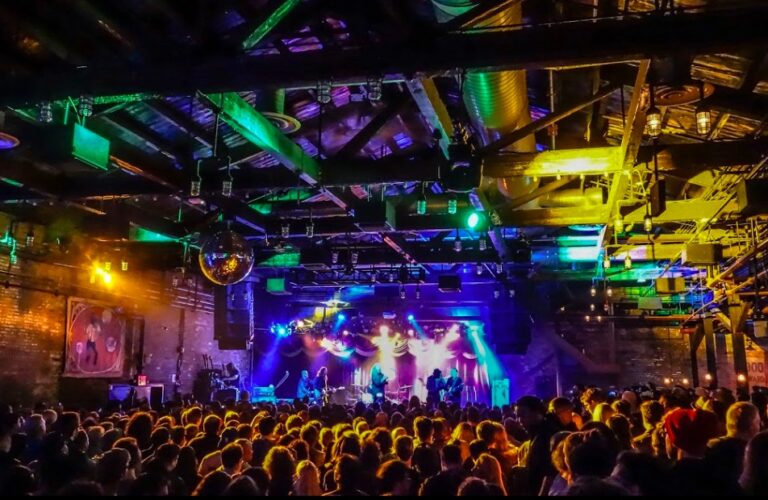
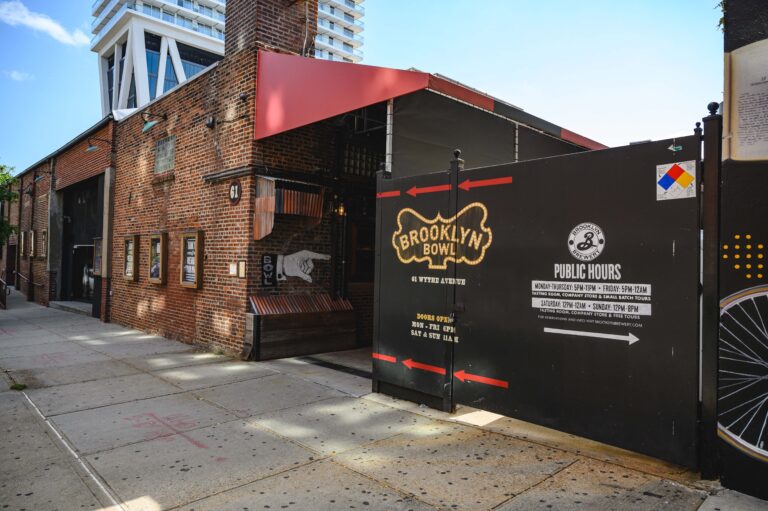
Williamsburg, Brooklyn’s combination concert venue, bowling alley, bar and restaurant, Brooklyn Bowl, has announced a two-night celebration for their 15th anniversary, hosting GRAMMY Award-nominated, six-piece, funky music collective Lettuce on Saturday, September 28 and Sunday, September 29.
An NYC landmark, Brooklyn Bowl’s blend of live music, bowling, and exceptional cuisine has become a cornerstone of NYC’s nightlife over the last 15 years. Located in a historic 19th-century Hecla Iron Works building, Brooklyn Bowl was the first venue to bring together live music and 16 lanes of bowling in New York City, and with the great success replicated around the country, with locations in Nashville, Philadelphia and Las Vegas.
The venue has hosted over 5,000 shows to date, including performances from musical legends like Questlove, M.I.A., Snoop Dogg, Lauryn Hill and Childish Gambino. Beyonce, Lorde, Neil Patrick Harris, Spike Lee, Bill De Blasio, former President Bill Clinton and members of the Brooklyn Nets have also all attended Brooklyn Bowl as special guests, in addition to the over 350,000 guests who attend annually.
The venue also boasts food by the Blue Ribbon restaurant group—famous for its finger-licking fried chicken—and serves locally crafted beers, many of which are from Brooklyn Brewery, located right next door.
With countless accolades, like being named Zagat’s “Best Music Club” three years in a row, being nominated for “Nightclub of the Year” by Pollstar and as one of the best restaurants in NYC by Trip Expert, Brooklyn Bowl has cemented its status as one of the best all-in-one concert, food and entertainment destinations in New York, something that Lettuce will be celebrating this September.
Buy tickets for Brooklyn Bowl’s 15th anniversary or any of their other shows here.
After a weather reduced show at Citi Field on Wednesday night, Foo Fighters make good and celebrate all on Friday, July 19.
The crowd ushered into the stadium and by the time the Foo Fighters took the stage for the 8pm start everyone was ready to rock. The New York weather had been a steamy heat bath but on this night the weather couldnât have been more perfect for an outside stadium show.
When Foo Fighters took the stage, they wasted no time addressing the Wednesday show prior. Heavy storms caused that show to be cancelled about halfway through that night. Dave Grohl let the crowd know that this show was for both nights to enjoy.So, he was going to sing and yell extra loud for all to hear.
The Foo Fighters certainly made up for it. They crushed through a set of monster hits and left it all out there on the stage, dropping a three-hour marathon set on this Friday night.
Looking around you canât help but notice that the Foo Fighters are a band that attracts people of all ages. So many adults were in tow with head-phoned children who were equally as ready to head bang and dance through the aisles. Dave recognized this as well and from the stage he spoke to the OG fans and played some songs for them, and then he addressed the fans who might be here for their first show and welcomed them as well to the rock and roll experience that is the Foo Fighters.
Foo Fighters have been making music for 30 years. Dave Grohl is one of the more authentic rock and roll ambassadors that exists currently. On this night he lived up to all of it. His voice, his guitar playing. Itâs all 100%, all the time from Grohl, a soaking wet mess by the end of the show and by each drop of sweat that dripped off him, you knew he has given the best, the best, the bestâ¦
Foo Fighters – Citi Field, Queens, NY – Friday, July 19, 2025
Setlist: All My Life, No Son of Mine, Rescued, The Pretender, Walk, Times Li-Breakout, Eruption/Thunderstruck/Sabotage/Keyboard Solo/Blitzkrieg Bop/March of The Pigs, My Hero,The Sky Is a Neighborhood, Learn To Fly, Arlandia, These Days, Skin and Bones, Under You, Nothing At All, Shame Shame, This Is a Call, Monkey Wrench, Aurora, Best of You