New York City’s own Scotia Rose have made their debut with two singles, “Run” and “Queens and Kings.” Beginning with an intensely suspenseful drumline, “Run” offers a unique blend of hard rock and country pop. “Queens and Kings” is a heartwarming ode from Scotia Rose’s front man to his bandmates, admiring their work ethic and dedication.
Comprised of musicians from NYC’s cover band circuit, Scotia Rose was formed after the COVID-19 Pandemic. Led by Jeff Weiss, the band includes musicians from different genres, with Jason Laney on keyboards and backup vocals, blues/rocker Marcela de Campos on guitar, Antoinette Ady on violin, and Andrew Koss on bass.
Frontman Jeff Weiss wrote “Run” as his previous band, U.S. Americans, were getting ready to play their final show. He said of the experience, “I wasn’t quite ready to throw in the towel…The only answer I could find was to keep pushing, keep fighting, keep running. Run away from that ending toward a new beginning.”
Weiss credits “Run” for giving him the courage to start over. “Once I finished it, I knew it was time to close one door and open another.” The bittersweet feeling of moving on shines through in the accompanying music video, with footage that evokes feelings of hope and loss. The director of the music video, Kevin Banker, made the video with full creative liberty. Weiss said, “I didn’t tell [Banker] what the song was about. I prefer not to and let the listener find their own meaning. Kevin said he felt feelings of loss and he wasn’t wrong.”
The second single, “Queens and Kings”, offers a release of optimism, with a melodic chorus and bright piano. Scotia Rose took the music video as an opportunity to showcase their stage presence and dynamic. The video features footage of the band hanging out in Carl Schurz Park and playing at The Cutting Room, shot by Hugo Salazar.
Scotia Rose marked the beginning of a promising career with their debut. The band is set to play more shows in New York and Connecticut. Tickets are available at the following link, and the music video for “Queens and Kings” is available below.
This summer, the Americana trio, Lost Radio Rounders, has been busy creating a series of YouTube videos between Memorial Day and Labor Day. The band uploads performance videos every three days, and over the course of three months will have around 40 videos posted.
For Lost Radio Rounders, “YouTube Summer” is a creative effort to expand audience reach. By sharing their jam sessions, the trio of Tom Lindsay, Michael Eck, and Paul “Bowtie” Jossman, show viewers the joy playing music gives them.
Lost Radio Rounders‘ specialty is paying homage to older songs. While they mostly play to intimate live audiences, they’re broadening their repertoire by utilizing social media, and in this case specifically, YouTube. Through these videos, their music can extend past their regular audiences and venues, reaching a more national and even international realm.
In 2023, we had 60 paid performances, but only about a dozen of those were public. Venues such as libraries, historical societies and even the Troy Savings Bank Music Hall’s Music at Noon series have been perfect spots for our blend of music and American history, however those venues can only book us once a year at best. Michael, Paul and I wanted a way to share what we do with more folks, and the Lost Radio Rounders YouTube Channel was a great option.
Tom Lindsay
Some of their covers include sea chanties like “Leave Her Johnny, Leave Her,” and “Drunken Sailor,” and Pete Seeger’s New York classic, “Sailing Down My Golden River.” Through these covers, the joy the band finds in playing these songs is evident, giving the world access to their profound authenticity.
These videos are as far from AI as one could imagine; no overdubs, edits or pitch correction, just each note that the three of us sang and played.
Tom Lindsay
Following their video series, this fall, the trio will put on three free, public performances. For information about the Lost Radio Rounders visit lostradiorounders.com. Watch “YouTube Summer” here.
Lost Radio Rounders Fall Shows
Saturday, September 7 at 2 PM- The Berkshire Athenaeum, Pittsfield, MA
Sunday, October 20 at 2 PM- Guilderland Public Library, Guilderland, NY
Sunday, November 3 at 2 PM- New Scotland Historical Assoc., Voorheesville, NY
Harbor Walk, Liberty Hound, and Jeff Miers Music are teaming up to present the Thursday Night Summer Concert Series “Music Matters.” The series takes place on the New Harbor Walk Facility at the Erie Basin Marina in Buffalo. Concerts take place on Thursdays at 7 pm, so don’t miss the last few weeks of eclectic performers.
Now in its final weeks, the Music Matters concert series features a wide variety of regional artists and organizations for attendees to enjoy. Local businesses set up their booths all over the boardwalk, offering special creations just for the event. Private special events on the boardwalk are held after each concert for fans who wish the night would never end.
“I’m excited to be teaming with my friend Jason Davidson and the Liberty Hound to present this summer concert series at the new Harbor Walk venue,’” says Music Matters Series co-producer Jeff Miers. “There’s a long history of live music on Thursday nights in the Canalside region, and it feels great to be able to assemble this lineup of incredible Buffalo talent to continue that tradition at one of our city’s most breathtakingly beautiful sites.”
Music Matters brings an incredibly diverse and talented batch of musicians to Harbor Walk every year. This year, a lineup of rock, country, and funk artists take the stage. In its home stretch, bands like Critt (joined by special guest Blaised and Confused), Funktional Flow, and The Strictly Hip, along with a special announcement for the show on August 8, are ready to turn up the funk for Buffalo crowds.
Don’t miss the last few performances of Music Matters, every Thursday starting at 7 pm. More information is available here.
Five-time GRAMMY-Award-winning rapper Lil Wayne will be taking the stage of the MVP Arena in Albany this October. He is joined by special guests The Kid LAROI and Selfish Sons.
Over the last 20 years, Lil Wayne has achieved a career unlike any other. His discography has brought him several accolades and immense critical acclaim. Overall, his career is marked by five #1 debuts, starting with the 6x platinum, 3x GRAMMY® Award-winning opus Tha Carter III in 2008, followed by the 5x platinum Tha Carter IV in 2011.
In 2005, Lil Wayne founded the world-famous record label Young Money Entertainment. As CEO, he discovered and signed countless up-and-coming rappers, some of which would grow to become the biggest stars in the music industry, most notably Drake and Nicki Minaj.
On October 11, Wayne will be taking the stage with Australian rapper The Kid LAROI and rock band Selfish Sons. His Albany stop at the MVP Arena marks his only New York show on his current tour.
Tickets for Lil Wayne at MVP Arena in Albany will be on sale this Friday, August 2, at 10 am local time at ticketmaster.com
The Bell House, a celebrated entertainment venue in Brooklyn’s Gowanus neighborhood, has been bought out by Live Nation. The venue has hosted and supported many independent artists throughout the years, having opened in 2008.
Located in an old printing press warehouse, The Bell House has since served the community as an outlet for creatives around the city. Upon its opening, The Bell House was involved in the NYC Comedy scene, drawing the public to the industrialized neighborhood. The venue also racked up its fair share of bands, parties, burlesque, and a variety of other social events.
Because of the opportunities and shameless fun offered to artists and attendees, The Bell House acted as a safe space for people to express themselves. Since 2008, the space has been independently run by the same team responsible for Park Slope’s Union Hall. The two similar, close-by venues, along with other BK establishments gave access to an underground circuit of up-and-coming artists.
Recently, however, The Bell House has experienced a transition as Live Nation quietly purchased it. While the process of it becoming an evident Live Nation venue with mainstream acts is slowly coming into place, the community continues to raise concerns about the future of its beloved sanctuary.
Live Nation, which is in the midst of a federal antitrust suit due to its monopoly over the live entertainment industry, already dominates NYC music venues. Over the years the music industry giant has racked up rooms like the Gramercy Theatre, Irving Plaza, and Brooklyn Paramount.
The new addition of The Bell House has generated a lot of concern and questions from the community. Because the venues immensely support independent artists, people are questioning the risk of Live Nation trading in the smaller artists for bigger names. The possible exclusion of talented yet generally unknown musicians and comics contradicts the venue’s purpose and community. It also risks eliminating the proud diversity and public accessibility the venue has to offer.
The booker and the marketing team do such a great job taking chances on emerging artists and concepts, and giving them the best possible chance to succeed. My big fear is that as it’s engulfed into the bigger Live Nation fold, the venue will lose a little of its cozy Brooklyn familiarity for artists.
Frequent Bell House Performer for The Groove
So far, the lineup has yet to reflect any drastic changes from regular shows. While most people are anticipating mainstream acts, the calendar remains full of smaller, yet still notable acts and bands. They still have classic Bell House-style events such as an ABBA Glitter Disco and a Moulin Rouge Drinking game.
It’s unknown when Live Nation finalized the sale, and therefore, when their booking comes into play. The common fear among the public is how the company will decide to move forward with The Bell House’s trajectory.
Billie Marten played a surprise show at Union Pool on Wednesday, July 24. The British indie/folk singer-songwriter announced the show in a handwritten note on Instagram teasing “mostly new stuff” to be played. Marten began her set with an announcement of a new record that she had just spent ten days recording down the street from Union Pool. She didn’t give a solid idea of when this new album might be coming out, but Marten’s last album, Drop Cherries, released just over a year ago on April 7, 2023.
Opening for Billie Marten was writer and musician Jana Horn. If you like Big Thief and Adrianne Lenker, you might also enjoy Jana Horn’s work. Intimate, interpersonal talk singing poetry over folksy drums and unique bass lines. She rode the line between banter and awkwardness perfectly, and the crowd had a great time. Marten then came out quietly onto the stage in Union Pool’s back room, which has the vibe of a Christmassy saloon. One pink light drenched Marten onstage with her acoustic guitar in her spaghetti strap top, light wash jeans, and red converse.
The show was very low-key. Marten’s pickup came loose and the sound engineer scrambled down from his spot up on the balcony as the crowd parted around him. Billie Marten told the audience to talk amongst themselves, and the room filled with a buzz until she was ready to play again. There was plenty of audience banter as Marten changed tunings between each song. We only got to hear four or five new songs, so there is definitely more to come down the road. Hopefully, Billie Marten will be able to put the finishing touches on her album soon, as we are all eagerly awaiting her next show in NY.
The historic Barton Opus 234 pipe organ will soon make a move from Detroit to Rochester. The nearly 100 year old instrument sat at the heart of Detroit’s silent movie industry for years before sitting in storage for over 40 years.
Now, following a restoration process, the Barton Opus will be the centerpiece of the Rochester Institute of Technology (RIT) new performing arts center.
Restorers Carlton Smith and Justin Nimmo with the Barton Opus 234, by Michael Conroy/AP
Built in 1927, the Barton Opus 234 is a timeless marvel of the instrument making industry. Oshkosh, Wisconsin’s Bartola Musical Instrument Co. manufactured the instrument. While many can imagine what an organ sounds like, the Bartola Opus 234 was so much more. Designed to be a jack of all trades needed to soundtrack silent movies, the organ could replicate a whole host of sounds. In addition to organ tones, its keys could mimic strings, flutes, and horns.
Additionally the Opus contains various percussion instruments including cymbals, drums, and a piano aiding in this versatility. On top of all of this were various sound effects: bird whistles, steamboat horns, and more. With its host of instrumentation, the Barton Opus 234 could replicate any musical note or sound effect an organist would ever possibly need to soundtrack a movie.
The history of the Barton Opus 234 begins with the opening of its manufacturer Bartola in 1918. In that year, Dean Barton founded the company to manufacture photoplayers for theaters across the Midwest. These photoplayers were almost like primordial versions of theater organs. Working off the base of an upright piano, Bartola tacked on organ pipes and percussion instruments to aid theater organists in achieving more diverse sounds.
An early Photoplayer organ
Throughout the 1920s, the Silent Movie industry boomed. Each year movies like Fred Niblo’s Ben Hur and the many comedies of Charlie Chaplin were released, raking in millions at the box office. While these movies were silent, music was a necessary part of the theater experience. Musical cues from live musicians built the atmosphere and told audiences how to react to scenes. In this way the silent movie experience was not silent at all.
As silent films grew in popularity, theater organs also grew – more literally. These organs soon began to take over the role of orchestra pits at theaters. They grew larger, sometimes being multiple stories high, and more elaborate with keys to replicate a host of instruments. What made Barton Organs so notably was their intricacy – not only musically, but visually. Organs like the Barton Opus featured exquisite decorated with multi-colored keys and complex wooden inlays.
During its heyday, Bartola made over 250 of these organs for theaters across the Midwest. Movie-goers everywhere from Saginaw, MI to Cedar Rapids, IA could hear their organs during film screenings. Possibly the most famous of their creations was the gargantuan organ that stood in Chicago Stadium – former home of the Blackhawks and Bulls.
Chicago Stadium’s Bartola Organ
The Bartola heyday could not last forever, with the company closing in 1931. As film made the transition into sound productions, the role of silent film organists slowly became obsolete. By the early 1950s, with the advent of television, which brought entertainment to the home, the medium was all but dead.
The individual story of the Barton Opus 234 very much mirrors these larger trends. After its construction, the organ found its home in Michigan, which had become a hub for silent film. Between 1925 and 1928 alone over half a dozen theaters had opened, housing over 23,000 seats. One such theater was the Hollywood Theatre, built in 1927, which went on to house the Barton Opus.
At its completion, the Hollywood Theatre was a sight like no other. Detroiters could see its massive 150 ft tall towers for miles across the city. The exterior of the building was finished with terracotta walls and red brick roofing, giving it the appearance of a Mediterranean castle. Its interior was likewise ornate. The first thing visitors would see was its 60 ft tall lobby, decorated with marble and gold, and featuring a large chandelier at the center of its ceiling.
At the center of the theater’s operations was the Barton Opus 234. At the time of its purchase, the organ was worth a whopping $75,000 – over $1 million today. Throughout its tenure, organist Bob Clarke operated the monstrous instrument, soundtracking the theater’s films and vaudeville performances. Clarke to many was better known as the organist at Olympia Stadium, home of the Detroit Red Wings.
Despite its grandeur, the Hollywood was always playing second-fiddle to other venues around Detroit. At its completion, the theater boasted a massive 3,436 person capacity – still dwarfed by the larger Michigan Theatre. Many even considered the Barton Opus only the second best sounding organ in the city. The Capitol Theatre – later renamed the Detroit Opera House – held that title.
By the 1950s, the Hollywood Theatre was in the throes of death. Its location – far from the residential hub of the city – spelled its doom. As local organist Roger Mumbrue remembered “No one lived down there. It was mostly abandoned freight yards and derelict buildings, so there was just no hope.” Not even special events, like boxing matches or new films could attract a crowd. In 1958 the theater closed for good, becoming a parking lot for Detroit’s school buses.
With the closure of The Hollywood, its assets were auctioned off to the public. Among these was the massive Barton Opus 234. In 1962, a local engineer and music enthusiast named Henry Przybylski placed a winning bid on the instrument for almost $3,500. Following this purchase, the two-story organ had to be disassembled and transported to Przybylski’s home in Dearborn Heights. For the next 40 years, the organ sat disassembled in his garage.
Fortunes changed in 2003, when Steven Ball – head of University of Michigan’s Organ Department – purchased the Barton Opus. Ball’s main goal was the safe storage and restoration of the instrument until it could find a suitable home – ideally a concert hall like it had originally stood. This came to fruition in 2019, when Ball agreed to donate the organ to RIT. It is currently undergoing restoration, with head restorer Carlton Smith estimating the process is about ⅔ complete. Upon completion, it will travel in pieces to Rochester, before reassembly in its new home at the university’s new performing arts center.
A rendering of the RIT Music Performance Theater rehearsal hall
Workers broke ground on RIT’s Music Performance Theater in September, 2023. This project marks the largest theater construction in Rochester’s recent history. Upon completion, the 40,000 square foot theater will boast three stories and 750 seats. At the center of the theater is a large rehearsal hall, with two large balconies overlooking the stage. The centerpiece of this hall will be the restored Barton Opus 234 in its original glory. Upon its completion, the theater will house RIT’s musical theater productions. Current estimates say the theater will to open in January 2026.
When it comes to NYC’s D.I.Y. rock scenes and their club catalysts, CBGB wasn’t the only game in town. In the late 1980s, when the now uber-glitzy and fully gentrified borough of Brooklyn was still mostly grit, grime and crime, there was one incredibly unassuming dive bar on the fringes of Park Slope where a handful of bands built a scene that captured the attention of the indie rock world.
Now this bar and the many bands it birthed are set to be the subject of an in-the-works documentary, Before It Was Cool: The Brooklyn Beat from Lauterbach’s, with an online crowdfunding campaign and reunion concert set for September 14.
Several years in the making, the nearly completed film is the passion project of three people who knew the scene best. Executive producer and director Michael West was there from the beginning, as a member of The Original Rays. Today a DJ and music director at Radio Free Brooklyn, Rachel Cleary stumbled into this seedy venue when she went to see her boyfriend’s band play and was floored by what she heard but saw in the way of the unforgettable characters who were habitues of the bar. A Brooklyn native, Cleary is a producer and the on-screen interviewer who relates the tale through interviews with several dozen musicians and fans who religiously frequented the venue. Another Brooklyn musician who emerged a decade later, Jeannie Fry of the band My Little Eye, also serves as a Producer and Technical Advisor for the project.
Lauterbach’s had a direct connection to CBGB’s. It all began in 1988 when Bob Racioppo, a former member of one of the original CBGB bands, The Shirts, walked into his neighborhood bar after a shift as a cab driver. In a 2023 interview with the Red Hook Star, Racioppo said: “It had a small stage and looked just like a mini-CBGB’s. It also had a pool table, just like the original CBGB’s. And in those days, the neighborhood was white and Puerto Rican working class, not yet upscale and gentrified.” Housed on the ground floor of a two-story building on an otherwise residential block, Lauterbach’s was a true curiosity in the early days of Park Slope’s gentrification.
With the blessing of the owners who lived upstairs, George and Alice Lauterbach, Racioppo began to bring in bands. “I brought in money and knew how to treat bands, so it took off right away.” The club soon began to attract aspiring bands from the borough and beyond.
These D.I.Y-minded bands weren’t content to just play; they began issuing a series of self-financed compilation CDs, starting with 1988’s Today Brooklyn, Tomorrow The World. Bearing the works of up to 20 bands in each CD, these compilations garnered national buzz, including radio airplay from popular stations like K-Rock and WNEW-FM and feature stories in outlets including The New York Times.
This down-and-dirty but big-hearted scene is coming to life via in-person interviews with well over two dozen musicians and the locals who made this downscale tavern a must-stop every weekend. All totaled, there is 60 hours of footage being culled for the project including many archival performances taped at Lauterbach’s and at Brooklyn Beat events at other venues including CBGB.
While artists including Joan Osborne and They Might Be Giants graced the stage in their early days, this film focuses on the bands who were the heart of the scene, with some musicians who have continued to perform professionally and others for whom their glory days in music are a cherished memory. Interviewees include members of Racioppo’s band, Chemical Wedding, The Fields, Frank’s Museum, Formaldehyde Blues Train, Al Lee Wyer, The Moe, Squirrels from Hell and more.
While much of the film is in the can, the producers are launching a campaign to secure completion funds for the film. They will use the monies to finalize its editing and to promote the documentary at leading film festivals in 2025.
The crowdfunding effort, housed at gofund.me/38eb3334, will be kicked off with an event on Saturday, September 14 at 8 pm at Young Ethel’s at 506 5th Avenue, South Slope, Brooklyn. The event will feature performances by reunited Brooklyn Beat bands including Kenny Young and the Eggplants, Squirrels from Hell, Chemical Wedding, Medicine Sunday, Frank’s Museum and Hari Karaoke Trio of Doom. Info at youngethels.com (Ed. note: This writer was a member of the latter two bands in the lineup).
“This film has come together much like the Brooklyn Beat scene itself,” begins West, “with a group of artists collaborating to create something more beautiful than any could’ve imagined or created on their own. This team, the interviewees and the subject matter have put us well on the road to producing a high-quality documentary about a fondly remembered corner of New York City’s rock history.”
Rachel Cleary adds: “Trying something new can redirect the trajectory of a person’s life. In our interviews, people spoke about breaking their routine to go into Lauterbach’s and that it led to their lives taking a completely different course, for the better. I hope people will leave this film with an appreciation for the power and importance of community, shared experience, and especially music made for the love of it. The Brooklyn Beat crew is a family that lived and continues to thrive well beyond the walls of a bar.”
The West Falls Center for the Arts will host a special fundraiser known as “Music Mends.” The fundraiser is held at the Admiral Room in Buffalo, on October 3, from 6-9 pm.
West Falls Center for the Arts is a nonprofit arts and cultural destination hub, offering programs designed to bring arts and culture enjoyment to all. Music Mends is yet another of the inspiring events hosted by the center.
Music Mends offers a wide variety of activities, including free music lessons for Veterans and their families, lessons from the accredited PBS program Kids Jam, and music mentoring for young artists. The nationally recognized Musical Memories Cafe hosts a special program for individuals with Alzheimer’s/Dementia and their caregivers. Performances from special musical guests and Buffalo natives The Kensingtons will take place all night, celebrating the classic artists of the 1960s and 70s like Roy Orbison. Music Mends will end with a Community Concert Series.
Guests can enjoy complimentary wine, beer, and soda all night long. Throught the night, there are basket raffles, wine pulls, a gift card wall, and more fundraising activities. All proceeds go directly to the West Falls Center for the Arts, and help fund a wide variety of programs to bring music and art to the citizens of West Falls.
Tickets for Music Mends start at $75 each, or $130 for two – tickets and more information are available on the West Falls Center website, linked here.
The Admiral Room is located in the Marin apartment buildings, located at 237 Main Street, 14203, in Buffalo.
This year, the Schroon Lake Arts Council celebrates the 50th anniversary of its summer concert series, now named Schroon Lake Live.
To commemorate the golden anniversary, Schroon Lake Live offers two months of free concerts, having started on July 3 and held weekly on Tuesdays, and the 34th Adirondack Folk Festival.
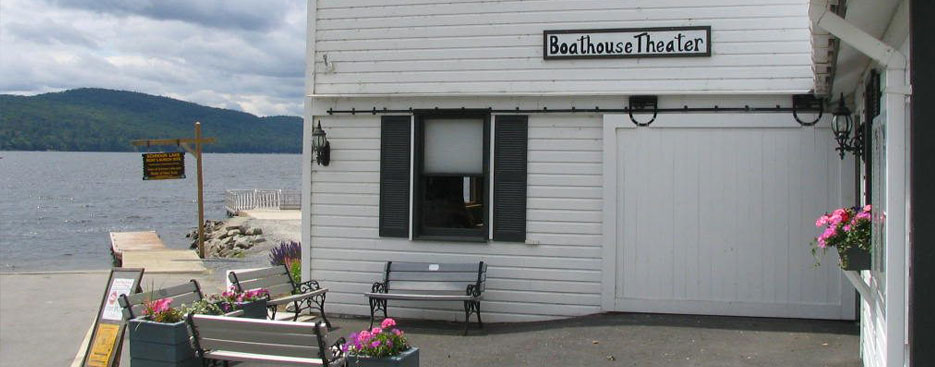
Concerts for Schroon Lake Live! and the Adirondack Folk Festival are held at the 1874 Boathouse Theatre, or outdoors on the 1936 Bandstand. For Schroon Lake Live, this year’s program is more diverse than ever before and features artists of several genres, including Irish, folk, jazz, bluegrass, classical chamber music, and even a childrenâs and family program.
Also bringing fans to Schroon Lake is the Adirondack Folk Festival, celebrating and honoring the roots of of folk music from the region. Local and regional artists are set to perform, including Jamcrackers, House of Hamill, E.T.E., Vanaver Caravan, Matoaka Little Eagle and Julia Haines presenting Indigenous stories and music, and Three-Quarter North. The festival is Sunday, August 11, from noon to 6 pm. Food trucks and local vendors are available throughout the duration of the festival, and guests even have opportunities to meet the performers after the show.
In addition to the concerts, free open jam sessions are held in the Boathouse on Mondays from 7- 10 p.m. for all singers, musicians, and music lovers.
The full lineup for Schroon Lake Live is listed below. All concerts and events hosted are free, and welcome guests of all ages. For more information, visit the Art Council’s website, linked here.
Schroon Lake Live! Full Lineup
July 3: Get Up Jack
July 9: Dave Ruch
July 13: The Puppet People
July 15: Songs To Keep: Treasures Of An Adirondack Folk Collector with Dan Berggren