ONCO Fermentations, located in Tully, NY, has announced a new Sunday Blues Series for 2025. The brewery, kitchen and event space, opened in 2019, is located 20 minutes south of Syracuse, and showcases regional musicians on most Fridays, Saturdays, and/or Sundays.
ONCO Fermentations in Tully
The brewery in Tully is centrally located right off Route 81 (Exit 67) on the edge of Onondaga and Cortland counties, making ONCO a draw for customers from Binghamton to the North Country, and from as far as the Finger Lakes. With this geographical positioning, ONCO helps acts that may otherwise play in a concentrated local area, making Tully a destination for folks looking for live music that don’t want to drive to a city, or those fans who enjoy a short, scenic drive into the near-rural area.
While the early music schedule at ONCO has been based on musician schedules and other events at the brewery, 2025 is the first year patrons can expect music every Sunday – with very few exceptions.
ONCO is filling in most Sundays with the blues this year, one of the brewery’s favorite styles of music. Founder and Tap Room Manager Erin Bullard is a huge promoter of all of her acts, often saying “We put an urban warehouse brewery in rural America,” even though Tully isn’t truly rural.
All shows are free of charge at ONCO, which straddles the line of listening room and bar, with a roughly 100 person main tasting room atmosphere that is festive as well as appreciative when the music plays.
In 2022 the brewery opened the Neo Kitchen within their space, focusing mainly on cold fermented Neapolitan pizzas, but a small expansion of offerings is currently under development. The brewery brews its own award-winning beer, and also offers nonalcoholic options, wine, hard cider and a selection of cocktails.
These three threads bring people back to ONCO time and time again – beer, food, and music. The brewery also has a 3,500 square foot “Back Space” area for patron overflow and alternate activities during the shows, and a large outdoor beer garden adjoins the facility. When the weather warms up, all music is scheduled to be outside, but will be located inside if the weather is unpleasant.
There will be no blues on select days – Superbowl Sunday, Easter, and a special events including F.I.R.E. Festival on March 9 with Jess Novak, the brewery’s 6th Anniversary Weekend Party finale on March 16, and ONCtOberfest on September 21, as well as other occasional music showcase treats.
ONCO fermentation
Musicians interested in performing at ONCO can reach out to Erin at music@oncoferment.com with a sample of their music, EPK, schedule and rate. The website is updated regularly with events, as well as regular posts on Facebook, Instagram, and YouTube.
Vocalist Shemekia Copeland will celebrate the release of her Grammy-nominated album, Blame It On Eve, with a live performance at The Egg in Albany on Saturday, Jan. 18, 2025.
Shemekia Copeland’s latest album, Blame It On Eve, received a Grammy nomination for Best Contemporary Blues Album. The title track, written by John Hahn and Will Kimbrough, received nominations for Best American Roots Performance and Best American Roots Song. These three nominations now bring her total to eight. Upon release, Blame It On Eve debuted at #1 on the Billboard Blues Chart.
Born in Harlem in 1979, Shemekia Copeland released her debut album “Turn The Heat Up” in 1998 when she was only 18. The New York Times and CNN, among many others, praised her talent, larger-than-life personality, dynamic, authoritative voice, and true star power. Copeland’s music has continued to evolve over the years along with her notoriety and skill.
Blame It On Eve was recorded in Nashville with producer Will Kimbrough, who also produced her previous three albums and doubles as an instrumentalist and songwriter. Each of the 12 songs has substance and contains jaw-dropping performances from Copeland and the band.
“There’s serious business on the new album,” Copeland says. “But there are a lot of smiles here too, a lot of joyous moments. It’s my blues for sure but it’s the brighter side. Issues are always important to me, but so is rocking, dancing and just having fun. And that’s something we all can all agree on.”
Tickets are on sale now. Learn more and purchase tickets here.
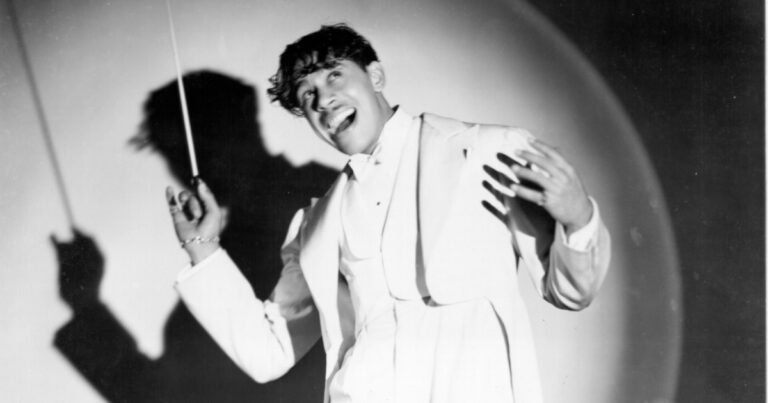
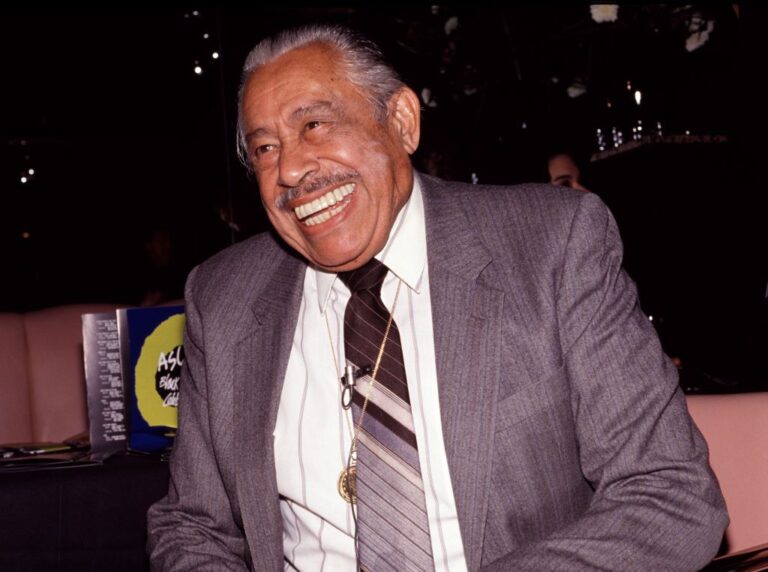
Cabell “Cab” Calloway III was born on Christmas Day, 1907 in Rochester, living on Sycamore Street. His mother was a teacher and church organist and his father was a lawyer. When Calloway was 11, they moved to Baltimore. After he was caught playing dice on the church steps, his mother sent him to a reform school in Pennsylvania.
When he returned to Baltimore, Calloway began private voice lessons and continued his study of music throughout school. He soon began performing at nightclubs in Baltimore and was mentored by Chick Webb and Johnny Jones.
In 1927, Calloway joined his older sister, Blanche, in a tour of Plantation Days. She achieved success first, he often credited her as an inspiration to enter show business. His parents wanted him to follow in his father’s footsteps and become a lawyer. Therefore, he enrolled to college in Chicago, but spent his nights at the Dreamland Ballroom, Sunset Cafe, and the Club Berlin. At the Sunset Cafe, he was an understudy for Adelaide Hall. He also met and performed with Louis Armstrong.
Harlem
In 1929, Calloway moved to Harlem, performing with the Alabamians band. They opened at the Savoy Ballroom and broke up soon after. With help from Armstrong, Calloway established himself as a vocalist by singing “Ain’t Misbehavin’” by Fats Waller. Soon after, The Missourians asked Calloway to join and front them.
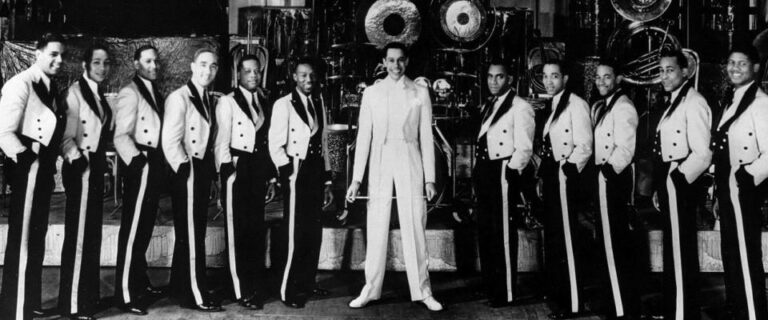
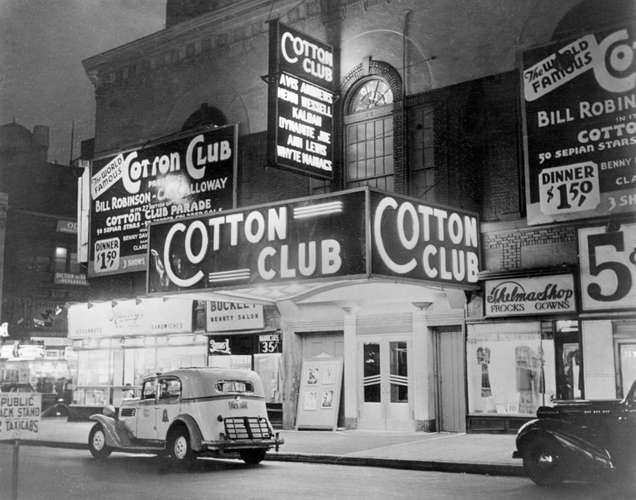
The following year, the band name shifted to Cab Calloway and His Orchestra. In 1931, the band replaced the Duke Ellington Orchestra at the Cotton Club while they were on tour. Due to the increased popularity, they were offered a permanent position there.
The band also performed regularly on radio broadcasts on NBC. Calloway also appeared on radio programs with Walter Winchell and Bing Crosby became the first African-American to have a nationally syndicated radio show. During the heights of the Great Depression, Calloway was earning $50,000 per year at the age of 23.
The 30’s and 40’s
In 1931, Calloway recorded his most famous song, “Minnie the Moocher.” This is the first single song by an African-American to sell one million records. Three of his songs, “The Old Man of the Mountain,” “St. James Infirmary Blues” and “Minnie the Moocher”, were performed in Betty Boop cartoons.
Calloway soon received the nickname “The Hi De Ho Man.” He performed in the 1930s in short films for Paramount. In these, Calloway performs a gliding backstep dance move, a possible precursor to Michael Jackson’s moonwalk.
Calloway’s band in the 1930s and 1940s included many notable musicians, such as Ben Webster, Ed Swayze, Cozy Cole, and Dizzy Gillespie. In 1940, Strike Up the Band, starring Mickey Rooney and Judy Garland, has a line of “You are not Cab Calloway” after playing poorly.
In 1941, Calloway fired Gillespie from his orchestra after an onstage fracas erupted when Calloway was hit with spitballs. He wrongly accused Gillespie, who stabbed Calloway in the leg with a small knife.
In 1956, Clarence Robinson, who produced revues at the original Cotton Club and the Apollo Theater, and choreographed the movie Stormy Weather, cast Calloway as the main attraction for his project in Miami. The Cotton Club of Miami featured a troupe of 48 people, including singer Sallie Blair, George Kirby, Abbey Lincoln, and the dance troupe of Norma Miller. The success of the shows led to the Cotton Club Revue of 1957 which had stops at the Royal Nevada Hotel in Las Vegas, the Theatre Under The Sky in Central Park, Town Casino in Buffalo.
Later Years
The Cotton Club Revue of 1959 traveled to South America for engagements in Rio de Janeiro and Sao Paulo. They also stopped in Uruguay and Argentina before returning to North America which included a run on Broadway. Directed by Mervyn Nelson and choreographed by Joel Nobel, this edition featured Ketty Lester, The Three Chocolateers. The revue toured Europe in 1959 and 1960, bringing their act to Madrid, Paris, and London.
Calloway remained a household name due to TV appearances and occasional concerts in the US and Europe. In 1961 and 1962, he toured with the Harlem Globetrotters, providing halftime entertainment during games.
In 1985, Calloway and his Orchestra appeared at The Ritz London Hotel where he was filmed for a 60-minute BBC TV show called The Cotton Club Comes to the Ritz. Adelaide Hall, Doc Cheatham, Max Roach, and the Nicholas Brothers also appeared on the bill. A performance with the Cincinnati Pops Orchestra directed by Erich Kunzel in August 1988 was recorded on video and features a classic presentation of “Minnie the Moocher”, 57 years after he first recorded it.
On June 12, 1994, Calloway suffered a stroke at his home in Westchester County. He died five months later from pneumonia on November 18, 1994, at age 86, at a nursing home in Hockessin, Delaware.
Awards and Accomplishments
In 1990, Calloway was presented with the Beacons in Jazz Award from The New School. The NYC mayor at the time, David Dinkins, proclaimed the day “Cab Calloway Day.”
The New York Racing Association (NYRA) annually honors the jazz legend, a native of Rochester, with a stakes races restricted to NY-bred three-year-olds, as part of their New York Stallion Series. First run in 2003, The Calloway has since undergone various distance and surface changes. The race is currently run at Saratoga Racecourse, one of America’s most popular, premier racetracks. The Cab Calloway Stakes celebrated its 13th renewal on July 24, 2019.
In its sixth year, Black Bear Americana Music Fest presented three full days of roots, contemporary and traditional folk, country, blues, bluegrass and mixed-genre solo artists and bands on its main stage, acoustic stage, gazebo stage and workshop stages to an audience that ranged from those of us who are of Woodstock era to kids chasing soap bubbles.
Black Bear ran from Friday, October 11, through Sunday, October 13 at the Goshen Fairgrounds, Goshen, CT.
The Crowd – Victor Wainwright & The Train
The festivals producers, Ian Campbell and Beth Murphy, did a fantastic job and managed to present a festival that brought acts from the unknown to those who needed no introduction.
Although the festival’s first “official” day was Friday, many arrived on Thursday to set up their tent or RV sites. On Thursday night the festival opened, “unofficially”, with the Big Orange Tarp Songwriter Circle, created by Alan Rowoth decades ago in connection with other festivals, and currently presented by Rowoth and singer songwriter Andrew Dunn of CT, who performed at the festival on Sunday.
Andrew Dunn, Hosting Big Orange Tarp
What follows is a quick look at most of the performers at Black Bear. The simultaneous multiplicity of performances on separate stages made full coverage impossible.
Lucas Neil of Saratoga Springs, performing his Americana and indie-folk originals, Glori Wilder of western CT’s R&B and eclectic mix, and Red Smith of Wilmington, DE highly energized originals flavored by influences of country, folk, rock, bluegrass, and soul with vocals that turned on a dime from sweet to gravel and grit, opened the festival on the Acoustic Stage, each with a set of their original songs, in the “Songwriter Showcase”.
Lucas NeilGlori WilderRed Smith
The Midnight Anthem, a group based in CT fronted by three cousins, opened the Main Stage for the day with a set of their country-oriented Americana songs, followed by Burlington, VT’s Tall Travis, an indie folk band with bluegrass folk/punk influences, on the Acoustic State, with one of their two performances for the weekend.
Tall Travis
Over on the Gazebo Stage, Charlie Diamond performed a set of his pop/folk flavored Americana original story type songs with a Dylan-esque type voice that matched his songs perfectly.
Charlie Diamond
Back at the Acoustic Stage, highly regarded Canadian songwriter Scott Cook and Pamela Mae, currently on tour in the US and Canada, performed a set of well-crafted songs, primarily of hope and positive messages, mostly based upon Scott’s life experiences.
Scott Cook and Pamela Mae
Long time folk- favorite New England singer songwriter Cheryl Wheeler, whose songs have been covered by artists as diverse and Garth Brooks and Bette Midler, took the Main Stage where she delivered some long time favorites, as well as some of her newer work.
Cheryl Wheeler
The Rough & Tumble, multi-instrumentalists from New Hampshire, took the Acoustic stage to perform what they describe as their “Dumpster – Folk/Triftstore – Americana” originals for an appreciative crowd.
The Rough and Tumble
The Currys, from Charlottesville, VA , fronted by two brothers and a cousin, played a set of their original indie-folk rock songs with tight vocal harmonies on the Main Stage.
The Currys
Meghan Cary, a Billboard Magazine’s Critic’s Choice Award Winner, performed a beautiful set of her originals from folk rock power ballads to touching songs of hope, backed up on keys by Peter Farrell.
Meghan Cary
Over on the Workshop Stage, Bryan Titus, Marc Apostolides and Shawn Taylor presented songs, stories and photos, from their collective thru-hikes and long-distance hikes on the Appalachian Trail, The Long Trail, The John Muir Trail and the Pacific Crest Trail.
Arm Chair Boogie, a jamgrass/newgrass act from Wisconsin did an excellent performance on the Main Stage which go the crowd to its feet.
Arm Chair Boogie
In addition to performers, there were a number of organizations at Black Bear. “Meals for Music” was an especially compelling organization. It is a non-profit which provides home cooked meals for musicians on the road not only to feed those low on cash, but also for making those on tour feel a bit “at home”…Currently serving the Connecticut area, they are an organization worth looking at.
Meals for Music
The Best Times band performed a set of their original indie rock songs on the Gazebo Stage.
The Best Times
Back across the fields, The Decker Bandits of Collinsville, CT filled the Acoustic Stage with a mix of bluegrass, funk rock/dance originals delivered their own energy to the crowd.
The Decker Bandits
The final act of Friday night was grammy nominated, award winning Victor Wainwright’s Victor Wainwright & The Train, whose piano, electric guitar, horns and rhythm section got the crowd up and moving with their original Americana, blues and wide ranging roots music, with sprinklings of boogie-woogie, honky-tonk, and New Orleans piano.
Victor Wainwright & The Train
Jason Ingriselli & The Miles North opened up Saturday’s performances on the Main Stage showcasing Ingriselli’s powerful voice and songs which he calls New England Country Music.
Jason Ingriselli and The Miles North
Drank The Gold, an Upstate NY based duo brought their soaring vocal harmonies fiddle, guitar/banjo Irish and American old-time and contemporary traditionalist songs to the Acoustic Stage to round out the morning.
Drank The Gold
Kerri Powers bought her original blues and soulful earthy songs on acoustic and resophonic guitars to the Main Stage to an appreciative crowd.
Kerri Powers
Massachusett’s Sean Maqwire, who has fast become one of this writer’s favorite songwriters, brought a handful of his well-crafted songs to the Acoustic Stage.
Sean Magwire
Goodnight Moonshine, a duo, delivered their original folk songs with beautiful vocal harmonies, and an improvisational style and feel more common to jazz than typical folk music.
Goodnight Moonshine
In addition to continuous performances each day on three separate stages, Black Bear presented thirteen different workshops over the three-day festival, including some in songwriting, music production, performance, improv and other music related subjects, all while Main, Acoustic and Gazebo Stage performances continued. This writer took the time to venture over to the Workshop stage mid-afternoon on Saturday to catch workshops on Improv musicianship and songwriting, and then made it back to the Main and Acoustic Stage to see the rest of the performances.
The Slambovian Circus of Dreams, a Central NY based group that has been together for about twenty years, delivered their songs of fantastic stories with a high energy, crowd engaging performance, in what has been called “Woodstock-tinged psychedelia..[with] a hint of southern rock, Celtic and British folk combined with solid songwriting..” that moved the audience and brought it to its feet.
The Slambovian Circus of Dreams
Tall Travis, an indie folk band from Burlington, VT, with its unique bluegrass folk/punk influences, filled the Acoustic stage for the second time over the weekend and lit up the stage with their own brand of musical energy.
Tall Travis
Saturday night’s finale was delivered by Quebec’s Le Vent du Nord who delivered songs and performances of both traditional and original compositions, with highly rhythmic and soulful music, rooted in the Celtic diaspora, enhanced with a broad range of global influences. And when festival producers Ian Campbell and Beth Murphy took the stage before the encore the crowd yelled for the band to be brought back again next year.
Le Vent du Nord
After the stages shut down for the night, those in the know headed for the songwriter circles put on by Big Orange Tarp, Pirates Camp and the Jubilee Jam Tent.
Sunday morning started out with a Main Stage performance by folk legend Vance Gilbert who engaged the audience with a brilliant combination of original songs and banter. Gilbert also offered an excellent performance critique for musicians at the festival at the Workshop stage in the afternoon.
Vance Gilbert
Terra Coda, a band of five percussionists, delivered their unique music to an appreciative crowd, just before the rains came.
Tera Coda
Performers scheduled for later in the day included Ash & Eric, Josh Joplin Group, Two Crows for Comfort, Way Down Wanderers, Shanna In A Dress, Whiskey Talks and Adam Ezra Group.
A truly special component of Black Bear are the songwriter-in-the-round events that feature both featured acts at the festival and other songwriters picked by the various event’s creators or organizers, where a small group of songwriters alternate delivering their songs, solo, for a few rounds, and then the next group comes in, repeating the rounds until the wee hours of the morning. “In the round” events were held each day and night at “The Big Orange Tarp (aka the BOT)”, “Pirate Camp”, the Jubilee Jam Tent. For many, these songwriter circles are a significant part of what makes a festival like Black Bear such a highly respected musical event.
One of these, the “Big Orange Tarp”, or BOT as it’s known by its fans, featured solo performances in the round each night of the festival and into the wee hours of the morning by a number of those who performed at the festival, as well as by other songwriters, including this writer, all handpicked by Rowoth or Dunn. For many, the BOT, and the other in the round songwriter circles, represent one of the most cherished events at this and many other festivals (Kerrville, Falcon Ridge, and more) and represent what many feel is the best way to hear songs, unadorned by stage sound support, performed “in the raw” by the people who wrote them.
Big Orange Tarp, Songwriter Circle
In addition to the fantastic and well curated music and music related workshops for musicians and music lovers, the Black Bear Americana Music Fest provided a varied array of food vendors; workshops in glass making, painting, gel plate printing, pumpkin carving and jewelry making; chili tasting and interactive cocktail making classes; and cannabis related classes from making edibles at home, to growing and harvesting; and the Festival provided AA meetings each morning.
All in all Black Bear was an excellent music festival and one which many will surely attend again next year.
Thank you Ian Campbell and Beth Murphy for a fantastic 2024 Black Bear. See you next year!
Ian Campbell and Beth MurphyVictor Wainwright and The TrainVictor Wainwright and The TrainVictor Wainwright and The TrainVictor Wainwright and The TrainVictor Wainwright and The TrainVictor Wainwright and; The TrainVictor Wainwright and The TrainVictor Wainwright and The TrainVictor Wainwright and The TrainVictor Wainwright and The TrainVictor Wainwright and The TrainVictor Wainwright and The TrainVictor Wainwright and The TrainVictor Wainwright and The TrainVictor Wainwright and The TrainVance GilbertVance GilbertThe New StudentsThe Decker BanditsThe CurrysTall TravisTall TravisBlack Bear Americana Music FestivaThe Slambovian Circus of DreamsThe Slambovian Circus of DreamsThe Slambovian Circus of DreamsThe Slambovian Circus of DreamsThe Slambovian Circus of DreamsThe Slambovian Circus of DreamsThe Slambovian Circus of DreamsThe Slambovian Circus of DreamsThe Slambovian Circus of DreamsThe Slambovian Circus of DreamsThe Slambovian Circus of DreamsThe Slambovian Circus of DreamsThe Slambovian Circus of DreamsThe Slambovian Circus of DreamsThe Slambovian Circus of DreamsSean MagwireSean MagwireSean MagwireScott Cook and Pamela MaeScott Cook and Pamela MaeScott Cook and Pamela MaeThe Rough and TumbleRed SmithMeghan CaryMeghan CaryMeghan CaryMeghan CaryPamela Mae, Scott Cook, Andrew DunnLucas NeilLe Vent du NordLe Vent du NordLe Vent du NordLe Vent du NordLe Vent du NordLe Vent du NordKerri PowersKerri PowersGoodnight MoonshineCoffee Guys
Cheryl WheelerCharlie DiamondBlack Bear Americana Music Festival – 2024Arm Chair BoogieArm Chair Boogie
On Thursday. December 19, the Jazz at Lincoln Center Orchestra did what they do best – they tossed common musical conventions to the wind while elevating songs to a new level.
Photo Credit: Aidan Lukomnik
The Jazz at Lincoln Center Orchestra, just back from a two-week tour around the U.S., was welcomed to their Big Band Holidays performance with a rousing round of applause. Standing on their home stage of Rose Theater, the Orchestra played ten songs from a catalog of more than thirty holiday standards ranging from religious to anti-holiday. But these weren’t your normal holiday songs.
“You might have heard Frosty the Snowman before, but you’ve never heard it like this,” Musical Director and Trombone player Christopher Crenshaw said. That was the theme that prevailed throughout the show: you ain’t heard it this way before. Across an hour and a half of music, standard holiday compositions were eschewed for new ways to play, throwing each song into a new context and making the audience consider their perception of just what a holiday song sounds like.
Christopher Crenshaw at Rose Hall, Photo Credit: Aidan Lukomnik
Starting with two classics, the band played a sped-up and swung version of “Here Comes Santa Claus” and then transitioned into an extremely melancholic version of “Dreidel, Dreidel, Dreidel.” The first act was spiced up by Robbie Lee singing the anti-holiday song “Blue Xmas (To Whom it May Concern)” and “Merry Christmas Baby.” Lee’s vocal intonation was incredible – moving from a gravelly embodiment of the Grinch in “Blue Xmas” to clear and pure desire in “Merry Christmas Baby.”
However, the pinnacle of the first set was Sherman Irby’s solo in the “Merry Christmas Baby.” His saxophone transported audience members and, it seemed, members of the orchestra from a 1,200+ person venue to a dark and smoky jazz club inches from the stage. For the length of the solo, no one took a breath, and for a moment, all there was in the world was his music. It was a Blues solo at its finest.
Sherman Irby, Photo Credit: Aidan Lukomnik
The second set was punctuated by the dulcet vocals of Ekep Nkwelle, who sang a spiritual version of “Mary Had a Baby” and then upended all religious expectations with a downright sexy version of “Santa Claus, Santa Claus.” Nkwelle’s vocals during “Santa Claus, Santa Claus” felt straight out of film noir with desire, danger, and pain clear as day, while Chris Lewis’ solo put an exclamation point on the number.
As the night came to an end, the hometown crowd responded to the orchestra’s take on holiday classics with their you ain’t heard it this way before swagger, with a standing ovation.
Setlist:
Set 1: Here Comes Santa Claus> Dreidel, Dreidel, Dreidel>Blue Xmas (to Whom it May Concern) > Merry Christmas Baby > (I’m gettin’) Nuttin’ for Christmas
Set 2: Up on the House Top > Mary Had a Baby > Santa Claus, Santa Claus >Blue Christmas > Frosty the Snowman
The Big Band Holidays show has two more performances at Rose Theater on Saturday the 21st and Sunday the 22nd.
Samara Joy and The McLendon Family, accompanied by Buffalo’s George Brown and the God’s Purchase Choir, took the stage at UB’s Center of the Arts on December 17. The night was full of smooth jazz and Christmas spirit.
As the audience were walking into the auditorium, Samara had a slideshow going of some of her family photos, giving the audience an insight into her family and her upbringing.
Once the audience settled in their seats, the band, composed of Shedrick Mitchell on Piano, Eric Wheeler on bass, and Charles Haynes on drums, came out first and started to play the intro to “Christmas Time is Here,” then Samara came out and began to sing, getting everyone right into the holiday spirit with her jazz rendition of the song.
After the song, she introduced herself and brought out members of her family to sing a few songs with her. She brought out her father, Antonio McLendon, her uncle, Laurone McLendon, and her cousins Tommy Niblack and Tierra “Lovey” Rowe, and rounding out the crew is Stephy Bloom Samara’s vocal director. She then brought out Buffalo’s George Brown and the God’s Purchase Choir who filled in the riser in the back. With her family and the choir, they perform “O Holy Night” and “Everybody Knows It’s Christmas.” Their renditions of these songs had such a warm gospel feel to them with the full auditorium enjoying every moment.
The night wasn’t just full of Christmas spirit as Samara and her band sprinkled in other songs including songs “You Stepped Out Of A Dream,” “Peace Of Mind/Dreams Come True” and “Now And Then” from her recently released album Portraits. They also performed renditions of “Reincarnation of A Lovebird” by Mingus, “Chega de Saudade,” also known as “No More Blue”s by Antonio Carlos Jobim, and Billie Holiday’s “Left Alone.”
Samara Joy, truly has a once in a generation voice. At such a young age of 25, she already has such a seasoned voice. Being able to resemble some of the great jazz artists, such as Ella Fitzgerald and Billie Holiday, and still having her own sound is a true testament to her talent. Throughout the whole performance, from the moment she started singing, her voice automatically just took you on a journey with her all night.
At one point in history, the New York City subway system was among the most impressive in the world. These days it resembles what you would imagine a third world country’s subway system would look like, with third string trains donated from cities that upgraded their system years ago and no longer had any use for them, but it still gets you from point A to point B and that’s what matters. Albeit confusing to out of towners, you can hop on a train in midtown Manhattan and get almost anywhere you would like to go in the city.
Photo from Wikimedia Commons Public Domain
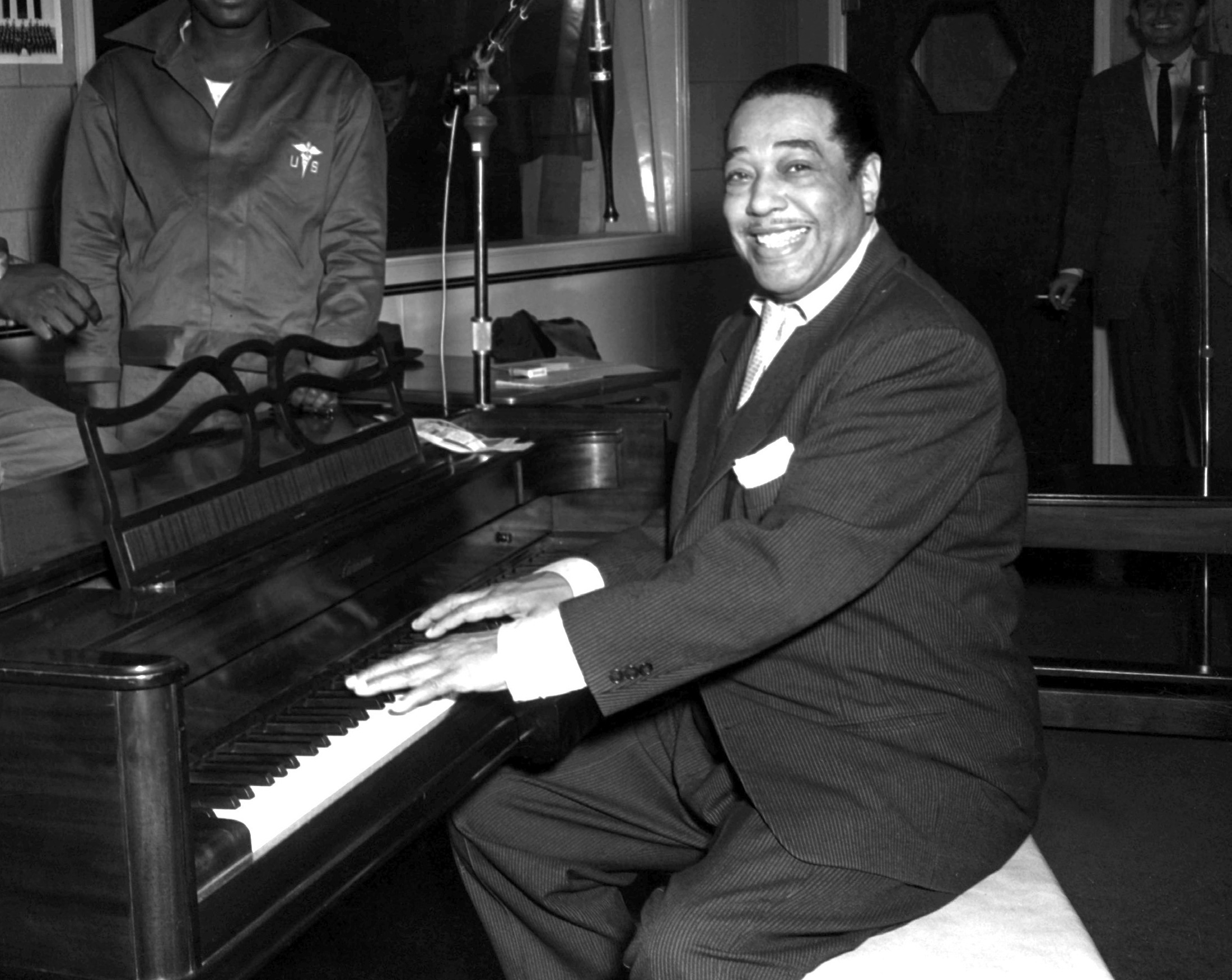
Since it is such an extensive system, those who are completely unfamiliar with New York’s subway system might have a tough time going from borough to borough, and might not even be aware that there are both letter and number trains. However, thanks to Duke Ellington and his infamous 1939 hit “Take the A Train,” almost everyone is aware of at least one line in the NYC subway system, which is more than you can say about almost any other city in the world.
Although popularized by Duke Ellington, “Take the A Train” was written by long-time collaborator and pianist Billy Strayhorn. The swing anthem became the signature piece for Ellington’s orchestra, and was often used as its opening theme and standout song. For most jazz musicians at that time, bandleaders would not put a song they didn’t write themselves in the spotlight like that, however Ellington and Strayhorn’s relationship was atypical. In his biography, Ellington said Strayhorn “was not, as he was often referred to by many, my alter ego. Billy Strayhorn was my right arm, my left arm, and the eyes in the back of my head.”
‘Take the A Train’ was written in Strayhorn’s head while at a party, then put on paper that evening when he got home. The song title was inspired by directions Ellington gave to Strayhorn to get to his house in Sugar Hill, which began with “Take the A Train…,” and the music was influenced by Fletcher Henderson’s style of jazz. Although Ellington’s rendition is instrumental, Ella Fitzgerald released a popular version with the original lyrics Strayhorn wrote about getting to Ellington’s home in Harlem.
Ellington’s home was located in the Sugar Hill neighborhood of Harlem, which is where the Harlem Renaissance took place between the 1920’s and 1950’s. At the time, Sugar Hill was the ritziest, most elegant African-American neighborhood in the United States. It was deemed “Sugar” Hill because of how sweet it was to live there, with the heart of the neighborhood located between 144th and 155th street. The high-class neighborhood was filled with stately homes and luxury apartments, and inhabited by African-American artists, activists, politicians, and intellectuals. The Harlem Renaissance was responsible for allowing African-Americans to focus on their past, as well as develop a unique identity for themselves, thus creating a culture within a culture. It brought people closer to their roots, and allowed them to celebrate who they were while exploring new creative channels to expression, with the Sugar Hill neighborhood as the epicenter of it all. “Take the A Train” became the anthem of this movement, and was highly praised by all of New York.
Today the Sugar Hill neighborhood is still lined with elegant homes and beautiful apartment buildings, with the rich, historic culture dominating the neighborhood. As most areas change over time, there has been a recent slight decline in African-Americans living in Sugar Hill to make room for other cultures, however it is still primarily a black neighborhood. Art and creativity thrives within the neighborhood, and you can still take the “A” train uptown anytime you’d like to soak up the culture and be inspired.
‘Take The A Train’ Lyrics:
You must take the A train
To go to Sugar Hill way up in Harlem
If you miss the A train
You’ll find you missed the quickest way to Harlem
Hurry, get on, now it’s coming
Listen to those rails a-hummingAll aboard, get on the A train
Soon you will be on Sugar Hill in Harlem
Caffè Lena has announced the launch of the Peak Jazz Series, an exciting addition to its monthly concert offerings. Made possible by the generous support of Joseph and Luann Conlon, this series is dedicated to fueling the growth of jazz in Caffè Lena’s renowned listening room.
Hailing from Saratoga Springs, the nation’s oldest continuously operating coffeehouse new Peak Jazz Series will focus on ensembles that lean toward cool jazz, fusion, and funk, offering audiences a dynamic and diverse jazz experience.
By ensuring a steady flow of world-class jazz acts, the series enriches Caffè Lena’s programming and reaffirms its commitment to fostering live music in an intimate and premium setting.
The Peak Jazz Series joins the already thriving Jazz at Caffè Lena Series, hosted by accomplished jazz pianist Chuck Lamb. Each month, Chuck and his trio welcome a special guest to the stage, offering unique collaborations with some of the most remarkable names in jazz. Recent highlights include performances with Jimmy Greene and Stanley Jordan, showcasing the diversity and brilliance of the genre.
“We’re thrilled to expand our jazz programming. With the Peak Jazz Series adding a fresh layer to our monthly offerings and Chuck Lamb’s Jazz Series continuing to bring in extraordinary guests, Caffè Lena is solidifying its place as a top destination for live jazz in the region.”
Sarah Craig, Executive Director of Caffè Lena
“Supporting the Peak Jazz Series at Caffè Lena is an exciting opportunity to celebrate the depth and diversity of jazz,”said Joseph Conlon, sponsor of the Peak Jazz Series. “We’re proud to help bring extraordinary ensembles to such an intimate venue, showcasing the energy, artistry, and innovation that define this genre. Our hope is to inspire both long-time jazz enthusiasts and new audiences to connect with the music in meaningful ways.”
The Momentum Series, also made possible by the Conlons in honor of Thom O’Neil, will continue to bring high-energy performances—solo and band—that fill the room with electrifying energy. Together, these series provide unparalleled opportunities to experience the power of live music across genres at Caffè Lena.
Caffè Lena invites jazz enthusiasts, music lovers, and the community to experience the debut of the Peak Jazz Series and its exceptional lineup of artists. For tickets and information, visit www.caffelena.org.
Spoken word artist FlowPoetry and multi-instrumentalist Noah Lehrman have announced the release of their live album slated to release Dec 17.
FlowPoetry (aka Adam Pergament) is a neo/beat spoken word artist who hails from Madison, Wisconsin. Noah Lehrman is a NYC-native world/fusion drummer and multi-instrumentalist. The two artists were recently on tour in the Northeast when an opportunity arose at Rockwood Music Hall in NYC.
Upon finishing their July 31 gig, the duo met up with pianist Shoheen Owhady for their second show of the day, a breakout midnight jazz set as a trio. The three talents felt a connection with Adam’s languid words and Noah and Shoheen’s stunning improvisation on “Tonight”, “DripStuck”, and “Get Up Off the Floor”, along with sparkling reimaginations of FlowPoetry classics “Holy Man”, “Garden”, and “Braincells”, topped by a literally show stopping version of “Rachet”- for an audience crawling with electricity.
Flames & Flowers & Steam is the resultant live album of that late set at Rockwood. The album’s first two singles “Tonight”, an opening incantation that distills the evening’s magic down to its lyrical and experimental essence, and “Drip Stuck”, a romantic meditation on love and loss, are no available on Apple Music, Amazon Music, iTunes, Pandora, Spotify, and all streaming services and digital platforms.
FlowPoetry and Noah Lehrman’s Flames & Flowers & Steam boasts 11 tracks. Each track more unique and exciting than the last. With sensational wordplay, fantastic musical dynamics, and overall, an intoxicating bunch of melodies, this live album is sure to impress the listener as it did the audience in attendance.
That show marked the end of a Midwest-East Coast tour that spanned 3,000 miles, 11 cities, 8 states, 6 guests and 2 time zones, and saw the debut of music and improvisations touching on styles spanning jazz to jambands and edm to cosmic cowboy tunes.
FlowPoetry/Adam is the originator of the lyrical jam poetry form, with over 1800 live US performances under his belt. As a drummer/percussionist, Noah has performed with members of moe., Phil & Friends, RatDog, and more, and he appears internationally as a singer-songwriter. Together they bring a lyrical sense and melodic beats to their song-structures, improvisational explorations, and psychedelic imagery.
For more information on FlowPoetry and Noah Lehrman’s upcoming live album Flames & Flowers & Steam, click here.
At the start of the twentieth century, many Black Americans, facing racism and discrimination across the country, moved to a neighborhood in Upper Manhattan: Harlem. This neighborhood became a cultural center in the early 1900’s, fully blossoming during the 1920’s and 30’s. This period of time, the Harlem Renaissance, is seen as a watershed for the country, but especially within the arts.
The Harlem Renaissance established itself as a period of great innovation within jazz. There was a development with the piano making it more accessible for Black musicians. Innovations like this eventually because characteristic of the artists, and the music, of this period.
There were many prevalent themes in the works coming from the Renaissance. These included ideas of a “New Negro,” a person who could fight racism and stereotypes through literature, art, and music. These themes relied on the influence of slavery and the effect it had on the Black identity.
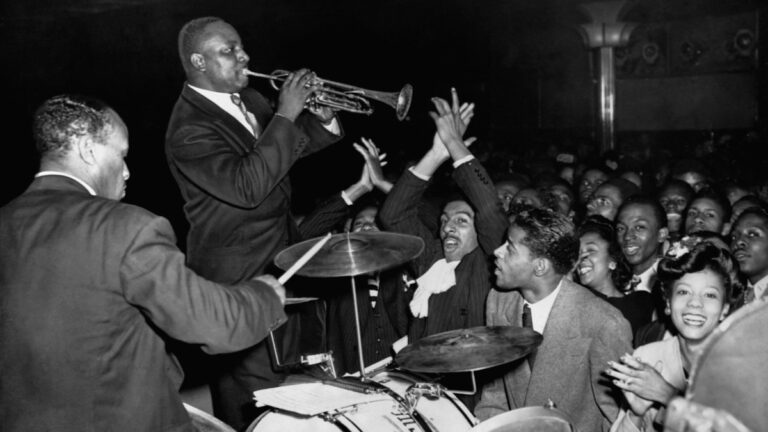
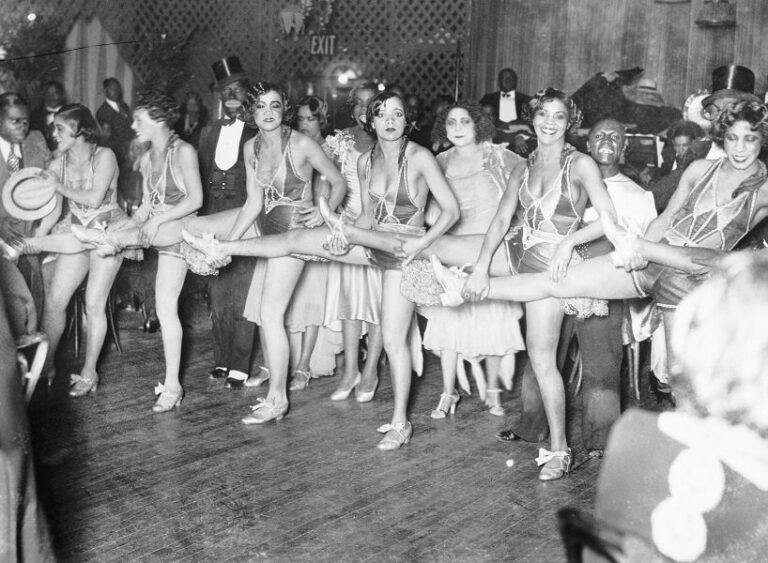
This period saw an increase in musicians, specifically Black jazz musicians. Artists like Duke Ellington, Cab Calloway, Fats Waller, Billie Holiday, and many others were able to jumpstart their careers because of the popularity of the movement.
Due to the immense popularity of many Harlem Renaissance musicians, jazz clubs began to open across Harlem. The most famous is the Cotton Club, but other venues such as the Alhambra Ballroom and Apollo Theater also became staples of the Renaissance.
When talking about the Harlem Renaissance, it is important to recognize the contributions made to literature as well as music. W.E.B. Du Bois, a prominent civil rights activist and author, published many books describing the Black experience. Others such as Langston Hughes and Zora Neale Hurston were also able to describe the experiences of Black Americans in the United States.
The widely accepted theory about the Harlem Renaissance is that it occurred because of the newly-found freedoms granted to African-Americans.
Over the next few years, NYS Music will take a look at the Harlem Renaissance, including notable musicians who brought to light the explosion of arts and music in Upper Manhattan, one century ago. Stay tuned for weekly articles taking a look at the history of the Harlem Renaissance and how the impact of the cultural awakening is still felt today.