The Hudson Valley’s busiest goth triple-threat, musician/DJ/burlesque queen Tryst La Noir, has returned with a new single that’s as “raw, dirty and wild” as love itself, a sonic blast entitled “Goddamn!”
Tryst’s latest is another preview of tunes earmarked for her as of yet untitled third album slated for release in Spring 2025. Earlier this year, Tryst and her collaborator, Brooklyn-based producer/guitarist Steve Woodzell, unleashed a duo of singles from the album “Bathwater Blues” and “Oh Lover”.
Tryst says, “In comparison to my previous albums, this will be my most vulnerable yet. I have been experimenting with instruments and sounds that I never had before. And when it comes to the writing process, especially the lyrics, I am not sugarcoating anything.”
The fierce “Goddamn” bears some of the hallmarks of Tryst’s greatest musical influences, including Nine Inch Nails, Nick Cave, Depeche Mode, PJ Harvey, Morphine, and even the bluesy love laments of jazz songbird, Billie Holiday. “I really love old blues music from the 40s, along with 60s psychedelia, 80s goth, 90s grunge and post-punk. My music is a mash-up of all these styles, with an accent on full-on passion and energy.”
Tryst’s newest single slams a slow industrial groove, accented with a dense mix of fuzzy guitars, impossibly big beats, howling synths, and her caterwauling vocals. Lyrically, the song profiles a fiery love affair that sparks a combustible attraction between lovers that comes with an overdose of both passion and toxicity.
But music is just one facet of Tryst’s busy career. She also works as a DJ at leading area clubs, including Pearl Moon, Colony Woodstock, and The Avalon Lounge. Tryst also serves as a performer and host of a series of burlesque nights produced by Strangehouse, an event and video production concern she runs with her partner, musician/videographer Byron Frayne.
Look for Tryst La Noir spinning at Kingston’s Unicorn Bar for its Bowie Birthday Ball on January 24 and her ongoing Friday Night Fever at Colony Woodstock on January 3. She will also bring her burlesque spectacular to the Colony on Valentine’s Day.
March 30 and April 12, 2025 have been announced as the first two dates of the Outline Festival in 2025. Featuring artists such as Thurston Moore, Michael Rother, Eiko Ishibashi, Explosions In The Sky, and more, they’ll perform during the Knockdown Center‘s flagship series, which continues to further a commitment to celebrating international expressions of independent music.
Germany’s Michael Rother is set to headline the Main Hall on Sunday, March 30th, showcasing the pivotal works of Neu! and Harmonia. The evening will also feature performances by post-punk pioneer Thurston Moore, the Australian post-punk duo HTRK, and Japanese singer-songwriter and composer Eiko Ishibashi.
On Saturday, April 12th at Knockdown Center, Outline Festival will expand its offerings to include a diverse showcase of avant-garde and alternative music, as well as instrumental, IDM, pop, and psychedelic genres. Across two stages, the festival will feature performances from Austin’s renowned post-rock quartet Explosions In The Sky, the Icelandic band múm, Guatemalan-born, Mexico City-based cellist and vocalist Mabe Fratti, Philadelphia shoegazers They Are Gutting a Body of Water, Dutch producer and innovator upsammy, and Mexico City’s no wave and krautrock-inspired group Diles Que No Me Maten.
Throughout 2024, Outline will spotlight various genres and regions, continually evolving with each edition. The festival will present a range of performances, from the seismic sounds of Godspeed You! Black Emperor, Alan Sparhawk, Marina Herlop, and Maria BC, to hard rock and metal acts like The Armed, King Woman, Chat Pile, Cloakroom, Ragana, and Couch Slut.
The event will culminate in a rapturous finale featuring Yaeji, Sofia Kourtesis, Ela Minus, Nourished by Time, and Malibu. Each new edition will be uniquely curated to highlight the best in both artists and audiences, pushing the boundaries of creativity and redefining what a venue and festival can be as it moves into 2025.
Tickets are available now. Learn more about Knockdown Center and purchase tickets for March 30 fest here and for April 12 here.
In its sixth year, Black Bear Americana Music Fest presented three full days of roots, contemporary and traditional folk, country, blues, bluegrass and mixed-genre solo artists and bands on its main stage, acoustic stage, gazebo stage and workshop stages to an audience that ranged from those of us who are of Woodstock era to kids chasing soap bubbles.
Black Bear ran from Friday, October 11, through Sunday, October 13 at the Goshen Fairgrounds, Goshen, CT.
The Crowd – Victor Wainwright & The Train
The festivals producers, Ian Campbell and Beth Murphy, did a fantastic job and managed to present a festival that brought acts from the unknown to those who needed no introduction.
Although the festival’s first “official” day was Friday, many arrived on Thursday to set up their tent or RV sites. On Thursday night the festival opened, “unofficially”, with the Big Orange Tarp Songwriter Circle, created by Alan Rowoth decades ago in connection with other festivals, and currently presented by Rowoth and singer songwriter Andrew Dunn of CT, who performed at the festival on Sunday.
Andrew Dunn, Hosting Big Orange Tarp
What follows is a quick look at most of the performers at Black Bear. The simultaneous multiplicity of performances on separate stages made full coverage impossible.
Lucas Neil of Saratoga Springs, performing his Americana and indie-folk originals, Glori Wilder of western CT’s R&B and eclectic mix, and Red Smith of Wilmington, DE highly energized originals flavored by influences of country, folk, rock, bluegrass, and soul with vocals that turned on a dime from sweet to gravel and grit, opened the festival on the Acoustic Stage, each with a set of their original songs, in the “Songwriter Showcase”.
Lucas NeilGlori WilderRed Smith
The Midnight Anthem, a group based in CT fronted by three cousins, opened the Main Stage for the day with a set of their country-oriented Americana songs, followed by Burlington, VT’s Tall Travis, an indie folk band with bluegrass folk/punk influences, on the Acoustic State, with one of their two performances for the weekend.
Tall Travis
Over on the Gazebo Stage, Charlie Diamond performed a set of his pop/folk flavored Americana original story type songs with a Dylan-esque type voice that matched his songs perfectly.
Charlie Diamond
Back at the Acoustic Stage, highly regarded Canadian songwriter Scott Cook and Pamela Mae, currently on tour in the US and Canada, performed a set of well-crafted songs, primarily of hope and positive messages, mostly based upon Scott’s life experiences.
Scott Cook and Pamela Mae
Long time folk- favorite New England singer songwriter Cheryl Wheeler, whose songs have been covered by artists as diverse and Garth Brooks and Bette Midler, took the Main Stage where she delivered some long time favorites, as well as some of her newer work.
Cheryl Wheeler
The Rough & Tumble, multi-instrumentalists from New Hampshire, took the Acoustic stage to perform what they describe as their “Dumpster – Folk/Triftstore – Americana” originals for an appreciative crowd.
The Rough and Tumble
The Currys, from Charlottesville, VA , fronted by two brothers and a cousin, played a set of their original indie-folk rock songs with tight vocal harmonies on the Main Stage.
The Currys
Meghan Cary, a Billboard Magazine’s Critic’s Choice Award Winner, performed a beautiful set of her originals from folk rock power ballads to touching songs of hope, backed up on keys by Peter Farrell.
Meghan Cary
Over on the Workshop Stage, Bryan Titus, Marc Apostolides and Shawn Taylor presented songs, stories and photos, from their collective thru-hikes and long-distance hikes on the Appalachian Trail, The Long Trail, The John Muir Trail and the Pacific Crest Trail.
Arm Chair Boogie, a jamgrass/newgrass act from Wisconsin did an excellent performance on the Main Stage which go the crowd to its feet.
Arm Chair Boogie
In addition to performers, there were a number of organizations at Black Bear. “Meals for Music” was an especially compelling organization. It is a non-profit which provides home cooked meals for musicians on the road not only to feed those low on cash, but also for making those on tour feel a bit “at home”…Currently serving the Connecticut area, they are an organization worth looking at.
Meals for Music
The Best Times band performed a set of their original indie rock songs on the Gazebo Stage.
The Best Times
Back across the fields, The Decker Bandits of Collinsville, CT filled the Acoustic Stage with a mix of bluegrass, funk rock/dance originals delivered their own energy to the crowd.
The Decker Bandits
The final act of Friday night was grammy nominated, award winning Victor Wainwright’s Victor Wainwright & The Train, whose piano, electric guitar, horns and rhythm section got the crowd up and moving with their original Americana, blues and wide ranging roots music, with sprinklings of boogie-woogie, honky-tonk, and New Orleans piano.
Victor Wainwright & The Train
Jason Ingriselli & The Miles North opened up Saturday’s performances on the Main Stage showcasing Ingriselli’s powerful voice and songs which he calls New England Country Music.
Jason Ingriselli and The Miles North
Drank The Gold, an Upstate NY based duo brought their soaring vocal harmonies fiddle, guitar/banjo Irish and American old-time and contemporary traditionalist songs to the Acoustic Stage to round out the morning.
Drank The Gold
Kerri Powers bought her original blues and soulful earthy songs on acoustic and resophonic guitars to the Main Stage to an appreciative crowd.
Kerri Powers
Massachusett’s Sean Maqwire, who has fast become one of this writer’s favorite songwriters, brought a handful of his well-crafted songs to the Acoustic Stage.
Sean Magwire
Goodnight Moonshine, a duo, delivered their original folk songs with beautiful vocal harmonies, and an improvisational style and feel more common to jazz than typical folk music.
Goodnight Moonshine
In addition to continuous performances each day on three separate stages, Black Bear presented thirteen different workshops over the three-day festival, including some in songwriting, music production, performance, improv and other music related subjects, all while Main, Acoustic and Gazebo Stage performances continued. This writer took the time to venture over to the Workshop stage mid-afternoon on Saturday to catch workshops on Improv musicianship and songwriting, and then made it back to the Main and Acoustic Stage to see the rest of the performances.
The Slambovian Circus of Dreams, a Central NY based group that has been together for about twenty years, delivered their songs of fantastic stories with a high energy, crowd engaging performance, in what has been called “Woodstock-tinged psychedelia..[with] a hint of southern rock, Celtic and British folk combined with solid songwriting..” that moved the audience and brought it to its feet.
The Slambovian Circus of Dreams
Tall Travis, an indie folk band from Burlington, VT, with its unique bluegrass folk/punk influences, filled the Acoustic stage for the second time over the weekend and lit up the stage with their own brand of musical energy.
Tall Travis
Saturday night’s finale was delivered by Quebec’s Le Vent du Nord who delivered songs and performances of both traditional and original compositions, with highly rhythmic and soulful music, rooted in the Celtic diaspora, enhanced with a broad range of global influences. And when festival producers Ian Campbell and Beth Murphy took the stage before the encore the crowd yelled for the band to be brought back again next year.
Le Vent du Nord
After the stages shut down for the night, those in the know headed for the songwriter circles put on by Big Orange Tarp, Pirates Camp and the Jubilee Jam Tent.
Sunday morning started out with a Main Stage performance by folk legend Vance Gilbert who engaged the audience with a brilliant combination of original songs and banter. Gilbert also offered an excellent performance critique for musicians at the festival at the Workshop stage in the afternoon.
Vance Gilbert
Terra Coda, a band of five percussionists, delivered their unique music to an appreciative crowd, just before the rains came.
Tera Coda
Performers scheduled for later in the day included Ash & Eric, Josh Joplin Group, Two Crows for Comfort, Way Down Wanderers, Shanna In A Dress, Whiskey Talks and Adam Ezra Group.
A truly special component of Black Bear are the songwriter-in-the-round events that feature both featured acts at the festival and other songwriters picked by the various event’s creators or organizers, where a small group of songwriters alternate delivering their songs, solo, for a few rounds, and then the next group comes in, repeating the rounds until the wee hours of the morning. “In the round” events were held each day and night at “The Big Orange Tarp (aka the BOT)”, “Pirate Camp”, the Jubilee Jam Tent. For many, these songwriter circles are a significant part of what makes a festival like Black Bear such a highly respected musical event.
One of these, the “Big Orange Tarp”, or BOT as it’s known by its fans, featured solo performances in the round each night of the festival and into the wee hours of the morning by a number of those who performed at the festival, as well as by other songwriters, including this writer, all handpicked by Rowoth or Dunn. For many, the BOT, and the other in the round songwriter circles, represent one of the most cherished events at this and many other festivals (Kerrville, Falcon Ridge, and more) and represent what many feel is the best way to hear songs, unadorned by stage sound support, performed “in the raw” by the people who wrote them.
Big Orange Tarp, Songwriter Circle
In addition to the fantastic and well curated music and music related workshops for musicians and music lovers, the Black Bear Americana Music Fest provided a varied array of food vendors; workshops in glass making, painting, gel plate printing, pumpkin carving and jewelry making; chili tasting and interactive cocktail making classes; and cannabis related classes from making edibles at home, to growing and harvesting; and the Festival provided AA meetings each morning.
All in all Black Bear was an excellent music festival and one which many will surely attend again next year.
Thank you Ian Campbell and Beth Murphy for a fantastic 2024 Black Bear. See you next year!
Ian Campbell and Beth MurphyVictor Wainwright and The TrainVictor Wainwright and The TrainVictor Wainwright and The TrainVictor Wainwright and The TrainVictor Wainwright and The TrainVictor Wainwright and; The TrainVictor Wainwright and The TrainVictor Wainwright and The TrainVictor Wainwright and The TrainVictor Wainwright and The TrainVictor Wainwright and The TrainVictor Wainwright and The TrainVictor Wainwright and The TrainVictor Wainwright and The TrainVictor Wainwright and The TrainVance GilbertVance GilbertThe New StudentsThe Decker BanditsThe CurrysTall TravisTall TravisBlack Bear Americana Music FestivaThe Slambovian Circus of DreamsThe Slambovian Circus of DreamsThe Slambovian Circus of DreamsThe Slambovian Circus of DreamsThe Slambovian Circus of DreamsThe Slambovian Circus of DreamsThe Slambovian Circus of DreamsThe Slambovian Circus of DreamsThe Slambovian Circus of DreamsThe Slambovian Circus of DreamsThe Slambovian Circus of DreamsThe Slambovian Circus of DreamsThe Slambovian Circus of DreamsThe Slambovian Circus of DreamsThe Slambovian Circus of DreamsSean MagwireSean MagwireSean MagwireScott Cook and Pamela MaeScott Cook and Pamela MaeScott Cook and Pamela MaeThe Rough and TumbleRed SmithMeghan CaryMeghan CaryMeghan CaryMeghan CaryPamela Mae, Scott Cook, Andrew DunnLucas NeilLe Vent du NordLe Vent du NordLe Vent du NordLe Vent du NordLe Vent du NordLe Vent du NordKerri PowersKerri PowersGoodnight MoonshineCoffee Guys
Cheryl WheelerCharlie DiamondBlack Bear Americana Music Festival – 2024Arm Chair BoogieArm Chair Boogie
Christmas time in New York is often filled with magic and wonder. Most people have visions of marveling beneath the tree in Rockefeller Center, window shopping on 5th Avenue, or playing with all the new toys FAO Schwartz has to offer, but that is just a tiny spec of the enchantment to be found in NYC during that time of year. No matter where you are or how you celebrate, the end goals are almost always the same: to spread joy, focus on others, and spend time with your loved ones. While everyone has their own traditions, it is important to remember why you are doing so. That is exactly what Run-DMC was trying to convey with their 1987 hit ‘Christmas in Hollis.’
While Run-DMC were initially opposed to writing a Christmas song at the record company’s request, their opinion changed once they went through a crate of old odd-ball Christmas Records to see if they could be inspired. After a bit of searching, inspiration finally hit once they listened to Clarence George Carter’s funk cut ‘Back Door Santa.’ Once they decided to write the song, Run-DMC decided they were going to combine the fantasy and mysticism that comes with the holiday with real life experiences, detailing past Christmas’ spent with their families in their hometown of Hollis, Queens.
The first verse of the song belonged to Run, which draws listeners in with a surreal experience of finding Santa’s wallet after encountering one of his reindeer but returning it because he didn’t believe it was right to steal from Santa. From that point the song could have gone anywhere, but DMC decided he wanted to relate it to real life because that is the opposite of what everyone was doing with Christmas music at the time.
Run-DMC, Hollis
“Every other Christmas song is like a fantasy,” Run explains. “You know, [Sings.] ‘Santa Claus is coming to town.’ That’s a fantasy. Even Run’s verse, he’s telling a story that’s like it’s been written for a Christmas book. But my story is what really happened in real life, about real people, and what it was like as a kid growing up. It’s so real. [Raps.] “Christmastime in Hollis Queens / Mom’s cooking chicken and collard greens!” It’s funky, it’s soulful, it’s family, it’s real. “Christmas In Hollis” is real, because of my verse.”
Hollis, Queens
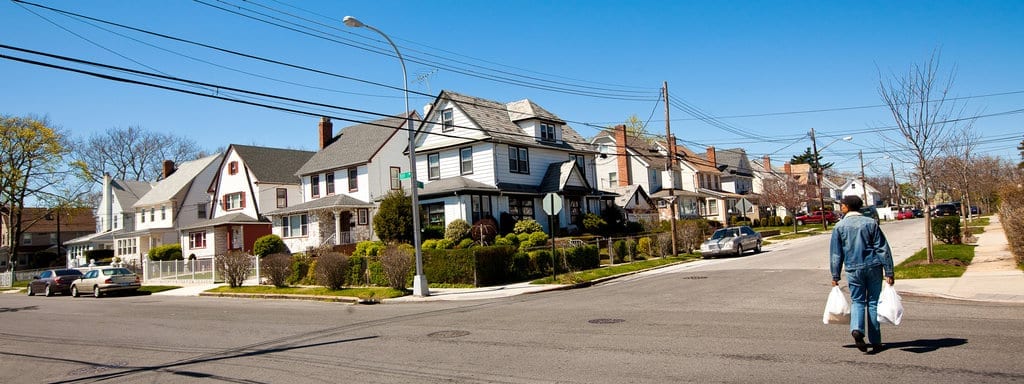
Hollis, Queens had an incredibly powerful impact on Run-DMC, which is why they decided to homage the neighborhood in ‘Christmas in Hollis.’ Joseph Simmons (Run), Darryl McDaniels (DMC), and Jason Mizel (Jam Master Jay) formed Run-DMC in the 1983 after being friends at school for years and realizing they had similar interests in music as they got older. At the time of the group’s formation, Hollis was a moderately stable, suburban community with a vibrant and growing hip-hop scene which inspired and cultivated each member of Run-DMC from an early age. It was a family neighborhood, and the love and support they received helped the group achieve their dreams.
As the group got bigger, the area changed, and the tranquil Hollis soon became plagued with drug and gun violence. By the late 1980’s the neighborhood became one of the most severe victims of the growing crack epidemic. Today Hollis has returned to the median income, middle-class neighborhood it once was, but there have been no sightings of Santa since that fateful day in 1987.
‘Christmas in Hollis’ Lyrics:
It was December 24th on Hollis ave in the dark
When I see a man chilling with his dog in the park
I approached very slowly with my heart full of fear
Looked at his dog, oh my god, an ill reindeer
But then I was illin’ because the man had a beard
And a bag full of goodies, 12 o’clock had neared
So I turned my head a second and the man had gone
But he left his driver’s wallet smack dead on the lawn
I picket the wallet up then I took a pause
Took out the license and it cold said “Santa Claus”
A million dollars in it, cold hundreds of G’s
Enough to buy a boat and matching car with ease
But I’d never steal from Santa, cause that ain’t right
So I’m going home to mail it back to him that night
But when I got home I bugged, cause under the tree
Was a letter from Santa and all the dough was for me
It’s Christmas time in Hollis queens
Mom’s cooking chicken and collard greens
Rice and stuffing, macaroni and cheese
And Santa put gifts under Christmas trees
Decorate the house with lights at night
Snow’s on the ground, snow white so bright
In the fireplace is the yule log
Beneath the mistletoe as we drink egg nog
The rhymes you hear are the rhymes of Darryl’s
But each and every year we bust Christmas carrols
Rhymes so loud and proud you hear it
It’s Christmas time and we got the spirit
Jack Frost chillin, the hawk is out
And that’s what Christmas is all about
The time is now, the place is here
And the whole wide world is filled with cheer
My name’s D.M.C. with the mic in my hand
And I’m chillin’ and coolin’ just like a snowman
So open your eyes, lend us an ear
We want to say Merry Christmas and Happy New Year!
A walking music legend, Carole King’s roots in New York run deep. Born and raised in Brooklyn, a graduate of Queens College, and lifetime lover of the Manhattan music scene as both an artist and an audience member, New York is an integral part of King’s work and identity at large.
Photo: Jim McCrary, via caroleking.com
Born Carol Joan Klein to Russian and Polish immigrant parents, Carole arrived in the world not too soon after her mother and father had arrived in Brooklyn via Ellis Island. With her father, a radio announcer turned New York City firefighter, and mother, a secretary at a local high school, Carole’s life has been positively steeped in musicality from day one – as well as a deeply ingrained identity as a New York native and lifelong Brooklyn Dodgers fan since youth.
Famously meeting while in an elevator at Brooklyn College, Carole’s father set the precedent for a Klein behind the microphone with his gig as a radio announcer, and her mother’s studies in and passion for english and drama lent themselves to a rather creative upbringing.
Upon her parents’ separation, Carole sought attention and found the answer in the theater. First being introduced to the glittering world of Broadway at just five years old, Carole fell utterly in love, absorbing all of the media and musical projects her mother put on. Her home was rarely quiet, being constantly introduced to shades of music varying from show tunes to Brahms.
Photo via caroleking.com
Finding a unique outlet for emotions of all ranges, King leaned into the theatrics of the stage as she grew up, eventually auditioning for the High School of Performing Arts – now referred to as the Fiorello H. LaGuardia High School of the same name. While the audition was not a success, it marked a turning point for Carole as the arts became something of possible professional pursuit more concretely in her mind.
As any teenager of the mid 1950s did, Carole often tuned in to her favorite radio stations. However, unlike many other of her rather sheltered white peers, Carole’s station of preference was Alan Freed’s nightly WINS program. Freed was a lover of artists like the Penguins, the Moonglows, the Clovers, Danny Overbea, La Vern Baker, and BB King – a notably African-American lineup that had many white parents positively beside themselves.
In addition, many tracks played on Freed’s station fell under the umbrellas of rock and roll and R&B, both equally scandalous for their promiscuity and narratives on adversity that were up until then rather absent in the public eye’s musical circuit. This scandal was all the better for an adolescent King, however, who found the new wave of music and its consequent conscious style of creation absolutely mesmerizing
Carole has never been one to shy away from advocating for her beliefs. After moving to Idaho in 1977, she became deeply entrenched in the local ecosystem’s wellbeing and has been an outspoken voice for environmental change ever since.
King would go on to participate in her local Women’s March in 2017, holding a sign that read “One Small Voice.” A single titled with the same phrase would be released the next month, utilizing a thinly-veiled emperor’s new clothes metaphor that encourages listeners to “speak out in honesty.”
While many artists’ relationships with New York City begin on the stage, King’s began in the audience. As a young adult who positively adored the cutting-edge music she was hearing over the radio, being able to attend Freed’s Easter Jubilee at the Brooklyn Paramount in 1955 meant the absolute world and sparked a major bout of motivation.
“Moving farther in, we saw Mickey Baker talking to a couple of the Penguins. At that moment I knew I wanted to mean something to these people. I didn’t want to be one of them. I just wanted them to know who I was and consider me worthy of respect. That ambition existed concurrently and in no way conflicted with my ambition to be an actress.”
– Carole King, A Natural Woman
Auditioning for the High School of Performing Arts once more re-inspired, King enrolled in the fall of 1955 and spent a year studying drama and dance alongside fellow students Al Pacino and Rafael Campos. She would depart the school after a year and return to her classmates at James Madison High School, but Carole would take with her the lessons taught by teachers like Mr. Sachs who inadvertently set her up to arrange vocals through his assignments.
Like many teenagers of the area, King perpetually sought out the liberal arts for peer acceptance and self-expression, the heart of an increasingly viable, ever-vibrant scene only a few subway stops away. 1957 marked a time of escapades up and down Bleecker Street and throughout the coffee shops and venues of Greenwich Village with her peers.
After a rare successful infiltration of the Vanguard, Carole King witnessed mind-blowing jazz sets and sat listening to the music while her peers smoked. By default she became the one picking out the records, and that quickly became much more interesting to Carole than the smoking.
After a nudge in the direction of her high school’s annual Sing by her mother, King wrote, arranged, and performed a piece for the first time to a large audience, and the response of her peers in the audience shifted something within her. She soon began to compose in earnest, arranging pieces for the chorus class before turning the passion into a full-on street corner harmony gig. Recruiting three other peers to be the soprano, tenor, and bass to her alto, the group dubbed themselves the Cosines and performed for free at school events and dances.
Photo via caroleking.com
This would mark the beginning of a career in arranging both for a group and for herself, developing a process she would keep well into her career as she wrote for or in collaboration with the likes of Bobby Vee, The Everly Brothers, The Monkees, Aretha Franklin, James Taylor, Mariah Carey, and countless others across the industry.
After deciding to pursue songwriting in earnest, Carole chased down a so-called “Atlantic Records” that Freed had mentioned on his radio station, quickly presenting her work to an executive and landing her first recording contract.
Graduating high school at just sixteen years old, King entered Queens College with little enthusiasm after an unexpected move to Rosedale had uprooted her plans to attend her parents’ alma mater. Just around the corner, however, were fellow freshmen and musical peers Art Garfunkel and Paul Simon, the latter becoming a quick friend and collaborator.
Also at Queens College was Carole King’s future songwriting partner and husband of many years Gerry Goffin. While she first thought they’d never see eye to eye on music – he was very open with his hatred for Rock and Roll – his pitch to collaborate on a song quickly became history. Married at her parents’ home in Rosedale in 1959, Carole and Gerry moved into a one-bedroom apartment on Bedford Avenue, only a block away from her childhood home.
Photo via caroleking.com
Gerry, a chemist in downtown Brooklyn, and Carole, a secretary for a chimney manufacturer in Manhattan, were determined to see their passion for songwriting through and, upon an interaction with Neil Sedaka on the sidewalk of Broadway, the two landed a three-year writing deal that brought the couple out of debt and into a two-bedroom apartment on Brown Street in Brooklyn, an area that had been nothing but corn fields when King was a child.
Working in the highly competitive cubicle space that was Aldon, Gerry and Carole managed their first major hit with “Will You Love Me Tomorrow.” Gerry stepped away from his traditional job and the couple moved into the suburbs of West Orange, New Jersey to raise their second daughter, which is where they would reside together for a number of years before the marriage began to crumble.
When Goffin decided to move to California on his own, King was torn between the vibrancy of what she dubbed “the coolest place she knew” and California, where their children would be able to see their father. Ultimately putting her children before herself, Carole switched Coasts.
Photo via caroleking.com
1970 marked a second beginning for King, who would be brought back to New York and into the spotlight by friend and collaborator James Taylor during his tour. Just prior to their show at Carole’s alma mater Queens College, Taylor requested she sing the lead for “Up on the Roof” to King’s immediate horror and dismay. Terrified about stepping out of the comfortable zone that was just “James’ pianist,” Carole took a breath and performed, receiving raucous applause.
“Up on the Roof” would return in 1971 at King’s first ever performance as a solo act in front of an audience during the now famed June evening at Carnegie Hall. Recorded and later immortalized in a seventeen-track album, the concert featured some of Carole’s first works alongside duets with Taylor for “Up on the Roof”, “Will You Love Me Tomorrow?”, and “You’ve Got a Friend.”
With the turn of the new year came Carole’s 30th birthday, a whopping four GRAMMY wins for her work in Tapestry, and the arrival of her fourth child. The following year, King returned to New York City to deliver a first-of-its-kind Central Park show completely free to the public, a rather poetic homecoming of an estimated 100,000+ attendees.
Recorded and released first as a live album and then a fully-fledged concert documentary in 2023, the Central Park concert remains a sparkling snapshot of King’s commercial and critical peak . Though this level of fame did not come without its drawbacks, with Carole detailing a frenzied crowd of fans crowding her limo after the show in her memoir.
Such situations and the general all-encompassing business that had become her life drew King to the quieter lifestyle of Idaho, though the draw of New York’s creative vibrancy never quite lost her. She would travel back to the city frequently to visit family, friends, and other artists she enjoyed working alongside.
An extended return to New York wouldn’t come into Carole King’s life until she was cast in Hindi Brooks’ A Minor Incident at the West Bank Café Theater in 1987. Performing alongside Paull Hipp who she had met when he was producing the off-Broadway Rockabilly Road, Carole frequently tagged along to Brooks’ recurring gig at the Red Lion Café on Bleecker.
Quietly playing guitar for his sets, she noted that very few would recognize her in their preoccupation with chatting, dining, or drinking, but there were always a few who would glance back and forth at her, nudging their friends with knowing smiles.
Photo: Annie Liebovitz, via caroleking.com
It wouldn’t be until Carole attended Bruce Springsteen’s 1988 Tunnel of Love show at Madison Square Garden that the creative spark would return in full, and her sense of dejection at missing the on-stage magic quickly became determination as she brushed up her latest tracks, re-signed with Capitol Records, and recorded City Streets at Skyline Studios.
Among the tracks developed in this era is “Friday’s Tie-Die Nightmare” that tells the tale of a dream Carole had experienced related to the City’s subway system, at which point in her memoir she takes a moment to impart some subway wisdom: “Subway Lesson 1: when the subway runs smoothly, as it does most of the time, it’s the most efficient and affordable method of getting around New York City, and Subway Lesson 2: the only way to catch an express is to leave early enough to make the entire trip on a local.”
Reminiscing about people-watching and considering her own observations of others, King explains that her third subway lesson is not a sentence – it’s a song. Written upon her realization that the way she perceived the people around her was ultimately a reflection of how she was feeling at the moment, subway lesson three comes in the form of the track “Beautiful” – “You’re gonna find, yes you will, that you’re beautiful as you feel.”
Alongside her return to performance came roles as a teacher in the ABC After-School Special It’s only Rock & Roll shot in Pine Bush, New York and Willy Russell’s Broadway production of Blood Brothers on a ten-month run.
Photo via caroleking.com
While not the star in the most literal sense, Broadway returned to King’s life in 2013 with the previews and eventual debut of Beautiful: The Carole King Musical on January 12, 2014. Exploring her early life and rise to stardom alongside Goffin, the show became the 27th longest running show in Broadway history upon its closure in October of 2019 with a stunning 60 previews and 2,418 shows logged.
Despite not playing herself as the titular role, Carole made a handful of appearances at the Stephen Sondheim Theatre during the show’s run first to surprise lead actress Melissa Benoist in a reprise of “I Feel the Earth Move,” and then to celebrate the production’s fifth anniversary, making appearances during “Beautiful” and the show’s finale.
Beautiful: The Carole King Musical gained endless critical acclaim and won several awards, including two Tonys and a Grammy. A testament to New York’s love for Carole King as a story, an artist, and a human being, the musical immortalizes above all the timeless nature of her work, both honoring and reviving King’s most famous works for a new generation of lifelong fans.
An artist, an advocate, a deft songwriter, a mother, and above all an admirable woman who has pursued nothing less than fulfillment throughout her entire life, King’s legacy is a shining one felt throughout each and every nook and cranny of New York.
Rochester-based composer mainTheme has announced the release of his rich new groove track “Take Over Me” (feat. Donno Jay).
Dan Romans plays drum set, synth, keyboard, and voice; composes and arranges music; and performs all styles. He has a diverse musical vocabulary and versatile playing style that is dynamic, expressive, and compositionally focused. mainTheme is a carte blanche repository of sounds and songs drawn from eclectic influences and presented as an approximation of pop music. mainTheme is another variation of Dan Romans’ compositional voice as he dons the figurative producer’s hat.
His latest track “Take Over Me” (feat. Donno Jay) encapsulates mainTheme’s minimal, rich groove and features storytelling and vocal talents of Miami-based hip-hop artist Donno Jay. The track is slated to release on most streaming services by December 27. The track is a powerful, introspective look at the core of one’s life, and the state of the world we all share. With Donno Jay’s cadence and hard-hitting, somber lyrics spit over the desolate electro-synth melodies, this track is strong, catchy, and meaningful.
mainTheme creates music that, to me, breaks down walls. His eclectic, diverse and dynamic range of music paints wondrous soundscapes in each piece of music released. This track, “Take Over Me” is a prime example of this idea. The instrumental to the track is smooth, unique, and presents a vibe that I can best describe as galactic. It is a spacey, synthy, psychedelic piece that contains climbing and falling volumes, with a heightened energy in the middle before slowly dying out like a dimming light. The track is brilliant in both instrumental sound from mainTheme and lyricism from Donno Jay.
For more information on mainTheme’s music and to keep up with “Take Over Me” which releases on December 27, click here.
New York State has a rich and extensive history of music. From classic songs you sang in elementary school social studies class about the Erie Canal to Frank Sinatra crooning of the wonders of New York City, countless areas throughout the state have drastically influenced musicians, and left an imprint on their artistic growth. NYS Music’s New York Series is a project dedicated to exploring the history of music created and inspired by the diverse areas of the state. Each week we will focus on a different part of New York, how that area inspired a song or album by artists of various genres, and how the area changed over time. This week we will look at Bob Dylan’s ‘Talkin’ New York’ and Greenwich Village’s influence on his writing of the song, as well as how the area shaped his growing career.
Bob Dylan- ‘Talkin’ New York’
“You sound like a hillbilly; We want folk singers here.”
In the winter of 1961, a 19-year-old University of Minnesota drop out named Robert Zimmerman arrived in New York for the first time in hopes of finding his folk-singer idol, Woody Guthrie. It was the coldest winter in seventeen years, and he did not know a soul. ‘Talkin’ New York,’ the second song on Bob Dylan’s self-titled first album, is a talking blues which narrates the difficulties the young folk-singer experienced when he first moved to the Big Apple. Soon after his arrival, Zimmerman moved to Greenwich Village, changed his name to Bob Dylan, and launched one of the most successful music careers in history. 1
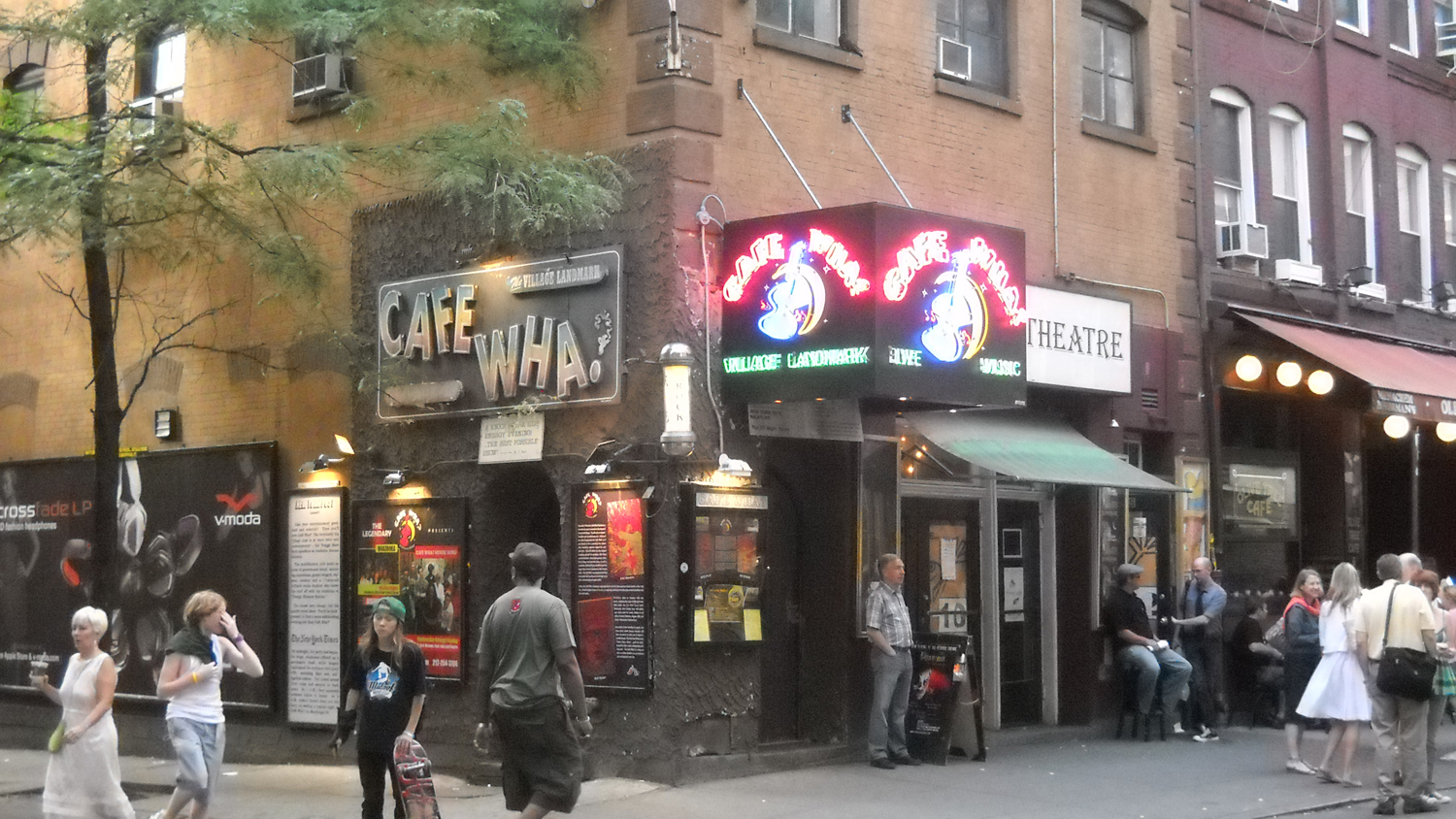
Greenwich Village in the early 1960’s was a hub for artists, poets, musicians and activists to meet, exchange ideas, and grow. When Dylan first arrived, the first thing he did was head over to Café Wha? on Macdougal Street, introduced himself as a musician, and booked himself a gig- as described in the lyrics of ‘Talkin’ New York’. His goal was to immerse himself in the culture, and establish himself as force to be reckoned with in the folk scene. After being fired for being late to three gigs at Café Wha? Dylan jumped around, exploring the many clubs and cafés Greenwich Village had to offer. He played coffee houses such as Caffe Reggio, the Commons, Caffe Dante, and underground clubs like the Gaslight Café, the Fat Black Pussycat, and the Bitter End. 2 New York was the perfect place for Dylan to experiment, meet new people who would greatly influence his career, and develop as an artist. At any point you could walk into a coffee shop and listen to a folk-singer performing, attend a poetry reading, or have an in-depth discussion about direction of the country the with like-minded political activists.
Fred W. McDarrah/Getty Images
‘Talkin’ New York’ chronicles Dylan’s initial experience in New York. It tells the story of his arrival and describes the struggles of trying to make it as a folk-singer in a new town. The area was impoverished at the time, and for the first year Dylan spent most of his time sleeping on floors. He established himself as a vagabond, and his songs began to reflect his lifestyle. After a year he found a place to live relatively cheaply which allowed him to spend more time developing his songs. Because the clubs could not pay performers, Dylan began wearing a hat and passing it around the cafes. The Gaslight Cafe was known for “basket-passing nights” where the only money performers would pocket was what was given to them by audience donations.3
Cafe Wha? 1960’s
Cafe Wha? Today
Today Greenwich Village is a different neighborhood. NYU has taken over much of the real estate in the area, and the rest has seen a drastic price increase since the 1960’s. It is far too expensive for young aspiring artists to live, but still an area worth visiting often. There are a few relics from the past, and you can go on a walking tour of the sites Dylan and other artists frequented, but today a vagabond could not arrive in the Village and squat in run-down apartments like Dylan did. A few of the old hangouts remain, but they too have evolved with the times. Caffe Dante became Dante NYC, and has moved on from folk-singers to gourmet cuisine. Café Wha? closed in 1968, but reopened in 1987, with music still playing often and the Café Wha? house band headlining many nights. The Bitter End is also still standing, and prides themselves on being New York’s oldest rock club. You can still catch a show any night of the week. While Greenwich Village has changed over the years, there is still a feeling of artistic freedom and counter-culture in many of the bars and coffee shops.
‘Talkin’ New York’ Lyrics:
Rambling out of the wild west
Leaving the towns I love best
Thought I’d seen some ups and down
‘Till I come into New York town
People going down to the ground
Building going up to the sky
Wintertime in New York town
The wind blowing snow around
Walk around with nowhere to go
Somebody could freeze right to the bone
I froze right to the bone
New York Times said it was the coldest winter in seventeen years
I didn’t feel so cold then
I swung on to my old guitar
Grabbed hold of a subway car
And after a rocking, reeling, rolling ride
I landed up on the downtown side
Greenwich Village
I walked down there and ended up
In one of them coffee-houses on the block
Got on the stage to sing and play
Man there said, come back some other day
You sound like a hillbilly
We want folksingers here
Well, I got a harmonica job, begun to play
Blowing my lungs out for a dollar a day
I blowed inside out and upside down
The man there said he loved my sound
He was raving about he loved my sound
Dollar a day’s worth
After weeks and weeks of hanging around
I finally got a job in New York town
In a bigger place, bigger money too
Even joined the union and paid my dues
Now, a very great man once said
That some people rob you with a fountain pen
It don’t take too long to find out
Just what he was talking about
A lot of people don’t have much food on their table
But they got a lot of forks and knives
And they gotta cut something
So one morning when the sun was warm
I rambled out of New York town
Pulled my cap down over my eyes
And heated out for the western skies
So long New York
Howdy, East Orange
At one point in history, the New York City subway system was among the most impressive in the world. These days it resembles what you would imagine a third world country’s subway system would look like, with third string trains donated from cities that upgraded their system years ago and no longer had any use for them, but it still gets you from point A to point B and that’s what matters. Albeit confusing to out of towners, you can hop on a train in midtown Manhattan and get almost anywhere you would like to go in the city.
Photo from Wikimedia Commons Public Domain
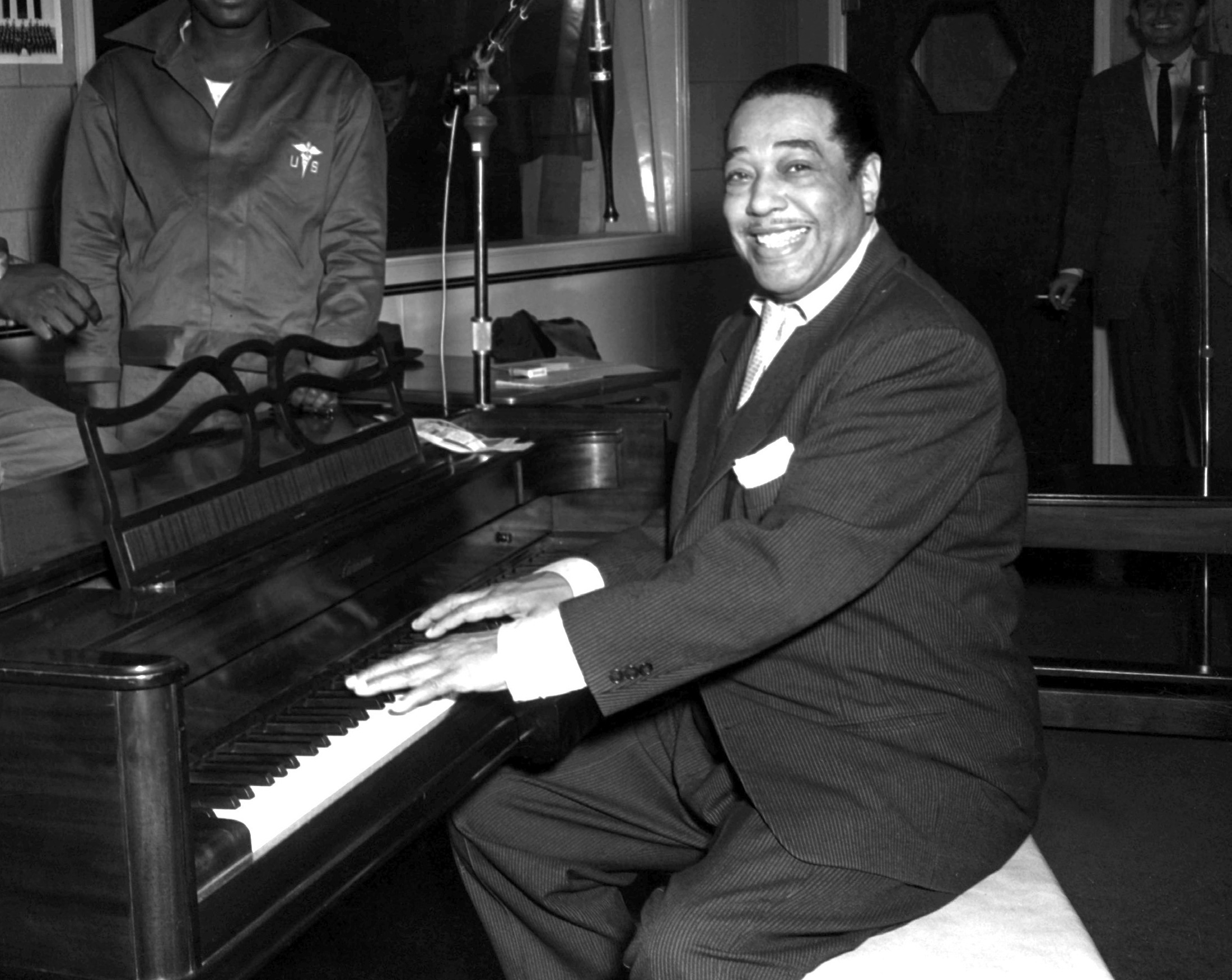
Since it is such an extensive system, those who are completely unfamiliar with New York’s subway system might have a tough time going from borough to borough, and might not even be aware that there are both letter and number trains. However, thanks to Duke Ellington and his infamous 1939 hit “Take the A Train,” almost everyone is aware of at least one line in the NYC subway system, which is more than you can say about almost any other city in the world.
Although popularized by Duke Ellington, “Take the A Train” was written by long-time collaborator and pianist Billy Strayhorn. The swing anthem became the signature piece for Ellington’s orchestra, and was often used as its opening theme and standout song. For most jazz musicians at that time, bandleaders would not put a song they didn’t write themselves in the spotlight like that, however Ellington and Strayhorn’s relationship was atypical. In his biography, Ellington said Strayhorn “was not, as he was often referred to by many, my alter ego. Billy Strayhorn was my right arm, my left arm, and the eyes in the back of my head.”
‘Take the A Train’ was written in Strayhorn’s head while at a party, then put on paper that evening when he got home. The song title was inspired by directions Ellington gave to Strayhorn to get to his house in Sugar Hill, which began with “Take the A Train…,” and the music was influenced by Fletcher Henderson’s style of jazz. Although Ellington’s rendition is instrumental, Ella Fitzgerald released a popular version with the original lyrics Strayhorn wrote about getting to Ellington’s home in Harlem.
Ellington’s home was located in the Sugar Hill neighborhood of Harlem, which is where the Harlem Renaissance took place between the 1920’s and 1950’s. At the time, Sugar Hill was the ritziest, most elegant African-American neighborhood in the United States. It was deemed “Sugar” Hill because of how sweet it was to live there, with the heart of the neighborhood located between 144th and 155th street. The high-class neighborhood was filled with stately homes and luxury apartments, and inhabited by African-American artists, activists, politicians, and intellectuals. The Harlem Renaissance was responsible for allowing African-Americans to focus on their past, as well as develop a unique identity for themselves, thus creating a culture within a culture. It brought people closer to their roots, and allowed them to celebrate who they were while exploring new creative channels to expression, with the Sugar Hill neighborhood as the epicenter of it all. “Take the A Train” became the anthem of this movement, and was highly praised by all of New York.
Today the Sugar Hill neighborhood is still lined with elegant homes and beautiful apartment buildings, with the rich, historic culture dominating the neighborhood. As most areas change over time, there has been a recent slight decline in African-Americans living in Sugar Hill to make room for other cultures, however it is still primarily a black neighborhood. Art and creativity thrives within the neighborhood, and you can still take the “A” train uptown anytime you’d like to soak up the culture and be inspired.
‘Take The A Train’ Lyrics:
You must take the A train
To go to Sugar Hill way up in Harlem
If you miss the A train
You’ll find you missed the quickest way to Harlem
Hurry, get on, now it’s coming
Listen to those rails a-hummingAll aboard, get on the A train
Soon you will be on Sugar Hill in Harlem
Khruangbin, Bleachers, and CAKE are slated to headline the second edition of The Capitol Groove, downtown Hartford’s premier festival, returning to Bushnell Park June 28-29.
Presented by GoodWorks Entertainment, the festival will feature 14 artists over two days with performances from Thundercat, Sammy Rae & The Friends, Thee Sacred Souls, St. Paul & The Broken Bones, Fantastic Negrito, Steel Pulse, Ripe, Improvement Movement, Ghost Funk Orchestra, The Greeting Committee, and Spectre Jones. These titillating acts are ones you’ll certainly want to see live.
Beyond the music, The Capitol Groove will also boast a lineup of local craft vendors and food trucks to be announced closer to the festival. Situated in the heart of downtown Hartford, Bushnell Park’s ample green space and natural beauty provides festivalgoers the perfect backdrop for two days of live music, all within easy reach of Hartford’s rich history and vibrant arts scene.
This upcoming festival is the second ever in the fest’s history. The Capitol Groove saw much success last summer and hopes to reach new heights with an even more exciting lineup. Acts like Khruangbin, Thundercat, Bleachers, and CAKE are must sees. These artists are known to bring the absolute groove to new levels wherever they go.
For more information and to purchase tickets to The Capitol Groove festival, click here.
New Rochelle indie duo Frog have returned with the first pre-release single for their upcoming album, a festive track titled “Did Santa Come”.
Photo: Collin Heroux
Comprised of the skilled musical brothers Daniel and Steve Bateman, the duo Frog has returned with the first pre-release track from their upcoming album.
Festive, jazzy, and playful, “Did Santa Come” leans into the newfound enthusiasm and naïveté about Christmas experienced by young children. “This song is about my son when he was two years old at Christmas time. Every morning for 2-3 weeks after, he would wake up and ask, “Did Santa come?” Seeing the world through the eyes of your children makes it all very beautiful.”
“Did Santa Come” is the first of many tracks fans and newcomers can look forward to, as Frog has also recently announced the release of their sixth album.
Slated for release in February, 1000 Variations on the Same Song will be promptly followed by a series of live performances all throughout March and April, including two dates in New York.
Visiting Cornell University in Ithaca on March 8 and the Bowery Ballroom on April 3, this tour is sure to excite. To learn more about ticketing information, visit their touring page here.
To learn more about all of Frog’s other works and keep up to date with their future releases, be sure to check out their official website here.




.png)