NYC Indie-folk band Sweetboy has been gaining popularity after the release of their 2023 album A Day in the Park. The group is known for their powerful style of indie, folk, pop, and alternative meshing.
Sweetboy was created by artists Anna Barnett and Jon Flores. The two met on Craigslist under aspiring musicians in search of a band. The pair got together, created some tunes, and began performing at open mics around NYC.
The duo then added some new members, put out some demos, and by 2023, released their first album A Day in the Park. Their sound combines infectious indie-pop energy and nostalgic alt-rock angst with an introspective throughline.
Sweetboy considers themselves not much more than nerdy music lovers trying to figure out the most interesting, authentic, and exciting ways to turn their feelings into songs. While the bandmates live throughout New York and New Jersey, the City is their musical home.
The group performed their song “Upstate” on Albany’s WTEN news station on February 25. The song is a wonderful combination of sound, beginning with a strong folk tone, shifting and evolving into a higher-energy pop-rock ballad with a punchy drumbeat.
“Upstate” features a percussive yet melodic piano. Throughout the tune, several changes of intensity and instrumentation occur. The track features Anna’s wonderous vocals along with soaring, choir-like vocals. From beginning as a slow, soft acoustic ditty, to a moving, quick-witted ballad, the song keeps the listener entranced and moving.
To learn more about Sweetboy and their upcoming music, visit their website here. Make sure to check out their YouTube channel for all past releases as well.
March has been busy for bassist birthdays at the illustrious Capitol Theater in Port Chester, a sign of New York’s thriving jam scene. The month opened with an 84 birthday celebration and a five-show residency for rock legend and Grateful Dead founding bassist Phil Lesh and will close out with a show honoring jam scene newcomer Sarah Elaz.
The March 27 performance will put Elaz’s eponymous “Sarah Elaz’s Almost Phish” in high company, reaching a venue she has worked hard to reach. Off the stage, Sarah is a double threat working behind the scenes as a booker and promoter. On International Women’s Day, we spoke with Sarah about her journey.
Onstage with Sarah Elaz’s Almost Phish at Brooklyn Made. Photograph by Taylor Weinberg.
Sarah Elaz has accepted certain realities about the music industry and has found a rhythm as she builds a name for herself. Faced with a pivot from a career as a professional dancer, Sarah, like many others, found that “getting into the music industry isn’t that easy, it doesn’t have a simple path.”
As a neophyte in the industry, Sarah has built a network of connections through hard work. To support her career as a professional dancer, she started waitressing at City Winery, where she would work her way backstage to a position coordinating artist hospitality. Now, Elaz is a talent buyer at MRG Live. While her focus is music, sticking with her commitment to genera-spanning Elaz also books comedy shows for acts like Modi Rosenfeld and Kyle Gordon.
Asked how being a musician influences her work as a booker, she said it “makes [her] more empathetic and able to anticipate and understand artists’ needs.” In an industry where band’s touring margins can be a razor thing, having that reflective understanding of tour budgets has benefited Elaz in building trust. Recently she booked the shows in the great white north of Canada for Connecticut jam bands Eggy and the L.A.-based Thumpasaurus. Elaz is dedicated to sowing the seeds of a jam scene in Toronto, organizing “The Grateful Jam” an open jam focused on improvised psychedelic rock.
Off the clock, Sarah can be found playing in a half-dozen projects at any given time, from collaborating on original work with the Brooklyn jam band Boojum to enthralling crowds with her eponymous Phish tribute act and playing with newcomer acts like Katzroar. When live music returned after the pandemic, Elaz would gig at any opportunity, but she has grown more selective, focusing on the improvisational-oriented music that has always inspired her. She has won that privilege by “playing as many gigs with as many people as she can until afforded the luxury of saying no.”
For Elaz, that insistent need to perform has its benefits; playing across genres and “playing a pop show, a punk show, a jam show, with people of all ages and experience makes you learn faster and play better, plus now you know all these other musicians you can work.”
Onstage, in costume, at Brooklyn Bowl with Boojum. Photograph by Taylor Weinberg.
Elaz, a Massachusetts native, has found a “partner in New York” after she moved to pursue her career in dance. She doesn’t see herself leaving the city any time, in part because of the density of standout music venues. While the Brooklyn Bowl is her favorite in the city, the Bowery Ballroom was another standout (in part due to it’s proximity to nearby Katz’s Deli).
Elaz’s love for the jam music she prefers to perform could be genetic, inherited from a sister 15 years her senior. Some of Sarah’s first memories of Phish come from her sisters’ return from a summer tour. That inspiration led Elaz to Limewire to download whatever Phish and Dead tapes she could come across. It was a show in 2018 where watching Phish’s Mike Gordon inspired Elaz to pick up bass, saying, “watching him play up close, it looked like it made sense. I understood it wasn’t easy, but it seemed intuitive.” Now Elaz compares playing bass to her professional experience as a dancer, “it’s all about finding the groove and keeping in it. Any note or move can be intentional if it’s in the groove.”
Speaking with Elaz’s mentor and occasional instructor, Dan Kelley of Neighbor, he commented how “passion for the art” is what drove Sarah’s success rapid achievement in picking up the bass.
An eight-year-old Sarah Elaz enthusiastically greets her sister returning from Phish tour.
Image is essential for an artist, and while Sarah can be found sporting her iconic sparkling amethyst Music Man bass, that isn’t always enough. Elaz acknowledges that as a female performer, she feels pressure to have a new look for every show. Finding a silver lining, she notes how rental services like Nuuly allow her to be creative without adding to fast fashion waste. “It’s another creative outlet for me, fashion becomes another part of the performance”
For Sarah, the pressure of sexism as a musician is more overt, from the lecherous fans who are bold enough to grab at the musicians onstage to the more banal, like audio techs who assume Sarah to be a fan of whatever band she performs in.
Behind the scenes, Sarah says the situation is more egalitarian, noting that “I am lucky to have so many examples of women above me who I look up to” with the quip that “I hope there’s no glass ceiling to that.”
The Kaufman Music Center (KMC) presents music programs for students, performers, and audiences alike with its intimate performance space Merkin Hall and the Special Music School – among other things. It is the premier destination for learning and listening to music in New York City. The center is constantly cultivating and nurturing new generations of artists, inspiring both the young and old to learn instruments and turn their passion for music into a career.
Kate Sheeran – the Executive Director for KMC – spoke about the many initiatives she has helped create, providing insight into the center, her favorite things about it, and holding such a high position of power.
Kaufman Music Center believes “Music is essential to the human experience and a vital component of education for everyone,” showcasing that mission with its variety of programming. Merkin Hall – the Center’s intimate performance venue – provides access to today’s most compelling artists, competitions, and workshops. Other programs, like Artist-in-Residence, give performers resources to develop groundbreaking protects and educational opportunities to mentor and inspire the Special Music School students; New York’s only K-12 public school prioritizing musically-focused education without financial barriers.
Executive Director Kate Sheeran handles a lot in her day-to-day life at KMC. “My overall position is overseeing the entirety of the organization, obviously in conjunction with our board of trustees, and on any given day, that can mean a number of things. It’s overseeing how the building works and working with a team; making sure that we’re sticking to our mission of giving as much access to as many people as possible to music, whether it’s as audience member or student or various other things. But on any given day, you can find me in or out of the building doing all kinds of things,” she explained.
Kate Sheeran with students.
In her personal life, she is a professional French horn player, attending school for performance – learning educational and leadership skills along the way. She has performed with a wide range of ensembles including Ensemble Signal, The Wordless Music Orchestra, Alarm Will Sound, Ensemble LPR, and the San Francisco Ballet Orchestra. As a student of music, she can put herself in other people’s shoes and create programming and events to better serve the community.
The building staff are surrounded by students and audience members of all ages. Students as young as four up to their 80s come to the center to learn, while new and old audience members enjoy the magic that is the Kaufman Center. “I love to pop down to a classroom and see young class learning, you know, a new lesson for the first time. Sometimes even sneak into the balcony to watch a dress rehearsal to get to see everything happening,” she added.
Students learning, photo by the Kaufman Music Center.
Kaufman Music Center has only been led by women since its origins in 1952. Kate is the third of three; her predecessor was in the leadership role for 40 years, and hers before that was also there for decades. “It’s very natural to have a woman at the helm and it makes for very efficient activities and it makes my job even more joyful,” she explained.
Faced with adversity as a young woman in a male-dominated industry, Kate explained that finding allies and mentors helped her network and move into her many career paths. She was inspired and motivated as the Provost and Dean of the San Francisco Conservatory of Music in San Francisco when a grad student said she saw herself in Kate. “I hope we see an ever-increasing amount of women in positions up and down in the music industry,” she explained.
Find the work that you think is interesting, whether it’s an artist or someone running an organization – learn about that organization…Ask questions. I think a lot of my careers were shaped by just asking lots and lots of questions – so don’t be afraid if you have questions, probably someone else in the room or someone else has that question too. Try different things. Sometimes I thought that my career would go one way and I tried something else and then that ended up being the right thing. Instead of waiting for the perfect thing to come along, try something that might be a little different; it usually leads to a pretty interesting outcome.
Advice from Kate Sheeran.
Under the stewardship of Kate, KMC has implemented various transformative initiatives including the introduction of The Musical Storefronts Project. Split over two seasons during the COVID-19 pandemic, this project produced over 200 safe concerts for the community and provided employment opportunities for professional artists when traditional concert halls were closed. “Thousands of people showed up over these 200 concerts. It was really interesting to have all artists home in New York City. When does that happen that people aren’t on tour? We had classical musicians and Broadway and jazz people singing pop tunes…you just saw hundreds of musicians pouring their hearts out after being home and not being able to do that.”
Since the pandemic, she says she sees more people buying last-minute tickets and concerts are still well populated. More adults are learning instruments and joining ensembles. Also, KCM has more artist connections from the pandemic, fostering more diversity.
She also spearheaded the newly launched Pathways Program, which offers students tuition-free weekly private instrumental lessons and group classes, as well as access to masterclasses, workshops, and performances. School, which is the largest of the community art schools in New York. We do music, theater, and dance for about 2500 students every year and we try to give as much scholarship as we can to those with financial needs, so that access is really paramount for us,” she explained.
Within the NYC Public system, KMC runs the Special Music School, providing music education with free lessons and instruments; some of the kids that join the program are as young as four or five. Kate explained, “In New York City, a lot of students, more students who have access to instruments, tend to pick string instruments or piano. Other places are the opposite; we’re starting with winds and brass to build that from eight years old when students usually start those instruments and grow the pool of students who can go on to high school for music and college and we hope to professional life.”
Kate Sheeran is also responsible for starting the Artists-in-Residence program (now in its fifth year) – which gives performers the resources to develop multidisciplinary projects as well as educational opportunities to mentor and inspire. From masterclasses to imaginative performance experiences, they can be on stage at Merkin Hall, in the classrooms, and out in the community participating in dynamic and engaging learning experiences with students across the programs. “We’re bringing in artists to inspire our community and especially our students. But the flip ends up happening just as quickly that the artist is inspired by the younger people or by the audience members, and doing projects with the students,” Kate said.
In terms of age and demographic and style and everything we have in our New York City public school, they can all find mentors that look or sound like them or have careers they might want to model. And to me, that’s the magic because it kind of demystifies what it is to be a musician and they get to know these artists as people – that is magical. I think that’s just so important and it’s inspiring to see that that’s happening whether people may know about it or not know about it.
Kate Sheeran
From the day-to-day operations to making the magic happen for the hundreds of students at KMC, Kate Sheeran’s ability to cultivate diverse and inspiring programming for young and old is something to be admired.
For more information about the Kaufman Music Center and to purchase tickets to upcoming events, visit here.
Lola Vista, a singer and composer who has been living in New York for almost 20 years, has been crafting a sound that transcends boundaries and resonates with genuine openness right to the heart of New Yorkers.
Persistent and determination are two words fans could use to describe the London-based artist. Lola Vista has been playing and creating music for as long as she can remember. Drawing influences from the likes of Stevie Wonder, Joni Mitchell, Michael Jackson, Bob Dylan and Tracy Chapman, Lola’s journey as a musician began when she started playing the piano, recorder and saxophone and even writing her own songs at at a young age as she quickly developed a deep appreciation for the power of storytelling through music.
Desperate to learn about the music business, Lola spent a few years working in the UK music industry for large and indie companies after earning a degree in social and political science from Cambridge University. After that, the singer relocated to New York, where she rose to prominence as a social, political, and cultural writer, commentator, and broadcaster. She used her writing and voice to offer sharp insights on a variety of topics, including politics, race, and the black experience.
She has been an advocate for the ability of the arts as a catalyst not only for self-expression but for social change.“I believe in the power of expression and in the power of using one’s voice and the gift of music, in order to make this world a better place”.
In her latest single “Get Up and Dance (Now)” the artist shared how she was inspired by 90s house music, acid jazz, funk and great vibes. “It’s a tribute to my musical influences as a kid of the 90’s and – more importantly – a celebration of life…I wanted to create a song that would make people happy and energized, and that would remind them of the joy of dancing and having a good time.” Lola believes in acknowledging issues and feelings and trying to find a solution which is where she got the inspiration from her single. “Essentially, “Get Up and Dance (Now)” is my solution to stress!”, the artist shared.
Lola Vista
Lola’s music is characterized by surreal melodies and strong voices that connect with listeners profoundly. Her songs are both melancholic and hopeful, with a depth and emotional resonance that captivates the listener, he continues to be a dynamic artist who is constantly pushing the envelope and finding new methods to express herself via music that are true to her broad taste in music and her passion for trying new things. In 2022 she released a single titled “Down Time” which she wrote in light of some very stressful times she was going through personally as well as conversations she had been having with her friends about post-pandemic life. The singer shared how people were still “stressed out” and the general sentiment at the time was “we can’t go on like this”.
In celebration of her single release, Lola shared that her and Joey, the producer and keyboardist Joeydkeyz who produced “Get Up and Dance (Now)” are working on more music together and there will be some good stuff coming soon. Fans should also watch out for some live shows which she will be announcing in the not too distant future and in the meantime, they can sign up to get more updates on her website here.
Caffé Lena has a storied history in Saratoga Springs starting in 1960, launching the careers of many folk greats including Bob Dylan, Joan Baez, Pete Seeger, and Don McLean. Now, the venue is providing that same feel-good listening experience and great talent, set in their iconic intimate setting. In honor of Women’s History Month, it is important to highlight the women helping make the industry happen. Executive Director at Caffé Lena, Sarah Craig, is one of these women leading in the industry.
Lena and Bill Spencer opened Caffé Lena with a deeply entrenched European influence. Upon the passing of Lena in 1989, the venue was converted to a nonprofit institution, supported by concert revenue, grants, private and corporate donors, and a team of volunteers. Lena started the venue as a way to present deserving talent regardless of fame, emphasizing community over business. Over the years, this theme still sticks with Caffé Lena’s diverse range of programming. Whether in-person or on a live stream, those can enjoy the intimate setting and vibe while garnering the sense of community so prevalent in everything they do.
Sarah Craig has been the Executive Director of Caffé Lena since 1995, a role she earned by applying to an anonymous job posting in the classified section of the newspaper. All it said was, “Nonprofit arts organization seeks full or part-time executive director.” She was the only applicant, and the rest is history.
Photo by Derek Java.
Craig earned her BA in Psychology and Women’s Studies from the University of Vermont, where she developed organizing skills as an activist. “[I was] inspired by two things: my sister’s participation in the Peace Corps in rural Paraguay, which was a huge eye-opener for me, and my own exposure to Liberation Theology in the Catholic Church, which was an important part of my life at the time,” she said. She became interested in gay rights, ecology, and economic justice, working in the sphere of some very effective senior activists, including Bernie Sanders and Roddy Cleary.
After college, she moved to Boston and began canvassing for Massachusetts Peace Action, serving as the Executive Director before eventually going to Caffé Lena. When she first started at Lena, her duties included grant writing, house management, and developing the volunteer and membership base. Now that there are a dozen people on staff, the budget has grown more than 2,000%. She says she spends “about 1/2 of my time booking shows, 1/4 fundraising, and 1/4 developing new ideas and managing the team.”
Caffé Lena takes up most of her time – waking and sleeping. “It’s an outlet for my creative energy, my social energy, and my dreams of saving the world. But, ever since the start of the pandemic, I’ve made a concerted effort to not be all Caffe all the time,” she explained. She is working on a sequel to a novel she finished and started playing the French horn again. She likes to spin yarn and felt, run or X-C ski, and when it’s the season – grow vegetables. She also likes to play online Scrabble with her daughter in NC a few times a week, and explains that was one of Lena’s great passions, “she was a 400 player.”
Sarah Craig speaking at a press conference. Lauren Halligan – MediaNews Group file.
In 2016, the venue underwent $2 million in renovations creating a home for Lena’s celebrated program for decades to come. New additions also included a 100% handicap-accessible space on their second-floor performance space.
Caffé Lena has a wide variety of programming available besides their eclectic mix of performers. In 2020, they launched the School of Music to carry on the folk tradition of music as a social pastime. Children and adults learn in small, friendly groups, mastering a repertoire of folk classics, and write some too. Some more experienced kids have now formed their own band, The Rolling Pebbles.
Folk gets passed along by venues, festivals, camps, places of worship, community groups and families. The School is our investment in this process. We offer activities for toddlers to seniors that are social and musical. It’s the most wonderful thing to sit at my desk and hear 30 senior citizens in the next room jamming away on three-chord songs and just having the best time. Or seeing our youth students developing into righteous little fiddlers and guitarists…There are powerful forces in the world pulling us deeper and deeper into a world of technology, where people are rarely face to face with their community. People are not experiencing social life in the way we’ve evolved to experience it. The School of Music feels like a win for basic, old-school humanity.
Sarah Craig.
Other programs that have been seen at Caffé Lena are The Bright Series – monthly shows featuring artists playing the venue for the first time; Caffé Lena on the Road, where headline artists travel into the community to deliver live music at places such as elderly care centers, recovery groups, soup kitchens, and more; Pride Night; Little Folk Shows – kid-friendly matinees; and so much more.
Since Craig’s time at the venue, she has seen a variety of musicians, with some of her favorites including those that have not risen to widespread fame besides small clubs like Lena. “In that category, I’d cite Jeremy Wallace, Gina Forsyth, and Chandler Travis. Some were real jaw-droppers and indeed they did go far: Anais Mitchell, Billy Strings, 14-year-old Sawyer Fredericks, and Allison Russell, who just won two GRAMMYs.” She went on to say “Our staff gets asked a lot, ‘Who’s your favorite?’ and we all agree: it’s the one we saw last night.”
Bob Dylan with Lena Spencer. Photo by Caffé Lena.
Caffé Lena has a long history in the folk scene but as Sarah Craig pointed out in our conversation, the emergence of Americana music in 2007 replaced some of the singer-songwriters from the ’80s and ’90s. The popularity of folk-rock string bands has stayed strong for nearly 20 years. Since taking the reigns in 1995, she noticed that the Internet has drastically changed many things.
“It completely changed the culture of everything everywhere, but that definitely includes live music,” she explained. “On the positive side, it has greatly facilitated our success in building an audience with eclectic tastes that is willing to explore new music. On the downside, it has radically amped up the way of life at Caffe Lena. Lena used to book her musicians for a full weekend. These days, it’s a different show every night, and bands rush in 2 hours before showtime and hit the road immediately afterward to get to the next gig.”
With events happening almost every day, the venue is busy and booming. Sarah Craig loves the atmosphere of the venue. She loves when the volunteers arrive and start baking cookies and making coffee, and when the “legendary Joe Deuel, Lena’s sound tech for the past one thousand years, starts setting up the mics.” The little moments that she experiences every day are her favorite; turning off the lights at the end of the show and saying goodnight to the iconic venue.
https://youtu.be/ht2zdYvs_wc?si=1krBF-BOObg_R9AH
The music industry is largely dominated by men, but some very decent people love music and enjoy spending their lives with musicians and are not in it for the money. Asking Craig about her experience as a woman in the industry, she said that her experience has overall been good. Despite the fact she isn’t a man, who can get more bookings, she has made it work. Something notable she highlighted was that the nonprofit world, like Caffé Lena, is largely dominated by women, however, the majority of executive directors are men.
Why does she think this is? Sarah explained “Because boards of directors have more confidence in men. The world continues to misread women because women tend not to be swaggering and self-advocating. They just do a rock-solid job, and expect that to be enough. This is something people in supervisory positions need to be conscious of: valuable male workers and valuable female workers don’t necessarily look the same.”
Despite this, working in the music industry is a rewarding experience for her, and many women across the board.
Goodnight Moonshine at Caffe Lena. Photo by Derek Java.
Caffé Lena has an eclectic lineup month after month, full of vibrant musicians and welcoming people. For more information about the venue, visit here.
In honor of Black History Month, we take a dive into the pivotal people, places, and events that have kept lasting impressions on the culture of America. The Harlem Renaissance was one of the monumental events in history that altered the way we as a collective view the world.
A 1930s photograph of Cafe Society’s packed entrance
With the Harlem Renaissance taking musical culture by storm in the 20s and 30s, musicians and music enjoyers alike found refuge from harsh realities in multi-cultural venues of the time period. These venues were beacons of hope and togetherness, where music was the uniting factor, and the outside world could not penetrate that.
Cafe Society – A Refuge in Greenwich Village
Opening their doors on December 18th, 1938, Cafe Society in Greenwich Village, Manhattan was home to a multitude of unique musicians and comics. The mind behind the club, Jewish shoe salesman Barney Josephson, hailed from Trenton, NJ and was a lover of jazz music.
Barney was incensed at the fact that in the Cotton Club, blacks were limited to the back one-third of the club. It infuriated him that even in their own ghetto they had to deal with this treatment. Of course, in any club below Harlem, which had black entertainment, such as the Kit Kat Club, a Black person couldn’t even get in.
A few notable acts from the era that were no stranger to the venue include Art Tatum, Lena Horne, Sarah Vaughn, Mary Lou Williams, Lester Young, Burl Ives, the Golden Gate Quartet, Billie Holiday and Ella Fitzgerald.
An early performance by Billie Holiday at Cafe Society
Racial Harmony in 1938
The Harlem Renaissance saw a monumental explosion of musicianship, racial harmony, and advancements in art. Cafe Society was a perfect example of this. Folks of all races, ethnicities, religions, and art forms attended crowds at Cafe Society. It was a community of tolerance, artistic expression, and racial harmony and prosperity in a time when this was furthest from the norm. The jazz club was a bastion of solitude, a beacon of hope, and mothership of talent.
Barney wanted to create a club so inclusive and so different from the rest and wished to change from the norms that other nearby jazz clubs have set as standard. He wanted to create a place where folks of all races, ethnicities, religions, and orientations could join together and enjoy the music of the city – jazz.
Billie Holiday’s Legendary Start
Billie Holiday, one of the most iconic jazz vocalists of all time, made a significant impact during her early career at Cafe Society. In 1938, she began performing regularly at Cafe Society Downtown, the venue’s location in Greenwich Village. Holiday’s emotionally charged and distinctive voice, coupled with her unique interpretations of jazz standards, quickly garnered admiration.
The intimate layout of Cafe Society allowed her to connect with the audience sharply and meaningfully. Holiday’s performances there contributed significantly to her rise to fame. Billie Holiday performed “Strange Fruit,” a powerful anti-lynching anthem that took the crowd by storm. Billie Holiday’s time at Cafe Society marked a pivotal chapter in her career, showcasing her as a renegade in the jazz world and a courageous voice against social injustice, a common theme of the club.
Far From Typical
Cafe Society’s commitment to left-wing politics was not merely symbolic, it was deeply ingrained in the club’s firmament. Barney Josephson envisioned the club as a space where artists could freely express their political and social views through their performances. The location became a hub for artists and intellectuals sympathetic to leftist causes, such as civil rights, workers’ rights, and anti-fascism. This kind of club was far from the standard and quite eccentric to many. The club hosted acts that addressed these issues in their music and engaged in discussions about social and political matters.
Performers like Billie Holiday, Paul Robeson, and Josh White were known for their activism. These artists found a platform at Cafe Society to use their art as a means of social commentary and political action. The club’s left-wing orientation also extended to its audience, attracting a diverse and politically conscious crowd. In an era marked by racial segregation, Cafe Society stood out as a progressive and inclusive space that challenged norms and ushered in a sense of unity and community among its patrons.
Cafe Society was known as “the right place for the wrong people.” In short, the place was strictly anti-snob, anti-segregation, and anti-standard. The building was draped in eccentric cartoon murals and the club’s doorman was intentionally dressed in raggedy, tarnished clothing to mock the notion that poor folk could not gain entry into the club. Josephson wanted all to know that all were welcome, not just upper-class snobs.
Cafe Society’s Policy
The club had a very unorthodox means of contracting artists. Firstly, Josephson was not a believer of traditional contracts. In fact, there weren’t any. Josephson believed an artist should never be bound to a contract or club, instead he offered long, several-week engagements that would also allow artists to play at other clubs in between.
Along with this, the club was extremely pro-union, something quite rare for the time. Josephson was a committed advocate for workers’ rights and ensured that all the musicians who performed at his club were members of the musicians’ union. This policy helped to guarantee fair wages, reasonable working conditions, and benefits for the artists. In an industry where exploitation of performers was not uncommon, Cafe Society stood out as a venue that prioritized the welfare of its musicians.
Cafe Society’s building today (taken 2024)
The Club’s Closure and Legacy
Cafe Society Jazz Club faced closure due to a combination of financial challenges and changing cultural dynamics. The original Downtown location closed its doors in 1948, primarily attributed to economic struggles and declining attendance. Along with this, the Josephson brothers’ leftist views landed them in hot water with the FBI, specifically his brother Leon. The club struggled to maintain financial viability. New owners eventually took over the club, but it was later closed permanently due to the new owner’s failure to pay back taxes.
The changing cultural landscape, combined with financial difficulties, led to the closure of the Uptown location in 1950. Cafe Society’s legacy, however, endures as a pioneering venue that championed racial integration, left-wing politics, and fair treatment of artists. The club left an indelible mark on the history of jazz and racial integration.
Barney Josephson went on to open The Cookery, also in Greenwich Village. This establishment opened in the early 1960’s as a music-supper club, where many artists would perform while audiences ate dinner. Much like Cafe Society, The Cookery was an all-inclusive, racially integrated, and culturally diverse place where standards were challenged.
The location where Cafe Society jazz club once was is now a historical landmark. The building is part commercial, and part residential. What has stayed the same, is the memory and legacy of Cafe Society. Its indelible mark will never be forgotten.
Explore the vibrant musical landscape of the Hudson Valley with an array of venues offering unique music experiences. From dance-filled nights to repurposed factories hosting eclectic performances, each spot contributes to the Hudson Valley region’s diverse music scene.
The Ashokan Center is an independent music & nature nonprofit established in 2008 that is not only education, open to hosting public community events, but also music and dance camps, as well as a Winter and Summer Hoot – short for hootenanny.
Gear up for a night of dancing at Avalon Lounge! Its dynamic lighting and dance club atmosphere set the stage for unforgettable performances by both up-and-coming and beloved Hudson Valley artists.
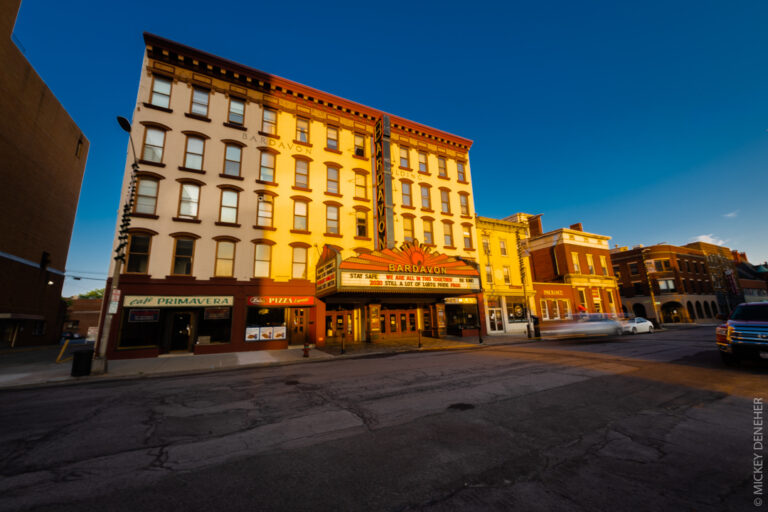
One of the oldest continuously operating theaters in New York State, and one of the oldest in the country, Bardavon was built in 1869 and served as a community performing arts center until 1923, then as a cinema and home for vaudeville until 1975, before reopening as a general performing arts facility in 1976.
Basilica Hudson, housed in a repurposed factory, stands as a haven for artists. With a blend of industrial and pastoral aesthetics, this venue hosts concerts, art shows, and movie screenings, fostering a unique and environmentally responsible space.
Address: Basilica Hudson, 110 Front St, Hudson, 12534
Originally built by Albert Grossman and opened in 1970, the historic recording studio and destination venue remains a special place where artists can rehearse for tours, record audio and/org video, and perform in an intimate, acoustic setting. The venue has been revitalized in recent years by new owner, Lizzie Vann, who has restored the theater and grounds, making great investments to preserve decades of music history while continuing to keep the tradition alive.
Founded on Yasgur’s Farm, site of the historic 1969 Woodstock music festival, Bethel Woods Center for the Arts opened in 2006 with the New York Philharmonic performing on opening night. An on-site museum, exploring Woodstock and the culture of the 1960s, opened in June 2008.
Photo courtesy of Bethel Woods Center for the Arts.
Big Cat (Kingston)
Located on the shores of the Rondout Creek, this DIY space in downtown Kingston is obscure and hosts occasional shows, shared only to the venue’s Instagram.
An iconic rock ‘n’ roll venue, The Capitol Theatre, steeped in history, continues to host spectacular performances. For a more laid-back experience, explore Garcia’s, the venue’s bar location with pre and post shows, as well as stand-alone nights of music as well!
A destination for exceptional music, captivating programs, spectacular gardens and grounds, and wonderful moments with friends and family, Caramoor Center for Music and the Arts is a not-for-profit organization, listed on the National Register of Historic Places. Through innovative and diverse musical performances, Caramoor has a mission to mentor young professional musicians and provide educational programs for young children centered around music.
City Winery Hudson Valley offers not only captivating musical acts but also an extensive wine list. Enjoy brunch or evening performances featuring renowned names amidst a winery setting.
Originally a hotel built in the 1920s, The Colony in Woodstock combines vintage charm with state-of-the-art sound and lighting systems, providing an unforgettable experience.
Experience the casual, intimate setting of Daryl’s House, known from the series Live From Daryl’s House. Enjoy beers, camaraderie, and live jamming sessions.
Co-led by Mike Faloon and James Keepnews, Elysium Furnace Works is a cooperative project that seeks to present the work of upcoming artists in dedicated art-focused settings. While not exclusive to live music, EFW primarily works through live music venues at 19th century VBI Theatre, part of the Hudson Valley’s Cunneen-Hackett Arts Center.
Bringing Broadway magic to the Hudson Valley, Emelin Theatre hosts stage productions, bands, comedy groups, and dance troupes in a large, versatile venue.
With a breathtaking view of Marlboro Falls, The Falcon offers both incredible scenery and exceptional music. Indulge in dinner and a show in its spacious dining room.
Featuring live music every weekend, Gardiner Brewing Company is farmer-owned and operated, opening its doors in Fall 2018. Founded by the 5th generation of the Wright’s Farm family, the brewery is focused on using the ingredients they grow to make delicious, seasonal beers. The Barn at Gardiner Brewing hosts live music every Saturday night, nearly year-round.
Hudson Hall is located on the site of New York State’s oldest surviving theater. After being abandoned for decades, local citizens came together in 1992 to save the building and establish a cultural center, reopening the first ground floor rooms in 1998, and completed a $9.5 million restoration of its magnificent performance hall in 2017.
For over 80 years and 4 generations, the Longobardo family continues the tradition of old school Italian American cooking in Pearl River, originally having started in the Bronx. Great for those who love live music and delicious food.
Decorated with hanging musical instruments and antiques, Last Chance Tavern is a full service restaurant, antique store, and gourmet shop with delicious cheeses and beers, plus great live music each week.
Known as “the barn,” Levon Helm Studios, designed by the legendary drummer, offers an acoustically perfect venue for near-religious live music experiences.
Opened in 2023, The Local is housed in a former Dutch chapel built in the 1800s, restored as a space for arts, culture, and community. Owners Isabel Soffer and Danny Melnick are also co-founders of Hudson Valley Live and bring more than 30 years to producing festivals, concerts, and curated arts experiences to the venue.
Olive’s isn’t just the longest operating bar in the town of Nyack, but also boasts a great deal of live music throughout the year, with an emphasis on the local indie scene. Described as “trendy, hip, indie, and above all attitude free but well behaved,” Olive’s serves great food from Marianne Olive’s garden, as well as great veggie and vegan options.
Originally a 1500-seat movie palace built by Publix Pictures, a subsidiary of Paramount Pictures, the Peekskill Paramount Theater first opened in June of 1930. Now named Paramount Hudson Valley and is managed by Paramount Hudson Valley Arts, the group has a goal of making this landmark theater a destination for the very best of live music and performing arts.
Located in downtown Beacon, Quinn’s has a wide array of live music performances, including weekly jazz sessions, along with great ramen, sakes, and even greater bar fare at this diamond in the rough venue.
Nestled among the beauty of the Catskill Mountains, Resorts World Catskills offers an unmatched experience in excitement, entertainment, and luxury, bringing tribute acts, DJs and national artists to venues and bars inside.
The Rosendale Theatre is an independently owned venue, and a regional and national gem. of its kind. It is a gem, not only in the region, but nationally and internationally. Originally opened in 1905 as the Rosendale Casino, by the 1930s, a stage was installed for live vaudeville and burlesque acts. Films and live theatre can be found these days in Rosendale.
Silk Factory is located in the heart of historic Newburgh, in a former factory from 1910, where silk thread was once made. Now a music venue, event space, restaurant and much more is found here in Newburgh.
The best dive bar in all of New Paltz, Snug Harbor – A.K.A. Snugs – is open daily from 12pm-4am and features live music from local and touring bands, with shows going late thanks to being on the cusp of the SUNY New Paltz campus.
Originally known as the Lycian Center for the Performing Arts, The Sugar Loaf Performing Arts Center is surrounded by eight acres of beautiful mountain and lake views, with a capacity of nearly 700 seats, bringing in summer concert series, international touring acts, educational programs and much more.
Built in 1885 by chocolate magnate William L Wallace, Tarrytown Music Hall opened during Tarrytown’s “Millionaire’s Colony” era when prominent families resided in the town and gathered at the Music Hall for its lavish balls, flower shows and concerts. Tarrytown Music Hall is the oldest theater in Westchester County and one of the finest examples of Queen Anne decorative brickwork in the county.
Founded in 2015 by a local father-daughter team, Tin Barn Brewing has two locations – in the Hudson Valley town of Chester, and the Finger Lakes city of Dundee, near Watkins Glens. A farm brewery specializing in some of the juiciest IPA’s in New England, a “Friday Night Acoustic Series” runs from January to March 2024, featuring some of the area’s finest singers, songwriters & duos, with a new stage and lighting for a more personal feeling.
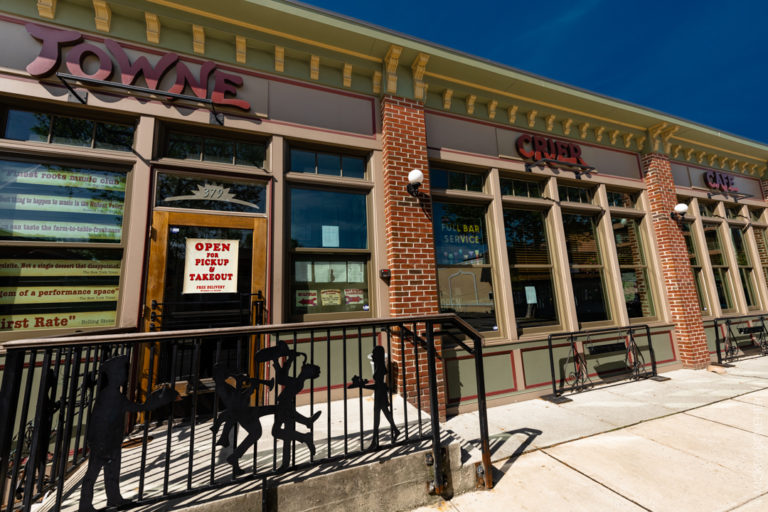
A mainstay of the Hudson Valley since 1972, this former stagecoach stop in the hamlet of Beekmanville was relocated first to Pawling and is now located in Beacon. The Towne Crier welcomes a great deal of world-class talent, and celebrated its 50th anniversary in 2022.
A neighborhood bar with food from Junebug’s Good Cookin’, Tubbys has a killer mezcal selection, natural wine, cocktails, rotating drafts, and fresh cans. Live music on occasion with sounds leaning to the left of the center. Expect cumbia, country, disco, and everything in between on the turntable.
Originally the Broadway Theater and Community Theatre, Ulster Performing Arts Center (UPAC) was build in 1926 and one of only three pre-World War II theaters in the Hudson Valley. Today, UPAC is operated by Bardavon Theatre, with the Hudson Valley Philharmonic calling the exquisite acoustics of the proscenium theater, home.
In eastern Putnam County, you’ll find live music every Wednesday through Sunday at Uncle Cheefs, in a perfectly lit room decorated with love and built to achieve the finest in acoustics. With a multi-cam video system and state of the art in house multi-track recording studio, you’ll love the music live and reliving them later on thanks for Uncle Cheefs.
The music and art scenes in Brooklyn hold a rich and diverse history that plays a fundamental role in shaping American music culture. Music and art cohesively work together to display emotion, purpose and influence one medium on the other, with the ability to connect communities of people from different backgrounds and cultures through audio and visual languages. Brooklyn’s music and art scenes bring unify the borough with diversity, a melting pot and continually at the forefront of American culture.
The West Indie Day Parade
Now, and in decades prior, music and art have become a way of life to the rhythm of Brooklyn, one that is kept alive and running by successive generations of immigrants and transplants from across the world and nation. The power of creativity is not just about entertainment, but about sparking a community to create change, awareness, freedom and unity, becoming a culture that exists as a city’s heartbeat.
The culture of art exploded in the early 1980s from street art, which put the spotlight on local talent, including TAKI 183 who entangled the graffiti movement, highlighting the power of making a statement and pushing extensive boundaries. In the 2000’s, the Brooklyn art scene got hotter with the digital age and the use of technology as a tool to present digital born art, increasing our understanding of unique characteristic features. Artists began collaborating and the rise of art hubs allowed for universal creativity. Today, art in Brooklyn is accessible and continually celebrated.
Music records the collective and diverse history of Brooklyn, spanning across genres and generations. In the 1920‘s, jazz became the central sound, evolving and influencing numerous genres to this day. By the 1960s and 70s, the borough became a hub for soul, funk and R&B, and by the 1990’s, the growth of hip hop culture continues national influence today. By the 21st century, the rise of music festivals including BRIC, Afropunk, Brooklyn Folk and Brooklyn Hip-Hop festivals – as well as dozens of cultural and smaller music festivals, parades and events – continuing to bring the borough together through all walks of life.
The West Indie Day Parade
The West Indian Day parade has become one of New York’s major cultural celebrations and takes place on Labor Day to parade down the eastern parkway. West Indian culture trace their ancestors back to the Caribbean, where the island takes pride in multifaceted colorful dances, parties, and annual carnival celebrations.
With vibrant sequins and feathers, the parade highlights an extraordinary range of people and places that show all walks of life and the importance of unity. Caribbean art has become a diverse reflection of culture, seen in their costumes and elaborate face masks in a wide variety of styles inspired by natural and spiritual cohesive elements. The colorful traditions of Carnival and rich presentation of cultural identity has a boundless impact on the art that emerges through the historical parade that showcases pride, heritage, culture and the importance of identity.
Cultural identity has served as a catalyst for artistic expression, defined by music and art, allowing artists to explore their roots and traditions that serve as an intertwined visual language, creating a narrative that speaks to people of all ethnicities, religions and backgrounds. Not only does the West Indian Day parade attract a community for the annual celebration, it celebrates a bigger purpose of honor, respect, and support from the borough.
The Brooklyn Record and Arts Fair
The Brooklyn Flea Record and Art Fair – held on Saturday, September 30, 2023 at the Marsha P. Johnson State Park – celebrated 12 years of vinyl treasures with over 40 labels, record stores and collectors. The impact and resurgence of vinyl records on the music industry has revolutionized the creation of music, distribution, consumption, and ultimately helped acknowledge the value of the music community. Vinyl allowed music to become more accessible, enabling a visually captivating and engaging representation that highlights a deeper appreciation for the overall experience of music.
The record fair celebrates the unity of both mediums, a way for people of all ages to come together to see vendors that also value the evolution of music over the ages. Including alternative, indie, rock, metal, jazz, classical, pop, blues and much more. Artists and music enthusiasts come together to appreciate the tangible experience of holding a physical record that connects them to the roots of music, enhancing the auditory experience that keeps the love for music alive.
Art and music go hand in hand, sharing a relationship that evokes an emotional response and involves elements of rhythm, harmony and texture that coexist with one another. Music and art are tools for communication, ingrained into the fabric of our society, our relationships and can be understood universally beyond culture and language.
The harmony between the two share narrative moments, they inspire and influence one another, that create a unique dynamic that allows music and art to become part of the culture. Art and music share an intertwining relationship that cohesively evokes emotions, community and promote creativity. Building a culture as seen in Brooklyn permits an exploration of identity, communication and reflects symbiosis between the two art forms.
Wonderland Forest is more than just a forest: it has hiking trails, campgrounds, a wedding venue, and more recently, an outdoor music venue with various bands, food vendors, and other activities from across the United States.
Wonderland Forest exists because of a big team that focuses on the business side of managing grounds such as Wonderland Forest, as well as a focus on the environmentalism needed to run such a place ethically. One of these hard-workers is 2023 SUNY ESF graduate student, Shelby Martin.
Shelby Martin describes the atmosphere of Wonderland to be peaceful. In fact, their motto is “A Forest Peaceful Adventures.” All these peaceful adventures – from camping, hiking, all the way to concerts and tattoo trucks – are what makes this venue unlike any other in Upstate New York.
Another aspect of Wonderland that makes it stand out is that most attendees treat the concerts more like a festival, and dress up in costume for their events. “For TumbleDown and Biscoland there were a lot more extravagant outfits. From my experience, people love to go all-out and feel like themselves, when they can’t be themselves in the real world,” Martin explains.
Martin also encourages everyone to listen to music outdoors – one aspect of Wonderland that many venues can’t offer. “I love listening to music in any venue whatsoever … but there’s just something different about listening to music outside, sitting on the grass, dancing with your friends.”
Biscoland at Wonderland Forest – photo by Tara Gracer
As a Science and Forestry major, Shelby Martin paid close attention to a lot of the sustainability that goes into running a venue. She is happy with the outcome of the forest and how it has transformed into what it is today– a repurposing of a place that was already set up for human use, with the intention to enjoy the outdoors. She’s a big advocate for integrating humans into nature– so much of our time is spent indoors staring at screens, so any excuse to get outside is a good one. Martin says that she and her team worked to make sure that trails were safe for humans while taking special precautions to preserve the natural wildlife that already lived in the forest.
While environmentalism being integrated into music is a somewhat new idea, Martin and her team are doing their best to keep sustainability in mind as they move forward with the venue. Wonderland already has stonewater mitigation, which is used to guide water where to go, in order to lessen negative effects of hard rains on the already compact soil. Even with this and other sustainability measures, she already has plans in the works to make her venue more sustainable, such as composting, and adding detailed descriptions of what can and cannot be recycled. She also hopes to incorporate an educational aspect of the forest with signs to identify types of flora and fauna that make Wonderland unique.
Shelby Martin is part of a team of six to seven people, which branches out to an even larger team that makes the wheels turn. But she makes it clear that Wonderland is so much more than her and her coworkers: “But really, Wonderland relies on our locals and our fans that come see the music…” She emphasizes that while Wonderland is a beautiful adventure – the people that visit are what really makes it shine, as well as all the work she and her coworkers put in to make Wonderland what it is.
During the fall semester, Shelby Martin was taking nine class credits and six research credits– one must wonder how a full-time student can balance both academics and a job such as this one. Over the summer of 2023, she worked 60-80-hour work weeks, since that’s the best time to get “knit-picky” problems taken care of. Though she no longer works that same schedule – she cut her work to about 20 hours per week – she admits that it’s certainly difficult to be a student and balance that work with her job. Luckily, her team is very understanding of what it means to be a student, and the key to her balance was simply communication. “I told the whole team that [I had midterms that week] and everyone took something off of my plate for things that needed to be done around Wonderland…to make my plate a little lighter.”
When asked about vendors – they come from across the country with various food truck niches and other activities – Martin says that vendors actually contact Wonderland directly. In fact, there’s been so many that want to be involved, they’ve unfortunately had to refuse some due to the amount of applications. They particularly look for “a commitment to music as well as a commitment to their business.” They’ve had local vendors, but also vendors all the way from Pennsylvania, New Jersey, and even Vermont.
Wonderland is so much more than a music venue. “We’re a campground, we’re an event center, we are a wedding venue. We are a multi-faceted space with 500 acres to work with and lots of trees and great space to do whatever, and be yourself.”
In the heart of the Capital Region, you’ll find more than just streets and buildings â you’ll discover a lively melody that reverberates through Albany, Saratoga Springs, Schenectady, and Troy. These cities collectively host a variety of venues, each adding its unique flavor to the local music scene.
From lively stages to cozy spots, every venue contributes to the dynamic soundtrack of the region stretching from Lake George to the tip of the Hudson Valley.
The Arthur Zankel Music Center at Skidmore College has a capacity of 600. Offering a highbrow lineup featuring classical and jazz artists, the center also occasionally hosts mainstream heavyweights. The venue, with upgraded facilities, provides a unique experience for both students and the wider community.
Address: 815 N Broadway, Saratoga Springs, NY 12866
Situated in the heart of historic Saratoga Springs in the Capital Region The Brook Tavern is a beloved neighborhood gathering spot at the crossroads of Union and Nelson Ave. Only a short walk from the Saratoga Race Course and within walking distance of Congress Park, it offers a convenient and welcoming locale for locals and visitors alike. Don’t miss the live music every Tuesday, adding a delightful rhythm to the vibrant atmosphere.
Address: 139 Union Ave, Saratoga Springs, NY 12866
Bye-i ⢠Brewing is dedicated to delivering the Capital Region the beer they deserve, prioritizing quality over profit. As they aspire to become a symbol of American culture, their commitment extends to community involvement and giving back to those who support their growth. The brewery also features live music as a focal point of its offerings.
Caffè Lena is the oldest continuously operating folk venue in the US. With a capacity of 110, it has hosted iconic artists like Bob Dylan and Emmylou Harris. The venue’s intimate setting underwent a $2 million renovation in 2016, offering a cozy space for folk enthusiasts to enjoy live performances.
Nestled in downtown Albany, Capital Repertory Theatre (theREP) stands as an acclaimed professional theater, recognized for its diverse range of productions. From contemporary and classic drama to off-Broadway musicals, cutting-edge comedy, and world premieres, theREP’s year-round season draws theater enthusiasts of all ages. Beyond providing opportunities for seasoned professionals and rising stars, theREP extends its impact by offering unique educational programs to students in the Capital Region.
Centre Street Public House and Beer Garden (Schenectady)
Centre Street Public House and Garden offers a distinctive and inviting atmosphere, featuring top-notch craft brews, a gastropub menu, and exquisite banquet facilities. Additionally, the venue hosts weekly live music, adding a vibrant and entertaining element to its appeal.
Opening in 1976, the Cock n Bull celebrates a near half-century of great food and more recently, Music in the Barn. As notes by the business, the custom of playing music in a barn has been a lively part of American rural life since the 19th century, with the acoustics of the Cock n Bull’s post-and-beam barn continuing this regional tradition.
Established in 1874, Cohoes Music Hall in Cohoes is the fourth oldest operating music hall in the US. It hosts solo artists, theater troupes, jazz acts, and tribute bands. The venue actively supports up-and-coming acts, contributing to the local arts community.
A distinctive landmark in Albany’s skyline, The Egg offers two theaters with capacities of 982 and 450. Completed in 1978, it hosts a range of events, from jazz-rock acts to ballet performances. The Egg stands out not only for its unique architecture but also for its diverse programming, including roots, rock, jazz, and comedy.
Address: Agency Building 1, S Mall Arterial, Albany
ââOwned by Michell Ramsey, who also owns Jay St. Pub in Schenectady, The Electric Grinch derives its name from a Schenectady bar of the 1970s and 1980s. Situated at 116 Jay Street, the venue offers live music and a full bar, with operating hours on Wednesday and Thursday from 4 p.m. to midnight, Friday from 4 p.m. to 1 a.m., and Saturday from 11 a.m. to 1 a.m.
Empire Live in downtown Albany, a top music venue in the Capital Region, features two stages: Empire Live and Empire Underground. With a 1,000-person capacity, Empire Live offers a spacious setting and excellent stage views. In contrast, Empire Underground, located in the basement, provides a more intimate experience with a 350-person capacity.
The Step stands as America’s oldest continuously running non-profit coffeehouse and concert stage, showcasing the finest independent acoustic music in Upstate New York, Western Massachusetts, and lower Vermont. Featuring a diverse range of genres, including contemporary and traditional folk, blues, jazz, bluegrass, Celtic, and more, our five-decade performer roster reads like a folk Who’s Who. From Pete Seeger and Janette Carter to The Chicks and Jeff Daniels, The Step continues to bring exceptional acoustic performances to its audience.
The Curtis R. Priem Experimental Media and Performing Arts Center (EMPAC) is a multi-venue arts center at Rensselaer Polytechnic Institute in Troy, opening in 2008. A variety of adventurous programming in music, performance, media, theater, and much more can be found at EMPAC, including a state-of the-art concert hall, leading the New York Times to call EMPAC a âtechnological pleasure dome for the mind.”
Since 1985, The Fuze Box has been a historically diverse live performance venue, consistently at the forefront of championing the next generation of alternative misfits and miscreants.
The Glove Theatre opened in 1914 and hosted movies, music, vaudeville, and civic events, and in 1920 it became the flagship theatre and home office of Schine Enterprises until 1965. In 1971 the venue officially closed, though it did have a few civic engagements during that decade, and reopened in Oct. of 1997 with the âThe Phantom of the Glove.â The Glove Theatre is a non-profit organization dedicated to establishing an accessible expression platform for the arts that engages, entertains, and educates the regional community, giving economic opportunities to the Southern Adirondack and Mohawk Valley regions.
The Hangar is a concert venue and event space showcasing both local and national acts, with most shows occurring on Friday through Sunday nights. Nestled by the Hudson River in Troy, it offers an intimate, roadhouse-style experience for music enthusiasts. Known for its vibrant atmosphere, The Hangar consistently features entertaining bands, providing a great setting for friends and fellow music fans. The attentive, friendly, and professional bar staff enhance the overall experience.
Established in 2013, The Hollow Bar + Kitchen stands as a celebrated and distinctive downtown Albany establishment. It holds the distinction of being the sole 4-star restaurant in the Capital Region. Under the guidance of Anna Weisheit, the 2016 Albany Chef’s Food & Wine Festival Rising Star Chef Winner, The Hollow offers a remarkable combination of a craft beer bar and a recognized live music venue, making it a unique and acclaimed destination.
The Inn at Saratoga (Saratoga Springs) The Inn, adorned with live music, becomes a haven for relaxation and entertainment.. The monthly-updated music calendar ensures a delightful experience for patrons seeking a harmonious blend of ambiance and talent.
In the evening, The Kings Inn hosts live music performances, enhancing its hospitality-driven atmosphere. The staff, known for their patience, plays a pivotal role in ensuring a welcoming environment. For those seeking prompt service, The Kings Inn stands out. Visitors have praised the bar for its exotic ambiance, making it a notable venue where bands regularly perform.
Lark Hall, a historic music venue was originally constructed in 1916 by the Daughters of the Eastern Star. Meticulously restored and equipped with state-of-the-art facilities, it provides a unique and unmatched experience for both performers and audiences alike.
Situated in the heart of the Lark Street district, Lark Tavern, an iconic establishment in the Capital District since 1933, serves as a cherished watering hole and gathering spot for locals. With a rich tradition centered around food, drink, and entertainment, the revamped Lark Tavern adds a retro vintage flair to the Tavern experience, featuring live music for an added vibrancy.
The Linda â WAMCâs Performing Arts Studio (Albany)
Founded in 2002, The Linda â WAMCâs Performing Arts Studio, is a meticulously restored 1926 bank situated in the heart of Albany’s Central Avenues Business District. This versatile venue serves as a multi-purpose auditorium and recording studio, welcoming a diverse array of events such as concerts, debates, lectures, films, celebrations, and more, many of which are broadcasted across WAMC’s seven-state listening area and online at wamc.org.
The Arena hosts a variety of events including concerts, family shows, sporting contests and trade shows. Home to the AFL Albany Empire, and the Siena Saints MAAC basketball team, the MVP Arena is a regular host to premier NCAA events.
No Fun, presented by Pint Sized, serves as the primary hub for experimental music aficionados in the Capital Region. Recognized as a live music venue, it is celebrated for providing a platform for avant-garde and cutting-edge musical performances.
Opening its doors in 1931, it has hosted iconic acts like The Rolling Stones and Bruce Springsteen. The Palace Theatre continues to feature Broadway plays, dance concerts, and movies, providing a stunning setting for diverse performances.
Originally a vaudeville venue, it has evolved into a multi-genre event space hosting Broadway musicals, dance concerts, and movies. Proctors continues to adapt its mission to the contemporary environment while maintaining its historical charm.
Formerly known as Putnam Den in Saratoga Springs, Putnam Place underwent a major transformation into a classy music venue, nightclub, and event space. With a capacity of 500, it has become a year-round destination, hosting diverse acts and contributing to Saratoga’s vibrant nightlife.
Renowned as Troy NY’s premier live music venue, The Rustic Barn Pub consistently delivers high-quality live entertainment, emphasizing the importance of exceptional performances. Committed to creating memorable experiences, they invite audiences to join them on Thursday, Friday, and Saturday nights for live music spanning a diverse range of genres.
Saratoga Performing Arts Center (Saratoga Springs)
Located in Saratoga Springs, SPAC is a versatile venue with a capacity of 25,000. It hosts a diverse range of events, from performances by The Philadelphia Orchestra and New York City Ballet to Live Nation’s pop, country, hip-hop, and classic rock acts. Surrounded by natural beauty and historic architecture, SPAC provides a unique experience, attracting top artists across genres.
Address: 108 Avenue of the Pines, Saratoga Springs
Nestled in the heart of downtown Saratoga Springs, NY, Saratoga City Tavern is a vibrant establishment offering a selection of over 110 draughts, delectable cuisine, and entertainment seven days a week. With five floors, this Saratoga, NY bar and tavern ensures there’s something to delight every visitor.
Nestled in the heart of downtown Saratoga Springs, Spa City Tap & Barrel stands as the city’s newest hangout. With a rustic charm and a modern touch, this cozy pub offers 32 beers on tap, signature cocktails, and a pub-style menu perfect for pairing with any sporting event. Patrons can enjoy live music on weekends, along with game nights and themed events throughout the week, making Spa City Tap & Barrel a vibrant destination for entertainment. Open seven days a week, it’s the ideal spot to experience Saratoga’s lively atmosphere.
Built in 1875, Troy Savings Bank Music Hall in Troy is celebrated for its exceptional acoustics. With a capacity of 1,253, the venue attracts classical, folk, and Americana performers. The Music Hall preserves its 19th-century charm, providing an intimate connection between performers and the audience.
For over 50 years, the UAlbany Performing Arts Center has stood as a prominent cultural asset for the University at Albany and the wider Capital Region community. Hosting the Prime Performance Series annually, the center brings a diverse array of national and international artists in music, dance, and theatre. With five distinctive performance theatres, a dance studio, rehearsal spaces, and dedicated libraries, the UAlbany PAC serves as a vibrant hub for artistic endeavors.
Additionally, A Place for Jazz shares a few dozen or so venues in the Capital Region that offer Jazz occasionally, or regularly.
Just north of the Capital District are a few venues that may fall outside of the typical ‘Capital Region’ geographic definition, but are still under an hour drive to see great live music.
Charles R Wood Theater (Glens Falls)
The Charles R. Wood Theater is a year-round performing arts facility in downtown Glens Falls, offering cultural events and productions with three spaces in the building for events – a 300-seat theater, a 3,000 square foot rehearsal hall, and over 2,600 square feet of lobby space.
The Festival Commons at Charles R. Wood Park, located at the southern end of Lake George, is home to many events during the summer, most notably Memorial Meltdown and Adirondack Independence Festival, and much more in between. The grounds also include a skatepark and have public restrooms, all within walking distance of “The Queen of American Lakes,â Lake George.
Cool Insuring Arena is a multi-purpose sports and music arena located in downtown Glens Falls. When they are not home to the Adirondack Thunder of the ECHL, the former Glens Falls Civic Center has hosted a great number of classic concerts – The Who’s first comeback show in 1989, Phish performing The White Album in its entirety (and playing past 3am), among many others – and has many great years left as the Glens Falls region sees a renaissance in their downtown over the past decade.
DJ’s Niteclub is a seasonal club in Lake George, New York that offers a view of the village strip. They offer a variety of music and night life in Lake George for locals and tourists alike.
The building structure of Fort Salem Theater dates back to 1774, and after fires and rebuildings, by 1882, a chapel made this future theatre and arts venue, complete. Improvements in the 1970s made Fort Salem the premiere summer stock theater in the Northeast, with family-oriented musicals, comedies and dramas. Renovations from 2006-7 brought Fort Salem into the 21st century, with seats donated from Broadwayâs Helen Hayes Theater. The theater is under new ownership and reopened in June 2021.
Since 1878, Hubbard Hall has developed, produced, and presented theater, music, opera, dance, and the visual arts and in recent years has become a world-class development center for new work. A non-profit since 1977, Hubbard Hall attracts artists, students, and audience members as a fertile training ground for both young and seasoned artists, Offering classes in dance, theater, music, movement, visual arts, puppetry, creative writing, martial arts, yoga, and even gardening, this multi-purpose venue gives students of all ages an opportunity to train, collaborate, and thrive.
Built in 1911, The Park Theater is the premier entertainment venue located in the heart of downtown Glens Falls. The theater holds a rich history within the community and has been revitalized as a destination for performing arts, weddings, and events.
A former lakeside teaching studio of internationally renowned soprano Marcella Sembrich (1858-1935), The Sembrich has a distinguished operatic career and musical legacy, offering a variety of programs, articles, and multi-media presentations online and in person.
The Strand Theatre opened its doors on January 17, 1923, and after being closed for a period of time, was reopened on October 7, 2016 through the nonprofit Hudson River Music Hall Productions, which came together in 2010 with the goal of helping to rehabilitate old buildings in Hudson Falls. Having a huge calendar each month (see below) with a wide variety of genres, shows and experiences, the Strand Theatre holds the distinction as the only major music venue in Washington and Warren Counties that is open year-round. Part of a chain of Strand Theatres built in the early 20th century, other venues under the name Strand can be found in Plattsburgh and Schroon Lake, as well as others that have closed over time.