A New York music legend that remains backstage, Stacey Waterman has been making the state’s music scene move behind the scenes for well over 30 years now.
A star of the music scene who actively avoids the limelight may seem like an oxymoron, but Stacey Waterman does so with utter grace and humility. A legend in New York’s backstage management scene, Waterman’s work has earned her a spot in the SAMMYs Hall of Fame alongside decades worth of respect from everyone within the industry and outside of it.
The owner of The DMR Agency, Stacey is responsible for production management services for a wide host of promoters, venues, and events throughout Central New York. No factor of the industry is outside of her wheelhouse, specializing in concert and festival coordination and execution, booking and contract negotiations with talent, and settlement.
Having gotten her start in her early 20s managing the local band White Boy and the Wagon Burners, Waterman’s resume today is impressive beyond the meaning of the word.
The list of names in Stacey’s repertoire is incredibly expansive, including but not limited to Paul McCartney, Dave Matthews, Phish, and The Rolling Stones, though with over 30 years into the gig, she’s stated that being starstruck is a thing of the past while on the job.
On a broader scale, Stacey has also worked with the likes of Live Nation, The New York State Fair, Creative Concerts, Famous Artist Broadway, Galaxy Events, FIL World Indoor Lacrosse Championships, and a myriad of other organizations.
With an attentive eye and a clear, genuine care for the craft, each of Waterman’s shows receives the same amount of energy- that is to say, 100%. She balances professionalism and lightheartedness perfectly, reportedly doing everything from tracking down birthday cakes to hiring a veterinarian for a band member’s cat.
Stacey and her dog Shakima.
In her own words from a conversation with Syracuse.com, she always does her best to accommodate a request no matter how challenging it may seem to accomplish because she “want(s) everyone to leave with a good feeling.”
Beyond her freelance work, Waterman is responsible for one of her signature local events, The Salt City Waltz. A recreation of the iconic farewell concert captured by Martin Scorsese, the event features the biggest names of the area, uplifting and showcasing local creatives.
A truly admirable woman in the music scene- especially the backstage portion that so often becomes a male-dominated space- it’s not difficult to call Waterman a genuine inspiration, and an admirably humble one at that.
To keep up with Stacey and learn about her newest upcoming events, be sure to check out her Instagram page here.
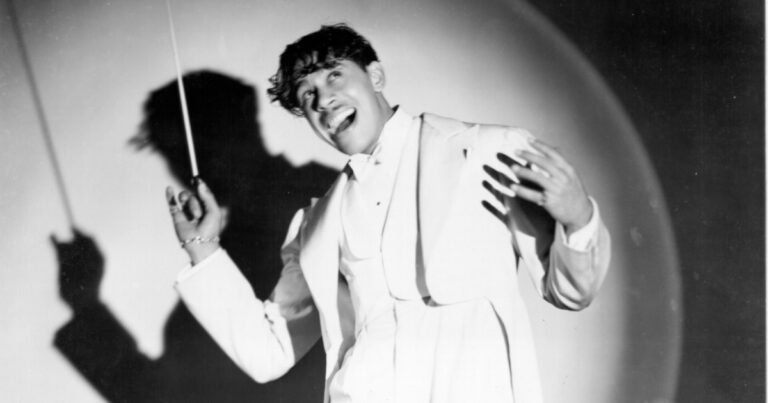
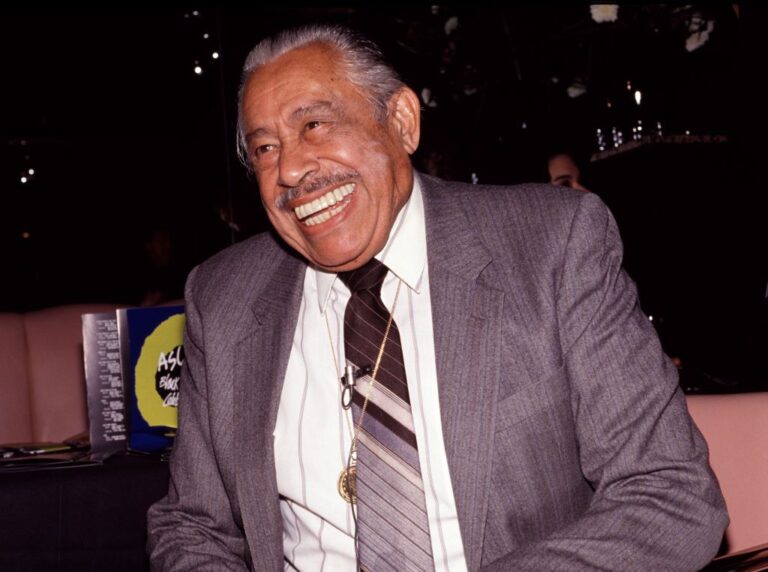
Cabell “Cab” Calloway III was born on Christmas Day, 1907 in Rochester, living on Sycamore Street. His mother was a teacher and church organist and his father was a lawyer. When Calloway was 11, they moved to Baltimore. After he was caught playing dice on the church steps, his mother sent him to a reform school in Pennsylvania.
When he returned to Baltimore, Calloway began private voice lessons and continued his study of music throughout school. He soon began performing at nightclubs in Baltimore and was mentored by Chick Webb and Johnny Jones.
In 1927, Calloway joined his older sister, Blanche, in a tour of Plantation Days. She achieved success first, he often credited her as an inspiration to enter show business. His parents wanted him to follow in his father’s footsteps and become a lawyer. Therefore, he enrolled to college in Chicago, but spent his nights at the Dreamland Ballroom, Sunset Cafe, and the Club Berlin. At the Sunset Cafe, he was an understudy for Adelaide Hall. He also met and performed with Louis Armstrong.
Harlem
In 1929, Calloway moved to Harlem, performing with the Alabamians band. They opened at the Savoy Ballroom and broke up soon after. With help from Armstrong, Calloway established himself as a vocalist by singing “Ain’t Misbehavin’” by Fats Waller. Soon after, The Missourians asked Calloway to join and front them.
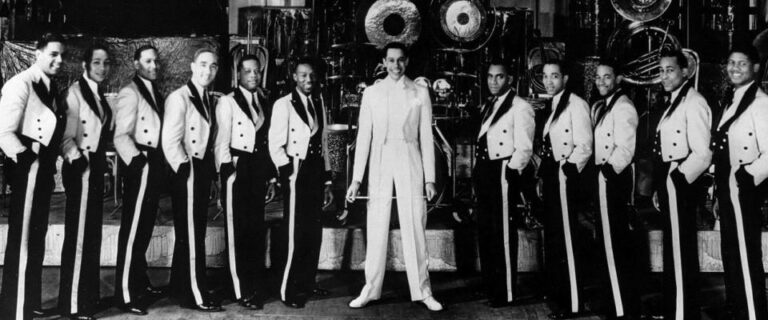
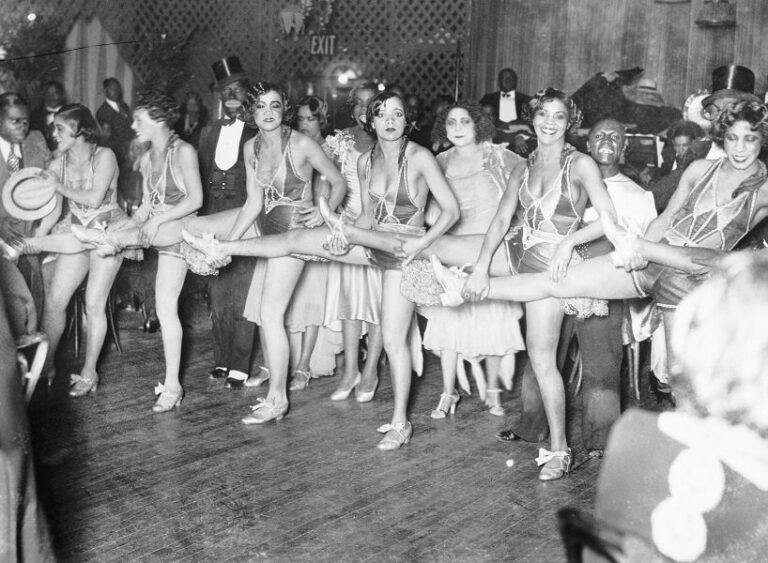
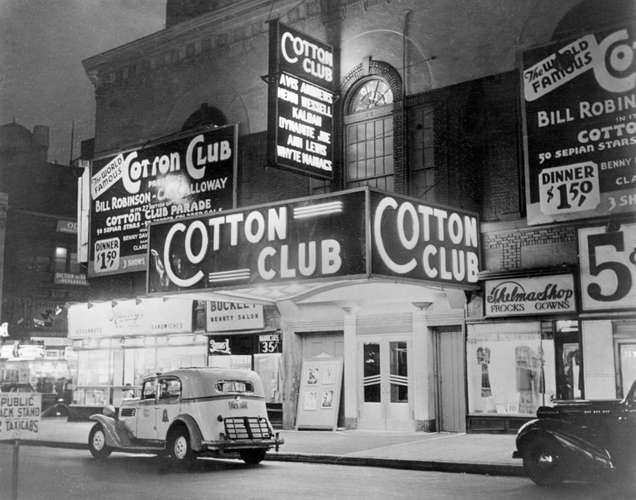
The following year, the band name shifted to Cab Calloway and His Orchestra. In 1931, the band replaced the Duke Ellington Orchestra at the Cotton Club while they were on tour. Due to the increased popularity, they were offered a permanent position there.
The band also performed regularly on radio broadcasts on NBC. Calloway also appeared on radio programs with Walter Winchell and Bing Crosby became the first African-American to have a nationally syndicated radio show. During the heights of the Great Depression, Calloway was earning $50,000 per year at the age of 23.
The 30’s and 40’s
In 1931, Calloway recorded his most famous song, “Minnie the Moocher.” This is the first single song by an African-American to sell one million records. Three of his songs, “The Old Man of the Mountain,” “St. James Infirmary Blues” and “Minnie the Moocher”, were performed in Betty Boop cartoons.
Calloway soon received the nickname “The Hi De Ho Man.” He performed in the 1930s in short films for Paramount. In these, Calloway performs a gliding backstep dance move, a possible precursor to Michael Jackson’s moonwalk.
Calloway’s band in the 1930s and 1940s included many notable musicians, such as Ben Webster, Ed Swayze, Cozy Cole, and Dizzy Gillespie. In 1940, Strike Up the Band, starring Mickey Rooney and Judy Garland, has a line of “You are not Cab Calloway” after playing poorly.
In 1941, Calloway fired Gillespie from his orchestra after an onstage fracas erupted when Calloway was hit with spitballs. He wrongly accused Gillespie, who stabbed Calloway in the leg with a small knife.
In 1956, Clarence Robinson, who produced revues at the original Cotton Club and the Apollo Theater, and choreographed the movie Stormy Weather, cast Calloway as the main attraction for his project in Miami. The Cotton Club of Miami featured a troupe of 48 people, including singer Sallie Blair, George Kirby, Abbey Lincoln, and the dance troupe of Norma Miller. The success of the shows led to the Cotton Club Revue of 1957 which had stops at the Royal Nevada Hotel in Las Vegas, the Theatre Under The Sky in Central Park, Town Casino in Buffalo.
Later Years
The Cotton Club Revue of 1959 traveled to South America for engagements in Rio de Janeiro and Sao Paulo. They also stopped in Uruguay and Argentina before returning to North America which included a run on Broadway. Directed by Mervyn Nelson and choreographed by Joel Nobel, this edition featured Ketty Lester, The Three Chocolateers. The revue toured Europe in 1959 and 1960, bringing their act to Madrid, Paris, and London.
Calloway remained a household name due to TV appearances and occasional concerts in the US and Europe. In 1961 and 1962, he toured with the Harlem Globetrotters, providing halftime entertainment during games.
In 1985, Calloway and his Orchestra appeared at The Ritz London Hotel where he was filmed for a 60-minute BBC TV show called The Cotton Club Comes to the Ritz. Adelaide Hall, Doc Cheatham, Max Roach, and the Nicholas Brothers also appeared on the bill. A performance with the Cincinnati Pops Orchestra directed by Erich Kunzel in August 1988 was recorded on video and features a classic presentation of “Minnie the Moocher”, 57 years after he first recorded it.
On June 12, 1994, Calloway suffered a stroke at his home in Westchester County. He died five months later from pneumonia on November 18, 1994, at age 86, at a nursing home in Hockessin, Delaware.
Awards and Accomplishments
In 1990, Calloway was presented with the Beacons in Jazz Award from The New School. The NYC mayor at the time, David Dinkins, proclaimed the day “Cab Calloway Day.”
The New York Racing Association (NYRA) annually honors the jazz legend, a native of Rochester, with a stakes races restricted to NY-bred three-year-olds, as part of their New York Stallion Series. First run in 2003, The Calloway has since undergone various distance and surface changes. The race is currently run at Saratoga Racecourse, one of America’s most popular, premier racetracks. The Cab Calloway Stakes celebrated its 13th renewal on July 24, 2019.
Women in Music (WIM), a leading non-profit organization that advances the role of women and gender-expansive individuals in the music industry, proudly announces its 2025 Virtual Summit.
This three-day event will take place online from January 15-17, 2025, offering a global platform for education, empowerment, and professional advancement.
With a dynamic lineup of keynote speakers, including Martha Earls of Neon Coast, and a variety of engaging panels and workshops, the summit aims to foster connections and equip attendees with the tools they need to thrive in an ever-evolving industry.
As WIM celebrates its 40th anniversary, the summit will feature innovative initiatives such as the WIM Safe(r) Spaces workshops and the WIM Workplace Initiative, which emphasizes creating safer and more inclusive environments within the industry.
The MLC and ASCAP sponsor the event, and partner organizations such as Here For The Music, Mamas In Music, Family Alliance in Music, and Moms in Music will host virtual booths. WIM members can attend the summit for free, while non-members are encouraged to purchase tickets and explore membership options.
This year, attendees can look forward to a comprehensive schedule:
Day 1: Educate (Wednesday, January 15) – Focused on career development, sessions will include “Female Founders: From Bootstrapped to Venture-Backed” and “Money Matters,” along with specialized workshops for artists and their teams.
Day 2: Empower (Thursday, January 16) – Centered on advocacy and mental health, this day will feature WIM Safe(r) Spaces training, workshops on creating safer environments, and a keynote by Martha Earls, who will share actionable strategies for reclaiming power in the industry.
Day 3: Advance (Friday, January 17) – Focused on professional growth, this day will cover topics such as job search success, recruiting strategies, and pivotal career transitions, culminating in a panel discussion moderated by Mandy Gabriel, VP of Film, TV & Advertising at Universal Music Publishing Group.
Visit here for more info on the Women in Music Summit.
A walking music legend, Carole King’s roots in New York run deep. Born and raised in Brooklyn, a graduate of Queens College, and lifetime lover of the Manhattan music scene as both an artist and an audience member, New York is an integral part of King’s work and identity at large.
Photo: Jim McCrary, via caroleking.com
Born Carol Joan Klein to Russian and Polish immigrant parents, Carole arrived in the world not too soon after her mother and father had arrived in Brooklyn via Ellis Island. With her father, a radio announcer turned New York City firefighter, and mother, a secretary at a local high school, Carole’s life has been positively steeped in musicality from day one – as well as a deeply ingrained identity as a New York native and lifelong Brooklyn Dodgers fan since youth.
Famously meeting while in an elevator at Brooklyn College, Carole’s father set the precedent for a Klein behind the microphone with his gig as a radio announcer, and her mother’s studies in and passion for english and drama lent themselves to a rather creative upbringing.
Upon her parents’ separation, Carole sought attention and found the answer in the theater. First being introduced to the glittering world of Broadway at just five years old, Carole fell utterly in love, absorbing all of the media and musical projects her mother put on. Her home was rarely quiet, being constantly introduced to shades of music varying from show tunes to Brahms.
Photo via caroleking.com
Finding a unique outlet for emotions of all ranges, King leaned into the theatrics of the stage as she grew up, eventually auditioning for the High School of Performing Arts – now referred to as the Fiorello H. LaGuardia High School of the same name. While the audition was not a success, it marked a turning point for Carole as the arts became something of possible professional pursuit more concretely in her mind.
As any teenager of the mid 1950s did, Carole often tuned in to her favorite radio stations. However, unlike many other of her rather sheltered white peers, Carole’s station of preference was Alan Freed’s nightly WINS program. Freed was a lover of artists like the Penguins, the Moonglows, the Clovers, Danny Overbea, La Vern Baker, and BB King – a notably African-American lineup that had many white parents positively beside themselves.
In addition, many tracks played on Freed’s station fell under the umbrellas of rock and roll and R&B, both equally scandalous for their promiscuity and narratives on adversity that were up until then rather absent in the public eye’s musical circuit. This scandal was all the better for an adolescent King, however, who found the new wave of music and its consequent conscious style of creation absolutely mesmerizing
Carole has never been one to shy away from advocating for her beliefs. After moving to Idaho in 1977, she became deeply entrenched in the local ecosystem’s wellbeing and has been an outspoken voice for environmental change ever since.
King would go on to participate in her local Women’s March in 2017, holding a sign that read “One Small Voice.” A single titled with the same phrase would be released the next month, utilizing a thinly-veiled emperor’s new clothes metaphor that encourages listeners to “speak out in honesty.”
While many artists’ relationships with New York City begin on the stage, King’s began in the audience. As a young adult who positively adored the cutting-edge music she was hearing over the radio, being able to attend Freed’s Easter Jubilee at the Brooklyn Paramount in 1955 meant the absolute world and sparked a major bout of motivation.
“Moving farther in, we saw Mickey Baker talking to a couple of the Penguins. At that moment I knew I wanted to mean something to these people. I didn’t want to be one of them. I just wanted them to know who I was and consider me worthy of respect. That ambition existed concurrently and in no way conflicted with my ambition to be an actress.”
– Carole King, A Natural Woman
Auditioning for the High School of Performing Arts once more re-inspired, King enrolled in the fall of 1955 and spent a year studying drama and dance alongside fellow students Al Pacino and Rafael Campos. She would depart the school after a year and return to her classmates at James Madison High School, but Carole would take with her the lessons taught by teachers like Mr. Sachs who inadvertently set her up to arrange vocals through his assignments.
Like many teenagers of the area, King perpetually sought out the liberal arts for peer acceptance and self-expression, the heart of an increasingly viable, ever-vibrant scene only a few subway stops away. 1957 marked a time of escapades up and down Bleecker Street and throughout the coffee shops and venues of Greenwich Village with her peers.
After a rare successful infiltration of the Vanguard, Carole King witnessed mind-blowing jazz sets and sat listening to the music while her peers smoked. By default she became the one picking out the records, and that quickly became much more interesting to Carole than the smoking.
After a nudge in the direction of her high school’s annual Sing by her mother, King wrote, arranged, and performed a piece for the first time to a large audience, and the response of her peers in the audience shifted something within her. She soon began to compose in earnest, arranging pieces for the chorus class before turning the passion into a full-on street corner harmony gig. Recruiting three other peers to be the soprano, tenor, and bass to her alto, the group dubbed themselves the Cosines and performed for free at school events and dances.
Photo via caroleking.com
This would mark the beginning of a career in arranging both for a group and for herself, developing a process she would keep well into her career as she wrote for or in collaboration with the likes of Bobby Vee, The Everly Brothers, The Monkees, Aretha Franklin, James Taylor, Mariah Carey, and countless others across the industry.
After deciding to pursue songwriting in earnest, Carole chased down a so-called “Atlantic Records” that Freed had mentioned on his radio station, quickly presenting her work to an executive and landing her first recording contract.
Graduating high school at just sixteen years old, King entered Queens College with little enthusiasm after an unexpected move to Rosedale had uprooted her plans to attend her parents’ alma mater. Just around the corner, however, were fellow freshmen and musical peers Art Garfunkel and Paul Simon, the latter becoming a quick friend and collaborator.
Also at Queens College was Carole King’s future songwriting partner and husband of many years Gerry Goffin. While she first thought they’d never see eye to eye on music – he was very open with his hatred for Rock and Roll – his pitch to collaborate on a song quickly became history. Married at her parents’ home in Rosedale in 1959, Carole and Gerry moved into a one-bedroom apartment on Bedford Avenue, only a block away from her childhood home.
Photo via caroleking.com
Gerry, a chemist in downtown Brooklyn, and Carole, a secretary for a chimney manufacturer in Manhattan, were determined to see their passion for songwriting through and, upon an interaction with Neil Sedaka on the sidewalk of Broadway, the two landed a three-year writing deal that brought the couple out of debt and into a two-bedroom apartment on Brown Street in Brooklyn, an area that had been nothing but corn fields when King was a child.
Working in the highly competitive cubicle space that was Aldon, Gerry and Carole managed their first major hit with “Will You Love Me Tomorrow.” Gerry stepped away from his traditional job and the couple moved into the suburbs of West Orange, New Jersey to raise their second daughter, which is where they would reside together for a number of years before the marriage began to crumble.
When Goffin decided to move to California on his own, King was torn between the vibrancy of what she dubbed “the coolest place she knew” and California, where their children would be able to see their father. Ultimately putting her children before herself, Carole switched Coasts.
Photo via caroleking.com
1970 marked a second beginning for King, who would be brought back to New York and into the spotlight by friend and collaborator James Taylor during his tour. Just prior to their show at Carole’s alma mater Queens College, Taylor requested she sing the lead for “Up on the Roof” to King’s immediate horror and dismay. Terrified about stepping out of the comfortable zone that was just “James’ pianist,” Carole took a breath and performed, receiving raucous applause.
“Up on the Roof” would return in 1971 at King’s first ever performance as a solo act in front of an audience during the now famed June evening at Carnegie Hall. Recorded and later immortalized in a seventeen-track album, the concert featured some of Carole’s first works alongside duets with Taylor for “Up on the Roof”, “Will You Love Me Tomorrow?”, and “You’ve Got a Friend.”
With the turn of the new year came Carole’s 30th birthday, a whopping four GRAMMY wins for her work in Tapestry, and the arrival of her fourth child. The following year, King returned to New York City to deliver a first-of-its-kind Central Park show completely free to the public, a rather poetic homecoming of an estimated 100,000+ attendees.
Recorded and released first as a live album and then a fully-fledged concert documentary in 2023, the Central Park concert remains a sparkling snapshot of King’s commercial and critical peak . Though this level of fame did not come without its drawbacks, with Carole detailing a frenzied crowd of fans crowding her limo after the show in her memoir.
Such situations and the general all-encompassing business that had become her life drew King to the quieter lifestyle of Idaho, though the draw of New York’s creative vibrancy never quite lost her. She would travel back to the city frequently to visit family, friends, and other artists she enjoyed working alongside.
An extended return to New York wouldn’t come into Carole King’s life until she was cast in Hindi Brooks’ A Minor Incident at the West Bank Café Theater in 1987. Performing alongside Paull Hipp who she had met when he was producing the off-Broadway Rockabilly Road, Carole frequently tagged along to Brooks’ recurring gig at the Red Lion Café on Bleecker.
Quietly playing guitar for his sets, she noted that very few would recognize her in their preoccupation with chatting, dining, or drinking, but there were always a few who would glance back and forth at her, nudging their friends with knowing smiles.
Photo: Annie Liebovitz, via caroleking.com
It wouldn’t be until Carole attended Bruce Springsteen’s 1988 Tunnel of Love show at Madison Square Garden that the creative spark would return in full, and her sense of dejection at missing the on-stage magic quickly became determination as she brushed up her latest tracks, re-signed with Capitol Records, and recorded City Streets at Skyline Studios.
Among the tracks developed in this era is “Friday’s Tie-Die Nightmare” that tells the tale of a dream Carole had experienced related to the City’s subway system, at which point in her memoir she takes a moment to impart some subway wisdom: “Subway Lesson 1: when the subway runs smoothly, as it does most of the time, it’s the most efficient and affordable method of getting around New York City, and Subway Lesson 2: the only way to catch an express is to leave early enough to make the entire trip on a local.”
Reminiscing about people-watching and considering her own observations of others, King explains that her third subway lesson is not a sentence – it’s a song. Written upon her realization that the way she perceived the people around her was ultimately a reflection of how she was feeling at the moment, subway lesson three comes in the form of the track “Beautiful” – “You’re gonna find, yes you will, that you’re beautiful as you feel.”
Alongside her return to performance came roles as a teacher in the ABC After-School Special It’s only Rock & Roll shot in Pine Bush, New York and Willy Russell’s Broadway production of Blood Brothers on a ten-month run.
Photo via caroleking.com
While not the star in the most literal sense, Broadway returned to King’s life in 2013 with the previews and eventual debut of Beautiful: The Carole King Musical on January 12, 2014. Exploring her early life and rise to stardom alongside Goffin, the show became the 27th longest running show in Broadway history upon its closure in October of 2019 with a stunning 60 previews and 2,418 shows logged.
Despite not playing herself as the titular role, Carole made a handful of appearances at the Stephen Sondheim Theatre during the show’s run first to surprise lead actress Melissa Benoist in a reprise of “I Feel the Earth Move,” and then to celebrate the production’s fifth anniversary, making appearances during “Beautiful” and the show’s finale.
Beautiful: The Carole King Musical gained endless critical acclaim and won several awards, including two Tonys and a Grammy. A testament to New York’s love for Carole King as a story, an artist, and a human being, the musical immortalizes above all the timeless nature of her work, both honoring and reviving King’s most famous works for a new generation of lifelong fans.
An artist, an advocate, a deft songwriter, a mother, and above all an admirable woman who has pursued nothing less than fulfillment throughout her entire life, King’s legacy is a shining one felt throughout each and every nook and cranny of New York.
At the start of the twentieth century, many Black Americans, facing racism and discrimination across the country, moved to a neighborhood in Upper Manhattan: Harlem. This neighborhood became a cultural center in the early 1900’s, fully blossoming during the 1920’s and 30’s. This period of time, the Harlem Renaissance, is seen as a watershed for the country, but especially within the arts.
The Harlem Renaissance established itself as a period of great innovation within jazz. There was a development with the piano making it more accessible for Black musicians. Innovations like this eventually because characteristic of the artists, and the music, of this period.
There were many prevalent themes in the works coming from the Renaissance. These included ideas of a “New Negro,” a person who could fight racism and stereotypes through literature, art, and music. These themes relied on the influence of slavery and the effect it had on the Black identity.
This period saw an increase in musicians, specifically Black jazz musicians. Artists like Duke Ellington, Cab Calloway, Fats Waller, Billie Holiday, and many others were able to jumpstart their careers because of the popularity of the movement.
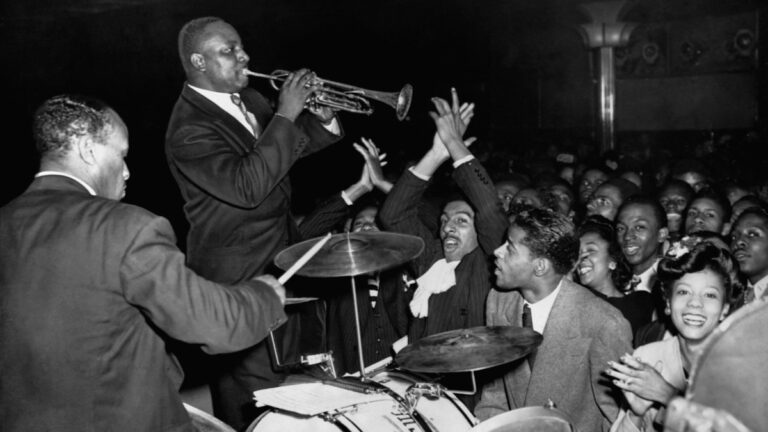
Due to the immense popularity of many Harlem Renaissance musicians, jazz clubs began to open across Harlem. The most famous is the Cotton Club, but other venues such as the Alhambra Ballroom and Apollo Theater also became staples of the Renaissance.
When talking about the Harlem Renaissance, it is important to recognize the contributions made to literature as well as music. W.E.B. Du Bois, a prominent civil rights activist and author, published many books describing the Black experience. Others such as Langston Hughes and Zora Neale Hurston were also able to describe the experiences of Black Americans in the United States.
The widely accepted theory about the Harlem Renaissance is that it occurred because of the newly-found freedoms granted to African-Americans.
Over the next few years, NYS Music will take a look at the Harlem Renaissance, including notable musicians who brought to light the explosion of arts and music in Upper Manhattan, one century ago. Stay tuned for weekly articles taking a look at the history of the Harlem Renaissance and how the impact of the cultural awakening is still felt today.
Music is a force, a force that triggers emotions, not unlike religion. This force can elicit elation. It can contribute to sorrow. As a social experiment, a concert reveals emotions across that spectrum. It is the rare occasion, however, that a venue can do the same. Enter, Levon Helm Studios in Woodstock.
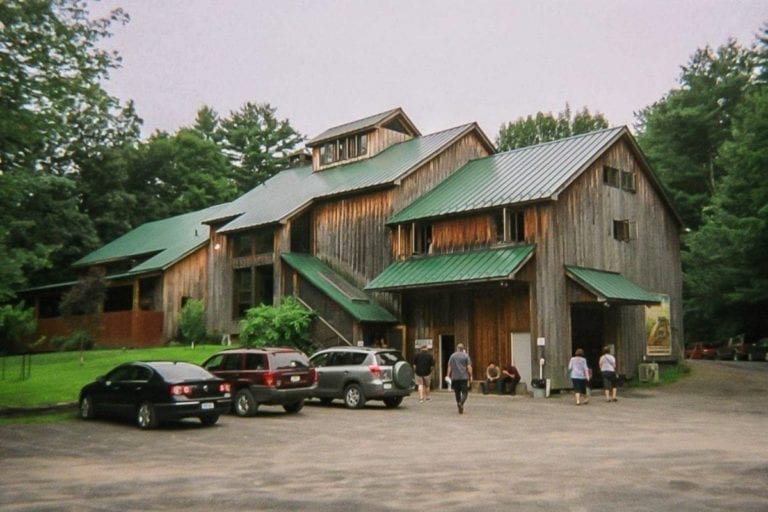
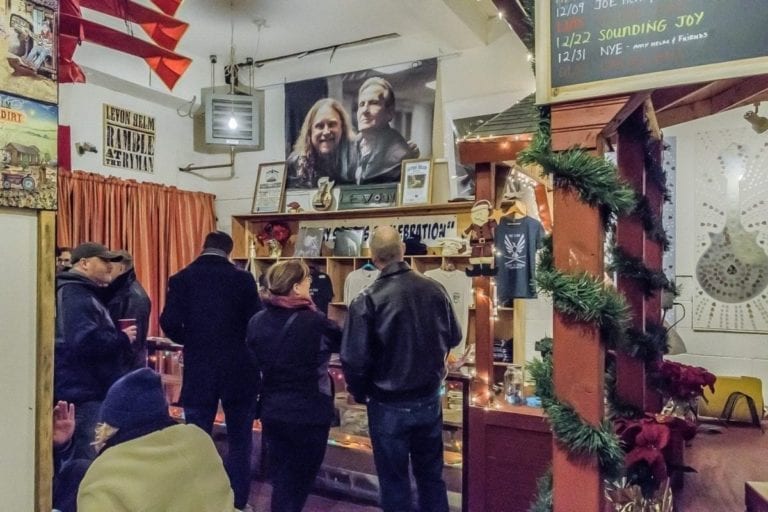
Affectionately known as “The Barn,” Levon Helm Studios is a nondescript building set off a country road on the outer edges of Woodstock. This building has an air of reverence about it as soon as you approach it. Once inside, its easy to get the feeling of being inside a church. High, vaulted ceilings with impeccable woodwork force one to take in the architecture. It’s not uncommon to see first-timers looking around with jaws agape at the craftsmanship that went into building this structure.
The story of The Barn has its origins as the home and recording studio of Levon Helm. Helm was best known as the drummer for The Band but also took turns acting in such films as “Coal Miner’s Daughter,” “The Right Stuff” and “Feeling Minnesota” among others. The Arkansas-born musician grew up with minstrel shows and wanted to recreate that in his home studio. What became known as The Midnight Ramble was born out of necessity, but also out of a love for the informal feel of a simple jam session. Helm’s Midnight Rambles began in 2004. Word spread in the musical community and Helm and his Midnight Ramble Band (guitarist/mandolinist/fiddler Larry Campbell, guitarist Jimmy Vivino, Helm’s daughter Amy and Campbell’s wife Teresa Williams) began attracting the likes of Elvis Costello, Phil Lesh, Dr. John, Emmylou Harris, My Morning Jacket and Norah Jones to this tiny Catskills hamlet two hours north of New York City.
When Helm died in April of 2012, his final words to Amy and his manager Barbara O’Brien were, “Keep it going.” And keep it going they have. The Midnight Rambles occur regularly and provide an opportunity for musicians of Helm’s ilk to “keep it going.”
The magic that occurs at The Barn isn’t just with the music and the venue. What is truly magical about this venue, is experiencing the reactions of first-time attendees. NYS Music photographer Brian Cornish attended his first Ramble with his brother in 2006. The joy in his retelling of his first Ramble is consistent with so many others who have experienced this jewel of a venue:
It was November of 2006. My brother had heard about these house parties in Woodstock where you could buy a ticket and listen to Levon Helm sing and play, and the kicker was that it was in his own home/studio. We decided to go. Following the opening act, with no fanfare and no announcement, Helm and his band emerged and walked down a hallway to the studio. He preferred to set up on stage left, to be able to look directly at all of the other musicians and catch their eye, read their moves, maybe give them a cue or a nod, or maybe grin and point a drumstick at someone approvingly at the end of a song. Due to this atypical arrangement, we astonishingly found ourselves seated at his left elbow, six feet or so from an American treasure. With a brief flourish on the snare drum, he set the tempo, the horns kicked in, and the band followed. “Boards on the window, mail by the door…” The entire crowd was immediately dancing, tapping their feet, or singing along. It was magical. It still is.
Cornish’s proximity to Helm during his first Ramble is what makes this venue so unique and keeps people coming back. You’re not attending a concert at Levon Helm Studios. You’re celebrating music in a pure listening room with friends, friends you know and friends you just haven’t yet met. The capacity is around 200 and there isn’t a bad spot in the house. It lends itself to chatting with your neighbor between songs and the chance of chatting with any of the musicians at some point during the night.
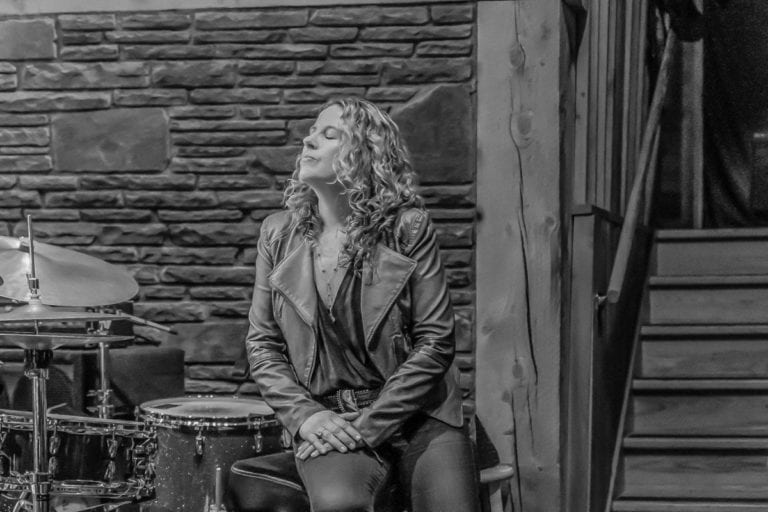
Amy Helm taking in a performance at “The Barn”
Cornish continues with another Ramble experience:
One time, I and a few friends were seated behind the keyboards so we could look across the room at Levon. A man emerged to the right of my friends, stood at the end of the row, nodded hello, and exchanged small talk between songs in the semi-darkness. After ten or fifteen minutes, he said, “It’s been nice talking to you folks, but I have to go to work.” Only when he was under the stage lights and grabbed his guitar did we realize we’d been chatting with John Prine. Unannounced drop-in guest appearances and unexpected moments are hallmarks of many Midnight Rambles.
Cornish has made it his mission to introduce as many of his music-loving friends as possible to this experience by gifting a ticket to a first-timer as long as the next time that person goes, he or she brings another first-timer and does the same. This writer was the recipient of one such gifted ticket to a Ramble. We were joined by two other music loving friends, Dan Frieden and Rob Bishton for a performance of Amy Helm and Friends on Black Friday 2015. What made this performance so incredibly special was the appearance of Donald Fagen of Steely Dan sitting in for a performance of his band’s “Black Friday.” The fact that this musical legend was mere feet away from us during this performance was not lost on us that night and is the stuff that will be remembered for a lifetime. Two new converts to the Church of Levon were made that night.
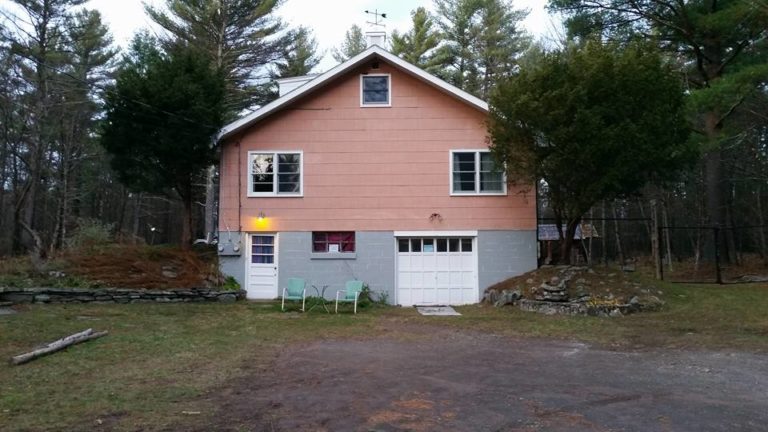
A visit to Woodstock isn’t complete without stopping by Big Pink, the house rented by the members of The Band as they killed time waiting for Bob Dylan to recover from injuries suffered in a motorcycle accident in 1966. Dylan lived in Woodstock at the time and the members of what would become The Band were members of Dylan’s backing band. Band members Rick Danko, Richard Manuel and Garth Hudson lived in this rental in the town of West Saugerties and spent time in the basement recording covers and Dylan originals. The time spent at Big Pink, so named for the pink siding that adorned the house, solidified The Band’s sound and resulted in the oft-bootlegged and finally released album The Basement Tapes in 1975.
Each time this writer visits Levon Helm Studios, a visit to Big Pink is on the itinerary, as well as a stop at Catskill Mountain Pizza Company, a pilgrimage if you will. It will be left to the reader as to how to find this legendary abode. Anyone familiar with the music of Dylan or The Band can feel the ghosts surrounding this property. Frieden described it this way:
There is an energy at Big Pink. I had never been a big Dylan fan, but being on a property that sparked so much musical creativity made me wonder what it is that really flipped the artists’ “on” switch.
A recent visit to Woodstock for a performance by Joe Henry and Rose Cousins on December 9 indoctrinated April and Enzo Cacciatore to The Barn and Big Pink. Witnessing each of them as they took in the entire experience is what sharing a Ramble is all about.
The nearly two and a half hour trip from Rome took longer than anticipated due to a Nor’easter clipping the southeast section of the state. Despite that, a visit to Big Pink still occurred as did a dinner of pizza and craft beers at Catskill Mountain. Traveling through Downtown Woodstock during Christmas season, especially in the midst of a snow storm, is magical in itself. The storefronts are all decorated as is the town square. The snow cover offered an added air of peacefulness to the town that prides itself on the ideal of peace.
Adding to the family gathering atmosphere at the barn is the communal food table in the merchandise area. Each person is asked to bring a “dish to pass” just like at the potluck dinners of yore. This communal space in what would normally be a garage, is a place for all to gather, share food and talk music. Here, you’ll hear tales of past shows at The Barn or encounters with musicians. This is also the area where the artists’ merchandise is sold, often by themselves after their set, as was the case with Rose Cousins on this night. Cousins was friendly and quick with a joke with each person she dealt with.
Once inside, the Cacciatores took in every inch of the space. Enzo has been in the construction business as a licensed plumber and pipe fitter for almost 40 years. He’s a man who appreciates good construction and good music. He and his wife, April are 17-year veterans of the Poconos Blues Festival and regularly attend the Chenango Blues Festival. His pure appreciation for the architecture of the room was worth the price of admission. He commented that the room is perfectly built for acoustics.
April is a massage therapist and completely took in the arts-centered culture of Woodstock. Those who know April, know she wears her heart on her sleeve and this was clear in her appreciation of the music that she was just being exposed to on this night. She warned earlier in the day that tears may flow early and often throughout the show and while that can’t be proven, the emotion exhibited on stage between Cousins’ and Henry’s sets would lean this writer to believe that there were some tears shed.
Joe Henry is no stranger to this setting. His previous performance at Levon Helm Studios was with British folk/punk troubadour Billy Bragg in 2016 as they were touring their train songs album,Shine a Light. Henry commented during his performance that he and his band don’t view a stop at The Barn as just another tour stop. He likened it to being at a church, deserving of reverence.
The fact that a venue such as Levon Helm Studios exists in the age of big sheds and ticket brokers is a miracle in itself. The down-home flavor that accompanies the attendance at a Ramble and the pure magic of the room itself makes this venue a required trip for any music aficionado.
Upcoming shows at Levon Helm Studios include blues guitarist Carolyn Wonderland on January 19, The Weight Band on February 17, David Bromberg on March 3, the Zombies on March 9 and Jorma Kaukonen on March 10. To purchase tickets, you must visit the studio’s website. You will not receive a physical ticket, but rather a wristband with a number. The number on your wristband determines when you are allowed to enter the venue to claim your spot.
Join the congregation. You won’t regret the services, that’s for sure.
Albany-based analog funk band Oobleck has been in Capital Region faces with their funk for 16 years and they don’t plan to quit anytime soon.
Oobleck, founded in 2008, is an original, analog funk band out of the Capital Region. Known regionally for inciting dance parties wherever they land, they boast a big, in your face sound inspired by New Orleans street music. It’s a melee of horns, super heavy drums and bass and your favorite type of chunky guitar riffing that leaves your bum shaking and your face grinning.
Bass driven. Horn laden. Layered textures and dark melodies. Funk to fuel your soul. The band is made up of five members – Sam Parker on guitar, Kevin Van Genechten on drums, Scott Vorwald on tenor sax, Audrey Van Genechten on trumpet, and Josh Radigan on bass. The band meshes effortlessly to create sound that is found nowhere else in the Capital Region.
Oobleck has four albums to date – Tell Your Mom I Said Hi (2012), Rise & Shine (2013), Don’t Mistake the Barn for the Basement (2015) and their most recent Down the Rabbit Hole which released January of this year. Down the Rabbit Hole contains 11 jaw-dropping tracks that are guaranteed to immerse the listener in something fun.
The band just finished recording a new single “Purse Candy” and are hoping to release in January, with an accompanying video filmed during the recording session that is also slated to release shortly. For the LaMP show at Lark Hall, the band worked with Frankie Cavone of Mirth Films and just released a multi-cam video of the full set which can be seen below.
On November 8, the band supported LaMP on their tour stop through Albany at Lark Hall. The band has only one upcoming show left in 2024.
At 8:00pm on December 6 at UNIHOG in Hoosick Falls, Oobleck hits the stage with rock & soul group Tops of Trees. Together, these two musically powerful groups create explosively funky grooves that’ll have you moving well into the night.
Oobleck has shows in 2025 with the Sugar Hold scheduled for January 10 at Ophelia’s in Albany to kick the New Year off with a dose of super funk. Oobleck plans to be back at The Eleven (Lark Hall’s downstairs bar) in Albany in early April, and at Single Cut Brewery in Clifton Park in the spring as well. The group is working on getting back to Vermont and potentially hitting up Ithaca for the first time later this spring.
For more information on Oobleck’s upcoming shows and to hear some of their tunes, click here.
Syracuse-based multi-instrumentalist and singer-songwriter Jess Novak has announced her newest release WOMAN, slated for December.
With a sharp electric fiddle, impactful vocals, and an enrapturing sound, Jess Novak is a musical force to be reckoned with. Having performed on stages from California to the likes of New York City’s own The Cutting Room in solo, duo, or band formation, Novak has played over 150 shows each year and has an impressive count of twelve original album releases under her belt- and a published book to boot.
In addition to her own musical endeavors, Novak is the founder and presenter of the F.I.R.E. Festival, an acronym for females inspire, rock, empower. Hosted for the first time in 2022, the annual F.I.R.E. festival continues to highlight and empower female artists, musicians, and business owners across the industry.
Returning for her 13th release since debuting as an artist in 2013, Jess has announced the WOMAN EP slated for release this December. A call to action for women as well as a celebration of those who take a stand in the face of seemingly daunting odds, WOMAN will feature two original songs in addition to a surprise cover of a Taylor Swift track.
Made in partnership with the producer and engineer behind her last EP Sonrise, Justin Spaulding, WOMAN is a promising fan to the already burning flame that is female empowerment.
“I felt like I needed to capture the spirit of the [F.I.R.E. Festival] in a song, specifically combining the words ‘fire’ and ‘woman.’ I did in this song, but didn’t expect the timing to be so meaningful. I want to give faith and inspiration to women who are standing up for themselves and others all the time.”
– Jess Novak
Jess Novak has also teased a music video publication coinciding with the release of WOMAN. While no further information is available on this exciting development, you can keep up to date on all of the latest updates on WOMAN and beyond on Jess’ official website here.
The Bronx’s newest independent live music venue and community center, Bronx Music Hall, recently celebrated its grand opening as the first venue of its kind in the Bronx in over 50 years.
Located at 438 East 163rd Street in Melrose is the Bronx Music Hall, a newly constructed $15.4 million facility that celebrates the history and future of the Bronx’s vibrant music scene.
The space boasts a total of 14,000 square feet for its music hall and community cultural center made in development with the nonprofit Women’s Housing and Economic Development Corporation, or WHEDco for short. Bronx Music Hall aims to not only provide a space for local musicians to perform but to also allow creatives of all kinds to gather, create, and celebrate their works.
Constructed as a part of WHEDco’s Bronx Commons mixed-use development, the Bronx Music Hall features a 250-person capacity performance theater, a grand lobby and exhibition hall, a multipurpose room and dance studio, a green room, a recording studio and post-production room, and two adjacent plazas with amphitheater-style seating for outdoor performances.
Designed to serve an estimated 20,000 visitors annually, the center will offer live music, dance, and spoken word performances, classes in music and dance, theater workshops and productions, a youth orchestra, film screenings, art exhibitions, community showcases, and more.
“The opening of the Bronx Music Hall marks a new chapter in the cultural and economic renaissance of the South Bronx. This project embodies our commitment to supporting vibrant, inclusive communities through strategic investments in the arts and creative industries. This new venue will not only celebrate the borough’s incredible musical legacy but also serve as a catalyst for job creation, tourism, and long-term economic growth.”
– Hope Knight, Empire State Development President, CEO and Commissioner
Beyond displaying the skills of the Bronx, the BMH plans to foster the next generation of creatives within the borough through educational and cultural partnerships to inspire community engagement and the pursuing of careers in the arts.
In addition to the facility’s new endeavors, it now provides WHEDco’s Bronx Music Heritage Center a bigger and better space to call home. Founded in 2010, the BMHC preserves and promotes the rich musical history of the Bronx while cultivating and reviving the borough’s music scene today.
“Over decades the Bronx produced more popular music than any place in our country for the simple reason that different cultural traditions lived alongside one another… The Bronx Music Hall will spotlight the sounds of new Americans from around the globe, as well as Bronx born artists like Prince Royce, Romeo Santos, Jennifer Lopez, Cardi B, French Montana, and Samara Joy.”
– Nancy Biberman, Founder of WHEDco and President Emerita
BMHC highlights the evolution of the Bronx as a people and how periods of successive migration introduced distinctive sounds to one another, evolving into entirely new genres such as hip-hop, which saw its inception in the 1970s within the borough’s communities.
With their new space and resources at hand, the BMHC will continue the Bronx’s history of creative innovation with free cultural programs and free or low-cost music and dance classes for folks of all ages.
This giant step forwards in the Bronx creative community was made possible by a series of grants awarded to the WHEDco from the New York City Regional Economic Development Council, I LOVE NY’s Market New York program, and the National Endowment for the Arts.
To learn more about what the Bronx Music Hall has to offer, how to visit, and events to attend, be sure to check out their official website here.
Ari Joshua is on a mission to release 24 songs in 2024. Over the course of the last ten months, the South African-born, now American-based songwriter has been consistently releasing these singles, some of which contain multiple tracks and several stand-alone remixes. Each release features a unique line-up of all star musicians, including members of Trey Anastasio Band, Medeski Martin & Wood, and Joe Russo’s Almost Dead.
Photo by Joshua Hitchens – Bolt of Sunshine Photography
I had the wonderful opportunity to chat with Ari who shined a light into his musical process, spoke on his luminary collaborators and opened up about navigating the music industry and the world he has dedicated his life to.
“I’m super honored to be at the point in my career where I can share all the art I’ve been making. When I think about my art and the message that I want to give with it – something from the soul – it reminds me of creating an organic garden, planting seeds, and harvesting foods. If you scale it out one can imagine being an artist today is like sending a rocket ship or a satellite into orbit. I feel like once you’re in orbit as an artist, or once your seeds are harvesting fruits, you can feel like you are achieving your job – each note, each song, has the potential to propel things further. In a way all the legends are in orbit. In order to get up there, to resonate with listeners, you need a tremendous amount of fuel, and it’s a full time pursuit to manifest that.”
That need to resonate through the music inspired Ari to found The Music Factory, a Seattle-based music school giving lessons to hundreds of kids each week. He is a huge proponent of music education and has continued to grow the school since its inception. Ari has found himself at a point where he is able to take a step back and shift focus on his career being an artist and performer. “After years of juggling duties and taking continuous small steps forward I’ve found myself at a balancing point investing more time into creating meaningful and soul-fulfilling art.”
Left to Right: Medeski, Martin & Joshua – Photo by Chris Bittner
Ari’s first three releases of the year, “Dragon’s Layer”, “Country Stroll” and “Elephant Walk,” feature John Medeski and Billy Martin. These Woodstock, NY recorded country and jazz influenced instrumentals are defined by their laid back grooves and catchy melodies. Ari has spent his life studying diverse artists across all genres and setting the foundation for himself so that he can be both over prepared yet able to let go of everything in the moment. When asked about his process of going into the studio with the high caliber collaborators he shares his body of work with, he makes it clear that he wants to allow the space for them to shine and be who they are. It’s their unique voice that he wants captured in the studio. “There’s a certain kind of magic that comes from not knowing what’s going to happen and knowing that the musicians you’re working with are at a certain point. You’re free to trust the process and provide the space for them to do what feels right, and speaks for them.” These songs feel like an extension of the MMW universe – Medeski, Martin & Joshua. “Country Stroll” and “Elephant Walk” showcase tasteful soloing by all three musical juggernauts.
Ari holds the artists he has worked with to the highest regard. No collaboration is the same. No circumstance is the same. Improvisation usually takes the wheel. When working with artists on complete ends of the spectrum, you have to be able to adapt. Some of his collaborators prefer being sent audio and charts prior, while others only care about the moment once they’re all together. “Each person and each group of people that I get to work with is a totally different situation.” He compares this to making a child. “We’re going to go in there [the studio] and we’re gonna mix up our DNA, ideally with good intentions and love, and ideally a good level of pleasure [laughs]. And we’re going to come out with something that’s its own thing – a new creation.”
Ari’s songwriting knows no bounds. There is truly something for everyone. This is evident with the release of “Elon’s Musk”, his psychedelic, Tipper-inspired electronic single released under the moniker Guitari with ill.gates and Cory Cavazos. Ari’s follow up, “Rare Groove” once again shifts genre and lineup entirely. This funk, R and B-inspired instrumental features Skerik, Grant Schroff and Delvon Lamarr. A recurring theme in Ari’s song writing is his ear-worm melodies, his focus on improvisation and the prominence of organ players. “I am obsessed with really great organ players. There’s just this match made in heaven for me. I really studied that stuff so heavily and I just have this natural gravitation towards it.” “The Clinic” and “Audio Bicycle Day” were also released with the same ensemble. These singles can be categorized by their funky, yet more sinister progressions and feature fantastic improvised solos by all. “Audio Bicycle Day (Suncatchers Version)” is a unique take on the same song but recorded with Joe Doria and Brad Gibson. The Suncatchers Version has a more whimsical, airy quality. He continues this onward trend of eclecticism with his release of “One Dub”, a reggae-inspired instrumental groove that features John Kimock, Andy Hess, and Eden Ladin. There are four remixes of “One Dub” currently available on streaming services.
Ari has also worked and recorded alongside Russ Lawton and Ray Paczkowski of Trey Anastasio Band. When talking about his unique songwriting approach when working with different artists, he spoke about how Russ would send drum recordings to Trey over the phone, and then Trey would write parts based on Russ’ recordings. This is the approach that Ari wanted to take in the studio, and he had Russ send him a bunch of demo ideas prior to their session in that spirit. These sessions, which originally took place during the pandemic, resulted in over 25 songs, many of which have yet to be released. “Starlight Mountain” is the first release of the year that features Ari on lead vocals. These emotionally delivered vocals, along with his well-crafted distorted guitar solo are extremely powerful and moving. “The TriCeraphClops” was released with the same all star lineup – dubbed the RAAR Trio. This funky and crunchy instrumental showcases the band’s virtuosity and their chemistry as a unit.
Left to Right: Paczkowski, Joshua & Lawton – Photo by Ben Collette
What you see of Ari’s art is just the tip of the iceberg – “almost 90% of it is underwater.” He relates each piece of music to a blank canvas that he’s constantly revisiting, which could take years, if not decades to complete. “Tagine,” recorded with Marco Benevento and Joe Russo over 15 years ago, is just now seeing the light of day. This psychedelic soundscape takes the listener on a sonic journey through the unknown. It exudes imagery of exploring a distant alien planet.
With no slowing down in sight, Ari has recently announced a brand new supergroup, The All’s Eye, consisting of Ben Atkind (Elephant Proof) and Kris Yunker (Bearly Dead) formerly of Goose. The trio fuse boogaloo funk, soulful organ grooves, Afrobeat, bluegrass, and alternative rock. Fresh off a recording session at Carriage House Studios, the trio is set to release a series of singles over the coming months. They just announced their first official run, four dates on the East Coast and will be sharing their latest single “West Hill Road” on November 20th. When taking the deep dive into Ari’s catalog, you may find yourself pleasantly lost in a rabbit hole of musical and auditory goodness – a yellow brick road of art and sound.
Left to Right: Atkind, Joshua & Yunker – Photo by Mclee Mathias