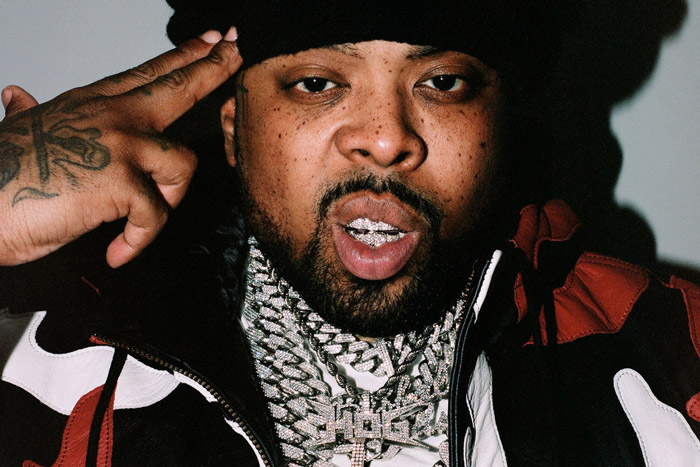
In an ode to hip hop, DJ Premier has released the third edition of his “Beats That Collected Dust” series via his self-founded To The Top (TTT) record label imprint. “I wanted to have a label that would keep the street, gutter stuff in its own lane, one where I could release anything I wanted, how I wanted and where I wanted,” Premier revealed to HipHopDX.
Beats That Collected Dust Vol. 3 is the first edition in 10 years, completing the trilogy of classic hip hop beats amid hip hop’s 50th anniversary celebrations.
The legendary scratch DJ remains continues to evolve and reinvent himself. He was just nominated for a Latin Grammy Award for his collaboration on “Le Pido A Dios” with Feid. Later, he starred in a time-traveling, five-decade spanning commercial with Don Toliver which MTV used to segue-way into the recent VMA’s 50th Hip Hop Anniversary tribute performance.
However, despite his contemporary success, it’s apparent that ‘Preme remains dedicated to hip hop in its purest form. After all, the Grammy-winning producer has been behind the boards for some of the rap music’s historic records. And ultimately, Beats That Collected Dust became a fan favorite due to the series’ personal nature. After all, these are records that DJ Premier produced specifically for other artists that did not make album cuts.
MVW and Valee continue their dynamic association with the release of their new single, “Tailor Swift.” A play on the name of pop superstar Taylor Swift, this latest record arrives as MVW and Valee gear up for the release of their debut joint-album, Valeedation. Set for release on October 20, the slowed-down, classically inspired tune follows a similar formula as the pair’s prior collaborations on MVW’s last two albums, CLASSIC$ and Connections.
In similar fashion, MVW juxtaposes Valee’s nonchalant delivery with refined instrumentation blending into a sound coined as “museum rap.” On “Tailor Swift” Valee rides MVW’s choppy, slowed-down production while expounding on his luxury-filled wardrobe. In usual fashion, Valee song title are often a precursor to a witty metaphor. Rapping, “white Gucci pants same color Taylor Swift. Yeah, getting measured in Gucci b*tch my tailor swift.”
While Valee’s quick-witted one liners feel improvised, his meticulous approach to music and fashion has led to a cult-following, as he’s always provided a alternative sound and delivery to his contemporaries.
Throughout my career I’ve been known to tailor my own clothes because I like them to fit a certain way. They have to be precise. I approached making this song the same way. When MVW sent it to me I knew it was the one.
Valee on “Tailor Swift”
Meanwhile, with each record, MVW aims to transport the listener into a world of musical radicalism. In effect, the two idiosyncratic artists serve a similar musical purpose, albeit with different approaches.
The underlying sound and flow in Tailor Swift is essentially avant-garde, compounded by the depth of the entendres and visual metaphors, this track transports the listener into a world of radicalism.
MVW on “Tailor Swift”
The release of “Tailor Swift” arrives following the summer drops of “Could Be” and “Pistachio.” These two releases preluded the eventual collab-album from the frequent collaborators. While Valee remains a season vet of the hip hop world, Staten Island native MVW continues to build on a repertoire that has seen him work with other innovative rappers such as TiaCorine, Xavier Wulf, Lil Gotit, Matt Ox, Zelooperz and Anycia.
Hip-Hop and rap artist Macklemore performed an unforgettable show at Pier 17 on Friday, September 22 welcoming all ages to take part in the long-awaited “Ben Tour.”
Macklemore began his music career building his fanbase on the West Coast in 2000 as an independent artist born and raised in Seattle, Washington. In the early stages of his success, he released his first album in 2005, The Language of My World which led to the collaboration with DJ/Record Producer Ryan Lewis. The duo jumpstarted Macklemore’s music success producing the Grammy Award Winning album The Heist including fan favorites, “Can’t Hold Us,” “ThriftShop,” “Same Love,” and “White Walls.”
Macklemore carved a huge name for himself in the rap community and is best known for his ability to storytell and create introspective lyrics that address social issues of consumerism, addiction, homophobia, and personal attributes that connect to his life growing up in Seattle.
DJ Nick Beeba opened the show by stating, “I grew up in Seattle going to Macklemore’s shows in middle school, to just be here as an opener is truly amazing.” Beeba played remixes including hit songs “Wanna Be a Baller,” “No Scrubs,” “Pony,” and plenty of others to get the crowd dancing and cheering awaiting Macklemore’s appearance.
The show itself was not only a concert to remember but a full-blown production with on-stage dancers, a full band crew including trombone, trumpet, drums, guitar, and keyboard plus several impressive outfit changes. With blue bedazzled capes, headbands, and sparkly vests, Macklemore does it all. During the show, Macklemore made time in between songs to thank the people for coming authentically as themselves to come have fun and spread love. “We’re here to dance, so let’s dance New York!” he stated.
To close the show, Macklemore gave a huge thanks to his band members for all the hard work that has paid off over the years. This encourages fans to come to their shows and experience something more than just a concert but a place to allow fans to be authentic, dance, and have a good time. The final song “Can’t Hold Us” encouraged the crowd to jump, dance, and shout, “We put our hands up, like the ceiling can’t hold us,” leaving the concertgoers in awe and ecstatic to see when Macklemore would visit New York next.
In honor of hip hop’s 50th anniversary and lasting culture, Genius brought a return to their “IQ/BBQ” summer showcase. In the first edition of the annual event since Covid, hosts Miabelle and Jacques Morel took on the role of emcee, with DJ Saige, DJ Stacks, RNB House Party and DJ S’Wit serenading the crowd with memorable hip hop tracks.
Held at Queens’ Knockdown Center, the day-long festivities provided a fitting end-of-summer experience for guests to enjoy. While in the midst of a year-long celebration of hip hop, IQ/BBQ expertly combined the best of hip hop and urban culture to provide all-around good time.
Guests gather at center stage at IQ/BBQ. Photo by Ki Steiger-Dahl
In light, Knockdown Center’s large terrain set the stage for a diverse live music experience, allowing for the ambience to differ with each change of location. Consequently for performers, it left the crowd scattered. As guests warmed up to performances by opening acts Rich Greedy and Wynne, their attention split between a number of enjoyable experiences at Genius IQ/BBQ.
IQ/BBQ Brought the Culture
After all, aside from a rich lineup of acts, IQ/BBQ offered experiences like the So Fresh, So Clean Shop. Presented By Paco Rabanne 1 Million, attendees had the chance to snag free barber shape-ups by Groomed Guys, along with sneaker cleanings by Fresh Kicks NYC.
Photos by Kia Steiger-Dahl
In like manner, the outdoor Rap Cafeteria, presented by Showtime’s The Chi, created a true backyard barbecue vibe for Genius. This fun space featured picnic tables with designs that paid homage to iconic cities and eras from hip-hop’s first 50 years. Along with games, food from some New York City’s best food trucks and of course, great music.
IQ/ BBQ’s Rap Cafeteria offered delicious eats from some of New York City’s best vendors
Meanwhile, VIPs enjoyed sips of PATRÓN EL ALTO in the VIP Genius Lounge, which was adorned with famous song lyrics featuring PATRÓN.
Photos by Kia Steiger-Dahl
Performances
As the acts warmed up so did the crowd. However, New York City’s “too cool for school” attitude reared its head, as less experienced and less-known performers struggled to captivate the crowd. Yet as the evening waned and guests had eaten and drank their fill, the center stage began to heat up. Performances from Luh Tyler and Lola Brooke got the crowd going. While Armani White showcased true stage presence and talent in getting a stubborn crowd to come alive.
Photos by Spicy Rico
As a result, a now-perked up and fully gathered crowd waited patiently for the headliners, Clipse, to make their appearance. After a near hour-long wait Pusha T dawned the stage, feverishly spitting out lyrics from his Grammy-nominated release, It’s Almost Dry.
Pusha T came out to a very engaged crowd. Photo by Kia Steiger-Dahl,
After performing records performing a slew of solo tracks, he brought out his brother Malice as they performed one of their classic album cuts, “Popular Demand” to a now-fully engaged crowd. The energy levels remained high throughout their set as they ran through a number of hit records including “Mr. Me Too,” and “What Happened to That Boy,” before ultimately performing a run of deep album cuts and closing out with one of hip hop’s classic records, “Grindin’.”
Pusha T and No Malice are in the midst of a reunion 14 years in the making. Photo by Kia Steiger-Dahl.
As Pusha T and Malice performed their last record, the duo thanked the crowd for repeatedly showing the Virginia natives love. Just as suddenly as the electrifying performance began, it was over, and guests dispersed knowing that hip hop delivered them another memorable day.
On the picturesque summer night of August 31st, Quinn XCII (pronounced Quinn ninety-two) shifted the EDM narrative of Brooklyn Mirage to experimental hip-hop pop. While the Mirage wouldn’t be the typical host for Quinn’s self-established genre of music, the wrap-around screens and pristine sound system served his performance well. Michael Temrowski, stage name Quinn XCII, has been making music since 2011 when he was a student at Michigan State. From college house parties to venues like Red Rocks and the Brooklyn Mirage, Quinn XCII has established a loyal fanbase.
Openers Stay Over and Skizzy Mars, a New York City native, revved up the crowd. It seemed that Quinn wanted to uphold the experimental artists, to pay tribute to their creativity and brave approach to navigating the music industry. Stay Over put on a show blended with rock and hip-hop, two very loud and vocal genres. Skizzy Mars also dabbled in hip-hop with a more indie flair. Both of their sounds were celebrated by the audience.
Photograph by Shauna Hilferty
When 10:30 PM rolled around, the lights dimmed and the bass amplified. As soon as Quinn XCII stepped foot on stage, confetti cannons showered the fans in an endless spill of rainbows. People cheered and through their hands up, letting the paper wash over their faces. His most recent hit single, “Georgia Peach,” got the crowd grooving.
The setlist was a culmination of old and new music, sort of a “best of Quinn XCII” kind of performance. The audience welcomed each phase on stage with nostalgia induced excitement. Songs dating back to 2015 got the audience just as loud as his latest releases. As notes from the past wove through his set, Quinn’s personal sound was never lost. From “Kings Of Summer” by aokay featuring Quinn XCII to “The Lows,” featuring Big Sean, his reggae influenced and rap driven style remained.
Before his song, “My Wife & 2 Dogs,” Quinn stopped the show to give respect to his beloved french bulldog, Nelson, who had to be put to rest that day. Emotions were heavy on stage and respected in the audience. Each word to the song was sung from Quinn’s heart and from the chest of everyone in the audience. Behind him on stage, was a video montage of Nelson and his other pup.
Photograph by Shauna Hilferty
For one of Quinn’s newer releases, “The Lows,” New York City artist Blu DeTiger joined him on stage to play bass. With her blue sparkly bass guitar, mini-skirt, and stomper boots, Blu added a whole other energy to the song. She tossed her lengthy blonde hair back as she headbanged to Quinn’s catchy beat. The crowd received her rock addition with vim.
Quinn XCII has been around for a lot of listeners since their grade school days. To grow up with an artist is a very intimate experience. To listen to Quinn as an adult is like getting a second chance at growing up again in your twenties. His music normalizes the wide spectrum of human emotions felt while in serious relationships, during inevitable change and stagnancy, and even while getting high in the back of your high school girlfriend’s car. The show at Brooklyn Mirage was a celebration of being alive and figuring it out.
Photograph by Shauna Hilferty
As the show came to a close, the audience chanted for an encore before Quinn was able to leave the stage. He exited the stage, but the lights darkened to a deep blue. Before everyone knew it, Quinn was back singing his first encore song, “Always Been You.” The next song, “Another Day In Paradise,” was another crowd favorite from one of Quinn’s most esteemed records, “Change Of Scenery.” Before he started to sing, he spoke sentimentally to the crowd about being present: “The good shit, the bad shit – nothing is permanent, let it pass…”
Photograph by Shauna Hilferty
Quinn XCII wrapped his show with one of his youngest songs, “Candle.” His original fans bounced on their feet and swayed their arms the entire song, almost as a wave goodbye. The confetti went off once more before the show wrapped. Quinn XCII at the mirage was the perfect summer send off. As the confetti settled and Quinn and his band took a bow, the night ended on a good note.
As hip hop celebrates its 50th year of existence, its stronghold on pop-culture remains ever-present. With exhibits, festivals and documentaries in honor of the world’s most popular genre. As hip hop evolves, nuances and pieces of history tend to be lost in the shuffle. Despite reaching the rest of the world, hip hop got its education in New York City. Before the South had something to say, the boroughs battled for supremacy and laid out a blueprint for all to follow. This is what Best of The Boroughs is for. Capturing the essence of hip hop throughout all of New York’s five boroughs and neighboring towns.
The Formative Years
Emerging from the Bronx in 1973, this counter-culture movement quickly sashayed throughout New York. Meanwhile, in Queens, hip hop’s grimy and raw energy went through a maturation process, unveiling an inner-consciousness and business sense. However, Queens’ family oriented local did little to gain the rappers credibility in what remained a rugged genre. Yet, as the movement grew, the masses learned more about Queens’ underworld and the various project housing’s where terror rained. This is what makes Queens unique, there isn’t one singular identity. Much like its socio-economic makeup, the rap scene emerged as a diverse oasis where mainstream, conscious and hardcore all meet.
Queens is home to a diverse mix of hip hop
Manhattan keeps on makin it, Brooklyn keeps on takin it Bronx keeps creatin’ it, and Queens keeps on fakin’ it
– KRS One, “The Bridge is Over”
Having existed in inner-city communities for years, the genre tasted mild success in 1979 with Kurtis Blow‘s Gold single “The Breaks” giving hip hop its own break into the mainstream. However, this cultural consolidation of styles, fashion, street life and music still lacked true superstars to solidify it. Stars that transcended race and culture.
The Beginning of The Golden Era
In essence, this is where Queens made its biggest imprint on the genre, delivering hip hop its first true superstars in Run DMC and LL Cool J. For their part, the “Kings of Rock” were the first rappers to have a platinum album and to appear on MTV — paving the way for fellow Queens native Ed Lover and the culturally monumental Yo! MTV Raps. In a sense, Run DMC showed that hip hop had arrived and rappers were deserving or major label deals. In turn, LL Cool J broke the mold by showing that sustained stardom could come from a solo act and serve as a segue into other business and entertainment opportunities. With their trademark B-Boy fashion, they brought the culture and style of the street dudes to the mainstream, introducing America to a new wave of urban and youth culture.
Queens MC’s have pioneered several trends in hip hop history
In light of this, Queens’ hearty contribution to hip hop often played into the facade that the rappers were soft. With a hub of African American and Caribbean homeowners, it gave an impression that anyone from the borough was the product of some kind of suburbia. Yet the dichotomy was ever-present in the music. While the West Coast gets credit for gangsta rap, Kool G Rap of Corona, Queens is a forefather of the hardcore, street, story-telling style that made the careers of so many rappers.
Of course, Kool G Rap got his start with Queensbridge natives, The Juice Crew. The fabled hip hop collective — spearheaded by producers Mr. Magic and Marley Marl — introduced several legendary acts to the scene including Big Daddy Kane, Biz Markie and Roxanne Shante who at only 14 became one of the first women to gain notoriety as a rapper.
Equally important are the Queens-adjacent Long Island rappers who paved the way. A list that includes Rakim, Biz Markie, MF Doom, Erick Sermon, Keith Murray and De La Soul. Now these bunch weren’t from Queens but shared similar rap ideologies, and well they’re closer to Queens than anywhere else.
Hip Hop Evolves
Following behind their predecessors, the next generation of Queens rappers brought on a run of genuine, diverse and innovativeness that created a moment-in-time. Before vulgarity and street ethos became the norm in popular music, acts like A Tribe Called Quest, De La Soul (Long Island) and Pharoahe Monch offered variance to the scene. As Gangsta Rap rose in popularity, the alternative acts gave insight to the other black existence. And With their own imagination to draw upon, they helped bridge the gap between hip hop and its preceding genres. Eventually bringing about an implementation of jazz and house music into their production to mix with more easy-going subject matter.
Queens rappers brought a unique blend of conscious and gangeter music
At the same time, Queens’ version of gangster music brought about the philosophical street rapper. Hugely influenced by Islamic — but mostly — mafioso ideologies and tactics — thanks to John Gotti’s celebrity status and the cultural impact of films like Scarface and The Godfather — the methodical, tactical and observatory ways of organized crime played a large role thematically in hip hop, street music. Under this backdrop legendary acts like Nas, Mobb Deep, Capone-N-Noreaga, delivered timeless records that not only depicted the criminal life but instilled valuable life lessons. In contrast, Queens still provided the raucous, wild energy. Both Onyx and The Lost Boyz (R.I.P. Freaky Tah) brought a different frenzied element to the scene, helping showcase how truly diverse in sound Queens was.
The End Of Golden Era
However, for anyone wondering how hip hop became so violent, look no further than the end of the golden era. As popularity grew, so did the stakes. And with the glitz-and-glamour of hip hop at full-force during the late 90’s, it became even harder to blur the lines and separate the streets from the music. Coupled with the monetary benefits of pushing the envelope, name-dropping became the norm as the genre grew to be confrontational.
In Queens, this was epitomized in the beef between Ja Rule and 50 Cent. On the heels of Tupac Shakur’s death, Gangsta Rap had officially taken over. Shakur’s volatile personality and propensity for thought-provoking soundbites — along with his talent — turned him into a media darling. A Queens habitant for a period (being close with E-Moneybags and Stretch of Live Squad), his impact was felt.
Changes
In this aftermath, the Hollis-raised Ja Rule emerged as a star in the late 90’s using similar aesthetics as the now-mythical Tupac. In one of the earlier-instances of the 4th wall breaking, he was mocked by rivals for fabricating a street persona. Which was a cornerstone of something the Southside Jamaica-bred 50 Cent’s image. In essence, their beef stems from 50 feeling slighted because neighborhood hero Kenneth “Supreme” McGriff backed Ja Rule’s music over his. Someone who he felt didn’t have the pedigree of a gangster, not like him. That and many other incidents have led to the two Queens rappers loathing each other for over two decades.
Queens maintained its status throughout the 2000’s
Over the years, the two multi-platinum selling rappers have gone back and forth with numerous diss records and even a physical run-in that resulted in stabbings. As their anomisity towards one another played out in the music and on TV, it continued a trend of street politics making its way to the record label’s marketing rooms. And all in all, the wreckage left behind created animosity city-wide. Although the golden era’s major players were still at their peak, anomisity and testorone filled the air.
Nonetheless, Queens was well represented with the emergence of 50 Cent as a worldwide force. In turn, his G-Unit imprint launched the careers of Lloyd Banks and Tony Yayo. And the old garde of LL Cool J, Nas and Mobb Deep remained relevant.
Present Day Queens Hip Hop
Be that as it may, hip hop in Queens has suffered since veering away from the boom bap sound. However, rather than a host of power players, Queens has one dominant Queen in Nicki Minaj. The last decade-and-a-half saw the South Jamaica native achieve commercial success that puts her in a league of her own among women in hip hop.
But altogether, street culture has taken its toll on the rap game and Queens is no exception. The respective slayings of Stack Bundles and Chinx Drugz ended two buzzing careers set for take-off. Meanwhile, one of the faces of the new generation of Queens music, Shawny Binladen, has had trouble staying under the radar.
However, Queens still generates stars, Lil Tecca had a top 5 Billboard hit at 16-years-old and 10 overall chart entries. While to a lesser degree LoutGotCash has maintained a presence in the local hip hop scene. It may be true that the road ahead is unclear in the era of microwave music, yet the impact of Queens in hip hop is ever-present. For better or worse.
The iconic hip-hop group The Fat Boys was recently inducted into the Long Island Music and Entertainment Hall of Fame (LIMEHOF) at its newly opened museum in Stony Brook. Kool Rock-Ski (Damon Wimbley), the last surviving member of The Fat Boys, accepted the induction in person from hip-hop legend and LIMEHOF inductee Erick Sermon of EPMD. Public Enemy’s DJ Johnny Juice (also a LIMEHOF inductee) was also on hand to show support and speak about the group.
“It’s definitely an honor on behalf of the group, two members who are no longer here,” Kool Rock-Ski said. “To accept this on their behalf is huge because they brought so much to the culture. Their legacy lives on with an award like this. We got to the pinnacle of our success—and we got there the hard way, by doing a lot of hard work. We did a lot of hard work.”
The Fat Boys rose to fame in the 1980s, when they pioneered their influential beatbox style of hip-hop music. The group was from East New York in Brooklyn and included “Prince Markie Dee” (Mark Morales), “Kool Rock-Ski” (Damon Wimbley), and “Buff Love” (Darin Robinson). They would heavily influence hip-hop culture through beatbox, comedic charisma, and rhymes. The trio released seven studio albums, four of which went gold by RIAA. In addition to their music, they went on to star in three feature films: Krush Groove, Knights of the City, and Disorderlies.
The Fat Boys had several successful singles which included “Stick ‘Em,” “Can You Feel It,” “The Fat Boys Are Back,” “Wipe Out,” “Fat Boys,” and “Jail House Rap,” to name a few. Throughout their career, they participated in several tours, one of which was Fresh Fest. Despite having eventually broken up as a group, each of the three members maintained a strong brotherhood. The Fat Boys is credited as having had a strong influence on the development and growing popularity of hip-hop.
“The Fat Boys introduced the beatbox, to the world and the song they made was funky to me,” said EPMD’s Erick Sermon, himself a LIMEHOF inductee, when he officially inducted The Fat Boys on stage. “I’m honored to do this because my memories of my kitchen on that ledge were playing The Fat Boys album.”
Kurtis Blow, another LIMEHOF inductee, has a personal connection to The Fat Boys, as he produced their first two albums.
“The Fat Boys being inducted into the Long Island Music and Entertainment Hall of Fame is so well deserved,” Blow said in a written statement that congratulated the group on this honor.
“These young men were talented and passionate about their craft at a very young age. Producing The Fat Boys was one of the highlights of my career. Rest in peace, Buffy (the Human Beatbox Master) and Prince Markie Dee (Mark Morales). I will never forget you, and you are greatly missed. Continue to carry the torch, Kool Rock-Ski!”
LIMEHOF has long recognized the unique talent and contributions that Long Island artists brought to the hip-hop genre. Notable hip-hop inductees include LL Cool J, Run-DMC, Public Enemy, Eric B. & Rakim, Big Daddy Kane, Kurtis Blow, Whodini, Salt-N-Pepa, and EPMD. Earlier this year, LIMEHOF held an event to honor the 50th anniversary of hip-hop which had a strong participation and turnout from Long Island artists.
“This historic induction—coupled with our recent 50thAnniversary of Hip-Hop Concert—cements Long Island’s legacy as one of the most important regions in the country for contributing to hip-hop’s long-term success,” said Ernie Canadeo, LIMEHOF Chairman.
“Inducting The Fat Boys into the Long Island Music and Entertainment Hall of Fame is a tribute to their enduring influence—recognizing their role in shaping the genre and inspiring generations,” said Tom Needham, LIMEHOF Vice Chairman and longtime host of the “Sounds of Film” radio show, and who organized the induction event.
At the induction ceremony, Kool Rock-Ski announced that he is working on a documentary film about The Fat Boys and intends to hold the premiere at LIMEHOF when it’s released.
For more information about events and future inductions, please visit the LIMEHOF website.
About LIMEHOF
Founded in 2004, the Long Island Music Hall of Fame is a 501(c)(3) organization dedicated to the idea that Long Island’s musical and entertainment heritage is an important resource to be celebrated and preserved for future generations. The organization, which encompasses New York State’s Nassau, Suffolk, Queens, and Kings (Brooklyn) Counties, was created as a place of community that inspires and explores Long Island music and entertainment in all its forms.
In 2022, LIMEHOF opened its first Hall of Fame building location in Stony Brook Village. To date, the organization has inducted more than 120 musicians and music industry executives and also offers education programs and scholarships, and awards to Long Island students and educators.
There is perhaps nothing more synonymous with hip-hop than New York City. The genre was birthed, nourished, and has continuously evolved thanks to the five boroughs. From hip-hop’s Jamaican influence to its eventual inception on the streets of the Bronx, NYC has helped to propel hip-hop into the mainstream giant that it is today.
New York City has produced an endless list of iconic and influential hip-hop figures, from the all important Grandmaster Flash, to The Notorious B.I.G, and even to groups like Wu-Tang. The city has been a hotbed for rappers and hip-hop artists throughout much of the genre’s history. Acts like Nas, Jay-Z, 50 Cent, and Nicki Minaj have not just become rap superstars, but have elevated to some of the biggest names in all of music.
NYC Rapper Nas performing
NYC DOMINANCE
Part of the aura and mythos surrounding New York is not just the artists that are associated with the region, but also the way that the city itself has influenced the music. Having originated in the Big Apple, hip-hop was inherently New York. From its embryonic stages in the ’70s to its “gangsta” personality in the ’90s, the genre’s identity has been linked to NYC for much of its lifespan.
For close to 30 years the “sound” of hip-hop was the “sound” of New York. Characterized by confident flows, lyrical versatility, classic samples, and an atmosphere of authenticity, “East Coast Rap” was the ultimate standard.
Historically, hip-hop acts from the city have dominated, whether it be commercially or critically. Seven of the top 25 highest selling hip-hop albums belong to New York artists, a mark higher than any other city . Additionally, of the twelve rappers/hip-hop artists currently in, or scheduled to be inducted into the Rock & Roll Hall of Fame, seven come from NYC, with two more representing Long Island.
Hip-hop pioneer Grandmaster Flash
The popularity and success of hip-hop in NYC led to the genre’s diaspora throughout much of the United States. By the mid to late ’90s Los Angeles, Chicago, and Atlanta were all major players in the scene. Artists like Tupac, Snoop Dogg, Outkast, Lil Wayne, Common, etc. all had tremendous success being outside of NYC, however up until the last 10-15 years it was still the Empire City that really moved the needle.
A CRUMBLING EMPIRE
Despite NYC’s hip-hop pedigree, the “East Coast” sound that made it so influential has become quieter and quieter in recent years. Instead, influences of trap, drill, cloud rap, and even reggaeton have filtered into the city to create a diverse, intricate, and hard to pin down sound from many NYC artists. Even with the likes of rappers like Joey Badass, Fabolous, and Roc Marciano, the often grimy, word play heavy, and sample laden sounds of the ’80s through early 2000s East Coast rap has largely dissipated from the city.
As NYC has lost its sound, other cities have refined theirs. Today, avid hip-hop fans will easily be able to identify where certain artists are from within seconds of hitting the play button. Acts like 21 Savage, Lil Baby, and Migos all have a distinct sound and atmosphere that connects them with Atlanta. Other artists like GloRilla, Moneybagg Yo, Key Glock, and the late Young Dolph boast specific features and elements that represent Memphis.
On Complex’s 2023 list of “The Best Rap Cities Right Now”, NYC sat at #2, yet there was no city with more of a musical or even social disconnect between its most prominent artists. In terms of musicality, and apart from maybe an accent, there is very little that artists like Ice Spice, A$AP Rocky, Fivio Foreign, and Nicki Minaj have in common.
Nicki Minaj
“As a whole town we’re losing… I’m talking about the new New York, who do they have to look up to? We’re losing identity and it’s crazy because we was the treadsetters,” Queens legend N.O.R.E. said in a 2013 interview with DJ Vlad.
Not only has there become a stylistic schism in NYC but there has been a long standing adversarial attitude amongst many of its biggest artists. Of course there’s the well publicized beef between Jay-Z and Nas, then there’s 50 Cent taking on all of NYC, and in the 2010s it was Nicki Minaj and Cardi B. While other places were fostering and supporting new sounds, promoting upcoming artists, and building together, many New Yorkers were divided.
“The older rappers that were already situated in the city didn’t pay up-and-comers no mind if they didn’t sound like the old sound. Bobby Shmurda was the first one with a newer sound, a different sound, that was accepted by New York City hip-hop culture,” Jamel Robinson, the host of Brooklyn rap Youtube Channel Melz TV said in an interview with Complex.
The mention of Shmurda’s name also shines a light on another troubling aspect of NYC’s identity crisis. Controversy and tragedy have plagued the city’s biggest and brightest stars. Shmurda burst onto the national stage after the release of his mega-hit “Hot N*gga” in 2014. Proudly repping NYC, the then 19-year-old became an internet star, spawning viral trends and memes all around social media. Just two years later however, Shmurda would be sentenced to seven years in prison after facing conspiracy and weapons charges. The rapper helped to pave the way toward a renewed New York sound and image, but his untimely removal from the game left NYC without another trailblazer for years.
Bobby Shmurda
Unfortunately, the artist that would garner the same kind of attention as Bobby would also have a short run at the top. Fellow Brooklyn rapper Pop Smoke took hip-hop by storm in 2019. Blending Chicago and UK Drill with a distinctly New York attitude, the artist was hailed as one of the next Brooklyn legends. But, while renting a house in LA in February of 2020, Pop Smoke was tragically shot and killed during a botched home robbery. Once again the city was left without an artistic talisman.
Warning signs of NYC’s eventual fall from hip-hop have been there for years. Even New York’s own have referenced the influence of other locations and subgenres. In A$AP Rocky’s 2011 song “Palace”, he sings “Harlem N*ggas gon’ be feelin’ this, East Coast n*gga but how trill is this?” alluding to the Houston slang term “trill”. Rocky goes onto praise the Texas city later in the track rapping “Influenced by Houston hear it in my music, a trill n*gga to the truest, show you how to do this”.
The Harlem’ native’s love for Southern sounds helps to demonstrate the way in which New York artists have grown to accept and incorporate other attributes of hip-hop. While New York’s current sound may represent the diversity within music and the area’s population as a whole, it diverges from the hip-hop legacy that was crafted there. Without identifiable qualities and features, it makes it hard to discern a “New York City” artist from any other act.
Perhaps New York’s current lack of identity is due to the natural evolution of genres, especially in a place that has such deep roots in one specific kind of music. It may be the normal progression of any artistic originator to eventually move on from the elements and features that made it so special to begin with.
Whether it be because of a natural artistic change, tension between artists, or even just “bad luck”, New York City’s reputation in hip-hop has faded over the last 10-15 years.
Pop Smoke
UPSTATE IS THE NEW “EAST COAST”
But, as the longstanding “East Coast” sound has begun to leave the blocks of New York City, a refurbished sound has traveled upstate, seeping into cities like Albany, Rochester, Syracuse, and most notably Buffalo. These cities have partially curated their own subgenre of hip-hop, characterized by many of the same ideas, trends, and themes that helped to establish NYC as a mecca.
The most notable of these artists hail from Buffalo and are a part of the “Griselda” collective. Spearheaded by Benny the Butcher, Conway the Machine, and Westside Gunn, the three have helped to carry the torch for the “new wave” of hip-hop coming out of Upstate New York.
While they all certainly have their own individual characteristics, like Westside’s unique flow or Benny’s confident delivery, their music all shares similar themes and perhaps most apparent, a certain atmosphere. Defined by lyrics about drug dealing, street smarts, high fashion and systematic failures, their content is the musical offspring of acts like Wu-Tang, Mobb Deep, Onyx, and even early Jay-Z.
“I just do me and if you like it, you like it, if you don’t, you don’t… me being a real individual, people love that. It’s enough to build a cult following. It’s not a gimmick, this is just what we do for real, ” Westside Gunn said in an interview with Complex.
Westside Gunn
Conway’s authenticity and edge mirrors much of the sentiment that ’90s and traditional East Coast rappers were known for. The success of Griselda has helped to provide sustenance for a section of hip-hop fans who have been starving for a more gritty and dark sound.
It’s all the way left [west] from the City but the mindset is similar, very similar
It’s not just the lyrics and attitude of Griselda that calls back to the boom-bap era of East Coast rap, it’s also their production. For years the trio has enlisted the help of the producer Daringer, who has seemingly managed to hold onto all the unused samples, sounds, and techniques that legends like DJ Premier and RZA would’ve craved for.
In an era where hip-hop production is full of cheap snares, 808s, synths, overdone bass, and half-baked samples, Griselda and Daringer combine to create beautifully violent, vivid and foreboding records. Even lacking drums at times, their tracks provide a listening experience unlike anything in contemporary hip-hop.
Streaming apps like Spotify and Apple Music can easily expose lovers of Griselda to other similar artists. And after some quick research it’s clear to see that a lot of these “similar artists” come from Upstate New York.
Whether it’s Syracuse’s Stove God Cooks, Rochester’s 38 Spesh, or the plethora of other Buffalo artists, there is a blossoming of rap talent in Upstate New York. While this vibrant and nostalgic subgenre has been making waves in and amongst hip-hop heads for years, it has yet to make a big splash in the mainstream.
“It’s more about being creative, making dope music, and just solidifying my name. I don’t give a fuck about none of the other shit,” Stove Good Cooks told Peter Rosenberg in a conversation with Hot 97.
Despite the individual success of some artists in the subgenre, there has yet to be a track or album that has crossed over into popular music. Benny The Butcher gained notoriety for having J.Cole on “Johnny P’s Caddy” while Conway and Westside appeared on Ye’s Donda. With that being said there is still a disconnect between mainstream hip-hop lyricists like Cole, Kendrick, Cordae, JID and many acts from the grimier subgenre.
Buffalo rapper Che Noir
Although widespread commercial success has evaded the subgenre as a whole, the influence and inspiration that it has supplied cannot be ignored. Back in 2021 Tyler, The Creator credited Westside Gunn for “making me want to rap again”. Additionally, legendary comedian Dave Chappelle has gone on stage to shout out Griselda.
Thanks to the ground covered by some of the larger acts in the subgenre, rappers like Rome Streetz, Che Noir, Mach-Hommy, plus producers like Conductor Williams have all been able to shine. Even without large-scale commercial backing, the subgenre has provided some of the most talented and innovative artists in contemporary hip-hop.
As hip-hop celebrates its 50th anniversary, the genre has never been more accessible, popular, or accepted. While the future trends and sounds that will define New York hip-hop are unknown, it seems all but certain that artists outside of the traditional NYC metro will have an impact. Amongst a flurry of sonic changes and social media fads, there’s something refreshingly nostalgic about the style of hip-hop emanating from Upstate. Although NYC has relinquished its throne as the genre’s king, the state of New York is still an important thread in hip-hop’s cultural and musical web.
Midnight Theatre will celebrate Hip-Hop’s 50th anniversary by welcoming in Freestyle+ on Aug. 17. Recognized as New York’s premier Hip-Hop improv group, Freestyle+ is set to pay homage to the genre’s fundamentals. The performance will incorporate elements of “MCing, DJing, Breakdancing, Graffiti, and Knowledge.” Audience members will even have the opportunity to join the cast in a show-closing cypher.
Brett Beyer Photography
Anthony Veneziale, Chris Sullivan, and Andrew Bancroft, members of the Tony Award-winning production Freestyle Love Supreme, established the FLS Academy in 2018. The academy looks to foster diverse and creative voices through freestyle rap. Freestyle+ was born out of the organization and looks to fuse influences of Broadway and hip-hop culture. This month’s cast features legend Dizzy Senze, Broadway’s Aneesa Folds, and Rich Midway. They will also be joined by two-time world champion beatboxer Kaila Mullady, improv whiz Steph Rae, and DJ Gedun.
We believe everyone should be empowered to build resilience in their minds, confidence in their voice, and communities where they feel seen.
-Freestyle+
Midnight Theatre is a unique and intimate performance theater located in Manhattan. The 150-seat venue acts as both a versatile space for shows and an entertainment industry hub. Previous acts include Shoshana Bean, Andrew Barth Feldman, Laura Marano, and Raye. Midnight Theatre is also a culinary destination thanks to the venue’s pan-Asian restaurant and bar, Hidden Leaf.
Freestyle+ Celebrates Hip Hop’s 50th Birthday is on Aug. 17 at 7:00 pm. Tickets are on sale here.
Newly-minted trap producer Michael Vincent Waller has found his latest muse, teaming up with Atlanta-based Anycia for his latest single “Makin’ em’ Dance.” The Staten Island bred producer continues to broaden his musical horizons dropping this slowed-down thumper with the up-and-coming rapper.
MVW and Anycia are “Makin em’ Dance”
In similar fashion, MVW tabs Anycia as the latest to rhyme over his unique production. “Makin em’ Dance” is a slow-pace thumper. Backed by poignant piano and violin chop and thumping 808 drums that offers a spaced-out ambiance, the Atlanta-based rhymer delivers the type of easy-going and mellow flow that meshes so well with MVW’s minimalist style.
Altogether, MVW is ramping up and diversifying his releases in anticipation of another album. The California-based producer has raised his profile with two unique projects in his first two years as a hip hop producer. As of late MVW has teamed with TiaCorine and Lil Cherry for the global trap record “Tru Tru.” Not to mention a pair of summer releases with the Chicago-bred Valee as they tease their upcoming joint-album.