Central New York’s Creative Concerts have announced that Blackberry Smoke will perform at Apple Valley Park in Lafayette, NY on Tuesday, June 29. Tickets go on sale to the general public this Friday, April 30 at 10am at applevalleypark.com
Apple Valley Park is located in beautiful LaFayette, NY. With its rural atmosphere, rolling hills, and expansive fall foliage, it has proven to be a wonderful home to the annual LaFayette Apple Festival since 1973. More recently it has expanded to host other live entertainment events, including a few successful drive-in concerts in the fall of 2020.
Throughout their career, Blackberry Smoke— vocalist/lead guitarist Charlie Starr, guitarist/vocalist Paul Jackson, bassist/vocalist Richard Turner, drummer Brit Turner, and keyboardist Brandon Still—has embodied Georgia’s rich musical legacy, honoring the people, places and sounds of their home state. As the band celebrates their 20th anniversary this year, their reverence for Georgia has only deepened.
On their latest album, You Hear Georgia, the follow-up to 2018’s critically acclaimed Find a Light, Blackberry Smoke is further celebrating these roots with 10 new songs that feel like Georgia, accented by the addition of Grammy-winning producer and fellow Georgia-native, Dave Cobb (Jason Isbell, Brandi Carlile).
Over the years, Blackberry Smoke has toured with ZZ Top, Zac Brown Band, and Eric Church, while the group’s last four full-lengths reached the top 10 of the Billboard country charts, with two of these albums (2015’s Holding All The Roses and 2016’s Like An Arrow) landing at No. 1. You Hear Georgia reinforces that the band members have come so far together because they also can rely on one another for support and creative direction, no matter what the circumstances.
Having played music together for so long, it does become a sort of a telepathic thing, where we all are nodding our head at the same time, like, ‘A-ha, I know what this feels like,’ or what it should feel and sound like. That’s what makes it so enjoyable to be in a band: to play with the same dudes decade after decade. Because when you land on something that works to you, you don’t want to stop. You want to keep doing it.
Charlie Starr, vocalist/lead guitarist for Blackberry Smoke
Like previous events announced in this outdoor series, events will be socially distanced, with fans being able to purchase tickets in roped-off PODS (Personal Outdoor Dance Space) for parties of 2, 4 or 6. In an effort to create a safe experience for guests, a carefully throughout site plan has been developed allowing for temperature screenings and surveys to be conducted upon entering the event grounds.
To adhere to social distancing guidelines, all PODS are spaced a minimum of six feet apart. A variety of food and beverage options will be available for purchase. Site map and FAQ for the venue can be found at applevalleypark.com/faq
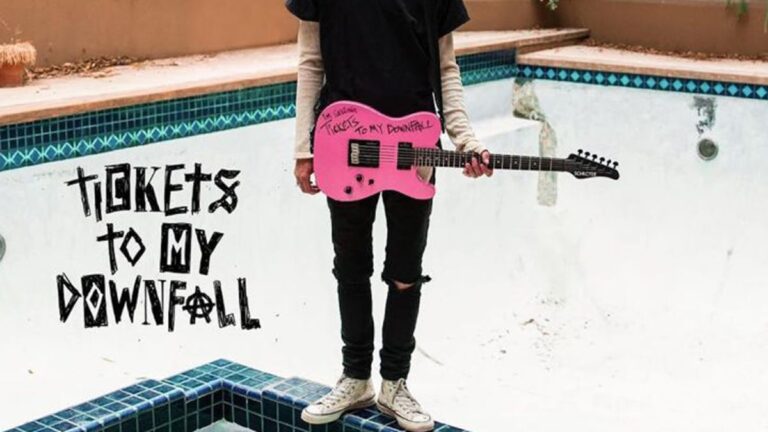
Kicking off on September 9th in Minneapolis, MN, Machine Gun Kelly will embark on a tour of the country. MGK will feature his latest hit album Tickets To My Downfall at venues for the first time since release, including fan favorites such as “Bloody Valentine” and “My Ex’s Best Friend.”
Starting Tuesday, April 27, tickets are available for pre-sale, then going on sale to the public by Friday, April 30. Everything regarding ticket sales can be found through MGK’s website, as well as the national tour dates and locations.
On September 13, Machine Gun Kelly will perform live at Central Park SummerStage, the only show of the tour to take place in New York.
The tour across the United States will come to a close on December 18, in the artist’s hometown of Cleveland, Ohio, at the Rocket Mortgage Fieldhouse.
Machine Gun Kelly’s “Tickets to My Downfall” 2021 Tour will include performances from special guests such as carolesdaughter, jxdn, and KennyHoopla.
Central Park is not only the continent’s first public park, but arguably the most iconic. Artists have traveled from across the globe inspired to paint, play and write about the 843 acres of beauty.
The sacred space is surrounded by world-renowned music venues, museums, and galleries. Harlem’s home for R&B and soul, the Apollo Theater, sits just 15 blocks north of the park while Carnegie Hall attracts world-class orchestral talent just two blocks south of it (slightly northeast of Radio City Music Hall). Rock aficionados frequent the Beacon Theatre on West 72nd street to the west of the park while sophisticated symphony-enthusiasts admire the NY Philharmonic at Lincoln Center. Hugging Central Park on the east, art-lovers marvel at the rotating and static exhibits on Museum Mile and photographers snap photos of New York’s impressive architecture.
It would be hard to imagine one of the world’s most culturally blended cities without a gathering place for people to connect with nature and community. And some of the most memorable gatherings in the early to mid-twentieth century occurred at Sheep Meadow between West 66th and 69th streets. To bookmark the tumultuous 1970’s in the drug-infused, crime-filled, disco and punk era, James Taylor played the last big concert at Sheep Meadow in front of a quarter-million people. After Sheep Meadow closed its grass to tarps, blankets and bare feet, large concerts were given a new space on the Great Lawn located mid-park between 79th and 85th street.
They don’t call it the Great Lawn for nothing. Some of the largest crowds in recorded history packed the 55-acre plot of land to “be a part of it” as Frank Sinatra would say. Maybe it’s the park’s natural setting that makes it so appealing for concert goers or it could be the central hub, but many performances in the ‘80s created a sense of hope and peace during some of the roughest years. While the NY Times called 1980, “the worst year of crime in the city’s history,” music provided a momentary lapse of chaos. In June 1980, an estimated 200,000 spectators on the Great Lawn welcomed Pavarotti and then two months later, Elton John entertained 400,000 fans.
The following September, Simon & Garfunkel reunited for their first live performance in 11 years as a duo. The free benefit concert supporting the nonprofit Central Park Conservancy was expecting around 300,000 guests, but an estimated half a million people showed up for the legendary reunion. After opening with “Mrs. Robinson” and “Homeward Bound,” Simon commented, “Well, it’s great to do a neighborhood concert,” and thanked the police, the fire department, the park administration. The subsequent live album recorded that night went on to peak at number six on the Billboard 200 chart in 1982 and was positively received by music critics and worldwide fans of NYC-based folk.
https://www.youtube.com/watch?v=5OegZZNPsKA
While the magic created that night in Central Park between the future Rock and Roll Hall of Famers sparked a world tour the following spring, the relationship between the two musicians was creatively impossible to maintain, so they decided to call it quits before ever releasing a reunion album. On the positive side, their benefit concert to support the park’s restoration and maintenance plans was reimagined by other artists on the Great Lawn for decades to come.
Another major Great Lawn milestone took place in June of 1982 as part of the “No Nukes” movement. Central Park’s Rally for Nuclear Disarmament was held on June 12, 1982, and invited chart-topping musical guests including Bruce Springsteen, Linda Ronstadt, James Taylor and Jackson Browne to play in front of an estimated crowd of 750,000. Four years later, in July 1986, a record-breaking 800,000 people were reported at the New York Philharmonic and U.S. Marine Band joint concert to celebrate the restoration and reopening of the Statue of Liberty.
In April 1990, another massive crowd of three-quarters of a million packed Central Park for Earth Day. The musical guests were the B-52’s, Hall & Oates and Eddie Brickell. That same year, the Central Park Conservancy’s SummerStage concert series was moved to Rumsey Playfield, located just off the East 69th and 5th Avenue entrance to Central Park. While not as big as the massive Great Lawn and Sheep Meadow gatherings, the SummerStage has brought world-class acts to the area for over three decades, promoting everything from Central Park preservation, Greenpeace, voter awareness and social justice.
Paul Simon returned in 1991 to a giant crowd on the lawn, but every attendance record for a single artist was destroyed by Garth Brooks in 1997 for a show better known as “Garthstock” due to the giant turnout in a city not known for country music. Dave Matthews Band would bring the free benefit show back to the Great Lawn in 2003 to support music and art education in the NYC public school system, drawing an estimated 85,000. Matthews greeted the crowd saying, “So nice to run into you in the park here, the greatest park in the world, and the greatest city in the world.”
The Black Eye Peas filled the Great Lawn in 2011 for yet another benefit concert raising over $4 million for the Robin Hood Foundation. In 2019, nearly $1 billion was raised during the Global Citizens Festival supported by headliners: Queen + Adam Lambert, Pharrell Williams, Alicia Keys, OneRepublic, H.E.R., and Carole King. The city’s incredible fundraising ability is only as powerful as the people that support the events — artists, promoters, attendees. Concerts on the Great Lawn are not only legendary due to the phenomenal performances in the epic “green lung” of the country’s largest city, but many of the concerts have transcended music and focused on the greater impact of people helping people.
What’s so special about Central Park is that you don’t have to be one of the hundreds of thousands to enjoy a memorable live music experience in Central Park. The grounds are full of talented performers from all over the world, and the magic of New York’s most iconic park is that you never know who you’ll run into playing in the paths and park entrances.
If you happened to be in the park during 2013’s installment of Jazz and Colors (a Peter Shapiro sponsored event), you might have run into an impromptu jazzy set with a touch of psychedelia. Bassist Phil Lesh, guitarist Eric Krasno, and drummer Joe Russo dropped their equipment on a random path and started playing to a crowd of zero, then a few dozen, then a few hundred. It’s moments like these that accentuate the excitement of being in the park on a fall afternoon.
Just this past September, as the leaves began to turn during a global pandemic, you might have run into Phish’s Trey Anastasio playing solo acoustic in support of the Parks Foundation’s SummerStage Jubilee. When asked the energy of a quarantined city, Anastasio remarked, “Yes, it’s weird walking through Times Square right now, but Times Square was tourists. But if you go into residential neighborhoods, I mean listen, it’s the greatest city in the world…always has been.”
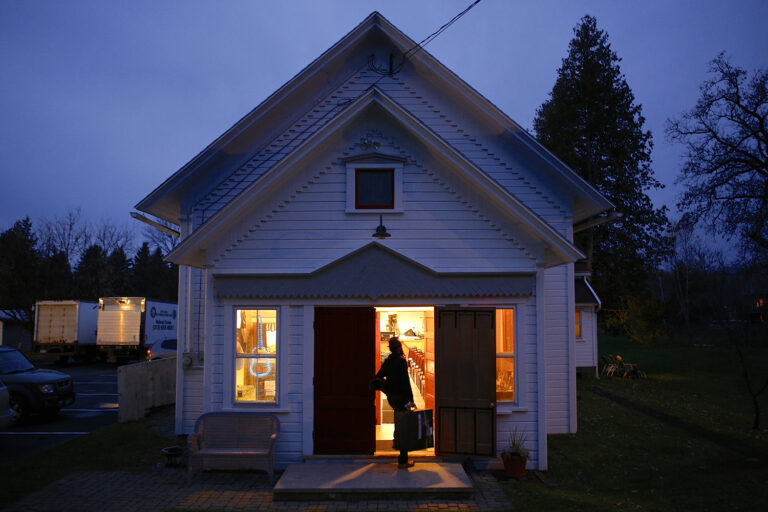
Nelson Odeon, a rustic music venue in Cazenovia, is closing after a decade of serving Central New York with live music.
Nelson Odeon
Before it became Nelson Odeon, it was Nelson Grange, until the building was purchased by Linda and Jeff Schoenfeld in 2009. They lived right by the building for about 30 years at the time of the purchase. When they first bought the venue, they weren’t sure about what they would do with the space until 2011. Their friend Colin Nekritz along with their love for music convinced them to get into the live music scene. The building is almost 200 years old and the stage was built decades ago.
Ever since its opening in 2011, the venue became a staple in the community, especially for music lovers. Nelson Odeon was a center to exhibit local, national and international artists right in the Central New York area. Some of the many musicians who performed on the stage include Beaucoup Blue,Stephane Wrembel,The Wiyos, Frank Solivan & Dirty Kitchen and more. They have hosted the Skunk Funk Festival annually since 2012. In the 10 years that the venue was active, shows were consistent and it allowed the community to come together.
Since COVID-19 put a strain on social gatherings and put a pause on live music events, Nelson Odeon’s doors have been closed for a year. The Schoenfeld’s just released a statement on the venue’s website announcing that they have decided to discontinue operations there.
The pandemic’s unpredictability has created financial damage that seems to be irreparable for them to control. The Schoenfeld’s hope that whoever buys the building will continue the venue’s legacy of live music performances.
The Small Business Administration has reopened its shuttered venues operators grant application to help allocated aid to affected venues from COVID-19. The application on the portals reopened on April 24, 2021.
This news comes from the National Independent Venue Association or more commonly known as NIVA has been one of the forerunners in trying to aid venues during these trying times. NIVA formed at the onset of the COVID-19 shutdown and it now represents more than 3,000 venues, promoters, and festivals in all 50 states and Washington, D.C. The organization is, a 501(c)6 an it is known for creating and leading the #SaveOurStages campaign, resulting in landmark legislation establishing the “Shuttered Venue Operators” grant program which will be administered by the Small Business Administration.
The decision to reopen the grant application comes from the fact that thousands of small businesses that have had no revenue for 13 months and cannot wait any longer for emergency relief. The grant application is able to be completed by this application is to be completed by Live Venue Operators or Promoters, Theatrical Producers and Live Performing Arts Organization Operators, Museum Operators, Motion Picture Theatre Operators (including owners), and Talent Representatives, who are applying for a Shuttered Venue Operators Grant (SVOG).
People who are eligible can receive up to $10,000,000 who meet certain qualifications. Entities that receive a grant will not be required to repay grant funds unless the funds were used for purposes other than for authorized purposes or unless the grantee did not use all funds within 1 year of the disbursement of the grant (18 months after disbursement if received supplemental).
Audrey Fix Schaefer who is a NIVA board member and the communications director spoke on this saying, “Simply put, this is emergency relief that can’t come too soon. Every single day that passes small businesses are receiving eviction notices, all the while $16 billion has been waiting for them. This is a lifeline for thousands of independent venues and promoters in big towns and in small communities across the nation. When you’ve had revenue losses of more than 90 percent and are in fear of going under, having the opportunity to apply for the grant is a relief, no matter what day of the week it is. We’re thankful our members won’t have to wait much longer.”
For more information on the application process for the Shuttered Venues Operators Grant and eligibility view the SVOG Application Form and SVOG User’s Guide.
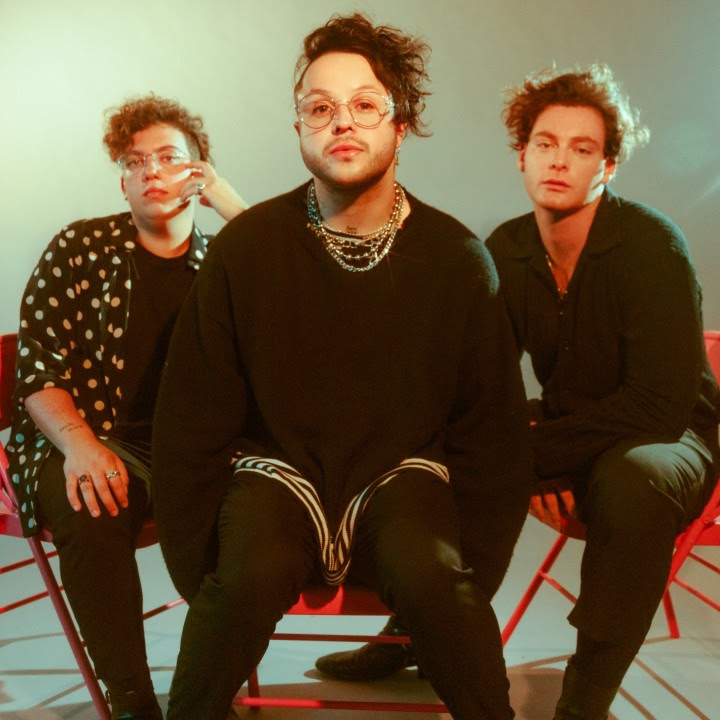
Alt-pop trio Lovelytheband alongside fellow alt-rockers Sir Sly announce their 24-date tour across North America coming this fall: Conversations with Loverboy.
Lovelytheband is riding high from the release of their 2020 sophomore album, Conversations with myself about you, that earned the group their third Top 10 radio hit “loneliness for love” as well as Top 20 hit “buzz cut” which received a remix featuring indie pop band Misterwives. Most recently, the trio joined singer-songwriter Tessa Violet for the collaborative single “Games,” a standout from Violet’s debut album.
We are in tears still from announcing a tour! we can’t wait to share a space with fans and friends and get back to doing what we all love to do.
Lovelytheband
Lovelytheband consists of vocalist Mitchy Collins, guitarist Jordan Greenwald, and drummer Sam Price. Hailing from Los Angeles, the trio solidified their place in alt music history when they broke Billboard’s Alternative Songs Longevity Record with a total of 76 weeks on the chart, 9 weeks at #1, and over 300 million streams worldwide with their debut hit single, “broken.” Tickets for the nationwide trek — which includes stops in major cities including Los Angeles (The Fonda Theatre, 11/16), New York City (TBA, 12/1), Nashville (Cannery, 12/6), and Austin (Emo’s, 12/13) are available here, other dates include:
TOUR DATES
11/12/21 – Sacramento, CA – Ace of Spades 11/14/21 – San Francisco, CA – The Regency Ballroom 11/16/21 – Los Angeles, CA – The Fonda Theatre 11/17/21 – San Diego, CA – Observatory Northpark 11/19/21 – Denver, CO – Summit Music Hall 11/21/21 – Kansas City, MO – Truman 11/22/21 – Minneapolis, MN – Varsity Theater 11/24/21 – St. Louis, MO – Delmar Hall 11/26/21 – Columbus, OH – Newport Music Hall 11/27/21 – Detroit, MI – St. Andrews 11/29/21 – Boston, MA – Paradise Rock Club 12/1/21 – New York, NY – To Be Announced 12/4/21 – Washington, D.C. – 9:30 Club 12/6/21 – Nashville, TN – Cannery 12/7/21 – Atlanta, GA – Masquerade (Heaven) 12/9/21 – Orlando, FL – House of Blues 12/10/21 – Fort Lauderdale, FL – Culture Room 12/13/21 – Austin, TX – Emo’s 12/14/21 – Houston, TX – White Oak Music Hall 12/17/21 – Albuquerque, NM – Sunshine Theatre 12/18/21 – Phoenix, AZ – The Van Buren 12/19/21 – Anaheim, CA – House of Blues 12/29/21 – Seattle, WA – Showbox 12/30/21 – Portland, OR – Roseland Theater
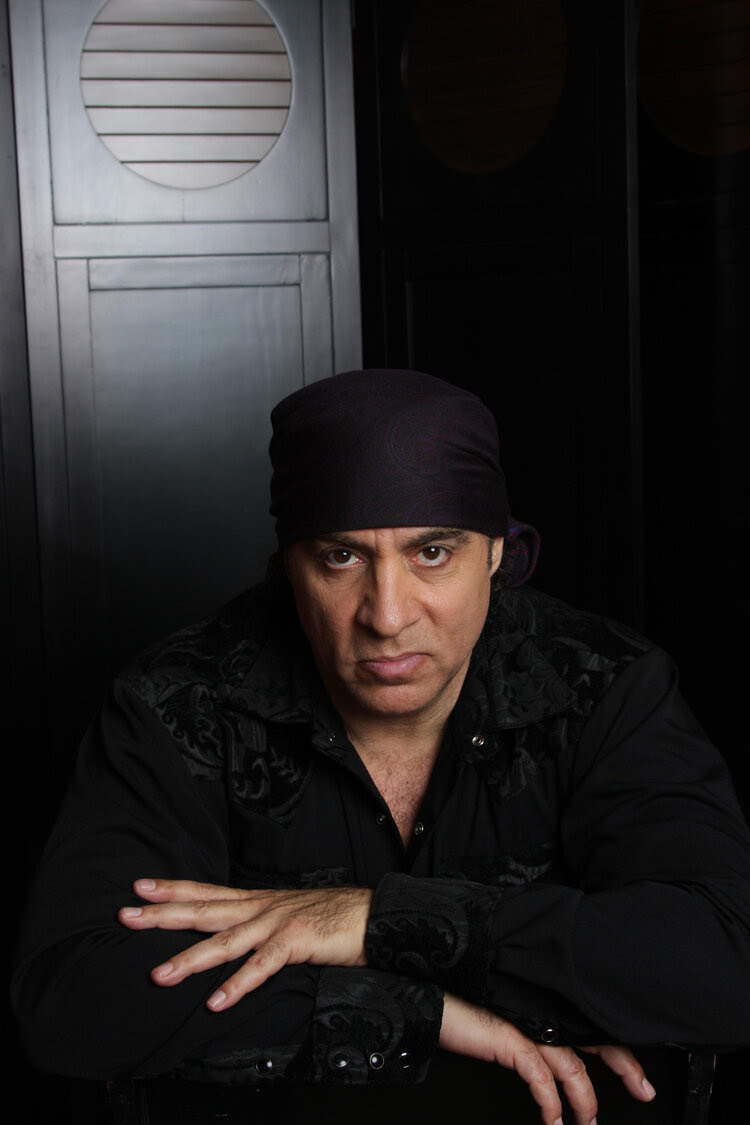
Governor Ned Lamont today announced that the State of Connecticut, through the State Department of Education, is partnering with TeachRock to launch an innovative, standards-aligned arts curriculum in schools statewide that empowers teachers to engage with students using the history of popular music and culture.
TeachRock works with participating school districts at no cost, fostering a classroom environment where lesson plans incorporate culture and music into history in a way that resonates with students. Presented by Rock and Roll Hall of Fame legend Steve Van Zandt’s Rock and Roll Forever Foundation, TeachRock has worked directly with districts and schools in California, New Mexico, New Jersey, and New York over the past several years. This spring, Van Zandt has created “Little Steven’s Virtual Classroom Tour” that utilizes Zoom to provide classrooms with a visit, as well as fundraise for the foundation.
Research has shown that knowledge of and participation in an arts education, especially during the formative years, can aid in the development of students as culturally responsive, compassionate, creative, and contributing members of society. TeachRock’s development was facilitated by experienced educators to weave arts and music history through core subjects such as English and Social Studies. The lesson plans go through the intersection of social, political, and economic forces within popular culture and how music has shaped and reflected those forces across the centuries.
“When I was a teenager, school wasn’t reaching me,” TeachRock founder Steven Van Zandt said. “It didn’t speak to my needs or interests, and I saw no future in a society I was supposed to be a part of. Then the Beatles saved my life. Rock and roll and soul. The arts gave me the confidence to forge a path in the world… We need to reach the part of their brain that responds emotionally and instinctively, that uses imagination rather than facts and specifics. Something that makes them relax and feel more comfortable about the very process of education. And right now is when kids need us the most.”
“Especially during this time of a pandemic, we must give educators the tools they need to innovate from the inside out to engage students in creative ways,” Connecticut Education Deputy Commissioner of Education Desi Nesmith said. “TeachRock’s unique curriculum does that by connecting students to history, culture, and human experiences while positively impacting their social-emotional development.”
Each year, districts can apply to participate in the TeachRock program. The number of TeachRock schools will expand annually across Connecticut, implementing the curricula into classes and online libraries.
TeachRock was launched by Little Steven and the Founders Board of Bono, Jackson Browne, Martin Scorsese, and Bruce Springsteen, TeachRock.org has provided free, standards-aligned resources to help teachers, students, and families succeed for more than a decade.
The Brooklyn Film Festival (BFF) has announced its 24th annual installment, running from June 4 to June 13. 2021’s lineup includes the online premiere of 140 films, available to stream any time throughout the 10-day period. It also sees the return of in-person screenings, at Windmill Studios in Greenpoint, Brooklyn, from June 5 to June 13.
This year’s theme is ‘The Clearing.’ Cinemas are slowly reopening after spending the last year shuttered, signaling the end of a lost year. While the 23rd Brooklyn Film Festival was fully virtual, the 24th will be a hybrid, featuring distanced in-person selections.
For this year’s festival alone, BFF received 2,615 submissions from 91 countries. The 140 chosen films will air as 33 program blocks, with feature-length films playing alone and shorts grouped together by category and direction. There are six categories overall (Feature Narrative, Documentary Feature, Short Narrative, Short Documentary, Experimental and Animation), but all films are eligible to win the festival’s top award: the Grand Chameleon. There are also 29 minor awards, with each winner receiving a prize totalling $50,000 in cash, film services and products. While judging panels determine some of the winners, the BFF Audience gets to vote online for their favorites.
New York residents are getting vaccinated in large numbers and are diligently observing the city rules regarding safe distancing and mask wearing. Cinemas are re-opening with new, safer policies and criteria. Because of this, we feel a sweet sense of optimism, as if we were experiencing a slow awakening from a one-year hibernation. That is why BFF is ready to show indie films to live audiences. Considering the amazing success of last year’s virtual festival, BFF will offer the full lineup online, again this year. ‘The Clearing’ is about safe distancing also from all the accumulated pain and anger of the past year, and is about getting re-acquainted with life’s important values. Fundamentally, ‘The Clearing’ is a message of hope that we want to spread, while trying to leave the ‘Covid tunnel’ behind us.
BFF Executive Director, Marco Ursino
The 17th Annual KidsFilmFest will also stream online from June 4 to June 13. There are two programs: one for ages 3 to 7, and another for ages 8 to 15. All children’s films are rated G.
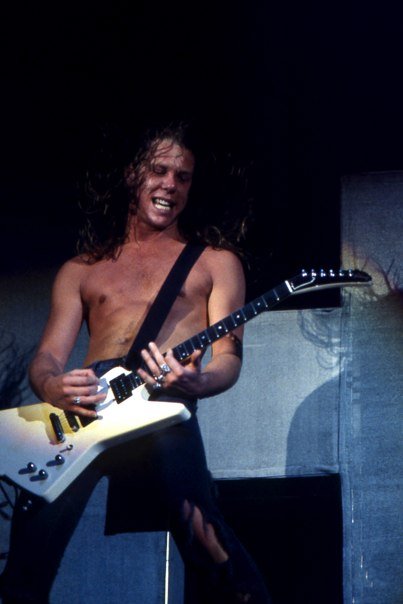
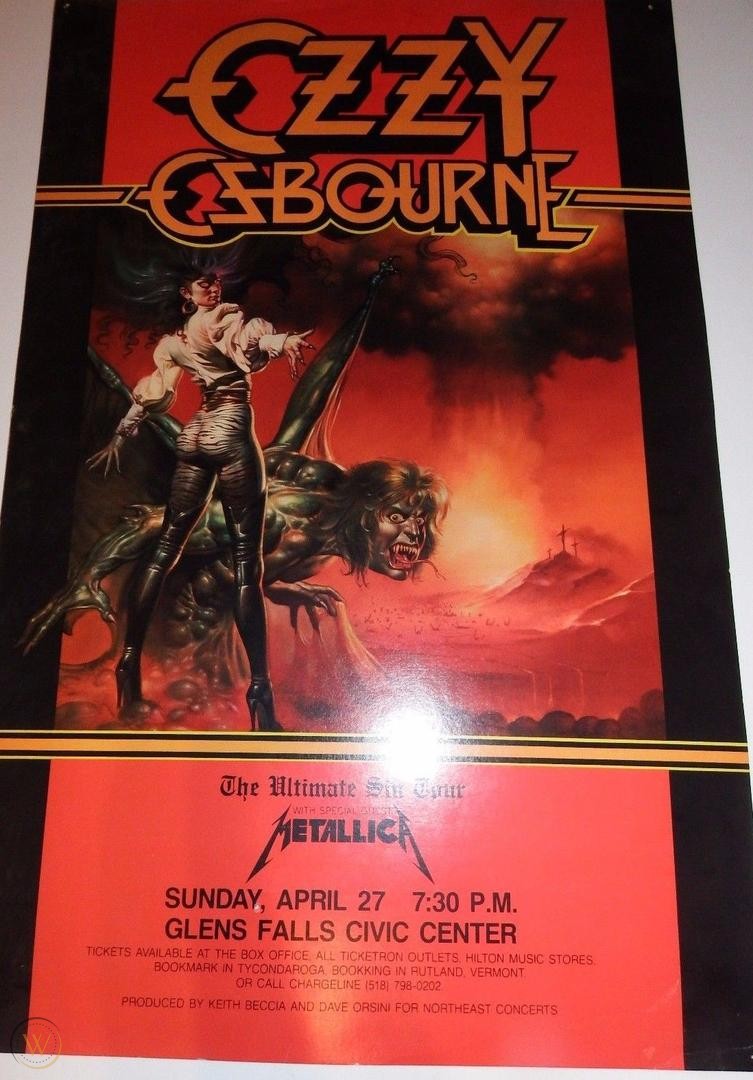
It is rare to see an arena rock show where the headliner gets completely overshadowed by the opening band. It is even rarer when that headliner is a legendarily mighty live performer like ex-Black Sabbath frontman Ozzy Osbourne, with Metallica opening the show. But on April 27, 1986, 35 years ago tonight, the exalted Ozz was utterly outshined by a youthful, ‘Master of Puppets’-era Metallica at Glens Falls Civic Center.
James Hetfield – photo by Dino Petrocelli
Master of Puppets – hailed by many as the best thrash metal album of all time, along with Slayer’s Reign in Blood, released the same year – had come out around 2 months before this gig. Metallica was the best heavy band in the world in 1986. Period. It is inarguable. I know you might think they suck now, and that there were a ton of great other metal and punk bands then, but I don’t care – in April 1986, Metallica were better.
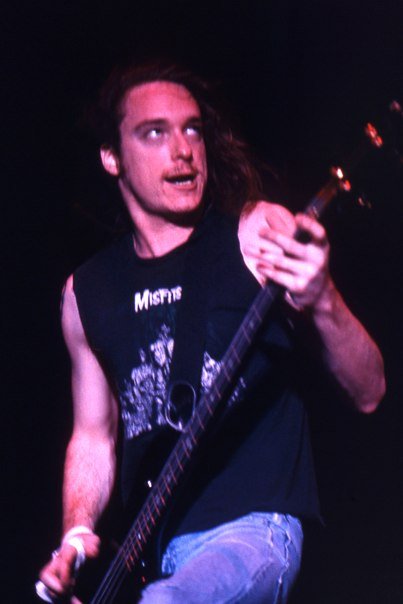
Cliff Burton – photo by Dino Petrocelli
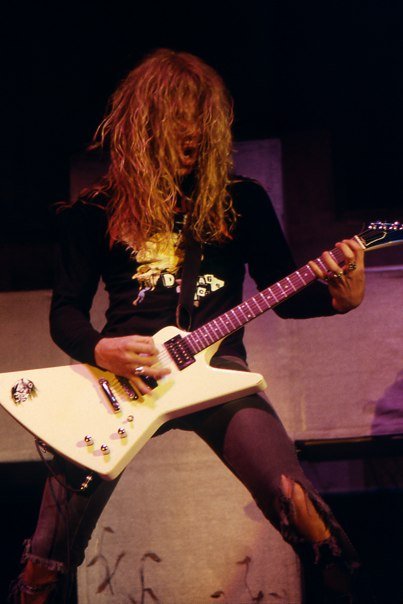
During Metallica’s “Ecstasy of Gold” intro tape there was a curtain in front of the stage, and this writer remembers a good crush down the front, as about half the crowd – Metallica were relatively new then, and many of those present that night did not know them – surged down towards the front. Legendary Metallica bassist Cliff Burton came out from behind the stage-left curtain to check out the crowd, smoking a cigarette and nodding at the people down front. Then the curtain dropped to reveal a stage-set modeled after the Master album cover, and the band opened with a blasting “Battery,” sounding as ferocious and tight as you’d want. The band utterly crushed for 55 minutes, with James, Cliff and Kirk headbanging madly the whole time – and a good 2/3 of the crowd were right there with them.
James Hetfield – photo by Dino Petrocelli
There was a great song selection for the near-hour they played – a few new songs (“Master of Puppets”, “Sanitarium”), plenty of ‘Ride The Lightning’ stuff (the title track, “For Whom the Bell Tolls”, set-closer “Creeping Death”), “Seek & Destroy” from Kill ‘Em All, and a crushing encore medley of Diamond Head’s classic “Am I Evil?” and the now-immortal thrash god-song “Damage, Inc.” Still one of my favorite shows ever. Sadly, this was the last time I saw Cliff Burton play – I had tix to see them in August in Montreal before Cliff’s untimely death, but James had that skateboard accident and it was cancelled. By the next time I saw them, Thanksgiving ’86 in Poughkeepsie, it was Jason on bass.
https://www.youtube.com/watch?v=6Qcn2wVG9aI
And Ozzy played too. He went down well, naturally, bringing the house down as he descended from the ceiling on a “monster Ozzy” throne. But, as pro and energetic a live performer as Ozzy and his always-professional band is (in those days led by guitarist Jake E. Lee), it was anticlimactic. Of course I mean no disrespect to Ozzy, who after all sang for the greatest band of all time and has always rocked live – I’d seen him before and many times since and this was easily the least awesome, contributed to, no doubt, by having to follow a hungry, young Metallica at their utter peak. To be sure, he didn’t suck – it’s hard to truly fall flat with songs like “Suicide Solution”, “I Don’t Know”, “Flying High Again” or his old band’s “Iron Man” – but it seemed like standard arena-rock after what had come before.
Also, Ozzy in 1986 was promoting the flaccid ‘Ultimate Sin’ record and flirting with a glittery, frosted-hair-and-makeup, almost glam image, which didn’t work for him – after 3 songs he was his usual sweaty self and the glittery outfit and frosted hair made him look like some bloated, middle-aged, hysterical, sweaty housewife who’d had too many glasses of wine. He opened with “Bark at the Moon”, closed with “Paranoid”, played lots of first album classics and crappy then-new songs from ‘The Ultimate Din’ and not enough Sabbath. Ozzy Osbourne lost, Metallica won.
All hail METALLICA, 1986-edition.
Metallicasetlist: Battery, Master of Puppets, For Whom The Bell Tolls, Ride The Lightning, Sanitarium, Seek & Destroy, Creeping Death, Am I Evil?, Damage, Inc.
Ozzy Osbournesetlist: Bark at the Moon, Suicide Solution, Never Know Why, Mr. Crowley, Shot in the Dark, I Don’t Know, Killer of Giants, Guitar Solo, Thank God for the Bomb, Flying High Again, Secret Loser, Drum Solo, Iron Man, Crazy Train, Paranoid
For six weeks in the summer of 1969, and nearly 100 miles south of Woodstock, another groundbreaking cultural event was taking place. The Harlem Cultural Festival, filmed in Mount Morris Park (now Marcus Garvey Park), celebrated African American music and culture, and promoted Black pride and unity. While the footage was never seen and largely forgotten, Ahmir “Questlove” Thompson brings ‘Black Woodstock’ to light in his debut documentary, Summer of Soul(…Or, When The Revolution Could Not Be Televised).
The trailer debuted during the 93rd Academy Awards ceremony on Sunday, April 25, where Questlove was serving as music director and DJ for the evening. Part concert film and part historical record, the documentary is an important piece of history that stands as a testament to the healing power of music during times of unrest, both past and present.
While this is Questlove’s first directing jawn, he has appeared in numerous music documentaries, including Beats, Rhymes & Life: The Travels of A Tribe Called Quest, Mr. Dynamite: The Rise of James Brown, and served as co-executive producer of Finding the Funk.
Summer of Soul features performances by B.B. King, Stevie Wonder, Mahalia Jackson and Mavis Staples, Hugh Masekela, Mongo Santamaria, Nina Simone, and Sly & the Family Stone, among many more. Included in Summer of Soulare never-before-seen concert performances by Wonder, Nina Simone, Gladys Knight & the Pips, Ray Baretto, Abbey Lincoln & Max Roach, the 5th Dimension, David Ruffin, and more.
All this from an historic six week music festival that would be overshadowed by the one weekend Woodstock festival that summer. With over 300,000 people in attendance, it rivals the attendance of the iconic festival, yet received virtually no coverage from the mainstream media.
40 hours of never-seen-before footage has remained in storage in a basement for the past 50 years, keeping this incredible event in America’s history lost, until now. Questlove, speaking of the personal significance of the footage, told Indiewire, “What would have happened if this was allowed a seat at the table? How much of a difference would that have made in my life? That was the moment that extinguished any doubt I had that I could do this.”
Summer of Love premiered at the 2021 Sundance Film Festival on January 28, 2021, where it won the US Grand Jury Prize in the documentary category.
Summer of Soul (Or, When the Revolution Could Not Be Televised) will hold special engagements at two theaters ahead of wide release on 600 screens, and on Hulu, starting Friday, July 2. Early screenings will be held at El Capitan Theater in LA and the Magic Johnson AMC Harlem.