Beginning on February 18, 2021, the National Jazz Museum in Harlem is available for anybody in the world to visit virtually on the Google Arts and Culture platform.
The National Jazz Museum in Harlem
The free, virtual tour allows viewers to experience videos and high-resolution pictures of jazz artifacts from the Museum’s collections as a part of the Google Arts & Culture Black History Month project.
“Jazz was born in New Orleans but spent a lot of time growing up in Harlem,” says award winning bandleader Christian McBride who, with award winning bandleader Jon Batiste, serves as National Jazz Museum in Harlem (NJMH) Artistic Director. The Black History and Culture project celebrates and recognizes Black creatives. NJMH joins over 80 partners on the platform with their own expertise and storytelling about Black history and jazz.
“Jazz music is a centerpiece of Black history, culture and art,” said Simon Delacroix, US Lead for Google Arts & Culture. “During Black History Month, we’re proud to welcome the National Jazz Museum in Harlem to the Google Arts and Culture platform. Now everyone can experience the magic of the genre and the artists who created it.”
The Museum wishes to reopen its doors to the public for the indelible, energetic performances and captivating history contained in its walls. Executive Director Tracey Hyter-Suffern says that “During the pandemic we have seen the effect on the jazz community and vital role this music and the arts, in general, play in anchoring us. We are a gathering space for jazz artists, educators, scholars and the community. Jazz engages us with each other. Jazz is history you can feel. It’s physical. The Museum is physical. It’s a place, in Harlem, where the community can connect, renew and celebrate.”
Outside the National Jazz Museum in Harlem
The pandemic has had a severe, disastrous impact on Black and other communities of color. Black, Latino, and senior jazz artists and performers are among the highest risk categories, and many have sadly passed away during this time. This makes it especially critical to share and celebrate the history and legacy of jazz, the uniquely American art form. The Museum serves as a force to keep jazz and its message alive and its artists working, never letting the passion and importance of it fade.
Inspired by news of the Museum’s partnership with Google Arts & Culture, the Ella Fitzgerald Charitable Foundation has offered to match every dollar contributed to the National Jazz Museum in Harlem during Black History Month up to $5,000. To contribute, visit .
Where else can you get a steak and jazz performances all in one spot? Step back nearly 90 years and visit Hickory House.
A New York jazz club located on West 52nd Street, Hickory House was opened in 1933 by John Popkin and was a swinging venue and a great spot to grab cocktails and dinner before a show.
Located in a stretch of midtown that was crowded with jazz clubs in the 1940s and 1950s, Hickory House stood out because they also had a branch in Miami Beach, as seen on the menu cover.
With the 18th Amendment repealed in 1933, post-prohibition New York City hit the bars and drank without abandon, and the cheap prices for the time show it.
In 2014, NPR profiled Hickory House Trio, a 1950s group of Marian McPartland, Bill Crow and Joe Morello, the latter of whom was part of a reunion session in 1990. Morello fielded offers from both Benny Goodman and Tommy Dorsey, but ultimately went on to work with a small group taking a new direction in jazz led by Dave Brubeck, notably on his “Take Five.”
NPR notes that during the 1950s when McPartland and company were playing the Hickory House, jazz musicians including Duke Ellington, Billy Strayhorn, Oscar Pettiford and Thelonious Monk, would stop by the club for a meal and to watch the band. Some would even sit in with the trio, and after coaxing, Ellington might join them on the bandstand (it didn’t hurt that he shared a publicist with the club.)
Although all trace of Hickory House is gone, it continued to be in operation at least until 1964. See more images of the venue, and what 52nd Street looks like now, at JAZZ LIVES.
A similarly named venue, The Hickory Log, located on 47th St., and known simply as Lou Terrassi’s. also hosted jazz performances. While the two venues share a name, they do not seem to be related, and a connection between the two venues is unable to be discerned.
One recording from The Hickory Log, made available by JAZZ LIVES, provides a glance at a half-hour broadcast recorded at the lost venue. With host Aime Gauvin, a.k.a. “Dr. Jazz,” featuring musicians from the Jimmy McPartland Sextet: McPartland (cornet), Dicky Wells (trombone), Cecil Scott (clarinet), Joe Sullivan (piano), Walter Page (string bass), George Wettling (drums) and Marian McPartland (piano).
Hickory House, 1937
The band is introduced by Leonard Feather, who chats with both McPartlands, amid serene ambiance that is comparable to Central Plaza or Stuyvesant Casino at the time. Listen closely and you’ll hear the crash of dishes, as the stage and kitchen were located near each other.
Performances on Jazz Club U.S.A. from 1952 include “Love Is Just Around The Corner,” “Tin Roof Blues,” “Embraceable You,” “Baby Won’t You Please Come Home,” and “Sweet Georgia Brown.”
Puerto Rican artist Bad Bunny took to the stage at Studio 8H for this week’s episode of Saturday Night Live. This marked Bad Bunny’s first time as SNL’s musical guest, although he did appear in a sketch last season when the show was shooting remotely. Hosting this evening was Regé-Jean Page, from Netflix’s Bridgerton.
Bad Bunny is nominated for multiple Grammy Awards this year, including Best Latin Pop Album for YHLQMDLG, and Best Pop Duo/Group Performance for “Un Dia (One Day)” with J Balvin, Dua Lipa, and Tainy. At the 2020 Latin Grammy Awards, Bad Bunny took home the award for Best Reggaeton performance and in 2019 won for Best Urban Music Album.
For the first performance of the night, Bad Bunny sang “La Noche de Anoche,” joined by nuevo flamenco singer Rosalía. The music video for the song off 2020’s El Ultimo Tour Del Mundo dropped last week, an album which made history for Bad Bunny as the first all-Spanish-language album to hit #1 on Billboard’s Top 200.
https://www.youtube.com/watch?v=7yb4HX5gwqI
Bad Bunny also made an appearance in the musical sketch “Loco,” serving as a hallucination for stir crazy cast member Ego Nwodim as she revisits how the COVID-19 pandemic has affected her life.
Bad Bunny’s second song of the night was “Te Deseo lo Mejor,” also off 2020’s El Ultimo Tour Del Mundo. Translated as “I Wish You the Best,” Bad Bunny performed the track on The Late Show with James Cordon this past December.
https://www.youtube.com/watch?v=SPEwYnAQQOg
Saturday Night Live returns on February 27 with host and musical guest, Nick Jonas.
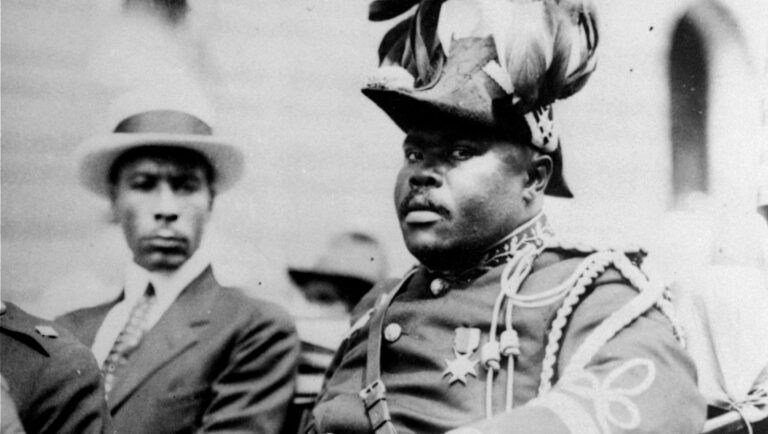
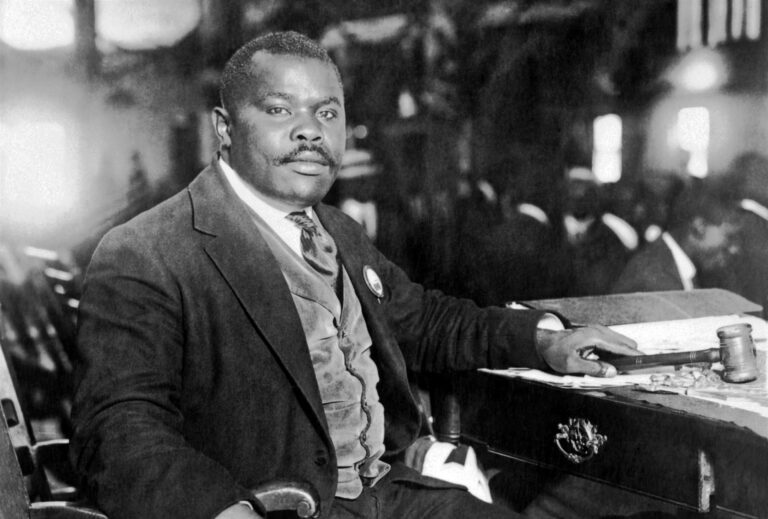
As part of NYS Music’s continuing series looking at the Centennial years of the Harlem Renaissance, we turn to activist Marcus Garvey, leader of the Pan-African movement, the first American Black nationalist movement.
Marcus Moziah Garvey was born in St Ann’s Bay, Jamaica on August 17, 1887. His father, Marcus Garvey Senior, was a stonemason and his mother, Sarah Jane Richards was a household servant. Garvey had 11 siblings but was the only one to survive to adulthood. Attending a local church school until the age of 14, Garvey then moved to Kingston where he worked in a print shop as an apprentice. Garvey quickly rose through the ranks and became the first Afro-Jamaican foreman. Thus began Garvey’s fabled career in activism, becoming a trade unionist and partially leading the November 1908 print workers’ strike.
After being fired from his print shop job, Garvey’s hatred for the societal structures creating inequality began to form. Garvey joined the National Club, one of Jamaica’s first nationalist organizations, publishing several pamphlets and magazines campaigning for the removal of the British Governor of Jamaica. Economic hardship took hold of Jamaica, leading to a mass exodus that included Garvey. After Garvey spent several years traveling, including living with family in Costa Rica and attending University of London’s Birkbeck College, Garvey returned to Jamaica.
Getty Images
Birth of the UNIA
Upon returning to Jamaica, Garvey formed the UNIA (Universal Negro Improvement Association). An organization whose goal was to “Establish a brotherhood among the black race, to promote a spirit of race pride, to reclaim the fallen and to assist in civilizing the backward tribes of Africa.”
With this organization, Garvey wanted to establish a country that would unite black people all over the world. After coming on to contact with fellow famed civil rights activist Booker T. Washington, Garvey moved to Harlem to establish the UNIA in the United States.
As the UNIA began to grow, Garvey launched his own weekly newspaper Negro Weekly. The newspaper reached worldwide audiences, nearing 10,000 copies circulated by the end of its first year. In 1919, Garvey launched his shipping company Black Star Line. The company’s goal was to establish trade and commerce between Africans all over the world. By this point, the UNIA had grown to over 4 Million members. The Black Star Line bought the S.S. Yarmouth, which they renamed it as the S.S. Frederick Douglass, in preparation for the group’s ambitious program which sought to establish a country for former slaves in Liberia.
Underwood Archives via Getty Images
Enemies
Garvey was infamous for his impassioned and controversial speeches which caused him many enemies from the likes of fellow activist, W.E.B. Du Bois, to FBI Director J. Edgar Hoover. Dubois was vehemently against Garvey’s separatist philopshy, going so far as to call him “The most dangerous enemy of the Negro race in America.”
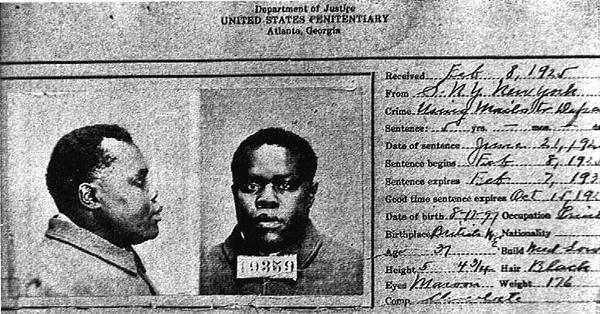
Garvey was under surveillance from Hoover for several years. Hoover looked for any dirt he could dig up on Garvey, going so far as to hire the first black FBI agent to infiltrate the ranks. Hoover would use the same method against several civil rights leaders throughout the 20th century including Martin Luther King Jr. and Malcolm X. Eventually, Hoover was able to try Garvey and others within the Black Star Line with Mail Fraud. Garvey was found guilty and sentenced to five years in prison.
Imprisonment and Deportation
Before the trial, Garvey controversially had agreed to meet with the leader of the Ku Klux Klan, believing they had common ground when it came to Segregation. Garvey blamed the Jewish judges and jurors for his convention, claiming they held bias against him for agreeing to meet with the Ku Klux Klan leader. This began a trend of Garvey siding with segregationists. While in jail, Garvey wrote his famous letter “First Message to the Negroes of the World from Atlanta Prison.”
Garvey was released in 1927 after serving just three years of his sentence after President Calvin Coolidge received a petition with 70,000 signature demanding for his release. Upon release, Garvey was immediately deported back to Jamaica. Continuing his political activism in his home country, Garvey created the country’s first political party, the People’s Political Party (PPP). The party ran on the platforms of establishing a minimum wage and the ability to impeach and imprison corrupt judges. The party quietly faded away after Garvey lost the election and was imprisoned again for seditious libel.
Never forget that intelligence rules the world and ignorance carries the burden. Therefore, remove yourself as far as possible from ignorance and seek as far as possible to be intelligent.
Marcus Garvey
Later Life and Death
Never again was Garvey able to convey the same amount of influence that he once did. Garvey continued his political activism in Jamaica until 1935 when he moved to London. Garvey would go on to back other segregationist legislation such as The Greater Liberia Act of 1939, championed by infamous white supremacist Mississippi Senator Theodore Bilbo; this act sought to deport 12 million African Americans to Liberia under the justification that it would reduce unemployment. The bill never passed.
In January 1940, Garvey suffered a stroke that had left him paralyzed almost entirely. Word spread that Garvey had died, leading it to be reported in several papers. Garvey had a second stroke brought on from the reading of these headlines, leading to his actual death on June 10th, 1940 at the age of 52. Garvey was buried in London due to WWII travel restrictions but his remains were moved to Kingston, Jamaica in 1964.
Legacy
Marcus Garvey has a complicated legacy like no other civil rights figure. Garvey’s key message was one of African Pride, to love your self and heritage no matter what. Phrases coined by Garvey such as “Black is Beautiful” are still commonplace motivational statements today. On the other hand, Garvey was one of the most outspoken segregationists. Garvey sided with white supremacists on several occasions, even backing key legislature. While his aspirations of a unified African American nation might have been pure, the ways he went about achieving those goals were destructive. Marcus Garvey the man may be controversial, but his word would go on to influence generations of activists and spur change all over the globe.
This week’s Saturday Night Live featured Oscar winning Actress Regina King, now nominated for Best Director for One Night in Miami, and musical guest Nathaniel Rateliff and the Night Sweats.
Nathaniel Rateliff performed “Redemption” for his first song of the night, which was recorded for the upcoming Justin Timberlake movie Palmer. Timberlake, along with director Fisher Stevens, asked Rateliff to record the song for the film. Rateliff started the song solo, then was joined by a trio of backup singers and a full band who joined in.
For the second song of the night, Rateliff sang the solo track “A Little Honey” from his band’s 2018 album Tearing at the Seams. With the line “I need you, baby / More than you’ll ever, ever know,” Rateliff gave a nod to Valentine’s Day.
Rateliff earned an Album of the Year nomination at the 2020 Americana Honors & Awards for And It’s Still Alright.
In anticipation of a new album, Vast Aire of Cannibal Ox, has released a brand-new record in collaboration with producer COSMIQ. With the duo’s collaborative effort set to be released soon, the hip hop veterans are hoping “Good Fuel,” will be just the song to give the album a push.
A gritty old-school New York record, “Good Fuel” sees Vast Aire continue a trend that has defined hip hop itself. In “Good Fuel” he descriptively conveys a proper image of the tough inner-city neighborhoods that Black people have inhabited for decades. The record begins with Vast Aire shouting out where he is from (Washington Heights, Harlem, New York City), with these locations also representing the setting for the story-like “Good Fuel.”
“Good Fuel” resembles other inner-city themed rap songs. Humble beginning, “we used to be shoulder to shoulder like ‘someone push me.’ Holes in your sucks, you got no p****.” To taking an interest in the street life in search of a better life for self and family, “I’m talking sky pagers with the fly beepers, all the drug dealers had the fly sneakers.” To eventual questioning of the political regime whose job it is to help the disenfranchised, “my commander-in-chief is running amuck. These right-winged lobbyists could care less, it’s settle for this evil or settle for less.”
“This track is important for our times right now,” says Vast Aire. “We all are coping with the chaos of COVID-19 and also the shock and trauma of Trump’s political coup. ‘Good Fuel’ reminds the youth and elders to remain righteous, while standing up in the face of oppression.”
“This song represents what Hip-Hop has always stood for, being the voice of the streets; from the lost criminal to the struggling and hard-working blue-collar workers. My late parents are those very people– and so am I!”
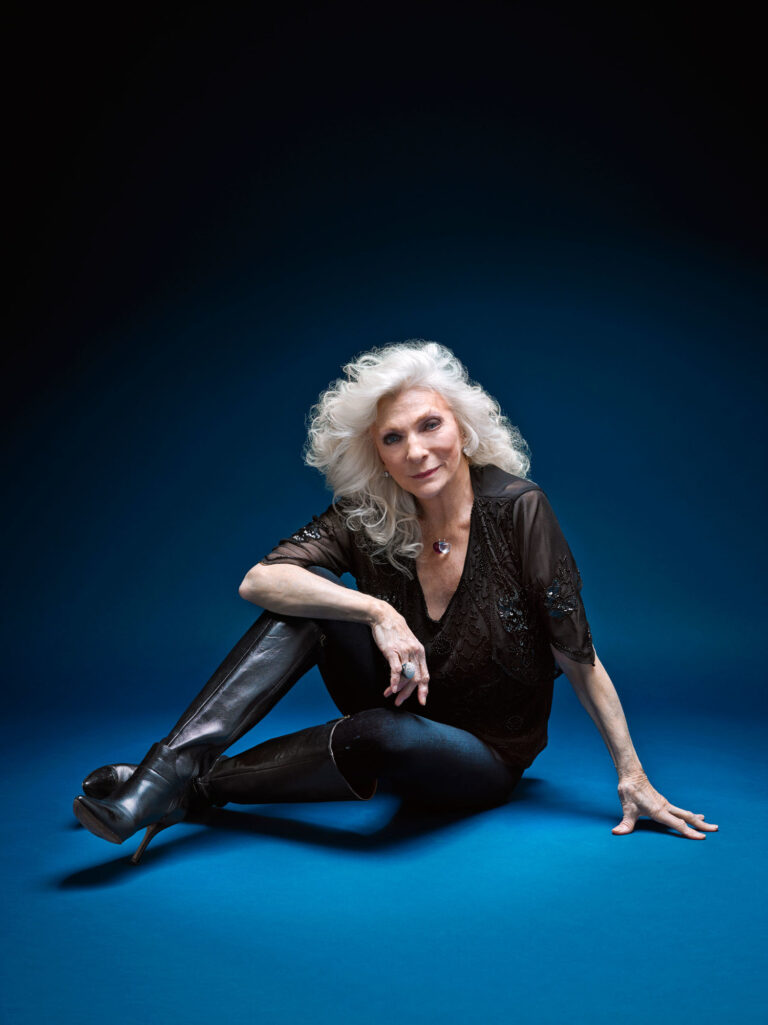
Judy Collins will perform at The Town Hall in New York City, on Friday, February 12. She is recreating her debut 1964 show from the very same stage, featuring music by Bob Dylan, Tom Paxton, and Billy Ed Wheeler, among others.
Collins, an award-winning singer-songwriter is known for her versions of traditional and contemporary folk standards, as well as her own poetically poignant original compositions. Her rendition of Joni Mitchell’s “Both Sides Now” from her 1967 album, Wildflowers, has been entered into the Grammy Hall of Fame. Judy’s intimate version of “Send in the Clowns” won “Song of the Year” at the 1975 Grammy Awards, and she has garnered multiple top-ten hits and platinum-selling albums.
Judy began her music career at 13 as a piano prodigy, but hard luck tales of folk revival music by artists such as Woody Guthrie and Pete Seeger drew her away from a life as a concert pianist. This path led her towards a lifelong love affair with the guitar and pursuit of emotional truth in lyrics.
Recently, Collins released the 2020 album Winter Stories, featuring critically-acclaimed Norwegian folk artist Jonas Fjeld, and masterful Americana band Chatham County Line. Collins was fêted by contemporary and classic artists, among them Rufus Wainwright, Shawn Colvin, Dolly Parton, Joan Baez, and Leonard Cohen, on the album Born to the Breed: A Tribute to Judy Collins.
Speaking about her concert performance on February 12 at The Town Hall, Collins said:
It was such a tumultuous time in the world. The Vietnam War was just rolling along, breaking into thunder and lightning and anxiety and pain. People were burning their draft boards cards, trying to get to Canada and facing up to going to Vietnam where many of them would die. Making this album and concert at The Town Hall – my very first solo appearance at one of the great concert stages in New York – was a relief and joyous event. It feels right to go back to the material and time period now with the knowledge and life lessons learned in 2020.
Judy Collins, recalling her debut performance at The Town Hall
Tickets are $40 and on sale now via Judy’s website.
Saturday Night Live welcomed Schitt’s Creek star Dan Levy (dad Eugene stopped by too) and musical guest Phoebe Bridgers for the smashing second episode of 2021.
Phoebe Bridgers is without a doubt the year’s breakout indie darling. Her 2020 sophomore album Punisher garnered four Grammy nominations, including Best Rock Song and Best New Artist. While there’s some stiff competition for the latter, including Doja Cat and Megan Thee Stallion, she’s one of the most acclaimed of the eight nominees.
Bridgers is also one third of the supergroup Boygenius, with Julien Baker and Lucy Dacus. On Thursday, February 4, she tweeted in support of Marilyn Manson’s accusers after sharing her own experience.
For the night’s first song, Phoebe performed “Kyoto,” the second single off the emo-folk Punisher, and one of the most upbeat offerings in her catalog. It concerns Bridgers’ tumultuous relationship with her father, and dissociating on a trip to Japan she took in February 2019. One of the song’s hardest hitting moments is the first line of the chorus, “I’m gonna kill you / If you don’t beat me to it.” Throughout the set, Phoebe and her band both wore her signature skeleton onesies.
After the more accessible “Kyoto,” Bridgers closed the night with Punisher’s final track, “I Know the End.” The apocalyptic song concluded with calculated cacophony: after her guitar solo, Bridgers yelled into the mic and smashed her guitar, joining the likes of SNL alums Arcade Fire, Nirvana and Cypress Hill.
https://www.youtube.com/watch?v=9LE5tafaayc
Tune into SNL next week, February 13, with host Regina King and musical guest Nathaniel Rateliff.
Meditation and mental well-being go hand in hand and there’s never been a period in time quite like the current that demands a positive mindset. Enter Sounds from the Bardo Volume II, presented by Psychedelic Sangha. This undertaking, an album-based series of immersive journeys into liminal states of consciousness, is the brainchild of Ethan Covey and Doc Kelley and a follow-up to Volume I which was released on Bandcamp this past December.
Spanning almost 90 minutes, this project was created to provide the means to meditate while immersing yourself into beautiful music as a means of finding inner-peace. It features Tony Leone on percussion, Scott Metzger on guitar and Jeff Hill on Bass and was recorded live in November at the Judson Memorial Church in NYC. The release consists of 4 tracks, which include a meditation and instrumental track, each containing the same jam performance with and without guided meditation, and 2 additional soundcheck jams from the same session. Additionally, this multi-media collection also includes a video of the full length original light show produced by Bubba Ayoub.
The meditation begins with Jessica Angima’s soothing voice helping to bring calm to your surroundings while Scott Metzger’s guitar begins to playfully dance around her words. As her words began to fade away, the trio begins their gentle improvisation into the soundscape. The journey they start is akin to a sunrise and sunset, slowly building and shining more light as the meditation progresses and flowing into ambient sounds as the hour reaches it end.
The delicate jamming begins to give way to delightful melodies halfway through journey and this continues to a beautiful crescendo before bringing the participant back to an ambient outro. The paths that this trio takes between each of Jessica’s guided meditations are a phenomenal example of what these three talented musicians are able to create together. This release is the first published recording of these three musical geniuses performing together and hopefully it’s not the last that we see of them collaborating together on something special.
Also included on this release are additional 2 soundcheck jams from Leone, Metzger and Hill. These bonus tracks continue the psychedelic energy that the trio brought to the meditation and show the trio stretching themselves and their abilities out, as you’d expect from any soundcheck. Both of these tracks flow between genres, tempos and energies while showcasing the themes and strengths that each of the artists would bring to their magnum opus. At the end of the second jam, you’ll find yourself agreeing with the band when you hear them exclaim, “We’re vibin’ so hard!”
Psychedelic Sangha’s Sounds from the Bardo Volume II will be released via Bandcamp on February 5th and can be purchased for a minimum of $12 USD. This release is a must-own for anyone who engages in or is considering dipping their toes into meditation, and certainly for everyone who is a fan of ambient jamming or improvisational soundchecks.
The Weeknd announced his After Hours World Tour, a 104-date global tour beginning at Rogers Arena in Vancouver on January 14th, 2022.
He will be playing in New York on February 11th and 12th in Brooklyn at the Barclays Center, and will be back in early April on the 4th and 5th at Madison Square Garden. He will then be playing at the new UBS Arena in Belmont on April 7th.
The worldwide tour announcement comes just days ahead of the multi-platinum singer’s headlining Super Bowl performance, and also includes a handful of rescheduled dates shifting from 2021 to be a part of the After Hours World Tour in 2022.
With the addition of 39 new tour dates, The Weeknd will also release The Highlights on Friday, February 5th. The Highlights is a way to present some of The Weeknd’s most notable works in one place. While this isn’t a “Greatest Hits” album it does provide a new listener a rich foray into some of the iconic artist’s best and favorite work. Fans can pre-save and pre-order the album on theweeknd.co/thehighlights.
Tickets for the tour will be available following The Weeknd’s Super Bowl performance starting Monday, February 8th at 10 A.M. local time on TheWeeknd.com/Tour.
AFTER HOURS WORLD TOUR 2022 DATES: * New Show Jan 14 – Vancouver, BC – Pepsi Live at Rogers Arena Jan 15 – Vancouver, BC – Pepsi Live at Rogers Arena Jan 17 – Edmonton, AB – Rogers Place Jan 19 – Winnipeg, MB – Bell MTS Place Jan 21 – St. Paul, MN – Xcel Energy Center Jan 23 – Chicago, IL – United Center Jan 24 – Chicago, IL – United Center* Jan 26 – Milwaukee, WI – Fiserv Forum* Jan 27 – Detroit, MI – Little Caesars Arena Jan 29 – Pittsburgh, PA – PPG Paints Arena Jan 30 – Cleveland, OH – Rocket Mortgage FieldHouse Feb 01 – Toronto, ON – Scotiabank Arena Feb 02 – Toronto, ON – Scotiabank Arena Feb 03 – Montreal, QC – Centre Bell Feb 05 – Newark, NJ – Prudential Center Feb 06 – Uncasville, CT – Mohegan Sun Feb 08 – Boston, MA – TD Garden Feb 09 – Boston, MA – TD Garden* Feb 11 – Brooklyn, NY – Barclays Center Feb 12 – Brooklyn, NY – Barclays Center* Feb 13 – Washington, DC – Capital One Arena Feb 15 – Charlotte, NC – Spectrum Center Feb 16 – Nashville, TN – Bridgestone Arena Feb 19 – Kansas City, MO – T-Mobile Center* Feb 20 – Tulsa, OK – BOK Center Feb 22 – New Orleans, LA – Smoothie King Center* Feb 24 – Houston, TX – Toyota Center Feb 25 – Dallas, TX – American Airlines Center Feb 27 – Denver, CO – Ball Arena Mar 01 – Salt Lake City, UT – Vivint Smart Home Arena Mar 03 – Portland, OR – Moda Center Mar 04 – Seattle, WA – Climate Pledge Arena* Mar 06 – Sacramento, CA – Golden 1 Center Mar 08 – Oakland, CA – Oakland Arena Mar 09 – San Jose, CA – SAP Center Mar 11 – Los Angeles, CA – The Forum* Mar 13 – San Diego, CA – Pechanga Arena Mar 15 – Anaheim, CA – Honda Center Mar 16 – Anaheim, CA – Honda Center* Mar 18 – Los Angeles, CA – Staples Center Mar 19 – Los Angeles, CA – Staples Center Mar 20 – Los Angeles, CA – Staples Center Mar 22 – Glendale, AZ – Gila River Arena Mar 25 – Ft. Worth, TX – Dickies Arena Mar 28 – Orlando, FL – Amway Center Mar 29 – Miami, FL – AmericanAirlines Arena Mar 30 – Miami, FL – AmericanAirlines Arena Apr 01 – Atlanta, GA – State Farm Arena Apr 03 – Philadelphia, PA – Wells Fargo Center* Apr 04 – New York, NY – Madison Square Garden Apr 05 – New York, NY – Madison Square Garden* Apr 07 – Elmont, NY – UBS Arena* Apr 08 – Buffalo, NY – KeyBank Center Apr 10 – Toronto, ON – Scotiabank Arena Apr 11 – Toronto, ON – Scotiabank Arena* Apr 14 – St. Louis, MO – Enterprise Center Apr 16 – Omaha, NE – CHI Health Center Omaha Apr 18 – Austin, TX – Moody Center* Apr 19 – San Antonio, TX – AT&T Center Apr 23 – Las Vegas, NV – T-Mobile Arena* Apr 24 – Phoenix, AZ – Phoenix Suns Arena* Apr 27 – Fresno, CA – Save Mart Center* Apr 30 – Spokane, WA – Spokane Arena* May 01 – Tacoma, WA – Tacoma Dome Sept 10 – Helsinki, Finland – Hartwall Arena* Sep 13 – Stockholm, Sweden – Ericsson Globe Sep 15 – Copenhagen, Denmark – Royal Arena Sep 16 – Copenhagen, Denmark – Royal Arena* Sep 18 – Oslo, Norway – Telenor Arena Sep 20 – Hamburg, Germany – Barclaycard Arena Sep 21 – Cologne, Germany – Lanxess Arena Sep 23 – Munich, Germany – Olympiahalle Sep 24 – Berlin, Germany – Mercedes-Benz Arena Sep 26 – Vienna, Austria – Stadthalle* Sep 28 – Antwerp, Belgium – Sportpaleis Sep 29 – Antwerp, Belgium – Sportpaleis* Oct 01 – Cologne, Germany – Lanxess Arena* Oct 03 – Amsterdam, Holland – Ziggo Dome Oct 04 – Amsterdam, Holland – Ziggo Dome* Oct 06 – London, UK – The O2 Oct 07 – London, UK – The O2 Oct 08 – London, UK – The O2 Oct 10 – Manchester, UK – Manchester Arena Oct 11 – Birmingham, UK – Utilita Arena Oct 13 – Belfast, UK – SSE Arena* Oct 15 – Newcastle, UK – Utilita Arena Oct 16 – London, UK – The O2 Oct 18 – Paris, France – Accor Arena Oct 19 – Paris, France – Accor Arena Oct 20 – Paris, France – Accor Arena Oct 22 – Bordeaux, France – Arkea Arena* Oct 24 – Madrid, Spain – Wizink Center* Oct 25 – Lisbon, Portugal – Altice Arena* Oct 28 – Barcelona, Spain – Palau Sant Jordi* Oct 29 – Montpellier, France – Sud de France Arena* Nov 01 – Milan, Italy – Mediolanum Forum* Nov 02 – Zurich, Switzerland – Hallenstadion* Nov 04 – Budapest, Hungary – Budapest Arena* Nov 05 – Prague, Czech Republic – O2 Arena Nov 07 – Krakow, Poland – Tauron Arena* Nov 10 – Mannheim, Germany – SAP Arena* Nov 12 – Lyon, France – Halle Tony Garnier* Nov 13 – Paris, France – Accor Arena* Nov 15 – Glasgow, Scotland – The SSE Hyrdro* Nov 16 – London, UK – The O2*