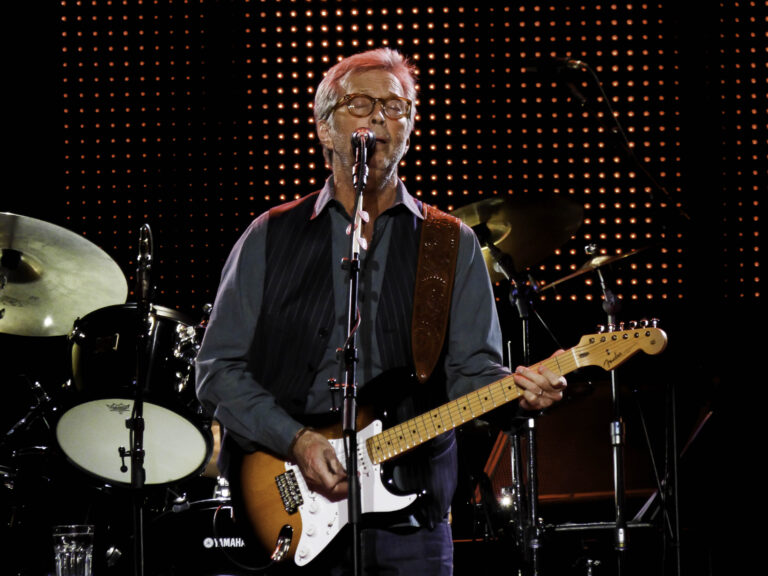
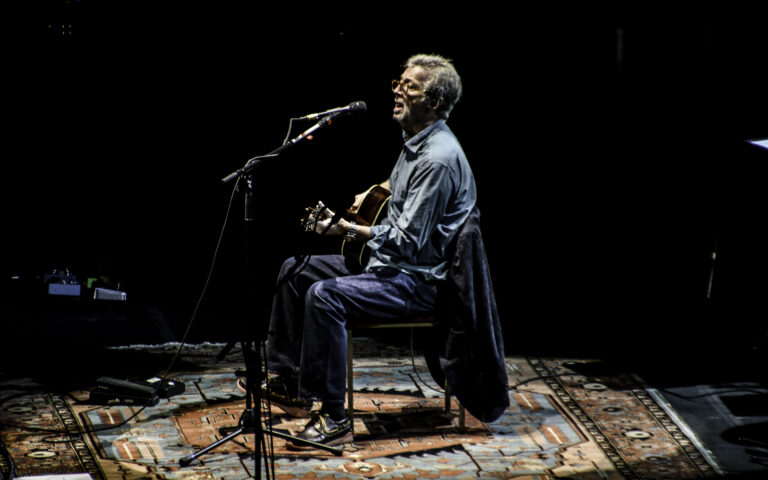
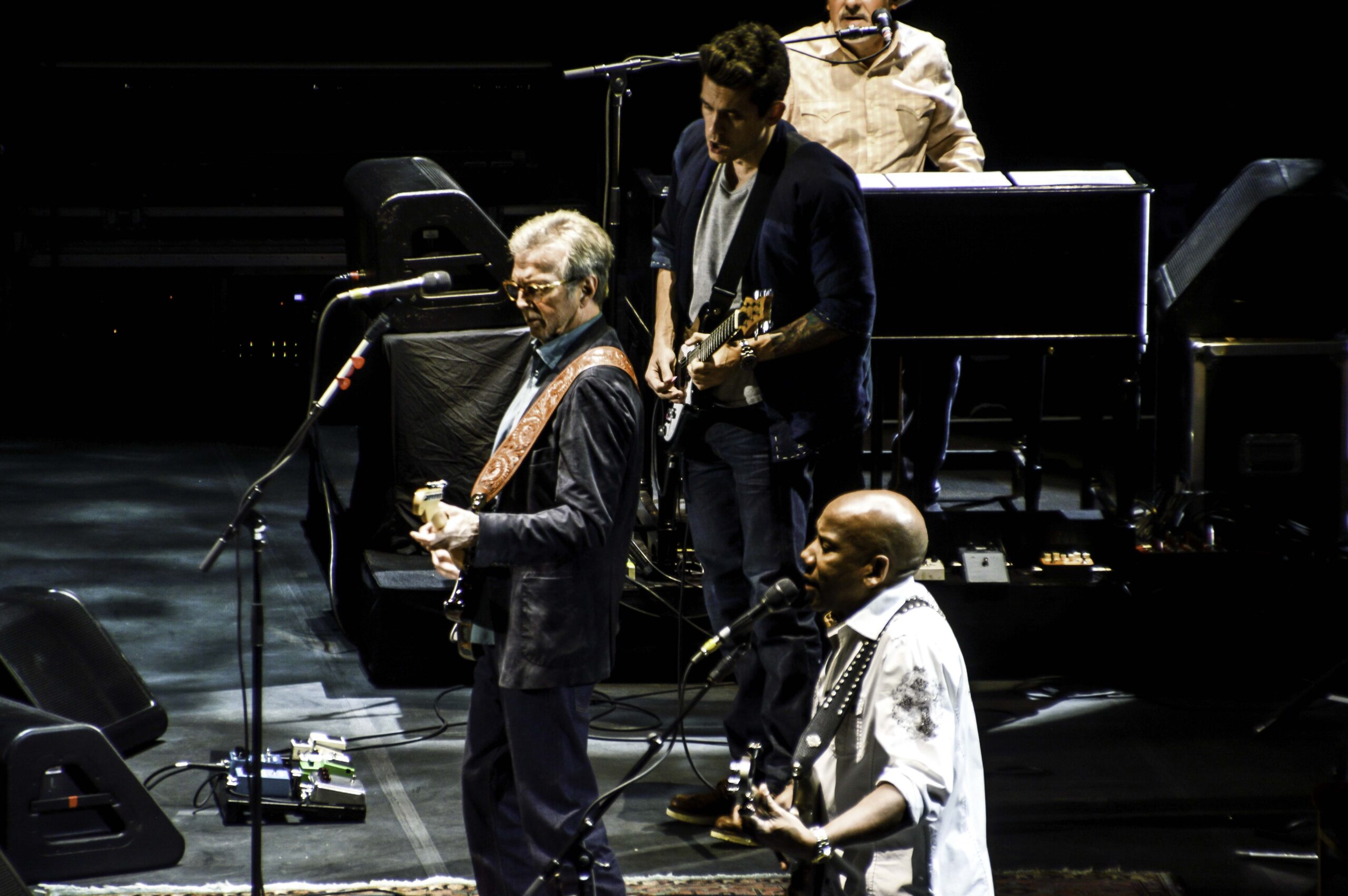
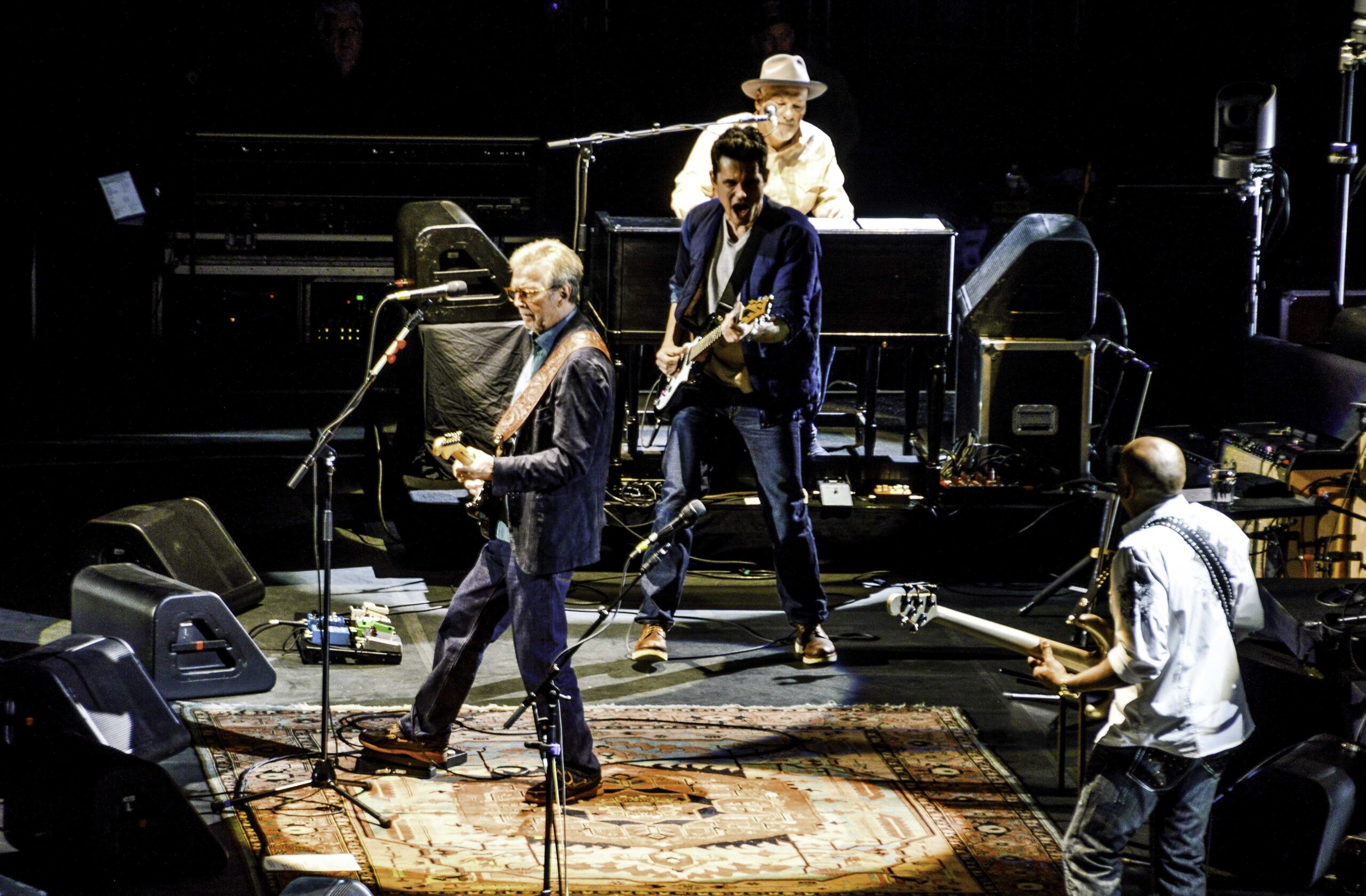
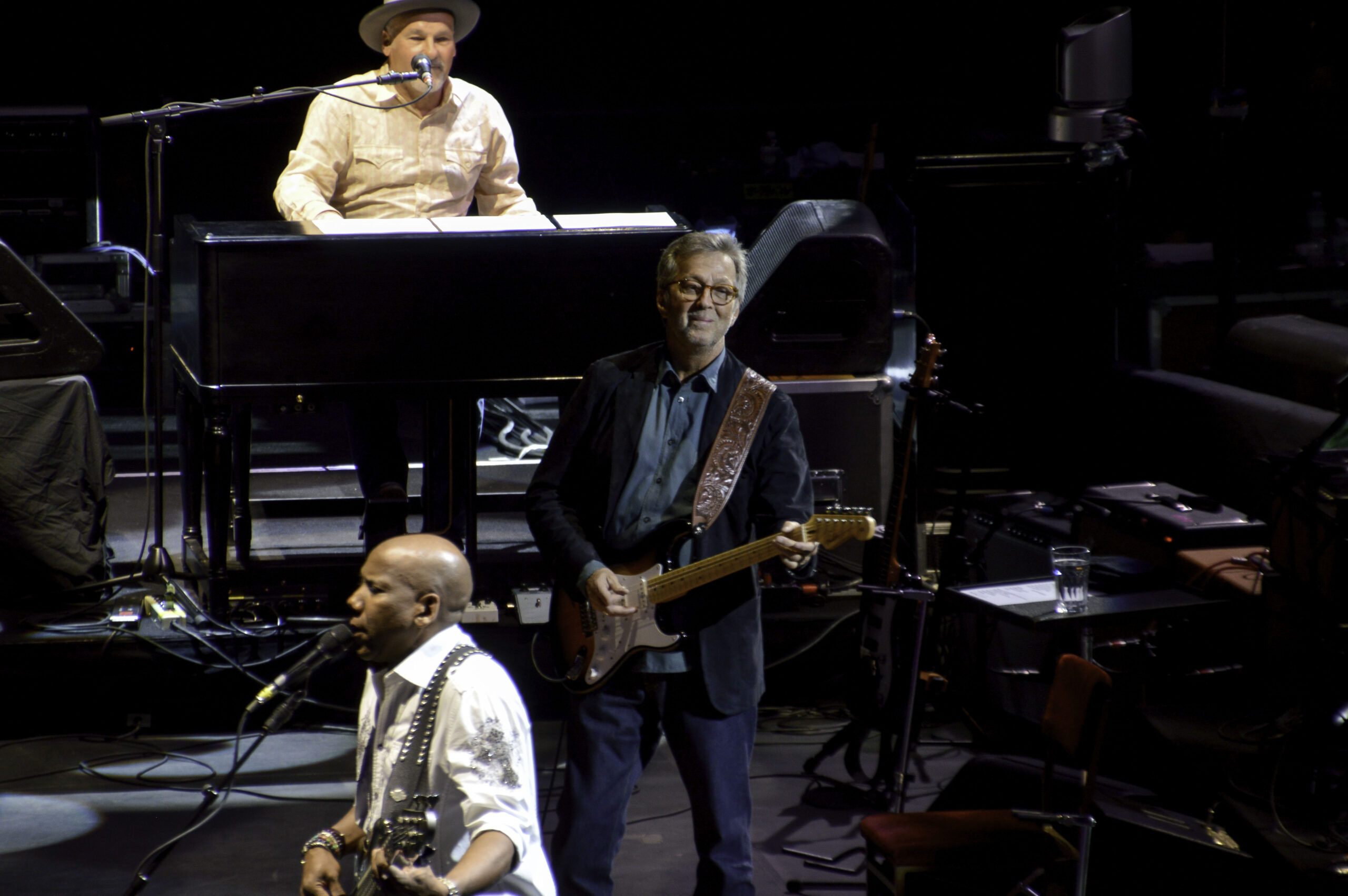
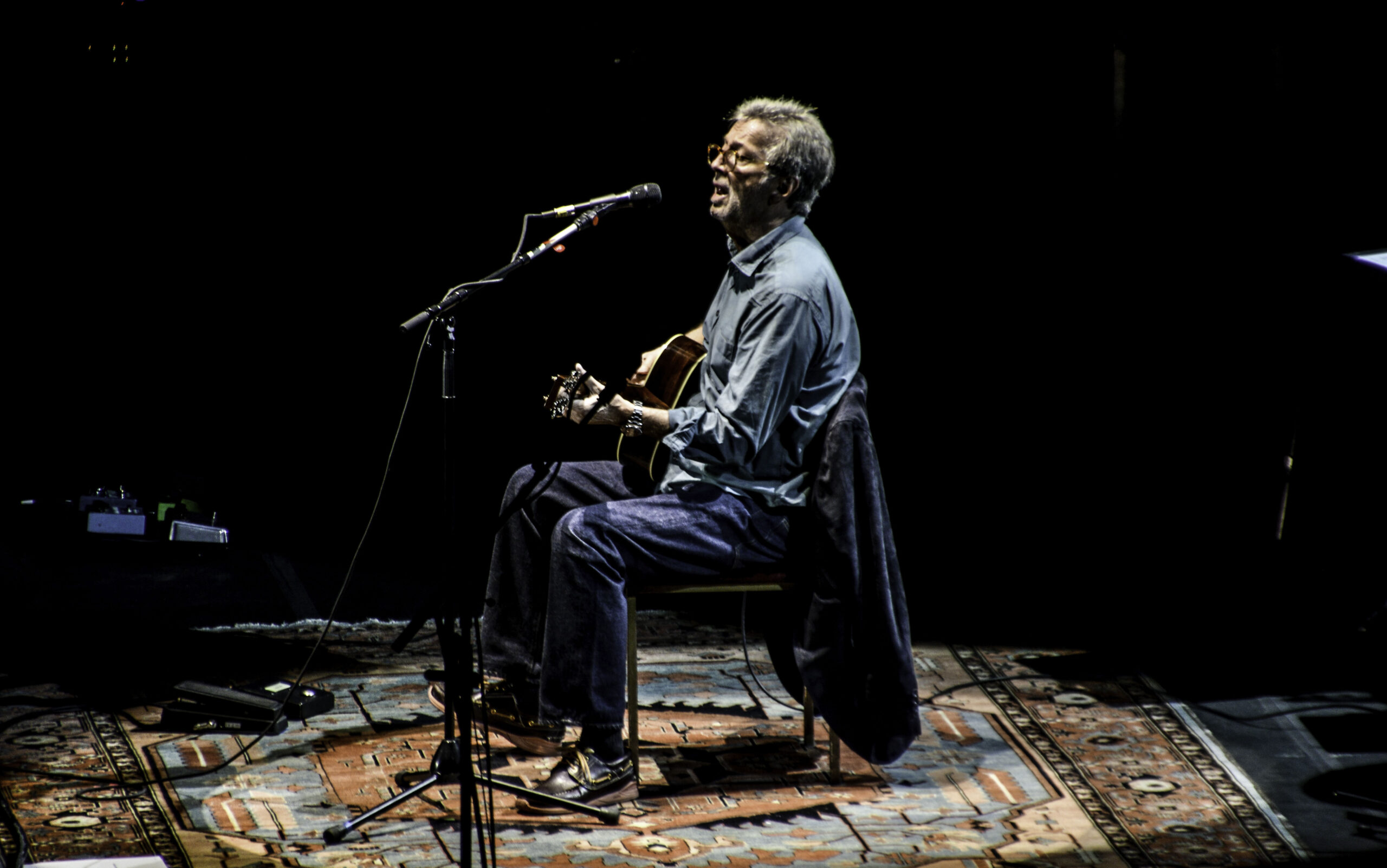
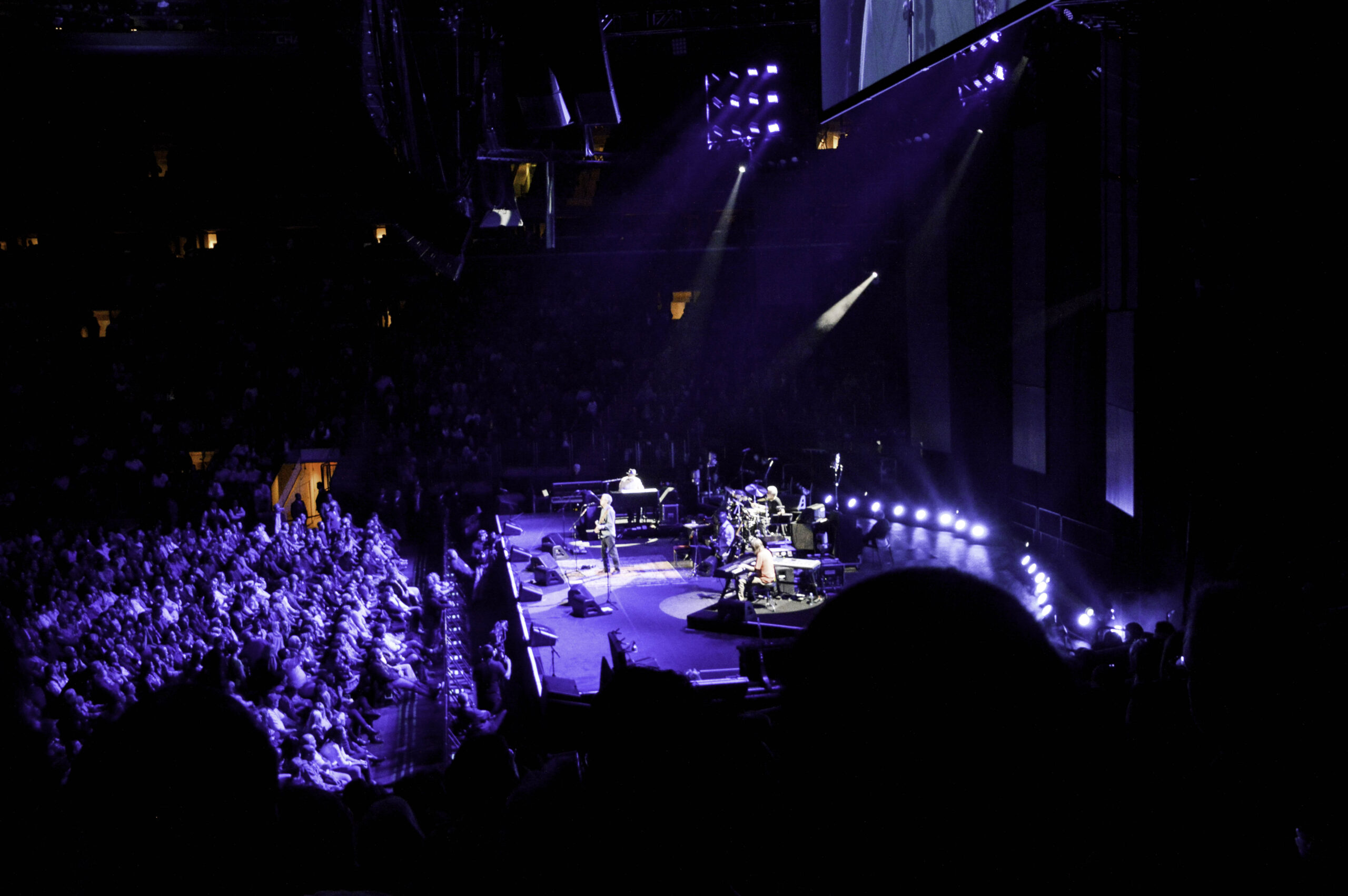
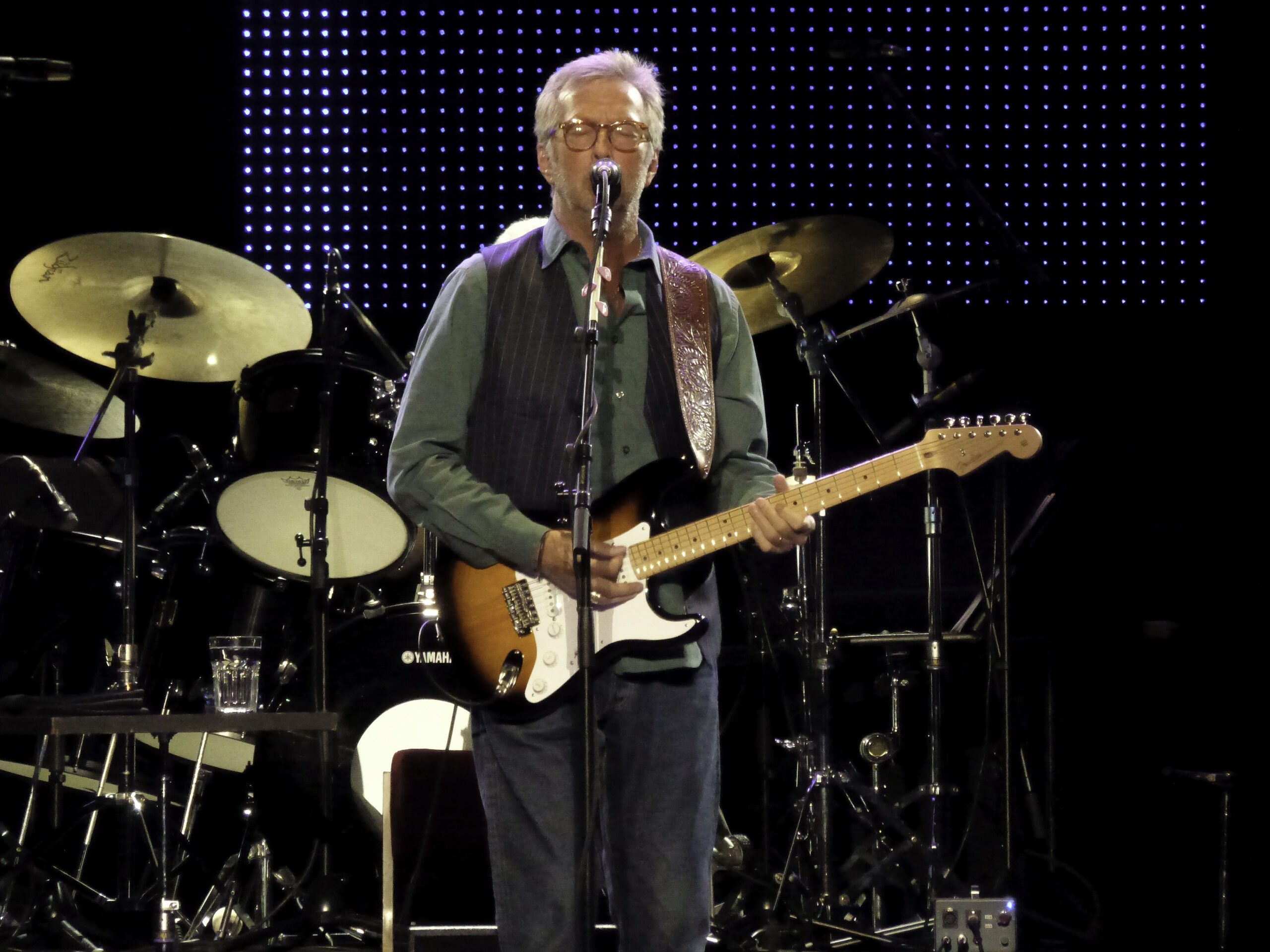
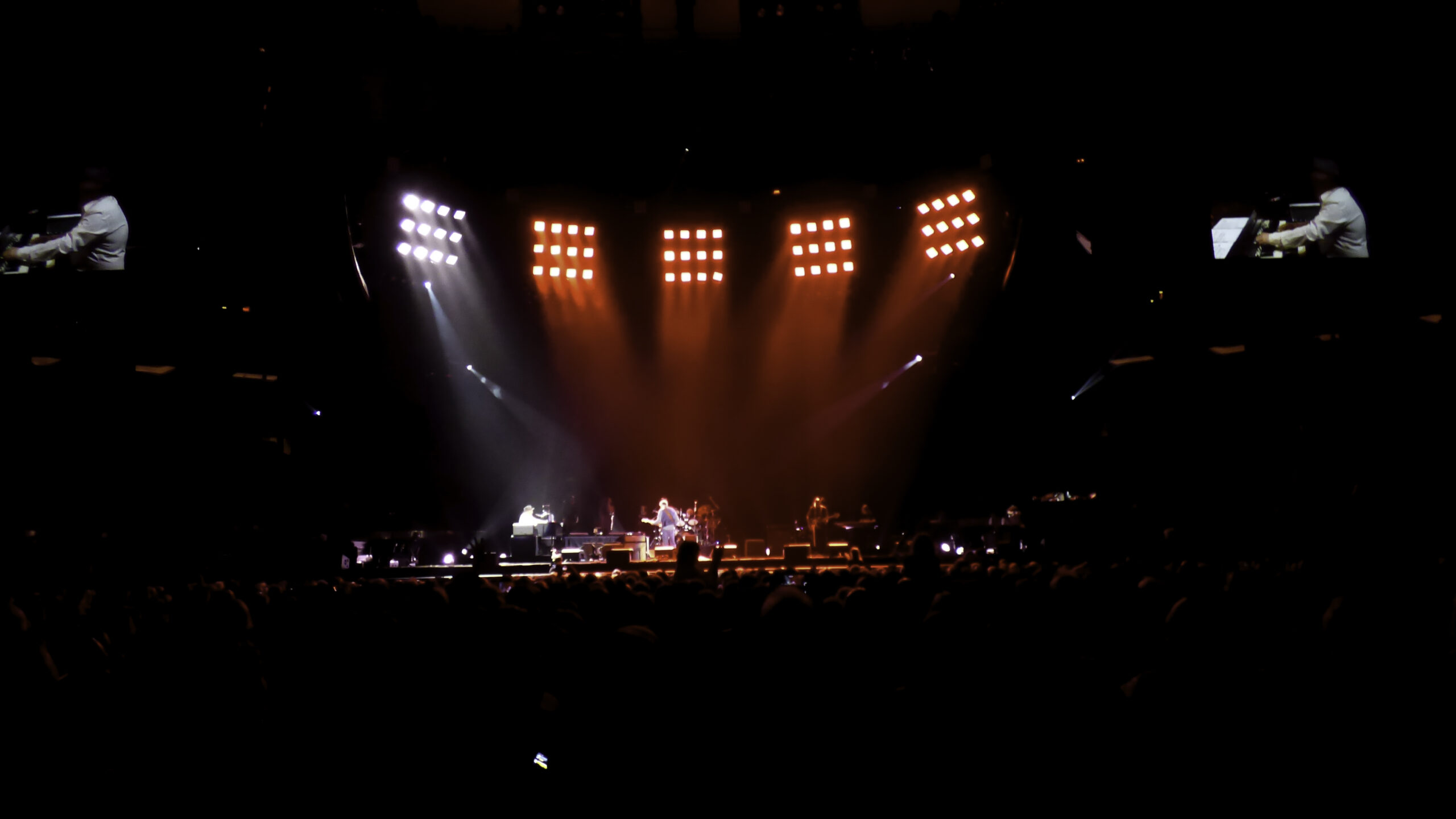
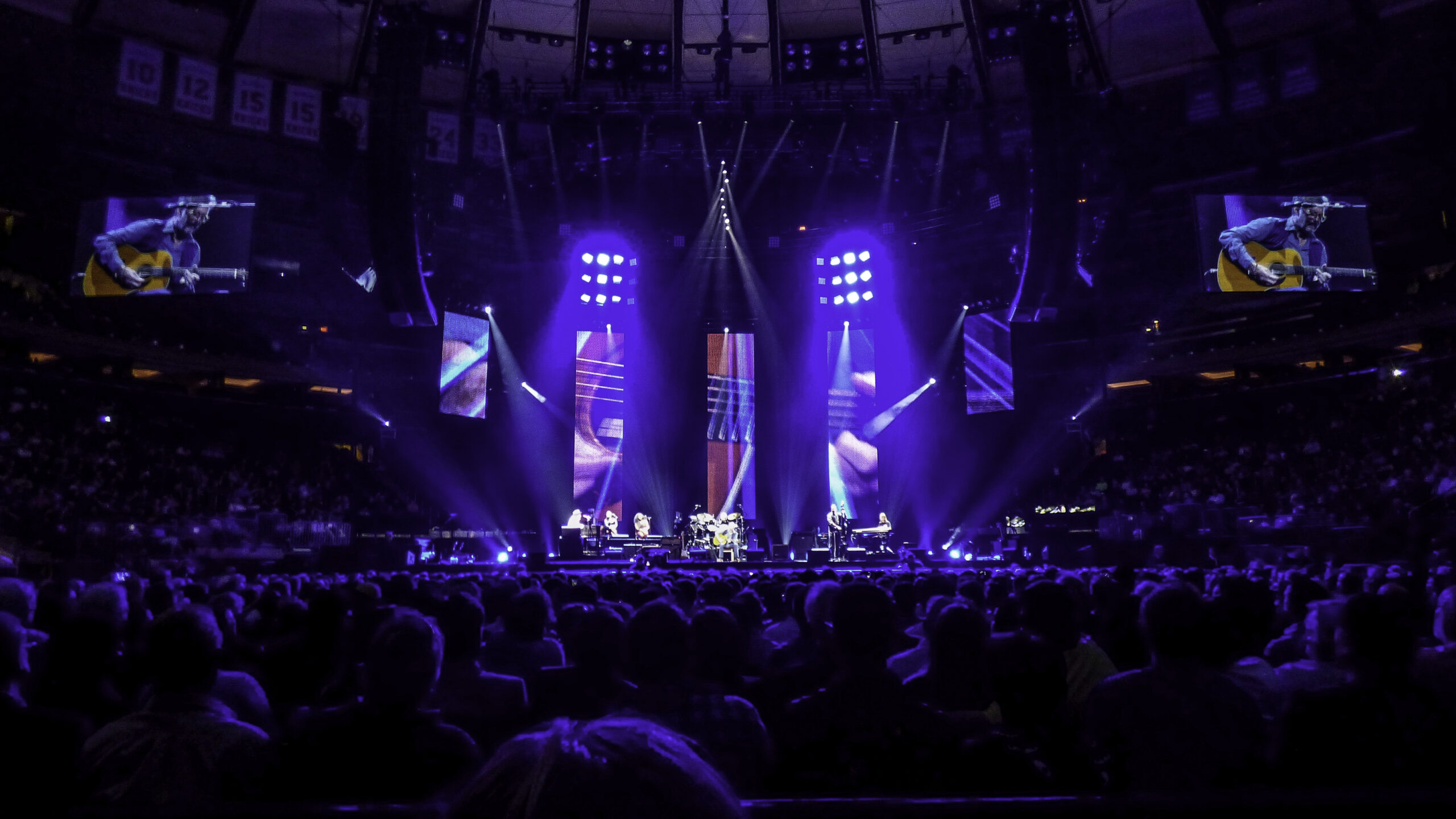
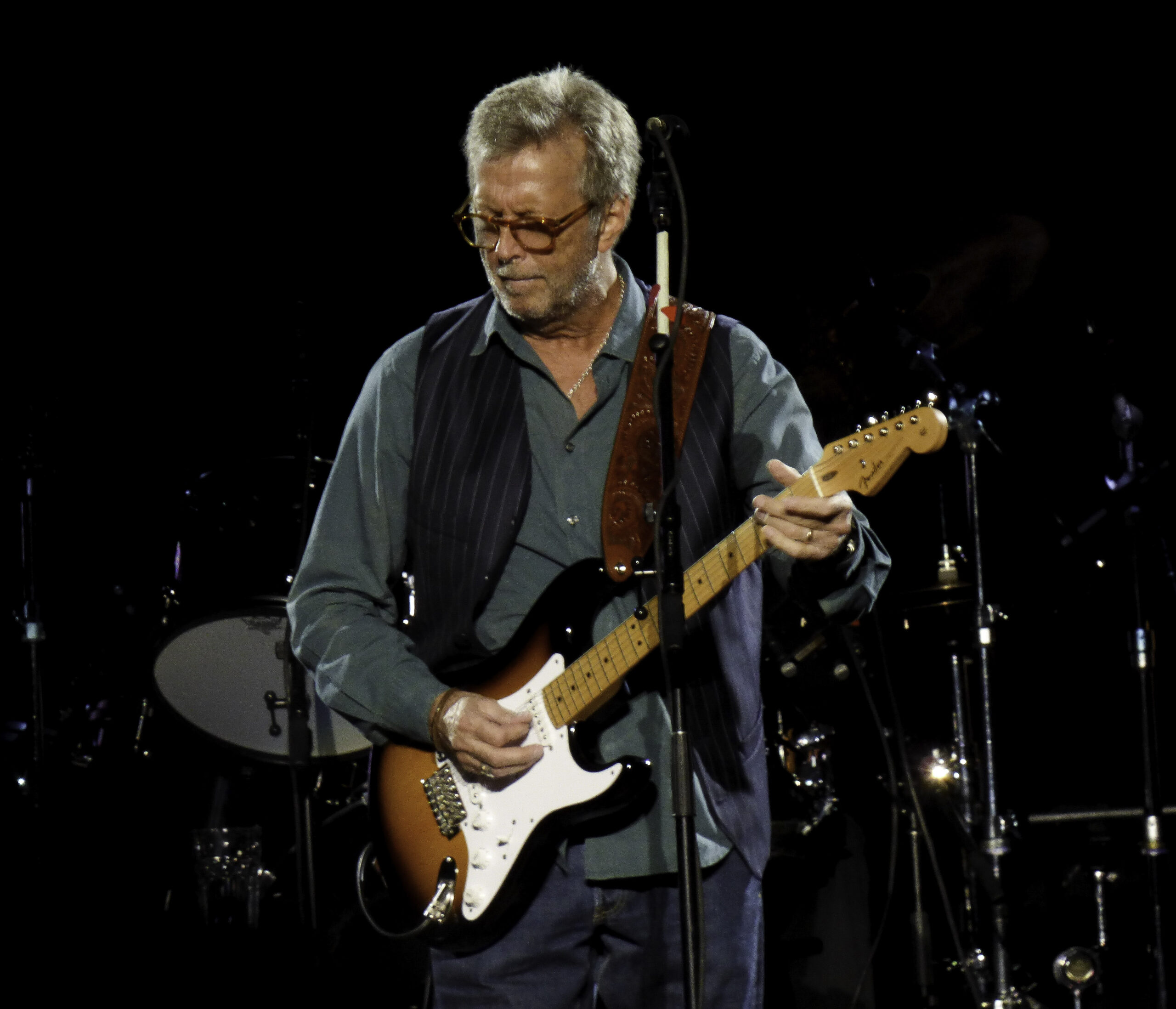
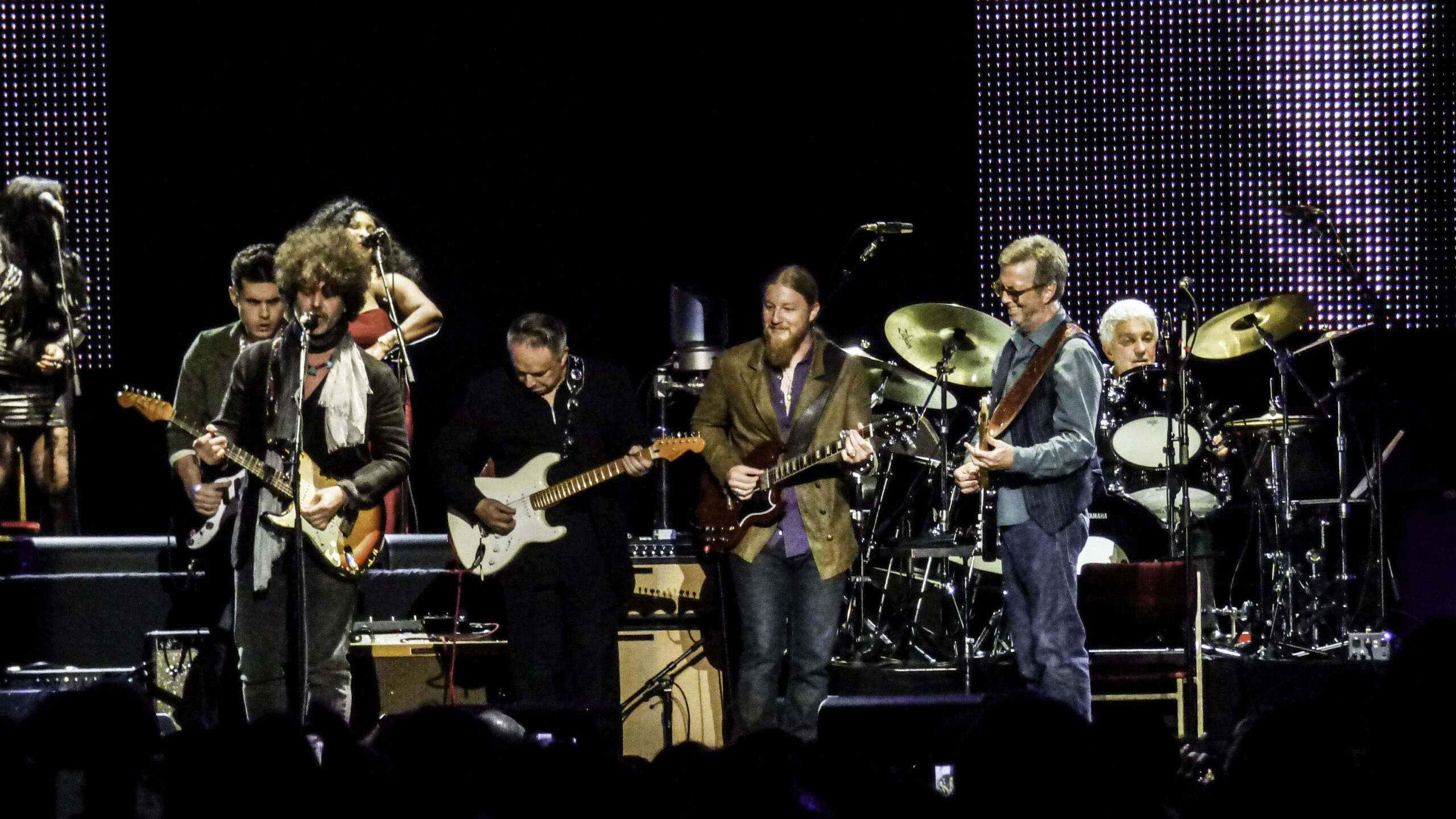
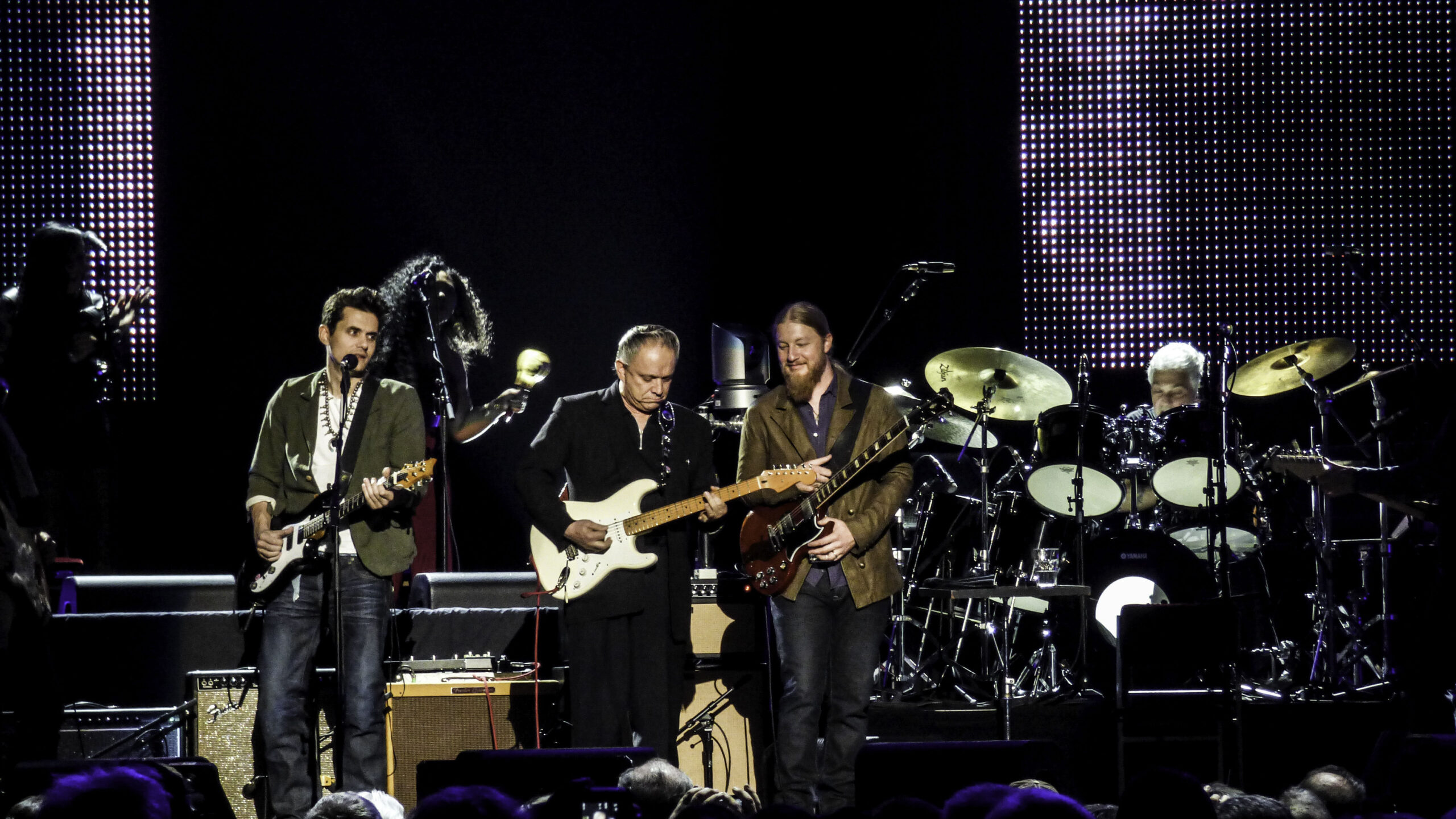
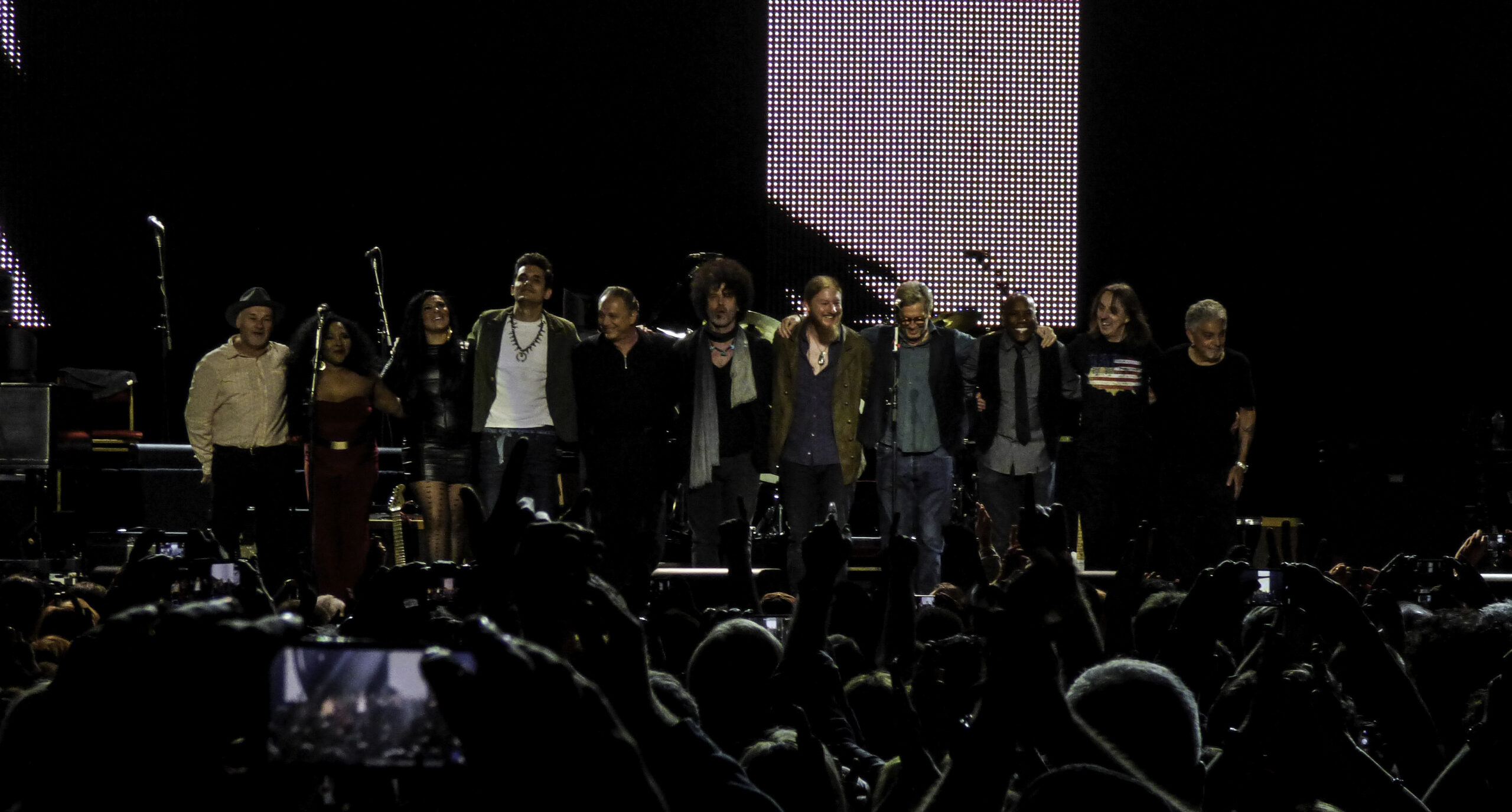
In 2015, Eric Clapton celebrated his 70th Birthday with a pair of sold-out shows at Madison Square Garden. Although his birthday is March 30, the shows didn’t actually take place until May 1 and 3. Clapton was joined by special guests Derek Trucks, John Mayer, Doyle Bramhall II and Jimmy Vaughan on both nights.
Clapton was backed by a band featuring drummer Steve Gadd, bassist Nathan East, keyboardists Paul Carrack and Chris Stainton, and vocalists Sharon White and Michelle John. After a quick salutation to the crowd, Clapton started the show with “Somebody’s Knocking,” and “Key to the Highway.”
The setlist was pretty much the same both nights with John Mayer being the first guest. Clapton and Mayer traded fiery guitar solos with an outstanding version of “Pretending.” Other highlights included a Billy Preston cover of “You Are So Beautiful” with Paul Carrack on lead vocals and an electric version of “Before You Accuse Me” with Jimmy Vaughan.
Trucks and Bramhall helped Clapton close the main set with “Let It Rain.” Late in the night Clapton addressed the crowd “Thank you very much for helping me celebrate this wonderful gift with these wonderful friends.”
For the encore, Eric Clapton brought all the guests back to the stage and ended his ‘birthday’ night with a cover of Joe Cocker’s “High Time We Went.”
Setlist May 1, 2015
Somebody’s Knocking (J.J. Cale cover), Key to the Highway (Charles Segar cover), Pretending (With John Mayer), I’m Your Hoochie Coochie Man (Willie Dixon cover), You Are So Beautiful (Billy Preston cover), Can’t Find My Way Home (Blind Faith cover), I Shot The Sheriff (Bob Marley cover), Driftin Blues (Johnny Moore’s Three Blazers cover), Nobody Knows When You’re Down and Out (Jimmy Cox cover), Tears In Heaven, Layla (Derek and the Dominos cover), Before You Accuse Me(Bo Diddley cover), Wonderful Tonight, Let It Rain (With Trucks and Bramhall II), Cross Road Blues (Robert Johnson cover), Little Queen of Spades (Robert Johnson cover), Cocaine (J.J.Cale cover), High Time We Went (Joe Cocker cover)
Setlist May 3, 2015
Somebody’s Knocking (J.J. Cale cover), Key to the Highway (Charles Segar cover), Pretending (With John Mayer), I’m Your Hoochie Coochie Man (Willie Dixon cover), You Are So Beautiful (Billy Preston cover), Can’t Find My Way Home (Blind Faith cover), I Shot The Sheriff (Bob Marley cover), Driftin Blues (Johnny Moore’s Three Blazers cover), Nobody Knows When You’re Down and Out (Jimmy Cox cover), Tears In Heaven, Layla (Derek and the Dominos cover), Before You Accuse Me (Bo Diddley cover), Wonderful Tonight, Cross Road Blues (Robert Johnson cover), Little Queen of Spades (Robert Johnson cover), Let It Rain (With Trucks and Bramhall II) (J.J.Cale cover), High Time We Went (Joe Cocker cover)
After months of livestream shows, Marble Eyes announce their first series of tour dates, beginning Friday April 30th in Saratoga Springs.
Marble Eyes Tour Poster
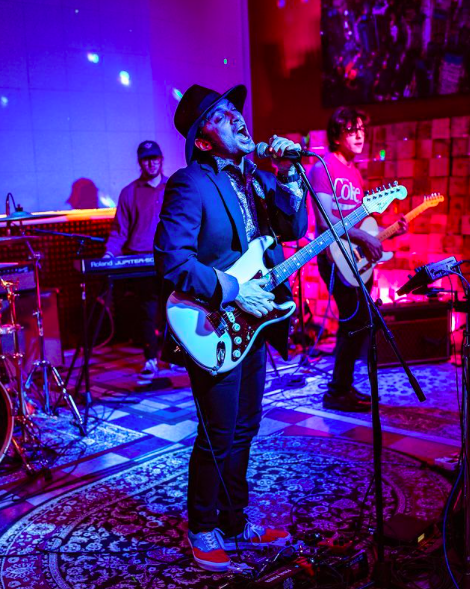
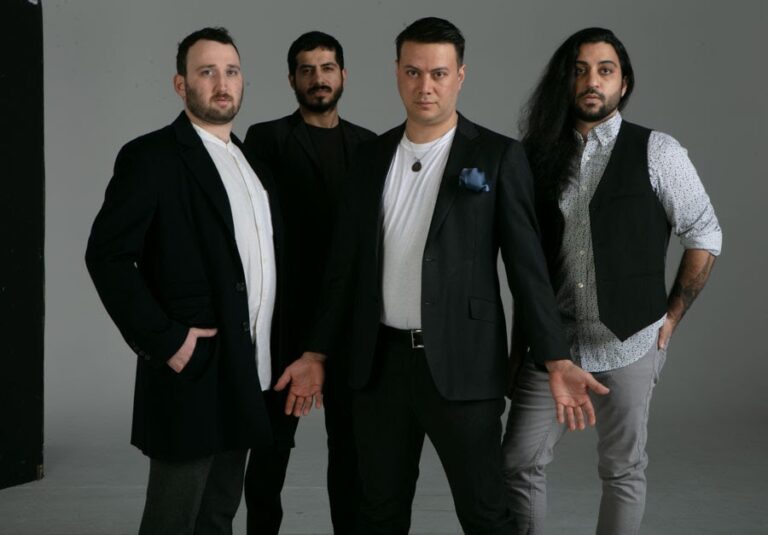
Marble Eyes is a fresh new band that formed during the pandemic, comprised of members from Pink Talking Fish, Kung Fu, The Indobox and more. Using downtime from tour, the band crafted over 40 songs, with a debut album out later this year. Several of these new songs have debuted over the past year during their free “Marble Eyes Mondays” livestreams, every other Monday. You can find these on the nugs.net Youtube page.
The first show kicks off this Friday in Saratoga Springs NY at Putnam Place, followed by the band’s debut in Colorado for 2 nights in Denver at Knew Conscious. They will head back east for some more shows, hitting several states in New England.
Marble Eyes’ 2021 tour dates 4/30: Saratoga Springs NY at Putnam Place 5/14: Denver CO at Knew Conscious 5/15: Denver CO at Knew Conscious 5/23: Wayne PA at 118 North 6/03: Stowe VT at Stowe Cider w/ Zach Nugent 6/04: Pembroke MA at Soundcheck Studios 6/06: Portsmouth NH at The Music Hall “Live Under The Arch Series” – 2 Shows 7/31: Mason NH at The Range supporting Melvin Seals & JGB 8/12: Brunswick ME at The Grateful Campout
New York City in the 1980s was a creative caldron where anything could happen. Painting, graffiti, performance and emergent video art, film, dance, theater and music of every conceivable genre were blending into one another, often in unprecedented ways. In the arts, and maybe music first and foremost, boundaries were not for division but blurring and breaking to make the wholly new. So when Philip Glass, the esteemed minimalist composer, teamed with The Raybeats, the neo-surf guitar super combo, it was the kind of collision of seeming opposites that made perfect sense in these freewheeling times.
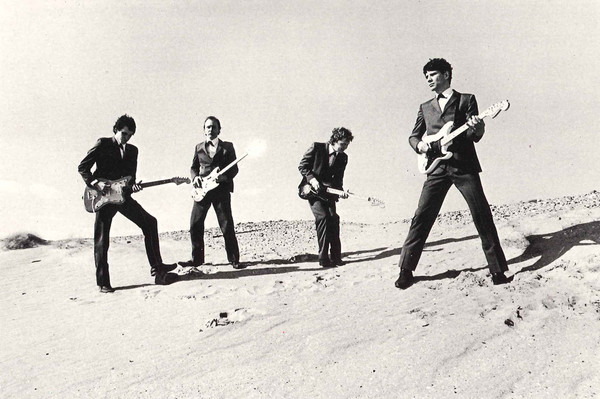
The Raybeats formed in 1979 out of the ashes of the legendary New York no-wavers, The Contortions. The band’s bassist George Scott and drummer Don Christensen joined with guitarist/keyboardist/sax man Pat Irwin (8-Eyed Spy and later the B52s) and guitarist Jody Harris (Golden Palominos and an original member of The Contortions featured on the seminal No New York compilation produced by Brian Eno). When Scott died of a drug overdose in 1980, he was replaced by Danny Amis. Amis would later go on to form the groundbreaking, masked surf guitar band, Los Straitjackets.
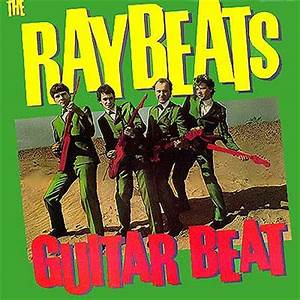
The Raybeats sound was an artsy update on the gutsy guitar instrumentals of fuzz pioneer Link Wray and the twangy surf of Dick Dale. Added to this were copious amounts of space age bachelor pad swank and spy movie mysterioso, along with Stax/Volt grooves and, of course, the experimental noise/skronk of no-wave. It was a high-energy, eminently danceable brew, one that made The Raybeats a popular touring band on the underground rock circuit. With Amis, they recorded an EP Roping Wild Bears (1981) and the acclaimed full-length album, Guitar Beat (1982). After his departure, they waxed just one more album, It’s Only A Movie!, before disbanding in 1984.
The Raybeats went into SoHo’s Greene Street Recording on June 4 – 5, 1982, with Philip Glass, his pianist of choice Michael Riesman and co-producer Kurt Munkasi. None of the parties really knew what to expect according to Irwin. And the world would not hear the fruits of their collaboration until 31 years later, when Glass released the seven tracks on CD in 2013, on his Orange Mountain Music label.
Philly and NYC based label Ramp Local is now putting out the first-ever vinyl pressing of this incredible collection, called The Lost Philip Glass Sessions, just in time for Record Store Day, June 12. The vinyl package includes new cover art and an insert, with liner notes by Pat Irwin and rare archival photos.
The disc kicks off with “Jack the Ripper,” a cover of the classic instrumental recorded by Link Wray of “Rumble” fame. As with many of the offerings here, the tune is anchored by a pounding jungle beat, with some nice retro slapback delay. It also boasts thick sheets of dreamy feedback from Jody Harris to complement Irwin’s heavily-reverbed, deep toned melody guitar.
“Pack of Camels” is one of the tunes that gets a more obvious Glassian treatment. This is snake charmer music, an Eastern modal dance groove with oodles of reverbed melody guitars and spooky Lena Lovich/Laurie Anderson-like vocal accents by Dora Ohrenstein.
According to Irwin’s liner notes, “Black Beach” was intended to recreate the experience of riding Coney Island’s famed roller coaster, the Cyclone. Drummer Christensen had the idea of recording the sounds of the Cyclone and the screams of the riders for use as a drum break, a thought that ended up on the cutting room floor. The B section of has the most obvious Glassian flavor on the album – a hypnotic swirl of interlocking keyboard figures played by Michael Riesman, a longtime member of The Philip Glass Ensemble.
“The Sad Little Caper” features a five-note melodic figure, a baritone guitar counter melody and a cavernous ambience that brings to mind a James Bond flick. Add to this spooky keyboard answers arranged by Glass. These are reminiscent of P-Funker Bernie Worrell’s contributions to Stop Making Sense-era Talking Heads.
The most no-wave flavored piece of the album, “I Do Just What I Want,” comes from a 1985 session at the Living Room, Glass’ studio in TriBeCa. Dirty tenor sax growls, slip slidey fuzz bass and a four-on-the-floor surf beat propel the piece, which features a vocal refrain of the title and punchy orchestral synth hits.
“1.2 Girls” and “Hoodlum Priest” both come from sessions at Surf Sounds begun in 1983. The former owes a ton to the jungle rhythms of Gary Glitter’s 1972 hit, “Rock-n-Roll Pt. 2.” A stomping beat, more tenor growl and a bit of vocals singing the title, one that purportedly was swiped from a tabloid headline. “Hoodlum Priest” begins with the sound of thunderstorm captured outside the studio. More cool spy vibes to a dark funk beat, with lush stereo pans of the bitey guitars – acoustic, electric and a bit of backwards psychedelia.
Like Guitar Beat, this disc proves that The Raybeats were the real deal. They were true sonic minded guitar innovators, working in a punk era that minimized any guitaring that seemed to showcase chops, anything beyond three chords, a grimace and a grunt. Though their career was short-lived, their influence was lasting, with the neo-surf they pioneered in their recordings and in the further works of its members when they dispersed. The meeting with Glass produced some real magic here. It is guitar art of the highest order, one that proves that this quartet was on the level of the critic revered Tom Verlaine/Richard Lloyd-helmed Television.
If you like this disc, you should also check out the exceptionally creative, lo-fi masterpiece Escape, a duo disc made on a budget of $7 (for tape) by Raybeat Jody Harris and Robert Quine of Voidoids and Lou Reed fame. Irwin has been keeping great instrumental guitar art alive via his long stint with The B52s, his contributions to soundtracks like The Rugrats and, most recently, his great PI Power Trio. You can hear what he’s been up to on their debut EP The Walk or at live performances at downtown NYC venues like the Treehouse at 2A. Recommended Tracks: Jack The Ripper, The Sad Little Caper and Pack of Camels
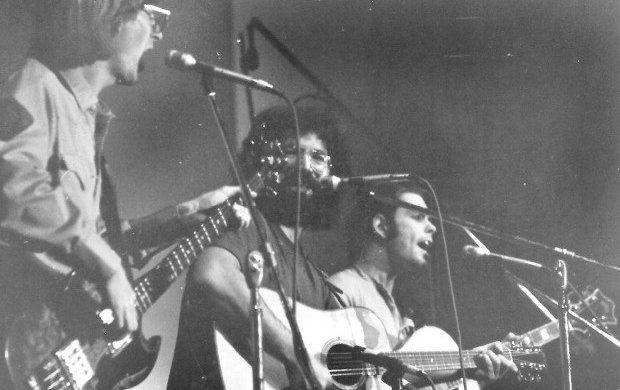
The Grateful Dead played their one and only show in Alfred, New York, 51 years ago today. After gigs at their usual stomping grounds like the Fillmore West and the Family Dog in San Francisco the previous month, May 1970 kicked off with the Dead going to school, playing this evening at Alfred College and the following night at Harpur College in Binghamton. These legendary performances serve as the first known “An Evening With The Grateful Dead” shows, where the band would be joined by others and play interlocking sets.
Their friends in New Riders of the Purple Sage would join the Grateful Dead at Alfred College this evening, and the following night, playing a joint opening acoustic set, before a set of their own music, with a set of electric Dead wrapping things up. It can be argued that this helped lay the groundwork of the formation of a traditional Grateful Dead show: an opening set with more acoustic, straightforward tunes before a set of heavy improvisational numbers.
The show starts off with an acoustic “Deep Elem Blues” with guitarist Jerry Garcia on lead vocals. The harmonies are certainly a little richer on this one, thanks to the additional backing support from their friends in New Riders. In an interview later this year, Garcia would explain this brand new format and the kind of live show it created.
What we’ve been doing in the States lately is having like ‘an evening with the Grateful Dead.’ We start off with acoustic music with Bobby and I playing guitars, light drums and very quiet electric bass. Pigpen plays the organ. Then we have a band we’ve been travelling with, The New Riders of the Purple Sage, where I play pedal steel, not guitar, Mickey plays drums, and three of our friends from the coast, musicians that we’ve known for a long time, are fronting the band. So we start off with acoustic music and then The New Riders of the Purple Sage — it’s like very snappy electric country-rock; it’s kinda hard to describe — and then we come on with the electric Dead, so it keeps us all really interesting, and it’s six hours of this whole development thing. By the end of the night it’s very high.
Jerry Garcia, 5/24/70
After “Elem,” a traditional blues cover the band recently re-adopted after playing once in 1966, the opening set carries on with a unique version of “I Know You Rider.” This one is played at a super slow, folksy tempo compared to the traditional Dead version of later years and features an additional verse with the lyrics: I’d rather drink muddy water / Than sleep in a hollow log.” Definitely not your customary “Rider.” Following this, fellow guitarist Bob Weir promises the rapt Alfred College crowd a song about “simian creatures behind the wheel” and the band delivers a quick take of “Monkey And The Engineer.” At its conclusion, Garcia does not cease strumming and quickly leads the group into a flawlessly acoustic “Candyman.”
At its conclusion, Garcia beckons their friends David Nelson and John “Marmaduke” Dawson from NRPS to join them on stage. They make their collective presence immediately felt with a super-harmonized take on “Me And My Uncle.” This alt-country tune about gambling and betrayal sits square in the Riders’ musical wheelhouse and their presence make this one a truly pleasant version. The same can be said of the “Mama Tried” that comes next.
“Cumberland Blues,” a Dead tune that lends itself perfectly to vocal harmonies, goes off without a hitch next, with all guitars (and voices) on stage very much in synch. Nelson and “Marmaduke” stay on stage for the rest of the opening acoustic set and later contribute to a cover of The Everly Brothers’ “Wake Up Little Susie” which is succeeded by “New Speedway Boogie.” It’s only the tenth ever version of this Dead original penned by Garcia and famed lyricist Robert Hunter and the first ever on the East Coast. It’s a version so tight that it has Garcia and a least one other audibly “whooing” in delight mid-song.
The incredible musicianship and harmonies that serve as this opening act comes to a close with “Cold Jordan,” another traditional cover with hymnal-like lyrics that the Dead and NRPS would play together this year. And then a pristine take of “Uncle John’s Band,” replete with three-part harmonies. While it may not have all the accolades of the following night’s acoustic set at Harpur College in Binghamton, it’s beautiful in its own right and certainly merits a listen.
At its conclusion, Garcia states they’ll be back later with their “electric” stuff and preps the crowd for an incoming Pigpen performance. To start this last portion of the evening, “Not Fade Away” is the selection, done in traditional Grateful Dead-style. Garcia fires off a bevy of emotional guitar riffs and the double drumming tandem of Hart and Bill Kreutzmann only add to the power this one generates. Then, as promised, Pigpen takes center stage and lends his signature vocal prowess and swagger on a cover of Otis Redding’s “Hard To Handle.”
For a listen to this classic acoustic set and the opening two “electric” numbers check out the video below or go here.
The Grateful Dead close out the Alfred College gig with an absolutely ferocious “The Other One,” that’s sandwiched by “Cryptical Envelopment” on both sides, quite commonplace during this era. Bassist Phil Lesh finally gets a chance to let loose and explore the fret board, leading the band through this high octane, psychedelic sequence. The latter half of “Envelopment” gets particularly spacy and intricate at parts.
“High Time” gives Garcia one last chance to sing lead, justifiably slowing things down significantly from the improvisational madness that preceded it. Pigpen then sends the crowd home on a high note, ripping through another R&B-infused cover, this time Bobby Bland’s “Turn On Your Lovelight.” It serves as a more than fitting final number for a show that may have subconsciously helped shape the way live Grateful Dead shows are formatted for years to come.
Grateful Dead – Alfred College, Alfred, NY – May 1, 1970
Set 1: Deep Elem Blues, I Know You Rider, Monkey and the Engineer -> Candyman, Me And My Uncle, Mama Tried, Cumberland Blues, The Race Is On, Wake Up Little Susie, New Speedway Boogie, Cold Jordan Uncle John’s Band
Set 2: Not Fade Away, Hard To Handle, Cryptical Envelopment ->Drums -> The Other One ->Cryptical Envelopment, High Time, Turn On Your Lovelight
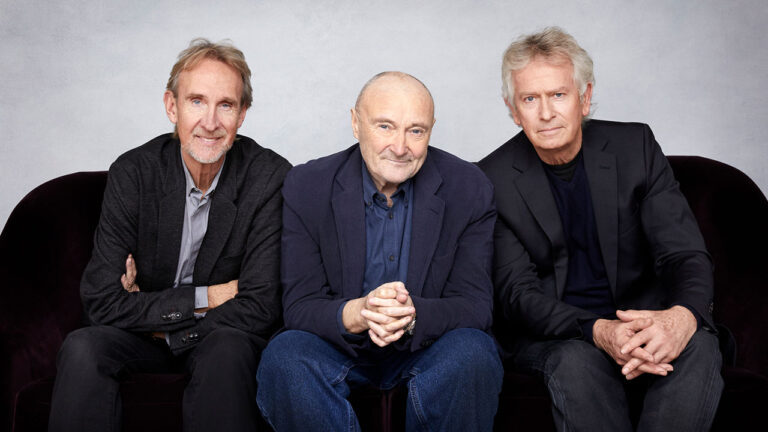
Genesis has announced highly anticipated return to North America for the first time in 14 years with The Last Domino?
Tour dates that will have Tony Banks, Phil Collins, and Mike Rutherford, playing major cities across the U.S. and Canada this November and December 2021. Kicking off at Chicago’s United Center on November 15th, 2021, the group will be joined by Nic Collins on drums, and the band’s long-time lead guitar and bass player Daryl Stuermer. Stops along the tour include Madison Squire Garden which Genesis will be playing at on December 5th, 2021.
Genesis The Last Domino? North American Tour will be one of the first concerts at the brand-new UBS Arena in Belmont Park, New York with the Friday, December 10th , 2021, show. Opening this fall, UBS Arena is a $1.1 billion world-class multipurpose arena next to the Belmont Park racetrack. In addition to being the new home to the famed New York Islanders Hockey Club, UBS Arena is one of the few venues in the world designed with a sharp focus on music.
The Last Domino? North American Tour marks the first time Genesis has performed stateside since 2007’s Turn It On Again: The Tour which went on to be one of the biggest grossing tours of that year playing sold-out arenas and stadiums around the world. One of the most successful and legendary rock bands of all-time, Genesis has sold more than 100 million albums with numerous top 20 hits.
Beginning May 7, tickets will be available through a public on-sale. Visit www.genesis-music.com for tour, ticket, and official VIP package information.
Psychedelic funk-rock group, The Chris Ruben Band, released their new album Madness on Repeat on April 20.
Cover Art Credit: Will Wood Visuals and Mark DiMattei
This six-piece Long Island band is nothing short of their fiery and forceful reputation. What started off as Chris Ruben writing his own songs at 16 began to turn into something more in 2014. At this time, The Chris Ruben Band was initially formed, but players got interchanged until the ideal lineup was created.
The band started off playing in basements, but they shortly made their way onto the local music circuit. The group consists of Chris Ruben on lead guitar/vocals, Brendan Allan on bass, Frank Iovine on synthesizers/saxophone, Eugene Iovine on keyboards/cello, Nick Marino on guitar, and Russell Miller on drums.
Photo Credit: Mark DiMattei
Madness on Repeat is the culmination of eight years of songwriting and use of numerous studios. The album is reminiscent of old-school rock while also layering a psychedelic tone. Ruben’s vocals drive each head-banging track alongside the dynamic guitar work. The group smoothly blends their sounds together to develop a modern funk.
“Unsure” opens the album with a sense of groove and hard-hitting lyrics. It eases listeners into the liveliness of Madness on Repeat, and the high-octane energy developed. The Chris Ruben Band keeps the album upbeat throughout with an epic guitar solo in “Starfish” and driving drums in “Prayer for Sadness.” Madness on Repeat closes with a sensational saxophone on “Hernia” while not losing that driven passion they provide.
The Chris Ruben Band has become a staple in the Long Island music scene. They have performed at various venues there in addition to their performances at SXSW, The Jones Beach Bandshell, and more. Until those events are back up and running, The Chris Ruben Band has a livestream performance on April 29. The group will be live-streaming Madness on Repeat, tickets available here.
Brooklyn-based rock group Toshio Band has released their new single “The Devil Is Chatting In My Ear,” leading their second EP Lock Your Doors.
Photo Credit: Sivan Miller
Consisting of frontman Tim Lavigne on the vocals and bass, Daniel Imana on drums, Nick Valle on guitar, Ben Deixler on keyboards and Brandon Garcia on percussion, all members of Toshio Band contribute vocally with a style reminiscent of alt-rock from the 90s and early 2000s. Their central themes come from ominous and dream-like films and literature. The band is influenced by legendary rock artists David Bowie, Tom Waits, Charles Mingus and Roy Orbison.
The new track “The Devil Is Chatting In My Ear” is the lead single from their second and forthcoming EP, Lock Your Doors. The EP has a neo-noir concept exploring a hero’s journey through hysteria and gloom in an unforgiving world. It presents themes of an anti-hero, prevalent in cinematic works from Quentin Tarantino, Jim Jarmusch and William Blake and with musical influences coming from The Pixies and Tom Waits. Lock Your Doors was mostly written and recorded during the pandemic and is a continuation of their debut EP A Splash of Blood that was released in 2019.
Toshio Band dives into temptation and dwells in devilish places in “The Devil Is Chatting In My Ear.” The song starts with distorted guitar sounds, immediately creating a feeling of chaos and getting into trouble. The line “The devil is chatting in my ear” is anaphoric and straight-forward, every time you hear it, you can imagine reaching a point of giving into doing something you shouldn’t. The guitars settle and the beat becomes whimsical as Lavigne sings the line “What hath the night to do with sleep?” from the poem Comusby John Milton, which he added in to get a quote from the devil himself and to keep consistent the theme of mixing literature into the music. Then returning to chaos, the track leads you further into disturbance until it ironically ends back on the whimsical sound.
“The Devil Is Chatting In My Ear” will be self-released by the band on Friday, April 30. This is the first of many forthcoming releases for the band this year. Their second single “Cassandra” releases on June 4 by the label Spirit Charity. Lock Your Doors will be another self-release, coming out on June 25.
Central New York’s Creative Concerts have announced that Blackberry Smoke will perform at Apple Valley Park in Lafayette, NY on Tuesday, June 29. Tickets go on sale to the general public this Friday, April 30 at 10am at applevalleypark.com
Apple Valley Park is located in beautiful LaFayette, NY. With its rural atmosphere, rolling hills, and expansive fall foliage, it has proven to be a wonderful home to the annual LaFayette Apple Festival since 1973. More recently it has expanded to host other live entertainment events, including a few successful drive-in concerts in the fall of 2020.
Throughout their career, Blackberry Smoke— vocalist/lead guitarist Charlie Starr, guitarist/vocalist Paul Jackson, bassist/vocalist Richard Turner, drummer Brit Turner, and keyboardist Brandon Still—has embodied Georgia’s rich musical legacy, honoring the people, places and sounds of their home state. As the band celebrates their 20th anniversary this year, their reverence for Georgia has only deepened.
On their latest album, You Hear Georgia, the follow-up to 2018’s critically acclaimed Find a Light, Blackberry Smoke is further celebrating these roots with 10 new songs that feel like Georgia, accented by the addition of Grammy-winning producer and fellow Georgia-native, Dave Cobb (Jason Isbell, Brandi Carlile).
Over the years, Blackberry Smoke has toured with ZZ Top, Zac Brown Band, and Eric Church, while the group’s last four full-lengths reached the top 10 of the Billboard country charts, with two of these albums (2015’s Holding All The Roses and 2016’s Like An Arrow) landing at No. 1. You Hear Georgia reinforces that the band members have come so far together because they also can rely on one another for support and creative direction, no matter what the circumstances.
Having played music together for so long, it does become a sort of a telepathic thing, where we all are nodding our head at the same time, like, ‘A-ha, I know what this feels like,’ or what it should feel and sound like. That’s what makes it so enjoyable to be in a band: to play with the same dudes decade after decade. Because when you land on something that works to you, you don’t want to stop. You want to keep doing it.
Charlie Starr, vocalist/lead guitarist for Blackberry Smoke
Like previous events announced in this outdoor series, events will be socially distanced, with fans being able to purchase tickets in roped-off PODS (Personal Outdoor Dance Space) for parties of 2, 4 or 6. In an effort to create a safe experience for guests, a carefully throughout site plan has been developed allowing for temperature screenings and surveys to be conducted upon entering the event grounds.
To adhere to social distancing guidelines, all PODS are spaced a minimum of six feet apart. A variety of food and beverage options will be available for purchase. Site map and FAQ for the venue can be found at applevalleypark.com/faq
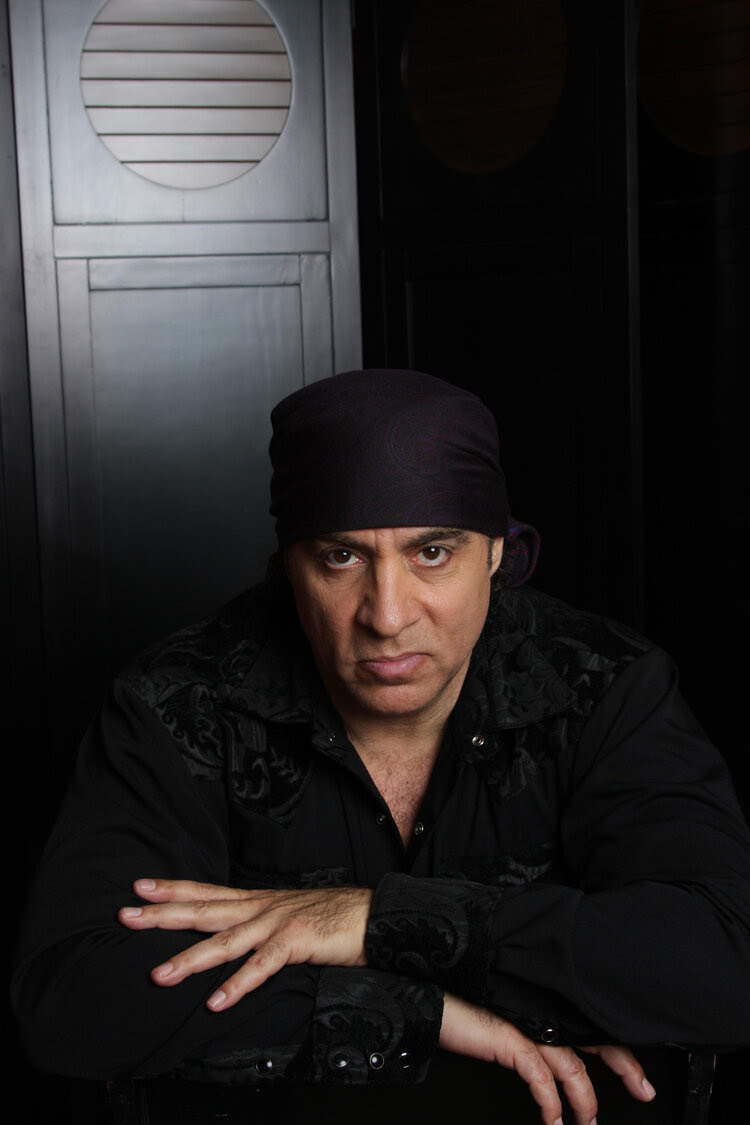
Governor Ned Lamont today announced that the State of Connecticut, through the State Department of Education, is partnering with TeachRock to launch an innovative, standards-aligned arts curriculum in schools statewide that empowers teachers to engage with students using the history of popular music and culture.
TeachRock works with participating school districts at no cost, fostering a classroom environment where lesson plans incorporate culture and music into history in a way that resonates with students. Presented by Rock and Roll Hall of Fame legend Steve Van Zandt’s Rock and Roll Forever Foundation, TeachRock has worked directly with districts and schools in California, New Mexico, New Jersey, and New York over the past several years. This spring, Van Zandt has created “Little Steven’s Virtual Classroom Tour” that utilizes Zoom to provide classrooms with a visit, as well as fundraise for the foundation.
Research has shown that knowledge of and participation in an arts education, especially during the formative years, can aid in the development of students as culturally responsive, compassionate, creative, and contributing members of society. TeachRock’s development was facilitated by experienced educators to weave arts and music history through core subjects such as English and Social Studies. The lesson plans go through the intersection of social, political, and economic forces within popular culture and how music has shaped and reflected those forces across the centuries.
“When I was a teenager, school wasn’t reaching me,” TeachRock founder Steven Van Zandt said. “It didn’t speak to my needs or interests, and I saw no future in a society I was supposed to be a part of. Then the Beatles saved my life. Rock and roll and soul. The arts gave me the confidence to forge a path in the world… We need to reach the part of their brain that responds emotionally and instinctively, that uses imagination rather than facts and specifics. Something that makes them relax and feel more comfortable about the very process of education. And right now is when kids need us the most.”
“Especially during this time of a pandemic, we must give educators the tools they need to innovate from the inside out to engage students in creative ways,” Connecticut Education Deputy Commissioner of Education Desi Nesmith said. “TeachRock’s unique curriculum does that by connecting students to history, culture, and human experiences while positively impacting their social-emotional development.”
Each year, districts can apply to participate in the TeachRock program. The number of TeachRock schools will expand annually across Connecticut, implementing the curricula into classes and online libraries.
TeachRock was launched by Little Steven and the Founders Board of Bono, Jackson Browne, Martin Scorsese, and Bruce Springsteen, TeachRock.org has provided free, standards-aligned resources to help teachers, students, and families succeed for more than a decade.
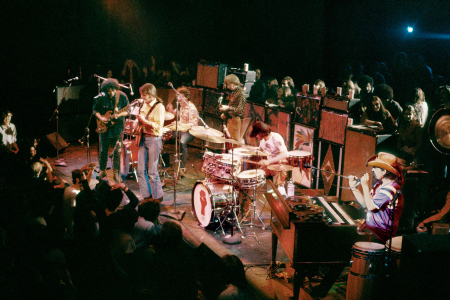
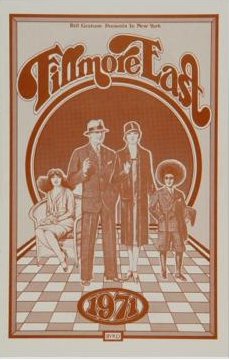
By 1971, The Grateful Dead had firmly established the Fillmore East as their New York City base of operations. But as the saying goes, all good things must come to an end. The Fillmore East would be shuttered by the end of the summer, but not before one last run of Dead shows, which began 50 years ago today. The five-night run would serve as the band’s last hurrah at Bill Graham’s legendary East Village venue. It’s also the source of material for one of their essential live albums, Ladies and Gentlemen….The Grateful Dead. Tonight’s show features some iconic Dead tunes that were still in the early roll out stages combined with some short-lived classics.
The band wastes no time and dives right into a roaring “Truckin’” to open the show. It’s a crisp, early version of this Dead classic to-be that was barely a year old at the time. It would also serve as the opener for three other shows during this Fillmore run. After requesting some “cranking up” of the monitors, Jerry Garcia then leads the group through “Loser,” carrying over the alt-country psychedelic vibes established earlier by the New Riders. A short, but hauntingly beautiful guitar solo from Garcia highlights this one. The collective mood then gets lifted in a major way with “Hard To Handle.” The charismatic Pigpen, who has several shining moments this evening, takes the lead on vocals in his signature, blues-riddled style. Garcia and drummer Bill Kreutzmann seem to take turn raising the fervor and intensity which yields a hearty early jam.
After a vintage extended tuning session, the show resumes with “Me And Bobby McGee,” this time with Bob Weir leading the way on vocals for a cover song. Afterwards, Weir shouts out some more friendly advice to the monitor guy before “Cold Rain And Snow” lifts off. Garcia’s aggressive guitar tone and thunderous bass notes from Phil Lesh give this always emotional number a little something extra tonight. This sets the stage for Pigpen to take charge once more, this time with harmonica in tow for “The Rub.” This Lightnin’ Hopkins cover, also known as “Ain’t It Crazy,” would only be played 13 times by the Dead, properly shelved for good after Pigpen’s passing.
Weir then gets back on the mic for “Playin’ In The Band,” another soon-to-be Dead classic that was debuted only months earlier at the Capitol Theater in Port Chester, NY. It’s essentially just a run through of the composed portion, with no jam to speak of with the song still in its nascent stage. Garcia then notes that “we used to do this song acoustically” before an uptempo rendition of “Friend Of The Devil” takes place.
The first set then wraps up with a few already established staples of the Grateful Dead’s live catalog. The instrumental segue between “China Cat Sunflower” and “I Know You Rider” is near-seamless, with Garcia delivering a flurry of emotional guitar fills on the latter. “Casey Jones” then drives the Fillmore crowd off to intermission, capping off a whirlwind first set. Garcia and Weir both take it upon themselves to advise everyone they’ll return shortly.
The Dead kick off the second set at the Fillmore in grand fashion with a supercharged “Morning Dew.” Steadily progressive rhythms supplied by Lesh and Kreutzmann secure the framework for another Garcia guitar solo that drips with emotion, much to the crowd’s delight. After a quick run through “Beat It On Down The Line,” it’s Pigpen’s turn again as he and his harp rip through a cover of the bluesy “Next Time You See Me.”
Pig then gets back behind the organ for “Bertha,” another fresh tune at the time, debuted only months ago. Afterwards Garcia seems to make note of Mickey Hart, who had recently begun his hiatus from the band, “not being with us tonight” but that his grandmother was in attendance. This clears the deck for “Sugar Magnolia.” Garcia has the wah effect on full blast for this one, almost overpowering everything else. After some more griping about the in-house monitors, the Dead’s cover of Smokey Robinson and The Miracles’ “Second That Emotion” smooths everything over. It would the fourth performance of this song that the band only ever played five times – all in April of 1971.
But this would not be the cover selection that blows the doors off the second set. That honor belongs to the “Good Lovin’” that follows, sung in Pigpen’s signature style and immediately supplemented with a majestic drum solo from Kreutzmann. As the wave of “Drums” begins to recede, a loose form of “Good Lovin’” reemerges, spurred on by Pigpen and his improvisational crooning. With the rest of the band fully locked in behind him, this sequence sees the Dead at their full powers and steals the show.
Things would slow down considerably after this, with “Sing Me Back Home,” another Dead tune with a short shelf life. Although it would be played the following two nights as well. One of the last inter-song tuning sessions is memorable as this one has a distinct “Spanish Jam” element to it. Finally, the opening shuffle beat of “Not Fade Away” takes shape, initiating the final sequence of the evening. In following tradition, another silky smooth transition follows into “Goin’ Down The Road Feeling Bad” before turning back into NFA. The Grateful Dead then treat the ravenous crowd to an “Uncle John’s Band” encore, wrapping up the first night of this last ever run at the Fillmore East.
Grateful Dead – Fillmore East – New York, NY 4/25/71
Set 1: Truckin’, Loser, Hard To Handle, Me And Bobby McGee, Cold Rain & Snow, The Rub, Playin’ In The Band, Friend Of The Devil, China Cat Sunflower-> I Know You Rider, Casey Jones
Set 2: Morning Dew, Beat It On Down The Line, Next Time You See Me, Bertha, Sugar Magnolia, Second That Emotion, Good Lovin’-> Drums-> Good Lovin’, Sing Me Back Home, Not Fade Away-> Goin’ Down The Road Feelin’ Bad-> Not Fade Away