Nestled deep in the hills of Virginia, Floyd Fest 2021 kept true to its theme ‘Odyssey” when it provided a dreamy, cantina-like oasis for curious seekers and seasoned travelers alike. Artists including Goose and Andy Frasco & The U.N. blended into the crowd for Billy Strings and waited patiently for Leftover Salmon between their own sets in order to bask in the familiar and the favorites.
Fire ritual spoiler alert
But what really happened that weekend? Why were there mystical creatures? What was that thing that happened with the full moon and the fire ritual performed by Goose on Friday?
The Quest
Most that have traveled that far from home for a beach with tented structures that barely qualify as “chair”. Beverages served inside the protective outer layer of a large fruit elevate one’s lounging experience.
Attendees resorted to extreme measures by day 3 of hiking the hill from camp to the main stage.
Others have always felt the magnetic pull of the electrical currents flowing through consoles responsible for light and sound. The wise were beckoning.
Lockn’ The Wise looks prepared for Fred the Festival
Nestled down in a small valley of rolling hills, tents lit like little huts in a shire. Moon, red like a western sun, rising through the faraway wildfire’s haze. After hours upon hours of travel, it seemed like a mirage, or a figment of imagination.
The Village
Floyd traveler familiar with the midday sun and opts for shade and to see Chupacabra’s set.
Uncertainty and overwhelm upon arrival. The seeker arrived to a new town, hustling and bustling as it has for many years. Floyd Fest attendees in 2001 seem more like townsfolk in a small village nestled far away from any industrious city. Everyone goes about their business. No questions. Each and every person appears to have a job, a home, and a role within the community.
This staff security member has been collaboratively painting with the same group for over 10 years.
There might have been plans to have a meeting of the minds and spirits, but the lack of cell service created a mentality of embracing what was, not what could have been. Any plans to meet friends were let go at which point, the true experience began.
Moon is tight
The Celebration
Off in the distance, there was music. Light began seeping onto the edges of the forest. Following blindly on the trail, the hero contorted their way through campsites, following weaving trails until a light began to show.
As the path opened up, a mass of people gathered in the shape of a bowl became illuminated by a flood of beautiful shapes and colors. Attendees entered the area with joy and music. It felt like a dream, looked like a dream, and had the soundtrack of Billy Strings. Everyone was there.
Certain supernatural laws seemed to morph when moving through the dimensional force field that was the gate of Floyd Fest 2021, Friends seemed to appear, exactly at the perfect time, by sheer luck and with a dash of synchronicity. It was often in those moments that we would miraculously have our friends cross paths right in front of us.
Roger Gant composing ideal combinations of shapes and colors for the moment.
It was great to run into friends that I have no seen since shutdown. Usually we get to see each other when I stop in their city for tour. I was not expecting so many reunions.
Roger Gant, lighting director, Billy Strings
A patient Goose (member) Jeff Arevalo waiting for Leftover Salmon to begin.
This was more than just a little town, it was a place for many woodsfolk, elvish types and wizards to gather and celebrate the diversity that has successfully coexisted.
Billy Strings’ bassist Royal Masat
It was a place for young warriors to display the fruits of their training and for elders to inspire support within and between communities.
Goose Connections
One wiser, more experienced female traveler easily recognized the look of wonder and amazement on a young couple’s face. She approached the two after Billy’s encore and asked “Is this your first time?” The two cautiously nodded, unsure of why this was being asked. The elder was elated and welcomed the couple. She had spotted the newcomers early in the night and just had to know if her gut instinct was correct, then promptly welcomed the two. She shared that she had been attending Floyd Fest for more than a decade and it felt just as good in 2021 as it did her first year.
This long time fan of the Grateful Dead was blown away by the kindness of Goose Fans at her first show.
The beautiful thing about gathering for Floyd Fest 2021 is that the travelers and the seekers were able to share Goose through one of the highest energy ultra marathon birthday celebrations to date. Many Floyd regulars had only studied Goose through youtube and live streams, but Friday night, they were able to experience a proper southern Goose Flodown. Feet stomped. Crowd pulsed. Andrew Goedde’s smoke with white lights during “Arcadia” awakened the spirit of Tennessee Ted for the first time since Pelham. It could not only be seen, but also heard thanks to the masterful sound engineering by Sam Bardini.
Bathing in light thrown by Andrew Goedde. It would not have been the moment it was without these lights.
After two and a half hours of anthem after anthem, the young couple ran into the elder as one would in that fantasy fiction we seemed to be living in at Floyd and they were able to ask knowingly, “first time?”
Peter Anspach giving a warm and friendly greeting.
Convergence and Birth
On the eve of the full moon, there was a ritual burning of candles for one chosen bassist. This converged with a chemical reaction from energy between musical newcomers with the wise seasoned ones. The next breakout band emerged from the garden stage around the same time Turkuaz performed their Talking Heads set.
An Empress of Organos
Melt
Melt from NYC had a full and engaged crowd despite fierce competitors at the main stage. Empresses Veronica (vocals) and Marlo (guitar) seranaded the garden stage with dynamic melodies.
An Echo of A Rose, Marlo
Keys and horns dances perfectly with bass and drums. Respect for one’s bandmates for melt looked like laying down during a member’s solo. This band enchanted anyone within earshot.
Melt showing respect for their bandmates
The traveler returned home with tales of strings and salmon as well as intel on Melt for ‘heard them first’ stock brokers everywhere.
Cody the Wise
At the end of the day, Floyd Fest was summed up best by traveler Cody Wimer when he shared his thoughts on Floyd:
Home festival. Best place. Hot days. Cold nights. Music fire.
Editor’s Note/Update: Due to concerns over Covid-19 Delta Variant, theSound Waves concert with Sxip Shirey at White Feather Farm is being rescheduled from August 5 to September 9.
Sound Waves at White Feather Farm is a new global music series that will be held Thursdays, from August 5 – September 23, at Broken Wing Barn in Saugerties. The open-minded line-up will present world-class artists in genres ranging from Gypsy jazz and Afropop to Latin Boleros and Native and African-American folk, soul and gospel.
The Sound Waves series is being produced by Saugerties-based Isabel Soffer of Live Sounds and globalFEST and Olivier Conan of Barbés Brooklyn, in partnership with White Feather Farm, the site of the acoustically-resonant, 280 year-old Broken Wing Barn. The Sound Waves line-up includes:
August 5 – The World of Sxip Shirey
Sxip Shirey tests the edge of music using his vast imagination to create playful and mischievous songs using familiar objects, mutant instruments and reconfigured sounds. he acoustic beauty. “Sxip Shirey’s imagination for sounds, sound combinations and textural color makes him one of the most curious combinations of composer-sound designer-performer meets storyteller-curator.” — CD Baby “Eclectic and original” – NPR’s Fresh Air.
August 19 – West Africa Dance: Mandingo Ambassadors
The Mandingo Ambassadors was founded by griot-guitarist Mamady Kouyaté in 2005. A veteran of the great orchestras of the golden age of Guinean dance bands in West Africa, Mamady is a living library of musical science inherited from his ancestors and from a half century of experience as an arranger, band leader, accompanist and soloist. Representing a musical tradition that stretches back hundreds of years, Mamady plays with a melodic virtuosity that pulls in listeners. “Dazzling vocal and guitar patterns over a rhythm section that is like a perfect system” – NYTIMES.
August 26 – Martha Redbone: Native American and African American Soul, Blues and Gospel Martha Redbone is a Cherokee-Choctaw and African-American singer-songwriter, composer and educator known for her unique gumbo of folk, blues, and gospel fused with elements of traditional Native American music from her childhood in Harlan County, Kentucky and infused with the eclectic grit of pre-gentrified Brooklyn. “Americana’s next superstar”– Village Voice.
Wrembel may be the foremost interpreter of Django Reinhardt in North America. Whether sticking to the French master’s arrangements or taking the music into new territory, Wrembel has always treated Django like a classical composer rather the cliché paragon of swing and speed the master guitarist has often been portrayed as. In addition to Wrembel’s work as a film composer and performer (he wrote the theme song to Woody Allen’s Midnight in Paris and scored Allen’s last movie) Wrembel has delved into the study of Django’s “Improvisations” – the solo pieces that Django recorded throughout his life which were precisely scripted and more akin to classical preludes than jazz improv. Wrembel painstakingly transcribed and memorized the entire cycle, highlighting the influence of Ravel and Debussy on the music, as well as the original compositional approach. Wrembel released the album Django L’impressionniste back in October 2019 – a stunning work, which he premiered at the prestigious Lyon Opera house, in France. “A revelation” – Rolling Stone Magazine.
Sept 23 – Miramar: The Golden Age of Latin American Boleros
Miramar draws its inspiration from the golden age of romantic music, primarily that of the Latin American genre known as the bolero which was made popular by Mexican, Cuban and Puerto Rican combos of the 1950’s. Also referred to as “trio music,” the term bolero became synonymous with various slow to medium grooved Latin American dance rhythms. As the popularity of the bolero thrived, it also expanded and fused with other musical styles to create sub-genres of bolero-rock, jazz and disco. Miramar simply furthers expands the tradition through their own interpretations and exploration through new compositions with hopes to enrich a new audience that may be previously unaware of the genre. “Turn the lights down low, clear out the living-room carpet and find your dance partner for this one”—NPR Music
Limited tickets are available for Sound Waves. Please consider carpooling as parking is limited. Doors open at 7, show at 8, hang out with us after the show! Ticket buyers must show a vaccination card or negative covid test within 72 hours to attend without a mask, otherwise a mask is required.
Grace Yurchuk, a lifelong musician and current NYU student, released her first EP, Footsteps On the Moon, on July 23rd. After her first two professional releases “Need Me” and “Good Together” hit all major streaming services in the spring, Grace Yurchuk has announced a follow up EP called Footsteps On the Moon. A true labor of love, this collection was conceived as dorm room pop during a pandemic.
With influences you can hear in every note, the musical storyteller has made five indie/pop hits with a little something everyone can enjoy. All written, composed, performed, and produced by herself, Grace spent many nights with the cool glow of a Mac screen illuminating her face as she tinkered with her latest creation. Her mission is to inspire other girls to discover the producer pathway, which can be just as meaningful as other “more glamorous” musical pursuits. There are so few female producers in the studio system, Grace is determined to raise that number, at least by one.
You’re Cute When You’re Mad
The opening track deals with asking for positive attention despite the other party only contributing unhealthy things to the relationship. The backing is interspersed with electric guitar riffs that add a deep robust sound to an otherwise light pop song. Following the story, it tells of a know-it-all, teasing boy who thinks it’s cute to be rude to a potential partner. Fitting for the soundtrack to the culminating prom scene in a show when the protagonist finally realizes the popular boy isn’t worth the trouble.
Good Together
The second release from the album, a hopeful look at two young people hanging out and enjoying their time together, has been filling playlists since its debut in May. With the strong synth and beautifully layered vocals, this is the perfect feel good song.
Need Me
The first ever professional release from Grace, “Need Me” slows down the EP. A melodic track that breaks up the dance hits and allows the listener to breathe for a second. Sticking to the title of the album, it feels like slow dancing in the moonlight or on the moon itself. By the third song on the EP, this is where the story of love gained and lost (or not reciprocated) really cements itself.
Walk In the Rain
With a tad more folk influence on this track, the guitar instrumentation is the star of this lamenting of unbalanced love. The build of the music into deep vocals filled with emotion pairs immaculately with the added piano. This is the song to listen to if you’re looking for a nice ballad.
Supernova
The closing track, aptly named for its otherworldly opening, feels almost ethereal. A lyric that could describe the running motif throughout the whole release is this line from the song “If I’d have known my heart would break I would do it again with a smile on my face.” A great bittersweet track to close out the EP that also leaves a feeling of wanting to keep repeating the music to find more meanings to the words.
Overall this EP lived up to the expectations leading from the two first releases. A wonderful end of summer listen and a magnificent start to a career. To follow Grace in her future projects check out her social media, website, and Spotify.
A consortium of major jazz labels has taken the unprecedented step of joining hands for Relief, an all-star compilation of previously unreleased music to be released on September 24, continuing the non-profit Jazz Foundation of America’s (JFA) ongoing efforts to aid musicians affected by the international shutdown of venues and other performance opportunities in the wake of the coronavirus pandemic.
All net proceeds from the Relief package – comprising studio and live tracks by top-flight jazz artists – will benefit the JFA’s Musicians’ Emergency Fund, established in the spring of 2020 after the pandemic ground the music industry to a sudden, catastrophic halt.
Relief commences with a recording that exemplifies the extreme challenges faced by musicians in the depths of the 2020 health emergency: “back to who,” a track by vocalist Esperanza Spalding and pianist Leo Genovese, recording as IRMA and LEO, was created remotely at home studios in Hillsboro, OR and Brooklyn, NY.
The compilation concludes with a live quintet performance captured at the JFA’s 2014 “A Great Night in Harlem” benefit show at New York’s historic Apollo Theater. It features pianist Herbie Hancock, trumpeter Wallace Roney, who died after contracting the coronavirus, bassist Buster Williams, drummer Albert “Tootie” Heath and tenor saxophonist Jimmy Heath, the composer of the number, who died at the age of 93 in January 2020, in a poignant version of “Gingerbread Boy.”
Offering a compact overview of jazz’s past, present, and future, Relief also presents fresh tracks from bassist Christian McBride, vocalist Cécile McLorin Salvant, saxophonists Kenny Garrett, Joshua Redman, and Charles Lloyd, pianist-vocalist Jon Batiste and pianist Hiromi Uehara.
Track Listing
IRMA and LEO | “back to who” feat. Esperanza Spalding and Leo Genovese | Christian McBride | “Brother Malcolm” | Cécile McLorin Salvant | “Easy Come, Easy Go Blues” | Kenny Garrett | “Joe Hen’s Waltz” | Jon Batiste | “Sweet Lorraine” | Hiromi | “Green Tea Farm” [2020 version] | Joshua Redman | “Facts” feat. Ron Miles, Scott Colley, Brian Blade | Charles Lloyd & Kindred Spirits | “Lift Every Voice and Sing” [live] | Herbie Hancock, Wallace Roney, Jimmy Heath, Buster Williams, Albert “Tootie” Heath | “Gingerbread Boy” [live] |
Speculator has announced that they will host a summer concert series Music on The Point. The live bands will play on Osborne Point, adjacent to the Speculator Public Beach, from 6:30-8:30 PM each Wednesday beginning July 7th. The concert will be sponsored by Oak Mountain, Charlie Johns, and Spectacular Department Store.
Located in Hamilton County, Speculator has a great deal of outdoor activities to offer, leading residents to dub the town the “All-Season Vacationland”. On the shores of Lake Pleasant and a few miles from Sacandaga Lake, there are plenty of opportunities for canoeing, kayaking, and fishing among the many offerings in this small Adirondack town in the summer, with plenty of leaf peeping in the fall and scenic winter hiking.
Speculator Music on the Point Concert Series Lineup:
Live music returns to Saranac Brewery in Utica as Creative Concerts brings Blackberry Smoke on their You Hear Georgia Tour on Sunday, September 26th.
Throughout their career, Blackberry Smoke—vocalist/lead guitarist Charlie Starr, guitarist/vocalist Paul Jackson, bassist/vocalist Richard Turner, drummer Brit Turner, and keyboardist Brandon Still—has embodied Georgia’s rich musical legacy, honoring the people, places and sounds of their home state. As the band celebrates their 20th anniversary this year, their reverence for Georgia has only deepened.
On their latest album, You Hear Georgia, the follow-up to 2018’s critically acclaimed Find a Light, Blackberry Smoke is further celebrating these roots with 10 new songs that feel like Georgia, accented by the addition of Grammy-winning producer and fellow Georgia-native, Dave Cobb (Jason Isbell, Brandi Carlile). “Dave and I had spoken for the last few years about making a record,” Starr says. “Finally, it worked out, our schedule and his schedule, and we said, yes—let’s make a record.”
Blackberry Smoke worked quickly, spending just 10 days at Nashville’s famed RCA Studio A, Cobb’s home base since 2016. The band recorded live on the floor, giving You Hear Georgia a crisp, outgoing feel. Like other Blackberry Smoke efforts, this album leans into well-crafted Southern rock driven by jagged guitar riffs and rich instrumentation, as the band layers on everything from rollicking piano to funky grooves, and introspective acoustic sounds.
Saranac: F.X. Matt Brewing Company is the fourth oldest family-owned brewery in the United States, having brewed beer since 1888. They introduced the Saranac line of beverages in the mid-80s.
This is a general admission show and all ages are welcome. Tickets go on sale Friday, July 30th at 10am at CCTix.com. Tickets are $30 in advance, $35 day of show. Doors open at 6pm with music starting at 7pm. This is a rain or shine event. The brewery has limited on site parking but there is street parking available in close proximity to the venue.
After a year of silence, Newport Folk returned to Fort Adams this weekend with the first of two three-day events dubbed “Folk On.” The first notes to grace a Newport Festival Stage in two years were from the Resistance Revival Choir, appropriately singing Burt Bacharach’s “What the World Needs Now.” “Arts and culture change minds, joy is an act of resistance!” they announced from the Quad Stage. 80 hours later the weekend closed out with a surprise appearance by Chaka Khan leading almost every female artist still around in “I’m Every Woman” and a raucous and joyful dance party on and off stage. In between, music, reunion and reflection tangled together to lift up all in attendance.
Folk Past and Future
Newport has a keen knack to straddle the dangerous line between nostalgia and tradition. It remains true to it’s roots by respecting it’s past and adhering to its roots and principles, all the while pushing boundaries and always with an eye on what’ next.
Music history was on display throughout the weekend, both Newport’s and otherwise. Much of Friday played out like a blues revue, similar to how George Wein used to piece together programs in the early days of the Jazz Fest. British Duo Ida Mae ran through their new album, paying tribute via influence to many of the blues greats who graced Newport’s stages, like Son House and Fred McDowell, whom Chris Turpin cribbed solos from in “Click Click Domino.”
Celisse, in her bright flowing rainbow-colored dress, blasted some bad-ass blues riffs of her own, her pink-glittered amps just trying to keep up, her cover of Bill Withers “Use Me” highlighting her fiery set. Black Joe Lewis and Marcus King both brought a big band blues filled with horns, soul and funk.
The Busking Stage, a small pop-up tent thrown up on the edge of the lawn, hosted intimate performances buy lesser-known new talent and some surprising larger artists. The close-in space, stripped down performances, with fans sitting attentively in the grass surrounding the stage, harked back to the earliest days of the fest. One of the larger crowds at the stage occurred when Andrew Bird and Jimbo Mathis previewed their Quad Stage set on the smaller stage. Playing their old-timey fiddle and guitar tunes from their 2021 release, These 13, one could almost imagine they were back in 1959.
Easing back from nothing to full-on festival, the 2021 Folk On event, had a half-capacity crowd and a bunch of artists bringing a more stripped down set then their pre-pandemic norm, which provided a mellower vibe that felt more in tune with folk fests of yore. Grace Potter, in a set that spanned two days due to Friday ending early due to impending storms, played a solo set. Just her voice and a guitar or electric piano. Her voice was stunning throughout, but especially on “Stars.” Phosphorescent shunned dismissed his usual full band and was accompanied only by piano. Back to closing out the fest Saturday night, Jason Isbell was stripped down to an acoustic trio, with Sadler Vaden on guitar and Amanda Shires on fiddle and vocals. “What Have I Done to Help” pushed the format to it’s limit, all three jarring back and forth. Kevin Morby also went without his band, playing in various configurations with Cochemea Gastellum on saxophone and flute, Katie Crutchfield and a drummer. A duet with Cochemea on “Oh My God” was jaw-droppingly good. And in Crutchfield’s own set she was accompanied by only a drummer. Lucy Dacus played “Partners in Crime” without the usual Autotune for the first and probably only time ever, which she thought a folk fest “simply couldn’t handle.”
History was also explored through multiple tributes, as is generally the case at one of these things. Devon Gilfillian brought a full set tribute to Marvin Gaye’s “What’s Going On” that was surely a Folk On highlight. Multiple guests, including Joy Oladukun, Kam Franklin and Celisse, joined a big band assembled for just this purpose, that may just have been the best this music has sounded in 50 years. Sadly, Gilfillian explained, he covered the album because all these years later the country is still just beginning to get the message through.
Billy Strings also played a tribute set, to festival alum Doc Watson. Strings explained how he loves to think about Newport’s rich history, and referenced the large portrait of Watson in the green room. His quartet, seated throughout, blitzed through Watson originals and covers he made his own, like “Way Downtown,” “Summertime,” and “Shady Grove.” What the festival lacked in quantity of bluegrass was made up for in quality in this one hour set.
There were too many amazing covers to count, some highlights include: Grace Potter’s playing “White Rabbit” on her Flying V guitar; Phosphorescent boldly covering Randy Neman’s “Days of Heaven” hours before Newman took the stage himself; Joy Oladukun taking Prince’s “The Cross” for a spin, Waxahatchee working in Jason Molina’s “The Dark Don’t Hide It” with Kevin Morby; Bird and Mathis inviting Margo Price to sing on “Angels of Montgomery,” one of a few tributes paid to the late John Prine.
Any time an artist is invited to play at Newport they become a part of the Folk Family. The fans are also members of the family. With the festival on pause in 2020, this year felt like a bit of a family reunion on both sides of the stage. Some groups had matching t-shirts, some matching pins, but everyone wore beaming smiles, just happy to getting back to being amongst music lovers and music makers.
After months and months at home with literal family, artists seemed quite content to keep spending time together. The amount of related artists sharing the stage was prevalent. Ida Mae, Maggie Price and Jeremy Ivy, Jason Isbell and Amanda Shires, Kevin Morby and Katie Crutchfield. Grace Potter had her husband, producer Eric Valentine, as her “over-qualified” guitar tech, whom she also lovingly bantered about between songs.
Stronger Together
As the banner says upon arrival, “We’re stronger when we sing together.” True to it’s patriarch’s words, the Newport Folk Festival has been rife with collaborations in recent years. After a slow start to the weekend, by Sunday the normal expectation of sit-ins was back to near full throttle.
Erin Rae hosted a rotating cast of guests for a set dubbed Gentle Times, in what has become a Newport tradition. Langhorn Slim joining to lead the band in Ted Hawkins’ “Sorry You’re Sick,” Taylor Goldsmith up for “For What It’s Worth,” Nathaniel Rateliff singing on Link Wrays “Falling Rain” and around and around it went. Not too shabby for Rae’s first ever set at Newport! They were most definitely stronger together.
Singers Adia Victoria, Haley Heynderickx, Kam Franklin, Margo Price, Joy Oladukun and Nathaniel Rateliff were seemingly always within reach for a sit-in with whoever was asking. Brandi Carlisle even was available for a surprise visit or two. Celisse on the other hand couldn’t hide her impending trips to the stage when her sparkling pink amp sat atop the stage.
Caamp graduated to the main stage and fans took advantage creating an impromptu dance floor in the limited view area behind the soundboard that only grew as the set progressed. They were all stronger together.
Once and Future Sounds
The themes of the weekend all came to a head during the Sunday finale set, curated by woman-of-the-moment Allison Russell, named Once and Future Sounds. Most of the aforementioned female artists joined Russell on stage as they were invited to “join the circle.”
“We’re two crescent moons forming a full moon… our circle is unbroken since 1959 [the year of the festival’s founding] … roots, branches, it’s our time to rise.” Russell explained through an opening monologue. Caroline Randal Williams interspersed the set with performances of her poetry while Yasmin Williams and the house band laid down beautiful backing music. One line in particular connected the dots perfectly to the festival’s history, future and to the present theme of the set, “Sister Rosetta Tharpe distorted those strings because there is no man made box that can tell our story.”
Celisse joined “the circle” to bend some strings of her own in a stirring performance of “Eyes on the Prize.” Many of the women playing the festival were invited into “the circle” to add their voices too: Margo Price, Kam Franklin, Adia Victoria for Tina Turner’s take on the Beatles’ “Help,” Franklin premiering her own song, “Don’t Get Caught Sick,” Yola, Celisse, Brandi Carlisle, and Franklin paying tribute to Mavis Staples with “I’ll Take You There,” Carlisle and Russell playing Alicia Keys’ “A Beautiful Noise” … it was a soul-stirring set through and through. And just as the set seemed to be wrapping up, the surprise of surprises, as only Newport can bring them, Chaka Kahn arrived on stage to bring that dance-party we mentioned earlier.
After a two-year wait for music at the Fort, Newport Folk provided a perfect blend of past, present and future with the right amount of the expected and unexpected. As always, it just leaves us wanting and waiting for more. For some lucky fans, that’s just what they got, with the second three-day event underway. Stay tuned for our coverage from that soon.
Singer, songwriter, trumpeter, and producer Tony Glausi released his new single “The Ominous Blue,” featuring singer and saxophonist Braxton Cook. The track comes right off of Glausi’s upcoming album, Everything At Once out September 3 via Outside In Music.
Tony Glausi | Courtesy of Sofia Alvarez
Raised in Portland, Oregon but currently based in New York City,Tony Glausi is widely known for his accomplishments as a trumpet player. Now, on Everything At Once, Glausi breaks free from simply being an instrumentalist and firmly establishes his prowess as a bandleader, producer, songwriter, and singer. The new full-length album features straight-to-the-gut pop jams and R&B-influenced tunes taking inspiration from a bevy of sources all while still remaining uniquely true to Glausi’s vision as an artist. The album was announced last month alongside his singles “Lot of Enough” and “Jada Jada.”
“Writing Everything At Once I felt like the project wasn’t about me. It wasn’t about Tony, the trumpet player. I just wanted to make fucking songs… I sing on three of them, but I just wanted to produce the music and ultimately let my collaborators shine.”
Tony Glausi
Everything At Once is a cinematic full-length production brimming with confidence, introducing Tony Glausi the polymath. It is an album of places, faces, and interactions. Simply put, Tony Glausi has created a mixtape to his life, thanks, in part, to his willingness to try anything. Along with Braxton Cook, guests on Everything At Once include Latin Grammy-nominated Nana Mendoza, Brooklyn-based singer Elysse, rapper Charlemagne the Goddess, and UK vocalist Max Milner.
“Coming out of high school and studying music in college, I was pretty fixated on jazz trumpet playing, and my earlier releases were heavily oriented around improvisation and swing, but as I continue to write and explore new sounds, I feel like I get closer and closer to my true voice, one record at a time. The album is literally a two-year snapshot of my life. Each story is like a scene from a film, or I guess 10 different films”
Glausi continuing on creating‘Everything At Once’
Everything At Once will be released on September 3 through Outside In Music. Until then, fans should listen to Glausi’s latest releases, including the masterfully written and recorded Lot of Enough and Jada Jada. These songs are just snippets of the eclectic and exhilarating sound Tony Glausi has uncovered for himself with his latest album, and show why he deserves the spotlight on today’s musical stage
It makes perfect sense that the irrepressible Ronnie James Dio would be the one to tell his life story in a book completed and released 11 years after his death! If there’s one thing this book demonstrates, it’s that the tiny but mighty Dio had the gumption to power through obstacle after obstacle in the pursuit of his many dreams. It was that tenacity married with a singular talent that has made him the most iconic and imitated voice in heavy metal – an indispensable ingredient in the mega-success of Ritchie Blackmore’s Rainbow, Black Sabbath and, finally, his globe-conquering namesake band, DIO.
Co-written with British music journalist Mick Wall and Dio’s widow and longtime manager Wendy, Rainbow In the Dark: The Autobiography follows the metal maven from his childhood in a close knit Italian-American family in upstate New York to the pinnacle of his solo band’s success, their Madison Square Garden debut in June 1986.
For me, the most interesting chapters in most musician biographies come from their striving days, and Dio has a tale of failures, tragedies and restarts that is hard to match.
His musical life began with the trumpet, inspired by big band icon Harry James. It was an instrument his father made him practice four hours a day starting at age 6, the axe with which he would soon begin his non-stop gigging lifestyle playing at school and social events. His love of popular music then led him to forsake the brass for the bass, then vocals, in his pursuit of a professional career. Talk about failure? His first serious band, Ronnie and the Prophets, scored 10 flop singles between 1962 and 1965. A later band, the Electric Elves, hatched three more duds. An overnight sensation, he was not.
The road has taken the life of many musicians and Dio had his share of close calls. In his pre-fame days, there were three crashes he recounts in dramatic detail. The first was when his band’s car was totaled in a collision with a mule! Far worse was the second which took the life of his guitarist Nick Pantas, his closest friend and musical partner in several early bands. A third destroyed his band’s equipment. This was when a just-hired roadie named Igor was trusted with and promptly crashed their new truck on its inaugural run.
Things finally started to turn up in 1972 when Dio’s band Elf was signed by Purple Records, a label headed by Deep Purple’s Ian Paice and Roger Glover. This led to opening slots on huge tours for the likes of Alice Cooper and Deep Purple. When the latter band’s masterful and mercurial guitarist Ritchie Blackmore decided to go solo, it was with most of Elf’s members, including Ronnie on vocals and as co-songwriter/lyricist. Together, Blackmore and Dio would pioneer a fusion of hard rock, heavy classical and fantasy lyricism that would define a most popular style of metal.
Some of the more entertaining parts of the book are Dio’s memories of the prickly Mr. Blackmore. This includes him ordering the diminutive Dio to “sit on a pillow” as he is meeting, for the first time, his wife- and manager-to-be Wendy at The Rainbow, the L.A. rocker haunt from which the band would take its name. Also detailed are some spooky seances led by Blackmore when the band was recording in France at Château d’Hérouville. At these, he reportedly summoned the spirit of Mozart (who appeared in a mirror), Thor (who made it thunder) and the pagan god Baal (who wiped some sessions from their 24-track tapes). For all their success in recording, co-composing and sell-out touring, Dio’s time with Blackmore ends badly – with him broke, without his due royalties and stranded in L.A.
It is through Wendy’s friendship with Sharon Osborne that Dio came to the attention of Black Sabbath leader/guitarist Tony Iommi. With Ozzy out of Sabbath and the band in limbo, Iommi was considering a solo project. He met with Dio for a jam which morphed into a miraculously writing session that produced the iconic “Children of the Sea.” Together, Iommi and Dio would go on to write much of what would become Black Sabbath’s career-revitalizing album, 1980’s Heaven and Hell. It was a platinum-seller that triggered a rebirth of not only the band but the heavy metal genre as a whole.
In the book, we also learn how Ronnie’s Sicilian grandmother helped give birth to “the Devil’s Horns,” the now ubiquitous hand signal of heavy metal brotherhood, one usually deployed along with a firm headbang! His grandmother called this ancient Sicilian symbol “the Maloik” and said it would protect young Dio from “the Evil Eye” and other ill omens. Dio started flashing it at Black Sabbath shows, as his answer to the peace symbol former front man Ozzy waved. It caught on not only at Sabbath shows but across and beyond the world of heavy metal fandom.
Dio goes on to describe the highs and lows of his time with Sabbath and in working with Iommi, another genius but often intractable guitar god. This portion provides the most VH-1 Behind the Music-styled dish on drugs and egos and how it finally led Dio to take the plunge and start his own band, in partnership with his wife/manager Wendy and Sabbath drummer Vinnie Appice. Once again, Dio shows how his singular commitment and personal sacrifice, now aided by his wife’s business smarts, created one of the most loved and enduring marquee acts of 1980s. Dio then goes on to the many peaks and valleys of his own namesake band, from its debut album featuring the classic “Rainbow in the Dark” through various personnel changes, breakups, reformations to their 10th and final album, 2004’s Master of the Moon.
Ronnie began writing this manuscript several years before being diagnosed with stomach cancer in 2009. To bring the book to completion, Wendy fleshed out unfinished sections and added some of her own observations, from her decades knowing and working with Ronnie. Journalist Mick Wall had interviewed Dio countless times and was brought in to add more detail and finalize the manuscript. With all that, the book has a casual, conversational tone that is all Ronnie.
Not covered in this book are Dio’s later years and his inspirational battle with cancer. While there are no solid plans for a second installment, Ronnie left Wendy notes for many stories that he wanted to tell about the years beyond where this book leaves off and his final struggle with can.
To celebrate the publication of the book, Wendy Dio will participate in an hour-long LiveSigning.com event produced by Premiere Collectibles on Wednesday, July 28 beginning at 3:00PM (Eastern time). Those who have pre-ordered the book here will have the opportunity to submit questions in advance for Wendy to answer during the event, which will stream live via the Ronnie James Dio Facebook page.
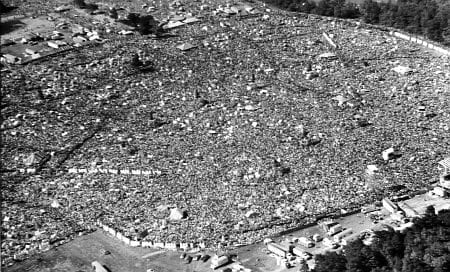
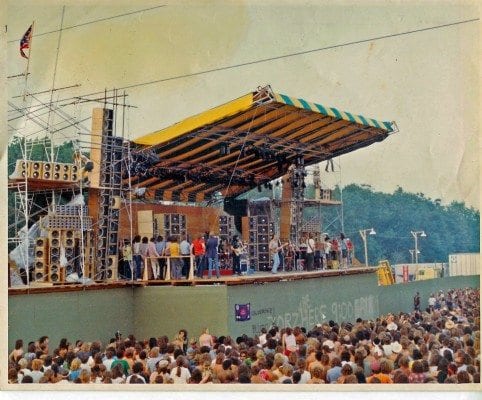
It was the Summer of 1973, the ‘Hippie movement’ of the 1960’s still existed, but only in isolated pockets, tucked way in the dusty cobwebbed corners of the counterculture. Groups like the Grateful Dead, Allman Brothers Band, and The Band were still playing to crowds that held tightly to the ideals of the mid 1960’s, which the groups themselves still carried on through their music. The bands were also undergoing personal changes reflected back at them through their audience. All three bands and more than 600,000 of their fans would descend on Watkins Glen for one of the largest concerts in recorded history, Summer Jam.
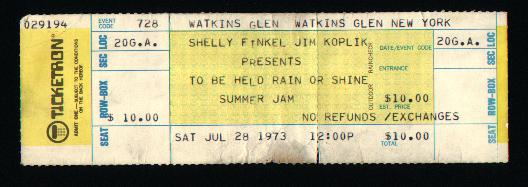
The genesis for 1973’s Summer Jam began as a brain storm by promoters Shelly Finkel and Jim Koplik who had discussed and planned on setting a line up for the ages. After seeing members of the Allman Brothers Band sit in with the Grateful Dead at a Summer 1972 concert at Roosevelt Stadium the seed was planted to bring together an astronomical set of musicians for a gathering to rival even Woodstock, boy, would they be surprised.
The decision to bring The Band on board came by the promoters asking the Dead and Allman’s which artist they would most like to have join them on the bill, the decision was easy and unanimous. Plans were put in place and and set in motion. Roughly 150,000 tickets were sold at $10.00 a piece for the show, large by any standard of measurement. To everyone’s surprise, by the evening prior to the concert that number of intrepid travelers had already showed up to the festival site. By show time on July 28 the number would exceed an estimated 600,000 fans.
Often overshadowed by other festivals in the annals of rock history, the show became something different than originally planned, but ended up being remembered fondly by all participants. The concert also seemed to signal the end of an era, ushering in a time where festivals became corporate interests instead of private excursions into the unknown. Soon to be gone were the days of Monterey, Woodstock, and the Isle of Wight, properly concluding with the biggest of them all ‘Summer Jam,’ situated smack dab in the middle of New York State. Two of the principal performing artists, The Grateful Dead and Allman Brothers had recently lost founding members, Pigpen for the Dead in March of 1973, and Duane Allman and Barry Oakley for the Allmans in 1971 and 1972 respectively. These deaths caused a restructure and reassessment of both bands musical futures which at this point seemed somewhat uncertain for both groups.
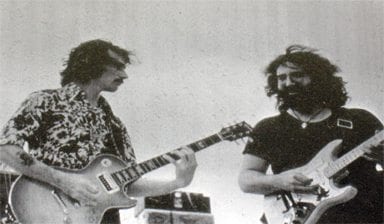
The Band on the other hand was also hanging by a thread because of personal issues regarding publishing, as well as substance abuse seeping into the fabric of the group. The ‘Summer Jam’ acts as a celebration of the recent past for the artists involved, as well as a signpost to an unknown future. For the Grateful Dead, the festival featured one of their usual blistering 1973 sets, in addition to an perfectly encapsulated instrumental journey tagged as one of their finest, hailing in true Grateful Dead fashion from the sound check. The Allmans played an extended and crisply executed set featuring new songs from their retooled line up and fiery soloing from Dickey Betts. Robbie Robertson has often been quoted that the Watkins Glen set was one of the legendary performing moments by the boys, and will go down in history as one of their best.
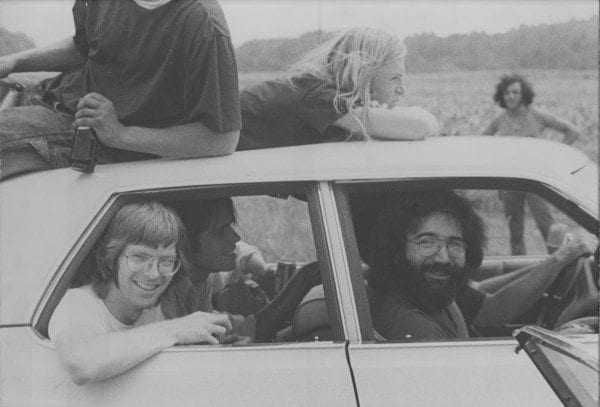
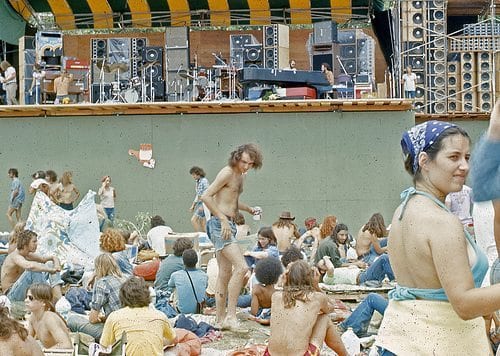
In spite of prior planning by the promoters and authorities leading up to the evening of the concert, roads and highways were still backed up for a hundred miles, stores in Watkins Glen and surrounding areas were wiped of groceries and beer, and over 150,000 folks were waiting at the 95 acre concert site a night early. Routes 14 and 17 were gridlocked, and even secret back road entries were congested with abandoned cars, forgotten ground scores and backpacking travelers making their way to the festival site.
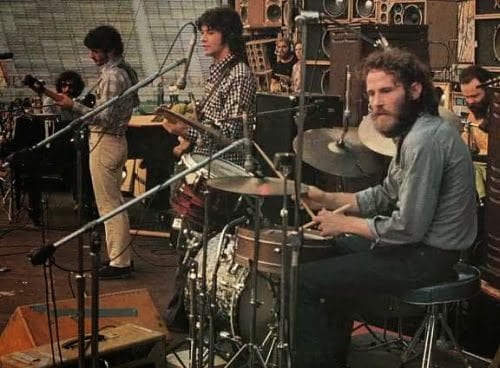
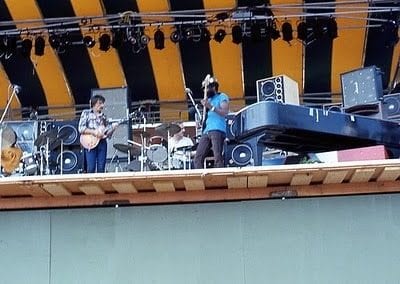
The day of July 27 found all three bands arriving, scoping out the situation, and standing slack jawed at the amount of people already at the festival site. Legend tells us that when Robbie Robertson guitarist of The Band inquired about a sound check in preparation for the expansive outdoor venue, all three bands decided to do the same thing that evening and make it a mini performance. What happened next is the stuff legends are made of. All three bands played beautiful sets to the lucky early arrivals. The Band ran through a couple of their well know classics as well as jamming on a few unique instrumental grooves that harkened back to their days as The Hawks, when they were still playing Toronto bars and clubs.
A crushing ‘The Night They Drove Old Dixie Down’ opens the ‘rehearsal’ and is answered by encouraging crowd feedback. The instrumental groove the group break into following ‘Dixie’ is jump started by Danko’s smooth fretless bass flourishes and the rest of the band falling in line with a jumpy Levon Helm swing. Robertson’s Stratocaster draws blood with its stinging ring cutting through the somewhat marginal sound quality. Another jewel of the practice session is the rare Danko sung version of ‘Raining in My Heart,’ a bit jagged, but oh so charming.
The Allman’s followed and also ran through a rough and ready sound check that was made up of a few songs planned for the next evening including ‘Ramblin Man’ and ‘One Way Out,’ short but sweet when compared to what would follow. When the Grateful Dead approached the stage for their ‘rehearsal’ segment little did the band or assembled throng know what they were in for.
The Grateful Dead’s ‘soundcheck’ appeared as two sets lasted an hour and a half, but according to many opinions and in true Grateful Dead fashion possibly outshines the next day’s ‘official’ performance. The bonus being the performance circulates in pristine quality unlike songs from the other participants of the concert. The unique improvised instrumental jam that preceded ‘Wharf Rat’ is an anomalous display, never to recreated, and is one of those magical Grateful Dead moments made for the time in which it was born. The jam appeared years later on the official release box set So Many Roads, proof of its distinguished standing in the Dead’s long and varied history.
Prior to the sound checks first highlight ‘Bird Song,’ Phil Lesh states ‘This whole thing is a fraud, we’re really clever androids,’ as they band prepares to levitate off of the ground. ‘Bird Song’ comes skipping in, riding with Kreutzmann on the humid Summer evening breeze. Succulent and patient Garcia and Lesh probe the soft cloudy edges of the jam, floating in space. Expansive yet slightly tentative, the ‘Bird Song’ jams wings are lifted by the gusts of inspiration starting to stir.
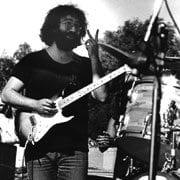
After polished and well played versions of various first set classics, including a big fat ‘Tennessee Jed’, the band finds itself in one of those sacred spaces, where the music eventually plays the band, and all bets are off. The unnamed jam grows from silence, quietly, pensively, with light cymbal hits and the guitarists peeking around corners probing into darkness. Lesh increases the intensity with some fuzzy chording; Weir gives the musical drift a tangible shape with perfectly timed strums. Lesh then begins to drone and detonate, the band turns into particles and star dust, breaking apart, and then coagulating as a Garcia led jam rises from nothingness. Billy K catches on, Garcia sets the rhythm and the band achieves lift off. Slick, smooth and jazzy, the band improvises idea after idea. Weir strikes out with nervous lush rhythmic ideas, Phil hides and seeks, and Garcia peels off layer after layer of juicy skin revealing the jam’s plump and succulent center. The band sinks their teeth deep into the music creating one of their finest moments in front of the lucky crowd who descended early upon Watkins Glen that Summer night of 1973.
An endless stream of collaborative ideas pours from the group like the icy waters raging through the shady tree lined Watkins Glen only a few short miles away. Some of the melodies are familiar, some are brand new, some mix and match like oil and water, some blend like paints on an artists pallet. One of the finest musical moments in the Grateful Dead’s long and storied history has just occurred, thankfully captured for posterity. An audacious beginning to a concert event that hasn’t even ‘started’ yet! The jam eventually dissolves into a fitting and lucid ‘Wharf Rat,’ the previous journey to arrive there filled with drama and intrigue.
The Dead portion of the soundcheck concludes with a solid but anticlimactic ‘Around and Around’, that leaves the assembled throng looking to find a place to sleep, and prepare for the following days awe inspiring display of music, stamina, and mother nature, that would extend to extravagant lengths. The following day would start at 10:00 AM and conclude very early on the morning of July 30th; history was going to be made.
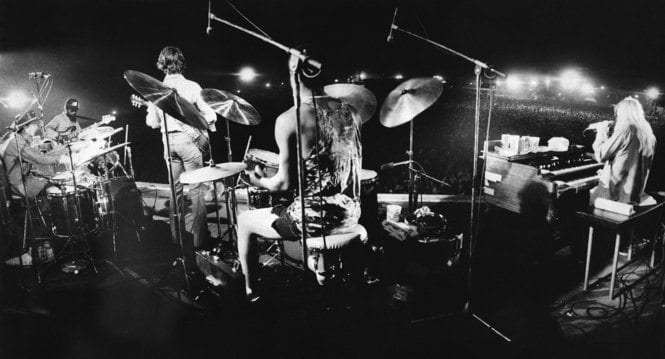
As the morning of July 28, 1973 revealed itself, the ground beneath the Watkins Glen, New York State Summer Jam concert site was preparing to hold the weight of 600,000 musical travelers ready to rock and roll. The largest gathering for a rock festival was about to take place with a legendary bill of bands that would play extended and legendary sets. After the previous evenings ‘warm up’, the groups as well as the crowd were primed for an all day event. Pleasant but humid New York Summer festival weather settled hazily across the bronzed crown of hippies slightly threatening summer storms. The awe inspiring event about to take place would make history in not only musical but social ways, the smoky remnants of that afternoon still smoldering in the annals of rock history.
The Grateful Dead took the stage promptly at noon to an introduction by Bill Graham who exclaimed, ‘From Marin County to Watkins Glen, the Grateful Dead!’ Blasting into an excitable ‘Bertha’ the Dead ran through a typical, that is to say, well played and amazing set of first set classics. The set is brimming with a typical East coast high energy, building to then detonating on a psychedelic pinnacle with the set closing ‘Playing in the Band’. Slithering through the some of the more familiar themes of the era, by half way into the jam Lesh and Garcia are exchanging husky scrubs and bombs, while the rest of the band is tied into a kinetic and electric fast paced groove. While not reaching the extravagant peaks of the jam from the night before, this is a thick and gooey ‘Playin in the Band’ from an era with many stand outs.
Following a marathon ‘China/Rider of epic proportions comes ‘Eyes of the World’, the peak of the second set and of the Dead’s performance for me; the post verse jam contains a plethora of melodic statements from Garcia, with the song morphing into a swelling and pulsating improvised drift. From fifteen minutes on, Garcia plays like a man possessed and hits on several syncopated grooves that band responds to in kind touching on the delicate spaces explored during the previous day’s sound check, before falling back into the recognizable ‘Stronger That Dirt’ theme. Garcia then deliciously liquefies the band into Weir’s well timed and well placed ‘Sugar Magnolia’. Observed as an entire piece of work the Grateful Dead played an amazing two days of music at Watkins Glen, a testament to their constant journey to strive for the golden note.
The Band’s set started at 6:00 PM after the Dead’s extended four and a half display concluded and became an amazing cross section of their legendary career, peppered with unique instrumental interludes specific to the Watkins Glen performance. Opening and romping joyously through ‘Goin Back To Memphis’, the Band’s music captured the feel of the festival perfectly through its pastoral imagery and down home instrumentation.
This is rock and roll, country blues distilled to its very essence; it doesn’t get much better than this! During these early moments of the Band set, the low point of the festival weekend occurred as a skydiver unfortunately missed their intended mark and perished on the grounds. As an addendum, there was a supposed ‘official’ release of the Band’s set from Watkins released in 1995, but after inspection and discussion it was revealed that this collection was/is a fraud and contains only two actual tracks from the event. The only way to hear the performance as it was is to hunt down one of the circulating audience recordings that exist in decent quality.
This concert takes place in the middle of a year of rest and uncertainty for the Band. Looked at historically, the concert is a towering peak in the landscape of the Band’s performing career. The songs are tight, dynamic and rise and fall like a high speed run down a country gravel road. Garth Hudson is especially on his game laying down a plethora of breezy and inspirational keyboard flourishes that would culminate with his divergent solo spot “Too Wet Too Work’. Danko and Helm are locked in tight, and the vocals of Manuel, Danko, and Helm wrap around one another like a snaky gospel revival. After rocketing through a series of exciting high tempo tracks including ‘Loving You Is Sweeter That Ever’, and a drunken romp through ‘The Shape I’m In’, the group is eventually forced to leave the stage for twenty minutes because of threatening inclement weather. During the jam on ‘Endless Highway’ prior to their leaving, the crowd can be heard on the recording discussing and preparing for the incoming thunder storm. The ‘fly on the wall’ aspect of this field recording is especially entertaining.
Levon Helm’s remembrance of this moment in his autobiography is that the group left the stage as the weather descended, gulped some Glenfiddich whiskey and watched Hudson return to his keyboard for his orchestral spotlight, ‘Genetic Method’ in this case driving away the rain in the process of the extended solo. Titled ‘Too Wet To Work’ in the case of this performance, Garth traveled through numerous musical landscapes, teasing dynamically, improvising, until the weather dissipated and the Band returned to the stage, slamming into a celebratory ‘Chest Fever’, that in Helm’s words would be forever ‘burned into his memory’. The crowd claps in time with the musical waves, a highpoint of the afternoon. The remainder of the Band set burns through an aggressive and elastic instrumental and then momentous and extended versions of smoldering rock classics like ‘Holy Cow’ and ‘Saved’, as well as crowd pleasing renditions of ‘Cripple Creek’ and ‘Life Is A Carnival.’ Absolutely legendary, the monumental nature of the day as well as joy emanating from the stage translates well to the field recording I am enjoying.
By the time Allman Brothers Band hit the stage at 10:00 PM, the almost one hundred acre concert site had become a swamp, and the happily soaked crowd swelled with anticipation for the upcoming musical onslaught. Opening with the recent for the time ‘Wasted Words’, the band is cooking from the get go with Betts and Allman dueling through vocals and slide guitar over the syncopated groove. The band receives a second introduction after the opener because Bill Graham wanted to make sure every band had each individual member introduced to the crowd. The Allman’s then swagger through beautifully crafted versions of ‘Come and Go Blues’ (featured on official release ‘Wipe the Windows, Check the Oil, Dollar Gas’) ‘Blue Sky’, ‘Jessica’, ‘You Don’t Love Me’, among others. Recent additions Chuck Leavell and Lamar Williams fill in admirably on keys and bass respectively. Leavell and Betts especially have developed an intense chemistry, bouncing hearty melodic ideas off each other throughout the show, with their interplay on ‘Blue Sky’ being a highpoint worth of inspection.
The centerpiece of the Allman’s extended set is the mammoth performance of ‘Les Brers In A Minor’ which bookends a pulsating and dynamic drum duet by Jaimoe and Butch Trucks, the second of the performance following an aggressive ‘You Don’t Love Me’ duet. Each member gets a chance to express themselves as ‘Les Brers’ like its distant cousins ‘Jessica’, and ‘Liz Reed’ navigates a series of death defying twists and turns while solving a series of delicate melodic mysteries. Rock and Roll veteran Chuck Leavell’s extended dance with the black and whites is a pleasure to behold and spreads out a plush carpet in which the band uses to step into drums. This song represents a powerful and confident jam by the retooled group, asserting their ability to move forward while still respecting their past brothers Duane and Barry. Betts guitar lines range from syrupy amber licks to sharp stinging fly bys, the central pole in which the group revolves.
The Allman Brothers set concludes with ‘Whipping Post’, hoped for, expected, and played like a runaway freight train headed down a dark track. Peak after peak is reached the crowd is astonished, amazed and taken to a unique place by the music played. The weekend ends bombastically, well past midnight following the Allman’s set when members from all three groups return to the stage for Summer Jam. Sincerely sloppy, and at moments stunningly brilliant the music continues into the dawn. Rick Danko appears first to drunkenly croon into the mic momentarily and quite endearingly, soon to be joined by Garcia, then Manuel and eventually Betts, Lesh, Allman and others for some more lengthy jamming to conclude the massive weekend of music to the crowds delight.
The music drifting from the stage meanders for a bit before falling into the highlights, ‘Not Fade Away’, ‘Mountain Jam’, and’ Johnny B Goode’, a momentous and special way to conclude the Summer Jam. The ‘Not Fade Away’ is pleasant enough, but the twenty plus minute ‘Mountain Jam’ the follows elicits speeding clouds, percolating rivers, and joyous wilderness romping. Garcia is especially active, intertwining and responding to everyone on stage. Betts and Garcia together create richly constructed summits during their journey, pausing at scenic overlooks that dance with collaborative playing by all of the principals on stage. The musical movement comes as a defining musical statement for the weekend, an instrumental climax, a joining of ideas and people and a perfect example of the magic available through collaborative musical interplay and willing participants.
Watkins Glen, Summer Jam 1973 is not only notable for its collection of an amazing group of musicians, but for its eclectic collection of fans. The collaboration between the two of these principals combined for a historic and alchemic weekend combining music and experience. The encapsulated moment in time for this weekend will never be recreated, but fortunately forever enshrined on recordings and in the memories of the participants.