Category: Interviews

  • Lonnie Jordan On His Influences, Jimi Hendrix and Life At 70

    Lonnie Jordan is a singer-songwriter and a founding member of the American funk band WAR. The band is best known for hits such as “Spill the Wine,” “The World Is a Ghetto,” “The Cisco Kid,” “Why Can’t We Be Friends” and “Lowrider.”

    Over the years Lonnie had a number of roles in the band. Not only was he a vocalist, but also played guitar, piano, synthesizer and percussion. Jordan was one of the first three people to form the group even when they were known at the time as the Creators and Nightshift. Currently he is the only remaining original member.

    On July 21 2019, NYS Music had an opportunity to ask the rock legend a few questions about his life and his 50-plus year career in the music industry at The Great South Bay Music Festival in Patchogue, Long Island. Lonnie Jordan was 70 years old at the time and looked great; he couldn’t have been nicer or more humble. With only minutes to spare for an interview, I dove right in.
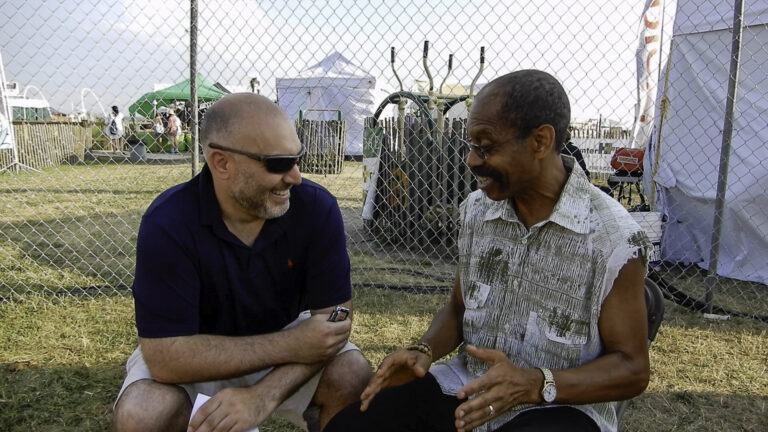
    lonnie jordan

    Rob Tellerman: What drew you to the music industry?

    Lonnie Jordan: Being young and watching other artists perform and saying “Aw man! That looks like fun! That’s what I want to do when I grow up!”

    RT: Who were some of your influences?

    LJ: You have to understand, I’m almost 71 years old so back in my time it was Ray Charles, Jimmy Smith, The Everly Brothers, of course Elvis, Wilson Pickett, James Brown and the list goes on. A lot of gospel, a lot of Latin. Later on, in my life Fania All-Stars came in with the soulful boogaloo and Latin boogaloo.

    RT: Before it was WAR, it was The Creators? Am I correct?

    LJ: Yes. We were called The Creators and then we changed it to Nightshift. Then when we were Nightshift, playing with Deacon Jones for a minute, I believe he was #49 on The Rams, Eric Burdon and Lee Oskar, by now producer, manager and engineer, came down to hear us play and the rest was history.

    RT: Are you still friendly with Eric Burdon?

    LJ: Yes of course. He’s busy and at his age and he has to stay busy otherwise he will get tired or as some people say “retired” (Laughs).

    RT: Is it true Jimi Hendrix joined WAR on stage in London 1970 for what was to become his last performance?

    LJ: Yea Jimmy and Eric (Burdon) were very good friends. A lot of people don’t know that Eric’s old band The Animals’ bass player Chas Chandler was the one who introduced Jimmy to his first album deal. He produced his first album so he introduced Jimmy to the music industry. Being that Eric, Jimmy and Chas were good friends, Eric got this weird band together, which happened to be us. But Jimmy was supporting Eric’s new journey.

    RT: Was he ok at the show?

    LJ: Well he came down Tuesday night and he was fine, but he didn’t bring his guitar. We said “Man you gotta bring your guitar tomorrow”. So, he brought his guitar and we were backstage talking. I believe the band Osibisa was playing downstairs, but all the smoke was coming up. So, he (Jimmy) jumped on stage. We gave him an amplifier. There were no gimmicks. We all played like we did back in the early days when we were playing holes’ in the wall. Ironically, we played “Mother Earth” by Memphis Slim and he wound up going back to “Mother Earth” the next morning.

    RT: Is touring as fun now as it was in the 60’s and 70’s?

    LJ: Well I wasn’t drinking coffee back then. It’s more fun because I have more knowledge now of my surroundings. I’m a vegan and my wife is a raw vegan chef so that helps me stay active at my old age. Also, my Rock and Roll Hall of Fans supports me and makes it more fun. My mind and heart are open and I’m not being swallowed by a cloud of smoke.

    RT: Have you ever had performance anxiety?

    LJ: Not yet.

    RT: If you had 1 message to give your fans what would it be?

    LJ: Come here us play! Every chance you get because our stage is always smokin’!

    RT: Do you think it’s ridiculous that WAR is not in the Rock and Roll Hall of Fame?

    LJ: We’ve been nominated but you have to understand, there is no category for us. That’s why we haven’t won anything. I would say that may be a bad thing for people who think materialistically, but for me, my Rock and Roll Hall of Fame is my Rock and Roll Hall of Fans! I’m so honored that the people still have us here working. Our music has so many different genres. I never thought our music was even going to be played on the radio so I’m honored and blessed the people still support us.

  • Interview: NYC’s Practice Gives Inside Scoop on Solo Album

    Indie electro artist Practice is set to release his debut solo album, Not A Game, on February 19. NYC-based artist Michael Tapper is developing his own sound under the moniker Practice. He combines synth usage with his deep vocals to illuminate the tone of his work.   

    Practice
    Photo Credit: Guy Eppel

    Not A Game is Michael Tapper’s first solo project. Prior to this, he was a drummer for We Are Scientists, Bishop Allen, Fool’s Gold, and Yellow Ostrich. Going from a collaborative environment to working alone prompts many challenges. Practice faced this exact difficulty and shares it with NYS Music:   

    Usually when working with someone else, we can find the areas and directions where we agree or feel like we can each contribute the most to create something we both will love, and that will determine what we try to make. My interests are very broad, so I had a hard time narrowing down the focus of what I wanted to do. Eventually I came upon the idea of forming a band out of analog synthesizers, which gave me some framework for structure. Within that, I could explore different types of songs that worked within those artificial constraints.

    Michael Tapper

    Having no collaborators to bounce ideas off was another obstacle Practice had to face, especially when working in unfamiliar capacities with many instruments. However, he found that his wife and friends were the solutions. The artist highlights, “I was surprised to learn that just listening to a song with someone else helped me to hear it differently than if it was just me listening to it in my studio. Somehow, you’re able to sort of hear it through someone else’s ears to some degree.” 

    Practice

    The Power of the Synths

    All the tracks in this album are unified by the instrumentation. The use of synthesizers is the main driving force behind Not A Game. The framework behind creating a solo project was to view it as a band, “with each band member being a specific synthesizer.” These “band members” consist of “a bass synth, a lead synth, a poly-synth that plays pads or rhythm parts, and a drum machine. Kind of like your typical rock band, but with synths.” In addition, Practice aimed to perform these songs live one day. So, he connected all the synths together to allow this. 

    The creative process behind utilizing these synths varied based on the arrangement. Creating new songs would sometimes start with a bass-line, a lead synth, a textural pad, or a drum machine beat. Practice utilized these “band members” as if it was an actual collaborative project with different sounds commencing each track’s development. 

    One result I liked about working with this framework was that in the end, the songs all shared a certain consistency in their sounds and textures because it was the same instruments on all the songs, even though the songs themselves might seem like they come from different worlds or genres.

    Michael Tapper
    Practice
    Photo Credit: Guy Eppel

    Finding Inspiration

    A few songs on Not A Game are inspired by the 28-day sailing trip that Practice undertook from Mexico to Hawaii. The idea to make an EP stemmed from the thoughts and feelings experienced on this voyage. “They deal with feelings of loneliness, fear, and uncertainty – sort of these universal feelings that are relevant even when you aren’t out in the middle of the ocean.”

    The album kicks off with the catchy single “After Life,” introducing feelings of being separated from the world. While the closer, “I’ve Had Enough,” is a more laid-back song. Practice shared, “I like to take the listener on a journey. I ultimately decided to start the album with ‘The Afterlife’ because I thought it introduced a lot of the elements of the record musically, but in hindsight, it really works lyrically as well. I liked that it started with just the richness of the synthesizers and then kicked into a groove that’s definitely danceable.”

    Watch “The Afterlife” Music Video Here

    Leaving an Impact

    I hope people can relate to and connect with what I’m saying according to their own experience…But also, I hope people can just listen to the music and think it sounds good! I don’t really feel a need to be heard, like personally, and I’d be very happy if people wanted to put it on at a party and dance or put it on in the background as they work or work out or whatever. I hope that people can enjoy it in whatever way they can and need, like a musical multipurpose saline solution.

    Michael Tapper

    Keep an eye out for Not A Game, soon to be released on February 19. Get a sneak peek by checking out some released singles off of the album: “I Saw Love,” “Failure of Imagination,” and “I Don’t Need Love.”  

  • Catching up with the Magical Mikaela Davis

    Mikaela Davis has put the Flower City in Upstate New York on the map as a region where the harp and its sound has spread from Rochester to across the world. The last time we spoke to Mikaela was back in 2012 and was anticipating on what the future would bring for her. She took some time with us in the beginning of 2021 to talk about her past, present, and future music experiences in New York State.

    The harp has been known since antiquity in Asia, Africa and Europe, dating back at least as early as 3000 BCE. The oldest description of a harp can be seen in the wall paintings of ancient Egyptian tombs in the Nile Valley. In the Americas, harps are widely but sparsely distributed, except in certain regions where harp traditions are very strong.

    Mikaela Davis

    Matthew Romano: Who was involved in your musical education for the harp in New York State?

    Mikaela Davis: Cynthia Andrews, who just retired this past year, she started me on the harp at Penfield School District in Rochester. I think Penfield is the only public school in Rochester that offers harp, then private lessons with Grace Wong who was the principal harpist in The Rochester Philharmonic Orchestra. I joined the Rochester Philharmonic Youth orchestra, that toured Canada and Europe. Then I went on to college at SUNY Potsdam to learn under Jessica Suchy-Pilalis at Crane School of Music.

    MR: Are there any live music experiences in New York State during that time that stood out, that influenced you?

    MD: Well, I remember in High School I used to ask for a Jazz pass for Christmas every year. Me and my high school buddies would go to every show at Rochester Jazz Festival we could, from 2007 to 2011. I’ve gone to so many concerts at this point they all blur together. At Mountain Jam 2016 where I sat in with Marco Benevento, Wilco played, after seeing them for the first time it confirmed that this is my favorite live band, it was the best live show I have ever seen.”

    MR: Tell me about your history of the collaborations with Marco Benevento over the years?

    MD: A friend of mine, who has a recording studio in the Catskills, where Marco lives, had passed my info along. Then he had me go open for him solo on the West Coast for some dates. That was where we met. My first time playing at Levon Helm Studios was with Marco. We’re really good friends, my band and his band and his family. We always play a couple shows together every year, I love hearing from Marco to play a show and it’s great, always a fun time. We joke about going to his studio to record a country record. It was his choice to cover David Bowie’s “Heroes” and to hang out at Mountain Jam to have me sing on it.

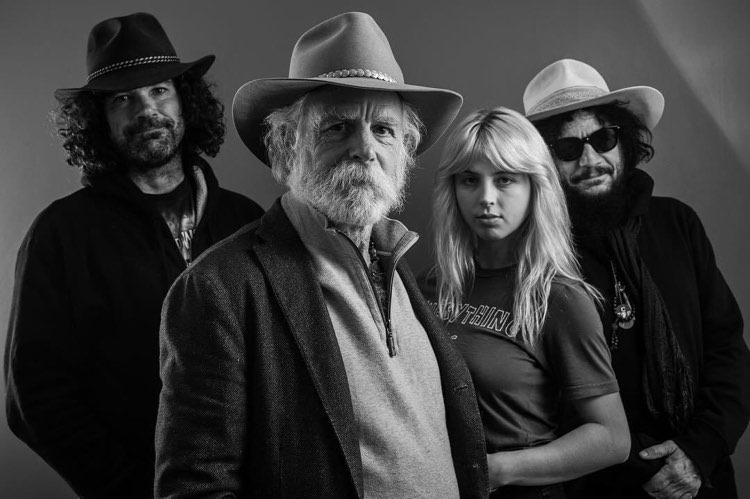
    MR: How did your first collaborations with Bob Weir and Wolf Brothers come to fruition in Syracuse at The Landmark Theater and in Buffalo at Shea’s Performing Arts Center?

    MD: Someone sent a live video of my band covering “Down by the River” by Neil Young in London to them and said, hey this harpist is cool she should guest with Bob. The Wolf Bros usually have friends sit in with them from around the world and they didn’t have anyone scheduled for Syracuse. That’s how it happened, being at the right place in the right time I suppose.

    Mikaela Davis and Southern Star covering “Down By the River” in London

    MR: How did you land on the song selections for the set?

    MD: Bobby wanted me to play on “Birdsong,” I suggested “China Cat” into “I Know Your Rider,” and “Wharf Rat,” maybe. Yea, then last minute I suggested “Down by the River,” three days prior they said Bobby hasn’t done that before, let’s do it. So that was really magical, really fun. That was probably my favorite sit in, even though I was so nervous to play with these legends, Don Was, he’s incredible and Jay Lane

    Mikaela Davis
    Jay Lane, Bob Weir, Mikaela Davis, Don Was


    MR: Was the second encore at Landmark where you all did “Ripple” planned?

    MD: No, he threw that one at me, “lets go do ‘Ripple,’ come on”, he does that every time I sit in with him. “Hey I want you to play on this too,” so I have to be ready. Cian McCarthy, my band mate, who’s a massive Dead fan, helped me learn all these songs inside out and assisted me in the back with the chord changes

    MR: Hearing your harp on the song “Peggy O,” a cover of an old Scottish ballad from 1644 that the Dead made popular inside the Shea Theater in Buffalo,. really made that venue come alive with art and history

    MD: That’s great, that was magical too, I forgot about singing “Peggy O” with them.

    Mikaela Davis with Bob Weir & Wolf Bros at Shea Theater in Buffalo, NY


    MR: Did these collaborations help influence you and Southern Star to cover the Live/Dead 69′ Album in October of 2019?

    MD: Oh yea definitely, that’s why we chose to do it , learning Live Dead was really fun and difficult, we rehearsed like twice a week for a month because we really wanted to play through like the record with no stops. It gives me so much respect for that band, they were really innovative and incredible in what they were doing. I think “Feedback” was possibly my favorite.

    Mikaela Davis

    MR: You and Southern Star stayed at Stone House Cottage on Oneida Lake in Summer of 2020 for a recording of “Cumberland Blues” How was that experience?

    MD: There was five of us in this tiny house, we rented it and hung out on the lake, played music and did psychedelics. We just played that live with two microphones and recorded it for an Australian Radio Show for the 50th anniversary of Workingman’s Dead.

    Mikaela Davis
    “I don’t know now, I just don’t know if coming back again” Oneida Lake 2020

    MR: In Summer of 2019 you were in attendance for The Particle Kid, Lennon-Claypool Delirium, Flaming Lips Concert at Saranac Brewery in Utica, NY between Southern Star shows that also had Krist Novoselic from Nirvana in the crowd, any cool takeaways from that night on the town?

    MD: That was honestly one of the most magical shows I’ve been to in a while, My friend Jake Engalls is in the Flaming Lips so we got to hang out, I’ve often collaborated with him for his solo band “Spaceface” A quick Hey thank you for being you was said to Krist Novoselic. Sean Lennon and I exchanged information and I was going to play with him for a residency he was planning at The Stone in New York City that unfortunately got postponed due to the pandemic

    MR: You started 2021 with a show at Caffe Lena in Saratoga Springs where Bob Dylan played in 1960, isn’t your harp named Luna?

    MD: Yea , I named her Luna when I was a teenager, I guess I named her that because she comes alive at night

    MR: You debuted new material that night that came from a Seven day songwriting session with the band Rubblebucket, I think “The Pearl” was a standout as a musical analogy on what’s going on with the world inspired from a story by your Aunt Julia who referenced the dirty muck that we are all kind of stuck inside America right now

    MD: Oh thank you, Yea that’s what I thought when my Aunt was talking to me about it , and she’s been wearing her pearl earrings a lot so, I truly believe ya know something great can come out of terribleness, I suppose if an oyster can make a pearl, so can we.

    Caffe Luna January 9 2021

    MR: At the end of the Caffe Lena Show you said “ I feel alive again, well see ya again soon, cheers” What’s on the horizon for 2021?

    MD: I am hoping to make a record with my band, actually not hoping we’re going to do it. we’re going to make a record this year, we have enough songs and basically just trying to figure it out to do it remotely or safely gather and find a spot to record

    MR: Marco Benevento or Sean Lennon’s studios in the Hudson Valley could be a great spot or maybe even with the virtual options you can gather a group of friends remotely for a cover of Talking Heads “This Must Be the Place”

    MD: Yea great tune, well have to keep that in mind, yea well anything is possible that’s for sure, it’s a new age