Russ Lawton and Ray Paczkowski ended 2020 with an eight week residency in New York City as part of the wonderful cast for Trey Anastasio’s Beacon Jams. Outside of TAB, the duo operate as the highly funky Afrobeat-influenced group Soule Monde.
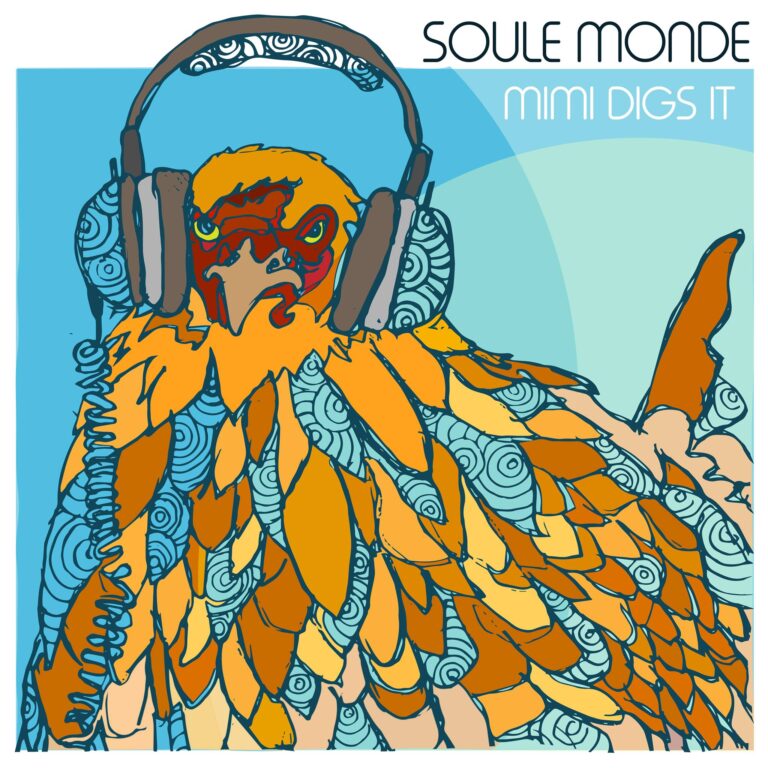
They started 2021 ablaze, rehearsing before going into the studio for their fourth album release Mimi Digs It. The eight-track album digs an even deeper trench of grooves. The landscape of the recording comes from Central Vermont’s Sugarhouse Sound Studio on Mad River Road in Waitsfield.
Mimi Digs It is simple: Russ on the Gold Gretsch drum kit and Ray on Wurlitzer, Clavinet, and howling B3 Hammond organ. After just three days, the material was sent to Concrete Sound in Brooklyn for the finishing touches. For more insight on the new album the dynamic duo took some time in between a new session at Sugarhouse to speak with NYS Music for a lunchtime chat.
Matthew Romano: Hey guys. Thanks for taking the time to speak with us today.
Ray Paczkowski: Hey it’s Ray.
Russ Lawton: We’re open. We’re here for the afternoon rehearsing and appreciate your interest for the interview.
MR: I was able to listen to the new album this week on a road trip from Key West to New York State.
RL: Oh cool, yea its got that cruising kind of vibe to it.
MR: Biggest question on this project’s recording since it sounds so off-the-cuff is how much of this is improvisation and how much is composition?
RP: There’s composition and basically Russ will come up with a beat or I’ll come up with a melody or some chord progression and we put it together. We do the parts and sections of the songs. But then on any given night it can totally change… it can go in any direction. So when we went in the studio we kind of had a sense of how the structure should be. Then we would improvise.
RL: The perfect example of composition improv is the song “Gateway Drug.” It’s got the two sections and breaks down the middle. After we recorded that, we should have had a little bit of an idea. But that’s totally what we just did that day. It will probably never be that same way again. Ya know what I mean?
MR: Absolutely. This kind of music sounds so soulful in the moment that it can’t be recreated for what you’re feeling at the time. If that’s what ends up on tape then so be it.
RP: Yea its actually a beautiful thing.
RL: I think about “Tinyland.” It was the last thing we worked on before we went into the studio. Matter of fact, one of the sections was two days before and when Ray came up with that organ line in the beginning we were in the control room like, yea use that. It stays in my head everyday now (laughter).
MR: I wanted to ask you about your influences on Soule Monde’s sound but you guys are already in a unique category with a drummer/keyboard duo like this. Do any artists stick out?
RP: It’s pretty much straight my music. What I’m feeling. I would say as far as influences, that it’s more “the sound” players get. Not so much what they’re playing. Although, Someone like Jimmy Smith, those guys… Thelonius Monk, it’s amazing. They have their own melodic harmonic concepts going on. But really what I listen for is “the sound” that they’re getting. Like with Jimmy Smith, the sound of his organ. I had the privilege to open for him years ago and snuck up to his gear after soundcheck and was looking at all the settings. That’s what I’m interested in. “The sound” that comes out of that machine in a way.
MR: Funny you mention Monk. I passed along the Monks Tips for a Gig to Trey, Russ, and Tony at the Beacon Jams. Tony was quoted about your playing Ray. “He’s brilliant. I mean his playing is unlike anybody, he’s kind of playing like Monk in a rock setting that nobody does and he makes it work.”
May 2011: Ray, Russ, and Tony covering Monk
RP: (Laughter) Oh that was you? Ok alright.
RL: (Laughter) Yeah that’s great.
MR: Yea, Ray you turned me on to Brian Blade with Chick Corea and Christian McBride at Beacon Jams. They ended up winning the Grammy for Best Jazz Instrumental Album this year. I was able to speak with Steve Gadd last month about his work with Chick Corea and he mentioned a story about Chick jumping behind drums to work something out. Have you ever jumped behind the kit Ray?
RP: I don’t play drums at all but I’ll have sort of a basic kind of rhythmic idea. Like “CC’s Dream,” that song. I hear this sort of reggae thing but I wouldn’t even know what to call it, but I hear this rhythm in my head. I show Russ the rudimentary and he took it from there and made it into something cool.
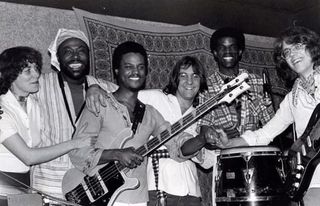
RL: It’s called collaborating. No matter what it takes to get the idea across because sometimes you don’t totally know what is in somebody’s head. I played with these African percussionists for a long time and man we would put this stuff together. Talking about influences that’s on a lot of Soule Monde still is this band I was in, Lofty’s Zzebra. Afrobeat sound mixed with a rock edge influence. But even with me, certain snare things, I’m like yea that’s John Bonham. Even the first song “Tinyland” my daughter said sounds like Bonham in the beginning. Also, Art Blakey kind of sounds are an influence. I got to see him one time which was amazing.
Lofty’s Zzebra
MR: Is it safe to say this album compared to previous ones has a little bit more straight funk grooves over Afrobeat?
RP: Yea this seems more of a funk base. There’s a tune called “Ollie ’88” we worked hard on for a long time. That kind of informed some of the rhythms on this album. But I think you’re right. Ya know in the past, “Take My Hand” and “Mina” were definitely more Afrobeat-based.
MR: How about the funky title track “Mimi Digs It”? Wasn’t it inspired by one of your chickens, Ray?
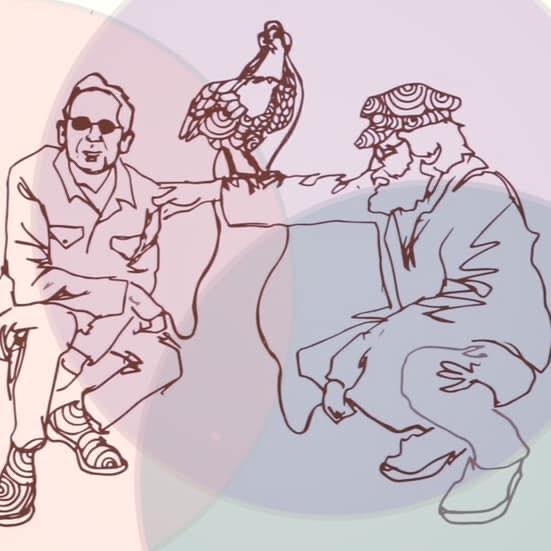
RP: Yea when we were rehearsing for the recording. We have a bunch of chickens here, one in particular named Mimi. Ya know it gets loud in the barn when we play and all of the chickens would run away except for Mimi. Ya know I think maybe she was deaf or something (laughter). She would like to get up on the keyboards and were like, “Oh Mimi Digs it” and that became the name of the track and then the record.
MR: Could have also been a nod to Mimi Fishman who was a great artist.
Mimi Fishman Art, Eggplant Diner Syracuse
RP: I’m waiting for Jon Fishman to call and say, “What are you making a record about my mother?” Yea our friend Pappy Biondo from the band Cabinet did the cover art for the album.
RL: Yea he’s a good friend of ours that lives in Vermont. He did our album cover for our last Christmas song too.
MR: I was able to get through on the Beacon Jam streams to revisit an infamous Trey Anastasio Band show from Utica’s Stanley Theater in October of 2002. The crowd was rocking to the beat of the humanity and plaster fell from the balcony. Trey, Tony and Cyro spoke on it. What do you remember about that infamous gig?
RP: We were watching it from the stage and, ya know, started commenting, “Man, that balcony is really moving!” The local fire marshal is always at a show. Then Trey’s like, “You see that balcony moving!?” And then he calls, if I remember right, “Sand.” Ya know because it was gonna be a heavy groove and then the fire marshal came on stage “No No No!”
RL: The fire marshal is like can you play something more mellower? We’re like “no” (laughter).
MR: I know you guys were in the middle of “Mr. Completely” before it all came to a halt and went acoustic. Did a fire marshal also come on stage for Valentine’s Day in Red Bank, New Jersey 2010 during “Sand” as well that prompted the house lights on mid-jam to a quick conga line by you guys through the crowd back to the stage?
RP: No that was because someone pulled the alarm. They were ejecting someone and he grabbed the fire alarm on the way out
MR: What is it about “Sand” that is the ultimate groove to get everyone in the house moving?
The best way to listen to the band’s new record is from their Vinyl option that includes a signed copy and even a batch of Ray’s homemade syrup from his farm. The duo will play live to start the Summer concert series in 2021 at Sugarhouse where they recorded the album on May 29. Make the trip to Central Vermont and watch these guys lay it down for yourself. You can grab tickets here.
Episode 118 of the Rochester Groovecast Podcast highlights the new single by Hollowell, “Don’t Care.”
Hollowell, formerly Astraea, is an original female-fronted alternative rock band from Rochester, NY. Their inspirations draw from 90’s/early 2000s.
Episode 118 of The Rochester Groovecast podcast is an intimate chat and “Don’t Care” listening party.
Listen To The Podcast:
Watch The Full Episode:
–
At Rochester Groovecast, the mantra “We’re Fans First!” harnesses the belief that the best businesses are built by fans. The podcast is deeply dedicated to playing an active role in the culture of its local scene.
The brainchild of Rochester native, Ben Albert, was created in 2016 to serve as a portfolio of the city, and nowadays, the entire region.
The podcast believes in the artistic brilliance abundant in Rochester, NY, and the surrounding regions. Ben seeks to play a pivotal role in our community by helping give Rochester a well-earned voice. He has seen first hand the abundance of talent, character, creativity, innovation, and beauty the Flower City has continuously offered.
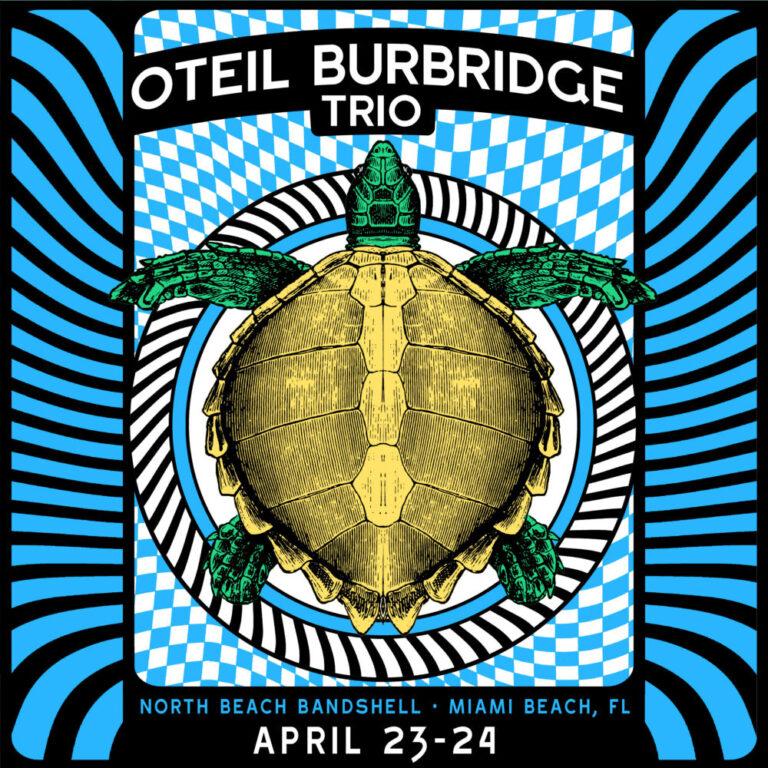
Live music is making its way back into our weekend plans. The Oteil Burbridge band featuring Pete Lavezzoli on drums, Tom Guarna on Guitar, and special guest Jason Crosby on keyboards performed for two nights at the North Beach Bandshell in Miami Beach, FL on April 24 and 25. Over two days the quartet had a Grateful Dead heavy setlist, nicely blended with Oteil’s originals and covers of his favorite artists.
The breeze kicked in to start the two night run. They open with a cover by The Weather Report that brought all of the “Elegant People” from the beach. It got the whole crowd immediately grooving. A first set dead classic “Sugaree” start the psychedelic blues for the sun soaked masses. A cover of Jerry Garcia Band “Cats Down Under the Stars” keeps it flowing with Melvin Seals drummer Lavezolli and Oteil locked in ” Cats on the bandstand, give em each a big hand, Anyone who sweats like that must be all right.”
Believe it or not the band follows with another Grateful Dead classic that was played under the Miami Beach haze during soundcheck for “Here Comes Sunshine.” “Hard to find” an end of a first set, the quartet close with “King Solomon’s Marbles” to send everyone looking for their own after they cleared the stage.
The second set started with a beautiful Jerry solo classic “Rubin and Cherise.” The words on the Florida shore singing “the breeze would pause to listen in before going on its way again, Masquerade began when the nightfall finally woke.” Another Jerry tune up next for “Gomorrah” helped “Blow the City off the Map, left nothing there but fire”
Oteil brings you back to Brooklyn Bowl for a “Butter Biscuit” next, then a transition to a Grateful Dead S.O.S. on the beach. “Help on the Way” into “Slipknot” gets another Oteil original weaved in with “Too Many Times” before crescendoing into “Franklins Tower.” It was a funky roll in the dew to close the first set.
Keeping the crowd in a Grateful Dead like glow the band starts the encore so quiet you can hear the ocean. Oteil’s voice on “Stella Blue” reminds you the wave is crashing “In the end there’s still a song, comes crying like the wind, down every lonely street, that’s ever been.” As expected after a Dead heavy show like this you would assume this was the end.
Nope, during the encore the band paid tribute to Sugarloaf with their cover of “Green Eyed Lady.” Its lyrics perhaps another nod to a day on the beach. “Green Eyed Lady windswept lady , moves the night the waves the sand, Green eyed lady…ocean lady.” Out of nowhere, Oteil’s ensemble threw everyone for a loop on their way back to the Miami scene.
After an hour long soundcheck in Miami Beach, Oteil Burbridge took some time to talk with NYS Music
Matthew Romano: I am so glad I got to see the show last night before speaking today. Do you remember the Buddy Miles record that had a cover of Allman Brothers Band tunes “Dont’ Keep Me Wondering” and “Midnight Rider”? I can’t help but hear your same soulful interpretation of these Dead songs.
Oteil Burbridge: Yes I do! I kind of just do it. You can’t do anything to suppress your roots. Not really trying, it just comes out like that. But there was something that really gave me confidence to lean in more on my approach. I don’t know if you’ve heard George Porter sing “Eyes of World”? It’s my favorite “Eyes of the World.” The way he sings it, holy crap, just blew me away seeing that. So I was like yea man do it like you feel it. You know just let it come, let it be what it is.
MR: Well being here in Miami where you just recorded with Page McConnell and Vida Blue for a record we didn’t know what to expect out of your catalog this weekend for a set.
OB: I don’t with Vida Blue material because they are still on the road and we still play. Allman’s aren’t playing, I mean Dead and Company is playing, ya know as slow as we are doing everything. If you notice we do a lot of different versions with this band. We do the the old funkier, sluttier “Loose Lucy” and the faster funky kind of “They Love Each Other,” the long “Eyes” the “Terrapin.” What else? The funky “Bertha.”
OB: So we can just lean in the funk.
MR: I was able to speak with John Mayer on Tales From the Golden Road on Sirius XM and got his angle on bringing his own texture to the Dead and Co. sound. You are in the same boat bringing a whole new edge and vibe to this music that gives it a new form of life.
OB: I mean it just comes out that way. It’s really about being given permission by yourself, the original members, the crowd, and especially the old crew.
OB: Ya know it mattered to me, what AJ thinks, what Jarukie thought. It matters what Derek Featherstone thinks. Ya know all the original crew that’s been here much longer than me. So even to have them and friends approval means the world.
MR: Well how about big Steve Parish who has come Upstate New York to go on his own tour speaking about all his years behind the amps of the Dead for every show?
OB: When you get Parish’s seal of approval, wow. All those guys, Dennis McNally, Bill Walton. When Bill Walton says you’re good, you quit worrying. But John and I have been very lucky to be graced by all those people, the crowd, the original members. I count them as family.
MR: Well being at the first Dead and Company show on October 29, 2015 at Times Union Center (The Old Knickerbocker Arena), it was only appropriate for you and John to open with “Playing in the Band.”
OB: (Laughter) For sure. That was a harrowing night. That was a trip, that beginning time.
MR: Well, I love that 6 years later your able to lead the pack with some funk on this repertoire for two nights on the beach in Spring 2021.
OB: Well i mean there is so much funk in the Grateful Dead’s music. The Jerry Bands’ music. Its just like there for the picking. So i just lean in to it
OB: Thats where I come from, ya know? I come from James Brown and Parliament Funkadelic. Earth Wind and Fire, Stevie, Larry Graham, J.V Collier and James Jamerson.
MR: How about Larry Graham creating the slap bass technique to fill for the drummers spot that was absent
OB: Yeah the drummer didn’t come so he had to bass the drum with his thumb and the snare and hi hat with his slap and the plucking part yeah. Tonight we’re gonna do a tribute to Paul Jackson in Head Hunters that just passed. It was the last tune we did during soundcheck today was “God made me Funky.”
MR: That had me dancing outside and threw me for a loop before I came in to talk to ya. I walked in the room feeling like Cleo McDowell in Coming to America…”I’m not sure what to do…I feel like break dancing.”
OB: (Laughter) For Sure. I’ve seen it at Dead shows, people start popping and locking! This weekend has been the biggest amount of people this band has played for. It was great to see that many bodies in motion again.
Later that night Oteil and Friends played one more Saturday night for an audience on Miami Beach.
The crowd immediately responded to the Oteil instrumental “The Happy Dance” to start the evening. Another highlight of Oteil’s solo catalog came next with “Rooster.” His words nailed it over the old Peacemakers groove, “There’s not much time to get your house in order, you can watch as the darkness grows, keep on trying to disguise yourself, but the ugliness still shows, you better clean it up before the rooster crows…”
Then a Dead heavy first set that included the funked up “Bertha” and “Loose Lucy.” The Dead vibes unfolded at the end of the first set with “China Cat Sunflower” > “China Doll” > “I Know Your Rider.” A set ending fake out with “No More Doubt,” another Oteil and the Peacemakers original. With even deeper lyrics “Call out to the grave, I am a mirror to the clouds, you can rest assure there will be no more worry,” to officially end the set.
After a short break the band opened with two covers, Jaco Pastorius’ “Opus Pocus‘ and Donny Hathaway’s “Magnificent Sanctuary.” These tunes are certainly hand picked by Oteil as they are a major influence on his sound.
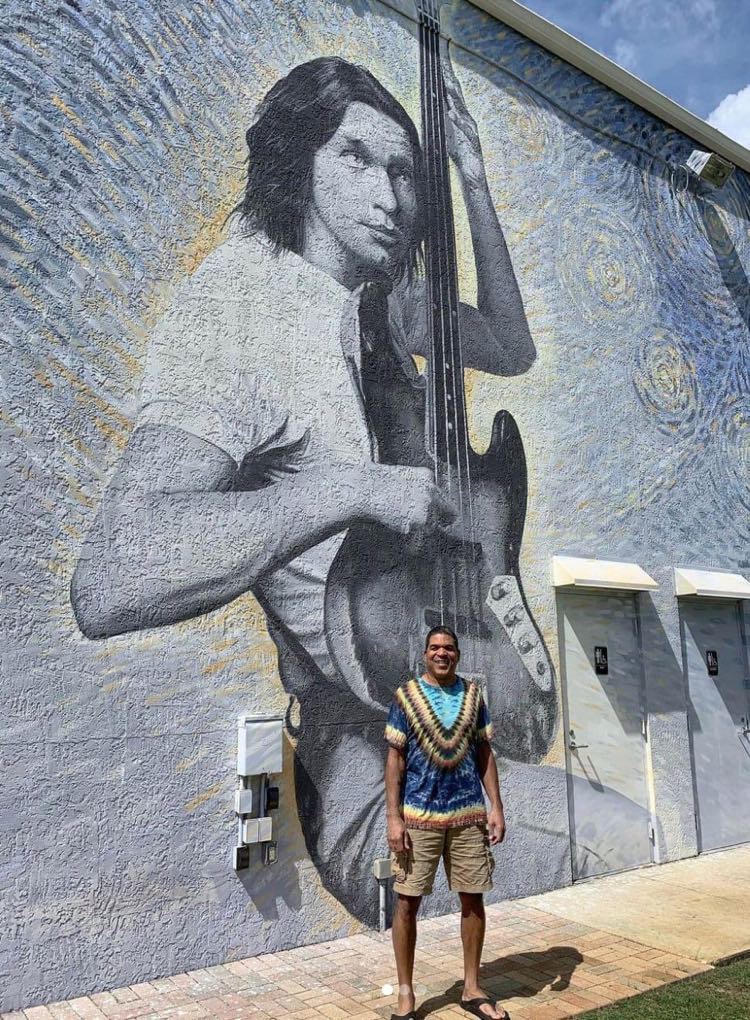
Oteil Burbridge in Jaco Pastorius Park, FL
The band then closes the rest of the set with The Grateful Dead catalog where ocean breezes flow. After a funky “They Love Each Other” they launched into “Estimated Prophet” > “Terrapin” > “Morning Dew.” Oteil was quoted on his first vocal take on Dew, “I feel like I’ve been through enough in life to do it justice, I hope you enjoyed it.”
Oteil Burbridge Band Setlist April 24 25
The encore for the two night beach run was a tribute to Paul Jackson of the Head Hunters for “God Made me Funky.” Let’s be glad he is out touring this kind of music in 2021. Oteil helps carry the torch for new comers to the scene. It was Miami Beach resident Chris Collins first show who celebrated his father Bobs birthday Friday night. Bob toured for four years with the Dead.
In between shows you can listen to Oteil’s podcast with great artists. The crew heads to B Chord brewing Company in Virginia on June 4 and 5 for their next two night run. Dead and Company 2021 tour will be kicking off August 16th in Raleigh, North Carolina, and running through Halloween, with a three-night stand at the iconic Hollywood Bowl on October 29th, 30th, & 31st.
Episode 117 of the Rochester Groovecast Podcast highlights the new single from Zahyia, “Why Love.”
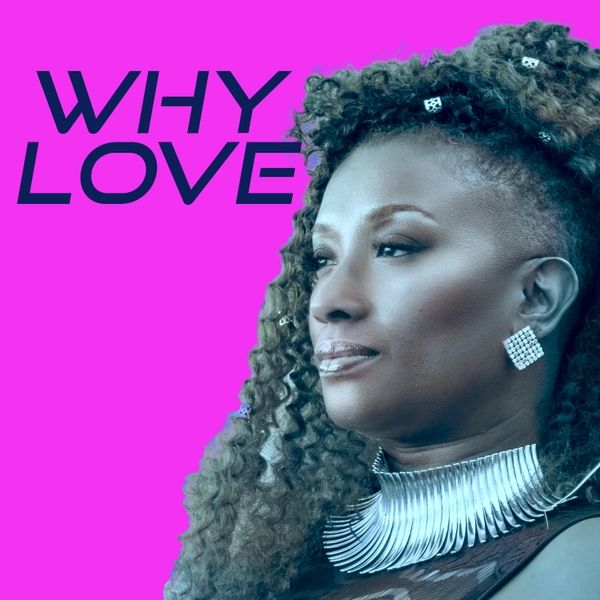
Zahyia Rolle’s out of Rochester, NY, has a new solo project, ‘Zahyia‘. She is “an eclectic blend of everything. Musically reflecting the light and stories of all.” Episode 117 of The Rochester Groovecast podcast is an intimate chat and “Why Love” listening party.
Listen To The Podcast:
Watch The Episode:
At Rochester Groovecast, the mantra “We’re Fans First!” harnesses the belief that the best businesses are built by fans. The podcast is deeply dedicated to playing an active role in the culture of its local scene.
The brainchild of Rochester native, Ben Albert, was created in 2016 to serve as a portfolio of the city, and nowadays, the entire region.
The podcast believes in the artistic brilliance abundant in Rochester, NY, and the surrounding regions. Ben seeks to play a pivotal role in our community by helping give Rochester a well-earned voice. He has seen first hand the abundance of talent, character, creativity, innovation, and beauty the Flower City has continuously offered.
When you talk about the colorful landscape of all the distinct soulful musical genres, it’s safe to say Steve Gadd has explored all of them behind his drum kit. The comfortable corridor of his Upstate New York roots groove comes from growing up in Monroe County in the town of Irondequoit.
Gadd, who celebrates his 76th birthday on April 9, has been playing drums since he was 11. At this age was his first out of State gig on The Mickey Mouse Club in California after winning a National Talent Round Up Course by Walt Disney.
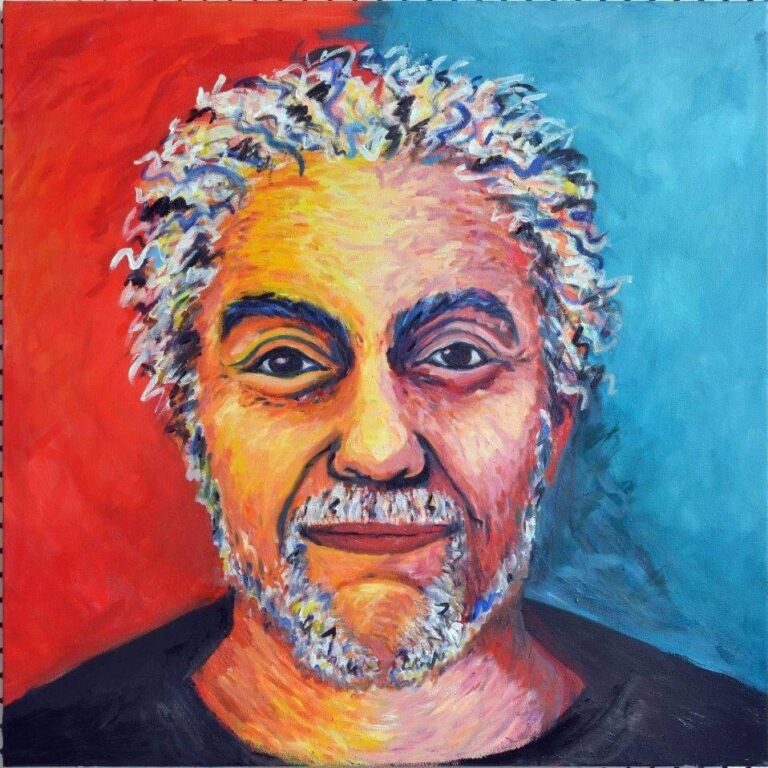
Steve Gadd by Artist Maria Friske
His music education continued in New York State as a member of the Rochester Crusaders local drum corps in High School. In 1968 he graduated from Eastman School of Music in Rochester. He was then drafted into the United States Army and played the next three years in the Army Band. In 2005 he received an honorary Doctorate degree from Berklee College of Music. In 2017, Eastman School of Music awarded him and Chick Corea with honorary Doctorates as well. In 2019 Steve Gadd Band self titled album won him a Grammy award for best Contemporary Instrumental Album.
A journey like this for Gadd is one that is always evolving however, this month he just released a live recording of his band from The Blue Note Tokyo. After a stay in England this past March and returning to LA he took time to talk with NYS Music about the ride. Sir Paul McCartney once said about Dr. Gadd, “Stevie’s a great drummer, no point having him unless I use his style, this great distinctive style”
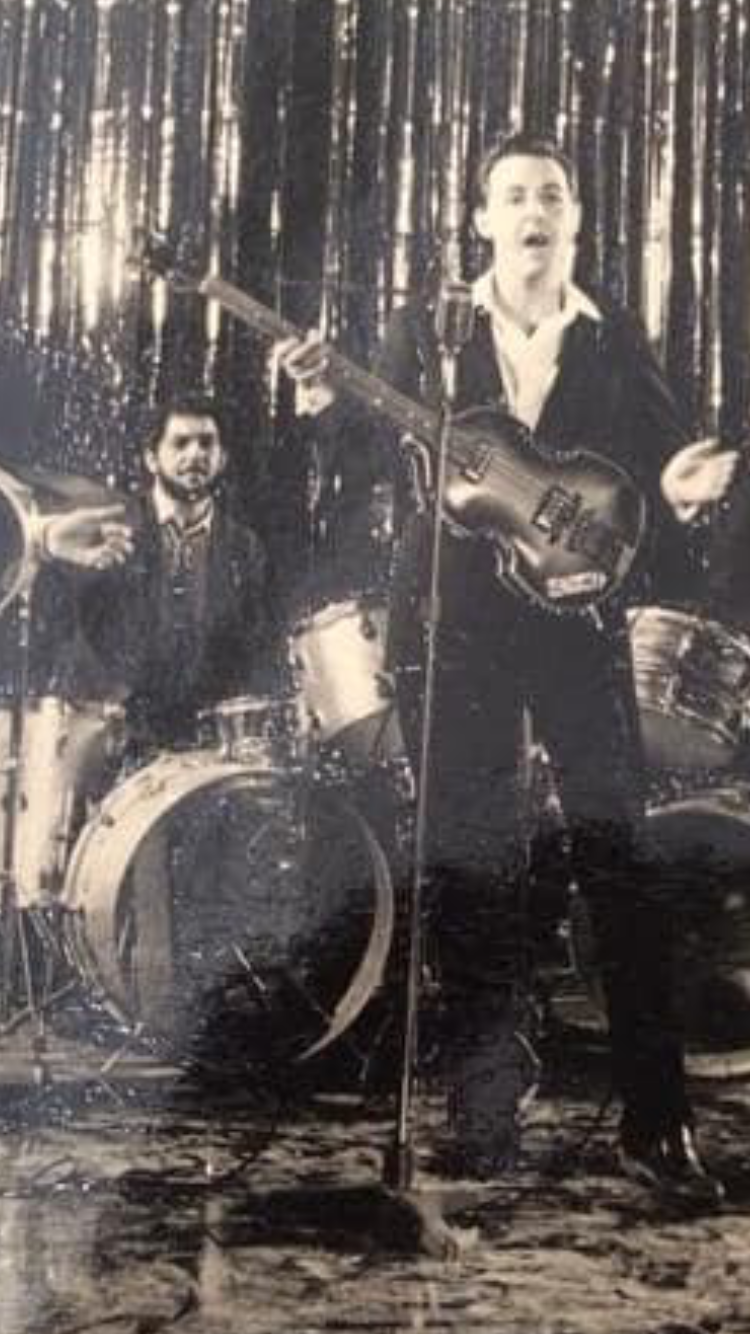
Steve Gadd and Paul McCartney
Matthew Romano: Thank you for taking the time to speak with NYS Music today about Past, Present, and Future Music experiences in the State.
Steve Gadd: Absolutely. My Pleasure. Thank You.
MR: Tell me about growing up in Rochester going to see live music in Monroe County at the Ridgecrest Inn that started to put the groove in you.
SG: Everybody they brought in was great. Art Blakey, Oscar Peterson, Ray Bryant and his brother Tommy Bryant with Papa Joe Jones, Slam Stewart. I used to take my drums and sit in and play with those guys when i was a kid. Dizzy Gillespie, Charlie Ventura, Gene Krupa, they brought all the big names in. It was fantastic and it was a small room. They had matinees on Sunday afternoons where they would let me and Chuck Mangione sit in with them. We had a lot of fun. A lot of great memories.
MR: Do you remember a piano player from Syracuse at that time by the name of Vinny Falcone?
SG: Sure I know Vinny, he ended up working with Sinatra. He was a great keyboard player man.
MR: Speaking of great keyboard players, At a Montreal Jazz fest you mentioned that Chick Corea helped show you some ideas on drums you were working out for yourself in the Sixties while developing a sound.
SG: Yea he did, I had got a new set of drums. I went from a 22 inch bass drum to an 18 inch bass drum and when I switched them out Chick wanted to come to the Club when I did it. He was a Tony Williams and Elvin Jones kind of freak. He loved their playing, He went up and just sort of played and I had been trying to figure out what guys like Tony and Elvin were doing for a long time. I did it by slowing the record down to speed 16 to understand. They were doing a lot of new things that haven’t been done. Seeing the way Chick approached the drums and how free he was helped make sense of a lot of the questions I had. Ya know he just had a great approach to everything and a great touch. The freeness.
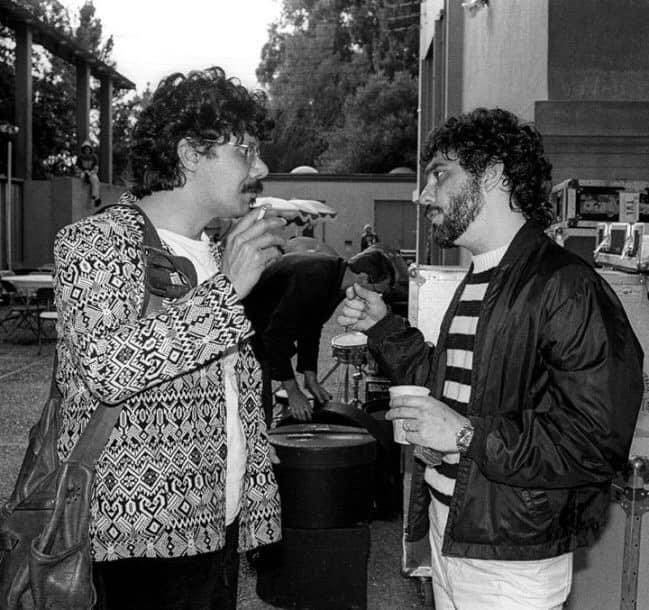
Chick Corea and Steve Gadd
MR: Is there anything that sticks out from all the studio and live sessions playing with him over the years?
SG: All of my memories of playing with him were great. His level of consistency and level of playing music just kept on growing. So all of the projects were memorable. One that sticks out because it was a live thing with strings and horns and two different bass players was Leprechaun. The thing that’s different about that than the other albums is that everybody was live and the arrangements were pretty amazing. I’ll never forget that.
MR: Chick had a great quote about Return to Forever on playing music that has already been written, “Playing something old? You don’t create in the past or the future, you do it now, is it old? Is it new? I say its just all creation.”
SG: Right. He was a true artist, there’s no doubt about it.
MR: How did you start your years with Eric Clapton, in the studio or on the road?
SG: We started together live in the 90’s on a blues tour he was doing and then he kept on using me for different things after that.
MR: How about the most raw blues project you did with him on the “Sessions for Robert Johnson” with Billy Preston, Nathan East, Doyle Bramhall II, and Chris Stainton. As an interpretation of the infamous and mysterious acoustic record from the Delta Crossroads?
SG: Eric brings the songs in and takes the lead on that stuff. For the most part he’s got it mapped out in his head. Sometimes an idea might make it flow better and he’s open to that. The players that he hired are hand picked guys that he liked how they played but most importantly loved where their hearts were musically. Ya know what I mean? It was like these are people that are his soulmates. It was fun and great to play with Billy Preston too.
MR: Any stand out moments over the years playing with Eric? Or the same concept as memories of playing with Chick where all the nights are unforgettable?
SG: Yes. They are all on a bigger level. Some because of the sound, the energy of the audience. Along the way some are more magical than others. But for the most part the bar is high, that’s the way we feel. We go up there and leave it all on the bandstand.
MR: Your last live release with Eric Clapton is from The Budokan in Tokyo. He mentions it’s the best place he has played in 40 years. Your band’s new album is from Japan as well and playing off what you said about the audience. Does a disciplined fervor for live music make for a better performance?
SG: I mean you always go off the audience. When you get it musically to a level where everyone on the bandstand is having fun and can hear each other and you can trust the audience is hearing it the way you are it gets to a spiritual level. In Japan or wherever you are. That’s the goal.
SG: You don’t get a lot of those opportunities, those were ridiculous size audiences. That’s not an everyday occurrence for me, it was great. Gerry Niewood who I grew up with in Rochester played at that show as well on Saxophone. The stage was a few stories up to get it high enough for everyone to see and hear. It was pretty spectacular.
MR: Like all major musical gatherings in New York State history I don’t think anyone knew the performance would be so big.
SG: It was fantastic. I don’t know what they were anticipating but I know they were happy at the end.
MR: Going across The Great Lawn to the Upper West Side’s Beacon Theatre in March 2020 you were on drums as part of the house band for the Love Rocks NYC Benefit. That was the your last live performance in New York and also coincidentally the first socially distant concert to be streamed as the pandemic touched down that day. It limited us in the sold out theater to only 300 people. The house band alone had almost 20 people on stage. Highlights of the night was your cover of Derek and the Dominos “Why Does Love got to be so Sad?” with Warren Haynes and Derek Trucks . You also locked in a groove with percussionist Pedro Martinez for Dave Matthews set as well.
SG: Will Lee puts a good house band together for that event. I have played with Derek Trucks at one of Eric Clapton’s Crossroads Festivals but that was my first time playing with Dave Matthews which was great.
MR: Your former percussion player with Paul Simon, Cyro Baptista, helped carry the beat at The Beacon Theatre at the end of last year for an eight week residency with Trey Anastasio. It served as the only other major groove to come out of The Upper West Side most recently.
SG: Trey Anastasio of Phish? Yea, Cyro and I played with Paul Simon for The Rhythm of the Saints. I’ll have to check it out.
MR: Speaking of being part of Paul Simon’s rhythm section over the years, did any of your time in the Army help inspire the almost military like precision on your iconic “50 Ways to Leave your Lover” groove?
SG: No the Army band was like a Buddy Rich kind of thing. What your talking about was from Drum Corps. When I was in Rochester Crusaders and Empire Statesmen. A lot of the rudimentary stuff I used came from there
Steve Gadd as a member of the Rochester Crusaders
MR: Spring just started. What’s on the horizon for 2021?
SG: We just released the new live album and waiting on some tours that keep getting rescheduled. I did a book on drum exercises that’s going to be released. I think Ill continue to write them. I enjoy it. A lot of new ideas came to mind. Different stickings and using the rudiments in various ways. It’s like a snare drum exercise book. I’m mainly just trying to stay in shape and stay creative so I’m ready for when things open up.
MR: Staying true to your always changing chameleon man like musical background behind the drums of all different types of soul music. Can we keep expecting new tempos out of you in 2021 as well?
SG: I hope so. It keeps evolving. Ya do the best you can every new day. Thank god you have another one to live and ya give it your best shot. Ya know what I mean?
On March 26th, Voorheesville-local Annie Scherer dropped her debut indie-pop album, an introspective collection of songs titled Garden Bed.
Photo credit: Sherry Kocienski
In the album, Scherer dives deep into her emotions, with each song tackling a different point in Annie’s life where she had to overcome hardship and ultimately grow as a person.
On each track, Annie takes the listener on an emotional journey, inviting them along on sonically exhilarating ride that expands as the album progresses.
We spoke with Annie and asked her a few questions about Garden Bed:
Aaron Ginsburg: The themes of your album have a lot to do with being introspective. Has COVID-19 given you time to be more introspective, and in what ways has it affected your creative process?
Annie Scherer: I’ve had a lot of time with my thoughts, which was mostly a good thing. I was finally able to relax and take a step back, which I never allow myself to do. At the beginning of quarantine, I had a hard time finding inspiration and seeking out creativity. But I also used the time I was given to find my sound and record my album. AG: What artists have had the biggest influence on you, and can we hear any of their influence in your album Garden Bed?
AS: Artists who use a lot of visuals in their songs are always among my favorites, as are those who write tangible lyrics and catchy melodies. I really enjoy alternative artists, such as Lana Del Rey and Lorde, whose influence can be heard in my instrumentation. I also love the memorable melodies of the Beatles and the Rolling Stones.
AG: As a musician during the pandemic, it must be difficult to get the same quality of outside feedback on your work due to the fact that you can’t play live and can’t gather in large groups. Has that been a problem for you?
AS: The pandemic has forced us to rely on social media, which is not a great way to get feedback. I never know if people are sick of seeing my promotional posts, but I don’t really have a choice nor do I let that stop me. Live music is nice because you’re surrounded by people who support you. It becomes a symbiotic experience.
AG: What do you want your listeners to feel when listening to your album Garden Bed?
AS: I want listeners to feel a mix of emotions when they hear my music. “Skyline” should arouse feelings of sentimentality, while I hope they feel inspired when they hear “Phases Grow.” All my songs were written to create an emotional response.
AG: What do you have in store for us next? Do you have a musical direction you are aiming to go to?
AS: I already have a vision for my next album. Garden Bed mostly consists of a brighter tonality, and lots of it is acoustic and light. The next one is likely to have darker and more minor elements. The contrast and change in theme will enrich the musical experience for my listeners.
“Andy Warhol,” a single from Garden Bed.
The tracks on Garden Bed were primarily written and produced by Annie in collaboration with David Finch, Aidan Sloppy, Kyle Robinson, Ryan Davis, Maggie Roberts, Ben Grant, Tom Evans, Brenden Beaver, Ali Genevich, Rosemary Michaud and Elizabeth Miller.
Over a period of three months, Annie recorded her vocals and digital instruments in her mother’s home. She hopes the music will resonate with listeners and inspire them to persevere through their own hardships.
You can listen to Garden Bed, as well as other work by Annie Scherer, on all streaming platforms and on her website.
On Thursday, March 25, up and coming band Public Nature will perform a livestream event to support Arlene’s Grocery. Due to the unfortunate circumstances that COVID-19 has left indie music venues in, without the support of live music crowds, Arlene’s Grocery is in need of funds to remain open.
Arlene’s Grocery, located on the Lower East Side, has seen many young and well known acts get their start, including Arcade Fire, Lady Gaga, Lana Del Rey and Jim Carrey. You may also recognize Arlene’s Grocery from the #SaveOurStages movement, where now Senate Majority Leader, Senator Chuck Schumer, was seen on the street showing his support for the venue.
Tickets are just $10 with an option to donate to help save this historic venue. You can purchase tickets to the event here.
NYS Music’s Rob Tellerman recently spoke with the band’s frontman, Oscar Canas, and found out his roots growing up in Colombia and what got him interested in coming to America to pursue music. He was kind enough to perform some songs exclusively for NYS Music.
Rob Tellerman: Where did you grow up?
Oscar Canas: I grew up in Medellín, I’d say it’s Colombia’s prettiest city. It’s a very cosmopolitan place where “everything is happening”. It’s very similar to New York City in many ways, it’s 5 million people but feels very small, maybe it’s the layout. The weather is the best, it’s called the city of the eternal spring, 75° all year long. No humidity, just perfect. When it’s cold is 70°, when it’s hot is 85°. It was very violent when I was a kid, Pablo Escobar was gone and there was a war of power going on. Many kids were killing each other fighting for a corner. I saw dead bodies my whole childhood, many of them where my friend’s “big” brothers. The city is a valley so it’s surrounded by mountains that reflect the sound of thunders in a beautiful way, I miss that sound. A thunder reverberating across the city for several seconds and you know what neighborhoods is hitting and then it bounces again and you know it is south or west or is leaving the valley. And when it rains the clouds are purple, an apocalyptic beautiful purple color.
We have the second best train in the world and one of the two only profitable ones. It’s a highline, we don’t have a subway, the ride is clean, punctual and picturesque. Not that graffiti is bad, but there is not a single graffiti on it inside or out. Leaving the city through the mountains is best, there are cables spread out so you get these steep and very high advantage points that are super fun if you’re not afraid of heights. Quite an immense view. My childhood was half good and half bad. It was fun, I had a good education, tons of bicycle rides, friends, exposure to science, but it was violent inside and outside the house. My dad was a crazy dude. He’s cool now and mom and dad love eachother but it was bad back then. What saved me was the huge amount of love they gave me, as my grandparents and aunts and uncles did too. I was a very loved child that witnessed a lot of violence. Is that a good balance that can create and nourish an artistic drive. Maybe.
RT: What first got you interested in music?
OC: Now that I look back on it, my interest in music happened unconsciously first. My family used to gather all at somebody’s home for christmas and such and music was the centerpiece of the fun. By the end of the night after eating and dancing, everybody would sit and my dad and uncle would swap vinyls endlessly. My first memory of music is maybe at 3 years old. I remembered I liked the music and that I missed it, but I never elaborated on it until I was a teenager.
These vinyls were mostly 60, 70 and 80’s italian, french, spanish music. All in spanish. The artists would sing in spanish their originals. These songs were so melodic and catchy and epic. The singers voices were always unique and the quality of the recording inmence and I can say in many occasions better than those of my favorite big bands like Led Zeppelin, The Beatles and others like that. So, so, so catchy. They had the beatlesque simplicity of the verse-chorus-verse kind of music and the orquestras were always gigantic. These Italians, French and Spaniards were onto something. I wish I could show these songs to everybody but being in spanish people lose their interest from the get go. ha!. That built and hard-wired my interest in music I think, I was never conscious of music, until one night.
We had recently gotten MTv in our cable. MTv Latino which they produced out of Mexico. Great stuff. The VJ was Ruth Infarinato, I’ll never forget her pick hair. She was presenting top 20 translated songs, you know, with the dual subtitles, and I was flipping channels and not much interested because some songs I already knew and then the number 1! Smells Like Teen Spirit. I remember the converse shoe at the beginning of the video and the guitar and then it exploded and I was in awe. My brain struggled with such different sounds, it was confusing, I felt I didn’t know what those sounds were. And it’s odd because I’m 15 or 16 there and I’m supposed to have heard lots of different music, guitar music. Nirvana is not super alien, I guess it was the power that was confusing and he hadn’t even started to sing.
So I’m losing it during the first bars of the song and the foggy dark kind of scenes of the video were helping too. Then he sings and I jump out of the blankets, I’m sitting like when you are a kid and you hear your dad coming home late with a gift and you’re about to jump to hug him and get your present. Then the chorus explodes and I just lose it. I got dizzy and had that feeling in my stomach like when you hit a low pressure on an airplane. it was physical. Free fall feeling. It was very intense and that song is not my favorite Nirvanas’ song but it changed me right there. The beautiful soft and raspy voice and then the yelling. The sound is all entangled and distorted and is big and is new. I never had such a reaction to something new. I was obsessed. My mom is a Nirvana’s catalogue expert.
RT: How did you learn to write/sing/play?
OC: I learned to play the guitar to Nirvana’s MTV Unplugged in New York album. I played every song everyday for months and months. And I tried to sing but it was hideous. I’m not tone deaf but I cannot hear the notes I’m singing so I would think I’m singing pretty good and I was trying to sing Nirvana’s songs and that’s harsh on your vocals if you don’t know what you are doing. I was destroying my vocals. I feel sorry for my family and my neighbours. My mom used to say I sang like a choking cat, haha! They were very supportive. A few days later after knowing about Nirvana my dad bought me my first guitar. A cheapo nylon acoustic guitar that was hard on the fingers. And I didn’t want a teacher or many lessons. I liked science so all I wanted to know was the mechanics of the guitar and the physics of the waves and how notes and chords worked and stuff like that.Then, I figured out how the notes were distributed over the neck and how scales worked and chords and I was set – played like crap for 10 years. But it was good because I played like me. And even though I adored Nirvana, Muse, Radiohead, Placebo, and such I didn’t want to play like them. I always played like myself, crappy and all. Same with singing. I wasn’t trying to imitate. I did try to yell with a raspy voice like Kurt but that only gave sore throats. So I was singing and playing like crap for years without any technique and I was writing from the get go as well, but I didn’t know I was writing. I have a folder with the first guitar riffs but I never considered them as my riffs. It was odd. Only now I can say I am a songwriter but still feels weird. I wasn’t doing it to write songs but I was. I wouldn’t say I ever learned how to write or sing or play. A leat not jut yet.
RT: What was the first instrument you learned to play?
OC: The guitar, I started playing on a horrible cheap spanish guitar with nylon strings. But I loved it. She was named Orange, but it wasn’t orange. Guitars would tell me their names. She had a good burial. I smashed it to a set of concrete stairs next to my house like every guitar should die. It was broken all over, it was requesting a proper rock and roll goodbye. But I haven’t “learned” to play. I started playing very late in life at 16. And during the first two years I would play 4 to 10 hours a day almost everyday. But then I went to college and basically would forget the guitar two years at a time. When I started my first real band I barely was able to play my own guitar parts. I had to practice lots again and learned quickly but still it was rough. Lately I’m more precise and I feel in total control and can do what I exactly want but, I mean, for myself, my style, I am a world expert, but for the regular definition of what a guitar player is, I suck big time, but that’s ok.
RT: Is your family musical?
OC: All my family is very into listening to music. All of us, uncles, grandparents, brothers. Everybody would either gather to listen to music or have those moments alone in their bedrooms to listen to music. My dad collected vinyls, cassettes and cds. He introduced me to classical music and 60, 70, and 80’s italian, french and spanish pop when I was very little. And my mom is still crazy about her teenage years idols, I still love those songs and listen to them. But nobody played any instrument, it was all about listening to music. I mean, really listening. Music was rarely a backgroung thing. The adults would sit, play the records, and analyze the vocals and the instruments one by one and they would argue about quality, artistry, authenticity and whatnot. It was so fun for me as a kid to be there listening to the arguments. They were so passionate about it.
RT: When did you decide to come to America and pursue music?
OC: I had hundreds of riffs and a few melodies I accumulated over the years. One day I started to put them together as whole songs. I liked a few and I thought “I gotta go to New York”, that was 2014. 3 years later my girlfriend told me she needed to spend some time in the US and we decided to live here. It was easy to decide, the market is here. It’s not as easy as I gullibly thought it would be but definitely this is the place to be.
RT: Who are some of your influences?
OC: Nirvana, The Beatles, Muse, Radiohead, The White Stripes, The Hives, Interpol, Placebo, David Bowie, Led Zeppelin, The Black Keys, Rodriguez, Queen, ABBA, Coldplay (when they were good), Natalia Lafourcade, Zoe, Neil Young, Leonard Cohen, Gotye.
RT: What is the story behind your band name?
OC: There is no story, but I really like it and I’m proud of it. It’s just such a cool sounding couple of words, I just like the sound of it. I’m glad if people Google it and they find nature landscapes and such, but really is just the sound of the two words. Public Nature. I could say it means nature is for everybody and stuff like that, but nah, it’s just a band name. I looked for a name for years and that happened.
RT: How would you describe the music you create?
OC: I’d say it is raw, honest, melodic and effortless in that it is not trying to be anything, it just flows. The most important thing for me is that the music is sincere. Our music it’s not designed to sell but it’s designed to be as good as we can make it. It’s not trying to please a market but I think it is marketable. I’m lucky to like guitar, bass, drums, verse-chorus-verse rock music because that is easy to the ear and that is exactly what we’re doing.
RT: Are you signed to a label or totally independent?
OC: Last december we signed to a label in Amsterdam. To be honest I feel lonely, I mean business wise lonely, I could do with some help, I wish I had a record deal and somebody would do my advertising and such. I’m very bad at socializing. I only have a few real true friends so I can say I’m good at true friendships and fraternal relationships but I’m bad at business relationships. It’s all about who you know and more so in this business. I have to step up my game there. So in that way I’m very independent, big euphemism for being bad at public relations and not being able to reach people with our music.
RT: Who are/were the other members of your band? How did you meet them?
OC: Rex Fenton from Canada on drums and Curzio Aloisi on bass from Italy. We met thought the all mighty Craigslist
RT: Can you describe your creative process?
OC: 50% of the time if I want to write a song I’d be fiddling around with the guitar for hours to find a riff or part I like and then I’ll spend more hours trying to find a melody for it that I like. Then I’d accommodate the syllables into real words and that’d be it. A couple of days most of the time. The hard part is to find myself truly inspired because I always want to write songs, I write 2 or 3 songs everyday but they’re shit. The good ones happen once in a while. The other 50% is about being in the zone. I go deep in concentration and sometimes the first thing I play on the guitar with the first melody I babble becomes the song. With this method a song has come to be whole done in 3 minutes, then the lyrics take a bit more, anything in between 3 minutes to 6 months. I love writing songs, it is the process where I am 100% myself. It just flows, it’s very thought to be in that state, it requires a huge amount of peace and calmness and sincerity and no fear whatsoever. It’s awesome. I have to reach nirvana in order to write a song.
RT: What was your first single?
OC: A song called Nothing Special (The Science Song) it’s under our previous band name “Tender Beats”. I like the song, and we recorded it in one take live. Then I added the vocals. But it’s cool to have those one-takers. We recorded it at a friends cabin in the woods in Hudson. It was Rex’s first couple of months with us in early 2019. It’s about enjoying life and buried in every line there are the deepest science notions ever. Very nerdy if I explain it. Very.
RT: How did you get hooked up with Richie Ramone?
OC: Vicky Hamilton was our manager for 3 years, I didn’t ask her how she and Richie knew each other but she heard Richie was looking for an opening act and Vicky called me asking if I’d like to do that and of course I said of course. She said he was very honest with his opinion of the music and that he would need to truly like the songs. She sent some demos we had and out of a pool of bands he picked us, he liked two of the songs he heard. He called me after Vicky gave me the good news and we talked about music a bit, it was awesome. The tour was the most beautiful musical experience I ever had. He is like a monc, like one that has lived milenia. Every sentence he spoke was a life lesson. A wise person and with a swag. So cool and witty, caring and strict in the best of ways.
The first night we played awesome and he came to us and said we were awesome and to keep it up and that I sang like an angel and asked me about a couple of the songs and admired them. He wrote several of the Ramones songs including “Somebody Put Something In My Drink” and recently a crazy couple invited my wife and I to their apartment and tried to roofie us and I told him that song was our theme song for those days. It was a good night. Then we suck for 4 night is a row and he wasn’t happy, he told me to stop whining about the sound and whatnot and to perform for the kids, that it was all about the kids, and that I had two jobs, to entertain those kids who paid a ticket and to warm up the place for him to follow. After that we did ok and we had a couple of great nights but I wish we’ve done better for him. We still talk and I send him songs looking for his approval. He always replies, great dude.
RT: Who would you most like to collaborate with?
OC: There are so many names. I think mostly with Krist Novoselic of Nirvana, he’s my favorite bass player. I love that gnarly heavy drunk sound of his and would love to see what lines he comes up with for one of our songs but he would need to write a killer line like those of Curzio’s, tough opponent. Or Tom Yorke, singer of Radiohead but what the hell am I going to do? He sings like life sounds like and his melodies are amongst the best ever written. I’d love to go into a guitar duel with Dan Auerbach of The Black Keys and write and sing a song with Brian Molko of Placebo or write a song for The Hives.
RT: What are your favorite venues?
OC: Buffalo’s Mohawk Place, Arlene’s Grocery in NYC, Slash Run in DC, Ralph’s Rock Diner in Worcester, Kung Fu Necktie in Philly, Sunnyvale in Brooklyn but is closed, Mercury Lounge, Pianos and Gold Sounds. Great venues them all, I’d play one each night if it was up to me.
RT: What is your favorite song to perform?
OC: “Find my Baby” I think. Is melodic and catchy and I think is the best lyrics I wrote so far. But it’s hard for me to sign. I’m out of tune most of the time, the verses are particularly hard but it’s so fun, it’s a fun song and even though it’s about love it has a deep meaning and it’s pure poetry those lyrics.
RT: What do you like most about being a musician?
OC: Everything. I love writing songs. I love loud guitars, loud bass, loud thundering drums. I love touring, I love the sound of the door of the touring van when it closes, I love loading into the venues, and taking apart the gear and loading out. I love driving at night looking for the hotels and talking to the guys about the gig we just played. I love the smell of beer, piss and cleaner of the venues. I love the crappy wawa food along the east coast. I love watching the pavement pass by through the window and the changes in temperature and cities and all.
I love the band mates. I love recording and placing mics. I love singing and I love my voice when I’m in tune. I love the tension amongst the band. I love the soundcheck, I love to gig. I love to write lyrics and come up with riffs. I love my bands and the passion they invested into their music. I love the people involved in music. I love being tight and rehearsing and I love yelling my lungs out. I love the amps and the effect pedals. I love well made guitars and specifically a brand but I won’t say because they’d have to pay me. I love the science of sound. I love CD’s and vinyls and cassettes and DAWs. I love how my wife supports me and my family too. What I like the most is gigging.
RT: Do you ever get performance anxiety?
OC: I saw a movie with Jude Law, Catherine Zeta-Jones, Channing Tatum and Rooney Mara called Side Effects and I learned about beta-blockers. Before my first gig in Medellín I was lucky I had a friend who was a doctor and I asked her for beta-blockers which would calm me because I knew I was going to be a nervous wreck. And I was. My first gig was horrible, I was so nervous I felt sick in my chest. The beta-blockers helped me to be just ok during the first gigs but they would make me feel trapped in cellophane or something, my girlfriend would tell me I was distant and weird and gone while under their effect, and I think the audience felt it too, I see the videos and it’s like a zombie is doing the concert. I went down on the dose and it was better but I was too nervous to have fun. When in the U.S. I didn’t have them so I had to suck it up.
My first gig was at the Mercury Lounge but it wasn’t that bad. During my first year I’d feel bad but not horrible. I still get anxious and need some time to get loose while performing but it’s way better. Before the pandemic we had a good rhythm going on, the more gigs I was playing one after the other the best I felt. I’ll get rid of that, it’s useless to feel anxious before a gig. I want to have fun with the band and the audience.
RT: Do you have any other upcoming projects you are working on?
OC: Only as Public Nature, yes. Many songs to come. I wrote around 30 new songs during the pandemic and am still writing more. 8 of them we got to record and the rest, because I’ll be without a band soon, I’ll have to either find bandmates or hire recording musicians to record them. Let’s see what happens first.
RT: What is one message you would like to give your fans?
OC: I’d like to tell them that we love you very much and please be patient for more music to come!
When you think of great funk soul bands that have come out of Buffalo, New York only two names come to mind, Rick James and Soulive. Alan Evans, drummer and founding member of Soulive took time to talk about his musical journey that started in Western New York to around the world with the best.
Buffalo, NY native Alan Evans at “Bowlive”
“It just kind of happened, To be honest I’m surprised I’m actually doing this, some people can point to… “ Oh I saw this, I heard this” Then all of a sudden I wanted to play music , but man music for me is like breathing, like literally ya know?, “ Its always been ingrained”
He has been playing gigs in Buffalo since he was eleven years old.” “For Neal and I it started like one day we were playing music, the next day basketball, then football, maybe skateboarding, then some times all that in the same day” Alan first started out with a band called The Groove and then Moonboot Lover that prompted him to touchdown outside Buffalo in Brooklyn’s pre-developed 1992 Park Slope. “At 7th between 8th and Prospect right at the park “ “Park Slope was a completely different world then ”.
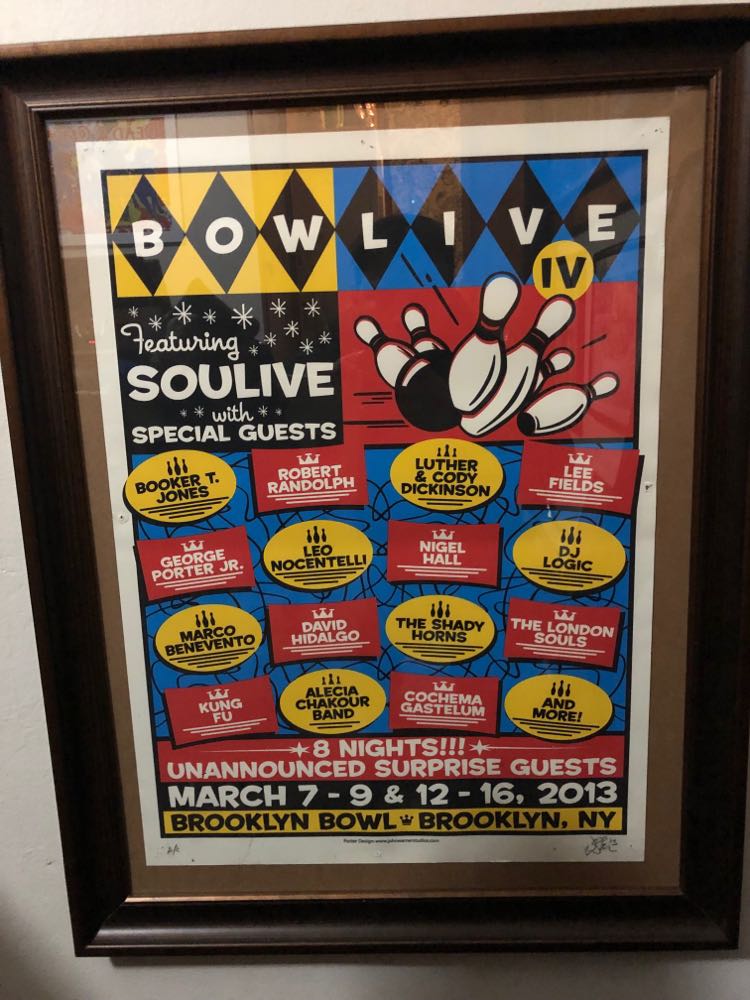
He went on to form Soulive with his brother Neal Evans and Eric Krasno in 1999 that has gone through the past two decades culminating in their own Seven time residency at the historic Brooklyn Bowl in Williamsburg. Dubbed as “Bowlive”, it brings all of the best musicians on the scene today to collaborate with Alan and his Buddy Miles like vocals and drumming on “Them Changes” for each one over the years.
NYS Music had some time to talk with Alan Evans about his musical experiences over the career, Here is the Conversation:
Matthew Romano: Where was your first collaboration with Sam Kininger who became an instrumental part of Soulive?
Alan Evans: So… Soulive started in 1999 and Sam came and was part of the Lettuce crew at Berklee at the time, So literally all of our early gigs were with Sam, I remember the first time we played with Sam was at House of Blues in Cambridge, Mass in 99’ and Kraz was like “Oh my boy Sam is gonna come through and play” “and we were like all right cool whatever” Then we recorded on from there with two great records in Woodstock with him
Alan Evans, Sam Kininger
MR: Jumping from House of Blues on the East Coast with Sam K to the House of Blues in Los Angeles on the West Coast in 2005 where Stevie Wonder was in the crowd for your set and then joined for the encore on “Jesus Children of America” Did you know he was in attendance and was gonna close the show out with you?
AE: We had no idea he was there that night, we finished our last song and left the stage he was there and wanted to sit in with us, so um when we went to play as usual, the funny thing is at that point and time we played Jesus Children a lot. Especially for an encore ,we played it to get into a groove in the set list on tour so we were probably gonna do that any way. They said his driver had to get his harmonica out of the car, so basically we went on and were just stalling and started playing and I look over and saw him on the side stage and the people gave me the thumbs up and I introduced him, and he came out so yea it was pretty wild.
The funny thing it was the first time I ever saw Stevie Wonder live and they set him up right next to me. I thought he was gonna come on and play harmonica and leave , he’s not gonna sing and split, he comes out and the first thing he does is start to blow the harp, ok just as expected and then we got in to it and were grooving pretty hard, his solo came to and end and then started singing!
MR: In 1972 Stevie Wonder opened for the Rolling Stones, Soulive opened for the Stones on a couple different occasions, In Philadelphia you did for an intimate Tower Theater performance at a three thousand capacity venue . Any cool takeaways from that infamous backstage scene with them?
AE: A lot of funny stuff happened with the Philly show, like some Planes, Trains and Automobiles kind of stuff, So this is pre uber days and we landed at the airport and were cutting it close for soundcheck, a car pulls up that can finally brings us but we had gear and needed a van but couldn’t get one…the catch is that he has like a bag of trash that he ended up strapping to to the hood so we can all fit in and brings us to the venue where we tried to keep a low profile to get dropped off away from the Stones tailgate around the corner
So we got inside and did a soundcheck and hung out downstairs and was used to the typical go back to the hotel to chill before playing, that wasn’t the case the with Stones since it was such a mob scene they couldn’t leave either so we were all just hanging out
Backstage: Soulive and The Rolling Stones
We couldn’t leave, we were just there hanging out in our green room which had catering and a cavernous hallway leading to it. I remember Kraz and I were sitting by the door and ah Neal and I were on the couch too. But anyway Kraz is in this other chair by the door , all of a sudden someone kicks in the door , and the it flies open and BAM! I mean it was loud as hell , I mean what the fuck is going on? And in comes Keith Richards who just kicks the door down and walks in and goes I heard one of you is from Connecticut ?! So Kraz was from CT and Keith lives in Connecticut and they talked for a while and then Keith just splits
So we opened and were just up there doing our thing , some people in the crowd were checking it out, the other were just rolling their eyes and the thing is I looked to my right and all of them were hanging out like listening. All the Stones were posted up the whole set, they were digging the shit out of it, so um that was fine, we came off on time and they were like just like damn we got to work tonight, and i’m like OK cool
MR: After seven Brooklyn Bowl Residencies, is it even possible to pick a stand out moment with all those collaborations with every great artist over the years ?
Bowlive Poster & Setlist
AE: Man that’s a really good question, so much of it is , it seems like every year there is a moment like wow I can’t believe this is happening
I remember the set with Bernie Worrell and we did a like whole P Funk thing, I wasn’t even playing drums on that, it was me Kraz and Shmeeans playing guitar, I remember soundcheck and were running through the tunes with him, and were like damn this is Bernie, and we knew him for years but this is the first time we’ve played him, but it the was also the ideal time to realize this dude is a living legend, that was one experience I remember being insane
I grew up listening to P Funk, our older brother was way in to to them , hes 65, so he literally experienced them in 1977 when they were touring and saw them live landing the Mother Ship
MR: I’ve seen you play at Madison Square Garden, that being every artist’s dream venue in the State to play, are there any other venues in New York you have fond memories of?
AE: Its tough to beat the Garden, but ya know SPAC right? Yea man i have a sweet spot in my heart for that place man, Peter Prince my band mate in Moon Boot Lover back in the day is from from Saratoga Springs, His father is a really great artist, so for Jazz Fest we’d always get his dad’s vendors pass there. I saw some great shows and actually Soulive got to play there one year for the festival. There’s definitely something special about that place and I’d love to perform there again actually
MR: It was last Valentines Day at the Tralf in Buffalo seeing you perform with Soulive, it’s been almost a year since you were able to play live in front of sold out crowds pre pandemic, what is the expectation on live music for yourself in 2021 during these new times?
AE: That was my last run. We did the The Tralf, Pittsburgh ,The Capitol Theater and Boston. We had the most Soulive shows lined up till August for the first time in years. People have hit me up since, but I’m in no rush. I have been doing a lot of recording at my studio in the meantime. But I reflected in the beginning of the pandemic while my wife and I were out for a walk. I thought this would be a thing possibly for a while. I remember saying I don’t know how long this would last but at the end of it when things open back up that I didn’t want to not do anything or wish I did more. During this time I’ve looked at my life if I never would do a live show again. I’m not gonna sit around and be bummed out’ about it
MR: My final question to Alan was drummer to drummer, relating to the same concept , that there is a silver lining to be had during these times, for me I was able to collaborate with musicians that would normally be on the road or with other projects who are now available to jam and Alan’s reply was much obliged.
AE: Exactly man, yea for me you’re so right, it’s just how you look at it. My Father said it the best, its simple there’s two ways to looking at things, you can be positive or be negative, and so of course we all know the negative of the pandemic so we don’t have to talk about it, but its like with in that though I think good. I’ve been really positive. I’ve been making music and can spend time with my family. For me its like a cleanse, to really look at my life, I can’t just do any old gig , I just take everything away and have time to step back and feel what’s really important. What do i want my life to be about? Thats what been a positive for me and I hope it’s like that for a lot of people.
MR: I just scooped Rick James and Stone City Band “Bustin out of L Seven” on Vinyl, are there any recordings from your fellow Buffalo native that stick out?
AE: Man…that’s a really tough one. I mean this really does, you kinda cant go wrong. That’s a dope record
Check Out Soulive’s last home show on Valentines Day in Buffalo, New York on February 14, 2020.
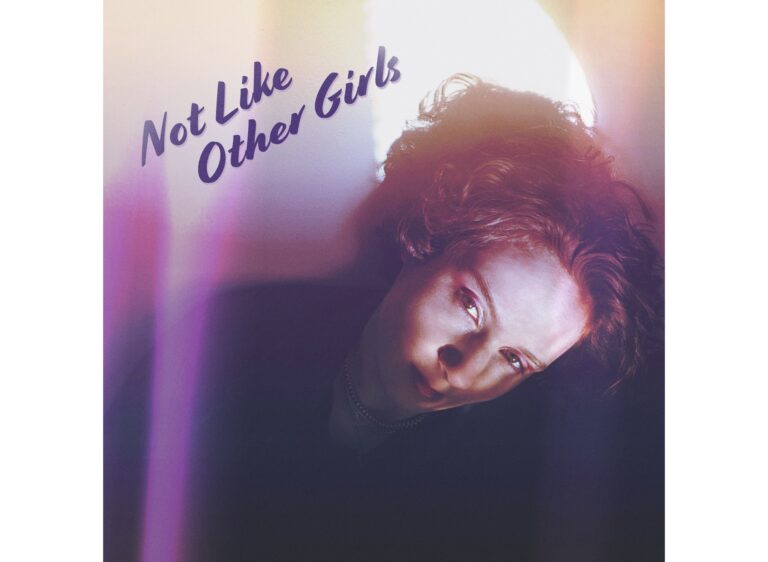
18-year-old singer-songwriter Zola releases her new single “Not Like Other Girls” today, March 12. Building her fanbase in the New England area, the young artist blends indie, pop, and R&B. Zola integrates her raw and honest lyrics within her work also.
Zola’s music is oriented around her vulnerability. The way in which she can unapologetically be herself is what resonates with many fans. Although, at such a young age, Zola has had to face hardships within the music industry. Zola shares with NYS Music:
I think, especially being a woman in the industry, there’s a completely different set of expectations placed on us than on our male counterparts. Women in music constantly have to reinvent themselves in order to stay relevant and, in general, face way more judgment on whether or not we’re ‘basic.’ If you’re basic, that has a sort of negative connotation, but if you’re ‘alternative’ you’re trying too hard. It’s an impossible battle to win.
Zola
This “frustration and relationship between judgment and identity” had a major influence on how she wrote the new song. Being a young woman in this industry places a microscope on one’s work. Zola takes this scrutiny, though with an enlightening and mature perspective. She aims to fit no one’s narrative but rather create her own.
Calling Out Misogyny
“Not Like Other Girls” sets a haunting tone with penetrating piano keys, moody guitar chords, and a synthesizer. Layered over this is Zola’s riveting vocals that effortlessly glide with the beat. When constructing this single, Zola shared that she first began with the lyrics and then built the additional instrumental sounds around that. As this single is very personal to Zola, she wanted the song’s tone to be reflective of the meaning.
The song deals with “finding the courage to stand up for one’s self.” This phrase ‘not like other girls’ is inherently misogynistic because it instinctively devalues other girls. Zola purposefully utilizes this phrase in order to bring attention to this popularized but damaging mindset.
The ‘Not Like Other Girls’ trope is very interesting and complicated, and there is definitely a growing discussion about how the whole concept is rooted in misogyny. The whole thing started out as women trying to remove themselves from femininity, in order to set themselves apart and prove superior to other women. Oftentimes it’s even just a ploy for male attention. I think in order to break down this harmful trope and mindset we need to educate people on what it actually means, and have conversations with other women about it. Being into popular things isn’t bad, and being into unpopular things doesn’t make you better. Everyone should be able to like what they like, but if I see a girl with a superiority complex, I’m not going to think twice about calling her out.
Zola
Breaking Down Barriers and Building Connections
Zola values the importance of her individuality and has expressed that freely in her work. Being personal with her fans has built a relatability that is hard to find. Her new single is one of many that encapsulates her artistry and vulnerability.
I’m just a very vulnerable person, so my music and what I write directly represents who I am. I’m driven by everything; life experiences, relationships, hardships. Life’s too short to not be vulnerable, because what’s the point if you don’t let yourself feel, isn’t that what music is all about? I like to think so.
It has been four years since the members of Melt came together as a band. Co-founders Veronica Stewart-Frommer (Vocals) and Eric Gabriel (Vocals, Keys) both NYC natives, started playing music together in High School. They and some of their friends entered a local battle of the bands competition and won. They took the prize money from that competition and used it to produce the band’s first song“Sour Candy” which was released as a single in 2017.
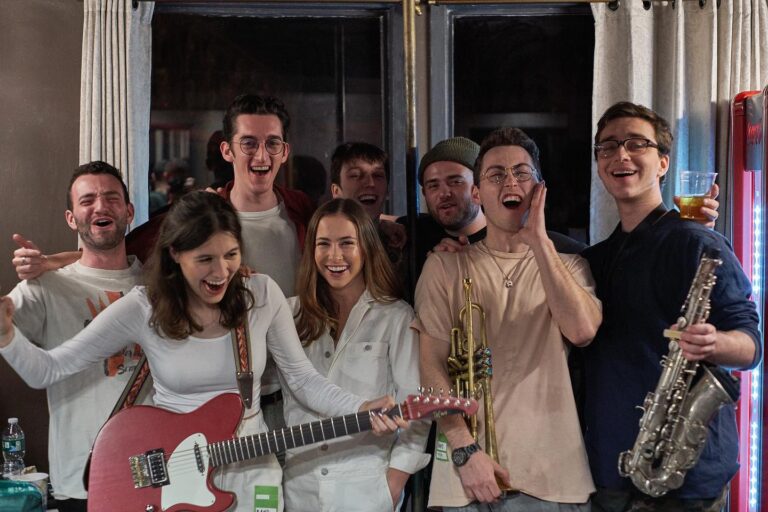
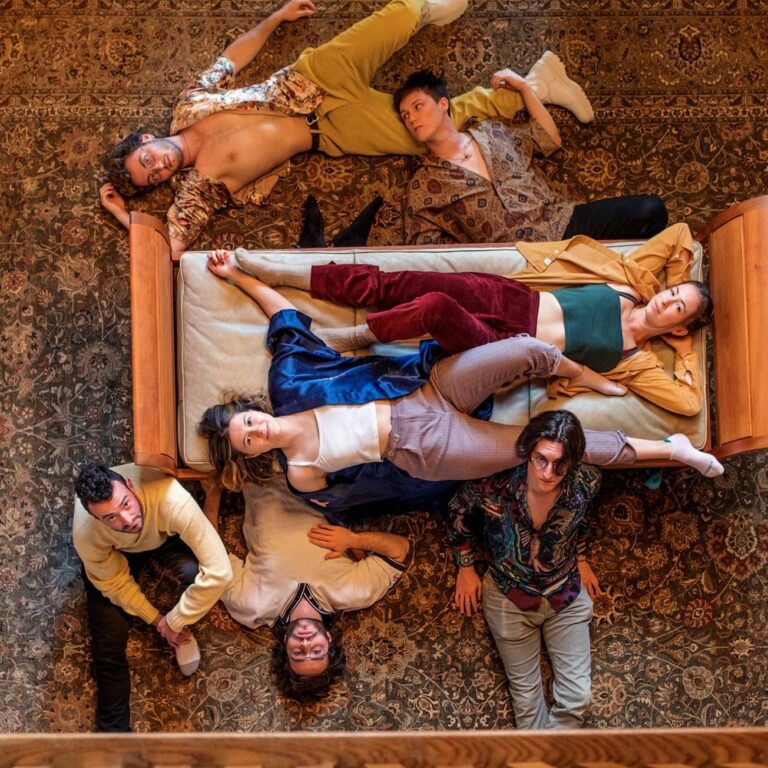
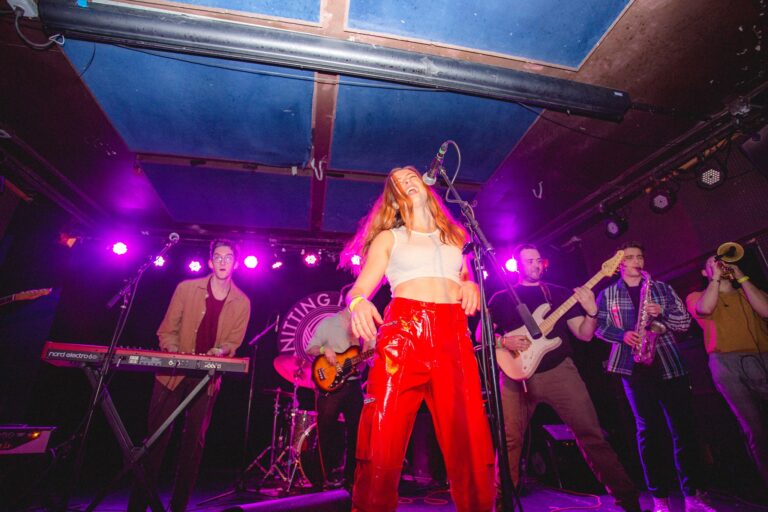
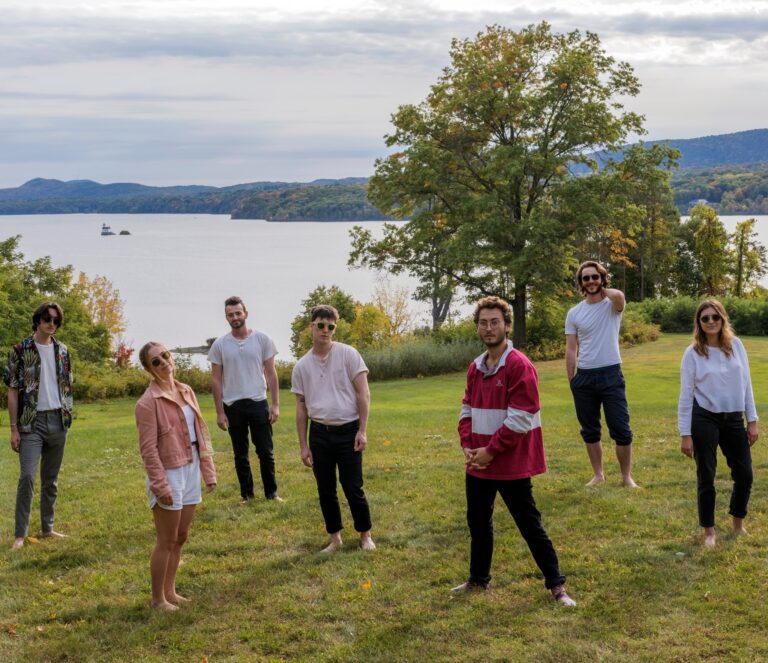
Melt is a septet, which is comprised of an additional five members: Marlo Shankweiler (Guitar), Josh Greenzeig (Drums), Coulou (Trumpet), Lucas Saur (Bass), and Nick Sare (Saxophone). Melt’s successful debut single propelled the band into the limelight with the strategic utilization of social media and substantial exposure on various internet streaming services. “Sour Candy” holds the distinction of having over 5 million streams on Spotify since it’s initial release. Between this heavy exposure and the band’s high energy live performances, Melt has been successful in establishing themselves securely in the rough and tumble NYC music scene.
Melt has a reached another important milestone with the February release of their Debut EP West Side Highway, which includes six tracks of previously unreleased music. Recorded at the Bunker Studio in Brooklyn, West Side Highway reflects a new level of maturity that Melt has been successful in developing as a band. “Coming into the studio with the goal of creating a longer work, we thought more intently on how each track worked with one another and used the opportunity to weave together the wide set of influences helping to shape a seven-person band,” said Josh Greenzeig (Drums).
“We used the EP format to create a snapshot of what that moment in time was for us, cementing elements of our sound that we love and finding new ones worth exploring.”
West Side Highway starts out with opening track “Don’t Want Me,” a moody number that details a love affair that has gone bad and is still painfully lingering in it’s final death throes. The masterful guitar instrumentation by Shankweiler and the melancholic vocal by Stewart-Frommer both work in concert to create a setting of sad desperation with a longing to be released. It was a great way to start the record and one that was interesting in it’s selection. It set the meditative tone of the EP which is soothing, comforting, and introspective in it’s entirety. This on going theme is again illustrated with third track, the EP’s title track, “West Side Highway,” which can be considered a love letter to pandemic ravaged NYC. This thought evoking number features a wonderfully muted trumpet solo by Coulou that is enhanced with Gabriel’s creative keyboard playing. his type of musical craftmanship results in another gem of a track on the record.
We were able to get some time with Melt co-founders Veronica Stewart-Frommer (Vocals) and Eric Gabriel (Vocals, Keys) in order to discuss the band and it’s debute EP – West Side Highway.
Tim Bopp: How did the band Melt form and what were the circumstances that caused the genesis of the band.
Eric Gabriel: Veronica and I went to High School together and towards the end of high school we had some more time to kind of start playing with people around the city and that was really the first iteration.
Veronica Stewart-Frommer: The first call we made was Marlo who is our guitar player.
TB: How did you come up with the band name Melt?
VS-F: The funny thing about that is that we actually had the song even before we had the name for the band. Suddenly we were sitting with this single and we were like, “Alright and we kind of want to put this out there but we don’t have a name.” So we went down this very long list of random names. The night before we were going to release “Sour Candy” we actually made a Facebook page called Big Deli Chain. We were like, “That is it! That is the name! We are going to be Big Deli Chain (laughing).” At some point between 2AM and 4AM that night I was just like this band can’t be named Big Deli Chain and we changed it to Melt. It was so random.
TB: How has the Pandemic Affected the band and the new EP West Side Highway?
VS-F: The EP really is a product of the Pandemic. In a lot of ways, it feels like an entirely new Melt. This was such a unique time for us. Something that is interesting about us is that during the year we are all either doing our day jobs or even in school. A lot of us are still in college. So we do this kind of funky long distance band thing where we unite for these crazy weekend shows and then go our separate ways. In a lot of ways due to the Pandemic, if we wanted to work, we had to live together for multiple weeks in order to justify moving anywhere. It was kind of the first time since four years ago when the band started that we were able to settle down and really be together for weeks on end and write and hang out. We are such a live band that our songs are usually tested over months and years at live shows and they are based on what the audience reacts to and how we are feeling at the show but there was none of that this time.
EG: We have mostly been thought of as a live band. On most of our singles we typically try to document that energy that we all love about playing together at a live show. This EP we kind of wanted to go into a different direction. I think it is much more chilled out and doesn’t really have as much of that live band sound. The individual tracks we kind of wanted to take a different approach in the crafting of the songs.
TB: What are some of your musical influences?
VS-F: Part of what makes up the Melt sound is that we are seven people and some of us went to school for Jazz music and some of us studied political science and were raised on the Beatles and Bob Dylan. A lot of us have been into the Jam scene. That is actually how I met Marlo, through Phish and the Grateful Dead. I think we are kind of all over the map on that. Obviously as a singer I really adore a lot of artists like Aretha Franklin, Etta James, Otis Redding. That is where I fell in love with that genre and that type of singing. We are really all over the place. Right now a lot of us are into Phoebe Bridgers and the more Indie scene. I think that comes through on this EP.
EG: I grew up with a ton of Bruce Springsteen. More recently I listen to more folk music like Adrianne Lenker and also bands like the National. That kind of music.
TB: So, are you two the predominant the songwriters for Melt?
VS-F: Typically, that is how it has been. In the past, Eric and I usually write the lyrics to the songs that we sing, but we edit with each other and with other members of the band. Usually, it will either be one of the two of us will start a song and then bring it to the band. It evolves into a completely different direction from there. For this EP, since we were all together and couldn’t perform live, we wound up focusing a lot more on the production side of things as a band. Our bass player Lucas is really skilled at recording and in engineering production. He played a huge role in creating the foundation for the songs on the EP. We experimented a lot on this record this time around.
EG: This time around we started with Josh the drummer literally laying down songs, sometime just on his own. Then we would add the bass track and then that leads us into the guitar and usually vocals at the end. We really just build it up.
VS-F: We don’t know which way we like better. Maybe in the future we will go back in and play everything as if we are playing live. I think part of the beauty of Melt is that we are so young, so we don’t feel tied to any of our ways and we like to try out new things and see how it goes.
TB: How long did it take a band like Melt to complete the West Side Highway EP?
VS-F: Start to finish it was like two months. We were really lucky to be able to record the EP at the Bunker Studios in Brooklyn. We had a really wonderful producer and engineer named Aaron Nevezie who mixed some of the tracks as well.
EG: Some songs were written earlier, like Hours I wrote about a year ago.
TB: What does the future have in store for Melt?
Eric: We cannot wait to start playing shows again. We are really looking forward to playing out. The last real show Melt played was at the Sinclair in Cambridge last February. It felt like that at that show we all came together and we were fully on it. Our trumpet player Aaron even stage dived at the end of the “Sour Candy” solo that night.
VS-F: That show was awesome. It wasn’t the biggest room we have played, but just the layout of the place was great. It went straight back so you could see everyone and there was great energy that night. I also think the Knitting Factory show we played in Brooklyn. That was the first time we played “Waves.” Before a show we are always saying to the band don’t go too fast let’s keep the energy contained. Once we get out there it is just like an explosion and we are always playing at 100%. We don’t have many moments during a set where we just drop back and take a moment to breathe. In the bridge in “Waves” there is a moment where everyone drops out and it is just me and Eric. That was really a special moment. I always think about that moment when I picture live music coming back. It was the first time that we had ever played the song and I think the audience was psyched to hear a new song and it was kind of a sentimental little moment. It was really cool.
Key Tracks: Don’t Want Me, West Side Highway, Waves