Marvin Gaye’s “I Heard It Through the Grapevine,” TLC’s “Creep” and Alanis Morissette’s “You Oughta Know.” The Eagles’ “Lyin’ Eyes,” Dolly Parton’s “Jolene” and, of course, Hank Williams’ “Your Cheatin’ Heart.”
Infidelity is torture on the soul of the victim. But it is also a potent catalyst for great artistic output, especially for musicians. It’s the brand of misfortune that inspired classic songs like the above. It also birthed a bevy of legendary albums, from Fleetwood Mac’s Rumours to Dylan’s Blood on the Tracks to Beyonce’s Lemonade – works which pushed these artists to creative apexes they may never match.
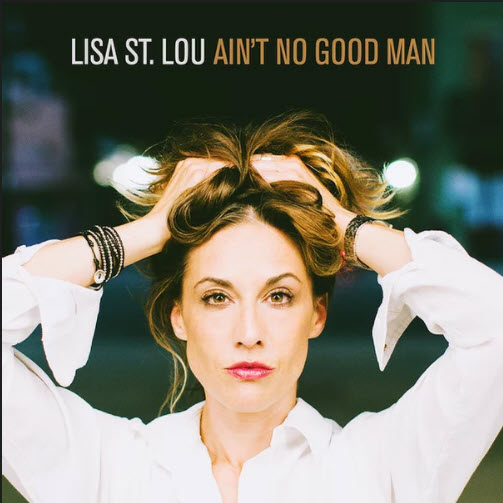
Singer/songwriter Lisa St. Lou with debut album, Ain’t No Good Man, is another powerful product of a ‘done me wrong.’ It’s a blues-powered blast of 13 soulful originals, tunes that travel the road from betrayal and broken heart to redemption and, seemingly, a new love. They are expertly performed by Lisa St. Lou and an all-star crew including New Orleans greats Irma Thomas, Cyril, Ivan and Ian Neville, axe man Walter “Wolfman” Washington and many more.
Brooklynite St. Lou’s style is anchored in the gospel she absorbed as a child at a Baptist church in her native south St. Louis. Her childhood love of singing led her to serious musical study. Lisa earned a Masters in Opera (!) before heading to New York City and rapid success with a role in the Broadway production of The Producers. But an entertainer’s lifestyle didn’t jibe with her new husband’s vision of their future, so she quit showbiz and had two kids. Her partner’s repeated infidelities over the following decade led her to the most important decision of her life – leaving him in an effort to reclaim her voice, metaphorically and now literally.
St. Lou has had the good fortune of partnering with Grammy-nominated producer and songwriter Tor Hyams (Joan Osborne, Lou Rawls) for her debut. And while she sites Aretha Franklin, Janis Joplin and Nina Simone as inspirations, I hear another soulful St. Louis white girl wailer evident in her style – Bonnie Bramlett of Delaney and Bonnie fame.
St. Lou and Hyams have co-written 12 top-flight tunes. They are all in a bluesy vein but with an original bend, not a very easy thing to do with such a well tread genre. Recorded at Parlor Studios in New Orleans, the tunes all naturally have a swampy, steamy, Big Easy groove. There’s also plenty of Memphis in the horns and Stax-like guitar licks and Chicago-flavored gospel in the ever-present Hammond organ swirl and churchy background vocals.
The album kicks off with the title track. Here Lisa puts her operatic pipes and gospel grit to good use. She sings high and hard to romantically nihilistic lyrics like:
I’m hip to the game They’re always the same I can smell a rat from a mile away Ain’t no good man Who gon’ be lovin’ me, anytime soon Ain’t no good man, Who can fool me twice, by giving me the moon
“Girl Get On” warns the “other” woman to stay away from her man, set to an up tempo groove with plenty of lyrical double entendre. “Love Me Baby” is a plea that starts with fingers snaps, a four note bass riff and solo voice, before breaking into a shuffling blues with some great call-and-response with the chorus.
On one of the album’s showstoppers, “Nothing Is Never Enough (For A Man),” St. Lou is joined by the immortal Irma Thomas. The NOLA soul queen who throws down her signature stanky vocals on a slow blues with some sweet guitar licks and punchy lines like:
You give your body, you give your soul You give up on every fight Don’t wanna get out of bed in the morning Cause nothing, nothing, nothing is ever right Nothing is ever enough, for a man Nothing is ever enough, for a man Don’t matter how hard you tried or if you’re doing the best that you can Nothing is ever enough, for a man
The Meters’ founder Cyril Neville shares the vocals on “Whatcha Gonna Do.” This is true New Orleans funky with all the trimmings, wah wah guitar (or clavinet), more call-and-response vox and a jerky stop-time beat.
While St. Lou’s go-to style is up tempo, my favorite tunes here are the ballads. “Miracle in Motion” is an achingly slow love song, a gospel-flavored offering with no lyrical axe to grind. There’s some nice rhythmic changes and modulations, luscious horn and keyboard support, which make this seemingly straight forward ballad something more.
My favorite on the album, “Flowers In the Rain,” closes the collection on the kind of hopeful note we wish for all wronged in love. The arrangement is pure gospel, largely just piano and voice at first, like a sketch or a demo. Lisa and her throaty angelic background singers build the song, along with a churchy, bluesy organ that surges and dances around the melody. This is a real could-be classic.
You gave me hope through the storm When it was cold you kept me warm You took away the pain You gave me flowers in the rain I never met a man who could look in my eyes And see all the beauty inside And the sound of your voice It takes all the worry away You opened up my heart You picked me up when I fell apart When my whole world went insane You gave me flowers in the rain
St. Lou’s Ain’t No Good Man is a musical journey through Kubler-Ross’s famous five stages of loss, with plenty of anger at first, ending with acceptance. It boasts some wonderful songs and topflight performances from all involved. It’s good musical medicine – a shot of gospel goodness that can help the brokenhearted exorcise their rightful anger and move on down the road.
It’s also refreshing to see a debut disc come our way from a 40-something with something to say, rather than a pre-fab teen product spit out by the pop machine. In music, as in life, Lisa shows that it’s better late than never.
Lisa’s website provides some cool video clips of the recording of the album and discussions of the development of the songs and the arrangements. Check it out here and find all links to all platforms here.
Key Tracks: Whatcha Gonna Do, Nothing Is Never Enough (For A Man), Flowers In the Rain
CBGB wasn’t the only club/scene to birth a new musical genre in the low-rent, dirty and deliciously dangerous Downtown NYC of the mid- to late-1970s. Alongside the wannabe punks, there were a slew of fiercely talented young jazz immigrants from St. Louis, Chicago and beyond who worked to make free jazz even freer than Coleman and Coltrane. They plied their exploratory path not at traditional clubs but a series of short-lived, musician-led NYC loft scene like Coltrane drummer Rashid Ali’s Studio 77, Studio We, The Ladies’ Fort and, most notably, Studio RivBea, founded by saxman Sam Rivers and his wife Bea.
New York’s so-called Loft Jazz scene would launch the careers of many luminaries who would define jazz’s more creative edge in the post-Coltrane era. These included Muhal Richard Abrams, Anthony Braxton, Henry Threadgill, David Murray, Arthur Blythe, Butch Morris, Lester Bowie, Oliver Lake and Julius Hemphill to name but a few.
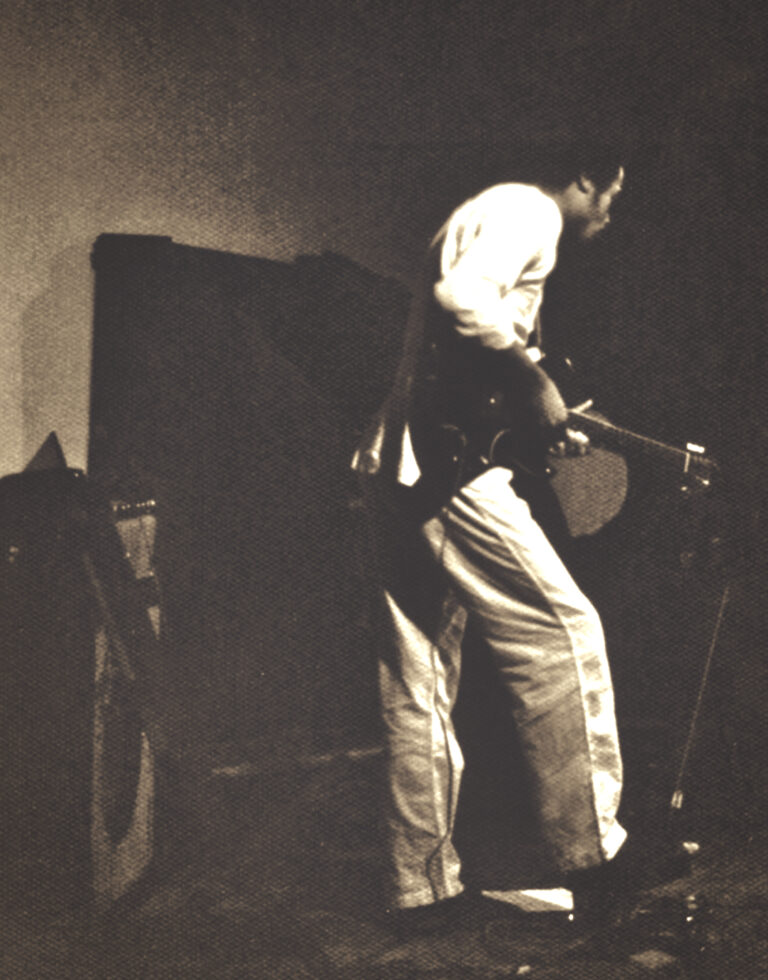
Their music was technically accomplished, exploratory, impulsive, spiritual and often politically-minded. It could flow from angry and dissonant to heavenly melodic, all in the space of a few bars. It had elements of jazz, modern classical, folk, world music and more. It also utilized instruments not often associated with jazz, like the oboe and cello. The intimacy of the scene led to much cross pollination among the players. This is something reflected in a bold new release from the archives of Michael Gregory Jackson, a versatile innovator and guitarists’ guitarist who first came to light in the scene.
One look at the list of progressive jazz guitar all-stars who have named Michael Gregory Jackson as an influence demonstrates the continued resonance and relevance of his four-decades of exceptionally creative music-making.
“Michael Gregory Jackson has long been one of my favorite musicians,” said Pat Metheny. “I always considered him one of the most significantly original guitars of our generation, with his own distinctive sound and point of view.”
Bill Frisell adds: “I first heard Michael Gregory Jackson in 1975 when I moved to Boston. He blew my mind and influenced me a lot. I believe he’s one of the unsung innovators.”
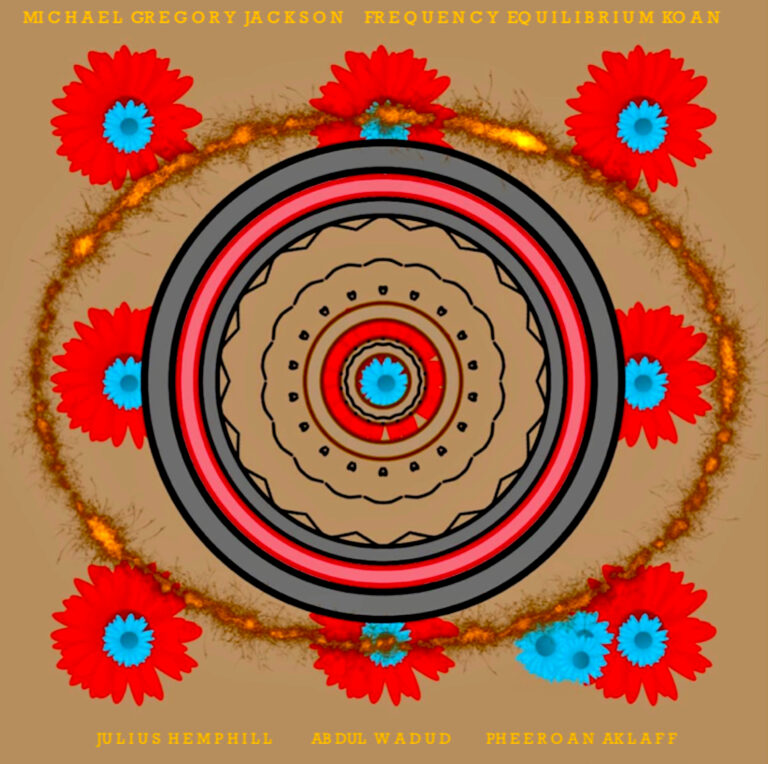
Frequency Equilibrium Koanis an authentic document of the without-a-net creativity and exhuberance of no-hold-barred this era. It is a performance of four lengthy compositions recorded by Jackson on his trusty Sony cassette machine in 1977 at The Ladies’ Fort. It finds the then 23-year-old guitarist leading a quartet featuring saxophonist Julius Hemphill, drummer Pheeroan akLaff and cellist Abdul Wadud.
Hemphill was one of the true giants of the era, perhaps best known for his work with the World Saxophone Quartet alongside Oliver Lake, who helped launch Jackson’s career in a quartet which also included akLaff.
A little like Hendrix before him, cellist Wadud literally reinvented his instrument for a new musical genre. With furious plucking, bowing and percussives, it became a tool of jazz that would skirt the territory between groove-keeping acoustic bass, a soaring solo instrument and drum. Wadud and Hemphill were frequent collaborators. One of their best performances together is on “Hard Blues,” from Hemphill’s 1975 album Coon Bid’ness.
Jackson’s new/old album kicks off with the nine-plus minute title track. After a fragmentary head, the piece moves into improvisation, with Hemphill coming to the fore with a long forceful tenor solo. At times, the improvisation becomes collective, a kind of outré New Orleans ragtime. Jackson’s bag of tricks is on full display here – volume swells, detuned swooshery, bleeps, slides and long tricky melodic lines, a blend of Cubist post-bebop and twelve-tone classical. Wadud plucks and bows away, creating both rhythmic pulse and solo lines that dance off his partners’ musical conversation.
The next track, “Heart and Center,” is a radical extension of what would become the title offering for Jackson’s wonderfully diversified 1979 album of the same name. This is as straight-ahead as this album gets, with Hemphill again out of the gate on a solo charge. Jackson leads the way with choppy irregular chording that provides a rich harmonic backdrop for Hemphill and his own soloing. Again, the flavor here is improvisation that is collective, with lots of call-and-response. As usual, akLaff keeps it all moving, with jungle like tom tom heavy percussion.
“Clarity 3” is the most challenging listening experience in the set. It begins with akLaff’s circular swirl of percussion, which leads to a solo spotlight for Wadud. With Hemphill and Jackson’s entry, the music comes to a fast boil then overflows. It’s jazz roller coaster, with the instruments almost seeming to merge into one howl at times. In the last minute, Jackson finds and rides a broad chord that sounds like a car horn, together with Wadud’s cello groans. The album ends on a mellow tone with “A Meditation.” Hemphill sits this one out and Jackson forsakes his trusty 1961 Gibson SG for a bamboo flute. It’s a wind down of chill temple bells and malleted cymbals, bowed cello and modal flute melody, an East Asian-flavored sunset brought to the dark and dirty Downtown NYC of the 1970s.
In the liner notes to the album, guitar master Bill Frisell observes:
These guys are all heroes of mine. I’ve learned so much and am still learning from all of them. To hear them all together like this is a real gift. What a combo! I can’t believe this happened more than 40 years ago. It sounds like the future. I’m so thankful the tape was running to document this extraordinary moment.
Like many good things in New York City, the loft jazz scene was killed by the rising rents that came with gentrification. For more detail on this vibrant scene, read Michael Heller’s Loft Jazz: Improvising New York in the 1970s. For a great sampling of the musicians and the scene, check out Wildflowers: The New York Loft Jazz Sessions. This five album/three CD set captures edge-pushing performances by many of loft jazz’s leading lights over nine days at Studio RivBea in May 1976. For more about Jackson, see our review of his jazz suite for Nelson Mandela, Change or purchase the album on Bandcamp
Key Tracks: Heart and Center, Frequency Equilibrium Koan
In his debut novel Revolver, Evan Schwartz delves into a playground of fiction popular among music lovers, an alternative history of The Beatles and the late, great John Lennon.
From Bryce Zabel’s Once There Was A Way to Larry Kirwan’s Liverpool Fantasy to Danny Boyle’s recent film Yesterday, Lennon and his band have been catalyst for some interesting detours from reality. Schwartz’ Revolver is another – a quasi-mystical spin that rewrites the tragic history we all know too well.
Set in Long Island in the 1970s, Revolver is the story of two high schoolers, a boy and a girl who share a fierce, evolving love of rock ‘n’ roll and each other.
As the book opens, Charlie Mixner is pondering his requisite teen angst with insight provided by Lennon’s 1974 album, Wall and Bridges, and its signature tune, “#9 Dream.” At his school, Charlie is bullied for the scars he carries, purportedly from falling into a fire at this third birthday party. He’s a classic music nerd, one whose concerns over the bullying, his budding love and his parents’ failing marriage are salved by the endless stream of music he dissects like scripture. One such scripture is The Who’s second rock opera, Quadrophenia, which Charlie plays, or at first largely mimes, with a band he forms with a trio of largely instrumentally illiterate friends. He’s also a guy who spends weeks doing a March Madness-styled, round robin competition to determine his favorite all-time band.
Most importantly, Charlie is having persistent dark premonitions about Lennon. It sets him off on a mission to meet and warn the Beatle about an unknown danger he can sense but not quite put his finger on. The signals as to what may come are somehow communicated through sensations in his scars, another thing he can’t quite figure out.
His female counterpart Shayla is another teen afflicted with music mania. In an effort to both proselytize their shared tastes and establish the cred needed to meet Lennon via an interview, they both become writers for their high school paper. Charlie churns out impassioned album and concert reviews, with opinions not always shared or popular with his classmates. Shayla puts her teen angst on display via her poetry in every issue.
The book follows the pair through a couple of years and the many changes in musical styles and favored bands that came fast and furious in the 1970s. They go from The Beatles, Stones and The Who to Bowie’s glam, then Prog and Southern Rock, disco and, ultimately, New Wave and Punk. While Charlie cautiously goes with the changes, Shayla goes full bore as they happen – hanging in denims and halter top with the rowdy Skynyrd boys, then dancing mad to disco in a silky dress and, finally, a punk ethos and threads inspired by The Ramones and Chrissie Hynde.
The duo amiably stalk then ultimately come face-to-face with Lennon, a few times over the course of the book. This includes that critical night in December 1980, which serves as the novel’s climax. But what happens here shall be left to your own reading.
As a Queens, N.Y. native who came of age in 1970s, I can tell you that Schwartz’ take on Long Island and the times is spot-on.
There are tons of fun cameos by folks like The Stray Cats (Charlie’s classmates), Billy Joel, the various concert venues and WLIR-FM, the prime youth taste disseminator in L.I. during the era. And you have to love that the put-upon disco boy character is named Sergio Valente, after the jeans’ brand that was requisite dress for disco lads and lassies back in the day.
Revolver is coming-of-age story with a deep dive into the power of music, especially the role it plays in the emotional lives of young people. It is set in and gives a new appreciation to the 1970s, one of rock music’s most creative, change-filled and underrated decades. It’s a book that will have young and old alike heading to Spotify (or their dusty vinyl) to enjoy the many breakthrough albums that dress Schwartz’ imaginative and most enjoyable literary fantasy.
While the COVID-19 quarantine has pretty much killed the live music business, it has only served to radically stimulate every idle musician’s appetite to record. One of the more interesting ventures to come out of this deluge, in concept and sound, is a Hudson Valley-birthed one, The Seed Project.
The Seed Project was initiated by Kingston drummer/songwriter, Sammi Niss, as a way to stay musically and socially engaged through the COVID-19 lockdown. Last winter, Niss landed a coveted gig as the new touring drummer for indie darlings Real Estate. But by early spring, their entire year of booked shows had been cancelled and, like musicians everywhere, she had lost her livelihood, purpose and primary mode of human contact.
With too much time on her hands and a multitude of beats and melodies dancing in her head, Niss recruited five bandmates and friends—all veteran songwriters, multi-instrumentalists and home-recordists— for a new D.I.Y. project. Her musical partners came from area bands including Frankie and His Fingers, Battle Ave., The Sweet Clementines and Hiding Behind Sound, most of which are associated with SubFamily Records. This label is a tiny but critically-mighty Hudson Valley collective founded by Niss, Frank McGinnis and John Burdick, one that has issued 10 long players since 2017.
The idea was to generate new songs and audio works collaboratively and serially, in the vein of the drawing game Exquisite Corpse. One person would begin a “seed,” which could be anything from a drum beat or guitar riff to a complete song demo. The seed would then advance, by random selection, through all six home studios, before returning to the seeder for mixing and finalization.
Sometimes the projects progressed predictably. A song lacking bass would get a bass part and a conventional rock arrangement would fall into place. At other times, incongruous elements derail the expected path, with choirs, full-on electro-meltdowns and audio manipulations performed by one member upon the contribution of the another.
“The whole thing turned out super interesting, more so than I might’ve expected,” said Niss. “There are some real classic good songs here, of no one genre really. There’s also some experimental art-splats and some really weird shit!”
To me, it sounds a little like each of us, but not a lot like any of us,” added John Burdick, guitarist with The Sweet Clementines and Old 97’s frontman and fellow New Paltzer Rhett Miller. “The process took on a life of its own, a new songwriting voice in which we were all kind of equally powerless.”
“The year 2021 will probably go down as a kind of baby boom for new music and records,” continued Burdick. “Our SubFamily Records family is kicking it off with this huge pile of curiosities, soon to be followed by great new records from Frankie and His Fingers and Battle Ave.”
The Seed Project is a sprawling audio adventure serving up 24 tracks, spanning a host of moods and styles. It was written, performed, and recorded by Sammi Niss, Frank McGinnis, Adam Stoutenburgh, Jesse Alexander, Pete Naddeo and John Burdick.
The album kicks off with the Elliot Smith-like “Needle in the Hen’s Teeth.” This is a Naddeo-seeded track that typifies the pure pop sensibility that runs through most of the tunes here, even when they dress them in a little Apples, in Stereo-like low-fi weirdness.
Things get more experimental on the following number, by Burdick, “That’s A Very Fine Example of a Metaphor, Child.” It begins with ghostly vocal humming, leading into a whirl of reverb-free distorted guitars, analog synth swirls and a burbling bass sequence. This is all before getting to the actual meat of the song, its delightfully detuned vocals that enter about two-thirds of the way in.
Most of the grooves provided here by drummer Niss, on tunes like “Backhand Slice” and “Double Swish,” are reminiscent of her new band, Real Estate. They are light, sleepy and strangely peaceful for something born during these crazy quarantine times. All the songs here are complemented with smart arrangements and instrumentation, especially the wonderful guitar textures provided by Naddeo, Alexander, Stoutenburgh, Burdick and Niss herself.
One of my faves is “Michigan.” It unfolds with some backwards acoustic guitar, which jump-cuts to some furious strumming and offbeat drum accents for the main body of the song. The track’s highlight is Naddeo’s Robert Fripp toned lead guitar, which dances a bit like Fripp’s own on Brian Eno’s “St. Elmo’s Fire.”
There are some straight-ahead radio-friendly tunes like “CompliKate” and “Rough Quotation,” which owe a bit to the Velvets and Luna. Also radio-friendly, in a decidedly alternative rock way, is “Seedling 1,” a reverb-laden, glacial-paced entry that sounds like a Mazzy Star outtake. On the McGinnis- inspired “State Seltzer,” we get a disco beat and electro percussion, all dressed with some sweet noise guitar, as Niss recites Dr. Seuss’s Green Eggs & Ham. And, far more bizarre, the main riff/refrain is strangely reminiscent of the theme song to The Cosby Show!
The Alexander-led “Richard, Lost in a Long Song” is a bit of waltz time weirdness, a spoken word fable of some otherworldly sort, with dulcimer, toy piano and “synthy stuff.” It’s something that kind of brings to mind the playful weirdness of “Mount Vernon and Fairway,” the Brian Wilson fable from the Beach Boy’s classic Holland album. Another standout is “Mary Heart in a Martha World,” one of the more fully realized and arranged tracks here, a stately ballad with some lovely harmony guitars and vocals from Burdick.
The collective even dips into pure instrumental textures with the somnambulant, Stoutenburgh-seeded “Nadir,” the driving “Pop Discreet” and the electronica noise and rhythmic breakdowns of the album closer, “Oby Award.”
The Seed Project is a strangely unified creation for one crafted by six different minds and musical sensibilities, working in six different locations. What’s most delightful is its looseness, the pure sense of play in it, the alchemy when musicians are closely listening to and complementing each other. It’s an album chockful of memorable melodies, killer hooks and textured detours, where the experimentations always complements and never overtakes the song.
Dawoud Kringle, aka The Renegade Sufi and God’s Unruly Friends, is one of the more forward-thinking, globally-centric and productive music-makers on the New York scene. The latest evidence is the remarkable cache of seven full-length albums he has just dropped on Bandcamp.
Dawoud’s music is a singular blend of East and West, acoustic and electronic, modern and ancient – sounds that transcend genre and time. Like the Sufi mystic/musician/author Inayat Khan, who inspired spiritually enlightened musicians like Coltrane, John McLaughlin and Dawoud, his primary interest is the psychoactive properties of music – the healing tenor that a sonic experience can bestow upon the listener.
The Milwaukee native/guitarist came to New York in 1983. On arrival, the 22-year old quickly secured a gig as a trainee engineer and studio musician at Shadow Sound, where he worked with artists like Kid Creole and the Coconuts. In New York, he also endeavored to deepen his guitar chops by taking private lessons with noted jazzman Kelvyn Bell (Ronald Shannon Jackson’s Decoding Society) and master classes with the legendary Pat Martino.
But it was the sitar, an instrument he purchased on his 18th birthday but returned to in earnest in the mid-90s, with which he would make his mark.
Called “the Jimi Hendrix of the Sitar,” Dawoud boldly applied jazz technique and electronics to expand upon the Indian tradition of the instrument, as heard in releases like The Tao of Mystic Jaz (2000) and Renegade Sufi (2004). The latter is notable as it features a sitar synthesizer, something the crafty Kringle devised by modifying his guitar synth pickup and controller.
Dawoud would further his reputation by performing with notables like Lauryn Hill, Nona Hendryx, Brooklyn Massive Raga Orchestra, DJ Celt Islam and many others. In solo performance and with his ensembles, Renegade Sufi and later God’s Unruly Friends, he appeared across Europe, Asia and the U.S. In New York, he performed at top venues including the Brooklyn Academy of Music, Apollo Theater, Blue Note, Birdland and Town Hall. He has also kept busy playing at yoga and meditation events, and with dance and theatre companies.
Seventeen of Dawoud’s mind-expanding releases can be found at his Bandcamp page, including his newly-released trove of seven full-length albums.
Wonder, Love, & Power is my favorite among the new offerings – a diverse, pristinely recorded and engineered collection highlighted by its wonderfully mysterious and airy title track. It’s a jazzy, ambient, floaty things-that-go-bump-in-the-night vibe, where you are lulled into complete relaxation then brought back to attention by a periodic gong crash. “Awaiting Joy” is another bevy of sonic surprises – cinematic, spiritual and sort of sexy like all the tracks here. Strings and a pulsing hammered autoharp reminiscent of Brian Eno discovery Laraaji at first swell, then are flipped backwards. At times, this swirling backdrop sounds like the fade out of “I Am the Walrus.” It is perfectly furthered by the eerie vocals of Chennano Manno and a gorgeous modal flute improvisation by Duane McCarthy. Another standout track is “The Unveiling,” where Kringle shows his melodic mastery of the dilruba, a bowed string instrument played in Sikh devotional music, over a synth pulse.
Dawoud’s The SymphoSynth Improvisation Series is a collection of synthesizer improvisations based on templates taken from composers like Scriabin, Slominsky, Stravinsky, Messian and jazzer Yusef Lateef. Music of Another Mind is sound design for meditation, massage therapy sessions and the like, with long tracks the artist calls “deep explorations for altering states of consciousness.”
A New Beginning is a collection of six impressionistic pieces, a tour through the emotional catharsis and ultimate acceptance of the artist’s own divorce, with evocative titles like “Painful Clarity” and “Fighting Back the Tears.” A Mansion with Many Roomsis a selection of more vintage tracks that Dawoud had time to complete during the quarantine. Its closer, “For Yusef,” is one of my favorites, with gentle bells and strings bathing his melodic sitar (possibly synth sitar?) melodies.
The artist calls Tales from Isolation “a collection of very dark stuff I did in total isolation during the quarantine.” These are “guerilla recordings” according to Kringle, ones made during the long, lonely hours he spent on his radio engineering job during Spring 2020. This is a collection of 20 sound poems, from two- to nearly 10-minutes in length, where Dawoud seems to have caged his darkest musical impulses – scratchy sounds and effects, weird oscillations, jagged time signatures and robotic percussion. And they have killer titles too. What’s not to love about compositions with names like “What the Hell is Wrong with You?” and “Fighting Monsters in Nightmares!”
With The Legend of Sheikh Majnun, Dawoud returns with the second album from a fictitious character he first conjured in the Myspace days, his weird electronic artist alter ego, Sheikh Majnun.
Get your Burning Man supplies in order for this selection of 11 tracks ideal for your next rave. It’s a cornucopia of beats and sounds and samples designed for dancing, tribal not disco! There’s a Brazilian Carnival space futurism vibe here. It’s the reggae samba rhythms of the mighty Olodum crossed with the outer space weirdness of the BBC’s early synth wiz Delia Derbyshire, most evident in the album opener, “Dance of the Small Fuzzy Things.”
As if this wasn’t enough, Dawoud composed his first symphony, “Trees,” a demo of which can be found here on his YouTube channel.
With these new releases and those that have come before, Dawoud has created a musical world that unites the past, present and future of sound. For him, no borders seem to exist and the most distant of inspirations, the most seemingly warring thoughts can live in perfect harmony. This is music as a healing and calming force, something the world needs now more than ever.
Acclaimed singer/songwriter Mike Younger has just released a new single just right for these carnivalesque political times, “Lord of the Fleas.” And while the lyrics for this tune were just penned to reflect today’s tumultuous climate, its rhythm track, an all-star powered slice of pure Americana, is a remarkable story of its own, one dating back 20 years, and featuring none other than Levon Helm.
In January 2001, Younger was working with producer Jim Dickinson (Big Star, The Replacements) on sessions for what was to be his second album, the follow-up to his Rodney Crowell-produced 1999 debut, “Somethin in the Air.” Dickinson conjured a powerhouse band including Muscle Shoals’ legends David Hood (bass) and Spooner Oldham (keyboards), North Mississippi All Stars’ Luther Dickinson (guitar) and Levon Helm, the heartbeat behind The Band (drums). Unfortunately for Younger, his record company folded while he was finishing the recording, and the rights to the tracks were tied up in a legal battle… until now.
“Lord of the Fleas” features a stately New Orleans style swing and funeral march horns, accenting Younger’s pungent lyrics about the culture wars, the war on refugees and so much more. Sounding much like a track one of the The Band’s classic era albums, Mike Younger has found memories of the session, and the contributions Levon Helm gave to them in sound and spirit.
“Working in the studio with Levon was one of the most important musical moments of my life,” says Younger. “I had been listening to his music since I was about 13 or 14. It was both thrilling and intimidating to me to get to work with someone I admired so much. But it was a real joy to strike up a friendship with him.”
“It was equally crushing to have the music swept away from me for almost 20 years, for reasons beyond my control,” laments Younger. “So it is immeasurably gratifying to have found and completed the project we started together, in spite of all the years and obstacles thrown in my path.”
The promotional video for new single emerges as an American news reel – illuminating the great contradiction of the modern patriot. “Lord of the Fleas” is the first single and video to be released from Nashville-based Younger’s highly-anticipated long-player, entitled “Burning the Bigtop Down,” slated for release in 2021.
Whether you know it or not, you’ve all heard the band Focus. You know that tune they spin on classic rock radio, in films, ads and during NBA and World Cup telecasts, the one with the demented yodeling and amphetamine shred guitar breaks, with the relentless riff that’s as memorable as “Sunshine of Your Love” and “Smoke on the Water?” That’s Focus playing one of the most unlikely Top 10 hits of the 1970s, “Hocus Pocus.” And if you think that playful racket of virtuosity is all there was to this band than you’ve missed out on one of the most distinctive and eclectic bodies of work produced during rock’s progressive era.
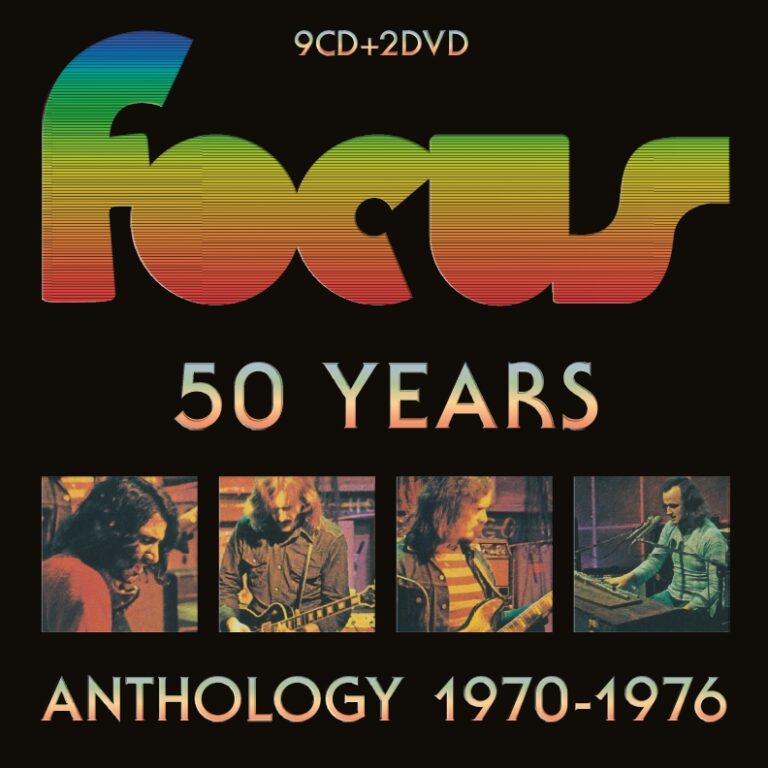
That’s something that Focus 50 Years (Anthology 1970 – 1976), the lovingly crafted, amazingly researched nine-CD, two-DVD set from Red Bullet Productions, aims to set straight. But first, a little backstory…
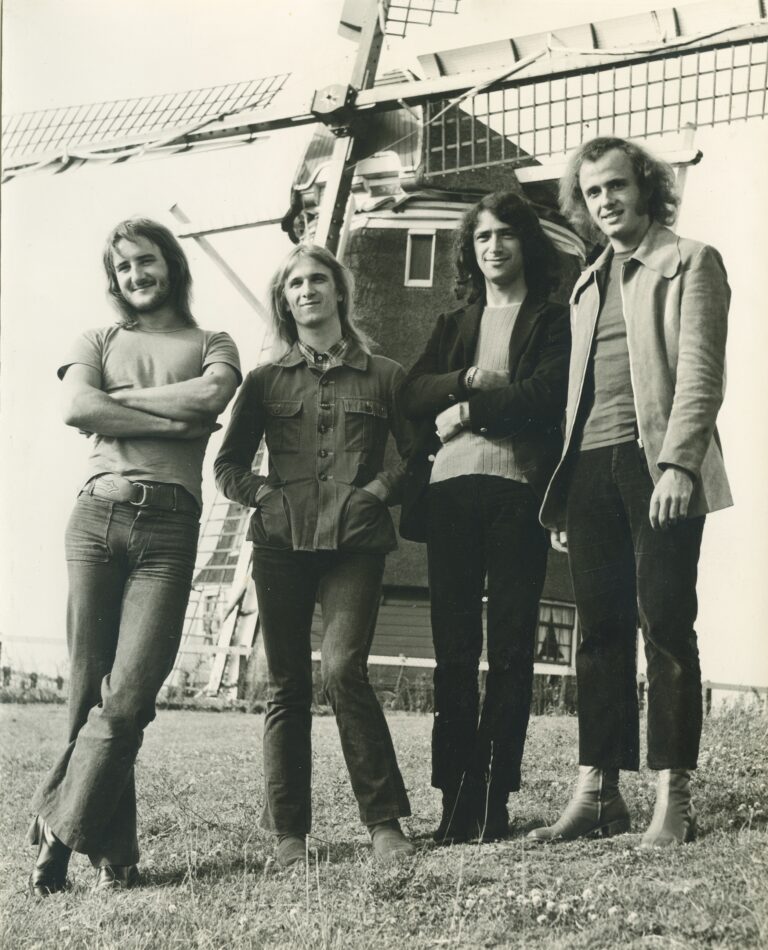
Focus commenced in Amsterdam in 1969. It was built around the massive talents of two main musicians, Thijs Van Leer and Jan Akkerman. Van Leer is a classically-trained flautist, keyboardist and occasional yodeler. He was also a talented composer who raided the classics, the works of Bach, Bartok, Haydn, Monteverdi and the like, to create a cannon of tunes, especially the numbered “Focus” titled instrumentals, that are among the most melodic of the prog era.
Van Leer’s foil in Focus was Jan Akkerman. Still going strong today at 74, Jan was one of the most fearsome and versatile virtuoso guitarists of the Guitar God heavy 1970s. This was a man with a jaw-dropping technical mastery of jazz, rock, blues and classical forms, a talent that powered some of the most emotional and exciting soloing and live improvisation ever committed to tape in the rock idiom.
Akkerman could spitfire fusion licks as swiftly as John McLaughlin or slow down to seductively squeeze every ounce of the melody out of a ballad, just like Santana. He could play psychedelic, blues-fired blasts that glowed as brightly as Hendrix and chromatic smears and screams like late ‘60s free jazz Coltrane. He, too, composed distinctive and maybe even more diverse originals than Thijs. Jan’s tunes reflected his own acumen with the classics, from his five years of study at the Amsterdam Lyceum, something evidenced by his lute playing on several Focus tracks. Then, there were those fueled by his love of balls-to-the-wall rock, like “Hocus Pocus,” and funk, like the latter day single, “Crackers.”
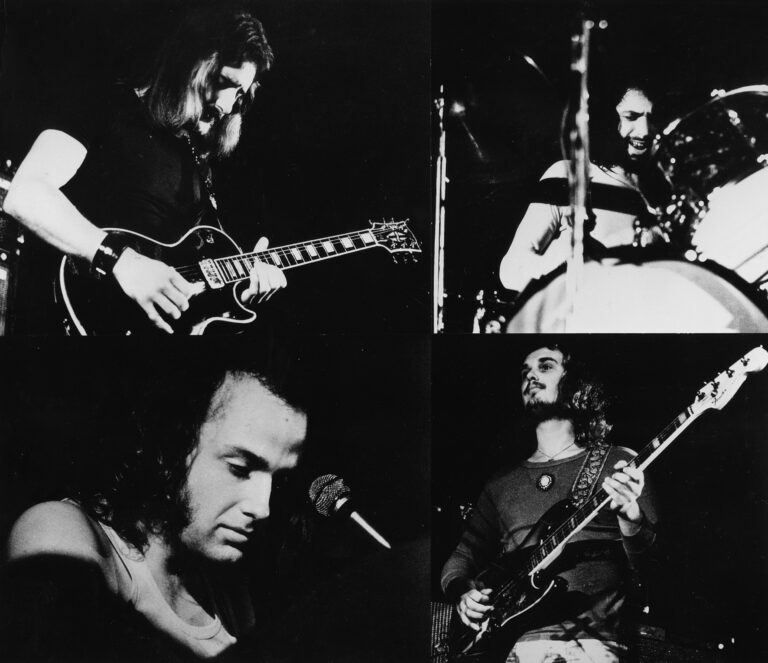
Between 1970 and 1976, the Van Leer/Akkerman Focus recorded seven albums and toured relentlessly in Europe, U.S. and Asia, averaging well over 200 shows each year. Led by Jan’s dazzling guitar work, the fiery drumming of the criminally-underrated Pierre van der Linden, Bert Ruiter’s rock-solid bass and Van Leer’s keys, flute and theatrical mugging, Focus pretty much blew everyone off the stage, wherever they ventured.
The proof was in the accolades. In 1973, Akkerman was named “Best Guitarist in the World” by the U.K.’s top music weekly, Melody Maker, over Clapton, Beck, Page, McLaughlin, etc. This was just a year after the same publication named the band its “Brightest New Hope.” Jan’s smiling mug also graced the cover of Guitar Player and, with his bandmates, Circus Magazine. Akkerman’s legion of fans would grow to include luminaries like Carlos Santana, Brian May, Joe Walsh, Chick Corea, Michael Jackson, the Beach Boys (he did unreleased sessions with them while they were recording in Holland), B.B. King and Frank Zappa to name but a few.
Although they seemed to bring out the best in each other, the Van Leer/Akkerman partnership grew stormy over time. It finally fractured when the road weary guitarist left (or was fired) on the eve of a U.K. tour in early 1976. Since then, Akkerman would go on to record two dozen, genre-leaping solo albums that are the height of the guitar art, all while choosing to remain happily out of the international limelight in Holland. Van Leer continues to revive Focus from time to time, with a rotating roster of guitarists who, while sometimes excellent, can never match Jan’s wholly unique musical aura and skill.
With the dawning of the web, a global cult of “Focus fanatics” coalesced, devotees who trade and post audio and video of live gigs and TV performances, rarely-seen concert posters and other ephemera. Unlike some stars, Jan, Thijs and their bandmates proved more than happy to engage with their fans via social media. For these folks, and anyone who loves great music of original intent, this brick of a boxed set will seem like Christmas morning.
Curated by longtime Focus/Akkerman archivist Wouter Bessels, “Focus 50 Years” starts with 24-bit remasters from the original tapes of the first seven Focus albums, plus single, alternative and raw studio mixes, demos, unreleased live recordings and some real oddities, such as the quartet backing other artists in their early days. Add to this two additional CDs of more unreleased live performances from 1971 – 1975, including the first official release of their fantastic “BBC In Concert” performance from 1973.
The package also boasts two DVDs featuring the complete “Focus At the Rainbow” concert film from the live album of the same name, restored and remastered from the original 16 mm film, two BBC “Old Grey Whistle Test” broadcasts from 1972 and “BBC In Concert” from 1974. There’s also “Focus Live in Dublin” 1973, the “Goud van Oud” reunion from 1990 and the 1997 “Focus II Classic Albums” documentary. To guide you through the riches, Bessels has compiled an 80-page booklet with band history, liner notes, press clips and memorabilia.
The band’s debut album, “Focus Plays Focus,” finds the newly formed band still searching for an identity, with a few vocal tunes like the jazzy “Happy Nightmare (Mescaline)” in the mix. This was something that would be quickly abandoned in favor an all-instrumental approach, along with their original bassist and drummer, Martijn Dressden and Hans Cluever. This version of the album is notable for its opener, the stately instrumental “Focus I,” the first of this numbered series of classically informed instrumentals by Van Leer, and the two bonus tracks. The first, Akkerman’s flute-driven “House of the King,” became their first chart hit in Europe, one often mistaken for Jethro Tull. The other bonus is a sizzling 37 minute live performance from 1970, an in-development version of “Eruption,” the suite which would be the side-long centerpiece to their classic follow-up album, “Focus II/Moving Waves.” It includes some of Jan’s most fiery riffing, and in a spot where the band falls away for six minutes, he dazzles with slashing, quicksilver lines in exotic modes like the Hungarian minor and Indian scales.
The band’s sophomore effort commenced their prime era, with Akkerman’s former partner in the bluesy band Brainbox, the jazz-inspired Pierre van der Linden, now in the drum chair. The album kicks off with “Hocus Pocus,” an Akkerman/Van Leer composition born out of a jam session at the band’s rehearsal home in a Dutch castle. This unforgettable fusion of manic speed metal, yodeling and jazzy drum solos became a surprise hit. It was the first smash for Sire Records in the U.S., pushing global awareness of the band and inspiring legions of nibble guitarists to come like Yngwie Malmsteen and Eddie Van Halen. Akkerman’s “Le Clochard” is a melancholy solo piece spotlighting his Segovia-like technique, while his “Janis,” a gorgeous ballad dedicated to Janis Joplin, highlights Van Leer’s multi-tracked flutes.
The 23-minute, side-long “Eruption” is one of prog rock’s most acclaimed epics, perhaps the most original fusion of classical themes and rock vigor. It is a hard rock version of the myth of Orpheus and Euridice, an update of Jacopo Peri’s opera “Euridice.” An uncredited melody from Monteverdi’s “L’Orfeo” opens the suite, and a later segment includes the haunting ballad “Tommy,” named after its composer, Tom Barlage of the Dutch fusion band Solution. It’s a show stopping ballad that Akkerman continues to perform in concert to this today. The Zappa-inspired “The Bridge” is an all-out jam session, culminating in some blazing guitar soloing reminiscent of “Hocus Pocus” and Zappa’s “Willie the Pimp.” “Euridice,” penned by Eelko Nobel, is a classical lied which segues into the Gregorian chant of “Dayglow,” then van der Linden’s drum solo, “Endless Road.” The suite ends with a reprise of its opening themes, then concludes with van der Linden’s freeform percussion effectively evoking the sound of fireworks for the finale. In live performance, the band also included quotes from Bela Bartok’s “Concerto for Orchestra,” something they were denied use of during the recording by his family. Too bad…
The double-disc album “Focus III” followed. It featured more gorgeous melodies including Akkerman’s “Love Remembered” and Van Leer’s “Sylvia,” which spawned another surprise hit, a #4 in the U.K. charts. Van Leer’s “Carnival Fugue” continues the fusion, with a bit of Bach, some cool jazz and even calypso all in the mix. The keyboardist’s “Focus III” and “Answers? Questions! Questions? Answers!,” written by Akkerman and new bassist Bert Ruiter, are showcases for Jan’s way with stating a melody and the improvisational dexterity of the whole band. Like “Eruption,” they would become ever-evolving improvisation stoked workhorses of the band’s live sets including their fourth release, the live album “At the Rainbow.” Akkerman’s solo on this live disc’s version of “Answers?…” is one of his finest. It’s a study in melodic development and tension building that I have listened to hundreds of times over the years, one which you can view on the boxed set’s first DVD volume.
More blazing jamtastic is on display in the third album with Anonymous II. This is a re-recording of a track from their debut disc, which covered a side and a half of the vinyl of this release. The album closes with Akkerman’s first showcase on the medieval lute, “Elspeth of Nottingham.”
There’s a New York groove, or at least birthing, in the album that followed their live fourth disc, “Hamburger Concerto.” Akkerman’s rocking refrain in this side-long epic was written while watching cartoons and eating a hamburger and Junior’s Cheesecake at a NYC hotel. It’s a power chord stomp drenched in watery, swirling Leslie speakers inspired by their then touring partner, Joe Walsh. Together with Van Leer, he fashioned another powerful multipart suite, with quotes from Haydn, Brahms and Bach’s “St Matthew’s Passion” and plenty of room for burning flute, organ and guitar soloing. Another chart success, the disc featured a quasi-follow-up to “Hocus Pocus” called “Harem Scarem,” another dreamy Van Leer melody in “La Cathedrale de Strasbourg” and “Delitiae Musicae,” another lute outing by Jan adapted from a work by Dutch composer Joachim van den Hove. By this time, drummer van der Linden was gone, replaced by Brit Colin Allen of Stone the Crows fame, who keeps it all anchored with a firm, rock steady beat.
With the studio album “Mother Focus,” the band sort of heads off track, shedding some of its European classical spice for an almost soft jazz, easy listening vibe. All said, the album still has some standouts. Another New York connection comes with “My Sweetheart.” The upbeat Akkerman tune served as the theme song for commercials for popular NYC radio station WPLJ-FM for years. There’s also the Bert Ruiter penned “Hard Vanilla,” where Akkerman solos at length with a talk box, ending it all, and maybe his time with the band, with a laughing guitar.
The seventh album, Ship of Memories from 1976, is a collection of tracks done for an abandoned studio album around the time of “At the Rainbow,” along with some intriguing singles and leftovers. This album includes more beautiful melodies and spectacular guitar work, on the tunes like Van Leer’s “P’S March,” “Focus V” and the duo composition “Red Sky at Night,” with one of my favorite Akkerman solos on the outro.
The version of this album in the boxed set includes eleven intriguing bonus tracks. Featured are “The Shrine of God” and “Watch for the Ugly People,” where the band backs Van Leer’s onetime employer, Dutch cabaret artist Ramses Shaffy, along with rough mixes of “House of the King.” The former were recorded around the same time that the fledging group was serving as the pit band for the Dutch production of the musical, “Hair.”
Archivist/curator Bessels will spin the heads of the Focus know-it-alls with the two live discs in the package. He has unearthed a truckload of never-before-released radio and television performances and concert board tapes to present this improvisational monster jam band at the peak of its powers.
The version of “Eruption” from Rotterdam in 1971 features the classic Akkerman, Van Leer, van der Linden and Ruiter lineup and clocks in at nearly 47 minutes. Akkerman’s first solo on “The Bridge” is a little more jazzy than usual, pushed by Van Leer’s Hammond organ. But it’s his solo spot starting at 20 minutes in that goes from gentle classical to slashing noise rock to full whirling dervish Eastern exotica. Van Leer almost gets a solo spot that shows his mastery of the classical and jazz forms on his flute, while van der Linden’s drum solo swings as titanically and surehanded as any in the classic rock era. The live discs also present some interesting performances and jams that I didn’t know existed, from tours of Japan in 1974 and 1975. The 1973 recordings by BBC Radio are naturally of impeccable quality, but Bessels has also done a masterful job cleaning up many of the other live rarities here.
The two DVDs of television performances are another thing that sets this package apart. It’s a real thrill to see this unique band of improvisational madmen in full flight, in their BBC and Live at the Rainbow performances. The second DVD includes rarities like a 1970 spot of Dutch TV with the original quartet and an RTE TV performance from Dublin that hasn’t been seen since its initial broadcast in 1973. Also featured are television performances of “Hamburger Concerto” from Danish TV and the 50-minute “Classic Albums” special on “Focus II/Moving Waves.” Unfortunately, the latter is mostly Dutch, excepting the contributions from producer Mike Vernon.
After decades of being wrongly relegated to the backseat by rock’s critical tastemakers, progressive rock, like that plied by Focus, is gaining a much deserved second look. So the time seems right for this battleship of a collection from Holland’s Red Bullet Productions.
If you already love Focus, you can buy this, enjoy much more of the band you thought you knew everything about, and die a happy man (or woman). If you don’t, you should give this purchase some serious thought. You should also put aside some serious time to listen to, and enjoy live of your TV screen, one of the most underappreciated and uniquely talented bands of rock’s most boundary pushing era.