Author: Sal Cataldi

  • Women Highlight NY Guitar Festival Tribute to Classical Great Julian Bream

    The NY Guitar Festival online performance series Remembering Julian Bream is adding fresh perspective on the works and personal impact on a generation of players of the recently departed classical guitar great. The seven day festival, which launched July 14, will continue to premier new three video performances each day at 3pm, 4pm and 5pm EDT through July 20. 

    NY Guitar Festival

    Seven composers are performing their own works dedicated to Bream:  Laura Snowden (UK), Jiji (Korea), Leo Brouwer – performed by Newman & Oltman Guitar Duo. (Cuba), Jozef van Wissem (Holland), Derek Gripper (South Africa), and Gyan Riley (USA).

    In addition to these world premieres, the series includes performances of the classical guitar and lute music that Bream became known for, dating from the 16th through the 20th century by composers including John Dowland, Anthony Holborne, Benjamin Britten, Heitor Villa-Lobos and more.  For more on Bream’s career and his lasting impact, see the August 2020 obituary here on our site.

    NY Guitar Festival Sharon Ibsen

    Some of the true highpoints of the festival are the performances by and the personal recollections of talented women in the classical guitar realm, all whom received inspiration and personal guidance from Bream.  Here are some those highlights:

    In her performance on July 14, Sharon Isbin remembered her meeting with Bream as a 14-year-old in her hometown of Minneapolis.  After playing him the “Prelude to Bach’s Third Cello Concerto,” he had high praise for her style and passion, but noticed she wasn’t much using the ring finger of her right hand.  Isbin quickly adjusted her technique and has since plied a career as one of the most successful women in the classical guitar field.  She’s a multiple Grammy Award-winner featured on countless recordings, as a soloist in performances with over 200 orchestras and founder of the guitar department of the Juilliard School of Music to name a few.  Here, she tells her tale then performs one of Bream’s favorites, “Capricho Arabe” by Francisco Tarrega. 

    In her July 16 performance as part of the Amadeus Guitar Duo, Dale Kavanaugh and her German partner Thomas Kirchhoff tackled another Bream favorite, an arrangement of Alexander Borodin’s “String Quartet No. 2 (Moderato)”.  At the end of this compelling 10-minute performance, Kirchhoff relates a tale of Bream’s visit to his home and the master’s recollection of his own legendary partnership with Australian virtuoso John Williams.

    On Monday, July 19 at 4 pm, the festival will feature the premiere of another original composition by Jiji.  This dynamic 28-year Korean guitarist’s work spans the gap between acoustic and electric, the classics and free improvisation.  “My piece is called “MOONOU” because when I think of Julian Bream, I think of an octopus (moonou in Korean),” says Jiji.  “He just did everything; he was omnivorous. I wanted to capture his world’s colliding – the new music Julian Bream, the lutenist Julian Bream, the traditional player Julian Bream, with a hint of the world that I love. You’ll hear a bit of glitch, heavily-processed sounds, a bit of weirdness, maybe some Bach, a bit of everything. You’ll hear the way I see Julian Bream – the Octopus artist!” 

    NY Guitar Festival

    Marija Temo and Alberta Khoury perform two more favorites of Bream’s, “Spanish Dance No. 5” by Enrique Granados and “Etude No. 11 and Prelude No. 3” Heitor Villa-Lobos, on July 17 at 5 pm and July 18 at 4 pm respectively.

    The NY Guitar Festival tribute to Bream will close with an original piece composed and performed by one of the young guns of the classic guitar world, Britain’s Laura Snowden.   The composition, called “Home,” is a salute to the bucolic life Bream lived in the countryside in Wiltshire, without internet or mobile phone. It was a beautiful place where she studied at the feet of the master, learning two of his original compositions that she premiered at Wigmore Hall.  Snowden’s performance will debut on July 20 at 5 pm.

    As a sucker for the lute, another not-to-miss is lengthy performance by lute master Paul O’Dette, which can be seen below.

    Access to “Remembering Julian Bream” is free. The NYGF and performing artists are asking viewers to make donations to MusiCares. Learn more about charitable foundation of The Recording Academy’s MusicCares COVID-19 Relief Fund, and donate to help the music community affected by the Coronavirus pandemic, here.

    To watch all the performances, tune into the NY Guitar Festival YouTube Channel.   You can watch the full playlist for the series as it premieres here: NYGF YouTube Playlist, and listen to the full collection of audio recordings from WNYC Radio’s “New Sounds,” at 93.9FM or at www.newsounds.org.

  • Summer Reading- Easy-Listening Acid Trip: An Elevator Ride Through ‘60s Psychedelic Pop

    With his 2004 book, Elevator MusicJoseph Lanza laid out a lovingly comprehensive history of the much-maligned, mood-altering musical genre also known as Easy-Listening.  Lanza’s treatise was ballsy in that it made the entirely logical connection between the background music pumped into shopping malls, restaurants and, yes, elevators, and the soothing experiments of ambient artists like Brian Eno and The Orb. Now with Easy-Listening Acid Trip, Lanza is digging deeper into a very specific niche of moodsong. He is showing how the psychedelia-informed hits of The Beatles, Donovan, The Rolling Stones, The Doors, Procol Harum, Jefferson Airplane and others inspired easy-listening arrangers to reinterpret them as instrumentals that were sometimes more surreal than the originals.

    easy-listening acid trip

    But first, a quick primer on easy-listening music. Easy-Listening was a style most popular in the ‘50s – ‘70s, when large orchestras recorded lush instrumental versions of the vocal standards of the ‘30s and ‘40s and, ultimately, the hits of the day. The most obvious trademark was their soaring string sections.  It was something that gave name to some of the idiom’s most popular artists, like the 101 Strings and the Percy Faith Strings, which also launched one of the most popular formats on FM radio. 

    Easy-Listening was an outgrowth of Muzak©, a patented brand of scientifically modeled background music that originated in 1934. The Muzak Corporation created thousands of hours of music that was deployed into offices, shops and the like to alter mood – to either increase the pace and productivity of workers/shoppers or, as with NASA astronauts and bored suburban housewives, to calm and reduce stress.  The music was programmed into playlists designed to “lift” the spirit of the listener (hence, the term Elevator Music). And though these works were designed to be lightweight, inobtrusive sonic wallpaper, it’s important to remember that they were crafted by many of the best arrangers, conductors, engineers and session musicians in the business.

    Lanza’s Easy-Listening Acid Trip is a journey through the countless reimagings of psychedelic pop standards by the swamis of orchestral schmaltz – from Mantovani and Henry Mancini to Ray Coniff and Jackie Gleason (yes, the mucho excitable guy from The Honeymooners TV show).

    easy-listening acid trip

    Lanza kicks-off with a chapter providing a pocket history of easy-listening and a delineation between the two types of psychedelic music: the concise whimsical, effects-laden pop songs (ones which ready-made for good moodsong remakes) and the aggressive, jamming of bands like the Grateful Dead (that were not).  The author then dedicates individual chapters to the different psych tentpole that arrangers took to reimagining. This includes St. Pepper’s Lonely Hearts Club Band, “A Whiter Shade of Pale,” “Light My Fire,” The Lemon Piper’s “Green Tambourine,” Donovan’s slew of mystic hits and the musical Hair.  There’s also a chapter dedicated to that brief shining moment in 1968 when easy-listening artists like Paul Mauriat and Mason Williams scored chart-topping hits with their own originals, “Love Is Blue” and “Classical Gas.”  Lanza also shows how the exotica instruments and arrangements of easy-listening  ultimately infiltrated original rock on string heavy offerings like Love’s orch-pop masterpiece, Forever Changes, and The Left Banke’s “baroque pop” hit “Walk Away Renee.

    Lanza spends a good deal of time on the Hollyridge Strings, Capitol Records’ own studio orchestra. They waxed well over a dozen “Songbook” albums smoothing out the hits of their psych-minded label mates, The Beatles and The Beach Boys, which included haunting versions of “Strawberry Fields Forever,” “I am The Walrus” and “Good Vibrations” to name a few. He also tells how the otherwise hard rocking Lemon Pipers came to record psych-pop’s most confectious song, “Green Tambourine,” and the saga behind 13 easy-listening versions, from the likes of Trombones Unlimited, Mariano and the Unbelievables and even Lawrence Welk. 

    Read (and YouTube your ears through) 16 elevator-informed versions of “Light My Fire,” most of which took the lead from the bossa nova flavored cover by guitarist/singer Jose Feliciano rather than the original.  Lanza also details the 21 lush interpretations of Scott McKenzie’s “San Francisco (Be Sure to Wear Flowers in Your Hair)” by 101 Strings, Big Ben Hawaiian (cool steel guitar on this one!), Italy’s Caravelli and his Magnificent Strings, Living Guitars and more.

    easy-listening acid trip

    My favorite chapter is “A Wail of Illusion.” This explores how the sitar/raga fad came to hugely color easy-listening. This started right after Beatle George introduced the Indian stringed instrument into pop with the 1965 recording of “Norwegian Wood (The Bird Has Flown).” 

    Two men, English session guitarist Big Jim Sullivan and American Vinnie Bell, were responsible for the finest (and I mean that!) sitar-driven covers around.  Big Jim left a lucrative recording and TV gig with crooner Tom Jones to record the album Sitar Beat (1967), then coronate himself Lord Sitar on the self-titled follow-up.  On them, Sullivan adds an Eastern twang to covers of psychedelic pop stands like “A Whiter Shade of Pale,” Donovan’s “Sunshine Superman,” “I am the Walrus” and “Eleanor Rigby.”  

    Brooklyn-born Vinnie Bell was not only a monster session guitarist but an inventor, who played an important role in the creation of the Danelectro 12-string electric and the Coral Electric Sitar, still the choice of prog musicians like Yes’ Steve Howe.  His 1967 album, Pop Goes the Electric Sitar also covers “Eleanor Rigby” and Bell would also lend his sitar talents to other artists’ covers of “Lucy in the Sky with Diamonds” and “Within You, Without You.”  More widely known are his sitar star turns on chart-toppers hits The Lemon Pipers’ “Green Tambourine,” B.J. Thomas’ “Hooked on a Feeling,” Redbone’s “Come and Get Your Love,” Freda Payne’s “Band of Gold” and The Box Tops “Cry Like a Baby”.

    Lanza also serves up numerous hilarious anecdotes. One regards how just weeks after the Strawberry Alarm Clock released their hit, “Incense and Peppermints,” Muzak recorded an instrumental version by Charles Grean and His Orchestra, one that kept the electric guitar but re-contoured the tune with harps, horns, flutes, a tambourine, and other effects for offices, supermarkets, and of course, elevators.  My favorite tale may be from 1989.  This is when gonzo rocker Ted Nugent made an offer/publicity stunt to buy Muzak for $10 million, with a promise to wipe out its entire library of master tapes. Muzak responded by recording an odiously fey version of his psychedelic whirlwind, “Journey to the Center of Your Mind,” with woodwinds and a sonic meadow of strings replacing his screaming guitar.  Point and set, Muzak!

    If you are a musician who wants to learn more, especially about arranging, you should check out this genre, with Lanza’s two great books serving as your guide. 

    You think easy-listening is not worth your time? 

    Maybe John Lennon can change your mind. 

    In the early ‘70s, Lennon disparagingly called his partner Paul McCartney’s solo work “Muzak.” But by 1980, in one of his final interviews, he was humming a different tune. 

    When asked about his favorite listening choices at the time, Lennon said: “Muzak or classical. I don’t purchase records.  When I was a housewife, I just had Muzak on, background music, because it relaxes you.” 

    If it’s good enough for him, it should be good enough for you.

  • The White Label Promo Preservation Society: 100 Flop Albums You Ought to Know

    You will know them by their wrists. 

    These are old school music lovers. The obsessive Boomers who spent way too much of their youth flipping through tons of heavy vinyl, the literal and figurative. In used record and department stores.  At yard sales, stoop sales and flea markets. In church basements and Goodwill and Salvation Army stores. Anywhere an obscure gem could be unearthed for less than the price of a cup of Joe or can of Tab (the original diet soda introduced in 1963, just ask your grandmother).  Along the way, they developed wrists of mighty girth from all the light-speed musical flipping, much the same way today’s generation has thumbs overdeveloped from swiping through the limitless universe of sounds on Spotify, Pandora and the like and hook-ups on Tinder.

    White Label Promo Preservation Society

    Now a duo of these music obsessives and a host of their friends have put together a book about their most memorable finds. With a reading and some deep listening, it will give you a doctorate degree in the deep cut music that matters most. These are the hidden gems of doo-wop, sunshine pop, psychedelia, progressive rock, soul, early metal and proto-punk, ones that are left out of rock’s big history books.

    The White Label Promo Preservation Society: 100 Flop Albums You Ought to Know is a delicious new deep dive written and compiled by Sal Maida, NYC-born bassist for Roxy Music, Sparks and ‘70s power pop combo Milk ‘n’ Cookies, and veteran rock journo and A&R exec Mitchell Cohen. The duo recruited for their “society” a gang of esteemed music obsessives – musicians, label executives and journalists –who chose favorite albums from the ‘60s and ‘70s to rave about. The only criterion was that the albums never made the top 100 on Billboard’s LP Top 200. 

    As Sal and Mitchell write in the book’s introduction: “These are the albums you might not read about, except here. No one needs to tell you why Pet Sounds, Revolver or Blonde On Blonde are essential parts of any decent record collection or guide you towards classics – or even somewhat lesser efforts – by the Rolling Stones, Chuck Berry or the Jimi Hendrix Experience. Or which Pink Floyd album is indispensable (hint: the debut; you can stop right there). Although we have strong opinions about pantheon artists like Led Zeppelin and Marvin Gaye and are happy to share those views with anyone within earshot, that isn’t what The White Label Promo Preservation Society: 100 Flop Albums You Ought to Know is about. We aren’t here to challenge or endorse rock orthodoxy. Neither is the mission to, once again, assert the brilliance of Skip Spence’s Oar, of such artists as Nick Drake, Big Star and the Velvet Underground, whose influence, despite the lack of any commercial success in their time, has been thoroughly – one might even say exhaustively – documented elsewhere.”

    To help tell this story, Sal and Mitchell called upon an impressive team of two dozen guest essayists. They include Patti Smith Group guitarist and writer Lenny Kaye, producer Russ Titelman, scenester/singer Bebe Buell, journalists Jim Farber, Peter Keepnews, Ira Robbins and Mike Stax, Sonic Youth’s Steve Shelley, NYC’s chameleon chanteuse Tammy Faye Starlite and many more.

    What you will find here?  Stories like how with Evie Sands made one of the most confident and accomplished albums by a female singer-songwriter, Any Way That You Want Me, two years before Carole King waxed her 1971 platinum-selling masterpiece, Tapestry. You’ll also hear how county crossover star Bobbie Gentry followed up her monster single “Ode to Billie Joe” and the LP of that title, with a haunting, mysterious concept album that defies description and still surprises with listens today.   In all likelihood you will be introduced to the quirky New York folk-rock duo of Bunky & Jake, to the art-rock of Ars Nova, and to the entrancing psych-pop of Blossom Toes. Georgie Fame, Joe South, the Hollies, Jackie DeShannon, The Impressions, the Everly Brothers and Nico all pop up here, often in ways you might not expect. This is a book for everyone who has gravitated to used record stores, garage sales and flea markets and is willing to take a risk in on something simply based on the cover pic, the liner notes or the vibe/impulse to take it home.

    As with his bass playing, Maida has a wonderful flow and emotional drive with his words.  In The White Label Promo Preservation Society: 100 Flop Albums You Ought to Know, he demonstrates his authority and love for the deep cuts of British pop and American psyche like The Hollies’ Here! Here!, the Brian Auger and Julie Driscoll’s OpenThe Bonniwell Music Machine, Curt Boettcher and The Millenium’s Begin, the debut by the Jeff Lynne-led Idle Race and Tomorrow’s self-titled debut. Cohen’s contributions span the stylistic gamut from the vocalese of DJ Murray the K’s Gassers for Submarine Race Watchers comp, the folk treasures in Tim Hardin’s debut and the off-beat pop of Lovin’ Spoonful guitarist Zal Yanovsky’s obscure debut, Alive and Well in Argentina. Cohen also tackles the progressive soul of The Impressions’ The Young Mods’ Forgotten Story, the sharp twang of Merle Haggard’s Pride In What I Am and Laura Nyro’s Eli and the Thirteenth Confession, with some smart comparisons to the work of another R&B inspired tri-state NY collective, The Rascals.

    The work of the many “society” contributors also sparkles, with musical knowledge and a resonance of the emotion these ofttimes unknown offerings still trigger in them.

    Sonic Youth’s Steve Shelley provides a heartfelt tribute to the lasting impact of the hard-to-find 1966 bossa nova classic Os Afro Sambas by Baden Powell and Vinicius De Moraes, while drummer/reissue maven Pat Thomas reintroduces Seize the Time, an obscure 1969 disc by Black Panther Elaine Brown which chronicled the movement in song. One of the most fun is bassist Eva Gardner’s (Cher, Pink, Moby) recollections of her father Kim’s work at bassist for legendary British mod poppers The Creation and The Birds.

    Proving my own worth as a rock anorak, I was familiar with a good deal of the artists covered, while maybe not the particular discs upon which the writers chose to expound.  There were a few fab exceptions that I had no idea of, ones that sent me scrolling through YouTube and Wikipedia to discover .

    Jim Farber, an excellent music writer who traffics in elevating obscurities these days for the New York Times and The Guardian, explores the spirituality laced folk of Rachel Faro’s 1974 album, Refugees. It’s a should’ve been classic of the Blue-era Joni Mitchell idiom, one produced by John Simon (The Band, Van Morrison) for an artist who disappeared by the end of the decade.  Journalist Jim Allen raves on the one album recorded by Paul Siebel, a popular Greenwich Village folkie, 1971’s Jack-Knife Gypsy. Paul was a great songwriter and performer who called it quits after this one offering. 

    An album cover I encountered repeatedly in ‘70s but never listen to, Baby Huey’s Living Legend, gets the proper praise from Cohen. Produced and with three songs by Curtis Mayfield, it featured the powerhouse 400-pound singer fronting a full throttle band of session aces (Leon Russell), a band compared to James Brown’s JBs meets the Vanilla Fudge. After a blitz of press, Huey’s story ends sadly with an overdose before his album is released. His tune “Hard Times” lives on as a sample in the works of rappers like Ice Cube and A Tribe Called Quest. Well worth many listens.

    There were just a couple of puzzling entries in the book. Mega-producer Russ Titelman (Randy Newman, James Taylor) wisely chose Judee Sill’s self-titled 1971 debut, one featuring the classic “Jesus Was A Crossmaker.”  But he only goes on for a few short paragraphs about it and the singer’s star-crossed life and career. Songwriting ace Marshall Crenshaw takes on an unexpected choice, Soft Machine’s decidedly avant-garde, self-titled 1969 debut. After complaining about the garbage sounding drums, bass, and a Lowrey organ played with fuzz through a Marshall stack and ear-splitting jamming, Crenshaw somehow concludes about how much he loves it. I might have preferred he discuss something that had a more logical impact on his work, but perhaps, that really isn’t the spirit of the book and his contribution.

    If that’s not enough for you, the book concludes with Sal and Mitch’s recommendations of 150 more great albums that failed to crack the charts.  Their suggestions include artists like Irma Thomas, Alan Price, the Sir Douglas Quintet, Kaleidoscope, Spooky Tooth, Taste, Jack Bruce, Grapefruit, The Move and more. 

    I had the pleasure of tackling The White Label Promo Preservation Society: 100 Flop Albums You Ought to Know  on long a cross-country drive. Like me, it is one you will want to spend a lot of time with.  With open ears, open mind and a long drill down the YouTube wormhole, it will help you discover a boat load of astoundingly cool retro sounds, ones whose impact can last a lifetime, just like they have for these intrepid vinyl scavengers.

    For more great reading, dig into Sal Maida’s memoir, Four String, Phony Proof and 300 45s.

  • Mike Greenblatt talks latest book, “Woodstock 50th Anniversary: Back to Yasgur’s Farm”

    He went to Woodstock ’69… and he took the brown acid.  Fifty years later, veteran music journo Mike Greenblatt decided to put it all down in a book, one of the most personal, soulful and informative chronicles of this once-in-a-lifetime smorgasbord of sound, spirit and myth.

    Greenblatt’s Woodstock 50th Anniversary: Back to Yasgur’s Farm offers a front-row seat to what many believe was the most important live event in rock history (well, the Boomers at least).  It forever changed the lives of the 500,000 who attended and the business of music. 

    Half of Greenblatt’s book is memoir. It’s a compendium of his own colorful recollections and those of many other young people who found their way to Max Yasgur’s dairy farm in remote Bethel, NY  for three days of “nothing but fun and music.”

    Mike Greenblatt

    Greenblatt was a music- and pot-loving 18-year-old who made the trek from the Jersey suburbs with his straight-arrow best friend Neil.  He survived losing all the food and supplies he carefully packed and made it through almost all of the three-plus days of sun, sounds, rain, mud, skinny dipping and, oh yes, a wooly trip courtesy of the legendary brown acid attendees were repeatedly warned not to consume by the concert’s stage announcers. 

    The book also provides an in-depth view of the making of the festival. This comes from the event organizers, the musicians who played as well as many of the good-hearted volunteers and locals who somehow surfed an unending chain of chaos to make it happen, all without a single reported incidence of violence. 

    Greenblatt has also sleuthed out many never-before-heard stories from backstage and put a good deal of the focus on some of the quiet giants of the festival, like sound guru Bill Hanley and festival booker/logistics man/stage announcer John Morris, whose contributions have tended to get short shrift in earlier telling of the Woodstock ’69 story.  Did you realize that Woodstock creator Michael Lang wanted Gene Autry, the singing cowboy from 1930s movie Westerns, and not Jimi Hendrix, to close the festival?  Or that Iron Butterfly were disinvited, at the last minute while at a NYC airport, for unreasonable demands?  Fun trivia like this abounds in the book.

    Music fans will drink up the blow-by-blow of the 32 performances, including the career-making ones of Santana, Melanie and Ten Years After and the derailing ones of Bert Sommer, Tim Hardin, Sweetwater and Quill.  The 224-page book is lavishly illustrated with some of the best-known photos from the fest.  It also covers the aftermath, from the legal battles over rights to the riches it would generate in films, recordings and off-shoot festivals to the museum and concert venue that now stand at the site.

    As the 52nd anniversary of New York State’s most mythic musical event draws near, we could think of no better person to provide context.

    Mike Greenblatt

    Sal Cataldi: What inspired you to write this book, and why did you wait 50 years to do so?

    Mike Greenblatt:  I never intended to write a Woodstock book. I was working on my memoir of all my rock star interviews ironically entitled “Nobody You Know” (that’s me), but my good friend Pat Prince, editor of Goldmine magazine, always loved my Woodstock stories. The Goldmine owners had a book wing that had put out a 40th Anniversary book that sold well so when the 50th Anniversary came, Pat suggested me. They made me an offer and I stopped working on my memoir.

    SC:  Who were some of your favorite performers at the festival, the ones who really connected with the audience.  And who disappointed you and the audience most?

    MG:  Best was Sly & The Family Stone, Mountain, Johnny Winter, The Band and Canned Heat. Worst was Grateful Dead, Incredible String Band and Tim Hardin.

    SC:  Why do you believe that Country Joe McDonald was the true soul of the festival?

    MG: Because he performed solo on the spur of the moment and nobody was listening at first. Then he did the fuck cheer and had us shout out those letters over and over and he yelled “What’s that Spell? Five times. You don’t know how liberating, hilarious, revolutionary and communal yelling FUCK at the top of your lungs with hundreds of thousands of others can be!  It represented pure unvarnished FREEDOM.

    SC:  Creedence is an interesting story. They were the first major artists to sign on to the bill yet weren’t represented in the album and movie. Why?

    MG: Because John Fogerty refused. He thought they sounded bad. He was wrong.  

    SC:  There were some other artists who did great sets like Johnny Winter who did also weren’t included in the film?  What was the reason with these?

    MG:  Johnny Winter’s manager, Steve Paul, forbade it, for some reason. He was wrong.

    SC:  You have a special affection for the performance by Bert Sommer.  What was his story and why didn’t Woodstock catapult him to fame?  And what other performers suffered a similar fate, folks who didn’t get a big boost from playing the event.

    MG:  Bert should have been propelled to fame if only for his tear-jerking version of Paul Simon’s “America.” Woodstock was so quiet during his set. We were listening. He was transcendent. Not making the movie sent him into a downward spiral which he never recovered from. Sweetwater and Quill just weren’t good enough. Tim Hardin was so damn high on heroin, he was awful.

    SC:  Your book is interesting because it puts a good deal of the focus on Bill Hanley and John Morris?  Why do you think they were the real unsung heroes of the festival, from the organizational side?

    MG:  Hanley isn’t known as “The Father of Festival Sound” for nothing. He had to make sure the people way up high on the hill could hear without blasting those of us in front and he did! John Morris persuaded Gov. Rockefeller not to send in the troops to disburse us after the stories of drugs and nudity reached his office Saturday morning.  Morris persuaded diva Sly to get the hell onstage. Morris soothed our fragile eggshell minds during the storm Sunday with his avuncular stage presence. Morris put out so many fires during the course of those 5 days that he alone is the MVP.

    SC:  Your book spends of good deal of time talking about your own experiences at Woodstock and those of other attendees.  What are some of the best stories, from the audience perspective, covered in your book?

    MG: Well, taking the Brown Acid of course and falling in love, twice!  Also, the realization that we were all in this together and we damn well better help each other and realizing that the whole world was watching.  Also getting excited over the rampant rumor that Dylan would show up and finding people who were also anti-war, pro civil rights, pro women’s lib, anti-Reagan and anti-Nixon. Most importantly, the concept that as long as the music was playing, everything will be alright. That has stayed with me my whole life. The toughest part was when the music had to stop for four hours during the rainstorm and we were tired, wet, freezing, hungry, thirsty and had to go to the bathroom.

    SC:  Anyone who has listened to the album or watched the movie knows that there were lots of warnings not to take the brown acid. But you did!  What was that like for you?

    MG: I loved it. It made the Sunday monsoon exciting like a disaster movie. Had I not taken it, I would have been most likely bumming out as my friend left me alone for what amounted to hour after hour looking for a phone booth to call our moms and I started to panic. But tripping, I became “everyman” and talked a blue streak to my friendly neighbors. When the announcement came warning about the brown acid, I shouted, ‘OH NO, I JUST TOOK IT” And it never wore off. I did it at the start of Joe Cocker’s afternoon set and by the time we left at 2:00 a.m. the next morning, I was still tripping.

    SC:  I never heard the conspiracy theory that Woodstock was really just a way to gather all the hippies in one place for some kind of possible attack.  What was the rationale and how widespread was this belief?

    MG:  It was a fringe conspiracy theory that had no merit. I don’t remember it being a real fear. I never even heard anyone speak of it there that weekend. More real was the fact that we knew when we got home, we could be sent against our will to fight in an immoral and illegal war halfway around the world in Southeast Asia. We were all living with that fear in the back of our minds. I was planning to go to Canada.

    SC:  The rainstorm at Woodstock was legendary.  But you say there was some concerns that it might be the biggest mass electrocution in American history? 

    MG:  Yeah, the topsoil frayed during the monsoon Sunday. That’s why the music stopped for so long. There were live wires underneath us. NYU Professor Chris Langhart, another behind-the-scenes hero, checked it out during those four silent hours and concluded that it wouldn’t have been fatal, but it would’ve been quite the shock! Power was reverted to another source and the music continued. But John Morris, at one point, did indeed think he might be responsible for the biggest mass electrocution in American history and even thought if it happened, he would have killed himself.

    SC:  Jimi Hendrix’s performance of “The Star-Spangled Banner” was an epic moment. But your book tells how his agreement to move to a Monday morning slot enabled four other acts to perform, acts who would’ve been told they couldn’t if he went on at midnight Sunday as planned?

    MG:  Yeah, Johnny Winter wound up with the prime-time Midnight slot. Had Jimi taken that offer, Blood Sweat & Tears, CSNY, Paul Butterfield and Sha Na Na would never have played. The concert would have ended with Jimi. That factor was a main part of Jimi’s decision to close no matter what time it was. 

    SC:  You say Woodstock changed the music business forever and even made Bill Graham decide to close the Fillmores. How did it change the concert game?

    MG:  Bill Graham was sitting on the stage looking at the massive crowd. He instinctively knew right then and there that the years of small theaters like the Fillmore would give way to stadium shows and gargantuan tours. He was right. He closed Fillmore East within two years after that.

    SC:  The story of Max Yasgur, the man who lent his dairy farm as the site of the festival, is both celebratory and sad.  How did he go to bat for the concert and how did he suffer as a result of it?

    MG:  The townspeople did not want us at all. We had already been kicked out of Wallkill just weeks prior. He stood his ground and told the town fathers at a big meeting that we had a right to put on our concert because of the freedoms Americans fought and died for were at stake. He was a lifelong conservative Republican but he knew in his heart to let us play on his property. The cops couldn’t believe how well-behaved we were. 500,000 stoned-out semi-naked hippies with not enough water, food or bathrooms? There was not one reported instance of violence. That’s improbable. Impossible even. But we proved our peace’n’love credentials. Afterwards, Yasgur was ostracized. No one would buy his milk. He had to move to Florida where he died from a heart attack at 53. He is the Patron Saint of Woodstock. 

    SC:  What did you think of the other Woodstock Festivals and the efforts to do a 50th anniversary event, one that didn’t come to be?

    MG: Attempts to emulate Woodstock in the ‘90s were miserable failures. Arson, rape, violence, all occurred. The 50th actually was held at the site of the original fest at the Museum and had some great acts on a much smaller scale. 

    SC: Will there ever be another event like Woodstock?

    b: You cannot ever replicate Woodstock. It was a cosmic accident. Imagine getting that many people together nowadays? It’s a different world now. It will never happen again. It was a moment-in-time wherein all the elements conspired to make it a disaster, but we fed each other, kept each other high, warm and happy. Back then, the longhair sitting next to you was your brother. No longer. The girls bared their breasts and nobody got molested. Hard to believe. Guys I would be scared to meet on a dark street corner wound up building fires and feeding me. The sense of communalism that permeated the weekend is long gone.

  • Book Review: Joel Selvin Dissects Rock-n-Roll High School LA-style in “Hollywood Eden”

    One of rock journalism’s most experienced, insightful and productive writers, Joel Selvin, has created a fresh take on the telling of the birth of L.A. pop and the California dream of the ‘60s with his latest book, Hollywood Eden: Electric Guitars, Fast Cars and the Myth of the California Paradise.

    hollywood eden

    When it comes to writing about rock music, and writing about it very well, few can match Selvin. From 1969 – 2009, he was a rock music critic for the San Francisco Chronicle, as well as a contributor to Rolling Stone, Melody Maker, the Los Angeles Times and many more. He has written or co-written excellent books on artists like Ricky Nelson, The Grateful Dead, Sly and the Family Stone and Sammy Hagar, events like Monterey Pop, The Summer of Love, Altamont and the birth of the dance craze The Peppermint Twist at one of the pioneering NYC club scenes, The Peppermint Lounge. 

    Joel Selvin, author.

    With his masterful 2014 book, Here Comes the Night: The Dark Soul of Bert Berns and the Dirty Business of Rhythm and Blues, Selvin rescues from obscurity one of the most innovative producers/songwriters of the ‘60s, a man who was largely forgotten after his death in 1967 at age 38. Berns was the man who brought Latin swing to rock with his first hit production, “A Little Bit of Soap,” in 1961, as well as the architect of many of Atlantic Records’ early hits for R&B stars like Solomon Burke, Esther Phillips, Ben E. King and Wilson Pickett. Berns was also the writer of classics like “Twist and Shout,” “Piece of My Heart,” “Cry Baby” and “Hang on Sloopy,” and the producer of mega-hits like the Drifters’ “Under the Boardwalk,” Barbara Lewis “Baby I’m Yours” and Van Morrison’s “Brown Eyed Girl.”

    If all his books have one thing in common, it is Selvin’s skill as a storyteller.  His books read like someone spinning a long yarn around a campfire. They are incredibly rich in fact and scene-setting details, and compulsively readable. Hollywood Eden is cut from the same mold.

    Selvin’s latest tells the story of a group of young musicians who came together at the dawn of the ‘60s to create the lasting sound that powered the myth of the California dream. Central to the saga is a group of sun-kissed teens from the University High School (Uni High) Class of ’58, which included surf music pioneers Jan and Dean, bizarro rock impresario Kim Fowley, drummer Sandy Nelson, Nancy Sinatra, the Beach Boys’ Bruce Johnston and Kathy Korner, the petite teen surfer who inspired the book and movie Gidget. They came of age in Southern California at the dawn of a new era when anything seemed possible. These were the kids who created the idea of modern Southern California, complete with surf music, hot-rods and electric guitars, that the rest of world saw as a teenage paradise on earth. 

    hollywood eden

    The forward to the book sets the Rock-n-Roll high school scenario by also listing the alumni of other schools, like Hawthorne High (Brian Wilson) and Fairfax High (Phil Spector, Herb Alpert, Wrecking Crew sax man Steve Douglas and songwriters P.F. Sloan and Steve Barri), sound-obsessed youngsters who would go on to revolutionize pop music. Some of the Angeleno legends referenced were native New Yorkers or had Big Apple connections, like the Mamas and the Papas and Phil Spector. With all their glorious accomplishments, some of the stories here end with the characters getting burned, for flying too close to the sun or driving too fast and crashing. The latter was the case for Sandy Nelson, who had a smash hit with the drum solo-driven instrumental “Teen Beat” and especially Jan Berry of Jan and Dean.

    Berry is the worthy centerpiece of the story, another legend whose accomplishments are getting lost with the passing of time. Tall, blonde, handsome, athletic and with a magnetic personality, Berry’s adventures in music started in the late ‘50s, when he formed a doo-wop group called The Barons, which included folks like Sandy Nelson, Bruce Johnston, actor-to-be James Brolin and, of course, his partner-to-be Dean Torrence. 

    hollywood eden

    With his father’s gift of an upright piano and two Ampex reel-to-reel tape recorders, Berry set to experimenting in his garage. He started bouncing tracks and stacking vocals to create a sound that would become the signature of the sunny California dream, it would also serve as the template for a legendary musician he would come to work closely with, Brian Wilson.

    When Torrence was conscripted into the army, Berry teamed up with Arnie Ginsburg and scored a hits, including “Jennie Lee” and “Gas Money” as Jan and Arnie. By 1959, he was back in business with Dean scoring a Top 10 hit with the Herb Alpert-produced “Baby Talk.” Even though he was attending medical school, Berry also had the energy to write and produce for other artists like The Rip Chords, The Matadors and actress-turned-singer Shelley Fabares.

    Jan and Dean’s commercial peak was from 1963 – 1966, when they scored sixteen Top 40 hits, many in collaboration with Brian Wilson like the Wilson-Berry penned “Surf City,” along with “Drag City” and “The Little Old Lady from Pasadena.” Berry’s fate would be presaged with his #8 hit from 1964, “Dead Man’s Curve.”  In April 1966, he would crash his speeding car right near this very curve and suffer serious brain damage and paralysis that would essentially put an end to his creative career.

    Also noteworthy in Hollywood Eden is the fascinating career of Bruce Johnston. A child of privilege from Bel-Air, Johnston also made some major strides while still in high school, playing with Richie Valens, The Everly Brothers and Eddie Cochran and producing and playing on  Sandy Nelson’s “Teen Beat.” He also produced the Rip Chords and his own string of surf and car singles, with future Byrds producer Terry Melcher. In 1965, he joined the Beach Boys and was featured on some of their classic albums like Pet Sounds, Sunflower and Surf’s Up.

    Drummer Sandy Nelson’s story is another interesting one that was, like his good friend Berry’s, derailed by driving too fast. Nelson served as a session drummer on early hits by Phil Spector and the Hollywood Argyles, before scoring a million-selling, Billboard Top 5 hit with the drum solo driven “Teen Beat” in 1959. Nelson pounded out two more Top 10 hits, including “Let There Be Drums,” before a 1963 motorcycle accident led to the amputation of his leg.

    Readers will also be intrigued by Selvin’s telling of the story of Nancy Sinatra. He tells how Ol’ Blue Eyes’ little girl went from nowhere in her singing career by playing the “good girl” before scoring a worldwide #1 as the “bad girl” who snarled  “These Boots Are Made for Walkin’.” 

    Selvin’s latest provides tons of enlightenment on the careers of more L.A. legends like performer/record company head Herb Alpert, the Mamas and the Papas and their producer Lou Adler, Phil Spector, Kim Fowley and, of course, Brian Wilson and the Beach Boys. The book ends with the release of Wilson’s crowning achievement, “Good Vibrations,” and beginning of his decline with the commercial failure of Pet Sounds and its abandoned follow-up Smile.

    With America hopefully finally coming out of the long Covid-19 quarantine, Selvin’s Hollywood Eden will be a great summer read for music-lovers who want to experience the sunshine sounds and some California dreamin’.

  • “RAM ON” – a 50th Anniversary Tribute to Paul & Linda McCartney’s NYC-Made Masterpiece

    In May 1971, when Paul McCartney teamed with his wife Linda for his second solo album, Ram, the critics greeted the occasion with guns drawn. 

    To many fans and music journos, McCartney was viewed as “the man who broke up the Beatles” (he wasn’t, of course; it was John who first asked for “a divorce”).  At that juncture, he was also at odds with his brother Beatles over management, so they weren’t inclined to say anything nice about him or his music, especially with all their bank accounts frozen due to the legal machinations.  And while Lennon took the PR offensive early and did many interviews to spin history, including the book-length “Lennon Remembers” in Rolling Stone, McCartney was hidden away in Scotland literally inventing the D.I.Y. rock aesthetic with his debut album, McCartney. The majority of his follow-up, credited to Paul and Linda McCartney equally no less (take that John and Yoko!), was largely recorded in two sessions in New York City with session players and the New York Philharmonic.

    ram on

    While the delightfully eclectic Ram received the full production values missing on his handcrafted debut, and while it topped the album charts and yielded a number-one single with “Uncle Albert/Admiral Halsey,” it was savaged in the press.

    The Village Voice called it “a bad record,” NME “unrelieved tedium” and Playboy accused McCartney of “substituting facility for any real substance.” Rolling Stone’s Jon Landau called it “incredibly inconsequential” and “monumentally irrelevant.” 

    Now keep in mind that Rolling Stone was totally in Lennon’s corner at this juncture, all for the access that sold issues.  It was recently revealed that magazine founder Jann Wenner went as far as having a critic rewrite his initially glowing review of McCartney’s solo debut into a pan, all to please Lennon.  And let’s face it, Rolling Stone has an absurdly long history of getting it all wrong – of panning a multitude of masterpiece albums in its initial reviews. That includes everything from Jimi Hendrix’s Are You Experienced?, the debut discs of Led Zeppelin and Black Sabbath to Neil Young’s Harvest and Nirvana’s Nevermind.

    As time went by, Ram slowly became noticed for what it is, maybe Paul’s best solo album after Band on the Run, by critics and especially a younger generation of indie-minded musicians.  With its 2012 reissue, it’s reevaluation to an ahead-of-its-time classic was complete, with raves in outlets like Pitchfork, Mojo, AllMusic and the like.  Music vlogger Elliot Roberts has put the sentiment, that the McCartneys may have created “the indie pop genre” with the disc, into a much-viewed video on YouTube.

    The latest evidence of the quirky album’s mighty appeal, especially to younger musicians who weren’t even born at the time of its release, is the drop-dead spectacular new tribute album, RAM ON: The 50th Anniversary Tribute to Paul & Linda McCartney’s RAM (Spirit of Unicorn Music, distributed by Cherry Red Records). 

    RAM ON is the brainchild of powerhouse L.A. multi-instrumentalist/producer Fernando Perdomo and Denny Seiwell, the drummer on the original album and many of the biggest hits of Macca’s band, Wings, including “My Love” and “Live and Let Die.” 

    After Seiwell received McCartney’s blessing via text, the duo gathered together over 100 musicians to make it a reality.  Veteran guitarist David Spinozza and trumpeter Marvin Stamm returned to recreate their parts from the original sessions – on the off-album single “Another Day” and “Uncle Albert/Admiral Halsey” respectively.  Elton John guitarist Davey Johnstone, bass ace Will Lee of The Fab Faux, Carnie Wilson (Wilson Phillips), Dan Rothchild (Heart, Sheryl Crow), Pat Sansone (Wilco), Joey Santiago (Pixies), Eric Dover (Jellyfish), Durga McBroom (Pink Floyd), Dave Depper (Death Cab for Cutie) are just some of the contributors.

    Unlike some tributes which favor radical reinvention, RAM ON works to stay close to the feel, sound and fun-loving spirit of the original.  To keep true to the groove, the duo began by first tracking Seiwell’s drum parts as he played along to the original album, on a kit including the original snare drum used in the 1970/71 sessions.  Guitarist Spinozza also used his original axe on the remake of “Another Day.”

    In recreating all the musical textures on this slyly sophisticated release, Perdomo and Seiwell went with organic sounds, with period instruments like the Wurlitzer Electric Piano, Fender Rhodes and surely a bevy of vintage guitars vs. their sampled counterparts.  The playing, engineering and mastering here is all first-rate. It’s like turning the Instagram sharpen tool onto an old family photo to reveal more delicious detail in your past. Perdomo’s skill at bringing a new sheen to vintage sounds was earlier evidenced in his contributions to Echo In the Canyon, the 2019 Netflix musical documentary on the LA/Laurel Canyon music scene of the ‘60s.

    Ram was one of rock’s most stylistically diverse albums at the time of its release.  It mixes the quaint ukulele folk of “Ram On,” with screaming rockers like “Monkberry Moon Delight,” the acoustic blues of “3 Legs” with fully orchestrated suites like “Back Seat of My Car” and “Uncle Albert/Admiral Halsey.”   

    High praise should go to the many lead vocalists who had the task of trying to match the many voices of Paul McCartney at his peak, from the gentle crooner to the tonsil-ripping rocker.

    Wilco’s Pat Sansone nails the vocal vibe on “Ram On,” while Nick Bertling recreates all the musical fabric of this seemingly accidental sounding masterpiece, from the reverb piano arpeggios of the opening to its footstomp rhythm and ukulele strums. Timmy Sean comports himself with the proper vocal gusto on both “Smile Away,” which features a slide guitar solo from Elton’s string man Davey Johnstone, and especially on the extra manic “Monkberry Moon Delight.”  The latter is one of highlights of both the original and this tribute disc.  Dan Rothchild also hits the nail on the head in his duo of lead vox on the. album opener “Too Many People” and “Heart of the Country.”

    Paul was definitely deep into the ganja at the time he penned these incomprehensible lyrics, the kind of madcap nonsense (that’s a compliment, folks) for which Pink Floyd’s acid waylaid founder Syd Barrett is so revered.  This track, and so many on this album, just capture an army of musicians having fun, pursuing simple, communal sonic joys rather than trying to make the grand artist statement.  Beach Boys’ offspring Carnie Wilson and Rob Bonfiglio do a great job on “Long Haired Lady,” while someone called The Dirty Diamond (?) and Durga McBroom, Pink Floyd’s recent femme fatale tour vocalist, nail the dirty blues of “3 Legs.”

    ram on

    Perdomo and Seiwell do take subtle liberties with the orchestrations as heard in “Uncle Albert/Admiral Halsey.” The intro on the tribute features some beautiful vibraphone chording, something that sounds as if it was lifted from “Pet Sounds”-era Beach Boys.  It made me go back to the original album to find that it wasn’t there in Macca’s version. This is one of many smart little additions from the tribute’s producers that make the listening experience so rewarding.

    The secret spice of Ram, and much of the Wings’ output for that matter, is the background vocals by Linda McCartney. No less an authority than the curmudgeonly Pete Townsend has praised her contributions. It’s a sometimes wavery, sometimes pitchy but always honest and human sound which, if stripped from the album, might’ve cost it a key ingredient in its appeal. In retrospect, Linda’s voice is a sonic signature that gives Ram and Wings a truly unique character. Imagine “Whiter Shade of Pale” without the organ, “Strawberry Fields Forever” without the mellotron, and you see what Linda’s absence might mean.

    Lauren Leigh, Emily Zuzick, Beatrix Coyle, Jody Quine, Cyndi Trissel, Cait Brennan, Marisol Koss are among the vocalists called upon to perform Linda’s parts.  The background vocals are expertly arranged throughout and include more than a dozen voices on tracks like “Monkberry Moon Delight.”

    In addition to wrangling this cast of 100, Perdomo wears many hats instrumentally, playing many of the acoustic and electric guitar and some keyboard parts. 

    RAM ON will make more people realize just how great and groundbreaking Paul and Linda’s initially maligned 1971 offering is. 

    For the variety of sounds, its performances and sheer reckless joy, it should be placed among his and the Beatles’ best.  It is an album made by a man who was done with making grand lyrical statements or politicking through sound, at least for the moment.  And the way he worked, his ability to do things from personal joy and not to please or outdo the Beatles’ myth is something that may indeed have served as a kind of template for the indie pop sound.  Sure it was shoegazing, a reflection of his commitment to his relationship, family and the simple joys of life and love in the country, but it was five-star. Word from Seiwell, who remains close to Paul, is that he is pleased with the result of Perdomo and his old drummer’s efforts. 

    That should be enough for you to check it out, don’t you think?

    Key Tracks: Monkberry Moon Delight, Ram On, Uncle Albert/Admiral Halsey”

    For more, check out this recent interview with Seiwell and Perdomo with Elliot Roberts on his podcast

  • The Magic Years: Scenes from a Rock-and-Roll Life

    Rock-and-roll memoirs are a hit-or-miss proposition. For every surprisingly thoughtful offering (think Keith Richards’ Life or The Real Frank Zappa Book), there are a dozen that are nothing more than reams of gossip penned by the bystanders to greatness for a quick buck – the disgruntled roadies, groupies, ex-managers and -spouses and cast-off band members.  And even when they are authored by the musos themselves, they sometimes play up the sex and drugs and sacrifice a deeper discourse on the musicmaking, all in the pursuit of publicity and profit.

    This brand of memoir proves two things. First off that the recall of many rockers is not to be trusted. This may be due to the substances they abused and/or their desire to rewrite history for a greater share of the spotlight. Second is that a shocking number of your favorites may be extraordinary musicians but not very deep thinkers, about the world around them and the society their work impacts.

    Fear not because the new book from Jonathan Taplin, The Magic Years: Scenes from a Rock-and-Roll Lifeis a true gem of this genre. It’s a tome that transcends memoir to stand as one of the most clear headed critiques of the broad, quick changing American cultural revolution, from the socially-conscious folk era of early ‘60s to the democracy/artist battering digital world of today.

    Taplin’s extraordinary journey made him an active participant in many of the major cultural waves of the past half century.  He had a maddening sense of being in the right place at the right time so many times. But he also had the gifts to be a collaborator vital to the success of a multitude of the greats in their finest moments.

    Taplin got his start in the summer before college working for legendary manager Albert Grossman. He rapidly ascended from glorified gopher for Grossman’s early folk artists like the Jim Kweskin Jug Band to become tour manager and creative confidant for Bob Dylan, The Band, Judy Collins and more.  Along the way, he witnessed Dylan going electric at Newport, the birth of the legendary Basement Tapes at Big Pink, Joplin, Hendrix and Otis Redding’s star-marking turns at Monterey Pop, Woodstock ’69, The Isle of Wight Festival, The Concert for Bangladesh and The Rolling Thunder Review to name but a few. 

    the magic years
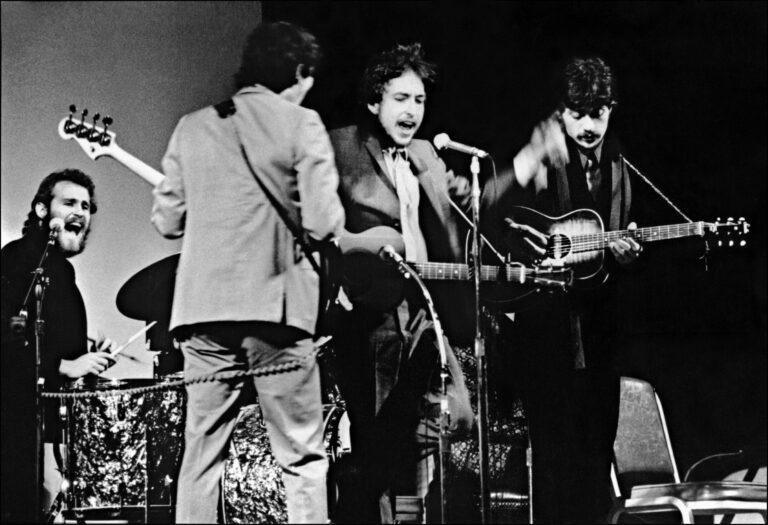
    Bob Dylan & The Band, Woodie Guthrie Memorial Concert, Carnegie Hall, NYC, 1968. Photo By ©Elliott Landy, LandyVision Inc. Robbie Robertson, Richard Manuel, Rick Danko, Garth Hudson, Levon Helm.

    In the ‘70s, Taplin became a producer of major films like Scorsese’s Mean Streets and The Last WaltzTo Die For and Wim Wenders’ Until the End of the World.  By the ‘80s, he was an executive at Merrill Lynch spearheading mergers and acquisitions for media giants like Viacom. In the ‘90s, he launched the internet’s first video-on-demand service. And in the new millennium, he has served as an astute critic of the impact technology and tech monopolies are having on culture, the livelihood of artists and democracy itself. In 2017, he authored what be the defining work in the arena, Move Fast and Break Things: How Facebook, Google and Amazon Cornered Culture and Undermined Democracy.

    Those looking for backstage rock anecdotes and gossip will not be disappointed in Taplin’s book.  He provides some new details on Dylan’s electric debut at Newport and how a turn from weed to angel dust undermined Joe Cocker and his Mad Dogs & Englishmen tour.  There’s also funny tales of how a hypnotist was needed to coax a seriously ailing Robbie Robertson on stage for The Band’s Fillmore debut and how they launched a napping Garth Hudson on a weightless flight on their tour jet. 

    the magic years
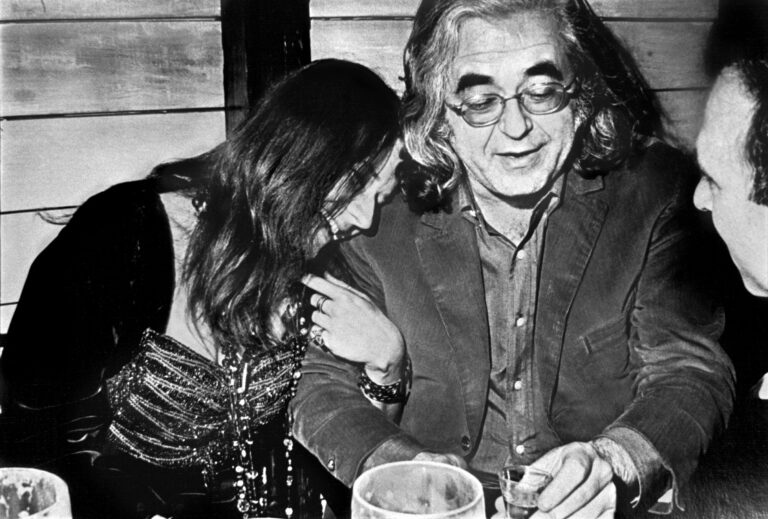
    Janis Joplin and her mgr., Albert Grossman, press party for signing w. Columbia Records, NYC, 1968. Photo By ©Elliott Landy, LandyVision Inc.

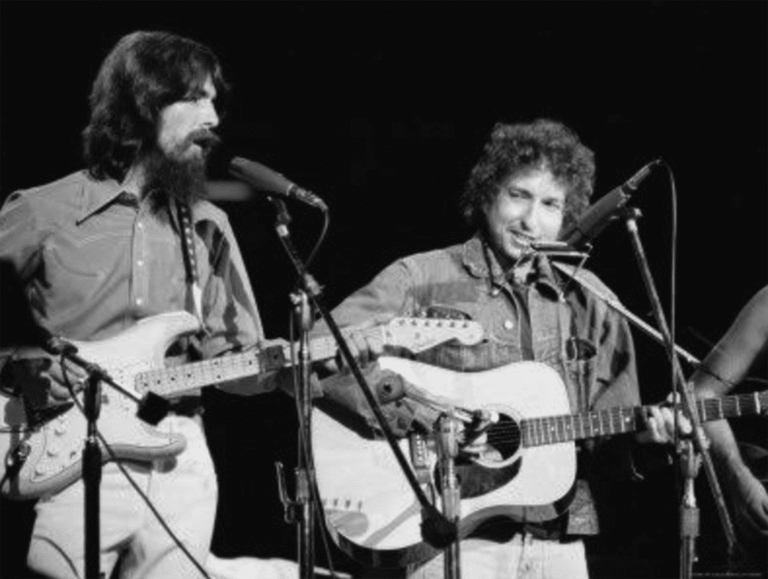
    Taplin also reveals how the idea for the Concert for Bangladesh was hatched when George Harrison spent a night at his house in Woodstock, and his role at production manager for rock’s first big fundraising concert. You also get a bird’s-eye view of the Rolling Stones at their most dysfunctional – on the French Riviera keeping vampire hours while laboring over Exile on Main Street.  In this chapter, Taplin declined the opportunity to be tour manager but was the catalyst for rescuing renowned photographer Robert Frank from a life on welfare in Nova Scotia. He suggested the Stones bring Frank aboard to create the immortal album cover, then they decided to hire him to shoot the ill-fated 1972 tour documentary, C***sucker Blues (something so raunchy it still hasn’t officially seen the light of day).  Also of note is how he helped save The Last Waltz by having his team use then cutting-edge digital technology to erase the cocaine rock poking in and out of Neil Young’s nose during his performance of “Helpless!”

    In his early days, Taplin was a true believer in the voting and civil rights movements, and in musicians as important messengers to further social justice causes.  When rock began losing its political edge, when hedonism won over idealism, he jumped ship into film.  He violated the first rule of producing by using own money to bankroll Martin Scorsese’ first acclaimed feature, Mean Streets.  Between 1974 and 1996, he would produce 12 feature films including Gus Van Zant’s To Die For with Nicole Kidman and Until the End of the World,  Wim Wender’s prescient 5-hour sci-fi epic about technology addiction.

    the magic years

    What really sets The Magic Years apart is Taplin’s meta view and understanding of so many movements – in the arts, politics and how we have arrived at the tech monopolies of today, ones that are literally starving artists.  He shows the link between Dylan and The Band’s experimental innovations plied in the basement of Big Pink with the birth of bebop, when Dizzy Gillespie and Charlie Parker created a new form of jazz in private afterhours jams in Harlem.  He connects A – Z to show how the medicine show gave birth to R&B then rock, and how the mob infiltrated the early music business to launder its monies and gave birth to major media conglomerates.  Also how the ‘80s Wall Street innovation, the creation of junk bonds, fueled the growth of monopolies and the right wing media complex that threatens democracy.  

    The Magic Years is both a rock memoir and a work of cultural criticism from a key player, someone who watched a nation turn from idealism to nihilism, from the worship of artists to tech tycoons, ones who are compromising the financial well-being of musicians and other creators and democracy itself. In the remarkable final chapter, Taplin offers a clear-eyed roadmap of how we got here and makes a convincing case for art’s power to deliver us from “passionless detachment” and rekindle our humanism and belief in what can be.

  • The Raybeats’ “The Lost Philip Glass Sessions” Gets First-Ever Vinyl Release on Record Store Day

    New York City in the 1980s was a creative caldron where anything could happen. Painting, graffiti, performance and emergent video art, film, dance, theater and music of every conceivable genre were blending into one another, often in unprecedented ways.  In the arts, and maybe music first and foremost, boundaries were not for division but blurring and breaking to make the wholly new. So when Philip Glass, the esteemed minimalist composer, teamed with The Raybeats, the neo-surf guitar super combo, it was the kind of collision of seeming opposites that made perfect sense in these freewheeling times.

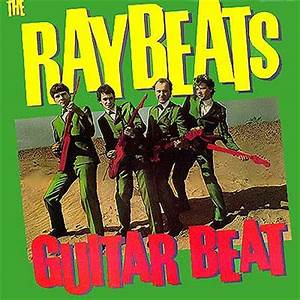
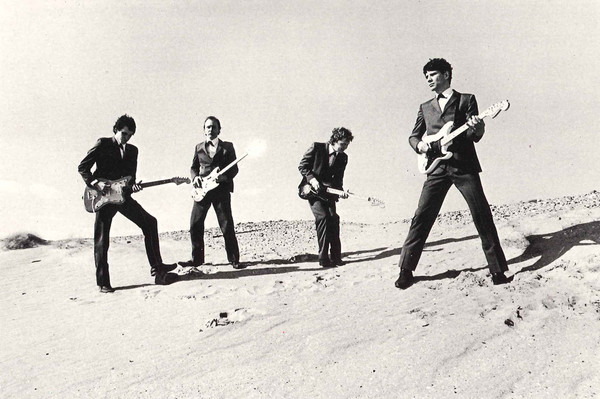
    The Raybeats formed in 1979 out of the ashes of the legendary New York no-wavers, The Contortions.  The band’s bassist George Scott and drummer Don Christensen joined with guitarist/keyboardist/sax man Pat Irwin (8-Eyed Spy and later the B52s) and guitarist Jody Harris (Golden Palominos and an original member of The Contortions featured on the seminal No New York compilation produced by Brian Eno).  When Scott died of a drug overdose in 1980, he was replaced by Danny Amis. Amis would later go on to form the groundbreaking, masked surf guitar band, Los Straitjackets.

    The Raybeats sound was an artsy update on the gutsy guitar instrumentals of fuzz pioneer Link Wray and the twangy surf of Dick Dale.  Added to this were copious amounts of space age bachelor pad swank and spy movie mysterioso, along with Stax/Volt grooves and, of course, the experimental noise/skronk of no-wave.  It was a high-energy, eminently danceable brew, one that made The Raybeats a popular touring band on the underground rock circuit.  With Amis, they recorded an EP Roping Wild Bears (1981) and the acclaimed full-length album, Guitar Beat (1982).  After his departure, they waxed just one more album, It’s Only A Movie!, before disbanding in 1984. 

    The Raybeats went into SoHo’s Greene Street Recording on June 4 – 5, 1982, with Philip Glass, his pianist of choice Michael Riesman and co-producer Kurt Munkasi.  None of the parties really knew what to expect according to Irwin. And the world would not hear the fruits of their collaboration until 31 years later, when Glass released the seven tracks on CD in 2013, on his Orange Mountain Music label.

    Philly and NYC based label Ramp Local is now putting out the first-ever vinyl pressing of this incredible collection, called The Lost Philip Glass Sessions, just in time for Record Store Day, June 12.  The vinyl package includes new cover art and an insert, with liner notes by Pat Irwin and rare archival photos. 

    the raybeats philip glass

    The disc kicks off with “Jack the Ripper,” a cover of the classic instrumental recorded by Link Wray of “Rumble” fame.  As with many of the offerings here, the tune is anchored by a pounding jungle beat, with some nice retro slapback delay.  It also boasts thick sheets of dreamy feedback from Jody Harris to complement Irwin’s heavily-reverbed, deep toned melody guitar. 

    “Pack of Camels” is one of the tunes that gets a more obvious Glassian treatment.  This is snake charmer music, an Eastern modal dance groove with oodles of reverbed melody guitars and spooky Lena Lovich/Laurie Anderson-like vocal accents by Dora Ohrenstein.  

    According to Irwin’s liner notes, “Black Beach” was intended to recreate the experience of riding Coney Island’s famed roller coaster, the Cyclone.  Drummer Christensen had the idea of recording the sounds of the Cyclone and the screams of the riders for use as a drum break, a thought that ended up on the cutting room floor.  The B section of has the most obvious Glassian flavor on the album – a hypnotic swirl of interlocking keyboard figures played by Michael Riesman, a longtime member of The Philip Glass Ensemble.

    the raybeats philip glass

    “The Sad Little Caper” features a five-note melodic figure, a baritone guitar counter melody and a cavernous ambience that brings to mind a James Bond flick. Add to this spooky keyboard answers arranged by Glass. These are reminiscent of P-Funker Bernie Worrell’s contributions to Stop Making Sense-era Talking Heads. 

    The most no-wave flavored piece of the album, “I Do Just What I Want,” comes from a 1985 session at the Living Room, Glass’ studio in TriBeCa. Dirty tenor sax growls, slip slidey fuzz bass and a four-on-the-floor surf beat propel the piece, which features a vocal refrain of the title and punchy orchestral synth hits. 

    “1.2 Girls” and “Hoodlum Priest” both come from sessions at Surf Sounds begun in 1983.  The former owes a ton to the jungle rhythms of Gary Glitter’s 1972 hit, “Rock-n-Roll Pt. 2.”  A stomping beat, more tenor growl and a bit of vocals singing the title, one that purportedly was swiped from a tabloid headline.  “Hoodlum Priest” begins with the sound of thunderstorm captured outside the studio.  More cool spy vibes to a dark funk beat, with lush stereo pans of the bitey guitars – acoustic, electric and a bit of backwards psychedelia.

    Like Guitar Beat, this disc proves that The Raybeats were the real deal. They were true sonic minded guitar innovators, working in a punk era that minimized any guitaring that seemed to showcase chops, anything beyond three chords, a grimace and a grunt.  Though their career was short-lived, their influence was lasting, with the neo-surf they pioneered in their recordings and in the further works of its members when they dispersed.  The meeting with Glass produced some real magic here. It is guitar art of the highest order, one that proves that this quartet was on the level of the critic revered Tom Verlaine/Richard Lloyd-helmed Television.   

    philip glass the raybeats

    If you like this disc, you should also check out the exceptionally creative, lo-fi masterpiece Escape, a duo disc made on a budget of $7 (for tape) by Raybeat Jody Harris and Robert Quine of Voidoids and Lou Reed fame. Irwin has been keeping great instrumental guitar art alive via his long stint with The B52s, his contributions to soundtracks like The Rugrats and, most recently, his great PI Power Trio.  You can hear what he’s been up to on their debut EP The Walk or at live performances at downtown NYC venues like the Treehouse at 2A.  Recommended Tracks: Jack The Ripper, The Sad Little Caper and Pack of Camels

  • Remembering Malcolm Cecil, Synth Pioneer and Stevie Wonder Producer

    On March 28, the music world, and the Hudson Valley’s close knit community of music makers, lost another great one, Malcolm Cecil.  The much-traveled musician, producer and Grammy-winning engineer passed away after a long illness in Malden-on-Hudson, where he had lived and continued his work for the past two decades.

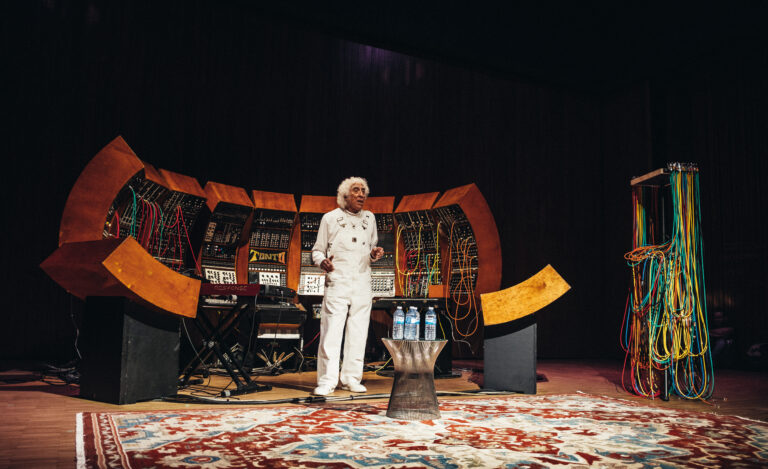
    Though Cecil was a man of many hats he is perhaps best known as the co-creator of TONTO, the world’s largest analog synthesizer. This room-sized amalgamation of a variety of synths and sound processors would become the musical bedrock for the dozens of albums he helped produce. Most notable are Stevie Wonder’s revered quartet of classics from the 70s, Music of My MindTalking BookInnervisions and Fulfillingness’ First Finale. 

    Malcolm Cecil
    credit: Sebastian Buzzalino/National Music Centre

    Born 84 years ago in London, Cecil seemed predestined for a career in music. According to a 2007 profile by Peter Aaron in Chronogram, Cecil’s American grandfather was a movie organist in Times Square theaters, while his mother played violin, piano and accordion in a gypsy band that his father managed. After an aborted attempt at piano, Cecil switched over to bass and ultimately became a much in-demand player. 

    Cecil would go on to stints in the BBC Orchestra and the house band at Ronnie Scott’s, London’s leading jazz club, where he performed behind luminaries like Rahsaan Roland Kirk, Stan Getz and Herbie Mann. Cecil also co-founded Blues Incorporated with Alexis Korner, the ensemble where the young Mick Jagger, Keith Richards, Charlie Watts and other rock stars-to-be got their first taste of stage experience.

    A ham radio enthusiast in his youth, Malcolm’s acumen in electronics grew when he served as a radio technician in the Royal Airforce. While stationed in Newcastle, he got together with The Animals and Hendrix’s manager-to-be, Michael Jeffries, and opened a jazz club called The Downbeat, which he wisely outfitted with recording gear. Seeking to get a contract for The Animals, Jeffries asked Cecil if he could demo a rehearsal by the rockers in the club’s off-hours, which he did on his trusty Revox according to TapeOp. This demo contained the proto-version of “House of the Rising Sun” which earned them their record deal, a #1 hit and global fame.

    After a detour to South Africa, Cecil ended up in the U.S. in the late 60s.  The bassist toured with several jazz artists before taking a job maintaining equipment at Mediasound, a busy Manhattan recording studio where he would meet his partner in technology and music production, Bob Margouleff.

    Margouleff had bought one of the early Moog series IIIc synthesizers and teamed up with the more technically adept Cecil to expand upon it, combining a variety synths from Moog and ARP with an array of custom modules, processors and controllers from a Russian composer and Jimi Hendrix’s guitar tech. 

    In the end, it was a six-foot tall, 300-square foot sound-making monster, one which the duo used to conjure a galaxy of spacey and downright funky sonics. They cheekily dubbed it TONTO, for The Original New Timbral Orchestra. And after a chance meeting with his old acquaintance Herbie Mann, Cecil scored a record deal with the flautist’s Embryo label. In 1971, they released their hugely influential debut album, Zero Time, as the equally cheekily named Tonto’s Expanding Headband.

    Zero Time was a revelation to music makers, and none more so than Stevie Wonder. One day Wonder turned up at Mediasound (in a pistachio colored jumpsuit) with a copy of the album under his arm seeking a demonstration.  After a quick tour of TONTO, he immediately booked a session with the duo. Over the course of a single weekend, they produced a remarkable 17 songs. Wonder then had TONTO moved to Jimi Hendrix’s Electric Lady Studios and the trio would collaborate there over the next four years on soulful innovations that would remake the sound of popular music. Together, they co-produced the classic quartet of Wonder’s best loved albums, containing songs like “Superstition,” “Higher Ground,” “Living for the City,” “You and I” and many more.  Cecil not only helped Wonder dial up the sounds heard in his imagination, but often performed them on the discs.

    In 1975, Malcolm Cecil and Margouleff would split, with Cecil purchasing TONTO outright and continuing its expansion, as both an instrument and a sonic spice dusted onto rock, R&B, jazz and experimental idioms. 

    Cecil would go on to produce and provide his engineering expertise to a stunning number of acts in the following three decades. These included The Isley Brothers, Steven Stills, Weather Report, Minnie Riperton, Randy Newman, James Taylor, Jeff Beck, The Jackson Five, Little Feat, Steve Hillage, Dave Mason, The Doobie Brothers, Mandrill, Quincy Jones, Bobby Womack, Joan Baez and more.  

    One of Cecil’s longest lasting collaborations was with soul poet/proto-rapper Gil Scott-Heron. Cecil produced several of Scott-Heron’s acclaimed albums beginning with 1980 in its title year, which featured Gil and his musical partner Brian Jackson in the studio with TONTO on its front and back covers, through to 1994’s Spirits.

    TONTO came with Cecil when he moved to the Hudson Valley, with a couple of notable detours.  These included a stay at Devo founder Mark Mothersbaugh’s Mutato Studios, where he used TONTO to create the music for the Rugrats animated series in the mid-1990s. Aaron’s article includes an interesting description of TONTO’s humble home in Cecil’s backyard shed in quiet Malden. In order to preserve this one of a kind piece of musical history, Cecil sold TONTO to The National Music Centre in Calgary, Canada in 2013.  The museum completed a full restoration in 2018 and today offers it for music production services.

    With his move to the Hudson Valley, Cecil continued his recording work with TONTO, creating the lush New Age-y sounds on his album Radiance, and in other partnerships, including one with Russian violinist Valeri Glava as Superstrings. Cecil also returned to his first musical love, acoustic bass, playing regular jazz gigs at cozy Hudson Valley clubs like the Colony Woodstock. 

    I first met Malcolm Cecil at such a gig. This was in October 2019, when we were both playing our respective sets on the sidewalk as a part of the outdoor ShoutOut Saugerties Music Day.  The woman who organized this community attraction was Cecil’s neighbor, Isabel Soffer. She is an internationally known curator and live event producer, co-founder and director of globalFEST, the pre-eminent annual showcase for World Music in the U.S. She had been working for the past two years with Malcolm on various projects.

    As is all too often the case in the music business, Cecil did not acquire or continue to receive great wealth from his tireless creative efforts.  According to several sources, Cecil was not a participant in royalties from some of his best known works.

    In mid-November 2020, Soffer called me to see if I might volunteer my day job skills, as a publicist, to help her and Malcolm get some new projects off the ground.  Naturally, I jumped at the chance to meet and talk with a musician I had revered since I was 13 years of age, when I first heard Zero Time on WNEW-FM in NYC. 

    As with TONTO, part of his desire was to preserve and have others benefit from his legacy.  Malcolm Cecil maintained a huge archive of recordings, correspondence, photographs, videos, recording equipment, session notes and other artifacts from his six decades in music, ones that are important artifacts from some of the most vital chapters of 20th Century music. As he got on in years, he was hoping to find a proper home for this massive archive.

    Also on his mind was a possible 50th Anniversary release of a Zero Time/Tonto’s Expanding Headband boxed set, with unreleased tracks and other goodies. There was also discussion of tribute album featuring notable musicians and helmed by a star producer.

    Malcolm was also taking steps to prepare a biography, a unique one to be told in the voice of TONTO. It would be machine telling of his adventures in sound and in-studio with many of the most talented names in music.  Another neighbor, a Vanity Fair writer, was urging Malcolm to tell his tales in the form of a podcast they would co-produce.

    Malcolm Cecil

    Cecil was also well on the way to finalizing a series of projects around two giants, Muhammed Ali and Gil Scott-Heron, ones that might still come to fruition with the proper support. He was planning to combine the music from his Radiance album with spoken word from a lecture by Ali for an album to be released in June 3, 2021, the 15th Anniversary of the champion’s death. With Gil, there were three discreet projects in the works, a re-release of The Mind of Gil Scott-Heron, a piece he wrote on the day John Lennon died called “Third Person,” and a music/poetry project with Scott-Heron’s daughter Gia. 

    As 2022 would be the 50th Anniversary of the release of the first of his Stevie Wonder collaboration, Music of My Mind, Malcolm Cecil was looking forward to celebrating the landmark with his own new music inspired by the event.

    Two short weeks after I spent a few hours with Malcolm hearing his plans and remarkable stories, I heard he was hospitalized. Our work stopped for the moment, in hopes that Malcolm might rally and continue his work.

    But even with his passing, Soffer is encouraged.  She is hoping the many who loved and admired Malcolm Cecil and his work will come together to bring some of these final projects to life.

    Sal Cataldi is a publicist and musician living in New York City and the Hudson Valley. He is President of Cataldi PR and leader of the band Spaghetti Eastern Music and member of the duos Guitars A Go Go and Vapor Vespers.

  • Sarah King Dishes Out Five Wonderfully Uneasy Pieces with The Hour

    Singer-songwriter Sarah King has released her debut EP, The Hour, a splendid, soulful voyage to the darkest corners of Americana.  It’s the perfect showcase for her show-stopping vocals and gothic bluesy story songs, something made all the better by the smartly minimalist arrangements conjured by co-producers, Simone Felice and David Baron (The Lumineers, Bat for Lashes, Jade Bird, Felice Brothers).

    sarah king
    photo by Arielle Thomas

    The tune that will likely command the most attention is her reinvention of Black Sabbath’s “War Pigs.”  This take is as slow and minimal and softly acoustic as its gets – a thumb strummed solo guitar riding an E minor drone (sorry, Spinal Tap, this and not the D minor, is the saddest of keys/chords).  Even though this guitar and voice spotlight is swaddled in a cathedral’s worth of cavernous reverb, it retains a crispness and clarity, like all the tracks on this impeccably engineered collection.  This cover is further distinguished by the ghostly alternative melodies King conjures, she’s like a bebopper of acid folk.  There’s shades of Nick Drake, Alexi Murdoch and Blue-era Joni Mitchell in the quietude and Dolly Parton, one of her inspirations along with Adele and White Stripes, in the controlled country crack in King’s voice.

    The track “Poison” has a churchy gospel vibe.  Here Sarah King responds justifiably likewise to a cruel lover who can’t take what he dishes out (“I’m not bent, I’m not broken by your crimes. I gave you a taste of your medicine and you say I poisoned you”). Like many tunes on the album, there’s great texture here – tiny sonic delights barely audible in the mix like the ghostly roto-speaker electric guitar in this tune. 

    My personal favorite, “Nightstand,” hammers home the spooky soulful vibe. It’s a murder ballad driven by a swirly Rhodes piano, guitar crunch, Hammond organ wail, rich background vocals and gut-punch lyrics.  Case in point, the chorus:

    I was born with the cord wrapped around my neck
    It’s not something I could ever forget
    The world’s been trying to take me out since the day I first arrived
    There’s a darkness a-reaching for my hand
    I keep a gun in my nightstand
    Waiting for music to bury a body by

    The funereal shuffle of “Cold Hard Ground” brings to mind the artsy country blues of Wrecking Ball-era Emma Lou Harris.  It’s a minor blues articulated with a slurry snare-brushed beat, honey toned organ and minimalist piano. Co-producer David Baron, proprietor of Sun Mountain Studios in the Hudson Valley where the EP was recorded, is an analog synth collector.  He adds some very outta-space keyboard swirl and ambience here, along with (possibly) a mellotron-treated vocal chorus.  He’s a master of the less is more approach.

    sarah king
    photo by Christian James

    “Not Worthy the Whiskey” is a swaggering stomp-and-holler about making peace with your dark past.  The tune is propelled by percussive handclaps and stomps and boasts a whistling-down-the-alley intro ala Billy Joel’s “The Stranger.” It’s another deep blue lament, ones that floats in and out like a dream.

    Like much great music, King’s debut EP was born of loss.  In the press notes she says: “My dog died, my ex-husband died and my mama died too.  Life is too fucking short,  I’d just spent almost a year traveling in a tent away from my instruments and facing so much loss, I realized I never wanted to be away from music again.”

    King’s partnership with Felice came about when she sent him a shot-in-the-dark email containing a performance video of “Nightstand,” which to an invitation to record that tune and four more.  We are lucky that King found the strength to put her loss into such fresh, emotionally revealing, brave music.  And she’s lucky to have found, in Felice and Baron, producers who could bring her art to life is such a beautifully restrained and achingly gorgeous way.

    Key Tracks: Nightstand, War Pigs, Not Worth the Whiskey