Tag: pandemic

  • New York Philharmonic pay cuts suggest pandemic will last

    Under the financial stress of the pandemic, the New York Philharmonic musicians have agreed to a four-year contract with 25% salary cuts until August 2023.

    From nyphil.org

    Although pay will increase from 2023 to 2024, the wage cuts total more than $20 million, and musicians will still be paid less than at the start of the pandemic when the contract ends. Deborah Borda, Chief Executive and President of the orchestra, honestly stated that the cuts were “necessary.” The pandemic will keep the Philharmonic closed for at least 15 months, causing at least $31 million in losses.

    Musicians have had wage cuts since May, but this contract is the most substantial. However, musicians at the New York Philharmonic have been understanding. The head of the player’s negotiating committee, Colin Williams, said “in recognition of the challenges of this time, we have done our part to help preserve the institution by forgoing more than $20 million of our wages.”
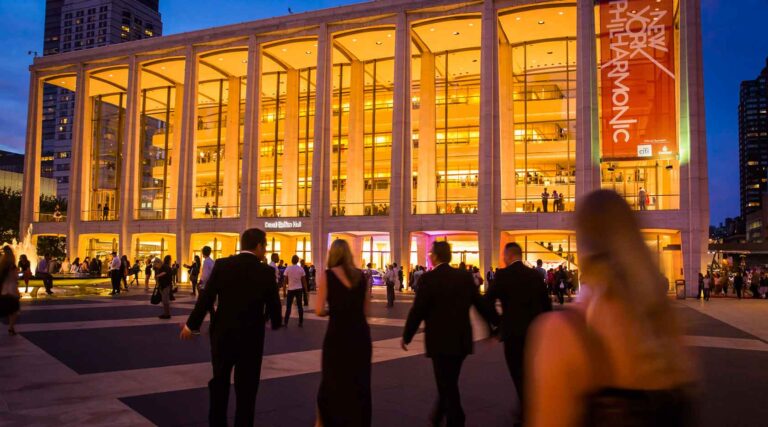
    New York Philharmonic
    Photo by Chris lee from nyphil.org

    In venues like the Metropolitan Opera, where 30% pay cuts have been requested, not all workers are willing to deal with such financial losses. The Met’s management planned to lock out workers who had not agreed to the proposed cuts. The employees of the opera have been without pay since April and will not be paid until the cuts are accepted. After the venue begins to recover financially, the cuts will be reduced to 15%. At the Philharmonic, cuts will drop to 10%.

    The Philharmonic has cancelled all planned shows up until June 2021. This is only a portion of NYC’s live art impacted by the pandemic. All Broadway theaters are closed until May 2021 at least, making this the longest time Broadway has been dark, ever.

    The contract, which ends in 2024, makes the lasting impact of this pandemic even more visible to the art and music community. Despite live venues’ plan to open sometime this upcoming year, it is clear that the financial road to recovery will be slow.
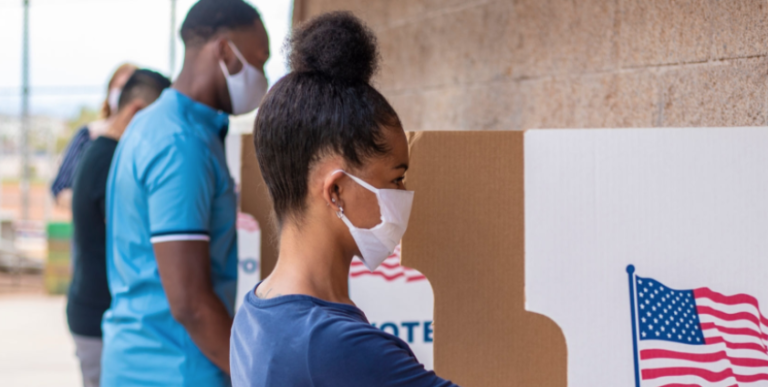
  • HeadCount Won’t Let a Pandemic Block Voter Registration Efforts

    It is hard to believe that Election Day is just over six weeks away and there have been many efforts to get people out to the polls.  However, even with the pandemic that hasn’t stopped organizations like HeadCount from getting people registered to vote.

    Andy Bernstein, Executive Director of HeadCount, says that despite barriers, the organization’s efforts are going really well.

    Headcount
    Headcount has seen a spike in voter registrations in comparison to previous election cycles.

    “We moved all our activities online and we’re registering more voters than ever,” Bernstein said.

    HeadCount is a non-partisan organization that uses concerts-and now adds online events- to reach out to music fans to register to vote. However, now that concerts are at a standstill, there have been more musicians trying to reach out to fans via social media and even Zoom. Bernstein says that fortunately the organization was already aware of this early on during the pandemic.

    “First, we worked with Soffi Tukker, Dave Matthews and Camila Cabello on promotions where fans could enter to win a private zoom with the artist, but [needed to check] their voter registration status,” he said. “We’ve done literally dozens of these now, and our new partner Global Citizen, is doing even more through the Just Vote campaign. Dave Matthews will do a short private show through that.”

    Bernstein also says that Evanescence is also going to perform an online show through HeadCount. But the goal for these shows is that in order for a participant to view it-they need to check their registration status.

    Since this election cycle seems to deal with more passionate issues, Bernstein says that he definitely has seen a spike in voter registrations- similar to what he saw during the 2018 elections.

    “We registered three times as many people for the 2018 midterms as 2014. And it was the highest turnout for a midterm election in 100 years,” he said. “Our goal is to register 200,000 voters and directly engage 1 million voters.”

    And what Bernstein means by ‘directly engage,’ is to have voters sign up for an absentee ballot, check their status, or to even look up a ballot which can all be done on the HeadCount website.

    Now that the election is just six weeks away, the organization is currently doing a huge text messaging campaign so that those who haven’t registered yet can do so via text messages.  And if someone would like to volunteer to help out the organization with its efforts, they can just visit HeadCount.org/volunteer and pick a night to help.

    “They’ve been lots of fun,” he said. “All you need is a computer (not even a phone) and you join a Zoom session with other volunteers from all over the country.”

    This year, the presidential election will take place on Tuesday, November 3rd. Register to vote and request an absentee ballot with HeadCount.

  • SLA faces lawsuit by NYC Venues and Bars Over New Guidelines

    Angered that the State Liquor Authority (SLA) created new guidelines last week in regards to live music and ticketed events, establishments have teamed up to file a lawsuit.

    SLA lawsuit

    According to the SLA’s website, venues and bars cannot hold ticketed events, karaoke and other live entertainments. They claim that an establishment is allowed to have “incidental live music,” but it cannot be ticketed or advertised.

    “Only incidental music is permissible at this time. This means that advertised and/or ticketed shows are not permissible. Music should be incidental to the dining experience and not the draw itself. All other forms of live entertainment, such as exotic dancing, comedy shows, karaoke etc., are not permissible currently regardless of phase.”

    via SLA website

    To many establishments, they feel these new guidelines will affect business drastically. According to the lawsuit, these rules restrict “free speech.”

    “Despite the fact that coronavirus is not transmitted via sound waves, the SLA just decimated already struggling businesses. This rule prohibits lawfully operating establishments from advertising the entertainment that is lawfully available: to wit, a ban on advertising of music at food service establishments. This constitutes a content-based restriction on free speech,” the lawsuit states.

    The lawsuit was filed with the support of the New York Independent Venue Association. Forming this past summer, NIVA has been on the forefront of the #SaveOurStages movement. Their mission was and still is to get financial support from Congress to the industry. They represent over 100 independent music venues including The Tralf, Littlefield, Birdland Jazz Club in Manhattan and Buffalo Iron Works in western New York.

    The new guidelines appeared not too long after multiple raves throughout NYC got busted for illegally selling liquor and disobeying the social distancing rule.

    Bill Crowly, a spokesperson for SLA told Gothamist that large gatherings such as these can be very dangerous.

    “These high-risk gatherings would create exactly the situation we are trying to avoid, where people congregate, mingle, and create congestion at points of ingress and egress,” Crowly said.

    On the side of the restaurant/bar industry, a manager, Kim, at Littlefield said that its been a hard time reopening and that costumers have to respect that.

    “Nightlife is so vital here—I don’t know why else people would move to New York, and I feel like it’s going to die. We’re holding out as long as we can with whatever aid we can get. But this is going to change the whole landscape of nightlife in New York,” said Kim.

  • Rave Organizers Continue Defending their Illegal Events

    Over the past month, illegal raves have continued to spark anger throughout Brooklyn as rave organizers claim they’re not doing anything wrong.

    Rave Organizers
    The event on Aug. 15 lead to testers and tracers being dispatched.

    According to Gothamist, Brooklyn had a reported 200 positive cases from the last two weeks. In response, test and trace teams were dispatched to the Sunset Park area.

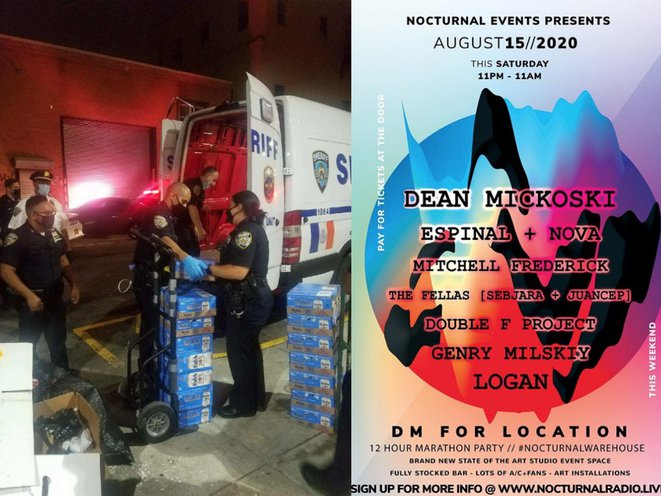
    Regardless of the positive cases, rave organizers continued to hold two parties in the same area on Aug. 8. Being illegal, the Sheriff’s Office broke the two raves up the early morning after.

    One rave took place on 47th street in a warehouse with 200 people. There was alcohol, even though the event didn’t have a liquor license. Police arrested and charged multiple people.

    In a statement made to reporters the following Monday, Mayor Bill de Blasio said no one should be putting others’ lives at risk.

    “I want to be abundantly clear: you cannot organize a large gathering that’s going to put people’s lives in danger or you will suffer the consequences,” said de Blasio.

    The other rave happened only a few blocks away and also had alcohol without a liquor license. Police busted the event shortly after the 47th Street rave at 2 a.m.

    According to sources, the events had different organizers, but they coordinated the timing together.

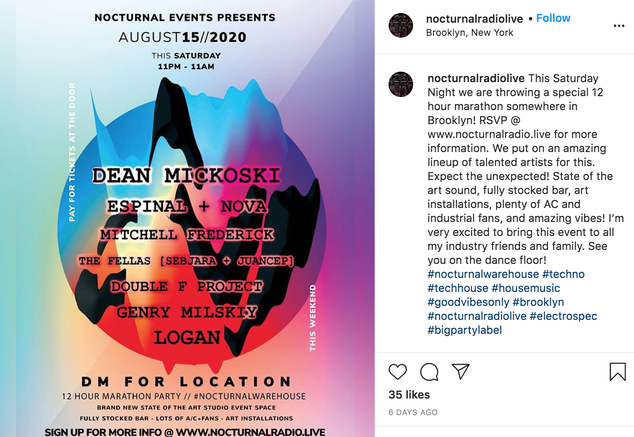
    Nocturnal Radio Live hosted the 47th Street rave, but it wasn’t their first. On July 4, multiple raves throughout the city popped up, including one thrown by them.

    Although the events were highly illegal, the group had no problem promoting them on their social media pages.

    Rave Organizers
    Nocturnal Radio Live posted this on their Instagram page, but took it down along with their whole page.

    From a Chainsmokers concert in July to a secret rave under Kosciuszco Bridge a few weeks ago, rave organizers don’t seem to want to back down from hosting these events.

    Ulitsky and Simms, the head of Nocturnal Radio, said they provided “unity.”

    “Everything we’ve done and plan to do in the future is out of unity, not about separation and depression,” said Simms.

    Ulitsky added, “As far as people attending, we’re getting a lot of positive feedback. As long as that’s happening, we don’t feel like we’re doing anything wrong.”

  • U.S. Senators Introduce ENCORES Act for Struggling Music Venues

    Two U.S. senators introduced a new bill, the ENCORES Act, that will provide economic support to struggling live music venues and their workers.

    ENCORES Act
    SaveOurStages hopes to get economic relief for struggling music venues.

    Senators Tom Carper and John Tester created the Entertainments New Credit Opportunity for relief & Economic Sustainability (ENCORES) Act.

    The bill gives a new tax credit to venues with less than 500 employees. The initiative is to help cover the cost of refunded tickets and cancelled concerts.

    “Today, I am joining Senator Tester to introduce the ENCORES Act, a bill that will provide much-needed relief for our live music venues by creating a tax credit to help cover refunded ticket costs due to canceled events. Music venues are truly special places that have, for generations, provided our families with priceless memories. It’s on us to do what we can to support this industry now so that we can come out on the other side of this pandemic and ensure that this will not be the day the music died.”

    Senator Tom Carper

    According to a press release, venues will be eligible if they offered costumers a voucher before they requested a refund.

    In an effort to make sure a bill providing venues with economic support passes, the National Independent Venue Association created #SaveOurStages and #RestartAct.

    https://www.instagram.com/p/CDzdp7iF48n/?utm_source=ig_web_copy_link
    Many live music venues show their support for the #SaveOurStages Act.

    The U.S. is not the only nation protesting in support of live concert venues. England took storm with the #WeMakeEvents and Red Alert Movement. Marches throughout Manchester occurred Aug. 11, according to BBC.

    The ENCORES Act credit will allow the venues to redeem losses because of cancelled concerts.

    Milton Theater Director Fred Munzert from Delaware expressed his gratitude towards Carper.

    “History tells us that for every challenging time the arts persist and comes back even stronger. Art is one of the first things people look to when regaining their sense of normalcy.”

    Fred Munzert