Wavy Cunningham, an Albany-area rapper who has shown much potential in the past, comes through with his first full length project, Club Wavy. The album is a product of the collective efforts of Wavy along with producers N-Pro, DJ Mercy, and Frank Finesse.
The album itself plays as if Cunningham and the production crew have a thorough understanding of old school and underground hip-hop simultaneously performed through a 2010 lens. Throughout the album, it becomes evident that Wavy is eager to make a name for himself in the current hip hop landscape; Club Wavy may very well be that stepping stone.
The album starts off with the swirling synth beat featured on “I’m Good.” Wavy immediately follows in finding himself riding the beat like a surfboarder, spitting bar after bar about his come up in the past few years. The track progresses into a familiar “Eenie Meenie Miney Mo” rhyme pattern which is both appealing as well as gratifying to hear those anticipated rhyme schemes fulfilled. Wavy continues to flex his pen game which remains impressive from track to track. As the album progresses, the production leans towards a jazz rap fusion with Wavy’s prominent voice hitting as hard as a hammer over synth jazz chords.
Wavy’s vocal performances throughout this project are as smooth as ever, whether delivered in a triplet flow pattern reminiscent of 21-Savage on “I’m Good” or in smooth R&B fashion such as on “The V.I.P” with soulful, crooning vocals that hit like Kids See Ghosts era Kid Kudi. “The V.I.P.” serves as an interlude for the album but still, even as a transitional track, “The V.I.P” carries an almost tangible emotion that brings the audience into the next half of the album. The remainder continues on with Wavy performing in his pocket over beats with a jazzy guitar chords along with classic trap instrumentals which allow Wavy’s voice to take center stage.
The album culminates with “All We need is Love,” an emotionally heavy track that honors the lives of those who have become victims of police brutality. “All We Need is Love” is ripe with emotion and showcases Wavy’s ability to rap while simultaneously narrating a coherent story about a young black college man who was subject to unlawful search and seizure along with a wrongful arrest.
Wavy closes the album out by remembering the lives of recent victims of ongoing police brutality and racial discrimination in the United States, humbly singing and asking a closing question to the audience,
All we need is love, when it’s all said and done what we do effects the future of our daughters and our sons. Tell me what’s really going on.
Key Tracks: Whattup?, The V.I.P. (interlude), All We Need is Love
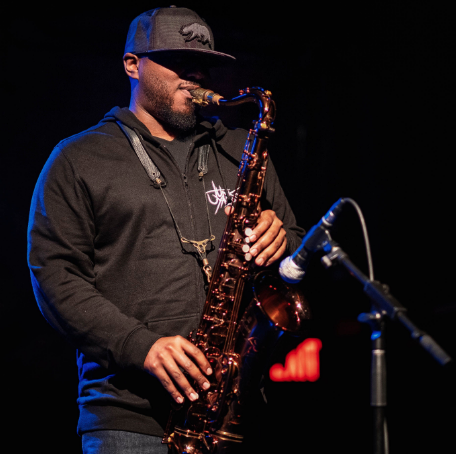
NYS Music and Music Minds have teamed up to check in with musicians around the New York scene and see how they are holding up and how they are feeling about their craft. For this installment, we talked to James Casey, saxophone player of Trey Anastasio Band.
James Casey is an NY/LA-based multi-instrumentalist, singer, producer and composer, born in Washington, D.C. to a musical family, and raised in Phoenix, AZ, from where he left to pursue a Music Business degree at Berklee College of Music. After leaving Boston, Casey moved to New York to continue to develop his passion for making music.
Over the years, Casey has become one of the most in-demand sax players in New York and Los Angeles and has toured the world with multiple artists. When not on the road, Casey has found a niche in the studio, producing and performing for many different acts, including his own, Animus Rexx. Casey is also co-founder and owner of Aux Chord, an online live-streaming venue.
Adam Chase: What are the biggest issues facing musicians during this forced hiatus?
James Casey: I’d probably say: stagnation and complacency. We’re all in the same boat of not being able to have live, in-person concerts right now, and we have no idea on how long we Americans will be in this predicament. I think the worst thing any of us could do is to sit still and wait for things to get better. We don’t know what better looks like or when that will be. As of today, NY passed a law basically saying venues can’t pay for live music right now. And understandably so!
We definitely can’t be trusted to be smart about this pandemic…but we also can’t remain where we are. Live in-person concerts are only part of being a musician. We should use this time to shore up deficiencies in our playing/performing, begin (or finish) that project you’ve been putting off, expand your musical horizons, or even start a new, adjacent musical venture! There are very few times in life that you will have this much time as an adult, it would be a shame to waste this opportunity!
AC: Have you found and tricks to staying positive?
JC: Hah, well, fortunately I was able to make my way to Hawaii a bit before NYC shut down. Right now, being on Kaua’i, I’m able to go to the beach, enjoy the outdoors, and be in an environment where people take coronavirus seriously…but with no community spread. I don’t know how I would have been had I stayed in NYC, in my little apartment during this time.
As far as remaining positive is concerned, I try to continually touch base with family and friends…and I really don’t like talking on the phone or FaceTiming. I know that a lot of people are in a much more difficult situation than I am, so I try to listen to what they’re going through and respond positively without bragging too much.
AC: What effect do you think musicians can have on social change?
JC: Musicians are the amplifiers of ideas and feelings. Any ideas or feelings. If you say something in a chant or with a simple melody, it remains in the consciousness of the listener and will bubble up from time to time. If it’s a good melody, idea or feeling, the effect is exponential.
There’s a reason we still hear the songs from the civil rights era right now; not only were they great songs, but they all conveyed a great message, a great idea and enough emotion to keep them circulating forever. “What’s Going On,” “Someday We’ll All Be Free,” or even “Strange Fruit” (from before the Civil Rights era) are songs that have become timeless and will eventually be revered like “Amazing Grace.”
We as musicians have the ability to write these iconic songs and we have a duty to chronicle the era in which we are living. I urge everyone I’ve spoken to on this subject to “write that song,” “tell that tale,” and talk about the things that are bothering you because you never know who it will resonate with. It could be the next song to bolster the movement.
AC: How have you been using your time during the shutdown?
JC: Surfing! Hah, not really. I tried, but I can’t stand up on the board yet.
I saw this pandemic coming (to the US) pretty early. I live in NYC and there’s no way it wasn’t gonna get there and explode. So while I was trying to figure out a way to leave, I was also trying to figure out how musicians would be able to work while not being able to play shows.
The idea I came up with was an online venue…but I had no idea it would get as bad as it did. Cut to April, and I see everyone on my timeline doing livestreams on Facebook and Instagram. They were all asking for tips and basically busking. That’s when we put the idea into high gear and created a platform where musicians can do live stream shows of all production capabilities (living room to a huge theater or soundstage) behind a paywall. It’s called Aux Chord and you can find it at AuxChord.live. I’ve been spending most of my time cultivating and growing our platform.
AC: What do you want people to know about Aux Chord?
JC: Well, we put it together for musicians. Since its inception, we wanted to find a way to have high quality audio and video without gouging the artists. I’m an artist and I know how difficult it is to deal with venues, so we made the pricing structure as simple as possible so the artists get as much as possible. Also, I think every artist should do at least one livestream. It’s not as daunting as it seems before you attempt it. If I, a saxophone player, can do a whole show from a locked down island with no Guitar center and Amazon taking a month to deliver anything, I’m sure you can from the comfort of wherever you are! Plus, to all the bands out there, we have different venues and staging areas around the country and production capabilities from small venues to giant sound stages, so hit us up!
AC: What song or album would you nominate for the soundtrack to 2020?
JC: My initial thought was “Scream” by Michael and Janet Jackson…but honestly, if you just record someone falling down like four flights of stairs, then have them stop and stand up, only to fall down five more, that would be my nomination.
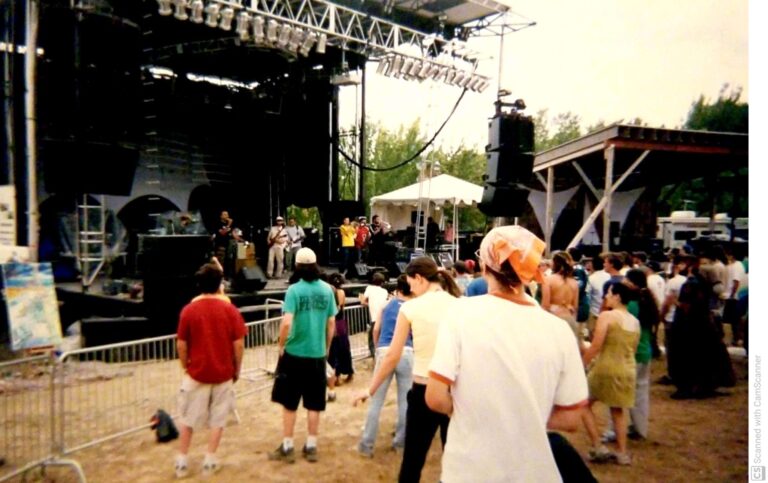
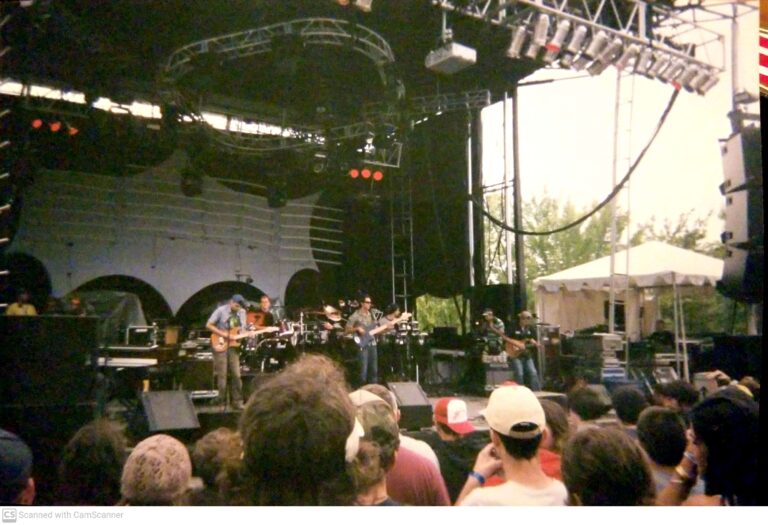
From August 26-27, 2005, Camp Bisco 4 was held in Van Etten, NY at the Skyetop Festival Grounds, marking the first time the festival was not held in Pennsylvania. The festival grew this year, and would return even stronger in 2007 at Hunter Mountain before firmly establishing their presence in Mariaville, NY from 2008-2013.
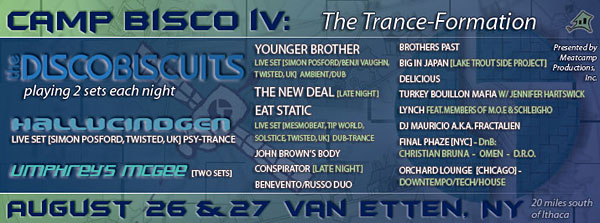
Camp Bisco IV lineup
This weekend in particular held additional significance for the Philadelphia-based hosts of Camp Bisco, the Disco Biscuits. Original drummer Sam Altman would be leaving the band after this weekend to pursue a medical degree. With the fate of the band, and festival in question, Camp Bisco IV: The Trance-Formation was held to send Sammy out on a high note. The band would later welcome current drummer Allen Aucoin behind the kit at shows starting that fall.
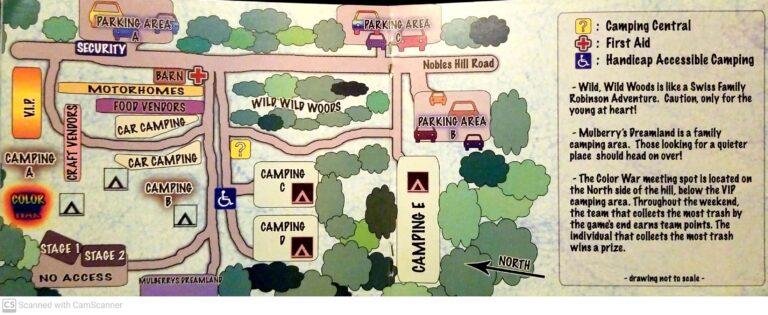
Map of the festival grounds
Ahead of Camp Bisco IV, Meat Camp Productions (now MCP Presents) took over management of Camp Bisco and, being fans, the band felt the festival would be in good hands. MCP sought to make Camp Bisco a larger event by moving to Van Etten, and drew a reported 4,400 attendees, the largest Camp Bisco at that time.
Camp Bisco IV offered two sets of the Disco Biscuits each night, as well as 2005 up-and-coming bands Umphrey’s McGee, The New Deal, Conspirator, John Brown’s Body, The Benevento Russo Duo, Brothers Past, Big in Japan, and DJ’s Christian Bruna, Omen and D.R.O. (Final Phaze NYC), DJ Mauricio a.k.a. Fractalien (Portland), and Orchard Lounge (Chicago). Many acts can be seen on the Camp Bisco IV official DVD, which is incredibly still in stock.
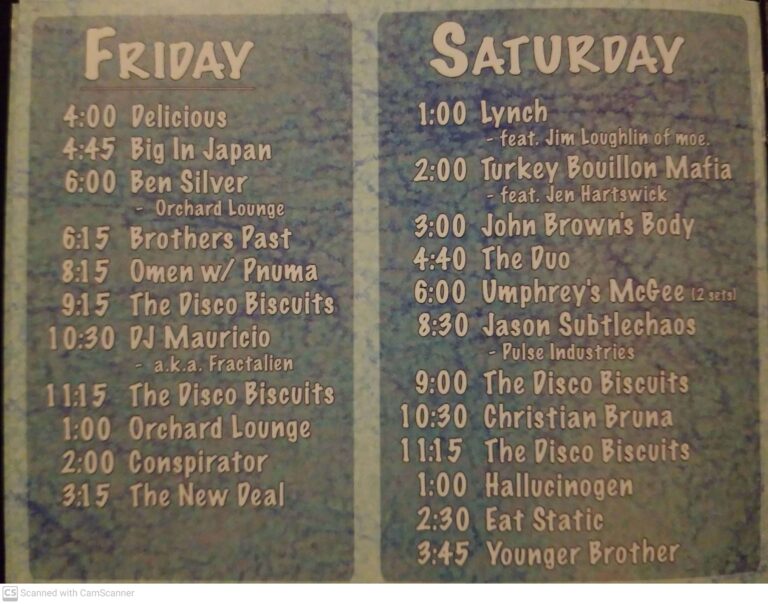
Friday night would feature regular Camp Bisco acts including Brothers Past, Orchard Lounge and The New Deal. The Disco Biscuits would kick things off with “Astronaut” -> “Shem-Rah Boo” -> “Astronaut,” the start of over 100 minutes of non-stop playing in their first set of the weekend.
Day 2 of Camp Bisco IV featured even more music, as well as overcast skies that would lead to rain later that night. Lynch, featuring Jim Loughlin of moe., John Brown’s Body from nearby Ithaca, the Benevento Russo Duo, two sets of Chicago firebrand Umphrey’s McGee, and following two sets of Disco Biscuits, the trance-heavy sounds of Simon Posford projects Hallucinogen and Younger Brother.
Big in JapanThe Benevento Russo DuoLynchUmphrey’s McGee
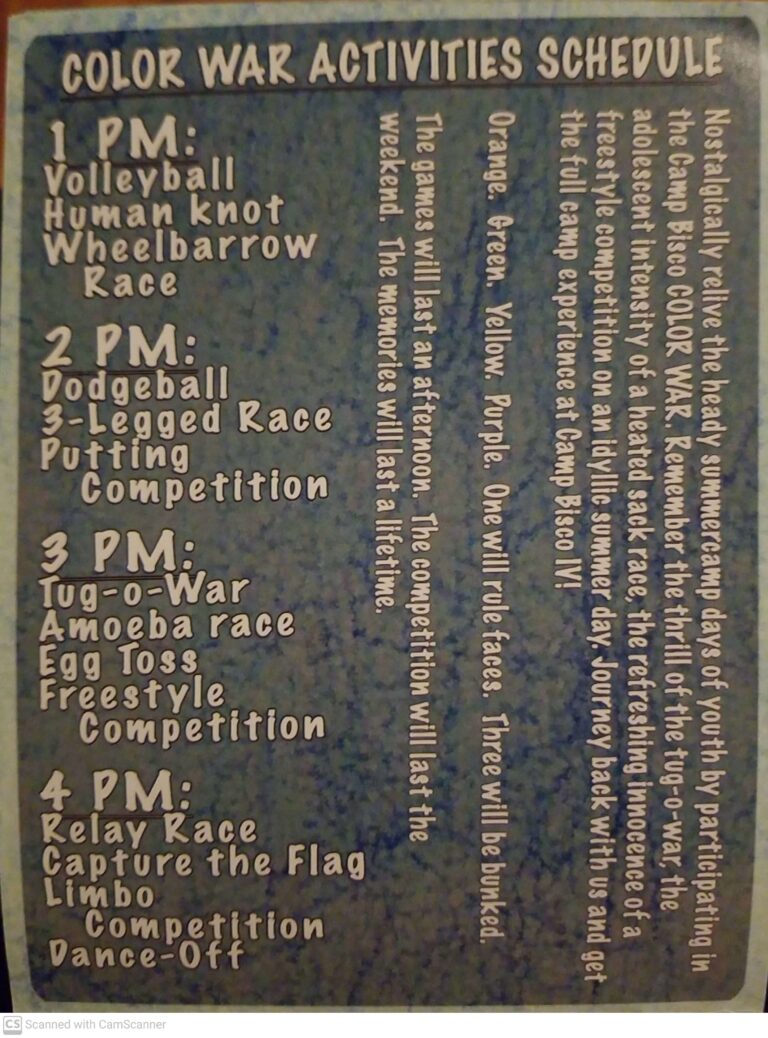
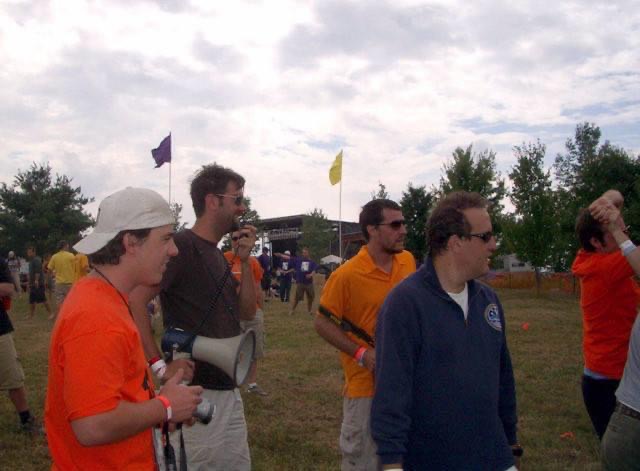
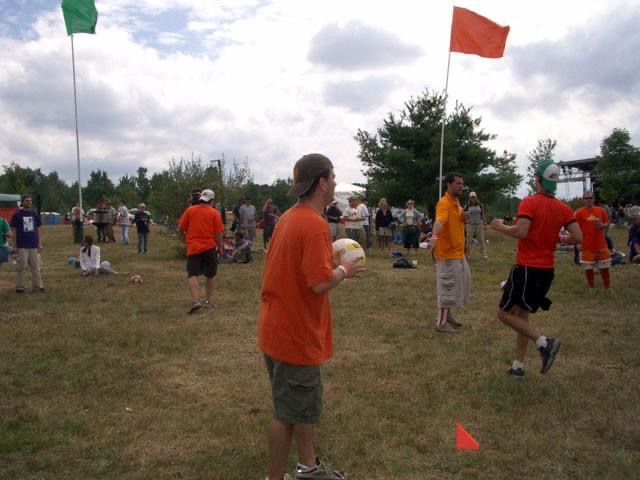
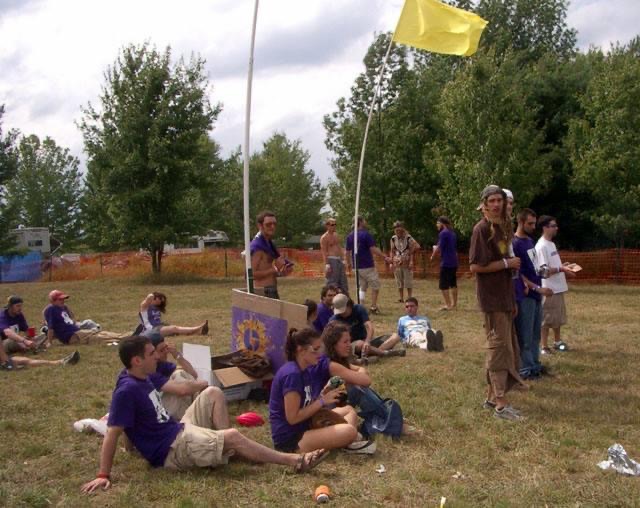
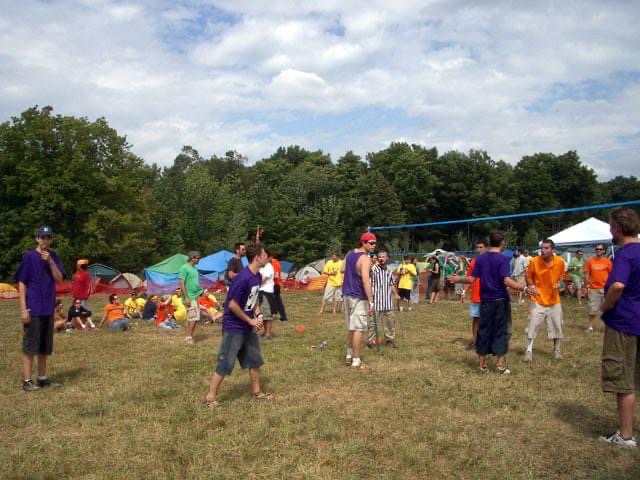
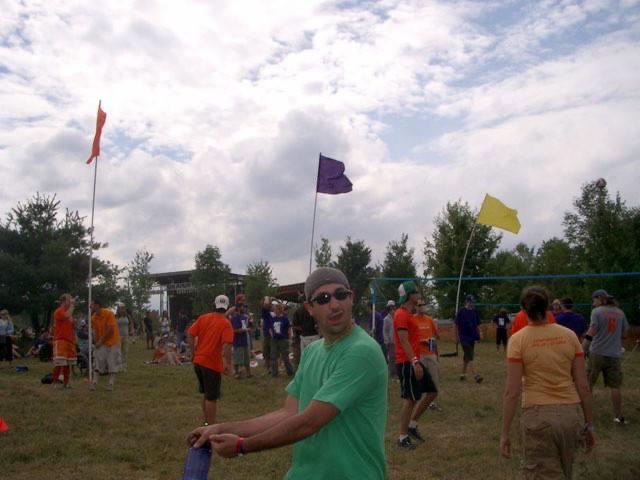
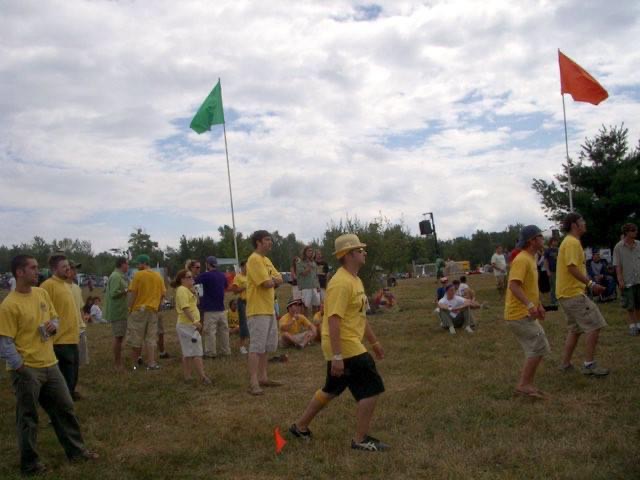
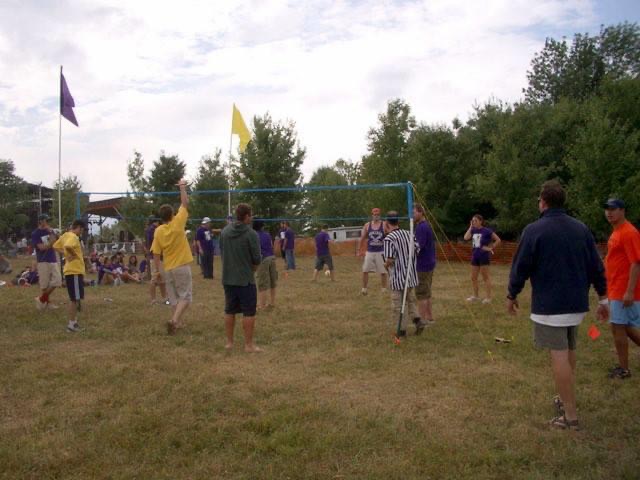
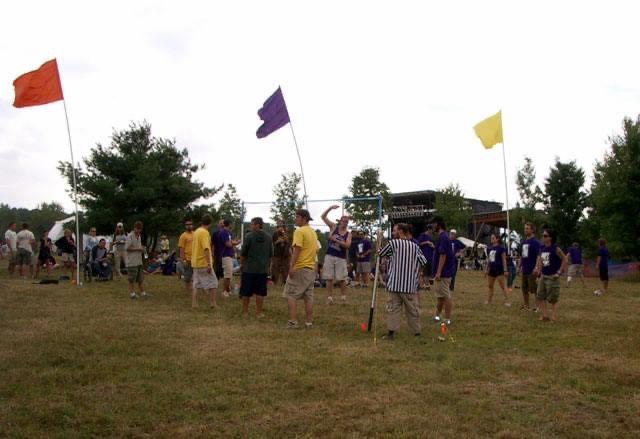
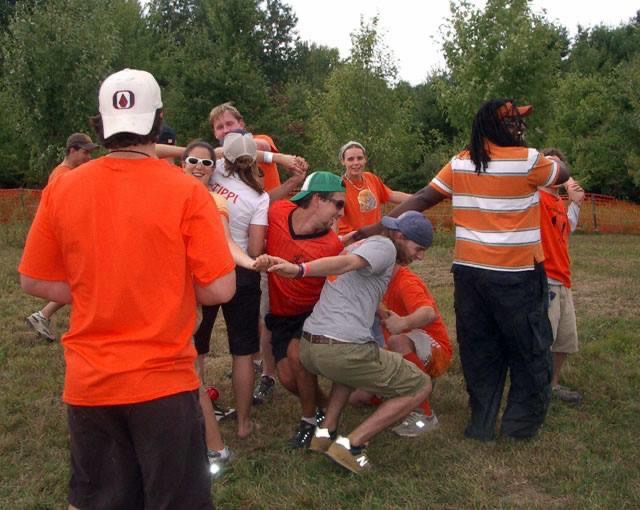
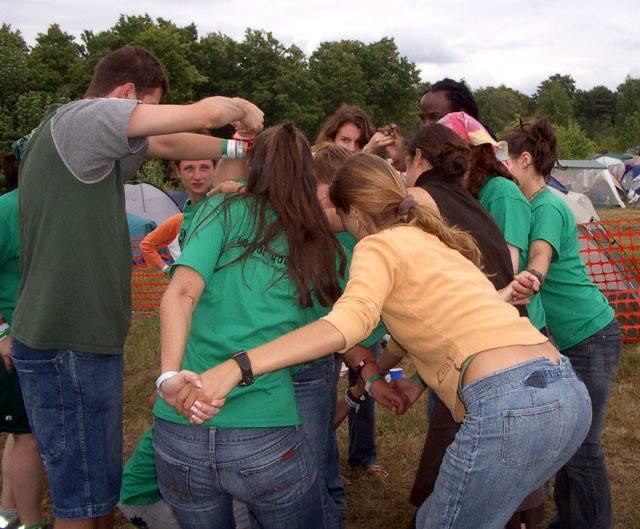
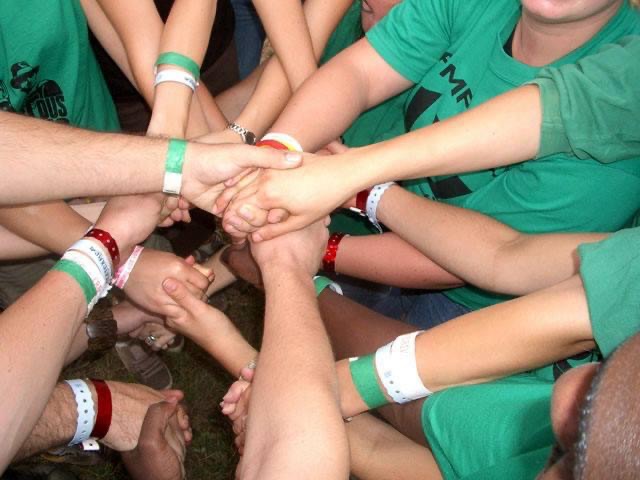
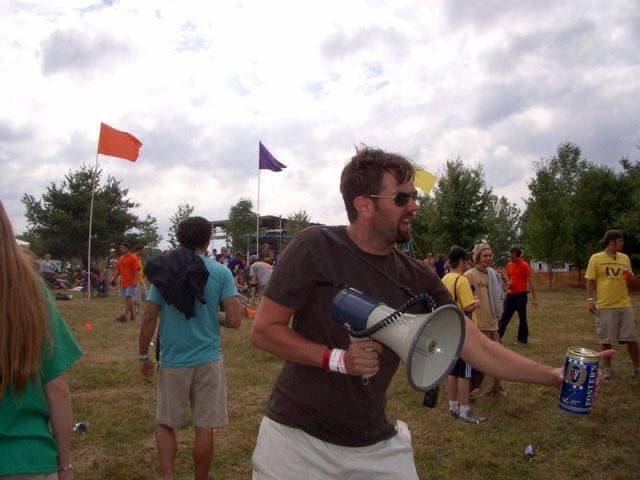
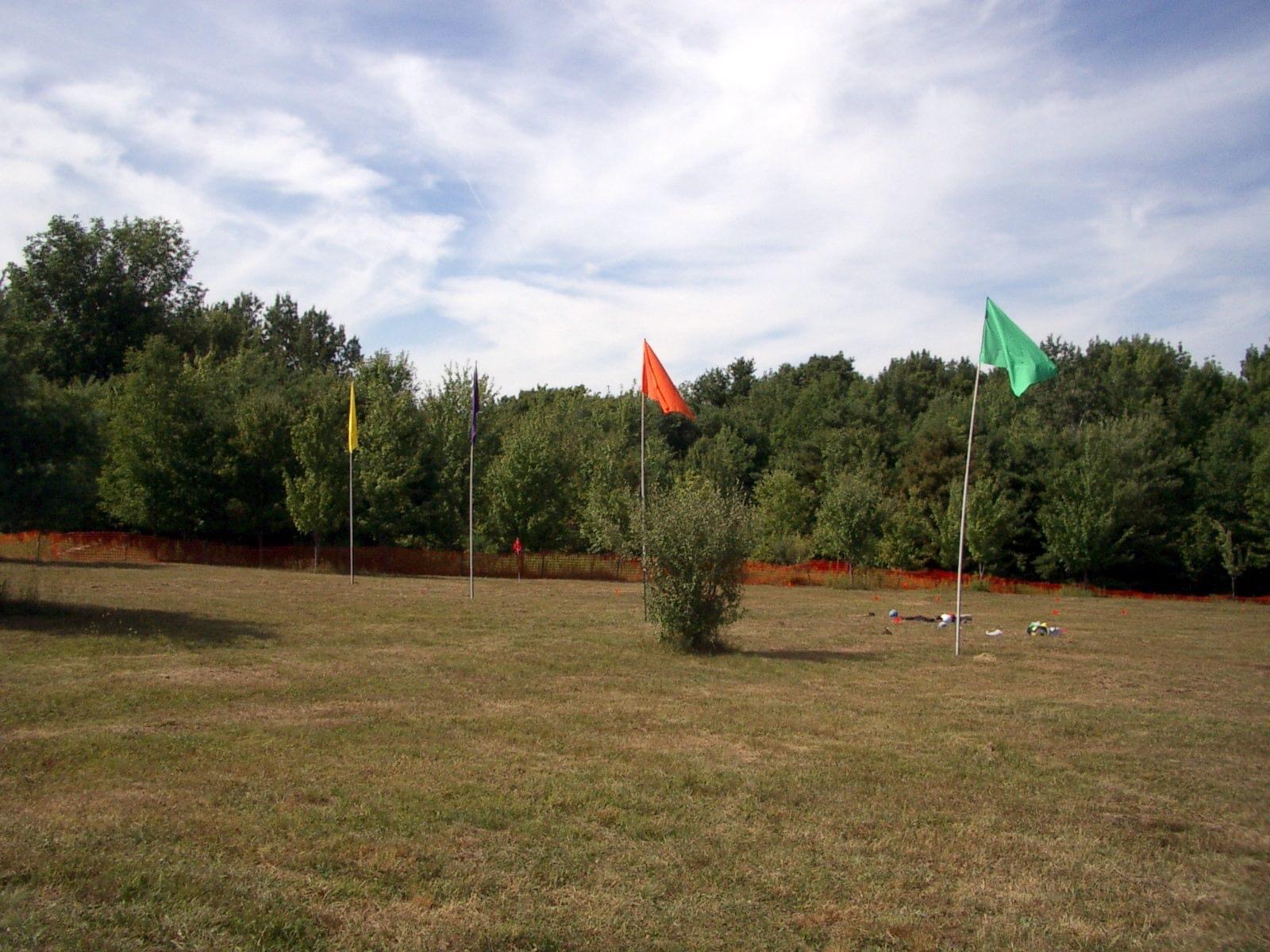
Camp Bisco IV boasted not only a family-friendly environment, with a family camping area and child play-park (Mulberry’s Dreamland) as well as the first time Color War was a featured activity during the day. The event pitted four teams of festival attendees (Orange, Green, Yellow, Purple) in friendly competition, reminiscent of summer camp ‘color wars’ of the past. Activities included volleyball, dodgeball, capture the flag, a freestyle competition and much more. The Orange team was victorious in the first event, now a staple of Camp Bisco, held at Montage Mountain in Scranton, PA since 2015.
Color War schedule of events, as created by Yancy Davis
The emotional build up of the weekend would take place late in the Disco Biscuits’ second set on Saturday, following “Floes.” Jon “The Barber” Gutwillig noted to the audience that there were some in attendance that night who were at the first Disco Biscuits show, saying, “So we feel like we have a lot of the old, a lot of the new, and everybody came together up here in the mountains for a very, very special night. The Professor, his last gig on the drums. Let’s hear it for Sammy.”
With that, the crowd roared with appreciation as the band played “A Song for Sammy,” referencing songs he wrote, inviting him back to perform whenever he wanted, tying an emotional bow on the weekend.
Appropriately, the band returned to the stage to perform “Spectacle,” with lyrics that spoke to the closing of one chapter of Disco Biscuits and Camp Bisco lore:
Asleep in the day, awake in the night, only so many roads to take your life.
The problem you see, you can’t mess with time, and take a different road you’d try.
“Spectacle”
Special thanks to Camp Bisco Color War HQ for photos of the first year’s events.
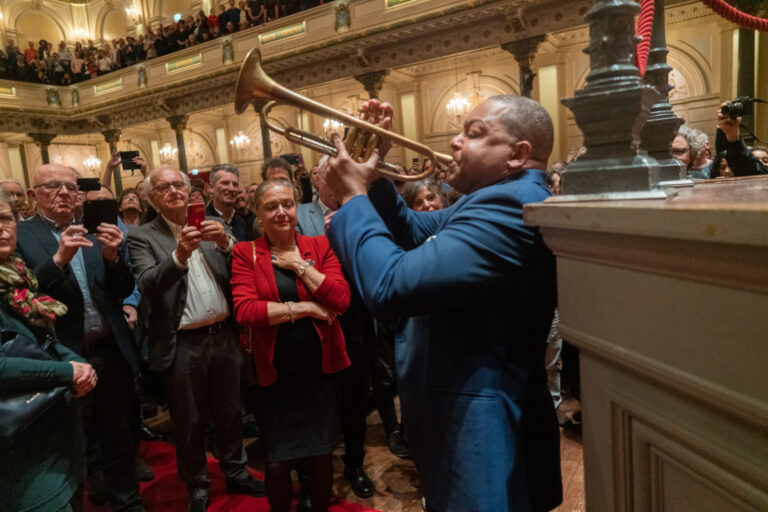
Some of jazz legend Mynton Marsalis’ best work of the last four decades has been influenced by socio-cultural and political issues. In 1985, his Black Codes(From the Underground) won a Grammy, in 1996, Blood on the Fields became the first jazz piece ever to win a Pultzier Prize, All Rise was performed by Symphonic Orchestras all across the world in 2002, and in 2007, From the Plantation to the Penitentiary was said to “[reveal] some important truth about this country with a lot of anger and heart.” It seems only fitting that now, during this historical time of national protest, Wynton Marsalis release a new work that reflects on these human rights issues.
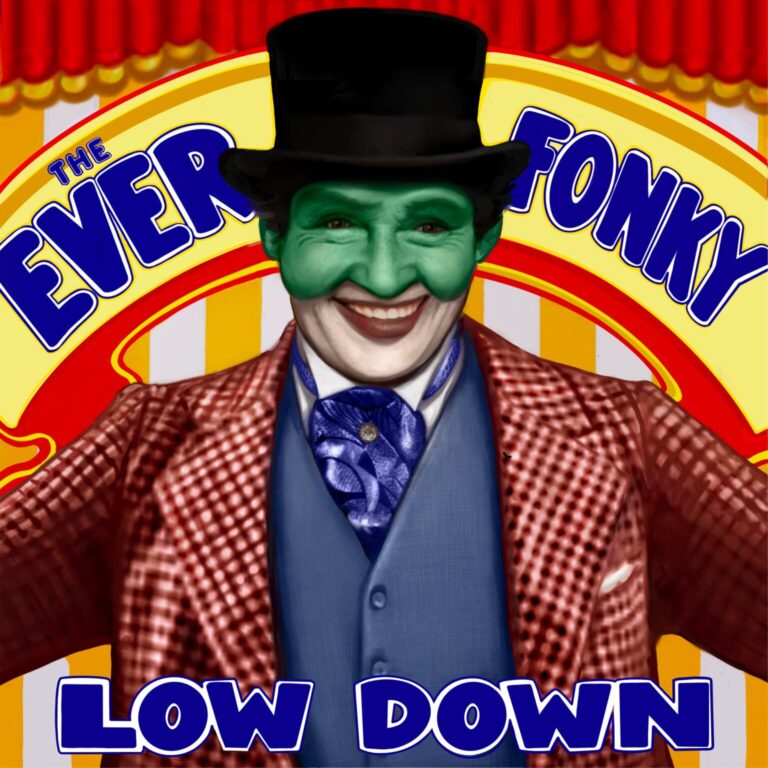
The Ever Fonky Lowdown directly addresses the racism, deception, and greed that clouds the country’s chances of human rights for all and pushes us further away from democracy. It was written in 2018 to combat human suffering and exploitation on the universal scale, but is now, in 2020, more topical than ever. The album’s narrator, “Mr. Game,” says it himself: “We are here tonight, but this is an international hustle. It has played out many times across time and space and is not specific to any language or race. It takes on different flavors according to people’s taste, but always ends up in the same old place.” These issues have been happening to countless all throughout history, and it is time to strip away the distractions to attack the injustice’s sources directly.
https://www.youtube.com/watch?v=IurvhGqimkY
The Orchestra singers act like a narrative Greek chorus and call upon several different forms of jazz, Gospel, American folk, swing, New Orleans funk, and more. The celebratory music is its own character and satirically expresses the joy with which humans hurt one another. The 53 track piece is both entertaining and thought provoking.
“Usually I research and learn a lot of new material for longer pieces. For this one, I went with music and mythology that I have lived. From the music my father and great New Orleans drummer and composer James Black played in the 60’s, to the funk we played in the 70’s, to the modern jazz we have been blessed to play, teach and shape over these last decades, The Ever Fonky Lowdown is an antidote to the poisonous (and largely unquestioned) cultural mythology that continues to infect our general quality of life.”
Wynton Marsalis
Marsalis wants the listener to question what is shown to him: the propaganda, media, and populism. He encourages all to look beyond what is shown to us and find our immediate reality and work to improve it. Essentially, The Ever Fonky Lowdown asks, ‘Where do we go from here?’ Marsalis answers:
“There’s no real answer on the Left or the Right. The solution lies outside of the game. But, we have to rise above our position on the board to get a broader view…..and then decide individually, if we have the will to fight for a collectively better country (or world) populated with ‘others’. It boils down to the basic question of predation vs. symbiosis—do we want to help one another or exploit each other?”
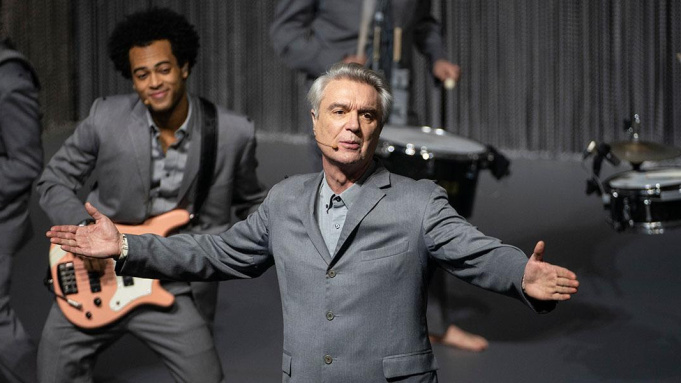
With Broadway shutdown until early 2021, one smash hit will be finding its way to HBO Max this fall. Spike Lee’s film adaptation of the acclaimed David Byrne’s American Utopia concert is set for October 17. A first-look trailer was released in August and now the full trailer has been shared.
David Byrne’s American Utopia was a huge success at Broadway’s Hudson Theatre from October 2019 through February 2020, where the show broke theater box-office records. Prior to the COVID-19 shutdown of the music industry across the country, was planned to return for a second engagement in fall of 2020.
The one-of-a-kind film by Oscar and Emmy-winner Spike Lee was recorded during at Hudson Theatre, with Byrne joined by an ensemble of 11 musicians, singers, and dancers from around the globe. Bryne invites audiences into a joyous dreamworld where human connection, self-evolution, and social justice are paramount.
American Utopia includes both old and new songs from Byrne, including his Talking Heads and solo hits, among them “Burning Down the House,” “Life During Wartime,” “This Must Be the Place,” “Road to Nowhere” and “Everybody’s Coming To My House,” as well as selections from the 2018 album that gave the show its title. Choreographer Annie-B Parson tapped into Bryne’s career-long devotion to idiosyncratic movement and quirky gestures to create a truly fresh ensemble performance.
“David Byrne’s American Utopia is a uniquely transformative experience and a perfect example of how entertainment can bring us together during these challenging times. Spike’s brilliant direction adds a level of intimacy to this powerful performance, and we’re so thrilled to share this groundbreaking show with our audience.”
American Utopia’s Broadway show had planned to return to Broadway starting September 18, and recently was announced to be released as a book as well.
HBO will air the special event on October 17 at 8pm, in partnership with Participant, River Road Entertainment and Warner Music Entertainment. The film is produced by David Byrne’s Todomundo and Lee’s Forty Acres and a Mule Filmworks production companies.
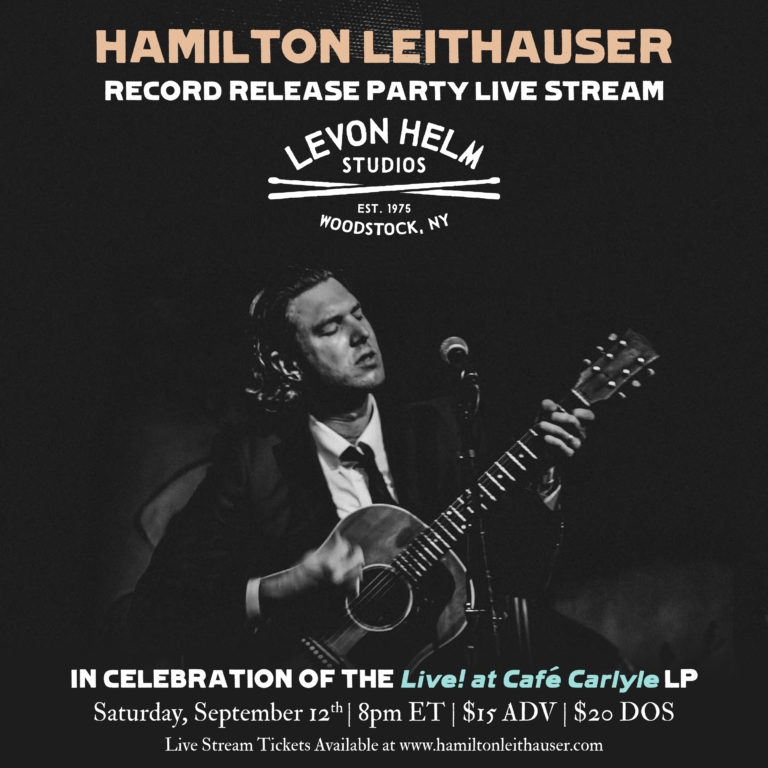
Hamilton Leithauser announced his record release party will be held on a virtual platform for his upcoming record, Live! at Café Carlyle LP. The record release party is taking place on September 12, at 8PM EST.
Hamilton Leithauser is an american singer-songwriter best known for being the lead vocalist of the American indie rock band The Walkmen. He is also widely known for his solo work like “A 1000 Times” and “Here They Come” His newest record, Live! at Café Carlyle LP, was recorded at New York City’s landmark Café Carlyle in January 2020. The Café Carlyle is known for being a luxurious, mural-lined cabaret venue at the Carlyle Hotel. It’s a high end establishment with a dress code and is known for having many celebrity appearances and originally opened in 1955.
The record release party will be broadcasted from Levon Helm Studios in Woodstock, NY where Hamilton Leithauser will be performing the album. Levon Helm Studios was established in 1975 and is famously known as an american studio and venue founded by Levon Helm who is widely known as the drummer and one of the vocalists in The Band who played Woodstock back in 1969. Tickets to the record release show can be bought here are available now and are $15 now and $20 on the day of the show.
For more information visit Hamilton Leithauser’s website.
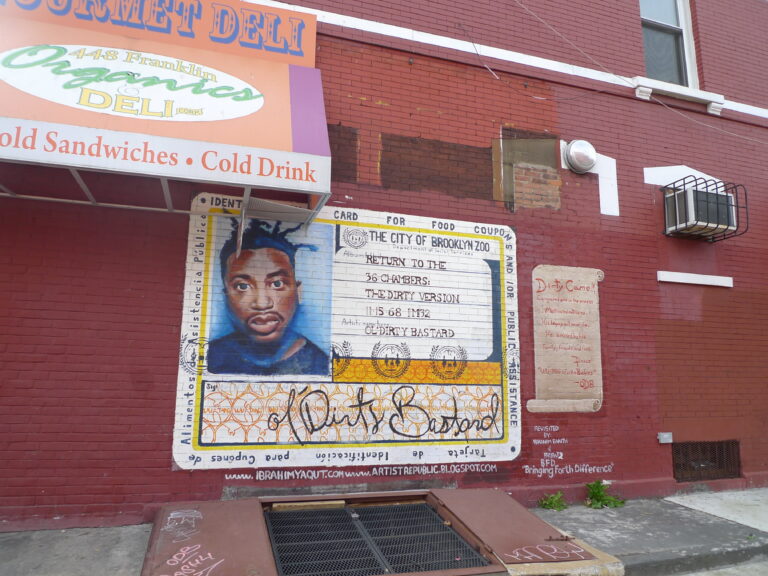
They say you never know how good something is until you try it, who knew that peanut butter and jelly would set the world ablaze? Sometimes, pairing opposites makes for a grand result. This was the case when pop star –Mariah Carey — remixed her hit record “Fantasy,” featuring the most erratic member of the Wu Tang Clan, ODB.
Also known as Ol’ Dirty Bastard — “because there ain’t no father to his style” — is recognized as one of the most raw, unorthodox, unpredictable and authentic personalities to ever grace hip hop. As such, he was an unusual pick to feature on Mariah Carey’s chart-topping single. Known for his free nature and wild behavior, the mixture of his tainted public image alongside Mariah Carey’s pristine image made for a head scratcher to many.
The late Ol’ Dirty Bastard has had his fair share of discrepancies
The original record was the lead single off her Mariah’s fifth studio album, 1995’s Daydream, written by Carey and Dave Hall and produced by Bad Boy Records.
Known primarily as a pop star, Mariah Carey wanted to make a splash in the hip-hop scene and personally requested to have ODB on the remix. In an interview with Genius, hip hop journalist, Rob Markman, praised her for making collaborations with hip hop artists popular, as she went on to explain why she was so intent on having Wu Tang’s bad boy on the record. Divulging that since she grew up in New York, she listened to the same music as everybody else, and since hip hop was major in New York, she loved it and wanted to incorporate some of their production in her music. Her fandom of the late rapper was the reason behind her request, despite the disapproval of label executives.
Sweet, sweet fantasy baby
In a 2016 Billboard feature, the backstory on how the record came together was revealed. Corey Rooney (A&R for the track), said he reached out to ODB, who wanted $15,000 to rap on the record and since it wouldn’t have put a dent in Mariah Carey’s budget, it was fine with him.
On the day of the recording, ODB showed up three hours late, drunk, and on the phone, arguing with his girlfriend. After the commotion, he asked for some Moet and a box of Newports before recording, to which Rooney responded that they were already behind schedule, which resulted in him accusing the assistants of being “white devils who don’t want to let black people have anything.” He ended up throwing a bottle of Heineken in disgust when it was all the crew could find.
The “Shimmy Shimmy Ya” rapper proved to live up to his reputation of being difficult to work with by only rapping one line at a time and napping in between lyrics. Eventually they were able to complete the verse but, had to pay him another $15,000 to appear in the video.
Gone but never forgotten
The remix differs slightly from the original, as it sampled Tom Tom Club’s 1981 record “Genius of Love” (per Mariah Carey’s request, as it was one of her favorite songs growing up), as well as, Dirty’s “Baby C’mon” and “Goin’ Down.”
The record made Mariah Carey he first female artist in history to have a record debut at the top of the Billboard 100, spending eight consecutive weeks at number 1. The cover for the single was done by photographer Steven Meisel and Mariah Carey made her directorial debut as she created the video concept and picked the location.
Carey and Dave Hall wrote the song about a woman who was in love with a man and every time she saw that man, she started having fantasies about him and a potential relationship that was impossible. ODB’s verse was nothing to write home about, as it was a drunken freestyle.
Oh, when you walk by every night
Talkin’ sweet and lookin’ fine
I get kinda hectic inside
Mmm, baby, I’m so into you
Darlin’, if you only knew
All the things that flow through my mind
Mariah set the mood with her opening verse singing about how the man walks through her mind and how she perceives him talking sweet to her. ODB’s verse was all over the place but his melodic flow carried him throughout the record.
Me and Mariah
Go back like babies with pacifiers (That’s right)
Old Dirt Dog’s no liar
Keep your fantasy hot like fire
Jump, jump, let me see you do the stump
Girls, let me see you shake your rump
Brothers, hit it from the back and front
And let’s do it, do it, do it, uh-huh
I’m a little bit of Country
I’m a little bit of Rock and Roll
And I’m soul to soul
Big letters, all big and bold
Old Dirty Bastard across the globe
While not that long, the verse was still impactful, as his raw and unorthodox rap style gave it the extra credibility it needed to appeal to hard-core hip-hop fans.
The influence of “Fantasy” has had a long-lasting effect. It introduced R&B to hip-hop — and with Mariah Carey’s status as a pop superstar — helped grow the genre. Yet, for many, the song will always be remembered for Ol’ Dirty Bastard’s iconic feature. Not because of the quality of his verse, but because his mere presence and his unapologetic way of living was a representation of everything hip hop was about and he didn’t change for anyone.
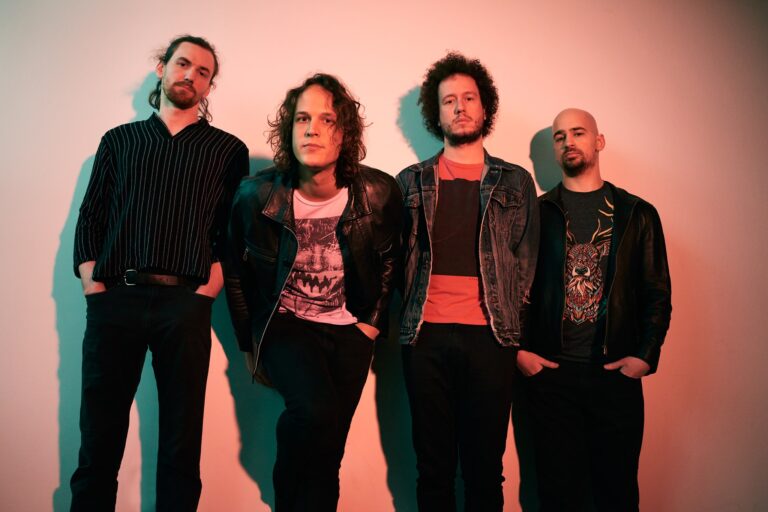
In a year where things can’t seem to get any worse, Added Color provides a rare hopeful vision. The Brazilian-American Brooklyn rock band returns with their new song “Something Better,” the lead single for their upcoming November EP, If You Had It All.
“Something Better” impressively tackles a myriad of problems plaguing Western culture without skimping on any of them. Using topical slogans like “resist” and “I can’t breathe,” it sounds like a socially conscious mosh pit. The accompanying lyric video complements the song with a staticky aesthetic, depicting this year’s protests, inedible fast food, and corrupt politicians. But despite including the likes of Donald Trump and Brazil’s Jair Bolsonaro, Added Color believes these presidents merely personify deep-rooted societal issues:
We feel that the greed, corruption, and cruelty that is embodied by world leaders such as Trump and Bolsonaro is a symptom of something that’s been decaying for quite a while now. A lot of people are depressed; a depressing amount of people are addicted to drugs. Police brutality is a massive issue—it seems we hear a new heart-wrenching tale of senseless loss of life on a daily basis. Access to decent healthcare is a nightmare for millions of people in what is supposed to be the richest country in the world. Fast food franchises reign supreme; it’s a challenge to eat decently in a lot of places.
It all amounts to a huge macro need for Something Better. The capitalization is not just because it’s the name of a song. It’s an idea for another world: one that we all deserve, and one that we can create together.” Of course, the song’s bridge decides that “Something Better starts with you.
“Something Better” precedes Added Color’s November EP, If You Had It All. The band is releasing the EP through Damp Interactive, in partnership with global distributor Symphonic Distribution. Recorded and produced by Johann Meyer (Gojira, Mastodon, Shinedown) and Jamie Uertz (Blind Melon) in Brooklyn, guitarist and vocalist Kiko Freiberg says If You Had It All is “darker, more political, and more powerful” than past projects. Drummer and singer Daniel Freiberg elaborates:
“The EP attacks the ‘free world’ as a society designed for failure, where corporations and government work hand in hand to thrive off the backs of the oppressed. Unfortunately, it took a pandemic to make the world pay attention to the societal diseases that plague our revered ‘Western Society.’ It’s time to make a change.”
Added Color has played in over 25 states as well as internationally. They’ve toured in Morocco five times, including at the 2019 L’Boulevard Festival, and played at some of Brazil’s biggest music festivals. Since the pandemic has stopped them from touring, they’ve instead planned live performances online. Every Tuesday at 3:00 P.M. ET, the band streams their “Chevy Expressions” series on Instagram Live.
https://www.instagram.com/p/CESO8ZHDjns/
Stream “Something Better” here, and visit Added Color’s website for more information.
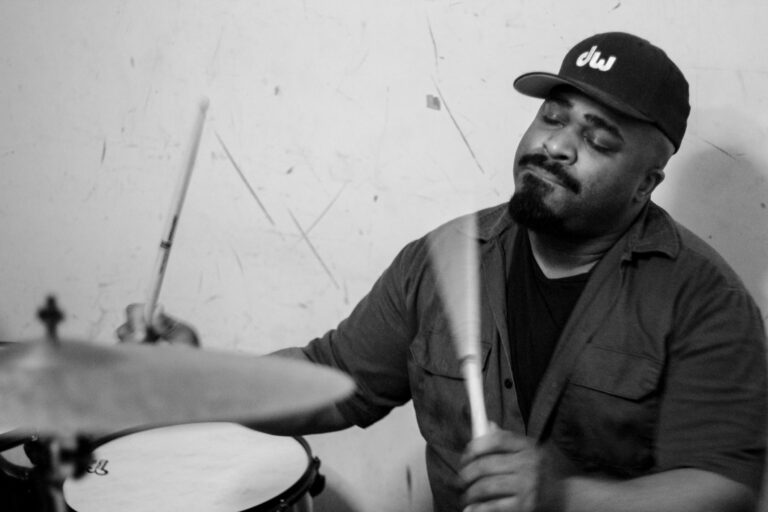
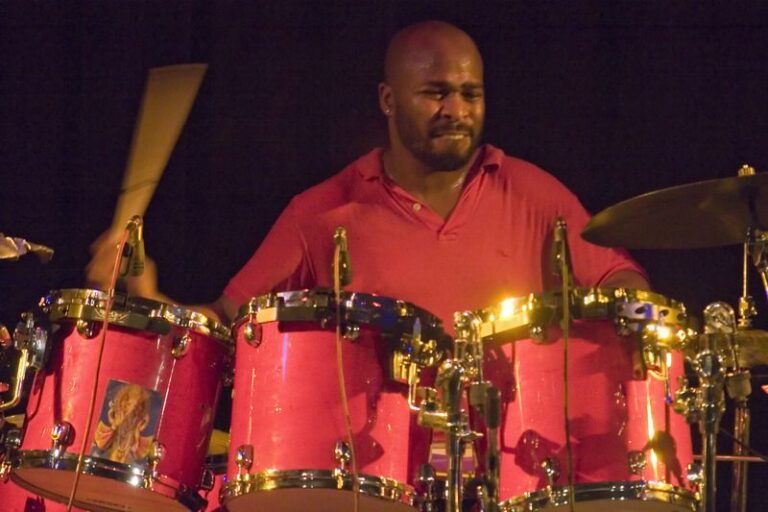
Throughout the summer, protests surrounding the shootings of unarmed Black Americans led to calls for police reform, with success that can already be seen across the country and world. Black Lives Matter has changed the national dialogue on race and brought it out of the shadows. There is one musician who has been using his improvisation skills to bring to light those who have been killed or injured at the hands of the police – Donald Sturge Anthony McKenzie II.
McKenzie is a prolific improvisational drummer with a fierce discipline and connections to the late ’80s hip hop scene in Brooklyn. Learning from Everett Collins (Isley Brothers) and world-renowned drumming teacher, Dom Famularo, McKenzie has developed a firm basis in theory and has evolved thanks to his discipline behind the kit. Having traveled the world performing, McKenzie has toured and recorded with instrumentalist Elliott Sharp, guitarist Marc Ribot, and Grammy nominated jazz composer Roswell Rudd, among others, and backed hip hop and R&B artists including Pharoahe Monch, P.Diddy, Grave Diggaz, New Kingdom, to name a few. McKenzie also serves as musical director for Kat DeLuna, and teaches master classes at the Brooklyn Music School.
Best known for Silenced and Silenced II, two extremely powerful albums with tracks named after a POC who lost their lives due to police brutality, McKenzie is wrapping up Silenced III, a double album to be released in late 2020.
McKenzie spoke with NYS Music about Black Lives Matter and his Silenced albums, playing with Nels Cline, how Vernon Reid has helped him along in his career, and the next chapter for the compelling improvisational drummer.
Upon first glance at Silenced, the track names stand out, each being a Black American who were victims of police violence, many lesser known names. The tracks themselves are entirely (99.5% as estimated by McKenzie) first takes and unedited version. While smaller parts may need to be cleaned up, the goal was to have it completely unedited and completely improvisational. McKenzie shared his insight into these two unique factors:
If one person can be drawn to my music, my art, for music’s sake, the musicality of my work, and they see a song title – if one person goes to Google and researches their name, I think I’ve done a service to the world. A lot of people are not as aware of the injustices and the every day trauma of living in America in Black skin.
It’s a way to move a person closer to acknowledgement of certain people’s humanity. Not 100% of name titles are people that have been killed by police, some are people who were killed in tragic circumstances.
McKenzie wants people to research these individuals – he does not seek to tell people to do this, or to be shamed or browbeaten into researching someone. Giving these names to song titles allows, in this words, for “the art to travel while he sleeps.”
If it leads to someone saying “Who is Malissa Williams?,” then it is a service to the world and the people as well. Let’s say my album is being played in Ukraine – everybody has their own strife and troubles and drama – they could be listening to this and wondering, ‘Who are these people?’ I wanted people’s names to resonate on a global scale, as far as my art can take it.
https://www.youtube.com/watch?v=gCeAOg2iyYI
Linking up with Wilco’s Nels Cline would lead to the high-powered “Sandra Bland,” the first track off Silenced. The pair did not discuss what they would play, nor did they run down or plan it out – the track is fully improvised, purely organic and in the moment. You can hear the first to the last note they played together on “Sandra Bland.” And they’ve played together since, with Sean Lennon and Captain Kirk (The Roots), but the first notes from McKenzie and Cline are on Silenced.
The first time I met Nels Cline I was on a trio gig with Elliot Sharp and Melvin Gibbs, and Nels was on the same bill and I just loved his sound and his playing. While I was recording these albums, I wondered if I could get him on this. I was walking by the music store Main Drag, in Williamsburg, Brooklyn, and just by chance he just happened to be walking out and I was like, ‘Nels, what’s up?’ and we made arrangements to play and he was the first one that recorded on this album.”
Once he cut “Sandra Bland” with Cline, McKenzie sent an unmixed version to Living Colour guitarist Vernon Reid, who, according to McKenzie, “went crazy,” and expressed interest in being on a track, which would later be titled “Eric Garner.” It turns out McKenzie and Reid have a long history going back to Living Colour’s rise to prominence in 1988 with the release of “Cult of Personality,” and the two would link up to perform in Reid’s Masque.
I think that improvisation (with Cline) set a high bar, and while some musicians might have been scared off from the studio concept, and some are competitive (especially guitar players) Reid loved the challenge and having played together since 1995, we have a great musical relationship. It was superb.
I met Vernon around 1988-90 when I was 17. Living Colour had a special place in young Black musicians’ hearts, esp those who were playing instruments. Most people were pure hip-hop heads, into the drum machine, and that’s great too, but as a drummer and those who were guitar players (Eddie Reyes – Taking Back Sunday) – we’d all go in the house and play Living Colour covers, Slayer and Metallica covers, all in my parents garage. Vernon was an idol of mine. The video for “Cult of Personality” changed a lot of people’s trajectory in life; that was a big deal for me.
I was playing (drums) in the rap group New Kingdom and I was at the record label, on top of Tower Records at 4th and Broadway. In that building was Island Records and I used to hang out the label, drink the water, absorb the whole thing of being in the music business. There was a release party for a Gravediggaz album that I was on and Vernon came to pick up his invite. He gave me a copy of his first solo CD with Masque. I was so impressed I went home and practiced it; I was just so impressed that he would semi-remember me from stalking him as a teenager.
Long story short, something happened with his (Masque) drummer, a friend of mine, Curtis Watts, and Vernon asked me to step in and I showed up at rehearsal, I was over-rehearsed – I knew every song, every inflection.
From connecting in 1995, to recording with Masque, Reid would use McKenzie in many of his projects, with the Yohimbe Brothers and DJ Logic, the third Masque album, live performances, improv, and soundtrack work. McKenzie notes the depth of the connection: “Vernon is just my guy, Vernon is like a musical father to me.”
McKenzie’s collaborations started when he was 16 and recorded a demo for TBT records with the band Three Feet Deep. And while the band was not signed, listening back recently, McKenzie notes, “It’s still happening.” The next group he performed with, Gravediggaz, would lead to broader connections.
I used to be at the recording studio hanging out with Wu Tang Clan – this was Firehouse Recording Studios – and I went to the same high school as De La Soul in Amityville – they knew I was eager and into my music, so they always wanted me around, so that was a big deal.
This connection at age 16 would allow McKenzie to hang out with rising artist A Tribe Called Quest, who he has memories of going to a Hampton’s homecoming game with on the bus, alongside De La Soul, Tribe, Hieroglyphics, and road manager Chris Lighty (Violator).
I started out playing more straight material – less improvisational music – but as I’ve developed and gone on in my career and life, I’ve realized that more of a Cecil Taylor improvisational path is better for me, as opposed to recording in sections. I love playing in the moment, and in an improvisational setting. That’s where I’ve seen my individuality and creativity coming to life. That’s where my head is right now and I want to just move forward and push forward with that.
Two years sinceSilenced II, a new project is in the works – a double album – inspired in part by the Black Lives Matter movement and protests this summer.
I’m working on a double album right now. I don’t want to be the guy to milk this cow. I made a statement, and the statement is relevant today. I think that capitalism under this American imperialism and colonialism, it will still say relevant. We seem to try to disconnect ourselves from the violence and oppression overseas and the violence of the military and violence of the police; it’s just different GPS points. I made a statement and it’s relevant, but it would be suppressive and anti-creative to keep doing the same thing.
When I made that statement with Silenced and Silenced II, I had no idea that the situation in America would come closer and bring people closer to what I was saying years ago. But that’s what’s happened. It’s been three years since I got in the studio and played these tunes. I have more work than play but I don’t want to tip my hat, a good way to maybe give you an inkling, yes it will be a majority improvisational, which is I think a really strong way to express myself at this point in my life, and it will be a double album and really like an audio Jackson Pollak.
With two young children, McKenzie has been focusing on parenting during the pandemic, doing his best to mitigate the damage of sudden isolation from school and peers.
I’ve been able to use the studio and just be here for days on end and just practice and practice and listen to music and a lot of great drummers. I get inspiration from visual things so I look at different artists and get different sounds from different art. Someone said they hadn’t ever heard birds chirping in Brooklyn, because there were no cars, and no one was out, and that has been a source of inspiration.
Overall, McKenzie has been spending time with his children who have been the focus of his attention as he moves forward in a positive way for everyone’s benefit.
He’s also been in the studio, using French band Gojira‘s studio space since they are out of town and admire what he does. “Stuff like that would never happen if the lock down didnt happen, the studio would be full up,” said McKenzie. They love what McKenzie is doing and offered up the studio for him. His next studio offering drops this fall.
This fall, Saratoga’s Caffe Lena is expanding its music school. First announced back in January, the Caffe Lena School of Music has proven so popular it’s offering even more classes for children and adults alike.
Photo from Caffè Lena’s website.
“With people cooped up and needing a positive outlet, especially school kids, the timing turned out to be unexpectedly good,” said Caffè Lena School of Music Coordinator, Vivian Nesbitt.
Saratoga musicians Oona Grady and James Gascoyne will continue overseeing the children’s program, with fall classes beginning on September 15. Courses include beginner and intermediate fiddle, ukulele, and guitar, as well as Irish tin whistle and fiddle tunes. If students qualify for free or reduced school lunch, the school offers full scholarships for their lessons and instruments.
Each class consists of 10 weekly 40 lessons over Zoom in groups of four. Despite the distance, Caffè Lena seeks to uphold the tradition of teaching and learning folk music as a group. Parents have praised the program, calling it “a stellar service” that inspires “motivation to keep the creative spark alight.”
“This is how people entertained themselves before radio and television turned us into music listeners instead of music makers,” said Nesbitt. “It fills our hearts to make music together, even if it has to be online for now.”
Adult classes are 4 weekly lessons of 90 minutes each, also via Zoom. Two-time Grammy winners Cathy Fink and Marcy Marxer have joined the faculty, teaching beginner clawhammer and guitar. Other adult classes include songwriting and accompaniment with Dan Navarro, blues guitar with Guy Davis, and clawhammer banjo and old-time fiddle with Bruce Molsky. Caffè Lena’s website has suggested experience levels for some courses.
https://www.instagram.com/p/CDl79mnpImi/
“We believe in the power of music to get us through the hard times,” continued Nesbitt. “Zoom is not what we had in mind when we launched the School of Music, but it won’t be long before these students are on stage in front of a live audience. Our dream is that the next generation of folk musicians will be born out of this crisis.”
Thanks to its increased online presence, the legendary folk venue is still going strong despite restricted operations. In addition to its burgeoning music school, the cafe has been offering a near-nightly “Stay Home Sessions” streaming series on YouTube. The full calendar of Caffè Lena events is available on their website.