Saturday Night Live returned on December fifth after a few well deserved weeks off. The 46th season began with six consecutive shows, an SNL first, with the return episode featuring host Jason Bateman and musical guest Morgan Wallen.
Morgan Wallen, Jason Bateman and Heidi Gardner
Wallen had originally planned to be the musical guest for the October 10th episide, but after he was seen partying with fans in Tuscaloosa, AL the week before, and as a result his performance was canceled. The country singer thus missed out on his SNL debut out of an abundance of caution in COVID-19 pandemic.
Replacing Wallen was Jack White, who paid tribute to Eddie Van Halen that night.
Before taking the Studio 8H stage, Wallen appeared in a sketch poking fun at his going out to bars and hanging with fans. Future versions of himself – each from one month farther into the future – appeared to warn him of the consequences of that night.
The first song of the night from Wallen was “7 Summers,” a ballad written with Josh Osborne and Shane McAnally from Wallen’s upcoming album Dangerous: The Double Album, due out January 8, 2021. Wallen’s band featured Luke “Cowboy” Rice, Mark “Taco” Annino, Dominic Frost and Tyler Tomlinson who performed under broad lighting in the shape of an M,
https://www.youtube.com/watch?v=PLhRaSP-DJs
With the M display now resembling Christmas trees, Wallen returned later in the night with “Still Goin’ Down,” also off the upcoming Dangerous: The Double Album.
https://www.youtube.com/watch?v=khCbT8AGveI&
One sketch spoofed Eminem’s “Stan” and even got the rap icon to appear in a cameo. Staten Island’s Pete Davidson appeared as the Stan character, Stu, writing letter after letter to Santa, asking for a PlayStation 5. The Christmas-spin on “Stan” follows Stu down an obsessive path in search of a response from Santa. At the end, Eminem opens Stu’s gift, saying “That’s crazy, a PS5? I didn’t even ask for this. I guess Shady must’ve been a good boy this year. Sorry, Stu. You fucked up.”
Saturday Night Live returns on December 12 with host Timothée Chalamet and musical guest Bruce Springsteen and the E Street Band.
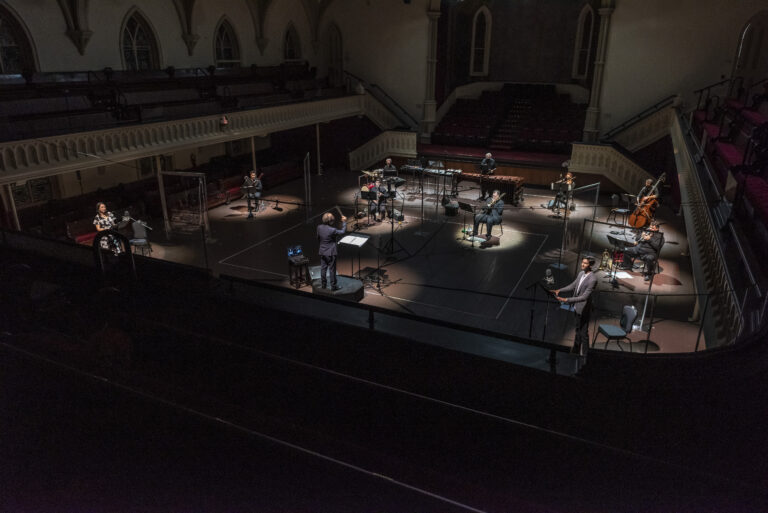
The Albany Symphony announced that their world premier recording of Christopher Theofanidis‘ Concerto for Viola and Chamber Orchestra has been nominated for a Grammy Award in the Best Classical Instrumental Solo category. The Concerto was recorded on January 8, 2018 at the Troy Savings Bank Music Hall and released by Albany Records. This is the fifth Grammy Nomination in seven years for the Albany Symphony.
“We are thrilled to receive this nomination, which brings attention to Christopher Theofanidis’ magnificent concerto, inspired by Navajo poetry,” said Music Director David Alan Miller. “It’s not every day that a viola concerto gets recognized, but this is arguably the finest concerto for the instrument written in many years. We are so grateful to Richard O’Neill, our astounding viola soloist, and to Silas Brown, our extraordinary producer and engineer. I deeply appreciate the work of our brilliant Albany Symphony musicians. Thanks also to our staff, board and friends at Albany Records, and to all our supporters.”
Composer Christopher Theofanidis also expressed his appreciation. “I was so delighted to receive the news. Richard put so much of himself into the performances and recording of the concerto, and David Alan Miller and the Albany Symphony’s commitment to excellence doing new work shines through in this announcement. It is an honor to have the piece nominated,” he said.
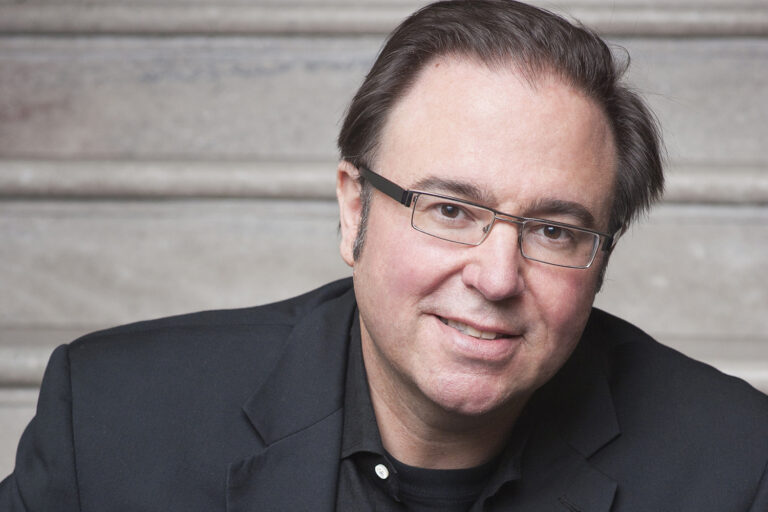
Portrait of Christopher Theofanidis
The Concerto for Viola and Chamber Orchestra was originally written for Kim Kashkashian who sent Theofanidis a collection of Navajo poems that were wildly different in character but had in common a supernatural sense of nature and an extremely evocative vocabulary. Each of the four movements is serious in sentiment, in turns foreboding and volatile, melancholic and questioning, lyrical and dramatic. Theofanidis wrote this work during the tragedy and turmoil of 9/11, starting the piece before and finishing it afterward, and was influenced by being in midtown Manhattan that day.
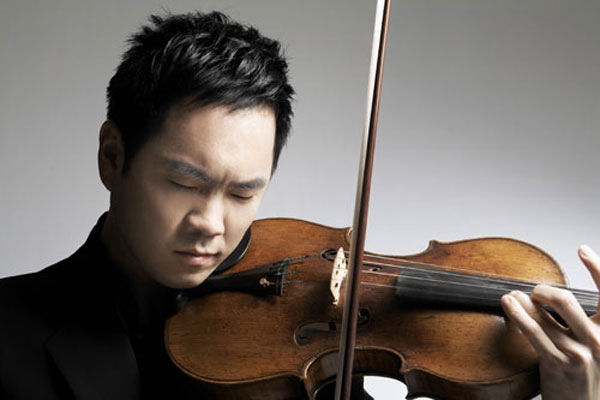
Viola soloist Richard O’Neill said, “In this dark time for musicians the world over, to receive this nomination for Chris’ moving and important work brought me to tears. David’s vision and unstoppable energy, the beautiful musicians of the Albany Symphony, and the great work of Silas Brown; these forces came together to create a dream team the envy of any musician. I am so incredibly lucky to have such friends and colleagues. In the absence of live performance throughout the US, I hope this recording can give comfort and joy to all that listen.”
The Albany Symphony recording of John Corigliano’s Conjurer with world-famous percussionist Dame Evelyn Glennie won the 2013 GRAMMY for Best Classical Instrumental Solo. The Albany Symphony was then nominated in 2015 and twice in 2019.
Hanukkah is right around the corner and folk-rock Rabbi Gedalya has released “The Lesson of the Flame,” a musical reflection on the need for positive spirituality during difficult situations.
With a spiritual message that is universal, “The Lesson of the Flame” reflects Gedalya’s faith. “Finding ways to get through hardship is central to religion,” says Gedalya, “and I wanted this song to reflect the powerful combination of faith and positivity.”
It’s my first time writing a holiday song, or even writing a song directly about Judaism, for that matter. Even though I wrote the song with the holiday season in mind, it’s about more than just the annual celebration. I wanted to convey the power in continuity and history. This Hanukkah, many of us are experiencing a year of tragedies, but by learning from tradition and remaining faithful we can find better times. I tried to reflect that in ‘The Lesson of the Flame.’
Gedalya
The roots of ‘the flame’ in this case connects to the lighting of the Hanukkah menorah, and the lesson that comes from the eight-day holiday. Jewish men fought against the Greeks around 165 BCE, thus preserving their belief in the Torah. This self-sacrifice merited a miracle which revealed to them divine assistance; thus future generations now have this lesson to remember that even in the darkest of times, we are all capable of receiving divine assistance, especially when putting in effort to see through lies and seek the truth.
The song speaks directly to the power of positivity, especially during times of tribulation.
Finding yourself can be a challenge, especially when times are difficult. This year especially I have seen so many struggle with what is happening in the world. I wanted to make sure they heard a positive message for the holiday, but also I wanted anyone that hears the song to feel – deep down – that their situation can also get better. Now is the time to look inward to find the strength to make it to those better times.
Gedalya
The message of the song is not inherent to a particular faith, but rather speaks to a state of being. Framing ones mind that allows light to enter the darkness and appreciate the blessings of life.
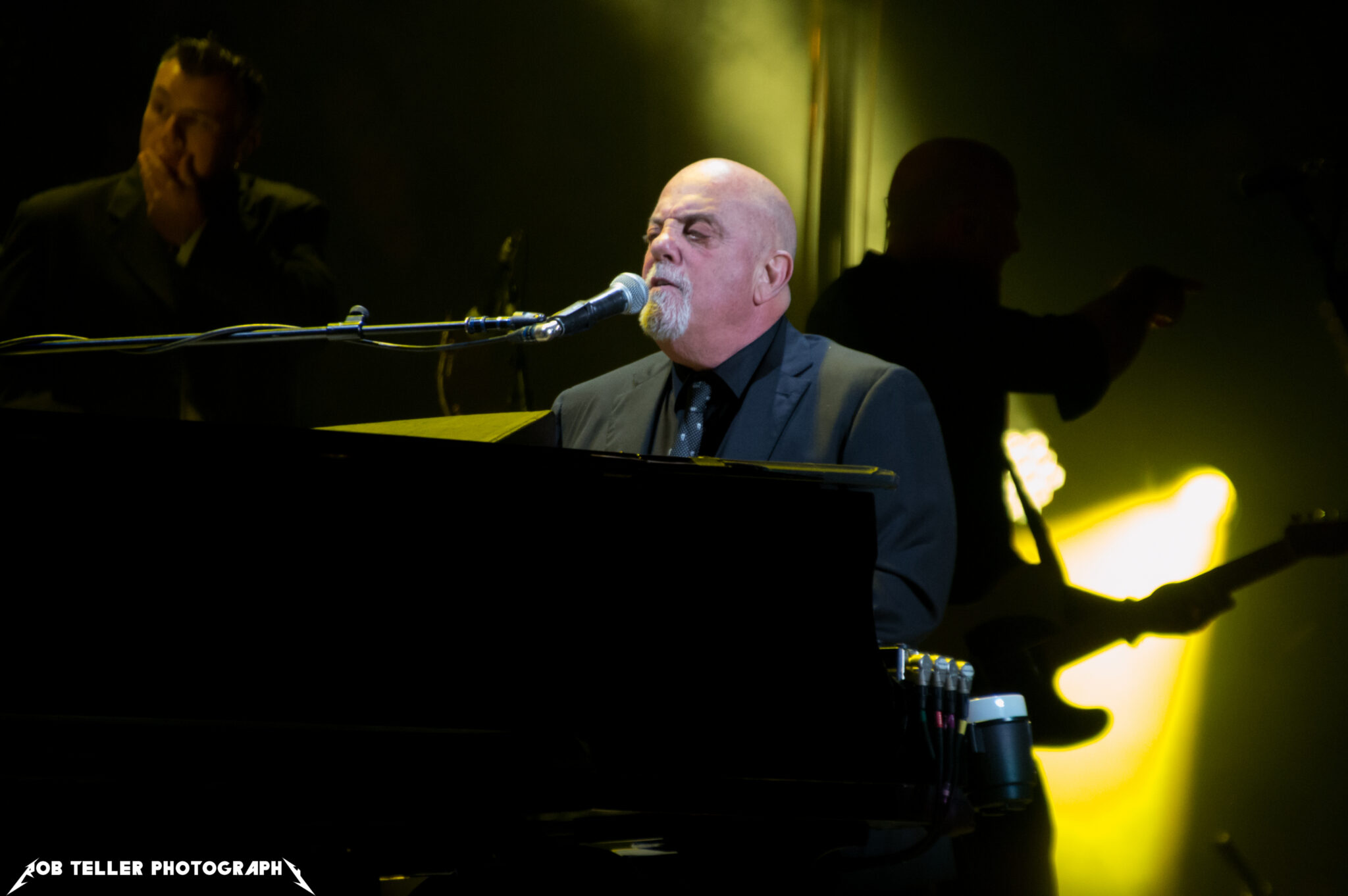
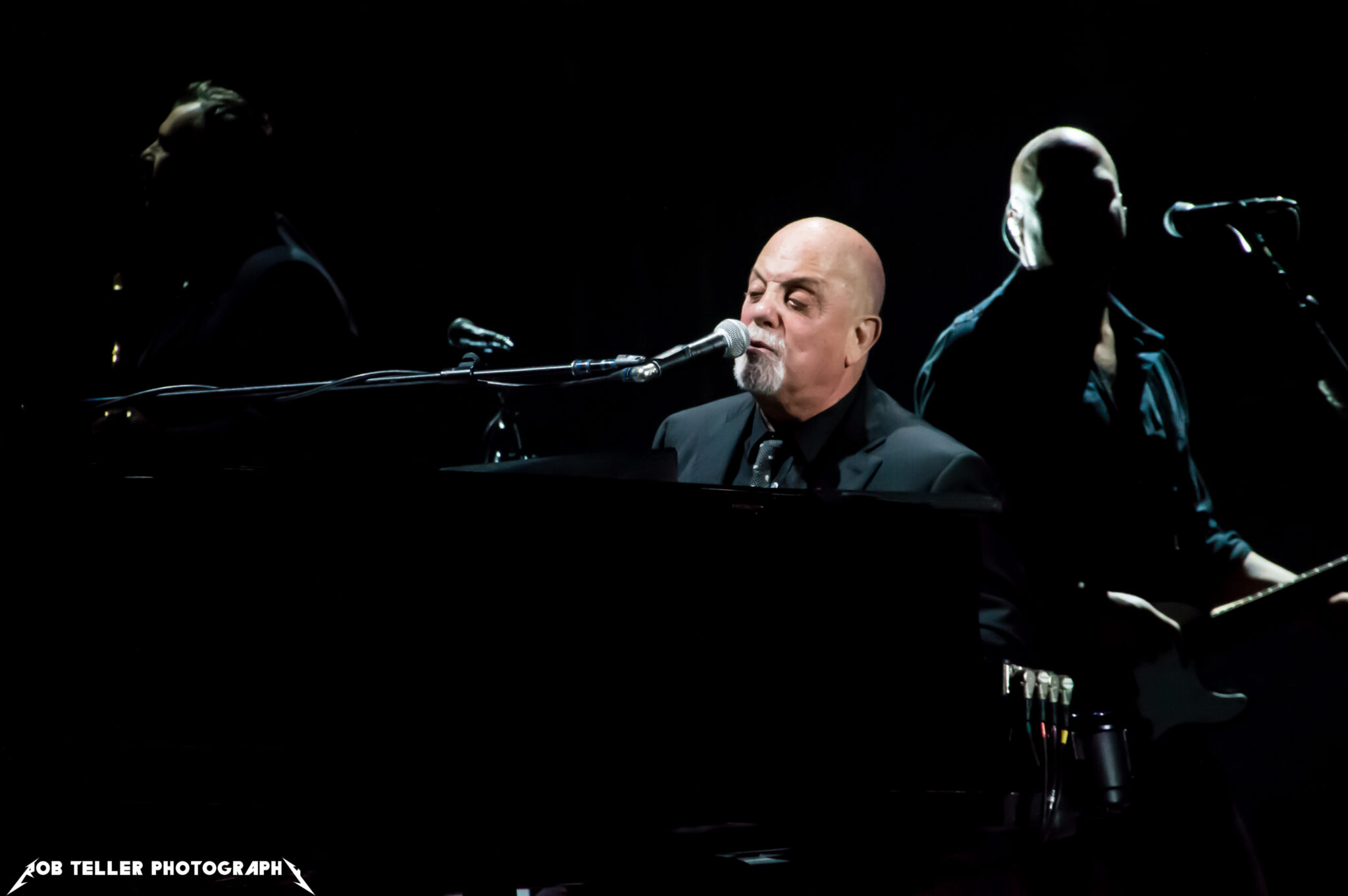
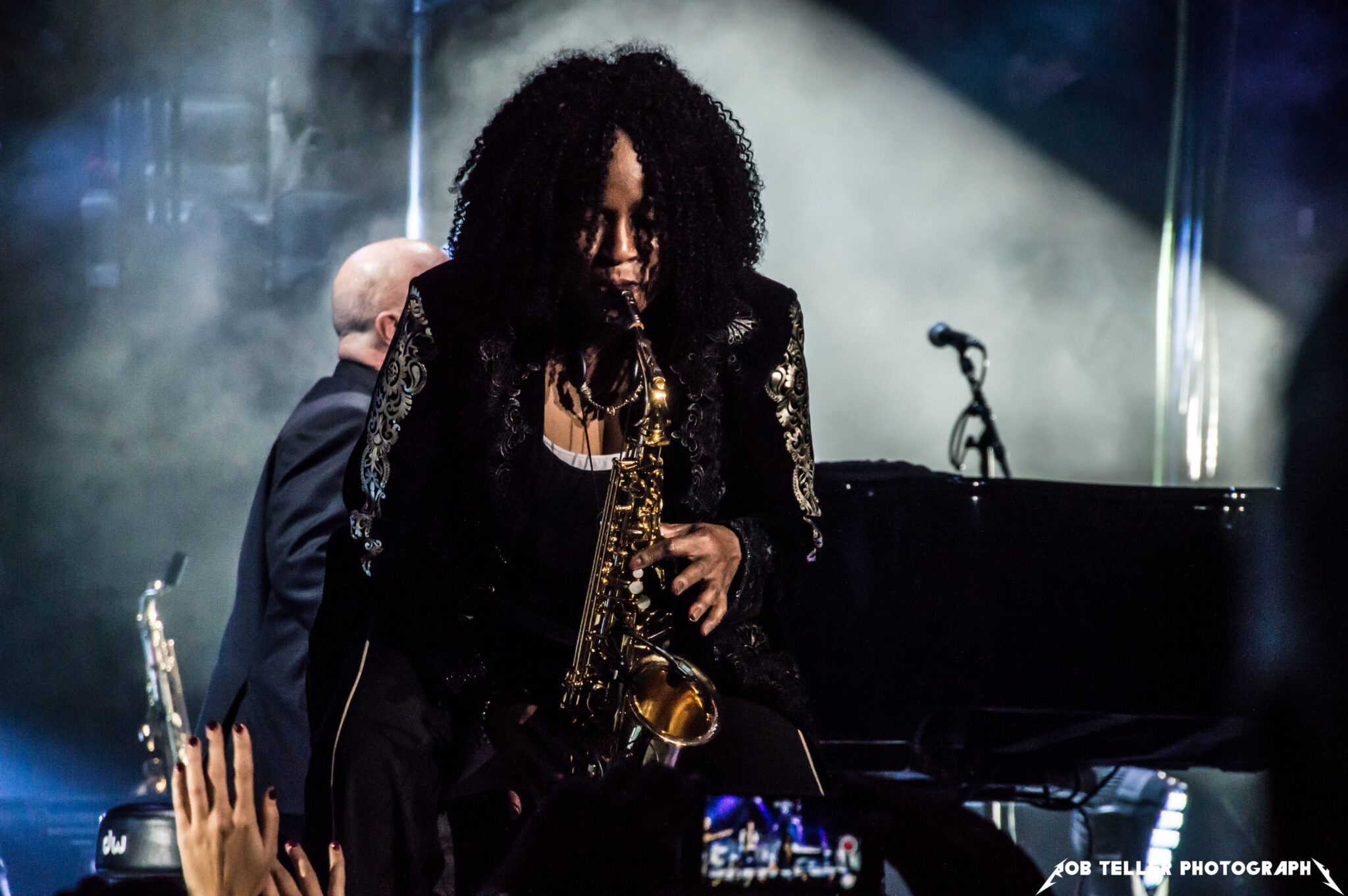
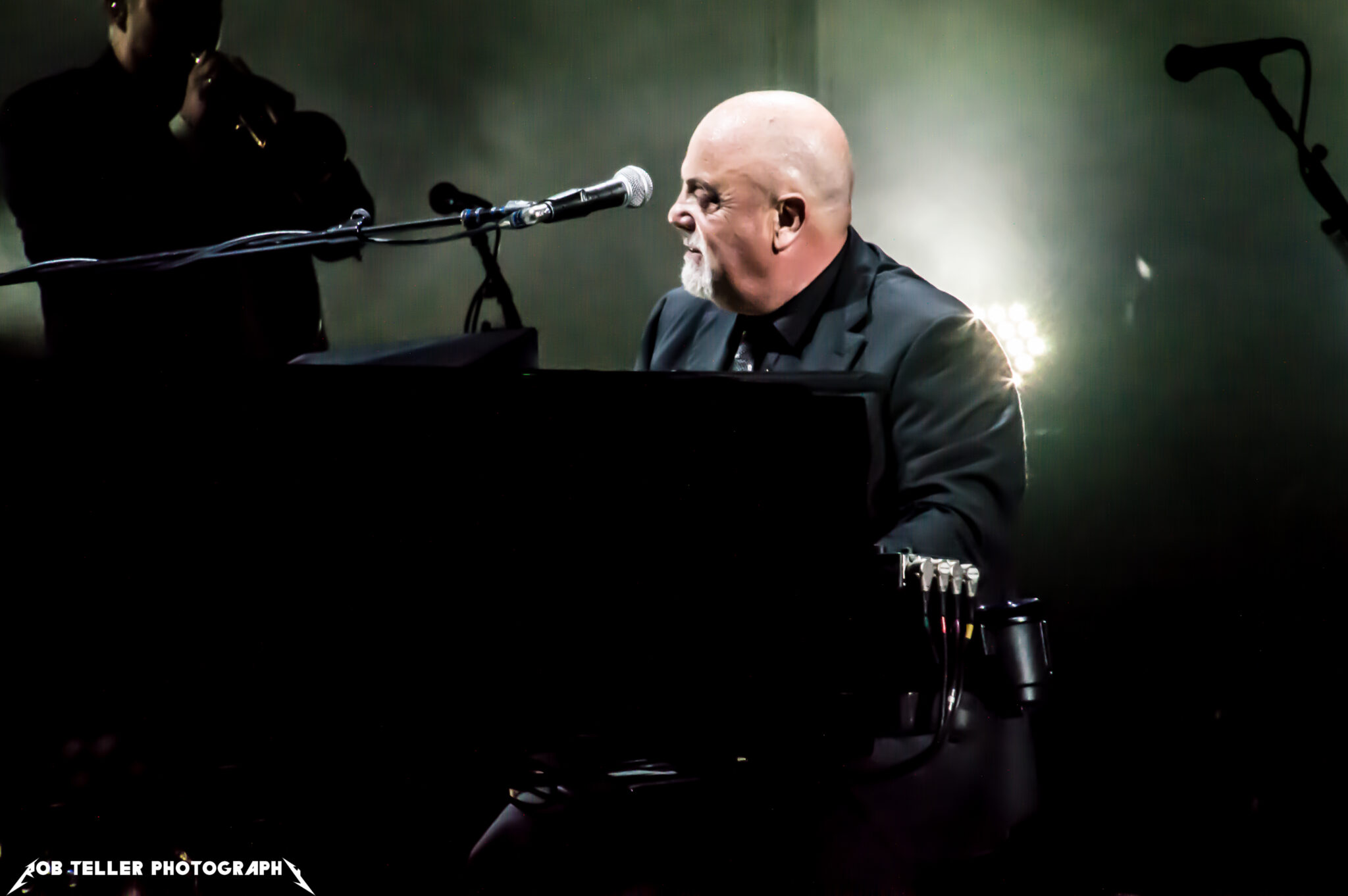
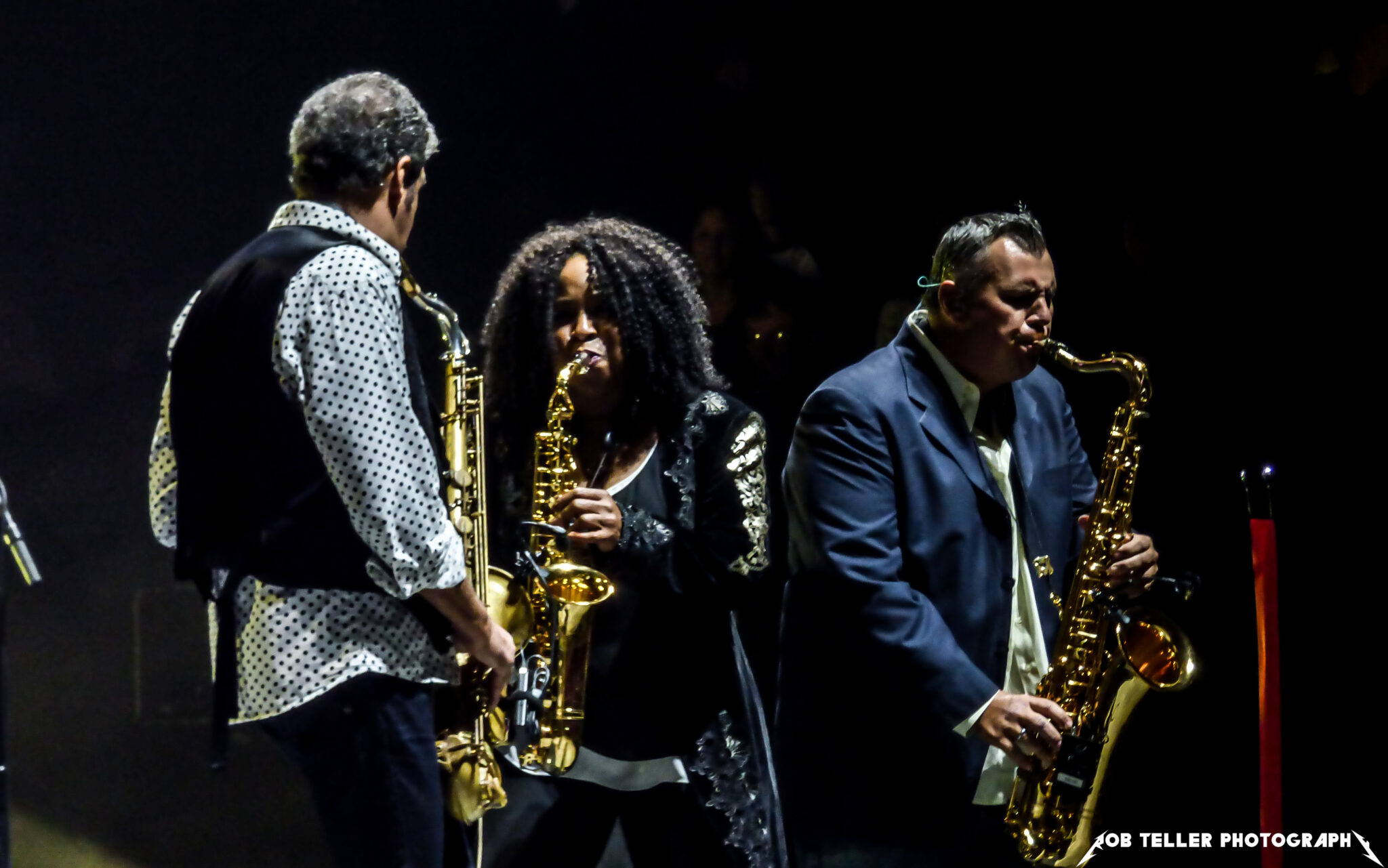
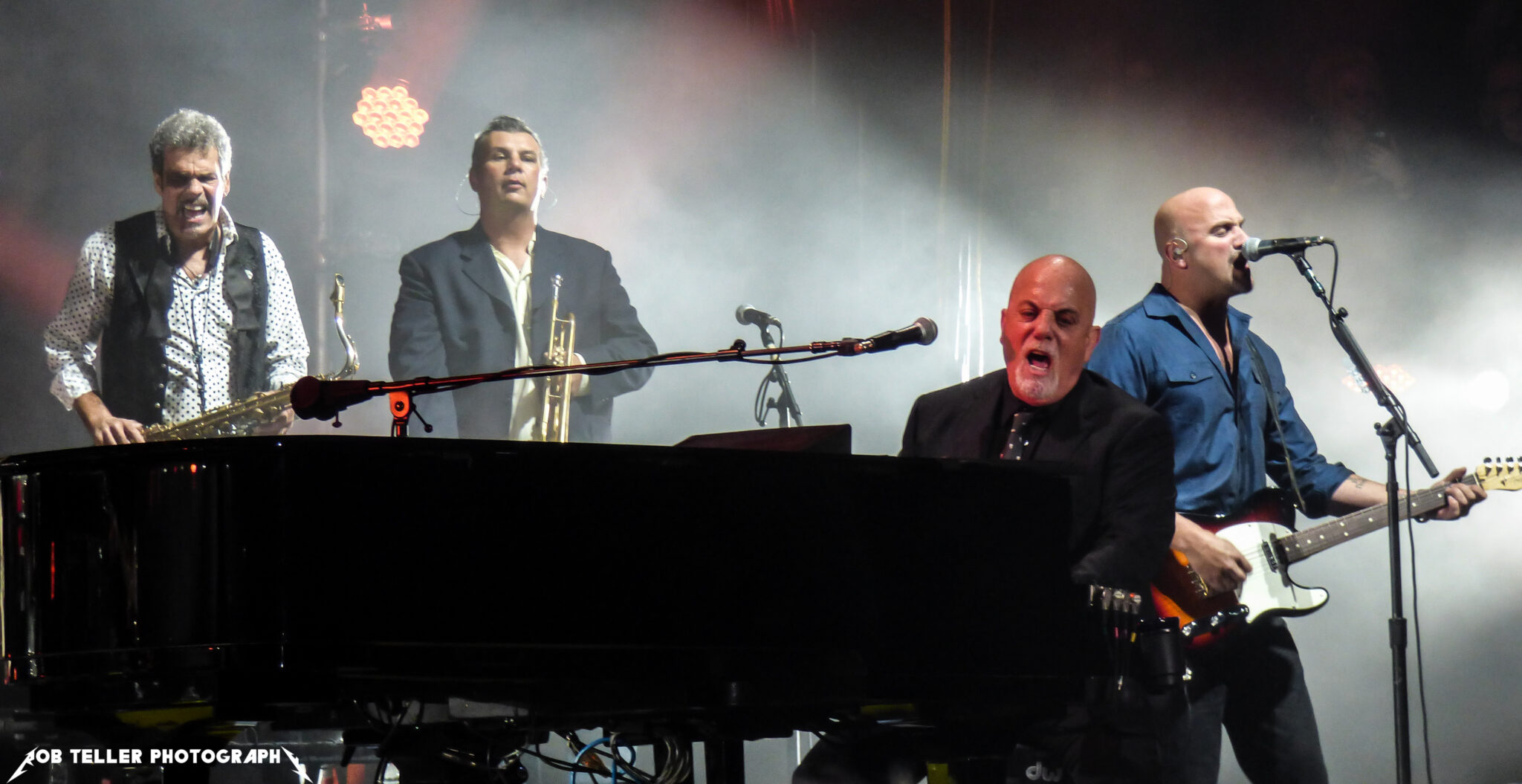
On November 30, 2016, Billy Joel extended his MSG residency continued with his 35th consecutive show at the World’s Most Famous Arena. His first monthly show at the Garden was on January 27, 2014. Joel committed to playing one show a month at the Garden as long as there was a demand for tickets.
Billy broke his own 2006 record for the most consecutive sold-out shows at his thirteenth performance on January 9, 2015. On July 1, 2015, he played his 65th show breaking the record for the most shows at the Garden by a single artist.
Elton John and the Grateful Dead held the record previously. His 74th consecutive MSG monthly show was scheduled for March 2020, but had to be postponed due to COVID-19. The show was initially moved to September, but has now been moved back another year till 2021.
According to a statement on Joel’s website, “Tickets for the original show dates and initial rescheduled show dates will be valid for the corresponding new rescheduled dates in 2021 and 2022.”
Setlist: Billy Joel at MSG, November 30, 2016
Miami 2017, Pressure, Movin’ Out (Anthony’s Song), Vienna, Downeaster Alexa (with Julian Rachlin), Zanzibar, Leningrad, Allentown, New York State of Mind, Root Beer Bag, The Longest Time, My Life, Don’t Ask Me Why, Sometimes a Fantasy, She’s Always a Woman, The River of Dreams, Take it Easy (Eagles Cover), Nessun Dorma, Scenes From an Italian Restaurant, Piano Man
Encore: We Didn’t Start the Fire, Uptown Girl, It’s Still Rock and Roll to Me, Big Shot, Only the Good Die Young, You May be Right
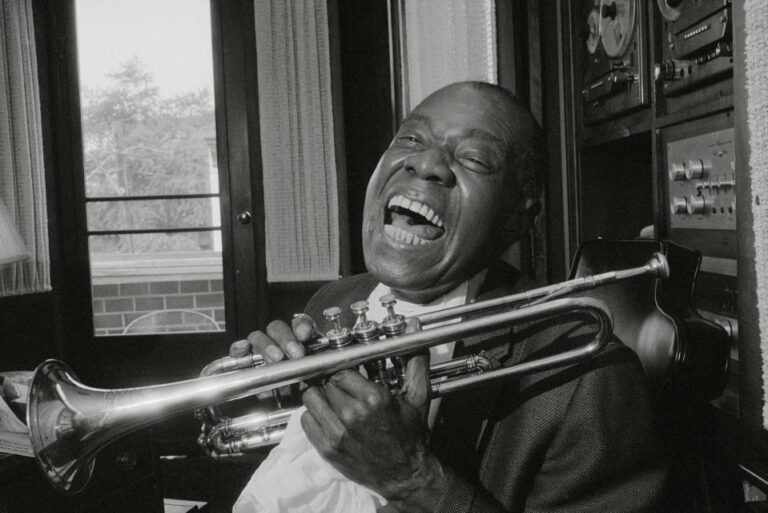
On August 4, 1901, Louis Armstrong was born in New Orleans. Until the age of five, Armstrong’s grandmother was his caregiver. At the age of six, he attended the Fisk School for Boys, an all black school in New Orleans. While performing odd jobs for the Karnoffsky family, Armstrong heard the early sounds of jazz from King Oliver.
Armstrong and the Karnoffskys bonded over their discrimination. Armstrong faced the obvious racial discrimination, but the Karnoffskys, a Jewish houselhold, also faced discrimination by “other white folks.”
In his early career, Armstrong performed on riverboats along the Mississippi River. This gave him more musical experience, particularly regarding reading music. He improved him trumpet playing, creating his own style and personality.
Chicago
In 1922, he moved to Chicago by invitation of King Oliver. Although race relations were poor, the city was flourishing and Armstrong was bale to find a job. The band, headed by Oliver, soon became one of the most influential bands in Chicago. Armstrong was able to live luxuriously in Chicago. Armstrong made his first recordings with Oliver for Gennett Records.
Louis Armstrong’s second wife, Lil Hardin Armstrong, wanted him to develop his own style apart from Oliver. Her influence eventually undermined Armstrong’s relationship with his mentor, especially concerning his salary and additional money that Oliver held back from Armstrong and other band members.
New York
Armstrong and Oliver parted ways in 1924. Soon after, Armstrong received an invitation to travel to New York and join the Fletcher Henderson Orchestra, the best African-American band at the time. Armstrong adapted to the tightly controlled style of Henderson, playing trumpet and experimenting with the trombone. The other members were affected by Armstrong’s emotional style. His act included singing and telling tales of New Orleans characters, especially preachers.
During this period, Armstrong made numerous recordings with Clarence Williams, Ma Rainey, Bessie Smith, and Alberta Hunter. Additionally, Duke Ellington‘s orchestra went to the Roseland Ballroom to catch Armstrong’s performances.
Return to Chicago
In 1925, Armstrong returned to Chicago. He joined his wife’s band, the Lil Hardin Armstrong Band, but also created the Hot Five. This group included Kid Ory, Johnny Dodds, Johnny St. Cyr, Armstrong, and Lil Armstrong. Over the next year, the group recorded twenty four records. Armstrong’s recordings of “Weather Bird” and “West End Blues” remain today as some of the most famous and influential improvisations.
He began to scat sing (improvised vocal jazz using nonsensical words) and was among the first to record it, on the Hot Five recording “Heebie Jeebies” in 1926. The recording was so popular that the group became the most famous jazz band in the United States, even though they had not performed live to any great extent. Young musicians across the country, black or white, were turned on by Armstrong’s new type of jazz.
After separating from Lil, Armstrong started to play at the Sunset Café for Al Capone’s associate Joe Glaser in the Carroll Dickerson Orchestra, with Earl Hineson piano, which was renamed Louis Armstrong and his Stompers, though Hines was the music director and Glaser managed the orchestra. Hines and Armstrong became fast friends and successful collaborators. It was at the Sunset Café that Armstrong accompanied singer Adelaide Hall. It was during Hall’s tenure at the venue that she experimented, developed and expanded her use and art of Scat singing with Armstrong’s guidance and encouragement
Back to New York
Armstrong returned to New York in 1929, playing in the pit orchestra for a musical with Fats Waller. He also made a cameo appearance as a vocalist, regularly stealing the show with his rendition of “Ain’t Misbehavin’”. His version of the song became his biggest selling record to date.
He soon began working at Connie’s Inn in Harlem, the rival to the Cotton Club. He also continued recording, performing many of Hoagy Carmichael‘s music with “Stardust” becoming the most successful. As with his trumpet playing, Armstrong’s vocal innovations served as a foundation stone for the art of jazz vocal interpretation. His resonant, velvety lower-register tone and bubbling cadences on sides such as “Lazy River” exerted a huge influence on younger white singers such as Bing Crosby.
Throughout the 1920’s, Louis Armstrong played a major impact on the Harlem Renaissance. His impact on the Renaissance influenced other major figures such as Langston Hughes. Within Hughes’ writings, he created many books which held the central idea of jazz and recognition to Armstrong as one of the most important person to be part of the new found love of their culture.
Jazz Revival
After spending many years on the road, Armstrong settled permanently in Queens, New York in 1943 in contentment with his fourth wife, Lucille. After spending many years on the road, Armstrong settled permanently in Queens, New York in 1943 in contentment with his fourth wife, Lucille.
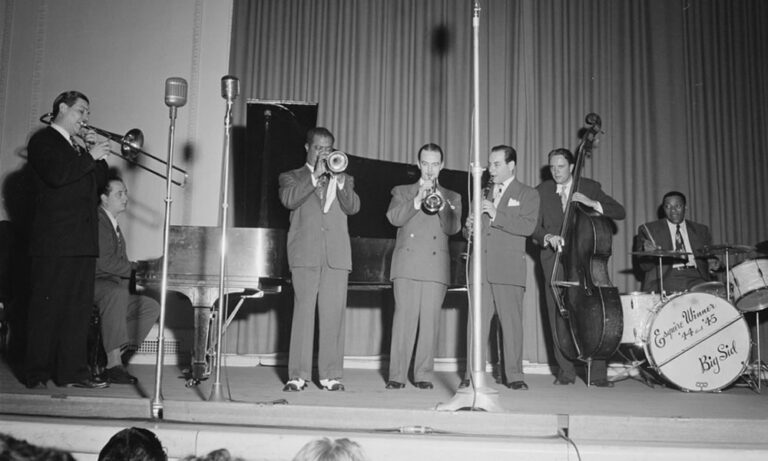
During the 1940s, Armstrong performed at the famed second Cavalcade of Jazz concert held at Wrigley Field in Los Angeles with Lionel Hampton’s band. Following a highly successful small-group jazz concert at New York Town Hall, Armstrong’s manager established a six-piece traditional jazz group featuring Armstrong with Jack Teagarden, Earl Hines and other top swing and Dixieland musicians. Armstrong’s manager named the group Louis Armstrong and His All Stars.
Around the World
By the 1950s, Armstrong became a widely beloved American icon and cultural ambassador. Around the world, he had a fervent following. However, there was an obvious generational gap between Armstrong and younger jazz artists like Miles Davis and Sonny Rollins. The younger generation viewed Armstrong and his act as outdated.
In 1948, Armstrong heard Suzy Delair sing “C’est is bon” at the Nice Jazz Festival. He loved the song and recorded his own in 1950. This became a worldwide success. In the 1960’s, he toured Ghana and Nigeria.
After leaving Decca Records, Armstrong became a freelance artist, but continued touring. This was an intense schedule, but Armstrong had to rest in 1959 when he suffered a heart attack in Italy.
In 1964, after over two years without setting foot in a studio, he recorded his biggest-selling record, “Hello, Dolly!”, originally sung by Carol Channing. Armstrong’s version remained on the Hot 100 for 22 weeks, longer than any other record produced that year, and went to No. 1 making him, at 62 years, 9 months and 5 days, the oldest person ever to accomplish that feat. In the process, he dislodged the Beatles from the No. 1 position they had occupied for 14 consecutive weeks with three different songs.
In March of 1971, Armstrong went against his doctor and played a two week engagement at the Waldorf-Astoria’s Empire room that ended in a heart attack. He was released from the hospital in May, and quickly resumed practicing his trumpet playing. Still hoping to get back on the road, Armstrong died of a heart attack in his sleep on July 6, 1971, a month before his 70th birthday. His honorary pallbearers included Bing Crosby, Ella Fitzgerald, Dizzy Gillespie, Count Basie, Frank Sinatra, Ed Sullivan, and Johnny Carson.
New Orleans’ main airport was renamed Louis Armstrong New Orleans International Airport. In 2002, Armstrong had recordings preserved in the United States National Recording Registry. The U.S. Open’s former main stadium was named the Louis Armstrong Stadium since he lived nearby.
Though Armstrong is widely recognized as a pioneer of scat singing, Ethel Waters precedes his scatting. Billie Holiday said that she always wanted Bessie Smith‘s ‘big’ sound and Armstrong’s feeling in her singing. Other major jazz musicians like Duke Ellington have praised Armstrong through strong testimonials.
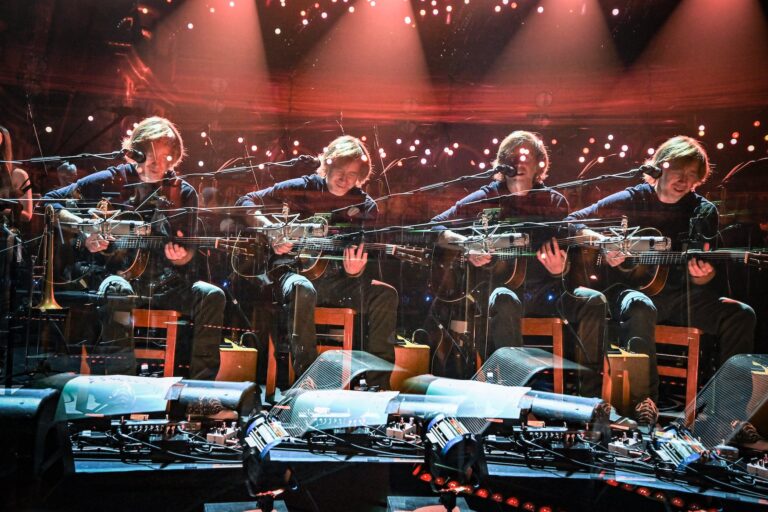
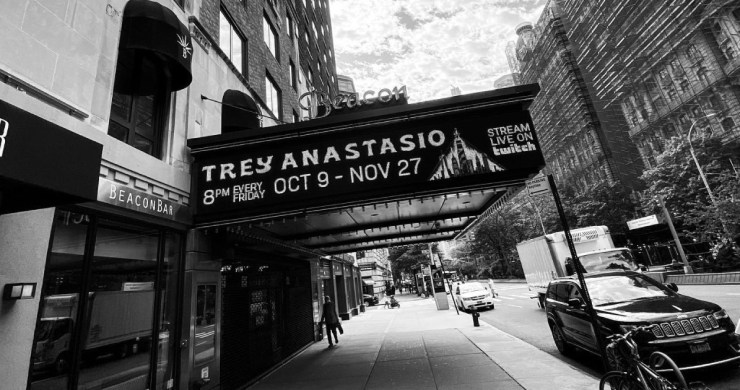
All good things must come to an end. For Phish fans, these eight weeks of Trey Anastasio and the Beacon Jams have been a shining light in the darkness deep. The previous seven shows had featured all sorts of stories, guitars, guests and strings and the eighth and final week of this journey was no different.
The finale was highlighted by an explosive “Carini,” beautiful versions of “Pebbles and Marbles” and “Slave to the Traffic Light” and a touching “Liquid Time.” Over 48,000 viewers flocked to Twitch for this final, free, live–streamed performance as donations poured into The Divided Sky Fund, which focuses on delivering quality care and compassionate treatment for those suffering from addiction, through Phish’s Water Wheel Foundation.
photo by Jake Silco
Earlier in the evening, Trey posted on Twitter for fans to tune in again at 7:50p EST for another installment of his pre-show video series with Page McConnell. This time they treated us to a brief but truly beautiful rendition of “Brian and Robert.” McConnell’s Wurlitzer added considerable depth to this duet as Trey’s acoustic guitar danced around the notes that Page played. The song choice couldn’t have been more appropriate as we’ve all been staring at our walls for the last three seasons and this past month and a half’s worth of shows has certainly been a welcome relief for phans around the globe.
Deviating from the usual opening, the show started in the stairwell of the Beacon Theater with Trey Anastasio playing acoustic guitar, accompanied by James Casey, Natalie Cressman and Jennifer Hartswick. The foursome sang the first part of “Just A Touch,” before moving with the camera onto the stage to join the entirety of the Trey Anastasio Band to end this debut with the new way to end any song these days: “Science!” The energy of the show ramped up immediately as the opening notes of “Carini” filled everyone’s living rooms. Harnessing the power of every second set opener ever while adding the intensity of both horns and Cyro’s energy knocked this song into 12th gear.
photo by Jake Silco
Trey started his audience participation portion by reading a “thank you” on behalf of firefighter fans, a comment about one fan’s dog being scared by that monster of a Carini, and a comment about Cyro perhaps playing an empty pie tin from Thanksgiving as an instrument. This segued perfectly into “Mozambique.” This short TAB favorite was followed up by “Burn That Bridge,” a song written by Anastasio and his “Hands On A Hardbody” partner, Amanda Green.
It was only 30 minutes into the show when the donations hit $100K and Trey was visibly blown away by all of the support that had been shown, not only so far this evening, but throughout the entire Beacon run. Showing his gratitude to all those watching, the band went into a marvelous version of “Cayman Review,” featuring Cyro jamming away on the washboard. The conversation then moved back to spatchcocking, to which Ray mentioned that he always hears his name when the topic comes up. (I think we’ll be hearing him referred to as “Ray Spaczkowski” for years to come.) We also learned that Cyro is now officially a grandfather and that Trey now has a picture of his cat Joey on the headstock of his guitar. After these revelations, the band dove into “Speak to Me,” a song that Trey says might be about organic chemistry, which became reality thanks to some new lyric changes.
photo by Jake Silco
After a few heartfelt dedications and fan group donation shout-outs, Trey improvised a mini-song about Buzzetta before going into “Love Is What We Are,” as the donations for the night surpassed $200K. Trey’s chair and acoustic guitar came out as the Rescue Squad Strings arrived on the stage for the first time of the evening and the hearts of everyone watching leapt as Trey began to play “Pebbles and Marbles.” This gorgeous rendition of the classic Phish song showcased the incredible level of detail that string arranger, Don Hart, has shown over this entire concert series.
As the Rescue Squad left the stage, Trey wished Jimi Hendrix a happy birthday and shared that Tony Markellis had seen the guitar legend not once, but twice. This sort of banter has been just as exciting as the music that has been shared these last two months and will surely be missed by everyone who has tuned in. Trey led the band into classic versions of “Drifting” and “Night Speaks to a Woman” before going back into the fan comments and retelling a tale of a TAB performance in Utica at the Stanley Theatre where they had rocked so hard that part of the balcony fell, ending the show early. That infamous show was Cyro’s first performance with the band and certainly speaks to the intensity of this lineup that we’ve grown to know and love.
photo by Jake Silco
Trey interrupted “Liquid Time” less than a minute in to share that he wrote this particular song while under house arrest following his 2006 incarceration, reiterating to anyone that needs help to ask for assistance and thanking everyone again for donations for his treatment center before restarting the song. This was followed up by “Fast Enough for You,” which was amplified by the backup singers that we’ve all been enjoying these last few weeks. By the time this song had completed, the nights donations had passed $300K, and after a couple more fan comments, the band jumped into “Shine,” after which Trey came clean that it shared the ending to a Badfinger song. There’s truly nothing better than Trey coming clean.
“Show of Life,” another great example of a Phish song that’s intensified by the horn players on stage, was dedicated to their drummer, Russ Lawton. This fantastic version segued beautifully into “Ether Sunday” and then a shred-full version of “Simple Twist Up Dave”. Seemingly out of breath, Trey took to his acoustic guitar once more in order to dive into a phenomenal “Slave to the Traffic Light” with the Rescue Squad Strings before soaring into the ending of that masterpiece on his electric guitar.
photo by Jake Silco
Before closing the night, Anastasio belatedly thanked the entirety of the lineup over the last eight weeks as well as the countless people who helped make this entire aural experience possible. The Beacon Jams were capped off in the best way possible, with “First Tube.” The entire band and the Rescue Squad Strings were bathed in the mirror-ball light as Trey gleefully danced around, never missing a beat. Finishing the song with his guitar over his head, Trey ended the night with elbow-bumps to his band before walking out into the Beacon Theater seats to congratulate the staff with facemasks that said “LOVE.”
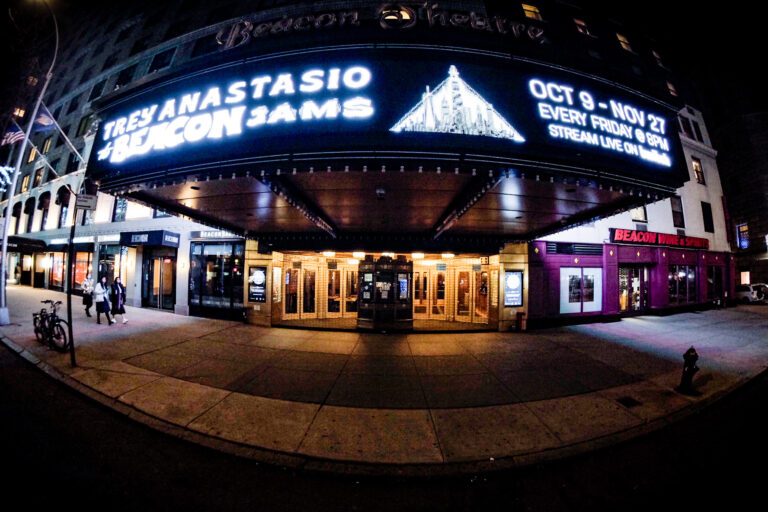
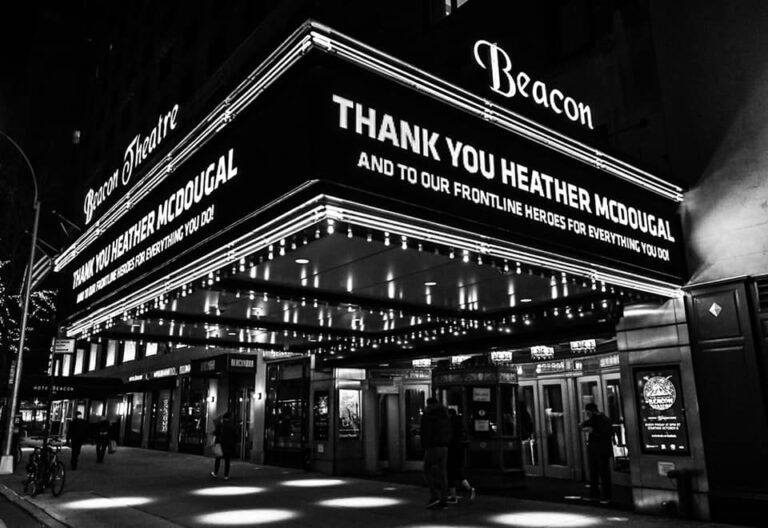
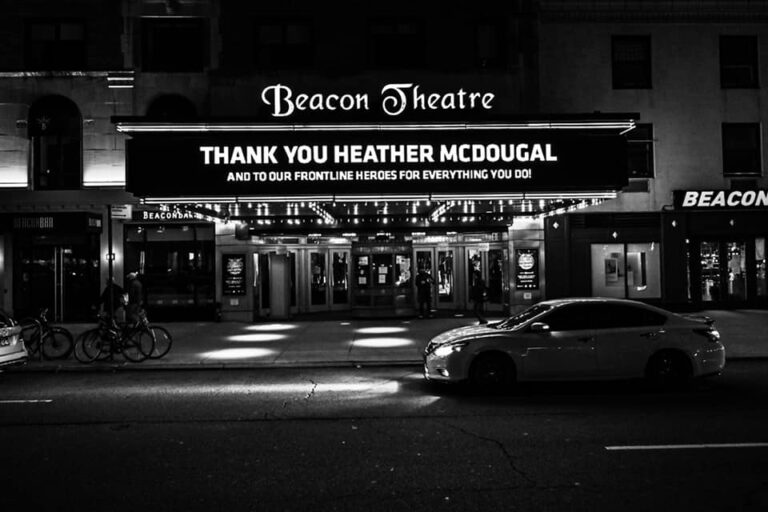
But the percussion didn’t end as the camera followed him into the Beacon Theatre lobby where over a dozen dancers grooved to the beat as Trey walked out the doors onto the New York City streets where the venue’s marquee showed the immortal words: “Thank You Heather McDougal and to our Frontline Heroes for Everything You Do!”
Set 1: Just A Touch [1], Carini [2], Mozambique, Burn That Bridge, Cayman Review, Speak to Me, Love Is What We Are, Pebbles and Marbles [3], Drifting > Night Speaks to a Woman, Liquid Time [4], Fast Enough for You[2], Shine, Show of Life > Ether Sunday > Simple Twist Up Dave, Slave to the Traffic Light [5], First Tube [6], Jam [7]
[1] Debut; began with Trey on acoustic guitar accompanied by James, Jennifer, and Natalie on vocals in a stairwell in the Beacon and finished with them on stage. [2] Full TAB debut. [3] Began with just Trey on acoustic guitar with The Rescue Squad Strings and the TAB horns before switching to electric guitar and the rest of the band joining in. [4] Stopped for Trey to talk and restarted. [5] Full TAB debut; began with just Trey on acoustic guitar with The Rescue Squad Strings and the TAB horns before switching to electric guitar and the rest of the band joining in. [6] With The Rescue Squad Strings. [7] Percussion jam with Trey exiting the Beacon.
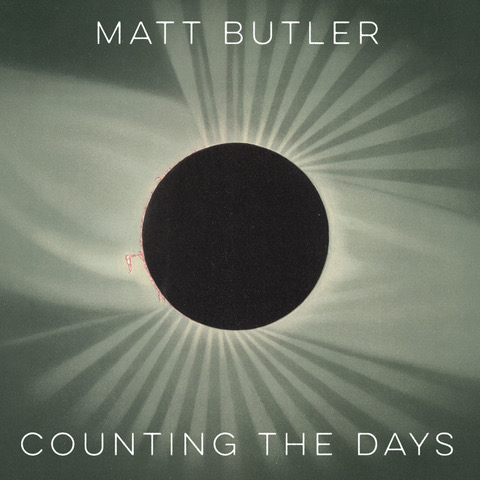
Profound Storyteller, Matt Butler, releases a cinematic and heart-stabbing single “Counting The Days” today, Friday, November 27. A stripped down acoustic demo also companies the release.
The Manhattan singer-songwriter gets your heart pounding immediately, boasting you up as Mr.Tough Guy, but let’s not get too ahead of ourselves. If you’re a Matt Butler fan, you’re sentenced for life. After an interview with Matt at the last instalment of Vans Warped Tour, it was clear he is the real deal. Remarkably his synergy of music, storytelling and humbleness are all backed by a hunger to improve. That will never let the fire die in Matt’s eyes. He makes things real. He makes it personal.
“Counting The Days” is overwhelmingly vivid, released Nov. 27, 2020.
So many palatable emotions rush through your body throughout “Counting The Days” that it’s hard to react. The track opens with an ominous yet eloquent acoustic strumming. Sixteenth-note bass drum kicks make the listener’s heart anxious, ready to unleash a lifetime of pain.
Music is a provocative tool. Opening lyrics immediately cue a 35-mm story reel in the listeners head. Some close their eyes in hopes music will spark their mind’s subconscious and craft inspiration, “Counting The Days” takes out all of the guess work.“Sound of the flies buzzing like a drill / Blood pooling on the table with the beer he spilled / I was frozen still.“
Butler goes on. “Too hot outside to dig a hole in the sand. And too tired to hide the gun in my hand. There was never a plan.” The strings carry momentum, as the tape reel plays, and the image sways on your mind with the heavy 2 & 4 backbeat that Butler carries.
Now, let’s get back to Mr. Tough Guy. Butler hits home here with the stereotypical male complex, that builds you up as each chorus replays. It is easy to feel like that kid, or cowardly man Butler depicts, as the alter ego makes him stand up. As you anchor your feet into the floor, Butler sucks you right into the shoes of the protagonist. It’s unclear who Butler is singing about: You? Me? Himself?
Alright, did you come around here looking for a fight? Okay, cause boy you look like you got something to say Well I just might, are you ready old man to say goodnight? God be praised, now I’m locked in here I’m just counting the days It was always gonna be this way
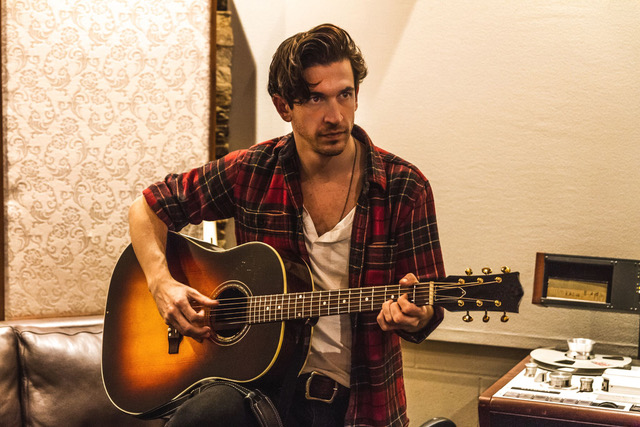
Photo Courtesy of Matt Butler.
Butler’s songs are rooted deep in hardship. For those who don’t know Matt, he travels to prisons across the country; singing, sharing and engaging a locked-up community. These stories are so vivid that they bring a tear to your eye. Matt is compassionate and helps these people overcome through song. That effect is compounded on the average listener.
Moreover, when we last interviewed Butler he was on the brink of music school. Now that dream has come to fruition. “I actually produced most of this new track myself, been learning Logic and Ableton during quarantine,” said Butler.
” [I] did a day of tracking vocals and overdubs in the studio and Rocky, the engineer, really helped get the sound. It’s my first real genuine attempt at self producing.”
Read More About Matt Butler on NYS Music
Matt Butler shows have an organic and mysterious quality. There are tears, but there is also laughter. Whether he’s performing at a theater, a state prison or delivering a keynote for a mental health conference, Butler delivers an experience that engages and transforms his audience. Everyone ends up feeling a little more whole, more human, and more connected – often with a changed view of the world around them. Blending rock and folk styles with a few lingering hints of his punk roots, Butler’s music shines a light into some of the darkest corners of our world. He paints vivid pictures of pain and truth while exposing the glimmers of hope that only exist in those raw moments where redemption is born.
“I was drawn to music for as long as I can remember, but music seemed very difficult and inaccessible… You have to risk being rejected and judged. That’s part of the plan, that it’s so scary. I think that whatever you’re scared of doing most, that’s probably what it is that you’re supposed to be doing – on an evolutionary level.”
Manhattan’s own, Matt Butler took an early set on the Monster Energy Stage. The folky, singer-songwriter gave a refreshing outsider’s perspective that pushed Warped fans outside of their comfort zone. Butler has gathered the sounds and stories of the road, shaped in ‘Warped’ roots; he grew up playing in punk and rock bands at CBGB’s and Arleen’s on the lower East Side. “My Favorite bands in high school were Nirvana and Fugazi… my favorite album was Ten by Pearl Jam,” said Butler. “I got more into folk and songwriting because of a band called The Replacements and Bruce Springsteen [laughing]. That’s always the bridge – as we say that in Boardwalk Hall, very appropriate.”
Butler’s set featured numerous tracks recorded this past March, but not yet released including soon-to-be single, “Tell Lucy That I Love Her.” Butler wrote the tune inspired by a tour of state prisons, and at this point he has played around 200 jails in the past 16 months. The idea quickly boomed from a fan-funded endeavour to Butler securing his 501(c)(3) non-profit, to officially bring curated arts programs to jails and underserved institutions – a heart-wrenching inspiration and driver for his music. At certain times it can be as little as four people in a room where they collectively share stories, experiences and music. “It’s a way to see the country, I’ll tell you that. This new song (Lucy) comes from the perspective of someone incarcerated.”
https://youtu.be/Iqto9tBus0M
“Counting The Days” Lyrics
Sound of the flies buzzing like a drill
Blood pooling on the table with the beer he spilled
I was frozen still

Too hot outside to dig a hole in the sand
And too tired to hide the gun in my hand
There was never a plan

But when I saw him sitting there watching TV
I knew he wasn’t planning on letting me be
One of us was always gonna end up dead
But he never saw it coming when he got up and said

Alright, did you come around here looking for a fight?
Okay, cause boy you look like you got something to say
Well I just might, are you ready old man to say goodnight?
God be praised, now I’m locked in here
I’m just counting the days
It was always gonna be this way

All summer long he was always around
Had a job painting houses in another town
But couldn’t hold it down

So I’d go out at night and I’d come home late
He’d have the lights turned off but he was wide awake
He was happy to wait

But I didn’t mind the hits I took
If it got my little sister off the hook
I can still hear the sound of her screams
And I can hear him shouting every night in my dreams

Alright, did you come around here looking for a fight?
Okay, cause boy you look like you got something to say
Well I just might, are you ready old man to say goodnight?
God be praised, now I’m locked in here
I’m just counting the days
It was always gonna be this way

I’ll tell you right now I always knew I was gonna end up in these prison blues
And if I had a choice, I’d do it again
When I hear that voice I say Amen

Alright, did you come around here looking for a fight?
Okay, cause boy you look like you got something to say
Well I just might, are you ready old man to say goodnight?
God be praised, now I’m locked in here
I’m just counting the days
It was always gonna be this way
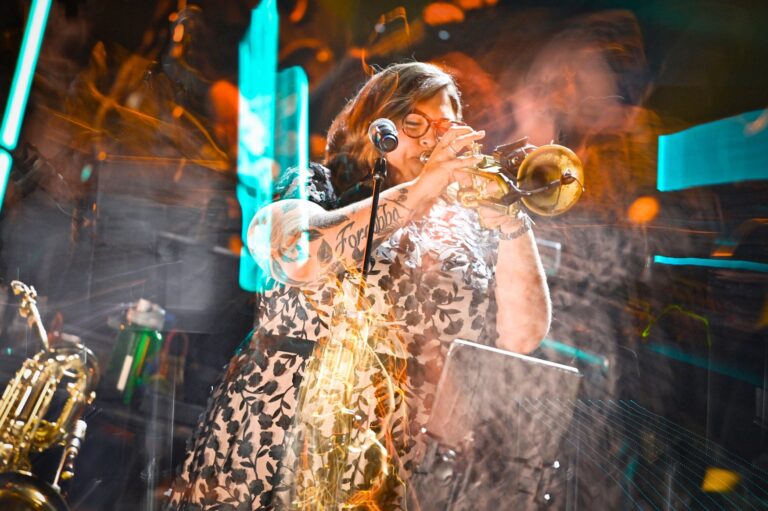
The penultimate Beacon Jams found the core band for the past six weeks accompanied by a couple of new faces, as well as the Rescue Squad Strings, for one of the most memorable nights of the entire run. Trey Anastasio appeared more loose this week and at the same time excited to be performing with the lineup for Trey Anastasio Band, which found Natalie Cressman (trombone) and James Casey (saxophone) joining Jennifer Hartswick (trumpet), who had been singing the past two weeks, and quarantining for a total of five to prepare for the shows.
photo via The Beacon Theatre Facebook page
Friday night’s performance served as the first complete Trey Anastasio Band performance since February 1, 2020 at The Civic Theater in New Orleans, LA, and first performance in New York since January 11 at The Capitol Theatre in Port Chester.
photo by Jake Silco
Reunited with friends and a full stage at times, the flood gates of material were opened to allow for Trey band classics and surprising arrangements of Phish songs peppering the night. A pre-show tribute paid respects to the recently passed Carl Monzo, head of Phish security for many years.
The evening also served as a fundraiser for The Divided Sky fund, which focuses on delivering quality care and compassionate treatment for those battling from addiction, through Phish’s WaterWheel Foundation. By the end of the show on Friday, November 20, nearly $100,000 was raised that night alone, with more than half of a million dollars gathered over seven weeks, an impressive total in support of recovery from addiction.
Kicking off the night was Phish’s “Camel Walk” that had some extra flavor with horns and added percussion from Cyro Baptista, whose daughter was having a baby that evening, leading to banter between him and Trey, before moving into an apropos “Set Your Soul Free” and “Alive Again,” a staple of TAB since summer 2001.
Trey invited the Rescue Squad Strings and Jeff Tanski out to join the band for “Petrichor,” performed for the first time with Tanski since New Year’s Eve 2016.
Trey made a point to thank MSG once again for bringing the event together for free on Twitch, and gave an overdue shout out to the union workers who helped put the show together behind the scenes. He also thanked the many groups of fans who donated to The Divided Sky Fund, some donating thousands of dollars to support the cause.
photo by Jake Silco
The second ever performance of the groovy “All Pretending” had a catchy vibe ala Kenny Loggins’ “I’m Alright” and was followed by the Bossa Nova “Curlew’s Call,” but with Cyro not shying away from the percussion.
The Rescue Squad Strings returned for “Harry Hood,” with Trey switching to acoustic guitar, then back to electric for the third section of the song as the rest of the band joined in for the triumphant finale. After, Trey remarked to the strings about the sincere joy of playing “Hood” and writing it on an acoustic guitar on the beach in Greece when he was 19. Anastasio went back to the acoustic for “Lifeboy,” with heartstrings being plucked on couches across the country.
“Heather McDougal Song” took off from that donor’s name popping up on the screen, with some brief improv joined in by the Rescue Squad Strings. Within moments of ending, the full band debut of “Let Me Lie” (also with strings) followed, giving the laid back breather a fuller sound, and a rare “Chalkdust Torture Reprise” surfaced as the strings departed the stage, with the lyrics changed to “Heather McDougal Song.”
“Burlap Sack and Pumps,” another standard that found its legs in the Summer of 2001, went deep, thanks in great part to James Casey switching to baritone sax. The TAB debut of Kasvot Växt’s “Death Don’t Hurt Very Long,” had added character thanks to the slow deep funk groove via the horn section.
photo by Jake Silco
To wrap up the night, the strings returned for “Goodbye Head” and closed with Trey Anastasio Band on the fan favorite “Push on ‘Til the Day” closing the night. Donate to the Divided Sky Fund here and tune in on Friday, November 27 at 8pm for the finale of The Beacon Jams.
Set 1: Camel Walk, Set Your Soul Free, Alive Again [1], Petrichor [2], Money, Love and Change, Olivia, All Pretending > Curlew’s Call, Harry Hood [3], Lifeboy [4], Heather McDougal Song [5], Let Me Lie [6], Chalk Dust Torture Reprise [7], Burlap Sack and Pumps, Valentine, Death Don’t Hurt Very Long [8], Goodbye Head [9], Push On ‘Til the Day
[1] Lyrics changed to “Winter’s coming and I’d like a review.” [2] Just Trey, The Rescue Squad Strings, and the horns. [3] Full TAB debut; began with just Trey on acoustic guitar and The Rescue Squad Strings with the rest of the band joining later. [4] Just Trey on acoustic guitar with The Rescue Squad Strings and Jen Hartswick and Natalie Cressman on vocals. [5] Debut; with The Rescue Squad Strings. [6] Full TAB debut; with The Rescue Squad Strings. [7] Full TAB debut; sung as “Heather McDougal Song.” [8] Full TAB debut. [9] With The Rescue Squad Strings.
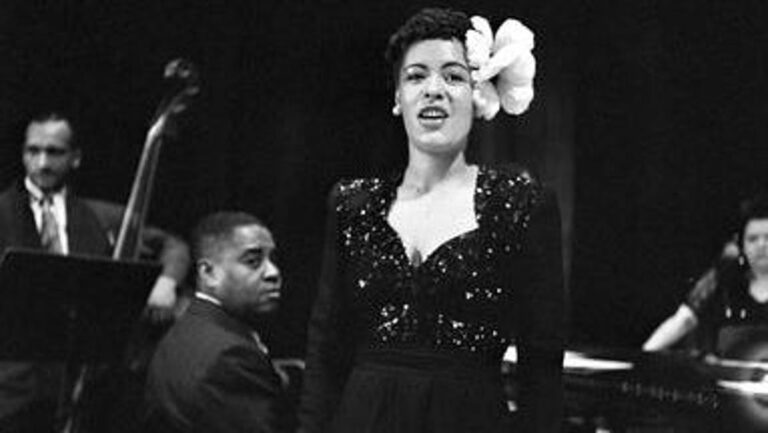
Eleanora Fagan was born on April 7, 1915 in Philadelphia. As a child, she started going by Billie Holiday, Billie from Billie Dove and Holiday from her dad. She began listening to records by Louis Armstrong and Bessie Smith. Her mother Sadie cleaned houses, but could not make a living, so moved to New York City.
As a teenager, Holiday began singing in nightclubs. She teamed up with saxophonist Kenneth Hollan, performing at numerous clubs in Harlem. In 1932, Holiday replaced Monette Moore at a club where John Hammond, a producer, heard her and signed her to a record. At the age of 18, she made her first recording with Benny Goodman.
The Depression Era
In 1935, Holiday recorded pop tunes with Teddy Wilson. Holiday was allowed to improvise; her improvisation of the melodies to fit the emotion was revolutionary. Their first collaboration, “What a Little Moonlight Can Do” became Holiday’s ‘claim to fame’.
Holiday soon achieved the title of big-band vocalist with Count Basie. She was able to choose her own songs, often opting to portray herself as a woman unlucky in love. “Summertime” a hit from Gershwin‘s Porgy and Bess became a hit for Holiday. Basie soon accepted Holiday’w involvement in the band, saying “When she rehearsed with the band, it was really just a matter of getting her tunes like she wanted them, because she knew how she wanted to sound and you couldn’t tell her what to do.”
Soon, Holiday found herself in competition with Ella Fitzgerald, the singer for the Chick Webb Band, the direct competitor of Count Basie’s. On January 16, 1938, Basie and Webb’s bands had a battle at the Savoy Ballroom. Metronome magazine declared Webb the winner while DownBeat magazine pronounced Basie the winner.
Holiday left Basie in 1938 and was picked up by Artie Shaw. This put her in a unique situation in that she was a black woman singing in a white orchestra in the segregated South. With Shaw, Holiday achieved notoriety, but could not sing as often as with Basie. Additionally, Shaw was pressured to hire a white singer with whom Holiday had to share time. In November 1938, Holiday was asked to take a service elevator at the Lincoln Hotel which may have caused her to leave the group soon after.
Columbia and Commodore
Holiday was recording for Columbia Records and when she was introduced to “Strange Fruit,” a poem about lynching. She performed it in 1939 with trepidation, later saying the song reminded her of her father’s death. He was denied medical treatment due to racial prejudice.
Holiday got into an argument with her mother Sadie that ended in the daughter storming out, shouting, “God bless the child that’s got his own.” She then wrote “God Bless the Child,” her most popular and most covered record.
In 1942, Holiday recorded “Trav’lin Light” with Paul Whitman for Capitol Records, reaching number 23 on pop charts and number 1 on R&B charts. Holiday signed with Decca Records in 1944, recording “Lover Man”, another hit. In September 1946, Holiday began her only major film, New Orleans, in which she starred opposite Louis Armstrong and Woody Herman. Plagued by racism and McCarthyism, producer Jules Levey and script writer Herbert Biberman were pressed to lessen Holiday’s and Armstrong’s roles to avoid the impression that black people created jazz.
Legal Trouble and Drug Use
On May 16, 1947, Holiday was arrested for possession of narcotics. During the trial, she heard that her lawyer would not come to the trial to represent her. Dehydrated and unable to hold down food, she pleaded guilty and asked to be sent to the hospital. She was sentenced to Alderson Federal Prison Camp in West Virginia. The drug possession conviction caused her to lose her New York City Cabaret Card, preventing her working anywhere that sold alcohol’ so she performed in concert venues and theaters.
After her release in 1948, her manager, Ed Fishman, thought she should sing a comeback concert at Carnegie Hall. On March 27, Holiday played Carnegie Hall to a sold out crowd. A record number of tickets were sold in advance, a feat made more impressive since she did not have a current hit record. Holiday was again arrested on January 22, 1949 in San Francisco. That October, she recorded “Crazy He Calls Me”.
https://www.youtube.com/watch?v=Z_1LfT1MvzI
The loss of her Cabaret Card hurt Holiday financially. This problem worsened when Holiday’s records went out of print in the 1950s. She seldom received royalties in her later years. In 1958, she received a royalty of only $11.
By the 1950s, Holiday’s drug abuse, drinking, and relationships with abusive men caused her health to deteriorate. She appeared on the ABCreality seriesThe Comeback Story to discuss attempts to overcome her misfortunes. Her later recordings showed the effects of declining health on her voice, as it grew coarse and no longer projected its former vibrancy.
In early 1959, Holiday was diagnosed with cirrhosis. She stopped drinking on doctor’s orders, but soon relapsed. She quickly lost 20 pounds. On May 31, 1959, Holiday was taken to Metropolitan Hospital in New York for liver disease and heart disease. The Federal Bureau of Narcotics had been targeting Holiday for the last twenty years. As she lay dying, they raided her hospital room, placing Holiday under police guard. Holiday died on July 15, 1959 at 3:10 a.m. due to heart failure caused by cirrhosis of the liver.
Legacy, Awards, and Accomplishments
Holiday’s improvisation made up for a lack of training and was quoted saying that she wanted her voice to sound like an instrument. Frank Sinatra called her “the greatest single musical influence on me.”
The popular Blue Note Jazz Club and Restaurant is finally re-opening their doors to jazz lovers and music enthusiasts alike, with a set capacity limit of 25 percent.
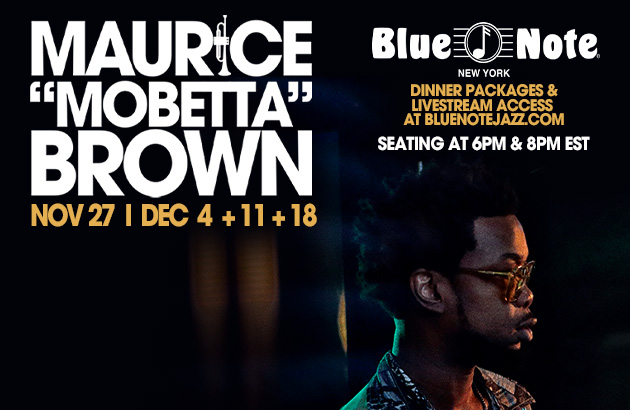
Promotion for Blue Note’s first night of re-opening.
I am very happy to announce that the Blue Note will reopen for dining this holiday season. The safety of our guests is our highest priority and our staff is working around the clock to ensure our guests have a comfortable dining experience.
Steven Bensusan, President of Blue Note Entertainent Group
Blue Note originally had to close because of the Covid-19 shutdown. Although they kept active by streaming live shows online, there’s nothing like an in-person jazz experience.
Starting Nov. 27, the club will provide dinner services for selected evenings from 6 p.m. to 8 p.m., along with brunch on selected weekends from 11 a.m. to 1 p.m. Dining packages will also be available to guests who want to experience the “magic of the holidays,” at Blue Note. The diners will be able to experience a list of respectable musicians while eating their meals.
The Greenwich Village club has been around for almost four decades. Opening in 1981, Blue Note became a center for culture and music in New York City. They are known as one of the premier jazz clubs in the world, where they strive to preserve the history of jazz. In the past, they featured renowned artists like, Chick Corea, Joe Lovano, John Scofield, and Chris Botti. The club also frequently promotes up-and-coming jazz, hip-hop, R&B and soul musicians.
Dining packages start at $45 per person, while livestream access is $10. Regardless of whether you would like to enjoy a meal in the presence of a jazz show or do the same thing from home, all the information and payments can be made at Blue Note’s website.
Incidental Music Calendar:
Maurice “Mobetta” Brown Residency – Nov 24, Dec 4, Dec 11, Dec 18
Eddie Palmieri Residency – Nov 28, Dec 5, Dec 12, Dec 19, Dec 26