The music documentary Fandango at The Wall premiered on HBO Latino on Friday, September 25 and is now streaming on HBO Max. Taking place on both sides of the United States/Mexico border, founder Jorge Francisco Castillo invited multi-GRAMMY Award-winning musician Arturo O’Farrill and multi-GRAMMY Award-winning producer Kabir Sehgal to Veracruz.
The intent behind the film was to meet the masters of Son jarocho, who perform 300-year-old folk music. Musicians took their places on both sides of the Tijuana-San Diego border, playing big band, jazz arrangements. People gathered on both sides, enjoying the presence of the harmonious music despite being on alternate sides of the United States/Mexico border.
Since the election of our current president, border tension has been rising in the past few years. The wall may be symbolic of division, but the annual “Fandango Frontierizo” music festival aims to unite all people together, regardless on whatever side of the wall a person is on.
The film was directed by Varda Bar-Kar and executive produced by Quincy Jones, Andrew Young, and Carlos Santana.
Our film shows how the border can become a place of friendship and amity by harnessing the power of Afro-Mexican music known as Son jarocho I’ve been making music for decades, and I’ve never experienced a more enveloping and transformative artform.
Fandango at The Wall features Son jarocho legends Andrés Vega, Martha Vega, Ramón Gutiérrez, Wendy Cao Romero, Tacho Utrera, Fernando Guadarrama, and Patricio Hidalgo. Guest appearances include multi-Grammy nominee and MacArthur Foundation fellow Regina Carter, CNN historian Douglas Brinkley, Mandy Gonzalez, The Villalobos Brothers and Grammy nominees Rahim AlHaj and Sahba Motallebi. For more information regarding “Fandango at The Wall,” visit the film’s website, as it sure to present a diverse, and interesting, expression of music on visual platform.
The nation’s largest and best-known Hispanic pop culture and music festival has announced the initial lineup of performers. Dubbed “Calle Ocho Live“, the Hispanic Heritage Month-themed event will take place October 4th via live stream and broadcast TV.
Among the stars joining the growing roster are Gloria Estefan, Camilo, Jessi Uribe, Jorge Celedón, and Bobby Pulido. These artists join previously announced Mau y Ricky, Ivy Queen, who is performing an epic virtual duet with the late Celia Cruz, and Tito Puente, Jr., who is performing a virtual duet with his late all-star father Tito Puente and many more.
The Calle Ocho Festival was originally slated for March before cancellation due to the COVID-19 pandemic. That is when the organizers of Carnaval Miami, Kiwanis Club of Little Havana, collaborated with Manny Ruiz, the creator of Altisimo Live and Hispanicize and Ralph Paniagua, creator of Atlantino, to bring the festival back to life.
The three-hour live stream will include interactive experiences to win prizes as well as pre-recorded performances from music artists, entertainers, comedians, and social media influencers.
“We said we would create a strong, inclusive, and powerful line-up that captured the diversity of Latino tastes, genres, and cultures, and that’s what we’ve done here. Through Calle Ocho Live, we’re not only stretching to do well for the families we serve through the Kiwanis of Little Havana Foundation but also through the way we reflect the evolution of Latinos in America.”
Jorge Fernandez, president of the Kiwanis of Little Havana/Carnaval Miami
Featuring live and pre-recorded performances from top Latin music artists, celebrities, and social media personalities, Calle Ocho Live will also highlight stories from the families served by the Kiwanis of Little Havana Foundation.
Funds raised from the event will be used by the Kiwanis Club of Little Havana to assist South Florida families who are in need of things like college scholarships, emergency financial assistance, holiday gifts, and any other support during the COVID-19 pandemic.
Viewers will be able to watch the festival for free on over a dozen broadcasting stations and their respective socials, along with Calle Ocho Live’s YouTube, Facebook Live and Twitter. Attendees are being encouraged to donate $8 or more prior to or during the festival to the Kiwanis Foundation.
For more information, visit the Calle Ocho Live Instagram page.
Toots Hibbert, the Jamaican reggae and ska frontman for the Maytals has died at 77 years of age. While a cause of death has not been announced, Hibbert was recently hospitalized due to complications from COVID-19.
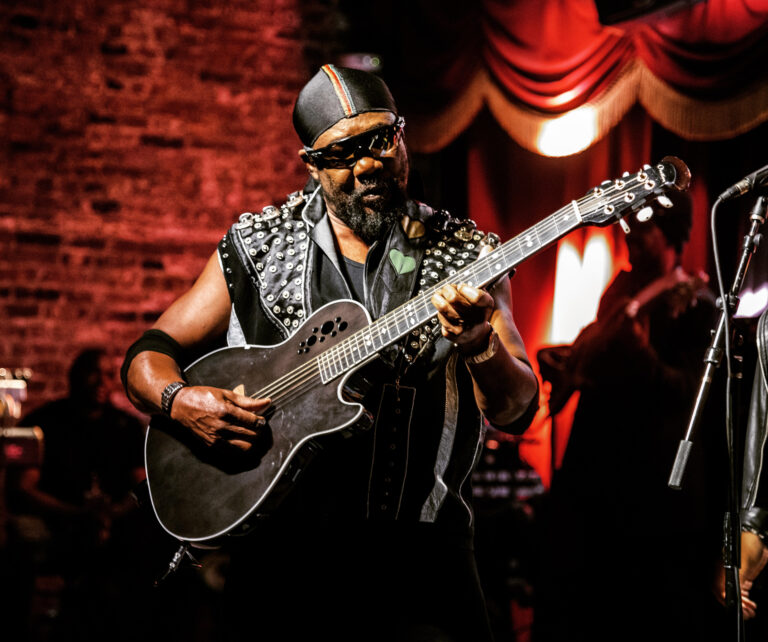
photo by Mickey Deneher
Born Frederick Nathaniel Hibbert on December 8, 1942, the singer/songwriter was known for hits including “Sweet and Dandy,” “Monkey Man,” “True Love is Hard to Find” and “54/46,” inspired by his time in jail for marijuana possession in 1967. Hibbert, who coined the term ‘reggae’ with his song “Do the Reggay,” had been in a medically-induced coma at the Tony Thwaites Wing of the UHWI and was placed on a ventilator. His family shared this on his Facebook page.
It is with the heaviest of hearts to announce that Frederick Nathaniel “Toots” Hibbert passed away peacefully tonight, surrounded by his family at the University Hospital of the West Indies in Kingston, Jamaica.The family and his management team would like to thank the medical teams and professionals for their care and diligence, and ask that you respect their privacy during their time of grief. Mr. Hibbert is survived by his wife of 39 years, Miss D, and his seven of eight children.
Hibbert grew up in May Pen, Jamaica, about 30 miles west of Kingston as the youngest of seven children, Hibbert’s parents were both Seventh-Day Adventist ministers and would often sing in church, according to Variety. Hibbert lost his parents at any early age, with his mother dying when he was eight and his father dying three years later.
Hibbert moved to the Jamaican capital of Kingston where he lived with his older brother John, who nicknamed him “Little Toots.” In 1962, singers Jerry Matthius and Raleigh Gordon heard Toots singing at the barbershop he worked at and formed the trio the Maytals. Over the next 10 years the group recorded with a series of producers that reads like a Reggae hall of fame: Coxsone Dodd, Prince Buster, Byron Lee, Leslie Kong.
A contemporary of Bob Marley, both artists would find success with different songs titled “Redemption Song.” Speaking to the Jamaica Observer in 2018, he said of the early years with Marley:
Sometimes the Maytals would close, sometimes The Wailers would close the show. We had no problems, no professional jealousy, we were all very good friends. Out of all of us though, me an’ Bob were very good friends. It was out of one of those conversations that I did the song ‘Marley.’ He was telling me that he was going to be a dreadlocks Rasta an’ I laughed an’ said, ‘I want to be a comb-locks’ Rasta like Selassie I’ an’ he laughed, just like the words in the actual song.
Toots Hibbert, speaking to the Jamaica Observer
Toots Hibbert appeared in “The Harder They Come,” starring Jimmy Cliff, and his 1969 hit “Pressure Drop” was featured on the movie soundtrack and was later covered by the Clash in 1978, giving Hibbert a wider audience of new fans.
photo by Rob Teller
Toots and the Maytals won Best Reggae Album at the Grammy Awards in 2005 for the album True Love, which featured duets with a number of music legends, including Eric Clapton, Willie Nelson, Jeff Beck, Bootsy Collins, Marcia Griffiths and Keith Richards, among others.
Hibbert toured regularly since the 1970s, with a break in 2013 following an incident in Virginia when a fan threw a vodka bottle onstage and hit Hibbert in the head. Suffering a concussion in the process, Hibbert canceled his remaining shows and would not return to the stage until June 2016, although he continued to grapple with headaches and anxiety related to the injury.
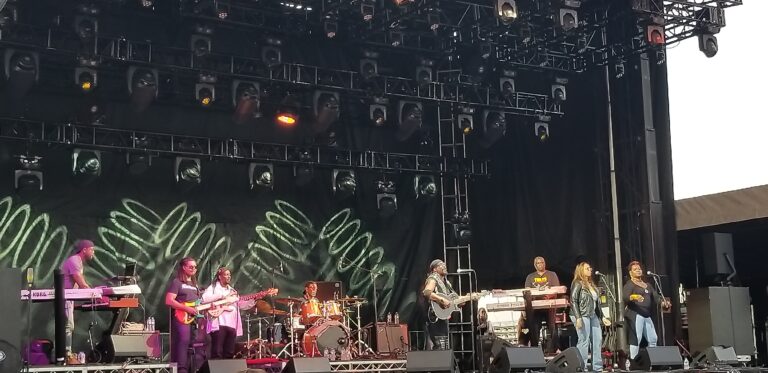
Toots and the Maytals performing at Summer Camp Music Festival, May 2019. photo by Pete Mason
According to Rolling Stone, to form this new style, Hibbert infused reggae precursors like rocksteady and ska with elements of traditional Jamaican mento, as well as gospel, soul, R&B, and rock n roll. He could start a party as easily as he could deliver spiritual musings and social-justice rallying cries, all in a voice that recalled the likes of Otis Redding and Ray Charles but was always distinctly “Toots.”
Ziggy Marley said in an Instagram post “I spoke with him a few weeks ago told him how much i loved him and what he means to me. We laughed and shared our mutual respect. I am fully in sorrow tonight. I will miss his smile and laughter his genuine nature. Toots was a father figure to me; his spirit is with us his music fills us with his energy. I will never forget him”
Toots and the Maytals recently released their first album in over ten years, Got to be Tough. The album features many originals as well as a Bob Marley cover of “Three Little Birds” featuring Ziggy Marley. It also features a track with Ringo Starr on percussion and Ringo’s son and longtime Who drummer Zak Starkey on guitar.
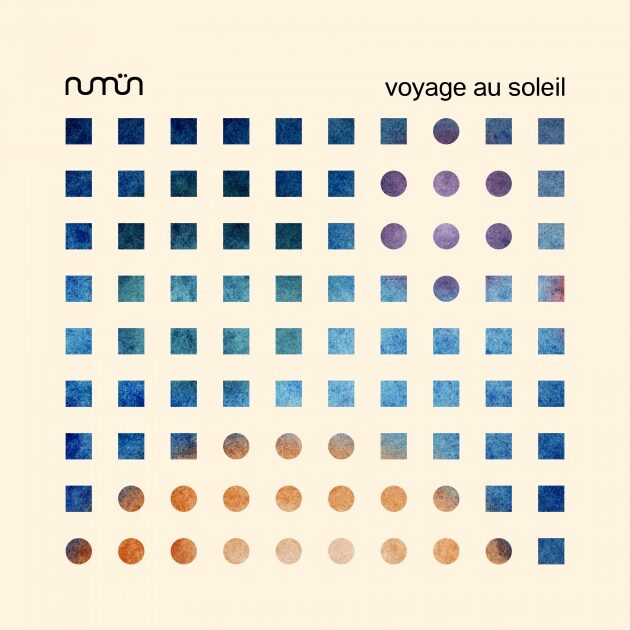
Bob Holmes, a member of SUSS and Joel Mellin and Christopher Romero of Gamelan Dharma Swara collaborated to create the minimalist group numün. They released their first album, voyage au soleil, French for “voyage to the sun,” on Friday, September 4. With their different backgrounds, numün is able to achieve a unique sound by using both American and traditional Balinese instrumentation, aided by synthesizers and looping.
The album first began as a project to commemorate the 50th anniversary of the 1969 moon landing. As with much ambient music, there is an inspiration from Brian Eno, but numün is able to break away from him using unique instrumentation and a key central element for the listener to follow.
The album begins with “Tranceport,” a song that invites the listener into the album. Even on this first track, the use of less-common instruments is evident. The song uses a gong that rings periodically. This functions as a start to the album, but also a start to the journey the listener is about to embark on. It transitions into a more guitar-heavy section, eventually fading into the next track, “First Steps.”
“Tranquility Base” works as a recap of the previous two tracks while also looking ahead to the future. As the longest track in the album at 8:22, numün is able to use this time to glance at the journey in front of them. The group reflects on what happened and looks to what is in store. The final three tracks work to propel the reader towards the finish, the heart of the sun.
The listener can get lost in the music and drift, but they will never get too far. There is always something that can pull the listener back. Sometimes it is a repetitive melody changing; other times it may be the use of an instrument that is foreign to the listener’s ear. voyage au soleil is a journey through it all: the unknown, the pitfalls, and the triumphs.
Key Tracks: Tranceport, Tranquility Base, Voyage Au Soleil
Reggae legend Toots Hibbert has been placed into a medically induced coma. The Jamaica Star reports the 77 year old is being cared for at University Hospital of the West Indies (UHWI).
“Toots is fighting for his life and his family is asking for prayers,” publicist Claude Mills said.
On Monday news broke that the singer was awaiting results of a COVID-19 test after having shown symptoms. While awaiting test results, Mills noted that Hibbert was showing signs of the virus, and the musician’s inner circle have self-quarantined while awaiting their test results. Hibbert had recently released his latest album Got To Be Tough.
Original story follows below:
Toots and the Maytals singer Toots Hibbert has been hospitalized in Kingston, Jamaica. He is currently in the intensive care unit at the private facility. According to a statement released by his family Hibbert has been tested for COVID-19 and is awaiting his test results.
Toots Hibbert. Photo by Robert Tellerman.
According to his family, Hibbert is in good spirits and is getting better day by day and receiving the best treatment possible. The family thanks everyone for their prayers and in particular the minister of culture Olivia ‘Babsy’ Grange and the minister of health Christopher Tufton for their assistants in getting Hibbert tested. They also thank the medical professionals taking care of Hibbert around the clock.
Statement made by Hibbert’s family.
Toots and the Maytals are a Jamaican musical group that were formed in the early 1960’s under their original name The Maytals. They are widely known for their ska and reggae sound. Some of their most widely known songs “Pressure Drop,” “Funky Kingston,” and “Bam Bam.” They recently released their first album in over ten years titled, Got to be Tough. The album features many originals as well as a Bob Marley cover of “Three Little Birds” featuring Ziggy Marley. It also features a track with Ringo Starr on percussion and Ringo’s son and longtime Who drummer Zak Starkey on guitar. Hibbert is notably famous for coining the genre name “reggae.”
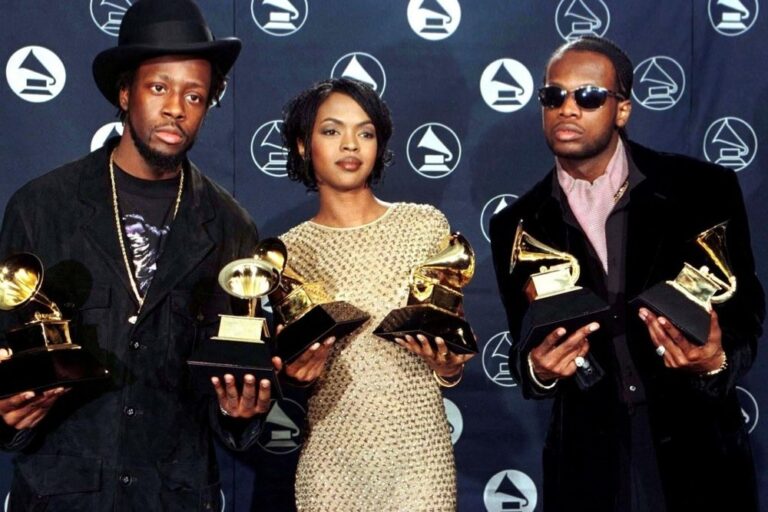
Lauryn Hill has not released an album in nearly two decades (2002’s live album, MTV Unplugged No. 2.0). Yet, her presence within pop culture remains. Much of it can be accredited to her work as a member of the Fugees — whose sophomore album, The Score, has been certified 6X platinum in the United States by the RIAA, with 22 million copies sold worldwide — as she garnered her first top 10 hit with her rendition of Roberta Flack’s “Killing Me Softly,” earning her and group-mates Wyclef and Pras the top spot on the Billboard 100.
ooh la la la
Piggybacking off of the success of The Score, the artist now known as Ms. Lauryn Hill, reached folklore status when on August 25, 1998, The Miseducation of Lauryn Hill hit record stores. Distributed by Columbia records, the album was primarily recorded at the late Bob Marley’s Tuff Gong studios in Kingston, Jamaica. Hill had developed a romantic relationship with Rohan Marley, son of the legendary Reggaeton artist, and the family-oriented nature of the Marley’s was her respite, as she recorded what is now considered her magnum opus.
Classified primarily as a neo-soul and R&B album, The Miseducation also includes elements of hip hop and reggae, while implementing plenty of live instrumentation — some notable names include: a young pianist by the name of John Legend, R&B superstar D’Angelo, along with famed guitarist Carlos Santana. Accompanying the excellent musical composition was Hill’s heartwarmingly soulful voice, as the album’s contents served as inspiration for a generation of men and women. She didn’t pretend to be perfect, as the scathing Wyclef Jean aimed diss track –“Lost Ones” — showed, she was capable of animosity. She shared stories of desperate attempts to save her relationship on “Ex Factor,” while the Billboard charting single “Doo Wop (That Thing)” shared messages of self-worth (“how you gon’ win if you ain’t right within” has become one of the more transcendent lyrics in music).
From tales of newfound love on “Can’t Take My Eyes Off of You” to the fulfillment one finds in their child on “To Zion,” Lauryn Hill’s wide range of emotions on The Miseducation captured the hearts of fans worldwide. Add in the many biblical idioms she drops on records like “Final Hour” and “Forgive Them Father” and you have the makings of a God-fearing woman whose romantic struggles have left her scorned for the better, finding love within her religion, her children and newfound romance. What’s not to like about that? Apparently nothing, as The Miseducation went on to sell over 8 million copies in the United States, as she cleaned up at the 1999 Grammy awards, winning 5 and being nominated for 10.
She wrote her opus to reverse the hypnosis, the awards just came along
So, today, we celebrate Lauryn Hill for her contributions to music, and if she never drops another album, we can be happy with the fact that she was open enough to share all of herself on The Miseducation.
In the final installment of NYS Music’s interview with Street Pharmacy‘s Ryan Guay and Giant Panda Guerilla Dub Squad‘s James Searl, the pair take the time to dig deep on their relationship to modern progressive activism in Canada and America, and the inspiration for “They Don’t Give A $$$.” Ryan reveals the dark past of Canada while James shares his family history with the abolitionist movement. Catch up with parts one and two.
Thomas Lent: You know, we’ve been talking about a wide variety of different crises here, but you know this track is about activism. Emphasis on the active. To promote the causes that your groups stand for, what specific causes would you like your listeners to contribute to?
Ryan Guay: Well, I think, first and foremost, looking from the Canadian perspective. The indigenous people have received the worst brunt of what it is to be Canadian but not be Canadian because they aren’t acknowledged that they are Canadian. Something I would like to bring up to an Americans attention is the Truth and Reconciliation Document that was written in 2015 where the federal government in Canada formally apologized, to make reparations for certain indigenous populations of Canada. If you want to read about what actually happened here and how terrible it was for all indigenous people, especially young people being shipped off to residential schools and being raped by Catholic priests, and you know going back to their, to the tribes, back to the “rez” and not being accepted because they lost their culture. Looking into the highest suicide rate in Canada and who that belongs to, and why.
I think it will be mind-blowing for a lot of people that have this perception of Canada as being this very apologetic, say sorry all the time, nice people. Just read that it will definitely open your eyes to the situation here that needs more attention being brought to it. That the people who die the most from murder in Canada are indigenous women who are in prostitution rings. Why? How did that happen? We had such a strong attempt at, quote-unquote, “assimilating” their culture into Europeanized society, why is this a thing? Obviously, the whole story has not been told. Apologies are one thing but actual action is a different thing, and theirs is definitely not enough and the situation with the pipeline being built says that. The fact that the RCMP exists for the sole purpose of keeping the indigenous population in check, to quote Sir Francis Bonhead, who created the Indian act. I think there’s a lot of work to be done here. That’s something that’s important for the song and that why those clips were included in the video. For me as a Canadian, as a person who is of mixed blood, it’s a story that should be told and should be told world-wide. James could probably speak more about the Black Lives Matter movement and other groups that we want to support as well.
James Searl: If the listener had reservations about being active or for like how to get active in the movement for the good, ha, that’s so cliche. But they should seek out who the groups that are in their communities that are representing the most marginalized people. Whether it’s Black Lives Matter, the Movement for Black Lives, or other groups that are working to bring all sorts of services to the indigenous community and also money and representation. They should be trying to find out who those organizations are in their community and listening to what their platforms are and what is important to them. If you have reservations about it, take a step back and realize what these people who are not you and come from a different situation are trying to say and to, you know, support that. Even if it doesn’t resonate with who you are, kind of have the faith that these people are doing all the work and they know what they are talking about. Let people represent themselves and support them when they do. Learn how to be a good ally and lend your body. Especially if you’re young and don’t have a family and you don’t have much to do. Show up, wear your mask, and be supportive. There are people that are being beaten up and killed out there. The more people that are there the less that will happen.
One of the greatest things that I heard about from some of these protests in New York was the young white women, when the cops would come up and start to rough up some young black men and women or teenagers in the protests they would yell out, “White Shield” and all these little white girls would run up to the cops and be the ones there to get beaten and they would stop. It was like, “Wow,” when I was 20-21 that is not what the young white girls I knew were doing. So be part of these movements. Again the situation in the United States, the plight of the indigenous folks here, and the plight of enslaved Africans that were brought over, are very different stories but they all come to the same place and what was done to them was done by the same people. I think its important to recognize what that common denominator is, and that’s “American Empire.” Our tax dollars are used for that all over the world. Even now, there’s more people enslaved now around the world than there were during the trans-Atlantic slave trade.
TL: Right! In Liberia and North Africa right?
JS: Well, in the Congo, with mining the lithium for our batteries in our phones. I think it’s important to acknowledge that there’s always been abolitionists. We don’t hear about them. That’s kind of what this argument about the founding fathers is about right now. Why are we learning about these guys, Thomas Jefferson for example, who raped his wife’s half-sister who was given to him as a wedding present because she was enslaved and was the product of a rape her father committed. Thomas Jefferson then took that wedding gift, that was a person, and his wife’s half-sister, to France, where he started to sleep with her and made babies. Why are we learning about him and not about that part of him and not about the abolitionists that were around at the time and we’re calling them out for it?
There’s always been people who knew the wrong thing was happening so it’s hard to live in 2020 and know that, “Oh we’ve come so far, we eradicated slavery, it’s been over for so long.” Well really because we’re all on our cellphones. While we can’t yell at every individual cell phone owner we can all as cell phone owners, you know, make it loud to Apple and Google, who make these technologies, or our governments, to pass laws that make sure people are working in safe conditions, and are paid a reasonable wage. It all comes down to “Workers of the world unite.” It’s all part of the same call. It’s been happening for hundreds of years. This is not a new moment this is part of a long moment. Additionally, the education part of that is important and I’d like to recommend books to people for people to read.
TL: What books would you recommend?
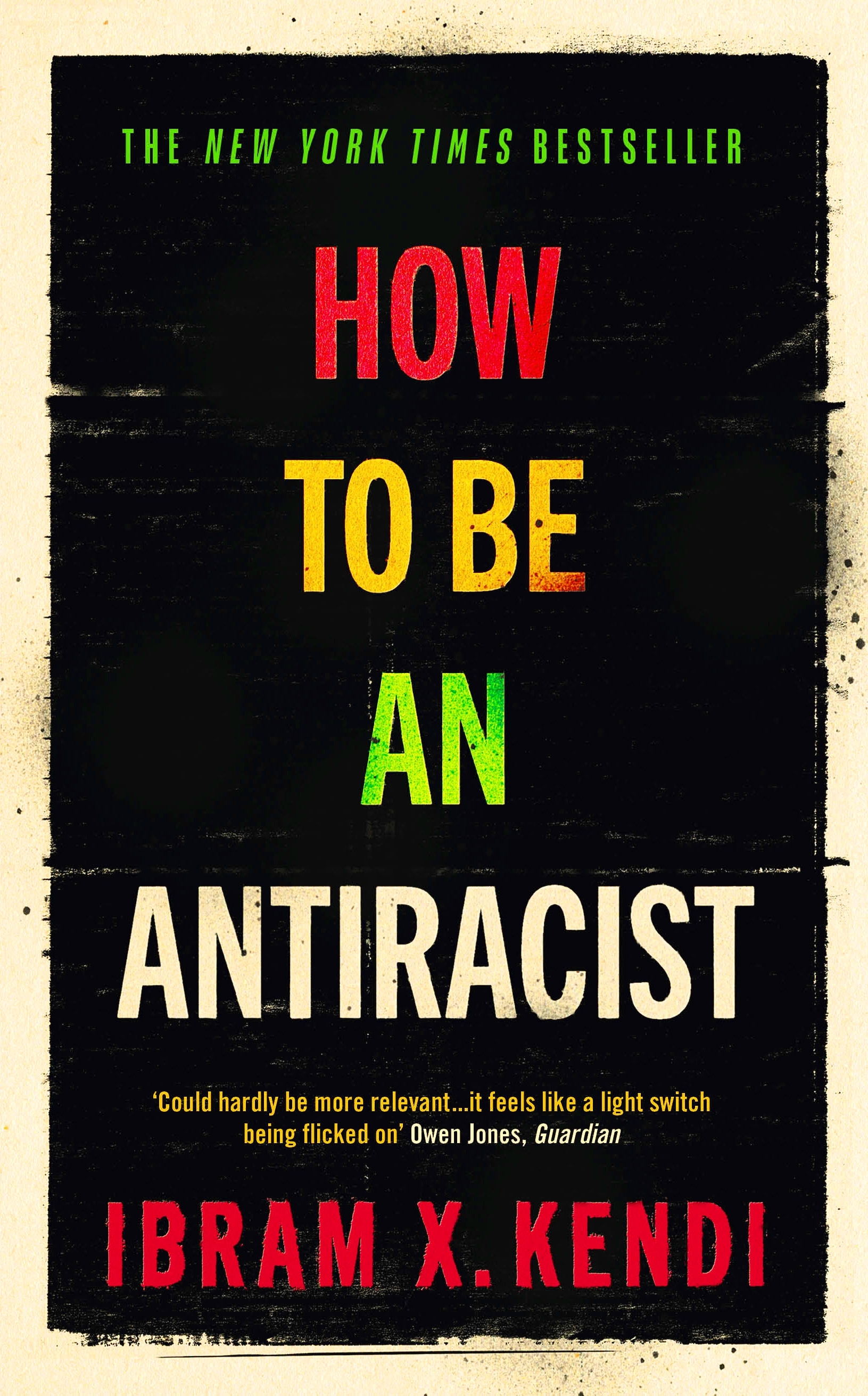
JS: The New Jim Crow by Michelle Alexander is super eye-opening about everything from the trans-Atlantic slave trade to the drug war and the prison industrial complex. It’s one line, and white America has been doing this to black America since before the founding of the country and its nation’s wealth is built on. We wouldn’t have what people call “American Exceptionalism” without it. Of course “American Exceptionalism” is also a flawed term, highly flawed. But, the more you see, the more you know, the more you see and if you can be anti-racist, and that refers to Ibram X. Kendi’s book How to Be an Antiracist. People talk about how this book is sold out in some places but it’s in audiobook form so it will never sell out in theaudio form. They can just keep giving it to you. He reads it himself, again I’ve been pretty devoted to studying, because of reggae and hip-hop, I’ve been devoted to learning about, what Bob Marley called “The real situation” and the line that he says in “So Much Things to Say”: “Never forget who you are and where you stand in this struggle.” It means something different when Bob Marley says it that when I say it because I’m coming from a different place.
I’ve been devoted to learning about this stuff and the history of racism in America and the history of the political economy of the United States and the world, for like since I was 17-18 years old. The things I’ve learned from The New Jim Crow and How To Be An Antiracist are things that I had never thought about before up until a year or two ago. So I think that being an antiracist is something that is gonna legitimately take everybody their entire life to work on, including their children’s life, and maybe even some generations after that. It’s not a small calling so the time to start is now and you can start by educating yourself about it and there’s great resources out there. People have done the work. People don’t want to do that, that’s why it was so amazing to see that show Watchmen on HBO, like I sorta knew about the Tulsa Bombing, and I’ve been trying to know about this stuff for a long time, and I’ve been trying to wrap my head around this history. But even now it was like, “Oh what happened in Tulsa? Oh ya, black Wall Street was bombed, firebombed by planes, and women and children were killed.” Now we all know about it and that’s because artists have with movies, shows, books, and plays, that’s always how I’ve really learned about that stuff. As much as I want education and school and books to inform me, more entertaining media has done a good job for me.
TL: I agree, modern media has been doing a much better job of representing these untold stories.
JS: Hey man, you’re from East Aurora, do you mind if I tell you a small family story?
TL: Sure go ahead!
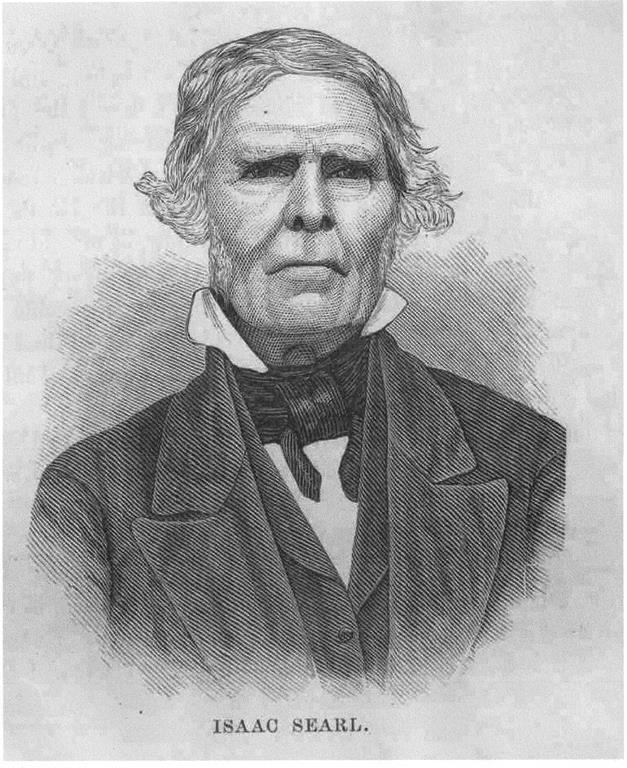
JS: My dad’s from East Aurora and the way that my family got to East Aurora was in the 1800s, I had a relative named Isacc Searl who moved his family from Vermont after he lost everything in a drought, he was a farmer and they were suffering so he moved his family and they ended up in Cattaraugus county. We didn’t really know about who he was but my dad got into genealogy when I was a little kid and he found a picture of him at the time and started putting it on shirts for our family reunion every year. All the family from East Aurora, Buffalo, and Rochester would come hang with us and we would celebrate the family of Isaac Searl. The picture was from the eighteen hundreds and he looked like an “Old Searl” and just a couple years ago some history was unearthed that a person who was on their death bed in the late 19th century told a secret.
He told a secret about, “Hey listen in the 1820’s and 30’s the Underground Railroad was really happening around here and these were the people that were involved.” They’re all dead now so they can’t go to prison, but Isaac Searl used to hide people who were traveling on the Underground Railroad in his house and then get them to the boat that would take them to Canada. So like, it’s amazing, and it made me proud to know that my family, the white part of my family came to the United States in around 1632, a long time ago, and I’m sure a lot of them were involved in all sorts of terrible shit but it’s nice to know that is a guy who had already lost everything risked his life and his family, and losing everything again, to do what he knew was right. It’s important to me to remember that even in those times people knew what the right thing to do was and you can be like those people now. You can always be one of those people. I’m really proud of all my young cousins from East Aurora that are in their teens and twenties, it’s like, “Wow, you’re so cool. I’m so glad I don’t have to like, be arguing with you guys about this stuff, it gives me a lot of hope.”
TL: That’s fantastic, do you have any other points you would like to communicate too the listeners?
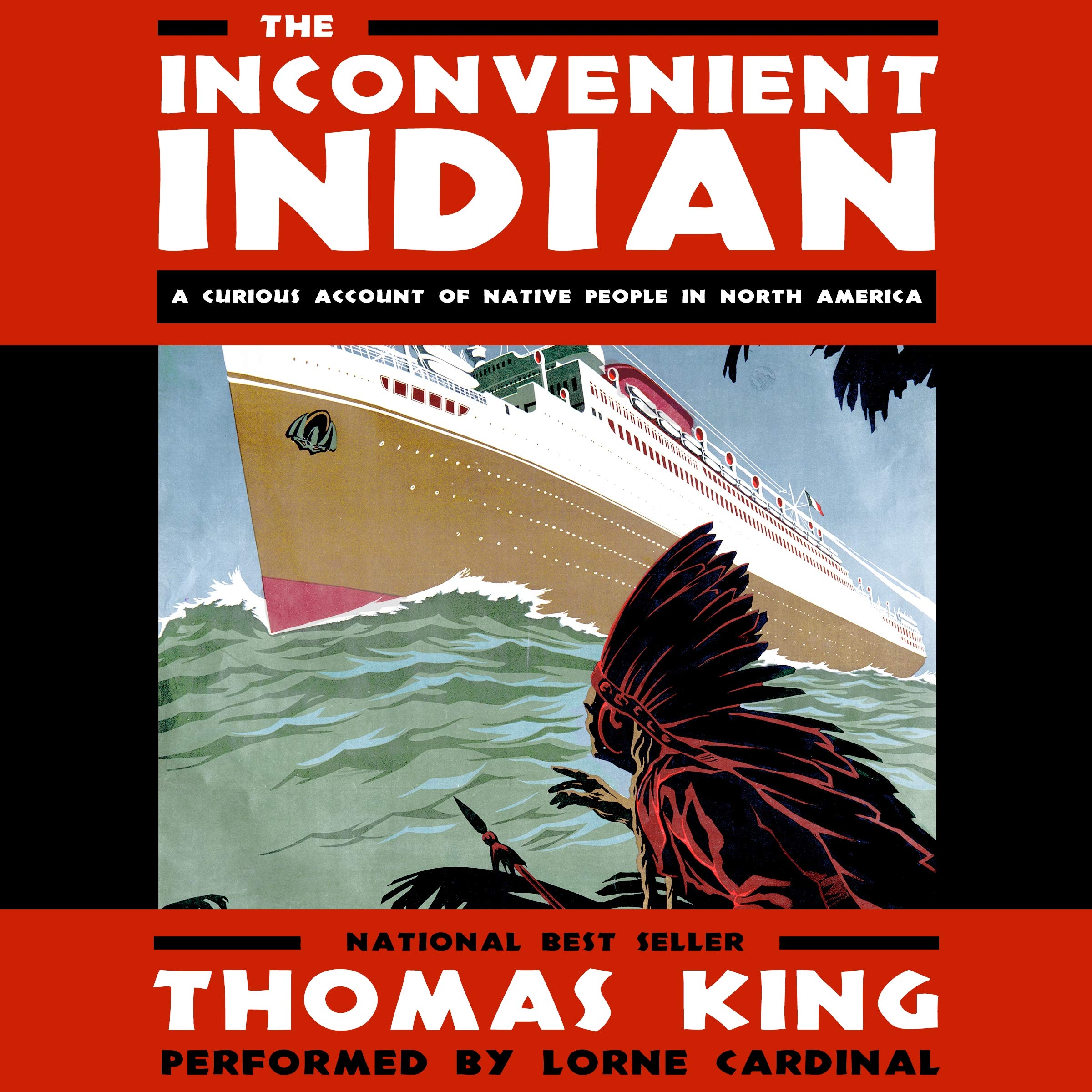
RG: For books, I would say that The Inconvenient Indian: A Curious Account of Native People in North America by Thomas King is a great book for people to check out who are interested in the real history about the relationship between North American Natives and non-natives, what that looks like from the perspective of the indigenous people when they first met. It’s a unique account. I think I just told James to check out The Indian Horse by Richard Wagamese.
JS: I just bought both of those books from my local female black-owned book store. She’s ordering them for me thanks for the recommendation.
RG: No problem, I think those are the books I would recommend.
TL: Do you guys have any closing statements that you want to add for the track?
JS: Ryan has got an incredible team up there and it would be a great honor for me to do more stuff like this.
RG: It’s amazing that a random fan was able to connect us and we were able to hit it off so well. James is such an enormous talent and he’s such a good person, his heart is in the right place, and I really hope that we continue to work together to make music that creates change and helps people realize what’s up in the world and makes people feel good and positive and that we’re moving forward in the right way. I feel very lucky, the invisible line is a lot more significant to Canadians trying to get into the United States to tour and make music. You don’t know what’s going to happen when you get over there, but to find a kindred spirit in James and to make music with James, and Eli played on the track, he did fantastic I forgot to mention that. I just feel really lucky James and all of Giant Panda Guerilla Dub Squad are some of the best musicians I’ve ever worked with for any genre and it’s been amazing to work with them.
JS: And enjoying music and talking about activism and talking about what’s right and what’s wrong it all happened at the same time. Friends, family, while your cleaning in the kitchen, making love in the bedroom, all this stuff you don’t have to separate this stuff as different parts of your life, they’re all part of your life.
RG: Yeah, we want people to get out there and do something. The last line that in the verse that James wrote: “It’s not what you say it’s what you do.” It’s important to not only have these conversations but also to do something that can affect change. That’s what this song is really about, it’s a call to action. Before we leave there’s one more thing I wanted to add to another question you had asked, something that was really disturbing to me while we were working on this song. In Toronto, on July 2nd and 3rd, there were some riots for an African-Canadian woman who was tossed out of a balcony by a police officer who was called to interview for some sort of domestic call. There were protests in my neighborhood in Welland, which is about 80 minutes outside of Toronto. There was a person from that group that I was discovering before, trying to pay young men to go into Toronto to break things and cause a riot rather than a peaceful protest. That to me, if there isn’t a reason to get up and say something, if that isn’t a reason I don’t know what is gonna be. If you have somebody like that who goes into a neighborhood and pays broke college kids to go and break things in Toronto for $200 a day each, there’s the issue. It was scary to see that.
JS: Don’t be that guy!
RG: Don’t ever be that guy!
TL: Don’t take money to go destroy another community, got it!
RG: Ha ha, yeah, I just wanted to add that to your previous comment about what was going through our heads while we were writing it. I called the police who interviewed and they were aware of the situation and had marked the group as a terrorist organization which is positive. In Canada, that’s what the situation is.
JS: That’s the way that the KKK over here is.
RG: I noticed that actually. As a matter of fact, the KKK in Canada actually started in my home town in 1908, so yeah.
JS: The grand wizard lives a town away from me.
RG: Wow that’s close
JS: And people know that that’s what’s crazy to me, everybody knows him. I guess I’m not gonna try anything.
Flushing Town Hall is joining Global Music Month with a virtual concert series. A collective of world music festivals and events across the U.S. and Canada, GMM 2020 consists of 19 presenting organizations. Throughout September, the historic arts landmark in Queens will showcase archived “Global Mashup” concerts as well as live Latin and Korean music.
No two Global Music Month events are the same, and each concert offers a unique blend of sounds and cultures. The Town Hall is kicking off the festivities with replays of their 2018 Global Mashups, where two types of international music come together. Each band performs a solo set, then they combine their talents and jam out together.
The first such concert, “Latin Boogaloo Meets Afrobeat,” technically isn’t part of Global Music Month because of its pre-September date, but it airs at 7:00 p.m. EDT on Tuesday, August 25. After that, the series will continue weekly at the same time through September 22. Subsequent mashups include “Egypt Meets Haiti,” “Mexico Meets Guinea,” “Balkans Meet El Barrio,” and “Texas Meets Peru.”
Besides the archived 2018 mashup series, Flushing Town Hall has assembled two nights of live music.
Latin American Rhythms Night starts at 7:00 p.m. on Wednesday, September 16, exploring New York City’s colorful Brazilian, Mexican, and Argentinian artists. The night features live and pre-recorded performances from David Vieira, Sinuhe Padilla, and Pedro Giraudo. The show is hosted and curated by Martin Vejarano of the Cumbia River Band, and also features “Spanglish” stories and interviews.
Finally, psychedelic Korean folk band Coreyah is closing out Global Music Month at 7:00 p.m. on Tuesday, September 29. Since 2010, the band has melded a contemporary pop sound with traditional Korean music.
“As a cultural institution whose mission is to bring people together by presenting global arts for a global community, we couldn’t be more thrilled to be a part of this unique and diverse consortium and to participate in the Global Music Month 2020 online festival,” says Ellen Kodakek, Flushing Town Hall’s Executive & Artistic Director. “The fact of it being virtual means audiences throughout the country and around the world can enjoy our content and not just those in New York, where our venue is located. We are especially proud to present this programming free of charge.”
While all Global Music Month shows are free, Flushing Town Hall still encourages donations. The full Flushing Town Hall Global Music Month lineup is available on their website.
Bronx Music Heritage Center is bringing viewers the Bronx Blast on their Facebook page. The Bronx Blast are mini-performances that will be presented in front of the Bronx Music Hall. The theater is currently under construction and will be a future home to the Bronx Music Heritage Center.
In July, Martha Zarate and Pilar Maez of Mazarte Dance Company danced to “El gavilancito,” a song from the son jarocho tradition from Veracruz, Mexico. “Jarocho” describes the people and culture of the southern coastal plain of Veracruz. The song, dance and costumes represent the Indigenous, Spanish and African influences on the cultural tradition. Watch the video on Facebook.
For episode two, the Bronx Music Heritage Center brought in Carmelo Soto, Jorge Vazquez, Bobby Sanabria, and Carlos Espada to demonstrate Plena. Plena is one of the traditional forms of music from Puerto Rico, often referred to as the “periódico cantado” or “sung newspaper” as many times the lyrics relate incidents from daily life or commentary on local events. The lyrics to plena was written by Carlos Espada and can be seen below.
Que bien yo me siento, en esta occasión la gran apertura el Bronx Music Hall.
Oyeee, finalmente, les presento yo, este gran proyecto aquí en el Bronx
Y muchos no saben, fue la visión, de Elena Y Bobby, que se construyó
Que viva, que viva, la diversidad, de toda la gente, nuestra hispanidad.
English Translation: How good I feel on this occasion of the grand opening of the Bronx Music Hall.
Finally I present to you this great project here in the Bronx
And many don’t know, it was through Elena and Bobby’s vision that it was built.
Long live the diversity of everyone, our Latino community.
In their latest episode, Nélida Tirado returns home to the neighborhood where she grew up to perform some rumba flamenca in front of the future Bronx Music Hall. Watch the performance here.
Check out NYS Music’s coverage of The Bronx Music Heritage Center’s concert series that occured this past June.
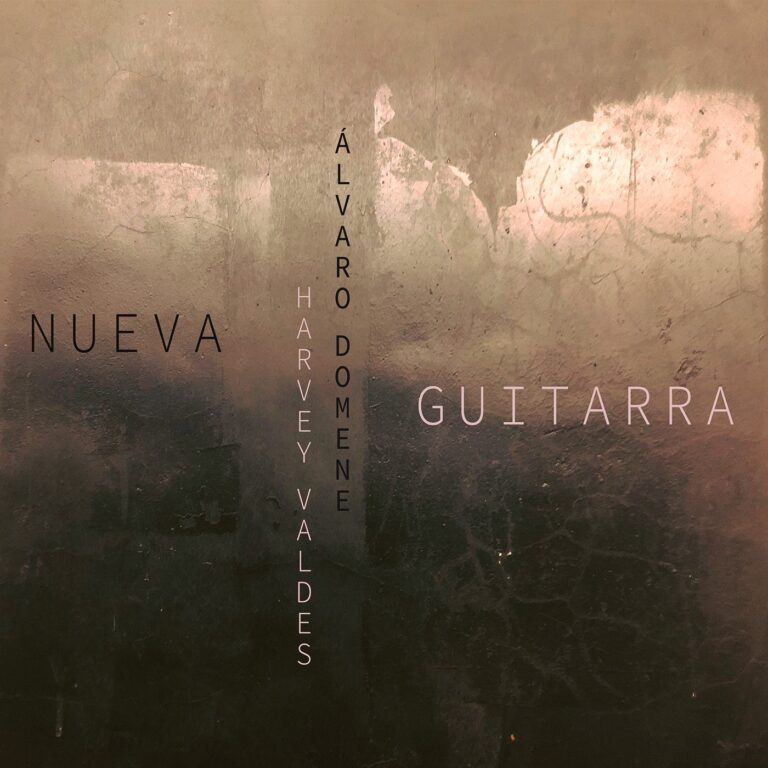
And now for something completely different. Two New York-based guitarists, Harvey Valdes and Álvaro Domene, come together for an ear-opening album of nine deliciously deviant duets. It’s an ever-evolving, sonic tornado that is part free jazz, ambient somatic, mournful acousticity, industrial noise and the most searing, dark brand of heavy metal thunder – Nueva Guitarra.
Madrid-born, Kingston-based Álvaro Domene is not only a most formidable and original guitarist; he’s a tireless advocate for the creative music scene in the Hudson Valley and beyond. His Singularity Concert Series has brought many renowned musicians like guitarists Ben Monder and Elliot Sharp for intimate performances at his Kingston loft. Since 2013, his co-owned Iluso Records has released over two dozen discs featuring some of the most fearlessly composed and improvised music you’d even want to spin. As with this album, Domene continues his habit of keeping some heavy company, recording and performing regularly with the likes of Joe McPhee, Karl Berger, Henry Kaiser, Ches Smith, Michael Bisio, Billy Martin and many more.
Like Domene, Brooklyn-based Harvey Valdes is another guitarist (and oud master too!) for whom genre boundaries have little meaning. His three solo albums have encompassed the radical reshaping of jazz standards (“Roundabout”), Mahavishnu-esque jazz fusion fury meets math rock (“PointCounterPoint”) and the 18 concise solo guitar compositions of his latest, “Solitude Intones Its Echo,” mixed and mastered by sonic guitar innovator David Torn (David Bowie).
“Nueva Guitarra” is not designed for the faint of heart and that’s a very good thing.
The duo make their uncompromising and delightfully madcap intentions known in the album opener, “A Crooked Odyssey.” It’s a sonic assault of tapping, looping, glissandos, drones, whammy dives and frizzled corrupted guitar signalry, a mad ride to the mountain top that only let’s up with a soothing ambient cloud appearing in the last 45 seconds of the six-minute outing.
The best place to start your listening might be with the two solo pieces, which showcase the players’ varied approaches and signature sounds.
Valdes’ “Zealous Reflections” is a chord and melody exploration, with close voiced dissonances alternating with pleasant resolutions that he lets ring out. “Biomimicry” is Álvaro Domene swinging for the fences. It’s all quicksilver, speeded up melodies over noisy pads, loops and thumps, over under upside down signals, otherworldly whammy bar and harmonizer torture. A noise jazz industrial racket of the highest order, from the bastard son of Buckethead and Albert Ayler.
My personal favorites, and maybe the easiest for the noise jazz newbie to dip into, are “Lady Dog Night Terror” and the album closer, “The Sophist Pundit.”
“Lady Dog Night Terror” emerges quietly from the darkness. Its deep warm volume swells from Domene’s rise to surround and complement Valdes’ clean chording and single note lines. Slowly, the dissonance in the melody and backdrop increases. It gets symphonic and fuzz laden, then slowly slips away just after the four minute mark.
https://youtu.be/p0idBsB0z6Q
With “The Sophist Pundit,” the duo saved the best for last. This is a summary statement of all the ideas set before, spread over nearly nine and a half minutes of guitar hellacious.
The track begins with stutter stop phrases looped to create a variable pulse, over which the duo improvise jagged lines. It just gets more intense as it goes on, with the duo creating a wall of feedback looped upon feedback, punctured by siren calls and squeals designed to melt your preconceived notions of what guitars can do.
All musicians have been hit by COVID-19, but not many have as hard as Domene. He battled the ailment all through the spring, but still managed to ready this and other collections for release.
If you want to do a good deed for music kind, and vastly widen your own appreciation of music and the creative possibilities still left in the guitar, download this uncompromising disc.
Key Tracks: Lady Dog Night Terror, The Sophist Pundit, Biomimicry